Home / Emperors / Jin Dynasty
Emperor Kang of Jin
晋康帝
Sima Yue, 322 – 344 · second son of Emperor Ming, emperor of the Eastern Jin
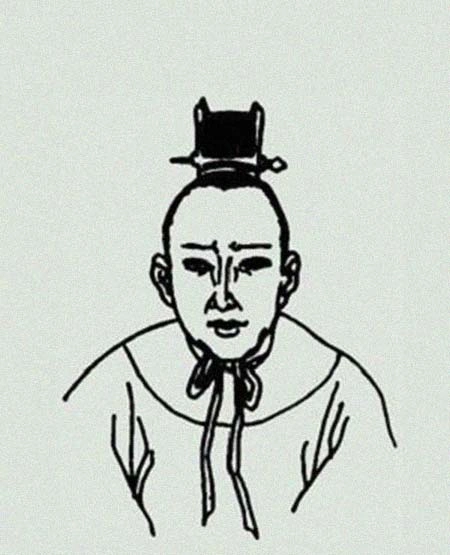
In the sixth month of 342 the palace at Jiankang decided who would rule the south. The emperor, Sima Yan, was twenty-one and dying. His two sons were in swaddling clothes. On the day the illness turned critical, someone forged an order of the department of state affairs forbidding the palace gates to admit the chancellor. The court turned pale. Yu Bing, the director of the secretariat, said the document was a fraud, and an inquiry proved him right. The forgery settled nothing by itself, but it set the tone of the week. The succession would be decided by who stood inside the gates.
Four days later the emperor was dead and his full younger brother, Sima Yue, prince of Langye, was on the throne. He was twenty. He had spent his life as a prince with titles and no following, and he would spend his reign as an emperor with a court and no government of his own. The annal remembers him as silent. The biographies of his ministers suggest a man who was present and not consulted. He reigned two years and three months, approved a northern expedition he had not designed, and died at twenty-two, leaving a two-year-old son.
His reign is usually a paragraph in the history of the Yu clan, and that is fair. Yu Bing in the secretariat and Yu Yi on the middle Yangzi made the decisions. But the reign has a shape of its own. In 342 the argument that the state needed an adult put Sima Yue on the throne. In 344 the same argument was used to try to keep his infant son off it. The principle did not change; the men who used it did. What decided both years was not the argument but the room.
1. The Second Son
Sima Yue was born in 322, the second son of Sima Shao, then crown prince, and of Yu Wenjun. His mother was a sister of Yu Liang, the man who would dominate the court for a decade and a half; his elder brother, Sima Yan, was born a year earlier and would become Emperor Cheng. Their father became emperor in 323 and died in the autumn of 325, when Yue was three. Their mother, who had ruled as regent for her elder son, died in the disorders of 328. By the age of six the boy had lost both parents and had become, in the arithmetic of the palace, the spare.
In 326, at four, he was made prince of Wu. In 327, at five, he was moved to Langye. The title mattered. Langye was the family's old kingdom in the north, the title his grandfather had carried before he took the imperial name, and the title his uncle Sima Yu had just been asked to exchange for Kuaiji so that the boy could have it. A child of five did not understand this, but the court did. The second son of Emperor Ming was being given the most dignified princely title in the gift of the dynasty, and he was being given it because he was the reserve.
At twelve he received the rank of attendant cavalier and the title of general of the flying cavalry. At seventeen he was made a palace attendant and minister over the masses. The sequence looks like a career. It was not. A prince of the blood could hold the highest civil and military titles without a bureau, a staff, or a single soldier. The titles made him visible at court and gave him precedence in the ritual order; they did not give him a following. In the 330s the government was run by Wang Dao, then by Yu Liang, then by Yu Bing and He Chong, and the emperor's brother was a figure in the procession.
His education was the education of a prince: the classics, the rites, music, and writing. The last of these left a trace. A short letter in cursive, the Lu Nu tie, is ascribed to him in the Chunhua ge tie, the calligraphy compendium engraved by order of Emperor Taizong of Song in 992. The attribution is traditional and cannot be tested; the fragment is a few columns of a private letter, not a state document. It is nevertheless the only surviving thing that can be called his own. A man who was emperor for two years and three months is remembered in the history of calligraphy by a scrap that may not be his.
Before he became emperor he was married to Chu Suanzi, the daughter of Chu Pou. The match was made in the ordinary way of the great families: the court looked for a girl of good family and good reputation, and found her in the Chu household, which was old, cultivated, and not powerful. Chu Pou was a noted man of letters and a minor official; no Chu then held a province or an army. The choice was not an alliance. It was a precaution. A bride whose family could not threaten the throne was the right bride for a second son.
The sources do not describe his character. The annal says he was naturally grave and that his mourning exceeded the rites; the encomium praises the same qualities in the same vocabulary. This is the language of a man who did what was expected, and who had no opportunity to do anything else. For twenty years he had been the second son, the reserve, the prince who stood one place behind the throne. In the sixth month of 342 the throne came to him because the man in front of it died.
2. The Argument in the Sixth Month
Emperor Cheng fell ill in the fifth month of 342. He was twenty-one. He had been emperor since he was five, had survived the rebellion of Su Jun and the regency of his mother, and had grown into a ruler whom the annal calls diligent and frugal. He had two sons. Sima Pi had been born in 341; Sima Yi in 342. The phrase the sources use for them is the phrase of every succession crisis: they were in swaddling clothes. The elder was one. The younger was an infant.
On the day the illness became critical, someone forged an order of the department of state affairs forbidding the palace gates to admit the chancellor. The court panicked. The order was a fiction, but the panic was not: whoever controlled the gates controlled the emperor's last hours. The order did not name him, but the chancellor was He Chong, the one senior minister who had argued against the Yu. Yu Bing said at once that the document was a forgery; an inquiry proved him right. The sources do not name the forger. The incident is left in the record unexplained, and its effect was to make the court aware that the succession would not be settled by precedent alone.
Yu Bing did not need the forgery to know what he wanted. The annal states his reasoning with a bluntness rare in dynastic history: he and his brothers had held power for a long time as the emperor's maternal uncles, and he feared that after a change of reign the kinship would grow more distant and other men would come between them and the throne. So he spoke to the dying emperor. The state had strong enemies; it should install an elder ruler; he asked that the emperor's full younger brother, the prince of Langye, be made heir. The emperor agreed.
The argument was not false. The dynasty had lost the north in 316 and had been fighting for the south ever since. Shi Hu ruled the north from Ye with an army the south could not match in the field; Cheng Han held the upper Yangzi; the refugee populations were unsettled; the treasury was thin. A child on the throne meant a regency, and a regency meant the empress dowager's family, and the empress dowager's family was not the Yu. In the logic of the court, the need for an adult was not a rule of the ancestors. It was a calculation about which relatives would be closest to the throne.
He Chong objected. He was the prefect of the secretariat, a man of the same generation, and the one senior minister who had not tied his fortunes to the Yu. His argument was the old one: father to son, the rule of the kings; changes of it had rarely ended well. He cited King Wu, who did not pass the throne to his sage brother the duke of Zhou, and Emperor Jing of Han, who wished to pass it to his brother the prince of Liang and was stopped by his ministers. Then he came to the point. If the prince of Langye ascended the throne, what would become of the little boys? The question was not sentimental but a question about survival. A new emperor with two infant nephews in the palace had two choices: to guard them or to remove them. The previous century offered examples of both.
Yu Bing did not listen. The emperor issued the edict: the prince of Langye would be his heir. The same edict assigned the younger of his sons to the line of the late prince of Langye, a device undone within days, when the two boys were made princes of Langye and Donghai. On the day renchen the testamentary charge was given to five men: Yu Bing, He Chong, the prince of Wuling, the prince of Kuaiji, and the president of the department of state affairs, Zhuge Hui. On the day guisi the emperor died. On the day jiawu the prince of Langye took the throne. The whole business, from the critical turn of the illness to the accession, took four days.
The new emperor took the throne in mourning and, in the phrase of the annal, kept silence and did not speak of government. He delegated everything to Yu Bing and He Chong. The phrase described a ritual, a son in mourning who does not conduct business during the mourning period; in practice it described the whole reign. The two ministers who had fought over his accession were now jointly in charge of the state, and the emperor presided over the ritual of a court that was run without him.
His nephews were given the titles that made them look like the heirs of other houses: Pi, the elder, was two by the count of the court and became prince of Langye; Yi, the younger, was one and became prince of Donghai. The sources do not say how they were treated, but they were not harmed, and both would later be emperors. In the seventh month the late emperor was buried at Xingping. The new emperor walked behind the coffin from the palace to the Changhe gate and then mounted a plain carriage for the rest of the way. It is the one public act of his reign that the annals describe in detail, and it is an act of mourning, not of rule.
Yu Bing did not leave He Chong in the capital. In the seventh month He Chong was made general of the flying cavalry, given the military command of Xu province and the Jinling counties of Yang province, and sent to Jingkou as inspector of Xu province, to avoid the Yu, as the Comprehensive Mirror says. Jingkou was the military heart of the refugee state, the mustering ground of the armies that guarded the lower Yangzi, and the seat of the immigrants from the north. He was removed from the palace but given an army and a province. The Yu had learned from the previous decade that a rival could not simply be destroyed; he had to be placed.
In the twelfth month Chu Suanzi was made empress. She was nineteen by the count of the court. The girl chosen because her family was not powerful was now the second lady of the state, and in the following year she gave birth to a son. The empress's family was the one group at court that owed its position to the throne rather than to the Yu, and that was why it could be trusted with the succession.
After the funeral, the emperor held a court. Yu Bing and He Chong sat on either side of him. The emperor said that he had inherited the great enterprise through the strength of the two of them. He Chong answered that the emperor's dragon flight had been the work of Yu Bing alone, and that if his own advice had been taken the emperor would not be seeing a peaceful age. The emperor looked ashamed. The Comprehensive Mirror places the exchange after the burial; the New Account of Tales of the World, a fifth-century anecdote collection, has a sharper version in which the emperor asks whose proposal it had been. The anecdote is not a court record, but it is the best evidence of how the accession was understood by the men who made it: a victory for Yu Bing, a defeat for He Chong, and a shame for the emperor.
The word He Chong used, a peaceful age, was adopted fifteen years later as the era name of Kangdi's son. What he meant was simpler: the throne had been taken from two children, and the man who took it knew that his opponent had been right. The shame on the emperor's face is the only acknowledgment in the sources that the succession of 342 was a seizure dressed as a necessity.
3. Two Governments
By the end of 343 the government of the Eastern Jin had three centers. Yu Bing, no longer director of the secretariat, had left Jiankang for Wuchang, where he commanded the seven provinces of the middle and upper Yangzi as inspector of Jiang province and general of chariots and cavalry. His younger brother Yu Yi, general who pacifies the west and inspector of Jing province, had moved from Wuchang to Xiangyang on the Han. He Chong, back from Jingkou, held Yang province, the supervision of the department of state affairs, and by the tenth month the directorate of the secretariat. The emperor was in the palace. The empress was in the inner quarters. The three men who governed were strung out along six hundred miles of river and road.
The arrangement was neither a diarchy nor a regency. There was no regent. The emperor was of age, and the forms of government were the forms of an adult reign: edicts in his name, audiences, sacrifices, the reception of envoys. The substance was elsewhere. Yu Bing controlled the secretariat, which drafted the edicts; He Chong controlled the department of state affairs, which executed them; Yu Yi controlled the army that gave both of them weight. Each needed the others. Yu Bing could not govern without He Chong's administrative machine, He Chong could not govern without the Yu armies, and neither could govern without the emperor's signature. The result was a government of mutual hostages.
The crisis came in 343, when Yu Yi asked to move north. A campaign from Wuchang was difficult: the river ran east, the roads north were poor, and the court was far. Xiangyang was the natural base. But if Yu Yi moved to Xiangyang and Yu Bing stayed in Jiankang, the Yu family would hold both the frontier and the capital, and the court would become a family council. If Yu Bing went out and He Chong stayed in, the family would hold the frontier and the capital would be in the hands of its rival. The solution was the one the Yu chose: Yu Bing went out to Wuchang as Yu Yi's rear, and He Chong was recalled to Jiankang to hold the palace. The family gave up the capital in order to keep the army.
In the seventh month Yu Yi was made commander-in-chief for the expedition and ordered to move to Xiangyang. Huan Wen, the emperor's brother-in-law, was made his forward commander with the staff of authority and sent into Linhuai. In the tenth month He Chong was recalled and given the directorate of the secretariat, the military command of Yang and Yu provinces, the inspectorate of Yang province, and the supervision of the department. The two men changed places. The emperor ratified the arrangement, as he ratified everything.
Chu Pou, the empress's father, was kept at the edge of the board. In 342 he had been brought into the court as palace attendant and a minister of the department; he asked to be sent out, and was made inspector of Jiang province at Ban Zhou on the river. In 343 he was offered the title of general of the guards and the prefecture of the secretariat, and refused both, on the ground that the secretariat drafted the edicts and should not be held by a relative of the empress. He was instead sent to Jincheng, where the refugee administration of Langye had its seat, as its interior minister and inspector of Yan province. The empress's father was a general with a refugee county and no say in the capital. The arrangement was exactly what the Yu wanted, and exactly what Chu Pou asked for.
The annals of the reign are thin. In the first month of 343 the era was changed to Jianyuan and there was a general amnesty; in the third month Yu Bing was made general of chariots and cavalry; in the fifth month there was a drought; in the sixth month the court sent silk to summon the recluses Zhai Tang of Nanyang and Yu Xi of Kuaiji, who declined; in the eleventh month there was another amnesty and an envoy came from Goguryeo. These are the acts of a government that wished to be seen governing. The reign has no legislation, no census, no reform, and no war it began on its own account. Its only large decision was the northern expedition, and that decision was made by Yu Yi.
The era name was itself a statement. Jianyuan had been used by Emperor Wu of Han; the annal says that the institutions and the year name were meant to revive the style of the central court. A restored dynasty in the south was asserting that it was not a provincial regime. A prophecy attributed to Guo Pu, the diviner who had died in 324, was circulating: when li begins and shi starts, the hill and the mountain fall. Li was jian, shi was yuan, and hill and mountain together made the character of the emperor's name, Yue. Yu Bing paled when he heard it, and then said that if there was good or ill fortune, changing the name could not avert it. The annal adds that the prophecy came true. The story is a retrospective explanation, told by men who already knew the ending, and it says more about how the reign was remembered than about how it was decided.
The court's cultural life in these years was dominated by calligraphy. Yu Yi, a better soldier than his brother and a more passionate collector, had lost his Zhang Zhi scrolls in the flight south and never stopped mourning them. He complained that the young men of the day had abandoned the family's model for Wang Xizhi's: they cheapened the family chicken, he said, and loved the wild duck. Then he saw Wang's reply to a letter from Yu Liang, and wrote to Wang that it shone like a spirit and that the old standard had come back at once. The soldier who wanted to conquer the north was also a connoisseur who could recognize that he had been beaten in a quieter art.
Kangdi's own hand is harder to see. The Lu Nu tie ascribed to him in the Chunhua ge tie survives only in a Song engraving, and its attribution has been doubted. If it is his, it shows a competent hand, not a master. He is a reign known through other men's papers.
4. The Road to Xiangyang
Xiangyang sits on the Han river where the road from the middle Yangzi meets the road to the Central Plains. North of it the land opens toward Nanyang and Luoyang; west the Han leads to Hanzhong; south the river runs to Wuchang and the Yangzi. For a southern dynasty it was the forward gate. For a northern army it was the door into the middle Yangzi. Since the fall of the north it had changed hands more than once, and the Eastern Jin had never held it securely. Yu Liang, Yu Yi's elder brother, had tried in 339 to push the frontier north from Wuchang; his forward commander lost the army at Zhu city, and the attempt ended in a retreat and in Yu Liang's own death. The memory was four years old when Yu Yi proposed to try again.
Yu Yi had succeeded his brother as inspector of Jing province in 340. He was thirty-nine, had commanded the province's army for three years, and had a reputation for energy and for a temper. His province was the richest military district in the south: the middle Yangzi produced grain, iron, and men, and its garrisons had been built up since the days of Tao Kan. He had forty thousand men under his direct command. In the seventh month of 343 he asked the court for permission to move them to Xiangyang and to open a northern campaign.
The moment was well chosen. In the same month the Yan state of Murong Huang defeated a Zhao army in the northeast; the Zhao general Dai Kai surrendered to the Jin with his troops; and the court issued an edict saying that the defeat of the Jie was beginning and that the affairs of the Central Plains should be considered. The edict made Yu Yi commander-in-chief for the expedition, ordered him to move to Xiangyang, and sent Huan Wen into Linhuai as his forward. It was the first time since 339 that the court had authorized a northern offensive.
Yu Yi did not trust the court to let him go. He announced that he was moving his headquarters to Anlu, a stage closer to the frontier; once there, he kept going. Envoys came after him with orders to stop; he did not turn back. By the autumn he was at Xiangyang with his forty thousand men.
Xiangyang had been held by Huan Xuan, an old frontier commander who had defended it under Yu Liang. Yu Yi kept him in place and put him in charge of the advance. He repaired the walls, dug ditches, and built granaries; he enrolled the refugees who had gathered in the north of the province and gave them land. The position was now a colony as much as a camp.
To fill the ranks he did something that the sources remember with distaste. He took all the registered slaves of Jing and Jiang provinces, and their oxen and donkeys, and enrolled them as soldiers. The gentry and the common people howled. He Chong, in Jiankang, proposed that Yang province should do the same, so that the criticism would be spread evenly between the provinces; the proposal was dropped when the court remembered that the three Wu commanderies had already been drained of men in the restoration. The episode is small, but it shows the arithmetic of the expedition. The new ranks did not come from the free population. They came from the households of the unfree, and from the farms that needed them.
Beyond the frontier he tried to do what no southern general had done since the fall of the north: to coordinate with the other enemies of Zhao. He sent envoys east to Murong Huang in Liaodong and west to Zhang Jun in Liang province, proposing a common date for a three-front attack. Both replied. Zhang Jun had been using the Jin calendar and calling himself a Jin subject for years; Murong Huang had just beaten a Zhao army. It was the most ambitious northern plan the dynasty had attempted since its founding.
The court was not convinced. The Comprehensive Mirror says that most of the ministers opposed the campaign and that only Yu Bing, Huan Wen, and the prince of Qiao spoke for it. The opposition was not cowardice. A campaign in the north required money, boats, and men that the south did not have in surplus; it required the cooperation of allies who might not move; and it required the court to trust a general who had already shown that he would go where he wanted. The emperor approved the plan because his government was the plan. He had no independent position, and the one group that could have stopped it, the civil ministers around He Chong, had been given the capital to manage.
5. What the Plan Produced
The expedition of 343 and 344 is usually called a failure, and in the sense that no northern territory was recovered, it was. But it produced four things that outlasted the campaign: a forward base, a border war, an enemy mobilization that did not happen, and a political shift in the capital.
Xiangyang became a permanent southern position on the Han. Yu Yi left a garrison there, repaired the walls, and enrolled the refugee households of the border counties. When he died, the position was not abandoned. It became the base from which Huan Wen would campaign in the 350s, and the reason the middle Yangzi was never again the weak flank it had been in 339. A base is not a conquest, but it is what a conquest is launched from.
The second was a frontier war that the expedition did not control. In 344 Yu Yi ordered Huan Xuan, the old defender of Xiangyang, to attack the Zhao general Li Pi on the Dan river. Huan Xuan was beaten. He was demoted to general who establishes might, and he died in the eighth month, ashamed and ill. He was the one commander on the frontier who knew the country, and his death left the advance without a guide. The same year Cheng Han raided the western commanderies, a reminder that the dynasty had two frontiers and one army.
The third was the largest army the north had assembled in a generation. In the first month of 344 Shi Hu gathered the troops of his provinces. The count in the sources is over a million, which is the kind of figure the sources give for any great muster; even discounted, it was an army the south could not have met in the field. Shi Hu held a banquet in the Taiwu hall. A flock of more than a hundred white geese settled on the road south of the palace. He had them shot at; the arrows missed. The astrologer Zhao Lan told him that white geese in the courtyard meant the palace would be empty, and that a southern campaign would be unlucky. Shi Hu believed him. He reviewed the army at the Xuanwu terrace and cancelled the campaign.
The story is preserved by the Zhao account in the Book of Jin, and it has the shape of an official explanation for a decision that had other reasons: the cost of feeding a million men and the news from the northeast. But the decision was real. The south was not invaded in 344. Yu Yi's expedition had drawn the largest northern army of the decade to the border and then watched it disperse. That was not a victory, but it was the best result the campaign produced, and it owed nothing to Yu Yi.
The cost was paid in the south. The slave levy had emptied farms in two provinces; the boats and oxen taken for the transport were not returned; the grain stored at Xiangyang was consumed by the garrison. The Comprehensive Mirror says that the people of Jing and Jiang were exhausted. The army that was supposed to conquer the north could not feed itself through a single summer.
The fourth result was in Jiankang. The campaign gave Yu Yi the largest army in the south and a permanent base at Xiangyang, and it gave his brother the task of supplying him from Wuchang. It also kept both brothers out of the capital for the whole of 344. The man who remained in the capital was He Chong, with the department of state affairs, the directorate of the secretariat, and the Yang province inspectorate. The expedition that was meant to secure the Yu family's future secured their rival's position. No one planned this. It was the arithmetic of geography.
6. The Ninth Month
In the ninth month of 344 the emperor fell ill. On the day bingshen, two days before he died, his only son was made crown prince. The timing is revealing. Sima Dan had been born in 343; he was two by the count of the court. For more than a year the court had not named him heir, and the reason was the same argument that had made his father emperor. Yu Bing and Yu Yi did not want a child on the throne. They wanted an adult, and the adult they had in mind was the prince of Kuaiji, Sima Yu, the emperor's uncle, a man of twenty-four with a reputation for learning and no army. The crown prince was created only when the emperor was too ill to be argued with, and the creation was the last victory of He Chong's argument.
On the day wuxu the emperor died in the Shigan hall. He was twenty-two by the calendar and twenty-three by the count of his court. The annal says he had reigned three years; counting the months, he had reigned two years and three months. He had been ill for a short time. The Book of Jin gives him no character beyond the formulas of the encomium. It is the obituary of a man who was never given a chance to be judged.
He was buried at Chongping, on the south slope of Zhong mountain, without a mound. The burial was unusual for an emperor; it may have been an act of economy, or the choice of a court that did not want to build a monument to a reign it could not describe. The empress was buried beside him forty years later, in 384.
His death opened the second succession crisis in two years. Yu Bing and Yu Yi wanted the prince of Kuaiji. He Chong had the testament and the crown prince. The empress dowager, who was twenty-one, was in the palace with the child. The Yu brothers were in the provinces, a month's march away. The argument of 342 was run again with the sides reversed: the Yu said the state needed an adult, and the man who had defended father-to-son in 342 defended the infant son in 344. Neither side had changed its principle. The Yu had always wanted an adult because an adult was their creation; He Chong had always wanted a son because a son was the throne's own. What had changed was the room.
He Chong won because he was where the documents were. The testamentary edict, the crown prince, the empress dowager, and the palace guard were all in Jiankang. A challenge to a succession requires a room, and the Yu were not in the room. The sources say the brothers hated He Chong from that day. They could do nothing. The empress dowager took charge of the court, the child was placed on the throne, and the court settled into the arrangement that would govern the next decade and more: a curtain, a boy, and a civil minister with a guard of a hundred armed men.
He Chong was made director of the secretariat and supervisor of the department of state affairs, with the right to enter the palace with a hundred armed attendants. He asked to be relieved of the directorate, and the request was granted; he kept the supervision. Chu Pou, the empress dowager's father, was offered the supervision too, and refused it; he asked for a frontier command and was sent to Jingkou as inspector of Xu and Yan provinces, with the military command of the northeast. The court ruled that at court he was a subject and in private the empress dowager honored him as a father. The formula is a small masterpiece of political etiquette: it gave the empress a father without giving the father a share of the throne.
Yu Bing was summoned to the capital to assist the regency. He declined, saying he was ill. He died in the eleventh month at Wuchang, aged forty-nine. He had been the director of the secretariat since the middle of the previous decade, had made one emperor in 342, and had tried to make another in 344. His obituary in the Book of Jin is brief: he had borne the weight of the government, had worked day and night, had been courteous to the educated and generous with promotions, and the court had thought him a good chancellor. The judgment is warmer than the record of his motives. He was a competent administrator who had used the throne to keep his family in power, and the two things were not separate in his mind.
Yu Yi survived him by eight months. He died at Xiangyang in the seventh month of 345, aged forty-one. His son Yu Yuanzhi was passed over for the command of Jing province; He Chong recommended Huan Wen, and the court appointed him inspector of Jing province and general who pacifies the west. Yu Yi had once told Emperor Cheng that Huan Wen was a hero and should not be treated as an ordinary son-in-law; the court now treated him as a hero, and within a decade he would be the most powerful man in the south. The Yu had built the base at Xiangyang; the man who inherited it was not a Yu.
The court gave Kangdi the posthumous name Kang, which means peace, ease, the quality of a reign that did not disturb. It gave him no temple name. He was the first emperor of the Eastern Jin to be denied one, and the omission was not corrected later. The annal's encomium praises his natural gravity and the exactness of his mourning, and breaks off at the shortness of his years. The clauses do not fit together. They are the court's attempt to say something true about a man who had been placed on the throne for reasons that had nothing to do with his qualities.
In the first month of 345 the court assembled in the Taiji hall for the new era. The empress dowager sat behind a white gauze curtain with the child on her lap. The ministers bowed to the curtain. The emperor was two years old. His father had been dead for four months. The argument of 342 had been that the state could not be governed by an infant; in 345 the state was governed by an infant, a curtain, and a woman of twenty-one whose family had been chosen because it was not powerful enough to be dangerous. The arrangement held. It held because the men who had made the argument in 342 were dead or in the provinces, and because the man who had opposed it was in the palace. In the end the Eastern Jin was governed not by the best argument but by the nearest person.