Home / Emperors / Han Dynasty
Emperor Jing of Han
汉景帝
Liu Qi, c. 188 – 141 BC · Sixth emperor of the Han dynasty
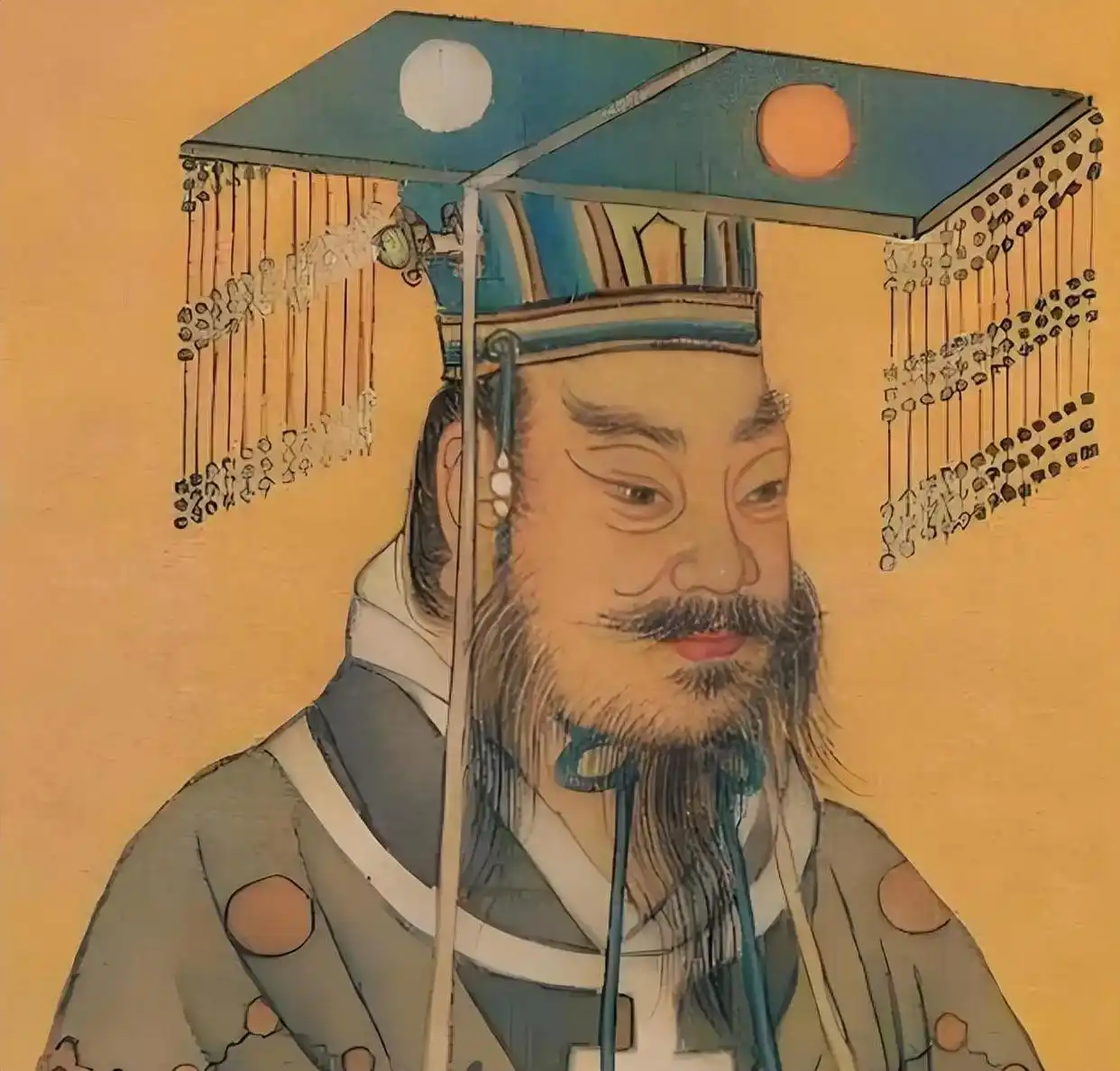
Emperor Jing of Han reigned for sixteen years and did the thing his father had never been willing to do. He broke the kings. In 154 BC seven of the great eastern kingdoms rose against him at once, and in three months he beat them; when the fighting stopped, the kingdoms that had been the most dangerous inheritance of the Han had been cut down to provinces in all but name. The empire his son would take to the steppe, and from which he would send envoys west along the roads of Central Asia, was put together in those sixteen years. By the only measure that usually matters to a ruler — did he leave the state stronger than he found it — the reign was a success.
The record he left behind is less comfortable. He executed the minister who had explained to him why the kings had to be broken, and found that the execution bought him nothing. He let his own eldest son die in a cell rather than risk his authority over a legal case. He starved the general who had saved his throne. He also did more for the ordinary Chinese subject than his father did, in a quieter way: he attacked the overgrown penalties that had survived his father's celebrated abolition of mutilation, cut the strokes of the heavy floggings, and regulated for the first time exactly what a whip should be made of and where it should fall. And when it came time to write his life, the great history of the age stopped — the account of his reign survives in the Records of the Grand Historian in a form that readers already in the third century were calling a blank.
The reigns of Wen and Jing are spoken of together, as a single stretch of good government, and the pairing is worth looking at closely. Jing spent most of his reign doing what the men around him wanted, or what his mother wanted, and then every few years did something so sudden and final that the men around him did not last. He was patient in a way his father was not and hard in a way his father never had to be. The mildness of the age, on inspection, is mostly his father's.
1. The Younger Son
He was born at the court of Dai, in the far northern frontier, where his father was a prince whom nobody in the capital was watching. His mother had been a weaver. The Lady Dou came out of the imperial workshops, one of a company of palace women whom the empress dowager Lü handed out as gifts to the king of Dai, and she had asked to be sent to the kingdom of Zhao, near her home, and was sent instead to the far northern kingdom of Dai because the eunuch in charge of the lists forgot what she had requested. It was the sort of accident that in the Han court decided lives before anyone involved had a vote.
The opening sentence of his reign in the Records has troubled readers for two thousand years. While the future emperor Wen was king of Dai, it says, he had three sons by an earlier wife; that wife died, and then, after the Lady Dou came to favour, the three sons died one after another — "and so Jing came to be established." Three boys of no account died in a frontier town in the ordinary way of the period, so that a boy who was not in line became the eldest son, and no explanation is offered because the writer evidently did not think an explanation was needed. The sentence sits at the head of the shortest imperial account in the Records, and it is the only page of the life that survives in that book.
The young Liu Qi was, by the standards of the Han court, unremarkable, except that he was strong and quick to take offence. Two episodes from his years as crown prince were remembered. The first was a quarrel over a board game. The heir of the king of Wu, a young man named Liu Xian, came to the capital for audience, and he and the crown prince fell into an argument over a game of liubo — over the moves or the odds, the sources do not say. Liu Qi picked up the board and struck him dead. The body was sent home for burial. The king of Wu, Liu Bi, refused to accept it: the empire belonged to the Liu family, he said, and a man who died in Chang'an could be buried in Chang'an; he sent the coffin back. He was the founder's own nephew and the most powerful of the kings, and from that day he pleaded illness and never came to court again. Twenty years later he would lead seven kingdoms against the son who had killed his son, and the historians would have no difficulty explaining why.
The second episode was smaller. Riding into the palace one day with his brother, the prince of Liang, Liu Qi passed the gate of the palace without getting down from his carriage, as the rules of propriety required. The officer of the gate, a man named Zhang Shizhi, chased him down and laid a charge against him for disrespect at the imperial gate. The emperor Wen approved of the charge. Zhang Shizhi went on to have a career as the most famous upholder of the law of his generation, and the crown prince went on to remember his name. When Liu Qi became emperor, Zhang Shizhi had every reason to be afraid. He was kept on for a year or so, and then quietly moved out of the capital to serve as chancellor of Huainan.
2. The Inheritance
He took the throne in 157 BC without a plot, a killing or a general's decision to intervene. His father had died in the ordinary and uneventful way of those who manage the sums correctly, and the empire that came to him had been under a policy of subtraction for twenty-three years. Budgets had been cut. Taxes had been cut, and then cut again, and at the end suspended. Frontier walls had been manned but not tested. The young men who might have become the great families of a new dynasty had been kept out of the ministries, and the ministers were mostly elderly men whose fathers had ridden with the founder.
Within a year of taking power, Jing fixed the land tax at one part in thirty — half the rate the founders had set, and the rate his father had arrived at before suspending the tax altogether. For a farmer working an allotted holding it meant that the state took a fraction of what he grew and left him the rest, and it is the policy above all others that gave the Han its reputation with later historians of having been gentle with the peasant. The reputation was also, in the long run, good business. The treasury that Jing's son would empty on the steppe was filled by sixteen years of taking very little from the countryside and spending almost nothing on anything else.
He was, by the accounts, careful with money to a degree that startled his own officials. He ordered that grain should not be used to brew wine and that horses should not be fed on millet, and he moved the marquises out of the capital and back to their own lands so that they would be paying to keep themselves there rather than consuming the capital's stores. His father had been frugal because frugality suited his idea of what a ruler was. Jing's thrift looks more like the arithmetic of a man who knows what wars cost.
The house he lived in was not, however, entirely his own. His mother lived the whole of his reign and six years beyond it, and she was devoted to the old doctrine of government by non-action, the Daodejing and the traditions of the Yellow Emperor, and she took a personal interest in making sure the court stayed that way. Jing had to manage her. The clearest illustration is a debate he allowed to be held in his own presence, between a scholar of the Book of Odes named Yuan Gu and a teacher of the old school named Huang Sheng, on the question of whether the founders of the Shang and Zhou dynasties had received the mandate of heaven or had killed their kings and seized the thrones. It was not an academic question — if the second answer was correct, no dynasty was legitimate; if the first, then a bad king might lawfully be removed, which was a thought no Han emperor wanted available for reference. Jing found a way out that has become one of his most quoted remarks. To eat meat and not eat the liver, he said, is not to be ignorant of the taste of meat; and for scholars not to discuss the receiving of the mandate by Tang and Wu is not to be stupid. The debate was closed and, the Records add, no scholar afterward dared discuss it in public again. It is a small scene, and it is the way he governed: he did not suppress the argument, he made the question undiscussable and let everyone go home.
A second scene from the same years is less comfortable for everyone in it. The empress dowager, who read the Daodejing and meant it, sent for Yuan Gu and asked him what he thought of the book. Yuan Gu, who taught the Odes and had no gift for tact, told her that it was the talk of ordinary household people and nothing more. Her answer was to have him put into a pen with a wild boar and told to defend himself. Jing knew that his mother was angry, and knew that the scholar had done nothing worse than be rude, and he gave him a good knife on the quiet. Yuan Gu killed the animal with a single thrust through the heart, and the empress dowager had nothing left to say against him, and the matter was dropped. Jing made him tutor to a royal prince not long afterwards — a promotion, and also a way of moving a man out of reach.
3. The Argument for Cutting
The trouble his father left him was structural. The founder of the Han had been obliged to establish his relatives as kings over the eastern third of his empire, and the arrangement had hardened into something the government in Chang'an had never intended. The kingdoms were enormous. They had their own chancellors and officials, their own armies, their own coinage and taxes, and the kings ruled them as rulers and not as governors. By the count in the Han shu, in the early years of the dynasty the kingdoms had taken in forty-two commanderies among them, while the territory under the direct administration of the central government came to fifteen. Close to three-quarters of the empire, measured in the units the state itself used, was in the hands of men whose loyalty to the central court was an act of personal goodwill.
The most alarming of them was the king of Wu, Liu Bi, whose regard for the central court had ended when the crown prince killed his heir. Wu was rich in a way that a principality was not supposed to be. It contained the copper mountains of Yuzhang, which meant money; and it had the sea, which meant salt; and because the revenue from money and salt was enough to cover the costs of government, the king of Wu was able to abolish the taxes and labour service of his own people altogether. A king who governs an untaxed province is not a subordinate, he is a rival. He had been ill, or claiming to be ill, for most of twenty years, and he had spent those years making himself beloved by the people he did not tax. The histories note that he had gathered the disaffected of other kingdoms around him and had for years been preparing, in the quiet way one prepares for something one expects will sooner or later be necessary.
The minister who understood this best was Chao Cuo. Chao was Yingchuan-born and had trained in the harsh statecraft of Shang Yang and Shen Buhai; he had been the crown prince's household tutor when Liu Qi was heir, and the prince's entourage had called him the "bag of wits." He was blunt, dour, convinced, and incapable of making friends. Under the emperor Wen he had proposed changes and been turned down, but he had been kept close and promoted, and when Jing took the throne he rose quickly, first to be master of the interior and then, in 154 BC, to be imperial counsellor. He was also, in the currency of the court, alone. He had a personal enemy in Yuan Ang, who had once been chancellor of Wu and whom Chao had investigated and reduced to commoner status; he had quarrelled with the chancellor and with the commandant of the capital and with the chief justice; and his father, told of his plans, told him he would destroy the family and then drank poison rather than live to see it.
Chao's argument for cutting the kingdoms down is the most famous sentence in the reign. To leave them alone is not safety, he told the throne: cut them and they will rebel, and leave them and they will rebel. The difference is that if you cut them the rebellion comes early and small, and if you leave them it comes late and large. In the winter of 154 BC, the court began. The king of Chu was stripped of his commandery of Donghai; the king of Zhao lost Changshan; the king of Jiaoxi had six counties taken from him. And it was proposed to take from Wu the commanderies of Kuaiji and Yuzhang. The document that went out to the kings was not a negotiation but a series of notices, and the kings understood it as such.
4. Clear the Sovereign's Side
The rebellion came exactly as advertised, and faster. Wu and Chu were joined by Zhao and by the four kingdoms of Jiaoxi, Jiaodong, Zichuan and Jinan — seven in all, which is why the event entered the language as the Rebellion of the Seven States. The king of Wu was in his sixties and had spent his own money preparing for this moment for most of his adult life; the armies of Wu and Chu moved west first against the kingdom of Liang, which lay directly between them and the capital. They took the town of Jibi and destroyed the Liang army posted there, and then they settled into the siege of Suiyang, the Liang capital.
Their proclamation was a masterpiece of the period's political language: they were rising not against the emperor but against the man who had misled him — the formula was "please execute Chao Cuo, in order to cleanse the sovereign's side." It gave every reluctant participant in the conspiracy a way to describe what he was doing, and it gave the emperor a way to imagine that the whole thing might be settled cheaply. It also fixed Chao Cuo's fate, and the court, though it could have been expected to know better, went along with it.
The last scene was fast and squalid. Chao Cuo, isolated, proposed that the emperor go to the front and lead the armies in person and that he himself remain in the capital to hold the government; it was taken as an attempt to put a wall between the emperor and his generals, and it ended whatever support he had left. Yuan Ang, brought in by night for a private conversation, told Jing exactly what he wanted to hear: it was Wu and Chu that wanted Chao Cuo, so kill him and their case would disappear. The emperor, the Records say, was silent for a long time, and then said: if that is really what it takes, I will not grudge one man to allay the troubles of the empire. Three senior ministers laid a charge of treason against Chao Cuo. He was tricked into going up to the palace in his court robes, taken along the way, and killed by having his body cut in two at the waist in the eastern market of the capital; his parents, his wife and his children and their families were executed with him. He had not known he was arrested and did not know why he was dying.
The executions accomplished nothing at all. The armies of Wu and Chu continued west. The king of Wu, who was no longer pretending that he had come simply to clean up the court, let it be known that he intended to have the empire for himself. It is at this point that the reign turns, and the Records records the judgement through the mouth of an officer named Deng who had come back from the front lines, and who told the emperor plainly what he had done: Chao Cuo had been trying to reduce the kings and preserve the dynasty against catastrophe, and killing him before his plan had done its work had shut the mouths of loyal ministers inside the court and given comfort to the enemy outside it. Jing is not made to answer.
5. Three Months
The war was won by a man who had been tested on the frontier and never in a campaign of this size. The emperor's choice fell on Zhou Yafu, the son of Zhou Bo — the man who had helped destroy the Lü family twenty-six years before — and appointed him grand commandant, with Dou Ying, a kinsman of the empress dowager, as grand general. Zhou Yafu was the officer whose earlier conduct of the defence at Xiliu had let his father's generation's emperor remark that he was the only true general in the empire: a man whose camp a chariot could not enter without permission, whose troops obeyed the rules and not the ranks of whoever was asking.
His plan was not to rescue the kingdom of Liang. It was the most cold-blooded decision of the war, and it worked. He moved his army out through Lantian and Wuguan into the interior, let the kings of Wu and Chu exhaust themselves against Suiyang, and then sent light troops to choke off the grain route by which the rebels were fed — taking the place where the Si river joins the Huai. The king of Wu was a man of sixty-odd who had spent twenty years making himself the most popular ruler in the east, and an army raised that way eats enormously and holds together only while it is moving. The prince of Liang, meanwhile, held the walls of his capital with the two generals Han Anguo and Zhang Yu and suffered through it, because he had no choice: the enemy was in his country, and his own brother had deliberately left him there to absorb the blows. He and Zhou disliked each other ever afterward.
The collapse came quickly. With the grain gone, Wu's troops starved, and a night attack broke them; the king of Wu fled east to the Yue peoples of the coast, who killed him for the reward. The king of Chu had already taken his own life. Zhao held out longer, until the siege of Handan finished it. Within three months of the first shot, the rebellion was over, and the kingdoms that had made it were no longer theirs.
What Jing then did to the kingdoms is the substance of his reign. He did not abolish them, and he did not carry out anything like the programme Chao Cuo had been killed for. What he did was quieter and, in the end, more thorough. In 145 BC he took from the kings the right to govern: a kingdom was no longer to be administered by its king, and its officials were to be appointed from Chang'an and to hold their posts on the same terms as any other officer of the state. A king would remain a king, and would remain rich; he would no longer be a ruler. Together with the confiscations that followed the war, that is what reversed the arithmetic. By the count the historians give, the share of the empire under the central government and the share under the kings changed places: from fifteen commanderies against forty-two, to forty-four against twenty-six. The kingdom of Wu, which had abolished taxation within its borders, was erased and its land taken directly into the empire. Jing's son, when he came to the throne, would face no king who could plausibly raise seven armies against him. The design was Chao Cuo's, and Chao Cuo had been dead for nine years.
6. The Arithmetic of Punishment
The most solid piece of good that Jing did is one that no one remembers, because it is a change in the length of a stick. His father's most celebrated act had been the abolition of the mutilating punishments — the tattooing, the cutting off of the nose, the cutting off of the feet — and the change had gone wrong in a way that the men who were hanged or flogged under the new rules had no opportunity to point out. When the part of a man that was to be removed was replaced by a flogging, the numbers were set far too high. What had been the loss of a nose became three hundred blows with a rod. What had been the amputation of the left foot became five hundred. Men died under the rod at a rate that made the reform appear, in the words of the Han shu, to have "the name of leniency while in substance it killed," and the phrase the historians used for the flogging of the period was that the punishment was usually over only when the prisoner was.
Jing took this up twice. In his first year he issued an edict doing the arithmetic: a flogging of five hundred was to become three hundred, and one of three hundred was to become two hundred. He gave the reason in the decree — to add the rod to a man is no different from imposing a capital penalty; if he is lucky enough to survive he is a wreck for the rest of his life. But the reduction was still not enough, and twelve years later he tried again, and said so in the edict: some of those so punished die before the strokes are counted out, and I pity them. Three hundred became two hundred, and two hundred became one hundred.
Then he did the thing that actually settled the question. The rods had been whatever the men carrying them decided they were, and they were used on whatever part of the body the officer chose. On Jing's order the chancellor Liu She and the imperial counsellor Wei Wan produced the Decree on the Rod, and for the first time the instrument and the method were specified in law: the rod to be five feet long, an inch thick at the thick end, thinned to half an inch at the tip, with the knots planed off; the punishment to fall on the buttocks and not on the back; and the same man to carry out all the strokes of a single sentence, so that no officer could arrange for a colleague with a grudge to take over halfway through. The result is recorded in four words: from then on, those flogged survived. The old commentary adds the detail that makes the whole thing visible — before this, the blows had fallen on the back.
Two caveats belong with this achievement, and the Han shu supplies both. The first is that the reform did not gentle the state, it only made the state's punishments survivable: the very next clause in the history says that the harsh officials still used the rod to terrorise. The second is that the scale was now so light relative to a capital sentence that the fear of punishment lost its edge, and the Han shu's own verdict is that the people grew careless of the law. And in the fourth year of the middle period Jing reopened the one penalty his father had closed for good.
He restored castration. The reasoning was not inexplicable: mutilation had been abolished, and the death penalty had swallowed up the severe cases, leaving nothing between a beating and death; where the law had once let a man's body be punished instead of his life, the state now needed a substitute for execution, and the mutilation Jing put back was the one that did not kill. It is one of the two or three decisions for which he is hardest to defend, and he made it deliberately, and the practice he established lasted as long as the Han did.
7. The Quiet Years
Once the seven kingdoms had been put down, the rest of Jing's reign is the least dramatic stretch in the history of the western Han, and it is the reason the western Han had a future. Nothing much happened. The Xiongnu came and went. Twice the court bought quiet with a marriage — once in 156 BC, and again four years later, when a princess of the imperial house was sent north with the envoys — and the raiding did not stop, but it stayed raiding. In 148 BC a Xiongnu force came into Yan. In 144 BC, the year of the Decree on the Rod, a larger one came down through Yanmen and Shangjun. In 142 BC there was another. Each time the border commanderies lost cattle and people; each time the court sent troops; each time the troops were told to see the raiders off their own side of the wall and no further. There were no campaigns and no pursuit into the desert. The frontier commanders of the period — men like Li Guang, moved from one northern commandery to another because he was said to be the best officer on the frontier — spent their careers in a war of posts and beacons and skirmishes that lasted an afternoon, and were never given the army that would have been needed to do anything else.
This was a policy, and it had a price, though the price was paid by people in frontier counties rather than by anyone who wrote. It also had a logic that later historians have declined to admire. Jing was buying time, and he knew it. The empire he inherited had little cavalry to spare, because the founders had fought on the northern frontier with infantry and chariots against men who rode. So while princesses went north with the envoys, the court went on with the slower business of raising horses, extending the pastures and the stables of the north, and of leaving frontier officers in place long enough to learn their districts. The dynasty that began the war against the Xiongnu in 133 BC began it with horses bred in a peace that Jing had paid for.
One exception to the policy is instructive. When five Xiongnu noblemen defected to the Han in 147 BC, Jing wanted to make them marquises, and Zhou Yafu told him that rewarding men who betrayed their own ruler would leave the empire no ground to stand on when its own subjects thought about doing the same. The emperor overruled him, and the five were made marquises, and the reasoning is easy to reconstruct: a frontier war is fought with the men who come over, and the man who has just deserted the other side knows its roads.
At home what Jing did was small, cumulative and largely invisible. He ruled that marquises should live on their own estates rather than in the capital, which cut the consumption of Chang'an and put the great families back among their tenants. He revived the sale of ranks, which raised money and gave men of no birth a way of buying standing. He allowed anyone who wished to move out of a crowded district into an empty one to do so. In 145 BC he ordered that doubtful cases be sent up for review — including cases where the letter of the law had been satisfied but the result was not one that men's sense of justice could accept. He was careful with the granaries and with the palace's own expenditure, and the Han shu gives him credit for it in the flat and faint way it gives him credit for most things.
The other half of his arrangement with the kings was his own sons. A king who could not govern was still a king, and the empire needed kings; Jing had fourteen sons, and before the reign was over most of them had been made kings over territories carved out of the older kingdoms — Zhao and Jiaoxi, Jiaodong and Zichuan, Zhongshan and Guangchuan, and others besides — so that the map of the east filled up with princes who were the emperor's boys. It was the same instrument Chao Cuo had been killed for using, held by a different hand. The difference was that these kings were the emperor's sons rather than his cousins, and that the pieces they were given had already been made small.
The one lasting thing he built was a school. In the southwestern commandery of Shu, the governor Wen Weng, tired of sending local boys a thousand miles to the capital to be taught, set up a school in his own commandery and paid for it out of his own salary, and then sent the ablest of its pupils up to Chang'an. Jing's government approved the practice and encouraged it, and the commandery schools of the Han — an institution the dynasty eventually extended to every part of the empire — were founded on that approval. It is not the sort of thing a ruler is credited with, since the man who thought of it was a provincial official and the emperor's part was to say yes. But it is what a well-governed dynasty looks like from the inside: not a programme, but a great many men doing sensible things because nobody is stopping them.
8. The Heir
By 151 BC the succession was the only politics that mattered, and it had been mismanaged from the start. The empress, a woman of the Bo family chosen for the crown prince in his father's lifetime to please his grandmother, had produced no son. Her last protector at court, the empress dowager Bo, had died four years earlier, and in 151 BC Jing put her aside. The eldest boy, Liu Rong, was the son of the favourite, the Lady Li, and the Lady Li had been living for the day when her son's position would make her empress. She had, however, made an enemy of the wrong woman.
The wrong woman was Jing's elder sister, the princess Liu Piao, who had made a career of supplying the emperor with the ladies of his household and who wanted, like everyone else in that court, to secure the future with a marriage. She proposed her daughter to the heir. The Lady Li refused her, contemptuously, and the princess turned to a concubine named Wang Zhi and was accepted instantly. From that point the princess spoke to her brother daily about the Lady Li, and daily about Wang Zhi and her son, and the stories she told about the Lady Li went well beyond politics: that she had her maidservants spit behind the backs of any concubine who gained the emperor's favour; that she used charms and incantations. Jing did not act, but he began to look at her and see a woman who was dangerous, and to look at her son and see a boy who had been placed in front of him by someone dangerous.
Wang Zhi's own history was a strange one, and worth keeping in view when judging what happened next. She was the daughter of a family from Huaili whose grandmother had been a princess of the fallen kingdom of Yan; she had been married to a man named Jin Wangsun and had borne him a daughter, and then her mother, having had the girls' fortunes told and been told that both would rise, took her back from her husband and sent her into the household of the crown prince. She bore Jing three daughters and a son. And the son was said to have been conceived after she dreamed that the sun lay upon her belly.
Two moments decided the rest. The first was Jing's own. He said to the Lady Li, when he was ill and thought he might die, that after his death she should look after the other women and their children. It was the sort of thing an emperor says to a woman he intends to make empress, and it was an opportunity. She answered in a rage and would not agree, and said what the histories call shameful things; the emperor swallowed it but did not forget it. The second moment was Wang Zhi's. Seeing that Jing's mind was turning against the heir, she arranged for a petition from a senior official asking that the Lady Li be made empress on the ground that the mother of the heir to the throne should have a title — a formula drawn from a classic: the mother is honoured because of the son, and the son because of the mother. It was the surest way to make the emperor believe that the Lady Li's faction was pushing him; and it did her cause no good at all. Jing had the official executed and stripped the heir of his position, reducing Liu Rong to the rank of a mere king. The Lady Li died soon after, unable to obtain another audience.
Then there was the empress dowager. She had always favoured her younger son, the prince of Liang, who had fought hardest of anyone in the war and who — by an old and careless remark, made at a family banquet in front of his mother and his cousin Dou Ying, that he would hand him the empire — had been led at one point to believe something that had never been true. The words had been said when Jing was drunk, and had been taken seriously by everyone except the man who said them. Dou Ying, a kinsman of the empress dowager, was at the table, and told his aunt to her face that the empire belonged to the founder, that father to son was the rule the Han had agreed to follow, and that the emperor had no right to give it away. The empress dowager hated him for saying it for the rest of her life. When the succession was finally open, she pressed the prince of Liang's claim again. The ministers argued against it, and the objection they made was the one nobody could answer: the empire belongs to the founder, and father to son is the rule the Han agreed to follow, so how can the emperor pass it to his brother? The prince's name was withdrawn. And in the fourth month of 150 BC, Wang Zhi was made empress and her seven-year-old son Liu Che — who would rule for fifty-four years as Emperor Wu — was made heir.
9. The Men Who Did Not Survive
The last years of the reign emptied the court of everyone who had made it work, and the pattern in each case is the same: a man who had rendered the dynasty a great service, and who then took a position the emperor could not accept, and who was destroyed with the full weight of the law.
Liu Rong, the deposed heir, did not last long. Sent down to his reduced kingdom at Linjiang, he was accused of building an extension to his palace on land belonging to the imperial ancestral temple — a charge that put the emperor's own ancestors in the docket. He was summoned to the office of the commandant of the capital to answer for it. The officer who questioned him was Zhi Du, a man the court called the Goshawk for the way he went at people, and he handled the case with the severity that had made his reputation. Liu Rong asked for writing materials so that he could write his own apology directly to his father. Zhi Du refused. A kinsman of the empress dowager, Dou Ying, secretly sent him the pen and the strips; the young man wrote his letter of apology and killed himself. His grandmother, when she heard, was beside herself, and the Goshawk's career ended with him. He was dismissed from the capital, then sent to the northern frontier as governor of Yanmen, where the Xiongnu were said to have pulled their raiding parties back from his border rather than deal with him. His usefulness did not save him. When the empress dowager demanded his death, the emperor argued that he had been a loyal servant who had done nothing but his duty, and then gave way to her, and Zhi Du was executed. The emperor's own eldest son did not come back either.
Zhou Yafu was next, and the way he was got rid of is the most detailed scene of the reign. He had been made chancellor and had then opposed three things in succession: the deposition of the heir, which he argued against in open court; the elevation of the empress's brother, on the ground of the founder's oath that no man should be made a marquis without merit; and the granting of titles to five Xiongnu noblemen who had defected to the Han, which he thought set a price on disloyalty that the empire would later have to pay. On the last point the emperor told him his opinion was useless and did as he wished. Zhou Yafu asked to be relieved on grounds of illness, and the emperor approved. He had lasted in the office as long as his honesty made him useful.
The emperor then summoned him to the palace and had a meal set before him. There was a large piece of meat on the tray, uncarved, and there were no chopsticks. Zhou Yafu, who was a soldier and a proud one, looked at the tray, turned to the man in charge of the tables, and asked for chopsticks. The emperor laughed at him. Is this not enough for you? he said. Zhou Yafu took off his cap and apologised; the emperor said "rise"; Zhou stood up, and, without waiting to be dismissed, walked out of the room. The emperor watched him go and said to those with him: this sullen one is not the servant of a young lord. It was a sentence about the future — his heir was still a child of nine or ten, and he was deciding whether the man who had saved the empire could be trusted not to bully a boy.
The pretext came soon. Zhou Yafu's son, thinking of his father's old age, bought five hundred suits of ceremonial armour and shields from the imperial workshops, intending them for the funeral; by Han law private purchases of military equipment were forbidden. The workmen were paid badly and late, and one of them, nursing a grievance at the unpaid wages, informed the authorities. The emperor had the case investigated. When the investigators came, Zhou Yafu said nothing at all; the emperor, losing patience, delivered him to the chief justice. Why do you wish to rebel, the justice asked. The armour, Zhou Yafu said, is for burial — how is that rebellion? And the famous reply came back: if you are not going to rebel above ground, then you mean to rebel underground. The old man was put in a cell, refused food for five days, and died of internal bleeding. The emperor, who had refused for years to make Wang Zhi's brother a marquis, did so a year after Zhou Yafu was dead.
The prince of Liang died the year before him, in a bed, after a chapter of the same story that had been running since the succession. His claim to the throne had been blocked by the ministers, and he had taken it as the ministers had meant it: as an expression of personal hatred. He and two of his men hired assassins and had Yuan Ang and a dozen other ministers who had spoken against his claim killed in the streets of the capital. In an account added to the Records by a later hand, the investigation led back to him through a sword left at the scene — made to order in the capital by a smith who remembered who had ordered it. The emperor's officers came again and again to the kingdom; the prince's chancellor and his master of the interior talked him into letting the two accomplices kill themselves and handing over the bodies; he obtained pardon by sending an envoy to his mother through the princess his sister.
When he came to court to apologise he travelled the last stage of the road in a covered cart with two riders, hid in the princess's garden, and let his mother believe he had been murdered — the empress dowager cried out that the emperor had killed her son, and the emperor, genuinely frightened, did not know what to say; the prince then appeared at the palace gate with the instruments of punishment on his own back, and the two brothers wept together in front of their mother, and the family was reconciled in public. It was never repaired in private. The emperor stopped riding in the same carriage with him. In the sixth year of the middle period the prince came to the capital and asked to be allowed to remain; the emperor refused; he returned to his kingdom, fell into a fever in the sixth month and died after six days. The empress dowager refused food and said the emperor had killed her son, and was only brought round when Jing divided the kingdom of Liang into five and made all five of the prince's sons kings in it, with townships set aside for the maintenance of his five daughters.
10. The Missing Book
The most eloquent fact about the reign is a bibliographic one. In the Records of the Grand Historian, the great history written within living memory of these events, the account of the emperor Jing does not exist in the form the book planned for it. The earliest readers of the Records say so plainly. The scholar Zhang Yan, writing in the third century, listed ten chapters of the work whose titles had been recorded but which had no text, and Jing's life was one of them; another early reader reported that the two chapters concerning Jing and his son amounted to a title with no book behind it. The commentary on the Records attributes the text that now stands in its place to Chu Shaosun, a scholar of the later first century BC, who is said to have assembled it out of the Han shu.
What stands there now is two thousand characters long. It records appointments and eclipses and the years of the reign in the manner of a calendar; the richest thing in it is a sentence at the beginning about three dead boys in a frontier town. Against this, compare the account of his father, which runs to many times the length, quotes whole edicts, and describes a man — his hesitations, his household, his letters, the speech he gave when the envoys came. The same historian who wrote one wrote the plan for the other; the Records says in its own table of contents that a chapter on Jing was intended, and its summary of the reign — the kings grew arrogant, Wu was the first to rebel, the court struck and the seven were punished, and the empire settled into security and wealth — is a fair description of what happened. The chapter itself is gone. Whether it was destroyed because it touched on the person of the reigning emperor, or whether it was never completed, or whether the text now in place is a reconstruction by a competent later hand that has been mistaken for a blank, is a question the sources cannot answer; the oldest account is that the book is lost, and the book we have is short, and it does not tell us.
What it does preserve at the end is the will that Jing left when he died in 141 BC. The kings and marquises were to receive two horses each; senior officials two catties of gold; the common people a hundred coins per household. And the palace women were to be sent home, and were to be freed from service for the rest of their lives. It is a modest document, and it is the thing in his own chapter that most resembles his father.
He was given no temple name, and is never called for in the ancestral rites of the dynasty. It is a strange omission in a house that took the ancestral cult and the duties of a son as seriously as the Han did, and it is sharper for one reason: among Jing's first acts as emperor was to designate his father's temple as the Taizong temple — Taizong, "the great ancestor of the line" — and to rule that the empire should make offerings there to his father for ever. He spent the political capital of his first year making certain that his father would be remembered by the state. No one has ever been obliged to remember him. The empire he left his sixteen-year-old son was strong, cheap to run, secure on its frontiers and quiet in its provinces, and it was built largely out of the things he himself had taken away: from the kings, their armies; from the ministers, their certainty that service would be honoured; from his own house, one heir and one brother. Later historians gave the age the name of two men at once — Wen and Jing — as though it had been a single thing. It was not. The reign that is remembered for thinking of the peasants is also the reign that killed its own eldest son, starved the general who had saved it, and executed the minister who had shown it how to survive. Both statements describe the same sixteen years, and the histories have never quite decided which one to put first.