Home / Emperors / Han Dynasty
Emperor Wu of Han
汉武帝
Liu Che, 156 – 87 BC · Seventh emperor of the Han dynasty
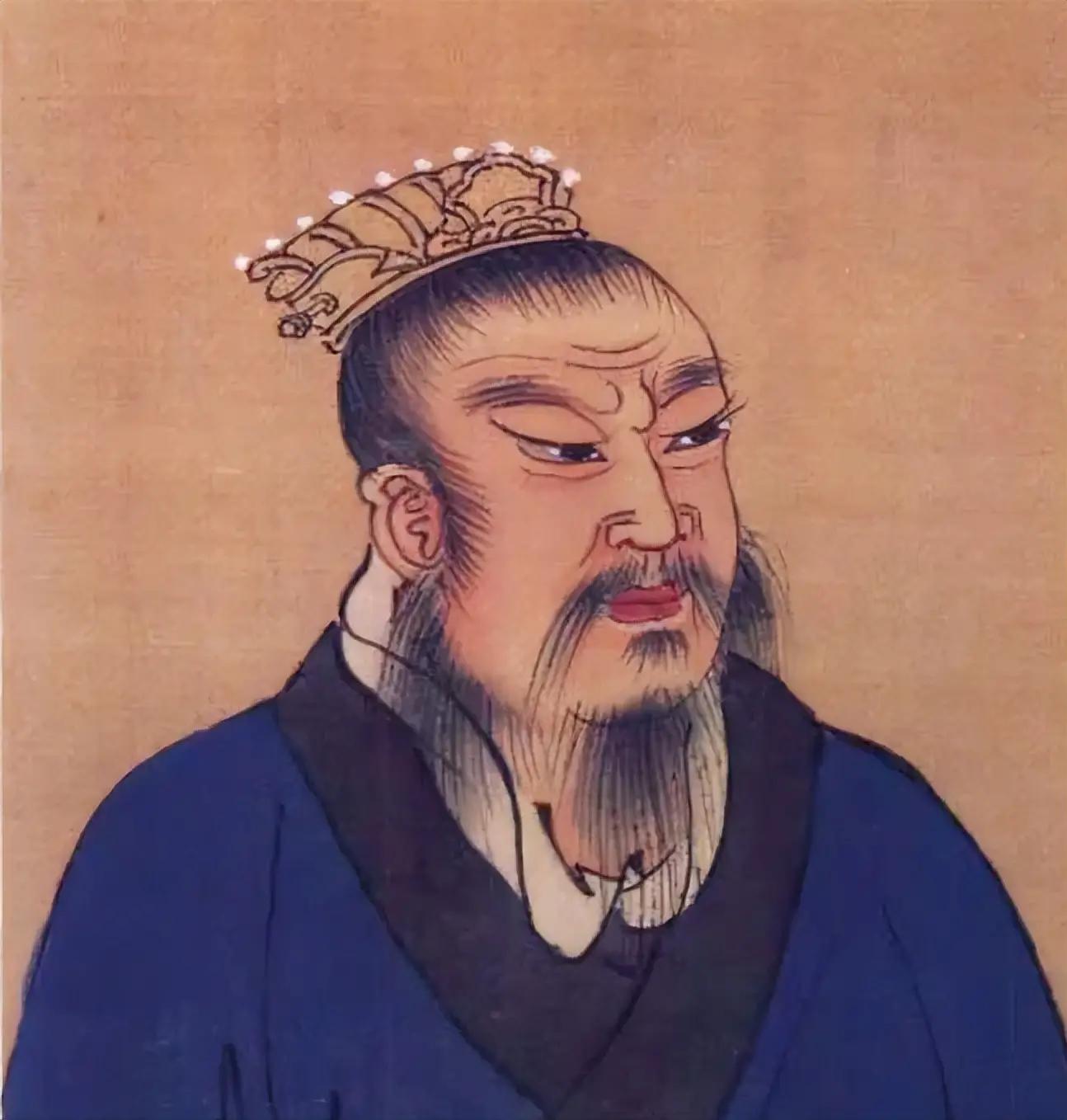
He reigned for fifty-four years, longer than any other Han emperor, and in that time he changed what an emperor was. His grandfather and his father had governed by subtraction: Wen abolished the land tax and would not take his armies into the steppe; Jing kept the peace and paid the Xiongnu in silk. Liu Che did the opposite of all of it. He ended the marriage alliance and fought the steppe confederation for forty years; he broke the kings of the east by an administrative device so simple that no one could refuse it; he took the coinage, the salt and the iron out of private hands; he fixed the calendar, invented the reign-era, made the Confucian classics the language of government, and went up Mount Tai to tell heaven what he had done. The empire he left to his eight-year-old son was twice the size of the one he inherited.
It was also, by his own court's reckoning, exhausted. "The campaigns lasted thirty-two years, and the interior was drained," the Book of Han says of the reign. In his last decade his own crown prince died in a civil war fought inside the capital, and his empress killed herself. Yet he is the emperor his dynasty chose to keep: Sima Guang, a thousand years later, wrote that he had the faults which destroyed the Qin and escaped the Qin's calamity, because, having spent his people's strength, he had the honesty at the end to say so. How much honesty the last document of his reign contains is a question historians have been arguing about since the 1980s.
1. The Tenth Son
Liu Che was born in 156 BC, to the Lady Wang, and he was not supposed to be emperor. His father, the emperor Jing, had already named an heir: Liu Rong, whose mother was the emperor's favourite. What moved Liu Che to the succession was a quarrel between two women.
The account of it comes from Sima Qian. The emperor's sister, the Princess of Guantao, wanted her daughter Chen Jiao married to the crown prince, and the crown prince's mother refused her, and did so rudely. The princess, who had the emperor's ear, then asked the Lady Wang whether she would take the girl for her own son instead. Lady Wang agreed, and the two women set about the imperial favourite between them. The version of the story that everyone remembers — the boy promising that if he could marry Chen Jiao he would build her a house of gold, the tale that gave Chinese its idiom for a lavish marriage — comes from a collection of palace anecdotes written centuries later and cannot be treated as a record. The alliance it describes is in the histories, and it worked. In 150 BC the emperor deposed Liu Rong, made Lady Wang his empress, and made Liu Che, then six years old, crown prince; the marriage to Chen Jiao followed, and she became his empress when he took the throne in 141 BC.
He had learned the first lesson of Han court politics by the age of six: the throne was won in the women's quarters as much as in the field. In 130 BC he deposed Chen Jiao on a charge of witchcraft, and two years later made empress in her place a singer from his sister's household named Wei Zifu, whose brother and nephew would become the two greatest generals of the Han.
What he inherited in 141 BC, at fifteen, was the settlement his grandfather had refused to disturb. The empire was one state and practically two: about fifteen commanderies administered from Chang'an, and a belt of hereditary kingdoms across the east and south whose kings were the emperor's cousins, each rich enough to coin money and raise an army. On the northern frontier the Xiongnu confederation, unified a generation earlier, raided at will and was bought off every year with silk and a princess. The treasury was not empty — that was the whole point of the previous two reigns — but revenue came from a land tax at one-thirtieth of the harvest, a poll tax of forty coins on every adult, and labour service. There was no salt monopoly, no iron monopoly, no state revenue from trade, and the coinage was minted by whoever had the metal. Wen had abolished the mutilating punishments and replaced them with beatings, and had left the kings alone because he judged that the cure would cost more than the disease.
Liu Che's reign is the record of what happened when a man of large ambition took a state like that and decided that all of its restraints were options. The fifty-four years divide roughly in half. Through the first two decades he fought the Xiongnu and won, dissolved the kingdoms, opened the roads west, and paid for it by inventing the fiscal machinery of imperial China. Through the three decades after that he kept fighting, and the machinery began to eat the country it had been built to serve.
2. The Reform That Would Not Take
The young emperor's first instinct was doctrinal. In his first year he called for the recommendation of men of worth and talent, and the men who came forward were Confucians: Zhao Wan, made imperial secretary, and Wang Zang, made chief of the palace attendants, with the chancellor Dou Ying and the grand commandant Tian Fen behind them. Their programme was to rebuild the state along classical lines — an audience hall of light, a reformed calendar and court colours, inspection tours and sacrifices, and government by ritual. They also proposed that the marquises be sent out to their fiefs, which was aimed at the families of the empress dowager.
They had misjudged the palace. The empress dowager Dou was still alive: the widow of the emperor Wen, blind for years, outliving everyone who might have restrained her, and holding to the quietist statecraft the histories call Huang-Lao that had governed the Han since the founder. In the second year of the reign she had Zhao Wan and Wang Zang arrested for corruption; both men killed themselves in prison, and Dou Ying and Tian Fen were dismissed. For four years the emperor who is remembered as the author of Confucian government governed with his grandmother's hand on the tiller, and his grandmother was the last living link to the reign of Wen. The reform was not refuted; it was stopped.
She died in 135 BC, and the reign began in earnest. The next year the court issued the order that later ages would date the Chinese civil service from: each commandery and kingdom was to recommend one man of filial conduct and integrity for office each year. In the same period the emperor received the memorials of Dong Zhongshu, whose argument was that the state's troubles were symptoms of a misalignment between heaven and the ruler, and that the remedy was education in the classics and the moral rectification of the sovereign. Out of this came the sentence that every Chinese schoolchild learns and that no Han document contains: "dismiss the hundred schools; honour the Six Classics alone." That is a later summary of the reign's direction, not a decree of it. What the reign actually did was more practical: it built an academy, gave salaried teaching posts to specialists in the canon, and let the men who passed through it enter the bureaucracy. In 124 BC, when the Imperial Academy was founded, the emperor also broke the rule that the chancellor must be a marquis, making the Confucian scholar Gongsun Hong chancellor — a commoner raised from poverty.
None of this was a conversion of the state. The laws the Confucians honoured in the classroom were the laws of Qin, and the men who enforced them in the provinces were not scholars. From the 120s BC the classics were the grammar in which a Chinese official explained himself to the throne, and they did not cease to be so until the twentieth century; but a man like Zhang Tang, who never read a classic and rose to the imperial secretaryship by drafting statutes, was as much a product of the reign as Gongsun Hong.
The last act of the reign's first phase was the abandonment of the frontier settlement. In 133 BC the emperor set a trap: a merchant named Nie Yi offered to murder the Xiongnu paramount chief and open the frontier market town of Mayi to him, and three hundred thousand men were hidden in ambush nearby. The chief came part of the way, smelled it, and turned back; the Han army chased him to the border and stopped. From that year the marriage alliance was over, and the silk that had gone north every year as the price of peace went instead into the pay chests of the armies. Liu Che had inherited a frontier bought with a princess a generation; in his early twenties he decided to buy it back with soldiers.
3. The Kingdoms, Dissolved Without a Battle
The problem Liu Che inherited had defeated two better-tempered men than himself. The founder had enfeoffed his sons and brothers across the eastern half of the country because he judged that only his own blood could hold it, leaving the empire as two states in one: commanderies under the central court, kingdoms under the Liu family. By the reign of the emperor Wen the commanderies directly administered from Chang'an came to about fifteen, against a patchwork of kingdoms covering the rest of the map. Wen's answer had been to wait, to divide a kingdom when a king died conveniently, and to allow the king of Wu to coin money and boil sea water for salt rather than provoke him. The king of Wu then raised seven banners in 154 BC, three years after Wen's death; and the emperor Jing's answer — a direct assault on the kings' territories — had nearly lost the dynasty.
The device that ended the problem was proposed in 127 BC by an official named Zhufu Yan, and it could not be refused. Under the old rule a kingdom passed entire to the king's eldest son. Zhufu Yan proposed that a king, on dying, should be permitted to divide his territory among all his sons and have them enfeoffed as marquises. The emperor would be seen to extend his grace to the younger sons of the imperial house; the younger sons, who had previously received nothing, would be delighted; and their marquisates would belong not to the kingdom but to the neighbouring commandery, so that every generation of a great house automatically transferred land from the kings to the central government. The histories put the effect in three words: not a single battle was fought. The great kingdoms that had defied his father were dismantled within a generation, and no one had to be accused of anything.
Where this failed to work — because a king was too proud, or too frightened, to wait for his own death — the reign did not need to be lucky. In 122 BC the king of Huainan, Liu An, and his brother the king of Hengshan were charged with plotting rebellion. Liu An was a grandson of the founder and the patron of a circle of scholars whose book, the Huainanzi, survives; his kingdom was one of the three into which the emperor's grandfather had divided the old kingdom of Huainan a generation earlier, as a favour to the sons of a brother he had himself destroyed. Both kings killed themselves, their kingdoms were turned into commanderies, and the officials, retainers and family members executed in the aftermath are given in the histories as several tens of thousands. Two statutes completed the work: the Law of the Left Office, which marked service in a royal administration as a disqualification rather than a career, and the Law of Attached Followers, which forbade scholars and officials to attach themselves to a king's household at all.
In 112 BC the reign used a ceremony as a weapon. Every year at the ancestral sacrifices the marquises contributed gold, assessed on the population of their fiefs. That autumn a column of candidates for execution had just presented itself: the emperor had proposed to campaign against the rebellion in the south, and not one of the hundred-odd marquises had volunteered. The emperor, presented with the annual tribute, declared that much of it was short of weight or debased, and one hundred and six marquises were stripped of their titles in a single act — by the count of the Book of Han, about half of those then holding the rank.
What replaced the kings was a bureaucracy that answered to the emperor alone. Han government had always had a formal apex — the chancellor, the grand commandant, the imperial secretary — and Liu Che worked around it rather than abolished it, gathering an inner court of men whose offices were small and whose access was total: attendants, palace secretaries and personal clients with no departmental base, empowered to draft and decide policy that the outer court would then be ordered to execute. Finally, in 106 BC, he put eyes on the provinces. The empire was divided into thirteen provinces, each watched by an inspector whose rank was deliberately set at six hundred shi, far below the governor of a commandery at two thousand. The inspector answered to the throne alone, did not govern and did not reside, and the arrangement lasted, in outline, for two thousand years.
4. The War Against the Steppe
Since the founder's humiliation at Baideng in 200 BC the Han had bought its northern frontier with a dynastic marriage and an annual tribute of silk, renewed by three emperors. The emperor Wen, when the paramount chief came through the passes in 166 BC with a hundred and forty thousand horse and burned a palace within sight of the capital, had raised an army to defend Chang'an, announced that he would lead it out himself, been dissuaded by his mother, and let the raiders go home. That was the policy Liu Che abolished in 133 BC, and what he put in its place was a war of manoeuvre fought by cavalry in the desert.
It did not begin well. The first campaign, in 129 BC, sent four generals out by four routes; three came back with nothing, one of them — Li Guang, the most famous frontier commander of the age — was captured and escaped, and one, a former horse-keeper in the household of the emperor's sister named Wei Qing, rode as far as the Xiongnu shrine at Longcheng and burned it. Wei Qing was the brother of the empress Wei Zifu, which is how he had come to the palace; he was also the best strategist the Han produced in the reign.
The war's shape settled early. In 127 BC Wei Qing drove the Xiongnu out of the Ordos loop, the great bend of the Yellow River inside the frontier, and the court did what the Qin had done before it and the Han had never done: it settled the ground. A new commandery, Shuofang, was established there and colonised with settlers from the interior, and a stretch of the old Qin wall was rebuilt. In 124 BC Wei Qing caught the Xiongnu right-wing king in his camp and was made grand general, a title the dynasty had not used since the founder's own wars.
In the same years a second commander appeared, and he was a different kind of soldier. Huo Qubing was the son of a servant girl in the household of the emperor's sister, and thus Wei Qing's nephew. He was seventeen by our reckoning, eighteen by his court's, when he took eight hundred cavalry deep into the steppe on his own initiative and came back with more prisoners than men; the emperor made him marquis of Champion and offered to build him a mansion, and Huo Qubing answered with the sentence Chinese soldiers have quoted ever since: so long as the Xiongnu are not destroyed, what use is a household? He was careless of his men and the most effective cavalry commander of the dynasty. In 121 BC he rode twice through the western corridor: the first time a thousand li past the Yanzhi mountains, killing nearly nine thousand; the second time further, to the Qilian range, killing or capturing some thirty thousand more. That autumn one of the Xiongnu kings killed his colleague and brought some tens of thousands of followers over to the Han, and the Han took the corridor for good.
The decisive campaign came in 119 BC. Huo Qubing and Wei Qing each took fifty thousand cavalry, with several hundred thousand infantry behind them, and the two armies crossed the Gobi in a double advance. Wei Qing met the paramount chief's own force, broke it, and chased it north to a fortified storehouse the Xiongnu had taken from a Han defector, which he burned. Huo Qubing rode further, past the mountains the histories call Langjuxu, where he performed the sacrifice to heaven on the summit — the act the Chinese phrase feng Langjuxu still commemorates — and came back with seventy thousand captives and dead. The Xiongnu were not destroyed; no one destroyed the steppe. But they moved north of the desert and stopped maintaining a court within reach of the frontier, and the phrase the histories use for it — beyond the desert there is no royal court — is the measure of what the Han had bought. The price is in the same records: the two armies went out with a hundred and forty thousand government and private horses and came back with fewer than thirty thousand; the soldiers who did not return numbered in the tens of thousands; and among them, in a sense, was Li Guang, who had fought the Xiongnu for more than forty years, was given a roundabout route with no enemy on it, lost his way, and killed himself rather than face a military tribunal. Huo Qubing died two years later, at about twenty-three, and was buried under a mound shaped like the Qilian mountains he had crossed.
After 119 BC the great campaigns ended and the war did not. In 104 BC the emperor sent an army west to take the horses of Ferghana and lost almost all of it. In 99 BC Li Guang's grandson Li Ling took five thousand infantry into the desert, was surrounded by a force of eighty thousand, fought until his arrows ran out, and surrendered — for which the historian Sima Qian, who said a word in his defence, was castrated. In 97 BC a Han army of a hundred and thirty thousand marched north and achieved nothing. In 90 BC the emperor's own favourite commander, Li Guangli, taken by surprise by the news that his family had been arrested at home, pressed an attack he should have broken off and took his army over to the Xiongnu. The war Liu Che began in 133 BC was still being fought, badly, the year he died.
5. The Roads Out of China
The Han had known for a generation that the Xiongnu had driven a people called the Great Yuezhi off their lands in the western corridor and had made a drinking cup of their king's skull. In 138 BC — or a year earlier, depending on whether one reckons from the length of the mission or from the year in which it was sent — the court decided to find them, in the hope of enlisting a people with that grievance against the Xiongnu from the west. A junior officer named Zhang Qian volunteered, took a hundred-odd men, and set out through the corridor the Han did not control.
He was arrested within days. The Xiongnu kept him for ten years or more, gave him a wife, and let him live; he kept the imperial tally he had been given, eventually escaped west, crossed the Pamirs, and came to the Yuezhi — who had by then conquered a fertile country on the far side of the mountains, found it comfortable, and had no interest in returning east to fight. He stayed with them a year, came home the long way round, was arrested a second time, escaped again, and reached Chang'an in 126 BC with one companion. The histories give the duration of the mission as thirteen years and note that of the hundred men who had left, two came back. Sima Qian used a word for it that no one has improved on: Zhang Qian opened the way — the Chinese term is zaokong, to bore through the void, to cut a passage where there was no road.
He came back with a picture of the world. Zhang Qian had seen Dayuan in the Ferghana valley, with its walled cities and its horses that sweated blood; Kangju and Sogdiana; Daxia, which was the wreck of a Greek kingdom; and, at second hand, Anxi — Parthia — and a country called Shendu, which is India. He reported that in Daxia he had seen cloth from Shu and bamboo staves from Qiong, goods that could only have come from the Han by some southern route, which meant there was a way to India that did not pass through the Xiongnu. The court sent envoys out through the south-west along four roads to look for it; they got a thousand or two li into the mountains and came back, and the road to India was never found in this reign. The peoples the envoys had described were conquered instead, with commanderies planted among the tribes of what are now Sichuan and Yunnan.
Zhang Qian's military career in the interval was mixed. He served with Wei Qing in 123 BC, and his knowledge of where the grass and water were kept the army supplied, which earned him the title of marquis of Bowang; in 121 BC he rode with Li Guang and missed his rendezvous, and lost it again. It was as a disgraced ex-marquis that he made his second proposal: not an alliance with the Yuezhi, who had refused, but a marriage with the Wusun, a people in the Ili valley who were also at odds with the Xiongnu and could be detached from them — the phrase is his, to cut off the Xiongnu's right arm. In 119 BC, the same year as the great campaign across the Gobi, he was sent back west as a fully equipped ambassador, with three hundred men, tens of thousands of head of cattle and sheep, and a fortune in silk and gold. He failed to move the Wusun and succeeded in everything else: he sent his subordinate envoys on to Dayuan, Kangju, the Yuezhi, Daxia and Anxi, and when he came home in 115 BC he brought Wusun envoys with him. He died the next year. About 105 BC the Han sent a princess of the imperial house to marry the Wusun ruler.
Alongside the road west, the reign annexed the south and the north-east. The kingdom of Nanyue, which covered what is now Guangdong, Guangxi and northern Vietnam, was destroyed in 111 BC after its chancellor rebelled and divided into nine commanderies. The kingdom of Minyue, on the Fujian coast, submitted the next year and its population was deported to the interior. In 108 BC a war that began over the murder of a Han envoy ended with the destruction of the Korean kingdom of Gojoseon and the establishment of four commanderies in the peninsula, of which one, Lelang, would last four centuries. And in the same year a Han column under Zhao Ponu crossed the desert to the salt lake at Lop Nor and took the king of Loulan prisoner.
It is worth being exact about the west. The reign put envoys in the oasis cities, married into the Wusun, garrisoned the corridor, and from 101 BC kept military colonies at Quli and Luntai with an officer to oversee them. It did not rule the region. The Protectorate of the Western Regions — the office that turned the Tarim Basin into a Han dependency — was created in 60 BC, twenty-seven years after Liu Che's death. What his reign did was make the road, and make the Han the first Chinese state with a foreign policy.
6. What It Cost
The wars and the roads were not paid for out of the surplus his grandfather and his father had accumulated. That surplus had gone in the first two decades — into the Ordos garrisons, the colonists of Shuofang, and the cavalry armies that crossed the Gobi in 119 BC. What paid for the rest was a programme of state finance with no precedent in Chinese government, and the men who designed it were not scholars but merchants.
The first of them were the salt and iron men themselves. In 120 BC, on the advice of an official named Zheng Dangshi, the court brought in two of the wealthiest commoners in the empire — Dongguo Xianyang, who had made his fortune boiling sea water for salt, and Kong Jin, whose fortune was in iron — and appointed them assistant directors of agriculture, to design the state's monopoly in the two trades they knew best. By 117 BC the design was running across the empire: salt boiled and sold under official licence at an official price, iron smelted in state furnaces and sold in state shops, with penalties for anyone who produced either privately. It was the beginning of a principle that outlasted the dynasty — that some goods are too important to be left to the market — and it made enemies at once, including the very men the court had hired, who understood better than anyone what it would do to their trade. Some thirty-six years later the argument was still being had: the Discourses on Salt and Iron, the record of a debate held at court in 81 BC, is largely a prosecution brief against the whole programme, and it was written up by a man who took the prosecution's side.
The second instrument was a tax on capital, which no Chinese state had attempted before. In 119 BC the court ordered the assessment of hoarded wealth: merchants to pay one suan — a hundred and twenty coins — on every two thousand they were worth; artisans at half that rate; a further suan on a merchant's cart, and another on a boat of a certain length. The theory was sound and the collection was hopeless, because the tax was assessed on property that could be hidden and on values the assessor could not see. So in 114 BC the court legalised denunciation. An official named Yang Ke was put in charge, half of every confiscated estate went to the informer, and the writ ran through the whole empire. The Book of Han gives the result in two sentences: "Yang Ke's denunciations of hoarded wealth went through the whole empire. Households of middling substance and above were for the most part denounced." The property taken was counted in the hundred millions and the slaves in numbers of tens of thousands; the land, in the larger counties, in the hundreds of qing. "And so," the same passage ends, "the merchants and the households of middling substance and above were for the most part ruined." The cases were tried by Du Zhou, a man who, asked whether a judge was bound by the statutes, answered that the statutes were whatever the previous emperor had made law and the present one had made ordinance, and that what was right was what the throne found useful.
The third instrument was the coinage, and here the reign reversed his grandfather directly. Wen had let anyone with the metal mint money, on the theory that the state had no business in the market; the result was a currency of shifting weight and a private right that made certain families rich. In 118 BC the court struck a new coin, the five-zhu piece, of fixed weight and alloy; in 113 BC it forbade the commanderies and the kingdoms to coin at all, ordered the copper carried to the capital, and gave the minting to three offices of the Shanglin park under the superintendent of waterways and parks. The five-zhu coin, minted by the state in a single standard, remained the coin of China until the Tang. It was the most durable thing Liu Che made.
The fourth instrument had a face. Sang Hongyang was the son of a merchant family of Luoyang and, by the story the histories tell, had entered the palace at thirteen because he could reckon large sums in his head. By the 110s BC he was the most powerful financial officer in the empire, and he gave the reign two devices that between them made the state itself a trader. In 115 BC he began junshu, "equitable transport": the commanderies no longer sent their taxes to the capital in goods that rotted on the road, but delivered them to local officials who sold what was surplus and bought what the state needed. In 110 BC the court added pingzhun, "the balancing standard": officials were to buy goods when they were cheap and sell them when they were dear, gathering the produce of the empire into the hands of the state. The Records of the Grand Historian states the principle without embarrassment — "to gather in the goods of the whole empire, and sell them when they were dear and buy them when they were cheap" — and reports the result without irony: the granaries at the capital and at Ganquan full to the rafters, and five million bolts of cloth held by the transport offices.
Not everyone thought the arithmetic worth the price. Bu Shi was a shepherd from Henan who had made a fortune in livestock and had given half of it to the frontier when the war began — the kind of man the court liked to praise. He was made a minister, and he used the office to say what he had seen in the provinces: that the state's iron was bad, that its tools were expensive, that its agents forced people to buy them, and that the new tax on boats had made goods scarce and dear. The emperor's favour cooled and he was moved to a teaching post. What Bu Shi had described was the flaw in the design: a monopoly that answers to no competitor has no reason to be good, and a tax that cannot be collected honestly will be collected by informers. The Book of Han's sentence on the whole reign — "the campaigns lasted thirty-two years, and the interior was drained" — is a verdict on the revenue as much as on the war. The state that the campaigns had built was, by the end, the state that was eating the country the campaigns were fought to defend.
7. Mount Tai
In 113 BC a man digging in a riverbank at Fenyin, in the south of what is now Shanxi, brought up a bronze tripod. The court, which was ready to read any such object as a sign, took it as one; the emperor changed the name of the reign-era to Yuanding, "the primal tripod." The name has a small significance of its own. The Qing scholar Zhao Yi showed that the earlier era-names of this reign — Jianyuan, Yuanguang, Yuanshuo — were applied to years that had already passed, and that Yuanshou, taken in 122 BC, is the first era-name the emperor gave to a year that had not yet happened. From this reign, which is to say from the moment when the emperor began to name his own years, the Chinese dated their history; every later dynasty kept the device.
The tripod was the least of it. In 110 BC, at the age of forty-six, having made the empire larger and the throne stronger than any Han ruler before him, Liu Che went east to Mount Tai to tell heaven what he had done. He performed the feng sacrifice on the summit and the shan sacrifice on a lower hill, and of what he said and did there nothing certain is known, because the rites were kept secret. The Records of the Grand Historian says as much — "the affair was secret, and the world does not know it" — and its author had an unusual reason to care. Sima Qian's father, the court astronomer Sima Tan, had hoped to go on the procession and was left behind at Luoyang, and died there while his son was still trying to reach him. The account of the sacrifices in the Records is, in part, a son's attempt to learn what his father had been shut out of.
Around the great ceremony gathered a crowd of men whom the histories call fangshi, masters of techniques, and what they offered was not immortality in the abstract but a route to it — a drug, an island, a master who held the secret. Li Shaojun, early in the reign, promised that the recipe for deathlessness could be had from such a master, and that once a man had it he could make gold, and with the gold make vessels, and with the vessels summon the spirits of the sea. He died, and the emperor wrote to a friend that he had not died but "transformed." Shao Weng, a later arrival, staged a trick in which the emperor's dead favourite appeared as a shadow; he was exposed and executed in secret under the title General of Writing. Luan Da, the most spectacular of them, arrived with a story of immortals and was loaded with honours — four noble titles, a mansion, and a princess of the imperial house in marriage — and when his promises came to nothing he was cut in two in the marketplace in 112 BC. Still the emperor sent expeditions into the eastern sea, looking for the island of Penglai, and at one point announced that he would sail there himself, before wiser heads talked him out of it. He never found the drug, and he grew old.
The same years produced the reign's most lasting piece of statecraft, which had nothing to do with immortals. In 104 BC the court published a new calendar. Under the old reckoning the year began in the tenth month; under the new one it began in the first, in the spring, and the court's colour was set at yellow and its number at five, to match the element of earth that the dynasty claimed. The men who made it were a curious coalition: the court astronomer Gongsun Qing, an official named Hu Sui, and the historian Sima Qian, together with two men from outside the court altogether — Luoxia Hong, a scholar from the mountains of Shu, and Deng Ping, who between them supplied the arithmetic. Its rule of seven intercalary months in every nineteen years became the basis of the Chinese calendar, in outline, for the next two thousand years. The calendar, the sacrifices and the era-names belong together: one told the people what year it was, one told heaven, and one told the world that the emperor was the man through whom the two were joined. In the same year the Boliang terrace burned down, and the emperor replaced it with the Jianzhang palace, so large that the phrase that stuck to it was "a thousand gates and ten thousand doors."
It is worth setting down what this same emperor did in these years as a ruler of grain and water, because the ritual and the magic can obscure it. In 109 BC he went in person to the breached dike of the Yellow River at Huzi, which had been running out of its old bed for more than twenty years; he ordered the officials and attendants, from the generals down, to carry the bundles of brushwood themselves, and when the gap was still not closed he wrote a song about it and stayed until it was. That was an emperor who could be told that the harvest would fail and act on it. He was also, in the same decade, the man who paid for a search for a drug that did not exist with the revenues of an empire, and had a fortune-teller cut in half for promising what he could not deliver. Both men were Liu Che.
8. The Witchcraft Crisis
Witchcraft had been a political charge in this court since the beginning of the reign. In 130 BC Liu Che had used it to depose his own empress, Chen Jiao, and the case had been tried by Zhang Tang, the statute-drafter who would end his career as imperial secretary. In the winter of 92 BC the same weapon was picked up again, this time by a man with nothing to lose.
Zhu Anshi was an outlaw — the histories call him a knight-errant, which in Han usage meant a man with followers and a private code — and he had been arrested by the chancellor, Gongsun He, at the price of a favour. Gongsun He's son had embezzled funds intended for the northern army, and the chancellor had tried to buy the informer's silence by catching him first. From his cell, Zhu Anshi sent up a memorial accusing the son of a worse crime still: that he had paid a sorcerer to curse the emperor, and that he had committed adultery with a princess of the imperial house. The son died in prison; the chancellor died with him; two princesses and a son of the dead general Wei Qing were executed. Sima Qian's phrase for the sequence became a proverb: it began with Zhu Anshi and it ended with Jiang Chong.
Jiang Chong was a man of the kind the reign had raised — a former client of the king of Zhao, rigorous, self-righteous, and without restraint, who had once arrested one of the crown prince's own messengers on the highway for using the imperial road and had never been forgiven for it. The emperor was by now in his sixties and often ill, spending long months at the Ganquan palace away from the capital. Jiang Chong told him that his illness had a cause, and the cause was witchcraft: puppets buried in the ground, curses spoken over them, worked by people who wanted him dead. The emperor gave him the warrant, and Jiang Chong's men — including a shaman brought down from the northern frontier — dug in the ground wherever they suspected anything, and every household they searched produced confessions, because the confessions were obtained under torture and the torture did not stop until a name was given. The figures in the Book of Han are of the same order as the fiscal ones: several tens of thousands dead.
Then he went to the crown prince. Liu Ju had been heir since 122 BC; his mother, the empress Wei Zifu, had been the emperor's own choice, and her family had given the dynasty its two best generals. Jiang Chong's shaman dug in the crown prince's palace and, of course, found what he had put there. The crown prince's tutor, Shi De, told him what the precedent was: the First Emperor's son Fusu had waited to be summoned and had killed himself on a forged order, and a son who does not act is a son who is dead. The crown prince arrested and killed Jiang Chong, burned the shaman alive in the imperial park, opened the palace armouries, and called out the guards of the empress's palace. He went to the chancellor's office; the chancellor, Liu Qumao, fled. The emperor came back from Ganquan, gave the chancellor an army, and told him to take the crown prince alive. What followed was not a battle on a frontier but a battle in the streets of the capital, fought for five days in the markets and the wards of Chang'an. The dead, by the same record, were several tens of thousands.
The crown prince lost, and fled east with two of his sons. In a poor house in Huxian county, with a reward on his head, he was found; a man went to the authorities for the money; the crown prince hanged himself, and his sons were killed with him. His mother the empress had already taken her own life in the capital. The emperor, when he understood what he had allowed, had Jiang Chong's family wiped out and the eunuch Su Wen, who had helped him, burned alive on a bridge. A minor official named Tian Qianqiu sent a memorial that spoke of the relation between father and son in terms no one else had dared; the emperor was moved, made him chief minister within a few months. He built a palace in Chang'an called Longing for the Son, and at Huxian, where the crown prince had died, a terrace called Come Back and Watch for Him.
The child who would be the dynasty's next great ruler was in a prison at that moment: the crown prince's grandson, Liu Bingyi, a few months old, held in the commandery hostel because his father and his father's line were under judgement. He was saved by a warden named Bing Ji, who found a nurse for him, kept him alive through an illness, and never afterwards spoke of what he had done. The boy grew up among ordinary people, but not in ignorance of his descent: an edict had him raised in the palace quarters and entered in the imperial clan register. He was the emperor Xuan, and the recovery that historians call the Restoration of Zhao and Xuan begins with a man who had spent the years of the witchcraft crisis in a cell.
One caution belongs here, because the story is so often told as a tragedy with a moral. The early sources do not describe the crown prince as the humane, civil-minded alternative to his father's wars. The Book of Han's account of him notices instead that the emperor built him a park where he could gather guests, "and many who came by unorthodox roads advanced through him." The portrait of a gentle heir who would have spared the empire, and of a father who was secretly planning to hand him a pacified world, comes largely from the Zizhi Tongjian, written eleven centuries later by Sima Guang, who took parts of it from a Six Dynasties romance called the Hanwu gushi — the same book, incidentally, that gave Chinese the story of the golden house. Chinese scholars, most forcefully Xin Deyong in a book of 2015, have argued that the whole image of the emperor's late repentance is a construction of later historians working backwards from the policy they wished he had chosen. Whether there was a real difference of policy between the father and the son is a question the documents do not settle.
9. The Edict of Luntai
In 89 BC, two years before his death, the emperor did something no Chinese ruler of comparable power had done before, and the question of what he meant by it has not been answered since. The occasion was a proposal from Sang Hongyang and his colleagues: that the state colonise the fertile land around Luntai, on the far side of the desert in the Tarim basin, send out soldiers to farm it, and build a chain of fortified posts westward from it as a base for the caravan road. It was the logical next step of the whole western policy, and the emperor refused it in a document of remarkable plainness.
The army that had come back from the last great campaign, he wrote, had been destroyed; the men were dead or scattered or taken, and the grief of it "is always in my heart." The proposal to farm Luntai "would disturb and weary the empire, and is not the way to care for the people. I cannot bear to hear it." And then the sentence that has been quoted more than any other in the reign: "The armies went out one after another; the campaigns lasted thirty-two years, and the interior was drained." What he ordered instead was not a new campaign but a set of instructions that read like a change of government: forbid harshness in the administration, stop the arbitrary levies, put farming first, restore the regulations that had encouraged the keeping of horses, and let the frontier be guarded without new offensives. The Book of Han adds the sequel in a single line: "From this time he did not send out the armies again. And he enfeoffed the chancellor Tian Qianqiu as Lord of Enriching the People, to make plain that he meant to rest, and to think of enriching and nourishing the people." In the aftermath an official named Zhao Guo was made director of grain and introduced the ridge-and-furrow method of cultivation, which the record credits with raising the yield of an acre by a bushel or more.
The document is known to every Chinese schoolchild as the "edict of self-blame." That is a later name; the Han had no such term. The argument about what it means is modern, and it begins with a 1984 essay by the historian Tian Yuqing, which read the Luntai edict as the hinge of the reign — the moment when Liu Che turned from conquest to consolidation and so saved the Han from the fate of the Qin, whose first emperor had never once admitted a mistake. On that reading the last two years redeem the first fifty-two, and the dynasty's survival is the proof. The reading is attractive, and it is very old: the Book of Han's own comment on the reign pairs the emperor's faults with his escape from their consequences, and attributes the escape to his willingness to say at the end that he had been wrong.
Xin Deyong has argued in two books that the document will not bear the weight. It refuses one proposal, he points out, and it reviews the failure of one army — the one commanded by the emperor's favourite Li Guangli, whose surrender had been the worst humiliation of the last years — while saying nothing at all about the campaign that had succeeded in the same season. The historian Ban Gu, who had every reason to glorify the dynasty, did not put the edict in the imperial annals at all; he filed it in the chapter on the western regions and left it there. And Ban Gu's summary of the reign in the annals is not the summary of a broken old man: it asks, in effect, who among the ancient kings could have done better. The image of the penitent emperor, Xin Deyong suggests, is the creation of Sima Guang and his successors, who needed a precedent for the policy of restraint they wanted to recommend to their own sovereign. Other scholars, following Tian Yuqing, have answered that the edict is not the whole of the evidence and that the withdrawal from offensive war is a fact whatever its rhetoric. The argument has not been settled, and the honest form of the sentence is this: what the Luntai edict was, and what it meant, are not the same question, and the answer to the second has been disputed for forty years.
10. The Heir
In 88 BC the emperor, then sixty-nine, made his last decision, and he made it without speaking. He had a picture painted — the Duke of Zhou carrying the young King Cheng on his back to receive the assembled lords — and gave it to Huo Guang, the half-brother of the dead general Huo Qubing and a man who had served in the palace for thirty years and, the histories say, had never in that time made a mistake. That was the nomination. Huo Guang would be the regent, and the boy he would carry was Liu Fuling, the emperor's youngest son, born to the Lady Zhao in 94 BC and now seven years old.
There was a difficulty with the Lady Zhao, and the emperor solved it in a way that became a principle. Some days after giving Huo Guang the picture he had her arrested on a trivial charge and sent to prison. She turned to look at him as she was taken away; he told her to go, that she could not live; she died at the Yunyang palace and was buried at night, without ceremony. When he was asked why, he said that disorder in a state had always come from a young ruler with a strong mother — "have you not heard of the empress Lü?" — and that he would not leave a second Lü to a child. The principle was remembered, and made law by the Northern Wei five centuries later: when you set up the son, you put the mother to death. It is one of the few places where the reign's cruelty and its statecraft are the same act.
The way was cleared further by a death. In the same year the emperor's surviving older son, Liu Bo, king of Changyi and son of the Lady Li, died; there was now no candidate but the child. On the twelfth day of the second month of 87 BC the emperor made Liu Fuling crown prince. The next day he appointed the men who would govern in his name: Huo Guang as grand marshal and general-in-chief, Jin Midi as general of chariots and cavalry, Shangguan Jie as general of the left, and Sang Hongyang as imperial secretary, with the chancellor Tian Qianqiu, the man who had pleaded for the dead crown prince, still in office. The next day, on the twenty-ninth of March, Liu Che died at the Wuzuo palace. The boy took the throne the following day. He was the emperor Zhao, and he was eight years old.
He was buried at Maoling, in what is now Xingping in Shaanxi, under a mound of rammed earth larger than any other Han imperial tomb. The reign had lasted fifty-four years, longer than any other in the dynasty, and the empire it passed on was nearly twice the size of the one it had inherited. It was also, on the reckoning of the next generation, close to exhausted. The Book of Han's summary of the years after his death has a sentence that has been used ever since to measure his reign: "Within the seas, drained and depleted; of the registered households, half were gone." Part of that halving is an artefact of the register — men who fled the taxes simply dropped out of the count — but the direction of the movement is not in doubt.
Huo Guang governed for nineteen years and did two things no regent of the dynasty had done: he deposed an emperor after twenty-seven days, and he chose another. The one he chose was the crown prince's grandson, the boy who had survived the witchcraft crisis in a prison cell, and who took the throne as the emperor Xuan. He was, by any measure, one of the best rulers the Han had; the two reigns are bracketed together as the Restoration of Zhao and Xuan, and it is from that recovery, not from Liu Che's own last years, that the dynasty drew the second half of its life.
Which leaves the judgement his own historians made, and the one every generation since has made differently. He had taken a small, quiet, well-governed state and made it the centre of the known world; he had also spent its strength, and he had learned late what that cost. Sima Guang, writing in the eleventh century, put the case in the form the tradition has kept: this was an emperor who had the faults that had destroyed the Qin, and who escaped the Qin's fate, because having spent his people he had the honesty to say so at the end. Whether he said so, and how much honesty the saying contained, is the question the historians have been arguing about since the 1980s. What is not in dispute is the shape of the reign, because it can be counted: a boy who came to the throne at fifteen with a full treasury and no frontier; a man who at forty had beaten the steppe and opened the west; and an old man of seventy who left his eight-year-old son an empire twice the size of the one he had been given, and a country that had to be allowed to rest.