Home / Emperors / Jin Dynasty
Emperor Min of Jin
晋愍帝
Sima Ye, 300 – 318 · last emperor of the Western Jin
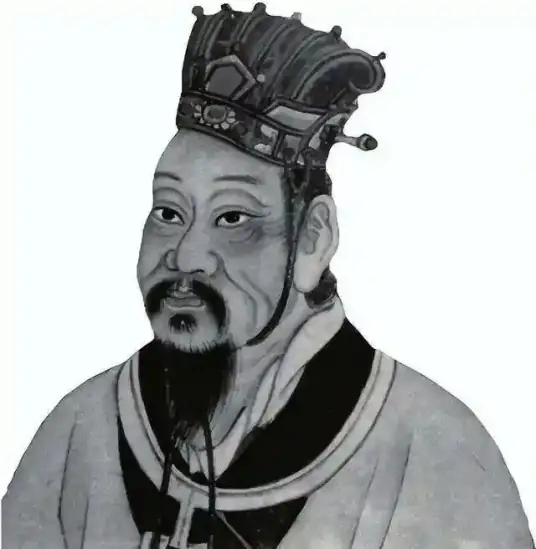
In the fourth month of 313 a boy of fourteen was put on the throne in Chang'an. The ceremony was held in a city that the annal, summing up his whole reign, says had fewer than a hundred households left in it. The palace walls were falling. Thorn bushes grew where the streets had been. There was no silk for rank badges and no silk for robes, so the officials wrote their titles on boards of mulberry wood. The court had four vehicles in all, public and private together, and one small body of troops. The boy's predecessor had died in an enemy capital a few months before. His father had been killed when the eastern capital fell. He was the third son of a prince whom the histories describe as the least capable of the founding emperor's sons, and as a child he had been given away to continue the line of a dead uncle. Nothing in his upbringing had prepared him to rule, and nothing in the state he inherited made ruling possible.
This is an account of how a dynasty ends. The end was not a battle. It was a sequence of documents and gestures: a surrender note sent to a besieging general, a sheep cart at the east gate, a jade disc held in the mouth, a coffin carried behind, a title of marquis conferred by the conqueror, and a killing fifteen months later in Pingyang. The gestures had been written down centuries earlier, in a classic that described the fall of the Shang, and the men who performed them in 316 knew their parts. The account that follows is also about how the ending was recorded. The history that preserves it was assembled by a commission of the Tang court more than three hundred years later, from earlier books most of which have since disappeared, and it closes the Western Jin at the end of a chapter and opens the next one in the south without announcing that anything had ended. The last thing the dynasty left behind was not a tomb or a territory. It was a way of counting years, and it went on being used in the far west for forty-eight years, until 361.
1. The Third Son
He was born in 300, in a year when the quarrels of the court turned into killing. He never saw his grandfather. The emperor Wu had died ten years before, in 290, and the throne had passed to a son who could not read a memorial, and from there to a series of regents and princes who governed in the name of a man who could not govern. Before the boy was old enough for a title, the dynasty his grandfather had built was still rich, still enormous, and already being spent.
His father was the prince of Wu, twenty-third son of the founding emperor, born in 281. The character sketch in the Book of Jin is unusually harsh and unusually specific. He was respectful and sincere, it says, but his ability did not reach the ordinary measure; among the sons of Emperor Wu he was the weakest. From childhood he had a disorder that affected his sight, so that his eyes did not look straight, and in later years it grew worse until he could no longer attend court. He had been prince of Wu since 289, had been stripped of the princedom and restored to it during the troubles of 300 and 301, and in the last years of his life held the grand offices of general-in-chief and grand commandant without being able to fill them. This was the household into which the last emperor of the Western Jin was born. It is not an explanation of the son, only the setting: a house whose men were honoured and useless.
His mother was a daughter of the Xun family of Yingchuan, the clan that had produced ministers for the house of Wei and for the house of Jin. Her brothers, Xun Fan and Xun Zu, would later be the two men who carried the boy out of the wreck of the eastern capital. Of the sons she bore, the eldest died with his father; three others were killed in the north in the years that followed; and the third, Sima Ye, was given as a child to continue the line of his uncle Sima Jian, the prince of Qin, who had died in 291 without an heir. He inherited the title of prince of Qin. That is the first fact about him and the one that shaped everything after it: he was a substitute. He was not raised as a candidate for anything. He was placed in a dead man's genealogy so that a dead man's sacrifices would continue, and the title he carried was the sign of an obligation, not a claim.
In 308, at the age of nine, he was appointed cavalier attendant and general of the pacifying army. A child of nine could hold a general's title in that state without difficulty, because the title carried no soldiers. It carried a place in the ceremonial order, a rank in the lists, a line in the court calendar. Three years later the armies of the north came down on Luoyang, and the ceremonial order was shown to be exactly what it was worth. His father was killed in the sack, and so was his eldest brother. He himself was not in the city. He was twelve by the court's count, in the country east of the capital, and he survived because he happened to be somewhere else.
2. The Ox Cart
In the summer of 311 the eastern capital fell and the reigning emperor was taken prisoner. What happened inside the city is told in the record of his predecessor. What matters here is where the boy was: in Mi county, in Yingyang, east of Luoyang, where he had met his mother's brothers. The bottom had gone out of the state, and the men around him were trying to decide which way to run.
They decided to go west, to Chang'an, where the inspector of Yong province, Jia Ya, still held the province for the dynasty. The man who organized the journey was Yan Ding, the inspector of Yu province, with a group that included Wang Pi, a former long secretary of the general who pacified the army; Liu Chou, long secretary to the minister over the masses; and the two Xun brothers. They had not gone far when Liu Chou changed his mind and tried to turn back. Yan Ding pursued and killed him. The Xun brothers barely escaped with their lives.
The road west was the road from Wan to the Wu pass, and Yan Ding put the prince of Qin into an ox cart. This is not a detail of costume. An ox cart was the vehicle of baggage and grain. It was slow, and it could not outrun anything. On the way they met bandits, the soldiers who were supposed to guard them melted away, and they came to a stop at Lantian, short of the capital. Yan Ding sent word to Jia Ya, who dispatched provincial troops to bring them in and a force under the general Liang Zong to help hold the city. The heir to the throne of Jin entered his last capital as freight.
In the ninth month of 312 he was made crown prince. There was an altar, a proclamation to heaven, ancestral temples, a general amnesty. The emperor Huai was still alive in Pingyang, a prisoner, and would not be killed until the following spring; so for seven months the state had a crown prince and no emperor in its own hands, and the edicts went out in the name of a man who was in an enemy's keeping. Jia Ya was given the title of general of the western expedition. Then the coalition that had recovered the west began to eat itself. Yan Ding killed Liang Zong in a quarrel over authority. Liang Zong's brother joined Qu Yun and Suo Chen, attacked Yan Ding, and drove him to Yongcheng, where a Di chief killed him. Jia Ya died fighting a local rebel named Zhang Lian. The men who had restored the dynasty had begun killing one another before the dynasty had a throne to fight over.
In the fourth month of 313 the news of the emperor Huai's death reached Chang'an. The court went into mourning on the day of the news, and on a later day in the same month the prince of Qin ascended the throne and changed the era to Jianxing. He was fourteen by the count his court used. There had been no choice to make. The other princes of the house were dead, captive, or in the hands of their own soldiers; the ones who remained were too far away or too dangerous; and the boy in Chang'an was the only candidate who was both legitimate and available. He became emperor because everyone above him had been removed. That is how most last emperors begin.
3. A Court of Four Carts
The description of his capital comes at the end of his annals, after the account of his death; it summarizes the whole reign rather than reporting the day he took office. When the emperor inherited the succession, it says, the realm was already broken by the troubles of Yongjia. In Chang'an there were fewer than a hundred households. The walls and roofs were ruined, and thorn bushes had grown into a forest. The court had neither carriages nor ceremonial dress; it had only boards of mulberry wood with titles written on them. The troops amounted to a single brigade. Public and private together there were four vehicles. Weapons were mostly lacking, and the transports of grain did not arrive. This is a retrospective, and it is also the most exact picture we have of what the Western Jin had become: not a state with a capital, but a capital with a state's paper.
The government was three men. Qu Yun, who had been the administrator of Shiping and was put at the head of the province after Jia Ya's death, held the record of the secretariat and the military command. Suo Chen, a member of a great family of the capital region, was right vice-director of the secretariat and ran the city. Liang Fen was minister over the masses. They were not incompetents. They were men of the western gentry who had spent their lives in provincial administration, and they had done the hardest thing anyone did in that decade: take a province back from the army that had conquered it. What they could not do was make a state out of a ruin. Qu Yun, the histories say, was kind and had no talent for command. He liked to please people with titles, and gave the rank of general, with the silver seal and the green cord, to the headmen of villages. His kindness did not reach the men below him, and the generals learned to be insolent and the soldiers to be resentful.
The new reign's first edict was addressed to the two most powerful princes of the house. Sima Rui, the prince of Langya, who held the south, was made left chancellor; Sima Bao, the prince of Nanyang, who held the upper Wei valley, was made right chancellor. The edict ordered three columns, of three hundred thousand, three hundred thousand and two hundred thousand men: one from the northern provinces to march on Pingyang, one under the right chancellor to Chang'an, and one under the left chancellor to Luoyang. Eight hundred thousand men were ordered to move. Nothing moved. The edict is one of the most revealing documents of the reign: it shows what the court still believed it could do. It could assign, appoint, order. It could not compel. The two chancellors kept their titles and their provinces, and the only army from another province that came and did not turn back came from Liangzhou.
Liangzhou was the one place where the dynasty's name still bought something. Zhang Gui had governed it since the beginning of the century, and the edict of 313 speaks of his banners as already reaching the Qian and Long hills. In 315 a soldier of Liangzhou named Zhang Bing found an imperial seal, inscribed with the words the emperor's travelling seal. Zhang Shi, who had succeeded his father in 314, told his staff that this was not a thing a subject could keep, and sent it back to Chang'an. In the fourth month of 316 he sent five thousand horse and foot to the relief of the capital.
The court's own west was less loyal. In 315 the emperor asked Sima Bao repeatedly for troops. Bao's advisers told him that when a snake bites the hand, a strong man cuts off the wrist; the north was strong, and the road over the Long mountains should be closed until the situation became clear. A senior aide named Pei Shen answered that the snake had already bitten the head, and asked whether the head could be cut off too. Bao agreed to send Hu Song forward, but only when all the other armies had assembled, which meant never. Qu Yun wanted to take the emperor west to Bao's command for safety. Suo Chen refused. If Bao gets the Son of Heaven, he said, he will do as his own ambition directs. So the court stayed in the ruined city rather than become a client. From that time, the annals say, nothing west of Chang'an sent tribute to the court, and the officials were hungry and gathered wild grain to keep alive.
In the first month of 316 the emperor tried to do something for his father. Liang Fen proposed that the late prince of Wu be honoured with a posthumous imperial title. Suo Chen and the others objected, citing a precedent of the Wei court, and the emperor gave way. His father received the rank of grand guardian and the posthumous name Xiao, and nothing more. The boy had been given to another man's line as a child, and the ritual logic that had made him eligible now prevented him from honouring the man who had fathered him. Even the smallest family duty of a sovereign was ruled out by the terms on which he held the throne.
4. The Siege
In the seventh month of 316 Liu Yao came for the last time. He attacked Beidi, and Qu Yun marched out with thirty thousand horse and foot to relieve it. Liu Yao did not fight him. He set fires around the city so that the smoke covered the sky, and he sent a false report into the Jin camp that the city had already fallen. The army believed it and broke without a battle. Liu Yao caught the retreat at Panshi valley and broke it. Qu Yun ran back to Lingwu. The cities north of the Wei river collapsed one after another.
By the eighth month the enemy was at the capital. Relief forces did come. Jiao Song, Zhu Hui and Song Zhe brought troops; Hua Ji brought the levies of four commanderies and camped at Bashang. They looked at the enemy, decided he was too strong, and did not advance. Sima Bao sent Hu Song, who attacked Liu Yao at the Lingtai and beat him. It was the only real victory of the siege. Then Hu Song considered what a victory would mean. If the court's prestige revived, Qu Yun and Suo Chen would become stronger, and his own prince would be weaker. He took the troops of the western commanderies to the north of the Wei river, refused to advance, and went back to Huaili. The outer city fell, and Qu Yun and the ministers withdrew into the small city and held it. The siege was lost by the men who had come to raise it.
Inside the city one force stayed at its post. The Comprehensive Mirror calls them the volunteers of Liangzhou, a thousand men, and says they held on and would not move. They are the only soldiers in the last year of the Western Jin who are described as refusing to leave.
In the tenth month the famine became total. By the annal's count, a peck of rice cost two ounces of gold. People ate one another. More than half the population died, by the history's count, and the flight out of the city could not be stopped. The annals say only that people ate one another. The older and more terrible phrase, that they exchanged sons in order to eat, comes from the Zuo Commentary's account of the siege of Song in 594 BC, and later accounts of the siege used it. It is the right phrase for the horror and it is not a contemporary record. What the annal does record is the object in the imperial granary. There were a few dozen cakes of brewer's yeast left in the great store. Qu Yun ground them and made porridge for the emperor. Then those were gone too.
At this point the chief minister tried to sell the city. Suo Chen intercepted the envoy the emperor had just sent with the surrender note, and sent his own son to Liu Yao with an offer: if he were made general of chariots and cavalry, with the ceremonial of the three excellencies and a fief of ten thousand households, he would hand over Chang'an. Liu Yao had the son killed and sent the head back into the city. The army of a king, he said, acts by what is right. He had commanded troops for fifteen years and had never beaten a man by a trick; he took a city when its strength was exhausted and not before. If the food truly was not exhausted, the defenders should hold out; if it was, they should recognize the decree of heaven. It is a speech that the record gives him, and it has the polish of a set piece, but its effect is plain: the last chief minister of the Western Jin offered the state for a title, and the purchaser refused and killed his son. Later, after the surrender, Liu Cong had Suo Chen executed in the marketplace for disloyalty. Both of the last judgments on him were made by the enemy.
5. The Coffin and the Jade
The decision was taken in the small city. The emperor wept and said to Qu Yun: it has come to this, and there is no relief from outside. To die for the altars of the state is what I owe. But the officers and men have suffered this cruelty long enough. Before the city falls, I will do the shameful thing, if it lets the common people escape the slaughter. Then he said the sentence that the historians kept: the men who ruined my affairs were the two dukes, Qu and Suo.
He sent a palace attendant named Song Chang to carry the note of surrender to Liu Yao. Then he came out of the east gate in a cart drawn by a sheep. He had bared his flesh, he held a jade disc between his teeth, and a coffin was carried behind him. The ministers wept and ran after the cart and took hold of his hands, and he could not master his grief. The palace censor Ji Lang would not go with him. My wisdom could not plan for my lord, he said, and my courage could not die for him; how can I bear to follow him and serve the enemy in the north? He killed himself.
Liu Yao burned the coffin and accepted the jade. He did not take the emperor prisoner. He sent Song Chang to escort him back into the city, and a few days later he moved him and the ministers to his own camp, and from there sent them to Pingyang.
The gestures are not improvised. They are a text. In the sixth year of Duke Xi of Lu, in the Zuo Commentary, the lord of Xu came before the ruler of Chu with his hands bound behind him, a jade in his mouth, his great officers in mourning dress, and his soldiers carrying a coffin. The ruler of Chu asked his adviser what the ritual meant. The adviser said: when King Wu conquered Yin, the viscount of Wei came to him like this. King Wu released his bonds, received the jade and purified it, burned the coffin, treated him with courtesy, and gave him back his place. The ruler of Chu did the same. That is the whole of the scene at the east gate of Chang'an, performed almost a thousand years later by a boy who had been emperor for three years and by a general who knew what the book required. The loser played the viscount of Wei, the surrendered prince of the fallen Shang. The winner played King Wu, the founder of the Zhou. The last act of the Western Jin was a quotation, and both men understood the quotation.
The details carry the meaning. The jade is what a corpse holds in its mouth. To offer it is to offer the body. The coffin says that the suppliant expects to die and has brought what he will need. The bared flesh says that he has no armour and no guard. The sheep cart is the humblest vehicle at court. Later tellings sometimes have him leading a sheep by the hand, but the Book of Jin does not. That belongs to another surrender, the lord of Zheng's before the ruler of Chu in 597 BC, and the two scripts were mixed by writers who liked the picture. The Jin record gives the cart, the flesh, the jade and the coffin, and then gives the conqueror's reply, which is the reply prescribed by the older text: burn the coffin, take the jade, and let the man go.
At Pingyang the forms were observed and then abandoned. Liu Cong received him in the Guangji hall, and the emperor bowed his head before him. Qu Yun threw himself on the ground and wept and could not be raised; Liu Cong was angry and had him imprisoned; Qu Yun killed himself. Liu Cong gave Qu Yun the post of general of chariots and cavalry and the posthumous name that means the steadfast and the mourned. Suo Chen was taken to the marketplace and executed. The emperor was made an honorary grand master of the palace and given the title marquis of Huai'an.
In the eleventh month of 316 the Western Jin ceased to be a government. It had lasted fifty-one years from the day Sima Yan took the Wei throne by abdication. No one in Chang'an used the phrase Western Jin, because no one had yet needed to distinguish it from anything.
6. Pingyang
He lived fifteen months longer. The annals of his reign give those months in a handful of scenes, and all of them are scenes in another man's court. In the tenth month of 317 Liu Cong went out hunting and ordered the emperor to act as his general of chariots and cavalry, to wear military dress, and to carry a halberd at the head of the procession. Crowds gathered along the road to look. Old men who had served the old dynasty recognized him and began to weep, and Liu Cong heard of it and was displeased. A living emperor was a trophy. A living emperor recognized by crowds was a danger.
Later there was a great banquet. The emperor was made to pour the wine and wash the cups. When Liu Cong retired to change his clothes, the emperor was made to hold the canopy over him. The Jin ministers who were seated in the hall wept aloud. A secretary of the department, Xin Bin, rose and threw his arms around the emperor and wept, and Liu Cong had him dragged out and killed. The scene has been remembered as cruelty. It is better read as politics: the killing of Xin Bin was a warning.
The decision to kill the emperor was argued as a matter of state. A general named Zhao Gu, who had gone over from the north to the Jin, was boasting that he would take Liu Cong's heir prisoner and exchange him for the emperor. The heir, Liu Can, memorialized that if Sima Ye died, the people would have nothing to hope for and would stop serving men like Zhao Gu. The argument was accepted. In the twelfth month of the fifth year of Jianxing, which was February of 318, the emperor was killed in Pingyang. He was eighteen by the count of the annals, nineteen by the reckoning his court used. His burial place is not recorded.
In the third month of the previous year a prince of the same house had been proclaimed king of Jin at Jiankang, far to the south. That is the beginning of another history, and this one does not follow it.
The Book of Jin places its summary of the reign after the notice of the death. Only then does it say that when the emperor inherited the succession the realm was broken, that the capital had fewer than a hundred households, that the walls were ruined and the thorn bushes had become a forest, that the court had four vehicles and a single brigade, and that the officers and men were reduced to this pass because the princes would not give up their posts and the commanders would not come to the rescue. The order is the point. The history tells how he died, and then tells how he had lived, and the second account is the epitaph of the first.
He was given the posthumous name Min. The old rules for names say that a sovereign who meets grief within his own state is called Min, and that one who makes the people mourn is called Min. The name was conferred in the south, by the court of the prince who had been proclaimed king there, and it was conferred on a kinsman whom that court had never crowned and could not bury.
7. The Year That Kept Going
The era name was proclaimed in the fourth month of 313, in a city of fewer than a hundred households, and it was the last era name the Western Jin ever issued. Jianxing: the founding of prosperity. It lasted, as a government's calendar, not quite four years. In the third month of 317 the court in the south changed the era to Jianwu, and the reign that had been counted from Chang'an came to an end in the records of the dynasty.
In Liangzhou it did not end. Zhang Shi and the three governors who followed him, Zhang Mao, Zhang Jun and Zhang Chonghua, went on dating their documents by Jianxing. The era ran from the fifth year to the forty-first. In 354 Zhang Zuo usurped the government of the province and changed the era to Heping, and for two years the count stopped. In 355 Zhang Xuanjing was installed and the era was restored with him, as Jianxing forty-three, and it ran to the forty-ninth year. In the twelfth month of 361 the court of Liangzhou finally abandoned it and dated itself by Shengping, the era of the Eastern Jin emperor Mu. Forty-eight years had passed since the boy in Chang'an had proclaimed it.
The evidence is not only in the histories. Documents recovered from the sands of the northwest are dated in the thirty-sixth year of Jianxing, which is 348, thirty-two years after the surrender at the east gate. A dated document is a small thing, but it is the last surviving trace of the Western Jin's authority: an officer at the far end of the road writing the year of an emperor who had been dead for three decades.
Why keep it? A calendar is a claim. To date a document by a man's era is to say who your sovereign is. The Zhangs had made Liangzhou a private inheritance in everything but name. They kept the dead era because it cost nothing and because it told the gentry who had fled west that the province was still loyal to the house of Jin, which was the source of their own legitimacy. It was also a way of not choosing among the living candidates in the south. The era was a flag that could be flown without a war.
The first man to try to explain what had happened wrote in the south, for the court that had replaced the dynasty. Gan Bao had been an official of the Western Jin and became the man in charge of the dynastic history in the Eastern Jin. His Annals of Jin covered the whole span from Sima Yi to the emperor Min, and the general essay that closed it is one of the earliest sustained attempts to say why the state fell. He begins with the greatness of the founding. In the middle of the Taikang period, he writes, the realm had the same script and the same gauge of wheel, cattle and horses filled the pastures, grain stood in the fields, travellers lodged in thatched shelters and the outer gates were not shut at night. Then he turns. The emperor Wu dies and the tomb is not yet dry before Yang Jun is killed and the empress is deposed, and the old ministers are wiped out by dozens of clans. In the morning a man is a Yi or a Zhou, in the evening a Jie or a Zhi. The people see no virtue and hear only disorder. In twenty-odd years the valleys of the Yellow River and the Luo are ruins, the northern peoples set up their own sovereigns, the two emperors lose their dignity, and the imperial tombs have nowhere to be.
His explanation is not a moral one about a single bad ruler. It is structural. The founding had been without authority, he writes, office was entrusted to men without capacity, the four bonds of the state were not stretched, and government was mostly makeshift. The fault lay in the arrangement, not in one reign, and the proof was that able men had failed as completely as foolish ones. That is a verdict delivered by a man who had lived through the collapse and was writing for the court that had inherited its survivors. It is quoted in the Book of Jin itself, where the Tang historians let a fourth-century writer deliver a large part of their own judgment.
The Tang verdict, when it comes, is shorter and colder. The men of that age, it says, had extraordinary events but no extraordinary achievement. Even to have kept a single commandery, was that granted them? And the closing praise turns the two of them into a couplet: Huai wore the jade seal, Min sat under the yellow canopy; the great officers bared their heads, and we were moved to Pingyang. The book was compiled in 648, three hundred and thirty-two years after the surrender, and it ends the Western Jin in the fifth chapter and begins the Eastern Jin in the sixth without a break. For its authors there was one Jin, and the division into western and eastern is a convenience of later maps.
That is the last layer of the ending. A state that could not hold a city held a calendar. It left no tomb, because the burial place of the last emperor is not recorded, and no territory, because the territory was already another man's. It left a word at the top of documents, and for forty-three years after the last of its emperors was killed, men at the western end of the road went on writing it. The dynasty ended in the eleventh month of 316. The year it had named went on until the twelfth month of 361. Between those two dates there is no state, only a habit of obedience to a date, and that habit is the most durable thing the Western Jin ever made.