Home / Emperors / Three Kingdoms
The Prince of Kuaiji
会稽王
Sun Liang, 243 – 260 · emperor of Eastern Wu for six years
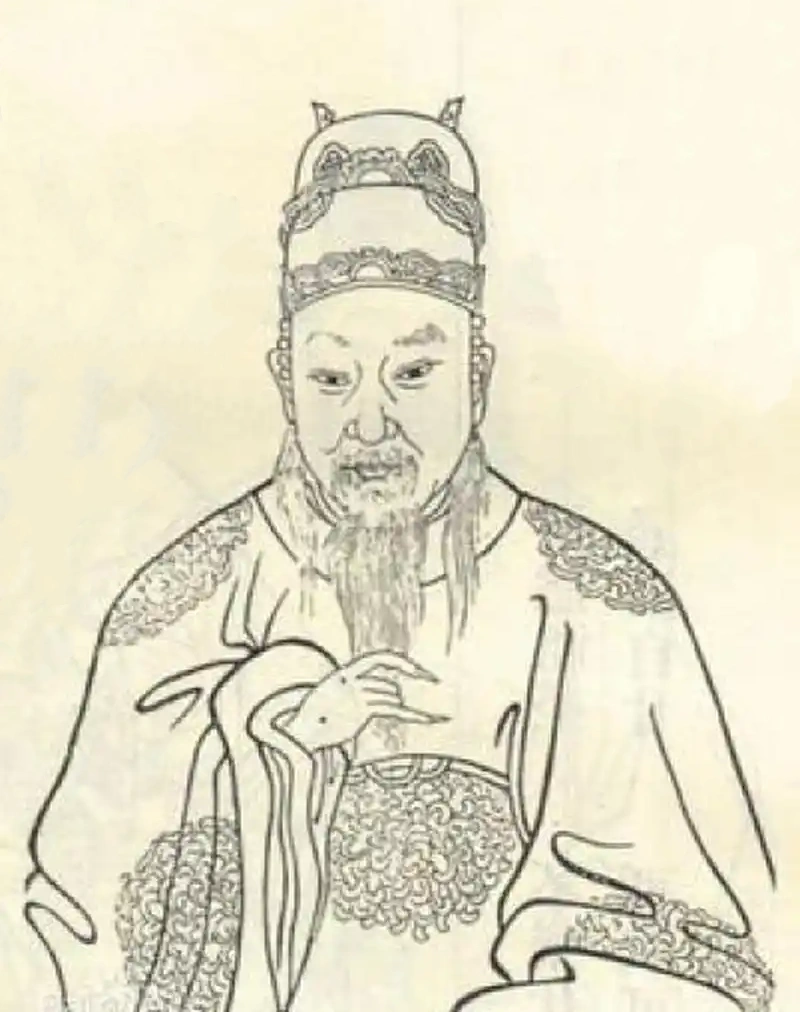
Sun Liang was the second ruler of the state of Wu, and the histories do not remember him by any imperial name. No posthumous name was conferred on him, and no temple name; the title that has attached to him is the one he was reduced to in the year he lost the throne, the prince of Kuaiji. In the Records of the Three Kingdoms, the history written in the third century that is the source for nearly everything known about him, he has no book of his own. That history gives formal annals to the rulers of Wei and settles the rulers of Wu and Shu in biographies; the founder of Wu has a biography to himself, and Sun Liang shares a single one with the two rulers who came after him, the Biographies of the Three Heirs.
He was ten when he came to the throne and sixteen when he left it. Across those six years the government of Wu passed from one regent to another three times; the first was murdered at a banquet by the man who succeeded him, the second died in his bed, and the third was still in power when the emperor was taken off the throne. What the record shows Sun Liang doing in his own right is a single thing: he tried to kill that third man, and the attempt failed. He is the youngest kind of ruler a state can put forward, and he is the clearest demonstration of what the throne had become in Wu, a seat that a child could hold only so long as someone else's soldiers stood behind it.
1. The Youngest Son
Sun Liang was born in 243. He was his father's youngest son, and the histories say, in the flat manner of the court annalists, that the old emperor took particular care of him; Sun Quan was past sixty, and this was the last child of a house that had buried many. His mother was not a great lady of the Jiangdong families. The Biographies of the Consorts records that the Lady Pan came from Juzhang in Kuaiji commandery, that her father had been a clerk who came to his end under the law, and that she and her elder sister had both been sent as slaves into the palace workshops. Sun Quan noticed her there and took her into the harem, and in 243 she bore him this son.
The court he was born into was already dividing over the succession, but that quarrel belongs to the history of his father's reign, and what concerns this account is only its outcome. In the winter of 250 the crown prince, his elder brother Sun He, was deposed, and Sun Liang was made crown prince in his place. His marriage had been settled for him years earlier by his father's eldest daughter, the princess Sun Luban, who had married into the Quan family and who pressed the old emperor to take a daughter of Quan Shang for the boy; so a consort house entered the palace with him. In the summer of 251 his mother was made empress.
He did not keep either parent long. In the second month of 252 the empress was murdered inside the palace, strangled by her own attendants, who gave out that she had died of a sudden illness; the histories add that several of them were put to death when the truth came out. In the fourth month Sun Quan died, at seventy-one, and the crown prince, who was ten, was enthroned. The era name was changed to Jianxing, and the year began to be counted anew. The boy who took the throne had lost his mother two months before his father and sat in his father's hall with neither of them alive.
2. The First Regent
Sun Quan had arranged the government before he died, and left the boy in the charge of the general Zhuge Ke. On the emperor's death he became the young ruler's grand tutor, with Teng Yin as general of the guards in charge of the secretariat and the aged Lü Dai as grand marshal, and the power of the government passed into his hands. The dying edict gave him everything except the authority over life and death, which was reserved to the throne.
He began well. He abolished the officers whose business was to watch officials and people, cancelled arrears of tax, and did away with the duties at the customs barriers, and the histories say the crowds followed him in the streets to see what he looked like. What then broke him was a war. In the winter of his first year he rebuilt the great dike at Dongxing on the Chao lake and walled the two hills beside it, leaving a thousand men in each; and Wei answered with three columns, the main body of seventy thousand horse and foot under Zhuge Dan and Hu Zun moving on the dike while two lesser forces moved against Nanjun and Wuchang. The regent took forty thousand men to relieve it. The fighting was decided by a subordinate. Ding Feng, commanding three thousand as the vanguard, found the Wei generals drinking in the snow with their armour off and struck them where they sat; the Wei army broke, and in its flight the pontoon bridge across the water gave way under the weight. The histories count the drowned and the trampled in the tens of thousands, and note that the rebel general Han Zong, who had once served Wu, was killed among them. It was the greatest victory Wu had won over Wei in years, and it was won while the emperor, who was ten, stayed in the capital.
The victory ruined him. In the third month of 253 Zhuge Ke, against the advice of the court, called out two hundred thousand men from the provinces and marched north, and by the fourth month he was besieging Hefei New City with an army in which sickness spread until half the soldiers were dead or unfit; in the eighth month he withdrew. He came back to the capital and punished the officials who had been appointed in his absence, replaced the palace guards with his own men, and made ready to march again; and the histories say the people turned against him. Sun Jun moved that winter. He told the emperor that Zhuge Ke meant to rebel, and he laid a plan for a banquet in the palace. The regent came to it armed and uneasy, and drank only the medicated wine he had brought with him; when the drinking was under way the emperor rose and went into the inner apartments, and Sun Jun, who had left the hall on the excuse of the privy, came back in short clothes and called out that there was an edict against Zhuge Ke. He cut him down in the hall, and the family was destroyed with him.
The histories present the killing as the emperor's, and they also make plain that the plan was Sun Jun's; Sun Liang was eleven. Whether he understood what was intended, or was told afterward what he had approved, the record does not settle and was not written to settle. What can be said is that the name of the emperor would be used twice in his reign to destroy the man holding the government: the first time by Sun Jun, and the second time, five years later, by the boy himself, and that time it failed. The first regent had lasted eighteen months.
3. The Second Regent
Sun Jun took the government and held it for three years. He was a great-grandson of Sun Jian's younger brother, which made him a Sun of a remote and junior line, and he came to power without the reputation the man he had killed had carried. He was made chancellor and general-in-chief and given the command of the armies at home and abroad, with the title of marquis of Fuchun, and the histories judge him in a few unsympathetic words: a man of no particular standing, proud, dangerous, fond of killing, so that the people murmured; and they add a charge of another kind, that he took the palace women and consorted with the princess Sun Luban, who was of his own house.
His first act was to remove the man the court might have looked to. The deposed crown prince Sun He, the boy's elder brother, was living under guard in Changsha; Sun Jun had him moved farther away and then sent him poison, and Sun He's wife followed him. In the following year a prince of the imperial house plotted to kill the regent and, the plot being discovered, took his own life. A year later a group of officers tried again, and this time the deaths ran to dozens, among them one of the emperor's own half-sisters, the princess of Zhu, killed on an accusation that the histories treat as false.
The war then came to Wu by itself, and Sun Jun went out to meet it. In 255 two generals of Wei on the Huai had risen against the government of the north, and Sun Jun took the fleet and the horse up toward Shouchun. Before there was any fighting, one of the rebels, Wen Qin, came over to Wu with his men, and the histories count several tens of thousands of people who crossed to Wu behind him; a covering column of the Wu army was caught and lost its commander on the way home. It was the largest gain Wu had taken in years, and it was an accident. Sun Jun's standing was neither made nor broken by it, and he had one year left.
He died in the ninth month of 256, in his own quarters, of a sickness that came on as he was about to begin a campaign in the north; the histories give the illness a dream as its cause, and say he believed he had been struck by the ghost of the man he had murdered. He was the only one of the three regents who died in his bed. From the sickroom he handed the government to his younger cousin Sun Lin.
4. The Third Regent
Sun Lin was of the same great-grandfather as Sun Jun and had held no more than a subordinate general's command; on his cousin's death he was made a regular attendant and general of the guard, with the armies of the capital and the provinces under him, and he took over the direction of the court. The officers would not have him. In the tenth month of that year Lü Ju, a cavalry general, came back from the frontier to raise the army against him, and Teng Yin joined him; Sun Lin broke them both, destroyed Teng Yin's family with him, and by the eleventh month was general-in-chief, with the staff of authority and a marquisate of his own. A further plot against him before the year ended was put down, the leading conspirator killed and his accomplice made to take his own life.
An opportunity then came to him and turned into a failure. In 257 one of the great commanders of Wei, Zhuge Dan, raised the Huai country against the ruling house of the north and offered the fortress city of Shouchun to Wu, sending his own son as a hostage; Wu sent twenty thousand horse and foot under Wen Qin and others to bring him in, and Sun Lin himself took the field and came up to the Huai with a larger force. His covering general, Zhu Yi, was beaten in every attempt to break through, and when Zhu Yi refused to be sent out again Sun Lin had him killed in camp. The relief never reached the city. Shouchun fell to the north in the third month of 258, and Zhuge Dan died in the fighting; the largest prize Wu had been offered in years was lost, and the regent had killed his own general in the course of losing it. The histories say his standing did not recover, and that in the capital he was by now feared and hated in about equal measure.
While the regent was occupied with the war in the north, the emperor had begun to take up the government himself.
5. The Boy's Own Government
In the fourth month of 257 the emperor took his seat in the main hall, proclaimed a general amnesty, and began to attend to affairs himself. What that meant in practice was that he began to read the papers that came to him under the regent's name and to question them; the histories say that the regent's memorials came to be much challenged, which was the beginning of the quarrel between them. He also began to build a force of his own. He drew three thousand young men from the sons of military families, between fifteen and eighteen, and set over them officers taken from the sons of the great commanders, and drilled them every day in the imperial park. The histories keep his words for it: that he meant to grow up together with this army.
Against so thin a foundation the record preserves exactly one scene in which the emperor thinks for himself, and it is not a scene about government. The Record of Wu, quoted in the commentary on the history, tells that the emperor, eating green plums at his table, sent a palace eunuch to the storehouse for honey to steep them in, and that the honey came back with a rat dropping in it. The keeper of the storehouse was brought in and made his obeisance; the emperor asked him whether the eunuch had asked him for anything, and the keeper said that the eunuch had asked for honey and that he had not dared to give it. The eunuch denied it. The emperor had the dropping broken open: it was dry within and wet without. Had it come out of the jar, he said, it would have been wet to the inside as well, and so it must have gone into the honey dry and been wetted only on its surface. The eunuch confessed. The court, the history says, was astonished at the boy's judgement. The commentator Pei Songzhi, who set the story down in the fifth century beside a second version of it, warns the reader that the two books disagree and that he trusts the other one more. It is a fair warning about the only portrait of Sun Liang's mind that survived.
He moved against the regent's men before he moved against the regent. Two officers attached to Sun Lin, the sons of the emperor's half-sister, the princess of Zhu, were accused of having failed to prevent the killing of their mother, and the emperor had them put to death over the regent's protest. It was a small thing, and it told the palace where the lines would run. In the eighth month of 258 the sky stayed closed and there was no rain for more than forty days, and in the same season the emperor called in three people and settled on a plan. They were Quan Shang, his father-in-law, who had risen through the consort house to be chamberlain for ceremonials; a general named Liu Cheng; and the same princess Sun Luban, his father's eldest daughter, who had arranged his marriage in the first place. Between them they meant to take the regent by surprise and kill him.
It did not hold. The histories give two accounts of how it leaked, and both run through the same door. One, from the Records, is that the emperor's own consort reported the plan to Sun Lin, she being Sun Lin's cousin's daughter; for the Quan house was kin to the Suns twice over, and the empress belonged to it. The other, from the Jiangbiao zhuan, another chronicle quoted in the same commentary, is that the emperor told his father-in-law's son to take his father into the plan but to keep it from his mother, since Quan Shang's wife was Sun Lin's cousin as well, and that Quan Shang told his wife, and his wife told the regent. Either way the conspiracy was known to the man it was aimed at before it was acted on, and the boy had entrusted it, in effect, to his wife's family, which was also the regent's family. The marriage that his half-sister had arranged for him had made the secrets of the throne the property of the house it was meant to bind.
Sun Lin moved at night. He seized Quan Shang; he sent his brother Sun En to kill Liu Cheng outside the Canglong gate; and he brought troops up around the palace. In the morning he assembled the ministers at the palace gate with a document that set out the emperor's crimes and called on them to sign it. One of them, the master of writing Huan Yi, refused and was killed where he stood. The rest signed. The emperor was taken off the throne and made prince of Kuaiji, and the histories give his age at that moment: he was sixteen. Quan Shang was sent into exile in Lingling and killed on the road; the princess Sun Luban was sent away to Yuzhang; the Quan house, which had been the most favoured of the consort families of Wu, was finished with it. Sun Lin brought in another of the emperor's brothers to take the throne, and Wu had a new reign.
6. Kuaiji and the Name
Sun Liang was sent away to Kuaiji, the coastal commandery his mother's people had come from, with the title of prince of Kuaiji and nothing else. He had been emperor for six years, from the age of ten to the age of sixteen, and he was now a prince. The histories have almost nothing to say about the two years he spent there, but they preserve the thing that killed him. A rumour took hold in the commandery that he was to be made Son of Heaven again; someone in his own household reported that he had had a shaman sacrifice and pray, and that the prayers were not loyal. In 260 the officers of the court brought it to the throne, and the prince of Kuaiji was demoted again, from a prince to a marquis — the marquis of Houguan — and ordered to a new fief on the coast of the far south. He died on the road.
The Records says that he killed himself, and that the men who escorted him were punished for it. The Record of Wu says that some said he was poisoned, and names as the poisoner the reigning emperor, Sun Xiu, whom Sun Lin had set up in his place. This account has no way to choose between the two, and the difference between them is the whole of what can be said about his end: the difference between a boy who took his own life and a boy who was quietly killed by the brother who had been given his throne. Two things about him outlasted the question. His escort was punished, which suggests that the court did not wish it thought he had died of nothing. And in the Taikang years of the Jin dynasty, long after Wu had fallen, a former officer of the Wu court, a man of Danyang named Dai Yong, went and brought his coffin back, and buried him at Laixiang.
So the title this account gives him is the title he died with, and it is a marquisate; and the name under which he held a throne for six years, the prince of Kuaiji, is not a name he was given but a rank he was reduced to. That is the reason for the form of his entry in the history. Chen Shou, writing the Records in the third century, gave formal annals only to the rulers of Wei, and wrote the rulers of Shu and Wu as biographies; Wu's founder has a biography of his own, while Sun Liang shares one with his two successors, the Biographies of the Three Heirs, which opens with him. No posthumous name was conferred on him, which was the mark by which a ruler of the period was ordinarily remembered, and no temple name either; no successor's court went through the ritual of judging his reign and putting a word after his death, though two of his successors reigned long enough to have done it. In the sequence of Wu's rulers he is the second. In the sequence of Wu's ancestral temples he is not present at all.
He is, then, a case the history could not resolve into an emperor, and the shape of his life is the shape of the office he briefly held. A boy of ten, with his mother murdered and his father newly dead, was put on the throne because a faction at court wanted someone it could raise; and through his reign the government was held by three men in succession, and the changes of hand after the first were paid for in blood. He came of age for the purpose of having one idea, which was to kill the third of those men, and he was beaten by the fact that everything he had to do it with — his marriage, his wife's kin, his household — was already the regent's. What he leaves the history is not a policy and not a character but an example, of how the child emperor and the regent are the same institution seen from two ends, and of how completely a throne and an official report can disagree about what happened. Chen Shou's judgement on him is a single sentence, and on his own evidence it is exact: a boy without good men to help him, whose fall was bound to come.