Home / Emperors / Jin Dynasty
Emperor Jianwen of Jin
晋简文帝
Sima Yu, 320 – 372 · eighth emperor of the Eastern Jin
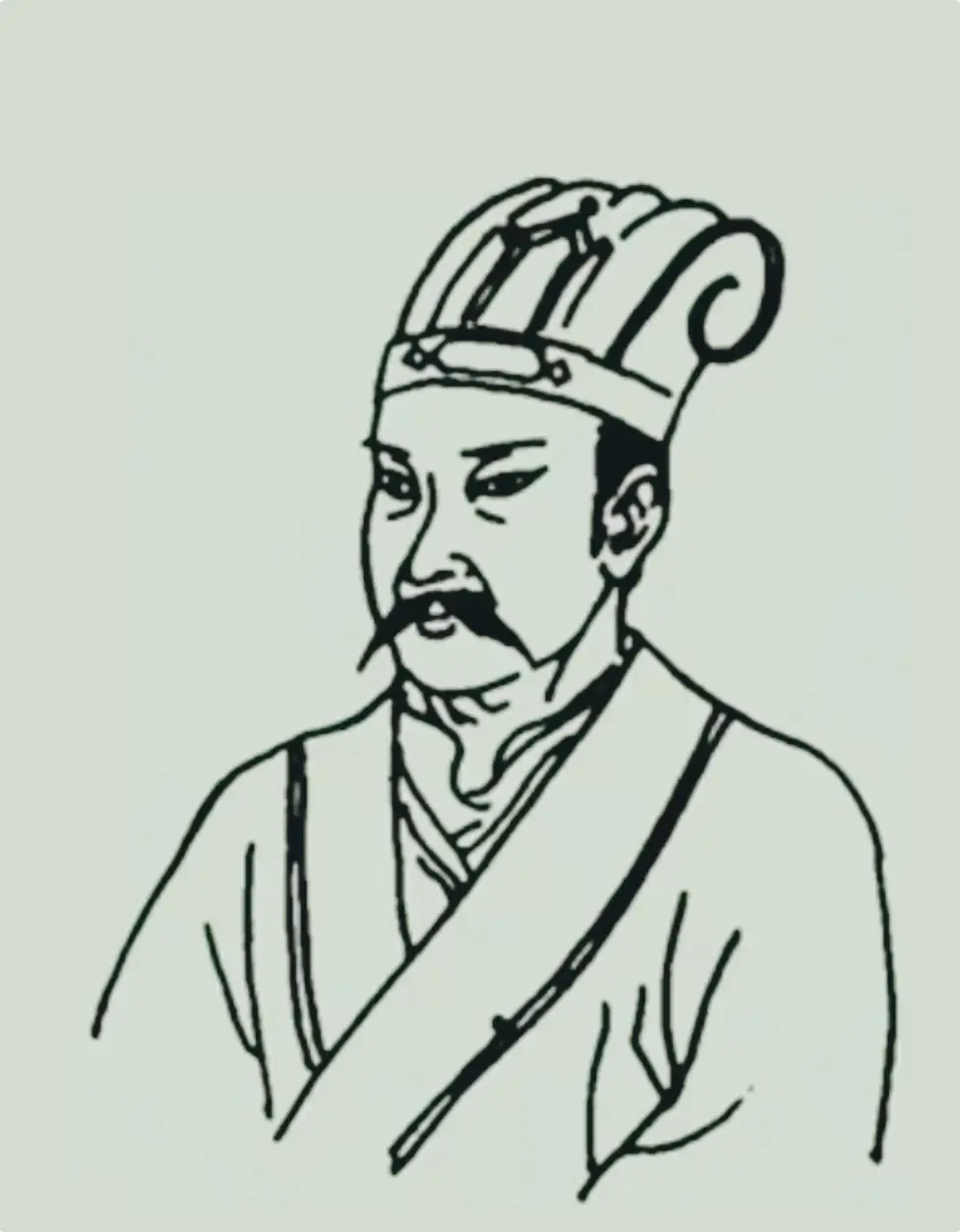
On the day ji-you of the eleventh month of 371, the officials of the Eastern Jin went to the residence of the prince of Kuaiji with the imperial carriage. The man they brought back was fifty-two by the count of his court, which counts the year of birth as the first. He had been a prince for forty-nine of those years and the senior minister of the court for twenty-six. He wept when he received the seals. Eight months later, on the day he died, the edict he had just signed was torn up in front of him by one of his own officials.
The Eastern Jin had seven emperors before him and three after, and he is the one the histories find hardest to place. He was not a child, like most of them, and not a soldier, as one of them was. He was the most celebrated talker of his generation, the patron of a salon that included the monk Zhi Dun and the future statesman Xie An, and a handful of his remarks survive because the New Account of Tales of the World recorded them. He was also the man who took the throne from his own grand-nephew at the command of a general, watched that general kill his friends, and died before the general made his last demand. The question his life poses is not whether he was a good man. It is what goodness was worth in a state where the throne could be given away by an army. The evidence is uneven. The Book of Jin, compiled in 648, two hundred and seventy-six years after his death, is the work of historians who had the court archives and an interest in the settlement that followed. The New Account is a fifth-century collection of anecdotes, not a court record, and its best stories about him are the ones most likely to have been embellished. The annals give the dates, the offices, and the edicts; the anecdotes give the man. This account uses both, and says which is which.
1. The Youngest Son
Sima Yu was born in 320, the youngest son of Emperor Yuan. His mother was Zheng Achun, a woman of a great family of Xingyang who had been married before and widowed, and who entered the palace as a lady of the inner apartments, not as an empress. The annals say that the diviner Guo Pu saw the child and told people that the one who would revive the fortunes of Jin must be this boy. Guo Pu was executed four years later, and the prophecy is the kind of sentence that is written after the fact. It is still the right place to begin, because the whole of Sima Yu's life was an attempt to live inside a promise that no one expected him to keep.
His father died in the winter of 322, in what the Western calendar calls January 323, when the child was three by the count of his court. In 322, in the last year of his father's life, he had been made prince of Langya by an edict that gave him the revenues of Kuaiji and Xuancheng as well. The title was the dynasty's founding title, the one his father had held before he took the throne in the south. The grant was a sign that the youngest son was to be provided for, not that he was to be used.
His mother died in 326. He was seven by the count of his court. The annals say that he wept blood and firmly asked to wear the heaviest mourning for her; because he had been made prince of Langya to continue that line, the officials held that his mourning for his birth mother should be reduced, and he submitted a memorial and prevailed. Emperor Cheng, moved, granted his request and moved him from Langya to Kuaiji. Her biography in the Book of Jin preserves the argument; the annals compress the whole affair into a single sentence joined by a therefore that explains nothing. The title of Kuaiji was one of the richest princely titles in the south. He held it for forty-five years, until he was made emperor. It gave him an income, a household, and a place in the ceremonial order. It did not give him a province, a staff of generals, or a single soldier.
He grew up in a court that had lost the north and was learning to live without it. His half-brother Emperor Ming died in 325. His nephew Emperor Cheng was a child. The empress dowager Yu and Wang Dao held the government. The sources do not describe his education. They describe his appearance and his temper: he had a fine bearing and a composed manner, he read widely, and he did not care about his surroundings. The Book of Jin says that dust lay thick on his mat and that he remained as calm as if it were clean. The New Account adds a story. He would not let the dust be brushed from his seat, and when he saw the tracks of a mouse on it he thought them beautiful. A staff officer killed the mouse with his writing tablet, and the prince's face showed displeasure. When his household moved to impeach the officer, he stopped them, saying that the death of a mouse was something he could not forget, and that it would be worse to injure a man because of a mouse.
The story is in the section of the New Account devoted to virtuous conduct, and it is meant to show a humane man. It shows something else as well: a man whose attention was caught by the tracks of a mouse on a dusty mat, in a court where the north had been lost and the provinces were held by soldiers. The same taste that made him a good prince made him a poor candidate for the work that was coming.
He was given the ordinary offices of a prince. In 334 he was made general of the right and palace attendant. In 340 he was made general of the pacification army and given the supervision of the imperial library. In 343 he was made the nominal head of the office of sacrifices, holding his other posts. None of these positions required him to govern anything. The New Account places him in the 340s at the head of a circle of young men who talked about the Laozi, the Zhuangzi, and the Changes, and who judged one another's sayings as if they were examinations. That circle is the subject of the next section.
2. The Salon
The word for what he did is qingtan, pure conversation. It was not a hobby. It was the principal art of the aristocracy of the Eastern Jin, and it had rules, a repertoire, and a ranking. The repertoire was the three dark texts, the Laozi, the Zhuangzi, and the Changes, together with the commentaries and the problems they generated: whether being comes from non-being, whether words exhaust meaning, whether the sage has emotions, whether talent and nature are the same. The rules were those of a tournament. A speaker took a proposition, an opponent attacked it, and the company judged not the truth of the position but the quality of the play: the freshness of the formulation, the economy of the answer, the grace of the retreat.
His salon met in his residence in the capital, in a room the New Account calls his study. The most famous account of a session is one paragraph. Zhi Dun, a Buddhist monk from the north who had become the most brilliant interpreter of the Zhuangzi in the south, was the lecturer. Xu Xun, a recluse who had refused every summons to office and a master of the counter-argument, was the challenger. Zhi Dun opened a meaning and the whole company was satisfied. Xu Xun raised a difficulty and they all clapped. They admired the beauty of the two performances, the text says, without distinguishing where the argument lay.
That last sentence is the best description of the culture he presided over. The point was not to arrive at a conclusion. The point was to display a mind. A man who could do it well had a claim on the highest kind of reputation the society offered, and a prince who could judge it well had a claim on the loyalty of the men who mattered. Sima Yu was one of the best judges of his generation. The New Account records his verdicts. He Yan's cleverness, he said, encumbered his principle; Xi Kang's brilliance injured his Way. The sentences are short, exact, and a little cruel. They are the work of a man who had listened to a great deal of talk and had a scale in his head.
He was also a performer. The most quoted thing he said was said in the palace garden. He walked into the Hualin garden, turned to his attendants, and said that the place where the mind finds its meeting need not be far away; that with trees shading the water there was naturally the thought of the Hao and the Pu; that one felt the birds, beasts, fish and fowl come of themselves to be near one. The two rivers are the ones in Zhuangzi's stories, the river where the fish were happy and the river where the sage refused a throne. The sentence is a small masterpiece of the art. It turns a garden into a philosophical landscape and a philosophical landscape into a claim about the speaker's own detachment. It is also a sentence spoken by a man who owned the garden.
The monks and the poets came to him because he was the best patron in the capital. Zhi Dun was the most distinguished. He was a northerner raised in the south, a monk who moved easily among aristocrats, and a talker whose reading of the Free and Easy Wandering broke with the interpretation that had been accepted since the western Jin. The Book of Jin preserves his verdict on Sima Yu, and it is not flattering. The prince of Kuaiji, he said, has the distant body but not the distant spirit. The phrase is exact. He had the appearance of transcendence, the bearing, the vocabulary, the indifference to dust and mice, and not the thing itself. Sun Chuo, the poet who would later write the memorial against moving the capital, was another of the circle.
The rice story is the other side of the same verdict. He saw rice growing in a field and did not know what it was. He asked what grass it was. His attendants told him it was rice. He went home and stayed in for three days, saying: can one depend on its end and not know its beginning? The story is in the New Account, in the section on regrets, and the sixth-century commentator who annotated the collection did not believe it. Duke Wen planted vegetables, he wrote, and Zengzi herded sheep; even if he did not know rice, why so much regret? The saying must be false. The commentator is probably right. The story is too neat, and it makes the same point as the rest of his life: a man who lived on the yield of the fields and had never seen them.
What the salon could not do was obvious to everyone who was not in it. It could make a reputation, arrange a marriage, secure an appointment, and destroy a rival with a sentence. It could not raise a regiment, hold a frontier, or feed a city. The men who came to his study in the 340s were the men who would govern the 350s and 360s, and the qualities they admired in one another were the qualities that would fail them when the armies moved. The salon was not a refuge from politics. It was a preparation for a kind of politics that the dynasty could no longer afford.
3. The Balance
In the first month of 345 the empress dowager Chu was acting for her son, Emperor Mu, a child of three by the count of his court. The government was shared between He Chong, a practical administrator, and Sima Yu, who was twenty-six by the count of his court. In the same year he was made grand general of the pacification army and given charge of the six sections. The office was the one that mattered: it gave him the right to review the memorials that came to the throne and to countersign the appointments that went out from it. It did not give him the provinces.
In the first month of 346 He Chong died. The empress dowager ordered him to take general charge of all affairs, and the court settled into the arrangement that would last, with interruptions, for a quarter of a century: a prince of the blood at the head of the civil government, a senior scholar beside him, and the armies in the hands of provincial governors who were not his. Cai Mo joined him as the senior scholar, a ritualist in his sixties for whom the court's forms were the substance of its authority. The pairing answered two needs at once: the court wanted an experienced administrator, and it wanted a prince of the blood whom no one could suspect of planning a dynasty of his own. It was also a recognition that the throne's own household had no army. The office was not a regency. It was a share of the government, and the share was the whole of what the throne had to give.
In 347 Huan Wen, the inspector of Jing province, took Chengdu without waiting for the court's authorization; the campaign belongs to the reign of Emperor Mu, and here it matters only because the court answered by making him a duke and then looking for a general of its own.
The man it found was Yin Hao. He was a friend of Sima Yu's, a celebrated talker, and a man who had spent ten years refusing office. In 346 the court gave him the inspectorate of Yang province, the richest of the civil provinces, and he became a third force in the arrangement. The logic was sound. The court had no army in its own right; the family that had one could not be trusted, so it would raise a second army around a celebrated talker of civil prestige, a man the court had itself made and could therefore rely on. The flaw was in the premise: armies are not created by appointing famous men to command them.
The policy was Sima Yu's. He had known Yin Hao since the 340s, had talked with him in his study, had promoted him, and now staked the court's independence on him. It was the first and last time he tried to create a power of his own. The northern window opened in 349, when Shi Hu died and the Later Zhao fell into civil war. The court sent Chu Pou, the empress dowager's father, north to Pengcheng. He was defeated at Daipi and died at Jingkou before the year was out. In 352 the court sent Yin Hao, and in the same year it offered Sima Yu the post of minister over the masses, the highest civil office; he declined it.
The campaign failed in stages. The forward base at Xu Chang was lost before it began. The allied Qiang general Yao Xiang was alienated by the court's suspicion. In the tenth month of 353 Yao Xiang turned on the Jin army at Shansang and destroyed it; the histories put the dead at more than ten thousand. Huan Wen demanded Yin Hao's dismissal in the first month of 354, and the court gave it. Yin Hao was reduced to commoner and sent to Xin'an, where he died in 356. The man who had promoted him was the head of the civil government that dismissed him. Whether he could have prevented it is not recorded. The record gives him no part in the decision.
In 354 Huan Wen marched to the Wei and withdrew; in 356 he defeated Yao Xiang and recovered Luoyang. Both campaigns belong to the reign of Emperor Mu, and they matter here only because each victory made the general more necessary and the civil government more ornamental. In 356 Huan Wen asked the court to move to Luoyang. The court refused. The refusal was led by the men who had estates and graves in the south, and Sima Yu was one of them. The decision was right on the merits, and it was also the decision of a class that had no intention of going home.
In 357 Emperor Mu came of age. Sima Yu asked to return the government to him. The court refused. The refusal may have been a formality; the empress dowager and the ministers may have thought the emperor was not ready. It is still worth recording, because it is the one kind of renunciation he was allowed to make. He asked to give power back, and he was told to keep it.
The last four years of the reign were quiet. The annals show him at the sacrifices and the reception of envoys; they note a drought, an eclipse, and the appointment of governors. They do not record a policy. Sima Yu was the head of the civil government, and the civil government did what it had always done: it dated documents, performed the rites, and waited for the general. In 361 Emperor Mu died at nineteen, without a son. The empress dowager chose his cousin Pi, the eldest son of Emperor Cheng. Sima Yu, who was Pi's great-uncle, remained where he was.
He had been in office for sixteen years. He had not raised an army, taken a province, or won a battle. He had presided over the only serious attempt the court made to create a power of its own, and the attempt had failed. The men who had made the attempt were dead or in exile. The general was at Jiangling, with the only army in the state that could fight, and the court was in the capital, and the distance between them was the whole of politics.
4. The Years of Waiting
Emperor Ai reigned for four years, and the government remained where it had been. In 363 the court gave Huan Wen the grand marshalate, the command of all military affairs within and without, and the yellow axe. In 364 it carried out the registration of households known as the Gengxu measure, which was Huan Wen's policy and was enforced by his officials. In 365 the emperor died in the second month, and his brother Yi took the throne; Luoyang fell in the third month. The details belong to their chapters. The registration and the orders that followed the fall of Luoyang went out in the emperor's name; the sources record no initiative of Sima Yu's in either. What matters here is that he remained at the head of the civil government while the general took the titles, the land, and the men.
The new emperor was twenty-four by the count of his court. He was Sima Yu's grand-nephew, the second son of Emperor Cheng. The court gave Sima Yu the vacant title of Langya and gave his son Changming the title of Kuaiji. Sima Yu took the first and refused to surrender the second, so that for the rest of his life he was the prince of Kuaiji who also held the title of Langya. The arrangement was a small masterpiece of the dynasty's habit of using titles to say what could not be said. The man who would replace the emperor was given the emperor's old title, and the man who would replace him was given his.
In 366 the court made him chancellor and put him at the head of the department of state affairs, with the honours that went with the office. He was not to hurry into the presence. His name was not to be spoken at the salute. He was to wear his sword and his shoes in the hall. He was to have a guard of sixty swordsmen, with a canopy and drums. He declined them all. The honours were the dress of a man about to take the throne. He had no intention of taking it, and he may also have been afraid of what the dress would suggest. The effect was the same.
The sources do not say how he spent his days. They say that he had a wife of the Wang family of Taiyuan, a cousin of Wang Shu, and a son, Daosheng, who was made heir. The son was wild and without virtue, the sources say, and mother and son were both deposed and confined, and died. Three more sons died young. For nearly ten years no child was born to him. Then a woman of the Li family, a servant in the weaving rooms, bore him Changming and Daozi. The Comprehensive Mirror, compiled in 1084, says that she was dark and tall, that the women of the palace called her Kunlun, a word for the dark-skinned people of the south, and that a physiognomist announced that she was the one. The story belongs to the legends that gather around the births of emperors. What is certain is that in 372 the heir to the throne was a boy of eleven by the count of his court.
The years between 366 and 371 are the emptiest in his life. The annals record the court's ceremonies and the general's victories. In 369 Huan Wen's third campaign failed at Fangtou, a defeat that belongs to the emperor he would depose and to another chapter. What matters is the consequence. A general who had lost a war needed a victory of a different kind. In the first month of 371 he recovered Shouchun from a rebel and killed him. The victory was real, and it was not the kind he needed. In the eleventh month he deposed the emperor.
Sima Yu had spent the years of the Haixi reign in the position he had held since 345. He had watched Huan Wen take the provinces, the titles, and the army. The sources record no remonstrance, no independent policy, and no appointment made against the general's will in those years. It is easy to read the silence as cowardice. It was also the silence of a man who had learned in 353 that the court could not fight. The one time he had tried to create an army, it had been destroyed. After that, the only power he had was the power to wait.
Huan Wen had tested him once. The Book of Jin says that the general, the prince of Kuaiji, and the prince of Wuling once rode out to a bridge together. Huan Wen suddenly ordered the drums and horns to sound, the carriage to gallop, and the soldiers to run beside it, to see how the prince would behave. The prince of Wuling was terrified and begged to get down. Sima Yu sat still and showed no fear. Huan Wen, the history says, respected and feared him from that day. The story is a set piece, and it may be true. It is the only evidence in the sources that the general ever took his measure and found something he could not move.
In the eleventh month of 371 the emperor was deposed. The ceremony, the edict, and the cart drawn by a calf belong to his chapter, not to this one. What concerns Sima Yu is the message that came to his residence. The officials arrived with the imperial carriage. He changed his clothes in the hall, put on a plain cap and a single robe, faced east, wept, and received the seals. He was fifty-two, by the same count. For twenty-six years he had stood second in the state; now he was the first, and the man who had made him had troops posted in the hall.
5. The Eighth Emperor
The New Account has a scene that may be placed in these months. The new emperor was sitting in a dark room and sent for Huan Wen. Huan Wen came in and asked where the emperor was. The emperor said: I am here. The answer is a line from the Analects, where Confucius guides a blind music master to his seat and tells him who is present. Contemporaries, the collection says, thought it well done. The scene is a miniature of the reign. The most powerful man in the state enters a room and cannot see the sovereign, and the sovereign announces himself with a quotation.
Two men in the court he inherited would matter. Wang Tanzhi was a palace attendant who had begun his career in Sima Yu's own household, as a staff officer when the prince was still general of the pacification army. Xie An, the most famous refuser of office of his generation, held the same office. They were not yet a party. They were the two men who would defend the succession.
The first crisis came within days. Huan Wen had a list. The chief name was Sima Xi, prince of Wuling, the emperor's older half-brother. He was a son of Emperor Yuan, a man who liked military exercises, and the one prince of the blood whom Huan Wen feared. Huan Wen had already had him removed from the office of grand minister and sent back to his fief. Now he wanted him dead. He forced the prince of Xincai, a distant kinsman, to go to the western hall and accuse himself of plotting with Sima Xi, Sima Xi's son Sima Zong, and a group of officials: Yin Juan, the son of Yin Hao; Yu Qian, the chief of staff to the prince of Wuling; Yu Rou, a cavalier attendant; and two lesser men, Cao Xiu and Liu Qiang. The accusation was read to the emperor. The Book of Jin says that he wept as he heard it, and that Huan Wen took them all to prison.
The assistant censor-in-chief, Sima Tian, prince of Qiao, took the general's hint and asked for the death penalty under the law. The emperor's answer is preserved. Grief and horror, he said, are not things I can bear to hear, let alone say; consider it again. Huan Wen sent a second memorial, more severe. The emperor then did the one thing that the sources credit to him as an act of will. He wrote a private edict to the general: if the Jin mandate is long, you may simply carry out your earlier proposal; if the great mandate has gone, I ask leave to yield the road to a worthy man.
The sentence is a gamble of a very peculiar kind. It offers Huan Wen the throne and dares him to take it. If the general wanted the empire, this was the moment, and the emperor had given him a written invitation. If he did not, he would have to accept the emperor's authority to refuse. Huan Wen read it, the history says, and his sweat ran and his colour changed, and he said no more. He did not take the throne. He reduced the sentence from death to deposition. Sima Xi and his three sons were stripped of their titles and sent with their households to Xin'an. The prince of Xincai was reduced to commoner and sent to Hengyang. Yin Juan, Yu Qian, Cao Xiu, Liu Qiang, and Yu Rou were executed with their clans. Yu Yun, the inspector of Guangzhou, took poison. Yu Xi, his brother Yu Miao, and Yu Xi's son fled to the marshes of Hailing.
The account is exact about the arithmetic of his power. He saved his half-brother's life. He could not save the five men, or their clans, or the family of Yu Yun. The most he could do was change the manner of one death and the place of one exile. The men who died were his friends and the sons of his friends. Yin Juan was the son of Yin Hao, the talker he had promoted and then watched destroyed. The purge was not a punishment for a plot. It was a demonstration, and the emperor's part in it was to sign, weep, and save what he could.
The court understood what had happened. The emperor's only interlocutor at court was the general's man. Xi Chao, the son of Xi Yin, was a secretary in the central secretariat and Huan Wen's closest adviser; he was in the palace as the general's eyes. In the first months of the reign Mars entered the enclosure of Taiwei, the celestial palace, as it had before the deposition. The emperor was troubled. He summoned Xi Chao and said: the length of my life is not something I count; but will there be a repetition of the recent affair? Xi Chao answered: the grand marshal is securing the state within and extending its borders without; for extraordinary things, I pledge my whole family. The answer was a promise made by a man who could not keep it.
Later Xi Chao asked for urgent leave to see his father. The emperor said: give my regards to your honorable father. The affairs of the family and the state have come to this. It is because I could not support and guard them by the Way; my shame is deep, and how can words express it? Then he recited a poem by Yu Chan: the man of purpose grieves that the court is in danger; the loyal minister mourns that his lord is humiliated. The Book of Jin says that his tears fell and wet his lapel. The New Account says that his voice was mournful and piercing. Either way, the scene is the closest the record comes to his own account of his reign: an apology, delivered to the general's adviser in the palace, for a family and a state that had come to this.
He was not a fool, and he was not a coward in the ordinary sense. The private edict had been a real act of courage, and it had worked. But his courage was the courage of the gesture, the sentence, the refusal to say the last word. It was not the courage that raises a regiment or orders an arrest. In the eight months of his reign the record gives him no campaign, no appointment, and no measure of his own. The government was Huan Wen's. The court was his, and the court was a room in which men said beautiful things and waited to see who would be killed.
6. The Testament
In the sixth month of 372 the last armed attempt to break the general's power came from the family he had destroyed. Yu Xi, his brother Yu Miao, and a son of the former inspector of Qing province gathered a band of followers and entered Jingkou by night. They claimed a secret order from the deposed emperor to kill the grand marshal. The capital was shaken, and the guards were doubled within and without. Bian Dan, the governor of Jinling, leapt over the wall and fled to Qu'a, raised two thousand men from the country districts, and drove them back into the city. Huan Wen's officer Zhou Shaosun, the interior minister of Donghai, took the city in the seventh month. Yu Xi, Yu Miao, and their partisans were captured and beheaded in the Jiankang market.
The emperor was dying. On the day jia-yin he fell ill and sent four summonses to Huan Wen in one day and night, asking him to come to the capital and take charge. Huan Wen refused. The refusal is the last proof of the arrangement. The general would not come to the deathbed of the emperor he had made, because the deathbed was the one place where he could be asked to accept a limit. The emperor waited, and the court waited, and the general stayed at Gushu.
On the day ji-wei he made his son Changming crown prince. The boy was eleven. The same day he died in the eastern hall. He was fifty-three by the count of his court; the reign had lasted eight months.
The edict he left has two versions, and the difference between them is the history of the reign in miniature. The Book of Jin's annals give only the final formula: the grand marshal was to assist the government after the precedents of Zhuge Liang and Wang Dao. The same compilation gives both versions and the scene between them. The first version said that the grand marshal should act as the Duke of Zhou had acted as regent, and it added: if the young son can be assisted, assist him; if not, take it yourself. The second said that all affairs of the family and the state should be reported to the grand marshal, as in the precedents of the Marquis of Wuxiang and Chancellor Wang.
The scene is preserved in Wang Tanzhi's biography. Wang Tanzhi was a palace attendant, the son of Wang Shu, and a former staff officer of the prince's household. He took the edict in his hand, walked into the emperor's presence, and tore it up in front of him. The emperor said: the empire is a thing that came to me by chance; what is your objection? Wang Tanzhi said: the empire is the empire of Xuan and Yuan; how can Your Majesty dispose of it as your own? The emperor then had him write another edict.
The exchange is the constitutional heart of the Eastern Jin. Wang Tanzhi's sentence does not say that the emperor is wise or that the heir is legitimate. It says that the empire does not belong to the emperor. It belongs to the founding ancestors, and the emperor is a trustee. The first edict had treated the empire as property that a dying man could give away. The second treated it as a trust that he could only hand to a minister. The distinction is the difference between a dynasty and a family business, and it was the legal fiction that the court could still defend.
The revised edict gave Huan Wen everything except the title. He was to receive every report, direct every office, and manage the household and the state. He was not to be regent, and he was not to be heir. The precedents were two ministers who had served child emperors and had not taken the throne: Zhuge Liang, who had governed Shu for a boy, and Wang Dao, who had governed the Eastern Jin through three reigns and had died a duke. The analogy was an instruction. It told Huan Wen what kind of man he was allowed to be.
The emperor died the same day. The court did not know what to do. The Comprehensive Mirror says that the ministers were uncertain and did not dare to install the crown prince, and that someone said they should wait for the grand marshal's decision. Wang Biaozhi, a vice president of the department of state affairs, ended the debate: the Son of Heaven has died; the crown prince succeeds; what room is there for the grand marshal to differ? If we consult him first, we will only be blamed. The crown prince took the throne. He was eleven. The following year was dated Ningkang.
There was one more attempt. The empress dowager Chu, the widow of Emperor Kang, issued an order that the grand marshal should act as regent after the precedent of the Duke of Zhou, because the new emperor was a child and in mourning. Wang Biaozhi returned the order sealed. This is an extraordinary measure, he said; the grand marshal will certainly decline it; the government will stall and the burial will be delayed; I dare not accept it. The order was not carried out. The burial of Sima Yu took place in the tenth month, three months after his death.
Huan Wen had expected either the throne or the regency. He got neither. The Comprehensive Mirror says that he was furious and wrote to his brother Huan Chong: the edict tells me to follow the precedents of the Marquis of Wuxiang and Chancellor Wang. He suspected Wang Tanzhi and Xie An, and did not forget it. He stayed at Gushu. The empire had a child on the throne, a regency that had been refused, and a general who had been told to be Zhuge Liang. It was the best result the court could have obtained, and it had been obtained by an old man returning a sealed document and a courtier tearing up a piece of paper.
7. The Nine Bestowals
His death did not end the question. Huan Wen pressed the court for the nine bestowals in the spring of 373, in the reign of the son, when he was already ill; he died in the seventh month of that year, and that belongs to the next reign. The nine bestowals were the ritual gifts that preceded a change of dynasty: a chariot and horses, robes, a set of bells, a red door, a private staircase, a guard of tiger braves, axes, bows and arrows, and a libation cup of black millet wine. The list is a ladder. Each item is a step away from the status of a minister, and the last step is the throne.
Xie An and Wang Tanzhi slowed the matter and had Yuan Hong, Huan Wen's chief secretary and one of the best writers of the age, draft the document. Yuan Hong wrote it and showed it to Wang Biaozhi, who admired the beauty of the writing and said: you are a great talent; how can you show this to anyone? Xie An revised the draft every time he saw it, and after ten days the document was still unfinished. Yuan Hong asked Wang Biaozhi what to do. Wang Biaozhi said: his illness is getting worse; he cannot last much longer; wait a little. Yuan Hong waited. In the seventh month Huan Wen died, and the document was never finished.
The nine bestowals are usually treated as a footnote to Huan Wen's career. They are more than that. They are the test of whether the settlement of 372 would hold. The settlement had given the general the government and denied him the title. The nine bestowals would have given him the title without the government, which is the way a dynasty is ended: first the gifts, then the regency, then the abdication. The men who blocked it were the men who had served Sima Yu and the men who had served the court: Xie An, Wang Tanzhi, and Wang Biaozhi. They blocked it not with an army but with a pen, a delay, and the expectation of a death. It was the kind of victory the Eastern Jin understood.
Sima Yu did not live to see it. He had died in the seventh month of 372, and the request came in the spring of 373. The chronology matters, because it shows what his eight months had bought: not a victory, but a delay; not a strong throne, but a legal one; not a check on the general, but a set of men who knew how to use the forms. The nine bestowals were never granted. The dynasty lasted another forty-eight years.
8. The Name Jianwen
The posthumous name was drafted by Xie An. The text survives only because a fifth-century history quoted it and a sixth-century commentary on the New Account preserved the quotation. It is short. According to the canon of posthumous names, it says, unflagging in one virtue is called jian, and broad in moral learning is wen. The Changes says that through the simple and easy the principle of the world is obtained, and that observing the patterns of men one transforms the world. The sight of his exemplary conduct still leaves an image. He should be honoured with the temple name Taizong and the name Jianwen.
The choice is a literary performance of the highest order, and it is also a verdict. Jian means simple, plain, unadorned, and unflagging. Wen means cultured, learned, patterned. The two characters describe a man who was unfailingly himself and widely read, and they say nothing about government. There is no character in the name for military power, for decision, for the recovery of the north, or for the ordering of the state. The name is the name of a good man, and it is the name that the court chose for the emperor who had lost the government to his general.
The Book of Jin, compiled in 648, is harsher. Its historians sum him up in a phrase that has the compression of a classical quotation: with a blank and white nature, in a time of difficulty, the government came from the Huan clan, and the sacrifices from me alone. The phrase is from the Zuo Commentary, where a ruler who has lost his state to a minister says it. The historians put it in the mouth of a man who never said it, and it is the most accurate thing ever written about him. The encomium adds: the ruler was like a pendant tassel; the way was not one of peace; Emperor Jian was still and silent, and did not bring harm on himself.
The early verdicts were worse. The Book of Jin reports that Xie An called him the sort of man Emperor Hui had been, only a little better at pure conversation. Emperor Hui was the emperor who, told that the people were starving, asked why they did not eat meat. The comparison is not fair to Sima Yu's intelligence, and it is exact about his political function: a sovereign whose government was elsewhere. The monk Zhi Dun had said it more elegantly: the distant body without the distant spirit. The fifth-century poet Xie Lingyun, tracing his conduct, put him in the company of the last sovereigns of the Zhou and the Han.
The later verdicts divide. The seventeenth-century critic Wang Fuzhi refused to see him as a victim. He accused him of complicity. He had taken his grand-nephew's throne, performed the ceremony, and enjoyed it; he had repaid the general who made him emperor with his ancestors' empire. The charge is harsh, and it is not baseless. Sima Yu could have refused the throne. He could have died a prince, and the court would have had to find another candidate. He did not. He wept, and he accepted.
The twentieth-century scholar Yu Jiaxi defended him. Yu's case was that he had been a man of good character but short on ability, and that he had preserved the deposed emperor and the prince of Wuling. The words of the private edict, Yu wrote, were not harsh, but they were severe enough to make Huan Wen break into a sweat. The defence is also exact. The private edict is the evidence: a man who could make the most powerful general in the state sweat was not a coward, and a man who could not save five of his friends was not governing.
The charge against his culture is easy to state and hard to prove. The historians who blame the fall of the dynasty on pure conversation have in him their perfect example: a man who could judge a metaphysical argument but not a general, who could turn a garden into a philosophical landscape but not a province into a revenue. Yet the conversation was not a substitute for government. It was the language in which the families conducted the only politics they had, and Sima Yu spoke it better than anyone. The failure was not that he talked. It was that the talk was the only power he had ever been given, and the men who gave it to him had no intention of giving him another.
The question is usually put as whether he was a foolish emperor. It is the wrong question, but it has an answer. He was not foolish. He was well read, politically intelligent, and brave in the only way his position allowed. He was also not an emperor in the sense that mattered. He could not raise a soldier, punish a murderer, or keep a friend alive. The Eastern Jin had made the throne a machine for producing legitimacy, and he was one of its better products. Whether that makes him a good emperor depends on what one thinks the machine was for.
He had spent his life in rooms. The salon, the audience hall, the dark room where he announced his presence to a man who could not see him. The one time he used the language of power, in the private edict, he was obeyed. The rest of the time he was the voice that gave the government its form and the general its excuse. The Book of Jin says that he did not bring harm on himself. It is a modest epitaph, and it is the one he earned. The harm was brought on the men who stood between him and the general, and on the dynasty that had made a good man into a symbol and then asked him to be a sovereign.
The dynasty did not need a good man in 371. It needed a man who could command. It got a good man, and the goodness was spent in the only currency it had, which was the refusal to do the last wrong thing. That is not nothing. It is also not government.