Home / Emperors / Three Kingdoms
The Prince of Qi
齐王
Cao Fang, 232 – 274 · third emperor of Wei
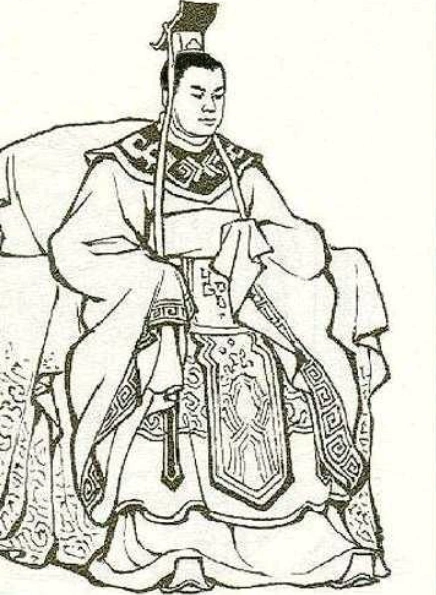
He was put on the throne at eight and taken off it at twenty-three, and the fifteen years between are the years in which the state of Wei passed out of the hands of the Cao family without a single battle being fought over it. The record of those years is not the record of what he did. It is the record of what was done in his name: the edicts he was made to issue, the memorials that came back approved, the men who rose and fell at the head of governments he did not choose. He is the first emperor of his house who never held power, and the manner in which he lost the throne is the subject of this account.
The name he goes by is not a name his own court gave him. He was never given a posthumous title, and no temple name was set up for him; when Chen Shou came to write the Records of the Three Kingdoms, he gave annals of their own to the three men who founded and held the Wei, and put the three boys who came after them into a single book, the Annals of the Three Heirs, which opens with this one. Prince of Qi was the rank he was reduced to in the ninth month of 254, when the regent Sima Shi memorialized the empress dowager and had him removed from the throne; Duke of Shaoling was the rank the house of Jin gave him eleven years after that, when the dynasty itself was finished. Both names record things that were done to him. What follows is the account of how the throne was taken from him: not in one coup, but in a chain of documents, each of them properly worded, each of them asking for something the last had made possible.
1. The Adopted Son
He was born in 232, in the sixth year of Taihe, and the annals of his own reign record his origin in a sentence that gives nothing away. The late emperor, they say, had no sons of his own; he adopted this boy and the prince of Qin, and the affairs of the palace were kept secret, so that no one knew where either of them had come from. The prince of Qin was Cao Xun, who died in 244, before the question could arise again. For the boy who would be emperor, that sentence is the whole of what the official record has to say about his birth.
There is one later tradition. Pei Songzhi, annotating the history a century and a half after it was written, quotes the Wei's Spring and Autumn to the effect that he may have been a son of the prince of Rencheng, Cao Kai. If that is right, he was the grandson of Cao Zhang, the founding emperor's full brother, and so a great-nephew of Cao Pi and a kinsman of the late emperor in the generation below him. The word the tradition uses is perhaps. Nothing in the annals confirms it and nothing contradicts it. He was raised inside the palace from early childhood, which is the one fact everyone agrees on, and in 235, still a small child, he was made prince of Qi.
The adoption itself was the answer to a succession that had failed. Every son Cao Rui fathered died in infancy, and the taking in of two clan boys in 235 was the only way left to provide the throne with a holder. The secrecy about their origins suggests that the court understood how thin the arrangement was. The boy who was chosen because he belonged to no party of his own would go on being chosen for that reason, under three successive regents, for the rest of his life.
On the first day of the first month of 239, the twenty-second of January, the dying emperor had him made crown prince. The same day Cao Rui died, and the child was enthroned, eight years old by the count of the time. The empress, the Lady Guo, was made empress dowager; the general-in-chief Cao Shuang and the grand commandant Sima Yi were named to assist him. How that trust had been arranged belongs to the record of the reign before this one. What belongs here is the first edict of the new reign, which was issued in his name and was not his own: it followed the testament in stopping the palace works then under construction, and in freeing every government slave and bondwoman above the age of sixty to commoner status. The court understood what a child's accession required.
2. The Two Regents
The two men who were to govern in the child's name had been given everything an emperor could give a subject. Cao Shuang, the eldest son of the general Cao Zhen, was general-in-chief with the staff of authority and the axe of state, directed the armies at home and abroad, and conducted the affairs of the secretariat. At the accession he was in addition made a regular attendant, enfeoffed as marquis of Wu'an with an estate of twelve thousand households, and granted the right to come to audience with his sword and shoes on, to enter without hastening his step, and to be announced without his name. Sima Yi held the office of grand commandant, and in the second month of 239 an edict promoted him to grand tutor in the language the court kept for its greatest servants: he had served three reigns with a straight heart, taken Meng Da in the south, broken the armies of Shu in the west, and destroyed Gongsun Yuan in the east, and his merit covered the seas.
Both halves of that edict were real. The honour was real, and so was the demotion inside it. The Zizhi Tongjian, compiling the matter eight centuries later, records that the whole transfer was Ding Mi's design: to exalt the old general with a title and take the working power away, so that when the secretariat memorialized, the papers would come first to Cao Shuang and he would control their weight. In the first months the younger man treated the older as a father, consulting him on everything and venturing nothing alone, and the two took turns with three thousand men each to guard the palace by night. It did not last.
The men Cao Shuang gathered round him had all been dismissed in the proscription of 232, when the late emperor broke the circle of clever young men the court called the fashionable and the empty. He Yan, Deng Yang, Ding Mi, Bi Gui and Li Sheng were now brought back and made the innermost circle. Ding Mi became a secretary of state, and Deng Yang with him; He Yan took the ministry of personnel, which meant that the grading of candidates into nine ranks, the machinery of appointment, passed into the hands of the faction; Bi Gui took the colonelcy of the capital province and Li Sheng the intendancy of Henan. Lu Yu, the minister of personnel, was moved sideways to the deputy directorship of the secretariat, and when he later gave offence, the faction used a petty charge to have his seal taken from him before the memorial reporting the matter had even been sent up. After that, the phrase the history uses is that affairs in general seldom passed through the grand tutor again.
What the emperor himself did in these years was of a piece with the edict that opened his reign. In the first year of Zhengshi the court moved the people of two Liaodong counties across the sea and founded two new counties on the Qi frontier to settle them; when the spring rain failed, he ordered the prison officers to right wrongful judgements and commanded the ministers to speak their minds without reserve. In the autumn, with the treasury short and the armies waiting, the palace gave up a hundred and fifty kinds of gold and silver vessels, more than eighteen hundred jin of metal, to be melted down for military use. In 241 he worked through the Analects for the first time, and the court sacrificed an ox, a sheep and a pig to Confucius in the Biyong hall with Yan Hui set beside him; in 244 he did the same for the Book of Documents, and in 246 for the Record of Rites. In 243 he was capped, and took as his empress the Lady Zhen, a grandniece of the late emperor's mother; the same summer the spirits of twenty of the founders' generals were admitted to sacrifice in Cao Cao's temple. In 246 the general Guanqiu Jian carried an army into the far north-east and broke the Goguryeo and the Huimo, and several dozen tribes came in with their people. All of it was proper, and all of it stands in the annals. The annals also record, in the same years, that the appointment of officials had ceased to pass through the man the late emperor had set at the head of the state.
3. The Reform
The reform that bears the name of the era came from the faction itself, and it deserves to be taken more seriously than the men who made it. Its author was Xiahou Xuan, the most brilliant of the young aristocrats, a cousin of Cao Shuang's and now the commissioner of the palace guard. When the grand tutor asked him, as the memoir of his family records, what was to be done about the state of affairs, he answered with a memorial in three parts.
The first part concerned the choice of men. The grading of candidates into nine ranks, he argued, had put two powers in the wrong hands: the rectifiers of the provinces rated men by local reputation, and appointments were made on those ratings. The weighing of men belonged to the secretariat, and the judgement of conduct in the lanes belonged to the local people, and the two must not encroach on each other. Let the rectifiers examine conduct only, fix the class, and neither raise nor lower; let the secretariat, on the report of each man's own superior, decide the appointment. The second part concerned the map. A commandery administrator and a provincial inspector now governed the same people twice over; the administrators should be done away with and the inspectors left alone. Three reasons were given: the tens of thousands of commandery clerks could be sent back to their farms, saving expense and growing wealth; the men fit to govern a great county were fit to govern a commandery, and one layer less meant less business; and the commandery staffs spent their time protecting their own kin and their own neighbourhoods. The third part asked that dress and carriages be fixed strictly by rank, and that the duplicated offices be abolished.
The grand tutor's answer was a masterpiece of the art of the cold refusal. He said that he could not carry out such changes and asked to wait for a better man.
The date of this memorial is one of the small puzzles of the record, and the difference matters. The memoir of Xiahou Xuan's family puts it in the Zhengshi years, while he held the palace guard. Du You, in the Tong Dian, sets it in the first years of Jiaping, after Cao Shuang's death, when Sima Yi had taken the government and was, as he says, looking into the fundamentals of order. On the first dating the reform was the work of the faction that was destroying itself; on the second it was offered to the Sima by a man they were about to kill. Either way it came to nothing, and either way the fact that it was written at all belongs to the history of the reign.
Less formally, the faction did in practice what the memorial argued in principle. The men whose careers had been built on service under three emperors were moved out, retired, or broken: Jiang Ji from the command of the guard to the empty dignity of grand commandant; Zhong Yu sent away to govern Wei commandery; Sun Li sentenced to five years over a boundary dispute; Sun Zi and Liu Fang, the two secretaries who had made the regency of 239, pressed into retirement in 248. The old guard gathered instead around the grand tutor: Lu Yu and Wang Su, Sun Li and Wang Guan, Gao Rou and Jiang Ji, Zhong Yu and Fu You, men who had entered service in the Jian'an years, found in the old general the one centre of gravity left in the capital.
None of it was announced as a reform. The Tong Dian's source compresses the whole programme into five words: he changed the institutions again and again. What the changes were aimed at was the substrate of the great families themselves. The commandery was not only an administrative unit but the ground of a family's name, its seat of origin, and to abolish the administrators was to cut the root of a hundred lineages. The men who understood this best were the old officials who had no intention of allowing it. And the reform was discredited by the conduct of the reformers, which is the ordinary fate of reform: the man who asked that dress be fixed by rank kept a house like the emperor's and filled it with the late emperor's ladies. The Sima took the government in 249 and undid it all, and the two-tier administration the memorial proposed waited three hundred and thirty-four years, until the Sui abolished the commanderies in 583, to be carried out by a dynasty that had never heard of Xiahou Xuan.
4. The House of Cao Shuang
War was the first thing Cao Shuang tried, and he tried it for the reason his faction gave him: to build a name in the field. In the second month of 244 the emperor ordered the general-in-chief to lead an army against Shu Han. Sima Yi argued against it and could not stop him. Cao Shuang went west to Chang'an, called out sixty or seventy thousand men, and marched in through the Luo valley. The transport of the Guanzhong plain and of the Di and the Qiang could not feed them; the oxen, horses, mules and donkeys died in droves, and the people of the border wept along the road. Some hundreds of li into the valley the enemy held the mountains and the army could not advance. His own staff officer Yang Wei pleaded with him to withdraw before it was too late; Deng Yang and Li Sheng argued against Yang in front of him, and Yang said that the two of them would ruin the state and deserved to be beheaded. Cao Shuang was displeased and brought the army home. The campaign had cost the frontier a season of its grain and the court its appetite for more.
With the army option closed, the faction closed the palace instead. In the eighth year of Zhengshi, on the advice of He Yan, Deng Yang and Ding Mi, the empress dowager was moved out of the main palace to the Yongning palace, and Cao Shuang took the government into his own hands: he planted his partisans everywhere and changed the institutions again and again. The grand tutor could not prevent it, and from the fifth month of that year he pleaded illness and withdrew from affairs. The Book of Jin, in its chapter on portents, records that when the empress dowager was moved she and the young emperor wept at parting, and that the earthquakes that followed for years were read as the answer of Heaven.
What Cao Shuang did with the government is set out in a list the history makes no attempt to soften. His food, his carriages and his clothes were made to match the emperor's; the precious things of the imperial workshops filled his house; his wives and concubines filled the rear courtyard. He took seven or eight of the late emperor's waiting ladies into his own establishment, and with them thirty-three officers, artisans, musicians and daughters of good families, all of them as entertainers. He forged an edict sending fifty-seven more of the late emperor's ladies to Ye, to be trained as performers under the dead emperor's own concubine. He took without permission the instruments of the imperial music office and the weapons of the state arsenal. He built an underground chamber with carved windows all around it, and drank there with He Yan and the rest. His brother Cao Xi, who held the capital guard, wrote three essays on the ruin that comes of arrogance and excess, too discreet to name his brother and addressed instead to their younger brothers, and when he came to remonstrate in person he wept and could not be heard. The minister of agriculture Huan Fan, watching the brothers drive out together with the whole guard behind them, said that men who held the machinery of the state and the weapons of the palace ought not to leave the city all at once; if someone shut the gates, who would let them back in? Cao Shuang said: who would dare.
The emperor was in his middle teens. The annals give him a small ritual life: the capping, the lectures on the classics, the sacrifices at the Confucian hall, the amnesties, the offerings in the ancestral temple. They also give him two remonstrances, and both came from inside the faction. In the seventh month of 247 He Yan, now a secretary of state, memorialized that a ruler must be careful whom he keeps company with, and asked that whenever the emperor went to the Hall of Established Forms or to the rear gardens, ministers should attend him, so that papers could be looked at and the meaning of the classics discussed in his leisure. In the twelfth month the cavalier attendant Kong Yi asked that he give up riding in the gardens and go out only in a carriage. The emperor did neither, and there is no evidence that he read them at all. The men who had removed the empress dowager from the palace and filled the arsenal with their own people were now advising the boy about the company he kept.
The end of the pretence came in the winter of 248. Li Sheng, the intendant of Henan, was to be made inspector of Jing province and came to take his leave of the grand tutor. Sima Yi was, as the history says, gravely ill: two maids supported him, his robe fell, he pointed at his mouth and asked for drink, and when porridge was brought he drank it without holding the cup and it ran down his chest. Li Sheng was moved to tears and commiserated with him; the old man, getting his breath out in fragments, said that he was dying, and mistook Jing for Bing, the province near the barbarians, and had to be corrected twice. Li Sheng came back to Cao Shuang in tears: the old man's words were confused, he could not hold a cup, he pointed south and called it north, and there was nothing left to fear from him. The story survives in three versions, in the memoir of Cao Shuang, in a lost chronicle quoted in the notes, and in the Book of Jin, and the version in the Book of Jin is the fullest, which is itself a fact about the sources. The grand tutor, who had been preparing in silence, had his answer ready.
5. The Tomb at Gaoping
The first month of the tenth year of Zhengshi opened on the fifth of February, 249. The emperor went out to sweep the tomb of his adoptive father at Gaoping, ninety li south of the Luo river in the hills of the Great Stone mountain, and the whole party of the government went with him: Cao Shuang, his brother Cao Xi who held the capital guard, Cao Xun who held the martial guard, and Cao Yan, the emperor's lecturer. The city was empty of the men who held it.
What Sima Yi did that morning took less than a day. He closed the gates of Luoyang in the name of the empress dowager. He seized the arsenal, so that no soldier in the city could arm himself without his permission. He sent troops out to hold the bridge of boats over the Luo. He called the minister over the masses Gao Rou and gave him the staff of authority and the acting command of the armies, and Gao Rou went and took over Cao Shuang's camp; the imperial coachman Wang Guan was given the acting command of the capital guard and went and took over Cao Xi's. Then he wrote the memorial.
The memorial is the document on which the history of the next two centuries turns, and it is worth reading for what it claims. He recalled the day the late emperor, back from Liaodong, had called the emperor, the prince of Qin and himself to the bedside and taken him by the arm, and how he had undertaken to die in the execution of that charge. He charged Cao Shuang with betraying the trust, breaking the laws, usurping the forms of the sovereign within the palace and monopolizing power without it, smashing the camps and taking the guard into his own hands, filling every office of importance with his own men, and setting the eunuch Zhang Dang to watch the emperor's conduct and estrange him from the two palaces. The emperor, he wrote, was no more than a guest on his own throne. The grand commandant Jiang Ji and the others, he said, had memorialized the Yongning palace, and the empress dowager had ordered him to act on their memorial; he had therefore dismissed Cao Shuang and his brothers from their offices and their troops and ordered them home as marquises, on pain of military law if they delayed the imperial carriage; and he was now, sick as he was, encamped at the bridge over the Luo to watch for disorder. The memorial was addressed to the emperor. Cao Shuang received it and did not pass it on.
With no news from the city, the party stopped for the night south of the Yi river, felled trees to make a palisade, and called out several thousand of the colony soldiers to stand guard. In the morning the first to reach them was Huan Fan, the minister of agriculture. He had not answered the empress dowager's summons; he had forced the gate at Pingchang by showing the tablet of a man he had once promoted, and rode south with a handful of followers. Sima Yi said to Jiang Ji: the clever one has gone over. Jiang Ji answered: Fan is clever enough, but a worn-out horse is fond of the oats in its own stable; Cao Shuang will not be able to use him. Huan Fan's advice was the only plan anyone proposed that day. Take the emperor to Xu, he said, and summon the armies of the provinces in his name. Your other camp is just south of the gate, the colony command is outside the city and will answer your call; Xu is half a night away and its arsenal will equip an army; the only difficulty is grain, and the seal of the ministry of agriculture is in my pocket. The brothers said nothing. From the first watch to the fifth drum they said nothing. Then Cao Shuang threw his sword on the ground and said that he would not fail to end his days as the head of a rich family. Huan Fan wept and said: Cao Zidan was a fine man, and he bred calves for sons; he never thought to sit by while you three were exterminated.
The two histories keep two versions of that sentence, and the difference between them is the whole of the man. The Records of the Three Kingdoms, in the memoir of Cao Shuang, gives it as a statement about himself: he too would not fail to end as the head of a rich family. The Book of Jin, in the annals of the man who destroyed him, gives it as a statement about the other: the Duke of Sima only wants to take my power from me, and if I can go home a marquis I lose nothing by ending as the head of a rich family. In one version he believes the promise; in the other he knows exactly what is being taken and accepts it. The second is the more flattering to him, and it is the version in the book written by the family that killed him, and neither can be proved.
What had been arranged in the night was the rest of it. The cavalier attendant Xu Yun and the secretary Chen Tai came to urge Cao Shuang to give himself up early; and Yin Damu, the colonel of the palace whom Cao Shuang trusted, came to swear by the waters of the Luo that the only thing intended was the loss of his office. Cao Shuang then passed the grand tutor's memorial to the emperor, asked him to issue the edict depriving himself of office, and brought him back into the city. The brothers went home. The soldiers of Luoyang surrounded the house, towers were built at the four corners, and men sat in them to watch what the brothers did. When Cao Shuang took his pellet bow into the back garden, the watch called down that the late general-in-chief was going southeast. He sat in his house, miserable, and could think of nothing to do.
Four days later the case was made. The officials memorialized that the eunuch Zhang Dang had privately given the ladies he had selected to Cao Shuang, and that there was reason to suspect more. Zhang Dang was taken by the commandant of justice and examined, and his statement was that Cao Shuang, with the secretaries He Yan, Deng Yang and Ding Mi, the colonel of the capital province Bi Gui and the inspector of Jing province Li Sheng, had plotted rebellion and were to raise it in the middle of the third month. Cao Shuang, his brothers and the whole circle, Huan Fan among them, were put in prison on a charge of treason and executed with Zhang Dang, and their three families were exterminated. The Book of Jin, which has no reason to soften it, records that when the branch factions were destroyed there was no distinction of age or sex, and that daughters already married were killed in their husbands' houses. In the same month an amnesty was proclaimed and the chancellorship was offered to the grand tutor, who declined it; in the twelfth month the nine distinctions were offered and declined as well. In the fourth month the era was changed to Jiaping. Every one of those acts was issued in the name of the emperor, and not one of them had been his.
6. The West and the Huai
The coup had been fought in the capital and paid for on the frontiers. The first consequence was on the western command. Xiahou Xuan, the author of the reform, held it; he was summoned east and given the empty honour of the minister of ceremonies, and Guo Huai, the inspector of Yong province, was moved up in his place as general who conquers the west, with the direction of the armies of Yong and Liang. The change was an ordinary piece of personnel work, and it destroyed a man. Xiahou Ba, the second son of the general Xiahou Yuan, had been Cao Shuang's man on that frontier for years; he held the commission for the attack on Shu and the rank of general of the right, was enfeoffed as marquis of Bochang, and had spent his time at Longxi keeping good order among the Qiang and the Di and winning their goodwill. The Wei Lue preserves his reasoning: when he heard that Cao Shuang had been killed and Xiahou Xuan summoned, he concluded that the trouble would certainly spread to him; and he had never been on good terms with Guo Huai, and now Guo Huai was taking Xiahou Xuan's place above him, and he was more uneasy still. He got away south over the mountains and went over to the Shu. The Wei court, out of regard for his father's old service, spared his sons and sent them to Leolang. The man who had kept the western tribes quiet was gone; the frontier settled into the hands of Guo Huai and Chen Tai, the son of Chen Qun, and the war with Shu Han became a permanent condition of the western provinces.
The second consequence was in the valley of the Huai. Wang Ling had governed the Huai for years as general who conquers the east, with his seat at Shouchun, and his nephew Linghu Yu held the province of Yan with his camp at Ping'e; between them the uncle and the nephew commanded the whole of the Huai and the country south of it. Their plan was the oldest one available to a subject: find a prince of the Cao house who is grown, and set him up in Xu, the old capital, where the regent's hand does not reach. The prince they found was Cao Biao, the king of Chu, one of Cao Cao's surviving sons. In the ninth month of 249 Linghu Yu sent an officer to Baima to open communications with him, and Wang Ling sent a retainer east to tell his son Wang Guang, who was a secretary in the capital; Wang Guang answered that the deposition of an emperor was a great matter and should not be made the beginning of a calamity. In the eleventh month, before the messenger came back, Linghu Yu died.
Wang Ling went on alone. In 250 the planet Mars stood in the Southern Dipper, and he read it as a sign that a man would suddenly rise to high place. In the spring of 251 the men of Wu blocked the waters of the Tu, and he asked permission to take the field against them, and the court refused. He sent his general Yang Hong to tell the inspector of Yan province, Huang Hua, what he intended; Huang Hua and Yang Hong jointly reported it to Sima Yi. The answer was immediate, and it was the same mixture as before. Sima Yi called out the central army and moved by water; first he issued an amnesty pardoning Wang Ling's offence, then he wrote him a letter, taking Wang Guang along to write it, and then the army came on suddenly and was at Baichi before Wang Ling knew it. Wang Ling understood that it was over. He came out alone by boat to meet the old man and sent his officer Wang Yu to apologize and hand over his seal, his staff and his axe. At Qiutou he stood in the water with his hands bound behind him, and the grand tutor, acting on the emperor's authority, sent his registrar to untie him, saw him, comforted him, and gave him back his seal, his staff and his axe. Pardoned, and trusting to an old friendship, he got into a small boat to come alongside; Sima Yi sent a man to head him off and held his own boat off in the middle of the Huai, ten or so yards away. Wang Ling called across to him: if you wanted me, you had only to send a note; would I have dared not come? Why bring an army? Sima Yi said: because you are not the man to answer a note. Wang Ling said: you have betrayed me. Sima Yi said: I would rather betray you than betray the state. Six hundred foot and horse were sent to escort him west to the capital. On the road Wang Ling asked for the nails of a coffin, to see what the old man intended, and they were given to him. In the fifth month, at Xiang, he drank poison.
The case was worked through after he was dead. Sima Yi went on to Shouchun, Zhang Shi and the others gave themselves up, and everyone connected with the plot was exterminated to the third degree. In the sixth month Cao Biao, the king of Chu, was ordered to take poison. All the princes and dukes of the blood were gathered up and settled in Ye, with officers set over them to watch that they held no communication with anyone. The tombs of Wang Ling and Linghu Yu were opened, the coffins split, the corpses exposed in the nearest market place for three days, their seals and court robes burned and the bodies buried naked in the earth. Yang Hong and Huang Hua were made marquises. Wang Guang, who had argued against the plot from the beginning, was executed with the rest.
That autumn the old man died, at seventy-three, and the emperor's edict named his son Sima Shi to the command of the central armies with the conduct of the secretariat. The same autumn the office of sacrifices reported that the order of the founders' generals in Cao Cao's temple should be rearranged by rank, and that the late grand tutor Sima Yi, whose merit was the highest and whose rank the most exalted, should stand at their head. The man who had been set aside in 239 in the name of honour was now placed above the founders of the dynasty in their own temple, by an act of state ritual, in the reign of the emperor from whom he had taken the state.
7. The General-in-Chief
Sima Shi took over in the first month of 252 as general-in-chief, with the regular attendantship, the staff of authority, the direction of all the armies at home and abroad, and the conduct of the secretariat. The government he built was broad, and it was meant to look like a government and not a faction: Zhuge Dan, Guanqiu Jian, Wang Chang, Chen Tai and Hu Zun were given the frontier commands; Wang Ji, Zhou Tai, Deng Ai and Shi Bao the provinces and commanderies; Lu Yu and Li Feng the work of selection; Fu You and Yu Song a part in counsel; Zhong Hui, Xiahou Xuan, Wang Su and Zhang Ji a place in the discussions of the court. Xiahou Xuan was still, on paper, one of the men the new regime consulted.
Two campaigns were fought in these years and both were lost. In the twelfth month of 252 three columns were sent against Wu; the regent of Wu, Zhuge Ke, met the main column at Dongguan and broke it, and the armies came back without profit. The court talked of degrading the generals, and Sima Shi said that he had not listened to Zhuge Dan and that the fault was his, and pardoned them all; only his brother Sima Zhao, who had been supervising the armies, was stripped of his title. In the summer of 253 Zhuge Ke came against the new city at Hefei with a great army, and at the same moment Jiang Wei came out of the mountains and surrounded Didao. Sima Shi's answer was to refuse the battle he could not win: the grand commandant Sima Fu was sent to take command at Hefei, Guanqiu Jian and the rest were ordered to keep to their walls and give the new city over to Wu, and Guo Huai and Chen Tai were sent with the armies of Guanzhong to raise the siege of Didao. Jiang Wei, hearing the western armies moving and short of food, fell back to the border of Long province, and in the autumn the men of Wu went home. It was the first test of the second regent, and he passed it by declining to be drawn.
The plot that ended the reign was two years in the making, and it was made by the men closest to the throne. Li Feng had been famous at seventeen, when the whole country repeated his name; his father, the grand coachman Li Hui, had made him shut his door and refuse visitors. Under Cao Shuang he had been a deputy director of the secretariat, keeping on terms with both sides, which is why he survived 249; his son Li Tao was married to a princess of the imperial house. Sima Shi, taking over, made him a secretary of the centre, and Li Feng used the office. The emperor, the Zizhi Tongjian says, summoned him again and again to talk alone, and no one knew what they said. Sima Shi knew, or suspected, and asked to see him and questioned him, and Li Feng did not tell him the truth. What he had been doing was planning with Zhang Ji, the father of the empress, and with Xiahou Xuan, to replace the general-in-chief: on the day of the induction of a new honourable lady, the guards of all the camps would be at the palace gates, and as the emperor came down the hall the conspirators would seize the moment, kill the general-in-chief, and carry the emperor off with them if he refused. Xiahou Xuan was to be general-in-chief and Zhang Ji general of the agile cavalry. The plan reached Sima Shi's ears first. He sent his retainer Wang Xian to bring Li Feng by carriage; Li Feng came under compulsion, was questioned, saw that the disaster had reached him, and let loose with abuse. Sima Shi in his rage had his men beat him to death with the ring of a sword's pommel, and sent the body to the commandant of justice. Li Tao, Xiahou Xuan, Zhang Ji and the rest were taken to the same prison, and Zhong Yu examined the case. On the day gengxu they were executed, Li Tao, Xiahou Xuan, Zhang Ji, Su Shuo, Le Dun and Liu Xian, and their three families with them; Zhang Ji was ordered to die in prison; the rest of the kindred were removed to Leolang.
Xiahou Xuan died in the eastern market with his colour unchanged. In prison he had refused to write his own confession and had said to Zhong Yu, who came to conduct the examination: what is my crime? You are a clerk set to judge me; write it yourself. Zhong Yu, who regarded him as a gentleman of the highest name and would not bend him, wrote the confession himself in the night, fitted it to the facts, and showed it to him in tears; Xiahou Xuan looked at it and nodded. Li Feng's younger brother Li Yi, the inspector of Yan province, was sent for; his wife, of the Xun family, told him to ride for Wu before the edict came. He said that his two sons were small, that he would not go, that he would die for the charge alone and the boys would be spared. He stayed and died. Xu Yun, who had spoken for Cao Shuang at Gaoping, was connected with the spring's affair, was sent out as general who pacifies the north, and was killed on the road to his exile at Leolang.
In the third month the empress Zhang was deposed. In the fourth the emperor took a new empress, the daughter of the master of the carriage Wang Kui, and her father was made a marquis. The emperor, who had lost his wife's family and his ministers in a single spring, was now alone in the palace with the men who had killed them.
8. The Ninth Month of 254
In the autumn of the same year Jiang Wei raided Longyou. Sima Zhao, general who pacifies the east, was recalled from Xu to take the armies against him and came up to the capital, and the emperor went out to the tower at Pingleguan to review the troops as they passed. What happened there is preserved only in the anecdote books, and the notes to the history record it only to demolish it. The Shiyu and the Wei's Spring and Autumn say that a group round the throne planned to kill Sima Zhao as he took his leave, and to turn his army against his brother; that the edict was already written; that as Sima Zhao came in, the emperor was eating chestnuts, and the actor Yunwu and his fellows sang: the blue-headed cock, the blue-headed cock. A blue-headed cock is a duck, and a duck is a ya, a seal; they were telling the emperor to stamp the edict. The emperor was afraid and did not act. Pei Songzhi's note on the passage is one of the sharpest things in his commentary: Xu Yun had died in the spring, connected with Li Feng's case, and could not have been commanding the palace guard in the autumn. The story cannot be true as told. What it tells us is true anyway: that by the autumn of 254 the emperor's own people were making plans that required his signature, and that he could not bring himself to give it.
True or not, Sima Shi decided in that autumn to be rid of him, and the procedure he used is the clearest document of what the throne had become. He memorialized the empress dowager that he intended to depose the emperor. He sent a kinsman of hers, the colonel of the Chang water Guo Zhi, to tell her. The emperor was sitting with the empress dowager when Guo Zhi came in and said that the general-in-chief meant to depose His Majesty and set up the prince of Pengcheng, Cao Ju. The emperor rose and left the room. The empress dowager was displeased; Guo Zhi said that Sima Shi's mind was made up and that his soldiers were drawn up outside; she asked to see Sima Shi and was refused; and in the end she took the seals and gave them to him.
On the day jiaxu of the ninth month, in the middle of October, the edict came in the empress dowager's name. The emperor Fang, it said, had grown to manhood and did not attend to the myriad mechanisms of government; he was sunk in the favourites of the inner palace and drowned in the seductions of women; he daily summoned actors and jesters and let them play their vile farces; he had brought the families of the six palaces to lodge in his own chambers, destroying the order of human relations and confounding the separation of men and women; day by day his reverence and his filial duty failed, and his contumacy grew. He could not carry on the work of Heaven or serve the ancestral temples. Gao Rou, the minister over the masses, was sent with the patent to announce it in the ancestral temple with the sacrifice of a great beast, and the prince of Qi was sent back to his fief to yield the imperial place.
The Book of Wei, the history the victors commissioned, keeps the rest of the day. Sima Shi, in obedience to the empress dowager's command, summoned the ministers and the officers of the court to a conference, and their faces changed colour. Sima Shi wept and said: the empress dowager's command is such; what are you gentlemen going to do about the royal house? And they said: of old Yi Yin banished Taijia to make Yin secure, and Huo Guang deposed the king of Changyi to make Han safe; the two ancients did it by the authority of the state, and you do it today, and today's business is yours to command. Sima Shi said: the weight of what you gentlemen expect of me is heavy, and how should I avoid it? The memorial they then signed, in the name of the minister of state Sima Fu, the general-in-chief Sima Shi, the minister over the masses Gao Rou and the rest, set the charges out at length: that the emperor was grown and did not govern; that he was sunk in women; that he had abandoned the lectures and shamed the scholars; that he had abused the actors and the ladies of the harem; that he had beaten the music master Linghu Jing and his deputy Pang Xi for remonstrating with him, and burned Linghu Jing with a hot iron; and that he had failed in the rites when the empress dowager's mother died. And they asked that he be deposed after the manner of Huo Guang.
The same day the emperor was moved out to a separate palace. He was twenty-three. Envoys with the staff of authority were sent to escort him with a guard, and an establishment for the prince of Qi was built at Chongmen in Henei commandery, with all the rites of a vassal state. On the day dingchou of the same month the empress dowager ordered that the son of the prince of Donghai, Cao Lin, should be taken to continue the line of the late emperor, and the duke of Gaogui township, Cao Mao, was named. The manner of his arrival belongs to the history of the reign that followed.
9. Shaoling
Twenty years were left to him, and the history has almost nothing to say about them. He lived at Chongmen with the rites of a prince. His third empress, the Lady Wang, disappears from the record. The anecdotal tradition records that one of his ladies, the Lady Zhang, was put to death by the empress dowager. Another, the Lady Xing, was given in marriage by Sima Zhao to a general of Wu who came over to Wei with his followers; the Wei court made that general general of chariots and cavalry with the rites of the three excellencies and the title of marquis of Wu, and gave him the late emperor's Lady Xing for his wife. There is no record of children. When the Jin took the throne in 265 he was moved down a degree again, from prince to duke of Shaoling, and in the tenth year of Taishi, 274, he died at forty-three. The Jin gave him the posthumous name Li, the Severe, which is why the later histories call him the Severe Duke of Shaoling. It was the third title he had borne in his life and the only one that was a judgement: prince of Qi by deposition, duke of Shaoling by conquest, and Severe by the conqueror's historian.
None of the three was a dynastic name. His own court never judged him, never gave him a word to put after his death, and never set up a tablet for him in the ancestral temples. The Records of the Three Kingdoms gives annals to the three men who made and held the Wei, Cao Cao as the Martial Emperor, Cao Pi as Wen and Cao Rui as Ming, one book each; and then it puts the three boys who came after them into a single book, the Annals of the Three Heirs, the prince of Qi, the duke of Gaogui township and the prince of Chenliu, in that order, with this man at the head of it. Chen Shou was a subject of the Jin, for whom Wei was the legitimate line that had received the mandate from Han, and he had every reason to give the last three Wei emperors the full apparatus of annals. He did not. The form of the book is the historian's verdict, and it is the reason this account has no imperial title over it.
The verdicts themselves are worth setting side by side. The official one, in the edict of 254, is the list of private abominations. The rebels' answer came within months: Guanqiu Jian and Wen Qin, rising in the Huai against Sima Shi, issued a proclamation in which they said that the late general-in-chief Sima Yi had known the prince of Qi to be intelligent and without any stain of vice, had declared him fit to be ruler of men, and that Sima Shi, conscious of his own treason and that gods and men would not bless him, had deposed his sovereign by fraud and loaded him with crimes. Zhuge Ke, the regent of Wu, gave the enemy's version: Cao Fang is dim and inferior, and the government is in a private house, and his ministers and his people have already lost heart. Chen Shou's own judgement, written after everything, goes back to the adoption. The ancients gave the empire to the worthy, he wrote; later ages gave it to the eldest son of the first wife, and where there was no fit heir the rule was to take a kinsman of clear virtue, as the Han took Wen and Xuan. The late emperor could not do that. Out of private affection he raised a baby and handed him the great vessel, and the trust he placed was not single but divided among the branches of the clan; the end of it was that Cao Shuang was exterminated and the prince of Qi was replaced. The Qing scholars went further. He Zhuo argued that the charges were absurd on their face: a man who had reigned for years without any scandal of his conduct reaching the public ear, if his faults as a ruler had been real and known, could have been dealt with easily; that the empress dowager's command had to be invoked, and the secrets of his bedchamber dragged into it, proves the charges were false. And Liang Zhangju, a century later still, drew up the other ledger: in the first years of his reign the palace works were stopped, the slaves above sixty were freed, the gold and silver of the treasury melted down for the army; he worked through the three classics in order and sacrificed to Confucius with Yan Hui set beside him; good laws and fine government, he wrote, run through the record without end.
Both ledgers are true, and neither is about him. The good laws were issued in his name and the abominations were charged to his name, and in neither case is there evidence that the decision was his, and the record was not kept in a way that would let anyone tell. What the fifteen years show is not a character but a process. In 239 a child was enthroned and two regents were named over him. In 247 one of them moved the empress dowager out of the palace and the other withdrew to his bed. In 249 the second removed the first by a memorial in the name of the empress dowager and an edict the emperor was made to sign. In 251 he removed the only remaining prince who might have been used against him and settled the whole imperial clan in Ye under guard. In 254 his son removed the emperor himself by the same procedure: the memorial, the empress dowager, the conference of officials, the precedent from Huo Guang. At no point in those fifteen years was the throne attacked. It was administered. Each step was legal, each step was requested, and each step made the next one easier. The emperor's own part in the record is two attempts to say no, both of them organised by other men and neither of them carried through; and a reign in which he read the Analects, the Documents and the Rites, freed the old slaves, gave up the palace plate, and sat in the hall while the papers were read out in front of him. He was taken off the throne at twenty-three and he died at forty-three in the rank the conquerors gave him. The Annals of the Three Heirs gives him the first place in its single book, which is the nearest thing to a monument the history allowed him.