Home / Emperors / Three Kingdoms
Emperor Ming of Wei
魏明帝
Cao Rui, 205 – 239 · emperor of Wei
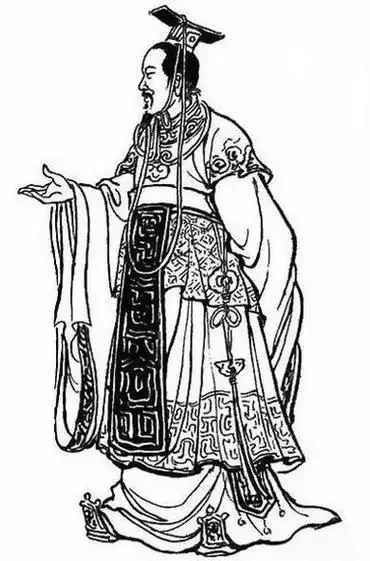
He was the last emperor of his house to hold power in his own hands, and the fourteen years of his reign are the years in which the state of Wei was strongest and its court was already beginning to belong to someone else. Against him came everything the age could bring: two great southern campaigns a year through the Wei valley, a warlord beyond the northeast frontier who sold his allegiance twice, and a palace politics of favourites and remonstrance that ran at the same time as the wars. He met all of it with a temperament that struck his historians as the best of him and, in the same breath, the source of his failure. He was decisive where his father had been hesitant, and he spent as freely as his father had tried to save.
The histories that tell his story were written after the fall of his dynasty, by men serving the family that replaced it, and this has to be said at the start because it shapes what survives. The Records of the Three Kingdoms was compiled by Chen Shou, a subject of the Jin; the commentary that has carried the sources down to us was assembled by Pei Songzhi in the fifth century, a subject of the Liu Song; the campaigns against the Gongsun of Liaodong are recorded in fullest detail in the Book of Jin, written by the Tang for the house of Sima itself. The state he ruled is known to later historians as Cao Wei, to keep it apart from the other dynasties that took the name Wei; his own court knew it simply as Wei. He himself is Emperor Ming, from the posthumous name his successor gave him in the first weeks of 239, and this is the account of the fourteen years he wore it.
1. The Prince of Ye
The year of his birth is not certain, and the uncertainty is worth stating because the debate has run for sixteen centuries. The Records says he died in the first month of 239 at thirty-six, which puts his birth in 204. Pei Songzhi, noting that his father took his mother in the eighth month of 204, argued that the boy must have been born in 205, and that the record's arithmetic was forced. A third tradition, built on his enfeoffment as marquis at fifteen in the year 220, puts the birth in 206; the Qing compilers of the Sanguo Huiyao collected that reading, and Lu Bi argued against it from the careers of men who served the marquis's household before 217. The modern consensus, where there is one, sits with 204. What is not in doubt is the shape of his childhood: he was the eldest surviving son of Cao Pi, and Cao Pi's heir, in a family where that position was less secure than it looked.
Cao Cao, his grandfather, is said to have loved him, and the boy was given a marquisate in his teens. The crisis came in 221. His mother, the Lady Zhen whom Cao Pi had taken in the ruin of Ye, fell from favour through the hostility of the Lady Guo and was made to die in the second year of Huangchu; the prince was punished for his mother's offence, demoted from princely rank to a marquisate, and passed over in the question of the succession. Cao Pi once considered naming his son Cao Li in his place, and only the intercession of the Lady Guo, according to the tradition preserved in Pei Songzhi's notes, is said to have turned the choice back. The years of eclipse left their mark on him: he read, he kept his own counsel, and he acquired the habit of making up his mind privately and announcing it as a decision already made.
His education was in the hands of men who mattered later. Zheng Cheng was made his tutor, and Gaotang Long, a specialist in the portents and the rites, was attached to his household as tutor to the Prince of Pingyuan, a post he held through years when his pupil ignored most of what he said. The prince married, taking a wife of the Yu family, and took as a secondary consort a Lady Mao of Henei, whose family had produced officials under the Han and the Cao. The Yu marriage did not last. When the Lady Mao was made empress in the first year of Taihe, the discarded Lady Yu was sent back to her family, and the tradition of her farewell audience has her asking the emperor whether the Cao house made a practice of raising the lowborn to the empress's seat. It is the sort of scene the anecdotal collections preserve, and it tells a truth about the court: the women of the inner palace were now a public question.
What the tutors made of him is recorded in fragments. Zheng Cheng's lessons were in the classics and the histories; Gaotang Long's were in the omen books and the rites, the learning that read the heavens and the seasons as commentary on the conduct of government. The prince was a pupil who read what he was given and made no outward sign of what he thought, a habit that served him through the years of his mother's disgrace, when any open attachment to her memory might have cost him the succession. The one indulgence the sources allow him in youth is an interest in the mechanical arts, in the men of his court who knew how things were made; the interest returned in the reign, in the engineers he kept about the palace, and it is one of the few warm traces in the record of a man his historians otherwise describe as cold.
In the fifth month of 226 Cao Pi died in the Jiafu hall at Luoyang, in his fortieth year. The dead emperor's will named four men to assist his successor: Cao Zhen, Cao Xiu, Chen Qun and Sima Yi. Cao Rui was twenty-two or twenty-three, depending on which of the three birth years is followed, and the reign that began was framed from the first as a shared regency in everything but name.
The succession itself had been arranged without ceremony and without difficulty, which in that court counted as an achievement. There was no struggle of the kind that had consumed the house of Cao in 220, when Cao Pi displaced his younger brother Cao Zhi, and no party of officials rallied for a rival heir; the dead emperor's will was read, the four regents were named, and the crown prince took the throne in the same month. The reason for the quiet is visible in the arrangement: the heir had been kept at the capital, his tutors were respectable men of the old official class, and his mother's death had removed the one faction that might have contested him. The boy who had been punished for his mother's offence had survived it, and the habit of surviving by keeping his own counsel had been learned early.
2. The Regency and the New Emperor
The first winter of the reign settled the shape of the government. In the twelfth month of 226 the court was reconstituted around the regency: Zhong Yao was made grand tutor, Cao Xiu grand marshal, Cao Zhen general-in-chief, Hua Xin defender-in-chief, Wang Lang minister over the masses, Chen Qun minister of works, and Sima Yi general of the agile cavalry. The list is a map of the regime. The two Cao were the dead emperor's cousins, the men of the army and the clan; Zhong Yao, Hua Xin and Wang Lang were the old servants of the Cao house from the days before the dynasty, the men who had made the abdication of 220 respectable; Chen Qun was the author of the nine-rank system, the man who had built the machinery by which the court recruited the country; and Sima Yi, at forty-seven, held the smallest of the great offices, the command of the mobile armies, from which everything else would follow.
In the first month of 227 the era was changed to Taihe, the Supreme Harmony, and the Lady Mao was made empress. The new emperor's manner was noted early and often: he was slow of speech, a stammerer according to the anecdotal sources, and he gave his decisions briefly. Sun Sheng, writing later and preserved in the commentary, judged that the emperor spoke little and thought much, and that his decisions came with a force his father's had lacked. The early edicts show what he meant to do with the force. He kept his father's economy, cutting palace expenditure where his father had set it, and he moved the government's attention to the two problems his father had left open: the frontier in the northwest, where the Shu armies had come twice, and the machinery of recruitment, by which the court chose the men who ran the commanderies.
The winter settlement of 226 also fixed the ritual standing of the regents. Zhong Yao, the oldest of them and in his middle seventies, was given the grand tutelage, the highest civil office and the one his father's court had used to honour a man without making him govern; the three ducal ministers, Hua Xin, Wang Lang and Chen Qun, carried the administration; and the two military offices, the grand marshalcy and the general-in-chiefcy, went to the Cao cousins, which left the army of the dynasty in the hands of the dead emperor's family while the civil administration passed through the men who had built the abdication. It was a structure that gave the young emperor room to rule: the regents checked each other, none of them held both the civil and the military power, and the palace was the only place where the threads met. The emperor used the room, and the four years after 227 are the only years of the dynasty in which no single man at court could overrule the throne.
He also inherited his father's suspicions about the imperial clan. The princes of the Cao house were watched, housed away from the capital, and given no offices; the system of confinement that Cao Pi had built for his brothers and cousins was left standing. It is one of the ironies of the reign that the emperor who would end by entrusting the state to a regency began by being the least trusting member of his own family, and that the two men he trusted most, Cao Zhen and Sima Yi, were not of the imperial line at all.
The eastern front was quiet in these first years, by policy rather than by fortune. Wu had spent the 220s probing the middle Yangzi and the Huai, and the Wei answer under Cao Pi had been to hold the river line and not to chase; the new emperor kept to it. The garrisons at Hefei and Shouchun were reinforced, the Huai works were maintained, and the border commands were filled with men whose orders were to wait. On the western front the Shu Han, under the regency that had taken shape after the death of Liu Bei in 223, was still settling the southern commanderies and had not yet come north; the Wei intelligence summaries of these years record the southern campaign against the tribal south as the chancellor's first business, and the Wei court drew the conclusion, correctly, that the northern expeditions would come when it was finished. The interval was used for what intervals are always used for: repair of the walls, review of the registers, and the stockpiling of grain in the valley forts.
3. Meng Da and the First Northern Campaign
The first test came before the year was out, and it came from a defector. Meng Da had come over to Wei in the winter of 220, in the collapse that followed the death of Guan Yu, and Cao Pi had rewarded him with the governorship of Xincheng, the commandery that guarded the passes on the Shu border in the hills east of Hanzhong. Cao Pi had liked the man, given him a general's rank and a marquisate, and seen to it that his old friends at court, Huan Jie and Xiahou Shang, kept their acquaintance; the succession of these three deaths, Huan Jie in 219, Xiahou Shang in 225, and Cao Pi himself in 226, left Meng Da without a protector, and a man of his kind, who had changed sides once, read the loss of protectors as a warning. By 227 he had reason to believe his welcome was wearing thin, and the chancellor of Shu Han, Zhuge Liang, was writing to him across the border. The matter was betrayed before it matured. Shen Yi, the Wei governor of Weixing, whose brother Shen Dan had held the same country before him, sent word of the plot, and in the twelfth month of 227, at the turn of the year, Meng Da raised his banner at Xincheng.
The emperor's answer was made in one movement. Sima Yi, who held the command in the region and was stationed at Wan, wrote a letter to Meng Da reassuring him of the court's goodwill while his army was already on the road; he doubled the march and reached the walls of Xincheng on the eighth day. Meng Da had reckoned on a month for the memorials to travel to Luoyang and the answer to return, by his own arithmetic the distance from Wan to Luoyang being eight hundred li and from the rebel to his own base twelve hundred, and the arrival of the army inside a week destroyed him more completely than any battle. His own officers, Deng Xian and Li Fu, opened the gates. Meng Da was killed, his head was sent to the capital, and the histories record the capture of the city's people in their thousands. The rescue columns that Wu and Shu Han sent towards the passes were met by detachments and turned back. Shen Yi, the informer, was afterwards sent to the capital, where the court had reason to reconsider whether the man who betrayed one master had served it well in betraying another.
What mattered for the reign was not the campaign but the precedent. The emperor had put down a frontier revolt by sending a general of the army to do it, without moving himself, and the general had done it in eight days. After the fighting, the emperor asked the question that would shape the next decade: which of the two enemies should be struck first, Wu in the east or Shu in the west. Sima Yi's answer, as the Jin histories record it, was to send the fleet against Xiaoyue and the army against Dongguan; the emperor did not adopt it. The strategic debate had been joined, and it would not be settled in his lifetime.
The greater campaign came in the spring. Zhuge Liang came out of the mountains towards Qishan, and three commanderies of the far northwest, Tianshui, Anding and Nan'an, gave him their allegiance, their officials and their people going over to the Shu army almost without a blow. The emperor's judgement of the situation was that the invader would fail on his own, and he went west to Chang'an himself to hold the situation in person while the generals worked. Cao Zhen, general-in-chief, took charge of the Guanzhong command; Zhang He, given the special rank of tejin and sent forward with the armies the annals put at fifty thousand, met the Shu vanguard at Jieting and broke it. The three commanderies returned to Wei, and the first northern campaign ended in a retreat. It was the pattern of the next six years, and it was established in the first spring: the emperor held the capital or went west himself, the regent generals fought in the field, and the frontier held.
The autumn aftermath showed how the emperor meant to run the war. The generals who had held the valley were rewarded with command, not with titles alone: Cao Zhen was given the direction of the Guanzhong armies as general-in-chief, Zhang He was confirmed in the west, and the frontier commanderies were put under officers whose careers depended on holding their ground. The emperor's own part in the campaign, his journey west to Chang'an, was the first of the personal interventions that mark his reign; he was twenty-four by the record's count, and the journey told the frontier that the capital was watching. It also set the pattern of his presence: he did not command armies in the field, as his grandfather had, and he did not stay away, as his father had; he went to the place where the decision mattered and let the generals fight.
The rest of 228 was a harder year. In the sixth month the emperor issued the first of his education edicts, ordering that the commanderies send up their candidates for office on the basis of classical learning, on the ground that the masters of the classics had not been the right men and the way of the former kings could not be taught without them. In the autumn the grand marshal Cao Xiu led an army east against Wu and was defeated; he came back broken and died within the month, and the court lost the last of the dead emperor's marshals. In the eleventh month Wang Lang, the old minister over the masses, died, and the generation that had managed the abdication was going. In the winter the Shu army came again, this time against the fortress of Chencang on the Wei river road; the commandant there held it with the small garrison he had, the siege wore on for some weeks without result, and the besiegers withdrew when their grain ran out. The emperor, watching two fronts, had begun to learn what his reign would cost.
4. The War of the Wei Valley
In 230 the court took the offensive. Cao Zhen, who had been made grand marshal that summer, argued that Shu Han could be struck directly, and the plan adopted was a three-pronged advance: Cao Zhen himself from the Ziwu road, Zhang He from the Xie valley, and Sima Yi, now general-in-chief, following the Han river, from the west. The emperor approved it, and the armies marched in the eighth month. Against the plan there spoke Hua Xin, defender-in-chief, the oldest of the regents, a man whose whole career had been an argument against expense. His memorial is preserved: to haul grain a thousand li is not the profit of war, he wrote, and to enter deeply past the hazards brings no single victory. The emperor did not turn back. He did not need to. The weather did the work for the remonstrance: the rains that year did not stop, the roads of the mountains turned to mud, the columns advanced and could not feed, and after more than a month of it the court recalled the armies. The campaign ended without a battle, and the memorial of Hua Xin, which the emperor had declined to follow, acquired the authority of prophecy.
Cao Zhen fell ill in the aftermath and died in the third month of 231, and the command in the west passed in effect to Sima Yi, who was given the direction of the Yong and Liang provinces, the whole western frontier. The change is the hinge of the reign, though nothing in the sources marks it as one. From this point the man who met the Shu armies campaign after campaign was not a member of the imperial clan but the head of a family on its way to becoming the greatest of the aristocratic houses, and each campaign he survived added to his standing in the army.
The regency of the generals had been built, from the first month of the reign, on a balance: two men of the Cao clan holding the great offices of the army, the three ducal posts held by old officials, and the house of Sima represented by one man of the second rank. In three years that balance was gone. Cao Xiu was dead in 228, Cao Zhen in 231, Zhong Yao in 230; of the four regents only Chen Qun and Sima Yi were left, and Chen Qun's office was civil. The emperor had not planned it so; the deaths had done the work for him. But the consequence was that by 231 the greatest military command in the state, the western frontier that faced the stronger of the two enemies, was held by a man whose family was not the imperial family, and the emperor's own instruments for controlling him were the ones he had always used: the seal sent to the front, the minister at the general's elbow, and the grain.
The campaign of 231 followed the old pattern. Zhuge Liang came out again towards Qishan; Sima Yi took the defensive in the Wei valley, and the armies faced each other while the Shu foragers worked the fields. The end of it belongs to one man. On the Shu withdrawal, when the grain was gone, Zhang He urged that the retreating army not be pursued; the phrase has survived, that a returning army is not to be chased. The order to pursue was given, and Zhang He went out at the head of it and was killed at the Wooden Gate by an arrow, struck in the knee according to the Records, while the Wei Lue puts the general's warning first and the order that overrode it. He was given the posthumous name Zhuang, the Martial. The double version of his death, the general's own caution and the order that overrode it, was too useful a story for the historians of the Sima house to leave alone, and it is repeated in the Jin sources as an illustration of the ruthlessness that got results. Read plainly, it records the death of the last of the five generals the Records groups in a single memoir, the man who had held the northwest since the days of Hanzhong.
Zhang He deserved better than the use the Jin histories made of him. He had come to Cao Cao from the service of Yuan Shao, after the defection at Guandu in 200, and he had fought in every theatre of the wars of reunification: the conquest of the north, the long frontier war in the northwest against Ma Chao and the Liang rebels, the defence of Hanzhong against Liu Bei, where his division had been broken at Dangqu. In the years of the two emperors he had become the court's specialist in the defence of the valley, the general who knew every pass from the Qinling to the Long mountains. His death at the Wooden Gate was therefore not only a personal loss; it removed the one man in the Wei armies whose authority in the west was independent of the Sima house, and the command that followed was Sima Yi's without a rival.
What the valley war cost was the substance of the debate Hua Xin had opened. The court knew it, and the emperor knew it, and the edicts of these years show a government trying to make the war pay for itself: farmers were moved into the upper Wei valley to grow grain for the armies, the old frontier colonies of the Han were revived where the land allowed, and the memorials of the finance officials of the period are full of figures for transport and corvee. The strategic logic was the emperor's own and it was sound: Wei could lose a campaign and remain Wei, while a single great defeat on the Shu frontier would cost Shu Han its future, and the war was therefore to be prolonged, not concluded. The patience was his. The armies that executed it were the regent generals', and the reputation the patience earned was theirs.
5. Wuzhang and Hefei New City
The crisis of the reign came in 234, and it came on two fronts at once. In the spring the Shu army came out of the Xie valley for the last time and took up position on the plain of Wuzhangyuan, on the south bank of the Wei river, and waited to be attacked. The emperor's orders were to hold. Sima Yi was instructed to keep his walls and waste the enemy's strength, and the court went further: Xin Bi, a minister of the old school, was sent to the front with the imperial staff and the authority it carried, specifically to prevent the generals from giving battle. The device worked. The Wei army stayed behind its walls through the summer and refused battle, which was the whole of its strategy, and the Shu had come too far to do anything but wait it out. In the eighth month the Shu chancellor died in his camp; the Shu army gathered itself and withdrew, and the pursuit that followed was cautious to the point of timidity. The generals had been sent to hold, and they held, and the greatest of the Shu Han's attempts ended not in battle but in arithmetic.
The stratagem of the staff and the seal was recorded because it worked, and it is worth pausing on what it says about the emperor's method. The court of Wei in these years was not short of generals willing to fight; it was short of generals who could be trusted to obey an order to stand still under provocation, and the emperor's solution was to send a civil minister with an authority that overrode the commanders. The civil minister was Xin Bi, a man of the old moral school, and the seal he carried was the imperial authority itself. The same device, the sending of a check upon the general in the field, would be used again by the house of Sima against others, and by others against the Sima; in 234 it was the emperor's instrument, and it saved the valley.
While the west held, the east came under attack. The Wu emperor, Sun Quan, came in person against Hefei in the fourth month with a great army, and his objective was the new city that Wei had been building there. The decision to build it had been taken in 233 at the urging of Man Chong, the general commanding the Hefei garrison, who argued that the old city stood too far back from the river to be defensible and that a forward work would pin the Wu armies against the water; the fortification was completed that year, and it was this that Sun Quan had come to reduce. Man Chong held it with the troops he had, and the siege did not go the attacker's way. The emperor moved east in person to the relief of the city, and the siege was raised. The whole of the episode in the Wei record is contained in that movement: the emperor came, and the enemy went.
The building of the new city had been opposed when it was proposed, on the ground that a visible withdrawal from the old position told the enemy what Wei feared; the objection was overruled, and the campaign of 234 answered it. The Hefei position, the old city on the north bank and the new work on the water, had been the hinge of the middle Yangzi since the wars of the 210s, and every Wu offensive of the previous decade had come against it. The emperor's decision to accept battle in the east, by coming himself, was taken while the west was still holding; it is the clearest instance in the reign of the two-front war being fought from one chair.
The rest of the year was consolidation. The upper Wei valley was put under military colonies; the northern frontier beyond the bend of the Yellow river, where the Xianbei had been pushed back in 233, was quiet; and the court returned to the old business of making the war pay. The emperor's health was still good, he was thirty by the record's count, and the state he ruled had never looked stronger: the two southern powers had spent the year against him and gained nothing, the northeast was quiet, and the armies of the west and the east were commanded by men of his own choosing.
The frontier beyond the bend of the river deserves its paragraph, because it was the one war of the reign that ended in an assassination. The Xianbei had been a problem on the northern border since the fall of the Han, and under the two leaders Kebineng and Bugedun the tribes had come together in a way they had not before. In 233 they crossed into the imperial commanderies, and the Wei generals Su Shang and Dong Bi were killed in the fighting; the court sent the general Qin Lang out with the central army, and the raiders were driven back without a decision. In 235 the governor of You province, Wang Xiong, settled the matter in the manner of the frontier: he sent a brave man of his own, a certain Han Long, into the Xianbei camps, and Kebineng was killed. His brother was set up in his place, the tribal confederation that had been forming broke apart, and the sources of the period say plainly that the border was quiet afterwards because of it. The whole episode cost the court one assassin and a year of skirmishing, and it stands in these annals as a reminder of how the age settled such things.
6. The Northeast
The frontier that took longest to settle was the one the maps had almost forgotten. Beyond the Liao, in the old commanderies of Liaodong, the Gongsun family had governed for three generations since the collapse of the Han, and the second of them, Gongsun Yuan, was a vassal in name and an independent in fact. In 228, when his uncle Gongsun Gong was displaced, the Wei court had confirmed Gongsun Yuan as governor of Liaodong, preferring a confirmed vassal at the end of the supply lines to a war in the northeast. It was the same logic that had made Meng Da's defection possible, and it had the same result.
Gongsun Yuan played the same game for longer. In 233 he killed the envoys that Wu had sent him across the sea and forwarded their heads to the capital, and the Wei court rewarded the service: he was made grand marshal and duke of Lelang, the highest honours the court had to give, and for a year the northeast was quiet. In 237 he declared himself king of Yan, took an era name for himself, and made the break open. The court's answer came in the first month of 238.
Sima Yi was sent against him with forty thousand foot and horse, the number the Jin annals give, under the generals Niu Jin and Hu Zun. The campaign is the best documented of the reign, because it was the campaign of the man whose house took the throne, and the sources are correspondingly full. The Gongsun army met the invaders at Liaosui and was driven in; the Wei host went round the Liao river to the lower city of Xiangping and sat down before it. The rains came, the siege works drowned, the court ministers spoke of recalling the army, and the emperor refused; the order that went to the front was to press the siege. In the autumn the city fell. Gongsun Yuan and his son were killed at the Liang river, and what followed is recorded in figures that should be read as figures: the annals say seven thousand of the city's men above the age of fifteen were buried in the ditches, that more than two thousand of the officials were executed, and that forty thousand households, some three hundred thousand people, were taken back into the registers of Wei. The northeast was annexed; the old commanderies were restored; and in the sixth month of the same year the court received a mission from the queen of Wa, whom the emperor's patent named the pro-Wei queen of Wa and sent a gold seal.
The family that was destroyed had governed the northeast for a generation. Gongsun Du had taken the commandery in the disorders at the end of the Han, splitting the old Liaodong in three and making himself master of the peninsula and the routes to Korea; his son Gongsun Kang had held it through the years of the Yuan brothers, killing them when they fled to him and sending their heads to Cao Cao; and his brother Gongsun Gong had inherited a quiet province. Gongsun Yuan had taken it from his uncle by pressure, and had governed it since as a courtier of Wei who answered when he chose: the service of 233 had bought him the court's highest honours, and the declaration of a kingship in 237 had dared Wei to answer. The court's answer, four years in the sending, was the only campaign of the reign that ended in the annexation of territory, and it was fought by the only general of the reign whose house would not need the emperor's permission to take the throne.
The conquest settled the frontier and unsettled the court. The man who had done it returned to Luoyang with an army's loyalty, a treasury of captured wealth, and the conquest of a whole region to his credit, and the emperor who had sent him had no clan general of Cao Zhen's standing left to set against him. The war against Shu Han had made Sima Yi the first soldier of the state; the conquest of Liaodong made him more than that. It is one of the plain facts of the reign that the emperor chose to spend his generals in the northeast and the west, and that the only general worth the name who survived all of it was the one whose grandson would take the throne.
The conduct of the siege is worth a longer look, because it is the clearest case in the reign of a decision the emperor made against his court. When the rains came and the ditches drowned, the ministers at Luoyang asked that the army be recalled; the emperor's rider went to the front instead with orders to raise the siege works and finish. When the engineers complained that the arrows were exhausted and the shafts spent, the answer from the capital was that the enemy's supplies were smaller than the state's. The policy of prolongation that had ground down the Shu armies in the valley was applied to a fortress in the northeast, and it worked for the same reason: Wei could wait longer than anyone it fought. The cost was a city of adult men put in the ditches, and the men who counted the bodies were counting on the orders of a general who would need his reputation intact when the throne next came up for the taking.
7. Examination and Faction
The same years produced a quieter struggle over who would staff the court. The emperor's position was set out in the edicts. In the sixth month of 228 the commanderies were ordered to send up candidates on the basis of classical learning, because the way of the former kings could not be made plain without men who had it. In the second month of 230 the rule was sharpened: clerks and officials who had mastered one classic and were fit to govern were to be examined by the doctors of the university and employed on the strength of the highest grades, and those who pursued what the edict called the fashionable and empty and did not work at the root of the way were to be dismissed without exception. The phrase fuhua, fashionable emptiness, is the emperor's own, and it names the thing he meant to fight.
The men he meant it against were the sons of the great houses, and the quarrel has come down to us with the names attached. The Wei Lue grouped them as the four talents and the eight worthies, He Yan, Deng Yang, Xiahou Xuan, Zhuge Dan and the rest of them, a circle of young men related by marriage and reputation who wrote, talked and examined one another in the capital, and whose influence over appointments was resented by the men whose careers had been built on service. Dong Zhao, who named them in 232, was himself one of the old servants, a man whose whole career had been made by attaching himself to the powerful at the right moment, and his memorial against the circle of clever young men has usually been read as the resentment of the courtier for the men who did not need to scheme. Lu Yu, the director of the ministry of personnel, gave the court the sentence it needed when he said that in choosing men the court should not take the ones with reputations, for a reputation was like a cake drawn on the ground: it could be looked at, and it could not be eaten.
The reckoning came in 232. Dong Zhao, one of the oldest of Cao Pi's ministers, sent up a memorial naming the circle and asking that they be dismissed and forbidden office, and the emperor's answer was a rescript of unusual harshness: the men he named were stripped of office and barred from employment, and the tradition preserved in the Wei Lue counts fifteen of them. Xiahou Xuan, the most brilliant of the group and the most connected, was among them; he was forbidden office for some years and afterwards returned to a subordinate command in the palace guards. The measure was popular with the officials who had been passed over, and it has been read ever since as the young emperor's war on the aristocracy. It is safer to read it as what the edicts say it was: a fight over the criterion of appointment, the criterion of classics and examination against the criterion of reputation and family, a fight that was already old and would end, forty years later, with the victory of the second.
The university is the other side of the same coin, and its condition in these years is recorded with unusual frankness. The commentary quotes a long lament from the generation that taught there: that since the troubles began the way of the Confucians had decayed, that the sweeping out of the university's ashes under Cao Pi had restored the doctors and the examination of candidates, that in the Taihe and Qinglong years, with troubles on every side, men studied to avoid service rather than to learn, that the students came to a thousand and the doctors were too coarse to teach them, that the winter leavers and spring comers passed through year after year without mastering anything, and that the handful of real scholars among them could not pass a system of tests that asked about brushwork and dots instead of the meaning of the classics. The emperor's edicts were an answer to that condition, and so was his purge: the two halves of his education policy were the elevation of the classics and the punishment of the fashionable. He Yan, the most gifted of the dismissed and the most notorious, went on to attach himself to the Cao house, and his story belongs to the reign that follows. The anecdote for which he is best remembered, that the emperor tested whether the powder on his face came off in the summer heat by giving him hot soup to drink, comes from the Shishuo Xinyu, compiled four centuries after the event, and belongs to the story of his reputation rather than to the record of his life.
There was a personal edge to it, and the personal edge was the inner palace. Xiahou Xuan, of the great Xiahou clan of Pei, had made a wounding remark about Mao Zeng, the brother of the empress, and the emperor, who was fond of the empress's family, had him demoted for it. The aristocracy of the regency and the favourites of the inner palace were already two networks in the same capital, and the emperor's habit was to play them against each other and to keep the decision in his own hands. It worked for as long as he lived.
8. Law, Rites, and the Calendar
The government of the interior was the other half of the reign, and the emperor's work there was substantial and, unlike the wars, permanent. In 229 the code was rewritten. Chen Qun and Liu Shao, with a commission of officials, cut the Han law down to the eighteen articles of the New Code, with the forty-five articles of the commandery and provincial statutes and the statutes of the secretariat and the army following, something over a hundred and eighty articles in all. The reshaping mattered more than the size: the section on punishments was put at the head of the code, where the Han had placed it after the first three articles, and the eight deliberations, the privileges that required the court to consider before judgement against men of the highest ranks and the imperial house, were written into the law itself. Doctors of law were appointed to teach it, so that the interpretation of the statutes would pass from private tradition into the schools. The Wei code, in this form, is the direct ancestor of the law of the Tang.
The penal policy that went with the code was moderate. The question of restoring the mutilating punishments was raised, as it had been raised before, by Zhong Yao, the oldest of the regents, and the arguments on both sides were put at length; the emperor did not act, and the question was left where it had been left. The last years of the reign brought the practices of a court trying to spare the population it was conscripting: rules that the families of condemned men were to be told of the sentence, that doubtful death penalties were to be reduced, and that the emperor himself looked at the cases that came up. The memorials on these subjects read as if the court understood that a long war could not be fought on a population driven to desperation.
The code and the calendar belong together, because both were answers to the same question: what kind of dynasty was this to be. Cao Pi had taken the throne by a procedure, the abdication of the Han, that made his house the legitimate successor of a line; the rituals and the calendar and the law were the machinery by which the claim was made good. The renumbering of the year in 237 was not superstition, or not only superstition; it was a statement that the Wei ruled under a new dispensation, made at the moment the emperor was beginning to build palaces on the scale of the Han at its greatest, and the two acts together, the calendar and the towers, are the two halves of the same ambition. His critics chose the towers; his chancellors chose the calendar; the emperor did both.
The same year produced the counter-current. Jiang Ji, one of the emperor's military counsellors, asked to perform the sacrifice of the feng and shan, the sacrifice that only the greatest emperors had performed; the emperor's answer was that the request had made him sweat with shame, and the matter was dropped. Years later it was taken up again, and the drafting of the ritual was given to Gaotang Long, who died before the work was done; the emperor's comment on the death was that heaven did not mean him to finish the business. He was willing to change the calendar; he was never willing to claim the mountains.
The rites were the other instrument of legitimacy, and here the emperor followed his father's start and went further. The music of the court was reformed, the sacrifices were regulated, and in 236 he set up the Chongwen pavilion, a house for the scholars of the classics, to gather the men who could give the ceremonies authority. The great question of the reign's ritual politics was the calendar. The Wei had inherited the Han calendar, and the argument for changing it was the argument that had been made at every change of dynasty since the Warring States: that the new house ruled under a new element and must regulate the year accordingly. Gaotang Long, the old tutor, argued for the change; in the third month of 237 the emperor adopted it. The year was renumbered, the month of the new year was fixed as the fourth month of spring in the new reckoning, the court's colour was set to yellow, the ancestral temples kept the white of the metal element, and the old Taihe calendar was replaced by what the sources call the Jingchu calendar. It was the most ancient of the acts available to a new dynasty, performed by a dynasty already seventeen years old, and it announced that the Wei meant to last.
9. Palaces and Women
The building was the thing his critics could not forgive, and it ran through the whole reign and came to a head in 235. In that year the palace quarter of Luoyang was rebuilt on a great scale: the Zhaoyang hall and the Taiji hall were raised, and the Zongzhang tower was put up to see from. The expense was enormous, the labour was taken from the fields, and the memorials against it survive in dozens. Then in the seventh month the Chonghua hall caught fire.
The same years produced the engineering that the age remembered. Ma Jun, a man of no office and no family whom the emperor kept at court as a maker of things, rebuilt the south-pointing carriage, the directional vehicle of the old legends, and argued the point against the men who said it could not be done; and he improved the square-pallet chain pump, the machine for lifting water, so that a child could work it and the fields along the canals could be watered in a dry year. The emperor's interest in such men is recorded, and it belongs with the rest of his record: the same ruler who built the Zongzhang tower and put the empress to death kept an engineer at court because the machine was clever, and the histories that remembered the tower remembered the machine.
The fire gave the remonstrators their text. Gaotang Long, the old tutor, now near the end of his life, cited the commentary on the Book of Changes: when those above are not frugal, those below are not measured, and the calamitous fire burns their chambers. The judgement, he said, was that the building had gone beyond what the state could carry. The emperor's answer was characteristic: he had the hall rebuilt, renamed it the Nine Dragons hall, and kept Gaotang Long at court. Yang Fu, who had remonstrated against the palaces for years, was treated in the same way; the memorials were received, the emperor was courteous, and the building went on. Xu Xuan, the minister of works, opposed the works at Xuchang with the argument that the strength of the people was exhausted, and the argument was heard and set aside. The remonstrators were never punished, and never obeyed.
The same year brought the smallest and the largest of the court's ceremonies. In the second month of 232 the emperor's daughter, the Lady Cao Shu, a child of a few years, died. The emperor had her buried with the honours of a princess, gave her the posthumous name of Princess Yi of Pingyuan, placed her in the southern tomb beside the grave of the Lady Huang of the Zhen house, a kinswoman of his dead mother, and arranged for a boy of the Guo house to be adopted as her heir and succeed to a marquisate. He wished to attend the burial himself; Chen Qun remonstrated that an emperor did not go out to a child's grave; the emperor went. Cao Zhi, the poet, wrote the lament. The ceremony, more than any edict, shows what the inner court had become: a place where the emperor's feelings were enacted as state ritual, over the objection of his oldest ministers.
The remonstrators of these years deserve their names. Gaotang Long had been the emperor's tutor before he was his minister, and his arguments were the arguments of the omen-readers: the fire in the Chonghua hall, the nest of magpies built on the palace gate tower, the comet that crossed the great constellation, each of them read as a judgement on the building. He said once, in the audience where the magpies were discussed, that the palaces were not finished and that if the work did not stop there would come a time when another family would govern in the emperor's place. The emperor's face did not change; the building went on; and Gaotang Long, dying in 237, left a final memorial asking that the works be cut and the people spared. Yang Fu, the governor's officer who had made his name in the wars of the northwest, remonstrated against the palaces year after year with the plain argument of the official who has seen what requisitioning does to a commandery. The emperor heard them all, rewarded the men, and built.
The two empresses are the other half of the story. The Lady Mao, made empress in 227, held the seat for ten years. Her family was honourable and not powerful, and her brother Mao Zeng's promotion the general Xiahou Xuan had despised was the sort of court honour that carried weight and resentment at once. In the ninth month of 237 the empress Mao was ordered to die. The charge, in the formula the sources give, was resentment and complaint; the facts, in the same sources, are that the emperor's favour had passed to the Lady Guo, a woman of the Xiping Guo house who had come into the palace in the Huangchu years and had risen without family backing. The empress Mao was buried with the posthumous name of Dao, the Sorrowful, in the Min tomb, and in the twelfth month of the following year, with the emperor already dying, the Lady Guo was made empress. She died in 264, a year before the dynasty itself ended, and was buried beside her husband on the west side of the Gaoping tomb; her posthumous name is Mingyuan, the Fount of Light.
The succession had failed before the palace did. The emperor's sons died young, one after another, and the record of the reign is a list of mournings. In the autumn of 235 he adopted a boy as his son and made him Prince of Qi, the son of the prince of Rencheng, Cao Kai, a child of his own clan raised in the palace, and it was this child who would inherit the throne. The failure of the succession is the fact that makes the last months of the reign what they were.
10. The Last Winter and the Trust
The emperor fell ill in the twelfth month of 238. He had been robust, he was in his middle thirties by the record's count, and the sickness came quickly; the court understood within weeks that it was the last illness. What followed was the most consequential sequence of decisions in the history of the dynasty, and the sources disagree about how much of it was the emperor's own doing.
The first acts were his. The Lady Guo was made empress. Cao Yu, a son of Cao Cao and the emperor's uncle, was made general-in-chief, the office Cao Zhen had held, and given the charge of the heir; and Cao Yu, a mild man by the tradition of the sources, refused the office and asked to be excused. Into the vacancy stepped the palace secretaries Liu Fang and Sun Zi, the men who managed the emperor's papers and had his ear at the last. Their argument, as it was reported afterwards, was that the regency could not be entrusted to men of the Cao clan of Cao Yu's generation, whose partisans they had quarrelled with, and that Cao Shuang, the son of the dead general Cao Zhen, should be joined with Sima Yi, the general of the west, to hold the young emperor. The dying emperor agreed, or was made to agree. Cao Yu, with the generals Xiahou Xian and Cao Zhao and the imperial kinsman Qin Lang, was dismissed from the palace; Cao Shuang was made general-in-chief; and a rider was sent at speed to summon Sima Yi from the west. The emperor's own words to Sima Yi, when he came, were recorded and repeated: my illness is grave, and I entrust the affairs after me to you; you are to assist Shuang in the care of the young boy. Cao Shuang was given the conduct of affairs with the staff of authority; Sima Yi was made to hold the armies.
On the first day of the first month of 239, the day dinghai, the emperor died in the Jiafu hall, thirty-six years old by the record's reckoning. The funeral was arranged, the mourning observed, and the regency of two men began over a child of eight. Cao Yu and the dismissed generals were removed from the capital; the Lady Guo was made empress dowager; and the Prince of Qi, the adopted son, took the throne as the first of the young emperors of Wei. There the record of this reign ends, and the record of the next belongs elsewhere. The one thing that can be said here, because it was done in the last month of this one, is that the man who held the armies of the west, the conquest of Liaodong, and the confidence of the officer corps, now shared the government of the state with the son of the first general-in-chief, and that the balance between them would be settled, ten years later, at the Gaoping tomb.
How much of the last winter was the emperor's own doing has been argued since. The account in the Records, built on the memorials of Liu Fang's contemporaries, has the emperor weeping as he gave the orders, holding Sima Yi by the hand and pointing to Cao Shuang, and trusting the two of them with the child; the Wei Lue tradition preserved in the commentary is harder on the secretaries and gives the dying man less agency. Both agree on the substance: the regency was settled without a Cao prince at the head of the army, the generals of the Cao clan were dismissed from the palace in the same week, and the summons to the west went out before the court was told. Cao Shuang was the son of Cao Zhen, whom Cao Cao had adopted and raised with his own sons, a young man of fashion with a taste for the company of the dismissed circle of the capital; Sima Yi was sixty years old, the survivor of three reigns, and the only soldier in Wei whose name could fill an army. The emperor had balanced them, if he balanced them, on the edge of a knife.
He was buried at the Gaoping mausoleum, south of Luoyang, in the first month after his death. The judgement of his historian is the fairest starting point for the verdict, and it has two halves. Chen Shou wrote that Emperor Ming was resolute and decisive in judgement, that he followed his own mind in what he did, and that in this he had the full substance of a ruler of men. And then the historian gave the other half, that in those years the people were exhausted and the land was worn, that the emperor could not restrain his expenditure to give them rest, and that he chased after the First Emperor of Qin and the Martial Emperor of Han in building palaces and towers. Sun Sheng, in the commentary, praised the steadiness of his decisions and the discipline of his court and found the fault in the same place: the same determination that held the frontiers built the palaces, and the same confidence that chose good servants refused to listen to them.
The historian's position should be kept in view, because it cuts both ways. Chen Shou wrote as a subject of the Jin, in a court where the founder's grandfather had been the servant of this emperor and the subject of his last orders; his account of the regency of 239, of the palace secretaries and the dismissal of the Cao princes, was written for readers who knew how the story ended, and it is kind to the Sima where the Sima acted well and unsparing of the emperor who handed them the army. The Jin sources go further, and the Book of Jin turns the last winter into the prelude of a dynasty: the dying emperor's charge to Sima Yi, the trust, the care of the young boy, all of it written as the appointment of a man destined to rule. Against this stands the Records's own record of the emperor's choices: a man who put down revolts by sending generals, held frontiers by sending ministers with seals, fought faction by dismissing the sons of the great houses, and built by overriding his tutors. The decisions were his. What he did not do, and what no emperor of his house did again, was decide what would happen when the generals outgrew the throne.
The balance is fairer than either half alone. In fourteen years he held the passes against five great Shu Han campaigns, held the river against the Wu, broke the Xianbei beyond the frontier, annexed Liaodong, rebuilt the law, regulated the rites, and kept the court's factional war inside the palace. He never lost a province. He also spent the treasury of a state at war on towers, killed an empress, buried a child with the honours of a princess over his ministers' objection, and at the last handed the regency to the one family in Wei whose power no emperor of his house would again be able to question. The gates held while he held them. The men he chose to hold them were the men who, ten years after his tomb was closed, would find that the throne could be governed without a Cao on it.