Home / Historical Figures / Zhou Dynasty
Mencius
孟子
Mengzi, c. 372 – 289 BC · The second sage of Confucianism
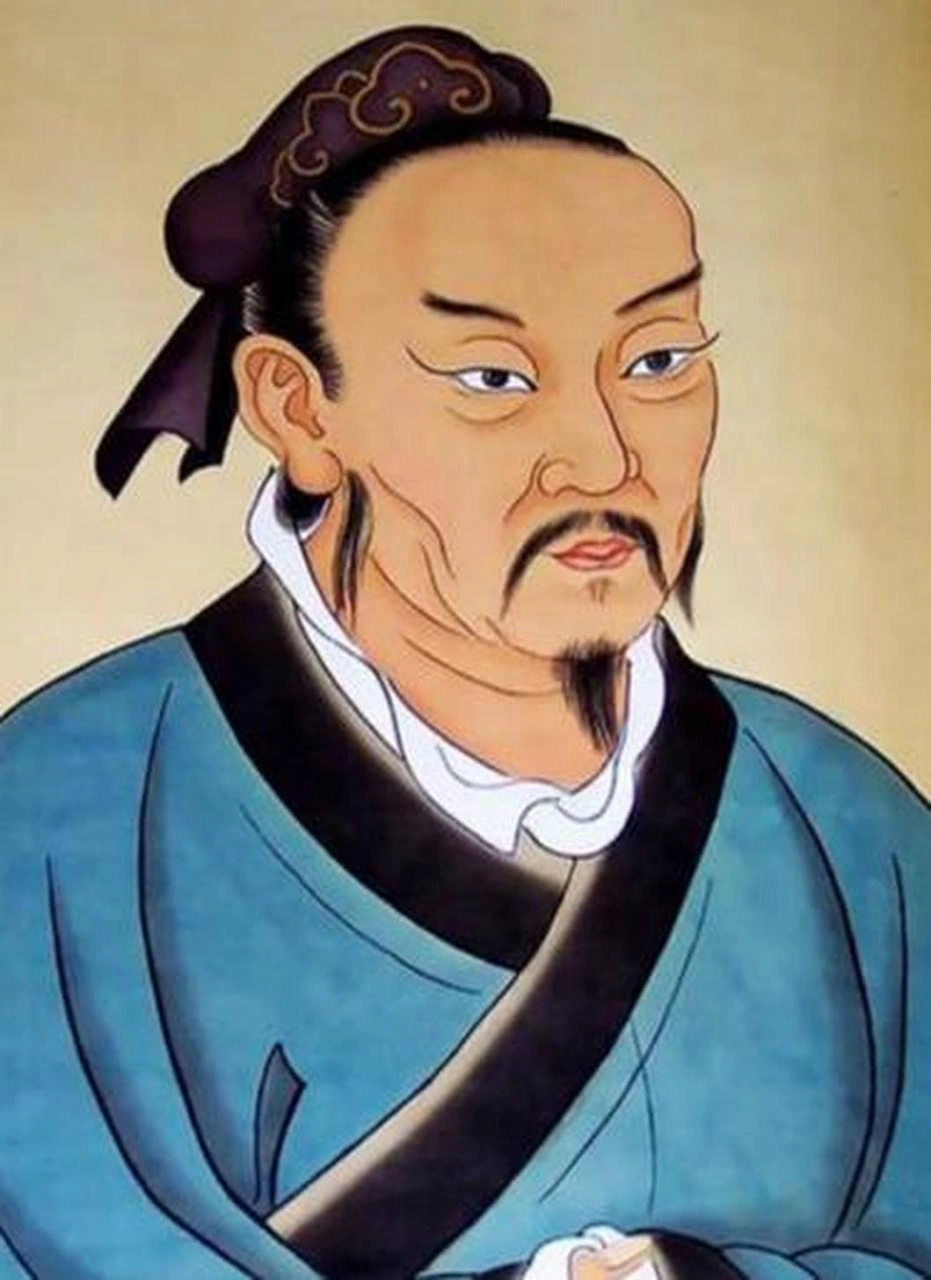
A man from the small state of Zou, near the ruins of old Lu, who never met Confucius and never held real power, ended up with a title no other Confucian has ever worn: the Second Sage. He is called Mengzi, "Master Meng," and the book that carries his name, the Mencius, sits beside the Analects as one of the Four Books that shaped a civilization. Yet in his own lifetime he was a traveler without a post, a counselor whose advice every ruler admired and none obeyed, a man who spent some twenty years walking from court to court in a warring age and went home unwon. The paradox is the whole point. The thinker who failed to move a single king became, a thousand years after his death, the man who moved an empire's curriculum. What he argued — that human nature is good, that a ruler who abandons the people forfeits the right to rule, that a gentleman may look a king in the eye and say "why must you speak of profit" — outlived every throne he failed to counsel.
He was born, by the received chronology, in 372 BC, and he died in 289 BC, a lifespan of eighty-four by Chinese reckoning; some later sources push the number to ninety-seven, and modern scholars who distrust the tidy late figure place him a full generation earlier, around 385 to 304 BC. Either way he belonged to the dusk of the Warring States, when the feudal order Confucius had mourned two centuries before had collapsed entirely into a contest of armed states. Confucius had wanted to mend a broken Zhou; Mencius wanted to replace a ruthless realpolitik with the rule of a humane king, and he said so to the men who were busy sharpening the swords. This is the story of how a provincial teacher of no office became, by a slow and involuntary ascent, the Second Sage of a tradition that still bears his name alongside the First.
1. A Son of Zou, and a Pupil of No One
The first fact about Mencius is how little is fact. Sima Qian, writing his brief biography a century and a half after the philosopher's death, records only a name, a place, and a teacher: "Meng Ke was a man of Zou. He studied under a disciple of Zisi." Beyond that the historian is silent on parents, on childhood, on almost everything a modern reader expects a life to contain. What we "know" of the early Mencius comes from later compilations — Han Ying's Han shi waizhuan and Liu Xiang's Biographies of Exemplary Women above all — and must be read as tradition, not as court record. Even the year of his birth and death are reconstructions by scholars of the Song and Yuan, not entries in any contemporary register, and the very thinness of the record is its own confession: by the time anyone thought to write Mencius's life, the life itself had receded beyond recovery.
The tradition makes him a scion of the Mengsun clan, one of the "Three Huan" houses that had dominated the state of Lu for generations before declining into branches scattered to neighboring states. Zou, where he was born, was a minor polity near Lu, and Mencius himself remarked how close he lived to the home of the sage: "I dwell near the dwelling place of the sage," he said, "and yet how far I am from him in deed." His father is a near-empty name in the late sources, and the early sources agree on one thing — that the boy lost his father young. What filled the gap was his mother, the lady Zhang, and her story became the most famous mother's story in Chinese letters.
Later biographies tell of three moves. The family first lived by a cemetery, and the child played at funeral rites; his mother judged this no place for a son and moved to a market, where he imitated merchants hawking wares; she moved again, this time next to a school, where he fell in with the rituals of learning. Then the tale of the broken loom: the boy neglected his lessons, and his mother cut the cloth on her loom to show him that learning, like weaving, is built thread by thread and undone in a moment. A third anecdote has her buying pork from a neighbor to keep a careless promise to the child, rather than let him learn that a parent's word is a thing to be broken. A fourth turns on the same moral from the other side: Mencius, newly married, found his wife sitting in a relaxed posture and went to his mother to ask leave to divorce her; the mother asked how he knew, and when he said he had seen it himself, she turned the rebuke on him — it was he who had entered without announcing himself, and therefore he, not she, had breached propriety. These are moral set-pieces, polished by Han moralists, and they tell us less about the historical Mengzi than about what later China wanted a sage's upbringing to have been. Still, they capture something the Mencius itself confirms: an unusual reverence for education and for the forming of character, and a conviction that environment and effort, not birth alone, make the person. There is a thread worth pulling beneath them. The Mengsun clan Mencius was said to descend from had once ranked among the ruling houses of Lu; by his birth it was a scattered, diminished line, and Zou itself was a small state living under the shadow of greater powers. To grow up "near the dwelling of the sage" as a member of a fallen ruling house was to inherit both a standard and a grievance — a sense that the order his family belonged to had been lost, and a conviction that it could be recovered by argument rather than by arms. That conviction is the emotional core of everything he later told kings.
On the question of his teacher, Sima Qian's phrase is precise and deflating. Mencius did not study with Zisi, the grandson of Confucius and the author of the Zhongyong, because Zisi died around 402 BC, decades before Mencius was born. He studied, the historian says, under a disciple of Zisi — a grand-pupil, two removes from the founder. Mencius himself put the distance in different terms. "I did not get to be a pupil of Confucius," he said. "I have privately received his way from others." The word he used implies something like receiving a teaching by transmission, not by enrollment. He had, in his own telling, no master's robe to fasten and no academy to name. What he had was a lineage of argument, a chain of men who had kept Confucius's sayings alive through a century and a half of noise, and a conviction he stated flatly: "There has never been, since the beginning of humankind, one greater than Confucius." When asked what he wished, he answered, "I only wish to learn from Confucius." This is the hinge of his identity. He was not a founder but a transmitter who refused to let the transmission go quiet, and who, precisely because he claimed no direct line, had to argue for the line harder than anyone.
It is worth pausing on what that claim cost him. To say "I was taught by no one you can name" is, in a culture that worshipped master-disciple chains, to forfeit the chief credential of authority. Mencius forfeited it deliberately, and in its place he put a bolder one: that the truth of Confucius needed no apostolic seal because it lived in the heart of anyone who would look. That is the argument of the Mencius in miniature — a man with no office and no master, standing before the most powerful men of his age and telling them that the only nobility that matters cannot be conferred by any of them. It is a strange kind of authority to claim, and it is the one that, in the end, outlasted every throne. The argument took the form of a life on the road.
2. The Road of a Counselor Who Was Heard but Not Followed
Mencius came of age in an age that had stopped listening to the kind of man he was. The mid-fourth century BC belonged to the "Horizontal" and "Vertical" alliances, to generals and financiers, to states that measured greatness in chariots and acreage seized. He began his travels around the age of forty, by his own count "unmoved in mind" by then, and he kept at it for more than twenty years, with a train of disciples that he himself described as dozens of carts and hundreds of followers. He went to Qi, to Song, to the small state of Teng, to Liang, back to Qi, and to Lu. At every gate he offered the same commodity — a government rooted in human goodness rather than in force — and at every gate he was received with courtesy and sent away with nothing.
The encounter that opens the Mencius is the encounter that defined him. The King of Liang — better known to history as the King Hui of Wei, who had moved his capital to Liang and so taken the name — received the aging visitor with a ruler's impatience. "Venerable sir, you have come from a thousand li away. Surely you bring something to profit my state?" Mencius answered with the sentence that has been quoted for two thousand years: "Why must Your Majesty speak of profit? What I have are nothing but humanity and righteousness." He went on to draw the chain that, in his mind, makes a profit-first state devour itself: let the king seek profit for the state, and the ministers will seek it for their clans, and the common people for themselves, and the state will be torn by men who already have plenty and still want more. To make the point concrete he used an image of scale: in a state of ten thousand chariots, the man who murders the ruler will be the head of a house of a thousand chariots; in a state of a thousand, it will be the head of a house of a hundred. The senior ministers already hold wealth and rank; teach them that righteousness yields to gain, and you have taught them to want everything.
He pressed the same king with a soldier's parable. When the king protested that he did what he could for his people yet his neighbors still grew, Mencius asked: two soldiers flee a battle, one a hundred paces, one fifty — does the fifty-pace man have the right to mock the hundred? Of course not, said the king; he only ran a shorter distance. Exactly, said Mencius: you protest that you are not as careless of your people as the other lords, but you are the fifty-pace man who mistakes a shorter flight for a stand. It is a perfect specimen of his method — he lets the ruler supply the principle that convicts him. Mencius read the Warring States correctly: an order built on each man's appetite for more would eat its own ligaments, and a ruler who governs by the sword while speaking of care is simply a slower executioner. Against all of it he offered the only counter he trusted: begin from what is already good in people, and govern so as to let it grow.
Liang was a hospitable failure; the king died the next year and his successor, the King Xiang, struck Mencius as no king at all — "looking at him, he does not seem like a ruler," he reported, and left. He found warmer lodgings in Qi, under the King Xuan, the Tian ruler who had inherited a wealthy and restless state and a brilliant academy at Ji Xia. Here Mencius held an official post, a "qing," a minister of the court, though of the guest kind — a counselor honored and housed, not a wielder of the seals. The King Xuan asked him about the hegemonies of the earlier dukes Huan and Wen, the models of realpolitik; Mencius declined the subject and turned the conversation to true kingship. "Protect the people and you will be king," he said, "and no one can stop you." He sketched a state in which the people had land and instruction, in which an old man wore silk and ate meat while the young were not left to starve, and in which a ruler measured his worth by whether the common man thrived. Against the king's obsession with war he offered a quiet reproach: a ruler whose kitchens hold fat meat and whose stables hold fat horses, while the people show the faces of hunger and the wilds hold the bones of the starved, is, he said, "rearing wild beasts within his own gate."
The most revealing moment of the Qi years is the one in which the king, pressed on a hard point, "looked to left and right and changed the subject." Mencius had asked whether a minister whose prince committed great wrongs might be discharged or even corrected by his court, and the king would not meet the question. It is a small, almost comic detail, and Mencius preserved it exactly, because it is the whole argument in miniature: a ruler will hear fine talk about goodness and will not let it touch his own person. He heard the same evasions elsewhere. Asked by the ruler of Zou why his officials had died and his people had not lifted a finger to save them, Mencius answered with a principle of reciprocity: in years of famine the people had been left to die in the ditches while the granaries stayed full, and now the prince wondered why no one would die for him. "If you govern humanely," he told the distressed ruler, "the people will be close to their superiors and die for their officers." The rupture with Qi came over Yan. In 314 BC the King Xuan, seizing a succession crisis in that northern state, conquered it in fifty days. Mencius had advised, before and after, that Qi should restore Yan's people, return its treasures, and let it choose its own ruler — that a conquest which does not win hearts is a theft that will be returned. The king ignored him; Yan revolted; and Mencius, who had staked his standing on the belief that humane governance wins without fighting, watched a "humane" counsel end in a debacle. "I am ashamed before Mencius," the king reportedly said. Mencius left, and at the border town of Zhou he lingered three nights, hoping the king might recall him. He explained his own reluctance to hurry: "From the time of the Zhou, more than seven hundred years have passed. By the number, it is past; by the time, it is ripe. Heaven does not yet wish to bring order to the world. But if it did, who is there in this age but me?" The confidence is startling, and entirely characteristic. He believed the order of the age depended on a ruler finding him, and he believed the ruler would not. Both were true.
In the smaller state of Teng he met a different kind of test — not a king to be warned but a young prince to be formed. As a crown prince the future Duke Wen of Teng had already heard him say that "the Way is one" and that a ruler should model himself on the ancient kings; as duke he asked how to govern, and Mencius answered with the first business of humane rule — boundaries and fields. Here too came the strangest debate of his career, against a follower of the agrarian thinker Xu Xing, who taught that a ruler should plow beside his people and that goods of equal weight should sell at equal price. Mencius answered with a defense of difference itself: things are not equal, and were never meant to be — cloth and grain, implements and articles, differ in kind and in labor, and to flatten them is to drag the whole economy toward a false uniformity. From this he drew the division that would outlast him: "Some labor with their minds and some labor with their strength; those who labor with their minds govern others, and those who labor with their strength are governed by them." It is a justification of rule by the educated, and it has been defended and attacked in that name ever since.
The pattern held at every gate. He came offering the rule of a humane king and was answered with courtesy, with questions about real power, and with silence when the questions turned to the king's own conduct. What he failed to win in a lifetime — a single ruler who would govern by the heart's beginnings rather than by the sword — he would, long after his death, win in the curriculum of an empire. In his own time he went home to Zou, unwon, and wrote.
3. That Human Nature Is Good
If Mencius is remembered for one thesis, it is that human nature is good. The claim is older than its fame and narrower than its caricature. He did not say people are always good, or that effort is unnecessary, or that evil is unreal. He said that the tendency of human nature is toward good as surely as water tends downward, and that what corrupts it is not a second nature but neglect, injury, and a failure to tend what is one's own. "No man is without a heart sensitive to the suffering of others," he wrote, and he built his politics on that single sentence.
His proof is the most famous thought-experiment in Chinese ethics. Suppose you suddenly see a child about to fall into a well. Before any calculation — before you think of the child's parents, or your reputation, or the trouble of rescue — you feel alarm and distress. That feeling is not taught. It is there in the bare moment, prior to advantage. From it, Mencius argues, grow the four "beginnings," the sprouts that, properly nourished, become the four cardinal virtues. The feeling of compassion is the beginning of humanity; the feeling of shame and distaste at the unseemly is the beginning of righteousness; the feeling of deference and courtesy is the beginning of ritual; the feeling of approval and disapproval is the beginning of wisdom. A man who lacks these is, in Mencius's stark word, "not human" — not because he is a monster, but because he has let the human part of him wither. The image he favored is of a fire just catching, or a spring just breaking the surface: small, easily stamped out, but native, and capable of filling a valley if left alone.
This is why education, for Mencius, is less instruction than recovery. The goodness is already there; the task is to "seek and recover" what has been lost, to "keep and nourish" what has been given. He had seen men lose, through poverty and distraction, the very heart they were born with, just as a man will search all day for a lost sheep or a lost child yet never lift a finger to recover a lost mind — and he meant the contrast as a quiet indictment of a world that values property over the person. The "beginnings" are not a theory to be absorbed but a garden to be weeded and watered. And he insisted that the material conditions of life matter, because a man with no property and no rest has no room in his mind for the higher shoots. "Those who have constant means have constant hearts," he said; "those without constant means have no constant hearts." The doctrine of the goodness of nature and the doctrine of the secure household are two halves of one argument: people are good, but they must be given the peace in which goodness can appear.
Mencius had a vivid image for what becomes of the goodness that is neglected. The trees on Mount Niu, he said, were once beautiful, but because the mountain lies at the edge of a great city, axe-men visit it every day, and soon it is bare; yet the tender sprouts that push up at night, grazed by cattle and sheep, never get their chance. So it is with people: the heart's native goodness is real, but it is also fragile, and a life of appetite and neglect will strip it as surely as the axes strip the wood. The point is not pessimism. It is the opposite of the "pulling-up-the-sprouts" error: the goodness is there, but it must be left to grow, and most men, he thought, simply never give it the quiet in which to do so.
Against him stood a contemporary, Gaozi, and their exchanges are the most sustained reasoning in the book. Gaozi held that human nature is like whirling water — it flows east or west depending on the channel, neither good nor bad by birth — and Mencius answered with the observation that water, even when diverted, still has a native direction downward, so that forcing it uphill is violence done to its nature, not its nature revealed. Gaozi said that humanity is internal but righteousness external; Mencius pressed him until the position collapsed on its own contradiction. In perhaps the sharpest of the exchanges Gaozi compared the goodness of human nature to the whiteness of things — a white feather, white snow, white jade, all equally white — to suggest that "white" is a uniform property imposed from without; Mencius turned the analogy against him by asking whether a white feather's whiteness is like a white man's whiteness, pointing to the confusion of kinds. What Gaozi had called indifferent, Mencius showed to be already oriented. A generation later Xunzi would answer Mencius directly, declaring human nature bad and goodness a product of deliberate training and ritual — the opposite verdict from the same premise, that order requires shaping the person. Where Mencius said the good is native and needs only to be recovered, Xunzi said the native is bad and must be transformed by conscious artifice, "化性而起伪," the "artifice" being exactly the rituals and standards Mencius had trusted the heart to supply. Mencius's answer to every later objector was already in his first: do not confuse what is injured with what is born.
4. A King by the Mandate, a Tyrant by His Deeds
Mencius carried his psychology into politics and produced the most radical sentence in early Confucianism: "The people are the most important; the altars of soil and grain come next; the ruler is the lightest." It is hard to overstate how far this stands from the temper of his age, or how carefully he framed it. He was not a democrat and did not imagine the people governing. He imagined a ruler who governs for the people, and who, by failing them, ceases to be a ruler in anything but force. "A ruler who injures humanity is called a wreck; one who injures righteousness is called a ruin. A wreck and a ruin, a man alone, is called an 'isolated one.' I have heard of killing an isolated one called Zhou; I have not heard of murdering a ruler." Zhou was the last king of Shang, the tyrant whose overthrow Confucius had long ago praised; Mencius's point is that the man who betrays the office forfeits the office. The deed that history calls regicide, when done to a tyrant, is in his lexicon an execution. The same logic licensed the founding conquests of the sage-kings Tang and Wu: to overthrow a corrupted throne is not rebellion but restoration, because the legitimate king is the one who serves the people, and the people's welfare is the only title that cannot be forged. A conquest's legitimacy, for Mencius, is measured by the welcome it receives — when King Wu marched on the last Shang tyrant, the people looked to him "as a man dying of drought looks to the clouds and rain," and that welcome, not the genealogy of the victor, is what made the act just. A ruler who has lost that welcome has lost everything the office conferred.
From this root grew a whole grammar of accountability. A prince with a great fault is to be remonstrated; if he will not listen, he may be set aside. A ruler who treats his ministers as dirt will find his ministers regard him as an enemy. And the practical program — the "humane governance" he preached at every court — was concrete before it was lofty. Reduce punishments and taxes. Ensure that every family has its fields and its mulberry trees, that the old wear silk and eat meat while the young are not abandoned. He could be startlingly specific: a household on five mu planted with mulberry can clothe its fifty-year-olds in silk; its chickens, pigs, and dogs raised in season can feed its seventy-year-olds with meat; its hundred mu of fields farmed without robbing the seasons can keep a family of several from hunger. And the framing was moral as much as material: a wise ruler "orders the people's means so that, looking up, they can care for their parents and, looking down, they can support their wives and children; in good years they are filled throughout, and in bad years they escape death." Only then, he said, should you lead them toward the good, for a man who is starving will not easily be led.
He was specific, too, about the economic soil in which such harmony grows. In the small state of Teng, asked how a prince might begin, he reached back to the well-field system of antiquity: a square of land, nine hundred mu, divided into nine, the eight outer families working their private hundred mu and together tending the central public field. The design is part archaeology, part ideal; what matters is the principle beneath it, that the people must own a stake before they can be asked for loyalty, and that the boundaries of property are the first business of a humane ruler — "if you would practice humane governance, you must begin with the boundaries." And the claim that humane rule wins without arms he stated as a law of politics: "The favorable weather is not as good as the advantage of terrain, and the advantage of terrain is not as good as the harmony of men." A state that possesses the Way finds allies; one that has lost it finds none, and "when it is cut off from all aid, even the relatives of its prince are dispersed." The ruler who holds the people holds everything; the ruler who holds only the wall holds nothing. His king was to be, above all, a corrector of his own mind. "Only the great man can correct the errors of the ruler's mind," he said — meaning that the counselor's first duty is not to flatter power but to straighten it, and that the ruler who will not be corrected has already, by that refusal, begun the work of his own undoing.
The same order of worth ran through his counsel on the ruler's own house. "A feudal lord's treasures are three," he said: "the land, the people, and the business of government." A prince who treats jewels as his treasure, he warned, will bring ruin on himself — the wealth a ruler hoards is the wealth that tempts a stronger neighbor to come and take it. And he was unsentimental about the remedy when a ruler proved beyond correction. A prince with a grave fault is to be remonstrated; if remonstrance fails, he is to be replaced; and if he is beyond even that, the bond between ruler and minister dissolves into enmity, because a ruler who treats his people as nothing has already released them from their duty to him. What he did not supply, and what his critics have pressed ever since, was a mechanism by which the people themselves might act on the claim: his check on tyranny ran through the ruler's own minister and through heaven's withdrawal of the Mandate, not through the subjects' right to rise, and he trusted the correction of power to the conscience of those who held it rather than to its victims.
5. Profit, the Great Man, and the Flood-like Qi
Mencius opened his book by refusing the word "profit," and he closed many an argument by exalting a different kind of wealth. Against the ruler who counted everything in gain he set the gentleman who counts in righteousness, and he gave the contrast a memorable name. There is the nobility of office, the "human nobility" of rank and salary, easily granted and easily lost; and there is the "heavenly nobility" of humanity, righteousness, loyalty, and faith, earned by no appointment and taken by no decree. A man may hold every title and possess none of the second; Mencius clearly preferred the second, and said so to the men who could give him the first. He lived the distinction. The King Xuan offered him a house in the capital and a stipend of ten thousand bushels to keep him as an ornament of the court, and Mencius left anyway, because the office that came without the Way was, to him, the lesser nobility declining to buy the greater. He could say to the most powerful men of the age that he despised them, and mean by it only that he had already been ennobled by something they could not revoke. When a disciple marveled that he could speak to the great and powerful without flinching, he answered flatly: "When I speak to a great man, I despise him" — not from vanity, but because the man of Heaven's nobility measures himself against the Way, and against that standard a mere holder of rank cuts a small figure.
The emblem of that inner wealth is the phrase he coined and that China has never let go: the "flood-like qi," the vast, unbending spirit that fills the space between heaven and earth. "I am good at cultivating my flood-like qi," he told Gongsun Chou. It is, he warned, hard to describe: vast and unyielding, it must be nourished with righteousness and matched to the Way, grown by the steady accumulation of right acts and not seized by a single heroic one. He gave the inner mechanics of the thing with a precision unusual in moral writing: the will is the commander of the qi, and the qi fills the body; when the will is fixed the qi follows — but the qi can also move the will, as when a stumble or a stumble's rush disturbs the heart. The task, therefore, is to "hold fast to the will and not abuse the qi" — to feed the spirit by right action and never to force it. He described, too, the discipline of judgment that goes with the spirit: the man who cultivates it learns to know words — to hear in a one-sided argument its blindness, in an excessive one its ensnarement, in a heretical one its deflection, in an evasive one its poverty. To know words is to know, before the speaker finishes, exactly where his reasoning has failed, and therefore where his character has failed. The flood-like qi and the knowing of words are two faces of the same honesty: a man cannot be vast and unyielding within if he is loose and evasive without. The man who tries to manufacture it by intervals, like the man of Song who pulled up his sprouts to make them grow, only harms it. What it produces is the "great man," and Mencius drew the portrait in reply to a disciple who thought the strategists Zhang Yi and Gongsun Yan were the real great men because a single anger of theirs made the feudal lords tremble. "How can these be great men?" he answered. "He who dwells in the vast dwelling, stands in the correct station, and walks the great Way; who, when he attains his wish, walks the Way with the people, and when he does not, walks it alone; who cannot be dissolute with wealth and honor, cannot be moved from his place by poverty and lowliness, and cannot be bent by power and force — he is the great man." This is not a hermit's independence. It is the stance of a counselor who can look a king in the eye because he has staked his standing on something the king cannot grant.
From the same root comes the starkest choice Mencius offered: "Life is what I desire; righteousness is what I desire. If I cannot have both, I will let go of life and choose righteousness." The image he used is the one still quoted — fish and bear's paw, both desired, and the chooser taking the rarer and dearer when the two cannot be held together. He did not preach martyrdom for its own sake. He taught that a man who has never asked what he would not take, and what he would not do, has already surrendered the part of him that makes the rest worth having. "A morsel snatched and offered in contempt" is refused even by a beggar, he noted, because some lines, once crossed, cost more than the thing gained. He even turned the logic against gradual self-betrayal: a man who steals a chicken a day and resolves to reform by stealing only one a month has missed the point — stop, he said, do not reform by halves. The great man is simply the one who has drawn those lines and kept them.
6. The Necessary Controversialist
Mencius called himself a controversialist and apologized for it in the same breath. "Do I like to argue? I have no choice," he said, and he meant it as a confession of necessity rather than taste. Yang Zhu and Mozi were not phantoms. Mozi had founded a disciplined order devoted to universal love and to the defense of the weak against aggression; Yang Zhu's cultivation of the self had a following substantial enough that Mencius could say their words "fill the world." The age, in his description, was one in which "the words of Yang Zhu and Mozi fill the world; if the words of the world are not of Yang, they are of Mo." Yang Zhu, as Mencius characterized him, would not pluck a single hair to benefit the whole world; Mozi, in the same caricature, would rub his head bald and his heels raw to benefit it. Mencius's objection was not to thrift or to care, but to what he saw as the collapse of the relations that hold a society together: Yang's self-absorption leaves no father, Mo's universal love leaves no distinction, and "to be without father and without ruler is to be a beast." The accusation is fierce, and it is a portrait painted by an opponent; Yang Zhu and Mozi did not describe themselves this way, and modern readers should hear the brush as polemical. What Mencius defended, against both, was a Confucian middle: care that begins with those nearest and extends outward by graded steps, a love that is no less real for being ordered. He framed his own labor in the grandest terms. He said he was carrying on the work of three sages — Yu, who tamed the floods; the Duke of Zhou, who stabilized the dynasty; and Confucius, who set right the learning of the age — and that, like them, he had been charged with "warding off the ways of Yang and Mo" so that "the Way of the sage" would not be obscured. The extravagance of the claim is the point: a man with no office and no master was announcing himself as the defender of civilization against two doctrines he believed would, if left unanswered, turn men into beasts. "While the words of Yang and Mo do not cease, the words of Confucius do not shine forth," he said; "this is why I am alarmed." It is the self-dramatizing confidence that makes him either insufferable or irresistible, and usually both.
His quarrel with Mozi and Yang Zhu was a quarrel about the structure of moral life, and it ran straight into his doctrine of the good nature: if the heart's beginnings are real, then the Mohist leveling and the Yangist withdrawal are both amputations of something native. He said he took up the pen "to bar the ways of Yang and Mo and banish their licentious words," because when righteousness is choked a people devours one another. The language is apocalyptic, but the stakes he named were real in a century of unchecked violence. And the criticism came back at him from within the family. Xunzi, a younger Confucian of the next generation, would group Zisi and Mencius together as a school — the "Zisi-Mencius" line — and attack precisely their claim to have recovered an ancient set of "five virtues," charging them with inventing doctrine from old materials and warning that their easy talk of human goodness had made men neglect the hard work of ritual and discipline. The "five virtues" Xunzi scorned were, as manuscripts recovered from a Chu tomb at Guodian have since confirmed, the cluster of humanity, righteousness, ritual, wisdom, and sageliness that Mencius had indeed treated as a native endowment. The first great internal split in Confucianism was, in effect, a disagreement about Mencius: is goodness native, to be uncovered, or absent, to be imposed? The question Xunzi posed in criticism became the question the tradition has argued ever since.
7. The Book, and the Man Made into a Sage
Mencius did not write his book alone, and he did not write it to become a sage. Sima Qian says that in his old age he "with Wan Zhang and others set in order the Songs and Documents, unfolded the intentions of Confucius, and made the seven books of the Mencius." The work as we have it is seven chapters, each in two halves — fourteen scrolls — some thirty-five thousand characters in all, a far longer and more argumentative text than the Analects it was destined to stand beside. A "lost outer quartet" of four books once circulated and was judged spurious by the scholar Zhao Qi, who annotated the seven inner books and fixed the form we inherit. At some thirty-five thousand characters the book is several times longer than the Analects it accompanies, and its length is its argument: where the Analects offers the sage in aphorism, the Mencius offers him in contention, answering kings, disciples, and rival schools, and it is precisely this combativeness that later readers found inimitable. The voice of the book is argumentative by design: it preserves Mencius in contest — with kings, with disciples, with rival schools — and that is why he has always read as a personality where Confucius reads as an oracle. Where the Analects gives us the sage in aphorism, the Mencius gives us the sage in argument, indignant, witty, and unmistakably present on every page.
For a thousand years after his death he was honored but not exalted. The turn came in the middle of the Tang dynasty, when the writer Han Yu, mapping a "transmission of the Way" from the ancient kings through Confucius and then — and only then — to Mencius, declared that with Mencius's death the line was broken. It was a claim about lineage, and it made Mencius the hinge on which Confucianism's self-understanding turned. In the Song dynasty the promotion became official: the brothers Cheng Hao and Cheng Yi in the Northern Song had already elevated Mencius as the truest expositor of Confucius's mind, and the Emperor Shenzong admitted his book into the examination system in 1071, granted him the title Duke of Zou in 1083, and admitted him to the Confucian temple the next year; Then the philosopher Zhu Xi bound the Analects, the Mencius, the Great Learning, and the Doctrine of the Mean into the Four Books and wrote the standard commentary that would govern Chinese education for six hundred years. In 1330 the Yuan court completed the ascent, conferring on him the title "Duke of Zou, the Second Sage" — and "Second Sage" hardened from a description into a name. A Ming emperor later stripped the ducal title and kept only the rank; another, the founder Zhu Yuanzhang, the one Ming ruler who had himself seized a throne by force, so resented the book's words about deposable tyrants — the passages on the "isolated one" called Zhou and on the people as weightier than the ruler — that he commissioned an expurgated edition, the Mencius Abridged, ordered the offending chapters cut, and briefly expelled the sage from the Confucian temple; only the remonstrance of an official and a reported omen of a dimmed star restored him. The man who had failed to seat a king had, by the slow work of readers, been seated above the kings.
The idea he planted outlived even the institutions that adopted it. His claim that the good is native reappeared, a millennium and a half later, in Wang Yangming's doctrine of "innate knowing," which traces itself explicitly to Mencius's "four beginnings"; his insistence that the ruler is answerable to the people became a resource for critics of tyranny whenever the throne overreached. He died in his home state of Zou and was buried on the western foot of Siji Mountain, where his grave and his forest of planted trees are tended still. The book survived the burning of the books under the First Emperor of Qin — hidden, like the Analects, by men who valued it over safety — and so the words that a warring age would not hear outlived the warring age that refused them. What Mencius left was not a system but a stance: that the good is native to us, that power owes its legitimacy to the people it serves, and that a person of principle may stand before any authority and, refusing the bribe of rank, keep the only nobility no one can confer. Confucius had mourned a fallen order. Mencius answered it with a claim more dangerous and more durable — that the order's legitimacy had never rested on its thrones at all.