Home / Historical Figures / Han Dynasty
Sima Qian
司马迁
Sima Qian, c. 145 – c. 86 BC · Grand Historian of the Han court, author of the Records of the Grand Historian
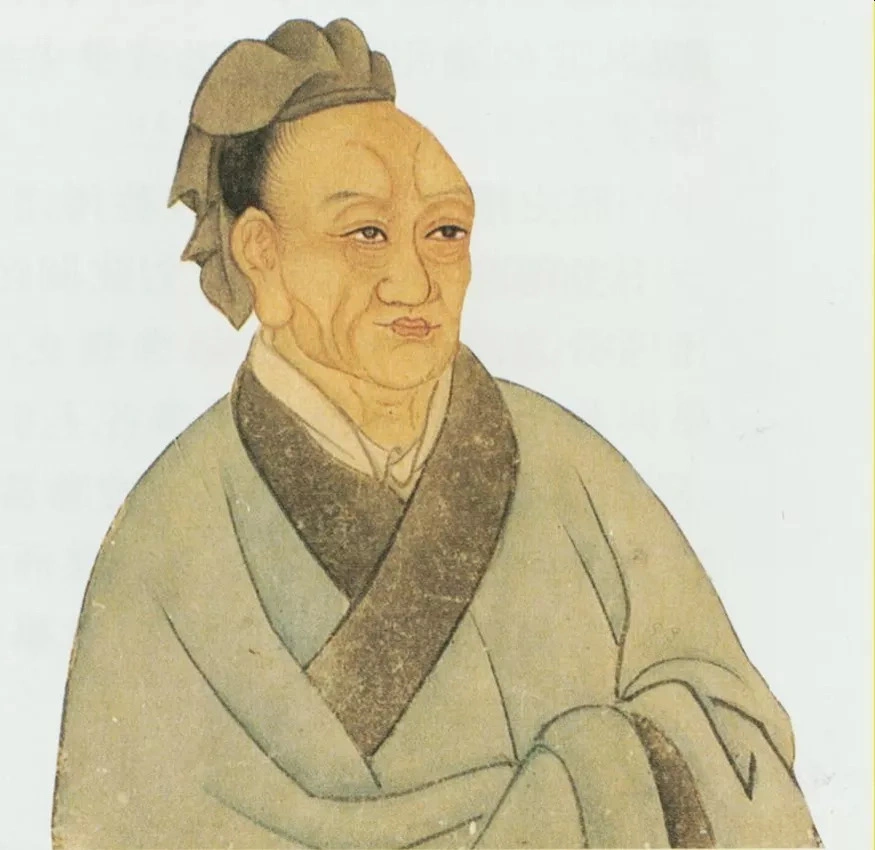
Sima Qian was the first man in China, and one of the first anywhere, to set out to write the history of the whole known world from its earliest beginnings down to his own lifetime. He did it from inside the government of the emperor he was writing about, and from an office that sounds larger in English than it was in fact: the Grand Historian of the Han court, a post whose duties were chiefly astronomical and calendrical. What he produced was not an official chronicle but a private book, written on his own account, with his own verdicts in it, about the reign he had lived through.
He came to it by inheritance. His father, Sima Tan, spent a lifetime intending to write it and died with almost nothing written, and made his son promise at his deathbed to finish it — a debt of the kind his world understood best, a debt of filial piety. Then, in 99 BC, he ruined his life in an afternoon by speaking at court for a general who had surrendered. The sentence was death, and a man of his rank was allowed to buy his way out of it or to submit to castration instead. He had no money. He chose castration, and in choosing it he also chose to become, in the eyes of his own class, exactly the sort of man who ought to have killed himself. He did it because the book was not finished.
The book he finished is the Shiji, the Records of the Grand Historian — 130 chapters and, by its own reckoning, half a million characters, running from the legendary Yellow Emperor to the reign of Emperor Wu. It invented the frame in which Chinese history would be written for the next two thousand years, and it did so in prose that Chinese readers have never stopped reading for pleasure. Its author described it as a work of transmission rather than of creation. It is the creation that lasted.
1. The Scribes of the Sima
The office that gave Sima Qian his place in the world was one of the oldest in China and one of the least powerful. A Grand Historian of the Han drew six hundred bushels of grain a year, the salary of a middle-ranking functionary, less than a commandery governor's and far below a minister's. His business was the sky: he kept the calendar, watched the planets and the fixed stars, noted eclipses and comets and unseasonable weather, read the omens in them, and handled the technical side of the court's religious observances. The histories describe the post bluntly — the Grand Historian managed the celestial offices and did not govern the people. There was no imperial bureau of history in the Han, only an astronomer and master of ritual with a small staff, a set of instruments and the care of the archives; the English title is a good deal grander than the post ever was.
The family that held it claimed a lineage to match its age. In the preface to his history Sima Qian traces his ancestors back to the two officers of high antiquity whose task it was to keep the intercourse between heaven and earth in order, and then down through the Zhou to an officer whose descendants took the surname Sima from the place where he was enfeoffed. The line, as he tells it, scattered and declined: one branch produced the Qin general who conquered the kingdom of Shu; another served under the Qin commander Bai Qi and was given death alongside him when the court turned on its own general. Under the Han the family held a supervisor's post in the capital markets and the minor nobility of the fifth rank, and nothing more. By the middle of the second century BC the office of Grand Historian had become a function rather than an inheritance. What Sima Tan did was to take it back as an inheritance, and to insist that it carried an obligation older than the Han and larger than the calendar.
Sima Tan was not trained for high office and had not been. He learned astronomy from Tang Du, the court's leading reader of the sky; the Book of Changes from Yang He, the reigning master of that text in the early Han; and the theories of the Daoists from a teacher known to us only as Master Huang. The breadth marks a man outside the promotion ladder: because a Grand Historian could not become a chancellor, he could afford to become a scholar. The record places his service somewhere in the long span from about 140 to 105 BC, in the one position at court from which a curious man could see everything and command nothing.
What he did with that vantage point survives as a short essay, and it is the earliest systematic comparison of the schools of thought in Chinese literature. Sima Tan weighed the six competing for the mind of the empire and gave each its strength and its blind spot. The Yin-Yang cosmologists were superstitious, full of taboos that made men timid, but they had the framework of the calendar. The Confucians were learned but unfocused, exhausting in effort and thin in result, though their six classics set the standard by which every other claim must be measured. The Mohists were too austere to be obeyed, the Legalists too harsh, the Logicians so subtle that they lost hold of the truth they were chasing. The Daoists he placed first, on the ground that they took the Yin-Yang school's framework of the seasons, borrowed what was good in Confucianism and Mohism, and changed with the times instead of fighting them. The son who grew up in that house inherited the habit of comparison but not the verdict: Sima Qian's sympathies ran warmer and more moral than his father's, and where the two disagree in the book it is usually the son who is the stricter judge.
What the office gave the older man was a sense of unfinished business. He had spent decades reading the state's records and watching an empire consolidate itself, and had come to believe that the age he lived in deserved a full account — not a chronicle of one dynasty but the whole known past, from the earliest ages to the present, in one work. His son described that inheritance years later in four words: the old traditions his father had arranged. Sima Tan was not proposing to write a history of the Han. He was proposing to write down everything the Chinese world had remembered about itself, and to stop where his own emperor sat.
2. The Grand Tour
Sima Qian was born at Longmen, on the Yellow River in what is now eastern Shaanxi, at the gorge where legend said the Great Yu cut a passage through the mountain to let the flood waters through. His own account of his childhood is four characters long and entirely agricultural: he pastured cattle south of the river and the mountain. The family was not wealthy — he says so himself, and the fact becomes decisive later. The year of his birth is not recorded, and the two figures the tradition offers differ by a decade. The commentary that places it in 145 BC, on the arithmetic of his age in a later passage, has behind it the weight of the most careful modern scholarship; the one that places it in 135 BC rests on a note the same scholars judge to be a scribal slip. The difference has never been settled and cannot be, because nothing in the surviving record depends on it. The year of his death is not recorded at all, and the dates at the head of this essay are conventional.
What is recorded is that he was an unusually early reader. At ten, the preface says, he could recite the ancient texts — the pre-Qin writings in their older script and their older language, a body of material that had only recently begun to circulate again after the Qin dynasty's attempt to suppress it, and that most grown men of his generation could not read at all. Later writers add that he studied under Kong Anguo, the scholar who had done most to recover the ancient text of the Documents, and in his own preface he calls the Confucian master Dong Zhongshu Master Dong and quotes what he heard him say. Together they describe a young man trained in the hardest and most old-fashioned learning available in his time.
Then, at about twenty, he did something that very few men of his class and era did: he left. The preface's summary of the journey is one of the most famous sentences in Chinese prose, and it is worth following on a map. He went south to the Yangzi and the Huai; he climbed to Kuaiji, where the Great Yu was said to be buried; he looked at the Nine Doubts Mountains, where the sage emperor Shun was said to lie; he drifted on the Yuan and the Xiang, the waters in which the poet Qu Yuan had drowned himself. Then he turned north to the old capitals of Qi and Lu, where he studied with the local scholars, watched the ceremonies still performed in the homeland of Confucius, and joined the archery contests at Zou and at Yi. He was stranded at Po and at Pengcheng, and came home by way of Liang and Chu. It was a tour of the whole eastern half of the empire, taken apparently on foot, without an official purpose, by a young man with no post and no money.
It was not sightseeing, and he said so. What he was collecting was testimony — the sort of material no archive holds because no clerk ever wrote it down. His history is full of small notes telling the reader where a piece of information came from, and the notes are almost always about people he asked. At Huaiyin, the hometown of the general Han Xin, the local men told him about Han Xin's ambition as a poor nobody, and how he had buried his mother in a spot high and open enough to be seen from a distance; Sima Qian went and looked at the grave and reported that it was as they said. At Feng and at Pei, the villages that produced the founding emperor and his first ministers, he questioned the surviving old men and inspected the houses of Xiao He, Cao Shen and Fan Kuai, and confessed himself astonished by what he heard.
The principle behind this is set out in the opening chapter of the book, and it is one of the earliest statements of historical method written down anywhere. Scholars talk about the Five Emperors, he says, but the Documents begins only with Yao; the hundred schools speak of the Yellow Emperor in language that is neither elegant nor trustworthy. So: I have been west to Kongtong, north past Zhuolu, east to the sea, and south on the Yangzi and the Huai; and wherever I went the elders told me about the places of the Yellow Emperor, Yao and Shun, and their customs and teachings were in every case different from one another — but on the whole, the accounts that stayed close to the ancient texts came nearest the truth. He then says what he did with the material: he arranged it, chose the most elegant of the accounts, and made that the first chapter of the annals. In three sentences he has travelled the empire, tested books against testimony, admitted that local tradition is inconsistent, and owned up to choosing the better-told story over the more complete one.
The travelling did not stop when his official life began. He was appointed a palace attendant, a junior post that put him in the emperor's entourage, and in 111 BC he was sent on a mission to the southwest. The empire had just absorbed the territories of the far south and was pushing into the hill country beyond what is now Sichuan, and Sima Qian went out as an imperial envoy to the peoples newly enclosed by the frontier. He was not sent to fight. He was sent to look, and to come back and tell the court what he had found. The result, years afterwards, was a set of chapters on peoples whose names had never appeared in a Chinese book, written by the only historian of antiquity who had been to see them. He came back in 110 BC and found his father dying.
3. The Charge by the River
In 110 BC Emperor Wu performed the greatest religious ceremony of the Han dynasty. He went east to Mount Tai and carried out the Feng and Shan sacrifices — the rites by which a sovereign reported to heaven and to earth that the world had been put in order — and came down having claimed a mandate in the fullest sense the tradition allowed. For the office of Grand Historian this was the occasion of the century. It existed for exactly this: to keep the calendar by which the rite was timed, to read the sky that sanctioned it, and to record it in the state's books. Sima Tan was not there. The preface says simply that he was detained at Zhou Nan, the old capital at Luoyang, and not permitted to take part, and that he was so grieved by it that he fell ill and died. The reason is not given anywhere. What is recorded is the irony: the family whose claim to honour was that its ancestors had ordered the intercourse between heaven and earth since high antiquity was left at a post station on the road while an emperor made his own heaven and earth.
His son was coming back from the southwest at the time, and met him between the Yellow River and the Luo. What passed there is the founding scene of the book, and it is preserved as direct speech. Sima Tan began with the family. Our ancestors, he said, were the Grand Historians of Zhou, and from the highest antiquity the house had been famous for the office; if he died and his son did not take it up, what would become of the line? And then the command, which has the flatness of a man past arguing: when I die you will certainly be Grand Historian, and when you are Grand Historian, do not forget what I wanted to write. He went on to give the reason in terms his son could not refuse. Filial piety, he said, begins with serving your parents, continues in serving your ruler, and ends in establishing yourself; and to make a name that survives, and to bring honour by it to your parents, is the greatest filial act of all. Then he turned to the world outside. The old chronicles had stopped being kept when the age that produced them ended. Now the Han had unified the seas, and there were enlightened rulers, loyal ministers and men who had died for what they believed, and he, their Grand Historian, had not written any of it down. He was afraid, he said. He asked his son to remember.
Sima Qian's answer was six characters long in the original and might be translated as: I am not clever, but I will set out and arrange the old traditions that you have arranged, and I will not dare to leave anything out. He had not been asked for an impartial history, or a critical one, or even a true one; the concepts had not been separated out in that way yet. He had been asked to do a duty, framed as an act of family piety of the most binding kind. From that moment the book was not a project. It was a debt owed to a dead man, and behind him to every ancestor of a house whose name was its office — which is why, years later, when the price of finishing it turned out to be his own body, Sima Qian paid without much visible hesitation. He had been given the bill in advance.
He had to wait three years for the appointment. The preface's phrase is that three years after his father's death he became Grand Historian — 108 BC by the modern reckoning, the Chinese count being an inclusive one — and the sentence continues with the act that made the book possible: he drew out and put in order the records of the stone chamber and the metal-bound chests. The Han had inherited the Qin's appetite for paperwork and added a programme of book collecting: the statutes and maps seized from the Qin palace when the Han army entered the capital in 206 BC; the copies of the ancient writings that came out of hiding after the ban on private scholarship was repealed in 191 BC; and the annual returns of an empire of commanderies and kingdoms. The preface claims that in the space of a century all the surviving writings and old affairs of the world had been gathered together in the Grand Historian's keeping. The picture is remarkable: the most comprehensive archive in the world, kept by an office too minor for anyone important to want it, in the custody of a man who had promised his dying father to read all of it.
He was in his late twenties or his late thirties, depending on which birth date one accepts. He had the office, the archive, the promise and the training. What he did not have was time, or safety, or any reason to think the emperor he served would leave him alone.
4. The Calendar and the Court
The single most consequential thing Sima Qian did as an official was to help reform the calendar. The Han had inherited the reckoning of the Qin, which took the tenth month as the beginning of the year and had drifted measurably out of agreement with the sky. Sima Qian was one of three officials who memorialised the throne that the calendar was broken and the beginning of the year ought to be corrected. The emperor ordered the work done, and what followed was the first recorded competitive research programme in Chinese history: more than twenty specialists brought to the capital, rival systems entered from several quarters, the astronomers of court and province set to test them against observation, and at the end one method adopted and seventeen competing houses dismissed as too far from the sky. The winning scheme belonged to Deng Ping; among the men who worked on it were Tang Du, from whom Sima Qian's father had learned the sky, and Luoxia Hong, a self-taught astronomer from the far southwest who had come to the capital for the contest.
What the new calendar did was not merely arithmetic. It fixed the winter solstice in the eleventh month and the beginning of the year in the first, so that the official year began in spring where the seasons said it should; it wrote the twenty-four solar terms into the state's reckoning of time; it established the rule that a month containing no mid-term is the intercalary month, which governed Chinese calendars ever afterwards; and it expressed the length of the month and the year in the numbers of musical pitch, an idea that united astronomy, music and state ritual in a single scheme. Then came the part that had nothing to do with the sky. The dynasty adopted yellow as its colour and five as its number, on the argument that the Han had succeeded to the power of earth, and the era was renamed the Great Beginning. To correct the calendar and change the colours was, in the political theology of the age, the act by which a dynasty announced that it held the mandate of heaven. The technical work was also the heaviest ideological statement a government could make, and the man who kept the calendar stood exactly where the two met.
The court he served from inside was the most expensive and the most credulous government of the Han. Emperor Wu fought the Xiongnu from 133 BC onward, in campaigns that carried Han armies to the edge of the Gobi and then into the oases of the far west; sent an envoy named Zhang Qian west in the 130s and got him back in 126 BC with news of kingdoms no Chinese had heard of; annexed the south in 111 BC and the north of Korea in 108 BC; took the salt and iron trades into state hands in 119 BC; levied a property tax on merchants and paid informers to denounce anyone who under-declared it; and spent enormous sums on men who promised him medicines that would keep him alive forever. By the time his son came to the throne, a Han historian would write that the household registers of the empire had halved.
And he wrote it down in a way that has never stopped being uncomfortable. The chapter on the imperial sacrifices is an anatomy of the emperor's religion: it names the men who promised, records what they promised, follows them to their promotions and their executions, and lets the pattern do the work. His own note at the end explains the access — he had accompanied the emperor on the tours of sacrifice and watched what the mediums and the officials of the rites actually did — and he says he wrote it all out so that both the surface and the inside might be seen. That phrase is his programme in miniature. He is not debunking; he is showing the machinery. The chapter on finance does the same for the monopolies and the men who grew rich administering them, and the chapter on the harsh officials does it for the judges: a career-by-career record of men who rose by producing convictions, set down in the language of official commendation, which is why it is so damning.
He knew what he was doing, and he had an argument for it, and the argument is the most revealing thing he wrote. In his own preface he stages a conversation with a courtier named Hu Sui, who asks him the obvious and dangerous question. Confucius, Hu Sui says, wrote the Spring and Autumn because there was no enlightened ruler above him and no office for him below; but you have met an enlightened emperor and hold your office, so what is your book supposed to make clear? Sima Qian answers that the achievements of the Han are so great that the officials cannot express them, and that to leave the emperor's virtue unwritten would be the greatest of crimes against his father's words. And then the sentence that is both his defence and his disguise: what I am doing is transmitting the old matters and putting the genealogies of the world in order; I am not making anything; to compare me with the Spring and Autumn is a mistake.
The disclaimer is doing two jobs at once. As a statement about his materials it is exactly true. As a statement about his authority it is a way of stepping out of the line of fire: Confucius was believed to have written the Spring and Autumn as a judgment on his own times, and a man who wrote such a book in the reign of a living emperor was placing himself above the throne. Sima Qian's answer was that he was merely arranging what his father had gathered. He then spent a hundred and thirty chapters judging. The phrase he used elsewhere gives the game away, because it is not a claim to neutrality but to a position: he wanted, he said, to investigate the relation between heaven and man, to comprehend the changes of past and present, and to complete the words of one house. One house — not the state's account, not the consensus of the learned, but a single family's version of what had happened and what it meant.
5. The Li Ling Affair
In the autumn of 99 BC the emperor launched one of his regular offensives against the Xiongnu. The main effort went northwest under Li Guangli, the General of Ershi — a title he owed to a city in Ferghana that the emperor had sent him to raid, and his standing at court to his sister, who had been among the emperor's favourites. A second force, five thousand infantry with no cavalry at all, was to march north out of the frontier garrison at Juyan into the Junji mountains, there to attract the attention of the paramount chief and hold it while the main army did its work. The officer in command of that detachment was Li Ling, a colonel of cavalry and the grandson of Li Guang — the most admired soldier of the age, who had killed himself in 119 BC after a campaign went wrong and a summons came demanding an explanation. Li Ling had asked for the command. The emperor told him he had no horses to spare. Li Ling said that he needed none, and that with five thousand infantry he would take his men into the heart of the chief's own territory.
They went, and for a while it worked. The paramount chief came against them with cavalry in overwhelming numbers, and Li Ling drew his little column back into the gaps between the hills, where horses could not charge and massed crossbows could. The Xiongnu were shaken by the resistance and by their own losses, and the chief was on the point of giving the whole thing up when a Han officer named Guan Gan deserted to him and told him the truth: that the column had no reinforcements coming and that its arrows were nearly gone. From that moment the end was mechanical. The Han archers shot off half a million arrows and had nothing left; Li Ling, cornered, said that he had no face left to report to the emperor, and surrendered. Of the five thousand men who had marched out, about four hundred got back to the frontier. Sima Qian, writing years later, says the fighting had lasted more than ten days, and that the killed on the other side outnumbered the whole Han force.
The court turned on the loser immediately, as courts do. Ministers who had toasted Li Ling's advance competed to denounce his surrender, and the emperor, who had been eating and drinking nothing while the campaign was in doubt, was furious. It happened that he summoned Sima Qian and asked him what he thought, and Sima Qian gave him an answer that he set out afterwards in writing, with the precision of a man going through the autopsy of his own life. He began by denying any partiality: he and Li Ling had both served in the palace, but they had never been friends and had gone different ways. What he had was an opinion formed by watching. Li Ling served his parents with devotion, kept his word to his officers, was honest about money, just in what he took and gave, and willing to throw himself into danger for the state's necessity; he had, Sima Qian said, the manner of a statesman of the first rank. And then the military argument: with less than five thousand foot soldiers Li Ling had gone deep into the country of horses, reached the chief's own encampment, and acted as bait in a tiger's mouth, and the enemy had been so mauled that they could not even recover their dead and wounded. The ministers who now condemned him saw only the defeat. Sima Qian's own reading was that Li Ling had not really surrendered — that he had gone over in order to find an opportunity to repay the Han. His stated purpose in speaking at all was modest and, in the event, fatal: to widen the emperor's mind and to stop the small-minded denunciations.
What the emperor heard was something else. If Li Ling had done so much with five thousand foot soldiers and had failed only for want of help, then the generals with the horses and the numbers had failed too — and the general with the horses and the numbers was the brother of the woman the emperor loved. The inference ran straight at the throne's own judgment, and Sima Qian had made it in open court while the court was still angry. He was charged with deceiving the sovereign, which was a capital offence. He says himself that he could not make his meaning clear, and that the case went to the law officers and the law officers applied the statute.
For a man of his rank the law offered a way out of a death sentence. He could pay. He had nothing to pay with — my family was poor, he says, and my goods were not enough to buy my own redemption. Nor was there anyone to help: his friends did nothing, and the men near the emperor said not one word for him. Two years later the government would fix the price of a reprieve from a capital sentence at half a million coins, which gives the order of magnitude of what he could not raise. That left the third route, and it was the worst. Castration had been among the mutilating punishments abolished by Emperor Wen in 167 BC, on the usual reading of that reform, and brought back a generation later by Emperor Jing — not as a punishment in its own right but as a mercy: a substitute that a man under sentence of death might be permitted to choose instead of dying. Sima Qian chose it. He was condemned in 99 BC, and the sentence was carried out in 98.
He was careful afterwards never to pretend that the choice had been brave. The letter he wrote about it contains a measurement of shame, set out as a descending scale of ten degrees: not to disgrace one's ancestors; then not to disgrace one's person; then to bend the body; then to change one's clothes; then to be bound with cords and beaten with rods; then to have one's hair shaved and an iron collar put round one's neck; then to have one's flesh cut and one's limbs taken. And then, at the bottom, beyond all of them, castration. That is the floor of the scale, he says, and that is where he was. He does not argue that he rose above it. A castrated man was barred from the ancestral sacrifices of his own family. He could not stand before the graves of the ancestors whose service he had promised to continue; his body, which his parents had given him, was spoiled; and the office he held had been taken up, at his father's deathbed, as a filial duty. He bought the book with the one thing that made the book worth writing.
6. The Letter to Ren An
He survived the punishment and, in 96 BC, was released and given an office — the Palace Secretary, a post worth a thousand bushels that carried the emperor's documents in and out of the inner palace, put him closer to the throne than he had ever been, and was ordinarily held by a eunuch. The History of Han uses two words about it: favoured and employed. Both were true, and both were part of the sentence. The man who had been charged with the state's calendar and the state's archives now ran the sovereign's paperwork, and what he was in the eyes of everyone at court was what the office said he was.
The letter that explains all this was written to a friend in the last years of his life. Ren An belonged to the generation of his father's colleagues. He had begun as a client of the general Wei Qing, and when Wei Qing's hangers-on abandoned him en masse for the younger and more fashionable Huo Qubing, Ren An was one of the few who stayed. He had risen to be governor of Yi province and later to command the guards of the Northern Army, a post that put him inside the capital's military establishment. At some earlier point he had written to Sima Qian with a piece of advice that was also a reproach: that a man in his position should use his access to the emperor to promote worthy men.
Its date cannot be fixed exactly. The older view places it in 91 BC and ties it to catastrophe. In that year the crown prince, denounced for practising witchcraft against his father, killed the informer, raised troops in the capital, and sent an imperial tally to Ren An demanding the Northern Army. Ren An took the tally, shut his camp gates, and did nothing. The rising was crushed and the crown prince died; and when the emperor learned that the prince had been driven into it, he turned on the men who had not helped him. Ren An was condemned for having held the tally and waited to see which side would win, and sentenced to be cut in two at the waist in the twelfth month. On this dating Sima Qian is writing to a man a few weeks from execution, and the letter's own words fit: you now bear a crime no one can measure, it is nearly the last month of winter, and I must go with the emperor to Yong. Wang Guowei, the most careful student of Sima Qian's life, argued instead for 93 BC. Either way the letter belongs to the end of his life.
That is where the letter begins. Ren An had asked him to do the work of a patron, and his answer is that he would not dare. He is, he says, a mutilated man living in filth. Whatever he does is held against him; if he tried to help anyone he would only damage them, and himself; and so he keeps silent and has nobody to speak to. Then he quotes two proverbs that between them make the whole argument. A gentleman gives his service to the one who knows him; a woman adorns herself for the one who loves her. When Zhong Ziqi died, Boya never played the lute again, because there was no longer anyone who would understand what he played. Sima Qian's point is not self-pity. It is a precise statement about how patronage worked: a man's power to recommend and protect depended entirely on the standing he had, and castration had taken his standing away. In the world of the Han elite, which was built on mutual recognition between men of honour, he had been removed from the network, and the removal was the punishment.
Two sentences out of that letter are among the most quoted in Chinese. A man dies once, Sima Qian writes, and his death may be as weighty as Mount Tai or as light as a goose's feather, according to what he spends it on. He then says what he spent his own life on. Not courage — he makes no claim to that — but the fact that he could not bear to die with what was in his heart unfinished, and to have nothing of his writing reach later ages. And he proves that this is not vanity by listing the men who had done the same before him: King Wen in prison and the Book of Changes; Confucius in straits and the Spring and Autumn; Qu Yuan in exile and the Li Sao; Zuo Qiuming blind and the Discourses of the States; Sun Bin with his kneecaps cut out and the Art of War of Sun Bin; Lü Buwei in banishment and the Spring and Autumn of Lü; Han Fei in prison and The Difficulties of Persuasion; and the three hundred poems of the Odes, mostly the work of sages and worthies giving vent to their frustration. All of them, he says, had something knotted inside that could not get out; so they told of what had passed and thought of what was to come.
That list is the first statement in the tradition of an idea that later became one of the organising beliefs of Chinese letters: that serious writing is produced by obstruction, that a man whose way is blocked writes, and that comfort and success do not. What is remarkable is where the idea was invented — in a cell, by a man who had just been physically unsexed. He is not asking to be forgiven for having lived. He is claiming that his degradation is a qualification, and that the greatest books have always been written by men who had been ruined.
The letter closes with the book itself, and with the price he put on it. He describes what he has been doing: gathering up the old traditions that the world had let fall, testing them against what had been done, tracing the patterns of success and failure and rise and ruin, from the Yellow Emperor down to his own day, in ten tables, twelve annals of rulers, eight treatises, thirty hereditary houses and seventy biographies, a hundred and thirty chapters. Then the purpose, in a formula that has been the definition of the work ever since: to investigate the relation between heaven and man, to comprehend the changes of past and present, and to complete the words of one house. The draft was unfinished when the disaster came; he regretted that it might never be finished; and that is why he went to the extremity of punishment without any sign of anger on his face. If he could truly finish the book, keep it in a famous mountain and hand it on to the right person, then he would have repaid the shame of the past, and a thousand further deaths would give him no cause for regret. The last line is almost a shrug, and it is as bleak as anything in ancient literature: only on the day a man dies are right and wrong finally settled.
7. The Shape of the Book
The Records of the Grand Historian are a hundred and thirty chapters long and, by the count given in the book's own preface, half a million characters — five hundred and twenty-six thousand five hundred, to be exact. They run from the Yellow Emperor down to the reign of the emperor under whom Sima Qian was writing, which is to say that they attempt the whole of the known past and end in the present. A writer of the Jin dynasty summed up the result in eight characters that have stuck: three thousand years in half a million words. The figure describes the reach rather than a computed span, but the reach is real.
That shape has five parts, and each does a different job. Twelve chapters of annals give the sequence of legitimate rule, reign by reign, as a spine. Ten chapters of tables lay out dates in parallel columns, so that a reader can see what six kingdoms were doing in the same year. Eight treatises handle institutions and techniques. Thirty chapters of hereditary houses follow the great families of the old feudal states and the enfeoffed kings and ministers of the Han. And seventy chapters of biographies take individuals one at a time. The arrangement is called the annals-and-biographies form, and it was invented here: every one of the twenty-three official dynastic histories that follow, over the next two thousand years, was written on this plan. What Sima Qian had done was to solve a problem that had defeated every earlier annalist — how to tell a story that has no single line, in which six states, four schools of thought and a hundred interesting people all move at once. He cut the past into five kinds of chapter and let the reader do the final assembly.
The annals contain the book's boldest single decision. The sequence runs from the Five Emperors through the three dynasties and the Qin to the Han — and in the middle of it, between the First Emperor and the founder of the Han, sits Xiang Yu, who never reigned, whose state never existed, and who lost. Sima Qian put him among the emperors because for five years Xiang Yu was the most powerful man in China, and because in the interval between the fall of Qin and the founding of Han the question of who ruled had no formal answer. The same instinct produced the other surprise: the annals of the Empress Dowager Lü, a woman who never sat on a throne and ruled for eight years anyway, through a boy emperor of her own choosing. Her son's reign has no annals of its own; it is folded into hers. The annals record not who deserved to rule but who did.
The tables are the part that looks least like literature and most like an invention. Mediterranean historians had chronologies and lists of officeholders, but nothing that solved the problem of parallel time the way a grid does. Sima Qian's ten tables arrange the dynasties, the feudal states, the marquises and the ministers in columns of years, so that the eye can run across a single year and see what every part of the world was doing in it; one of them, covering the eight years between the first rising against the Qin and the founding of the Han, is laid out by the month, because in those years events moved by the month. The eight treatises are where the book becomes something no historian had attempted: ritual, music, the standards of measurement, the calendar, the sky, the sacrifices, the rivers, and finance. The treatise on finance is the first sustained work of economic history written anywhere — the monopolies, the officials who grew rich collecting them, the merchants ruined by informers, the price of grain in a bad year. Sima Qian thought that the way a state measures a bushel and prices a sack of grain is part of its history. One caution: the treatises on rites and on music are among the chapters that have not come down to us in their original form.
The hereditary houses gave him his formal excuse for two striking judgments. A hereditary house was a lineage with a title and a territory, and Confucius had neither; the justification offered is not a title but duration and authority — of all the kings and worthies of the world there have been a great many, honoured while they lived and finished when they died, whereas this commoner's tradition had come down through more than ten generations and every student of the classics took him as the standard by which the rest were measured. The placement raises a schoolmaster to the rank of the princes and says plainly that he outlasted all of them. The other is the house of Chen She, a peasant conscript who raised the first rebellion against the Qin, took the title of king, held it for six months and was killed by his own driver. In the ledger of any official history he is a rebel. Here he stands beside the dukes of Qi and the kings of Chu, because without him none of the rest would have happened. Both inclusions are arguments, made by placement rather than by statement.
The seventy biographies are the heart of the book and the reason it is read for pleasure. They begin, deliberately, with two men who starved to death on a mountain because they would not eat the grain of a usurper — and whose chapter opens with the historian asking whether there is any such thing as a Way of Heaven that rewards the good, and answering that he is greatly perplexed and does not know. After that the range is astonishing. There are the great ministers and generals, certainly. But there are also the assassins; the merciful officials and the harsh officials, side by side and clearly meant to be compared; the wandering knights, freelance strongmen who dispensed their own justice and whom the respectable hated; the jesters who told the truth by making the court laugh; the diviners; and the merchants, whose chapter opens with the observation that the whole world runs about busily in pursuit of profit. And then, beyond all of that, six chapters on peoples who were not Chinese at all: the nomads of the northern steppe, the kingdoms of the south, the hill peoples of the southwest, the north of Korea, and the far west beyond the deserts. The last of these preserves the report of the envoy Zhang Qian's journeys and is the founding document of the Silk Road. No Chinese historian had ever treated the empire as one part of a wider world.
Two comparisons fix the book's place. Against what came after: the Records are a general history, a single narrative of the whole past, and the next great historian of China deliberately reversed that, writing the history of one dynasty only; his model became the rule. So Sima Qian's book is not only the origin of the tradition; it is its permanent exception. Against what came before: there was no library in the sense of a single collection of the writings of an age, and he built one without announcing it, copying documents entire into his chapters — a minister's memorial against the expulsion of foreigners, a young man's essay on why the Qin fell, the songs an emperor and a doomed general sang. A great deal of what survives from the literature of early China survives because he quoted it.
8. Scenes and Judgments
The best way into the book is through a note he attaches to the chapter on the assassins. The most famous of those assassins, Jing Ke, went to the court of the king of Qin in 227 BC with a map of a surrendered territory and a dagger rolled inside it, and he failed. Sima Qian tells the story better than anyone, and then he steps out from behind it and says what he thinks of the versions circulating: the stories about heaven raining grain and horses growing horns are exaggerated, and the report that Jing Ke wounded the king is false. Then he names his source. Two men had known the court physician Xia Wuju, who was in the hall that day and threw his medicine bag at the assassin to buy the king time to draw his sword; those two knew the business in detail and told it to Sima Qian as he has written it. That is source criticism, in the second century BC, printed inside the work: a named chain of testimony from an eyewitness, an explicit rejection of the more dramatic variants, and an admission that the rival reports are untrue.
What the note also shows is his method of writing history as scenes rather than summaries, and it is the method that made the book literature. The greatest of the scenes is the banquet at Hongmen, where Xiang Yu had the founder of the Han in his power and let him go. Everything in it is action and speech. A swordsman is invited to perform a dance and turns it into an attempt on the guest's life; a relative of the host repeatedly blocks the stroke with his own body; a bodyguard bursts in, is handed a goblet of wine and a raw pig's shoulder, and cuts and eats the meat where he stands while delivering a rebuke to the host about the ingratitude of suspecting a man who had done him no harm. The guest leaves the tent on the excuse of a call of nature and simply walks away. And at the end of the evening the host's chief adviser takes the jade goblet he was given as a present, smashes it with his sword, and says: this boy is not worth planning with; the man who takes the empire from you will be the one you let go tonight, and we shall all be his prisoners. The whole political analysis of the years that followed is contained in that gesture, and the narrator never once tells the reader what to think.
He does not leave judgment out; he saves it for the last paragraph, where it has the force of a closing argument. At the end of the annals of Xiang Yu, after the defeat and the song and the woman who sang with him, after the flight to the Yangzi and the ferryman waiting with his boat and the refusal to cross because he could not face the people of his homeland who had sent eight thousand men out with him, after the last stand on foot and the suicide, Sima Qian writes the verdict. Xiang Yu boasted of his own achievements, relied on his private cleverness and refused to learn from the ancients; he wanted to run the world by force, and in five years he lost everything, and he still did not see it. And then he answers the sentence his subject had cried out at the end — heaven is destroying me, it was not the fault of my fighting: is this not absurd? The historian contradicts the dead man's last words, in the chapter he wrote to honour him — and he had already honoured him, more than any official historian would have dared, by placing him among the emperors at all.
The same structure produces the warmest pages in the book. The biography of Li Guang is a life of failure: a general of extraordinary courage who was never given a large enough command, who got lost on his last campaign, and who was summoned to explain himself and cut his throat instead. What comes after the death is the point. The army wept; and when the news reached the rest of the country, everyone who heard it, whether they had known him or not, old and young alike, wept too. Sima Qian then writes that he had seen Li Guang in the flesh — a man who looked like a peasant, he says, who could barely put two sentences together — and he offers the proverb about the peach and the plum tree, which say nothing at all, and yet a path is worn into the ground under them by everyone who comes to eat the fruit. It is the finest epitaph in Chinese prose, and, as he takes care to mention, it rests partly on his own eyes.
Two more scenes show the book's political range. The courtier Ji An told the emperor to his face that he was a hypocrite — your Majesty is full of desires within and displays benevolence and righteousness without, and how do you expect to match the government of the sages? The emperor said nothing, flushed with anger, and ended the audience; afterwards he remarked to his attendants that Ji An's stupidity was extreme. Sima Qian reports both halves, the insult and the reaction, and the reaction is the more damaging of the two. And a judicial officer named Du Zhou, asked whether a man who decides cases for the throne ought at least to follow the law, answered: where does the law come from? Whatever the previous ruler approved was written down as statute, whatever the present ruler approves is drafted as ordinance, and whatever suits the time is right — what has antiquity to do with it? Set beside it the other passage, in which a judicial officer refuses the emperor's demand for a heavier sentence and tells him that the law is something the son of heaven holds in common with the world, and the reader has the whole argument of Han government in two chapters that never refer to each other.
The chapter that caused the most trouble is the one on the wandering knights. His subject there is men like Guo Xie, who held no office, kept no law, and were respected and feared in their districts because they settled scores and settled disputes. When the emperor ordered the wealthy families moved to the site of his future mausoleum, Guo Xie's name appeared on the list, though he was not rich; the general Wei Qing said as much to the emperor, and the emperor replied that a commoner who could get a general to speak for him was plainly not poor. He was moved; and after his followers killed men on his behalf he was executed, the argument at court being that a man whose clients kill for him, even without knowing of it, is guiltier than the client who does the killing. Sima Qian's closing verdict defends him and his kind against both the Confucians and the Mohists, and argues that what respectable people call crime and what he calls honour do not always coincide. Of the earliest critics whose opinions survive, the historian Ban Gu complained in almost exactly these terms: that its author exalted men of violence and demoted honest recluses, and worshipped wealth at the expense of the poor.
It is worth saying plainly what he was not. He was not a critical historian in the modern sense. He opened his book with a chapter on the Yellow Emperor that treats a figure of legend as a man with a genealogy and a tomb, and he kept the prodigies and the omens. He moralised constantly, and where he did not know he sometimes preferred the better story to the safer one. He was willing to believe that the sky took an interest in the government while refusing to believe that an alchemist could make a man live forever, which is not the same as being sceptical; it is a choice about what the heavens can be asked. And he wrote about his own reign, in the presence of the emperor, which means that the chapters covering the living sovereign are the thinnest and the most careful in the book. His judgments are verdicts rather than analyses, and their authority is entirely personal. That is precisely what makes the work literature, and it is also why it cannot be read the way a modern reader wants to read a source. He never claimed it could.
9. What the Book Did
How he died, and when, nobody knows. The History of Han records his life up to the letter to Ren An and then stops. The most careful student of his chronology concluded that he probably died in the 80s BC, not long after the emperor he had served, and the conventional date is around 86 BC. What there is instead of a death is a grave — or the nearest thing to one. In AD 310, a commandery governor named Yin Ji, having read the writings and been moved by them, built a stone chamber on a bluff above a river at Hancheng, set up a stele, planted cypresses, and then, troubled by the fact that so great a man had no marked resting place, raised a mound behind the shrine and filled it with his clothes. The place grew over the centuries into a complex of archways and terraces reached by ninety-nine steps, with an arch that quotes his own sentence about pasturing cattle south of the river and the mountain, and a stone over the grave inscribed by a provincial governor of the eighteenth century. It is a national monument now. The one thing his own world denied him — a place among the ancestors, a grave his family could tend — was given to him four centuries later by a stranger who had read his book.
He had asked for something more modest: to finish the work, keep it in a famous mountain, leave a copy in the capital, and hand it on to the right person. What happened was slower. The book came out gradually after his death, and it was his daughter's son, Yang Yun, who under Emperor Xuan a generation later expounded and published it, after which it began to circulate. Yang Yun was himself executed not long afterwards, and the circulation stopped again. For a while the book was not the sort of thing one could simply obtain: it contained discussions of strategy, geography and omens that a government might reasonably prefer to keep to itself, and under the Eastern Han a court scholar was ordered to produce an abridged version of a hundred thousand-odd characters, evidently so that a shorter and safer text might be allowed into the world. The abridgement is lost. The full book is not.
It had also been damaged. The History of Han's catalogue of books lists it as a hundred and thirty chapters and adds a note that has troubled readers ever since: ten chapters exist as titles with no text. A later commentator listed them, and among them were the annals of Emperor Jing and of Emperor Wu, and the treatises on rites and on music. A scholar named Chu Shaosun, working in the last century before the Christian era, began patching the gaps, and his additions are still visible in the text, marked with his own name. Whether the ten chapters were never written or were written and lost has been argued for two thousand years without resolution. What matters is simpler and more uncomfortable: the book we have is not exactly the book he left. The annals of Emperor Wu, in particular, are generally thought to be a later reconstruction, and much of their material is copied out of the treatise on the sacrifices. The chapter covering the reign he had lived through is the one we can trust least.
Even the book's name is a later gift. For two centuries it had none of its own: it was the book of the Grand Historian, and copies were known by that description alone. The earliest surviving use of the title by which the world now knows it appears on a stele of the middle of the second century AD. And the earliest serious assessment of its contents is a split decision. Writing in the History of Han, Ban Gu records that the great bibliophiles Liu Xiang and Yang Xiong both judged that Sima Qian had the makings of a true historian — that he ordered events well, was clear without being ornate and plain without being coarse, that his writing was straight and his facts examined, that he did not flatter virtue or hide vice, and that his book therefore deserved the name of a true record. Then Ban Gu adds his own objection: that the book's judgments depart from those of the sages; that it exalts men of violence and demotes honest recluses; and that it admires wealth and is ashamed of poverty. His father had gone further, holding that this corruption of the Way was the reason its author had suffered the extreme punishment. The first sustained critical response to the greatest work of Chinese history is therefore an attack on the character of the man who wrote it, and the three things it attacks are precisely the three things later ages admire most: his relativism about the Way, his sympathy for outlaws, and his refusal to be scandalised by money. More than two hundred years later a politician arguing for the execution of a scholar remarked that the Han emperor had blundered in not killing Sima Qian, and so had let him write a slanderous book that had come down to the present.
What saved the text in the end was scholarship. One commentary was written in the fifth century and two in the eighth, and the three of them — the collected explanations, the hidden meanings, the correct readings — were eventually printed together and became the foundation on which every later edition rests. There is a small irony in that. The only evidence anyone has about the year of his birth comes from two of those three commentators, and they disagree with each other by ten years; the century of his death is not in question because it is not recorded at all. His other inheritance was institutional, and it is stranger. His book became the first of the twenty-four official dynastic histories, and the arrangement of annals, tables, treatises and biographies that he invented governed every one of the twenty-three that followed, compiled by committees after each dynasty had fallen, on the orders of its successor. The official historiography of China therefore descends from a book written privately, by a mutilated man, with no commission and no patron, in defiance of the government of his own day.
For most of its life the book's authority rested on its age and its beauty. In 1917 it acquired a different kind of authority. In that year the scholar Wang Guowei compared the list of the kings of Shang in the annals with the royal names that had recently been deciphered on oracle bones dug from the ruins of the Shang capital, and the two lists agreed — not perfectly, but substantially, and in an order no forger could have guessed. A genealogy compiled roughly a thousand years after the events, from sources its author could not check and did not trust, turned out to be largely correct. That was the moment when the Records began to be treated as evidence rather than only as literature, and it is the founding case of the method used in China ever since, of testing the written history against what the ground produces.
The rest is reputation, and the reputation is enormous. The theory of writing he invented in his cell — that serious work comes out of obstruction, and that men whose way is blocked are the ones who write — became a permanent element in Chinese thinking about literature, restated by the greatest Tang and Song writers as though it were a law of nature. His prose was taken as the model for the classical revival and his scenes as the model for narrative; a twentieth-century critic compressed the verdict into a phrase, calling the Records the swan song of historians and a Li Sao without rhyme, which compares him not to a historian but to the greatest poet of antiquity. And at the shrine above the river at Hancheng, a poet who came to visit left a poem that places him beside Confucius and says that his achievement came up to the sage's. It is a comparison he would probably have found excessive, because it makes him something he spent his life insisting he was not. He said he was transmitting, not creating; he said the words were his father's and the facts were other people's; he asked only that the book be finished, stored, and handed to somebody capable of understanding it. The last of those requests took a generation to be granted, and it has not been revoked since.