Home / Emperors / Han Dynasty
Emperor Ming of Han
汉明帝
Liu Zhuang, 28 – 75 · second emperor of the Eastern Han
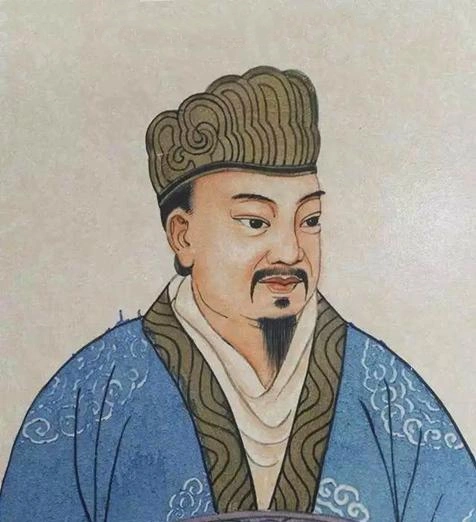
He was the son of a founder, and he inherited a realm that had been won by war but not yet arranged by institutions. Guangwu had restored the Han after the civil wars that ended the usurpation of Wang Mang, and his reign had been one of recovery: demobilization, land surveys, the slow reassertion of imperial authority over men who had learned to fight for themselves. When Liu Zhuang came to the throne in 57, at the age of thirty, the military problem of the dynasty was settled enough to leave room for another kind of work. His reign of eighteen years, known collectively by the era name Yongping, is remembered less for conquest than for the buildings, rites, laws, and books that gave the restored dynasty a settled shape. He completed the ritual centers of Luoyang, ordered the great sacrifices of the state, extended the irrigation works of the Yellow River, reopened the road to the Western Regions, brought the writing of official history under imperial supervision, and presided over a great case of treason among his own brothers that cost, by the count of the historians, thousands of lives.
The record he left behind is not a simple one. In the same reign we find a sovereign who summoned the aged and the learned to nourish them in the Circular Moat, who refused to enlarge his own mausoleum and ordered that no mound be raised over his grave, and who also conducted an investigation into the kingdom of Chu that ran for years and reached into hundreds of households. We find the earliest official record of Buddhism in the Chinese dynastic histories, and beside it a body of legend about a dream of a golden man that the standard history transmits with visible caution. We find a river that was fixed for a time, and a frontier that was reopened only to close again after his death. The eighteen years did not produce a single heroic narrative. They produced a capital, a set of rites, a channel, a road, a book, and a case, and it is through these that the reign must be understood. This is an account of how one man held the middle of the Han house for eighteen years, and of what he built, what he broke, and what later ages chose to remember.
1. The Boy Behind the Curtain
Liu Zhuang was born in the fourth year of the Jianwu era, in 28, at Yuanshi in Changshan, to the household of the general Liu Xiu, who would soon take the throne as the founder of the Eastern Han. The year of his birth was the year in which the dynasty's fortunes turned. His father had been a farmer's son and a student of the capital academy who had risen through the wars against Wang Mang, had endured the disasters of the restored Gengshi emperor, and had been persuaded, against his first judgment, to take the imperial title in the north. When the child was born at Yuanshi, the realm was still divided among contenders, and the title of emperor was held by more than one man. The dynasty was an argument still to be won by arms. A court record notes that the boy's neck was suffused with a ruddy color, and that this was taken as a sign of descent from the Red Emperor, and that he was named Yang for this reason. Such signs were the common coin of dynastic birth records, and this one is best read as the retrospective language that attaches to future emperors. What is more telling is that the record adds, without ceremony, that by the age of ten he had mastered the Spring and Autumn Annals. The dynasty wanted it understood that its second ruler had been marked out early by something other than accident of birth.
The education recorded for him was the education of a governing class, not of a soldier's son. The Spring and Autumn Annals, with its terse chronicle of the state of Lu and the judgments embedded in it, was the text from which officials learned to read political events as consequences of moral order. A prince who had mastered it at ten had been given the habits of the civil service before he had any office in it. The choice is worth noticing in a house whose power came from the sword. Guangwu had won the empire with generals and had to govern it with clerks, and he appears to have arranged for his son a training weighted toward the second kind of man. It is also worth noticing what the childhood record does not contain: no campaigns, no victories, no marches at his father's side. The founder kept his son at his books. The two stories that follow show what kind of attention this education was meant to train.
The first story told of him concerns his father's most delicate administrative problem. In Jianwu 15, in 39, the court attempted a fresh survey of cultivated land and households, a measure designed to bring concealed fields back into the registers and to check the great households that had grown rich on the disorder of the civil wars. The problem was not technical. The registers of the Former Han had been lost or falsified during the long troubles, and the men who now held the most land were precisely the men on whom the dynasty's local administration depended: the great families of the commanderies, the officials of the capital, and above all the emperor's own relatives in Nanyang and the officials of the court in Henan, whose lands lay around the two seats of power. An official in Chenliu submitted a report on the progress of the survey with a sentence that he may have thought clever. The provinces of Yingchuan and Hongnong, he wrote, could be asked the number of their fields; the provinces of Henan and Nanyang could not be asked. The document passed through the court, and the officials who read it found nothing to say. They found nothing to say because the sentence was true, and because saying so was not the business of a memorialist. Liu Yang, then twelve years old, was passing behind the tent or the screen of the audience hall. He remarked that the explanation was not hard. Henan was the region of the imperial capital and was full of the emperor's attendant officials, he said; Nanyang was the emperor's own home country and was full of his close relatives. In both places the fields and houses exceeded the legal limits, and the figures could not serve as a standard against which to measure the empire. The founder is said to have considered the answer remarkable. The story may have been polished in the retelling, but its point survived because it showed the young prince doing what the court itself could not do out loud: naming the reason why a policy of equalization stopped at the gates of power.
Four years later, in Jianwu 19, in 43, the test was of a different kind. Two men named Shan Chen and Fu Zhen seized the city of Yuanwu and held it against the court. The town stood on the plain south of the Yellow River, on the road between the capital and the east, and a rebel band that could hold it was a standing embarrassment to a dynasty whose founder had just spent fifteen years putting down such bands. The grandees in council inclined to a heavy reward for the town's defenders and a quick storming of the walls, on the reasoning that the rebels would fight harder the longer they were left alone. It was the instinct of soldiers, and in the conditions of the time it was usually right. The prince alone advised the opposite. Grant them a small delay, he said, and let them have room to run. A bandit following held together by plunder does not survive a siege without either supply or escape, and the promise of escape dissolves it faster than a wall does. The rebel following soon broke apart in the ordinary way of such bands, and Shan Chen and Fu Zhen were killed. The historian records the outcome as confirmation of the judgment. Again the shape of the story is the same: the council favors force and rewards, and the prince favors patience and the weaknesses of men.
These two episodes were the sum of his public reputation when, in the sixth month of Jianwu 19, in 43, the heir apparent was set aside. The founder had first named Liu Qiang, his eldest son by the Empress Guo, as crown prince in the second year of Jianwu, in 26; the empress was later deposed for her grievances against the emperor's other consorts, and Liu Qiang, who had grown anxious, asked repeatedly to be removed. That story belongs to the reign of Guangwu, and only its outcome belongs here: Liu Yang was named heir apparent in the sixth month of 43, and with the title he received a new name. From this point the histories call him Zhuang, and it is by that name that the eighteen years which followed are known. He was sixteen years old. For fourteen more years he would be the crown prince of a vigorous founder who showed no sign of yielding the habits of rule, and the work of those years was the work of waiting.
2. The Heir
The machinery of an heir's household was now assembled around him. The founder put forward the general Yin Shi, the brother of the empress's family, to serve as the heir's tutor, and the official Zhang Yi objected in open court. Did the emperor intend him to teach the heir for the house of Yin, or for the empire? The question was a small one in form and a large one in substance, for it touched the whole problem of the new dynasty: whether the house of Liu would rule through the merit of its officials or through the claims of its consort families. The Yin were one of the great families of the restoration; the founder's empress was a Yin, and the family counted its generals and its estates in Nanyang. To place such a man over the crown prince was to make the claim plain. The founder accepted the correction and appointed Zhang Yi as tutor to the heir and Huan Rong as junior tutor. Huan Rong instructed the prince in the Book of Documents and remained at the task for more than ten years. When the prince came to the throne, he would reward the old scholar with the first place among the aged at the rite of nourishing the elders, and with a noble title and an estate of five thousand households. The exchange between Zhang Yi and Guangwu is one of the few moments in the reign of the founder when the problem of the consort families was stated aloud by an official, and the answer he received established the standard that the son would later need.
The fourteen years of the heir apparent were spent in the study of the classics and in the observation of a court that knew how to wait. The founder ruled long and ruled firmly, and there is no record of the prince being given an army or a province to govern. What the record preserves instead are the two judgments of his boyhood and the affection of his brother Liu Ying. The prince of Chu is described in the histories as a man of a different temper from his brother: fond of wandering fighters and guests, drawn to the magical arts, given to the practices that the orthodox historians record with mild disapproval. Where the crown prince was careful, Liu Ying was expansive. Where the crown prince was watched, Liu Ying was unwatched. The record states that from the time the future Emperor Ming was heir apparent, Liu Ying alone attached himself to the prince, and that the prince treated him with particular affection. No reason is given, and none is needed: a prince who was examined and praised by his father's ministers may well have preferred the company of the brother whom no one watched. The affection is worth remembering, because it stands behind the great case of the Yongping reign, in which the Prince of Chu was destroyed.
It is recorded that on the day the prince was established as heir, the musicians performed four songs: The Sun Shines Again, The Moon Reborn, The Stars Renewed, The Seas Refreshed. The titles breathe the relief of a dynasty that had survived its founder. These pieces, and the tradition that they marked the accession, belong to a later body of court song, and they are best treated as the retrospective embroidery of a happy occasion rather than as documents of the day. What is certain is that the accession of 43 settled the succession for fourteen years, and that when the founder died, the transfer of power was not contested. The years of waiting also fixed the character of the reign that followed. A crown prince who is kept out of affairs and out of armies learns to govern through documents, through officials, and through procedure, and the Yongping order, when it came, was exactly that: a reign of records, rites, and appointments.
The founder died in the second month of the second year of Zhongyuan, in 57, and Liu Zhuang succeeded at the age of thirty. The succession passed without visible disturbance. The new emperor kept his father's ministers and his father's policies. He did not, in the way of some new rulers, turn upon the men who had served the old regime, and he did not reward the men who had watched him as a boy. The court understood, in the quiet way of such things, that the habits of a cautious heir would now govern the empire. In this he was his father's son, for Guangwu had also inherited a realm that others had unsettled, and had restored it by patience rather than by brilliance. The difference was that the son inherited a realm at peace, and peace asked of him a different kind of work.
3. The Yongping Order
The reign that followed was given the era name Yongping, lasting peace, a name that reflects the dynasty's sense of its own situation more than any dramatic event. The emperor's first ceremonial acts set the tone. In the first month of the first year of the era, in 58, he led his ministers to the tomb of his father at Yuanling and performed before it the rites that were used at the New Year audience. It was a public statement that the founder remained the standard of the dynasty, and that the son would reign by his authority. The visit to the tomb also had a practical meaning, for the tomb of the founder, north of Luoyang, was the place where the dynasty's claim to the Mandate was physically located, and the new reign began by placing itself under it.
In the first month of Yongping 2, in 59, he sacrificed to Guangwu in the Bright Hall and associated him with the five supreme powers, and for the first time the emperor wore the full ceremonial robes and cap. When the rites were finished he ascended the Spirit Terrace, the observatory of the capital. The Bright Hall sacrifice was the center of the dynasty's ritual program, and it had been left incomplete since the restoration. To associate the founder with the five supreme powers was to say that the house of Liu had recovered the cosmic position that the Former Han had claimed, and to perform it in the robes and cap of the ancient kings was to answer the old argument that the eastern capital lacked the forms of empire.
In the third month of the same year he went to the Circular Moat and for the first time performed the rite of the Great Shoot. In the tenth month he returned to the Circular Moat and for the first time performed the rite of nourishing the aged. Three men and two were appointed to receive this honor: three elders, of whom one was named Li Gong, and five venerable ones, at the head of whom stood the emperor's old tutor Huan Rong. Huan Rong was given the noble title of Marquis Within the Passes and an estate of five thousand households. The three elders and five venerable ones were all to be maintained for the rest of their lives with the salary of a official of two thousand piculs. The emperor distributed to the elders of the empire a picul of wine and forty pounds of meat each, and the crowd that came to watch was counted, in the phrase of the history, in the hundreds of millions. That figure is the rhetoric of an enormous gathering, not a census, but the rite itself was real enough. The rite of nourishing the aged was older than the Han and had been revived by the Former Han at intervals; it expressed the claim that the empire was one family and that the emperor served its elders. To set the old tutor at the head of it was to make the same claim in the language of the dynasty's own history. In the same year the court began to greet the seasonal breaths at the five suburban altars, completing the round of state sacrifices. Within ten months of its second year, the Yongping reign had put into operation the full round of the great rites: the tomb of the founder, the Bright Hall, the Great Shoot, the nourishing of the aged, and the suburban altars.
The emperor extended the same attention to the young. In Yongping 9, in 66, he ordered that schools be established for the sons of the four great consort families, the Fan, Guo, Yin, and Ma, and that teachers of the five classics be appointed to them. The measure recognized a plain fact of dynastic life: the consort families supplied the dynasty's in-laws and generals, and their sons required instruction. One of the scholars who taught in these schools, Zhang Bo, was later called to instruct the crown prince himself. In the third month of Yongping 15, in 72, the emperor visited the house of Confucius in Qufu, sacrificed to the sage and to his seventy-two disciples, and commanded that the crown prince and the other princes expound the classics before him. The dynasty was equipping itself, in ceremony and in instruction, with the visible apparatus of a settled Confucian state.
The same reign was severe in its judgments. In Yongping 2 the protector of the Qiang, Dou Lin, died in prison. Yin Feng, son of the privy treasurer Yin Jiu, killed his wife, a princess, and his father took his own life in consequence. In Yongping 4 the Marquis of Lingxiang, Liang Song, died in prison after anonymous letters were found posted in the county seat, accusing the court of slander. The emperor's own temper was narrow and watchful. He liked to learn things through informers and hidden observers, and on one occasion he struck an attendant named Song with his staff. When a precious tripod was unearthed on Mount Wangluo in Yongping 6, the court took it as an auspicious omen and praised the virtue of the age; the emperor issued a edict that refused the compliment. The descent of auspicious things, he said, answers to the possession of virtue. The government of the present has many faults. How could such a thing come to pass? And he forbade memorialists to load their reports with excessive praise. The edict is one of the most quoted documents of the reign, and it sets the boundary of the emperor's severity: he punished officials freely, including the highest, but he would not let the court flatter him, and he measured virtue by conduct rather than by omens.
Two careers show the better side of this temperament. Zhongli Yi, a native of Kuaiji, had earned a name in Jianwu 14, in 38, when an epidemic swept his commandery and he distributed medicine, saving many, though the dead were counted in the tens of thousands. Called to court as a secretary, he was once handed a gift of pearls and precious stones sent by the governor of Jiaozhi, and he let them fall to the floor and would not bow in thanks. These, he said, were the treasure of corruption, and he did not dare accept them. The emperor gave him three hundred thousand cash from the treasury instead. In the summer of Yongping 3, in 60, when drought held the capital and the emperor was ordering the great works of the Northern Palace, Zhongli Yi took off his cap and submitted a memorial quoting the six charges that the sage king Tang had laid against himself. The emperor's rescript answered that the fault of the six charges rested upon one man, and he ordered the master of works to stop the palace works and to suspend all that was not urgent. The rain came in due season. The episode is a model of the Yongping court: the official blames himself by the example of the ancients, the emperor accepts the blame, the works stop, and the weather is recorded as answering. Whether the rain fell for that reason is not a question the sources can settle; what they settle is that both men acted the parts that the rites prescribed. The pearls refused and the works stopped belong to the same record as the officials who died in prison, and the coexistence of the two is the clearest single fact about the Yongping court.
Diwu Lun, as governor of Kuaiji, had suppressed unauthorized cults and put an end to the butchers who slaughtered cattle under false pretenses. In Yongping 5, in 62, he was summoned for an offense, and the officials and people of his commandery came to the capital to speak for him, more than a thousand of them waiting at the palace gates, while he was saved in the end by the emperor's review of prisoners at the office of justice. Men of this stamp, stern and plain, gave the Yongping order its character: a court that would endure honesty and would not endure flattery, that built shrines and schools and also prisons.
4. The Capital
The visible expression of the reign was the capital. Chang'an, the old western capital, remained in the imagination of the empire as the seat of the Former Han, and Luoyang, the city of the founders of the Eastern Han, still had something provisional about it. Guangwu had repaired it for rule but had not adorned it. His son undertook the larger work. In the summer of Yongping 3, in 60, the court began the Northern Palace and the government offices attached to it, and the work was finished in the tenth month of Yongping 8, in 65. The minister Zhongli Yi had warned against the expense while it was beginning, and the emperor had stopped part of it; in the end the palace rose. The timing is worth noting. The great building of the capital began in the same year as the emperor's marriage settlement and the establishment of the empress, and it was interrupted by the drought of that summer, and it was completed in the same year as the great edict of general amnesty that closed the reign's first decade. The capital was the work of the whole first half of the reign.
The city now assumed the form it would keep for the dynasty. Four great gates were built, the Chongxian, the Jinshang, the Yunlong, and the Shenhu, and the Deyang Hall stood at the center of the palace; around it lay eight lesser halls, the Hande, the Zhangtai, the Tianlu, the Xuanming, the Wenshi, the Yingchun, the Shou'an, and the Yongning. To the east and west lay the Zhuolong garden and the Yong'an detached palace. The northern and southern palaces were separated by a distance of seven li and connected by covered ways, so that the emperor could pass between them under roof. The arrangement preserved the memory of the founder's settlement, in which the southern palace had been the working seat of the court, and it added to the north the full apparatus of a permanent dynasty. The emperor moved his residence to the Northern Palace, and it was in the Eastern Palace, before its main hall, that he would die ten years later. The gates and the halls gave the dynasty a measured and public space; the covered ways let its ruler move between them out of sight.
Not everyone approved. When Ban Gu came to write his Two Capitals Fu, he described the program in his preface: the capital's halls were built, the walls and moats deepened and repaired, the parks and preserves laid out, all to complete the proper forms of empire. He added that the elders of the western region still spoke with praise of the old arrangements of Chang'an and held Luoyang in contempt. The new capital was thus not merely a building project but an argument. The dynasty had moved east because its founder's power lay in the Nanyang and Henan gentlemen who had carried him to the throne, and Luoyang had to be made to answer the claim that the west alone held the true forms of Han. The emperor himself composed, or commissioned from Ban Gu, the great comparison of the two capitals in which the eastern city was defended on grounds of ritual fitness rather than age. The argument was conducted in the classical language of the fu, with its catalogues and its set pieces, and it was settled not by words but by the rising of the halls themselves. Within a generation the question was closed: the dynasty ruled from Luoyang, and its ceremonies were performed there.
Around the ritual buildings of the capital, the empire's intellectual life was gathered. The Bright Hall, the Circular Moat, and the Spirit Terrace stood at the center of state worship. The Imperial University taught the classics. The Orchid Terrace and the Eastern Observatory held the books and the working historians. Each of these institutions had its place in the program of the reign: the rites made the dynasty continuous with the ancient kings, the university supplied the men who understood the rites, and the libraries held the records of what the dynasty had done. The connection was not accidental. The emperor who restored the rites in 59 was the same emperor who, eight years later, brought the writing of the dynasty's history into the palace library, and the same again who ordered schools for the sons of the consort families. The reign's parts belonged to one another. And at the emperor's own tomb, the counter-current of his character appeared once more. His mausoleum, the Xianjie tomb, was not to be raised into a mound. He ordered that the ground be swept for the sacrifices and that his tablet be placed in a side chamber of the tomb of his mother, the Empress Guanglie. The Records of the Hundred Kings and the Western Capital system later gave the dimensions of the mound as three hundred paces square and eight zhang high, and located it thirty-seven li northwest of Luoyang. The order of restraint came from the same man who built eight halls in the Northern Palace, and the two facts must be held together: he wished the state to look permanent and wished his own grave to look temporary.
5. The River
Of all the works of the reign, the one with the longest practical consequence was the repair of the Yellow River. The river had broken its banks near the Bian canal and had run wild for some sixty years, and no reign had been able to master it. The Yellow River had changed its course and broken its dikes repeatedly in the last years of the Former Han and in the civil wars that followed, and the plain between the river and the Ji was among the most populous regions of the empire. When the water could not find a stable channel it spread over the low ground, took the beds of the smaller streams, and drowned the fields on which the dynasty's tax registers depended. In Jianwu 10, in 34, an official named Zhang Fan had proposed that the works be undertaken, and the court, persuaded that the labor would burden a realm not yet recovered from civil war, had desisted. The breach widened, and the floods of the plain between the river and the Ji reached year after year into the fields of the people.
In Yongping 12, in 69, the emperor summoned a man named Wang Jing and questioned him on the forms of the water and the advantages of the ground. Wang Jing was a hydraulic engineer of the practical school, and his answers satisfied the court. The emperor gave him the Classic of Mountains and Seas, the Canals chapter of the Shiji, and the Tribute of Yu diagrams, and with them money and silk. The books were the classic texts on the physical shape of the empire: the geography of the mountains and seas, the account of the river works undertaken by the Han, and the ancient description of the nine provinces and their waters. To place them in the engineer's hands was to join scholarship to administration in the manner the reign preferred. It was also a statement about the sources of hydraulic knowledge. The Former Han had learned the river by failing against it; the Yongping court began by reading what the past had written and questioning a man who had studied the water himself. In the summer the court mobilized a labor force that the history counts in the tens of thousands and sent Wang Jing, together with an officer named Wang Wu, to dig the channel and build the dikes.
The work extended from Xingyang in the west to the sea at Qiansheng in the east, a distance of more than a thousand li. Xingang stood where the river left the mountains and entered the plain, the point at which the current gathered speed and began to wander; Qiansheng lay at the mouth of the Ji, where the canal's waters rejoined the sea. The line between them was the whole lower course. Wang Jing surveyed the lie of the land, cut through the hillocks, broke the rocky ledges that obstructed the current, cut straight across the winding streams, fortified the points where the water pressed hardest, and dredged out the silted reaches. At intervals of ten li he built a watergate, so that the stored water could be released in turn and the channel flushed. The watergates were the heart of the method: they let the engineers hold back the flow where the bed was silting and release a scouring current where the channel needed deepening, and they allowed the canal to carry a regulated supply through a plain of uncertain gradients.
The court reckoned that the works were economical by the standards of such undertakings and still cost what the history describes as hundreds of millions. The comparison is a relative one: the works were cheaper than the failed efforts of the Former Han at the same problem, and they were still beyond any ordinary year's expenditure. In the summer of the following year, in 70, the channel was finished. The emperor made a progress along it to see it with his own eyes, and he ordered that the commanderies along the river maintain officers of the dikes, as the western capital had done in the old system. The inspection was not ceremonial. A ruler who had questioned the engineer before the work and walked the works after them was taking the river into the permanent business of government. In Yongping 15, in 72, Wang Jing was given the title of Gentleman Visitor in Charge of the River Dikes, and he held the river's works for years afterward. Later writers said that the river then kept its course for eight hundred years. The phrase is a summary by after ages, not a measurement of the reign, and it should be read as such; what can be said without exaggeration is that the channel held, that the plain was spared the worst of the floods for a long time, and that the dynasty learned again that it could undertake works of this scale and finish them. The river works and the capital works were the two halves of the same achievement: the dynasty made its seat permanent and made the fields that fed it safe.
6. The Case of Chu
The reign's darkness lay among the kings. Liu Ying, the Prince of Chu, whose affection for the young heir apparent has already been noticed, was the son of the consort Xu, who had enjoyed little favor, and his kingdom was the smallest of the founder's sons. He was drawn to the doctrines of the age: the record says that he recited the subtle words of the Yellow Emperor and Laozi and honored the shrines of the Buddha, fasting and purifying himself for three months and swearing an oath with the spirits. In Yongping 8, in 65, an edict was issued allowing men sentenced to death to redeem themselves with a payment of silk, and Liu Ying sent thirty bolts of yellow and white silk through his steward. The emperor returned the payment with a message approving the use to which it was to be put: the prince recited the Huang-Lao teaching and revered the humane shrines of the Buddha, he fasted three months and swore with the spirits, and the ransom should go instead to the feasts of the monks. The message is the earliest official record of Buddhism in the standard histories, and it is a record of tolerance. The same emperor who would later destroy the prince who received this message answered it with courtesy.
Eight years later the tolerance was tested. In Yongping 13, in 70, a man named Yan Guang accused the Prince of Chu of plotting rebellion with Wang Ping, the Prince of Yuyang, and with Yan Zhong, saying that they had made writings and diagrams of the kind used in such intrigues. The charge of the manufactured diagram was the ordinary form of the treason accusation in the Han, and it was difficult to disprove. The reason lay in the nature of the evidence. A diagram or a prophetic writing could be produced by anyone, and once it existed, its possession condemned its owner; the only defense was to prove a negative, and the only proof the court accepted was the confession. The accusation also carried its own reward, for Yan Guang was enfeoffed as the Marquis Who Smites Treachery, and rewards of this kind were known to encourage the production of accusations. Liu Ying was deprived of his kingdom and sent to live at Jingxian in Danyang, with the revenue of five hundred households assigned to him. In the following year, in 71, Liu Ying killed himself on arrival in Danyang. He had held the kingdom for thirty-three years, and it was abolished. The charge was investigated at court, and the kingdom's officers and guests were implicated in the wider inquiry that followed.
Then the case spread. The history records that the inquiry ran on for years, and that those who died or were exiled under it were counted by the thousands. Yin Xing, the grand administrator of Wu commandery, was implicated, and of him and his officials, more than five hundred men, the greater part died. A young officer named Han Lang was given the task of examining the evidence, and by questioning Yan Zhong alone on the details of the supposed diagrams, he satisfied himself that the charges were fabricated and brought out more than a thousand men who had been wrongly held. Yuan An, then serving in the reviewing office, was sent to the commandery in Yongping 13 and made governor of Chu in the following year; he found the king's confession had drawn in several thousand people, and he released more than four hundred households against whom no clear evidence existed. The Empress Ma spoke to the emperor about the affair and was moved by its extent, and the emperor, affected by her words, pardoned many.
It is plain enough, reading behind the formal sentences, that a charge of rebellion founded on a diagram could be made to include anyone. Later ages have applied the word literary inquisition to cases of this kind, and the label is a later one, but the mechanism it names is visible here: a manufactured text, a confession, and a chain of names that lengthened as it was passed from hand to hand. The case also had a political logic beyond the personal one. The founder had enfeoffed his sons in kingdoms across the empire, and each of them held an armed establishment and a local administration; the dynasty of the restoration had no tradition of trusting them, and the Yongping reign had reasons of its own for suspicion, since the kings counted among their guests the wandering fighters and magicians whose arts were easily connected with rebellion. The Chu case was followed by others: in Yongping 16, in 73, a similar case reached the Prince of Huaiyang, Liu Yan, and the court's mistrust of its own kings continued to the end of the reign. Years later, in the reign of Zhangdi, the official Bao Yu would cite the instruction of the late emperor himself: when a great case is opened, he said, more than half of those caught in it are the wronged. The words were quoted to justify a gentler practice in the next reign, and they stand as the reign's own acknowledgment of what the Chu case had cost. Of the emperor's private feelings in the matter the record preserves one sign. In Yongping 15, in 72, he traveled to Pengcheng and wept at the grave of the Lady Xu, the dead mother of the Prince of Chu. The historian does not explain the tears, and they need no explanation: the king he had destroyed had once been the brother who came to him when no one else did.
7. What the Age Transmitted About the Buddha
The reign of Mingdi is the point at which the standard histories of China begin to speak of Buddhism, and the care with which they speak of it is itself part of the record. Three layers of evidence lie on top of one another, and they should be kept apart.
The first layer is the official record of the year 65. The edict concerning the ransom of the Prince of Chu, preserved in his biography, states that Liu Ying recited the Huang-Lao teaching and honored the humane shrines of the Buddha, and it returns his silk for the feasts of the monks. This is a document of the court, written within the reign, and it says nothing about how Buddhism came to China. It says only that by 65 the practice was known at court and that it was tolerated. The word used for the Buddha's shrines and the terms for the monks are given in the language of the document itself, and they show a community already in possession of institutions: shrines, a fast, an oath, and a body of monks to be fed. What the edict does not do is explain any of it. The dynasty recorded the presence of the teaching without recording its arrival.
The second layer is the account in the Book of Later Han itself. In its chapter on the Western Regions, the compiler Fan Ye writes that it was transmitted in the world that Emperor Ming dreamed of a golden man, sixteen feet tall, with the light of sun and moon on his neck, and asked his ministers about it. Someone answered that in the west there was a god whose name was Buddha. The emperor, the account continues, sent envoys to Tianzhu to inquire into the law of the Buddha, and thereafter the image was painted in China, and the Prince of Chu was the first to believe in the arts of the new teaching. The choice of words matters. Fan Ye was a writer of the southern Liu-Song dynasty, in the fifth century, more than three hundred years after the reign he describes, and he introduces the story with the formula of transmission rather than the language of record: this is what the world says, not what the archives prove. The chapter itself is a compilation of reports, memorials, and older accounts of the western countries, and its author is careful to mark the boundaries of his knowledge. The dream story is placed where the histories of the Western Regions would naturally place an origin, and it is marked as legend in the very sentence that tells it.
The third layer is the fully developed story of the transmission, which comes from books written centuries later. According to the preface to the Sutra of Forty-two Sections, the envoys Cai Yin and Qin Jing were sent to the west and returned with two monks, Kasyapa Matanga and Dharmaratna, who brought the sutra on a white horse and were lodged at the capital; in the eleventh year of Yongping the White Horse Monastery was built for them. The Master Mou's Clearing of Doubts, which bears the name of a man of the late Han but whose date and authorship are disputed, tells a version of the same story; the Later Han Annals of Yuan Hong in the fourth century and a chain of Buddhist collections that follow, the Records of Marvels, the Biographies of Eminent Monks, the Commentary on the Water Classic, the Record of the Monasteries of Luoyang, and the Treatise on Buddhism and Daoism in the Wei shu, each add details, and the details do not fully agree with one another. This is the language of tradition, not of contemporaneous record, and the honest description is that later Buddhist tradition holds these things, and that the historian transmits the dream with a mark of doubt. The later layers agree on the outline: a dream, an embassy, monks who arrived with texts, a monastery named for the horse that carried them. They disagree on the names, the dates, and the sequence, and each later writer adds what the earlier one lacked.
What the reign itself supports is narrower and firmer. Buddhism was present at the court of Luoyang by the year 65 in a form that the emperor could approve, it was practiced by a member of the imperial family, and within a few decades the community had grown enough that the dynasty's later histories felt obliged to explain it. Whether the dream of the golden man occurred, and whether the White Horse Monastery was founded in the eleventh year of Yongping, are questions to which the sources of the reign itself return no answer. The caution of the sources is not modern. It belongs to the standard history itself, and the reign's place in the story of Buddhism in China rests on what can be documented rather than on what later tradition supplied.
8. The Xiongnu and the Road West
The northern frontier was the other standing problem. The Xiongnu had divided after the wars of Guangwu's reign, and the southern court, having submitted to the Han, lived under imperial protection in the Ordos, while the northern court held the steppe and raided the border. The division was the work of the previous reign. The founder had declined the offers of alliance that came to him in the civil wars and had held the frontier closed, refusing to receive the embassies of the southern chanyu and declining to intervene in the quarrels of the two courts. The policy had been one of exhaustion, and it had left the border in a condition of permanent small war. The raids came in the eleventh and twelfth months of Yongping 5, in 62, when the northern Xiongnu attacked Wuyuan and Yunzhong, and the southern chanyu drove them off. The episode showed the shape of the problem: the northern court could reach deep into the empire's northern commanderies, the southern court could check it only partly, and the dynasty's own forces had not yet been engaged. The emperor's answer, over the following years, was to build a base in the west. In Yongping 12 and again in Yongping 15, in 69 and 72, the court stationed generals in Liangzhou, among them Geng Bing and Dou Gu, and prepared an expedition. The choice of the western theater was deliberate. The northern Xiongnu drew their strength from the steppe and their supplies from the states of the Western Regions; a blow delivered from the Liangzhou corridor against their western flank would strike at both.
In the second month of Yongping 16, in 73, Dou Gu led the army out of Jiuquan and met the Huxian king of the northern Xiongnu at Tian Shan, killing and capturing more than a thousand men and pursuing the remnant to the Lake of Pulei. The court took the territory of Yiwulu and established the office of Commandant of Yihe, leaving officials and soldiers to open fields there. Yiwulu stood at the mouth of the corridor, and the colony there was the dynasty's first fixed presence beyond the frontier since the wars began. With the army went a junior officer named Ban Chao, who had formerly served in the printing office and whose conversation had won him a place on the staff. Ban Chao was sent with the official Guo Xun and thirty-six men to the states of the Western Regions. They won the surrender of Shanshan and Yutian by the direct means of killing the northern Xiongnu's envoys, and the road west was reopened. The history states that the Western Regions had been cut off from the Han for sixty-five years and were now joined again.
The method deserves notice, for it set the pattern of the dynasty's later presence in the west. Ban Chao had no army. He had the authority of the Han and a willingness to use violence at the decisive moment: at Shanshan he and his men killed the envoys of the northern Xiongnu, and the king, confronted with the fact of Han resolve, submitted. The same performance was repeated at Yutian. The states of the Western Regions had learned, in sixty years of absence, to treat the Han as a distant power and the Xiongnu as a near one, and what reopened the road was not an army of conquest but a demonstration that the Han would again kill for an insult. The episode is also a fair measure of the man who would spend thirty years in the west. Ban Chao was a clerk by training, the son of a historian and the brother of the historian who was writing the dynasty's records, and he conducted the reopening of the road with a few dozen men and a readiness to act without waiting for orders. The history of the next fifty years of the Western Regions is largely his, and it began here, in Yongping 16, with thirty-six men and two killed envoys. The road once opened had to be held. In the eleventh month of Yongping 17, in 74, the court sent Geng Bing and Liu Zhang against the state of Jushi, which surrendered, and the dynasty restored the offices it had held there before: the protector-general of the Western Regions, Chen Mu, and the commandants of Wuji, Geng Gong at Jinpu and Guan Chong at Liuzhong, each with a few hundred men.
The force was small, and the strain was immediate. In Yongping 18, in 75, the northern Xiongnu counterattacked; the states of Yanqi and Qiuci turned on the Chinese and killed the protector-general Chen Mu; and Geng Gong held the city of Shule with a handful of men against a besieging army. The pattern of the Former Han's western empire had repeated itself: a protectorate held by small garrisons among states that changed sides with the wind, defended by the resolution of individual officers. The emperor died in the eighth month of that year, and the relief of the stranded garrisons, and the decision to abandon the deep positions and draw the frontier back, belonged to his son. The Yongping reign had reopened the west. It had not yet found the means to keep it, and the cost of that unfinished work would be counted in the years after. What the reign established was the precedent: that the dynasty would again treat the Western Regions as part of its world, a decision his son's reign would inherit, abandon, and resume. The whole enterprise also shows the character of the Yongping method on the frontier as elsewhere: a small, well-chosen instrument used at the decisive point, whether a watergate on the river or a company of clerks on the road west, rather than the weight of armies that the realm had not yet the tax base to sustain.
9. The History That Became Official
Among the men who served the Yongping court, one career embodies the reign's relation to the written record more fully than any other. Ban Gu was the eldest son of Ban Biao, a historian of the restoration who had continued the work of Sima Qian in a set of biographies known as the Later Traditions of the Shiji. When his father died in Jianwu 30, in 54, Ban Gu returned to his home in Anling, in Fufeng, and went on with the work. He was then twenty-three years old. The family's project was not eccentric. The Shiji had ended with the affairs of the Former Han's middle years, and the civil wars of the restoration had produced no authoritative history of their own; Ban Biao had set out to supply the missing chapters, and his son inherited both the work and the materials, which included his father's manuscripts and the family's library.
He worked at it privately for eight years, and in Yongping 5, in 62, someone memorialized that he was privately altering the history of the state. The charge was grave: to write the history of the dynasty without authority was to compete with the court in the judgment of the past. Ban Gu was arrested and imprisoned at Jingshao, and his family's books were seized. His younger brother Ban Chao went to the capital and submitted a memorial setting out the purpose of his brother's work, and the emperor's response was not punishment but employment. Ban Gu was summoned to the office of collation and appointed Gentleman Collator at the Orchid Terrace. There he worked with the former magistrate of Suiyang, Chen Zong, the former magistrate of Changling, Yin Min, and the official Meng Yi, on the annals of the founder, the Basic Annals of Shizu, and he was promoted to gentleman in charge of the imperial books. He composed the biographies of the meritorious officials, the accounts of the Pinglin and Xinshi forces, and the affair of Gongsun Shu, twenty-eight chapters in all.
The incident decided the character of the dynasty's history for centuries. The writing of the Han records had begun as private scholarship, in the hands of a family that had inherited the task, and it was now brought within the apparatus of the state, with a salary, an office, and access to the archives. The court did not abolish private memory, but it annexed it. The arrangement had consequences in both directions. The state obtained a history written with access to its own records and its own archives, and the historian obtained protection, salary, and materials, at the price of answering for his judgments. The Book of Han that resulted is the second of the dynastic histories and the model for the form: annals, tables, treatises, and biographies, covering a single dynasty from beginning to end. That form, which every later standard history followed, was the work of a family writing in private under an emperor who decided to make the writing public.
In Yongping 15, in 72, the emperor composed the final version of the Basic Annals of Shizu and showed it to his brother Liu Cang, the Prince of Dongping, who submitted in return his Hymn on the Reception of the Mandate and the Restoration, and the emperor approved. The dynasty's story was being written and praised under the emperor's eye. The Prince of Dongping was the most learned of the founder's sons, a patron of the classics and the rites, and the exchange between the brothers was a piece of the court's literary life: the emperor the corrector, the prince the panegyrist.
In Yongping 17, in 74, Ban Gu appeared at the Yunlong gate with a chapter of his history and asked a question of the emperor. In the appreciations that Sima Qian appended to his chapters, he said, were there any points of error? The emperor's answer was a judgment on the historian's art. Sima Qian's concealed words and hidden criticisms, he said, diminished and slandered the men of his own time, and this was not the conduct of a righteous scholar. The exchange is a small document with a large meaning: the state had absorbed the historian, and the state now told the historian what his duty was. The judgment was not new; it was the position that the court had taken toward Sima Qian since the Former Han. What was new was that it was now spoken to a historian employed in the palace, at the palace gate, about the book he was writing. The Book of Han, as the work came to be called, was completed in the years of the following reign. That part of the story belongs to Emperor Zhang, and it is enough here to note the direction the work had already taken under Mingdi: from a son's private continuation of his father's chapters, to an official commission carried out in the palace library under the emperor's own correction.
10. The End of the Reign
The emperor died on a renzi day in the eighth month of Yongping 18, on the fifth day of September in 75, in the Eastern Palace of Luoyang, before the main hall. He was forty-eight years old. He had reigned for eighteen years. His testamentary edict repeated the instruction he had given earlier: no tomb chamber was to be built, no mound raised; the ground was to be swept for the sacrifices, and his tablet was to be placed in the side chamber of the tomb of his mother, the Empress Guanglie. In the same month he was buried at the Xianjie tomb, and his son succeeded him.
The heir was Liu Da, the emperor's fifth son, born to the consort Jia in 57, named crown prince in the second month of Yongping 3, in 60, and described by the historians as tolerant by nature and fond of the learning of the scholars. He was nineteen years old when he came to the throne in the eighth month of 75. The Empress Ma, who had entered the heir's palace at the age of thirteen in Jianwu 28, in 52, had borne no son and had adopted and raised Liu Da as her own; she was now honored as empress dowager, and the structure of the court behind the young emperor was a family one: the Ma, who had no sons of their own to advance, and behind them the Dou, from whom the empress's family counted its generals and its marriages. The writing of the emperor's daily record, the Notes on the Daily Life of Xianzong, was undertaken after his death, in the reign that followed. These are the arrangements that received the empire in the autumn of 75, and the affairs of the next reign belong to the next reign.
The choice of this heir had been made early and had been stable. The emperor's eldest sons had died young, and the crown prince of 60 was the son whom the empress had raised as her own. The adoption was a fact of dynastic politics, not only of the affections: a crown prince whose mother was a consort of modest standing and whose foster mother held the position of empress had behind him the authority of the harem without the open rivalry of two families. Whether the emperor reasoned so is not recorded. What is recorded is that the succession was not disputed, that the court accepted the young emperor at once, and that the rites of accession were performed in the same month as the burial.
The empress dowager's own record explains why the transfer mattered. She had managed her household from the age of ten, when her parents died, and she had entered the palace at thirteen. She wore coarse undyed silk without trimmings, and she never used her position to advance her family's interests. She had spoken to the emperor about the Chu case and moved him to pardon many of the accused, and she had seconded his government without seeking to direct it. A regency conducted by such a woman, over a young emperor whom she had raised, gave the court a stability that the reign's end might otherwise have lacked. Behind her stood the family of the Dou, from which the generals of the next generation would come, and the pattern of the Eastern Han, in which the consort families supplied the regents and the marshals, was already in place.
The standard history judges him in a few phrases. He was good at the ordering of punishments, the historian writes; his laws and commands were clear; he sat in audience until late in the day, and no wrong or hidden case failed to reach him. The judgment is a court's judgment, and it is not the whole truth. The same reign conducted an inquiry that ran for years and reached into hundreds of households on the strength of a manufactured diagram. But the judgment records something real: the emperor worked hard, his administration was intelligible to those who served it, and he kept the machinery of justice, when it worked, in motion. The temple name given him was Xianzong, the Accomplished Founder, and his posthumous title Emperor Xiao Ming. Later ages speak of the peace of Mingdi and Zhangdi together, and the phrase is a summary made after the fact; the eighteen years themselves were filled with the works described above, and with the case of Chu, and with a frontier that was won and not held.
He had been examined as a boy for his caution and his understanding of why power protects itself, and he reigned in that character. He completed the ritual capital, ordered the rites of the state, fixed the river, reopened the road west, and brought the writing of the dynasty's history under his own roof. He destroyed a brother on a charge that the court's own officers later found to be largely false, and he pardoned many only after the case had run for years. He left the throne to a son of nineteen, watched over by a woman who had raised him, in a court where the consort families stood close to the gate. The three currents that would dominate the next reign were all present at his death: the family of the empress, the armies of the frontier, and a foreign teaching that his own court had recorded and his own legends would explain.