Home / Historical Figures / Song Dynasty
Su Shi
苏轼
Su Shi, 1037 – 1101 · Song dynasty statesman and Poet
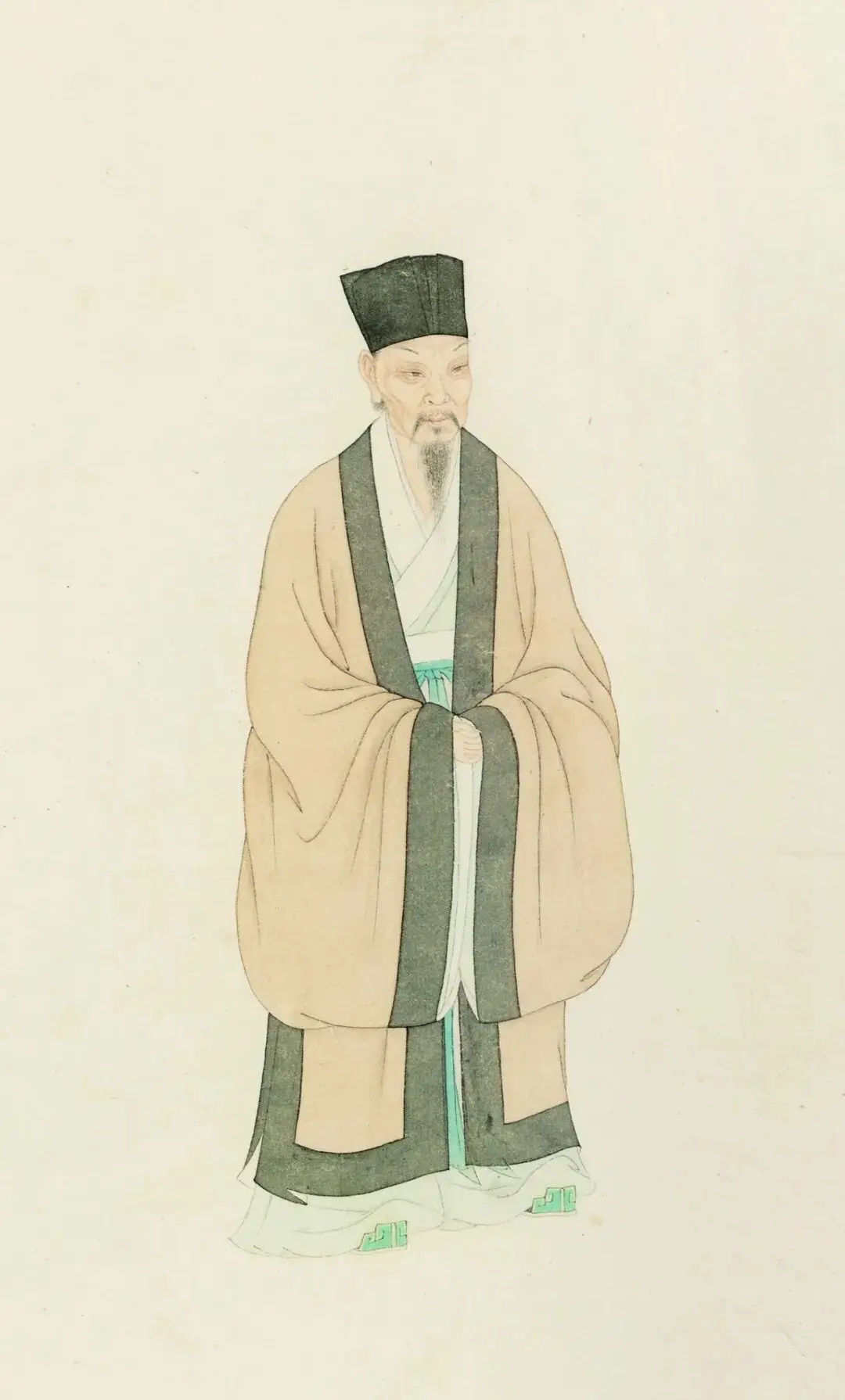
Chinese literature has produced finer specialists than Su Shi and has never produced a larger one. In forty years of public life he wrote some of the best poetry, song lyrics, prose and rhapsodies of the Song dynasty and did all of it while holding office — sometimes in the provinces, sometimes at the edge of the throne, and for long stretches in disgrace. He is known to almost everyone who knows him at all by a name he gave himself in middle age, in a place he had been sent as a punishment: Dongpo, the eastern slope.
His life was also a forty-year argument about how a government should treat the people it governs. He opposed the reforms of Wang Anshi and then opposed the men who undid them; he was imprisoned by one faction and exiled by the other. Again and again he was sent away from the capital because he would not stop talking, and the writing that made him immortal came mostly out of the places he was sent to.
1. The Household at Meishan (1037–1057)
Su Shi was born on the nineteenth day of the twelfth month of the third year of the Jingyou era — 8 January 1037 — in a rented house in Meishan, in the far west of Sichuan. The family was respectable and bookish; what mattered was the father. Su Xun came to serious study absurdly late, and the number the old primers fixed on was twenty-seven. He made his name as a prose writer at the end of his life, with the result that all three men of the household stand among the eight greatest prose masters of the Tang and Song.
Nobody taught Su Shi to read but his mother. Lady Cheng took her sons through the classics herself in the studio her husband had built and filled with books. The story most often told of her has her reading the Book of Han with the boy until they reached the life of Fan Pang, a Han official who chose execution rather than evade a charge of faction. Su Shi asked whether he could be a man like that, and his mother answered that if he could be Fan Pang, she saw no reason why she could not be Fan Pang's mother.
The brother was born in 1039. Su Zhe was quieter and steadier, and the two were read as one object by every examiner who met them. The shape of it comes down in a single vow. Preparing for the special examination of 1061, they lodged together, and one wet night Su Shi came on a line of the Tang poet Wei Yingwu: how could one know that on a night of wind and rain we should lie facing each other again? They agreed then that they would not grow old in office, that they would retire early and live within reach of each other. He quoted the promise for the rest of his life, in prison and in exile, and it never came true.
In 1054, when he was nineteen, he married Wang Fu of Qingshen, then sixteen. She listened behind a screen when he had visitors and afterwards told him what she had heard; the quality he singled out in her epitaph was that she had never once flattered him. In 1056 the three of them went east to the examinations of 1057, presided over by Ouyang Xiu, the dominant man of letters of the age. Su Shi's paper, On the Generosity of Reward and Punishment, argued that a state should lean towards generosity when it rewards and mercy when it punishes, since it can never know the whole truth. Ouyang Xiu could not place the classical precedent it cited, and is supposed to have ranked the paper second so as not to seem to be favouring a friend; when he asked where the precedent came from, Su Shi said it came from nowhere, because such a thing ought to have been true. Both brothers passed; Lady Cheng had died in the fourth month of that year, while her sons were in the capital being told they were the future of the dynasty.
2. The Special Examination, and the Long Apprenticeship (1057–1069)
Mourning for his mother kept him out of office for two years; the brothers brought the family east in 1059. In 1060 the court offered each of them a county post and they turned both down. What they wanted was the special examination, held irregularly on the emperor's warrant, whose subject was stated in its name: the one they were recommended for was "the upright, square and straightforward, capable of speaking frankly to the throne". In three centuries of Song the regular examinations produced upwards of forty thousand graduates; the special examination produced forty-one men.
Su Shi sat it in 1061 and produced a policy answer running past five thousand characters in a single day, in which he told the emperor that the empire had "the name of good government without the substance of it". The examiners placed him in the third class; the first and second had never been awarded to anybody, and before him only one man, Wu Yu, had come within a grade of it. His brother was not so lucky: Su Zhe's paper said the palace held a thousand women and that the emperor's mind was elsewhere while his body sat on the throne, and an examiner insisted on failing him for insolence. The case went to the throne, and Renzong's answer set the tone of the reign — if he asked for frank speech and then punished a man for being frank, what would the empire think of him? Su Zhe was passed, one grade lower. The emperor then told the empress dowager that he had selected two future chancellors for his descendants.
His first real job, from 1061 to 1064, was at Fengxiang in the west, as assistant prefect, at twenty-four years old. He rewrote the roster that distributed labour service so that the burden fell more evenly, had ponds dug to hold water against drought, and wrote a small prose masterpiece to open the pavilion he built when the rain came. It is the first sign of a habit that lasted his whole life: the man who writes the essay is the man who ordered the digging.
He came back to court in 1065 and was given a place in the Hall of Historiography. In the fifth month his wife died in the capital, in her twenty-seventh year; they had been married eleven years. In the fourth month of the next year his father died at fifty-eight, and the brothers took two coffins home to Sichuan and stayed to mourn. In the tenth month of 1068, before the journey back north, he married Wang Runzhi, his dead wife's younger cousin, then twenty-one — the woman who would manage his household for twenty-five years of moves and demotions. In 1069 Shenzong made Wang Anshi a vice chancellor and set up a bureau to draft the New Policies: cheap state loans to farmers, a reassessment of land, state trading in commodities, a militia in place of the corvée. Su Shi was not against reform; he was against these reforms. They moved too fast, they put too much in the hands of men in the capital and too little in the hands of men who knew the fields, and their arithmetic assumed that the state could know what it could not know. In 1070 a censor related to Wang Anshi by marriage accused him of shipping private salt and timber home on official boats while escorting his father's coffin to Sichuan; the investigation produced nothing, but in 1071 he was given the post of assistant prefect of Hangzhou.
3. Eight Years in the Provinces (1071–1079)
Hangzhou gave him the lake, and the lake gave him the poem by which the city is still introduced to strangers. He was the assistant prefect of a great port, which meant the grain transport, the canals, the salt monopoly and the courts. He travelled the subordinate counties and watched the salt laws fall on the poorest villages along the coast, and wrote the line about how it was not that he had heard the ancient music and forgotten the taste of meat but that he had gone three months without salt; six years later the prosecution would read that line into the record as an attack on the throne's economic policy, which, to be fair, it was.
In 1074 he was given a prefecture of his own, Mizhou in Shandong, and arrived into a drought and one of the locust years the eleventh century kept producing. His own account of what he saw on the road in is the best description of a locust swarm by a poet who ever wrote one: people wrapping locusts in bundles of weeds and burying them beside the road, the mounds stretching away for two hundred li, the number already caught and reported put at nearly thirty thousand measures. He reported it against the local officials who had been assuring the capital that locusts ate weeds and were therefore a benefit, and asked for the autumn tax to be remitted. When he found that parents in a famine year were abandoning infants, he had his clerks collect them off the roads, placed them with families, and paid those families a monthly allowance out of the relief grain — several dozen children, by his own count in a letter to a friend, which is the only count anyone has.
Then came the rain he had prayed for, and a good harvest, and a hunt, and the lyric that announced a new register in the form: an old man's boyish frenzy, a yellow hound and a grey goshawk, a thousand horsemen across the flat hill, and at the end the wish to draw the bow like a full moon and shoot at the Wolf. Two other poems from those years are among the most quoted lines in the language. In the first month of 1075, ten years after Wang Fu died, he dreamed of her and wrote ten lines in which she sits at her dressing table and he is a stranger with dust on his face and frost in his hair, and the last line names the place where his grief will be renewed every year: a pine hill, a short grave, a bright moon. In the ninth month of 1076, drinking alone at the Mid-Autumn festival and thinking of his brother, he asked the moon when it had begun to be so bright and ended by asking that the two of them live long and share the same moonlight a thousand li apart. Hu Zi, writing a century later, disposed of the rest of the repertoire in six characters: after Dongpo wrote this one, all other Mid-Autumn lyrics were abolished.
Late in 1076 he was moved to Xuzhou, and in the autumn of 1077 the Yellow River broke its banks in the north and the flood came down on the city. He did the one thing a prefect can do and cannot be ordered to do. He turned the wealthy who were trying to leave back at the gates, told the population that he was staying and that the water would not take the wall, and then went to the camp of the imperial guard, which answered to the palace and not to him, and asked its officers to come out and work. They came, because he had come himself, at night, in the flood. With the soldiers and some four thousand impressed labourers he built a dyke along the southern wall in two days and nights, one zhang high and two zhang thick, running nine hundred and eighty-four zhang from the terrace of the racing horses round to the city. He lodged on the wall and did not go home. In the tenth month the river found its old bed. The following year he built the Yellow Tower on the east gate to commemorate the deliverance, and in the twelfth month of 1078 he found coal south-west of the city and had it mined, ending the town's dependence on firewood. When he was transferred to Huzhou in 1079 the people stood in the road with wine.
In the fourth month of 1079 he arrived at Huzhou and, as the rules required, sent the throne a letter of thanks for the appointment. He had been exactly the official the men who governed the empire claimed to want, and all the while he was writing the poems, at a time when his verse was printed, sold and read by everybody who mattered, including the censors.
4. The Crow Terrace (1079–1080)
The letter of thanks contained two clauses that ought to have been harmless. Su Shi wrote that the emperor knew him to be stupid and out of step with the times, and that he was therefore in no position to keep company with the new men; and that the emperor had observed him to be old and unlikely to make trouble, and might therefore get some use out of him in the care of small people. New men meant the men promoted by the reforms. Making trouble was the reformers' own word for what they were doing to the country, used back at them in a document read by every literate person in the empire.
His poems had been printed for years in a collection sold in the market, and the censorate now went through them the way a modern prosecutor goes through a seized hard drive. A couplet on two old cypresses, whose roots ran down to the ninth spring without turning so that only a hidden dragon beneath the earth knew of them, was produced as treason — the emperor was the dragon in the sky, and Su Shi had gone looking for another one underground.
On the twenty-eighth day of the seventh month of 1079 an officer named Huangfu Zun arrived at Huzhou with soldiers to arrest him. Su Shi had been warned: the prince consort Wang Shen had sent word south, and it had travelled ahead of the soldiers. He had already handed the prefecture's seal to his deputy, so he knew what they had come for. Officials searched the house, and the women — who had watched a man destroy himself with a brush — burned a great part of what they found, shouting at him that this was what came of taking books seriously and that they had been frightened half to death for nothing. Seven or eight parts in ten of his manuscripts, he estimated, were gone.
He was taken to the capital by boat and put into the prison of the censorate on the eighteenth day of the eighth month. The place was called the Crow Terrace because cypresses grew in its yard and crows nested in them. The interrogation began two days later and lasted nearly two months of sessions, in some of which he was kept up all night; the confession he was required to sign ran to more than twenty thousand characters. His son Su Mai brought his meals; money ran short, and a relative substituted salted fish for the meat. Before the arrest the family had agreed that bad news from the capital would be signalled by a fish, and Su Shi, seeing the fish in his bowl, understood that he was to be executed.
The case was reported up in the tenth month with the list attached of the men who had received his poems: twenty-nine named officials and men of letters. On the twenty-ninth day of the twelfth month the sentence came down. Su Shi was stripped of his offices and given a nominal post as an assistant in the ministry of water, and sent as a training commissioner's deputy to Huangzhou, there to be lodged, and forbidden to sign official papers. Every element of the formula was a deliberate humiliation: the office of deputy training commissioner existed almost exclusively to be assigned to men under discipline, lodged in that prefecture meant he could not leave it, and forbidden to sign papers meant forbidden to work. He had been in the censorate prison from the eighteenth day of the eighth month to the twenty-ninth day of the twelfth — one hundred and thirty days by the reckoning the sources use.
He was saved by a great many people, and the list is not the one you would expect. His brother petitioned the throne offering to give up every office he held in exchange for his brother's life. Several of the men who spoke were the very men whose laws Su Shi had spent a decade attacking, and some of his own political friends stayed silent. The empress dowager Cao, the widow of Renzong, was by then dying, and she reminded her grandson that his grandfather had said he had found two chancellors for his descendants, and asked whether he proposed to kill them. And the last voice, from Jinling, was Wang Anshi's, retired and ill, with the single sentence that has outlived all his own writings in the popular memory: is it possible that in a reign like this one, a man of talent is to be killed?
The punishments reached beyond him. The prince consort Wang Shen, who had passed the warning, lost two ranks and was suspended; Su Zhe was demoted to a salt and wine tax station at Junzhou; and twenty more, among them Sima Guang and Huang Tingjian, were fined twenty catties of copper each. Huang Tingjian, in the same month that he was fined for receiving the poems, was on his way to becoming the greatest of Su Shi's disciples. Su Shi himself wrote, on his release, that writing had been the ruin of him and that he would not mind a low reputation hereafter, and left the capital in the snow at the end of the year, his brother going into exile on a different road.
5. Dongpo (1080–1084)
He reached Huangzhou on the first day of the second month of 1080 and was put up at a Buddhist temple called Dinghui Court, outside the town. The lyric he wrote there is the only one in the collection that sounds like a man who might not recover: a broken moon in sparse branches, the water clock run out, and a bird that picks through every cold branch and will not settle. His household of some twenty people arrived in the fifth month, and he moved to a river post-station outside the city wall; the post carried a nominal salary that in practice was not paid. At the beginning of each month he took his four thousand five hundred cash, divided it into thirty bundles of a hundred and fifty, and hung them from a beam in the roof; every morning he took down one bundle with the long fork he used for hanging pictures, put the fork away so that he could not reach the rest, and lived on that.
What he needed was land. In 1081 a friend named Ma Zhengqing petitioned the prefecture on his behalf and got him an abandoned army encampment east of the town gate, several dozen mu of it, and in his own account fifty. He cleared it, planted rice and mulberry, and built a house of five rooms on it in a snowfall the following winter, which is why he called it the Snow Hall and had the walls painted with snow. He took a name from the ground and called himself the Hermit of the Eastern Slope. Bai Juyi, three centuries earlier, exiled to Zhongzhou and bored, had planted trees on a slope east of the town and written a poem about walking up it in the morning and down it in the evening. Su Shi, who had been famous from the age of twenty-one, chose for himself the name of a bored provincial official puttering on a hillside. Dongpo began as a joke about how little he had left. It is the name he is known by.
Then, in 1082, he wrote the best year of Chinese literature, and it is not a figure of speech. In the third month he walked to Shahu with some friends and was caught in rain and had no raincoat and no umbrella, and the others ran and he did not, because he had a bamboo staff and straw sandals; and he wrote the lyric that ends by looking back at the place where the rain had been and finding that there was no wind and no rain and no clearing either. In the same spring he wrote the two poems on the Cold Food festival, in a house where the stove was broken and the kitchen was empty; the manuscript survives, in the Taipei Palace Museum, a page of about fifteen columns in which the characters start small and neat and get larger and more agitated as the poem goes on. It is generally agreed to be the finest piece of running script of the Song. Huang Tingjian, who had been fined for receiving those poems, wrote on it that if Su Shi himself had tried to do it over again, he might not have reached it.
In the seventh month, on the night after the full moon, he took a boat out with friends to a red cliff on the river below the town, and produced the Rhapsody on the Red Cliff, in which a guest says that the river runs on and the moon waxes and wanes, and Su Shi answers that from the standpoint of change not even a moment of the world survives, and from the standpoint of what does not change, the world and I are both endless, and there is nothing to envy. Three months later, on the fifteenth day of the tenth month, he went out again, climbed the cliff, shouted at it, was frightened by it, came back down to the boat, and saw a lone crane cross the river in the dark with wings like cartwheels: the Later Rhapsody. In the same year he wrote the lyric in which the great river flows east and washes away all the gallant men of a thousand years, and a man who is starting to go grey thinks about a general who was young and victorious there nine hundred years before. The cliff was almost certainly not the site of that battle, and Su Shi knew it: he noted in a separate piece that people said it was the place where Zhou Yu broke Cao Cao and that he did not know whether it was true, and wrote the rhapsodies anyway. The subject was never the battle. The subject was a place he could see from a river bank where he was not allowed to work.
In 1084 the court moved him to a deputy post at Ruzhou, and in the fourth month he left, four years and two months after he had arrived. He went by way of the mountains and left two famous short works behind him: at Mount Lu, unable to see the mountain because he was standing on it; and at Stone Bell Mountain, where he took a boat out at night with his son and settled a disagreement among earlier writers about what made the noise. At the end of the seventh month, on the road, his infant son Su Dun died of heatstroke, not yet a year old. In the same month, travelling down the river, he stopped at Jinling and went to see Wang Anshi. The old chancellor had retired to live by Zhongshan and came down to the boat on a donkey, in ordinary clothes, and Su Shi, in plain cloth and without a hat, said that he had dared to come to see the great chancellor in country dress; and Wang Anshi answered that the rules of ritual were not made for men of their kind. They talked for days about poetry, and Wang Anshi urged him to buy land nearby and settle. Su Shi went on downstream, and at the end of the year petitioned to be allowed to settle at Changzhou.
6. The Return, and the Argument with His Own Side (1085–1089)
The emperor Shenzong died in the third month of 1085, at thirty-seven, leaving the throne to a boy of nine and the government to his mother, the empress dowager Gao. Within months the men who had been in exile since 1069 were back: Sima Guang was recalled to the chancellorship and the dismantling of the New Policies began. Su Shi was living at Changzhou, waiting to see what would be done with him. In the fifth month he was made prefect of Dengzhou, on the coast of the Shandong peninsula; he held that post five days before the court recalled him to the capital. Within a year he was drafting imperial orders in the secretariat, and then he was the academician of the Hanlin who composed the empire's edicts: he had gone from a disgraced exile forbidden to sign his own name to the man who wrote for the emperor in less than two years. His brother was rising on the same tide and would end, in 1092, as a vice chancellor.
It did not last longer because Su Shi had not changed his mind and the men who had restored him had. Sima Guang, old and ill and with fifteen years of exclusion behind him, came back determined to abolish the New Policies as a body, in a single stroke, and to restore the institutions of the 1060s. Su Shi objected in open court. The case was the system of labour service: the reformers had replaced the conscription of peasants with a hired-service system paid for by a levy, and the conservatives wanted the conscription back. Su Shi argued that the hiring system had been an improvement, that the levy was unpopular but the conscription had ruined farms, and that the sensible course was to amend the new law rather than reverse it. Sima Guang would not hear him; the anecdotes say Su Shi called him an ox and a courtier had to be sent to calm him down, and the anecdotes are the only source for that. He had opposed the New Policies since 1070 on specific grounds, and he was not willing to oppose them simply because they were new.
This made him a faction. The court split into three camps — the Shuo party around Liu Zhi, the Luo party made up of the disciples of the moral philosopher Cheng Yi, and the Shu party, which was his and which he had not wanted — and for three years he fought a war of memorials. The quarrel with Cheng Yi had everything to do with temperament and very little with policy: Cheng Yi believed that ritual precision was the foundation of government, and Su Shi thought a man who would not bend was a man who would break things. He gathered the group that made the last decades of the eleventh century the great age of Song verse: Huang Tingjian, Qin Guan, Chao Buzhi and Zhang Lei, the Four Scholars of the Su Gate. And in 1086, when the man he had spent a decade denouncing died at Jinling, he drafted the court's edict of posthumous honour for Wang Anshi, unreserved in its praise.
In 1087 he was made a lecturer to the young emperor, reading the classics with him alongside his brother, and was by then the object of so much political fire that he began to ask in public to be sent away. He asked in 1087, when the attacks first reached the point of endangering his life, and was refused, and asked again. In 1089, after a fresh round of accusations ranging from slander of the late emperor to improper conduct in office, he was allowed to go, and the post they gave him was the best provincial post in the empire: academician of the Dragon Diagram Hall and prefect of Hangzhou.
7. West Lake, and the Last of the Good Years (1089–1094)
He had been away from Hangzhou for eighteen years, and in that time the lake had been dying. Silt and water weed had taken more than half of it. He wrote the court a memorial still quoted in Hangzhou, and it is a masterclass in the argument that a landscape is infrastructure: Hangzhou has the West Lake as a man has eyebrows and eyes, and cannot do without it, and if the lake goes the city goes with it — and on the present rate of silting, he added, in twenty years there would be no lake at all.
What he did over the next year is the reason his name is on the ground in that city. He had the weed and silt lifted out of the lake, the work being counted in the sources at around two hundred thousand man-days. Then he solved the problem that has defeated every dredging project since, which is where to put the spoil: he put it in the lake. He ran a causeway north to south across it, eight hundred and eighty zhang long and five zhang wide, cut six arched bridges into it so that boats could still pass from one half of the lake to the other, and built pavilions where people could sit. The road is still there, and it is called the Su Causeway. He solved the maintenance problem too: the shallows along the shore he rented out to farmers to plant water chestnuts, on the reasoning that anyone growing water chestnuts has to keep his patch clear of weed to sow it at all; and to stop those farmers encroaching on the rest of the lake he had three small stone pagodas anchored in the deepest water as boundary markers.
He cleaned the six wells that supplied the city and dredged the two canals that connected it to the river, and then, in 1090, he turned to medicine. A bad year had brought famine and epidemic together. He had a prescription given him years before by a friend in Sichuan and had it boiled in great cauldrons in the streets and given away. Then he did something no local official in China is recorded as having done before: he put fifty ounces of his own gold into a fund, with two thousand strings of official money, and established a clinic for the poor, staffed by monks, which treated around a thousand patients in its first years. It is the institution usually described as the first public hospital in China. The city's later legend that he invented Dongpo pork while feeding the men who dredged the lake is a story rather than a record, but the fact that the story exists tells you what the men who told it thought the pork was for. The reason he was dangerous to the reformers was never that he was a sentimental conservative: it was that he had run the machinery and knew where it broke.
In 1091 the court called him back. He was offered the ministry of personnel and declined it, because his brother was already a chief councillor and he did not want it said that the Su family was taking the empire in shares; he took the senior academician post instead. The attacks resumed within months, now led by Cheng Yi's followers, and in the eighth month he was sent out again, to Yingzhou, and then to Yangzhou, where his first act was to abolish the annual flower festival: it had begun as a tribute to the flowers of the region and become an occasion for the whole prefecture to be squeezed, with every household made to grow, cut, transport and present flowers and every official in the chain taking a cut. Then, in the seventh month of 1092, he was recalled once more and made minister of war, then a lecturer to the emperor, and in the eleventh month minister of rites with both the academician titles — the highest offices he ever held, and the last.
The year 1093 took the ground out from under him. On the first day of the eighth month his wife Wang Runzhi died in the capital, aged forty-six by the Chinese count, after twenty-five years in which he had been promoted, imprisoned, exiled, recalled and promoted again with her in the same house or waiting in the next province. Because he had already been posted to Dingzhou he could not attend her funeral. In the ninth month the empress dowager Gao died, and the young emperor Zhezong, lectured at weekly for six years by the two most famous men in China, took the government into his own hands. In the fourth month of 1094 the new government opened its campaign against the men of Yuanyou, on the charge that the edicts he had drafted had ridiculed the previous reign. He was stripped of his posts and, in the fourth month of 1094, sent to Yingzhou in the far south of Guangdong; before he got there he was demoted again, and then again, in the sixth and seventh months, ending as the deputy of a command that did not exist at Huizhou, with no duties and no salary. He dismissed the servants he could no longer feed, sent the rest of the family to the lake country, and went south with Wang Zhaoyun and his youngest son Su Guo. He was fifty-seven years old and had been told, in effect, to go and die somewhere warm.
8. Huizhou (1094–1097)
He arrived in the tenth month of 1094 at a garrison town of a few hundred households in a malarial basin of the far south. The prefect, Zhan Fan, gave him lodging in a tower above the river called the House of the Joined Rivers, and when the tower became too exposed he moved to a temple, and back again, for two and a half years. His legal position had not changed since Huangzhou: he was assigned to the place, forbidden to leave it, and forbidden to sign papers. Everything he accomplished in Huizhou was therefore done without authority — by letter, by private money, by persuasion, or by the accident of his fame.
What he actually did there is a list of public works performed by a man with no office. There was a river between the two halves of the town and no bridge, and people drowned crossing it. He had no money and no power, so he gave away what he had: he donated the rhinoceros-horn belt he wore as a mark of rank to start a subscription, wrote to his brother and to friends for the rest, and set the thing in motion; the local officials, who could act where he could not, executed it. Two bridges went up in 1096, one of them a pontoon of forty boats lashed into twenty pairs across the western river, and a dyke was raised on the west lake.
Then there was the water of Guangzhou, the most remarkable single thing he did in the south. The city drank from the Pearl River and the Pearl River was salt for much of the year; only officials and the wealthy could buy water from the sweet well on Liuwang Hill, and the rest of the city drank what made it sick. A friend told him about a spring at Dripping Water Rock on Pujian Mountain, outside the city. Su Shi, who could not travel to Guangzhou and could not order anything when he got there, wrote a letter to the prefect Wang Gu proposing to bring that water to the city by gravity through five lines of hollow bamboo, specifying the whole system — a stone tank at the rock, bamboo sections joined and wrapped with hemp and painted with lacquer, and a receiving tank inside the city — and costing it at rather more than ten thousand bamboo poles. He then wrote a second letter about maintenance: drill a hole the size of a bean in every bamboo section and plug it with a bamboo pin, and any section of the line can be tested for blockage by opening it, so that one blocked joint is found and cleared instead of gradually taking a hundred others down with it. Wang Gu built it. Guangzhou is usually described as the first city in China to have had anything that can honestly be called a piped water supply, and it was designed by a convicted exile living in another prefecture.
The agriculture came in the same register. He had seen a device at Wuchang in which a farmer sat astride a wooden horse to plant rice seedlings, and he wrote a poem about it, the Song of the Planting Horse, and then spent 1095 showing it to anyone who would listen; the magistrate of Boluo tried it out and, on Su Shi's suggestion, also put the local streams to work turning mills for hulling rice. And there was the food. The best account of how he lived is a letter to his brother: the market was thin, one sheep killed a day for the whole town, and he could not bid against the officials for the good cuts, so he asked the butcher for the spines they were throwing away, boiled them, steeped them in wine, roasted them over a low fire with a little salt and picked the scraps off the bones with his teeth. He told his brother he enjoyed it, and added that if news of the technique got out, the dogs of Huizhou would be displeased.
In the second month of 1097 the house he had built on White Crane Peak was finished, with room enough for his sons' families, who came down the river to join him; he wrote to a friend that he intended to end his days in it, and he had it for two months. In the seventh month of the previous year Wang Zhaoyun had died. She had entered his household in Hangzhou in 1074, when she was twelve years old and a singer, and had been through the prison, Huangzhou, the capital and now the far south. There is an anecdote from the Song collections which everyone repeats: asked one day what he supposed the gentleman carried in that belly of his, she said a whole belly of being out of step with the times, and he laughed and agreed with her. She died of an epidemic at thirty-four. He buried her in the pine wood below the Qichan temple, with a couplet out of the Diamond Sutra: like a dream, like a phantasm, like a bubble, like a shadow; like dew, like lightning. He did not take another companion. In the fourth month of 1097 the order came moving him across the sea to Hainan, and he gave the house on White Crane Peak to the monks.
9. Across the Sea (1097–1100)
The order sent him to the furthest place in the empire: deputy of Qiongzhou, to be lodged at Changhua military district on the island of Hainan. He left Huizhou immediately, left his sons' families behind, and crossed the strait with Su Guo and nobody else. He was sixty. He wrote to a friend the plainest inventory of a place that any exile ever set down: here there is no meat to eat, no medicine when you are ill, no house worth the name to live in, no one to go out with, no charcoal in winter, no cold spring in summer.
At first he and Su Guo had the use of a government building that had been falling down for years and leaked so badly that they moved their bedding three times in a single wet night. The local garrison commander, Zhang Zhong, admired him and had it patched and made fit to live in, which was the sort of kindness that got men into trouble in that decade. It did. In the fourth month of 1098 an inspector named Dong Bi, on circuit, heard that a man under sentence was occupying official quarters, sent an officer across to turn him out, and had Zhang Zhong disciplined for having housed him. So the most famous writer of the age, sixty-one years old, bought a piece of ground in the betel-nut and areca-palm wood outside the south wall and built his own house. Three rooms went up in the fifth month, and he named it the Areca Hut and wrote its inscription on a palm leaf, because there was nothing else to write on.
The teaching had begun before that, in the winter of the year of his arrival, when he and Zhang Zhong went to see a local scholar named Li Ziyun and proposed to build a hall on his ground where they could read and talk with anybody who came. They called it the Hall of Bringing Wine, after the story in the Book of Han of the men who carried wine to Yang Xiong and asked him about difficult characters; it is the kind of name that announces precisely what Su Shi thought a school was for. The hall became the Dongpo Academy and stayed on the same site for nine hundred years. The best of his students was a man from Qiongshan named Jiang Tangzuo, who became the first man from Hainan on record to pass the provincial examination, in 1103, two years after Su Shi had died.
If the island was cruel, it was also the only place in his life where he was left alone long enough to finish anything. He completed the commentaries on the Changes and the Documents and worked on the Analects — the three books of Hainan, as they are called — the first of which he had promised his dying father he would write, thirty-four years earlier. He wrote a hundred and nine poems in the rhymes of Tao Yuanming, the fourth-century poet who had given up office to farm and whom he loved above every other writer in the language. The local records count what he produced during the three years: a hundred and sixty-nine poems and lyrics, a hundred and twenty-eight prose pieces, five rhapsodies, eighteen eulogies, four inscriptions. He had no library and no colleagues and no prospect of publication. He also set about improving the island in the only way available to him, which was by talking to people and writing things down. The custom he most disliked was the one that killed the island's cattle: when a man fell ill he did not take medicine, he killed an ox and prayed, and a well-off household might kill a dozen in a year. Su Shi copied out Liu Zongyuan's Rhapsody on the Ox and gave it to a monk to circulate, as a way of arguing that a beast which ploughed your fields was worth more alive than dead. The claim that serious Confucian schooling on Hainan began with him is a local tradition, but it is not far off: the island produced twelve graduates of the imperial examinations under the Song.
He was pardoned in the fifth month of 1100. The young emperor Zhezong had died at twenty-four without heirs, his brother Huizong had taken the throne, and the men proscribed in 1094 were being let out. Su Shi was ordered back to Lianzhou on the mainland, and the restrictions on where he might live were lifted. He left in the sixth month. The villagers brought him wine and food and the boat pushed off, and he wrote the poem of the crossing: the clouds scattered and the moon came out, and who had cleaned and adorned them? The sky's face and the sea's colour had been clear from the beginning. And at the end, the line that settles the account of his exile — nine deaths in the southern wilderness, and he did not regret a single one; the journey had been the strangest and most wonderful of his life.
10. The Last Journey, and the Long Afterlife (1100–1101)
The journey north took a year. He went up through Guangdong and over the Dayu Pass, and everywhere the boat stopped people came down to the bank to look at him: a man who had been imprisoned for his poems, exiled to the end of the world and then let out alive was a spectacle. At Jinshan he was shown a portrait of himself that had been painted years before, and wrote four lines on it: a heart like burnt-out ash, a body like an unmoored boat — and then, to the question what he had accomplished in his life, the answer that no one in nine hundred years has improved on. Huangzhou, Huizhou, Danzhou. Three places of punishment, named as a career. It was the last poem he wrote.
He reached Changzhou in the summer of 1101 and took a house there, and was ill almost at once — dysentery, after a year of heat and river travel on a man of sixty-four. He died on the twenty-eighth day of the seventh month, at the house of the Sun family, aged sixty-four by Western reckoning and sixty-six by the Chinese count. Seventeen years earlier, to the day, his infant son Su Dun had died on the road out of Huangzhou. The monk Weilin, who had come to be with him, urged him to keep the Western Paradise in mind. Su Shi answered that it was not that the Pure Land did not exist; it was that there was no way to put effort into it. When a friend pressed him to try anyway, he said that to put forth effort was to miss it. His brother, who had been on the road to reach him, buried him the following year at Jiaxian in Henan, on a hill he had admired on the way past because it reminded him of Mount Emei, where he was born. Su Zhe was buried beside him ten years later, and in the Yuan a cenotaph for their father was set up in the same enclosure, so that the place is called the graves of the Three Su.
Then the state that had ruined him spent a century trying to own him. In 1102 a list of the men of Yuanyou was drawn up and inscribed on stone, and Su Shi's name was on it; his books were banned, his printing blocks broken up, his inscriptions chiselled off the rocks. The Southern Song restored his offices, the emperor Xiaozong had the complete works printed under imperial patronage, and in 1170 he gave Su Shi the posthumous name Wenzhong — the Literary and Loyal. He had been dead sixty-nine years when the empire formally decided it had admired him all along.
The size of him has never been seriously disputed, and the reason is that the range is not a list of hobbies but of professions. He is one of the eight canonical prose masters of the Tang and Song. He is one of the four great calligraphers of the Song, and the manuscript he left behind at Huangzhou is one of the three most famous pieces of running script in Chinese. He supplied literate China with its theory of painting — that to judge a painting by its likeness puts you on the level of a child — and did the thing to the song lyric that nobody had thought possible: he made it the vehicle for a serious man's whole mind. A retainer in the capital once described the difference for him in a sentence quoted ever since: the lyrics of Liu Yong were for a girl of seventeen with a red ivory clapper; his own required a man of the western passes, with an iron clapper and a drum, bellowing the great river that flows east. Some two thousand seven hundred of his poems survive, and more than three hundred song lyrics. In the examination halls of the Southern Song, candidates had a proverb: know Su Shi's prose and you eat mutton; if it goes badly, you chew vegetable soup.
But nobody has ever loved him for the range. What his readers took from the beginning, and what they still take, is the temper. He was thrown in prison for one hundred and thirty days by men who wanted him dead, and he came out writing poems about the taste of the food. He was sent to three of the worst places in the empire, and at each of them he left a piece of a living country behind him: at Huangzhou, an education and a farm; at Huizhou, two bridges and a pipe that carried sweet water into a city that was not his to govern; on Hainan, a school and the beginning of a literary culture that outlasted the dynasty. He was never once made bitter in public. A Song compiler preserved the remark with which he is supposed to have explained himself to his brother: that he could keep company with the Jade Emperor upstairs or with the beggars of the almshouse below. The modern historian Qian Mu, who had no interest in making saints, put the case more sharply than any of Su Shi's own admirers could: the greatness of his poetry comes precisely from the fact that he never once got anywhere in politics. It does not mean that the exile was a price worth paying for the poems, and Su Shi himself never said any such thing; he wanted the career, he worked at it, and he thought he was right. It means that the thing he became was made out of the material of a life that kept going wrong, and that he never lied about it in the direction of either comfort or despair. In the last poem he named three exiles as his life's work. Nine hundred years of readers have looked at that list, agreed with him, and gone on reading the work of the places he named.