Home / Emperors / Sixteen Kingdoms
Emperor Zhaowu of Han Zhao
汉赵昭武帝
Liu Cong, ? – 318 · third emperor of Han Zhao
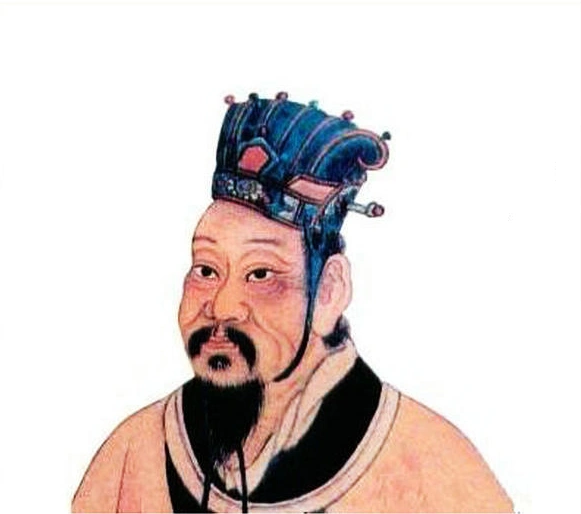
In the seventh month of 310, Liu Yuan died in the palace at Pingyang, in the Fen valley of southern Shanxi. He had founded a state six years earlier and had called himself emperor for two. His eldest son, Liu He, took the throne. Seven days later Liu He was dead, killed in the same palace by the troops of his fourth brother, Liu Cong. The ministers offered the throne to Liu Cong, and he accepted it after a show of reluctance, took the era name Guangxing, and gave his father a dynastic burial. The state he inherited was called Han. It had been proclaimed at Zuoguocheng in 304, in the hill country west of Jinyang, and its first title had been King of Han, not emperor. Its capital was Pingyang. Its army was a coalition of Xiongnu divisions, Chinese bandit leaders, and Jie cavalry. Its two greatest enemies were still standing: the Jin court at Luoyang, which had lost province after province but not the title, and the Jin command in the west, at Chang'an, which held the passes to the west. The new emperor had known the Jin capital, had held Jin offices, and had commanded armies for his father. He was a good archer and a good writer, and he had been trained in the classics of the state he was about to destroy. The name by which later histories know it is Han Zhao. In 319 his kinsman Liu Yao, by then emperor at Chang'an, renamed it Zhao; later writers, needing to tell it apart from the Zhao that Shi Le founded in the east, welded the two names together. The label Sixteen Kingdoms is later still: nobody in 310 was counting. What survives of the reign comes mainly from the records of the Book of Jin, a Tang compilation of 648 that worked from the northern states' own archives and passed judgment from outside them, with the Comprehensive Mirror of 1084 supplying dates. The double origin explains both the density of the detail and the edge of the verdict.
The usual account of Liu Cong is the account of a conquest. He is the emperor who took Luoyang in 311 and Chang'an in 316, who captured the two Jin emperors, and who turned his father's frontier kingdom into the strongest power in the north. The account is true in its facts and wrong in its emphasis. He did not take either city. He issued the orders, and the armies that carried them out belonged to other men. Luoyang was taken by a coalition of Liu Yao, Wang Mi, and Shi Le, after Liu Cong's own palace troops had breached the wall and withdrawn. Chang'an was taken by Liu Yao, who then stayed in the west and made it his base. By the time Liu Cong died, in 318, none of the three field armies still answered to the Liu house at Pingyang. Wang Mi's army had been absorbed by Shi Le. Shi Le's army was becoming the Later Zhao. Liu Yao's army would become the western Zhao. The conquest was real, and it was not his. This article is about the gap between the order and the deed, and about the institutions he built to close it. The gap was not a failure of will. Liu Cong was intelligent, educated, and brave, and he understood better than most of his contemporaries that a court in the Fen valley could not command the Hebei plain directly. He delegated, and delegation won the war. He built two administrations for two populations, and the dual system was the most complete blueprint of its kind in the early fourth century. He bound the great clans to the throne through marriage, and he used eunuchs to manage the paperwork that the bureaucracy could not manage. Each of these was a rational answer to a real problem. Each also created a new centre of power. The delegated commander became a king. The dual administration gave the heir a separate command. The marriage alliance gave the empress's clan the keys to the palace. The eunuch secretariat gave a handful of men control of the information on which everything else depended. By 318 every instrument had become a rival. The article's argument is not that Liu Cong was a weak man. It is that he was a clever man who chose instruments that made his cleverness useless.
1. The Fourth Son
The biography begins before the man. Liu Cong's mother, Lady Zhang, dreamed that the sun entered her womb and told her husband. Liu Yuan said it was a good omen and told her to say nothing. The pregnancy lasted fifteen months. A white light shone over the house at the birth. The infant's body was unusual, and a white hair two feet long grew from his left ear and shone. The details are the standard equipment of a dynastic founder. The solar dream, the long pregnancy, and the light are the language of the mandate, and the white hair is the one detail that sounds like a memory rather than a case. The record is not a modern biography, and it does not pretend to be. It is a state history's account of why a particular family deserved to rule, and it begins the argument at the cradle.
The education that follows is the same argument in a different key. At fourteen, the record says, he had mastered the classics and the histories, the hundred schools, and the military books of Sun Wu. He wrote a fine cursive and clerical hand, and he composed more than a hundred poems of expressed feeling and fifty fu and eulogies. At fifteen he took up the sword. He had long arms, was a strong archer, and could draw a bow of three hundred jin. The figures are the record's, and the works are lost. The three-hundred-jin bow is a conventional strongman number, the kind of detail that ancient biographies produce when they want to make a body into a promise. What matters is the combination. This is the ideal of the complete man, civil and martial in one person, which the frontier aristocracy had borrowed from the Chinese canon and made its own. Liu Yuan had been praised in the same terms. The son was raised to be the proof of the father's programme.
The first audience outside the family was the Jin court. Wang Hun of Taiyuan, one of the great men of the province, saw the boy and said to Liu Yuan: "This boy is beyond my measure." Wang Hun died in 297, which places the meeting before that year. As a young man Liu Cong went to Luoyang, the city where his father had been a hostage and a courtier. The record says that all the famous men of the capital associated with him, and that Yue Guang and Zhang Hua thought him exceptional. Zhang Hua died in 300, Yue Guang in 304, so the Luoyang years fall in the 290s, when the Jin court was still the centre of the world and the frontier aristocracy was still a curiosity that could be admired at dinner. The pattern is the same as his father's. The capital praised him, and the capital would not employ him.
He was not, however, a prince in a tent. He was a Jin officer. The governor of Xinxing, Guo Yi, made him a registrar. He was recommended as a good general, entered the court as a separate divisional commander of the elite cavalry, and rose to commandant of the right division. The record says he was good at conciliation and that the powerful families of the five divisions all attached themselves to him. That is a more important sentence than the list of books. It means he had a following among the Xiongnu aristocracy before he had a state. He knew how to judge men, how to place them, and how to keep them. The education in the classics gave him the language of legitimacy; the command gave him the thing that legitimacy had to be attached to.
The Jin civil war gave him his first test of loyalty. Sima Yong, Prince of Hejian, recommended him as a general of the red sand. Liu Yuan was then at Ye, in the service of Sima Ying, Prince of Chengdu, and Liu Cong feared that Sima Ying would harm his father. He fled to Sima Ying's camp and was made a general of the right crossbow, serving on the forward staff. The episode is a small study in the family's politics. The son went to the man who held the father, not to the prince who had recommended him. He was protecting a hostage by becoming one. When Liu Yuan was Northern Chanyu, he made Liu Cong Prince of the Right; when Liu Yuan took the title of Grand Chanyu, he changed the title to Luli Prince. The young man therefore held a Jin office and a Xiongnu princely title at the same time. The dual system of the reign was first a biography. Before it was a constitution, it was a career.
Under his father he rose quickly. In 304, when Liu Yuan took the title King of Han, Liu Cong was made General Who Comforts the Army. In 308, when the kingdom became an empire, he was made General of Chariots and Cavalry and Prince of Chu. In 309 he led a raid on Luoyang. He beat the Jin forces in the field and reached the walls, and then he trusted a false surrender. The governor of Hongnong, Huan Yan, offered to submit, was received, and attacked the camp at night. The Han army broke and fled back to Pingyang. The defeat is worth remembering. His first independent command against the capital failed because he was careless after a run of victories. He was not a careless man in general, but he was capable of carelessness, and the rest of his reign would show the same pattern: a clear plan, a rapid advance, and a moment of confidence in which the advantage was lost.
In the seventh month of 310 Liu Yuan fell ill. The deathbed settlement divided the state. Liu He, the eldest son, got the throne and the civil regency. Liu Cong, the fourth son, got the army, the title of Grand Chanyu, and the direction of the secretariat. A Chanyu Office was created west of Pingyang, with Liu Yao and Qiao Zhiming as its left and right assistants. The arrangement was a balance of throne and army, and Liu Cong was the half that held the troops. His father had built a state that could survive him; what he handed over was a boat with two rowers and one tiller.
The record gives no birth year and no age at the accession, and the article does not invent one. What can be said is that he was a mature man with a career behind him: a Jin official, a Xiongnu prince, a field commander, a poet in a court that admired poetry. He knew the language of the court and the language of the camp. The reign would use both, and the two languages would never quite become one.
2. Seven Days and a Promise
Liu He held the throne for seven days. His advisers urged him to purge the princes, and Liu Cong's troops counterattacked and killed him in the palace; the detail belongs to the joint article, and the result was that the only candidate with an army was now the emperor.
He refused it first. He offered it to his younger brother Liu Yi, Prince of Beihai, the son of Empress Shan, the reigning empress. Liu Yi and the ministers wept and insisted. Liu Cong accepted, and the record has him say that they wanted him only because he was older, that the realm was unsettled, and that he would follow the example of Duke Yin of Lu and return the government to Liu Yi when the boy came of age. The speech is a formal composition, not a transcript. It is also a choice of precedent that a careful reader should pause over. Duke Yin of Lu acted as regent for a younger half-brother and was killed by the man he had been governing for. The record does not comment on the choice. It did not need to. The promise was the first of the reign's many grants of power that would later be revoked.
The settlement repeated the balance of the deathbed. Liu Yi became grand younger brother, Grand Chanyu, and grand minister of education. Liu Can, Liu Cong's son, became Prince of Henei, Grand General Who Comforts the Army, and commander-in-chief of the capital and the provinces. Lady Huyan became empress. Liu Cong honoured Empress Shan, his father's principal widow, as empress dowager, and his own mother, Lady Zhang, as empress dowager of the emperor. Two dowagers, two claims. The court was a balance of the legitimate widow's son and the general's son, and the balance was unstable from the first day.
Then the record says something that is not gossip. It says that Liu Cong took his father's principal widow into his bed. Liu Yi protested; Empress Shan died of shame. The episode damaged the one man whose legitimacy the regime needed. It gave the heir a reason to fear the palace, and it gave the court a reason to whisper. The record does not dwell on it. Neither does this account. The political fact is enough: the promise to Liu Yi was already hollow, and the man who had made it had taken the one thing that made Liu Yi's claim morally superior.
In the same year Liu Cong sent Liu Can, Wang Mi, and Liu Yao with forty thousand men into the Luo valley. They went out through Huanyuan and raided the Liang, Chen, Ru, and Ying country, taking more than a hundred fortified places. The figure is the record's, and it measures a raid, not a conquest. The coalition was being tested. Wang Mi was a Chinese magnate from Donglai with his own army; Liu Yao was a clan-nephew raised in Liu Yuan's household; Liu Can was the emperor's son. None of them was a subordinate in the ordinary sense. They were partners in a war of plunder, and the court was learning how much it could ask of them.
The pattern of the reign was already visible. Liu Cong began with a promise to share power and spent the rest of his life concentrating it. The promise to Liu Yi was the first of a series of grants that were later revoked or neutralized. The Grand Chanyu went to Liu Yi, then to Liu Can. The east went to Shi Le, then became his kingdom. The west went to Liu Yao, then became his state. Each grant recognized a power the emperor could not command. Each was a way of turning a rival into a client, and each client eventually became a rival again. The reign is the history of that circle.
3. The Order for Luoyang
Luoyang was the test. The Jin still held the old capital, and the old capital was what made a claim to the mandate credible. A state that called itself Han and sat at Pingyang could not leave it in Jin hands and call itself the empire. In 311, before the sixth month, Liu Cong gave the order. Huyan Yan, the commander of the palace guard, was made forward commander with twenty-seven thousand palace troops and sent into the Luo valley from Yiyang. Wang Mi, Liu Yao, and Shi Le were ordered to converge on the capital. The plan was a pincer: the court's own troops would open the road, and the three field armies would close the siege.
Huyan Yan moved fast. The record says he defeated twelve Jin armies in succession. He reached Luoyang before the others, left his baggage at Zhang Fang's old fort, and attacked the Pingchang Gate. He took it, burned the Dongyang and Xuanyang gates and the government offices, and burned the boats the Jin emperor had prepared for a river escape. Then he waited for the field armies. They did not come in time. With no reinforcements, he left through the Dongyang Gate, taking more than two hundred noble women with him, and withdrew.
The palace army could breach a wall. It could not hold a city. That is the first lesson of the campaign, and it is the thesis of the reign in miniature. The troops that belonged to the emperor were good enough to open a gate and not numerous enough to keep it. The troops that could take the capital belonged to commanders who had their own wars, their own recruits, and their own plans. Huyan Yan's withdrawal was not a defeat in the field. It was a failure of logistics and command, the kind of failure that a court with a small fiscal base could not repair.
Wang Mi and Liu Yao arrived, joined Huyan Yan, and besieged the city. Luoyang fell in the sixth month of 311. The account of the siege, the sack, and the capture of the emperor belongs to the article on Emperor Huai of Western Jin; this article is concerned with the order and the result. The order was Liu Cong's. The result was that the emperor of Jin was taken to Pingyang, the Jin empress Yang and the six imperial seals were brought to the Han court, and the era was changed to Jiaping. The symbols of the mandate came to Pingyang. The emperor did not go to Luoyang.
The captured emperor was made a special attendant, a left light-of-the-throne grandee, and Duke of Ping'a. The title was a decoration, and the court knew it. The man who had been the Son of Heaven was now a nobleman of a frontier state, kept in a palace in the Fen valley, useful as a sign and dangerous as a person. In 313 Liu Cong had him killed. The circumstances belong to the Western Jin article. Here it is enough to say that the sign was destroyed when it had served its purpose.
The rewards of 311 divided the empire. Liu Yao was made general of chariots and cavalry, governor of Yongzhou, Prince of Zhongshan, and stationed at Chang'an. Wang Mi was made grand general and Duke of Qi. The court was distributing the state to the men who had won it. Liu Yao got the west, Wang Mi got the east, and Shi Le, who had also fought at Luoyang, got nothing that could be called a province. He would take one anyway.
In the same year Liu Can and Liu Yao attacked Chang'an. Zhao Ran defeated the Jin at Tong Pass, and Sima Mo, the Jin prince of Nanyang, surrendered. Liu Can killed him; his son Sima Bao escaped to Shanggui. Liu Cong was angry. The record has him say that his son would not escape the curse of killing the surrendered. The remark is a glimpse of a political intelligence that the rest of the reign would not sustain. He understood that a conquest state lives by the belief that surrender is safe. He also understood that his son did not. The house that killed a surrendered prince in 311 would be killed in its own capital in 318, and the record does not need to point out the symmetry.
4. The Siege of Chang'an
Chang'an was the harder war. In 312 Liu Yao held the city, but the Jin forces of the region did not submit. Jia Ya, Qu Te, Zhu Hui, Qu Yun, Liang Su, and Liang Zong raised troops, and Liu Yao was defeated at Huangqiu, hit by a stray arrow, and forced back to Ganqu. Liu Can returned to Pingyang. The west was not a city to be taken in a season. It was a landscape of walled towns, local magnates, and Jin garrisons, and the Han army was a long way from its granaries.
In 313 the Jin enthroned a new emperor at Chang'an. Liu Cong sent Liu Yao, Qiao Zhiming, Li Jingnian, and Zhao Ran against the city. Qu Yun held Huangbai. Zhao Ran raided the outer city, burned the Longwei camp, and withdrew; Qu Yun counterattacked, and Liu Yao retreated to Pingyang. The war became a series of raids, each of which proved that the Han cavalry could reach the walls and none of which proved that it could stay. The pattern was the same as Luoyang: a rapid advance, a breach, and a withdrawal before the relief armies arrived.
In 315 Liu Yao defeated Liu Kun's forces at Xiangyuan and wanted to attack Yangqu. Liu Cong ordered him back to Puban, saying that Chang'an was the priority. The instruction is revealing. The east was left to Shi Le. The west was the emperor's own war. Liu Cong was not fighting for territory in the ordinary sense. He was fighting for the second capital, the one that would make the conquest of the first look like a beginning rather than an accident.
In 316 the war turned. Liu Yao took Beidi, Fengyi, and Shangjun. Qu Yun could not relieve the city. Hu Song, sent by Sima Bao, beat Liu Yao at Lingtai but then withdrew to Huaili, because he did not want Qu Yun and Suo Lin to become too strong. The outer city fell. The small city held out until the grain was gone. In the eleventh month the emperor surrendered. The surrender itself belongs to the article on Emperor Min of Western Jin. Here it is enough that the city fell and the emperor was brought to Pingyang.
Liu Cong made him a light-of-the-throne grandee and Marquis of Huai'an. He had Liu Can report the conquest to the ancestral temple, proclaimed a general amnesty, and changed the era to Linjia. The ritual is the point. The heir reported the conquest to the ancestors; the emperor stayed at Pingyang. The conquest was a court ceremony, performed by the man who would inherit the state, in the capital that the father had built. The two capitals were now both in Han hands, and the man who had taken the second was already the most powerful figure in the west.
Liu Yao was given the yellow battle-axe, made grand commander of the armies west of Shan, grand steward, and Prince of Qin, and stationed at Chang'an. The west became his base. When Pingyang collapsed in 318, he marched from Chang'an and became emperor. The conquest of the west was the seed of the dynasty's end. The court had won the war and created the man who would survive it.
The contrast with Luoyang is exact. Luoyang was taken by three commanders, and the court could balance them against one another. Chang'an was taken by one, and the court could not. The west was a single chain of command; the east was a market of armies. Liu Cong could manage a market by paying in titles and playing the buyers against each other. He could not manage a single commander who held a province, a veteran army, and the second capital. The difference would decide the succession.
5. Two Registers
The conquests were followed by one of the most detailed administrative programmes of the early Sixteen Kingdoms. The record calls it a great fixing of the hundred offices. It was also a declaration of what kind of state this was. Liu Cong created the office of prime minister, of the highest nobility, which was supposed in principle to be given only posthumously to men of exceptional merit. He made his son Liu Can chancellor, grand general, and director of the secretariat, Prince of Jin, with the revenues of five commanderies. He created the grand preceptor and raised the seven excellencies from grand marshal upward to the highest nobility, with green ribbons and far-roaming caps. He created a long series of grand generals, each with a camp of two thousand soldiers, all commanded by his sons. He abolished the ministry of personnel and created left and right selection ministers. He ranked the censor-in-chief and the provincial governors below the excellencies. The court was becoming a pyramid of titles, and the titles were becoming the currency of politics.
The two registers were the centre of the programme. On one side he created left and right directors, each with more than two hundred thousand registered households, with one interior minister for every ten thousand households, forty-three interior ministers in all. On the other side he created left and right assistants of the Chanyu, each governing one hundred thousand falls of the Six Yi, with one commandant for every ten thousand falls. The first chain was a Chinese-style territorial administration: director, interior minister, registered household. The second was a tribal administration: Grand Chanyu, assistant, commandant, fall. The first counted registered Chinese households, the fiscal unit of the agrarian population. The second counted falls, the pastoral household or following, which was not a tax unit in the same sense. It was the first time the separation was written out as two matching chains of offices, each with its own unit of count.
The arithmetic is worth a pause. Two directors at two hundred thousand households each make four hundred thousand. At ten thousand households per interior minister that is forty, and the record says forty-three, three more than the round figure allows. Two assistants at one hundred thousand falls each make two hundred thousand. At ten thousand falls per commandant that is twenty commandants. The figures are round and schematic. They describe a plan, not a census. But the plan is internally consistent, and the odd number forty-three suggests that someone actually did the arithmetic. This was not a vague claim to universality. It was a blueprint with quotas.
The Grand Chanyu was not the emperor. Liu Cong gave the title first to Liu Yi, the grand younger brother, and then to Liu Can, the son and chancellor. The emperor held the Chinese throne; the heir held the tribal command. This solved the problem of how to govern the tribes without making the emperor a chanyu. It also created a rival centre with its own clients. The tribes did not deal with the emperor directly. They dealt with the Grand Chanyu, who was also the heir, and who had his own court, his own officers, and his own claim on the throne. In 317 Liu Can destroyed Liu Yi and took the title for himself. The dual system had become the mechanism of succession conflict.
The princely camps were the other half of the military design. Each of Liu Cong's sons commanded two thousand soldiers in the capital. The capital's army was a family affair. The field armies were not. The two thousand men were palace troops, not the conquering armies. They were enough to guard the gates and to make a coup possible; they were not enough to hold a province. The system created many princes with small armies and no unity. In 318 Jin Zhun killed them all in Pingyang. The family army could not save the family.
The fiscal reality was thinner than the blueprint. Chen Yuanda, the remonstrance official, told the emperor that the palace already had more than forty halls, that the army was tired, that the people were resentful, and that famine and epidemic followed one another while a new hall was being built for an empress. The four hundred thousand households were a paper base. In 316 famine and flight carried away fifty or sixty per cent of the population of Pingyang, according to the record, and two hundred thousand households of the director's province fled to Ji, where Shi Le's general Shi Yue received them. The register was not the revenue. The revenue was not the loyalty. The census that was supposed to fund the state became a transfer of population to the state's most dangerous commander.
The comparison with Shi Le is instructive. Shi Le separated the "state people," the conquering Hu, from the Chinese, and gave each its own officers and judges. Liu Cong's system was more elaborate on paper: two territorial chains, two units of count, two sets of officers. Shi Le's was more effective in practice because it was tied to one army and one commander. The point is not that one system was better. It is that both were attempts to govern two populations with one state, and both rested on the same fragile assumption: that the two populations could be counted separately and kept apart. In Liu Cong's case, the tribal chain was headed by the heir, and the heir was the first person the Chinese chain could not control.
The dual system gave the state two chains of command and one throne. The heir held the tribal chain; the emperor held the Chinese chain. The succession was a contest between the two. The palace politics of the next section is the working out of that contest. The harem, the eunuchs, and the prince were not distractions from the administrative problem. They were the administrative problem in its personal form.
6. The Palace as Government
The harem was not a private retreat. It was a cabinet of clans. After Empress Huyan died, Liu Cong took the two daughters and four granddaughters of Liu Yin, a great man of the province. The courtiers justified the marriage of persons with the same surname by arguing that Liu Yin descended from Liu Kang Gong of Zhou, a different lineage from the Han imperial Liu, and the marriage went forward. The record calls the six women the six Lius, and says their favour filled the rear palace. Liu Cong seldom went out. Memorials were presented through the palace eunuchs and decided by the Left Honored Concubine, Liu Ying. The palace had become the government.
Each empress represented a clan. Zhang Huiguang was the choice of Liu Cong's mother, Empress Dowager Zhang, and her brief tenure was the tenure of the maternal clan. Liu Ying and Liu E were daughters of Liu Yin, and their tenure was the tenure of the civil gentry. Jin Yueguang and Jin Yuehua were daughters of Jin Zhun, and their tenure was the tenure of the military affinal clan. Lady Fan had been a maid of Zhang Huiguang. Lady Xuan was the adopted daughter of the eunuch Xuan Huai. Wang Chen's fourteen-year-old adopted daughter became the Left Empress. The harem was a map of the court, and the map was redrawn every time a daughter entered it.
The sequence of empresses is a chronicle of factions, not merely of desire. Lady Huyan, the first empress, died before the Liu Yin marriages. Zhang Huiguang was made empress in the twelfth month of 312; the empress dowager died in the first month of 313; Zhang Huiguang died two days later. Liu Ying, the Left Honored Concubine, died before she could be made empress. Liu E, Liu Ying's sister, was made empress in the third month of 313 and died in the first month of 314. The record does not say that any of these women were murdered. The deaths nevertheless follow one another with the regularity of a political cycle, and the court understood the pattern.
In 315 Liu Cong made three empresses at once. Jin Yueguang, Jin Zhun's elder daughter, became Upper Empress. A granddaughter of Liu Yin became Left Empress. Jin Yuehua, Jin Zhun's younger daughter, became Right Empress. Chen Yuanda protested that three empresses at once was not the rite. Liu Cong was displeased. He promoted Chen to a senior honorary office to strip him of real power, then restored him to the censorate after Fan Long and others offered to yield their posts. Jin Yueguang had an affair. Chen reported it. Liu Cong, forced by the evidence, deposed her. She killed herself. Liu Cong mourned her beauty and hated the man who had told the truth. The pattern is exact: the remonstrant is right, the emperor knows it, and the emperor punishes him for being right.
The best moment of the reign came in the same years. Liu Cong wanted to build a hall for Empress Liu E. Chen Yuanda remonstrated. The emperor ordered him killed. Chen came with a chain around his waist and wrapped it around a tree in the courtyard. The guards could not drag him away. Empress Liu E sent a handwritten petition from the rear hall. The emperor relented, apologised to Chen, and renamed the garden the Garden of Receiving Worthies and the hall the Hall of Shame before Worthies. For a moment the court looked like the court of the classics: a ruler who could be shamed, a minister who would risk death, and an empress who used her proximity to save a life. The moment was temporary. The next remonstrance would not end so well.
The eunuchs were the other half of the palace government. Wang Chen, Xuan Huai, and Yu Rong controlled the documents. The emperor drank and feasted. Memorials were decided by Wang Chen's likes and dislikes, and the officials learned to report to the eunuchs rather than to the throne. In 316 seven officials were killed on the eunuchs' advice. The palace attendant Bu Gan wept and remonstrated and was reduced to commoner. The remonstrance bloc, which included Chen Yuanda, one of the emperor's sons, the prince of Hejian, Liu Yannian, and the general Liu Fu, accused Wang Chen. Liu Can praised Wang Chen. The emperor enfeoffed him as a marquis. The prince of Hejian remonstrated again; the emperor tore up the memorial with his own hands; the prince died of rage. Chen Yuanda wept, quoted the ode that says when a good man dies the state is crippled, and killed himself. Liu Fu died of grief after being scolded. The court's moral opposition was destroyed, and the emperor had done the destroying.
The case of Liu Yi, the grand younger brother, was the culmination. Liu Yi was Grand Chanyu and grand minister of education, the son of Empress Shan, and popular with the soldiers and the Di and Qiang chiefs. Jin Zhun had a grudge against him. A kinswoman of Jin Zhun was Liu Yi's concubine; she committed adultery with a servant; Liu Yi killed her and mocked Jin Zhun for it. Jin Zhun urged Liu Can to take the Eastern Palace. Liu Can's party told Liu Yi that a secret edict warned of disorder in the capital and that the Eastern Palace should wear armour under its clothes. Liu Yi believed it and ordered his household to do so. Liu Can sent word to Jin Zhun and Wang Chen. Jin Zhun told the emperor that Liu Yi was about to rebel and that his men were already in armour. The emperor was shocked. Wang Chen said that he had known for a long time and had told the emperor repeatedly. The emperor ordered Liu Can to surround the Eastern Palace.
Jin Zhun and Wang Chen arrested a dozen Di and Qiang chiefs loyal to Liu Yi. They hung them up, burned their eyes with hot iron, and made them confess to plotting with Liu Yi. The emperor told Wang Chen that he now knew his loyalty. He killed the Eastern Palace officials, dozens of Liu Yi's associates, and buried alive fifteen thousand soldiers. In the fourth month of 317 Liu Yi was demoted to Prince of Beibu. Liu Can had Jin Zhun murder him. The emperor wept and said: "Of my brothers only two were left, and we could not tolerate each other; how can I let the world know my heart?" The record has him say it. The Di and Qiang revolted. Jin Zhun was put in charge of suppressing them. In the seventh month Liu Can was made crown prince, retaining the chancellorship and the title of Grand Chanyu.
The case is a palace coup by paperwork. A forged edict, a staged armour drill, a torture session, and a signature were enough. The field armies were not needed. The dual system's tribal chain, the affinal network, and the eunuch information monopoly converged in a single operation, and the victim was the heir who had been promised the throne in 310. The emperor's cry is one of the few moments of feeling in the record's account, and it is also an admission. He knew what he had done. He did it anyway.
The palace was not a distraction from the state. It was the state's central mechanism. The harem bound the clans. The eunuchs managed the information. The heir commanded the tribes. The emperor managed the balance. When the balance failed, the same mechanisms produced a coup. Jin Zhun, the father of two empresses and the grandfather of the crown prince, would use the palace network to destroy the Liu house. The instrument the emperor had built to control the elite became the instrument of his family's extermination.
7. The Commander in the East
Shi Le was the most dangerous of the three commanders, and the record of Liu Cong's reign is also the record of a slow loss of control. In 311 Shi Le fought at Luoyang, then invited Wang Mi to a banquet in his own camp at Jiwu and killed him. He took Wang Mi's army. Liu Cong was angry. He sent an envoy to rebuke Shi Le for murdering a chief minister and for harbouring a will that knew no superior. Then he gave Wang Mi's troops to Shi Le. The court could rebuke, not punish. The first of the three armies was gone.
In 312 Shi Le took Xiangguo, a walled town on the western edge of the Hebei plain, and made it his base. Liu Cong confirmed him as commander of the four provinces of Ji, You, Bing, and Ying, governor of Ji, and Duke of Shangdang. The titles were real and the obedience was formal. Shi Le governed the plain, recruited its men, and taxed its harvests. The court at Pingyang could appoint him and could not instruct him.
In 314 Shi Le destroyed Wang Jun, the Jin governor of Youzhou, and sent his head to Pingyang. Liu Cong made him grand commander, commander of the armies east of Shan, general of the flying cavalry, and Eastern Chanyu, and added two commanderies to his fief. The title Eastern Chanyu is significant. The court gave a separate chanyu title to a non-Liu commander. The tribal authority of the dynasty, which was supposed to be concentrated in the Grand Chanyu at Pingyang, was now duplicated in the east. The dual system was no longer a single pair of registers. It was a set of competing chanyu offices, each attached to an army.
In 315 came the decisive concession. Liu Cong gave Shi Le bows and arrows, made him Earl East of Shan, and authorised him to conduct campaigns on his own. Shi Le's appointees, provincial governors, generals, magistrates, and marquises, only had to send their names and offices to Pingyang once a year. His son Shi Xing was made heir of the Shangdang principality. This was the legal recognition of an autonomous kingdom inside the empire. The court had given away the monopoly of appointment and violence in the east. It had also given Shi Le a legitimate way to turn his officers into a state.
In 316 the material base collapsed. Pingyang suffered a great famine. The record says that fifty or sixty per cent of the people fled or died. Two hundred thousand households of the director's province fled to Ji, and Shi Le sent Shi Yue with twenty thousand cavalry to Bingzhou to receive them. Liu Cong sent an envoy to rebuke him. Shi Le refused the order and secretly allied with Cao Yi in Qingzhou. The relationship had become a tripod. The emperor's famine fed his subordinate's state. The register that was supposed to fund the Han court became the manpower of the eastern command.
In 318, on his deathbed, Liu Cong made Shi Le grand general and governor of You and Ji. Shi Le declined. He did not need the title. In 319 he took the title King of Zhao. In 329 he captured Liu Yao. The two facts are the end of the story that began at Luoyang, and they belong to the articles on Shi Le and Liu Yao. Here they are only the horizon.
The relationship was a contract that both sides understood. The court gave legitimacy; the commander gave victory. As the commander's army grew and the court's revenue shrank, the contract became one-sided. Liu Cong's instruments were titles, marriages, and rebukes. None of them could compel. The 315 concession was an admission that the court could no longer appoint the east, only ratify. The 316 famine made the admission irreversible. By the end of the reign, the emperor was still the source of legitimacy and no longer the source of power.
The three armies had become three outcomes. Wang Mi's army was absorbed by Shi Le. Shi Le's army became the Later Zhao. Liu Yao's army became the western Zhao. The court's own palace army under Huyan Yan could breach a gate and could not hold a city. Liu Cong had built a state that could delegate, but not a state that could command. The distinction is the whole of his reign. A state that can delegate is a state that can win a war. A state that cannot command is a state that cannot survive the peace.
8. The Last Year
In the seventh month of 318 Liu Cong fell ill. He summoned Liu Yao to be chancellor and director of the secretariat. Liu Yao declined the regency but took the chancellorship and the governorship of Yongzhou. He made Liu Jing grand steward, Liu Ji grand marshal, the grand preceptor, Zhu Ji the grand tutor, and Huyan Yan the grand guardian, all directors of the secretariat, with Fan Long as acting director and Jin Zhun as grand minister of works and director of the capital province. They took turns deciding memorials. He also made Shi Le grand general and governor of You and Ji. Shi Le declined. The settlement was a balance of the clan, the civil officials, and the affinal clan. It was the same balance as 310, and it failed in the same way.
He died on the guihai day, at the end of August 318. He had reigned nine years. He was given the posthumous name Zhaowu, the temple name Liezong, and buried at the Xuanguang tomb. The titles were the titles of a dynasty. The state that buried him was already a coalition of survivors.
Liu Can succeeded on the following day. He changed the era to Hanchang, honoured Jin Yuehua as empress dowager, Lady Fan as Hongdao Empress, Lady Xuan as Hongde Empress, and Lady Wang as Hongxiao Empress. He made his wife, another daughter of Jin Zhun, empress, and his son Liu Yuangong crown prince. The record says it rained blood over Pingyang. He also took his father's women. The court had seen the pattern before, and it did not need the omen.
Jin Zhun moved quickly. He told Liu Can that the princes planned to act like Yi Yin and Huo Guang, kill Huyan Yan and himself, and install Liu Ji. Liu Can did not listen. Jin Zhun then told his two daughters, the empress dowager and the empress, that the princes would destroy the Jin clan. They persuaded Liu Can. Liu Can killed the grand steward Liu Jing, the grand preceptor, the grand marshal Liu Ji, the grand minister of education Liu Mai, and the general of chariots and cavalry Liu Cheng. Zhu Ji and Fan Long fled to Chang'an. In the eighth month Liu Can reviewed troops at Shanglin and planned to attack Shi Le. He made Liu Yao prime minister and commander-in-chief, still at Chang'an, and Jin Zhun grand general and director of the secretariat. Then he drank and feasted. Jin Zhun decided everything. He forged orders making his cousins Jin Ming and Jin Kang generals.
Jin Zhun sounded out the aged grandee Wang Yan, who refused and tried to warn Liu Can. Jin Kang seized him. Jin Zhun led troops into the palace, ascended the Guangji Hall, had Liu Can arrested, enumerated his crimes, and killed him. He gave him the posthumous name Yin. He killed all the Liu clan in Pingyang, men and women, young and old, in the Eastern Market. He opened the Yongguang and Xuanguang tombs and burned the ancestral temple. He called himself grand general and Heavenly King of Han, set up officials, and sent envoys to declare himself a vassal of Jin. The state that had claimed the Han mandate ended with its regent seeking Jin titles.
Liu Yao marched from Chang'an. Shi Le marched with fifty thousand cavalry. In the tenth month Liu Yao reached Chibi, where Huyan Yan and Zhu Ji urged him to take the throne. He did, and changed the era to Guangchu. In the twelfth month Jin Zhun was killed by Jin Ming, Qiao Tai, Wang Teng, and Jin Kang. Jin Ming surrendered to Liu Yao. Shi Le took Pingyang. Liu Yao massacred the Jin clan. In 319 Liu Yao renamed the state Zhao, and Shi Le took the title King of Zhao. The two Zhaos faced each other. The Han phase was over.
The three armies had become the two Zhaos. Wang Mi's army was inside Shi Le's. Liu Yao's army was the western Zhao. Shi Le's army was the eastern Zhao. The Liu house's Han was gone. The emperor who had ordered the conquest of the two capitals died in bed, and within a month his tomb was opened and his clan was killed. The record does not lament him. It records the speed of the collapse.
9. The Verdict of the Records
The Book of Jin was compiled in 648 by a commission of the Tang court. Its chapters on the northern states are records, not annals, the genre reserved for states that claimed the mandate without receiving it. The vocabulary is hostile before the first sentence is read: the accession is a usurpation, the state is a pseudo-state, its officials are rebels. The section on Liu Cong is volume 102, and it ends with a historian's judgment that is one of the harshest passages in the book.
The judgment begins by admitting his ability. It calls him by his courtesy name, Xuanming, and says that he planted kindness in the army and grasped the authority, that he opened the old frontiers, and that the soldiers and horses were stronger than his father's. Then it turns. It says that his sincerity was not from the heart, that he contradicted his own grand aims, that he was beautiful on the surface and could not finish what he began. It indicts him for exhausting the army, killing the loyal and the upright, letting flatterers share the reins, letting empresses ride abreast, letting eunuchs turn heaven, and making punishments worse than the bronze pillar. It says that he sent wolfish generals and dog-like armies, that the banners hung over the Wei and the commanders brought Luoyang down, that the loyal were ground into dust. It accuses him of reducing the two captured Jin emperors to servants. That charge belongs to the Western Jin articles; here it is only the commentary's indictment, not a scene. It ends by saying that the government was neglected and the people scattered, that ruin was possible, and that he nevertheless died in his bed. The comment is not a compliment.
The judgment is ethnic as well as moral. It calls the frontier peoples jackals and pigs, and it says that a state of the Yi and Di could not become legitimate by learning the rites. The men who wrote it governed the same plain the Jin had governed, and they wrote from the position of the empire that had reunified it. They could not accept the premise of the Han claim. For the historian, a Xiongnu who read the classics was still a Xiongnu; the learning had not made him a Han, it had only lent him the vocabulary. The same logic that had refused Liu Yuan a command in Luoyang refused his son a place in the annals three centuries later.
The Comprehensive Mirror, compiled in 1084, uses a different and more compact language. It says that Liu Cong inherited his father's work, took the two capitals, humiliated the two emperors, was boastful and lustful, and was cruel to his kin. It says that he was lucky to die of illness, and that before the grass grew on his grave his family was massacred. The Comprehensive Mirror is a secondary compilation, and its chronology is only as good as its sources, but its summary is a useful corrective to the Book of Jin's rhetoric. It is shorter, and it is just as severe.
A third text is often brought in: the Springs and Autumns of the Sixteen Kingdoms attributed to Cui Hong. Cui Hong's own book disappeared during the Northern Song. What is printed under that title today was assembled in the late Ming, largely out of the same three works already named, and it is a convenience rather than a witness. Nothing in this article rests on a passage that only it preserves.
The modern formula is gentler. Later writers have said that Liu Cong was not a ruler who lost his state in war but a ruler whose government lost it. The formula is fair on the military fact. He was never defeated in the field. He died in his bed. The regime at Pingyang collapsed within weeks of his death, and the collapse was caused by a palace coup, not by an enemy army. But the formula is soft on the moral record. The Book of Jin does not say that his government lost the state; it says that he killed the loyal, let the palace rule, and got off with a natural death. The structural and the personal are not alternatives. The delegated armies, the dual administration, the harem, and the eunuchs were all responses to the same problem: a small conquest state trying to govern a huge, fragmented society with a thin bureaucracy. Each response created a new centre of power. The emperor was intelligent enough to see the problem and not strong enough to solve it.
The name is the last part of the story. Liu Yuan called the state Han in 304, and the name was a claim on the mandate of the fallen dynasty. Liu Cong inherited the claim and used it to legitimize the conquest of the two capitals. He died in the name of Han, and what was done with the name afterwards belongs to the reign of the man who held Chang'an.
The state lasted twenty-five years, from the altar at Zuoguocheng in 304 to the capture of Liu Yao in 329. Liu Cong's reign was the middle nine years, the only years in which the claim looked like a conquest. He was the emperor who made the name into an army. The army outlived the name. The orders were his. The victories were theirs. The state that remained was neither.