Home / Emperors / Sixteen Kingdoms
Duke Zhongcheng of Former Liang
前凉忠成公
Zhang Jun, 307 – 346 · ruler of Former Liang
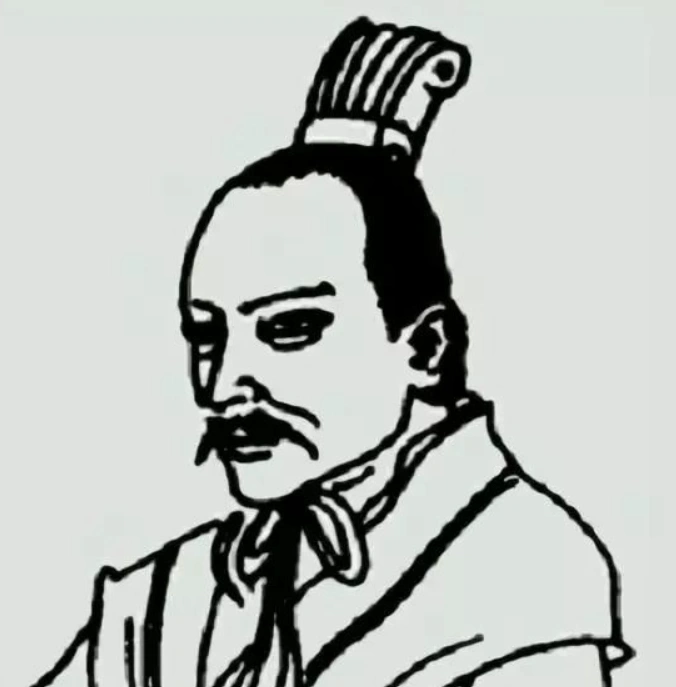
In the last decade of his life Zhang Jun built a walled enclosure south of his capital with five halls inside it. The central hall was painted in five colours and trimmed with gold and jade. The other four faced the cardinal points and were furnished in the colour of their direction: blue for spring, red for summer, white for autumn, black for winter. He moved from one to the next as the year turned, and the officials on duty moved with him. The arrangement was a statement about order, and like most statements about order it was also a timetable. Toward the end, the biography says, he stopped keeping to it and stayed wherever he happened to be.
He ruled the province of Liang from 324 to 346 and never took the title of emperor, or king, or heavenly king. What he held at the start was a commission from a fallen court and what he held at the end was a dukedom from a dynasty he could not reach. In between he did the things that emperors do. He took grain in tax and argued about how to release it in famine. He appointed governors to provinces he had carved out himself. He founded an academy with a master of the national youths, commissioned a history of his own state in fifty scrolls, received envoys from the oases beyond the desert, and turned the far western end of the corridor into a commandery with counties and an administrator. He wrote to the court at Jiankang and kept its era name on his documents long after the emperor who had proclaimed that era was dead. What he would not do was take the word. In the usual tables he is the first of the five Liangs; on his own seals the word was still a province, and the numbering came later.
1. The Nephew Who Was the Heir
His father, Zhang Shi, was killed in 320 by men who had been admitted to his household. The province passed to his father's younger brother Zhang Mao, who held it for four years, bought peace from Liu Yao with the title of king of Liang, and died in 324. The succession had been arranged in advance: Zhang Jun, then a boy, was named heir, so that the uncle held the present and the nephew held what came after.
The biography says that Zhang Jun was eighteen when he took charge. That is one of the few ages in the Liang material that the record states outright rather than leaving to be calculated, and it is worth keeping for that reason alone. Three separate indications put his birth in 307: the age at accession, the age of forty at his death, and a fragment of Cui Hong's lost history, quoted in the Taiping yulan, which opens with the words "born in the first year of Yongjia". No contemporary document gives the year, and the figure should be understood as the one the tradition settled on rather than as a certificate.
What happened at his accession is more revealing than the date. The Western Jin had fallen eight years earlier, but one of its envoys had never gone home. Shi Shu, a yellow-door attendant of Emperor Min, had been in Guzang since the fall of Chang'an and had been living there ever since, a piece of the old court stranded in the oasis. Zhang Jun's left and right chief clerks, Fan Yi and Ma Mo, went to him and suggested that he confer on the new ruler the titles that a legitimate court would have conferred: commissioner with plenary powers, grand commander, general-in-chief, governor of Liangzhou, acting protector of the Qiang, duke of Xiping. Shi Shu did as he was asked. Zhang Jun proclaimed an amnesty, established the four rate offices of a crown prince's guard, and repaired the Southern Palace.
The four rate offices are the tell. They were the establishment of an heir apparent, not of a provincial governor: four units of guards, each with its own command, organised on the model of the Jin crown prince's household. A governor does not need them. A man who intends his son to succeed him does. The same is true of the Southern Palace, which was repaired rather than built, as though an older royal residence had been waiting for occupants. In the first months of the reign, then, the forms of a court were assembled out of whatever was at hand: a stranded envoy for the commission, an old building for the palace, a crown prince's guard for a boy who was not yet a crown prince.
Liu Yao sent his own commission at almost the same time, making Zhang Jun governor of Liangzhou and king of Liang. The two commissions contradicted each other. One came from the last legitimate emperor of the Western Jin, by way of his servant; the other came from the man who had taken that emperor's capital and ended his dynasty. Zhang Jun accepted both. It was the first exercise of the technique that would define him: to hold several incompatible warrants at once and let each of them do the work it was good for. The Jin warrant made him a loyal subject. The Zhao warrant made him a king. Neither cost him a soldier.
The charge his uncle left him — that the family had been known for generations for its loyalty, and that he must keep the conduct of a subject and never let it slip — comes down as a deathbed speech, the kind of scene court histories liked to arrange, and whether or not the words were spoken they set the terms of the reign. Everything Zhang Jun did afterwards can be read as an argument with that sentence. The Jinshu biography that carries most of this was put together in the seventh century from the court histories of the states it describes, and its speeches are the part to trust last.
Nothing in his early reputation suggested that he would win the argument. The same biography says that at ten he could compose, that he was handsome and talked well, that he was excessive in his pleasures, and that he used to go out at night in disguise through the wards of Guzang until the whole capital had picked up the habit. This is the portrait of a talented and undisciplined young man, and it is followed by the flat sentence that when he took charge he changed. The change is asserted rather than explained. What can be seen of it is a set of decisions that are consistent with one another: he kept the old era name, he took titles from whoever offered them, he built offices, and he never claimed the one thing that would have made all the others treasonable.
2. The Year That Was Not Changed
The era name he used was Jianxing. It belonged to Emperor Min of the Western Jin and had run from 313 to 317, which is to say that it had run its five years and had then ended with the fall of the dynasty; the man who had proclaimed it was dead within a year. In 324, when Zhang Jun took charge, the current era in Jiankang was Taining, and the current emperor was Ming. He inherited his father's count and did not change it; what was new was that the count now had to travel to Jiankang and back. He went on dating his documents by the era of an emperor who had been dead for six years.
In that first year a yellow dragon was reported at a spring in the territory, and the right chief clerk Fan Yi came to him with an argument. Jianxing, he said, was the era that a boy emperor had begun, and that emperor had come to a violent end; propriety required a change. The court was far away in the south and news was cut off; a change made now, on the strength of an auspicious beast, would mark the favour of heaven. It was a careful argument, and it was also an invitation. Zhang Jun refused it. The biography records the refusal and does not explain it.
His behaviour in the same season makes the refusal stranger. News of the death of Emperor Yuan reached Guzang, and Zhang Jun mourned him for three days with the full ceremony of a subject. So he would weep for the reigning house of Jin and would not count the years by its calendar. The two acts are not inconsistent if one sees what each was for. Mourning the emperor was a gesture that cost nothing and confirmed his standing as a loyal servant. Changing the calendar would have committed him to a relationship: either to the southern court, whose authority he could not verify and whose protection he did not need, or to a chronology of his own, which would have been a claim of sovereignty in the only form that could not be taken back. Keeping Jianxing allowed him to be loyal in general and independent in particular.
The date on his documents makes the position concrete. In 333 a Jin edict finally reached him, and he answered it with a letter in which he called himself a subject and then dated the letter, as the biography says, to the twenty-first year of Jianxing. The era had ended sixteen years earlier. The twenty-first year of a five-year era is not a mistake in arithmetic; it is a statement that the arithmetic of the south did not apply. The same habit appears in the paperwork of the frontier. A wooden slip recovered at Loulan, dated to the eighteenth year of Jianxing, records an issue of grain to a garrison; the men who wrote it were drawing rations in the name of an emperor none of them had ever seen. Documents from Turfan continue the same count for years afterwards.
There is a ghost in the tables. A few late chronologies give Zhang Jun an era of his own, Taiyuan, and one nineteenth-century reconstruction of Cui Hong's history enters a "first year of Taiyuan" against his accession. No document of the reign uses it. The biography records a direct proposal to change the era and a direct refusal, and the Zizhi tongjian, which is careful with dates, follows the refusal. The attribution seems to have grown from a single editorial line, and it has been repeated because tables are copied from tables. This article does not use it. The evidence of the documents and the evidence of the refusal point the same way: he had no era but the one he had inherited.
The inherited era outlived him. Former Liang went on counting Jianxing until its forty-ninth year, which is 361, when the court at Guzang finally adopted the current southern era. The only interruption was the brief reign of his son Zhang Zuo, who took the imperial title and with it an era of his own. For the whole of Zhang Jun's twenty-two years, then, the state dated itself by a name that belonged to a dead man, and the name worked. It told the oasis towns that nothing had changed, it told Jiankang that the west was still loyal, and it told anyone who cared to look that the man who kept the count was the only person in the region entitled to keep it.
3. Two Sets of Books
By the middle of the reign Zhang Jun was holding titles from three courts at once. From the ruins of the Western Jin, by the hand of Shi Shu, he had the commission of a loyal governor. From Liu Yao he had the title of king of Liang. From Shi Le he would soon have the titles of general of the west and governor of Liangzhou, with the nine bestowals attached. He held them all, and he obeyed none of the men who had given them.
The Later Zhao file is the most instructive. In 330, after Liu Yao's fall, Shi Le sent envoys offering the western titles and the nine bestowals. Zhang Jun refused them and detained the envoy, Meng Yi, at Guzang. Then a Xiongnu chief who had rebelled against Later Zhao was defeated and fled to Liangzhou, and Zhang Jun began to calculate the cost of giving Shi Le a pretext. He released Meng Yi, sent his chief clerk Ma Shen to Later Zhao with tribute and a declaration of submission, and kept the Jin titles in his own chancery. The submission was real enough to be recorded and cheap enough to be reversed. Ten years later he sent Ma Shen again, and this time the letter was curt enough that the envoy nearly did not come home. He did; the titles were never used again.
The pattern repeated with the south, only more slowly. A Jin patent of 333 reached him by a merchant's road, and the confirmation of 334 added the general-in-chief's rank and command over the western provinces' soldiery; after that, the biography says, envoys went back and forth every year. The titles were real and the road was not. A commission that took years to arrive, carried by a false merchant, could not govern anything. What it could do was testify that there was a court somewhere that still recognised him, and that was worth more than an army.
The titles were not the whole of it. In 332 his staff came to him with a larger proposal. They wanted him to take the title of king of Liang, to hold Qin and Liang provinces together, and to establish the full complement of dukes and ministers on the precedent of Cao Cao and Sima Zhao. The proposal was explicit about the precedent: both of those men had held power without the name until the name was ready. Zhang Jun refused in terms that were meant to be remembered. This, he said, is not what a subject may say; anyone who says it again will not be pardoned. The biography adds a sentence that undoes the refusal: within the territory, everyone called him king anyway.
That sentence is the key to the reign. He would not take the title, and he would not stop anyone from using it. The refusal was for the record; the usage was for the street. A man who wanted the substance and not the name had to be able to point to a moment when he had refused the name, and he also had to be able to let the substance accumulate without interruption. The refusal of 332 and the usage that surrounded it were two halves of the same policy.
The offices tell the same story more precisely. By the middle of the reign, according to the biography, he was dancing the six rows, setting up the panther tail, and modelling his bureaus on a king's, with slightly different names. The six rows of dancers were a royal prerogative, eight being the emperor's and six a king's. The panther tail was a standard carried before a ruler. The offices were the court's offices with a character changed here and there, the way a private house may be built on the plan of a temple so long as the altar is left out. None of this was secret. It was done in Guzang, in front of envoys, and it was reported in the biography without surprise. The only thing missing was the title, and the title was the one thing that could be revoked by a superior.
In 345 the gap closed further. The annal says that for the first time he established the hundred offices, all modelled on the court, with carriages and dress and banners exactly like a king's. The Zizhi tongjian adds that in the same year he called himself commander-in-chief, general-in-chief, acting king of Liang, supervising the three provinces. The word "acting" is doing a great deal of work in that sentence. An acting king is a king who is not one, a formula that allows a man to exercise the authority while leaving the question of rank open. It is the exact verbal equivalent of the slightly different office names.
The two sources can be read against each other. The biography says he refused the kingship when his staff offered it. The comprehensive mirror says that thirteen years later he was calling himself acting king. Both may be true. What he refused in 332 was a title conferred by his own officials, which would have been a usurpation with a ceremony attached. What he accepted in 345 was an acting form of the same title, which could be described as a temporary expedient. The distinction is thin, and he knew it was thin. It was enough.
There was even a seal. A jade seal was found in the river, bearing eight characters that translate roughly as "hold the ten thousand states, establish the limitless". A seal with that inscription is not a provincial object. It was reported among the omens of the western campaigns and recorded without comment. He did not use it to proclaim a dynasty. He put it among the treasures and went on dating his letters by another man's era.
A court, in the end, is not a title but a payroll. It is a set of men who are paid to do particular things in a particular order, and a set of forms that tell strangers what to expect when they arrive. By 345 Zhang Jun had the payroll, the forms, the dancers, the banners, the palace, the academy and the history. He had everything except the word, and the word was the only part of the machine that could be used against him.
4. The Price of Grain
No schedule of taxes from his reign survives. What survives is a single argument about grain, and it is more revealing than a schedule would be. In a year of famine the price of grain rose, and the market commissioner, Tan Xiang, proposed that the state open its granaries and lend grain to the poor, to be repaid at harvest at three times the amount lent. The proposal was presented as relief. It was in fact a loan at a rate that would have transferred a large part of the next harvest from the poor to the treasury, and it would have done so under the cover of charity.
The clerk Yin Ju objected, and his objection is one of the few pieces of economic reasoning that the Liang material preserves. He cited two ancient cases: Ximen Bao, who governed Ye and stored grain in the hands of the people, and Jie Bian, who governed a border town and counted a threefold return, and whom Marquis Wen of Wei judged to be at fault precisely because of it. The point was that a granary which lends at threefold is not a granary but a merchant, and a government that behaves like a merchant in a famine will be remembered as one. Zhang Jun accepted the argument and dropped the proposal.
The episode is small, but it fixes the shape of his fiscal thinking. He was willing to use the granary; he was not willing to turn it into a lender. The distinction matters in a state without a tax code, where revenue is collected by officials who are also judges and where the difference between a tax and an exaction is often the character of the man who collects it. The biography's summary of the middle reign is that the laws were clear and the state was rich, which is the kind of phrase a court history uses when it does not want to give figures.
What can be said with more confidence is that he treated the land as a resource to be moved. In 326, fearing Liu Yao, he sent troops to Longxi and Nan'an and moved some two thousand households from the two commanderies to Guzang. The measure emptied a frontier district and filled the capital region. It was a strategic retreat carried out in the form of a resettlement, and it had the side effect of concentrating taxpayers where they could be watched. The same instinct appears in the way he handled the western conquests: the point of a commandery was not its flag but its register of households.
He also kept the ritual that made agriculture a public act. In 324, the year of his accession, he ploughed the sacred field in person, which is a thing kings do and governors do not. The gesture was cheap, and the annal records it as a fixed point of the year, like the sacrifice at the winter solstice. In a state that lived on grain from irrigated oases, the ruler's ploughing was a promise about the water and the calendar.
The law was the other half of the same problem. The biography says that he proposed to make punishments severe and that the military clerk Huang Bin objected. The objection was not that severity was wrong but that severity which does not bind the great is worse than leniency, because it teaches that the law is a tool for the weak. Zhang Jun rose from his seat, praised him, and made him governor of Dunhuang on the spot. The promotion is the interesting part: a ruler who wanted harsh law rewarded the man who told him that law must begin with his own household, and he did it in front of the court.
He could also be merciful when mercy was useful. When Li Bo attacked the rebellious colonel Zhao Zhen and was beaten, the court wanted him executed for proposing the campaign. Zhang Jun refused, with a comparison that every official would have recognised: the Han emperor Wu's execution of Wang Hui had not restored the campaign that Wang Hui had lost, while Duke Mu of Qin's pardon of Meng Ming had given him the victory later. Li Bo kept his post and his life. The pardon was a lesson in the value of retaining men who have failed, and it was remembered as such.
The coinage is a case where the record refuses to help. The coinage had been restored in his grandfather Zhang Gui's time, when the province went back to a five-zhu piece and the merchants of the oasis towns took it; the coins that numismatists assign to the Liang are not securely tied to any one ruler, and there is no notice of a new issue under Zhang Jun. What can be said is that the state he inherited had a currency and that he did not debase it, which in the fourth century was an achievement. The rest is inference, and the article leaves it there.
5. A School and a History
In 339 he founded the two institutions that a court needs if it intends to last. The first was the biyong, the circular academy surrounded by water where the ruler lectured on the classics and performed the rites of the elders; the second was the bright hall, the hall of audience and sacrifice in which the calendar and the ranks were displayed. He appointed the right chief clerk Ren Chu to the office of libationer of the national academy, which is the title of the head of the imperial school, and he ordered that the rites be performed there.
In the same year he ordered a history. The work was done by Suo Sui of Dunhuang, a poor scholar who had come up through the local recommendations, and the materials were collected by Bian Liu of the western bureau, who was told to gather the inner and outer business of the state and hand it over. The result was the Liang chunqiu, the Spring and Autumn of Liang, in fifty scrolls. Suo Sui was made marquis of Pingleting for it. The book is lost; what survives are fragments quoted by later compilations, enough to show that it was organised as an annalistic history of the ruling house.
A state that commissions its own history has stopped thinking of itself as a province. A province has archives; a dynasty has a history. The difference is not literary. An archive exists so that things can be taxed or litigated. A history exists so that they can be judged, and it arranges the record around a ruling house whose succession it treats as the spine of the years. By paying a scholar to write fifty scrolls about the Zhang family, Zhang Jun was buying an account of the past in which the Zhang family was the subject. He was also, incidentally, giving later writers most of the material they would use to describe him.
The history and the school belonged together. The academy produced officials who knew the classics; the history produced a past that those officials could serve. The ritual produced the calendar that tied the two together. None of the three required a royal title, and all three were the ordinary equipment of a court. This is the pattern of the reign in its most legible form: take an institution that belongs to a dynasty, staff it, fund it, and leave the title in the drawer.
He was also attentive to the sacred geography of the province. In 345 the governor of Jiuquan, Ma Ji, sent him a proposal about the mountains south of Jiuquan. Those mountains, he said, were the body of Kunlun, the mountain of the Queen Mother of the West; the classical geographies placed Kunlun west of Linqiang, and the identification was therefore secure. A shrine should be built there, for the sake of the realm. Zhang Jun agreed, and the shrine was built. The argument is a fine example of local scholarship serving a political purpose: by identifying a range in his own territory with the mountain of the immortals, a governor of Liang acquired a piece of the cosmic map.
The academy, the history, the shrine and the palace were all built within a decade of one another, and they were all built in the same style, which is to say the style of a capital. Guzang had been a provincial town with a garrison and a market. By the end of the reign it had a palace whose halls changed colour with the seasons, a school with a libationer, a shrine to the Queen Mother of the West, and a history of its own dynasty. A traveller arriving from the east in 345 would have found a small court. He would not have found a throne, and he might have concluded that the difference did not matter much.
It did matter, but not in the way that a traveller would have thought. The institutions were real, and they were still standing when he was gone. What did not outlive him was the arrangement that held them together, which depended on a single person's willingness to keep the title in the drawer while using everything that went with it.
6. The Road West
The corridor runs northwest from the Yellow River to Dunhuang, with the Qilian range on the south and the lower hills on the north, and beyond Dunhuang the paved road gives out and the desert begins. Beyond the desert lies the Turpan basin, a ring of oases around a salt depression, and beyond that the northern and southern roads to the Tarim. The Han had held the westernmost oasis at Gaochang and had stationed there a colonel of the Wu and Ji, an officer of the central army with an agricultural colony under him. The office had survived the Han and the Wei and the Western Jin. It was a military command, not a civil jurisdiction: the colonel commanded soldiers, supervised farming, and answered to the court that had appointed him.
In the 320s the holder of the office was Zhao Zhen, and he refused to accept Zhang Jun's orders. The officer in charge of the western regions, Li Bo, proposed to attack him and was defeated. The court at Guzang wanted Li Bo executed for having proposed the campaign; Zhang Jun refused, with the comparison to Wang Hui and Meng Ming, and let him keep his post. Then he sent a larger force. Zhao Zhen was taken, and his land was made into a commandery.
The date is 327. The biography places the capture immediately after the disastrous campaign of that year against Han Zhao, the state of Liu Yao, and a sixth-century geography quoted in the Chuxue ji is explicit: in the second year of Xianhe, which is 327, Gaochang commandery was established and Tiandi county was set up with it. Some modern summaries give 335 instead, but that is the year of Yang Xuan's campaign against Kucha and Shanshan, and the two events have been conflated. The commandery belongs to 327, and the man who took Zhao Zhen was Zhang Jun.
What changed was not the flag but the form of rule. A colonel commands men; an administrator governs households. A colony is supplied by the army it feeds; a commandery is assessed for grain, registered for labour, and administered by civil officers who answer to a province. What the record does preserve is the county names, and the Turfan documents of the following generations show the county divided into townships and wards with registers of households, which is the machinery of a settled administration rather than a camp. The men who had been rationed as soldiers became taxpayers and litigants. The oasis began to be governed as Wuwei was governed.
This is the thing that had not happened before. The Han had held the oasis with a colonel and a colony; the Wei and the Jin had done the same. Zhang Jun made it a commandery, with counties under it, and attached it to a province. The western end of the corridor, and the first oasis beyond it, had been a garrison of the central state since the first century before the common era. It now became a district of a regional state, with the same kind of magistrate, the same kind of register and the same kind of tax as the districts at home. The change is invisible in a chronicle and enormous in a register.
Once the commandery existed, the road could be used. In 335 he sent his general Yang Xuan across the desert against Kucha and Shanshan, and the biography's sentence is short: the western regions submitted. In 336 the king of Shanshan, Yuan Meng, sent his daughter to Guzang; she was called the beauty and housed in a separate gallery. Yanqi and Khotan sent tribute. The list of what came in those years includes blood-sweating horses, cloth that could be cleaned with fire, humped cattle, peacocks, an elephant, and two hundred other kinds of valuable things. An army that crosses a desert and a court that receives an elephant are doing the same thing in different registers: they are announcing that the distance has been mastered.
The most human papers from this frontier are the draft letters of Li Bo, the officer who had lost to Zhao Zhen. They were found at Loulan at the beginning of the twentieth century, and they are ordinary. One is addressed to the king of Yanqi and reports that a commissioner has come from the court to reassure the kingdoms and arrived at the sea-head on the second day of the month. Another is a second draft of the same letter. They ask after the king's health in the heat and mention envoys sent and expected. There is no grandeur in them at all, and that is their value: the western policy of the reign was carried out by men who wrote letters, worried about the post, and addressed a neighbouring king in the formulas of the Chinese chancery.
In 345 his army reduced Yanqi, and the annal credits the campaign to Zhang Jun in person. Whether he rode or sent a general, the sequence is clear. Within twenty years the state had moved from a colonel who would not obey orders to a commandery with counties, from a single garrison to a system of tribute missions that reached Kucha and Khotan, and from a frontier that was defended to a frontier that was administered.
The western policy is usually told as a list of conquests. It was really a change in the form of rule, and its model was not the camp but the county. He did not annex the desert. He annexed the administration of the desert's edge, and the desert's edge turned out to be enough.
7. Three Provinces
In 345 he divided what he ruled into three provinces. The core, eleven commanderies around Guzang, kept the name Liang and went to his son Zhang Chonghua as governor. The eastern gains, eight commanderies in the Longxi country that he had taken from Han Zhao and then defended against Later Zhao, became Hezhou and went to Zhang Guan. The west, three commanderies with Dunhuang and Gaochang among them, together with the three camps of the western command, became Shazhou and went to Yang Xuan. His own style was commander-in-chief, general-in-chief, acting king of Liang, and supervisor of the three provinces.
The division is undated in the biography and the Zizhi tongjian places it in 345; the year matters less than the shape. A governor administers the province he is given. He does not make two more provinces out of it, appoint his son to one and his officers to the others, and then describe himself as supervising all three. That is an act of sovereignty, and it is the clearest single act of the reign. The fact that it was done quietly, in the same year as the establishment of the hundred offices and the campaign against Yanqi, is characteristic. There was no ceremony to mark it, because a ceremony would have required a title.
The three provinces also describe the three directions of the state. Hezhou faced east, toward the Qin and Long country and the Zhao frontier; it was the military province, the one that had to fight. Liangzhou was the center, the old province, the one that held the capital and the granaries. Shazhou faced west, toward the desert and the trade, and it was the province that had been created by the western policy. A state with three frontiers had become a state with three administrations, each with its own governor and its own establishment, and all three governors answering to one man in Guzang.
The offices that went with the division were the ones he had been assembling for twenty years. There were libationers, palace gentlemen, grandees, household retainers and heralds, all with the names of the court and small alterations in their titles. There were the four rate offices of the heir's guard, established at his accession and presumably maintained since. There was a master of the national youths, appointed in 339. There were the governors of the three provinces, the administrators of the eleven, eight and three commanderies, the magistrates of the counties beneath them, and the ward heads beneath the magistrates. The pyramid was complete, and at its apex was a man who described himself as acting.
The appointment of Zhang Chonghua to Liangzhou in the same year was the other half of the act. The heir had been designated in 332; in 339 he had been given charge of the province's affairs; in 345 he was its governor. Each step was a rehearsal for the succession, and each step was taken while the old man was still alive to watch it. The arrangement was careful, and it was also a wager. A son placed at the head of the core province is a successor; a son placed there too early is a rival. Zhang Jun kept the wager for a year and then died, and the arrangement passed to his son without a crisis.
The crisis came later, and it came out of the same structure. When the provinces are satrapies, and the heir holds the one with the capital in it, the question of who supervises the three becomes the only question that matters. He had answered it by being alive. His successors would have to answer it by other means.
8. Letters to the South
The road from Guzang to Jiankang ran either through the Han valley and the Qin mountains or through the Sichuan basin, and for most of the reign both were closed. The first route was held by Han Zhao and then by Later Zhao; the second was held by Cheng Han. A letter from the west to the south had to pass through a hostile state or go around one, and the men who carried it were often stopped. This is the material fact behind the elaborate fiction of loyalty, and it explains why the fiction was so valuable: a connection that is almost impossible to maintain is a connection that cannot be tested.
The first attempt was made before Zhang Jun's accession and took years to complete. Geng Fang, a clerk of Dunhuang who had gone to Chang'an on provincial business, was caught there when the city fell, fled south to Hanzhong, crossed to the Yangtze, and reached Jiankang in 319. He petitioned the court repeatedly: the province did not know that the dynasty had been restored, an embassy should be sent, and he offered to guide it. The court was occupied with its own troubles and did nothing for some years. When it finally acted, it made him a censor, gave Zhang Jun the rank of general of the west, and attached twelve men from the western counties to him. He got as far as Liangzhou and could go no further; he waited there seven years, and then sent the edict on with one of the twelve, Jia Ling, who travelled as a merchant and reached Guzang in 333.
Zhang Jun's response was exactly calibrated. He accepted the edict, sent Wang Feng back to give thanks, wrote back as a subject, and dated the letter to the twenty-first year of Jianxing. In 334 the southern court sent Geng Fang and Wang Feng back with seals and ribbons, conferring on him the general-in-chief's title and command over the military affairs of Shaanxi, Yong, Qin and Liang. After that the biography says that envoys went every year. It does not say how many arrived.
The most elaborate mission went the other way, through the enemy. Zhang Jun first sent Fu Ying to Cheng Han to ask for passage for a memorial to the court; Li Xiong refused. He then sent Zhang Chun, his chief clerk, with an offer to submit to Cheng Han as a vassal, the submission being a device to obtain the passage. Li Xiong was pleased and agreed, then changed his mind and arranged for Zhang Chun to be drowned in the gorges on his way out. A man of Shu, Qiao Zan, warned him. What follows in the biography is a set piece, and it should be read as one: the record has Zhang Chun say that if he is to be killed he should be killed in the marketplace, with the announcement that Liangzhou had not forgotten the old virtue and had sent an envoy to the house of Jin, and that the envoy had been murdered for it; a quiet drowning would give Cheng Han neither credit nor publicity. Li Xiong, in the biography's version, was startled and ashamed.
The same scene contains the question that the whole reign was an answer to. Li Xiong asked why the ruler in Guzang, with a strong province and a good army, did not make himself emperor and enjoy himself in his own corner of the world. Zhang Chun answered that his master's grandfather and father had served Jin with loyalty, that the shame of the dynasty had not been wiped out, and that he slept with his spear ready. Li Xiong, who had himself taken the imperial title, was reduced to saying that his own ancestors had been Jin subjects too. He let Zhang Chun go, and Zhang Chun reached Jiankang and delivered his message. The scene is a court history's invention in its details and a precise statement of the reign's public doctrine in its content.
In 337 the argument was put in writing. The military clerk Qu Hu carried a memorial to the southern court which is the fullest statement of the relationship that survives. Shi Le and Li Xiong were dead, it said, and Shi Hu and Li Qi had taken their places; the old men who remembered the Western Jin were dying and the young had never known it; the province was ready to move if the court would move. It asked the emperor to order Xi Jian, the minister of works, and Yu Liang, commanding the western army, to bring flotillas up the Yangtze and the Han so that the two fronts would join. Nothing came of it. The southern court had its own frontier to worry about, and a campaign in the northwest was beyond its means.
The memorial was remembered as literature. The Wenxin diaolong, writing two centuries later about the art of the memorial, names a self-composed memorial by Zhang Jun as one of the fine examples of the form, along with one by Liu Kun. It is a strange fate for a request for military help: to be admired for its prose by a critic who lived after the state it was meant to save had fallen. But it is also the right fate. The letters to the south were not instruments of policy. They were the record of a relationship that existed because both sides needed it to exist, and their prose was the substance.
The relationship can be stated in a sentence. He needed Jiankang to be a court that had not forgotten him; Jiankang needed him to be a province that had not forgotten it. Neither could verify the other, and neither could afford to stop believing. The envoys who walked through the mountains with a letter in their sleeves were carrying the belief from one end of the line to the other, and the fact that most of them never arrived was part of what made it credible.
9. The Border, the Grave, and the Heirs
The one great defeat of the reign came in 327, and it came from the east. Zhang Jun sent four columns against the commanderies of Qinzhou, and Liu Yao's general Liu Yin met them at Didao. The Liang commander, Han Pu, halted at Wogan Ridge and refused to fight, on the ground that the stars were unfavourable and that Liu Yin could not hold the field while Han Zhao was at war with Later Zhao. His subordinate Xin Yan wanted to close at once. They waited seventy days. When the grain ran out, Xin Yan was sent back to Jincheng with a convoy, and Liu Yin took three thousand cavalry across the ridge and destroyed the convoy; the army at the ridge then broke. The biography gives twenty thousand dead, which is a victor's figure and should be read as one. Former Liang lost the country south of the Yellow River, and two of its frontier commanders went over to Han Zhao.
Two of his officers bore the name Xin Yan, and the coincidence is one of the small traps of the reign: one commanded at Wogan Ridge, the other held Fuhan. The man at Fuhan had submitted to Zhang Jun a few years earlier, after Zhang Jun declined to attack him in a famine year on the advice of a clerk who cited older examples. He now went over to Han Zhao with the governor Zhang Lang. The mercy of the famine year had purchased a commander for a few seasons.
The recovery came quickly. Liu Yao was taken by Shi Le in 329, and Zhang Jun moved east into the vacuum, recovering the land as far as Didao and establishing five garrison commands along the new line. The garrisons were the frontier of a state that had learned that a border of counties was expensive and a border of forts was enough. In the following year he fixed a boundary with Shi Le, and for the rest of the reign the eastern frontier was quiet enough to be managed by envoys and letters.
With Later Zhao there was no general battle in his reign. The two states had fixed a border in 330; the envoys went back and forth; the letter of 340 was arrogant and the envoy was nearly killed; in 344 a Zhao column under Wang Zhuo fought Zhang Guan, the commander of the Ningrong garrison, at Sanjiao and was beaten. That was the extent of the land war. The general invasion came in the year he died, and it belongs to his son's reign and to another article. What can be said here is that the border he left was the one his son had to defend, and that it was defended by the officers he had posted.
The northern frontier was managed differently. In 330 he reviewed his troops at Xinxiang, hunted in the northern wilds, and on the same excursion broke a band the record calls the Kemo. Later writers take them for a Xianbei splinter; the annal does not say so, and it does not record their grievance or their language. It records only that they were broken. This is how the steppe frontier appears in the Liang material: as a series of expeditions, each with a result, and no account of the people on the other side. The silence is the policy. A state that governed the oases with registers governed the grasslands with cavalry, and it did not pretend that the two were the same.
He died in the summer of 346, in the fifth month by one count and the sixth by another, at the Zhengde Hall, aged forty. The southern court, hearing of it, sent a patent making him grand marshal and gave him the posthumous name Zhongcheng, attached to the dukedom of Xiping that he had held since his accession. He was buried at Daling. Seven years later his son Zhang Zuo, having taken the imperial title, raised him to king Wen with the temple name Shizu. The two posthumous names measure the distance between the two positions: a duke's name from the south, a king's name from his own son, and neither of them his to choose.
The succession had been arranged in 332, when he named Zhang Chonghua, his second son, as heir. Zhang Zuo, the eldest, was passed over. The choice was defensible: the boy had been raised for it, and the designation had been urged on him by his own general Song Ji with an argument about the danger of a vacant succession. It was also the decision that made the next generation a war. When a house holds the provinces, the army and the history, and when the eldest son has been passed over in favour of a younger, the question of the succession is not settled by the old man's death. It is only postponed.
That is the shape of the reign, and it is why the reign is both the apex and the origin. He concentrated in the household and its clients every office that mattered: the province that held the capital went to his son, the two new provinces to men he had made, the guard was established at his accession, and the academy and the history were staffed by men who owed their places to him. A state so arranged is strong while the arranger lives and fragile when he dies, because there is no office that can arbitrate between the claimants and no army that answers to an office rather than to a man. The civil wars that followed his death were not a failure of the arrangement. They were the arrangement, working itself out.
He had built the palace for a court that would last. The blue hall was for spring, the red for summer, the white for autumn, the black for winter, and the ruler was supposed to move between them as the year turned, so that the order of the building and the order of the seasons would be seen to agree. In his last years, the biography says, he stopped moving and stayed where he was comfortable. A court arranged like a calendar had become a place where one man slept. The institutions outlasted the arrangement, and so did the quarrels it had been built to prevent.