Home / Emperors / Sixteen Kingdoms
Duke Cheng of Former Liang
前凉成公
Zhang Mao, 277 – 324 · ruler of Former Liang
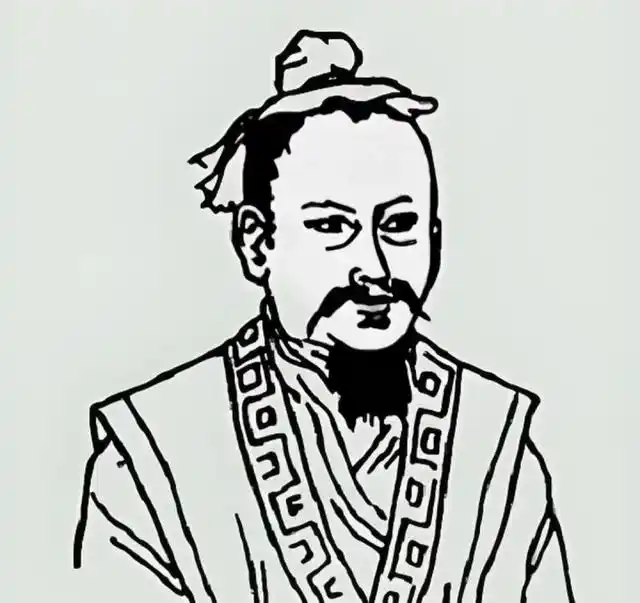
In the sixth month of 320 the inspector of Liang province was killed in his own quarters by men of his own guard, and the province had a few days in which to decide who held it. The dead man, Zhang Shi, left a son who was still a boy. He also left a younger brother, Zhang Mao, one of Zhang Gui's sons, who held the western generalship and the nominal inspectorate of Qin, and who had spent his adult life inside the provincial administration without ever being given its head. The officers of the province offered the brother three offices at once: grand commander, grand commandant, shepherd of Liang. He declined the first two and kept the third, with the tally of a commander and the western generalship attached. The biography adds that he then had his brother's son invested with the family's Jin dukedom and sent him to govern Wuwei.
He held the province for four years. What he left behind are two acts that face opposite ways. In the eighth month of 323 he accepted a royal title from the emperor of Han Zhao, the house that had called its state Han and renamed it Zhao, whose army had just come down to the Yellow River. He was the first ruler of Liang to take his rank from an emperor who was not a Jin emperor, and the first of the family to be called king of Liang. In the fifth month of 324, dying, he gave the province back to his brother's son. One act turned Liang into something that could be conferred on a man from outside; the other refused to let it become something a man could keep. Both were deliberate, and each looks like the opposite of what it was.
1. The brother's chair
His first act was a purge. The assassins were known, and he executed them together with several hundred of their associates, a figure that comes from the biography and carries the usual inflation of a new ruler's first justice. It was quick, and it was not the important part.
The important part was the province's gentry. Liang had been governed for twenty years through the cooperation of a handful of great households, and the household that mattered most was that of Jia Mo, the brother of Zhang Shi's wife, whose influence the biography says tilted the whole west. A rhyme had been going about the streets: hand, do not touch the head; plot for Liangzhou. The biography says Zhang Mao took it as naming Jia Mo and had him killed on the strength of a summons. The identification may have been a pretext. The effect did not depend on the truth of it. The most powerful family in the province had been removed by a man who had been in office for a year, and the other families understood what it meant: they were no longer partners in the government but subjects of it. The biography's phrase is that the powerful houses hid their traces.
That was the work of 320 and 321. In 322 he moved east. A column under Han Pu took the commanderies of Longxi and Nan'an, and the province of Qin was organised there with an inspector of its own — an office that had been a title in his pocket since before he inherited, and that now had a territory under it. The move was small by the scale of the age and large by the scale of the ground: it pushed the family's frontier out of the mountains and onto the road from Chang'an. It also invited the answer that came the following year.
2. The terrace
In the second month of 321, while the great houses were still quiet, he began a terrace at Guzang. The biography gives its size and nothing else: a circuit of more than eighty wall-sections and a base nine ren high, which is something like fifteen metres if the ren is taken at its usual seven or eight chi. A structure of that size inside a provincial capital was not a garden ornament. It was a raised platform with a parapet, useful for looking over a wall, for signalling along the road, and for the particular kind of display that a governor of a frontier province was not supposed to indulge in.
The objection came at night, and in the voice of his father. A man named Yan Zeng knocked at the headquarters gate and called out that Duke Wu had sent him, and asked why the people were being worn out to build a terrace. Duke Wu was Zhang Gui, seven years dead, and the claim turned a complaint about labour into an ancestral command. The magistrate of Guzang, Xin Yan, called the man a fraud and asked leave to kill him. Zhang Mao refused. He did not deny that he had tired the people, he said; but the man came with his father's command, and how was that fraud? He stopped the work.
A second objection followed from the staff. Ma Fang, the registrar of the grand treasury, said that the times were not settled, that the only course was plain government, that no labour should go into ornament, and that every project of recent years had been more extravagant than the one before it. Zhang Mao said, twice, that he had been wrong, and the work stayed stopped.
Two objections in one season, one in the name of the ancestors and one in the name of frugality; he yielded to both. This is the point at which a reader expects the reign to be a short and modest one. It was not. The terrace was taken up again two years later, in the year of the submission, and finished over a third objection, and by then he had an answer.
3. The patent
In the eighth month of 323 the Han Zhao army came west. Columns struck at garrisons in the south of the province; the posts he kept along the Yellow River abandoned their ground without a fight; and Guzang began to receive the news that an imperial force was along the river in numbers the Han Zhao record makes no attempt to play down. That record's figure is 285,000, which is a claim about the size of an empire rather than a count of men.
What followed was a debate inside the city, and it is the best-documented hour of the reign. The staff officer Ma Ji urged Zhang Mao to go out himself. The chief administrator, Fan Yi, called Ma Ji a man of a ruined state who had no business meddling in great affairs, and asked for his head. Ma Ji answered that the Zhangs, father and son, had wanted for years to destroy Liu Yao on the court's behalf, that the whole west was watching what the present head of the family would do, and that a man could not stay behind his wall merely because he could not win. Zhang Mao said that Ma Ji had it, and moved out to Shitou, a forward post outside the city.
He then gave the staff officer Chen Zhen 1,800 horse and foot and sent him south to relieve the garrison at Jicheng. Chen Zhen recruited among the Di and the Qiang, attacked, and recovered Nan'an. That is the family's account of the autumn, and it is the only account in which the autumn ends with a victory.
The other account is in the record of the conqueror. There, Zhang Mao is frightened by the size of the army, sends an envoy to submit, and offers horses, cattle, sheep and treasure in quantities the text declines to count. Liu Yao receives the submission and makes him, in the short form of the Han Zhao record, palace attendant, shepherd of Liang and king of Liang. The fuller form in Zizhi tongjian, the eleventh-century chronicle, adds the military command of the western marches, the title of grand preceptor, and the nine gifts.
Both accounts can be true, and probably are. A counter-attack that recovered a commandery is exactly what a provincial army could do; a letter of submission is exactly what a provincial government had to send when the state on the other side of the mountains had already swallowed Guanzhong. The family's papers kept the battle. The conqueror's papers kept the letter. The compiler of the chronicle, working in the eleventh century, had both and chose the letter, because the letter is what changed the map.
The change was this. Until 323 the word Liang on a document was the name of a province and of an office in the Jin gift. The patent of that autumn made it a title: something a sovereign could confer on a man, and something that could pass to his heir. In Guzang the state was Liang and the reign years were still a Jin emperor's; the kingship Liu Yao offered in 323 was a rank named after a province, which is a different thing from a realm.
His brother had made the reign title a statement. Zhang Mao left the title where it was and made his statement with a patent instead. That is the whole of the difference between the two men.
4. The wall
The submission was followed immediately by building. He enlarged the wall of Guzang and took the terrace up again. His father had enlarged the same wall a generation earlier; the son's work was the second enlargement in a generation, and it was done in the year he became a vassal.
Wu Shao, the deputy, objected in terms that deserve to be set out, because they are the strongest case against the whole programme. The wall and the terrace, he said, were being built to answer a past disaster; but if a ruler's kindness had not reached the men around him, a high terrace bought nothing. It would make his own officials doubt him, show weakness to the enemy, and invite an attack. He asked for the work to be stopped and the people rested.
Zhang Mao's answer is the one place in the record where he explains himself. His brother, he said, had been killed by an assassin who got close to him. Were there no loyal men who would have died for him? There were; the blow came without warning, and courage had nowhere to stand. A prince lays out his defences, a brave man shuts his gates, and this is the old way. The state was not at peace, and one could not judge a man in a hard season by the standards of a calm one. He finished the work.
The argument is not a tyrant's excuse. Wu Shao's case assumes a government whose legitimacy is already settled, so that stone adds nothing to consent. Zhang Mao's case is that his legitimacy was not settled, and that the stone was part of settling it. He had reason to know. He had taken the province by an arrangement among officials, kept it by killing the most powerful family in it, and had just bought its survival with a letter to a foreign emperor. A city with a wall around it and a platform at its middle was the physical form of what the letter had conceded: that Liang was a political body with a ruler, a rank and a capital.
5. The heir
In the fifth month of 324 he fell ill. The account of the deathbed is short. He took his nephew's hand and wept, and told him that the family had been known for filial conduct and loyalty since the beginning of the Han, that the court had been driven south and the world was in ruins, and that the one thing not to be lost was the duty of a minister. Then he gave an order about his burial: a white cap, no court dress. He died the same day, at forty-eight, and received the private posthumous name Cheng.
The order about the cap is the strangest and most revealing thing he left. His own justification, in the biography's wording, was that his office had not come from a royal commission and his position from a private agreement: he had held the province to keep it alive, not because it was his. This from a man who had accepted a patent, a royal title and the nine gifts from Liu Yao three years before. Either he did not count the Han Zhao patent as a commission, or he counted it and was ashamed of it. The sentence does not say which, and the ambiguity may be the most honest thing in the biography.
He had no son. That is stated plainly, and it should be stated plainly here, because it changes the meaning of what he did next. The province passed to Zhang Jun, who was eighteen, and who had been marked for it since 320, when his uncle sent him to govern Wuwei. A man with no son does not pay a price when he hands power to his brother's child. But he can pay in other coin: he had four years in which to arrange a different succession — a collateral, an adopted heir, a marriage that would have put his own line in the room — and he arranged none of it. He had also just acquired a royal title, the first the family had ever held. He gave that title, and the province with it, to his brother's son.
The scene at the funeral makes the position clear. The stranded Jin envoy invested the nephew with the Jin titles, and Liu Yao's man arrived a week later with a rival set. Liu Yao sent an envoy with the title of grand steward for the dead man and the kingship of Liang for the living. Two sovereigns, one city, one coffin with a white cap in it.
What he had done in four years was to move the family from an office that the Jin court could give and take to a principality that two courts now competed to confirm. He had not intended that, or not in that form. He had intended to keep the province alive and to hand it on undiminished. The two intentions were incompatible, and the incompatibility is the history of the family's next fifty years. A seat that had passed sideways to a brother and then back to a nephew had been shown to pass by arrangement. Arrangements hold while the men making them agree. The generation after his would show what happened when they stopped.
6. The record
The biography in Jin shu 86 is barely a thousand characters long, was put together in the seventh century, and reads like a family's account of itself. It contains the refusal of the grand titles, the purge, Jia Mo and the rhyme, the terrace and its three remonstrances, the invasion, Chen Zhen's counter-attack, the wall, and the deathbed. It contains no edict, no appointment list, no tax measure, no lawsuit, no dated administrative act of any kind. For four years of government that is very little, and the thinness is not an accident of transmission.
Part of the reason is institutional. The history gives the houses that took imperial title a record of their own, ordered year by year, in which campaigns, omens and promotions are set down as they happened. The Zhangs never took the title, so they have no such record; they sit in the chapter of provincial biographies, where a family is described through a handful of exemplary scenes. A house with a record of its own leaves a calendar. A house with a biography leaves a portrait, and a portrait is made by selection.
Part of the reason is the selection itself. The submission of 323 is not in Zhang Mao's biography at all. It is in the record of Liu Yao, where it belongs to the conqueror's account of his own success. A family that had spent twenty years telling the southern court that it was holding the frontier for Jin had an obvious interest in not putting the letter at the centre of its own story. Whoever kept the family's papers chose the battle and left out the letter; the men who assembled Jin shu, working from what they had, printed the family's version in the biography and the empire's version in the record of the empire.
The biography is also careless in small things. It dates his death a year late, to the year after the one the chronicle gives and the one his successor's age requires. It gives his age at death as forty-eight and never mentions a birth year; the year 277 in the heading above is calculated from that age and the corrected date, and it is the only kind of birth date this reign can have.
So the material ends where it ends. After the wall and the deathbed there is nothing: no description of the terrace when it was finished, no account of what the submission cost in the years that followed, no record of how the province was governed in the last months. What survives is a handful of scenes and a hat. That is not enough for a reign of the usual kind. It is enough for the thing that actually happened in those four years, which was not the government of a province but a change in what a province was.