Home / Emperors / Sixteen Kingdoms
Duke Wu of Former Liang
前凉武公
Zhang Gui, ? – 314 · founder of Former Liang
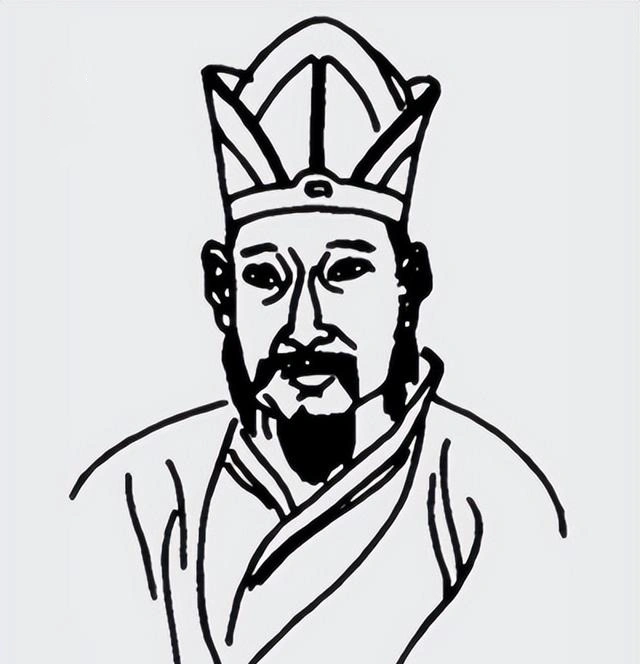
In the first weeks of 301 an official of the Jin court received the seals of inspector of Liang province and left the capital for the north-west. He was a classicist by training, a man of good family from the upper Jing valley, and he had spent twenty years in the kind of posts that teach a person how a government actually works: a staff appointment under a prince, a place in the palace guard, a secretaryship in the suite of a general on the western frontier. The province he was given had been failing for a generation. Its revenues were thin, its roads were raided, and it lay at the far end of a corridor that the court could reach only by sending an army or a letter, both of which took weeks.
He died in Guzang thirteen years later, in the summer of 314, still an inspector, still using the reign years of the Jin emperor in Chang'an, and having refused, one after another, almost every rank that the court tried to put on him. Out of that appointment grew a state that outlived the dynasty which had granted it by sixty years, and that is counted as the first of the five houses which took the name Liang. What made the arrangement durable was not an assertion of sovereignty but the avoidance of one. He governed a province that became a state without ever performing the act that makes a state: he did not take a reign title, he did not build an altar, he did not put a crown on his own head or a new name on his own coins. His authority rested on a paradox that his successors inherited along with the seals. The less he claimed, the more securely he held; and because he held in the emperor's name, every soldier who fought for him could be told that he was fighting for the dynasty rather than against it.
1. A scholar from Anding
The biography opens with a genealogy. Zhang Gui was a descendant, it says, of Zhang Er, who was made king of Changshan by Xiang Yu and ended as king of Zhao under the Han founder, dying in 202 BC, seventeen generations before. Claims of that depth are a formality of the period rather than a record, and the number seventeen should be read as a decoration on the family's respectability. What can be taken seriously is the sentence that follows it: the household had produced generations of men recommended to office for filial conduct and integrity, and it was known for its mastery of the Confucian canon. His father, Zhang Wen, held a post in the imperial larder. This was a family of the provincial gentry, well connected, well read, and not rich. That biography is the one the Tang commission of the seventh century wrote into Jin shu 86, where he is filed among provincial officials rather than among the houses that took the throne, a placement that is already an argument.
He was born in Wushi county in Anding commandery, in the valley of the Jing river where the uplands of eastern Gansu run into the southern edge of Ningxia. The landscape there is loess and dry hills, a country of fortified villages and horse roads, close enough to the steppe to have learned its habits and far enough from the capital to have kept its own. Anding produced soldiers and scholars in about equal numbers, and sometimes the same man.
His education was the ordinary one of his class, done unusually well. He studied with Huangfu Mi, the most famous recluse-scholar of the age, a man from the same commandery who had refused every office the court offered him and had written on medicine, history and the art of withdrawal. For a period the two of them lived together at Nüji mountain in Yiyang, south of the Yellow River, reading and arguing. Huangfu Mi's example left a mark that never quite washed out: the young man wanted office, but he wanted it to look like service.
The career itself was standard and, for a while, rapid. He entered at the fifth rank through the privilege of an uncle, in the early years of the Taishi period, and then came to the notice of Zhang Hua, the director of the imperial secretariat and the most influential literary politician of the reign. Zhang Hua talked with him about the meaning of the classics and about the faults of current policy, and was impressed enough to say that the evaluator of his home commandery had been suppressing a talent, and that Zhang Gui was the finest man of the second rank. That sentence, repeated, was worth more than a promotion. It brought him to the staff of Yang Yao, general of the guards; then a place as palace cadet; then cavalier attendant; then, in the 290s, army supervisor to a western command.
Two of the men who had made that career were dead before he left it. Yang Yao was executed in 291, in the massacre of the Yang clan that opened the long civil war. Zhang Hua was executed in 300, in the coup of the prince of Zhao. A man who had spent twenty years learning how offices work had also spent twenty years watching the holders of offices killed. The west began to look less like an exile and more like a place where the ordinary rules might still hold.
The occasion of his departure is worth stating precisely, because it is usually stated loosely. In 301 the War of the Eight Princes turned from a court quarrel into a war. The prince of Zhao had taken the throne from the emperor in the first month and would be killed for it within four months; the princes who destroyed him were already marching. It was in that interval, with the court incapable of looking beyond the next battle, that Zhang Gui asked for Liang province. The biography is explicit that the request was his: he wanted the post, and the senior ministers, glad to be rid of a difficult question, agreed that he was a man capable of holding the frontier. Within three years Zhang Fang, the general of the prince of Hejian, would sack Luoyang and carry the emperor west to Chang'an, and after that the court stopped thinking about the west altogether.
The same passage contains a scene that has been repeated ever since. Before asking, the biography says, he cast the yarrow stalks and got the hexagram Tai, peace, changing to Guan, and threw down the stalks and said, delighted: this is the omen of a hegemon. The line is too good to be true. It is the shape the story took afterwards, when the family needed an origin, and it is presented here as the biography presents it, with the note that a man who had just been praising the classics at Zhang Hua's table would not have said such a thing in public. What he actually did in 301 was more modest and more interesting: he took a provincial inspectorate with a military commission attached, and left before anyone could change his mind.
The commission was the colonelcy protecting the Qiang, and it mattered more than the inspectorate. An inspector collected taxes and reported on officials. A colonel protecting the Qiang commanded troops and dealt with tribes. The court had given him both in one hand, which meant that the man who was supposed to supervise the province was also the man who could fight for it. Nobody at court thought this was a great concession. The province was poor, the tribes were troublesome, and the post had changed hands repeatedly. It was a way of sending a competent man somewhere far away without giving him anything at the centre.
2. The province and the city
Liang province was the corridor. From the bend of the Yellow River above Jincheng it ran north-west for something like a thousand kilometres, a floor of gravel and oasis between two walls of mountain. On the south stood the Qilian range, high enough to hold snow through the summer and to feed, by meltwater, every river in the corridor. On the north stood the lower, drier chains that geographers lump together as the Northern Mountains, and beyond them the desert. The corridor is not a valley in the ordinary sense. It is a trough, and its water comes from one side only.
Three inland rivers run north out of the Qilian and die in the desert or in terminal lakes. Each of them makes a fan of irrigated ground where it reaches the floor of the corridor, and each fan became a city. That is the whole human geography of the region: water, a walled town, a strip of fields, and then gravel again until the next river. The Han took the corridor in the second century BC and organised it into four commanderies, named from east to west Wuwei, Zhangye, Jiuquan and Dunhuang. Under the Jin the province held eight, adding Jincheng and Xiping in the upper Yellow River loop and two smaller ones. The names were not decorative. Wuwei meant martial majesty; Zhangye meant the spreading of the empire's arm. They were the vocabulary of a conquest, and they had been on the map for four hundred years.
Guzang, the seat of Wuwei commandery, was also the seat of the provincial inspector. It was not founded as a capital. It was founded as an administrative town at the point where the corridor's eastern section is narrowest and the water most reliable, and it became important because the province's business was done there. The biography says that its wall had been built by the Xiongnu, that it measured seven li from north to south and three from east to west, and that its plan was called the sleeping dragon. It was more than twice as long as it was wide, laid out along the road rather than across it, because the road was the reason it existed.
Zhang Gui enlarged those walls after 305. The text does not give the new dimensions, and later Former Liang rulers enlarged them again, so the city a visitor saw in the fifth century was not the city he built. What can be said is that the enlargement was the largest public work of his government and that it was done at the moment the province began to fill with refugees. A wall is a statement about who is inside it.
The strategic value of the place is easy to state and hard to overstate. An army coming from the east had to come through the gap above Jincheng, along the Yellow River, and then down the corridor; an army coming from the west had to come past Dunhuang. There was no third approach for a force of any size, because the mountains on either side were not merely high but waterless, and the desert beyond the northern range could not feed a column. A defender who held the two ends held everything between them, and the between was a single road. This is why a province of eight commanderies, poor in men and money, could be defended by a few thousand cavalry, and why the dynasties of the north-west spent four centuries fighting over the same two gateways.
It was also why the province could be lost from inside. The corridor has no room for a second centre: whichever town holds the inspector holds the province, because the towns cannot support one another without the road.
What Zhang Gui inherited was not a rich frontier but a ruined one. In 270 the Xianbei of the Hexi had risen under Shujineng and had kept the province in flames for nine years; the Jin court had needed most of a decade and several armies to put the rising down, and the province never recovered its registers. Whole counties had been abandoned. The irrigated land was there, the water was there, and the people who had worked it were not. A new inspector arriving in 301 found a country of empty villages, raided roads, and tribal groups who had come in during the war and stayed.
That is the fact behind everything he did. The three measures for which he is remembered — the campaign against the Xianbei chief, the school, the restoration of coined money — were not the policies of a man building a kingdom. They were the policies of a man rebuilding a tax base, and each of them was shaped by the particular way a corridor economy fails.
3. What the soldiers were for
His first act on arrival was a campaign. The biography says that the Xianbei were in revolt and that bandits were everywhere, and that he attacked as soon as he reached his post, taking more than ten thousand heads. The figure is a victory report and should be treated as one. What matters is the speed: he did not spend a season inspecting, he spent it fighting, and the fighting was inside the province rather than on its edge.
The larger operation came in the Yongxing period, in 304 or 305. A Xianbei leader named Ruoluo Baneng raised a confederation and began to take the oasis towns. Zhang Gui sent his marshal Song Pei, who killed Baneng and brought back more than a hundred thousand captives. The court made Zhang Gui general pacifying the west and marquis of Anle village, with a fief of a thousand households.
Three things about that campaign deserve attention. The first is that it was delegated: Zhang Gui was not a fighting inspector, he had a soldier for the work, and the soldier's name is the one the sources record. The second is the scale of the capture. Even allowing for inflation, a movement of population on that order means that the Xianbei were not a raiding party from beyond a frontier but a settled military population inside the corridor, competing for the same irrigated land as the registered households. The third is what he did with them. The sources describe not a massacre but a resettlement, and the newcomers were distributed across the corridor, which is what a governor would do who wanted labour for fields gone out of cultivation.
The interior was not peaceful either. In 307 Han Zhi, the colonel protecting the Qiang, killed Zhang Fu, the inspector of Qin province, in a private quarrel, and the question was whether the new man in Guzang would enforce the court's peace beyond his own border. Zhang Gui sent twenty thousand men under Fan Yuan, but he sent a letter first, arguing that with the dynasty's order failing, governors ought to be supporting the throne rather than settling scores, and offering a way out. Han Zhi surrendered. The episode is the clearest statement of his method: force prepared, force advertised, and then a letter that makes surrender look like good sense.
The most dangerous challenge came from inside his own administration. A man of the great Zhang clan of Jinchang, Zhang Yue, had been appointed inspector of Liang province himself and had never taken the post up, and he believed a current prophecy that the Zhangs were destined to rule it. He meant himself. He allied with his brother Zhang Zhen, administrator of Jiuquan, with Cao Qu, administrator of Xiping, and with the provincial deputy Qu Mian, and set about having Zhang Gui recalled through the court: a petition to Chang'an that he was crippled and could not govern, a request for a replacement, a forged proclamation to the commanderies.
The timing was cruel, because Zhang Gui had suffered a stroke and could no longer speak. A son took over the paperwork. The court, halfway across the mountains, believed the petition. What saved him was a series of performances of loyalty by his subordinates. Yang Dan rode to Chang'an and cut off his own ear in front of the prince of Nanyang to prove that the province had been slandered. The administrator of Wuwei sent his son to the capital with a petition comparing the inspector to a mother and the province to a child. The court reversed itself.
Then the soldiers came out. Zhang Shi, the son, took the field against Zhang Zhen; a letter from a nephew persuaded the uncle to surrender and blame his own clerk, whom he executed; Cao Qu was defeated and killed. Zhang Yue fled east. The province was his again, and the way it had nearly been lost told him something he acted on: the danger was not the steppe, it was the provincial aristocracy, and the remedy was to bind that aristocracy to his administration so tightly that a rival could not peel it away.
The reputation travelled faster than the troops. When Wang Mi's raiders came down the Luoshui toward the capital in 308, and again when Liu Cong's army camped near it in 309, the court asked Guzang for help and got it: provincial cavalry went out and broke the raiders, and the same men went out the next year and fell on Liu Cong's camp at night. The capital made a song about it — Liangzhou's big horses, running the world over. Songs of that kind are not military intelligence, but they are political fact. They made a distant inspector into the one loyal man in a disloyal world.
4. The school and the coin
The measure that looks most incongruous in a frontier province turns out to be the most practical. Zhang Gui summoned five hundred sons of the leading families of the nine commanderies, established a school, and appointed for the first time an officer called the libationer for the advancement of letters. The rank attached to the post is the detail that gives the game away: he was ranked as the equivalent of the provincial deputy, the second officer of the province, and he rode in the deputy's carriage when the inspector made his circuit.
This was a provincial school, not an academy of the realm. Its head was slotted into the provincial table of ranks, paid from provincial funds, and given precedence over the ordinary staff by an ordinance of the inspector. A government that builds a school is making a claim about what it is; a government that ranks the schoolmaster against its own deputy is making a budget.
Why here, and why then? Because the province had just acquired a new ruling class and did not yet have a way to sort it. The wars in the centre had pushed a continuous stream of officials, scholars and their households west, and the biography notes that they came "month after month". These were people with genealogies, canonical learning, and no land. They could be a source of disorder or a source of administrators. The school was the route into his service. Five hundred sons of the leading families, taught in a building the inspector had paid for, examined by officials the inspector had appointed, was a machine for turning the sons of potential rivals into the cadres of the administration.
The curriculum was the ordinary Confucian one, and the ceremony was the old archery ritual, performed in spring and autumn, in which the worthies of the district shot at a target and were ranked by deportment as much as by aim. In a province where the dynasty's own ceremonial had collapsed, that was not antiquarianism. It was a claim to be the continuation of a civilisation, made in the only form available to a provincial government: a school, a rite, and a rank.
The coinage belongs to the same logic, and to the last two years of his life. In 313, after Emperor Min's accession, an army administrator of the grand treasury named Suo Fu put an argument to him. In the old days, he said, value had been carried in metal, shell, hide and silk, and the use of grain and cloth as money wasted both. The Han had made the five-zhu coin and exchange had run smoothly. But from the Taishi period onward the Hexi had been ruined and had stopped using money altogether; people cut bolts of silk into lengths and traded by the piece. The silk was destroyed in the using, exchange was difficult, and the loss fell on the women who wove it. With the centre in chaos and this province secure, the five-zhu should be restored.
The argument is a good piece of economics. Cloth used as currency is cloth removed from the market for cloth; a bolt cut into lengths can no longer be sold as a bolt, and a province whose exports were cloth and horses was destroying its own exports to make small change. The remedy was not to invent money but to restore one everybody already recognised. Zhang Gui accepted it, fixed a standard rate of coin against cloth, and required the use of coin; the biography says money then circulated widely and people relied on it.
Note what the text says and does not: he legislated a rate and a medium, not a coinage. The famous bronze piece inscribed "new coin made in Liang", which Chinese catalogues have assigned to Former Liang since the Qing period, may well be a product of the Guzang mint at some point in the fourth century; the attribution is a numismatic inference, not a documentary fact, and it cannot be tied to this ordinance or this man. The distinction matters because the popular accounts of his reign routinely credit him with minting, and the minting is the part that cannot be shown.
What can be shown is more interesting than a mint. A provincial inspector who fixes the legal rate between coin and cloth is exercising a power that properly belongs to a sovereign: the power to say what money is. He did it without a reign title, without a new inscription, and without claiming to have founded anything. The instrument was a rate, which is the tool of a man who must persuade the market rather than command it. That is the pattern of his whole government in miniature.
5. The word Liang
A province is a container for offices. It has an inspector, a staff, a revenue, a quota of candidates for office, and counties that send in their accounts every year. A state is a different kind of object. It has a calendar of its own, an altar where its founder's descendants sacrifice, a set of ministers with titles that belong to it and to no one else, and a capital that is not merely an administrative town. The word Liang belonged to the first kind of object. The old explanations of the character say it means cold, and the province was named for the sharp air of the western uplands, or for the direction, or for both; the etymology is uncertain and the uncertainty is appropriate. It was a description of a place before it was the name of anything else.
Zhang Gui held the first kind of object and never made the second. The evidence is a set of absences, so it is worth being concrete about what a founder would have done and what he did not.
He did not take a reign title. This is the decisive point and it is easy to miss, because the years in Guzang were counted by era names and a reader may assume they were his. They were not. He governed under Yongning, then Yongxing, then Yongjia, then Jianxing: four era names of three Jin emperors, the last of them proclaimed in Chang'an by a court that could no longer protect itself. A reign title is the one act that turns an official's term into a reign, because it rewrites the calendar, and the calendar is the thing every document in the province is dated by. He never wrote a new one. When he died he was in the second year of somebody else's era.
He did not build an altar or a temple. The sacrifices to heaven and to the imperial ancestors were the business of a dynasty, and there is no record of his performing them. He did not create a set of ministers. His officers were provincial officers: a deputy, a chief clerk, a recorder, army administrators, marshals. He did not make Guzang a capital. He enlarged its wall, which any inspector with a labour force might do, and left it a provincial seat.
What he did have was a full provincial establishment, and it is worth listing because the list is the argument. He had the provincial school with its libationer ranked against the deputy. He had the annual tribute and accounts: the biography records him sending "five thousand volunteers and the tribute lists and candidates of the commanderies" to the capital, which is the ordinary paperwork of a province, not the tribute of a vassal kingdom. He had the right to recommend candidates, and he used it. He had a currency zone, established by ordinance. He had an army, raised from the province and commanded by his own men.
And he had titles, every one of which was a place. Marquis of Anle village. Marquis of Bacheng, a county outside Chang'an. Duke of Xiping, a commandery in the upper Yellow River loop, which he declined and which the court went on using for him. A title that names a place is a claim on the ground; it is not a claim on heaven. The same is true of the office he refused. At the very end the court offered him the post of shepherd of Liang province, and he declined it and remained inspector. An inspector inspects on behalf of a centre; a shepherd holds a flock in trust and can pass it to his son. He would not be the shepherd.
The four houses that came after him understood the word differently, and their understanding is the proof of what he had done. Lü Guang came back from the Western Regions with an army, took Guzang, and put the provincial name on his standard. The Tufa, a Xianbei house, held the upper Yellow River at Ledu and did the same. Li Gao governed Dunhuang and called himself duke of Liang. The Juqu held Zhangye and, in the end, the whole corridor, under the same word. Each of them had begun as an officer appointed over a piece of the old province. Each of them, on the day he stopped being an officer, found that the only name available to him was the name of the ground he was standing on, because that was the only name that the people of the corridor already used.
Liang was a province before it was a state, and every state that bore the name borrowed it from the ground rather than inventing it.
That is the difference between a dynastic name and an address. A dynastic name is a programme: it says that the ruler has inherited a mandate, or a lineage, or a mission, and it is chosen. An address is inherited from the map, and it says only where the ruler is. The four later houses ruled as addresses. So, in the end, did the Zhangs, and that is why the first of the five is the strangest of them: it is a state that never named itself, and whose founder's legitimacy consisted precisely in not having tried.
This had a practical consequence that lasted as long as the family did. A regime that has not named itself cannot be accused of having usurped a name. When the court in the south needed a loyal province to point to, Guzang could be pointed to. When a neighbouring power needed a reason to attack, there was no proclamation of independence to cite. The Zhangs paid for this with a permanent ambiguity about what they were, and they collected the interest for seventy years.
6. The years the capitals fell
The biography's account of the last decade is a record of requests for help and of what was sent.
In 310 two senior officials at the capital, Fu Zhi and Zhi Yu, wrote west to say that it was starving. Zhang Gui sent five hundred horses and thirty thousand bolts of cloth and felt. The figures are the biography's; they describe the only help a distant province could give in a famine, which is transport.
In 311 the court asked for troops. He sent five thousand picked cavalry under Zhang Fei, Bei Gongchun and Guo Fu, and they went east into a collapsing position. The city fell. The detachment was destroyed or scattered, and the men who had broken Wang Mi three years earlier were not heard from again as a unit. Bei Gongchun, the commander who had led the night attack on Liu Cong's camp, survived and went over to Liu Cong the following year. That defection is worth pausing on. If the best cavalry officer in the north-west concluded that the dynasty was finished, the conclusion was available to everyone.
What the province did with the disaster was absorb it. The biography says that refugees from the centre came on "month after month", and that Zhang Gui carved a new commandery, Wuxing, out of Wuwei to settle them. The province's map gained a commandery because the province had gained people. A frontier that receives a displaced gentry and gives it land and a school is a frontier that will have administrators in the next generation; a frontier that merely survives the war does not.
There was one moment when he could have done something larger. After the capital fell, an officer named Ma Fang put it to him that with the resources of a whole province he could march on Pingyang, where the Jin emperor was being held, and that the gesture would carry everything before it. Zhang Gui answered: that is my own heart. And he did not go. A march on Pingyang in 311 would have been a thousand kilometres into the army that had just taken the capital. He knew what it was worth, and he said the fine thing, and he stayed.
What he did instead was political. When the prince of Qin entered the passes and was being discussed as the next emperor, Zhang Gui proclaimed support and announced three columns to escort him: twenty thousand under Song Pei, thirty thousand under Zhang Shi, twenty thousand tribal cavalry under the administrator of Wuwei, to concentrate at Linjin in the eighth month. These are the numbers of a proclamation, and no muster return survives. The columns never fought a battle. What the proclamation achieved was what he wanted: it put the weight of the western province behind a candidate, and made the man who would be Emperor Min indebted to Guzang before he had a throne.
The rewards came, and he refused them. In 313 the new emperor promoted him to minister of works; he declined. The grand herald came west with the patent making him attendant, grand commandant, shepherd of Liang province and duke of Xiping; he declined, as he had declined the dukedom before. The pattern is so consistent that it must have been a policy rather than a temperament. A refusal, repeated, is a form of publication: it makes the court offer again, and tells the province that its inspector is both necessary and loyal.
One further request belongs to these years. When Liu Yao raided Beidi, Zhang Gui sent three thousand men under Qu Tao to help hold Chang'an. The capital held for another three years. By the time it fell, in 316, he had been dead for two, and the last relief column went east in his son's name.
What a province can do for an empire is limited by distance and season. The province could send horses, cloth, five thousand cavalry, three thousand infantry, and a proclamation; it could not send an army large enough to change a war a month's march away, and every relief it sent was smaller than the emergency. What it could do was remain. In a decade when every other province of the north either declared independence or changed hands, the corridor stayed under one administration, kept its registers, kept its school, and kept the emperor's era name in its documents. That is not a decisive contribution to a war. It is the only kind that outlasts one.
7. The fifth month of 314
He died in the summer of 314, in Guzang, after an illness that had already cost him his speech some years earlier. The testament the biography preserves is short and entirely in character. He had done no good to the people, he said; he was now beyond hope; his civil and military officers should carry out their duties loyally, comfort the population, think of the state above and of their families below. He asked for a plain coffin and a thin burial, with no gold or jade in it. And then the sentence that explains the whole edifice: keep faith with Anxun, and wait on the court's instructions. Anxun was the courtesy name of his son Zhang Shi, whom he had already named as heir in a memorial to the throne.
The posthumous name was Duke Wu, and it came from the Jin court, not from Guzang. The proof is in the patent by which Emperor Min invested Zhang Shi a few months later: it begins with "your late father Duke Wu, who displayed his merit in the west", and it goes on to grant the son the same offices the father had held. A posthumous name conferred by an emperor is a certificate of service. It says that the dead man was an official of the dynasty, and it says it in the one form that cannot be taken back.
The structure of what he built is easier to see from outside than from inside. Of all the houses that ruled in the north in that century, his is the only one that grew out of an appointment. The others began with a chieftain, a rebel, or a general who had decided to keep what he had taken. Zhang Gui began with a commission, a seal, and a set of provincial files, and every institution he built was an extension of the commission: the school was a provincial school, the coinage a provincial ordinance, the army a provincial levy, the new commandery a provincial administrative act. His independence, such as it was, was defensive. It consisted of being too far away to be replaced and too useful to be dismissed, not of having declared anything.
His successors would go on dating their documents by a dead emperor's era name long after the emperor was dead, which is the next essay's subject; it is enough here that he set the precedent by dying in the second year of an era that was not his.
The province he left behind had a walled city on the road, a currency ordinance, a school with five hundred students and a libationer ranked against the deputy, an army that had broken raiders outside the capital and taken an enemy camp by night, a road west to the oasis states, a stream of refugees turning into taxpayers, and a name that belonged to the map. It had everything a state needs except a claim.
The coffin, if the instructions were followed, had no gold in it. That is the right image for the man: a founder who arranged to be buried as an official, in a province that would be remembered as a kingdom, under a name that had been a description of the weather.