Home / Emperors / Han Dynasty
Emperor Ping of Han
汉平帝
Liu Kan, 9 BC – AD 6 · The last emperor of the Western Han to be formally enthroned
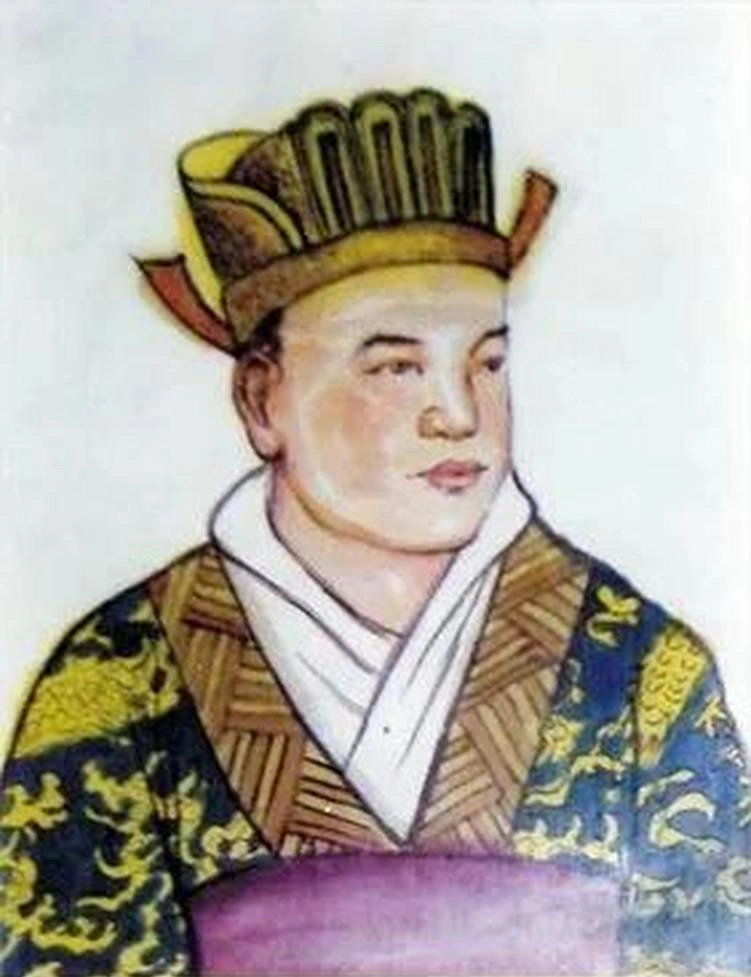
In the ninth month of 1 BC a boy of nine was brought from the provinces to the capital and enthroned as emperor of the Han. He had been king of Zhongshan since he was three, and he came to the throne for the plainest of reasons: the emperor before him had died without an heir, and a child was chosen. Within two years the court had changed his name, and he did not live to be fifteen.
The era the sources give his reign is Yuanshi, whose first year happens also to be the year the Western calendar numbers AD 1 — a coincidence of two unrelated ways of counting, but it fixes the period in the mind: everything in the era itself happened in the years 1 through 6. What the annals record is, almost without exception, the work of another man. Offices were created and renamed; a hall, a circular moat and a terrace were built, with ten thousand rooms of study beside them; officers were sent out to gather songs; the seasons were legislated month by month; two empresses were dug out of their graves. Every act was issued in the name of the boy.
He does not speak in his own record except once, and then not in his own voice. At the end of the annals, in the edict issued after his death, there is a sentence about the illness that killed him: that he was kind and full of pity, and that each time an attack came on him the breath rose in his chest so that he could not speak, and therefore he left no last command. The Han had had child emperors and regents before. It had never had a reign in which the sovereign could be lifted out of the account without the account changing.
1. The Child from Zhongshan
He was born in 9 BC in Lunu, in the kingdom of Zhongshan, on the plain of what is now central Hebei. His father was Liu Xing, king of Zhongshan, a son of Emperor Yuan; his mother was a woman of the Wei family, the daughter of Wei Zihao, who commanded the palace guards. He was named Liu Jizi. He was two when his father died, and in the next year he succeeded to the kingdom — a child with a title and a small court in a provincial town.
The household he grew up in had already been through the machinery that was about to take him. His grandmother, the dowager of Zhongshan, had been a favourite of Emperor Yuan — the consort who stepped in front of a bear when it broke loose at a baiting and everyone else ran — and in the previous reign she had been accused of cursing the emperor and the dowager of Dingtao with witchcraft, and had taken poison, and her family had gone with her. That story belongs to the reign that destroyed her. What was left here was a boy of nine, in a house that had learned what the court could do to a family, brought to the palace with an imperial tally.
He arrived in the ninth month and took the throne in the same month, sacrificed at the shrine of the founding emperor, and proclaimed a general amnesty. The grand empress dowager Wang presided; the grand marshal Wang Mang managed the government; and the annals give the arrangement in one line — the dowager held the court, and the assembled officials took their orders from Wang Mang. The first thing the new government did with the boy was to decide who he was no longer allowed to see.
In the sixth month of AD 1 Wang Mang memorialized the empress dowager on the subject of the emperor's mother. The argument was historical: when Emperor Ai came to the throne he had raised up the families of his own mother and grandmother, the Ding and the Fu, and those families had wrecked the state; the present emperor was a child adopted into the line of Emperor Cheng, and the principle of a single lineage required that his own people be kept at a distance. An envoy carried to Zhongshan the seals that made his mother its queen; his two uncles, Wei Bao and Wei Xuan, were made marquises. All were to remain where they were. None was to come to the capital.
One man objected, and the record keeps him. An officer named Shentu Gang answered the throne's call for plain criticism by arguing that the Han house, whatever it said about merit, had always leaned on the relatives of its empresses as a hedge against the powerful, and that the emperor, separated from his closest kin since he was taken from his cradle, ought to have his mother brought to a palace where she could be visited. Wang Mang had him stripped of office and sent back to his fields.
The name was changed in the following year. A decree announced that the emperor's two-character name was shared with the names of ordinary vessels and so out of keeping with antiquity, and that he was to be called Liu Kan; the grand preceptor Kong Guang carried the threefold sacrifice to the founder's shrine to report it. Wang Mang also had the chanyu of the Xiongnu send a memorial saying that he had heard China found fault with double names, and had shortened his own from Nangzhiyasi to Zhi.
2. The Duke Who Pacified Han
The machine that would run the reign was assembled in the first month of AD 1, and it began with a bird. Wang Mang sent word to the governor of Yizhou, in the far southwest, to have some people beyond the frontier present themselves at court as the Yuechang clan and bring, with interpreters, one white pheasant and two black ones. The Yuechang were a name out of the Zhou dynasty — the southerners who, in the tradition, had brought a white pheasant to King Cheng when the Duke of Zhou was governing for another child king. The bird was offered at the ancestral temple, and the courtiers drew the comparison it had been chosen to invite. There was a precedent for rewarding the man who settled a succession — Huo Guang, who was treated as the equal of the founding chancellor Xiao He — and a precedent for the title. The rule of the sage kings was that a minister of the greatest merit received an honorific while he lived, and the Duke of Zhou had taken his from the name of his own house. Wang Mang should take his from the dynasty he had settled. He should be called the Duke of Anhan — the duke who pacified Han.
What followed was the most carefully staged refusal in the history of the Han court. Wang Mang memorialized that the plan for the succession had been made jointly with four other men — Kong Guang, Wang Shun, Zhen Feng and Zhen Han — and asked that only their merits be entered and his own left out. The dowager sent an usher to bring him into the hall; he pleaded illness and would not come. She sent the master of the secretariat; he pleaded illness again. He refused four times. In the end the attendants around her advised her not to force him but to reward the other four first; and only when the four had been made grand preceptor, grand guardian, junior tutor and a marquis did he consent to get up.
Then came the award, made in the vocabulary of a restored Zhou: the two counties of Zhaoling and Xinxi, twenty-eight thousand households, the perpetuation of his rank in his descendants, the precedence of Xiao He, the title of grand tutor with authority over the four supports of the throne, and the style Duke of Anhan, with Xiao He's own mansion as his residence. The decree explained the reasoning in the terms the bird had proposed: the Han had been in danger of having no heir and he had settled it, and the white pheasant had been the sign granted to King Cheng. He accepted the title and refused the land, saying he would wait until every household in the empire was provided for; and when he refused again, the dowager ordered that his salary and his gifts be doubled.
The refusal of the land cost him nothing, because the thing that mattered was granted in the same weeks: a decree transferring the working of the government to him. His allies memorialized that a child emperor and an old dowager should not be troubled with small matters, and the dowager ordered that from then on only enfeoffments of rank were to be reported to her, and that all other business be settled by the Duke of Anhan and the four supports together. Provincial governors, senior officials and scholars recommended for office, on their first audience, were no longer presented to the throne: they were brought to a private office and interviewed by the Duke of Anhan, who examined them on their former posts and their new ones. He received each of them in person and pressed gifts on them, and those who did not satisfy him were publicly impeached and dismissed. The History of Han does not moralize; it gives the conclusion in a line. His authority was the equal of the sovereign's.
In the same year he offered a million in cash and thirty qing of his own land to the relief of the poor, and the officials of the court imitated him.
3. A Betrothal and a Killing
In the third year of the era, AD 3, Wang Mang turned to the question of the empress. He memorialized that the emperor had been three years on the throne and the palace was still without a mistress, that the calamities of recent reigns had begun with irregular succession and a badly chosen empress, and that the matter should be settled by examining the classics and searching among the daughters of the ancient royal houses, of the Duke of Zhou and Confucius, and of the marquises in the capital. The dowager agreed, the list of names came up, and the daughters of the Wang family were on it in numbers. Wang Mang, seeing that they would compete with his own daughter, memorialized that he had no virtue and his daughter no talents and asked that she be excluded; and the dowager, taking this for sincerity, ruled that the women of the Wang family were her own kin and were not to be chosen.
Then the crowd arrived. Commoners, students and clerks of the lesser ranks posted petitions at the palace gate — more than a thousand a day, by the count of the History of Han — and the ministers and officials knelt at the doors of the secretariat and said the same thing in the same words: the edict is lofty and wise, the Duke of Anhan's merit is manifest, and now that an empress is to be chosen, why should his daughter alone be passed over? Where is the empire to turn? We beg that we may have the Duke's daughter as the mother of the world. Wang Mang sent his subordinates out to stop them, and the petitions increased, and the dowager gave way.
The formalities that followed are a small education in what a Han empress cost. Envoys of the dowager made the betrothal visit and returned with the required formula: the Duke's daughter was steeped in moral influence, modest and retiring of appearance, fit to succeed to the great sequence and serve the sacrifices. Custom set the betrothal gift at twenty thousand catties of gold, worth two hundred million in cash. Wang Mang declined most of it, accepted four thousand catties, and gave three thousand three hundred of those to the families of the eleven women chosen as concubines; when it was pointed out that this left the empress barely a concubine's portion, the court added twenty-three million, and he gave ten million of that to the poor of his own clan. The daughter was installed as empress in the second month of AD 4.
Between the betrothal and the wedding, in the summer and autumn of the same year, the emperor's mother's family was destroyed. It began with the eldest son. Wang Yu, Wang Mang's heir, disapproved of what his father had done to the Wei family and had a specific fear: that when the boy on the throne grew up he would take his revenge. He wrote in secret to the emperor's uncle Wei Bao and instructed the emperor's mother to send up a memorial of thanks and a reminder of the old crimes of the Ding and the Fu, hoping to be allowed to the capital. Wang Mang had her allowance increased by seven thousand households. She wept day and night, wanting to see her son once; the allowance was raised, and she was not allowed to come.
Wang Yu took the matter to his teacher and to his wife's brother. His teacher was Wu Zhang, a famous instructor with more than a thousand students; his wife's brother was named Lü Kuan. Wu Zhang held that the Duke of Anhan could not be reasoned out of anything but believed in spirits and prodigies, and that a strange event could frighten him into returning the government to the Wei family. So Lü Kuan went out at night and sprinkled blood on the Duke's gate, and a gatekeeper saw him.
What followed was not an inquiry but a liquidation. Wang Yu was arrested and took poison in prison; his wife, pregnant, was kept until she gave birth and then killed; Wu Zhang was cut in two at the waist and his body torn apart at the east market gate, and his thousand students were declared a faction of evil men and barred from office. The Wei family was destroyed branch by branch, and one person was left alive: the emperor's mother, walled up in Zhongshan. The prosecution did not stop there. In the same case Wang Mang's own uncle the marquis of Hongyang, his cousin the marquis of Ping'a, the princess Jingwu, a sister of Emperor Yuan, and the king of Liang were all forced to kill themselves; the History of Han's phrase for the total is that the dead numbered in the hundreds. He had used the plot of his own son to clear the field of everyone who could still speak against him to the dowager.
The framing was managed as carefully as the betrothal. Zhen Han reported the case, and the edict the dowager issued praised the duke for doing what the Duke of Zhou had done when he punished his own brothers Guan and Cai — for refusing to let affection for kin injure reverence for what must be revered. Wang Mang then wrote a book about it, eight admonitions presenting the killing of his son as public-mindedness, and had it circulated through the empire and taught in the schools alongside the Classic of Filial Piety. The boy on the throne was twelve. He had been betrothed in the spring; the family he was born into had been killed in the summer; and the girl who would sit beside him was the daughter of the man who had killed them.
4. The Manufacture of Peace
The last two years of the reign were given over to titles and to scenery. In the fourth month of AD 4 Wang Mang was made Zaiheng, a word invented for him: it takes the zai of the ancient office of the grand steward and the heng from Aheng, the style of Yi Yin, the minister who had governed for the founder of the Shang. Before the feudal kings and above every title the Han possessed, with a seal reading Zaiheng, Grand Tutor, Grand Marshal, he took rank; his mother was given the title of a lady of honour and his two sons were made marquises. In the same year he built the Bright Hall, the circular moat and the spirit terrace, the three structures of the Zhou kings, with ten thousand rooms of study for the scholars, and summoned scholars from every province, several thousand of them arriving with their texts and their reckonings.
Then the inspections. Eight officials with deputies were sent out over the empire under the name of visitors of custom, to look at the manners of the people and report what they saw; what they brought back, in the History of Han's account, was songs. Two men would not play the game. The chancellor of Guangping was Ban Zhi — a younger brother of the consort Ban who had been a favourite of Emperor Cheng, and the grandfather of the historian Ban Gu, who wrote the account I am using. He sent up nothing. The governor of Langya, Gongsun Hong, sent up a famine instead. The grand minister of works Zhen Feng sent officers to both commanderies to tell the local officials what they were expected to say, and then impeached Gongsun Hong for inventing inauspiciousness and Ban Zhi for suppressing a good omen. The dowager ruled that a man who failed to proclaim the imperial virtues ought not to be punished as a man who spoke of disaster should, and added that the Ban family was one she pitied for the sake of a good woman; in the end only Gongsun Hong went to prison, where he died. Ban Zhi resigned his seal. The History of Han's family memoir notes, with what sounds like relief, that the clan held no office for the rest of Wang Mang's ascendancy and was therefore never touched.
The most complete portrait the reign left of itself is a wall. On the fourteenth day of the fifth month of AD 5 a document went out over the name of the grand empress dowager — drafted by Wang Mang, promulgated as hers — under the title of the fifty clauses of the monthly ordinances for the four seasons. It opens with the dowager's voice complaining that the seasons had gone wrong, the rain and wind untimely, the farmers unsettled; it then lays down, month by month, what may and may not be done: no felling of trees before the eighth month, no netting of fish in spring and summer, no killing of the young of animals or of birds. There are fifty clauses and a hundred and one lines, about sixteen hundred characters of the clerical script, with a line beginning it means beneath many of them to explain it in plainer words. It was painted in ink, with red rules between the lines and a black border around the whole, on the plaster wall of a room in a post station at Xuanquanzhi, on the road east from Dunhuang; it was found there in pieces when the site was excavated between 1990 and 1992, and pieced back together into a tablet two metres long. It is one of the earliest documents of its kind to survive from China, and the one object in this reign that speaks in the reign's own public voice: a government announcing to a frontier station that the seasons had gone wrong.
The other works of those years read differently. Wang Mang reported that in the markets there were no two prices, in the offices no litigation, in the towns no thieves, in the fields no hungry men, and on the roads nobody who would pick up what had been dropped; and he ruled that men and women were to walk on separate sides of the street, with a symbolic penalty for those who did not. Both were issued in AD 5, in the emperor's name, by a government whose own inspectors were manufacturing the songs that proved them. And in the same year he turned on the dead. The dowager Fu, the grandmother of the previous emperor, and the Lady Ding, his mother, had been buried with the seals and ribbons of empresses, and the dowager Fu had been placed beside Emperor Yuan at his tomb with a mound as high as his own. Wang Mang argued that this offended against the ritual order, and asked that the graves be opened, the seals destroyed, and the coffins moved back to Dingtao. The grand empress dowager told him the matter was finished; he pressed, and she allowed it only if the coffins were given new outer cases. The workmen opened the dowager Fu's mound, and the earth came down on them and killed several hundred, and the outer coffin of the Lady Ding came open and a fire came out of it four or five zhang high.
Wang Mang reported both accidents as further instructions from heaven: the coffins were to be replaced with plain wood, the pearl-and-jade burial garments taken off, and the Lady Ding buried in the rank of a concubine. This was done. When the dowager Fu's coffin was opened, the History of Han says, the stench carried for several li. The officials contributed money and cloth and sent their sons and their clients, and more than a hundred thousand people worked for twenty days to level the two mounds to the ground. He had the site hedged around with thorns, as a warning to the ages.
5. The Twelfth Month
The last thing the court did while the emperor was alive was to propose that he be set aside in name as well as in fact. A marquis named Liu Qing memorialized that the emperor was young and that the Duke of Anhan should act as Son of Heaven, in the manner of the Duke of Zhou, and the assembled ministers agreed. The proposal was on the table, and had not been carried out, when the emperor fell ill.
What happened next is told twice, and the difference between the two accounts is the whole of the problem. The first is in the biography of Wang Mang, and it is a story about a locked box. While the emperor was ill, Wang Mang made a written prayer on his behalf, asking for the boy's life at the great altar of the earth and offering himself in the emperor's place. He sealed the writing in a metal-bound coffer, set the coffer in the front hall, and told the ministers that none of them was to speak of it. Everyone at court knew the model: the Duke of Zhou, when King Wu was ill, had offered his own life, and the record of it had been sealed in a coffer and opened years later to clear his name of treason. In the twelfth month the emperor died.
The second account is the annals of the reign, and it gives no cause at all. It records that in the twelfth month, on a day whose cycle sign is given as bingwu — a day that did not in fact fall in that month, so that the chronicle of Xun Yue corrects it to the sixteenth day, which is the third of February in the year the Western calendar calls AD 6 — the emperor died in the Weiyang Palace. He was fourteen. The annals then give the posthumous name and the tomb and nothing else except, in the edict that follows, that sentence about the attacks that took his speech away and the absence of a last command.
The third account is not in the annals and not in the biography. It is in a note: Han scholars wrote commentaries on the History of Han, and in the seventh century Yan Shigu gathered them into his edition, and in the note attached to this reign there is a story that the emperor, growing older, had come to resent Wang Mang over his mother, that Wang Mang knew the boy's mind had turned, and that at the winter sacrifice he sent him a cup of pepper wine with poison in it. The Comprehensive Mirror, a thousand years later, took the story as fact, which is why it is the version most people know.
The argument for the poison is that it explains what the record does not, and that the record's silences are suspicious — that the annals give no burial date, and that the man who benefited wrote nothing down. The argument against is stronger, and it is textual. The charge appears first, in the surviving record, not in a history but in a war: in the following year the governor Zhai Yi rose against the regency and sent a proclamation through the commanderies declaring that Wang Mang had murdered the emperor, which is exactly what a rebellion says. It was raised again for years afterwards, and in the last year of his life, with the empire already rising against him, Wang Mang brought out the coffer and its prayer and showed it to the ministers to prove that he had asked to die in the boy's place. And the History of Han itself — the work of a family whose grandfather had been prosecuted by Wang Mang, and whose judgment of him is contemptuous — records the illness and the prayer and the burial, and never once records that he was poisoned. Ban Gu, who had every reason to write it, did not. Modern scholarship, weighing the two, holds that there is no evidence to confirm the charge and none to refute it.
The honest sentence is the one the two official sources allow. The annals say that the emperor died; the biography of the man who governed for him says that he fell ill and died; the poison belongs to the enemies of that man and to the commentators who repeated them. What both accounts agree on is the shape of the reign: that a child was put on the throne to be governed, that in his last year the government was preparing to govern in his place openly, and that he died before the arrangement was complete.
He was buried at Kangling, in what is now the Xianyang area, outside the old capital. The posthumous name given him was Xiaoping, the filial and the peaceful. Wang Mang had the officials of six hundred bushels and above put into three years of mourning, and had the shrine names settled: Emperor Cheng's temple was to be called Tongzong, and this boy's Yuanzong. The temple name was a fiction of the regency and did not last. When the Han was restored, its founder struck it off, and the emperor who had been given a temple name in his grave has had none since.
Of the empress, the daughter, there is only this: she was widowed a year after the wedding, and she spent the rest of her short life refusing the position her father's rise assigned to her. That belongs to the reign that came next.
The emperor had left no son, and the line of Emperor Yuan had no male heir left in it. Wang Mang called the ministers together, and the discussion turned on which of the surviving princes should succeed. Of Emperor Xuan's descendants in the generation of great-great-grandsons there were twenty-three, the nearest to the throne in descent; the nearer generation was all, as Wang Mang pointed out, the late emperor's brothers in rank and could not be made his sons. Wang Mang took the youngest of them: a boy of two named Liu Ying, the son of the marquis of Guangqi, and had the diviners declare him auspicious. The boy was not made emperor. He was made crown prince, with the title of Ruzi, the Child.
Then the stone appeared. An official named Xie Xiao memorialized that the chief of the county of Wugong, dredging a well, had found a white stone, round above and square below, with a writing in red on it: tell the Duke of Anhan Wang Mang that he is to be emperor. The grand empress dowager's answer was that the thing was a lie and would not be acted on. Wang Shun, Wang Mang's cousin, explained to her that it could not be resisted, and that all Wang Mang wanted was the title of regent, to overawe the empire. She agreed, and the edict went out in her name: Wang Mang was to take up the throne of government and rule in the manner of the Duke of Zhou. In the new year the era was changed again, to the era of the Regency.
The reign of the emperor Ping thus ends twice: once in the twelfth month, with a boy in a palace he had never governed, and once with a white stone that somebody had buried in a well and then dug up again. The first of those endings is a fact about a person. The second is a fact about the state that had been built around him, and it is the one that goes on into the last years of the Western Han.