Home / Emperors / Jin Dynasty
Emperor Mu of Jin
晋穆帝
Sima Dan, 343 – 361 · fifth emperor of the Eastern Jin
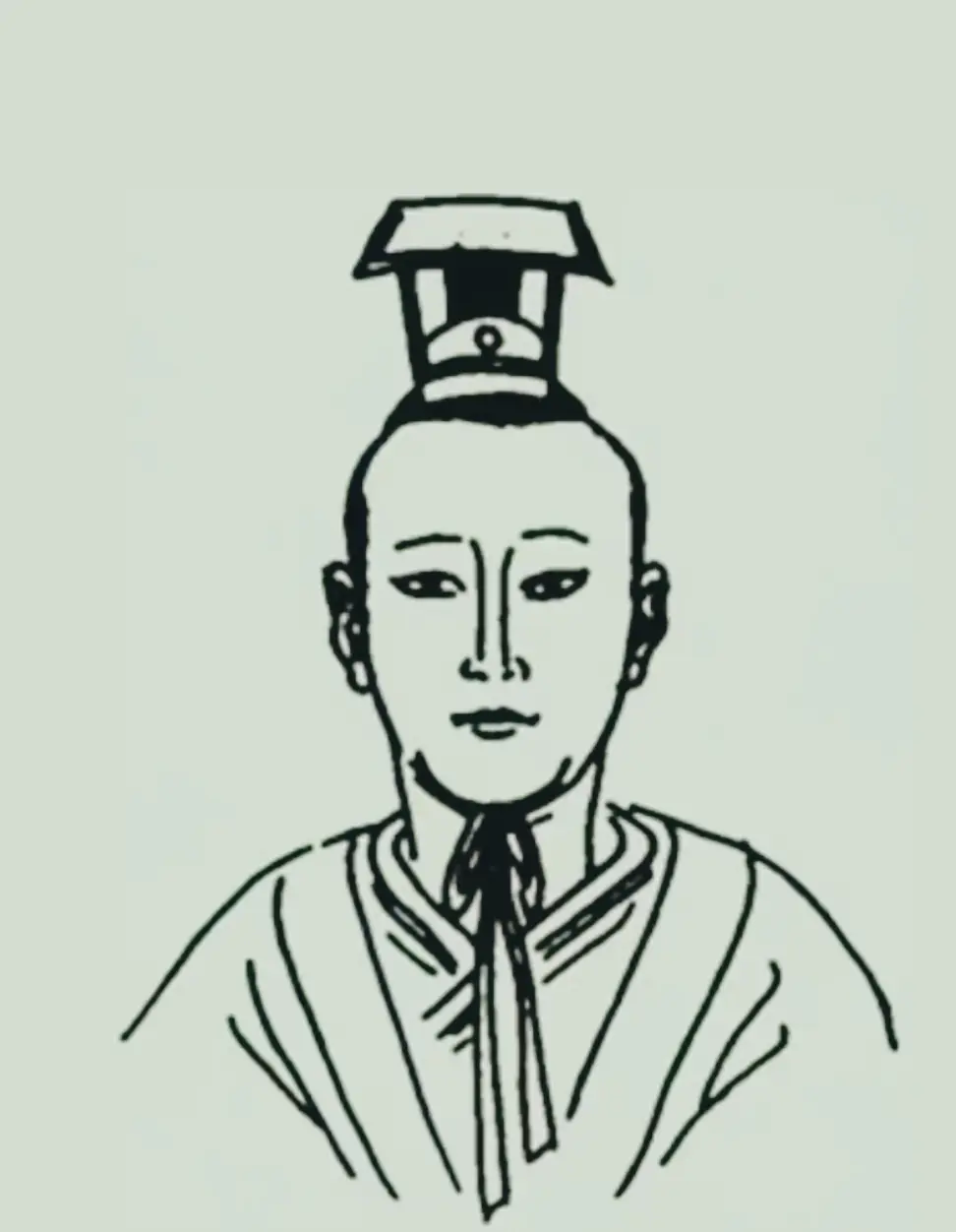
In the spring of 347 a rider from the upper Yangzi brought the court at Jiankang the news that Chengdu had fallen. The state of Cheng Han, which had held the Sichuan basin since 304, had surrendered with its ruler. The general who took it was Huan Wen, inspector of Jing province, who had left Jiangling in the eleventh month of the previous year with a small army and had not waited for the court's permission to go. The emperor was five years old by the count of his court. The edicts that rewarded Huan Wen were issued in his name. The war had been decided by men he did not command.
The court's first act was to make Huan Wen a duke and general who conquers the west, with the right to open his own secretariat. Its second was to look for someone who could balance him. The two acts belonged together, and they set the pattern of the next fourteen years. The emperor himself is the emptiest space in the record: two years old at his accession, fifteen at his capping, nineteen at his death, and in the annals a sequence of rituals, omens and edicts issued by other people. Yet the same years contain the most ambitious northern offensive the dynasty had mounted since it lost the north. The south destroyed a state in the west, sent armies into the Central Plain, reached the river outside Chang'an, retook Luoyang, and repaired the tombs of the Western Jin emperors. It also lost three armies, failed to hold most of what it took, and left the throne weaker in relation to its own general than it had been at the start. The question this reign poses is not why the emperor did not govern. It is what a government of great families could achieve when no emperor governed, and what it could not.
1. The Boy in the Edicts
Sima Dan was born in the ninth month of 343, the eldest son of Emperor Kang and of Chu Suanzi. His father had been emperor for a year. The child's first year was spent in the inner palace of a dynasty that had lost the north a generation earlier, among nurses, tutors and the households of the empress's kin. In the ninth month of 344 his father died, and the child who had been named crown prince a few days earlier was seated on the throne at the age of two by the count of the court.
The decision was the last move in a quarrel that had begun two years earlier. In 342 the Yu brothers had taken the succession away from Emperor Cheng's infant sons and given it to his brother, on the argument that a state with enemies needed an adult. In 344 the same brothers wanted another adult, the prince of Kuaiji, and the same minister, He Chong, insisted on the son. He Chong won because the crown prince, the testament and the guards were in Jiankang, and the Yu brothers were in the provinces. The child owed his throne to a minister's argument about legitimacy, and to the accident that the argument was decided in Jiankang.
His mother became empress dowager at twenty-one. The ministers petitioned her to take charge, citing the Han empresses who had ruled for infant sons and the recent example of her husband's mother, who had sat behind the curtain for Emperor Cheng. Her acceptance, preserved in her biography, is phrased as a reluctance overcome by duty: the emperor was young, the state was in danger, and she dared not cling to the wishes of a private woman. The language is conventional. The situation was not. A woman of twenty-one, the daughter of a family that had been chosen for the throne precisely because it was not powerful, was now the final authority in a state run by soldiers.
He Chong was the man who had made the accession possible, and for two years he was the government. He was fifty-three, a native of Lujiang, and had made his name as a young registrar who contradicted Wang Dun to his face. He had been the one senior minister who opposed the Yu in 342 and again in 344, and he had lost the first and won the second. The empress dowager gave him the supervision of the department of state affairs and the privilege of coming into the palace with a hundred soldiers.
Chu Pou, the empress dowager's father, had already taken the frontier command at Jingkou rather than a share of the regency, and had taken it deliberately: a regency shared between a minister and the empress's father would have looked like the return of the clan government the dynasty had just escaped. The court was left with a regency of one minister and one prince, and with an empress's family that had removed itself from the capital.
Within a year the board was cleared again. Yu Bing died at Wuchang in the eleventh month of 344. The rest of that year remained the second year of his father's era, Jianyuan; in the first month of 345 the era was changed to Yonghe. In the seventh month Yu Yi died at Xiangyang. He had asked that his son Yu Yuanzhi succeed him in Jing, and the court was inclined to agree; He Chong argued that the province was too important for a man of no ability and recommended Huan Wen, the inspector of Xu province. The court appointed him. Huan Wen was thirty-four, the son of a man killed in the disorders of 328, the husband of a daughter of Emperor Ming, and therefore the emperor's great-uncle by marriage. He was also the most capable soldier in the south. He Chong's calculation was that a man of his ability could be used and, if necessary, balanced. His remark, as his biography records it, was that with Huan Wen and Chu Pou as his frontier commanders and Yin Hao at court, he had nothing to worry about.
The remark is the clearest statement of the arrangement that governed the next decade. The court would not try to rule the provinces. It would appoint the strongest men, give them the titles they wanted, and set them against one another. The throne would supply legitimacy; the families would supply armies; the balance would be kept by the fact that no one family could take the others. For two years the arrangement looked like statesmanship. It was in fact a wager that the men appointed to command the frontiers could be prevented from combining, and the wager was lost within a decade.
2. The Regency
A government without an emperor is not a government without a head. It is a government in which the head is a child, and the visible functions of the head are performed by others in his presence. The annals of the Yonghe years record the emperor at sacrifices, at audiences, at the reception of envoys, and at the reading of the classics. They do not record him deciding anything. The decisions appear in the edicts, and the edicts were drafted in the department of state affairs and approved by the empress dowager behind the curtain. The curtain was a physical object, a screen of white gauze, and it was also the constitution of the reign.
He Chong's last two years were quiet. There was no legislation, no reform, no campaign. The government appointed governors, received refugees, maintained the river fleet, and watched the north. He Chong's health failed in the winter of 345, and he died on the ji-mao day of the first month of 346, aged fifty-five. The court gave him the posthumous name Wenmu and buried him with the honours of a minister of the first rank. His biography says that he had borne the weight of the state for two reigns and that the court had trusted him. It also says that he had no son, and that the line was continued by a nephew.
After him the direction of the court was shared by two men who were not his equals. Cai Mo was a scholar of the rites, in his sixties, rigid, honest, and convinced that the forms of the court were the substance of its authority. Sima Yu, the prince of Kuaiji, was twenty-seven, a son of Emperor Yuan and a younger brother of Emperor Ming, and therefore the emperor's great-uncle. He was the most celebrated conversationalist of his generation, a patron of monks and poets, and a man with no army and no provincial base. The two were given the supervision of the six sections of the department, and Sima Yu was made supervisor of the department of state affairs and the effective head of the civil government. The arrangement was a compromise between the court's need for an experienced administrator and its need for a prince of the blood who could not be suspected of founding a dynasty.
The weakness of the throne was visible in small things. In 350 the emperor, then eight, held a court to summon Cai Mo, who had asked to retire and had been refused. The emperor sent two officials to fetch him. Cai Mo sent his registrar to say that he was ill and would not come. The court debated the insult, and in the end reduced him to commoner status. The episode is recorded as a quarrel about an old man's retirement, and it was that. It was also a test of whether an eight-year-old on a throne could compel a seventy-year-old minister to attend him, and the answer was no.
The man on whom the court's hopes came to rest was not a soldier. Yin Hao was born in 303, in Changping of Chen commandery, and had spent nearly ten years in retirement, refusing one appointment after another. His conversation was famous, his calligraphy was admired, and his admirers compared him to Guan Zhong and Zhuge Liang. The comparison was flattering and, in the event, disastrous. In 346, after four months of refusals, he accepted the inspectorate of Yang province, the richest civil province in the state, and became the third force in the arrangement: Sima Yu in the capital, Chu Pou at Jingkou, Huan Wen at Jiangling, and Yin Hao in the lower Yangzi with the revenues of the court's own heartland.
The design was coherent. The court could not raise an army without the families, and it could not trust the family that already had one. It would therefore create a second army under a man whose prestige was civil and whose loyalty was to the court that had made him. The design had one flaw, which was that an army is not created by appointing a famous man to command it. The court's troops were provincial levies, refugee bands, and the private retainers of local magnates. They could be assembled for a campaign and could not be made into a standing force without money, land and time, and the court had little of the first, less of the second, and no time at all.
For three years the arrangement held because the north was quiet. In 347 Huan Wen took Chengdu, and the balance tilted. In 349 the north broke, and the court discovered that its third force did not exist.
3. The Western Expedition
Huan Wen had been inspector of Jing province since the eighth month of 345. His province was the military centre of the south: the middle Yangzi, with the grain of the Jianghan plain, the iron of the western hills, the horses of the border markets, and an army that had been built up under Tao Kan and the Yu brothers. Its seat at Jiangling controlled the river road to the capital and the land road to the north. The court had given it to him because He Chong believed that a strong governor was better than a weak one, and because the alternative, Yu Yi's son, had a family claim and no ability. Liu Tan, the one official who understood Huan Wen best, warned that Jing was the decisive ground and that a man of Huan Wen's ambition should not be given it. The warning was ignored.
Cheng Han was the state that Li Xiong had founded in 304, in the wars that broke the Western Jin. It had ruled the Sichuan basin for forty-three years, had survived by accommodation with whatever power held the north, and by the 340s was dying of its own court. Li Shi, its ruler since 343, was extravagant, suspicious, and given to killing his own kinsmen. The basin was rich, the passes were difficult, and the court at Jiankang had never had the strength to attempt it. Huan Wen proposed to attempt it in the eleventh month of 346.
The court did not authorise it. The risks were obvious: the road up the Yangzi was long, the gorges were narrow, the army would be out of reach of reinforcement, and the Later Zhao might attack the north bank while the main force was in the west. Huan Wen's own staff opposed the campaign; his aide Yuan Qiao urged it. At court, Liu Tan predicted success, on the ground that Huan Wen played backgammon like a man who never made a move he could not win, and then added the sentence that turned the argument into a prophecy: but after he takes Shu, he will make himself master of the court. The court let him go. It had no way to stop him, and it wanted Chengdu.
He marched without waiting for the formal authorisation, with a little over ten thousand men. The figure is the one the histories give, and it is small enough to be credible: the campaign depended on speed, not numbers. He went up the river to Baidi, then turned into the basin, brushing aside the detachments Li Shi sent against him. At Pengmo he left his baggage under guard and pushed on toward Chengdu. The decisive fight was at Zuogiao, outside the city, where the Jin forward line began to give way. The histories say that the drummer beat the advance instead of the retreat by mistake, that the sound rallied the line, and that Li Shi's army broke. The story is too neat to be taken literally, and too circumstantial to be dismissed. What is certain is that the Cheng Han army collapsed, that Li Shi fled to Jiameng, and that within days he came out and submitted.
Huan Wen stayed in Chengdu for thirty days. He enrolled the local elite in his staff, among them Chang Qu, the author of the Records of Huayang, the great topographical and historical account of the region. He honoured the local worthies and restored the markets, and sent Li Shi east to Jiankang, where the court gave him a marquis's title and a house. In the fourth month Huan Wen returned to Jiangling. The campaign had taken five months from the departure from Jiangling to the surrender, and it had ended a state that had outlasted the dynasty that lost the north.
The court made him general who conquers the west, with the right to open his own secretariat, and duke of Linhe. The title of duke was expected. The right to open a secretariat was not. It gave him the power to appoint his own staff, to issue his own orders, and to maintain a miniature court in the provinces. In the vocabulary of the period it was the honour given to a man who was nearly a sovereign. Huan Wen had held Jing province for some twenty months and had destroyed a state. He was in his mid-thirties, and the court had just given him the institutional form of an autonomous power.
The reaction in Jiankang was immediate and rational. Sima Yu had given Yin Hao the inspectorate of Yang province in 346, and now began to build him up as Huan Wen's equal. The court also began to look for a northern campaign that Yin Hao could command. The logic was not cowardice. A northern victory won by Huan Wen would have made him irresistible; a northern victory won by the court's own general would have restored the balance. The court was willing to spend money and lives on the second kind of victory, and it was not willing to risk the first. Its fear of Huan Wen dates from the year Chengdu fell.
4. The Year the North Broke
In the fourth month of 349 Shi Hu died at Ye. He was in his mid-fifties, had ruled the Later Zhao for fifteen years, and had made it the strongest state in the north. His death was the event the Eastern Jin had been waiting for since it lost the north. The Zhao court had been murderous for a decade: Shi Hu had killed one crown prince and then another, had executed their households, and had left a child as his heir, with a widow as regent and a minister as protector. The generals who had held the frontier commands were not inclined to obey a child. Within weeks of the funeral the empire was at war with itself.
Jiankang heard the news in the fifth month. Chu Pou, the empress dowager's father, asked to march. The court made him commander-in-chief for the expedition, with authority over the five provinces of Xu, Yan, Qing, Yang and Yu, and gave him thirty thousand men, by the count in the histories. He advanced to Pengcheng, on the northern road, and the response was everything the court had hoped for. Local leaders came to him; counties declared for Jin; refugees from north of the Yellow River began to cross in numbers that the histories describe as daily increasing, and later accounts put the stream at more than two hundred thousand. For a few weeks it looked as though the collapse of the Zhao would hand the plain back to the dynasty without a battle.
The battle came at Daipi. Chu Pou sent his forward commander Wang Kan against the Zhao general Li Nong, and Wang Kan was destroyed. The details are thin; the result was not. The forward army was gone, the road to Pengcheng was open, and Chu Pou, who was a competent administrator and not a field commander, ordered a withdrawal to Guangling. The retreat was orderly. The consequence was not. The refugees who had come south in the expectation of a Jin advance were left between the Zhao armies and a Jin army that had gone. The histories say that they died almost to the last. The phrase is a historian's summary, not a count, but the shape of the disaster is clear: the court had invited the north to rise and had not been able to protect it.
Chu Pou memorialised for demotion. The court refused, gave him the empty consolation of a title, and left him at Guangling. He fell ill, and before the end of the year he died at Jingkou, aged forty-seven. His daughter, the empress dowager, was in the palace with a seven-year-old son and a government she did not control. The one general the court trusted was gone, and the northern adventure had cost the dynasty the only thing it had gained in the north, which was the belief that it would come.
In the following year the north destroyed itself. Ran Min, a Han Chinese who was the adopted grandson of Shi Hu and had risen in the Zhao army, seized Ye, killed the emperor Shi Jian, and took the throne under the name of Wei. He then ordered the killing of the Hu, the confederated peoples who had formed the Zhao military caste. The order offered promotion to anyone who brought a Hu head to the Fengyang gate. The histories say that tens of thousands were killed in a single day and that the total reached more than two hundred thousand. The figures are the figures of the victors' historians, written to convey a catastrophe rather than to record a census. The political fact is not in doubt: the Jie and the other Hu peoples who had held the north for a generation were destroyed as a military force, and the state that had united the plain ceased to exist.
Ran Min's Wei lasted two years. In 351 the last Zhao ruler, Shi Zhi, was killed by his own general at Xiangguo, and the Zhao ended. In the same year Fu Jian, a Di leader who had held Zhao titles and would found the state known as the Former Qin, entered the Guanzhong with his people and made Chang'an his capital, taking the title of heavenly king; the following year he took the imperial title. In the east, Murong Jun of the Former Yan took Ye in 352 and took the imperial title; Ran Min was taken and killed at Liantai by Murong Ke. By the end of 352 the north had two strong states and a scattering of warlords between them, and the vacuum that had opened in 349 was closed.
The court had watched all of this without acting. Huan Wen asked for a northern command in 349 and was not given one. The court was still trying to build Yin Hao's army, and it preferred to wait until its own general was ready rather than to send the general it feared. The delay was not inexplicable. A campaign under Huan Wen would have made him the master of the north and therefore of the court; a campaign under Yin Hao would have preserved the balance. The court chose the balance. By the time Yin Hao marched, the north had two new states and the window had shut.
This is the central political fact of the reign. The Eastern Jin was not too weak to attack the north in 349. It was too divided to allow its best general to win. The same calculation that kept Huan Wen from the command also kept the dynasty from the plain, and the two losses were not separable.
5. The Other General
Yin Hao was the most admired man in the south who had never held an army. He was born in 303, the son of an official family, and had made his reputation by refusing office. For nearly ten years he had lived in retirement, and the refusal itself became a kind of office: the more often he declined, the more the court wanted him, and the more the court wanted him, the more his admirers compared him to the statesmen of antiquity. The comparison to Zhuge Liang was made by men who had never seen a campaign. It was nevertheless the reason the court chose him.
His relation with Huan Wen was personal as well as political. The two had known each other since youth, had competed for reputation in the same circles, and had been paired by their contemporaries as the two most able men of their generation. The New Account of Tales of the World, a collection of anecdotes compiled in the fifth century and not a court record, preserves the exchange in which Huan Wen asked Yin Hao how he compared with him, and Yin Hao answered that he had dealt with himself long enough and would rather be himself. The answer is a good line, and it may be a literary invention. It captures the rivalry that the court tried to use.
In 352, with the north in fragments, the court gave Yin Hao the title of general of the central army, the staff of authority, and command of the five provinces of Yang, Yu, Xu, Yan and Qing. The plan was to advance through the Huai country to Xu Chang and Luoyang, restore the tombs, and establish the court's own military reputation. The first phase went wrong almost at once. Zhang Yu, a former Zhao general who had offered to surrender Xu Chang, changed his mind when the Jin reception was mishandled; Xie Shang, the inspector of Yu province, was defeated; and the Jin line fell back to the Huai. The campaign had not begun and its forward base was gone.
The one asset the court acquired in these months was Yao Xiang. He was the son of Yao Yizhong, the Qiang leader who had served the Zhao, and he came over to Jin with his people and his cavalry after his father's death. The court settled him at Qiao, gave him titles, and treated him as a frontier ally. He was brave, popular with his troops, and deeply uncertain of the court's intentions. Yin Hao, who needed a forward commander and did not trust him, moved him to Liang state, held the five younger brothers Yao Xiang had himself sent to the capital as hostages, and sent assassins after him. The assassins failed. Yao Xiang concluded that the court meant to destroy him, and he was right.
In the tenth month of 353 Yin Hao marched north with a force the histories put at seventy thousand, Yao Xiang leading the van. At Shansang, in the Huai country, Yao Xiang turned on him. The ambush destroyed the army: more than ten thousand killed, by the count in the histories, with the baggage and the grain taken and the survivors scattered. Yin Hao fled to Qiao city with a remnant and waited for the court's orders. The orders, when they came, were Huan Wen's.
In the first month of 354 Huan Wen memorialised against him. The document is a catalogue of failure and a political instrument: the waste of the treasury, the loss of the army, the provocation of Yao Xiang, the ruin of the court's reputation in the north. The court dismissed Yin Hao to common status and exiled him to Xin'an in Dongyang. The biography says that he spent his days writing four characters in the air with his finger, and that his household, watching him, read them as "strange, strange". He died in 356, still in exile.
The judgment of the sources is that Yin Hao was a talker who could not fight. The judgment is true and incomplete. He was given an army because the court needed a counterweight, not because anyone thought he could lead one; he was given a plan because the court needed a victory it could own, not because the plan was possible; and he was destroyed by a subordinate whom the court had taught to distrust it. His failure was overdetermined. The interesting thing about it is not that a famous man turned out not to be a general. It is that the court had no other kind of man to send.
Wang Xizhi, who was then administrator of Kuaiji, saw the failure coming and said so. He wrote to Yin Hao and to Sima Yu arguing that the south did not have the men, the grain or the boats for a northern war, that the campaigns were being fought for the reputation of individuals, and that the country would be exhausted before the north was recovered. The letters are preserved in his biography. They are the work of a practical administrator who had governed a province and knew what it cost to feed an army. They are also the work of a man who would, within a year, host the most famous literary gathering of the century.
6. The Orchid Pavilion
In the third month of 353, seven months before Yin Hao's army marched to its destruction, a group of men met at the Orchid Pavilion in Shanyin, in Kuaiji commandery, for the spring purification. The date was the double-third, when families went down to the water to wash away ill fortune. The company is traditionally counted at forty-two. The host was Wang Xizhi, the administrator of Kuaiji, who was about fifty. Among the guests were Xie An, who was thirty-four and still refusing office; his younger brother Xie Wan; the poet Sun Chuo; and a number of younger men of the Wang and Xie families, including Wang Xizhi's sons.
The site was a valley with a stream running through it, and the rite was adapted to the company. Cups of wine were set floating on the water; where a cup stopped, the man beside it drank and composed a poem, or paid a forfeit of three measures of wine. The poems were collected afterwards, thirty-seven poems by twenty-six of the company, according to the anthology that survives, and Wang Xizhi was asked to write a preface. He wrote it at the gathering, or immediately after it, in running script, in a state that the later tradition describes as half drunk and wholly absorbed.
The preface begins as a description and turns into something else. It records the day, the clear sky, the mild wind, the mountains and the bamboo, the stream and the cups. Then it says that the things men delight in, in a single moment, become traces of the past, and that a man cannot help being moved when he looks at what he once enjoyed and finds that it is already gone. It turns on the sentence that has been quoted ever since: later generations will look at this time as we look at the times before us. The argument is not complicated. It is the argument of a man who has had a good day and has understood that the day is already past.
The text survives, the handwriting does not. The original, according to the tradition, was treasured by Wang's family, passed through several hands, and acquired by Emperor Taizong of the Tang in the seventh century, who admired it so much that it was said to have been buried with him. What exists now are copies. The most famous is a tracing in the Palace Museum in Beijing, known as the Dragon version, which is dated to the Tang and is the closest thing to the original that a reader can see. The story of how the emperor's agent obtained the manuscript from a monk is a Tang tale, recorded centuries later, and it belongs to the legend of the text rather than to its history.
The gathering was not a withdrawal from politics. The men at the Orchid Pavilion were the governing class of the Eastern Jin. Wang Xizhi was governing Kuaiji and had written against the northern campaign. Xie An was the most famous refuser of office in the south, and his refusal was itself a political position, maintained by a family that had several members in high office. Sun Chuo was a poet of the same circle. The conversation, the poems and the calligraphy were the language in which this class conducted its politics, and the ease of the day depended on an order that the day did not mention.
The coincidence of the year is exact and does not need to be invented. In the third month the same class produced the most finished expression of its culture. In the tenth month its army was destroyed at Shansang. The two facts are usually kept in separate chapters, the literary and the military, but they belong to one history. The families had the leisure, the education and the authority to make the preface, and they had neither the numbers nor the revenue nor the unity to hold the north. The preface's meditation on transience is not a comment on the defeat, which had not yet happened. It is the voice of a class that knew how quickly things could be lost, written by a man who was already arguing, in his official correspondence, that the state was attempting more than it could carry.
7. At Ba Shang
In the second month of 354 Huan Wen marched from Jiangling with forty thousand foot and horse, the figure the histories give. A water force went up the Han from Xiangyang into the Jun mouth; the inspector of Liang province, Sima Xun, advanced from Hanzhong by the Ziwu road. The three columns were meant to converge on Chang'an. The Former Qin had held the Guanzhong for three years, its founder Fu Jian had taken the imperial title two years earlier, and its army was still the coalition of Di and Qiang bands that had marched in from the east. Huan Wen had spent nine years building the Jing army, and this was the first time it had been used against a northern state.
The advance was fast. Huan Wen defeated the Qin forces at Lantian, took the surrender of the commanderies of the Guanzhong, and reached Ba Shang, on the east bank of the Ba river, within sight of Chang'an. The Qin court withdrew into the city and prepared for a siege. For a few days the campaign looked like the one that would end the northern question. The western capital had been lost in 316, thirty-eight years earlier, and now a Jin army was on the river that runs past its eastern gate.
The histories give the scene that follows. The people of the Guanzhong came out to the Jin army with wine and cattle. The old men, who had been children when the north fell, wept and said that they had not thought to see the government's army again. The scene is a set piece, written nearly three centuries later by historians who wanted to show that the dynasty was still legitimate in the north. It may be true in outline and ornamented in the retelling. What it records is not only an event but a claim: the south had not been forgotten, and the people who had lived under northern rule still regarded the Jin as their own. The claim was the most valuable thing the campaign produced, and it was also the thing the court could not turn into a government.
Among the men who came to see Huan Wen was Wang Meng, a poor scholar from Ju in Beihai who had been living in retirement at Huayin. He arrived in coarse clothes, talked about the affairs of the age, cracked lice as he talked, and behaved as though no one else were in the tent. Huan Wen, who was used to deference, was struck by him. He asked why the leaders of the Guanzhong had not come to join him. Wang Meng answered that Huan Wen had come thousands of li into enemy country, was within reach of Chang'an, and had not crossed the Ba river, so the people could not see what he intended. Huan Wen was silent.
The scene is preserved in the Former Qin section of the Book of Jin, in the biography of Wang Meng that is appended to the records of Fu Jian. It was compiled in the Tang, three hundred years after the event, and it has the shape of a literary portrait: the unrecognised genius, the great man who recognises him, the gesture of the lice that shows contempt for rank, the answer that states the truth no one else will say. It should be read as that kind of document. It is also the best statement in the sources of the dilemma that the campaign had reached.
The dilemma had a military side. Fu Jian refused battle, kept his army inside Chang'an, and cut and burned the wheat in the fields around the city. Huan Wen had counted on the harvest to feed his men. His supply line ran back through the passes to the Han and the Yangzi, and it was long, and the Qin cavalry could cut it. Sima Xun was defeated in the west. The Jin army had arrived in the fourth month, when the wheat was standing, and by midsummer it was starving.
The dilemma had a political side, which the sources state through Wang Meng's answer and later historians state more bluntly. A complete victory would have given Huan Wen the north and the prestige to take the court. A limited victory, a demonstration that the north could be reached but not held, kept him necessary. The two explanations are not exclusive. Huan Wen sincerely wanted the north recovered, and he also wanted to be the man who decided what happened after it was recovered. He did not experience them as separate. The pause at the Ba river was the point where the two ambitions met.
In the summer the army withdrew. It took with it three thousand households from the Guanzhong, by the count in the histories, a small population and a large symbol. Fu Chang, the Qin crown prince, pursued, and the histories put the Jin dead at more than ten thousand. The retreat was not a rout, but it was a defeat, and the court treated it as a campaign that had been fought and could be rewarded. A palace attendant and a yellow-gate gentleman were sent to Xiangyang to congratulate Huan Wen. The gesture was correct and cold. The court had got what it wanted: the north had been reached, and the general had come back.
8. The Tombs at Luoyang
Two years later Huan Wen tried again, and this time the objective was not Chang'an but Luoyang. In the second month of 356 he memorialised more than ten times for the removal of the capital to the old city and the repair of the imperial tombs. The court refused the move and gave him the command. The bargain was explicit: he could fight for the old capital, and he could not bring the court to it. He was made commander-in-chief for the expedition, with authority over Si and Ji provinces, and marched in the seventh month.
The campaign was quick. Huan Wen went from Jiangling to the Yi river, south of Luoyang, where Yao Xiang was besieging the city. Yao Xiang raised the siege and offered battle on the north bank. Huan Wen formed his lines, led them forward in armour, and broke him. Yao Xiang fled west to Pingyang with a few thousand riders; the histories say that five thousand of the people of Luoyang followed him that night, which is a reminder that the north was not a simple choice between Jin and its enemies. Zhou Cheng, who held the city, surrendered. Huan Wen entered Luoyang and camped at the Jinyong fort, in the north-west corner of the old city.
The city had been outside Jin control since 311. Its recovery was the first time in forty-five years that a Jin army had held the old capital, and it was the height of Huan Wen's reputation. He paid homage at the five tombs, Gaoyuan, Junping, Chongyang, Junyang and Taiyang, the graves of Sima Yi, Sima Shi, Sima Zhao, Emperor Wu and Emperor Hui. The tombs were in the hills north of the city, and they had been neglected for two generations. The homage was a ritual act with a political meaning that no one needed to explain: the dynasty was burying its dead again in its own capital.
The formal repair was not done by Huan Wen in person. In the eleventh month the court sent Che Guan, the acting minister of works, and the general Yuan Zhen with the staff of authority to Luoyang to repair the five tombs. In the twelfth month the emperor, then fourteen, wore the coarse mourning cloth with his ministers and held court at the Taiji hall for three days; the matter was announced to the ancestral temple. This is the one substantive act of the reign that belongs to the emperor, and its substance is ceremony. He did not order the campaign, did not plan it, and did not accompany it. He put on the mourning clothes that the recovery of the tombs required, and for three days he presided over the court's memory of its dead.
The court then refused to move the capital. Huan Wen had asked for it repeatedly, and the refusal was the most important decision of the reign. The reasons were practical. The north was a waste: the fields were untilled, the cities were ruins, and a court that moved to Luoyang would have to rebuild a capital and feed a government in a country that could not feed itself. The south was the base; to strip it for a ruin would be to lose both. The argument was practical, and it was also the argument of a class that had estates, tombs and clients in the south and did not intend to leave them.
There was a second reason, which was not stated in the memorial. A court in Luoyang would be within reach of Huan Wen's army. In Jiankang the emperor was protected by the river and by the balance of the provinces; in Luoyang he would be protected by the general who had taken the city. The empress dowager, the prince of Kuaiji and the ministers understood this, and their refusal was as much about the general as about the north. The recovery of the old capital had made the court's dependence on Huan Wen visible, and the court's answer was to keep its distance from the capital it had recovered.
Huan Wen left two thousand men, by the count in the sources, under Mao Muzhi, Chen Wu and Dai Shi to hold Luoyang, moved more than three thousand surrendered households, by the same count, south to the Han and the Yangzi, and returned to Jing province. He was made duke of Nanjun in 360, four years after the recovery, and the delay is a measure of how little the court wanted to celebrate him. The garrison was thin, the corridor was narrow, and the gains beyond Luoyang were lost again within a few years. The city itself would not be held forever. The recovery was a demonstration of what the south could do when it tried, and a demonstration of how little it could keep.
In the first month of 357 the emperor underwent the capping ceremony. He was fifteen by the count of the court. The empress dowager issued the edict that returned the government to him, and the era was changed to Shengping. In the eighth month He Fani, the daughter of He Zhun and the niece of He Chong, was made empress. The rite marked the formal close of the regency. It did not change the government. Sima Yu remained at the head of the civil administration, Huan Wen remained in Jing province with the only army that could fight, and the emperor remained in the palace, where his functions were ritual and his edicts were drafted by other men.
9. The Last Years
The annals of the Shengping years are thin. They record the emperor at the sacrifices, the reception of envoys from the northern states, a drought, an earthquake, a comet, the appointment of governors, and the marriage of the emperor. They do not record a policy. The young man who had come of age was not a cipher in the sense of being incapable; the sources give no evidence either way. He was a constitutional figure in a state that had never solved the problem of what a constitution was for. He presided; others governed; and the arrangement was accepted because the alternative was a war between the families.
In 358 the court fought the first skirmish of that war. Huan Wen wanted his brother Huan Yun appointed to Yu province, the province that controlled the northern approach to the capital. Wang Biaozhi, a senior minister, blocked the appointment and gave the province to Xie Wan of the Chen commandery Xie clan. The choice was a statement: the court would build a third army in the north-east under a family that was not the Huan. The Xie were a great family with a military tradition, and Xie Wan was a well-known man of letters with a reputation for arrogance and no experience of command. The court was repeating the mistake it had made with Yin Hao, and for the same reason.
In 359 Xie Wan and Xi Tan, the son of Xi Jian, marched north against the Former Yan by two routes. Xie Wan behaved badly from the start. He was proud, he did not reassure his troops, and he treated the campaign as a tour. When Xi Tan withdrew through illness to Pengcheng, Xie Wan mistook the movement for a general retreat and ordered one. The army collapsed without a battle. Xie Wan fled alone, and the court dismissed him to common status. The north-east was left without a Jin field army, and the only army that could fight was Huan Wen's.
In 360 the court's best-known refuser of office finally accepted one. Xie An had lived in retirement for twenty years, had refused every appointment, and had become a symbol of the independence of the great families from the throne. The death of his elder brother Xie Yi and his younger brother's dismissal left the Xie without a senior office, and Huan Wen invited him to become his chief of staff. Xie An accepted. He left from Xinting, where the officials of the capital came to see him off, and the chief prosecutor, Gao Song, made the joke that has been remembered ever since: the man who would not come out for the sake of the people was coming out, and how would the people look at him now? The story is preserved in Xie An's biography and in the New Account. It is an anecdote, not a court record, but it captures the transaction exactly. The court's most valuable man had gone to the court's most dangerous man, because the court could not offer him an army.
The stalemate of the last years was stable and sterile. Huan Wen held the upper river and the best army. Sima Yu held the civil government and the empress dowager's confidence. The emperor held the ritual of the throne. None of the three could remove the others, and none of them could govern without the others. The balance that He Chong had designed in 345 had become a system in which each held a part of the others' survival, and the system held because the north was, for the moment, quiet. In 360 Murong Jun of the Former Yan died, and the northern states were busy with their own successions. The south had a few years in which nothing happened, and the annals record them as a sequence of ceremonies.
In the fifth month of 361 the emperor fell ill. He died on the ding-si day at the Xianyang hall, aged nineteen by the count of the court. He had no son. The empress dowager, who was in her late thirties and had now outlived the husband and the son for whom she had governed, took the seals and put Sima Pi, the eldest son of Emperor Cheng, on the throne. The line that had been passed over in 342 returned in 361, and the succession was decided, once more, by the empress dowager.
The Book of Jin, compiled in the Tang, gives him the posthumous name Mu and the temple name Xiaozong, and its encomium praises the reach of the reign with a phrase that has the compression of an official eulogy: the western banner at Yulei, the northern pennant at Jinyong. Yulei is the mountain by Chengdu, Jinyong the fort at Luoyang. In the space of a single sentence the historians put the two achievements side by side, the destruction of a state in the west and the recovery of the old capital in the north. The same history says, in the phrase the historians use, that he came to the throne in infancy and that the government came from the empress dowager, and the two statements are not a criticism. They are a description of how the reign worked.
A later and harsher judgment is preserved in the Song Book of Shen Yue, written in the fifth century. Its treatise on the five phases notes that in this period the heir was young, the mother empress held the government, and the government was in the hands of the ministers, and it draws the conclusion that this was why there were earthquakes year after year. The reasoning is the reasoning of a world in which the heavens comment on politics. It is also evidence of how the reign was remembered: as a time of disorder in the sky that matched a disorder in the state.
The modern judgment of Huan Wen's campaigns divides into two readings that are usually set against each other and are better read together. The first, which later readers have derived from Wang Meng's answer, is that Huan Wen stopped short because a complete victory would have destroyed his own position. The second is that the campaigns were genuine and structurally limited: the south could take a city and could not hold a province, and the army that could take the city was the army the court feared. The first reading makes Huan Wen a cynic. The second makes him a man caught in a system he had helped to build. Neither reading makes the campaigns a fraud. The soldiers who died at Shansang and in the retreat from Ba Shang were not dying for a gesture.
What the reign could do is on the record. It could destroy a state in the west, reach the river outside Chang'an, recover Luoyang, repair the tombs of the Western Jin, and produce, in the same years, the most famous single work of calligraphy in the tradition. What it could not do is equally on the record. It could not hold the ground it took, move its capital to the city it had recovered, create an army that was not a family's private force, or convert a general's victory into the authority of the throne. The reason for both lists is the same. The Eastern Jin was a state in which the throne supplied legitimacy and the families supplied power, and the families were not willing to pay for a victory that would have made one of them the state.
Emperor Mu's reign is usually treated as an episode in the career of Huan Wen, and there is justice in that. But the episode has its own logic. A child was placed on the throne because the men who had taken it from another child needed a legitimate heir. The men who governed in his name kept the state together, lost three armies, recovered a capital, refused to move to it, and wrote a preface about how quickly things pass. The child grew up, came of age, married, and died at nineteen without a son. The Preface to the Orchid Pavilion Collection outlasted the dynasty. The military achievements of the reign did not. The contrast is not a moral. It is the record of what a government of great families could do when no emperor governed, and of the price it paid for doing it without one.