Home / Emperors / Jin Dynasty
Emperor Ming of Jin
晋明帝
Sima Shao, 299 – 325 · second emperor of the Eastern Jin
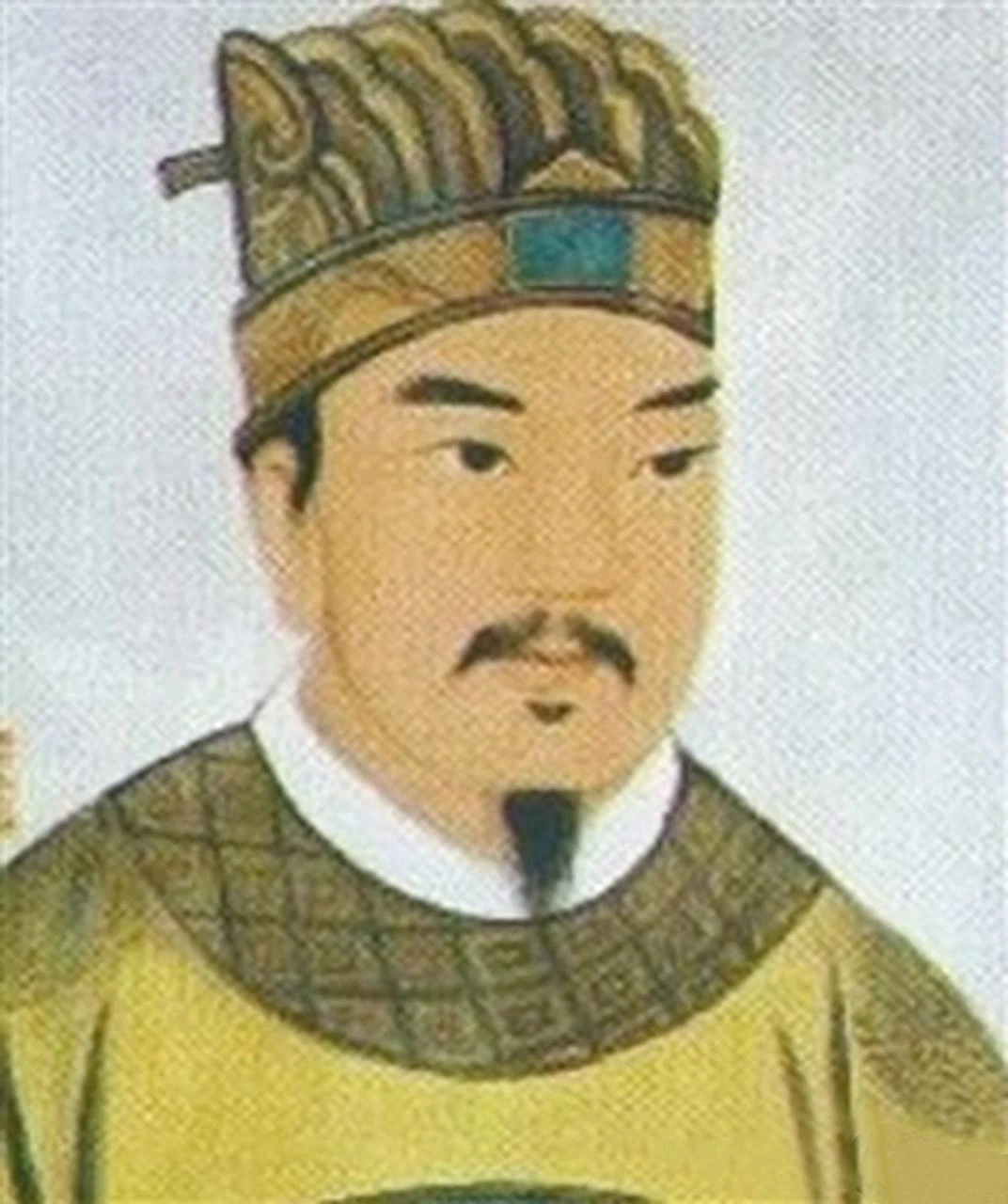
On the night of the second day of the seventh month of 324, a thousand men crossed the water south of Jiankang. The bridge had been burned the day before, so they crossed below it, in the dark, without lights. The column was led by Duan Xiu, a younger brother of the frontier general Duan Pidi, and by Cao Hun, a staff officer of the central army. At dawn they attacked the camp at Yuecheng. The rebels were still bringing their troops over the river, or waiting for the men who had not come, and the attack broke the forward line and killed the general in front of it, a man named He Kang. It was not a great battle. It was a raid of a thousand men on an army that had not expected to be attacked that morning, and it decided a war.
The emperor was twenty-five. He had been on the throne for a year and a half, and for most of that time the government had been conducted in his name by a general who was too ill to move and too strong to dismiss. Wang Dun had taken the capital once already, two years before, and since then the court had given him everything he asked for: the province that contained the capital, the yellow battle-axe, the sword-bearers, the right to memorialize without his name, to enter the hall without the quick step, to wear his sword and his shoes in the imperial presence. In the sixth month of 324 the emperor rode out of the city with a few attendants and looked at Wang Dun's camp. In the seventh month he broke the army that camp had sent against him.
Of the eleven emperors of the Eastern Jin, he is the only one who met a great minister's army in the field and destroyed it. He had fourteen months to live. The victory did not give the throne an army of its own. It rearranged the terms on which the throne shared power with the families, and the arrangement outlasted him by seventy years. This is an account of that victory, and of what it cost.
1. The Son of the Palace Woman
He was born in 299, when the court of Jin was still at Luoyang and the quarrels of the imperial house had begun to be settled with soldiers. His father, Sima Rui, was twenty-three, the prince of Langya, a distant cousin of the reigning line, and a man whose title was older than his reputation. His mother was a palace woman named Xun, a native of the Yan and Dai country on the northern frontier, and she was not the princess. The empress had no son of her own, and she resented the woman who did. The boy was the eldest son of the prince, and in a household where the wife was childless that was a position, though not a safe one.
He resembled his mother's people. The histories say that his beard was yellow and that he took his looks from the outside of the family, and in 324 this was the detail by which Wang Dun identified him. The general, waking from a dream in which the sun went round his camp, told his officers that the visitor must be the yellow-bearded Xianbei slave. It is the only description of the emperor's body that survives, and it is a slur delivered by his enemy. The court of Jiankang was a government of northern exiles in a southern country, and the emperor who saved it was, on his mother's side, from the frontier beyond the frontier.
The most famous story about his childhood is also the one that has been most often mistold. The Shishuo xinyu, a collection of anecdotes put together in the fifth century, says that when he was a small boy he sat on his father's knee and a messenger came from Chang'an. His father asked the messenger for news of Luoyang and wept. The boy asked why he wept, and his father told him about the loss of the north. Then he asked the boy whether Chang'an was nearer than the sun. The boy said that the sun was farther, because no one had ever heard of a man coming from the edge of the sun, while men did come from Chang'an. The next day the father told the story at a gathering of officials and asked again. The boy said that the sun was nearer. His father changed colour and asked why he had answered differently. Because, the boy said, one can look up and see the sun, and one cannot see Chang'an.
The Tang compilers of the Jin shu repeated the story in his annals, which is why it is often quoted as though it were a contemporary report. It is not. It belongs to the literature of precocious children, and its second answer is the answer of a courtier: the child says the thing that turns a political grief into a proverb. What makes it worth keeping is the geography inside it. The sun can be seen from Jiankang and Chang'an cannot, and that sentence is the whole position of the Eastern Jin. A boy who understood it early had understood the limits of his inheritance before he could read.
In 307 his father was sent south to take command of the country below the Yangzi, and the boy went with him. He was eight. The crossing of the river that year was the beginning of the family's luck and the end of its northern life, and for the child it was simply a move to a strange country whose great families spoke a dialect he had not heard and looked at his father's officers as visitors. He grew up in Jiankang, in a palace that was being built while he lived in it, among men who had come from the north with their households and their clients and their memories of a court that no longer existed.
In 313, when the court at Chang'an tried to organize the loyalist commands, he was given the title of general of the eastern household and a nominal post at Guangling. He was fourteen. Four years later his father took the title of king of Jin, and the boy became his heir; in 318, when his father took the imperial title, he became crown prince. The offices were formal, but the education was not. The emperor gave his son a copy of the Han Feizi, the hard manual of law and method, and told him to read it. Yu Liang, the brother of the girl who was to be his wife, objected. The book, he said, taught a meanness of spirit that damaged the state, and a crown prince should not have it in his hands. The prince listened to him and put the book aside.
The story is small and it is one of the few that show the future emperor being formed. He was raised to govern a state that had no army of its own, in a court where the law was the instrument of whoever held the pen, and the man who taught him to distrust severity was his wife's brother, the same man who would run the government after his death. The lesson did not hold. Seven years later, in the spring of 325, the same emperor restored the three-clans punishment, the harshest collective penalty in the code, and exempted only the women from it.
He was not a scholar by temperament. The Shishuo xinyu has another story about him, from the chapter on boldness. As crown prince he wanted to build a pond and a terrace, and his father refused permission. He kept a company of armed retainers in the Eastern Palace, and one night he set them to digging. By dawn the pond was finished. It was known afterwards as the Crown Prince's West Pond. The story is a joke at the expense of an indulgent father, but it is also a fact about the son: he had men, he could move them in the dark, and he did not accept a refusal.
The Tang catalogue of painters lists him among the artists of the period. It says that he was good at calligraphy and painting, that he had an eye for character, and that he painted Buddhist figures better than anything else. His teacher was Wang Yi, the uncle of Wang Xizhi, the man who was also the model for Wang Xizhi's calligraphy. He painted a Buddha in the Lexian hall, and the painting outlived him. The catalogue's author had seen a scroll of his on the poems of the Book of Songs. None of this made him a good emperor, but it made him a recognizably Eastern Jin emperor: a man of the palace, with a brush in his hand, in a state that had lost the north.
In 322 his father's general came down the river, took the capital, and killed the ministers he blamed for the war; the crown prince was twenty-three, in the palace, and could do nothing, and the details of that year belong to his father's reign.
2. The Inheritance
His father died in the intercalary eleventh month of 322, which fell in January of 323, and he took the throne the next day. The mourning was short and the amnesty was general, and the first business of the new reign was to confirm the man who had humiliated the old one. Wang Dun had withdrawn to the middle Yangzi after the coup of 322, and in the first year of the new reign he moved his headquarters downriver to Gushu, with an advance camp at Hu, within a few days' march of the capital. He took the title of governor of Yang province himself, the province in which Jiankang stood. It gave him the yellow battle-axe, the sword-bearers, the right to send up memorials without signing his name, the right to enter the palace without the quick step, and the right to keep his sword and shoes in the hall. These were the honours that had been given to regents and to usurpers, and the new emperor gave them to a man who had already used an army against his father.
The emperor was twenty-four. He had been a crown prince in a court that had been beaten, and he understood the arithmetic of the capital better than anyone in it. Jiankang was a city of exiles. The great families of the north had come south with their clients and their tenants, and the lands they held were held as much by influence as by title; the southern families, the Gu, the Lu, the Zhou and the Zhang, had been there for centuries and had no reason to love the newcomers. An emperor who wished to raise troops had to ask the households for men, and the households had to be persuaded that the emperor's war was their war. Wang Dun, who had an army of his own, did not have to ask.
The court's answer was the same as his father's had been: it put Wang Dao at the centre. Wang Dao was Wang Dun's cousin, the man who had built the southern government out of a provincial command, and the one politician in Jiankang whose name could hold the northern families together. At the new emperor's accession he was promoted from minister of works to minister over the masses and confirmed as the recipient of the late emperor's testament. The arrangement was a sentence in the form of a government: the dynasty would be run by the Wang family, and one branch of it would be run from the palace and the other from the army.
The men around the emperor were his own generation. Wen Jiao had been his friend before he was his minister, and so had Yu Liang; the two of them had been the companions of the Eastern Palace, and the Jin shu calls them his friends of the plain cloth. Wen Jiao was made director of the palace secretariat. Yu Liang, the empress's brother, was offered the headship of the office and, after a public refusal, took it anyway. Bian Kun, a hard, exact man of the old bureaucracy, held one of the senior posts in the department of state affairs. Lu Ye of the Wu commandery, a southerner, commanded the palace guard. Xi Jian, who had held the north bank at Hefei with a small army, was the only soldier of rank who was not in Wang Dun's camp.
The first crack in the arrangement came from inside Wang Dun's own staff. Wen Jiao had been sent to Gushu in the previous year, on the business of the court, and Wang Dun had kept him. In the spring of 324 Wang Dun decided to send him back to Jiankang as governor of Danyang, the capital district, and Wen Jiao understood what the appointment meant: he would be the general's man inside the palace, or he would be the palace's man inside the general's staff. Before he left he praised Qian Feng, Wang Dun's chief strategist, to his face, and recommended him for promotion. He wept when he said goodbye, and went out of the room and came back in, three times, as though he could not bear to leave. Qian Feng watched him go and told Wang Dun that Wen Jiao was too close to the court to be trusted. Wang Dun, who had seen the tears, dismissed the warning.
Wen Jiao reached Jiankang and reported everything. He told the emperor what he had seen at Gushu: the size of the camps, the state of the stores, and the one fact that mattered more than all of them. Wang Dun was ill, and the illness was not a diplomatic illness. He asked the emperor to prepare, and the emperor prepared.
The timing was the whole of the plan. Wang Dun's health had been failing since the winter; in the fifth month he took the extraordinary step of issuing an edict in the emperor's name, without the emperor's knowledge, appointing his adopted son Wang Ying general of the martial guard. The appointment put a Wang in command of the troops at the palace gates. It was either a precaution against a coup or the preparation of one, and the court could not wait to find out which. In the same weeks the emperor's agents reported that the general's household at Gushu had begun to behave like a court: officers were being appointed without reference to Jiankang, and the men who took those appointments looked to Gushu for their orders.
The emperor struck first. His edict against Wang Dun was issued in the seventh month, and it is a remarkable document, because it is written for the army rather than for the court. It lists the general's crimes in the language of a prosecutor, and then it does something more practical. Anyone who killed Qian Feng and sent his head to the capital would be made a marquis with five thousand households. Every official and officer who had taken office from Wang Dun would be left alone. Soldiers who were the only sons of their families would be sent home and exempted from service for life; the rest would be given three years' leave and then return to the same rotation as the palace guards. The edict claimed thirty thousand men under Wang Dao and thirty thousand under Wang Sui, inspector of Xu province, moving on ten roads. The numbers were a claim, not a count, and the men who wrote them knew it. What the edict was doing was separating Wang Dun from the people who served him. It offered the clients of the Wang family a way out that did not require them to betray the family.
Wang Dao was made grand commander of the armies and inspector of Yang province. It was the only appointment that made political sense and the worst one that could be imagined. The commander of the capital's defence was the cousin of the man attacking it, and his own brother and nephew were in the enemy camp. The court needed Wang Dao's name to hold the northern households, and Wang Dao needed the court to prove that a Wang could be a loyalist. Neither of them could afford to lose the other.
Wang Dun answered the edict with a memorial of his own, in which he demanded the execution of Wen Jiao and the other ministers he called traitors. Then he put his elder brother Wang Han in command of the army and sent it down the river. The sources give its size as fifty thousand men, water and land together. The figure is the kind of number that a court under attack remembers, and it should be treated as a figure rather than a count. What is certain is that it was larger than anything the capital could put in the field, and that it arrived at the south bank of the river below Jiankang at the beginning of the seventh month.
3. The Ride to Hu
Before the army moved, the emperor went to look at it. In the sixth month, with a few attendants and no banner, he rode out of the city on a horse of the Ba-Dian breed, the small, hard horses that came from the southwest, and went as far as Hu, where Wang Dun's advance camp stood. He rode around the camp, looked at the entrenchments and the roads, and turned back.
The Jin shu tells what happened next as a set piece. A soldier in the camp noticed that one of the riders did not look like a trader or a courier. Wang Dun was asleep in the afternoon and dreamed that the sun went round his camp. He woke with a start and said that it must be the yellow-bearded Xianbei slave, come to look at him. He sent five horsemen after the visitor. The emperor rode hard. When his horse dropped dung on the road, he stopped and poured water on it, so that the pursuers would find it cold and think he was far ahead. At an inn he saw an old woman selling food, gave her a whip ornamented with the seven treasures, and told her to show it to the riders when they came. The riders came, asked which way he had gone, and she said he was already far. Then she showed them the whip. They passed it from hand to hand and admired it for a long time, and when they went on they found the dung cold, and gave up.
The story is the only passage in the imperial annals that describes the emperor's body in motion, and it has the shape of a tale that has been told before. The dream of the sun, the epithet, the precious whip, the cold dung, the old woman at the inn: every detail is a piece of craft, and the craft is that of the storyteller rather than the clerk. It may be true. A young man who kept armed retainers in the Eastern Palace and dug a pond in one night was capable of riding to an enemy camp to see it for himself. But the Jin shu was compiled in the seventh century from materials that had passed through three hundred years of retelling, and the reader should keep the difference in mind between a report and a story that has been polished by the people who repeated it.
The story had a long life. In the ninth century the poet Wen Tingyun read a text of the Jin shu that had no punctuation, took the words "at Hu, secretly" for the name of a place called Huyin, and wrote a ballad about the rider and the whip. A Song poet repeated the mistake, and a pavilion was later built at Wuhu on the supposed site. A sentence in an annal had become a landscape.
What matters for the history is not whether the whip was real but why he went. The court had no trustworthy commander and no reliable intelligence. Its best soldier, Xi Jian, was a provincial inspector with a few thousand men; its best politician, Wang Dao, was the enemy's cousin; its palace guard was small and its provincial levies had not arrived. The emperor's only advantage was that he could see for himself. He had spent his boyhood in a court where information was the one thing that could not be bought, and he had learned to go and get it.
The ride also fixed the terms of the coming battle. Wang Dun was ill and his camp was at Hu, forward of his base at Gushu. An army that keeps its commander in a tent a few days from the capital is an army that intends to move quickly. The emperor came back knowing that the attack would come down the river and that it would come soon, and that the only place to stop it was the water south of the city.
4. The Bridge and the Crossing
The attack came at the beginning of the seventh month. Wang Han brought the army to the south bank at Jiangning, opposite the city, and the capital panicked. The government's dispositions were made in a single day. Wang Dao was grand commander and inspector of Yang province. Wen Jiao was given the command of the northern approaches and sent to hold Shitou, the fortress on the river west of the city, with Bian Dun, general of the right. Ying Zhan was made general protecting the army and given the forward command and the military affairs south of the bridge. Xi Jian was made acting general of the guards and commander of the troops that would accompany the emperor. Yu Liang took the left guard, Bian Kun the central army. The emperor moved his headquarters to the Zhong hall and then to the Nanhuang hall.
The first decision of the battle was to burn the bridge. The Zhuque bridge was a pontoon of boats laid across the Qinhuai, the river south of the city, and it was the road by which the southern suburbs, the markets, and the tombs of the emigrant families were connected to the capital. Wen Jiao ordered it burned. The emperor, who had intended to go out and fight in front of it, was furious when he heard. Wen Jiao answered him with the plainness of a man who had already counted the troops: the guards were few, the levies had not come, and if the rebels broke through the altars of the state would not survive. The bridge was worth less than the temples.
The answer was correct and it was also an admission. A government that burns the bridge to its own southern suburbs has decided that it cannot hold the far bank. The emperor understood the admission and disliked it. He had wanted to lead the army out himself, and the men around him spent the first days of the emergency talking him out of it.
The most important document of those days was not an edict but a letter. Wang Dao wrote to his elder brother Wang Han, in the enemy camp, and the letter was written to be read aloud. He said that in the former affair, when the general came down the river the first time, men like himself had hoped for help from outside, because the court was divided and no one knew whom to serve. That was no longer true. The late emperor had restored the dynasty and the people remembered him; the present emperor was intelligent and his character was known through the court and the country. Wang Han's present enterprise, he wrote, could not be compared to the former one. Then he said the sentence that the historians kept: my house, great and small, has received the state's deep kindness; in today's business I stand openly at the head of the six armies, and I would rather die a loyal minister than live a scoundrel.
The letter did three things at once. It severed the clan in public, which was necessary because the court could not fight a family and a rebellion at the same time. It told the northern households that the minister over the masses had chosen the dynasty. And it admitted, in its first sentence, that in 322 Wang Dao had hoped for his cousin's victory. That admission is the most honest sentence in the record of the Wang family, and it is also the measure of what the emperor had to work with: his first minister had once bet on the other side, and the letter that saved the court was also the letter that confessed it.
Xi Jian gave the second counsel. The emperor wanted to go out and fight; the generals argued about whether the city could be held; Xi Jian told him not to stake the state on a single morning. The rebels, he said, could be beaten by stratagem but not by force. If the court put its few men against a stronger enemy and lost, there would be no second army and no second court to raise one. The emperor listened and stayed inside the wall.
The raid was made instead. On the night of the second day of the month, the emperor gathered a thousand armored men, put them under Duan Xiu and Cao Hun, and sent them across the water below the burned bridge. They attacked at dawn. The rebel forward camp at Yuecheng was not entrenched, and its officers were still deploying the troops that had crossed in the night. The attack killed the commander of the forward line, He Kang, and broke the camp. It was a small victory, of the kind that changes nothing on a map. It changed the politics of the war, because it proved that the emperor's men would fight and that the rebels could be hurt.
Wang Dun heard of the defeat at Gushu. He was dying, and the news killed him faster. He said that his brother was an old serving woman, that the house was finished, that the world had gone. Then he tried to rise, to go and lead the army himself, and his body would not hold him; he lay down again. He told his uncle Yang Jian and his son Wang Ying that when he died Ying should take the throne, appoint the officials, and see to the burial afterwards. He died soon after. He was fifty-eight, fifty-nine by the count of his court.
Wang Ying did what he had been told to do with the body and not with the throne. He kept the death secret, wrapped the corpse in a mat, sealed the mat with wax, buried it under the floor of the hall, and went on drinking with his friends. The army at Jiangning was told nothing. For the next few days the rebellion was commanded by men who did not know whether their leader was alive, and who were fighting for a cause that had lost its head.
The end came quickly. The rebels burned their camp and fled in the night. The emperor returned to the palace and declared a general amnesty, from which the party of Wang Dun was excluded. The amnesty was the edict's promise being kept: the followers who had come over were spared, and the leaders were not.
5. The Reckoning
The pursuit was carried out by the men who knew the country. Shen Chong, the great man of Wuxing who had brought the southern counties into the rebellion, lost his way in the hills and came in the dark to the house of a man named Wu Ru, who killed him. Qian Feng reached the island of Helu in the river and was killed there by Zhou Guang. Wang Han and Wang Ying took a single boat and fled up the river to Jing province, where their cousin Wang Shu was inspector. Wang Shu had them taken out into the Yangzi and drowned.
The family that had made the rebellion ended it. Wang Shu was a cousin of both Wang Dun and Wang Dao, and the two men he drowned were his own kin. The historians do not record what he said. What they record is the shape of the thing: the Wangs had produced a rebel, the Wangs had produced the general who defeated him, and the Wangs produced the officer who drowned the survivors. A clan that could do all three was a clan that could not be abolished, and the court understood that as well as anyone.
The corpse was dealt with by the department of justice. The officials dug up the grave under the hall, took out the body, burned the clothes and the cap, made the corpse kneel, and struck off the head. The eulogy in the Jin shu compares the exposure to the head of Wang Mang hung at dawn and the navel of Dong Zhuo burned as a lamp. The comparison is exact in its way. Both men had been punished after death because the living had not been able to punish them, and the ritual was a substitute for a power the court had not possessed while the man was alive. The emperor who had ridden to Hu to look at the camp now had the camp's master on his knees, dead, with his head off.
The amnesty was general and the exceptions were precise. The officers who had served Wang Dun and come over were not prosecuted; the men who had been his friends to the end were killed or exiled. The distinction was the emperor's own policy, and it was the most intelligent thing he did in the war. He had fought a man, not a family, and he had offered the family's clients a way to survive without the man. A court that had been unable to raise an army had just won a war by dividing the enemy's household from the enemy's person.
The rewards were distributed in the tenth month. Wang Dao was made duke of Shixing and grand guardian, with his post as minister over the masses unchanged. Wen Jiao was made duke of Jianning and general of the vanguard. Xi Jian was made general of the chariots and cavalry. Ying Zhan, Bian Kun, Yu Liang and the officers of the palace guard were promoted. The men who had won the war were the men who had been closest to the throne before it began, and the first name on the list was the cousin of the enemy.
In the twelfth month the emperor went out to the Jianping tomb, where his father was buried. The annals record the visit in a single line. It was the end of the mourning year and the end of the war year, and the son who had left off his mourning clothes to go to the battlefield came back to the tomb in the proper season. The Jin shu's phrase for what he had done that summer is "he took off the hemp and went onto the field of arms." The phrase is a historian's compliment, and it is also a description of the cost: the campaign had been fought in the mourning period, by a son who had not finished mourning his father.
6. The Terms of Peace
The new year brought the bill. In the second month of 325 the court restored the three-clans punishment, with the single qualification that it did not reach women. The abolition had been one of the achievements of the dynasty's first years: the emperor Huai had abolished the punishment in 307, at the beginning of his reign, as a gesture of lightness. The restoration was justified by what had just happened. A later commentator put it plainly: the three clans were restored after the great treason of Wang Dun, to deter the like of it, and women were exempted out of pity for the innocent.
The law is the clearest evidence of what the victory had done to the victor. The emperor had been raised on the Han Feizi and argued out of it by his wife's brother; he had just fought a war in which the enemy's clan had been destroyed and his own clan had been split; and his first act of peace was to bring back the most terrible penalty in the code. He did not bring it back whole. The exemption of women was a real limitation, and it shows a court that knew what it was doing. But the direction is unmistakable. The dynasty had learned to punish a family for the acts of one man.
In the third month he made his son Sima Yan crown prince. The boy was four years old by the western count and five by the count of the court. The succession was fixed, and it was the most important political act of the reign, because it told every family in the capital what the future looked like: a child on the throne, a young empress dowager behind him, and a regency of the men who had won the war.
The commands were divided in the same year. Tao Kan, who had been kept at a distance by Wang Dun and had spent the previous years in the south, was made commander of the military affairs of Jing, Yong, Yi and Liang, grand general who conquers the west, and inspector of Jing province. He held the whole upper river, from the gorges to the Han. Xi Jian was made commander of the military affairs of Xu, Yan and Qing, inspector of Yan province, and sent to hold Guangling on the north bank. Wen Jiao stayed at the capital for the moment, and would be sent to Jiang province after the emperor's death.
The settlement was a map. The upper river was given to the best soldier in the state, who was also the man with the least reason to love the Wang family. The north bank was given to the one general who had refused to join Wang Dun. The capital was kept by Wang Dao and the palace guard. No single man held two of the three, and the river that had carried Wang Dun's army to the capital was divided among three commands that could not easily be combined. The Jin shu calls this "reducing the military power and dividing the provinces of the Jiang and Han," and it treats it as the reign's lasting work.
The emperor also had to manage the family that had won with him. Yu Liang was his wife's brother, the companion of his boyhood, and the man who had argued him out of the Han Feizi. In 323 the emperor had offered him the headship of the palace secretariat; Yu Liang had refused it in a public memorial, on the ground that a brother-in-law in the inner office would look like favouritism and would give the court's enemies an argument. The emperor accepted the refusal, and then gave him the office anyway. The memorial is preserved in the Wen xuan, and it is a careful piece of political writing: the refusal is sincere, and its effect is to make the appointment look like a necessity rather than a favour.
The same logic ran through the emperor's dealings with the south. In the eighth month of 325 he issued an edict calling for the descendants of the great ministers and worthies of the state of Wu. The edict was a gesture toward the families who had been in the country before the exiles came. It cost nothing and it said something: the dynasty was not only a northern government in a southern city, and the men who had served the old Wu court had a place in the new one. Lu Ye, the southerner who commanded the palace guard, was the proof that the gesture was not empty.
The court of those two years had a style of its own. The emperor painted, enjoyed the metaphysical talk of the day, and kept the company of men who talked well; the empress's family was cultivated and strict; Wang Dao governed with a lenience that irritated the exact men around him. It was a court that had just won a war and was trying to look as though it had never needed to fight one. The pose was not false. It was the pose of a government that had discovered how thin its army was and had decided to govern by balance instead.
7. The Heir
In the intercalary eighth month of 325 the emperor fell ill. The illness was short. On the day he took to his bed he summoned seven men: the grand steward Sima Yang, prince of Xiyang; Wang Dao; Bian Kun, director of the department of state affairs; Xi Jian, general of the chariots and cavalry; Yu Liang, general protecting the army; Lu Ye, commander of the palace guard; and Wen Jiao, governor of Danyang. They were told to receive the testament and assist the crown prince.
Yu Liang used the deathbed to settle a score. He told the emperor that the prince of Xiyang and the prince of Nandun, Sima Zong, were plotting to remove the ministers and take the regency for themselves, and he asked permission to dismiss them. The emperor refused, and the prince of Xiyang remained among the men who received the testament. The refusal was his last political act, and it was overruled within a year: after his death Yu Liang had Sima Zong killed and the prince of Xiyang demoted. The emperor had tried to leave his cousins in the room where the succession was decided, and the man who inherited his authority removed them from it.
The testament itself is a short document, and its tone is not the tone of a conqueror. It begins with the commonplaces of the grave: since antiquity there has been death, and the sage and the worthy share it; long life and early death, success and failure, come to the same end; there is nothing to grieve over. It ends with a sentence that the historians kept: I shall go underground without regret. He was twenty-six, twenty-seven by the count of his court. The man who had ridden to an enemy camp, burned his own bridge, and dug up a corpse had nothing to say at the end except that he had no complaint.
He died on the day after the edict, in the eastern hall, and was buried at Wuping, outside the capital. The crown prince was four. The empress dowager, Yu Wenjun, took the seat behind the screen, and the government was conducted by Wang Dao and Yu Liang, with Yu Liang, as director of the palace secretariat, deciding the business that came before it. The testament had named seven men. The power in it belonged to two, and of the two the one with the army was the empress's brother.
The arrangement lasted two years. In 326 Yu Liang killed the prince of Nandun, and in 327 the general at Liyang, Su Jun, who had been summoned to the capital and refused to come, marched on Jiankang. The details belong to the reign of the child. What belongs here is the shape: the men who put down Wang Dun were the men who made the next rebellion possible, and the emperor's death was the moment the victory passed from the throne to the families.
8. The Verdict of the Histories
The Jin shu's appraisal of him begins with the geography of the dynasty. The court, it says, had its house in the south, against the great river, with the state of Chu always at war on the upper waters and the city of Fangcheng facing the enemy. A government in that position had no choice but to trust its generals and give them the command. The appraisal then makes its central judgment. With fleets in the tens of thousands and soldiers twice the number of the royal house, the man who held that advantage and did not want it was the Duke of Zhou. The Duke of Zhou is Wang Dao. The historian is saying that the first minister could have taken the throne and did not, and that the emperor's victory rested on that refusal.
The appraisal turns to the emperor himself. He was the wise sovereign who received the plan, it says, in the days when the dynasty's authority had been lent to others and the rift had opened inside. He kept the art of war in his hand and raised the heavenly banners on the riverbank; he burned the remnants like a fire on an autumn plain. He took off his mourning clothes and went onto the field of arms; he cut off the head of the whale and then worshipped at the tomb. He reduced the military power and divided the provinces of the Jiang and Han, so that the overturned cart would not be followed again, and he left a plan for his descendants. Then the sentence that measures the whole reign: seventy-odd years later, the dynasty still fell to the treason of Jingdao.
Jingdao is the courtesy name of Huan Xuan, who took the throne in 403. The historian is not blaming the emperor for Huan Xuan. He is measuring the settlement: the arrangement of 324 kept another Wang Dun from happening for seventy years, and then it failed in a different way, because the men who were supposed to balance one another had learned to combine. The appraisal's last words are the fairest summary in the record: he reigned for a short time, but his design reached far.
The eulogy is shorter and stranger. It calls him precocious, with the military dispatches at his fingertips. Then it gives two images: the head of Wang Mang hung at dawn, the navel of Dong Zhuo burning at dusk. The first line is about a clever young man; the last two images are about a corpse. The reign lies between them.
The posthumous name was Ming, which the old glossary defines as "shining on the four quarters," and also as "thinking far and deciding." Both definitions describe the quality the sources notice in him: he saw. He saw the camp at Hu, the weakness of the bridge, the use of the generals, the need to divide the enemy's household from the enemy's person. The name is a court's judgment, and it fits the record.
The later images are all images of cleverness. The child who said that the sun was nearer than Chang'an; the rider who left a jewelled whip with an old woman; the emperor who painted a Buddha in a palace hall and whose picture survived the fighting. None of these stories is about the price. The price is in the documents: the three-clans law, the seven names at the deathbed, the child on the throne, the general at Liyang.
It is tempting to ask what would have happened if he had lived. The sources do not answer, and the question is asked because the reign is short, not because the evidence permits a reply. What can be said is what the Jin shu says: the design outlived the man. He was twenty-six when he died. The dynasty lasted ninety-five years after him, and the balance he built was credited with seventy. The first number is the measure of what he saved; the second is the measure of what he made.
He had gone out to his father's tomb in the last month of the war year, and he was buried in his own tomb nine months later. The state he left was stronger than the one he had inherited and less his than he had hoped. That is the ordinary fate of a successful counterattack in a state that is governed by families, and it is the reason his reign is remembered as a brilliance rather than a foundation.