Home / Emperors / Han Dynasty
Emperor Huan of Han
汉桓帝
Liu Zhi, 132 – 168 · eleventh emperor of the Eastern Han
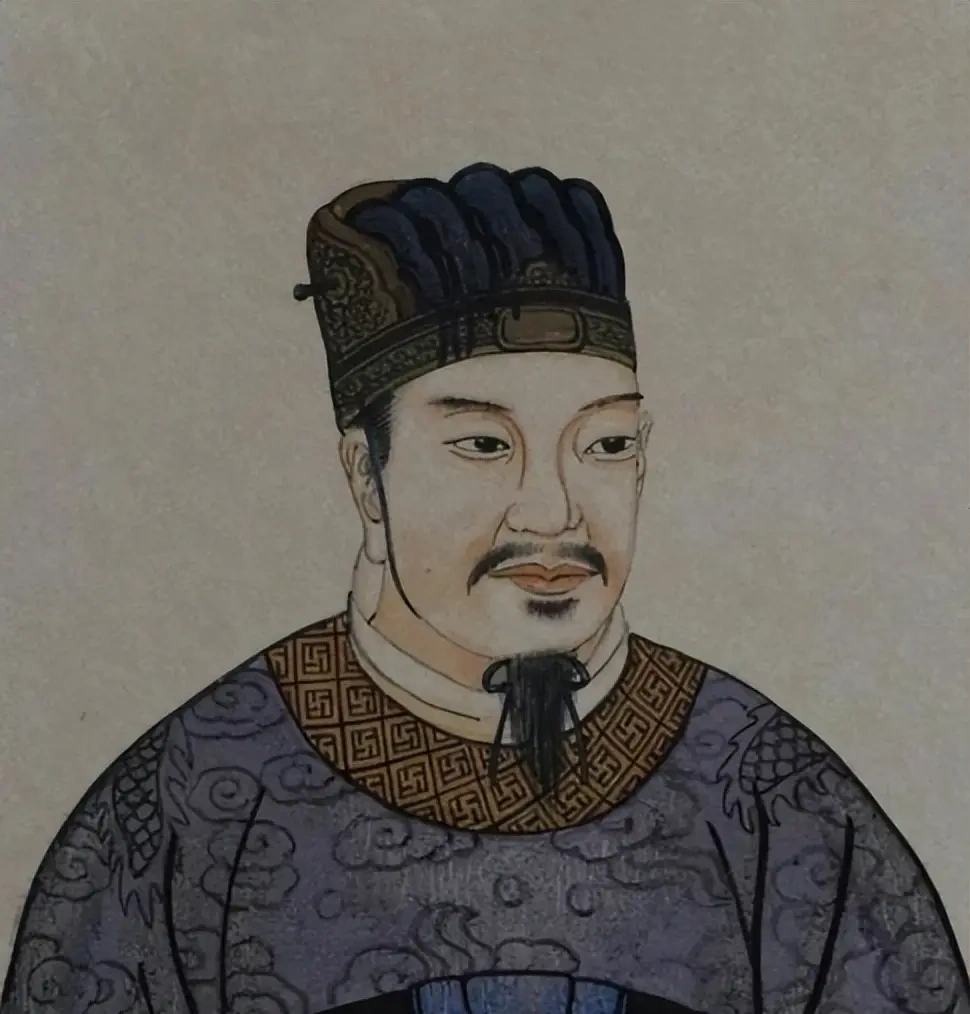
In the fourth month of 146 a fifteen year old marquis of a cadet branch of the imperial house was brought to the Xiamen pavilion outside the wall of Luoyang to be married. The bride was the younger sister of the empress dowager. The wedding was never finished. In the intercalary sixth month the child then on the throne died, and on the gengyin day of that month the same empress dowager and her brother, the General-in-Chief of the house of Liang, sent the boy into the Southern Palace in a prince's blue-canopied carriage. He was emperor before the day was out.
He reigned twenty-two years. In the first thirteen of them three people governed: the empress dowager, her brother, and her brother's wife. In 159 he destroyed them, took their fortune, halved the land tax on the strength of it, and then gave the government to five eunuchs who had watched him bite through one of their arms to seal the bargain. He sold ranks and titles to pay for wars he could not afford, built altars in his own palace to Huang-Lao and to the Buddha, and in the last two years of his life had the students of the Imperial Academy and the officials who admired them arrested as a faction and forbidden ever to hold office again. He died at thirty-six without an heir. What the dynasty spent in those twenty-two years was not chiefly territory or treasure. It was the belief of its officials that the court could be worked with.
1. The Marquis of Liwu
Liu Zhi was born in 132 in Liwu, a small marquisate in the north of Jizhou, and he was a great-grandson of the emperor Zhang. The descent ran through his grandfather Liu Kai, king of Hejian, and through his father Liu Yi, marquis of Liwu, who was one of the sons of kings. The record preserves one earlier notice of Liu Yi: in the last years of the empress dowager Deng the court had brought the sons of the kings of Hejian and Jibei to Luoyang for inspection, the dowager admired the son of the king of Hejian and kept him in the capital, and the suspicion that she meant to set him on the throne in place of the emperor An was among the fears that destroyed her family in 121. That was the whole of his family's brush with greatness before 146, and it had ended with the annihilation of the empress dowager's own house.
His mother was a woman of the Yan family, a concubine of his father's household rather than a wife. A prince of this kind — imperial blood three generations back, a kingdom reduced to a marquisate, a mother with no family behind her — had in ordinary times no prospect at all. In the circumstances of the 140s it was the prospect, because a boy of that pedigree had a claim that could be used and nothing in him that needed to be feared.
His father died in 145 and he succeeded to the marquisate at fourteen. He had been taught by a man of Ganling named Zhou Fu. The record's only description of the boy himself is that he was of uncommon beauty of person and that he loved music, playing the qin and the sheng well. In the fourth month of the following year the empress dowager summoned him to the Xiamen pavilion outside the city, because she intended to marry him to her younger sister.
The wedding was not finished, because in the intercalary sixth month the child on the throne died. He was eight years old and left no son, and the senior officials met to choose his successor. The Grand Commandant Li Gu, the Excellency over the Masses Hu Guang, the Excellency of Works Zhao Jie, and the chamberlain for ceremonies Du Qiao all recommended Liu Suan, king of Qinghe, who stood nearest to the throne in senior descent, was grown, and had a name for strictness and ability.
Liang Ji did not want him. On the night after the meeting a regular attendant named Cao Teng went to Liang Ji's house. He had once paid his respects to the king of Qinghe and had received no courtesy for it, and he now put the case to the general in the plainest terms in the record. The king of Qinghe was strict and clear-sighted; if such a man became emperor, the general would not be safe. The marquis of Liwu was about to marry the general's own sister; make him emperor and the general's wealth and place would last his lifetime. The next day Liang Ji put the question a second time, and this time in a temper, and everyone from Hu Guang and Zhao Jie downwards said that they would do as the general ordered. Li Gu and Du Qiao alone held to their recommendation. Liang Ji called the meeting off. He then had his sister strip Li Gu of the Grand Commandancy, so that the man with the strongest argument had no longer any standing to make it, and the marquis of Liwu was chosen. Cao Teng and six others were made marquises of a township for their part in the decision. The eunuch's adopted grandson would one day be the man who ended the dynasty.
The proclamation announcing the choice gave its reasons in the idiom of the dynasty: the weight of the altars of soil and grain, the examination of the worthy among the imperial house, and the fitness of the marquis of Liwu, who was fifteen, of admirable appearance, and lately made an heir of the emperor Shun. The last clause was the significant one. He was not descended from Shun but from Shun's great-uncle's line, and the fiction of an heir suited the empress dowager, who had been Shun's wife and who meant the throne to pass as though through her. On the gengyin day of the intercalary sixth month, 146, Liang Ji went out with the imperial tally and the blue-canopied carriage of a prince, brought the boy into the Southern Palace, and he took the throne the same day. The empress dowager continued to hold the court.
In the ninth month his grandfather Liu Kai was named emperor Xiaomu and his father Liu Yi emperor Xiaochong, with a tomb-mound raised for him at Boling; in the tenth month his mother was given the style of a noble lady at the Boyuan park. A man who is made emperor must be the son of an emperor, and since his father had been a marquis the state manufactured the father. The boy who received this, at fifteen, understood what he had been chosen for: he was not formidable and he had no party.
2. The Regency and the Two Officials
The empress dowager Liang Na was in the nineteenth year of her public life when her husband's successor was chosen. She had been thirteen when she entered the palace in 128, empress at seventeen, consort of a man who died at thirty; she had been ruling in the name of a two year old and then of an eight year old, and she was to rule another four years in the name of the boy she had married into her own family. The record of her government is unusually fair to her and unusually specific. She worked early and late, trusted the able, and leaned on the Grand Commandant Li Gu; she promoted honest men, kept down extravagance, and punished the rapacious among the officials; she sent out troops against bandits in the provinces and quieted them; and the judgement recorded is that the empire was orderly and the ancestral temples were at peace. Against that the same passage sets the other half: her brother the General-in-Chief poisoned the child emperor, held the government by force, killed the good, and misled her with false arguments until she agreed to set up the emperor Huan and to destroy Li Gu; and she was fond of the eunuchs and gave them a great deal. The men who wrote the record did not think they were being inconsistent.
The marriage that had been interrupted was completed in 147. In the eighth month the empress dowager's sister, Liang Nüying, was made empress, and the ceremony followed the precedent of the emperor Hui's marriage in the Former Han, with the betrothal gift of twenty thousand catties of gold and the proper presents of geese, jade, horses and silk. Her establishments, the record says, were twice those of any empress before her.
The first months of the reign show a government at work. In the seventh month of 146 an edict on recruitment ordered that candidates for the filial and incorrupt had to have served ten years and reached the rank of a hundred shi, that men of exceptional talent should not be bound by the rule, and that the sons of corrupt officials should never be recommended at all. When a solar eclipse opened 147 the three excellencies, the nine ministers and the colonels were ordered to state what was wrong. After an earthquake in the fourth month the court called for men who could speak frankly to the point of giving offence, and invited every rank down to the palace gentlemen to send in sealed memorials naming the faults of the government. In the same month an edict forbade commanderies and provinces to browbeat or expel their own magistrates, made the inspector or the officer of two thousand shi liable for any magistrate who had taken more than three hundred thousand and had not been impeached, and provided that anyone who lent or borrowed an official seal and ribbon should be punished as a murderer. The measures are the ordinary equipment of a reforming court, and they matter here only because of what came next in the same year.
In the eleventh month of 147 the king of Qinghe's name was used again. A man of the region named Liu Wen rose in revolt, killed the chancellor of the kingdom of Qinghe, and declared for Liu Suan as emperor. The rising was put down quickly, Liu Suan was degraded to a marquis, sent south to Guiyang, and took his own life there. But the incident gave Liang Ji the instrument he had been waiting for. The two men who had opposed the accession, the former Grand Commandant Li Gu and the chamberlain for ceremonies Du Qiao, had held out at the council against the general in a matter the court had not forgotten. Now both were accused of conspiring with the king of Qinghe to put him on the throne. Liang Ji asked the empress dowager to have them arrested.
What followed shows both the limits of her authority and the depth of his. She knew Du Qiao to be loyal and refused. Liang Ji took Li Gu first. Li Gu's own student, a man of Bohai named Wang Diao, came to the palace in a cangue with a memorial attesting his teacher's innocence, and dozens of men of Henei came to the gate to plead; the empress dowager, seeing it, ordered Li Gu released. When Li Gu came out of the prison the streets and alleys of Luoyang shouted out for joy as one. Liang Ji was frightened by it and, taking the old charge up again, had him arrested a second time, and he died in prison. Du Qiao was told that he might keep his family if he killed himself; he refused, and was arrested and died there too. The bodies of both were thrown out on the main road north of the city with a notice that anyone who came to weep over them would be charged with the same crime. The students of Li Gu came anyway, and a former subordinate of Du Qiao sat by the corpse for twelve days until the empress dowager allowed the two men to be buried.
The men who had given way were rewarded in the same months. Hu Guang, who had said that he would do as the general ordered, and Zhao Jie with him, were made marquises. The capital made a song out of it: straight as a bowstring, dead by the roadside; crooked as a hook, made a marquis. The empress dowager had saved the innocent men once and then let her brother take them the second time, and the reward for holding out was a corpse in the road.
In the first month of 148 the emperor, at seventeen, was capped and took the cap of manhood, which is what a Han ruler did when he was old enough to be considered grown. Nothing about the government changed. In the fifth month of 149 an edict on the occasion of a solar eclipse ordered that all those who had been sentenced for portents and black magic, with their collateral kin, and the officials and commoners who had been reprieved from death and sent to the frontier, should be allowed back to their own commanderies — a general act of clemency of the kind the dynasty performed whenever the sky misbehaved, and the clearest mark in these years that an emperor existed.
At the beginning of 150 the empress dowager gave the government up. Her edict of abdication gives her reasons. She had come into the throne room after the death of a husband and a stepson and a child she had chosen, and she had meant, she said, to hand over the government as soon as the emperor took the cap; but the roads were still troubled, so she had put it off until things were quiet. She invoked the classical phrase about restoring the son to his place and declared that from this auspicious day the emperor was to rule. In the second month, on the jia-yin day, she summoned the palace staff and the Liang brothers to the Xuande hall and told them, in a short speech the record keeps, that she had long had a knot of illness beneath the heart, that the swelling had grown and she could no longer eat, and that she could not go on with the great ministers; that she had set up the present emperor and regretted only that she had not lived to see him through; and that she left him and her brothers to the care of the court. Two days later she died. She was buried with the full rites of an empress, beside the emperor Shun at Xianling.
The emperor's first act after her death was to enlarge her brother. Liang Ji was granted ten thousand more households, which with what he had inherited made thirty thousand; his wife Sun Shou was made lady of Xiangcheng with the revenue of Yangzhai, fifty million cash a year, and the crimson cord and the treatment of a princess of the first rank. The grant is recorded without comment, and it can be read either way: the act of a man who was afraid, buying safety from the man who had made him, or of a man who knew he was not yet strong enough to refuse.
In the fifth month of the same year the emperor did the one thing a ruler in his position could do without permission. His own mother, who had been living as a noble lady at the Boyuan park, was made the empress dowager Xiaochong. She was given a palace with its own household staff, on the pattern of the palace of a dowager, and nine counties of Julu for her support. Having had his father manufactured into an emperor he now had his mother dressed as an empress dowager, and that was the extent of what he could do for her. She died two years later, in 152.
At the beginning of 150 he was nineteen, and he was declared to be governing. For the next nine years the record contains almost no act of his own.
3. The House Above the Throne
The one story of these years in which the court behaved as a court should is small and has no consequence. On the first day of 151, at the new year audience, Liang Ji came into the palace wearing his sword. The master of writing Zhang Ling ordered him out, called on the forest of feathers and the rapid as tigers to take the sword from him, and when Liang Ji knelt and apologized would not answer him; he then impeached the general and asked that the commandant of justice try him. The emperor ordered that the crime be redeemed with a year's salary, and every official in the hall, the record says, was awed. It is the last time in the reign that anyone in the central government stood in front of the Liang with the law in his hand. In the same year the emperor summoned the whole court to consider how the general should be honoured, and the answer was a list of privileges such as the dynasty had given once before, to Xiao He and to Huo Guang. Liang Ji was not to hurry when he came into the presence, was to wear his sword and his shoes in the hall, and was not to be named when he was announced. His fief was increased to four counties. He was to sit apart from the three excellencies at audiences. He was to come into the palace once every ten days and to settle the business of the secretariat. The privileges were published to the empire and made law for all time. And Liang Ji, the record says, thought the honours too small and was displeased.
What he did with the position can be told through the cases the record happened to preserve. A man of Xiapi named Wu Shu was appointed magistrate of Wan and came to say goodbye; Liang Ji, whose dependants were thick in that county, asked him to look after them. Wu Shu answered that wicked men ought to be killed and that he would not take the instruction. He went to his post and had several dozen of Liang Ji's dependants killed for the harm they did. When he was later promoted to inspector of Jing and came to say goodbye again, Liang Ji gave him wine, and he was dead in his carriage before he reached the end of the street. The grand administrator of Liaodong, Hou Meng, did not call on the general when he was appointed, and was cut in two at the waist on a pretext. A gentleman of the palace named Yuan Zhu, of Runan, nineteen years old, sent up a memorial advising the general, whose work was done, to retire with honour before the branch broke under the fruit; Liang Ji had him hunted, and he changed his name and staged his own death with a straw dummy in a coffin, and when the trick was found out he was beaten to death with bamboo. A man of Anping named Cui Qi, who had written two admonitions for the general and been sent home, was hunted by an assassin who warned him and let him go, and was caught and killed all the same. Two men who had been his friends and who had once sent a list of worthy men to the three excellencies without sending one to the general were destroyed with their households, more than sixty people in all; one of them, knowing there was no escape, had himself carried to the general's gate with his coffin in the cart, handed in a letter, and taken poison there. A rich man of Fufeng was given four horses and then asked for a loan of fifty million cash, and, having offered thirty million, was accused of being the son of one of the general's own bondservants and of stealing white pearls and a thousand catties of gold, and died under examination with his brother, and a hundred and seventy million of his property was confiscated. Liang Ji built a hunting park west of Luoyang with walls, watchtowers and a rabbit preserve, and had hares taken from the counties and marked on the ear so that anyone who killed one should die; a merchant from the Western Regions, not knowing the rule, killed a hare, and more than ten people were executed over it. In the city's west he kept a second residence for criminals on the run and for men taken off the streets and made into slaves, several thousand of them, whom he called self-sold persons.
The rest was not violence but volume. The staff of his household was twice the size of the staffs of the three excellencies. The produce of the provinces and the tribute of the seasons went to his gate first and to the palace afterwards. Officials who wanted a post, or wanted a charge against them dropped, came with presents in a line that stretched out of sight. His wife Sun Shou, whose face the record describes and whose tricks of bearing and makeup it lists, had the general so far under her hand that he took her advice and stripped many of his own kinsmen of office in order to raise her relatives, more than a dozen of whom held the offices of palace attendant, minister, colonel, grand administrator or chief clerk under assumed names. His parks ran from Hongnong in the west to Xingyang in the east and to Luyang in the south, nearly a thousand li around, with the prohibitions of a royal preserve. Counting the family at its height: seven marquises, three empresses, six noble ladies, two generals-in-chief, seven wives and daughters with revenue, three who married princesses, and fifty-seven who reached the rank of minister, general, governor or colonel.
There was one thing in this house that the emperor possessed and the general could not touch, and that was the person of the empress. His wife's sister Liang Nüying had the whole weight of the family behind her and kept the women's quarters to herself, and the emperor, afraid of her brother, said nothing and saw her less.
The turn came in 158, and it came from a man whose office was the interpretation of the sky. A solar eclipse occurred, and the grand astronomer Chen Shou told the junior yellow gate Xu Huang that the omen pointed at the General-in-Chief. Liang Ji heard of it and had the magistrate of Luoyang arrest and examine him, and Chen Shou died in prison. The grand astronomer was the emperor's own officer, appointed to watch the heavens on his behalf, and the general had killed him without asking the throne a question. The record says simply that the emperor was greatly angered. It is the first time in thirteen years that it reports him angry.
Then, in the seventh month of 159, the empress died. There is an argument in the histories about how much she had to do with what followed; what is certain is that she died in the summer of a year in which the emperor had already been given a reason.
4. The Privy Chamber
The woman who nearly caused the fall of the house of Liang was a favourite named Deng Mengnü. Her father, Deng Xiang, had died when she was a child; her mother Xuan had remarried, and the man she married was the uncle of Liang Ji's wife, so the girl was known in the palace as a Liang. Sun Shou had noticed her beauty and put her into the women's quarters, and she had taken the emperor's fancy as no one else had. Liang Ji then proposed to adopt her as his own daughter and to make the surname real. A brother-in-law of hers, an advisory official named Bing Zun, might have objected, so Liang Ji had him murdered; and then, to remove the objection at its root, he sent an assassin after her mother.
Xuan lived in a lane in the capital next to the house of a eunuch, a regular attendant named Yuan She. The assassin climbed onto Yuan She's roof to get at the women's court next door, and Yuan She heard him, called out his household, and warned her. So Xuan went into the palace and told the emperor what the General-in-Chief had tried to do to her daughter and herself.
What happened next took place in the one place in the palace that no one watched. The emperor called the eunuch Tang Heng to attend him into the lavatory, and asked him quietly who among those around him were on bad terms with the Liang. Tang Heng named Shan Chao and Zuo Guan as having quarrels with Liang Ji's brother, and Xu Huang and Ju Yuan as privately resentful of the family's arrogance but afraid to speak. The emperor then had Shan Chao and Zuo Guan brought to an inner room and put the case to them: the general holds the government, the palace and the court are his, and I want to be rid of him. Shan Chao answered that the general was a traitor to the altars of the dynasty who should have been destroyed long ago, but that such men as themselves were weak and did not know the emperor's mind. The emperor said his mind was made up and there was nothing to hesitate about. Then Ju Yuan and Xu Huang were called in, and the emperor bit through Shan Chao's arm until it bled and the six of them swore over the blood. Shan Chao's last word was that the decision was made and the emperor should not speak of it again, for fear of being suspected.
The general suspected them. He sent an inner yellow gate named Zhang Yun into the palace to watch them and be ready for trouble, and Ju Yuan had Zhang Yun arrested by his own officers on the charge of coming in from outside with an unlawful purpose. The emperor then went to the front hall and summoned the masters of writing and made the matter open. The director of the secretariat Yin Xun was given the tally and ordered to put every officer below the assistant and gentleman ranks under arms to guard the secretariat, and to collect every tally and credential in the palace into it, so that nothing could be used against them. The yellow gate prefect Ju Yuan took the grooms of the left and right stables, the rapid as tigers, the forest of feathers and the halberd-bearers, rather more than a thousand men, and with the colonel director of the retainers Zhang Biao surrounded the general's residence. The superintendent of the palace guard Yuan Xu was sent in with the tally to take back the seal and ribbon of General-in-Chief and to demote Liang Ji to a marquis of a country district in the far south.
Liang Ji and Sun Shou killed themselves the same day. The arrests then began: the commandant of the guards, the Governor of the Capital at Henan, three cavalry commandants, and dozens of the clan, all executed; the Grand Commandant Hu Guang dismissed; the Excellency over the Masses Han Yan and the Excellency of Works Sun Lang put in prison; and more than three hundred of the general's former subordinates and retainers stripped of office, so that the central government was left nearly empty.
What was found in his house the record reports as the sale of his goods and chattels, of which the proceeds came to more than three billion cash. The sum is the record's reckoning and not an auditor's, but put beside the fifty million a year that his wife drew from one county's revenue it is sixty times as much, and of a different order from anything else in the accounts of the reign. The emperor used it to fill the treasury and, on the strength of it, reduced the land tax of the empire by half. The great parks were broken up and given to the poor. In one afternoon the state had destroyed the family that had governed it for eighteen years and had come into a fortune that let it announce a tax cut.
The tax cut was real, and it is the act of the reign that people remembered. So was the reward. The five eunuchs who had held the emperor's counsel — Shan Chao, Xu Huang, Ju Yuan, Zuo Guan and Tang Heng — were all made marquises of counties on the same day, and the director of the secretariat Yin Xun with six others were made marquises of townships. The record gives the sizes of the county grants: twenty thousand households for Shan Chao, fifteen thousand each for Xu Huang and Ju Yuan, thirteen thousand each for Zuo Guan and Tang Heng, with gifts of cash running from thirteen to fifteen million for each man. The figures are the record's. Shan Chao then observed that two junior yellow gates had also been of service, and eight more men were made marquises, so that the phrase in the edict — that old connections and private favours had received many titles — had the quality of a summary written after the event. In the eleventh month Shan Chao was made General of Chariots and Cavalry, and in the twelfth the empire received an embassy from India.
The device was not new. The emperor He had used a eunuch to destroy the Dou a lifetime earlier, and the emperor Shun had owed his throne to nineteen of them. What was new was the scale of the reward, and the speed with which the men he had leaned on became the government. Within six months the man who had bitten his own arm for the emperor was dead, and the four who remained were the government.
5. The Five Marquises
Shan Chao died in the first month of 160 and was buried with the honours of a general: the secret vessels of the eastern garden, a suit of jade in the coffin, the seal of a marquis and general conferred posthumously, five battalions of cavalry brought out at the grave, a general and a censor to oversee the cortège, and the master of works to raise the mound. Tang Heng, when he died, was given the same posthumous general's rank, and Xu Huang's family got money and silk and ground for a grave. The court was burying them the way it had buried the consort relatives they had replaced.
The first who tried to say so in public was a magistrate of Baima named Li Yun. He sent up a memorial displayed to the public rather than sealed, which was itself an offence, and in it he attacked the emperor for granting estates to the family of the new empress and counties to the eunuchs, and asked, by a play on the two characters, whether his majesty meant to be untrue. The emperor was furious and had him sent to the Northern Temple prison under the eunuchs' control, with the attendant Guan Ba and the censor and the commandant of justice to examine him. An officer of Hongnong named Du Zhong, moved by it, memorialised to be allowed to die with him and was put in prison beside him. Chen Fan and Yang Bing and others pleaded for both and were themselves stripped of office and sent home. Guan Ba told the emperor that Li Yun was a stupid scholar out of the marshes who had spoken wildly and that there was no need to make a case of it, and the emperor answered that "does your majesty mean to be untrue" was a phrase of a particular kind, and asked whether the attendant wanted to let it pass. Li Yun and Du Zhong died in prison.
The eunuchs' relatives and protégés had meanwhile been placed in offices all over the empire, and the record's summary is that they competed in greed and the court and the countryside groaned. In the middle of the decade the Grand Commandant Yang Bing and the Excellency of Works Zhou Jing memorialised that on the precedent of the old regulations of the Yangjia era the sons and brothers of eunuchs were not to hold offices of power, and the emperor agreed; Yang Bing then impeached more than fifty of them, of whom some were executed and some dismissed. In the same period the general Huangfu Gui, who had broken the Qiang, was charged after he refused to satisfy the eunuchs Xu Huang and Zuo Guan, and was sentenced to labour; three hundred or more students of the Imperial Academy came to the palace gate and memorialised for him, and he was released. Nine years earlier, when the official Zhu Mu had been punished for charging the eunuch Zhao Zhong's father with a burial beyond his station, several thousand students under a man named Liu Tao had done the same and had got him back. Twice in a decade a crowd of students had moved the government, and the students had learned the lesson.
The end of the marquises came in 165, and it came from an official's memorial, as everything in this reign did. The colonel director of the retainers impeached Zuo Guan and his elder brother, a coachman of the palace and marquis, for soliciting the provinces on their own behalf, for gathering money by fraud, and for the behaviour of their retainers; both killed themselves. He then laid a charge of embezzlement against the elder brother of Ju Yuan, and Ju Yuan gave up his seal and his marquisate, apologized, and was reduced to a smaller title, dying at home some years later. The heirs of the other three were cut down to marquises of townships and the younger sons who had been enfeoffed were stripped entirely; certain of the palace eunuchs who had profited from the Liang affair were reduced in rank; and Yin Xun and the rest lost the titles they had been given. With that the marquises of 159 ceased to exist as a party. The emperor had now destroyed the family that made him and the men who had helped him destroy it.
He replaced them with another set. The eunuchs who came forward in these years were Hou Lan, Cao Jie, Wang Fu, Guan Ba and Su Kang. Hou Lan, the record says, in a period when the campaigns were constant and the treasury empty, contributed five thousand bolts of silk and received a marquisate for it. And in the fourth year of the era, 161, the treasury's emptiness was written into an edict. The emperor ordered the salaries of the ministers and everything below them reduced, borrowed from the marquises half of the revenues due to them from the fiefs' households, and put a price on the ranks of marquis within the pass, on places among the rapid as tigers, the forest of feathers, the mounted attendants and the camp troops, and on the rank of the fifth grandee. That is the beginning of the sale of office under this emperor. It was not a policy but the same borrowing, in a different form, from people who could not refuse, and the reason given is the cost of the wars in the south and the west. The open market at the Western Garden, where a man could buy a ministership at a fixed price, would belong to his successor. What the emperor did was to put the state's ranks up for sale because the state had already borrowed everything else.
One small act of the same years points the other way. In 159 the court for the first time created a bureau of the secretariat's archives, for the custody of the imperial books and the examination of their texts — the sort of thing a government does when it still believes there will be years in which to consult the records.
6. The Empresses and the Inner Palace
For the first twelve years of the reign the women's quarters were the empress's. Liang Nüying, made empress in 147, had the whole weight of the family behind her and spent on her rooms and dress as no empress of the dynasty had before. She had no son, and of the palace women who conceived few survived; the emperor, afraid of the general, dared not blame her, and so turned away. She died in the summer of 159 and was buried as the empress Yixian; before the year was out the man who buried her destroyed her brother, and the tomb he had made for her was degraded to a noble lady's grave.
Her successor was Deng Mengnü, whom the general's own wife had put into the palace and whom the emperor then made empress out of hatred of the name she had been given. In the month he killed Liang Ji he changed her surname by edict from Liang to Bo, because he would not have a Liang on the throne — a decision his officials corrected two years later, when they pointed out that she was the daughter of Deng Xiang and had no business with another man's name. Her family was loaded with titles: her mother made a lady with the revenue of a county, her dead father made marquis and posthumously a general of chariots and cavalry, her brothers and cousins made marquises, the whole clan enrolled as colonels and generals of the guard. She used the empress's seat, and in 165, after trading accusations with another favourite, the lady of the Guo family, until the Guo woman accused her of sorcery, the emperor deposed her and sent her to the workrooms inside the palace, where she died of grief; her uncle and cousin died in prison and the rest were stripped and sent back to their native place with their property confiscated. She had been empress for six years.
The emperor's taste then fastened where no political calculation could justify it. He wanted to make a chosen woman named Tian Sheng empress. Tian Sheng had no family whatever, and the colonel director of the retainers and the Grand Commandant both memorialised against it, one of them invoking the case of the emperor Cheng's favourite who had killed the imperial line by destroying his children, the other arguing plainly that a woman of such origins could not be set over the palace. The Grand Commandant's candidate was a lady of the Dou family, the daughter of Dou Wu; and in the winter of 165 the emperor, who was not in the habit of losing arguments, gave way and made Dou Miao empress. He did not, however, stop seeing Tian Sheng, and of the new empress the record says only that she was seldom received.
What all this came to in the record's own summary is a number. The emperor had many favourites, and by the custom of the dynasty gathered women for the palace, until the palace contained between five and six thousand of them, with as many again in the service of the household; and he loved music, playing the qin and the sheng, which was the one quality his first choosers had remarked in him. When he fell ill in the winter of 167 he raised Tian Sheng and eight others in one act to the rank of noble lady. That was the last thing he did for anyone, and it was the thing that made his empress his enemy.
7. The Altars of Huang-Lao and the Buddha
In the middle of the 160s the emperor turned to the gods, and the gods he turned to were the two who stood at the far ends of the empire's religious life. In the first month of 165 he sent the regular attendant Zuo Guan south to Ku county, the birthplace of Laozi in the old kingdom of Chen, to sacrifice at the shrine there; in 166 he sent the regular attendant Guan Ba on the same errand. The emperor also placed a Laozi temple at Laixiang in Ku county, and had a portrait of Confucius painted on its wall, so that the founder of the school of the officials should attend the founder of the school of the immortals. In the seventh month of 166 he sacrificed in person to Huang-Lao at the Zhuolong palace, and the book of sacrifices records what kind of ceremony it was: an altar dressed in patterned felt, vessels inlaid with gold and silver, a canopy with the seat beneath it, and the music of the suburban sacrifice to heaven, which is the music a dynasty used for the sky itself.
Side by side with Huang-Lao, in the same palace and under the same canopy, he sacrificed to the Buddha. This is the earliest act of the kind that the imperial record preserves: a hundred years earlier the king of Chu had kept both the Huang-Lao practices and the Buddhist ones, and had paid for it with his life and his kingdom, and now the emperor of China, in his own palace, was worshipping a foreign sage with the honours of heaven. The reason is in the wording. In the middle of the second century the Buddha was not a separate god. He was one more immortal in the court of Huang-Lao, a figure of power whose favour could be had for the right rites, and a man who wanted to live forever had no reason not to try both.
The memorial that tells us this is also the memorial that laughed at him for it. In 166 a scholar from Shandong named Xiang Kai sent up one of the most remarkable documents of the century: the Scripture of Great Peace, a text his teacher had received from a local holy man and an earlier court had rejected as perverse, which contained, he said, a method of ordering the state and of getting sons. He wrote twice. He complained that the eunuchs held the court and the punishments were excessive and the emperor kept losing his children; he granted that the doctrine of Huang-Lao and the Buddha was pure and still, that it loved life and hated killing and reduced desire, and then told the emperor that he had not reduced his own desires, that he killed and punished beyond reason, and asked how he expected the blessing of a way he had already left. He quoted the saying that Laozi had gone into the barbarians and become the Buddha, and the story of the Buddha who would not sleep three nights under the same mulberry tree for fear of growing attached, of the god who sent him a beautiful woman and was told that she was a bag of blood in a skin — so that the emperor might see what chastity the doctrine demanded of men who followed Huang-Lao, and what he looked like keeping several thousand women in his palace. His officials examined him and found him guilty of distorting the classics, borrowing the language of the stars, and forging the words of spirits; he escaped punishment because he had spoken less about men than about the sky, and because the emperor did not care.
The record's own verdict is one of the sharpest sentences in the book. The earlier history, it says, described this emperor as fond of music and able on the qin and the sheng, and said that he adorned the fragrant grove and built the palace on the Zhuolong pool and set up a canopy to sacrifice to the Buddha and to Laozi; and then it asks whether this is not what the classics meant by giving ear to the spirits. The judgement belongs to the fifth century, not the second, but it is a fair reading of a reign in which the two things the emperor was willing to spend on were the war that could not be won and the gods who could not be paid.
8. The Scholars and the Proscription
The last institution in the empire that the emperor had not used and that could still be used was the Imperial Academy. The academy had been rebuilt and enlarged under the emperor Shun, and by the 160s the record puts its students at more than thirty thousand. They were the sons of families with some standing and no future; the offices that should have gone to them were going to the eunuchs' nephews. The men who carried most weight in it were Guo Tai of Taiyuan and Jia Biao of Runan, with a group of officials outside who were admired by the same public: Li Ying, Chen Fan, and the grand administrator Wang Chang. The pattern of the whole movement of opinion is in three sentences that the record preserves: that men of no office were angry and gentlemen in retirement argued, that they made reputations for one another and reviewed the three excellencies and weighed the government itself, and that a stiffness of speech came into fashion. From the highest ministers down, the record says, no one was unafraid of their disapproval, and men went to their doors with their shoes held in their hands. The quarrel of two clienteles in a small commandery in the north, which had begun in the first year of the reign, had by then been absorbed into this, and the word party had entered the language of the capital.
The students were not the only ones who had stopped waiting for the courts. In the same years the officials who governed the provinces began to act against the eunuchs' people directly, and to act after the amnesties rather than before them, so that the pardon could not save anyone. The grand administrator of Nanyang, Cheng Jin, on the advice of his chief clerk, arrested a rich merchant who was in with the eunuchs, and when the amnesty came he executed him anyway and took two hundred of his clan and retainers with him, and reported it afterwards. The grand administrator of Taiyuan had a junior yellow gate arrested and killed after the amnesty. The grand administrator of Shanyang gave the post of circuit inspector to a man named Zhang Jian, who memorialised against the eunuch Hou Lan and confiscated his property in his own district. The eunuchs' answer was procedural and lethal: Hou Lan had the merchant's widow appeal, and the eunuchs laid the matter at the throne's feet as a case of provincial officials defying the court, and the emperor, who had spent his life being told that the court's authority was the one thing that mattered, agreed. Cheng Jin and his fellow grand administrator were brought to the capital and died in prison; the chief clerks who had advised them fled.
Then the eunuchs found their case against the academy. In the ninth year of the era, 166, a diviner of Henei named Zhang Cheng, who had connections among the eunuchs, foretold that an amnesty was coming out and told his son to commit a murder, knowing the pardon would cover it. Li Ying had the son arrested, the amnesty came and the son went free, and Li Ying, in a fury at the use that had been made of the law, had him executed regardless. Zhang Cheng's disciple then sent up a memorial accusing Li Ying and others of maintaining students and retainers, of corresponding among the commanderies, of making one another's reputations, and of forming a faction to slander the court and corrupt the customs of the age. The emperor's anger was immediate and total. He issued the order to the commanderies to arrest the men named as a party and to publish their crime. The officials upon whom the order descended arrested Li Ying and, from what his evidence produced, Chen Shi and more than two hundred others; those who got away were hunted with rewards offered, and the record says that the messengers went out in every direction and could be seen on every road.
The Grand Commandant Chen Fan refused to endorse the document and pleaded in terms the emperor would not forget: to stop up the mouths of the empire and make a whole generation of men deaf and blind was a thing the First Emperor had done with his books. The emperor found a different excuse and dismissed him, and dismissed the Excellency of Works with him, putting in their places men who would sign. When the order still could not be served through the ordinary offices, the case was taken out of the judicial system altogether and given to the prison inside the palace which the eunuchs controlled. Men of the greatest name in the empire were brought in and tortured with the three instruments and would not change their testimony. A general at the frontier, Huangfu Gui, memorialised to be punished with them since it was thought a disgrace not to be included. Li Ying and his fellows, under examination, took their revenge in the only way available: they began to implicate the sons and brothers of the eunuchs. It worked. The eunuchs, frightened of where the testimony was going, asked the emperor to declare an amnesty.
The following year, in the sixth month of 167, at the instance of the master of writing Huo Xu and the commandant of the city gates Dou Wu, the emperor relented. The two hundred men were released and sent back to their districts and forbidden for life to hold office, and their names were written into the registers of the three excellencies' offices so that no future appointment could overlook them. There was no trial and no verdict; there was an administrative list. The men who had been punished by being named began at once to name themselves. The record lists the titles they gave one another: three leaders, eight worthies, eight men of care, eight of reach, eight of the kitchen, thirty-five in all, and the categories were known all over the empire within months. When one of them went home to Runan the gentlemen of Nanyang met him on the road with several thousand carriages. The exclusion from office had become the highest honour the age could confer.
Two years later, under the emperor's successor, the same list would be used to kill. That belongs to another reign. What belongs to this one is the invention: a punishment designed to remove a faction from public life permanently, imposed by an administrative act, on men whose crime was their reputation. The emperor lived long enough to see it work, and not quite long enough to see what it did.
9. The Generals of Liangzhou
The wars of this reign were fought by three men from the north-west whom the capital called the three luminaries of Liangzhou, and the most industrious of the three was Duan Jiong.
The Qiang had been in revolt against the dynasty, on and off, since the 1st century's turn, and the pattern of the fighting had not changed: the tribes of the upper Yellow River rose, the commanderies of the frontier could not hold them, and the court sent a general with a commission and a promise of money. In 159 Duan Jiong was made colonel protector of the Qiang, and that year the eight Qiang groups of the Longxi frontier raided the west; he went out with the imperial cavalry and the Qiang irregulars of the Huangzhong valley, twelve thousand horse in all, beat them on the way out and again at the Luoting post, and took two thousand heads and ten thousand prisoners. The next year he chased the survivors of the Shaodang and the Shaohe through the winter, driving them to the Jishi mountains more than two thousand li beyond the frontier, forty days without rest, and returned with five thousand killed and taken, and then turned on two more groups and broke them. The next year he was in prison. His colleague the inspector of Liangzhou, wanting a share of the credit, held his troops back so that the campaign stalled, the Qiang irregulars who had been serving for years went home, and the inspector laid the failure on the colonel, who was taken back to the capital, sentenced to labour in the Left Colleger, and replaced. The Qiang rose harder than before, and thousands of the officials and people of the commanderies memorialised for him; the emperor sent to ask him for his account and he answered only by admitting his fault and would not say he had been wronged, and the capital called him a gentleman for it. He was released, and he was made colonel again.
What he did over the next four years is recorded as a list of engagements. In 164 he took the surrender of three hundred and fifty-five chiefs with three thousand encampments, and in the winter killed and captured four thousand. In 165 he took four hundred heads from one group and the surrender of two thousand people from it, was surrounded by another for three days, got out by night with the advice of a recluse, and kept at it from spring to autumn without a day's pause, until the record's total stands at twenty-three thousand heads taken, tens of thousands of prisoners and eight hundred thousand head of cattle, horses and sheep, with more than ten thousand encampments surrendered; the emperor made him marquis of a country district with five hundred households. In the last year of the reign the year 167, the last group rose, four thousand men marching on Wuwei, and he caught them at Luanniao and took three thousand more heads, and the west was at peace.
Duan Jiong's proposal to the emperor belongs to this reign and his execution of it does not. Since the rout of a Han army in the 140s the eastern Qiang had lived inside the frontier and raided the metropolitan commanderies whenever they chose, and two successive commanders had tried to buy them and failed. The emperor asked Duan Jiong what to do, and Duan Jiong answered that these were not men who could be held by kindness, that they submitted when they were cornered and rose again as soon as the troops went away, and that they would only be stopped by the spear and the blade. He put a price on it: some thirty thousand encampments remaining, and a force of five thousand horse, ten thousand foot and three thousand chariots would finish them in two or three years for no more than five billion four hundred million cash. He compared the figure to what the dynasty had already spent: fourteen years of the Yongchu wars had cost twenty-four billion, and the seven years at the end of Yonghe eight billion, and neither had killed the last of them. The emperor approved it in full and told him to go, and that approval is the last great decision of the reign. The fighting itself ran into the next: the campaigns of 168 and 169, in which the eastern Qiang were destroyed as a people, were fought under a different emperor, and the total the record gives for them — a hundred and eighty engagements, thirty-eight thousand six hundred heads, four hundred and twenty-seven thousand head of animals, four billion four hundred million cash spent, and four hundred soldiers dead on the Han side — belongs to the history of his successor.
The same years on the northern and southern frontiers show the same machinery at work with less success. In 155 the southern Xiongnu, settled inside the frontier for a hundred years as the court's auxiliaries, revolted when two of their chiefs, Taiqi and Bo De, brought out the eastern tribes and raided Meiji; the commandant of the dependent state of Anding, Zhang Huan, the second of the three luminaries, broke them. The Xianbei came over the wall in most years, in Yanmen and Liaodong and Yunzhong and Liaoxi; when they raided Yunzhong in 156 the emperor made Li Ying general who crosses the Liao, and the record says that when he reached the frontier the tribes sent back the people they had carried off without a fight; and in the twelfth month of 158, when they raided the frontier again, Zhang Huan went out with the southern shanyu's cavalry. In the south, in the same years, the Man peoples of Changsha, Lingling and Wuling rose repeatedly, and the war against them cost a general of chariots and cavalry and the execution of a grand administrator who fled; and one bandit leader of the Tai and Langya mountains, who had thirty thousand men, took three years and a marquis's title to Duan Jiong to put down. The frontier cost money the court did not have, and the money was raised by borrowing from its own officials and by selling its own ranks, and the men who fought the wars were paid in titles that meant less every year.
10. The Childless Emperor
In the winter of 167 the emperor fell ill, and he did the one thing he had been able to do throughout. He raised Tian Sheng and eight other women of the palace to the rank of noble lady. It was a gesture of affection, and it was also the only form of provision available to a man who had spent his reign watching other people arrange for the future, and the empress Dou Miao, whom he had been made to marry and had seldom received, understood it as an insult and never forgave it.
He died on the ding-chou day of the twelfth month of that year, which by the calendar in use was the twenty-fifth of January of 168, in the front hall of the Deyang palace in Luoyang. He was thirty-six years old and he had reigned twenty-two years under seven era names, and he left no son. His empress had borne him none and had never been in a position to; his first empress had borne him none either, and of the palace women who conceived while she lived few survived; the palace was full of women and the throne was empty. He was buried in the second month of the following year at Xuanling, south-east of Luoyang, with the posthumous name of the filial and martial emperor, and the temple name Weizong, which was taken away from him in 190 along with that of three other emperors of the second century when a general held the capital and the court was reorganising its ancestral house.
His empress Dou Miao was made empress dowager, and as the empress dowager she held the court and chose the next emperor, as the dynasty's rules required her to do. The man she and her father chose was a marquis of a village called Jieduting, a great-great-grandson of the emperor Zhang through a line that had never been anybody, twelve years old, and he was brought to the throne as the emperor Ling. Before the coffin left the hall she had Tian Sheng killed in front of it, and would have killed the other women he had honoured, and was argued out of it. Every one of these acts belongs to the reign that followed and not to this one. What matters for the twenty-two years just ended is that the throne passed, without a contest, to a boy chosen by a woman and her father, exactly as it had been passed to Liu Zhi himself; the machinery of 146 was working in 168 and there was no one left outside the palace who expected to be consulted.
The historians who wrote nearly three centuries after his death were unanimous about him and divided about how to account for him. Fan Ye said that when he killed Liang Ji and his wrath came out, the empire still hoped for a rest, and that what followed was five evil men in succession whose poison spread to the four quarters, and that only the faithful and the able, contending at the risk of their lives, held off the blade; had they not, the emperor himself might not have been spared the fate of a ruler sent into exile by his own family. Elsewhere he wrote the sentence that has attached itself to the reign more firmly than any other: that in the interval between the emperors Huan and Ling the ruler was idle and the government was perverse, the life of the empire was entrusted to the eunuchs, and the scholars were ashamed to be counted with them. Of the students of the academy he wrote, without condemning them, that men of no office were angry and gentlemen in retirement argued, and that they made too much of their names and were destroyed by their own reputations. The judgement of the schoolmen who came afterwards was harsher: Zhuge Liang, two generations later, named Huan and Ling as the men whose memory made him and his master sigh with hatred. Wang Fuzhi, in the seventeenth century, put the whole reign into one line, that the emperor was given to women and left no heir, and asked what in the affairs of the Han could be more serious than that.
It is possible to be fairer and still not kind. Liu Zhi was fifteen when the generals chose him because he was harmless, and for thirteen years he was the least consulted man in his own palace. When he finally acted he acted well: he kept the secret, chose the hour, moved the soldiers before the general could move, and used the prize in a way any ruler might have been proud of, cutting the land tax by half. He then handed the government to the only people who had helped him, and when they grew too greedy he destroyed them with the same patience and the same reliance on other men's memorials; and when the students and officials whose reputations frightened the eunuchs began to look like a party, he destroyed them by taking away their names and their offices. Each act was defensible in its own terms. The sum of them was a court that no one outside it believed in any more, and a generation of able men who had been taught that service was a trap. The rebels of the next reign, and the warlords of the one after, were the children of his peace. What the dynasty lost between 146 and 168 was not an empire but the habit of trusting the throne, and it never got it back.