Home / Emperors / Han Dynasty
Emperor Guangwu of Han
汉光武帝
Liu Xiu, 5 BC – AD 57 · founding emperor of the Eastern Han
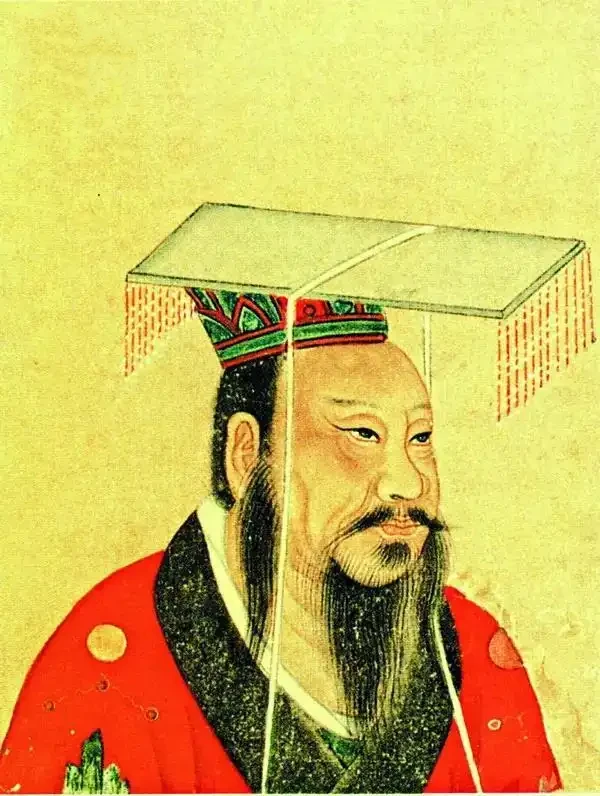
He was born in the last years of the Former Han, thirteen years before the dynasty was formally extinguished, and he died thirty-two years after he had formally restored it, and between those two dates he spent most of his life doing the work that made the restoration stick. The Han had been declared dead in 9, when Wang Mang took the throne from a child and called his own dynasty the Xin. When Liu Xiu declared himself emperor in 25, the old house had been in its grave for sixteen years, and most of the empire had spent those years learning to fight for someone other than a Liu. He was the man who took a name that had stopped working and made it work again, and the interesting thing about him is how little of the work was done by battle. He won battles, but the victories that mattered were of a quieter kind: the patience to serve a master who had killed his brother, the judgement to leave his armies to better generals, and the instinct, at the end, to buy off the very men who had won him the empire rather than to fear them.
The other interesting thing is the shape of the life. For more than two years he fought under another man's flag and another man's name, and only took a throne of his own when his officers dragged him onto it. He lost a battle to a gang of bandits, fled a pretender's bounty on a horse another man gave up, crossed a river that happened to freeze, and was given his first real army by a governor who opened his city gates. He married the beauty he had admired as a student and then married a second wife for political reasons, and after sixteen years on the throne he deposed the second wife and gave the succession to the first wife's son. He reunified an empire that for thirteen years had been a patchwork of self-proclaimed kings, governed it for thirty-two years, put away the armies that had won it, and left it so orderly that his son had little to do but inherit. This is how the founder of the Eastern Han got there.
1. The Boy from Caiyang
The claim he traded on all his life was old and thin. The official genealogy, set out in the first paragraph of his annals, makes him the ninth-generation descendant of the founder of the Han, through Emperor Jing's son Liu Fa, prince of Changsha, and through Liu Fa's son Liu Mai, marquis of Chongling. The marquisate had been carved out of Nanyang under the early emperors, and the line held it for a while: Mai's elder son inherited the title, and that line, three generations after him, produced a Liu Xuan who would one day be made emperor by the Green Woodsmen. Liu Xiu came off a younger son of Mai, who had no title and took an office instead, as governor of Yulin; the son after him was a colonel in Julu, and the son after that, Liu Qin, was a magistrate of Jiyang when his third boy was born. Prince to marquis to governor to colonel to magistrate to nobody: five generations of falling, and the fall is the whole story of the house. When the family's enemies wanted to say the claim was worthless, they were not being unfair. When its friends said it was still worth a throne, they were not being sentimental either.
He was born at Jiyang in the winter of 5 BC, and the record dresses the birth in the usual way. A red light filled the room, and in the courtyard a stalk of grain came up with nine heads of seed on it, which was why he was named Xiu, the beautiful one. Both details belong to the historians' idea of what a founder's birth should look like, and neither can be checked; what can be checked is the father, who held a county magistracy in the east, and the family, whose home was Caiyang in Nanyang commandery, in the hills south of the Han River. In the year 3, when the boy was nine, Liu Qin died in office at Nandun. The children were taken in by their uncle Liang, and the household that raised them was a large farming family with an imperial surname and no money. His elder brother Liu Yan, who is remembered in the histories as Bosheng, spent the family substance on swordsmen and horses; the younger boy worked in the fields, and the family joked, as the annals record it, that he was another Liu Xi, the farmer brother of the Han founder who had no taste for enterprise.
The joke had a point. He grew up careful where his brother was reckless, and the care was not timidity. He hid fugitives for the local magistrates to worry about, and the magistrates let him. He did the thing that a cadet of a ruined house could do, which was to be useful, be quiet, and wait. When he was a young man he went west to Chang'an and studied the Documents, which in that time and place meant learning how to quote an ancient office to a modern purpose. There he met a boy six years younger than himself from Xinye, Deng Yu, who could recite the Odes at thirteen and who decided on sight that this particular student from Nanyang was not ordinary. It was the only useful thing the academy taught him, and Deng Yu would find him again on the road north.
The two sentences that fixed his reputation were made around this time, and they are worth reading as a program. At Chang'an he watched the procession of the Zhijinwu, the metropolitan commandant of the capital guard, with its cavalry and its banners, and he said that if he was to be an official, an official of that kind was what he would be. And of marriage he said that the wife worth taking was Yin Lihua, of the great Yin family of Xinye, a girl he had seen in the hills of home. One sentence is about rank and one is about love, and they were remembered together because in the end he got both, which is the kind of coincidence historians use to prove that a young man knew his own fate. The records also keep a story from these years that is almost too neat to believe: a fortune-teller named Cai, dining with the young men of the district, announced that a Liu Xiu would be emperor, and the whole table laughed, because everyone knew the Liu Xiu in question was the emperor's own director of astrologers, the scholar Liu Xin, who had changed his name to Xiu. The farmer's son from Nanyang asked why it could not be himself. The table laughed harder. What the anecdote is really about is not prophecy but standing: a nobody's claim to a great name was, at that date, a joke.
The joke stopped being funny in the early teens of the century. Wang Mang's reforms had spent fourteen years renaming offices, reminting money, and reclassifying the land, and by the early twenties the empire was full of displaced peasants, disgraced officials, and prophecies. In 17 the Green Woodsmen took to the marshes of the south; in 18 the Red Eyebrows rose in the east; in 22 famine came to Nanyang, and the district filled with armed bands. The men who had been a joke began to matter.
The thirteen years before the rising are the reason the Han name was worth anything. Wang Mang had declared the land the property of the state and cancelled the law when the great families objected to it; he had reminted the currency four times and ruined everyone who had saved the old coins; he had renamed the commanderies and the offices and the ranks until no one knew what he was; and he had filled his court with men who had made their names by composing prophecies. The empire he governed was not the one the Han had ruled, and the men who governed it were not the men who had served the Han. So when the rebellion came it did not come with a new program. It came with an old name, and the old name was the program.
2. Rising at Chongling
What the Chongling branch did in the autumn of 22 was less a rebellion than a family decision. Liu Yan had spent years collecting swordsmen, and his lieutenants had spread the word through the commandery. The plan was for two risings at once: Liu Yan would raise Chongling, and an ally in the city of Wan would seize the commandery capital. The ally was a young official named Li Tong, who had come to Liu Xiu with a prophecy of his own, that the Liu were to rise and the Li were to assist them. The two men had met in the ordinary way of the time, over a grain sale. Liu Xiu, hiding from the magistrates at Xinye, had gone to Wan to sell grain, and Li Tong had watched a farmer's son quote prophecies back at a fortune-teller and had decided he was worth the risk. The plot in Wan was betrayed before the day came; Li Tong escaped with his life and his cousin Li Yi, and the rest of his family died. What survived of the scheme was the Chongling half, and the alliance was sealed in the way such alliances were: Liu Xiu gave his younger sister Boji to Li Tong, and from that day the two families were one.
When Liu Yan sent the word, the young men of the family did what frightened relatives do. They ran, they hid, and they said that Bosheng was going to get them all killed. Then Liu Xiu came back from Wan in the crimson coat and tall cap of a commander, and the same relatives looked at the careful brother, the one who was good at farming, and concluded that if even he was doing this, it could be done. It is the only moment in his life when he led by example without knowing it, and the annals record it because it explains the size of the force that followed: not a grand army but seven or eight thousand kinsmen, tenants, and neighbors, most of them on foot, some of them, in the first engagement, on oxen.
The early months were hard and instructive. Liu Xiu rode an ox until he killed a colonel of Xinye and took the man's horse. He took the settlement of Tangzi and killed the commandant of Huyang; he took Jiyang after a fight in which his own men, furious at an unfair division of the spoils, were on the point of turning their weapons on the Liu clan, and he ended it by giving back everything his relatives had taken. It was the first display of the quality that would win him the empire, which was a willingness to be the one who yields. Then came the reckoning. At the little fort of Xiao Chang'an, the Xin general Zhen Fu and his colleague Liang Qiu Ci broke the rebel army; Liu Yan's and Liu Xiu's sister Liu Yuan died with her daughters, and their brother Liu Zhong died in the field, and Liu Xiu got away with a handful of riders. The survivors fell back on Jiyang, and the Green Woodsmen, who had joined the uprising for their own reasons, began to talk of going home.
The brothers went to Yiqiu and talked the Lower River leader Wang Chang out of the retreat, and the four bands, Chongling, New Market, Flat Grove, and Lower River, agreed to fight as one. That decision saved the rebellion. On the first day of the first month of 23 the combined army met Zhen Fu and Liang Qiu Ci on the west bank of the Bi River and destroyed them, killing both generals; Liu Yan then broke the Xin commanders Yan You and Chen Mao at Yuyang and closed the siege around Wan, the greatest city of the south. By the end of the month Wan was surrounded, and the rebel leaders inside it had to decide what they were. They settled on a plan that was politically obvious and personally fatal: they took a Liu of their own and made him emperor.
3. Kunyang
The emperor they chose was Liu Xuan of the senior Chongling branch, a cousin several times removed, who took the era name Gengshi, the Renewed Beginning, and held his court in the tents by the Yu River. Liu Yan, whose men had done most of the fighting, was made minister over the masses; Liu Xiu was made a general of the second rank under him. The Green Woodsmen had the numbers and the titles, and the Chongling men had the reputation, and the settlement pleased neither. Liu Yan's followers complained openly that a good-for-nothing had been put over the head of the man who had raised the army, and Liu Xuan's court began to look at the brothers the way a man looks at a debt he cannot pay.
Wang Mang's answer was the greatest host the dynasty ever put in the field. The annals of the Xin count it in the hundreds of thousands, and the number belongs to the Xin side's boasting, but the direction of the danger is not in doubt: two of the regime's highest officers led it against Wan and Kunyang, and the rebel position was split between them. The city of Kunyang, which Liu Xiu had taken the month before, was held by Wang Feng and Wang Chang with a few thousand men inside, and every other commander in the region wanted to abandon it, take his own city's troops, and go home. It was Liu Xiu who argued them out of it, with the arithmetic of a man who has done accounts: the enemy is strong and we are few, so if we divide we die piecemeal, and if Wan falls, Kunyang falls the day after, so we might as well fight where we stand. The generals were so angry at being lectured by a younger man that they walked out on him, and they came back when the scouts reported the size of what was coming.
What he did next is the best-told passage in his annals. He left Wang Feng to hold the city and rode out of the south gate at night with thirteen companions, through the outer ring of an army that nearly caught them, and went to the cities of Yan and Dingling, whose commanders had been hoarding their troops and their plunder. He told them that the plunder would be worth ten thousand times more if the enemy were beaten, and worth nothing at all if they lost their heads. They gave him their men. Then he formed the vanguard himself, a few thousand horse, and charged the enemy's advance, cutting down dozens with his own hand, and when the generals saw the man who had always been careful against small enemies charging the biggest army in China, they went in after him. The story says the enemy line broke when he took three thousand volunteers around the flank and into the centre, and that Wang Xun died there, and that the whole Xin host then came apart, trampling itself on the road, and that the men who drowned in the river were past counting. The battle is told a hundred times in the histories, and every telling is about the same two things: that the victory was impossible, and that the man who made it happen was not the man anyone had expected.
4. The Death of Bosheng
Kunyang saved the Gengshi regime and ruined Liu Xiu's safety in it. A court that had been uneasy about the Chongling brothers was now ruled by them in fact if not in name, and the men around Liu Xuan, the Green Woodsmen Li Yi and Zhu Wei among them, said what frightened men say, that the elder brother would not be safe while the younger one was famous. The decision was made in the summer of 23. Liu Yan was arrested and killed the same day, along with his general Liu Ji, who had defied the court on his behalf. Liu Xiu was away in the Yingchuan country, where he had gone to forage, and where he had picked up a clerk named Feng Yi and a fierce young officer named Yao Qi. He rode back to Wan alone, went into the presence of the man who had killed his brother, said nothing in his own defense, blamed himself, did not ask for the body, and did not put on mourning. He ate and talked as usual. The annals record that he never once claimed credit for Kunyang, and that Liu Xuan, who had expected a scene, was so ashamed that he gave him the rank of general who smites the caitiffs and a title, marquis of Wuxin. It was the first and most important victory of his life, and it was won by doing nothing.
In the same month he married Yin Lihua at Wan. She was nineteen, and he was twenty-eight by the count of the time. He had said as a student that he would have her, and now he had her, and the marriage was the one purely private act of the whole war, which is probably why the histories give it a line.
The months that followed were a lesson in how to survive a court that had already killed someone. He gave no comfort to his brother's officers, because a private word with them was what the court was watching for; he took no share in the government, because the government was the instrument of his brother's death; and he let the Gengshi armies use his reputation without letting it use him. When the court moved to occupy the old capital at Luoyang, he went ahead of it as acting colonel-director of the retainer, to put the palace and the offices in order, and there he produced the one political asset the Green Woodsmen could not manufacture. The old officials of the metropolitan region came east to meet the new regime and found the other commanders ridiculous, in their plumes and their women's coats; then they met Liu Xiu's staff, in the correct caps and robes of the Han, doing the correct business with the correct documents, and the oldest of them wept and said that they had not expected to see the dignity of Han officials again in their lives. The story is told by the historians because it explains why the empire's clerks began to transfer their loyalty to him long before he had a province.
The break, when it came, came from the east. The Green Woodsmen held the capital and the south, but the country north of the Yellow River, the old land of Zhao and Yan, was still unsubdued, and there was a saying in the army that the question of who would win the empire would be decided in Hebei. Liu Xuan's ministers knew it too. Zhu Wei, who had helped kill Liu Yan, opposed sending Liu Xiu, on the ground that a man of his ability would be dangerous anywhere and lethal with an army; others, among them the emperor's kinsman Liu Ci, argued that no one else could do it. The deadlock was settled by Feng Yi, who advised his master to make himself indispensable to the two officials who controlled the emperor's appointments, the chancellor Cao Jing and his son the imperial secretary Cao Xu, and Liu Xiu spent money he did not have on the two men until the commission came. In the tenth month of 23 he left Wan with the rank of acting grand marshal, a staff of authority, and a following. No troops were given to him. The court expected him to pacify Hebei or to fail there, and either outcome was acceptable.
He did neither of the expected things. He went north as the Gengshi emperor's commissioner, and he did the work of a commissioner: he received the governors and the elders of every commandery he passed, he examined and dismissed officials, he released prisoners, he abolished Wang Mang's taxes and his office names, and he restored the Han ones. It was a tour of administration, not a campaign, and the people met it with oxen and wine. But he was also collecting the raw material of an independent state, one honest magistrate and one loyal clerk at a time, and the first of them had already found him. Deng Yu, who had known him in Chang'an as a student, had refused every offer the Green Woodsmen made him, and when he heard that Liu Xiu was in Hebei he rode north alone and caught up with him at Ye. The story of their meeting is the most important conversation in the annals. Liu Xiu asked him, with the freedom of an old friend, what a man with the power to appoint and reward could offer him that he wanted. Deng Yu answered that he wanted no office; what he wanted was for his patron's authority to reach the four seas and for himself to leave a name on bamboo and silk. Then he gave him the strategy. The Gengshi regime, he said, held the passes while the east rose, its generals were bandits in office, and no one of any sense believed in it. The only course was to gather heroes, win the hearts of the people, and do again what the founder of the Han had done. Liu Xiu was pleased in the way a tired man is pleased by a plan he already half has, and he told his attendants to address Deng Yu as General Deng, and housed him at the centre of his staff, and asked his advice on every appointment he made for the rest of his life.
5. The King on the Road
Hebei had its own candidate. A prince of the old Zhao royal house, Liu Lin, met Liu Xiu at Handan and proposed a scheme of remarkable nastiness, that the Red Eyebrows, then massing east of the river, be drowned by opening the dikes against them. Liu Xiu did not answer and went on to Zhending, and Liu Lin, refused, found a better instrument: a fortune-teller of Handan named Wang Lang, whom he dressed up as a son of the late Emperor Cheng named Liu Ziyu, and in the twelfth month of 23 Wang Lang was proclaimed emperor at Handan and sent out notices offering a hundred thousand households for Liu Xiu's head. The Gengshi commissioner was now a fugitive in the territory he had been sent to pacify, and the rebellion spread north, where a son of the prince of Guangyang raised the city of Ji in Wang Lang's name.
The flight that followed is the physical centre of the story. Liu Xiu left Ji by night with his staff and rode south through the winter, not daring to enter a city, sleeping by the road, his men out of food. At Raoyang he did the boldest thing of his life, which was to walk into a post station and announce himself as an envoy of the Handan emperor; when the station officers became suspicious and beat the alarm drum, his officers went white, and Liu Xiu, understanding that to run was to die, sat down and asked that the Handan general be shown in, and sat there until the general's imaginary patience was exhausted and they were allowed to leave. North of the city the frozen river saved him: the Hutuo had no boats, and the ice held just long enough for his train to get over, and gave way before the last few carts had finished the crossing. At Xiabo an old man in white by the road pointed him to Xindu, eighty li south, whose governor was holding the city for the Han. Reng Guang opened the gates to a man with no army and gave him the base of his counter-kingdom, and from the neighbouring districts Liu Xiu raised four thousand men, and the commandery's officers began to come in: Pi Tong of the Xin administration surrendered with his whole commandery, Liu Zhi came down from Changcheng with his clan, Geng Chun from Songzi with his kinsmen. In a few weeks a fugitive had an army of tens of thousands and a cause.
At Guang'e, where the army halted after the crossing, Liu Xiu climbed the city tower with Deng Yu, spread a map of the empire out in front of him, and said that all the commanderies of the empire were what lay on the table, and that so far he had secured one of them, and asked whether this was the empire his friend had promised to win him. Deng Yu answered that in an age of confusion the people longed for a clear ruler as an infant longs for its mother, and that the rise of dynasties had always depended on the depth of their virtue and not on the size of their territory. It was the kind of conversation that makes a map look like a plan, and Liu Xiu referred his appointments to the man who had made it for the rest of the campaign.
What turned the army into a winner was the frontier cavalry. The two commanderies of Shanggu and Yuyang, on the northern edge of the empire, had been the horse country of the Han since the beginning, and their governors, Geng Kuang and Peng Chong, were watching the contest between Handan and Wan. Liu Xiu's officers went to them, and they sent their cavalry, under Wu Han, Kou Xun, Jing Dan, Gai Yan and Wang Liang, the finest horsemen in China, and Geng Kuang sent his son Geng Yan, who told the fugitive plainly that the two commanderies had the mounted men to settle Handan and asked for the commission. Liu Xiu, who had been a hunted man a month earlier, laughed and called him his host of the northern road. With the frontier horse he broke the relief army at Nanluan, took the city of Julu, and closed on Handan in the fourth month of 24. The city fell in the fifth month. Wang Lang was killed; Liu Xiu had the thousands of letters written to him by officials who had cursed his name burned, unread, in front of his generals, on the ground that a man who had been on the wrong side should be allowed to stop looking over his shoulder.
The Gengshi court, which had sent a general of its own, Xie Gong, its director of the secretariat, to fight at his side, now offered him the title of prince of Xiao and ordered him to disband his army and return. He answered that Hebei was not yet settled and did not go, and from that moment he was, in the language of the annals, two-minded toward Gengshi. What followed was the consolidation that made him a real power before he was an emperor. He cleared the bandit armies of Hebei, the Tongma and their allies, in a campaign of hunger and patience, refusing battle until their grain failed, and when they surrendered he did the thing that no one expected: he sent the surrendered chiefs back to their own camps with their commands intact and rode among them with a handful of escort, and they told each other that the prince of Xiao had put his heart into their bellies and there was nothing to do but die for him. The annals say he came out of that winter with several hundred thousand men and a nickname, the Tongma emperor, from the men of Guanzhong who watched from the west. He also removed the last of the Gengshi court's officers in Hebei. The court's governor of the province of You, Miao Zeng, sent to raise troops in the north, refused him and was killed by Wu Han; the general Xie Gong, returning from a defeat, was ambushed and killed at Ye by Wu Han and Cen Peng. By the end of 24 Liu Xiu held Hebei, had married the niece of the prince of Zhending, a girl of the Guo family named Shengtong, as his second wife, and had officers who were beginning to tell him that the Gengshi emperor's fate was no longer his concern.
6. The Throne at Hao
The end of Gengshi was visible to everyone except its court. The Red Eyebrows, the greatest army of the east, had turned west against the passes, and the Gengshi generals holding the region around them were being destroyed piecemeal; Liu Xuan's own officers were fighting each other in the capital. In the spring of 25 Liu Xiu sent Deng Yu west with twenty thousand men to take advantage of it, and went north himself to finish the remaining bandits, and there he suffered the worst defeat of his career, caught in a careless advance at Shunshui, cut off from his horse, saved by a cavalryman named Wang Feng who gave up his own mount and by Geng Yan, who held the pursuers off with arrows while the remnants of the army believed their general was dead. He came out of it with a few thousand men and no loss of authority, because his officers had already decided what he needed.
What he needed, they told him, was a throne. The first to say so was Ma Wu, bluntly, at a council of generals; Liu Xiu affected outrage and told him it was a capital offence, and Ma Wu answered that every officer present felt the same. The court of petitions that followed was worked up through the spring, and it was Geng Chun who found the argument that moved him, at a halt at Nanpingzhi: the scholars and officers who had left their families to follow him had done so in the expectation of a great career, and if the leader refused to give them one they would go elsewhere, and a scattered host cannot be recalled. Liu Xiu said he would think about it. The decision was made for him, as such decisions were, by a text. A former fellow student of his at Chang'an, a man named Qiang Hua, arrived from Guanzhong carrying a prophetic formula called the Red Amulet, which read that Liu Xiu would raise troops and punish the lawless, that the four marches would gather like clouds, and that at the end of the four sevens, the fire would be lord. His officers read it as the mandate of heaven and demanded he accept. In the sixth month of 25, on a terrace south of Hao, he performed the sacrifices and took the throne.
The accession documents are unusually honest about what they were doing. The proclamation to heaven and earth recited that Wang Mang had usurped the throne, that Liu Xiu had risen and broken Wang Xun and Wang Yi at Kunyang, that he had punished Wang Lang and the Tongma in Hebei and settled the empire, and then quoted the prophecy: Liu Xiu raises troops and punishes the lawless, and by the metal-in-wood he cultivates virtue and is made son of heaven. It declined three times and accepted, as the ritual required, and the era name was fixed as Jianwu, the Established Martial. The new emperor was thirty by the count of the time and had been a general under another man's flag for two of them. He made Deng Yu his minister over the masses, at twenty-four, and Wu Han his grand marshal, and the court of a restored Han began, provisionally, in a tent city in the hills of Zhao.
The first business was Luoyang, where Zhu Wei held the old capital for Gengshi with a garrison and a grievance. Zhu Wei had been one of the men who killed Liu Yan, and he had argued against sending Liu Xiu north, and he would not surrender on a promise he did not trust. The emperor sent Cen Peng, who had once served under Zhu Wei, to talk to him, and when Zhu Wei named his guilt, Liu Xiu gave him the answer that the rest of his reign would be a commentary on: in a great undertaking one does not remember small wrongs, and if you surrender your rank is safe. He swore it by the river. Cen Peng went back and climbed the rope that Zhu Wei lowered from the wall to test him, and the city came over; Zhu Wei was bound and brought in, unbound by the emperor, entertained, and sent back to his men with his title and his fief intact. It was the most profitable thing Liu Xiu ever did, and it was noticed everywhere. In the tenth month of 25 he entered Luoyang and made it his capital, and the Han had a government again. In the second month of the next year he built the temple of the founding emperor in the new capital, set out the suburban altars, and formally adopted the phase of fire with red as the colour of the dynasty, which was the ritual announcement that the restored house claimed the same mandate the former Han had held.
7. The Fall of Gengshi and the Two Western Powers
The rest of the Gengshi story closes in a few months and belongs to Liu Xiu only at one remove. The Red Eyebrows had spent the winter arguing about what they were. They were the largest army in the empire, and they had no politics beyond the plunder, and in the sixth month of 25 their generals settled the question by finding themselves an emperor: two boys of the Liu house were produced from the camps, and the choice was made by drawing lots in front of the army, and the lot fell on Liu Penzi, a boy of fifteen whose family had been reduced to herding cattle. They set him on the throne with the era name Jianshi, and his regents were the bandit chiefs, and the oldest of them, Fan Chong, understood that an army which has crowned an emperor must now behave like one. So they went west. The Red Eyebrows entered the passes, defeated the Gengshi armies, and took Chang'an in the ninth month of 25; Liu Xuan fled north with a handful of riders; the new emperor at Luoyang issued an edict creating him prince of Huaiyang and making it a capital crime to harm him, which was either decency or policy or both; and in the twelfth month the Red Eyebrows killed him. The dynasty that had made Liu Xiu a general and killed his brother lasted two years and ten months, and its last emperor died at the hands of the men he had surrendered to. Liu Xiu did not attend to it. He was busy with the conquest of an empire that had spent years learning to do without a central government.
West of the passes the situation was two men. In Longyou, the country of the western hills, Xiao Ao held the commanderies of Tianshui, Longxi and Anding and the loyalty of their fighting families; he had been made a general by Gengshi, had returned west, and was now courted by both sides, and his price was the independence of his region. In Shu, the mountain basin of the west, Gongsun Shu, a magistrate's clerk of extraordinary ability, had taken the province while the empire broke, had made himself king and then, in the fourth month of 25, emperor of a dynasty he called Chengjia. The rest of the map was a patchwork of smaller men, and the list is the measure of the problem. Liu Yong, a kinsman of the Gengshi house, had made himself emperor at Suiyang in the east and was killed by his own officer within two years; Qin Feng called himself king of Chu on the middle Yangtze; Li Xian declared himself emperor in the Huai country; Zhang Bu and Dong Xian fought over the peninsula; Yan Cen came out of Hanzhong; and Lu Fang, who claimed descent from the Martial Emperor of the Former Han by a route no one checked, held five commanderies of the north with the Xiongnu behind him. They were picked off in the order of their nuisance: Li Xian and the eastern armies in 30, by which time the whole plain was at peace; Zhang Bu in 32; Yan Cen driven into Shu; Lu Fang back into the Xiongnu when his own officers turned against him.
Both men were serious. Xiao Ao could field an army in the horse country and close the roads into the hills; Gongsun Shu sat behind the gorges with the richest province in China and, in the eyes of the men who visited him, delusions of empire.
The two embassies that followed decided the west. Ma Yuan, who was Xiao Ao's general and his closest adviser, went first to Chengdu as Gongsun Shu's envoy and came back contemptuous: Gongsun Shu had received an old friend with guards and ceremony and offered him a marquisate, which was the behaviour of a man who wanted to be looked at, not followed, and Ma Yuan told his master that the lord of Shu was a frog at the bottom of a well. Then he went to Luoyang, in the winter of 28, and was received in the Xuande Hall by an emperor who came without ceremony, joked that a man who moved between two emperors made him ashamed of himself, and asked, when Ma Yuan inquired why he was not afraid of assassins, whether he looked like a man in danger from a travelling advocate. Ma Yuan reported north that Liu Xiu was the equal of the founder of the Han in capacity and openness, without his coarseness, and that no man who had seen him would serve another. Xiao Ao, who trusted Ma Yuan, sent his eldest son to Luoyang as a hostage in 29, and for a year the west was at peace. But the roads were still closed, and an empire cannot be reunited with an independent province sitting astride its grain route, and both men knew how this would end.
8. The Men Who Won the Empire
Liu Xiu's genius was mostly other people. He was a competent soldier and once a brilliant one, but the conquest of the empire was executed by men he chose and then left alone, and the annals are a catalogue of appointments that look, in hindsight, like the acts of a man reading a room he has just entered. Deng Yu, the schoolfellow, rode after him with no commission and was given the strategy and the western army, and ended as the first name on the roll of the restored dynasty's servants. Wu Han, a horse trader of Wan who had served Gengshi as a county magistrate, was made grand marshal and led the armies that finished the Tongma, the east, and Shu. Feng Yi, the clerk he picked up in the Yingchuan country, became the indispensable man of the west, and the thing that made him loved was a small one: on the winter road south, when the staff was starving, Feng Yi had found him bean gruel, and the emperor remembered it, and when the other generals sat around boasting of their kills Feng Yi sat apart under a tree, until the army called him the tree general and the emperor used the name fondly for the rest of the war.
There were patterns in the appointments. Kou Xun was given the province of Henei to govern while the armies campaigned elsewhere, with the charge that the founder of the Han had given Xiao He; it was the base that fed every campaign in the west, and Kou Xun ran it so well that when he was transferred the people of the province tried to stop his cart. Cen Peng, who had been Zhu Wei's officer, was used against Zhu Wei, and then given the southern army against Shu, because a man who could talk a garrison out of a walled city by climbing a rope was the right instrument for a province that would have to be persuaded. Geng Yan, the young officer who brought the frontier cavalry, was the one general who could be trusted with an independent theatre, and when the emperor reviewed the conquest of Qi at the end of it he told him the plan he had proposed as a boy had seemed too good to be true, and that the proverb about a determined man getting his way was made on him. Ma Yuan, the general of the west, did the work no one else could do, in the hills and among the tribes, and once, when the emperor hesitated at the start of a campaign into the Long mountains, built a map of rice in front of him and traced the roads with his finger until the emperor laughed and said the enemy was in his eye.
And behind them was the rank and file the annals list by the hundred: Wang Ba of Yingchuan, who stayed when the other officers went and whose constancy gave the language its proverb about knowing strong grass in a hard wind; Reng Guang, the governor who opened a gate to a fugitive; Pi Tong, who came over with a whole commandery; Liu Zhi, who brought down a clan from Changcheng; Yao Qi of Yingchuan, who was given the guard of the emperor's person because he was known not to flatter him; Zhu You, a friend of his youth, who ended his career in command of an army. Deng Yu, when it was over, had thirteen sons and made each of them learn one craft, on the ground that a house with thirteen professions in it cannot be ruined by the loss of one.
And there was the quality of discipline, which was not a matter of temperament but of institution. Ji Zun of Yingchuan, a clerk of ferocious principle, was made the army's magistrate in Hebei, and when a servant of the future emperor's own household broke the law he killed him; the future emperor, furious, ordered him arrested, and his secretary Chen Fu pointed out that an army which is to be kept in order must have its laws enforced without regard to persons, and the general released him and made him the general who probes the wicked, and warned his officers to be careful of Ji Zun, because a man who would execute his own master's household servant would make nothing of them. Ji Zun died on campaign in 33 with no private fortune, having given away every reward he received, and the emperor's standard lament for the rest of his reign was where a man was to be found who served the state as Ji Zun had. The point of the story is not the virtue. It is that the Eastern Han was founded by an army that could be punished, in a century when most armies could not.
9. The Conquest of Long and Shu
The war for the west began as a quarrel about a road. In 30 the emperor sent seven generals under Gai Yan through the Long mountains against Gongsun Shu, and Xiao Ao, whose price had always been the control of the roads, closed the passes against them and was from that moment an enemy. Gai Yan was beaten back at Longdi, and the war that followed took six years. The decisive stroke was made in 32 by a cousin of the emperor's, Lai Xi, who took two thousand men over the mountain tracks and cut off the fortress of Lueyang, killing its garrison commander, and held it against Xiao Ao's army while the emperor came up. The emperor himself came west in the summer of 32, and at Qiyang, where his officers were afraid to go further into the hills, Ma Yuan built his map of rice, and the army went on. At Gaoping the governor of Hexi, Dou Rong, joined him with the cavalry of five commanderies, and Xiao Ao's army came apart: thirteen of his generals and a hundred thousand of his men came over without fighting, and he fled to Xicheng with his family, while Wu Han and Cen Peng besieged him there and Gai Yan and Geng Yan besieged his generals at Shanggui. Then the war stopped. The emperor's own provinces rose behind him, bandits took the counties of Yingchuan, and he had to ride east at speed to save his capital, leaving the siege unfinished. Xiao Ao died in the first month of 33, and his generals set up his son Chun, and Chun held out in the hills for another year and nine months until Lai Xi broke him at Luomen, when his general Wang Yuan fled to Shu and Chun surrendered. Longyou was pacified in the tenth month of 34. Feng Yi had died on campaign that summer, and Ma Yuan was sent to govern Longxi, where he spent six years doing the model work of the whole reign in the west. He broke the Xianlian Qiang at Lintao with three thousand foot and horse, cut off several hundred heads and took ten thousand head of livestock, and eight thousand of the tribesmen who had been holding the frontier came in to him. When the tribes gathered in the Haomen pass he went around them by a hidden track, burned their camps in the night, and drove them into the Tangyi valley, with an arrow through his own shin; the emperor sent a letter of condolence and several thousand head of cattle and sheep, and Ma Yuan gave every one of them to his followers. Two years later four thousand of the Canlang Qiang came to seize his water and his grass, and he would not give them battle until they were hungry, and more than ten thousand came out and surrendered. He received the Di of Wudu who had come over from Gongsun Shu and had their chiefs confirmed as kings and lords with seals, moved the tribes into three commanderies among the Han, and argued successfully against the ministers who wanted to abandon the country west of Poqiang: its cities were intact, its soil was watered, and if the Qiang held it the frontier would never be quiet. He also had the wuzhu coinage cast again, which had been out of use since the Wang Mang reform, and the empire was the better for it.
Shu took longer and cost more. Gongsun Shu had built his position on the gorges, and the campaigns against him were a war of rivers. In 35 Cen Peng came up the Yangtze, broke the Chengjia army at the Jingmen rapids, took its general Ren Man, and sent his fleet into the Sichuan basin; in the eighth month he defeated Hou Dan at the Yellow Stone, and the road to Chengdu was open. Then, in the tenth month of 35, an assassin in Gongsun Shu's pay killed him, as another had killed Lai Xi in the summer, and the conquest lost its two best commanders in four months. Wu Han took over the fleet, and the last year of the war was a grinding advance along the river: the Chengjia generals were destroyed in front of Wuyang, Jiangzhou, Guangdu and Fu, and in the eleventh month of 36 Wu Han and Zang Gong broke Gongsun Shu's last army before Chengdu. The emperor of Chengjia was wounded in the fighting and died in the night. Wu Han's troops sacked the city, killed Gongsun Shu's clan and his general Yan Cen, and carried off what a province was worth. The emperor's answer to the news was an edict of rebuke to Wu Han, which the historians preserved, and Wu Han kept his rank and his command and died a grand marshal. It is a fitting end to the military history of the reign: the man who reunified the empire was a general of brutal gifts, and the emperor who controlled him could scold him in writing and nothing more.
10. Gentle Government
The second half of the reign is the part the historians admire, and it is the part with the fewest events. The empire was reunited, the armies were demobilized, and the problem became how to keep three hundred generals, each with his personal army, from doing to the new dynasty what generals had done to the Qin. Liu Xiu's answer was not a purge. It was a change of occupation. He stopped giving his victorious commanders offices and gave them titles instead, high fiefs, seats at court, and nothing to do, and the two most senior of them understood the assignment and made it public: Deng Yu and Jia Fu laid down their commands and took to studying, because they saw that the emperor wanted to put away the weapons and cultivate civil rule and did not want meritorious men with armies in the capital. The annals record that the emperor rewarded this, and the record of the next thirty years is of a court run by clerks.
The arithmetic of the settlement was done in public. When the founders were made marquises in 26, with fiefs of four counties each, a doctor of the court objected that the ancient kings had never given more than a hundred li, and the emperor answered that the states which had fallen had fallen through misgovernment and not through the size of their servants' estates. In 37, when the last of the conquests was over, three hundred and sixty-five men had their fiefs confirmed or enlarged, and forty-five of them held theirs through marriage to the imperial house, and the great commands were abolished one by one. The princes went the same way: the kings who had been restored to their ancestral titles in the general settlement were examined one by one, those whose succession did not stand up were made marquises, thirteen of the old kingdoms of the Former Han were merged into their neighbours, and a hundred and thirty-seven men of the imperial house in all were given titles of one kind or another and nothing else.
The machinery was the imperial secretariat. The old offices of the Three Excellencies survived, and men of standing held them, but the documents moved through the secretariat, and the secretariat answered to the emperor, and the historians' summary of the reign is that although the Three Excellencies were maintained, the business of government came back to the secretariat, and the emperor held the reins himself. He worked the way a senior clerk works, all day and into the night, reading memorials, interviewing officials, correcting the phrasing of edicts. The ministers who served him were careful men: Hou Ba, his secretary, who had been chosen for his knowledge of precedent; Song Hong, an Excellency who told the emperor he would not put away his wife; Dong Xuan, the magistrate of Luoyang, who executed a murdering servant of the emperor's sister the princess of Huyang and refused to bend his neck to the emperor's order to apologize, and was let out of the room with his neck still straight. It was a government of procedure, and procedure was the point.
He had a name for the way he ran it, and he gave it himself. In 41, touring his home country, feasted by his clansmen, he heard the old women of the family say among themselves that the boy they remembered had been honest and gentle and had never learned to flatter, and he laughed and said that he intended to govern the empire by the gentle way as well. It was not sentiment. He used it on the men he had defeated and the men he had nothing to fear from, he released the slaves and the prisoners, he cut the land tax back to the Han rate, he abolished the worst of Wang Mang's taxes and names, and when his generals asked him to finish the work of conquest by attacking the Xiongnu he refused. In 51, when Zang Gong and Ma Wu proposed a great northern campaign while the Xiongnu were divided and weak, he answered them with a quotation from the Yellow Stone Lord's book, that the soft conquers the hard and the weak conquers the strong, that a ruler with virtue takes pleasure in the pleasure of his people while a ruler without it takes pleasure in himself, and that to seek what is far and neglect what is near is laborious and sterile; the country had no good government, he wrote, the portents did not stop, the people could not protect themselves, and his correspondents proposed to make war beyond the frontier. After that no one at his court mentioned the northern war again.
The court he built around himself was deliberately plain. He made Zhuo Mao, a magistrate of the Wang Mang years who had refused promotion and was famous for having changed a district by kindness, his imperial mentor and a marquis, on the ground that the empire needed to see what a Han official looked like. He reopened the imperial academy and restored the fourteen doctors of the classics, each teaching his own tradition, and sent his minister of works to sacrifice at the temple of Confucius in Lu and ennobled the sage's descendant as a marquis. He stopped the rare foods the provinces sent up to the capital; and when the world went on burying its dead in extravagance he issued the edict that it had been doing so long enough, and ordered a thin one for himself. Even the refusal of office was handled in the same register. Yan Guang of Yuyao, a schoolfellow of the emperor's, who had kept out of sight through the wars and gone back to his fishing when they ended; the emperor found him, brought him to the palace, and shared a bed with him, and Yan Guang put his feet on the emperor's stomach in the night, and the court astrologer reported that a guest star had invaded the imperial seat. The emperor offered him a place in his government, he refused it and went back to his fishing bank, and the emperor let him go, and the two were never heard of quarrelling.
The one place where gentleness stopped was the prophecy books. He had taken a throne with a prophecy, and in 56 he published the prophetic texts to the empire, built the spirit terrace and the Mingtang, and made the interpretation of omens a part of government, and the men of letters who refused to join in were removed. Huan Tan, a scholar of the old school, who had debated the classics with the great scholars of the former dynasty, told him at a conference on the site of the spirit terrace that he did not read the prophecies, and when the emperor pressed him, said that the prophecy books were not the classics; the emperor called him an enemy of the sages and a breaker of the laws and ordered him executed, and then let him off with a demotion to a provincial post, on the road to which he died. Zheng Xing had said the same thing in fewer words: he did not do prophecies. Yin Min, ordered to collate the prophetic texts, reported that they were not the work of the sages and were full of vulgar writing, and then, to prove how easily they were tampered with, inserted a phrase of his own into a gap in the text, to the effect that a certain Yin without a mouth would assist the Han. The emperor saw the joke and did not punish it, which was the most he ever conceded.
11. Measuring the Fields
The other fight of the reign was against the men who had won it for him. The restored Han rested on the great families of the provinces, the same families that had filled his armies and staffed his counties, and by the late thirties they were absorbing the land and the population that the registers were supposed to count. In 39 the emperor ordered the commanderies to survey the fields and verify the households and the ages, and at the same time to investigate the senior officials for favouritism. It was the most dangerous order of the reign, because it required the officials to measure the estates of the men who employed them.
The records keep one small scene that shows the whole problem. A memorial from Chenliu reported that the fields of Yingchuan and Hongnong could be asked about but those of Henan and Nanyang could not, and when the emperor asked why, the clerk did not dare answer; his son, the emperor's fourth son Liu Yang, said from behind the curtain that Henan was the seat of the capital and full of the emperor's own officials, and Nanyang was the emperor's own country and full of his own relatives. The emperor sent investigators. What followed was the largest series of executions of his reign. The minister over the masses Ouyang Xi, a Confucian scholar whose family had taught the Documents for eight generations, was impeached over the survey of a province he had once governed and died in prison while a thousand of his students knelt outside the palace for him. In the ninth month of 40 the governor of the capital region Zhang Ji and more than ten of the commandery governors were convicted of false returns and died in prison. One of the founders was impeached over the same business and would have died, and was dismissed to the commonalty instead.
The great families answered the survey with the only weapon they had, which was the country itself: the powerful houses and the militia leaders rose together in Qing, Xu, You and Ji, killed the officials, and defeated the troops sent against them, because the troops were their tenants. The emperor split the difference, as he had with Gengshi's ministers and his own generals. He offered amnesty to any man who killed a rebel leader, five men for one head, and he moved the leaders of the risings to other provinces and gave them land and rations. The land tax, which the years of war had forced up to one part in ten, was cut back in 30 to the Han rate of one part in thirty. The survey itself was never abandoned, but the great families were not broken; they were counted, which was the next best thing.
The rest of the restoration was in the same key, unglamorous and effective. The counties of the empire were merged, four hundred of them, and one official in ten was retired, because the population had fallen and the offices had not. The military colonies of the commanderies were disbanded, the chariots, the cavalry, the forest fighters and the marines released back to the fields, the commandery commandants abolished, so that the armed force of the empire would sit in the capital and the frontier and nowhere between. The slaves were freed by a series of edicts that ran through the whole reign: the people who had been made slaves by the famines and the wars of the Wang Mang period, if their enslavement had been illegal, were made commoners again; those who had been carried off by the bandits of Qing and Xu were allowed to leave their masters if they wished; killing a slave was not to be punished more lightly than killing anyone else; burning a slave with a hot iron was a crime; the law that a slave who shot a man should be executed in the market was abolished; the slaves of Long and Shu, taken in the wars of the conquest, were freed on complaint. None of this was humanitarian in the modern sense. It was fiscal, and it was stated as such: a slave was a mouth that paid no tax and a man who could be made to, and the empire's recovery was measured in households.
12. Two Empresses and the Verdict of History
The succession was settled the way he settled most things, by patience and a small cruelty postponed. In 26 Guo Shengtong had been made empress and her son Liu Qiang, born the year of the accession, had been made heir. The emperor had wanted to make Yin Lihua empress from the first, and Yin Lihua had refused the position on the grounds that she had no son, and the refusal had been remembered ever since as an act of self-effacement. Guo Shengtong, who had brought him the army of Zhending, lost his affection by degrees as the years went and made the mistake of complaining, and in 41 she was deposed with the formula that she resented her position and had disobeyed instruction and could not bring up the children of other women. She was not killed or imprisoned; she was made the dowager of Zhongshan, her second son was given a kingdom to support her, her brother Guo Kuang was advanced to a marquisate, and the emperor visited his brother-in-law's house so often and enriched it so thoroughly that the capital called it the golden cave. Her uncle the prince of Zhending, whose ten thousand men had been the price of her marriage, had rebelled in 26 and been killed by Geng Chun; she was made empress in the same year, and the marriage that had been a treaty survived the failure of the treaty. She died in 52, a dowager in her son's kingdom, and was buried on the northern hill across the river from the capital, and the emperor had her father's bones brought up from Zhending to lie beside her mother's. Yin Lihua had become empress in 41, and the Yin brothers, who could have had anything, were held down; the historian Sima Guang's verdict on her was that she loved her family and suppressed it, and gave them no share of power.
The difficult person was the heir. Liu Qiang understood that his mother's deposition had ended his claim, and he asked to resign; the emperor, who was fond of him, refused, and the position went on for years, with a crown prince who had no party and no security, until in the sixth month of 43 the emperor finally let him go and made him prince of Donghai. The new heir was Liu Yang, the empress Yin's eldest son, who was renamed Liu Zhuang, and who had been born at Yuanshi in 28 and educated for the throne all his life. The historians' judgement on the whole business, Fan Ye's, was that it was handled in a way no earlier age had managed: the deposed empress was treated with increasing favour, and the deposed heir was allowed to go with full ceremony, so that later ages could not see where the favour had shifted. It is a fair verdict and a slightly cold one, and it describes the reign: nothing was finished until it had been made to look as though nothing had happened.
The last years were the reward of the method. In 56 he went east and performed the sacrifices to heaven and earth at Mount Tai, the first sovereign to perform them since the Martial Emperor of the Former Han, a hundred and sixty-five years earlier, and the prophecies were read before the ascent and the texts that authorized it were searched out and published, and the era name was changed. He died in the second month of 57, in the front hall of the Southern Palace at Luoyang, at sixty-two, having ordered in his testament that his funeral be frugal and that the governors of the provinces be forbidden to leave their cities to attend it. He was buried at Yuanling, across the river from his capital, on a mound that later ages remarked for its plainness. He had been emperor for thirty-two years, and for thirty of them the most remarkable fact about his government was that nothing remarkable happened in it.
The verdict was written by his son's generation and it has held. In 60 the emperor Liu Zhuang, his heir, had the portraits of twenty-eight of his father's generals painted on the cloud terrace of the Southern Palace, and the list became the roll of the dynasty's founders, Deng Yu first, and the historian Fan Ye, writing four centuries later, added four more names to make thirty-two and wrote the comment that the age had been fortunate in its men. Ma Yuan was not on the wall, and neither was Lai Xi; the explanation offered by later ages was that Ma Yuan's daughter was the empress of the reigning house and Lai Xi had been the late emperor's cousin, and that the son did not want the roll of his father's servants to look like a list of his own relatives. It is probably true, and it is also the kind of explanation later ages give when the record is silent. Fan Ye's own judgement on Liu Xiu himself was the short one that has never been improved on: that although he had accomplished the great work in his own person, he went at it as if he were afraid of falling short, and that this was why he could examine the workings of government carefully and hold the reins of power and measure the times and his own strength, and do nothing excessive; that he retired his men of war and advanced his clerks, put away the bows and scattered the horses; and that though his way was not the way of the ancients, it was the fighting that made peace. Sima Guang, a thousand years later, reached the same conclusion from the other end, and it is the conclusion the reign supports: the conquests were the small part, and the settlement, the patience, and the procedure were the thing itself.
What he left his successors was not territory, which had been reunified before by men who lost it again inside a generation, but a working idea of legitimacy. The name Liu had been a joke at a dinner table in Nanyang, then a flag on a tent by the Yu River, then the signature on a prophecy in a tent city in Zhao; by the time of his death it was the only thing in the empire that could make a provincial general into a traitor by refusing to accept his commission. He had rebuilt that authority not out of battle but out of the accumulated weight of orderly behaviour: the edicts that restored Han office names, the officials who wept at the sight of a proper robe, the oath by the river that kept a surrendered enemy alive and productive, the thousands of cursed letters burned unread, the surrendered chiefs sent back to their camps, the generals rewarded and disemployed, the fields surveyed and the slaves freed and the counties merged. None of it was heroic. All of it was the same instinct, which was to make the restoration feel like a return rather than a conquest, and to make himself feel unnecessary. The dynasty he founded outlived him by a hundred and sixty-three years, and the name he had spent his life making valuable was still being counterfeited by warlords when the end came.