Home / Emperors / Jin Dynasty
Emperor Gong of Jin
晋恭帝
Sima Dewen, 386 – 421 · last emperor of the Eastern Jin
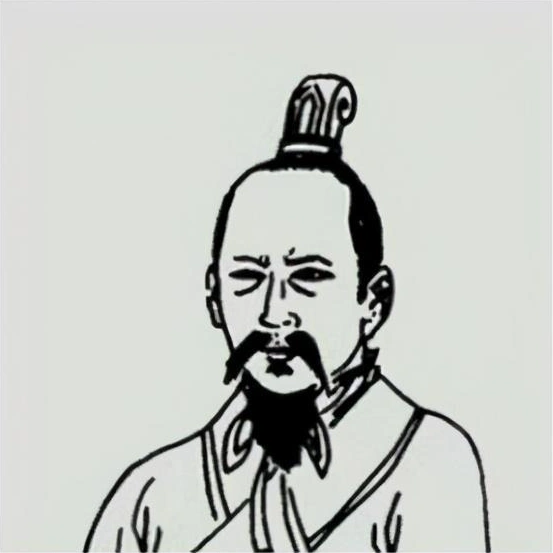
In the sixth month of 420 an emperor sat down to copy a document. The draft had been prepared by the director of the secretariat, on the order of the man who meant to take his throne, and brought to the emperor to copy. It was an edict of abdication, and the emperor wrote it out himself, on red paper, because the transfer of the mandate was not complete until the loser had performed it. He was thirty-five by the count of his court, the count that begins at one, and he had been emperor for seventeen months. The ceremony that followed was correct in every particular. That was the point of it.
His name was Sima Dewen. He was the second son of Emperor Xiaowu, the younger brother of Emperor An, and the eleventh and last ruler of the Eastern Jin. In the histories he is usually a paragraph between the purges of the previous reign and the founding of the Liu Song. This account treats the paragraph as a life. It is not the story of a bad emperor, and it is not the story of a weak one. It is the story of how a state arranges its own ending: the drafting of the edict, the altar in the southern suburb, the house at Moling, the quilt in the ninth month of 421. The dynasty had time to rehearse. Its last emperor had time to understand what was happening to him, and the sources record that he did.
1. The Younger Brother
He was born in 386, in the eleventh year of Taiyuan, the second son of Sima Yao, Emperor Xiaowu. His mother was Consort Chen Guini, a woman of Songzi in Xunyang. Her father had entered service as a performer and risen to administrator of Pingchang, and the match had given the palace two sons and no powerful relatives. She bore the elder boy, Sima Dezong, in 382, and the younger four years later. She died in 390, when Gong was five. The court later honored her as empress dowager and named her tomb Xiping, but by then both her sons were in the charge of a palace that had other things to do. His father was killed in 396, when Gong was eleven, and the throne passed to his brother.
The two brothers were alike in one small particular that the annal records and does not explain. Each had a personal name and a courtesy name that were the same word. The elder was Dezong, style Dezong; the younger was Dewen, style Dewen. It is the kind of detail that a ritual handbook notices and a biography cannot use. What can be used is the difference between them. The elder could not speak, could not tell heat from cold, and did not move except when he was moved. The younger could do all of these things, and spent much of his life doing them for his brother.
In 392, when he was seven, he was made prince of Langya. The title had just become free: Sima Daozi, the emperor's brother, had been moved up to Kuaiji, and the old kingdom passed to the child. Langya was the dynasty's oldest princely title. It was the title the founder had held before he took the title of prince of Jin in 317, and it was normally given to the prince nearest the throne. In 392 the prince nearest the throne was a boy of seven whose elder brother had no son. The court was not making a statement about the boy. It was filling a rank.
The offices followed on a schedule. In 398, at thirteen, he was made general of the guards, with a staff and the ceremonies of the three excellencies. In 399, at fourteen, minister over the masses. In 402, at seventeen, grand general of chariots and cavalry. In 403, when Huan Xuan took over the government, he was advanced to grand steward, with the ceremonial robe and the green ribbon. None of these posts gave him a province, an army, or a say in policy. They gave him precedence in the procession and a seat at the sacrifices. A prince of the blood might carry every honour the state could give and still be, in the arithmetic of the palace, a spare.
Two anecdotes from these years are the only account of his character before 419, and they point in opposite directions. The first is that he was impatient and quick to anger, and once had a skilled archer shoot a horse for sport. Someone told him that the horse was the sign of the dynastic surname and that killing it was the worst of omens. He understood, and repented. The second is that he afterwards believed deeply in the Buddhist way. He spent a fortune in cash, had a gilded Buddha cast twelve feet high, and went out to the Waguan temple to receive it, walking behind the image for ten li, about three miles. The court watched a prince who had once killed an animal for amusement follow a Buddha through the streets on foot.
The annal puts the two stories side by side without commentary. They are not a conversion narrative. They are the record of a man who had been given nothing to govern and had been left with his own conduct. The same record gives him one quality that his offices could not supply. When Emperor An was on the throne, Gong stayed at his side, adjusting his warmth and his meals, and the court called him deferential. The phrase in the Book of Jin is exact: he inquired after the temperature, the sleep, and the food. It is the vocabulary of a nurse, not of a minister.
In 403 Huan Xuan took the government and advanced Gong to grand steward. In the twelfth month Huan Xuan took the throne. Gong was demoted to duke of Shiyang county and kept with his brother at Xunyang. When Huan Xuan fell and his kinsman Huan Zhen seized Jiangling, the brothers were in his power. Huan Zhen rode up with a spear, stopped at the foot of the steps, and demanded to know what the house of Huan had done to deserve extermination. An could not answer. Gong got down from the bed and said: "How could this be the wish of us brothers?" Huan Zhen dismounted and bowed. It is the only recorded moment in which Gong speaks for the dynasty, and it is a sentence of denial, not of command.
He was restored as prince of Langya in 405, made inspector of Xu province, then grand marshal and minister over the masses, with exceptional ceremonies. He was twenty. For the next fourteen years he was the senior prince of the house and the second man in the state, and the two facts meant less each year. In 416, when Liu Yu marched north, Gong asked to accompany the army so that he could perform the rites at the Jin tombs. The court agreed. He went with the army and came back in 417, after the fall of the Qin capital. It is the only initiative of his that the annal records, and it is a request to visit his ancestors.
In the sixth month of 418 Liu Yu was made chancellor, duke of Song, with the nine bestowals. Gong kept the grand marshalship, the highest military office in the state. He had no army. In the twelfth month of the fourteenth year of Yixi, which was January 419, his brother died.
2. The Testament
The document that made him emperor was a forgery. The Book of Jin says that Liu Yu "falsely claimed a testamentary edict", and it preserves the text: the grand marshal and prince of Langya is of the late emperor's blood, of bright virtue, the proper heir, and the hopes of the realm are on him; let him rule the state and maintain the sacrifices. The words may have been drafted in Liu Yu's household. The annal does not name the drafter. The form was correct, and the form was what mattered.
Gong took the throne the same day. He was thirty-four by the count of his court. His brother had been emperor for twenty-two years and was thirty-seven when he died. The new reign was proclaimed as Yuanxi in the first month of 419. Because the former emperor was not yet in his tomb, the court did not hold the regular assembly; when it did hold court, the music was suspended. He made Chu Lingyuan empress in the same month. Her father, Chu Shuang, was a grandson of Chu Pou, which made her a great-niece of the Empress Kangxian. The family was old, cultivated, and connected to the throne by two marriages. In 419 it held no province and commanded no army. It was the right family for a reign that was not expected to last.
The reign had a count in it from the first day. A saying had been current for years: after Changming there would be two emperors. Changming was the courtesy name of Emperor Xiaowu. An was the first. Gong was the second. Liu Yu had An killed and Gong installed in order to make the count come out, and the Book of Jin says so in the An annal without hesitation. The court could count to two. The new emperor was the second half of a prophecy, and the last item on a schedule. He had been placed on the throne to be the last, and he knew what a place of that kind was worth.
The man who had made the schedule was not in the palace. In the sixth month of 418 Liu Yu had been made chancellor, duke of Song, with the nine bestowals. In the seventh month of 419 he was advanced to prince of Song. In the eighth month he moved his headquarters to Shouyang, on the Huai; in the ninth he resigned the governorship of Yang province; in the tenth his son Liu Yizhen was made its inspector; in the twelfth he received exceptional ceremonies, and his stepmother was named queen dowager and his son heir apparent. The court in Jiankang appointed the officers he recommended, issued the documents his government drafted, and waited. The emperor's title was the only part of the state that had not yet been transferred.
The reign itself has almost no record. The annal lists the change of era, the empress, the burial of An, the suspension of music, the movements of Liu Yu, an eclipse, and a report of black dragons in the east. There is no policy, no appointment attributed to the emperor's judgment, and no act that the annal dates to his initiative. A reign of seventeen months in which the only business was the transfer of power did not need a government. It needed a calendar and a man to keep it.
The transfer was arranged at a banquet. In the first month of 420 Liu Yu gathered his ministers and spoke, in the manner of a man thinking aloud, about his age and his honors. He had begun the righteous rising, restored the imperial house, campaigned north and south, and received the nine bestowals. He was growing old; such a height invited the jealousy of things; he wished to return his titles and retire to the capital. The ministers praised his achievements. None understood. Fu Liang, the director of the secretariat, understood. He was not a Jin minister; he held the same office in the Song state and had gone back to Jiankang ahead of Liu Yu. The edict that ended the Jin would be drafted by an officer of the government that replaced it. The gathering broke up late; the palace gate was already closed; Fu Liang knocked and was admitted. He said only: "I should go back to the capital for a while." Liu Yu asked how many men he would need. Fu Liang said a few dozen. As he left, he saw a long comet across the sky and struck his thigh and said that he had never believed in astronomy, and that it was now beginning to be verified.
The comet was the sign that the story kept. The rest was paperwork. Fu Liang went back to Jiankang, and in the fourth month Liu Yu was summoned to the capital. In the sixth month, on the day renxu, he arrived. Fu Liang then "suggested" abdication to the emperor, drafted the edict, and asked him to write it out. The court of that year was not a government. It was a waiting room with a ritual calendar, and the emperor had been kept in it until the document was ready.
3. The Red Paper
The scene is preserved in two versions, and the differences between them are the best evidence we have of what the ceremony was for. In the Book of Jin, Fu Liang brings the draft, asks the emperor to write it, and the emperor writes gladly and says to those about him: "The house of Jin lost it long ago. What is there to regret now?" He then writes it on red paper as the edict. In the Book of Song, followed by the Comprehensive Mirror, the gesture is the same and the sentence is longer: "At the time of Huan Xuan the house of Jin had already lost the empire. It was Lord Liu who gave it nearly twenty more years. What is happening today is what I have wanted myself."
The second sentence is the one usually quoted. It is not in the Book of Jin. The Book of Song was compiled by Shen Yue in the Southern Qi from the records of the dynasty Liu Yu founded, and its account of the founding is an official account; the sentence presents the transfer as voluntary and even as a debt paid. The Book of Jin was compiled by a Tang commission 228 years later, with no stake in the reputation of the Liu house, and its shorter sentence presents the transfer as the recognition of a loss that had already happened. Neither is a transcript. The Song sentence is the winner's version of the loser's mind; the Jin sentence is a later historian's permission to be tired. The record does not choose between them.
Both versions agree on the gesture. He took up the brush gladly. The word is the historians', not his. It may mean that he was relieved. It may mean that he had rehearsed. A man who had spent seventeen months watching the doors of his own palace being opened and closed by other people had time to decide how he would behave when the last door opened. The red paper was the one document in the whole affair that required his hand. A decree issued in his name by a minister was a decree. A decree written by him was an abdication. The distinction is the whole legitimacy of the new dynasty, and it is why the loser was made to write.
On the day jiazi he left the palace for the Langya residence, his old princely house, and the officials bowed farewell. He did not go to the altar. The altar was built three days later, in the southern suburb, and the man who had been emperor was not there. The only grief the record preserves is Xu Guang's. Xu Guang was the director of the imperial library, an old Jin official, and he wept as the officials bowed. Xie Hui, a Song man, told him that he was making a small mistake. Xu Guang said: "You are a founding minister of Song; I am a leftover of Jin. Grief and joy are not the same thing." It was not a protest. It was a correction of the idea that the two sides could share a feeling.
On the day dingmao Liu Yu built the altar, sacrificed with firewood, and took the throne. The address he read to Heaven begins: "The emperor of Jin has ended the count of his house; the mandate has returned; reverently following the great course, he has commanded me." The emperor of Jin is referred to in the third person, as the source of a command, and he is absent from the scene. The address is a conversation between the new sovereign and Heaven. The old sovereign had already been moved to a house.
The terms of the settlement were issued with the edict that proclaimed the new era. Gong became prince of Lingling, with the whole revenue of one commandery. He was allowed the banner of the Son of Heaven, the five seasonal subsidiary carriages, the Jin calendar, and the rites and music of the suburban sacrifices according to Jin statute. His letters were not to be called memorials, and replies to him were not to be called edicts. The Book of Jin compresses the whole arrangement into a phrase: the forms were kept, but the rites were not complete.
The phrase is exact. The settlement was copied from the two great precedents of the previous two centuries, the fiefs given to the last Han emperor and the last Wei emperor. It gave the loser a title, a revenue, a calendar, and a ritual. It did not give him a country. Lingling was a commandery in the south-west, in the direction of Jing province; the prince was installed at Moling, a short ride south of the capital. He never saw Lingling. The title was a place he owned and could not visit. The revenue of the commandery was, in theory, his; whether it ever reached a house under guard is not recorded. The banners were the banners of a sovereign, carried in a house that had a guard at the gate. The calendar was the Jin calendar, kept in a city that dated its documents by the Song era. For fifteen months the two calendars ran side by side in the same city, and only one of them governed anything.
The dynasty ended in its own handwriting. That is the meaning of the red paper, and it is the reason the scene is worth reconstructing in detail. The Eastern Jin had lasted from the third month of 317 to the sixth month of 420: one hundred and three years, eleven emperors. Its last edict was not issued by a general or sealed by a chancellor. It was copied by the last emperor, in his own hand, on red paper, and then became the foundation of the next dynasty. The ceremony was designed to make the end look like a beginning. It succeeded, in the only sense that mattered to the men who designed it.
4. The House at Moling
Moling was the old county seat, south of the capital, on the road to the southern hills. The sources call the residence a palace, but it was a house with a wall and a gate. The guard was under Liu Zunkai, general of the champions. The sources do not give the number of men. The guard was not an army. It was a lock.
The household was small. The prince, the princess, and their daughters, Haiyan and Fuyang. The Book of Jin's empress chapter names the two girls and no son. The Book of Song's life of Chu Shudu says something worse. Whenever a son was born to Gong, Liu Yu ordered the princess's brothers, Chu Xiuzhi and Chu Tanzhi, to kill it, sometimes by bribing the women of the household, sometimes by poison, and more than once. The sentence is in the biography of the men who did it, and the biographer's frame is loyalty. The line of the last emperor survived only in his daughters.
One of them had already been married into the new house. Sima Maoying, princess of Haiyan, had been given to Liu Yifu, Liu Yu's heir, before the founding of Song. In 420 she became crown princess. In 422, when her husband succeeded, she became empress. The family that killed her father made her the first lady of the new dynasty. The sons of the house had been killed at birth; her sister's life is unrecorded. The settlement of 420 was not an extermination. It was an absorption, and it used the daughters to do what the sons could not.
The daily arrangement in the house was a security measure. Gong feared poison. He and the princess lived in one room, cooked at the bedside, and took everything they ate and drank from her hand. The Song men could find no opening. The arrangement is recorded in three sources, and each records it as a precaution. It was also a repetition. For more than twenty years he had managed his brother's food and warmth because An could not manage them himself. The skill he had learned as a caretaker was now the skill that kept him alive. The man who had spent his youth adjusting a speechless emperor's meals spent his last year cooking beside his wife.
His Buddhism had come with him. The gilded Buddha at the Waguan temple was in the capital, and the prince at Moling had no temple and no image. What remained was a doctrine, and the doctrine was specific. It was not a general belief in mercy or in the wheel of lives. It was a rule about what happens to a man who takes his own life, and it would matter in the ninth month.
The poison came first. The Book of Jin, in its chapter on the loyal and righteous, tells the story of Zhang Yi. Zhang Yi had been Gong's master of the household when Gong was prince of Langya. When Gong came to the throne, Liu Yu gave Zhang Yi a jar of poisoned wine and ordered him to kill the emperor. Zhang Yi said: "To poison my lord in order to live, with what face should I breathe in this world? Better to die." He drank it himself. The Comprehensive Mirror calls the man Zhang Wei, makes him Zhang Shao's elder brother, and places the episode in 421, after the abdication, with the words "he drank it on the road and died."
The two books disagree about the date. The Book of Jin places the order immediately after the accession of 419; the Mirror places it after the abdication, in 421. The earlier date would mean that the first attempt on Gong's life was made while he was still needed to perform the abdication, and that it failed because the man sent to do it killed himself instead. That is not impossible. The later date is the tidier one, and it may be a simplification. The record does not settle the question. The disagreement is worth reporting because it is the only place in the affair where a man other than the principals is given a choice. Zhang Yi refused. He did not save Gong. He saved the record from being entirely a record of compliance.
No visitor is recorded in the fifteen months. The empress's brothers came once, and that visit was the end.
5. The Quilt
In the ninth month of 421 the two brothers came to the house. Chu Tanzhi and his younger brother Chu Shudu asked to see their sister. She left the inner room to meet them in another room. The sources do not say whether the door between was open. The soldiers came over the wall while she was out of the room. They entered the inner room and offered the prince poison.
He refused. The sentence is preserved in the Book of Song and repeated by the Comprehensive Mirror: "The Buddhist teaching says that one who kills himself does not again receive a human body." The refusal was not defiance. It was the opposite of defiance. He accepted the death and refused the method. He would not take his own life, because a suicide forfeits the human rebirth; he would let them take it. The distinction was the last thing he had, and he kept it.
They smothered him with a quilt. The weapon was in the room, and it was the readiest weapon in the house. His father had died under a quilt, in his sleep, at the hands of a consort; the son died under one in 421, awake, at the hands of soldiers. The sources record both deaths and do not comment on the coincidence. It is the kind of pattern that a later writer would be tempted to make into a judgement, and the sources do not.
The day is uncertain. The Book of Jin gives the day dingchou; the Book of Song's annals give jichou; the Comprehensive Mirror's editor checked both against the calendar for that month and found neither, and recorded only the month. Even the date of the murder is not settled. The uncertainty is small and telling. The death of an emperor was normally dated with the care given to a sacrifice. This one was recorded by two bureaucracies that gave different days, and the calendar could not settle it.
Liu Yu's public response was correct. Earlier in the year, in the intercalary month, the court had ordered guards for the Jin imperial tombs. The tombs were cared for; the man was not. He led the hundred officials in mourning at the court hall for three days. In the eleventh month the body was buried at Chongping, and Liu Yu led the officials to watch the coffin leave. The murderer presided over the funeral. The ritual was complete. A name, a tomb, a mourning, and no heir: the settlement was complete. That is what it had purchased: not safety, but form. The man who had written the abdication edict had been allowed to keep the forms of a prince for fifteen months, and the man who took his throne kept the forms of a mourner for three days.
The court gave him the posthumous name Gong. The Lost Book of Zhou gives the range of the word: honoring the worthy, serving the superior, correcting one's faults. It is the name of a man who did what was asked, and it was the name the new dynasty could safely give him. No temple name was added. The omission was not corrected later. In the imperial genealogy he is the last annal of the house, and in the ritual of the temple he is not present at all.
Chu Lingyuan lived fifteen years longer. She died in 436, at fifty-three by the count of her court, and was buried with him at Chongping. The sources give her no words. Her brothers had killed her sons and had opened the door to her husband's killers; the record does not say what she thought of them, or whether she was ever again in a room with them. It gives her a death date and a tomb, and those are the only facts it thinks she needs.
The tomb is called Chongping in the Book of Jin, and the name is the same in English as the tomb of Emperor Kang, seventy-seven years earlier. The two are not the same grave. Both lie on the south slope of Mount Zhong, in the imperial cemetery at Fuguishan, and the similarity of the names is an accident of transliteration. A later geography places Gong's tomb twenty li northeast of Shangyuan county, southwest of Mount Jiang. In 1961 a stone tablet naming the underground palace of the tomb was found at the foot of Fuguishan. A large late Eastern Jin tomb found nearby in 1964 has been identified with it by some archaeologists and with another emperor by others. The identification is still argued. The grave of the last emperor of the Eastern Jin is a name, a slope, and a stone.
6. One Hundred and Three Years
The Eastern Jin lasted one hundred and three years, from the third month of 317 to the sixth month of 420, and it had eleven emperors: Yuan, Ming, Cheng, Kang, Mu, Ai, the Duke of Haixi, Jianwen, Xiaowu, An, and Gong. The list is short enough to say in a sentence and long enough to contain almost every kind of failure a dynasty can have. Several of the eleven were children when they took the throne. Three were removed by deposition or murder: the Duke of Haixi, who had no posthumous name, was deposed, and An and Gong were killed. The last was a prince without a country.
The dynasty was not a state in the sense that the Western Jin had been. It was a coalition of refugee families that had agreed, under pressure, to share a government. The great families supplied the chancellor, the empress's kin, the upper river, and the army; the throne supplied the ritual. The refugee administration registered the northern households on a separate white register; the land-and-household registrations of 341, 364, and 413 tried, with uneven success, to turn those households into taxpayers. The two poles of Jing and Yang kept each other in check, and the check was the constitution. The northern expeditions were launched, and the Fei river was won in 383 by the army of a family rather than by the state. The rebellion of Sun En in 399 and the usurpation of Huan Xuan in 403 broke the old balance; the rise of Liu Yu from 404 replaced it with a single military house. By 419 the throne had no army of its own. It had a calendar, a set of sacrifices, and a man.
The name shrank with the state. In 317 "Jin" meant the empire, or the claim to it. By 420 it meant a house at Moling with a guard at the gate, a household that still counted its years by the Jin calendar and still sacrificed according to the Jin statutes. The name survived as liturgy. A dynasty ends when its calendar becomes a household custom.
The Western Jin had ended in 316 with a last emperor going out to a conquering army. The Eastern Jin ended in 420 with a last emperor writing a document. The first was a capture; the second was a transaction. The transaction was performed in public, with the loser's hand on the paper and the winner's address to Heaven. Its fiction was that both sides had described it as voluntary. The fiction did not make the transfer less of a seizure. It made it legible.
The script was old. In 220 the last Han emperor had yielded to Cao Pi; in 265 the last Wei emperor to Sima Yan; in 420 the last Jin emperor to Liu Yu. Each time the sequence was the same: the nine bestowals, the principality, the exceptional ceremonies, the altar in the southern suburb, the fief for the loser. The script made a coup look like a transfer of the mandate, and the men who used it knew exactly what they were doing. Liu Yu followed the script in every visible particular and added one sentence. The loser did not survive. The Han and Wei precedents had let their abdicated emperors live out their fiefs. Gong was the first abdicated emperor in that sequence to be killed by his successor. Hu Sanxing, annotating the Comprehensive Mirror in the thirteenth century, wrote that after this, abdicated sovereigns rarely survived. The precedent was new, and it held.
The three books judge him differently. The Book of Song says that his high abdication was almost like a man setting down a burden; it was compiled from the records of the dynasty that benefited, and it presents the transfer as a release. The Book of Jin says that when it came to the overthrow of a dynasty, his case was the worst, and that he left the imperial roof and wrote the red document without bitterness. The Comprehensive Mirror repeats the facts and does not judge. None of the three says he was a good emperor. None says he deserved what happened. The closest the record comes to his own voice is the disagreement between the two abdication sentences, and that disagreement is not a voice at all.
He is not the usual last emperor of the histories. He did not misgovern, build, hunt, or drink. The annals record no policy of his and no cruelty in office. His one recorded act of childhood cruelty, the horse, was followed by repentance; his one recorded act of courage was a sentence to a rebel; his one recorded initiative was a request to visit his ancestors' tombs. But he is not a saint either. He wrote the edict. He accepted the settlement. He did not call for resistance, and none came. His dignity was real, but it was the dignity of a man who had decided to perform the ceremony correctly.
The tragedy is structural. A dynasty whose throne had rarely been strong produced a last emperor whose only office was to end it. He was chosen because he was legitimate and manageable, and he was killed because he was legitimate. The same quality made him useful and dangerous. The men who made the settlement could tolerate a prince with a title, a calendar, and a guard. They could not tolerate a prince with a claim. The claim was not in his hands; it was in his blood, and the blood was the one thing he could not surrender.
In 479 the last emperor of Liu Yu's own dynasty was led out of the palace. He was a boy, and he asked the officer whether he was to be killed. The officer said that he was only to be moved to another palace, and that the men who had taken the Sima house had done the same. The boy wept and said that in later lives, through life after life, he wished never again to be born into a royal house. The precedent had come back to the house that made it, in fifty-eight years, with the same words and a different family.
The tomb at Fuguishan is the last fact. It has a name that belongs to another emperor as well, a stone tablet that names a palace under the ground, and a grave whose identification is still argued. It is a fit monument for the man: a title that was a place he never saw, a name shared with a predecessor, and a dynasty remembered mainly for the correctness with which it ended.