Home / Emperors / Three Kingdoms
Emperor Da of Eastern Wu
吴大帝
Sun Quan, 182 – 252 · founding emperor of Eastern Wu
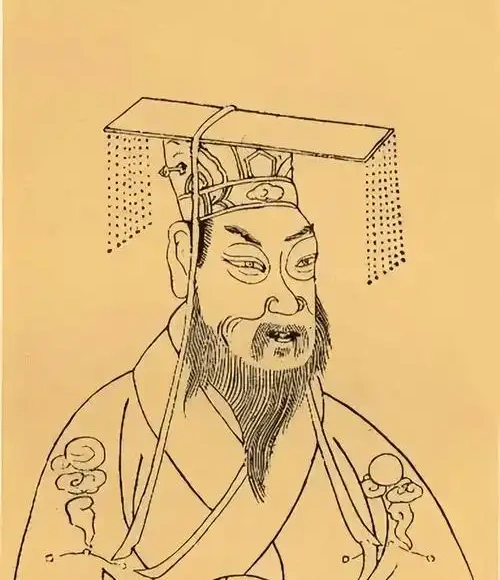
For fifty-two years, from the death of his elder brother in 200 to his own death in 252, Sun Quan held the lower Yangzi against every rival who wanted it, and outlived the Han dynasty, the man who ended it, and both of the other founders of the age. He had no throne to inherit and no claim on the Han imperial house; his father had been a general and his brother a warlord, and both were dead before he was twenty. The country he ruled he had not conquered himself but kept, and he kept it not by the sword alone but by knowing whose friendship was worth having in each decade of his life. He served the Han while the Han could still be served, submitted to Wei while Wei was strong, allied with Shu when Shu was useful, and took the imperial title in his own right only when both his rivals had gone ahead of him and there was nothing left to lose by it. Of the three states into which the empire broke apart, his was the last to be destroyed, and it stood nearly thirty years after his own death.
The instrument of that survival was a hard and consistent realism, and the same instrument, turned in his old age on the problem of his own succession, ruined his own sons and killed the greatest of his generals. The most famous sentence ever spoken about him was said by his enemy Cao Cao, who watched his fleet on the river and wished his own sons were like him. The most careful judgment of him was written by the historian who compiled the records of his state a generation after his death, and it holds both halves of the man at once: the ruler who could bend to survive and use men, and the ruler who in his last years grew suspicious and let his heirs tear each other apart. When he died his court gave him the posthumous name of the Great Emperor, Da, and the temple name of Taizu, and it is from that posthumous name that this account takes its title.
1. The Second Son
He was born in 182, in Xiapi in the east of the empire, where his father was serving as assistant magistrate of the county; the family's home country was Fuchun in Wu commandery, on the lower Yangzi, and the clan claimed descent from Sun Wu, the strategist of the Art of War. The claim cannot be checked, and it did not make the Suns grand; the generations before the boy's birth had risen by the sword. Sun Quan's father, Sun Jian, was the one who made the name. He had served against the Yellow Turbans and the rebels of the northwest, and when the warlord Dong Zhuo seized the capital, Sun Jian fought his way into the ruins of Luoyang and was made general who Smashes the Caitiffs. In 191, campaigning for the warlord Yuan Shu against the governor of Jing province, he was killed by an arrow from the troops of the Jing general Huang Zu, and the Suns were left with a widow, four young sons, and a band of soldiers whose loyalty had been to the father.
The eldest son took the soldiers. Sun Ce was seventeen when his father died, and over the next five years he made himself the master of the whole lower Yangzi. He borrowed troops from Yuan Shu, crossed the river, and took Wu commandery, Kuaiji, Danyang, Yuzhang, Lujiang, and Luling, six commanderies in all. In 198 the Han court, which had no way of controlling him, made him a marquis and general who Attacks the Rebels. By 200, at twenty-six, he was the strongest man south of the Huai river, and it was in that year that he died: hunting, ambushed by three retainers of a man he had killed, wounded in the face, and killed by the wound. He left no adult heir, only a small son, and on his deathbed he named as his successor not the boy but the second of his brothers.
Sun Ce took the seal and ribbon from his own person and put them on his brother, and divided the two of them with the candour of a dying man: in the business of war, of mustering a province and deciding a battle on open ground, he told Sun Quan, he was the better of the two; in the business of appointing able men and holding the loyalty of the country, he was not his brother's equal. Sun Quan was nineteen by the Chinese reckoning of age.
What he inherited was a claim on a province and a set of men who had served his father and his brother. The Han court, acting with the reflex of a weak centre that prefers a client to a vacuum, confirmed him as general who Subdues the Caitiffs and gave him the governorship of Kuaiji in name, and the office carried the substance of command over the Sun family's troops. He was not, in the beginning, his own master; the men around him were the veterans of two dead lords. There stood Zhang Zhao, the scholar from the north who had been his brother's civil chief and who acted now as a tutor and a steadying hand, and Zhou Yu, the friend of his brother's youth, who had been away commanding on the Gan river and came back at once when he heard. It was Zhou Yu above all whom he treated as a brother, and Zhang Zhao whom he treated as a teacher: one was the leader of the soldiers, the other of the clerks, and the new lord of the southeast needed both.
The crisis of the first year showed what those two men were worth. A governor rebelled and had to be besieged; a cousin of the family was found to be writing secretly to Cao Cao; an uncle attempted to seize Kuaiji for himself; two of the Suns' own kinsmen were murdered in Danyang; and in the hills of the interior the Shanyue rose in numbers. Sun Quan was nineteen and had never commanded, and the record says he sat in mourning for his brother until Zhang Zhao told him that this was no time for private grief, dressed him, set him on a horse, and took him out to review the troops. He put down the rebellion, sent out officers against the mountain peoples, and began the long business of turning a warlord's following into a state.
2. The Men Around the Young Lord
The way Sun Quan secured the southeast was not by arms in the first instance but by hiring. His brother's conquest had been quick and violent, and the great families of the region had no reason to love the Suns; the young lord's problem was to persuade them that it was safer to serve him than to wait for a stronger master, and his answer was to open his court to everyone of ability. Some of those who came were northerners who had fled the wars of the plain: Zhang Zhao, the classicist from Pengcheng, and his fellow scholar Zhang Hong; Zhou Yu, who had known the family since boyhood; Lu Su, the strategist from Linhuai Dongcheng who arrived with a reputation and stayed to shape policy; Zhuge Jin, the elder brother of the man who would become the chancellor of Shu; Bu Zhi, Yan Jun, Shi Yi, Lü Dai. Others were sons of the great families of Wu itself: Gu Yong, who would be chancellor for nearly two decades; Lu Xun, whose marriage into the Sun family would bind the two houses together; Zhu Huan, from one of the four clans of Wu commandery. To these he gave office early, calling Zhang Zhao his teacher and Zhou Yu his brother. Their adherence, more than any victory, made the southeast a country.
There was a second problem, and it would occupy Sun Quan's armies for the whole of his life. The mountain country of the interior, the ranges that ran through Danyang and Kuaiji and Yuzhang, was inhabited by peoples the Chinese called Shanyue, the mountain Yue, who had never been brought under the tax registers of the empire. They lived in the high valleys under their own chiefs, worked the iron of their hills into weapons, and came down to raid. For the Sun state they were at once an enemy and a resource, and Sun Quan's policy was to fight and absorb them together: sending armies into the mountains, taking the young men into the ranks, moving the rest down to the plains, and raising new counties over the ground they had left. It took decades and never entirely finished.
His western frontier lay up the great river, in the commandery of Jiangxia, which was held by the general Huang Zu, the same man whose troops had killed his father. In 203 he attacked it and beat its fleet; in 207 the renegade Gan Ning came over from Huang Zu's service and told him, with the particular frankness of a man who had changed sides, that Jiangxia was rotten and could be taken. Sun Quan listened, over the objection of Zhang Zhao, and moved. In the spring of 208 he took a fleet up the river, beat the Jiangxia fleet in a battle in which one of his officers cut down the enemy admiral, and hunted Huang Zu down as he ran; the old man was killed by one of his own men, and his head was brought back to be offered at the tomb of Sun Jian. The conquest of the upper river paid off the old family debt and moved the frontier a long way west, and it put Sun Quan on the approaches to Jing province, whose rich middle country would be the object of his ambitions for the next dozen years. The same year that he avenged his father would bring the greatest army of the age down upon him.
3. The Decision at Red Cliff
The southeast heard the news in the autumn of 208: Cao Cao had turned south, and the whole north had come with him. In the eighth month Liu Biao, the governor of Jing province, died, and his son Liu Zong surrendered the province without a fight; Liu Bei, the roving kinsman of the Han house whom Liu Biao had sheltered, was driven south and left in flight. Cao Cao occupied the provincial capital and the great river port of Jiangling, and with the province's fleet and stores in his hands he could use the Yangzi itself to move against the southeast. Then he sent Sun Quan a letter. He had assembled, he wrote, a navy of eight hundred thousand men, and he proposed to join the young lord of the southeast in a hunting expedition. The figure is Cao Cao's own boast, and no serious account treats it as a count; his actual army is estimated at a fraction of it, and much of that was sick with the epidemic already spreading through his camp. But the letter did its work: the war Sun Quan had spent eight years avoiding had arrived.
The court of Wu divided, and the division cut across a deeper line in the state. The men of the north, the scholars who had come south with the Suns and for whom the southeast was a refuge rather than a home, argued for submission, and Zhang Zhao, the man Sun Quan called his teacher, led them. His argument was the arithmetic: Cao Cao now held Jing province's fleet and could put an army over the river anywhere, and to fight was to risk a defeat that would end everything, while to submit was to keep one's life and office. It was not a coward's counsel but the counsel of men who had no country in the southeast to lose.
The men who argued the other way were the men of the frontier, and their case was made in private as well as in public. Lu Su, whom Sun Quan's brother had befriended and who had come to Wu after the death of his old patron, took him aside when the court had dispersed and told him a hard truth that none of the northerners would say aloud. A man like Zhang Zhao could surrender and keep his house and his rank under Cao Cao, because such men would always be wanted; but Sun Quan could not. The master of the southeast who laid down his arms would be at best a marquis with a titled residence in the capital and at worst the memory of a rival.
The last piece was the return of Zhou Yu. He had been away at the frontier on the Gan river, and Sun Quan called him back. Zhou Yu's speech to the court is one of the most quoted passages of the period. The danger, he said, was overstated. Cao Cao's north was not secure behind him: the warlords of the far northwest, Ma Chao and Han Sui, still held the passes. His troops were northerners, horsemen and infantrymen of the plain, being asked to fight on water in the dead of winter, without forage, and with their camp already sick. And the eight hundred thousand of the letter was a boast. In truth, Zhou Yu said, the army from the north came to about one hundred and fifty or one hundred and sixty thousand, and of the Jing troops Cao Cao had taken over perhaps seventy or eighty thousand were new levies whose loyalty was nothing. Give him thirty thousand men, he said, and he would go up the river and beat them.
Sun Quan gave him the thirty thousand, and he gave them in a way that the histories record because of the gesture. When the argument was over and the court still hung between the two positions, he drew his sword, the Jiangbiao zhuan says, and struck the corner from the desk before him, and said that any officer who spoke again of receiving Cao Cao should be treated as that desk had been. The phrase, and the desk, belong to Sun Quan, not to any of his generals. He put Zhou Yu and the veteran Cheng Pu over the fleet as joint commanders, with Lu Su as the chief of staff, sent them up the river to join Liu Bei, and stayed behind to hold the state. He also, with the cold eye of a man who expects to lose, sent his cousin and his father's old followers against the mountain peoples in the rear, in case the campaign went badly and the interior rose.
The campaign itself belongs to his commanders, and its credit is theirs. The allied fleet met Cao Cao's armada in the narrows on the south bank at a place called Red Cliff, and the northern admiral, whose men could not handle their ships in the river swell, had chained his vessels together. A Wu officer named Huang Gai, who had proposed the stroke himself, took a squadron of fire ships up under a false flag of surrender, brought them into the middle of the chained fleet, and set them alight; the fire spread from ship to ship, and a strong wind carried it into Cao Cao's camp on the shore. The northern army broke. Cao Cao burnt what ships he could not save and took his remaining troops back over the river to the north, and the southeast was left in the hands of the two allies. What Sun Quan had gained was not a conquest but a reprieve.
4. Nan Commandery and the Borrowed Province
The victory at Red Cliff was followed by a campaign that Sun Quan's own officers, not his allies, conducted. The Wu general Zhou Yu went up the river and settled down to besiege the commandery city of Jiangling, which Cao Cao had left in the charge of his general Cao Ren. The siege lasted more than a year, with Zhou Yu himself wounded by an arrow before the walls, and by 209 Cao Ren gave up the city and drew out to the north. With Jiangling, Sun Quan took the rich central commandery of the province, Nan commandery, and made Zhou Yu its governor, with the frontier command of Jiangxia next door in the hands of the veteran Cheng Pu. It was the first time the Sun state had held ground west of the great river's middle bend, and it put the Suns directly against the two other powers that would divide the age: Cao Cao to the north, and Liu Bei, their recent ally, to the west and south.
The alliance of 208 was tightened in the following year by a marriage. Sun Quan sent his younger sister, who is not named in any history, to be the wife of Liu Bei, and the two houses became kin as well as allies. It was an arrangement of state on both sides and did not make the two men friends. The Wu court understood by that year that Liu Bei, sheltering on the south bank with a borrowed city and a few commanderies, was not a client but a rival in waiting, and some of Sun Quan's officers advised him to deal with the man while he was weak. Zhou Yu proposed keeping him in the southeast under a roof of honour and guard, with his generals divided away from him, and Lü Fan argued for treating him frankly as a prisoner. Sun Quan refused both, on the ground that he was at war with Cao Cao and could not afford a new enemy, and that he was not certain he could hold the man if he took him.
The problem of the marriage and the alliance came to a head over one commandery. What Sun Quan had in the middle of the province was Nan commandery, with its capital at Jiangling, the piece of ground that connected the four southern commanderies of the province to the basin beyond the gorges. When Zhou Yu died in 210, at thirty-six, the command passed to Lu Su, and it was Lu Su who persuaded Sun Quan to hand Nan commandery over to Liu Bei: a Liu Bei planted on the northern frontier of the province would take a share of Cao Cao's attention that Wu would otherwise have to carry alone, and an ally with ground of his own was a better ally than a homeless guest. Sun Quan agreed, and the transfer of that one commandery in 210, with the marriage of the previous year, was the whole of the transaction. What Wu gave up was Nan commandery, the district around Jiangling; the four commanderies of the south had never been Wu's to give, and the phrase that the histories and the storybooks built on it, that he borrowed Jing province and would not give it back, is a much later compression of a small and specific debt.
In the same years Sun Quan moved his capital eastward, and the move outlasted his dynasty. He shifted his seat of government to the pass at Moling, on the south bank where the hills come down to the water, in 211; in 212 he built a fortress of cut stone on the ridge above it, the Stone City, and gave the place the name Jianye, Building the Enterprise. From that year the southeast had a capital, at the mouth of the river on the road to the sea, and it would be the seat of six dynasties. In the same years the southern frontier was pushed out into Jiaozhi, on the modern Vietnamese coast, and the far south, with its ports and its trade, came into the Sun sphere. In 212 the state also fortified the Ruxu, the crossing of the Chao lake in the north, against the attack that everyone expected.
The attack came in the first month of 213, when Cao Cao brought an army south to the Ruxu crossing, and the campaign produced the most famous sentence ever said about Sun Quan. The two armies faced each other for more than a month, and in that time one of the Wu sorties caught the northern navy in the shallows and took three thousand prisoners by the count the annals give, with as many more drowned. Cao Cao would not give battle, and Sun Quan took a light boat across the water and rowed along the enemy line to look at it, and Cao Cao, told that the boat carried Sun Quan himself, forbade his archers to shoot and let him look his fill; then, seeing the Wu boats and weapons and ranks in good order, he sighed and withdrew. The famous words, that a man should have a son like Sun Zhongmou, and that the sons of Liu Biao were no better than pigs and dogs, are the annotator's, put into Cao Cao's mouth in a book called the Wu Li, and they have survived the man and the state and the age.
The years after the Ruxu campaign were the years in which Sun Quan's relations with his ally became the whole of his foreign policy. The occasion was the province whose central commandery he had given away. When Liu Bei went west into the basin of Shu and took its province for himself in 214, Sun Quan reasoned that the ally on his western frontier had just become a great power, and that the province of Jing, divided as it was between the two of them, was the natural point at which to press for what Wu considered its due. He sent the envoy Zhuge Jin to ask for the commanderies he considered his, and Liu Bei answered that he would talk about it after he had taken the far northwest, which was the same as refusal. Sun Quan then sent an army west under Lü Meng and took three commanderies by force, and Liu Bei came east with the whole of his field army in reply, so that the two allies came to the edge of war on the river.
What stopped them was Cao Cao, who had in the meantime taken Hanzhong, the upland gateway to Liu Bei's own province in the north, and whose army now stood on Liu Bei's doorstep. Liu Bei could not fight a war in the west and east at once, and he chose to buy peace with land, and the two men divided the province along the Xiang river: the commanderies of Jiangxia, Changsha, and Guiyang on the east to Wu, and Nan commandery, Lingling, and Wuling on the west to Shu. The alliance survived, and the debt was rescheduled, and Sun Quan turned his attention north. In the fifth month of 215 he took the northern river town of Wan and captured its governor and several tens of thousands of its people, a stroke that brought the whole of the southern Huai country within his reach for the first time.
Then he went to Hefei, and Hefei nearly killed him. It was the most heavily fortified of the northern frontier towns, and Sun Quan came against it with what the annals call a hundred thousand men, though the numbers of the history are not to be trusted. The Wei commander there was a general named Zhang Liao, and in the first days of the siege he picked eight hundred men, the best of his cavalry, the figure the annals give, and led them out of the gate at dawn in a direct attack on the Wu camp, cutting his way to the enemy's own standard and out again, and for a season the Wu army was thrown into confusion by eight hundred men. Sun Quan raised the siege after some days and began to withdraw, and Zhang Liao, seeing the Wu rearguard exposed at the ford called Xiaoyao, came out of the city and fell on it. The rout was total. Sun Quan was cut off on the far side of a broken bridge with a handful of guards, and got over the gap only because an officer of his, a man named Gu Li, rode alongside him and whipped his horse into the jump. The officers who had covered his escape paid with their lives, and for years afterward mothers in the Wu country scared their children into silence by saying that Zhang Liao was coming.
The northern wars went on for the rest of the decade without a decision. Sun Quan's field armies could not hold the ground beyond the Yangzi's northern bank, and Cao Cao's armies could not cross the river in the face of the Wu fleet. In 216 Cao Cao came south again and stood before the Ruxu, and in the spring of the following year Sun Quan sent officers north to ask for terms, and the two powers made a peace and spoke of a marriage between their houses. The shape of the next half-century was a stalemate, and Sun Quan understood it well enough to look west again, where the man who had been his ally had become the strongest ruler in the empire, and where the province of the middle river, given away in 210 and divided in 215, was still not settled.
5. Jing, Guan Yu, and the Price of a Province
The chance came in 219, and Sun Quan took it with a coldness that has never ceased to shock the Chinese tradition. In that year Liu Bei's general Guan Yu, who held the whole of the western half of Jing province and who was the most feared soldier on the middle river, led his army north against the Wei fortress at Fancheng and laid siege to it. The campaign was a real threat to the north, and it emptied the towns along the river of their garrisons. It also left Guan Yu's own rear open, and Sun Quan had been waiting for exactly that for ten years. He had decided, some time before, that the province of Jing belonged to Wu and that his ally of the battle of Red Cliff had become the obstacle in front of him, and the question was never whether he would take it but when the taking would be cheapest.
His plan was made by Lü Meng, the general who had succeeded Lu Su in the west, and it is one of the most elegant pieces of deception in Chinese military history. Lü Meng had been ill, or pretended to be, and he withdrew from the frontier on the pretext of his health, leaving the command at Lukou to a young officer, Lu Xun, who was unknown to the enemy and who wrote to Guan Yu a letter of such elaborate deference that Guan Yu, whose vanity was his weakness, was entirely reassured. Convinced that the Wu frontier was now in the hands of a timid youth, Guan Yu stripped his own rear of its garrisons and sent them north to the siege. Then Lü Meng came back. He took his marines down the river with the fighting men hidden below decks and the rowers dressed as merchants, and every watchtower on the bank was seized and silenced before it could raise an alarm. The two commanders of the river towns, who had grievances of their own against Guan Yu, opened their gates. Sun Quan's orders were that the population was not to be disturbed, and the discipline of the Wu army was itself a weapon: the towns of the province, whose people had no great love for either side, submitted without a fight, and the whole of Guan Yu's territory passed into Sun Quan's hands in a matter of weeks.
The manner of Guan Yu's end belongs to the war and to his own biography, and it is enough here to record what Sun Quan did with it, because that is the part the world has judged. Guan Yu's army melted away behind him; cut off from his base and his family, deserted by his officers, he fled west with a small following and was taken in the hills by an officer of the Wu general Pan Zhang's command. Sun Quan had him killed, and had his head sent to Cao Cao. The killing of a man of Guan Yu's standing, a general who was almost a legend in his own lifetime, was not a small thing, and Sun Quan had weighed it. He had sent officers ahead of the campaign to Cao Cao with a formal submission and a request for confirmation, and Cao Cao had recommended him to the Han court as general of Agile Cavalry with the staff of authority, governor of Jing province, and marquis of Nanchang. The titles were empty, since the court he was nominally serving no longer controlled anything, but the gesture was the point. By making himself, on paper, Cao Cao's man, Sun Quan turned the taking of his ally's province from an act of treachery within an alliance into the act of a loyalist general punishing a disobedient colleague. It was a fine distinction and no one was fooled by it, but it gave Cao Cao a reason not to intervene, and that was all Sun Quan needed.
The consequences ran on for the rest of the century. In 219 what Sun Quan had was the whole of the middle river, the greatest single addition to his territory in his life, and a general he had removed before the general could remove him. He had also made himself the enemy of the one man in the empire whose claim to legitimacy was as strong as the north's, and whose grievance was personal; and he spent the next two years managing the consequences.
6. The King of Wu
The fall of the Han in 220 changed the arithmetic of the whole empire, and Sun Quan's response to it was the most cold-blooded decision of his career. In the tenth month of that year the son of Cao Cao took the imperial throne from the last emperor of the Han and founded a new dynasty under the name Wei, and the Han, which had ruled for four centuries, came to an end. Within months two men had claimed the mandate: Cao Pi in the north as the founder of Wei, and Liu Bei in the west, who declared himself the continuing emperor of the fallen Han. Sun Quan claimed nothing: he had neither the blood of the Han nor the fiction of a peaceful transfer to back a title, and so he sent an envoy north to the court of Wei with tribute and congratulations and a declaration of submission, and offered to be Cao Pi's man.
The submission was made in the knowledge of what it would cost him at home. When Cao Pi declared him king of Wu by imperial patent, in the eighth month of 221, and sent the court official Xing Zhen to Wu with the patent and the nine bestowals, the nine ceremonial gifts that marked the highest honour a subject could hold, the Wu officers objected almost to a man. Some told Sun Quan that he should rather take the grander-sounding but self-granted titles of general-in-chief and lord of the nine provinces than receive a rank from the hand of Wei. Sun Quan took the rank. When Xing Zhen arrived and behaved with the arrogance of a man bringing an imperial gift to a provincial lord, walking into the hall without descending from his carriage, one of the Wu ministers, the ageing Zhang Zhao, asked him whether he thought the men of the southeast had no knives, and the young officer Xu Sheng wept aloud and said that he and his fellows had failed their lord, since they had not been able to conquer the north for him but had lived to see him receive a title from it. The Wu court was humiliated, and Sun Quan knew it was humiliated, and he took the humiliation because it was useful.
He explained his reasoning to his officers himself, and the explanation is preserved. He had received the Wei title, he told them, because he had two enemies and could not fight both at once. Liu Bei was coming east with an army; if Sun Quan had refused the Wei title, the north would have had no reason to stay out, and he would have faced the two of them together, which would have been the end of him. So he had bent, and taken what he did not want, and waited. This is the speech on which the historian of the Records of the Three Kingdoms built his verdict on the man, and it comes from Sun Quan's own mouth: he knew exactly what he was doing, and in his world the only thing that mattered was not to lose. The submission bought him more than time. The Wei patent raised him from general of Agile Cavalry to general-in-chief, which ranked above the chancellor; it changed his staff of authority from a temporary grant into a permanent one; and it extended his governorship from Jing province alone to the military command of the three provinces, Jing, Yang, and Jiao, the whole of the southeast and its southern approaches. He took the titles and, in the same year, he moved his seat of government west, up the river to the town on the middle Yangzi that he renamed Wuchang, to be near the frontier where the war would come.
The first test came at once. Having made him king, Cao Pi wanted the usual pledge of a vassal's good faith, which was the sending of a son to the imperial court as a companion and, in practice, a hostage. The son would have been Sun Quan's heir, the boy Sun Deng, whom he had made crown prince the same year. Sun Quan refused. To send the boy north was to put the future of his house into the hands of the man his state was built to resist, and he would not do it; he offered excuses instead, and sent an officer to the Wei court to say so politely. Cao Pi understood the refusal for what it was, and in the ninth month of 222 he attacked. He sent three armies against the southeast at once: one by the eastern road toward the mouth of the river, one against the central crossing at the Ruxu, and one, the strongest, against the river city of Jiangling in the west. Sun Quan met the attack with a change of era and an announcement of independence. In the tenth month of 222 he took a reign name of his own, Huangwu, and stopped being Cao Pi's vassal on paper as well as in fact. It was the beginning of the Wu dynasty in all but the title. The armies that stopped Cao Pi were his officers': at the central crossing the Wu general Zhu Huan caught the Wei army of Cao Ren at a disadvantage and broke it, and at Jiangling the Wu general Zhu Ran held the city through a long siege and uncovered a plot inside his own walls in time. By the third month of the following year the three Wei armies had gone home, and the southeast was still the southeast.
7. The Victory at Yiling
The war in the west, which Sun Quan had bought the peace of the north to fight, was the greatest battle of his life, and it was won by a general he chose against the advice of everyone older. In the seventh month of 221 Liu Bei came east out of the gorges at the head of the whole field army of his state, to take back Jing province and to avenge the death of Guan Yu, and his advance rolled over the Wu outposts along the upper river with the speed of a man who had made up his mind. Sun Quan offered to make peace and was refused. The court of Wu turned to the question of who would command, and the answer was not the obvious one. The veteran generals of the southeast, men who had fought at Red Cliff and on every frontier since, expected one of themselves to take the field; the natural candidate was the man who had commanded the fleet with Zhou Yu or the man who had held Jiangling. Sun Quan gave the command to Lu Xun.
Lu Xun was a man of about forty, from the great Lu family of Wu commandery, who had come to notice in the campaigns against the mountain peoples and then in the quiet frontier role that had deceived Guan Yu two years before. He was a deliberate and cautious man, better at the long calculation than at the charge, and the choice of him over the veterans was Sun Quan's judgment of the kind of war he was about to fight. He made Lu Xun general-in-chief of the western front, gave him the staff of authority, and put the whole field army under him, fifty thousand by the figure the annals give, and he told the veterans to obey him. They did not want to. The Wu officers under Lu Xun complained for months that the young commander was a coward who would not fight and was letting an enemy army into the heart of the country. Sun Quan backed him, and the backing held.
Lu Xun's plan turned the whole geography of the upper river into an argument. In that country the ground itself did the work: the river ran between walls of mountain, the roads along the banks were no more than tracks, and no army could come at him except in one long file, its head far from its tail. To fight such an army in the open was to fight on its terms; to refuse it battle and fall back, giving up ground, was to make it come further into the country, to stretch its supply line along the narrow shelves of the gorge, and to bring it into the heat of summer, when the mountain climate would do more to it than the Wu army could. Lu Xun gave up hundreds of miles of country on purpose. He drew the line where the gorge opens and the ground widens, and there he stood, and would not come out.
For half a year nothing happened except that the two armies sat facing each other, the one unable to bring the other to battle, the other waiting. Then, in the sixth month of 222, Lu Xun attacked. He had waited until the summer heat and the confinement of the camps along the gorge had worn the western army down, and then he sent his men forward against the enemy's line of fortified camps with fire, and the fire, running before the wind from one camp to the next along the shelf of the gorge, did in a day what six months of waiting had prepared. The western army broke, its general fell back in the disorder of a rout, and the whole of the field force that had come east was destroyed. It is enough to say that much because the campaign from the other side, and the manner of the defeat and the flight and the death of the men who covered it, belongs to the biography of the man who lost it, and this account does not follow his war. What belongs here is what Sun Quan did with the victory. He did not pursue into the gorge. He had no wish to destroy the western state, which would have left him alone on the river with the north, and a rival who could still bleed the north was worth more to him alive than dead. He let Liu Bei's remnant go back to the city at the head of the gorge, and within a year he was exchanging envoys with the court in the west as if the war had never happened.
The years after the great victory were the years in which Sun Quan's state became the pivot of the empire. In the fourth month of 223 Liu Bei died in the west, and his young son succeeded him. The court of Wu pressed Sun Quan to take the imperial title, since both his rivals had taken it and there was no one left to be a vassal to, and Sun Quan declined; he judged the moment not yet ripe. What followed he received rather than made. The new government in the west, which could not survive without the alliance, sent an officer named Deng Zhi down the river to propose that the two states put aside the war of 222 and join against the north. Deng Zhi's argument was that of a man who knew his position was weak: the two states together held the whole of the south; joined, they could divide the empire; and if Wu submitted to the north instead, the north would demand the king's own attendance at court and his heir as a hostage, and Shu would come down the river to join in the partition, and the southeast would be lost. Sun Quan weighed the offer and accepted it, broke with Wei, and within a year sent his own envoy, Zhang Wen, back up the river. The alliance was restored, and it would stand, with interruptions and suspicions, until one of them fell; and Sun Quan gained from it what he wanted, a quiet western frontier for as long as it lasted.
8. The Emperor of Wu
For six years after the restoration of the alliance Sun Quan ruled the southeast as a king without taking the title of an emperor. In the north, Cao Pi died in 226, and Sun Quan tried the frontier at once, attacking the Wei river city of Jiangxia in the same year and withdrawing when it held; the campaigns went on, and the coasts of the two states raided each other's towns year after year without changing the line. In the far south the death of the old warlord of Jiaozhi in 226 set off a quarrel of succession, and Sun Quan split the southern province in two and sent an army to bring the region of the modern coasts fully under the Wu government for the first time. And in 228 the state won a victory that settled the question of the title. Sun Quan's officer in the Poyang commandery, Zhou Fang, pretended to defect to Wei and invited the Wei general Cao Xiu south to receive the commandery; the old general took the bait and marched deep into Wu territory, and in the eighth month the Wu army under Lu Xun caught him at Shiting and destroyed his command. It was the greatest defeat the north had suffered since Red Cliff.
He took the throne in the fourth month of 229, at Wuchang, the river town he had made his seat eight years before, and he changed the era name to Huanglong, the Yellow Dragon. The accession, at forty-eight years of age, came nine years after the fall of the Han and eight after the two men who had called themselves its successors, and the delay was the measure of the man's caution. He had waited until both rivals were dead, until the northern regime had changed hands, until the alliance with the west was secure, and until the defeat of the northern army at Shiting gave him a victory to justify a claim to the mandate. The Wu court produced the portents a court was expected to produce, and the proclamation to heaven and earth announced that the line of the Han had run out and that the mandate had fallen to a man who had held the southeast through three generations of his family. On the day of the ceremony the court crowned his father, the murdered general Sun Jian, with the posthumous title of an emperor, the Martial and Ardent. His elder brother, who had actually conquered the southeast and to whom he owed everything, he did not make an emperor. Sun Ce was given the title of a prince, the Prince Huan of Changsha, and no more, and the choice was deliberate: to have made the elder brother an emperor would have raised the claim of the elder brother's line above his own, and Sun Quan preferred a small injustice to a standing danger.
The day had one more scene, and it is the scene the historians chose to remember. When the ceremony was done and the officers were gathered, the old Zhang Zhao rose with the writing tablet in his hand to speak a formal praise of the new emperor's virtue, and Sun Quan stopped him and said that if he had followed Zhang Zhao's counsel, he would today be begging his bread. The reference was to the debate at Red Cliff, twenty-one years before, when Zhang Zhao had advised him to submit to Cao Cao, and it was a cruelty of the kind that Sun Quan kept for the men who had questioned him at the moments that mattered. Zhang Zhao, the man who had dressed a boy of nineteen and set him on a horse and made him the lord of the southeast, bowed his head to the ground and sweated and said nothing. He gave up his offices soon afterward, into a long and honoured retirement, and the two of them would be reconciled in old age.
In the sixth month of the same year an envoy came down the river from the west, the officer Chen Zhen, to congratulate the new emperor, and the two states made a treaty that divided the empire between them in advance. The treaty was a piece of pure aspiration, since neither state had the power to take the northern provinces it awarded itself, but it was drawn with the utmost seriousness, as a covenant sworn before heaven. To Wu went the northern commanderies of Yu, Qing, Xu, and You, the country of the lower and middle north; to Shu went Yan, Ji, Bing, and Liang, the northwest; and the one province they could not divide, Sizhou, the metropolitan region, was to be cut in two along the line of the Hangu pass. Sun Quan had wanted the treaty as much for what it said about Shu as for what it said about Wei; a Shu that acknowledged his title and divided the north with him had given up any claim to speak for the Han against him, and that recognition was worth more to a man with no blood of the Han than any number of promised commanderies.
In the ninth month of 229 the court moved back down the river to Jianye, and the young capital Sun Quan had built above the Stone City became the seat of an empire. He left his crown prince, the boy Sun Deng, at Wuchang with the great general Lu Xun to hold the west while the court was in the east, so that the two halves of the state had each its own government. In the year after the accession he sent a fleet of ten thousand soldiers under the officers Wei Wen and Zhuge Zhi to sea from the coast of the southeast to seek the lands of Yizhou and Danzhou, the islands the geographers of the age placed somewhere off the eastern waters; the island the fleet reached, after a voyage of a year, is the one the Chinese would later call Taiwan, and the expedition brought back several thousand of its people and lost, to disease and the climate, eight or nine of every ten of its own men. Sun Quan had the commanders arrested and executed for disobeying his orders and achieving nothing. It is the first time in the Chinese histories that a state is recorded as sending a fleet to the island, and the record of it is found in a book of the age whose fragments survive.
9. Soldiers, Clients, and Coin
The state Sun Quan built in the southeast ran on a set of arrangements that would shape the region for centuries, and they explain how a ruler with no legitimate title and a small population kept three hostile frontiers. The first was the way his armies were held. The soldiers a general commanded tended to become his soldiers in a way the law did not really provide for, and when the general died his command passed to his son, or to a younger brother if the son was too young, and the men went with it as if they were part of the inheritance. The family of the general Ling Tong is the clearest case: his father was killed in a campaign and Ling Tong, at fifteen, took over the father's troops; when Ling Tong died his own sons were children and the emperor kept them in the palace and later gave one of them the command and the men back. The great general Lu Xun left five thousand soldiers at his death, and they passed to his son Lu Kang. The system gave the great families a permanent stake in the state, since the state guaranteed the commands they passed down; the men on the registers were the state's soldiers, but in practice they worked the lands of the family that commanded them.
The second arrangement was a way of paying for loyalty in land and people rather than in money. When a general died in the state's service, the emperor would grant his widow and children households of tenants who owed no tax or labour to the government and worked instead for the family that held them, together with fields. The annals record the grants one by one. The general Chen Wu, killed at Hefei in 215, was honoured with two hundred such households for his family. Lü Meng, who took Jing province and died soon after, was given three hundred households to tend his grave and fifty qing of land, having been given six hundred tenants of the state's military farms and thirty households of retainers in his lifetime. Jiang Qin's widow received two hundred households and two hundred qing; the widow of Pan Zhang received fifty households and a house and land in the capital. And for the two greatest of the early generals, Zhou Yu and Cheng Pu, the emperor ordered that their households were not to be taxed or questioned about the clients they kept. The men honoured were almost all northerners who had come south with the Suns and had died before they could build an estate in the southeast. The great families of the southeast itself, the Gu and the Lu and the Zhu and the Zhang, did not need the grants: they had their own lands and dependants long before the Suns arrived, and the state largely let them alone. A writer of the next century described the great families of the age with a phrase that has been quoted ever since: their herds were spread over the plains, their fields and ponds ran for a thousand li, their servants could be mustered like an army, and their gates closed on a market. The registered population of the Wu state, a few hundred thousand households and two or more million souls by the figures the Jin history gives for the last years of the dynasty, was a good deal smaller than the number of people who actually lived in it, since a great many of them belonged to the families rather than to the state.
The third arrangement was the land. Sun Quan's government ran the troops and the land together, settling soldiers and civilians on state fields in military and civilian colonies under officers charged with their cultivation. In the earliest years of his rule one of his officers, the young Lu Xun, was a colonisation officer in Haining on the coast, and the system grew until its colonies along the Yangzi delta held several tens of thousands of men and women and the colony at Wancheng in the north kept several thousand soldier-families. In 226 the emperor, persuaded that the armies were living off the country and the harvests were too small, ordered the colonies extended and had his own carriage oxen turned into plough oxen, driving them himself in a public ritual of soil. Alongside the colonies the state built the water works that made the delta productive: the dike at Dongxing in 230 to hold back the Chao lake; a canal through the hills at Jurong in 245 with granaries on it; and the draining of the marsh at Tangyi in 250. The taxes were kept as low as the wars allowed, and the house he lived in was the old general's residence on the Stone City hill, kept with a frugality that even unfriendly men noted, until it decayed so badly in 247 that he rebuilt it out of the timbers of his dismantled palace at Wuchang.
The fourth arrangement was money, and it is the part of his government that worked least well. The Wu state, like the other states of the age, needed a currency and could not get enough of the good old coin of the Han. In 236 it began minting a new coin, the Da Quan Wu Bai, the Great Coin of Five Hundred, worth five hundred of the old five-zhu pieces; in 238 it minted the Da Quan Dang Qian, the Great Coin Worth a Thousand, and later still heavier denominations, each made of a few times the metal of an old coin and stamped with a value hundreds of times its weight. Prices rose; people hoarded or melted the old coin and paid with the new; and the government withdrew the great coins in 246, after ten years, ordering them recalled and their holders compensated, in an admission that the experiment had failed. The great coins outlived the dynasty that minted them, and they are the reason the Wu state, alone of the three, is remembered for debasing its own money.
The fifth thing the state did with its people was the hardest, and no state of the age escaped it. The mountain peoples of the interior, the Shanyue, had been fought and absorbed since the first year of Sun Quan's rule, and the greatest of the campaigns was run by the general Zhuge Ke in the years after 234. Given the government of Danyang commandery, the heart of the mountain country, with the title of general who Pacifies the Yue, he made the war one of slow pressure rather than battle: sealing the mouths of the valleys, keeping the garrisons behind their works, and having his soldiers take the ripening rice before the mountain people could. As the harvests failed the families came down out of the hills, and Zhuge Ke forbade his officers to arrest or ill-use any who surrendered and executed one officer who did. Over three years it brought out, by the count the annals give, a hundred thousand people, of whom forty thousand of the young men became soldiers, one quarter of them under Zhuge Ke's own command and the rest distributed among the officers.
10. Liaodong
The one undertaking of his later years that Sun Quan drove himself, against the counsel of everyone he trusted, and the one that failed him most completely, was the attempt to open a front against the north beyond the sea. Far to the northeast, in the old Chinese commandery of Liaodong that reached toward the Korean lands, there ruled a warlord family of the Gongsun, who had been governors of the region under the Han and had held it for themselves as the Han fell. They were officially Wei's subjects, and in practice their own masters, and for a state that could not break Wei's wall by land, a fellow enemy of Wei on the far shore was a valuable thing. In 232 Sun Quan sent officers by sea to Liaodong with an offer of friendship, and the Gongsun lord, whose name was Gongsun Yuan, sent envoys back to Wu with tribute and a request for recognition. After that the business ran away with him.
In the third month of 233 he sent a mission to Liaodong with the greatest solemnity the state could command: his master of ceremonies Zhang Mi, the officer Xu Yan who commanded the guards of the capital, and a general, with ten thousand soldiers and a cargo of gold and jewels and silks, and the patent that would make Gongsun Yuan the prince of Yan, a king made by the hand of the emperor of Wu. The officers of the court opposed it, and the ablest of them opposed it with all their force: the chancellor Gu Yong and the old Zhang Zhao argued that the distance was too great and the trust too easily broken, and that the honour and the treasure of the state were being thrown away. Sun Quan would not be moved; he had a certain impatience, in these years, with being told what he could not do. The mission sailed. Gongsun Yuan, who had watched the Wu envoys come in their great ships laden with treasure and had thought about what Wei, which was close, would do to him, and about what Wu, which was far, could do for him, made his choice. He killed the Wu envoys, sent their heads to the Wei court to buy its favour, and took the ten thousand soldiers and the treasure for his own.
The news came back to Jianye in the ninth month, and the emperor was humiliated by a man he had called a king, and wanted to go to Liaodong himself at the head of an army to take his revenge. His officers talked him out of it, and one of them told him plainly that no emperor of any worth went to war out of personal anger. And the old quarrel with Zhang Zhao, which had gone on for years over the Liaodong business, ended at last in the strangest scene of Sun Quan's reign. When Zhang Zhao had first opposed the mission and been overruled, he had asked leave to retire on the plea of illness and stopped attending court, and the emperor, taking this for a defiance, had sent men to heap earth against his gate to wall him into his house; Zhang Zhao had answered in kind, walling his own gate from the inside. After the envoys were killed the emperor sent apologies and asked Zhang Zhao to come back, and the old man would not come. So the emperor went to the house himself, and when the old man refused to come out he had the gate set on fire to frighten him, and Zhang Zhao, rather than come, had his doors shut the tighter against the smoke. The emperor ordered the fire put out, and in the end Zhang Zhao's sons brought their father out to him, and the two of them, the lord and the tutor of his youth, were reconciled. It is a scene that makes Sun Quan look small, and he was small in it.
He did not leave the Liaodong affair where it stood. In the same year he took his own army against the northern fortress of Hefei for the third time, without success, and in 234 he went against it again while the Shu were campaigning in the west, and withdrew when the Wei emperor came south in person with a relieving army. In 238 Wei's own general Sima Yi destroyed the Gongsun family and brought Liaodong back under the northern government, and in the following year Sun Quan sent a fleet against its coast, now Wei's again, and it came home with plunder and captives and a belated piece of the revenge he had wanted. The episode is the clearest failure of his foreign policy. Sun Quan's method had always been to bend and wait and take the cheap opportunity, and here he did the opposite: he let a hope run away with him, overrode his best advisers, and sent his treasure and his men across the sea into the hands of a man whose interest lay the other way.
11. The Heir and the Old Ministers
The last years of Sun Quan's reign are the years the historians have judged most harshly, and the judgment begins with a death in the family. In 241 his eldest son and crown prince, Sun Deng, died at the age of thirty-three. Sun Deng had been made heir when his father took the throne and was the one figure around whom the hopes of the court had gathered; his death removed the one settled thing in the question of the succession. In the following year, 242, Sun Quan made his third son, Sun He, the crown prince, and gave his fourth son, Sun Ba, the title of Prince of Lu with all the honours of a favourite. And with that the trouble began.
The trouble was that the emperor, having made one son his heir, showed the empire that he loved another son as much. He allowed the Prince of Lu the same ceremonies and the same officers as the crown prince, and a court was formed around each of the two boys, and the great officers of the state were drawn, one by one, into choosing a side. The two households divided the government for eight years. The men who stood for the crown prince included Lu Xun, the general who had won the war of the gorge, and Gu Tan, the chancellor's grandson; those who supported the Prince of Lu included the general Bu Zhi and Quan Cong. It was not a disagreement about policy but a war of position, and the crown prince, whose claim was by law the stronger, was the more vulnerable: as the years passed the emperor came to see his heir's party less as a support than as a faction against himself.
The greatest victim of that suspicion was Lu Xun, and his end is the most notorious act of Sun Quan's old age. Lu Xun was the ablest servant the Sun state ever had: he had destroyed the western army at the gorge, he had held the west for a decade, he was general-in-chief and imperial counsellor, and the emperor had for years trusted him with the heir and the command of the state. In the quarrel of the two princes he did what a senior minister could hardly avoid doing and what he had every legal right to do: he took the side of the crown prince, and he said so in memorials to the throne, and he asked leave to come down to the capital to put his case in person, and pressed the question of the difference in rank between the heir and the favourite. The emperor answered by having the names that reached him traced back to their source, and by punishing the men around Lu Xun. The general's nephew by marriage, the chancellor's grandsons, were accused of a separate offence and exiled to the far south; the tutor of the crown prince was put in prison and died there; another officer was made to give, under interrogation, a list of twenty charges against Lu Xun himself. And then the emperor sent courtier after courtier from the palace to Lu Xun in the west to reprimand him for interfering in the family of the throne. In 245 Lu Xun, who was sixty-three, fell ill under the weight of it and died, and the record says that the death was of grief and bitterness, that his house was found afterward to have no surplus property, and that some who wrote of him later said he took his own life. He had held the whole of the west against the north for ten years, and he died under a stream of official reproaches, without a trial, for the crime of backing the heir the emperor had himself appointed.
The emperor came in time to half-understand what he had done. The year after, when Lu Xun's son came to the capital to bury his father, the emperor put the twenty charges to him and the young man answered them one by one, and his anger against the dead man began to cool; in 251, when the son came to the capital for medical treatment, the old man wept and confessed his fault and ordered that the papers of the inquiry into his father be destroyed. But the man was dead. In 250, after eight years of the quarrel, the emperor deposed the crown prince, Sun He, and sent him away as a prince of a distant commandery, and a few months later he forced his favourite son, the Prince of Lu, to take his own life, and the followers of both princes were exiled or killed with them. Then he made a new heir, his youngest son, Sun Liang, who was eight years old. The old man had destroyed, in the quarrel of the two princes, one of his sons by his own hand and another by his own edict, had killed or driven out a great part of the generation that had made the state, and had left the throne to a child. The historians have found in those years the clearest evidence of the fault they saw in him from the beginning, and it is hard to disagree.
12. The Last Year and the Verdict
In the winter of 251 Sun Quan fell ill. He had gone out to the southern suburb to sacrifice to heaven and earth, and came back with the sickness of the wind, the elder's affliction that the Chinese called a stroke, and from that winter he did not recover. He was seventy, and he knew the state would pass to a boy of eight, and the one thing left to him was the choosing of the man who would govern while the boy grew. The man he chose, brought down from the western frontier by a fast post, was the general Zhuge Ke, the ablest soldier of the younger generation, who had brought the mountain peoples of Danyang under the government. Sun Quan did not wholly trust him; the histories say he thought Zhuge Ke too self-willed, and that he named him to hold the boy and the state only at the urging of another officer, Sun Jun, who vouched for him with his own standing. He made Zhuge Ke tutor to the crown prince and gave him the government of the state, and then, in the first weeks of 252, he tried to put the house in order: he gave his deposed son Sun He a principality and sent him away, and in the second month declared a general amnesty and a new era name, Shenfeng, the Divine Phoenix. The empress, the mother of the little heir, died in the same month, and the emperor followed her within two months, in the fourth month of 252, in the palace at Jianye. He was seventy-one by the Chinese reckoning of age, and had worn the imperial title twenty-three years and ruled the southeast in one form or another for fifty-two.
His court gave him the posthumous name of the Great Emperor, the Da Di, and the temple name of Taizu, the Grand Ancestor, and buried him in the autumn in the Jiang mausoleum on the south slope of the hill above Jianye. The state he left was the strongest of the three in the size of its territory and the length of its life, and the weakest in the number of its registered people and the health of its rule, and it would go on for nearly thirty years after him, through the reigns of the boy he made his heir and of two more of his house, until the grandson of the minister Sima destroyed it in 280. Among the three founders, Sun Quan was the last to die and the last to be praised, and the way he is remembered has been shaped by two sentences that pull in opposite directions.
The first is the verdict of the historian who wrote his life a generation after his death, and it is the fairest single thing said about him. Chen Shou judged that Sun Quan bent his body and swallowed his humiliation, that he knew how to use men and stood by his calculations, that he had in him the strange genius of the ancient King Goujian of Yue, who had lain on brushwood and tasted gall for years to avenge a defeat, and that he was a hero among men; and that by these things he made himself master of the country south of the river and built one of three states standing at the same time. And then the historian gave the other half. He was by nature suspicious and jealous, he wrote, and ready to kill, and as he grew to his end this grew worse and worse; and of the slanders he listened to and the ruin into which his own sons fell, and the decline of his line until the state fell with it, the historian said that the cause was not to be sought anywhere but here. That is the two-sided truth of the man: the same cool realism that built the state was, in his last years, turned upon his own household, and did at the end what no northern army had been able to do.
The second sentence is a wish, and its story is the history of his reputation. In the middle years of his life, when he was still a king and not yet an emperor, the northern commander looked at his fleet and saw it in good order, and wished, in the words a Wu chronicler put into his mouth, that he had a son like Sun Quan, and said that the sons of the governor of Jing were no better than pigs and dogs. Those words, spoken by his enemy and recorded by his own people, have outlived everything else said about him. Nearly a thousand years later a poet standing on a tower in the north, looking toward a China divided and lost, would write of the young general of long ago who sat astride the southeast and never stopped fighting, and would ask who in the empire was his equal, and answer his own question with the names of Cao Cao and Liu Bei, and close with the old wish of the enemy. The verse has been repeated ever since, and in the mouths of a hundred generations it has become almost the opposite of its original sense. What Cao Cao said was a father's wish for a son; what the Chinese have heard in it is a praise of the man himself, the one who stood between the two great figures of the age and held his ground.
The man behind both the verdict and the wish was neither a villain nor a hero but a ruler of a particular and recognisable kind: the second son who inherited a following at nineteen and turned it into a state; the lord who hired every man of ability who came his way and kept their loyalty by using them; the commander who never won a great battle in the field and never needed to, because he understood that the river and the seasons and the enemy's own difficulties would do the work; the vassal who knelt to Wei to buy the years in which to build a navy and a frontier; the emperor who took the throne last of the three and left it, at the end, to a child, having killed his own sons and hounded the greatest of his servants to his death. What he left was not a name of the kind that good rulers are remembered by, but a country. The southeast, thinly held and half-wild at the fall of the Han, left his hands with a capital at Jianye, a fleet on the rivers and the sea, a frontier on the middle Yangzi, colonies and canals across the delta, and a government that would be the model of the southern dynasties that came after. It is a smaller thing than the wish about the son, and a larger thing than the historian's last hard sentence, and it is the thing that remains.