Home / Emperors / Han Dynasty
Emperor An of Han
汉安帝
Liu Hu, 94 – 125 · sixth emperor of the Eastern Han
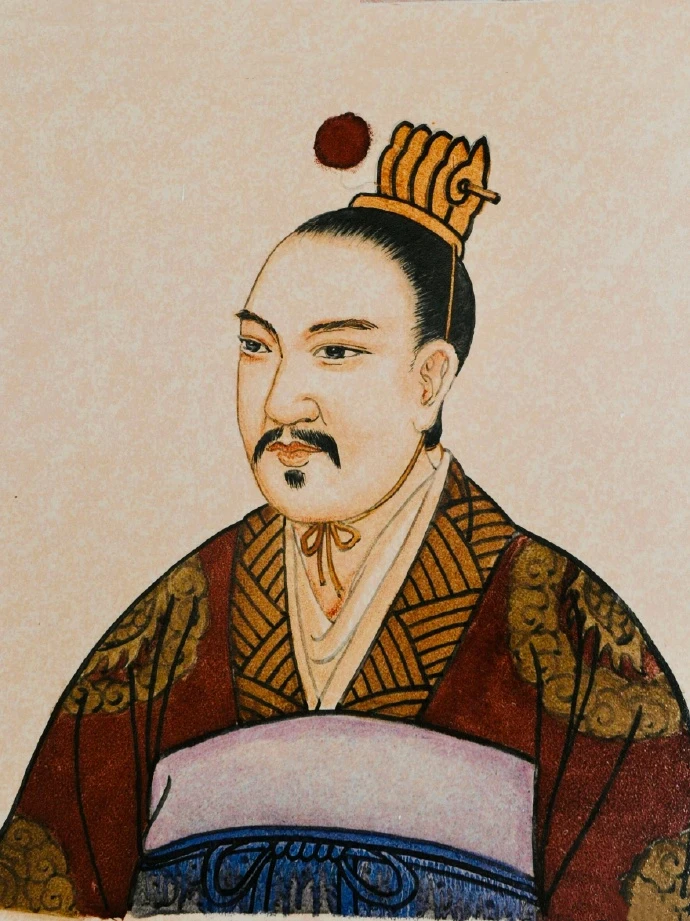
He was the son of a crown prince who had been deposed as a child, and of a woman whose family had been destroyed by the law; he was a boy of thirteen with a good memory for the histories when the empress dowager and her brother carried him into a palace hall at night and made him emperor in place of a dead infant. For fifteen of the nineteen years he reigned, the government was hers. He was thirty-two when he died in his carriage on the road home from a progress, and the throne went to a child chosen by his own empress, whose family then governed in the child's name.
The nineteen years in between are conventionally described as the moment the Eastern Han stopped rising and began to fall, and the judgement is a later one, but the material for it is thick. The Western Regions were abandoned and reopened; a war with the Qiang ran eleven years and consumed the treasury; the Xiongnu who had been driven from the steppe in the previous reign were replaced on the frontier by the Xianbei; a scholar named Yang Zhen was broken for saying what everyone knew; the man who had made the paper died by poison in a proceeding the emperor had ordered; and the emperor's only son was set aside to please a woman who had no child. The reign is not a blank and it is not a golden age. It is the working-out of an arrangement that had been installed in 106, and of what happened to the men who installed it.
1. The Son of a Deposed Heir
Liu Hu was born in 94, the son of Liu Qing, king of Qinghe, who was the third son of the emperor Zhang and had been his crown prince. In 82, when Liu Qing was a small boy, the empress Dou had his mother, the consort Song, accused of practising sorcery against the throne, and the accusation was made to stand. The consort and her sister were shut up and drank poison; the crown prince was deposed and given a kingdom instead of a throne; and the son of another consort was adopted by the empress and made heir in his place. That son was the emperor He, and when he came of age he did what he could for the brother who had been displaced, taking him into his counsels and giving him honours no other prince received. But the settlement of 82 was never undone, and the man who had been heir for four years spent the rest of his life in the posture of a man who intended to be overlooked.
Liu Hu's mother was a woman named Zuo, whose courtesy name was Xiao'e, from Qianwei in the far south-west. Her uncle had been executed for seditious speech, and the law confiscated the household: she and her elder sister were taken into the palace as girls. They grew up with accomplishments and good looks, and when the emperor He distributed palace women among the kings, Zuo Xiao'e went into Liu Qing's establishment. She was, the record says, skilled at the histories, and fond of the rhapsodies; she pleased the king above all his other women, and in 94 she bore him a son. Both sisters died young and were buried in the capital, and neither lived to see what their son became. Their family's two surviving men, half-brothers of the mother, were given posts as gentlemen in the kingdom of Qinghe. That is the whole of the elevation the mother's side ever received.
The boy was clever in the way that survives in a record that has little else to say about him. At ten he had a good grasp of the histories and a taste for the classics, and the emperor He, who had no living son of his own he could trust to, took an interest in him, called him in his hearing a student, and gave him books and objects of study on a scale no other prince of the house received. In the winter of 105 the emperor He died; a baby a hundred days old was made emperor; and the empress dowager, the late emperor's widow, kept Liu Hu in the capital at the residence of Qinghe instead of letting him go with his father to the kingdom. The boy was thirteen, and the decision had no evident purpose at the time.
The arrangement did not survive the year. The infant died in the eighth month of 106. By one account the court's officials wanted the late emperor's grown son, the prince of Pingyuan, whose illness they did not think disqualifying; the dowager thought otherwise, because she had passed him over once already as a baby she could raise and she was unwilling to face what he might remember. So the choice fell on the king of Qinghe's son, and it fell on him for reasons that had nothing to do with him: he was thirteen, he had no party and no claim of his own, and his line had already demonstrated that it knew how to be harmless. The dowager's brother went out by night with the imperial tally and brought the boy to the palace, where he was given the rank of a marquis and then, on the same night, made emperor. The formal instrument of the accession adopted him as the son of the emperor He, which is to say that he inherited the throne as the child of the man who had been his father's supplanter, and that the empress dowager became his mother in the language of the state as well as in fact. He was proclaimed in the usual way: a general amnesty, an era name of his own the next year, and a court that, on the evidence of every edict for the next fifteen years, took its orders from the palace behind him.
2. The Dowager's Government
The empress dowager Deng Sui was, by the standards of the dynasty, a serious ruler. She had been the wife of an emperor and the pupil of the historian Ban Zhao, and the fifteen years of her regency are one of the few stretches of the second century in which the central government can be said to have done its work. It is worth being exact about what she did and did not do, because the account of the last Han centuries tends to reduce her to a stage in a cycle, and the details do not fit the cycle at all well.
Her brother Deng Zhi, who had been made general of chariots and cavalry with the privileges of a minister at the start of her regency, was made general-in-chief in the winter of 107, and her four brothers were enfeoffed as marquises with a revenue of ten thousand households each. Deng Zhi asked to be allowed to decline the addition of three thousand households that went with the responsibility for the accession, and when the dowager would not hear him he stopped going to his own home and took refuge with his brothers, and sent up five or six memorials before she let him refuse. The family, it was said at the time, had learned from the destruction of the Dou in 92: they kept their gates shut and their households quiet, and when Deng Zhi's son was caught writing a letter recommending a friend for office, the boy's father and mother shaved off his hair as an act of expiation, and the capital thought better of them for it. When their mother fell ill the four brothers asked to be allowed to resign and keep the mourning for her; the dowager refused, and was argued out of the refusal by Ban Zhao, and for the duration they lived at the grave, and the youngest of them grew so thin with grief that it was talked of in the city.
What the government did in those years reads like the ordinary work of a state that wished to be thought well of. It governed in the plain style it had announced in its first months, and spent what it had on the famine. In the famine years it opened the granaries, gave the public fields to the poor to farm, sent commissioners to the two worst provinces, and moved the most destitute households of the north into the settled commanderies of the Yangtze and Huai valleys, where there was grain. It appointed men of repute from outside the family: He Xi, a scholar of the coast, and the officials Yi Feng, Yang Jin, Li He and Tao Dun were brought into the central offices, while Yang Zhen and Zhu Chong and Chen Chan were taken into the household staffs of the regency. The dowager herself went on studying with Ban Zhao, reading the classics and astronomy and arithmetic by night because the business of government took her days, and had a roomful of Confucians set to collating the texts in the Eastern Institute, the palace library where the dynastic history was being written. In 110 a commissioner of the palace named Liu Zhen was sent to check the five classics, the philosophers and the manuals against one another and correct the corruptions, and in 120 he and his colleagues were set to write up the biographies of the famous officials since the restoration. Two years earlier a marquis of the imperial house wrote to the throne in praise of the dowager's virtue and compared her to the consorts of the ancient sages, and the language of that memorial is the language of a court talking about itself.
The problem, and it was not a small one, was that she would not go. A rule of the dynasty allowed a dowager to hold the government while the heir was a child; there was no rule and no precedent about a dowager whose heir had grown up under her regency and had taken nothing from it. The record's account of her last years is the account of a woman who understood exactly what she was doing and of the men who tried to make her stop. In the first year of the new era a gentleman of the palace named Du Gen memorialised that the emperor was old enough to take the business of government into his own hands. The dowager had him sewn into a silk bag and beaten to death at the foot of the throne and left outside the wall for the dogs, which is how the record tells it; he survived by holding his breath, lay three days pretending to be dead, and fled to the eastern hills, where he worked as a tavern keeper for fifteen years, until the emperor he had spoken for was governing and sent for him. In the eleventh month of the same year the minister of works, Zhou Zhang, undertook something larger. He meant to close the palace gates, kill Deng Zhi and his brothers and the two eunuchs most closely tied to the regency, seize the officers of the secretariat, remove the dowager to a palace apart, degrade the emperor to a kingdom fifty days away from the capital, and put the sick prince of Pingyuan on the throne. The plan was discovered before it began. Zhou Zhang was formally dismissed, and killed himself; he left no property, and afterwards his sons had to go out one at a time because there was only one suit of clothes among them. Even the family was not exempt. Deng Kang, the dowager's own cousin, who held the cavalry and told her to her face that she had held the court long enough, withdrew to a sickbed rather than keep coming to the audience hall, and was dismissed and cut out of the clan register for it.
Two years before the end, the question of the succession came out into the open in a way that matters for everything after. In 119 the dowager had the sons of the kings of Jibei and Hejian brought into the capital, and among them she admired a son of the king of Hejian, whom she had made heir to the last prince of Pingyuan and kept in the capital. Whether she intended to replace the emperor is a question the sources do not settle, and the one modern reading that argues she did rests on inference, not on a text. What is certain is what the court believed. The emperor's own nurse, a woman of the palace service named Wang Sheng, and the eunuchs Li Run and Jiang Jing, who were her allies, told the emperor that the dowager meant to make the Hejian prince emperor in his place. He had been a figurehead since he was thirteen and had never been allowed to decide anything, and he believed them. In that year the fear entered the palace and never left, and when the dowager died two years later, it was the people who had made him afraid who helped him kill her family.
3. The Long War in the West
The reign's great war began in its first summer, and began with a demand that the frontier had made and could not meet. The tribes of the upper Yellow River, the Qiang, had been settled inside the frontier for generations and had been taxed and conscripted and cheated by the officials who governed them; the record of the war begins with the court calling up the Qiang of three western commanderies to march as cavalry all the way to the Western Regions, and the men who were called up understood that they were not coming home. They turned back at Jiuquan and scattered, and when the commanderies sent troops to head them off they burned the villages they passed. The Qiang of the Huangzhong valley rose with them; a chief of the Xianling group called Dianling and the Zhong Qiang came down on Longxi and closed the road to the west.
The court sent the general-in-chief Deng Zhi west with fifty thousand men out of the five regiments of the Northern Army and the levies of the commanderies, and in the first month of 108 the Zhong Qiang, a few thousand of them, caught his army before his other columns had come up and killed something over a thousand men west of Ji county. In the winter the cavalry commander Ren Shang and his second in command Sima Jun met Dianling's tens of thousands at Pingxiang and were destroyed: by the record's count more than eight thousand of the Han troops died in the field, and after that the court lost the ability to control the west. The price of grain in the Huangzhong valley went to ten thousand cash a picul. Dianling took the title of Son of Heaven in the commandery of Beidi in the north of the Wei valley, gathered the Qiang of Wudu and the Shang and Xihe commanderies to him, raided the three metropolitan commanderies and went south into Yi province, where the governor of Hanzhong was killed; three years later a Xianling column reached Henei, within a few days' march of the capital, and the city was frightened. In 111, when the raids came nearest, the court decided that it could not hold the frontier and moved four commanderies inward: Longxi to Xiangwu, Anding to Meiyang, Beidi to Chiyang, and Shang to Ya, all of them south and east of the lands they were supposed to govern. It was not a retreat so much as an evacuation conducted with troops. The people did not want to leave, and the record says what the government did about that: the soldiers cut the standing grain, tore down the houses, and broke up the stores so that nothing was left to come back to, and the population of the four commanderies scattered along the roads, the old and the weak abandoned or sold, more than half of them lost. An official named Pang Can proposed moving the poorest of the frontier people into the metropolitan district, and Deng Zhi took up the logical next step, which was to abandon Liang province altogether and concentrate on the north, and said so with the image of a torn coat: cut up one garment to patch another and you still have one whole coat. A young officer named Yu Xu argued against it, that the west was the state's shield and that abandoning it would put the ancestral tombs within range of the raiders, and the court heard him and did nothing of the kind.
The turn came slowly and mostly through the business of buying men. From 114 the court pushed west again with the cavalry commander Ma Xian and Ban Xiong and others, and by 116 the general Deng Zun came down on the Qiang from the north through the Southern Xiongnu, and Ren Shang attacked from the south, and in the autumn of 117 Ren Shang bought a Xianling named Haofeng to murder the Son of Heaven the Qiang had made, whose name was Lingchang and who was a boy with an adviser, Langmo, doing his thinking for him. In the twelfth month of that year Ren Shang and Ma Xian broke Langmo at Fuping and killed five thousand of his men, and a Qiang band of the Xihe commandery, ten thousand strong, came in to Deng Zun; in 118 Deng Zun bought a chief of the Shang commandery to kill Langmo. With that the confederation came apart. The three metropolitan commanderies and the road into Yi province were quiet again. The general Duan Jiong, reckoning it up long afterwards, put the cost of the war at two hundred and forty billion cash, which is a figure from a later soldier's memorial and not an audit, and is best read as a measure of what the frontier had been to the treasury rather than of what was spent. What can be said without a number is that the war had lasted eleven years and had moved the frontier inward, and that the state which won it had paid with the granaries of the empire.
4. The Northern Frontier
The northern frontier of this reign had been made by the previous one, and it did not work as intended. The emperor He's wars had destroyed the Northern Xiongnu as a state and left a vacuum in the desert which the Xianbei tribes of the eastern mountains filled, taking over the grazing grounds and absorbing the Xiongnu remnants who stayed; by the accession of the emperor An the Xianbei were the strongest power north of the frontier and the Southern Xiongnu, settled inside it for generations as the court's auxiliaries, were the second.
The Southern Xiongnu revolted in 109. The empire had been through years of flood and famine, and the shanyu, whose court watched the registers and the grain prices, was told by a man of the frontier that the Han were dying off; in the summer he attacked the officer who watched over him, the protector of the Xiongnu, and besieged him in the town of Meiji. In the ninth month the Wuhuan of Yuyang and the tribesmen of the north-east joined him, and the three parties met: the shanyu's horsemen, the Xianbei under their chief Qiulun, and the Wuhuan under a chief named Wuhe. They raided Wuyuan and beat a Han force at Gaoliang valley in Jiuyuan. The court answered with twenty thousand troops and called in the governor of Liaodong, Geng Kui, with his own commandery troops and his Xianbei allies, and Geng Kui broke the shanyu's general at the old seat of the Xihe frontier office and killed more than a thousand of his men. In the first month of 110 the shanyu sent a column into Changshan and Zhongshan to raid, and the general Liang Qin came north with eight thousand men to relieve the siege at Meiji; he broke the Xiongnu and their allies in the same old frontier town, killed three thousand, and took the surrender of the Wuhuan chief, and the Xianbei went back over the frontier with such horses as they had not stolen. Facing a second Han army, the shanyu came out of the town of Huze on foot, bareheaded, his hands tied behind him and his forehead on the ground, and gave himself up. The court put him back on his throne as if nothing had happened, and made him send back the Han men and women he had taken, and those who had been sold into his country during the Qiang war, more than ten thousand people in all, and made Liang Qin general of the frontier.
The Xianbei were dealt with by subsidy and by regulated trade. In the same year their leading chief, Yan Liyang, came to Luoyang to present himself; the court gave him a royal seal and ribbon and set him up at the frontier town of Ningcheng, where the officer in charge of the Wuhuan had his seat, and opened a market there and built two lodging-houses for the hostages, one for each wing, and a hundred and twenty Xianbei bands sent sons to live in them. It was the old method, tribute in exchange for peace, and it bought about a decade. In 117 the last of the Northern Xiongnu handed himself in: the shanyu Feng Hou, who had held out on the steppe for twenty years after the death of his patron, was broken by the Xianbei, lost his last followers, and came south to the frontier of Shuofang with a hundred horsemen and surrendered. With that the Xiongnu ceased to be a power anywhere in the north, and the Xianbei had no rival in the desert.
The peace with the Xianbei did not survive the decade. In 115 a Xianbei band belonging to the establishment of Liaodong rose and besieged a town; in 117 the Xianbei of Liaoxi revolted and were broken for the court by their Wuhuan neighbours, who had a grudge; in 118 the Xianbei of Dai commandery burned the government offices and were not caught. In 119 a band got inside the frontier wall at Macheng in Dai and killed the local chief, and were pursued and beaten by the frontier troops with the Southern Xiongnu. In the last month of 120 the court gave the two leading Xianbei chiefs titles, one as king and one as marquis, and a year later the marquis, whose name was Qizhijian, took his people off the reservation. He attacked the pass at Juyong in the autumn of 121, came down into Yunzhong and beat the garrison, and besieged Macheng again until the relief column arrived; in the tenth month of 122 he was raiding in Yanmen and Dingxiang, and in the eleventh in Taiyuan, and his people stayed at war with the northern commanderies until he died, more than a decade later. The reign also inherited a war in the north-east. In the spring of 121 the governor of You province and the governor of Xuantu took their troops out beyond the frontier against the Mo tribes; the king of Koguryo sent a petition of surrender which the Han officers believed, and while they were believing it his men burned their way through Xuantu and Liaodong and killed more than two thousand people. A relief column of three thousand cavalry arrived after the raiders had gone. None of this was caused by anything the court had done or failed to do in these years. It was what the frontier looked like when the power that had organised it was gone.
5. The Third Opening
The Western Regions had opened and closed three times in the course of the dynasty, and the closing of 107 and the opening of 123 are the last of the three. Under the emperor Wu the roads west of the Jade Gate had first been brought under Han influence; the usurpation of Wang Mang had ended that; the emperor Ming and the emperor He had taken it back, in the end almost entirely through the patience of one man, Ban Chao, who had died in 102 at seventy-one after thirty years in the west. Ban Chao's successor as protector-general, a general named Ren Shang, governed the western states harshly, and in the summer of 107 they rose. The court sent Ban Chao's son Ban Yong, an officer who had grown up in the western states, out to Dunhuang with his elder brother to bring the protector-general and the garrisons home. They came home, and the protectorship was abolished, and for more than ten years after that there was no Han officer in the Western Regions at all. The Northern Xiongnu, driven out of the steppe in the north, took the western states as a tax base, and taxed them hard.
In 119 the governor of Dunhuang sent a colonel west with a thousand men to camp at Yiwu, and the kings of the near western states came over to him. A few months later the Northern Xiongnu and their allies in Turfan attacked and killed the colonel and drove the king of the nearer Turfan state out, and the governor of Dunhuang asked the court for five thousand troops to avenge him. At that point the court's instinct, as it always was in the west, was to close the gate and save the money. The senior officials in Luoyang were for abandoning the Western Regions; the dowager called Ban Yong into the hall to be questioned, and he argued the case against them in a set piece that the history preserves in full. The western states, he said, are the lips to our teeth, and the reason the Han had been able to deal with the Xiongnu at all was that the west split them from their allies and cut off their right arm; it was Wang Mang's greed that had cost the empire the west in the first place, and it was the misgovernment of the men sent out since that cost it again. The states themselves were willing. They hated the Xiongnu's exactions and had no road to the Han. What he proposed was not a war but a cheap establishment: restore the three hundred garrison troops the Dunhuang commandery had once kept, put a deputy protector-general in Dunhuang, and send a colonel of the Western Regions with five hundred men to camp at Loulan, where he would block the road of the northern states, stiffen the nerve of the southern ones, face the Xiongnu, and stay within reach of Dunhuang. The officials in the hall objected one after another, that a garrison would bring endless embassies and endless demands for grain, that it would cost more than it saved; Ban Yong answered each of them, and offered in one exchange to be cut in half himself if the Western Regions could not be made to serve as he said. The dowager took the first half of his advice and not the second. The garrison at Dunhuang was restored and a deputy protector-general was appointed to sit there, but no colonel was sent out to Loulan, and Ban Yong's prediction, which the history is at some pains to point out, came true: the Northern Xiongnu and their Turfan allies went on raiding the four commanderies of the Hexi corridor and the corridor was badly hurt.
The change of policy came with the emperor's own government in 123. The argument this time was made by the governor of Dunhuang, who came to the capital with a plan, and by the commandant of justice, Chen Zhong, who told the court that to hand the Western Regions to the northern Xiongnu was to give them the wealth and the troops to attack the four commanderies, and that the four commanderies were the road to the capital. The emperor took it. In the summer of 123 Ban Yong was made colonel of the Western Regions and sent out with five hundred men, most of them convicts pardoned for the purpose, to camp at Liuzhong in Turfan. He was there two years, and what he had in place of an army was the same thing his father had used: the politics of the western states. He reached Loulan in the first month of 124 and the king of Shanshan came over; the king of Kucha held out longer, and Ban Yong talked him over, and he brought the kings of Aksu and Wensu with him, bound, to surrender at Ban Yong's camp. Ban Yong called out their troops, more than ten thousand horse and foot, marched them to the court of the nearer Turfan kingdom, and drove the Xiongnu prince out of the valley of Yihe; the nearer Turfan state's own soldiers, five thousand of them, came over, and Ban Yong went back to Liuzhong and set the troops to farming. In the seventh month of 125 he called out six thousand cavalry from three commanderies and the levies of the western states, and attacked the king of the farther Turfan kingdom, broke his army, and took more than eight thousand heads and captives and fifty thousand head of cattle, horses and sheep, by the record's count. He took the king alive, and took as well an envoy of the Northern Xiongnu carrying the shanyu's credentials, and had both of them killed at the place where the Han colonel had been murdered in 120 and their heads sent to Luoyang. The road north of the desert was open again. It did not close again in the Han's lifetime, and the last chapter of the dynasty's western policy, when it ended, ended through the son of the man who had begun the second chapter. Ban Yong also wrote. He had grown up in the western states and knew them at first hand, and the account of the region in the standard history, down to the year of his own campaign, is drawn from what he wrote.
6. The Reckoning of 121
The dowager died in the third month of 121, in the fifteenth year of the emperor's reign and after fifteen years in which the government had been hers. She was about forty. Her burial was arranged with all the honours of an empress, and by the time it was arranged her family was already being taken apart, because the machinery of their destruction had been assembled during her lifetime and needed only her death to be worked. The men who worked it were the emperor's nurse Wang Sheng, the eunuchs Li Run and Jiang Jing, and the household officials who had told the emperor for two years that the dowager meant to replace him. The instrument was a palace woman who had been punished by the dowager and now accused the dead brothers of the family, Deng Kui, Deng Hong and Deng Chang, and a secretary named Deng Fang, of having sought out the precedents for a deposition and planned to make the prince of Hejian emperor. The accusation was exactly the shape of the emperor's own fear. He ordered the officials to impeach the dead men for treason against the throne.
The emperor began, in the same month, with the honours that were due. He posthumously named his father king of Qinghe the august filial sovereign, his mother the lady Zuo the empress of that title, and his grandmother the consort Song, the woman the empress Dou had destroyed in 82, the empress Jingyin; and he raised his late father's principal wife to the rank of grand noble lady of the tomb at Ganling. It was not a small act. It set right, in the formal record, the wrong that had made his own line collateral, and it gave the consort Song the title that her rival's accusation had cost her, and it named the family that had done it. The family that had done it included the eunuch Cai Lun, who had been the instrument of the accusation under the empress Dou and had risen since to be a marquis with a revenue of three hundred households, the director of the empress dowager's household, and the officer charged with correcting the texts in the palace library, and who had, sixteen years before, put a cheap writing material into the hands of the court. The emperor sent him to answer for it at the office of the commandant of justice. Cai Lun would not appear as an accused man. He bathed, dressed himself in his court robes, drank poison, and died, and his fief was taken back.
The family of the dowager was destroyed in the same months and by the same accusation. The five who held titles, the sons and nephews of the dead brothers, were stripped of their marquisates and made commoners; the clan was dismissed from office and sent back to its home commandery; the property and lands of Deng Zhi and his brothers were confiscated; and Deng Fang and his household were exiled to the frontier. Deng Zhi himself, who was held not to have been in the plot, was first merely relieved of his honorary rank and sent back to his fief, and then, in the fifth month, moved to a different and smaller fief and put in the hands of the local officials, who understood what was wanted. He and his son stopped eating and died. Two of the nephews had already killed themselves. Then his cousins followed: the governor of the capital, the general of the frontier who had beaten the Qiang three years before, and the master of works, all of them dead by their own hands within the season. Seven members of the family were gone, and the record gives the emperor's reason for the restraint he showed, which was that two of the nephews had a mother who was a sister of the empress. The government then discovered that it had gone too far. The grand treasurer Zhu Chong came to court with his upper body bared and a coffin on a cart behind him, and memorialised that the empress dowager had been a mother of the state and her brothers loyal servants of it, that they had refused fiefs and offices, that no other consort family in the dynasty could be compared with them, that they had been destroyed on a palace woman's unsupported word without evidence or trial, and that the family's bones should be allowed to go home; and he then went of his own accord and gave himself up to the commandant of justice for the insolence of it. He was dismissed. But the capital and the countryside were full of the same complaint, and the emperor, under that pressure, rebuked the provincial officials for their persecution, allowed the dead to be buried on the northern hills of the capital with the public offerings of the court, and let the exiled survivors come home.
Into the space the Deng left came three families and the palace. The emperor's grandmother's house, the Song, had four of its sons made marquises and more than ten of its men given office as ministers, colonels, attendants and gentlemen. The house of his father's principal wife, the Geng, had its head made marquis and given the office of a general of the imperial guard. The house of his empress, the Yan, had her brothers made ministers and colonels with the palace guard in their charge. And the eunuchs who had made the accusation were rewarded with marquisates: Jiang Jing as marquis of the district of Duxiang, Li Run as marquis of Yongxiang, and both of them made regular attendants. Above them stood the emperor's nurse Wang Sheng, who had been in the palace since he was a child and who now had rank, revenue and the right of access, and her daughters, one of whom was married into an imperial marquisate and the other of whom was employed in the palace itself. It was this last arrangement that produced the sentence a contemporary official wrote about the reign: that the authority of the daughter carried more weight than the emperor's, and that the handle of the state lay in the hands of his women. The official was the master of writing Chen Zhong, and his memorial was not acted on. In 123 the emperor gave Wang Sheng the title of noble lady of Yewang, which the record notes as the first time a sovereign of this dynasty ennobled the woman who had nursed him. She had a mansion built for her inside the city wall, two wards thrown into one and the work pressed on summer and winter alike.
7. The Four Knowledges
The man who opposed all of this most persistently was the master of the imperial carriage and later the grand commandant, Yang Zhen, and he is the reason the reign has a moral record at all. He was a scholar of Hongnong in the west, of a family that had held high office in the Former Han; he studied the Documents under one of the masters of the day, was known to the scholars of the region as the Confucius of the Pass, and spent the first fifty years of his life teaching, refusing one summons after another from the provincial government. He entered public life in his fifties, was taken into the household staff of the general-in-chief Deng Zhi on the general's own initiative, and was recommended by him, which is a fact worth remembering when the emperor's party came to use it against him. He rose through four posts to be governor of Jing province and then of Donglai, and it is on the road to Donglai that the story everyone knows about him takes place.
He passed through Changyi, where the magistrate was a man named Wang Mi whom he had recommended years before. Wang Mi came to see him by night with ten jin of gold in a fold of his robe. Yang Zhen said to him: I know you; why do you not know me? Wang Mi said: it is the middle of the night, and no one will know. Yang Zhen said: heaven knows, the gods know, I know, and you know. What do you mean, no one will know? Wang Mi went out ashamed. The four knowledges became the most quoted phrase of the dynasty, and it is worth noticing that they are a formula about being watched rather than about being watched by any particular authority, and that the man who said them was a provincial governor refusing a bribe in the dark. He went on to govern the commandery of Zhuo, where he would not receive private visits, kept his sons and grandsons in plain food and on foot, and refused to buy property for them, saying that to leave them the reputation of a family of honest officials was a better inheritance. In 117 the court brought him in as master of the imperial carriage and then made him the chief of ritual, in which post he set about correcting the recommendation of scholars, which had been going by influence; in 120 he was made minister over the masses, and in 123 grand commandant, the senior of the three highest offices of state.
He used the office for the thing it was for. In a memorial of those years he asked the emperor to send the nurse Wang Sheng out of the palace to live apart, and to cut off her daughter's access to it altogether, and set out the doctrine of the Changes that a woman has no business in public affairs; the emperor showed the memorial to the nurse herself, and the household never forgave him. When the court granted the rank and title of a former marquis to the man who had married the nurse's daughter, Yang Zhen memorialised that the title belonged to the dead marquis's own brother who was still alive, that the son-in-law had no merit to justify it, that the practice broke the rule of the founder that only merit was ennobled, and that people were already talking in the streets. The memorial was ignored. When a man of Hejian named Zhao Teng sent up a memorial pointing out the faults of the government, the emperor was angry, had him arrested and tried, and convicted him of slander against the throne. Yang Zhen asked for his life, on the argument that a state which puts to death the men who speak plainly closes the only road by which it can hear what is happening; the emperor refused, and Zhao Teng was executed and his body left in the marketplace.
In 124 the emperor went east to sacrifice on Mount Tai, and while the court was away the eunuchs who had the emperor's confidence, Fan Feng and his friends Zhou Guang and Xie Yun, who had been urging the household of the nurse into extravagance and had grown rich doing it, forged edicts of the throne to draw on the treasury and the labour of the state works and built themselves houses and gardens. Yang Zhen's secretary examined the papers, laid hands on one of the forged edicts, and held it to be submitted when the emperor should come back. Fan Feng and the others heard of it, and moved first: they told the emperor that Yang Zhen, since the execution of Zhao Teng, had been nursing his resentment, and that he had been an officer of the Deng house and kept a grudge for its fall. When the carriage returned in the third month, an envoy was sent out at night to take back the grand commandant's seal and ribbon. Yang Zhen barred his gate and saw no one. Fan Feng asked the general-in-chief, Geng Bao, who was the empress's man, to memorialise that the dismissed minister would not accept the judgement against him and was holding a grievance, and an edict was issued sending Yang Zhen back to his own commandery. He got as far as a pavilion on the western edge of Luoyang, and there he said to his sons and his household that a man in his position who had been unable to kill the cunning ministers or stop the women who were turning the court upside down had no face left to look at the sun and moon, and told them to bury him in a plain coffin, in a single cloth, with no grave and no offerings. Then he drank poison. He was past seventy. The governor of Hongnong, taking his cue from Fan Feng, stopped the funeral at Shan county and left the coffin exposed beside the road, and set Yang Zhen's sons to carrying post at the stations. The next reign undid all of it and restored his name with honours, which is the ordinary way such cases end, and also the reason they happen.
8. The Heir and the Mountain
The government the emperor ran himself, in the four years left to him, was small in extent and mostly concerned with the court. It did begin with two real measures, both of which came from the officials and both of which he approved. He abolished the rule that officials of the senior ranks must retire for three years to mourn a parent, which the record treats as a concession to the men who found it inconvenient, and reversed an older practice by which the sons of officials convicted of corruption were barred from office for two generations, on the argument from the Spring and Autumn Annals that the evil of a man stops with him. In 122 he ordered the highest officers to recommend men of plain integrity, and told them to stop recommending men of reputation without substance, and after the great earthquake of 121, which shook thirty-five commanderies, he had ordered the ministers to say without reserve where the government had failed. Then the use he made of his own authority went elsewhere.
The empress's family had been given the palace guard in 121; in 122 the empress's dead mother was granted a title in her own right, her brother was made a marquis with the revenue of thirteen thousand five hundred households, by the record's count, and the sons of the family were given palace office while still children. In the spring of 124 the emperor made the greatest gesture available to a sovereign of the Han. He went east to Mount Tai, performed the sacrifice of the burned offering to heaven, sacrificed to the five emperors in the hall of light on the bank of the Wen, and sacrificed to the two ancestors and the six honoured emperors of the house; it was the rite which of all rites the dynasty had performed least, and no emperor since Guangwu had made the journey. He did it, the record says, with a treasury that could not pay for it, in the same season that the palace was building the nurse's mansion and the eunuchs were building their own with money taken by forgery from the state. It is the clearest image of the reign that the sources provide: the emperor of the Han on the mountain, and the men who had got him there behind him with the accounts of the treasury.
The other business of that season was the destruction of the heir. The emperor had one son, Liu Bao, born in 115 to a woman of the Li family of the palace service. The empress Yan had no son, and the history of the empresses says plainly that she poisoned the boy's mother, whose name is the only thing recorded about her. In 120 the dowager had the child made crown prince, and when she died the following year his protection went with her. What destroyed him was the quarrel of the palace women. The boy had been afraid in the palace and the emperor had moved him, at the time, into the establishment of his own nurse Wang Sheng; the crown prince's own nurse and the officer of the kitchens disliked the arrangement and said that the nurse's new house was ill-omened, and the two sides abused each other at the court audience. Wang Sheng and her daughter and the regular attendant Jiang Jing and the eunuch Fan Feng had the crown prince's nurse and the kitchen officer accused of some offence; the two were shut up and died under it, and their households were sent to the farthest southern frontier. The prince, who was nine, was distressed by it and let it be seen that he was, and the women who had done it concluded that if he ever came to the throne he would remember. They made a case that he and his household, in league together, intended to kill the emperor and take his place, and the empress's party took the case to the throne. What the sources say the emperor asked himself is not recorded, but he convened the ministers and put the deposition to them. The senior officials of the court objected, that a boy not yet fifteen could not have the crimes of a man and should be given tutors and taught, and that the title of heir was not a thing to be undone to please a woman; the general-in-chief Geng Bao, who owed his position to the empress, argued for the deposition, and some of the ministers who spoke against it lost their offices for it. In the ninth month of 124 the crown prince was deposed and made king of Jiyin. He was nine years old. The lesson he drew from it, and the lesson the court drew, is the subject of another reign and another account; what belongs here is that a child had been the sole survivor of his father's line and had been thrown away to please three or four people inside the palace, and that nobody in the outer court could stop them.
9. The Road to Ye
In the second month of 125 the emperor went south on a progress of pleasure through the valleys of the Huai and the Yangtze, with the empress and the greater part of the court in his train. In the third month, at the city of Wan, he fell ill, and after a few days he turned the carriage back toward Luoyang, sending ahead an order for the sons of the kings of Jibei and Hejian, of an age between seven and fourteen, to be brought to the capital. On the road home, at Ye county, he died in his carriage. He was thirty-two.
The empress and her brothers had been in the progress, and so had the eunuch Jiang Jing, and what they did in the next four days decided the government of the empire. They concealed the death. The progress kept to its ordinary order as it moved north, the meals came as they had come, and the officials who attended it answered as they had answered, and the court reached Luoyang and its gates before anything was said. Then the mourning was published, the empress was made dowager and took the government, and her brother Yan Xian was made general of chariots and cavalry with the privileges of a minister of state. The step they had taken was defensible in itself: a private death on the road, published at the frontier of the capital, is the sort of thing that gives a faction its hour. The reason underneath it was simpler, and the history says so. The empress dowager had watched the family of the last dowager, which had held the government for fifteen years, extinguished within a year of her death, and she knew that the throne would pass to her husband's son by another woman, whom she had helped to depose; so she chose a boy from a distant branch of the house, the marquis of Beixiang, the grandson of an emperor and the son of a prince who had never been summoned to court, and had him brought in and set upon the throne in the fourth month. He was not given an imperial title by the history and he reigned seven months. The men who were with him did not last much longer: the empress's brother turned on the general-in-chief Geng Bao and the eunuchs of the dead emperor's household, and had Geng Bao destroyed and the nurse Wang Sheng and her daughters banished to the northern frontier, so that within a year of the old emperor's death not one of the people who had run his palace was left in it. And in the eleventh month of that year, after the marquis fell ill, nineteen men of the palace service killed Jiang Jing and two others in one night and put the deposed crown prince on the throne instead. What came of that night belongs to the reign of Liu Bao.
The emperor was buried in the same year at Gongling, north of Luoyang, with the posthumous title of the filial and tranquil emperor and a temple name, Gongzong, which was taken away from him in 190 along with three others when a court at the end of the dynasty reviewed the ancestral temples and found that the honours had been given too freely. The historians have not been kind to him. Fan Ye closed the annals with the judgement that his virtue did not rise and that the standards of the kings were left to spoil, and blamed the favourites who worked on him; Sima Guang, writing the great chronicle in the eleventh century, put it shorter, that when he grew up he was much given to what was not virtue, and came by degrees to displease the empress dowager. Later ages have been readier still, and have made his reign the hinge on which the dynasty turned from its one good century to its long decline. The judgement is a hindsight, and it has behind it the advantage of knowing what came next, which nobody in 121 did. But the case can be put without it. He was a boy chosen because he could be managed, and he was managed for fifteen years by a woman who governed the state better than he did; when she died he destroyed her family on a palace woman's word, and in doing it he handed the palace and the offices to a nurse, her daughters, and a group of eunuchs who had told him what to fear when he was a child. He let the two men who stood nearest the tradition of honest counsel be broken, one in a cell and one on the road, and he set aside the only son he had to keep the peace with a woman who had no child. When he died on the road at Ye the throne passed, in a week, to whoever held the palace, and the pattern that would run through the rest of the dynasty was fixed: an emperor who is made by the people around him, and unmade by them. In nine years, in the reign of his son, a general-in-chief of the Liang family would be handed the government as an inheritance, and the men who had put that family there would include the same officials who had watched the empress Yan take the palace in the spring of 125. The empty years begin here.