Home / Emperors / Three Kingdoms
The Marquis of Guiming
归命侯
Sun Hao, 242 – 284 · last emperor of Eastern Wu
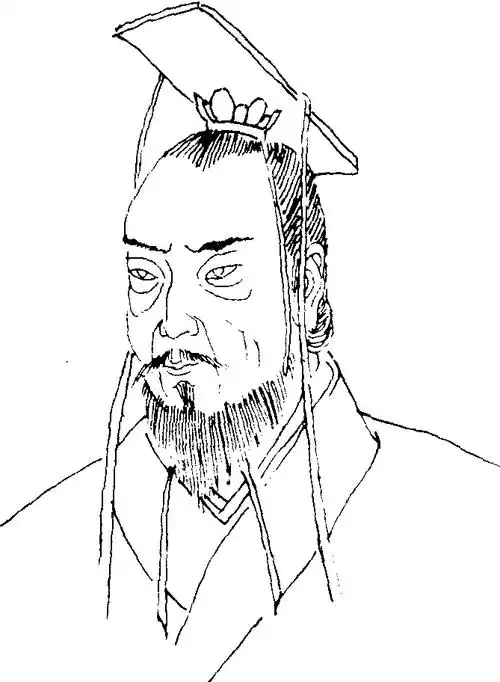
Sun Hao ruled the state of Wu for sixteen years, from the autumn of 264 to the spring of 280, and he was the last of the three rulers among whom the empire had been divided since the fall of the Han. He took the throne at twenty-three, a grandson of Wu's founder, and the first thing his court recorded of him was an edict of mercy: he opened the granaries, released palace women to be married, set free the birds and beasts shut up in the imperial parks, and the country called him a good lord. He lost the throne as the most notorious tyrant of his age, a name that in later Chinese stands for the bad ruler the way one sage's name stands for the good one. In the years between, one after another of the ministers and commanders who might have held the state together was put to death, and Wu, which had outlived both of its rivals, was broken from within before any northern army reached its capital.
He has no posthumous name and no temple name. No successor's court ever sat to weigh his reign and set a word after his death, as the courts of his own house and of the houses it fought had done for their rulers. In the Records of the Three Kingdoms, the history compiled in the following century that is the source for nearly all that is known of him, he has no annals of his own; the historian gave formal annals to the rulers of Wei and wrote the rulers of Wu and Shu as biographies, and Sun Hao is the last of the three who share the single Biographies of the Three Heirs. The title under which this account presents him is not an imperial title. It is the rank conferred on him in 280, after his surrender, by the emperor of Jin who had taken his country; the name means "returning to the mandate," and it is the name a conqueror gives a beaten rival. This account takes its title from it because it is the only one he has.
1. The Son of a Deposed Heir
He was born in 242 or in 243, the two years that the sources leave open, and he was the eldest son of Sun He, who was then the crown prince of Wu. His grandfather was the founder of the state, Sun Quan, who was past sixty and had buried several grown sons already; the old man was fond of this grandson and gave him the childhood name Pengzu, after a figure of legend said to have lived for centuries. The name did not keep its promise. Sun Hao was still a small boy when his grandfather, in the long quarrel over the succession that ruined the last years of his reign, deposed his father and sent him away from the capital; and that single fact, the deposition of a crown prince who was also this boy's father, is the whole of the background he carried into his own life.
What followed was worse. In 252 the old emperor died, and the new court gave Sun He the title of a prince of Nanyang and moved him to Changsha, far up the river. In the next year the regent who then held the government, needing to be rid of a rival claimant, had Sun He put to death. Sun Hao was about twelve. His mother, a concubine of his father's household named He, did not follow her husband, and the reason the histories give for her survival is the reason he survived: if everyone died, she said, there would be no one to raise the children. So she lived, and brought up Sun Hao and his three younger half-brothers in a house that had been the family of a crown prince and was now nothing.
The boy who would be emperor spent his youth as a private person in a suspicious court. In 258 another emperor came to the throne, Sun Xiu, and in the general redistribution of titles that followed, Sun Hao was made marquis of Wucheng and sent to his fief at Wucheng, in the country south of Lake Tai. He was seventeen. He was given a wife, the daughter of an officer named Teng Mu, and he settled into the small life of a marquis in a provincial town, with a title that carried no office and a name that carried the memory of a father the state had killed. It was there that he met the man who would make him emperor. The magistrate of Wucheng was an official named Wan Yu, and the two of them became friends. The histories add one more thing to these years, from the store of anecdote rather than the state record: on the road to his fief a fortune-teller told him his future was beyond measuring, and he was pleased and told no one. It is the kind of story that is told of a man after he becomes great, and it should be read that way. What is certain is that for six years he was a marquis without a court, waiting in the west country while the great families of the east ran the state.
2. The Election
In the seventh month of 264 the emperor Sun Xiu died, leaving a young son whom he had entrusted on his deathbed to his chancellor, and the court chose to set the child aside. The reasoning was practical and the moment was bad. The allied state of Shu had been destroyed the year before, and Wu now faced the north alone; in the far south the commandery of Jiaozhi had risen in revolt and gone over to the enemy. Under a child, the ministers judged, the state could not be held. They wanted an older ruler, and the field of candidates among the imperial house was narrow.
Wan Yu, now promoted to a command in the palace guard, went to the two men who controlled the government, the chancellor Puyang Xing and the general Zhang Bu, and recommended the friend of his Wucheng days. His words are preserved: Sun Hao, he said, was a man of clear judgment and decision, of the stamp of the founder's own elder brother who had conquered the southeast, and he was a student and a keeper of the law. Puyang Xing and Zhang Bu were persuaded, and the empress dowager, the widow of the dead emperor, was asked for her consent; she answered, in the words the histories keep, that she was a widow and knew nothing of affairs of state, and that they should decide for themselves. They did.
On a day in the eighth month of 264 that the calendar fixes within a day or two of the tenth of September, Sun Hao was enthroned at Jianye. He was twenty-three. He proclaimed a general amnesty and changed the era name to Yuanxing. He rewarded the men who had made him: the two senior generals were raised to grand marshal of the left and right, Zhang Bu was made general of the flying cavalry and given a place in the palace secretariat, and Puyang Xing, the chancellor, was given the additional offices of attendant of the palace and governor of Qing province in the far north, a title held in name only. Within weeks he did two more things that the court would remember. He gave his dead father, the deposed crown prince, the posthumous title of emperor and had him enrolled among the imperial ancestors; and he raised his own mother, the concubine who had saved him, to be empress dowager. The move was natural and it was also a statement. The son of a man the state had executed had come back, eleven years later, and set the executed man among the emperors.
In the tenth month he named his wife empress, and settled upon the four sons of the dead emperor Sun Xiu the titles of princes, one for each of four commanderies. The country, watching, had reason to think it had done well. The lord it had chosen was young, had no faction of his own behind him, and had begun by honouring his dead and rewarding his backers.
3. The Edict of the First Spring
What the court recorded of his first months is the part of the reign that the rest of it seems written to contradict. A chronicle of Wu, the Jiangbiao zhuan, put together in the following century and preserved in fragments in the commentary on the Records, describes the opening of his rule in a single sentence: he issued a gracious edict, it says, caring for the officers and people, opened the granaries, relieved the poor, sent out palace women in numbers to be married to men who had no wives, and released the birds and beasts that had been kept penned in the imperial preserves. The chronicle adds the verdict of the time: everyone, it says, called him a wise lord. This is the language of praise, and it is worth noticing whose language it is. The sentence comes from a Wu writer, or from a writer using Wu materials, and it is the portrait of a ruler that a subject hopes for. Yet there is no reason to doubt the acts themselves. The granaries were opened; the palace women were let out; and for a season the man who six years earlier had been a marquis in a small town with no prospect sat in the founder's hall and governed like a founder.
The turn came within the year, and it began with the men who had raised him. Puyang Xing and Zhang Bu, having made Sun Hao emperor, came to regret it; the histories say their regret was noticed, and that Wan Yu, who had recommended him in the first place, went quietly to the throne and reported it. The method is the point. The ruler did not accuse them himself, or put a case to the court; he let his old friend inform on his other old friends, and then he acted on the information. In the eleventh month of the first year, less than four months after the two men had set the crown on his head, he had them arrested at court, sentenced to exile in the far south, and killed on the road, and their families with them.
He kept a piece of one of them afterward, and the story is one of the few places where anything human shows through. Zhang Bu had left daughters. Sun Hao took the younger into his palace and made her a concubine, and one day he asked her, casually, where her father was; she answered that he had been killed by a bandit, and the emperor, hearing the word he had made her say, had her beaten to death. Then, the same chronicle says, he was sorry, and had a likeness of her carved in wood and kept it at his side. It would be easy to read this as grief. It reads better as the pattern that would run through the whole reign: a man who destroyed without hesitation and then wished the pieces back. Within four months of his accession, the two architects of his election were dead, and the court had learned what it had on the throne.
4. The Court at Wuchang
The next two years were given to foreign policy, to the dead, and to a change of capital. He began by answering a letter. The regent of the north, Sima Zhao, had sent envoys to Wu proposing a settlement, and in the spring of 265 Sun Hao sent an embassy back with a courteous reply, and dispatched it with the forms of a sovereign treating with a sovereign. One of the envoys, a man named Xu Shao, was reported on his return to have spoken with admiration of the north; the emperor had him recalled and killed, and his family deported to the far southeastern frontier. Then came the dead. In the seventh month of 265 he dealt with the family of the man he had succeeded. The widow of Sun Xiu, whom he had at first honoured as dowager and then demoted, was forced to take her own life; the four sons of Sun Xiu were sent to a small town in the interior, and when they arrived the two elder of the four were quietly killed. The four princes who had been settled upon four commanderies the year before were thus reduced to two boys in a walled town. It was the fate of the previous emperor's children, and every succeeding emperor of the age knew it was the risk.
In the ninth month he moved the capital. The pretext was an omen: diviners reported that the region of Jing had a kingly aura that threatened the palace at Jianye, and the officer commanding Xiling, a man named Bu Chan, sent up a memorial urging the emperor to remove to Wuchang, the river town upstream at the mouth of the middle Yangzi where the founder had once kept his own court. The real reasons ran the other way and were no less clear. Wuchang stood nearer the western frontier, where the pressure from Jin would fall; and above all it stood away from Jianye, where the great families of the east had their estates and their clients and their habit of running the state. The move was resented before it was made and hated once it was. The supply of the new capital had to come up the river from the rich country of the delta, and the people who carried it were the people of the delta; a children's song went round the country, one that had first been heard when Sun Hao's grandfather made the same move, and it is the way the reign is remembered in the mouths of ordinary people: better to drink the water of Jianye than to eat the fish of Wuchang; better to come home to Jianye and die than to stay at Wuchang.
The capital was barely settled when the resentment produced a revolt. In the tenth month of 266 a leader among the hill people of the Yongan district gathered several thousand followers, seized a brother of the emperor, the marquis of Yongan, and set out toward the old capital at Jianye, gathering men as he went until the rising was said to number more than ten thousand. The two generals left to hold Jianye met and broke it, and the emperor's brother was recovered; the emperor had him, and his mother, put to death. The whole affair, which was small in itself and put down in a season, shows where the danger lay. The state was threatened not only from across the river but from the countryside behind it, and the moving of the court had stirred up that countryside. Sun Hao drew a different lesson. He reasoned that the revolt proved the diviners right: the aura of the west had broken a trouble in the east. He sent a party of men into Jianye to march up and down and proclaim in the streets that the soldiers of Jing had come to break the rebels of Yang. In the twelfth month he moved the court back to Jianye, leaving a garrison at Wuchang, and the great return cost the country the year and a great deal of its patience.
In the following year he began to build. In 267 he ordered a new palace, the Zhaoming gong, whose scale the histories measure at five hundred of the long units of the age and whose cost they call enormous: its construction dragged out half a year, officials down to a low rank were sent into the mountains to oversee the felling of timber, and the peasants of the countryside were taken from their fields at the season when they were needed. His senior ministers remonstrated; he did not listen. It was the first of the great works, and it set the tone for the leisure of a reign that had, by 267, given up nothing but had taken a great deal. The state was still whole, the frontier still held, and the court had learned that its young lord wanted the forms of magnificence and would have them.
5. The Seven Measures and the Listener
The instrument with which he governed the court was the banquet, and he built it into a machine. The dinner parties of the Wu court became famous, and their fame was a warning rather than a compliment. Guests sat the whole day. Every man present was required to drink a minimum of seven measures of wine, a large quantity even for a heavy drinker; the histories add the detail that those who could not, or would not, drink it were made to pour it out and show an empty cup as proof that they had. Ten officers of the yellow gate, the palace attendants, were posted as a standing committee of fault-finders. They drank nothing. Sitting in plain view all day, they took note of each guest, and when the banquet ended they reported what they had seen: who had said too much, who had looked at the throne in a way that could be called disrespectful, who had faltered over the prescribed forms. There was a second game. The emperor set his courtiers to mock and cross-examine each other, to expose each other's private shames, and took his pleasure in the sport. The ones who pleased him were the savage and the flatterer; the ones who did not, he marked. The result, the histories say, was that no man in the court could speak his mind, and that every man went home from the table wondering whether the report of the day's drinking had already been laid before the throne.
Two deaths from among those tables were remembered more than the rest, and they stand for the two truths that the emperor would not hear.
The first was Wang Fan, a courtier of learning and presence, unable to bend the neck. In 266, when an envoy returned to the court from a mission to the north, Sun Hao held a great banquet, and Wang Fan, drunk, behaved with his usual composure. The emperor, who had expected a man overthrown by wine, took the composure for a studied insolence; he had him killed on the floor of the hall. Wang Fan was thirty-nine. Then, the chronicle says, the emperor took his court out to a hill and had the dead man's head thrown among them, and had men dressed and set to fight over it like beasts tearing at carrion. The chancellor at the time, the old general Lu Kai, wrote of it that the state had just lost one of its great men to an emperor who could not bear to be looked at steadily; and in the comparison he chose, he put the murdered man in the place of a famous minister of antiquity and left the emperor in the place of the tyrant who killed him.
The second was Wei Zhao, the historian. He was a scholar of long service, seventy years old by the end, who had been a tutor in the household of Sun Hao's father when the father was crown prince; the emperor's early favour to him went back to that, and it is the reason the story has a shape. Wei Zhao was ordered to compile the official history of the state, the Book of Wu, and to the court's account of it he gave his learning and his obstinacy. He drank only a little, and in the early, friendly years the emperor had let him off the seven measures and, the story goes, had had tea secretly substituted for his wine, the small kindness from which later ages took the phrase "using tea in place of wine." Two things turned the favour. When men came to the throne with first one omen and then another, the emperor asked Wei Zhao whether such signs were to be believed, and the old scholar answered that they were the sort of thing a man keeps in his own basket, which is to say, worthless. And when the emperor required the historian to write the life of his own father, the deposed and murdered crown prince, in the form reserved for an emperor, Wei Zhao refused; Sun He had never reigned, he said, and the record could only be written as it was for a subject. The emperor's grievances accumulated. In 273, having at last found its occasion, the court had him arrested, and when the old man's appeal from prison reached the throne it was faulted for the smudges where he had corrected his own writing. A colleague, the official Hua He, memorialised for him, comparing him to the great historian of the Han; the emperor refused, and had him put to death. He was seventy, and his family were deported to the far southwest.
The two men had done the same thing in different rooms. One told the truth about the omens that the emperor wanted to believe, and the other told the truth about the history the emperor wanted written, and both were killed for it. It was the court's misfortune that these were the two kinds of truth a ruler most needs told, and the emperor's that no one else afterwards would say either.
6. The Reckoning of His Own
The famous deaths were the ones of the honest men, but the pattern was wider, and it ran through every kind of servant the state had. The emperor destroyed the men who were loyal to him, the men who were useful to him, and in the end the men who were merely his instruments.
He destroyed the talented. In 272 the grand minister of agriculture Lou Xuan, a man of upright and unyielding habit, was accused of whispering sedition in the emperor's hearing with a colleague, and exiled to the south; not satisfied, the emperor had him moved further, to the far frontier, and sent a secret order to a local commander to put him to death. The commander died suddenly, and Lou Xuan, laying out the body, found the order and killed himself. In 275 the director of the palace secretariat He Shao, who had sent up a long memorial against the misgovernment of the reign, was struck by a paralysis that took his speech. The emperor, certain the dumbness was a pretence, had him put in a cold cellar and beaten; when the flogging of more than a thousand blows had not made him speak, he had him killed, the accounts say with a saw and fire, and deported his family. And in 278 Zhang Shang, a palace attendant quick and charming enough to be better company than his master, and to know it, was sent off to the shipyards at the southeastern frontier and killed there, having on one earlier evening turned a question about the classics in a way the emperor chose to read as a comparison of himself to a king of too little virtue. He destroyed those outside his own order too. In 274 the marquis of Zhang'an, an uncle of the emperor named Sun Fen, was reported to be spoken of as a coming Son of Heaven, and the emperor had him and his five sons put to death. A report of the same kind at around the same time cost a provincial governor his life and drove another to suicide.
He destroyed the servants who ran his government, and the manner of it is the measure of the reign. In 276, in a year of drought in the east, the governor of Kuaiji commandery, a man named Che Jun, sent up a request to open the local granaries for the starving. The emperor decided that the request was an attempt to buy the people's love, which to him was the gravest of political crimes, and had him killed; the governor of Xiangdong, who had failed to collect the tax, was killed in the same year and season, and the heads of both were sent round the provinces to make the point. Earlier, a master of writing named Xiong Mu had ventured a mild objection, and the emperor had him beaten to death with the ring of a sword, so that, the histories say, there was not a whole piece of skin left on him. And he destroyed the instruments. In 272 his own favourite among the palace officials, a man named He Ding, who had risen by informing on others and had been given the run of the court, was at last found out in his corruption and killed; the emperor, struck by the resemblance to the earlier case of Zhang Bu, renamed him accordingly, a final piece of scorn for a man he had himself raised. In 277 the informer Zhang Chu met the same end. And when the enemy was at the gates in 280, the ministers would demand and get the head of the last of them, the eunuch Cen Hun.
He destroyed the houses of the great families. The old general Ding Feng had died in 271 after a long career, and the emperor, on the ground that a campaign of the old man's had lately produced nothing, killed Ding Feng's son and deported the family. Wan Yu, the friend who had made him emperor and been rewarded with the chancellorship, was driven, along with a second senior general, into a plot the emperor thought he detected; the emperor invited the two to a banquet and had poisoned wine served, and though both men survived the cup, Wan Yu took his own life soon after and the other died of grief, and their families were exiled. In 274, after the death of the last great commander, the emperor deported the whole family of the old chancellor Lu Kai, who had lectured him to his face and had died in his bed five years before. Lu Kai was the one man at court the emperor could not simply order killed, and both of them knew why. He was of the great Lu family, which had been giving the state its generals and governors since its founding, and when the emperor, in one of their exchanges, asked him how many of his clan held office, Lu Kai answered with the count and no show of humility: two chancellors, five marquises, and more than ten generals. The emperor let him live and let him speak, and granted him, when he asked, the right to raise his eyes in the imperial presence, a thing he allowed to no one else, on Lu Kai's argument that a lord and a minister ought at least to know each other's faces. What the emperor could do was wait. Lu Kai died of illness in 269, and within five years his family had been deported to the southeastern frontier. By the middle of the 270s the tally was nearly complete. The chancellor Lu Kai was dead, the grand marshal Shi Ji was dead, the old generals Ding Feng and Lu Kang were dead, the two men who had made him emperor had been killed, and the men who had served his predecessors at the frontier had died out or been removed. When the emperor's own favourites were turned on in the end, the reign had already eaten its way through everyone else.
7. The Man on the Upper River
The frontier of the west was held, through most of the reign, by one family and one man. Lu Kang was the son of Lu Xun, the commander who had held the west a generation before, and he had inherited from his father the command of the west and a personal following of soldiers that went with it, the arrangement by which the great families of Wu held the state's armies almost as their own. He was patient and methodical, and for the ten years after the accession he was the reason the frontier held.
The first front was the far south. The revolt in Jiaozhi that had been running since 263 had gone over to the enemy, and the northern court had put its own officers into the commandery and its neighbours. Wu tried to take it back and failed; in 268 a southern expedition under the provincial commander and his colleague was destroyed, both commanders killed. In 269 the court tried again, this time in two columns, one by land from the middle province and one by sea from the east, and in 271 the two met in the south and it worked. The land column's commander, a frontier officer named Tao Huang, took the city of Jiaozhi by a mixture of siege and negotiation, and the two commanderies of Jiuzhen and Rinan came back under Wu; he spent the rest of his career holding the south, and the people of the far frontier remembered him as a just governor for a long time after the state that employed him was gone. For the emperor the recovery of Jiaozhi was the one solid success of his middle years, and he made a great deal of it.
The second front was Xiling, and there the reign produced its one great battle. In the eighth month of 272 the emperor summoned the officer commanding Xiling, Bu Chan, to the capital, as he had summoned others before, to a court that had made a practice of killing those it summoned. Bu Chan's family had held the post for a generation, and he did not go; in the ninth month he surrendered his fortress to Jin instead, sending his nephew to the northern capital as a hostage, and the northern court received him as a prince and a general. This was the crisis of the western frontier: Xiling stood where the great river leaves the gorges, at the point where a fleet coming down from the north's newly acquired province of Shu would enter the wide country of Wu. Only one of Wu's commanders understood what it meant, and he was Lu Kang.
The northern relief came in three forces: one by land up the river to Xiling itself, under a provincial governor named Yang Zhao; one, the largest, of fifty thousand men and more, against the river city of Jiangling, under the northern field commander Yang Hu; and one by water against the eastern approaches, under a third officer. Lu Kang's problem was that his own forces could not fight all three at once. He made the decision that has kept his name: he ignored the great army massing against Jiangling, a city he judged strong enough to look after itself, and took the field against Xiling, where a fortress linked to the enemy would set the mountain peoples of the whole southern rim in motion. Against the walls of Xiling he did what none of his officers wanted: rather than storming a city whose defences he himself had built in an earlier posting, he turned his army into labourers and threw up a double wall, a ring facing inward around the fortress and a ring facing outward against the men coming to relieve it. His officers complained that they were exhausting the army to no purpose; he let them try one assault to prove his point, and when it failed they set to work. When a subordinate of his defected to the enemy and told it where his line was thinnest, among the levies from the frontier peoples, Lu Kang moved the levies out in the night and put his best troops in their place, and the next day the enemy attacked exactly there and was broken against the troops they had not expected. By the twelfth month the relief column had had enough and slipped away in the night, and Lu Kang let a feigned pursuit with drums turn the retreat into a rout. Then he turned on Xiling and took it, killed Bu Chan and the men closest to him with their families, and, for the tens of thousands who had followed him in the rising, asked and received the emperor's pardon. The northern field commander was disgraced at his own court for the defeat. The battle of Xiling is the reason the state that fell in 280 was still standing in 272.
Lu Kang spent the last years of his life telling the emperor the truth about the state he served. He had written at length of the evil of eunuchs and of the habit of appointing men to posts by favour, and of the ruin such practices had brought to dynasties before; the emperor did not listen. He wrote against the raids into the north, arguing that a state which did not grow strong at home could not be made strong abroad, and that, in his words, the gains of the expeditions would not cover what they cost; the emperor did not listen. Along the frontier he kept a kind of peace with the northern commander opposite him, each of them sending the other gifts of medicine and wine, and when the emperor, hearing of these courtesies, reproached him, Lu Kang answered that a state, no less than a man, could not survive without good faith, and that, in his phrase, the northern commander set himself to win by kindness while Wu set itself to win by cruelty, which meant that the enemy would subdue the state without even fighting it. The emperor had no answer, but nothing changed. Lu Kang's last memorial, dictated in the seventh month of 274 when he was gravely ill, was about the western frontier and about governing with a gentler hand; he was sure the day would come when the river would have to be defended in earnest. He died that autumn, at about forty-nine. He had been the last commander the state could rely on. The emperor did one thing with his army, and it tells the whole story of what came after: he divided it into five parts and gave a part to each of Lu Kang's five sons. It was the last time a Wu army on the western frontier was led by anyone the north feared.
8. The North That Would Not Fall
The emperor's answers to a northern threat that never came, and then did come, were of three kinds: campaigns that failed, omens that he believed, and the courage of the men who left him.
The campaigns began in 268, when he ordered a general offensive along the whole northern frontier, in person taking the field at a river crossing in the east while his generals moved out in four directions at once: one against a river town on the middle Yangzi, one toward the north, one against a fortress on the Huai, and one, in the same season, south against the commandery that had gone over to the enemy. Nothing was gained. Two of the columns were beaten in the field, the attacks on the fortified towns failed, and the southern expedition was destroyed, both its commanders killed. Worse than the failure was what it revealed: the state could still mount an attack, but it could not win one, and it had begun to spend men and grain it would need to defend itself. The emperor drew from two later victories, in the south and at Xiling, the conclusion that heaven was on his side. A diviner told him, after the recovery of Jiaozhi and the defeat of the northern relief at Xiling, that a year would come when his canopy of state would pass within the walls of the northern capital, and the emperor, the histories say, took this as a promise and shaped his policy to it, sending his armies across the border again and again on the strength of a fortune-teller's sentence.
The most famous of his personal campaigns shows the temper of these years. In the first month of 271 he took the field himself, moving west from a river crossing toward the north, and he took with him his mother, his wife, his children, and the larger part of his palace, in carts, so that the whole court rolled along behind the army. The occasion was a prophecy, a text that a scholar had expanded to say that the ruler of the regions of Jing and Yang would in the end hold the empire. The army had not gone far when heavy snow fell. The soldiers, who had to haul the imperial carriages through the drifts along with everything else, began to talk of deserting, and the emperor turned back. It was the only time he took the field in person against the north, and it ended in a retreat forced by weather and by the resentment of his own men.
A different answer to the same anxiety was the manufacture of signs. The reign proclaimed eight era names in sixteen years, and a great part of that restlessness was the pursuit of omens. In 275 a report reached the court that silver had been dug out of the ground in the east, a bar engraved with a date; the emperor proclaimed a general amnesty and changed the era to match. In 276 a lake whose silting and clearing had long been read as a sign of the times was reported to have opened, and a stone box to have been found in it containing a stone with two characters on it; the emperor changed the era again, and in the same year he went out to perform the imperial sacrifice of the hills, the feng and shan rites, at a mountain in the east, as the greatest of the ancient emperors had done. And when the veins in a river rock in the south were read as twenty characters promising a sovereign of the Yang region a four-generation peace, he sent men to cut the prophecy into the stone and answered it with an edict. He had, in these years, replaced government with auspices. The signs came more often as the country grew weaker, and no amount of them fed a soldier or reinforced a frontier town.
The same years added another kind of drain. The emperor's household had grown beyond anything the founder had kept. Orders went out that the daughters of officials of high rank should be brought to the capital to be looked over before their families could marry them off, and the histories keep the case of one young woman of a good family who, to escape the summons, burned her own face and drank vinegar until she was too plain to be chosen. By the end of the reign the palace the founder had left modest held several thousand women, and the provinces that fed it paid for them in grain and in labour.
The men who saw what was happening left. In 270 a kinsman of the imperial house who commanded a river crossing on the middle Yangzi, fearing that an imperial hunting party descending on his district was really sent to arrest him, crossed to the north with his family and several hundred dependants, and the northern court received him as a grand marshal and a duke. In 276 another kinsman, commanding at the capital's own river gate, went over with his men. Between and after these two a long list of Wu generals and officers of lesser rank crossed the river to the north, some singly and some with their commands, and the northern commander on the middle Yangzi made a deliberate policy of receiving them: he forbade his troops to raid the Wu districts, returned what his huntsmen took from Wu's side of the line, and let Wu men who had gone north come and go. It worked. The frontier stopped being a line that separated two armies and became a line across which Wu's own soldiers were quietly moving the other way. In 277 an officer of the emperor's raided deep into the northern districts and burned the villages; it was the kind of gesture the court mistook for strength. And in 278 the emperor, in one more act of a policy that had already failed, settled eleven fresh princedoms, each with its own quota of soldiers, upon his sons, dividing among the imperial family the army the frontier needed.
9. The Last Years
The last full year of the state was 279, and it opened with a rebellion in the far south and closed with the invasion. In the summer a soldier-officer in the southern province of Guangzhou, a man named Guo Ma, rose against the government; the histories give his grievance in terms that show why the whole system was cracking. He had been an officer of a garrison whose commander had died, and under the rules of the state's hereditary soldier system his troops were to be split up and reassigned away from their homes. He and his men, generation upon generation of soldiers who had served together, did not want to be parted, and when the emperor at the same time set about counting the households of the province for the rolls, they found their moment. Guo Ma and his fellow officers killed the province's military governor, took the main cities, and proclaimed themselves the province's rulers. It took the whole strength of the court's southern forces, drawn away from the river, to keep the revolt from spreading; the emperor heard in its timing the working of an old prophecy that the state would fall through the south, and in a panic he deported every man he could find of the surname that the prophecy named. The southern revolt was never put down. It was still running when the north attacked, and it had already drawn the frontier's men to the wrong end of the country.
In the eleventh month of 279 the northern court at last authorised the great campaign that its frontier commanders had been urging for years, six columns moving by land and water from the north and the west toward the whole length of the Wu frontier. The court of Wu met it with the two things it had left: the field army it had kept near the capital, and an emperor. The imperial answers were a demand for more omens, and the dispatch of a favourite to his death to appease the ministers. The armies on the middle river and in the west, as the histories record, gave way almost everywhere as the northern fleets came down the Yangzi: the great fortified towns that Lu Kang had spent his life strengthening fell one after another, and in the space of a few weeks a dozen of the state's senior commanders and more than a hundred of its garrison officers were dead, driven off, or taken. The frontier of the west, so long held by one family, was gone.
The court's last field army fought once. In the third month of 280 the chancellor Zhang Ti, who had been given his office only in the previous year, took the best troops that were left across the river to meet the northern army, and his own generals knew the cause was lost. One of them asked him why he did not simply flee, and Zhang Ti answered that when a state is about to fall the wise and the foolish alike can see it, and that if ruler and ministers all surrendered together, leaving no one to die for the country, the shame would be the state's own. He crossed with his three columns, and the northern army, coming on him in force, destroyed him at a place called Banqiao; Zhang Ti, his second general, and a third commander all died there against the odds, and the general who had asked him the question wept and rode away. It was the last battle of Wu. In the capital the emperor's ministers, who had watched their colleagues killed for less over sixteen years, came to him in a body and demanded the death of the last of his favourites, the eunuch Cen Hun; when the emperor hesitated they killed the man themselves. A general who offered to take two legions down the river and fight the northern fleet was given his command, and his soldiers deserted to a man in the night. The officer commanding the last of the capital's fleet surrendered it to the northern admiral without a blow. The emperor, at the end of a reign's worth of counsel not taken, was told by his few remaining ministers that the only thing left was to surrender in the forms and trust to the conqueror's mercy; and he began to write letters to the frontier commanders who still held their posts, ordering them to lay down their arms so that the country might pass into the north without a wasted war. One of the last of them, the governor of the far south, wept for days before he sent in his seals. In the middle of this collapse the emperor wrote to his own uncle, and the letter is the one fit epitaph for the reign: heaven did not destroy Wu, he wrote; I have brought it down myself, and when I close my eyes in the earth, what face shall I have to meet the four emperors before me.
10. The Marquis of Guiming
The surrender itself was quiet. In the third month of 280, on a day the calendar fixes near the first of May, the northern fleet came down the last stretch of the river and anchored below the capital, whose walls had been stripped of their defenders by the years. The next day Sun Hao came out with the last of his family and court: his heir Sun Jin and another of his sons among twenty-one men in all. He came bound, and with a coffin carried on a cart behind him, the forms for a defeated king who yields his person and his life to the victor. The northern admiral had him untied, ordered the coffin burned, and received him with the honours due a lord taken in war; and the state of Wu, which had been founded in the last years of the Han and had outlasted it by sixty years, was ended. When the court's registers were handed over, the northern court counted what the fallen state had held: four provinces, forty-three commanderies, three hundred and thirteen counties, more than half a million registered households, well over two million people, and an army whose rolls stood at two hundred and thirty thousand men, with upwards of five thousand vessels and a palace of several thousand women. These are the figures of a surrender, not of a census. They count what the government's papers could reach, and in a country like Wu, where the great families held their own lands and their own people and owed the state no tax on either, they cannot be the truth of how many people lived there. But even by its own count the state had been large, and it had gone in a single season.
He was taken to the northern capital and given a title. The rank was that of a marquis, and the name of it, the Marquis of Guiming, meant the man who returns to the mandate; it was, and was intended to be, the rank of a subject. The ruler of the fallen state of Shu had been brought to this same city sixteen years before, in the first year of Sun Hao's own reign, and had died there nine years before Sun Hao's arrival; the two of them, the last emperors of the two surviving states, were the examples the new dynasty kept of how the coming of the mandate looked from the losing side. Sun Hao lived four more years.
The two scenes from those years that the histories choose to remember both show a man who had not lost his nerve, whatever else he had lost. The first was his audience with the emperor of Jin. The emperor, looking down at the beaten ruler kneeling his way into the hall, told him that he had long ago set ready the seat the other man was now being given; and Sun Hao answered that he, in the south, had also had such a seat ready, for the day the northern emperor should come. It was an answer with a double edge, a surrender and a threat in one breath, and the histories record that the emperor laughed. The second scene is harsher. One of the great men of the new court, Jia Chong, the officer who years before had had a puppet emperor of Wei killed in the street and had risen on it, asked Sun Hao about the cruelties he was said to have practised in the south, the gouging of eyes and the peeling of faces, and asked him what kind of punishment that was. Sun Hao's answer was that it was the punishment for a subject who murdered his lord, or who was treacherous and disloyal; he looked at the man who asked, and men understood what he meant. Jia Chong said nothing and knew not where to put himself; Sun Hao, the histories say, did not change countenance. He died in 284, in the northern capital, aged forty-two by the reckoning of the age, and was buried in the hills outside it. He had outlived his state by four years, and every man who had made him a lord.
11. The Name and the Verdict
The shape of his memory is set by two facts that the record puts side by side and never reconciles. The first is the account of his first months. The second is the verdict of the historian.
The name he goes by is the conqueror's name for him, and the reason is in the form of the history itself. When the court of Jin compiled the records of the three states, the historian Chen Shou, who had himself been an official of Shu before he served the dynasty that took it, gave formal annals to the rulers of Wei, the house from which Jin had taken the mandate, and wrote the rulers of Wu and Shu as biographies. The founder of Wu was given a life of his own; his three successors were grouped in a single Biographies of the Three Heirs, and Sun Hao is the last of them. No court ever gave him a posthumous name, no temple held his tablet, and there is no word for his reign in the list of Wu's eras beyond the names he chose while he was on the throne. So he is known by the rank of the marquisate the north gave him: a subject's title, taken because he has nothing else.
Chen Shou's verdict is the sentence every account of the reign begins from. The penalties of the reign, he wrote, fell on so many, killed or broken or driven out, that they cannot be counted; so that the whole body of officials lived in daily terror and longed, each day and each month, for the fall of the state. He called the emperor an evil and stubborn man, who killed those who remonstrated and advanced those who flattered, who used his people without limit and lived in the extremes of luxury, and he wrote that such a ruler deserved to be cut in two to satisfy the people, and that the pardon he had received, and the marquisate, and the honour done him in the northern capital, were an excess of generosity beyond what he had earned. This is a hard verdict, and it was written by a man who had reason to state it, an official of the state of Shu writing for the dynasty that had conquered both Shu and Wu. The record it rests on is vast, and the pattern it describes is real. But the account keeps two other things beside it, because the same historian kept them. Beside it stands the edict of the first spring, opened granaries and freed palace women and a country that called the man a wise lord; and there is no way to read the two halves of the reign as if one of them were the mistake and the other the truth. The record also preserves the one denial. When a scholar of the new dynasty asked an old officer of the Wu court, after the fall, about the tales of eyes gouged and faces peeled, the old man answered that these were the fault of those who told them, that the tale as it went abroad was wrong. It is a single line, and it cuts against the whole weight of the tradition; and yet it stands, from a man who had been in the court and had nothing to gain by it. Even the earliest readers found the two Sun Haos impossible to fit together: a commentator of the fifth century recorded a story that the real emperor had died, and that a look-alike of his had sat on the throne through the worst of the years, a fantastic conjecture that he himself did not believe, and that shows how completely the man of the edict and the man of the banquet seemed to be two different people.
The unsparing judgment of later ages is a thing of its own. The poets of the Tang made of Wu's fall the great set piece of the vanity of empire: the fleet coming down the river, the royal aura of Jinling fading and gone, the iron chains sunk in the current, a single flag of surrender rising over the Stone City, and the young lord of the south mocked as a child who was not worth thinking about. The novel that eventually told the whole century as a story gave the fall a machinery of its own, chains stretched across the river and spikes set in its bed to catch the northern fleet, and it has fixed the ending in the common memory ever since. He has remained one of the two faces of the fallen king in the Chinese imagination, the ruler of Wu paired with the ruler of Shu as the men who lost the south. None of this is false, and none of it is the whole. What the record supports is smaller and harder than the legend. He came to the throne of the one surviving state of three, a state whose river frontier had held for half a century and whose western flank was watched over by the best soldier of his generation; and over sixteen years he killed, one after another, the men who might have held it. The commander in the west, Lu Kang, told him to his face what was wrong and would not be heard, and when that commander died in 274 the state broke his army into five and gave it to five sons. The minister he had kept from his father's household told him the omens were worthless and refused to falsify the history, and was killed for both. And the state fell not because it could not defend the river, but because by the end there was no one left to defend it whom the emperor had not already broken or driven away. He was ruled by signs he invented, and destroyed by the men he killed, and in the spring of 280 he surrendered to the north with a coffin on a cart; and when he was asked, in the capital of his conqueror, what he did with the men who would not serve him, he said that he gouged their eyes and peeled their faces. It was a joke. It was also, for sixteen years, the policy of the state.