Home / Emperors / Sixteen Kingdoms
Prince Wu of Southern Liang
南凉武王
Tufa Wugu, ? – 399 · founder of Southern Liang
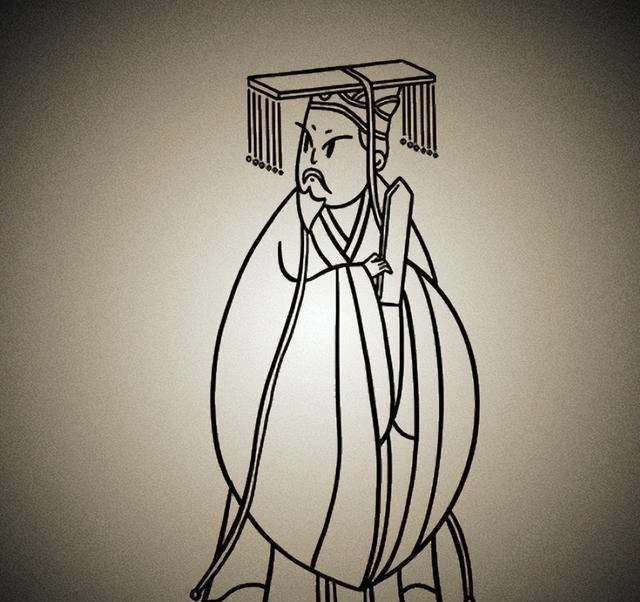
In 397 a Xianbei chief called himself grand commander, grand general, great chanyu and King of Xiping, declared an era named Taichu, and pardoned every offender inside his borders. The titles were taken in a fort on the Huang Shui, in front of an army that had just come down out of the hills. None of the four named a country. Two years and some months later Tufa Wugu was dead of a fall from a horse, and the realm he had founded had still not been given a name of its own.
What he left was a state with an unusual defect: it could raise revenue, post governors, fight a war and lose one, but it could not say what it was. The silence was not an oversight. It is the most deliberate thing about his reign.
1. The Ground at Ledu
The Huang Shui rises in the marshes south of the great lake and runs east through a trough some two hundred kilometres long, with the Qilian range on its northern side and the Laji range on its southern. The floor lies near two thousand metres, filled with loess terraces cut by streams off the mountains, and the water in those streams is snowmelt.
This is why a cavalry power could settle there and stay. Above the terraces the slopes carry grass for sheep and horses; on the terraces, watered by ditches, a man grows wheat, barley and millet. Herding and farming are not two countries here but two storeys of one, a morning's walk apart. A tribe arriving with its herds does not have to choose between becoming farmers and remaining herders. It can put half its people on each storey and take a share of both.
Ledu sits at the waist of it, some sixty kilometres east of Xiping, where the valley widens and the Haomen river comes down from the north to join the Huang Shui. That confluence is the second gate: west along the river lie the lake country and the pasture, north up the Haomen the road to the corridor, east the run down to the Yellow River and Jincheng. The valley itself is a corridor with walls, since an army moving east or west has the river to follow and little else, and the side roads are passes. Whoever holds the middle holds the road with a small force. It was already a commandery seat when Tufa Wugu took it, and remained one long after his house was gone; the chapter counts Ledu, Huanghe and Jiaohe among the commanderies that came over in 397, and treats the place as inherited administration rather than a camp. Later centuries renamed the ground without changing it: under the Tang the district was the prefecture of Shanzhou, and the fields beneath it were the same.
Guzang, the Later Liang capital, lies about a hundred and sixty kilometres north of Ledu in a straight line and much further by any road a horse can take. The two cities stand in different river systems, divided by the Hongchi ridge, and the routes between them run either east through Jincheng and over the ridge, or north up the Haomen and over the passes into the corridor, then east. A courier could cover it in two or three days; an army with grain could not. In that one fact lies the whole relation between the two states: each was close enough to raid and too far to besiege.
The asymmetry explains both the rise and the ceiling. A column from the valley could reach the edge of the corridor in a day or two and be home before Guzang mustered; the same distance the other way had to be crossed with wagons, against a defended pass, into country that produced little worth carrying off except people. The valley could not be conquered cheaply and could not conquer: growth meant taking the corridor's walled cities one at a time, from families that had held them for centuries. A third limit decided the end. The trough grows one crop a year and holds a small population, and a chief who rules there rules by the consent of the tribes that winter in it, renewed at every succession.
2. The Eighth Ancestor
What survives of him is a chapter in the Book of Jin, put together in the seventh century from the Southern Liang court's own annals; that is why his reign reads as a list of appointments and victories, and why his defeats arrive without explanation.
The chapter opens by marrying the family to the imperial house of the north. The Tufa, it says, were Xianbei of the Hexi country, and their ancestors came out of the same stock as the rulers of the Wei. That is the record's claim, made in a book compiled for a dynasty with reasons to like it. The modern argument that the two names are one name written twice in Chinese is an inference from the sound, not something the chapter says.
What the chapter states as history is a migration. The eighth ancestor, Pigu, brought the tribe south out of the steppe and settled it west of the Yellow River, in a country it measures by four points: the Maitian and Qiantun hills in the east, Shiluo in the west, Jiaohe in the south, the desert along the north. No cities, no fixed fields. The tribe moved with its herds, fought its neighbours, and for a century was one of a dozen such followings in the province.
In the 270s it nearly became more. Tufa Shujineng met the governor of Qinzhou in the field at Wanhudui and killed him, beat the Liangzhou governor at Jinshan, and for a season held most of the province; Ma Long broke him, and his own men cut off his head. The family kept its herds and lost the province, and remembered the loss as a title deed rather than a defeat.
By the 390s the tribe had recovered its numbers under Tufa Sifujian, and his son inherited a following worth buying. Later Liang bought it in stages. The first commission made him a general, commander of the Hexi Xianbei, and marquis of Guangwu county; the second raised him to duke of the same place; and for three years he took their commissions and did not fight them. The third offered him general of the south, governor of a province he did not hold, and a Xiongnu royal rank, three honours arranged to move him and his army a thousand kilometres from home. He refused, kept the drums and honour guard that came with the offer, and sent the envoy back. The record has him say that the Lü house had taken the province by force and could not hold it by anything else, that its sons were greedy and its nephews violent and its commanderies coming apart, and that the rise of kings and emperors has no fixed rule, the wayless being destroyed and the virtuous flourishing.
That is a claim to the mandate made by a man who had not yet taken a title of his own. In Chinese terms he was a frontier commander holding a commission from a failing court; in steppe terms, a chief among chiefs. What he had was an army, a valley, and a sentence.
3. Four Titles and No State
His first seat was not Ledu but a fort. After breaking the Yifu and Zhejue tribes he had a commander build Lianchuan fort on the lower Huang Shui, facing the roads down to Jincheng, and made it his headquarters. Then he climbed the mountain above it and wept without speaking. His officer asked what troubled him, and the record has him say that his ancestors had held distant peoples by virtue, that the tribes had broken away, and that if those nearby were leaving, the far ones could not be held. It is a scene a court writes for its founder afterwards, and it does its work: the ambition appears as grief for a lost order rather than appetite for a new one.
In the first month of 397 he took the titles and the era. The order matters. Grand commander and grand general are Chinese military offices of the highest grade; great chanyu is a claim over tribes and not over counties; King of Xiping is the name of a commandery. Three audiences, three languages, no state. The era name itself, Taichu, had already belonged to a Qin claimant a few years earlier. He reviewed his troops at Guangwu, took Jincheng, and beat the column sent against him at a place the chapter calls Jieting. Ledu, Huanghe and Jiaohe came over; tens of thousands of Qiang and Hu tents south of the ridge submitted; two Later Liang officers arrived with several thousand households, which is the clearest sign that the new court looked like the better bet.
In 398 he changed one word. From King of Xiping he became King of Wuwei. Xiping was a frontier commandery of the upper valley, the country he actually held; Wuwei was the commandery of Guzang, the enemy's capital, a city he had never entered. He was now king of a place he did not rule, which is either the oldest bluff in politics or the ordinary grammar of a claim. The word Liang was still unused.
In the first month of 399 he moved his seat to Ledu and posted his family across the valley like a screen: Tufa Lilugu, made duke of Xiping, at Anyi; Tufa Rutan at Xiping; an uncle at Huanghe; cousins at Jiaohe, south of the ridge and Lianchuan; an uncle at Haomen. Seven posts, every gate of the valley in the hands of one household. This is the real constitution of Southern Liang, and it is not a Chinese one. No provincial administration reaches the villages, no appointed governor outranks a chief, and the state exists as an agreement among kinsmen to hold the passes together.
That year he used the army once for someone else. The Northern Liang ruler Duan Ye, attacked by Lü Zuan of Later Liang, asked for help; Tufa Wugu sent his brother, and Lü Zuan burned the standing grain at Dichi and Zhangye and withdrew rather than fight. Tufa Lilugu was made governor of Liangzhou at Xiping, and Tufa Rutan was called into the household government. It was the last thing he arranged.
4. The Roster
The chapter then gives something rare for a founding reign: a personnel list. It sorts the men into five groups — the bold of the four quarters, the respected houses of the western province, the civil and military talents, the able men of the central plains, the old great families of Qin and Yong — names about thirty of them, and says that all were given high seats inside and commanderies outside, that office went to fit the man, and that each was in his proper place.
Yang Tong, Wei Yin and Shi Hao stand for the trained administrators; Liang Chang, Zhang Chang and Guo Shao for men from the old capitals; Zhao Zhen, Wang Zhong and Su Ba for the great houses of the northwest. Some had served the Jin, some the Former Liang, some the Later Liang. A new state on the frontier hired the only bureaucracy available, which was the bureaucracy of the state it was replacing.
Zhao Zhen is the name later tradition likes best. A much later local tradition makes him a scholar of Guangwu who walked to Lianchuan alone when he heard the chief was recruiting and was made a senior aide on the spot. The chapter knows only that he belonged to a great house of Qin and Yong and was given office. The story is worth keeping as a story.
The strategic argument is better attested. Tufa Wugu asked his council which neighbour to take first: Qifu Gangui, who had made himself master of the Yellow River country; Duan Ye in Zhangye; or the Lü house in Guzang. Yang Tong answered with a plan. The Qifu had once been a branch of our own people and would come in time; Duan Ye was a scholar with no gift for government and, more to the point, a friendly neighbour. Lü Guang was old, his heir weak, his two sons suspicious of each other. Send columns out of Haomen and Lianchuan by turns, so that the enemy runs from one to the other and his people cannot attend to their farming; in two years Guzang would fall of itself.
That is a herdsman's plan against a farming state, and the most intelligent thing in the chapter. It does not aim at the enemy's army but at his calendar. A city lives on its district, and a district that cannot be harvested for two years cannot feed a city. The plan also required patience, and patience was the one resource he did not have.
Farming was in his programme from the start: the chapter's summary of his conduct as chief is six characters long, and says that he attended to farming and sericulture and kept peace with his neighbours. But the farming he attended to was the farming of the valley, and the revenue of his state remained what the herds produced and the raids brought back. The Chinese in his service governed commanderies whose land registers were older than his family; the tribes in his service were paid from the proceeds of war. The two halves were already on different books, and nobody at Ledu had the power to merge them.
5. The Fall
In 399, riding after drinking, he came off his horse and injured his side. The chapter gives his first words as a joke: he had nearly given Lü Guang and his sons something to be glad about. Then the injury worsened, and he said the one thing a founder in his position could say — that the troubles were not yet settled and an elder man should be installed — and died. He had held the royal title three years. The court named him Wu, the martial, with the temple name Liezu; the annalists who copied the chapter call the name false, which is how they marked a title granted by a state they did not recognise.
The joke is the only sentence in the chapter that sounds like a private man. Everything else he says is a position: the refusal of the Later Liang ranks, the reply on the mountain, the question about which neighbour to attack. A dying man who jokes about his enemy's pleasure is measuring his own death by its political value, and finding it small.
He had a son. The record gives the boy's name as Qiangnu, and says that the father's own order set him aside. When Duan Ye later asked why a state with an heir had chosen a brother, the envoy answered with the classical precedents for a brother succeeding a brother, and Duan Ye called the answer excellent. The precedent was real and so was the reason: a boy could not hold seven kinsmen and seven passes in the year after the founder died.
Tufa Lilugu took the seat. The state lasted fifteen years more, lost its capital twice and its best farmland once, and in 414 the Western Qin took Ledu and the last of the family's riders went over to the enemy.
6. The Restraint
The usual founder of the period declares everything at once: a dynastic name, an emperor's title, an era, ancestral temples, a genealogy reaching back to a sage. Tufa Wugu declared an era, the title of great chanyu and a royal title, and stopped. The restraint is the reason his state lasted as long as it did.
He did not take the title of emperor, which in the 390s was a declaration of war on every other claimant. He did not take a dynastic name, which would have told every governor in the province what he intended and forced them to choose sides before they had to. He did not move on Guzang, which he could not have held. He called himself king of Wuwei, a title that could be read as a claim on a city or as an insult to the man holding it, and let the ambiguity work.
The great chanyu points the other way. No Chinese title gives a man authority over the tribes; the chanyu does. By taking both, Tufa Wugu spoke to two constituencies in two languages, and the state was bilingual before it had a name: counties and commanderies for the farmers, tribes and followings for the riders. The clerks wrote in Chinese; the orders that moved the army were given in a dialect no clerk could read.
He took an era in 397 and never took a state: Southern Liang is a direction and a province, the province's name was claimed as a title in 402 by the youngest of his brothers, and the direction says only that the family's ground lay south of the corridor, in the valley of the Huang Shui.
Restraint of this kind has a cost, and it fell due at his death. A dynastic name and an heir are the same institution: both make a claim survive the man who makes it. He had neither. He had an army that followed a family and a family that held the passes, and when he died the army followed the next brother because the brothers had agreed to it. That worked twice. It could not work a third time, and it did not.
So the two younger brothers spent what he had saved. In 401 Tufa Lilugu styled himself king of the Hexi Country, a claim on the corridor rather than on a valley. Tufa Rutan took the word his eldest brother had left unused, calling himself King of Liang in 402, and lost the state in 414.
That is the shape of the reign. A man builds a state in a valley a small force can defend, staffs it with the clerks of the government he is replacing, refuses the two titles that would have made it a dynasty, and dies before he can decide whether the refusal was strategy or temperament. His enemies called the title false, his own house called him Prince Wu, and the state he founded is known by a name he never used. In a century of men who named everything before they owned anything, that is a small distinction, and it is his.