Home / Emperors / Sixteen Kingdoms
Marquis Guiyi of Cheng-Han
成汉归义侯
Li Shi, ? – 361 · ruler of Cheng-Han
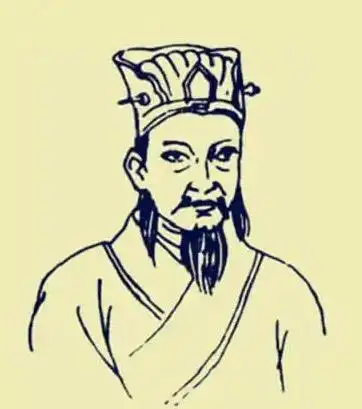
Li Shi was born because his grandfather killed a man and took his daughter. The account says it in one sentence and does not slow down: Li Shou's wife, née Yan, had borne no son, so Li Xiang killed Li Feng and gave Li Feng's daughter to his son, and the daughter bore Li Shi. On the same page the record supplies his height, the span of his waist, and the observation that he bowed and rose with uncommon grace, which contemporaries thought remarkable in a man of his build. Further down the same chapter it says that he killed men and took their wives. Nobody in the account remarks on the symmetry. A house assembled by that act did not need to have it pointed out.
The state he took over in 343 had been Cheng and was now Han, and nothing else about it had been touched in five years. His father had bought the name with a temple, a genealogy and a decree that his cousins were not his kin, and had spent the rest of the reign on a palace and a river fleet that never left the province. What Li Shi inherited was a court staffed by his father's appointees, a southern frontier that had been shedding commanderies since 339, a treasury emptied into ships, and an army that existed mainly on paper. Four years later a Jin column came up the river and found, in front of Chengdu, a general levy and no soldiers. The difference between the two is the subject of this account. A levy is something a government can call out. A soldier is something a government has.
1. The Heir
The first thing the record gives him is a body. He was just under two metres by the measure of the day, broad enough at the waist that the measurement was thought worth writing down, and he had trained the small movements of deference — the bow, the rise, the inclination of the head at the right half-beat — until people noticed. In a court founded by a soldier and administered by clerks, a prince who handled ceremony well was a novelty, and he was admired for it. Li Qi, who ruled from 334 to 338, took a fancy to him, gave him a command in the palace guard and made him heir to his father's title, which was Prince of Han. It was a courtesy to a favourite, and it turned out to be the most useful appointment of his life.
In 338 the difference between a princely heir and a crown prince was abolished in an afternoon. Li Shou came down from his garrison at Fucheng with ten thousand men and found the gates of Chengdu open, because his eldest son had opened them from the inside. That is the whole of Li Shi's contribution to the founding of his father's reign, and it is not a small one: a gate opened from within is worth more than a wall carried from without. Before the year was out he was crown prince, and the question of the succession was closed for five years.
Li Shou died in the eighth month of 343. The transition was the quietest in the house's history. There was no rival: his father had killed Li Xiong's sons, and the rest of the family was either too young or too distant to raise a claim. Li Shi proclaimed an amnesty, made his mother empress dowager and his wife empress, and then did what new rulers did: he waited for the turn of the year and, in the first month of 344, declared the era Taihe.
The mother is a problem the record leaves standing. The same chapter has already said that the Yan woman bore no son and that Li Feng's daughter bore Li Shi. At the accession it calls the Yan woman his mother. Both statements are allowed to remain, in the same passage, without reconciliation. The court's practice in such cases was to give a concubine's son to the principal wife, and the compilers evidently saw no need to spell it out; but the effect on the page is that the new emperor has two mothers and no explanation. It is worth noticing as a habit of this material. The things that mattered to the men who kept the record were ritual positions and the order of names, not the facts that a modern reader wants first.
Nothing records his age. He had been old enough to hold a palace command in 338, and that is the whole of the inference; the account gives no age at accession and none at death, and it would be false precision to manufacture one from the length of his reign. What can be said is that he came to the throne as a grown man with a grown man's habits already fixed, which is worse for a state than a child, because a child can be taught.
His household in 343 was thin. The brothers were few, and the one who mattered was Li Guang, general-in-chief and Prince of Han, a soldier with a command at Fucheng and a reputation that the court watched. Beyond him there were cousins, the sons of Li Shou's brothers, and there were the men his father had made: Dong Jiao as chancellor, Wang Gu at the palace secretariat, Li Yi as grand guardian, Ma Dang and Xie Siming without whose work the coup of 338 would not have succeeded. That list is the state. It is also, read in the order in which the reign destroyed it, a schedule.
2. The Temple and the Brother
His first act of government was a repair. In the first months of the reign the grand astrologer Han Hao reported that Mars had come to rest in Antares, the star that portended the death of a ruler, and added that the sacrifices at the ancestral temple had lapsed. The court took up the omen as a procedural matter. Dong Jiao and Wang Gu argued that the founders were close kin and should not be cut off from the offerings; Li Shi ordered the sacrifices to Li Te and Li Xiong restored, and had them made under a single royal title.
It was the correct decision, taken at the correct season, by men who assumed there would be time to take others. That is what a court does in its first year: it puts the ancestors in order and reads the sky. The omens were answered with ritual, and the ritual was answered with nothing. Two years later the same chancellor who had advised the restoration was carrying out the arrests that emptied the court of the men who had built it.
The reason was succession. Li Shi had no son. In a house that had already lost most of its males to its own quarrels, a childless emperor in his first years was not a private misfortune but a public countdown, and everyone at Chengdu could do the arithmetic. In the ninth month of 345 his brother Li Guang asked to be named heir to the throne. It was the obvious request, made in the obvious way, by the obvious man.
Ma Dang and Xie Siming urged him to grant it. Their argument was not sentimental. The brothers were few, they said; if one more were set aside, the throne would be lonelier than it already was, and a lonely throne is a throne that falls to whoever stands nearest. Both men had given their working lives to the state. Ma Dang had commanded the six armies at the fleet review of 340, when seventy thousand men had been assembled on the river to invade the south and then sent home. Xie Siming had been the strategist of 338, the one who had asked whether it was better to be emperor for a few years or a lord for a hundred generations, and had been posted to Guanghan afterwards to keep his inconvenient memory away from the palace.
Li Shi heard them out and concluded that they were conspiring with his brother. The reasoning, if there was reasoning, is not recorded. What is recorded is what he did. He sent Li Yi, the grand guardian, against Li Guang at Fucheng. He ordered Dong Jiao to arrest Ma Dang and Xie Siming and execute them with their three clans. He demoted Li Guang to Marquis of Linqiong; Li Guang killed himself.
Xie Siming's last words are the only sentence in the chapter that sounds like a man rather than a document. The state had not fallen, he said, because a few of them were still in it; now it very nearly had. He said it smiling, and the record adds that gentlemen and commoners alike mourned Ma Dang, who had held the people's confidence. The account then supplies its own verdict, in a single clause that is worth more than most of its speeches: from this point there was no discipline and no one who would remonstrate.
Consider what had actually been removed. Not two rivals. Rivals would have been a problem the throne could survive. Ma Dang was the officer who could assemble an army and hold it together; Xie Siming was the man who could tell the court what a war would cost before it was declared. They were, between them, the state's memory of how its own machinery worked. A ruler who kills his accountant and his engineer has not made himself safer. He has made himself the only man in the building who does not know where the load-bearing walls are.
The chapter's phrase for the years that follow is that he pushed out his father's and grandfather's officers and trusted the attendants around him. That is the ordinary language of palace government, and it hides the mechanism. A court is not a family and not a bureaucracy; it is a set of relationships in which men can say unwelcome things because they expect to survive saying them. Remove the men with standing and you have removed the expectation. What is left is a ruler surrounded by people whose only qualification is proximity, and proximity is not a qualification for telling a sovereign that his army is hollow.
3. Li Yi at the Gate
The man sent to destroy Li Guang was the next to rise. Li Yi had been one of Li Shou's claws in 338, had been made grand guardian by Li Shi, and had done the unpleasant work at Fucheng in 345. He was, in the terms of the court, a loyal man with a record of loyalty performed on other people. In the winter of 346 he raised troops at Jinshou, the northern county on the road through the mountains, and the province followed him.
The chapter says that many of the Shu joined him and that his following reached several tens of thousands. The figure is the chapter's own, and there is no second source to check it against, but its shape is more informative than its size. A frontier commander, in a single season, without a claim to the throne and without a grievance that anyone bothered to record, could put tens of thousands of men on the road to the capital. The throne, in the same season, could not fill the garrisons it had.
Li Shi did the one thing that was still within his power. He climbed the wall. The account has him directing the defence in person, which is the gesture of a ruler who has nothing else to send, and while he was on the wall Li Yi rode alone at the gate. A gate guard shot him. His following scattered.
That is the entire campaign: a siege that never formed, an army that dissolved when one man fell, a war decided by an arrow fired by a doorkeeper. Li Shi proclaimed an amnesty and changed the era to Jianing. The court had survived, and it had learned the wrong lesson from surviving. It concluded that the throne was safe because a rebel had been killed by a lucky shot, when the thing the episode had actually demonstrated was that the province would follow any commander who raised a flag, and that the throne's own hold on those men was weaker than a stranger's.
There is a detail in the sequence that the record does not comment on. Li Yi held Jinshou, and Jinshou was the northern road, the one an enemy would have to use and the one the state would have to hold. It was in the hands of the man it had just used as an executioner and then left in place. He was not removed after 345 and he was not watched. He was simply there, with the road, until he decided otherwise.
In four years Li Shi never sent an army beyond his own frontiers. The only campaigns of the reign were against his brother and then against the general he had sent to take that brother, and both were fought inside the province, against men who had been loyal to his father.
4. The People in the Hills
While the court was occupied with its own family, the ground beneath it was changing. The chapter registers the change in a sentence that has the flatness of an administrative note: at first there were no Lao in Shu, and now for the first time they came out of the mountains, from Baxi to Qianwei and Zitong, filling the valleys, more than a hundred thousand households, and could not be restrained. Then it adds a clause that belongs to a different order of event: and there was famine.
A hundred thousand households is not a number a fourth-century government could absorb. It is a number that tells you the registers were wrong. The Cheng-Han state, like every state of its century, governed through registers of households, raised its soldiers through them and took its revenue as a fraction of their grain. A household in a valley with no clerk and no census is not a rebel. It is worse than a rebel: it is a hole in the account book through which soldiers and taxes both drain away.
The account says the garrisons were thinned and vacant and that the territory shrank by the month. These are the same fact stated twice. A garrison is a place where registered men are fed; when the registers fail, the garrisons fail, and when the garrisons fail the frontier moves inward until it reaches the plain. By 346 the writ of Chengdu ran roughly as far as the flat land, and the flat land is small — a plain a rider can cross in two days, with mountains on three sides and a single great city in the middle of it.
This is the part of the reign that the moral portrait obscures. It is possible to read the chapter as a story about a bad man and his bad habits, and the chapter invites that reading. But the military collapse of 347 was prepared by two developments that had nothing to do with anyone's habits: a population that had moved outside the state's reach, and a court that had destroyed the men who understood what the registers were for. Neither of those is a vice. Both are policy, or the absence of it.
5. The Palace
What the chapter emphasises is the vice. He was extravagant and close-fisted at once, fond of goods and of women, and indifferent to government. He killed men and took their wives. He withdrew into the inner palace and rarely saw the ministers. He gave office to attendants, and punishments became arbitrary. When the omens kept coming, he added the title of grand preceptor to Dong Jiao, in order, as the chapter puts it, to share the blame of the sky with him — a post with no duties except to stand near the throne when heaven was angry.
The detail about Dong Jiao is the best thing in the chapter, because it is so exactly what a court does when it has run out of remedies. A grand preceptor who exists to absorb portents is a recognition that the omens are real and that nothing will be done about them. The office is a lightning rod. It does not stop the lightning; it gives it somewhere to go that is not the emperor.
What survives of these four years is one chapter of the Jin shu, assembled from the files of the court that took Chengdu, and it gives more space to the emperor's bedchamber than to the garrison rolls, because the men who put it together had already decided what the verdict would be.
That is not a reason to reverse the verdict. It is a reason to notice what the verdict has cost us. The same paragraph that says he killed men for their wives also says the hill people came out of the mountains and the garrisons emptied and the frontiers contracted. Two kinds of information are lying side by side, and one of them has been remembered for century after century while the other has been treated as scenery. A last ruler's private life is easy to write and easy to believe; the state's accounts are dull, and the men who wrote about last rulers were not accountants. So the record gives us a monster and withholds an army list, and the monster is why we think we know the reign.
The one thing the moral portrait does explain is why nobody stopped him. A court that has watched two of its ablest men killed with their families for giving good advice does not produce a third adviser. It produces silence, and silence is what the chapter reports when it says there was no one left to remonstrate. The failure of 347 was not that the emperor was vicious. It was that the court had been trained, in a very short time, to let him be.
6. Zan Jian's Road
In the second month of 347 a Jin column under Huan Wen reached Qingyi, on the river south of the capital. Li Shi called out the general levy and sent three commanders to meet it: Li Fu, whom one account calls his brother and another his uncle; his cousin Li Quan; and the forward general Zan Jian, with a few thousand men. The figure matters. Several tens of thousands had followed Li Yi the year before. The force the court could put into the field under its own hand, with the enemy already inside the province, was a few thousand.
The plan was to ambush on the south bank. Zan Jian refused. He took the whole force across the river at Yuanyangqi on the north bank and marched for Qianwei, and the Jin column took the south bank, and the two armies passed each other along the same river in the same month, one on each side, without either of them knowing it.
He learned the truth at Qianwei. He turned back, crossed at the Shatou ford, and marched for the capital. By the time he arrived, the Jin army had already thrown up its lines at Shili Mo, the place ten li from the city wall, and his men dissolved where they stood. There was no battle. The account's phrase for it is the most damning in the reign: his following fell apart by itself.
Everything else in the campaign has the same shape. Li Fu attacked the Jin depot at Pengmo and was beaten off. Li Quan met the enemy three times and lost three times, and his men did not retreat to the city so much as go home; the account says they scattered back to Chengdu, which is a different movement. The general Li Weidu went over to the other side. And then Li Shi led out everything that remained and put it on the line at the Zuo bridge, and it broke.
Three commanders, three failures, and not one of them a battle. An army that has been paid, trained and commanded by the same men for a generation does not behave this way. An army that is a levy called out in a crisis, officered by men who bought their posts or inherited them, and owed nothing to a court that had demonstrated for three years that service was dangerous, behaves exactly this way. It appears when called, it marches where it is sent, and when the moment comes it discovers that it has no reason to be there.
The Jin army burned the gates of the great city. Inside, the palace secretariat director Wang Gu and the cavalier attendant Chang Qu urged surrender. Li Shi asked the attendant Feng Fu what he thought, and Feng Fu gave him the honest answer that no one else in the court had been willing to give for three years: when Wu Han came to Chengdu in the first century, he exterminated the Gongsun family to the last child; the Jin have published no amnesty for the Li; surrender may not save you.
Li Shi left by the east gate that night with Zan Jian and went north.
It is worth pausing on Chang Qu. He was the province's antiquarian, the man who assembled its geography, its clans, its roads and its remembered history into the Huayang guo zhi, the gazetteer that later ages would read as the basin's self-portrait. He was also, in the third month of 347, standing in a burning palace telling his emperor to surrender. Both facts belong to the same man, and the second is the reason the first is trustworthy: the gazetteer was written by somebody who had been in the room. He finished it at Jiankang, where he was taken with the rest of the court.
7. The Document
He went north to Jinshou — the county that had been Jiameng, then Hanshou, and was Jinshou by his own century, which is why one account says he fled to Jiameng and another to Jinshou. From there he went on to Baishui city, and from Baishui he sent a letter to Huan Wen, carried by an envoy named Wang You.
The document is short, entirely conventional, and for that reason readable. It opens with a date: the second year of Jianing, the seventeenth day of the third month. It gives a name and a place of origin, Li Shi of Lueyang, which is the commandery in the north where his family had been settled after the wars of the third century, not the province his family ruled. It addresses the Jin commander by his title. It confesses that his forebears drifted, relied on the terrain and stole Min and Shu; that he himself is dim and weak and merely continued an unfinished line; that he troubled the imperial carriage to come over the passes; that his soldiers were foolish and offended heaven; that he deserves the axe. It praises the breadth of the Jin net and the grace that exceeds the sun. It says he has fled to the fields, that he reached Baishui city that day, that he sends this by Wang You, privately appointed cavalier attendant, and that he has ordered the provinces to lay down their arms. It ends with a fish in a drained pond, waiting on the water clock.
He dates the letter by his own era and names himself by a commandery his family had left two generations earlier, and he never writes the name of the state: it appears in the document only as a date, and even the date is preceded by a character meaning false that he did not write.
The order to the provinces is the part that mattered. A surrender is a document; a disarmament is an event. The last military act of Cheng-Han was an instruction, issued by a fugitive in a county town, that its soldiers should put down their weapons. Nobody fought on his behalf afterwards. A court that could no longer raise a levy could still, for one more week, order one to disperse, and the order was worth obeying because the court had taught its officers, over three years, that loyalty was a bad investment.
Then he came back, and did the thing that the ritual required. He had a coffin brought, and he went to the army gate with his hands tied behind him, and Huan Wen untied him and burned the coffin. It was a piece of theatre with a long history, and both men knew their parts: the vanquished presents himself as already dead, the victor demonstrates that he is not going to kill him. The burning of the coffin was the sentence of exile pronounced in the form of a pardon.
He was sent downriver to Jiankang with Li Fu, his cousin Li Quan and a dozen kinsmen, and given the title Marquis of Guiyi. He lived fourteen years in the southern capital and died there in 361. Nothing records what he did with the time. At that point the chapter stops following the family, and the last thing it has to say about the house is an audit: from Li Te's rising to the fall in 347, six reigns and forty-six years by its own count.
The Jin historian's verdict is that he deserved to hang at the city gate and was given instead the courtesy shown to Liu Shan of Shu Han, which the historian plainly considers generous. It is a strange judgement to leave as the last word on a man, and it is a useful one, because it shows what the victors thought had happened. They did not think they had defeated an army. They thought they had been spared the trouble of an execution.
8. What Was Left
Within weeks of the surrender, four officers of the old state raised troops again: Wang Shi, the former vice-director of the secretariat; Deng Ding, a general; Wang Run; and Wei Wen. The account gives each of them more than ten thousand men. In the fourth month Deng Ding and Wei Wen entered Chengdu, and the Jin garrison commander abandoned Fucheng. In the seventh month the four installed Fan Ben, son of the house's old chancellor Fan Changsheng, as emperor, and kept the era Jianing. It took two more years to suppress them.
The sequence states the argument as evidence. In the third month the province had no army. In the fourth it had four armies. The men had not been killed, conscripted away or disarmed in any effective sense; they had been released from an obligation. What was missing in March was not manpower but a centre — an institution that could turn a hundred thousand households and a few thousand officers into a thing that moves when it is told to move. Cheng-Han had devoted its last four years to demolishing that institution, one adviser at a time, and the demolition was complete before the Jin arrived.
Later Liang and Former Liang died of the same illness: a ruling house that had killed its way through its own kin and commanders until the army belonged to whoever happened to be holding it.
The difference is geography. Of all the houses of that century, this was the only one whose capital stood in the Shu basin, and the basin gives a state exactly one chance. It has two doors — the northern road through the passes, and the river — and one floor, and one city on the floor. A state that holds both doors can outlast almost anything, which is how Cheng-Han survived for four decades while the north tore itself apart. A state that loses one door has a frontier; a state that loses the floor has nothing, because there is no second city to retreat to and no second army to raise behind it. The mountains that keep an enemy out also keep you in. Once a column is on the plain, the war is not a campaign but a race to the capital, and the capital is where the registers are, and the registers are the state.
What he had inherited was a throne with no army behind it, and four years were enough to use up both. The province did not become quiet when he left it. What remained was a population perfectly willing to fight, in the service of anybody who could organise it, and a court that had made sure no one could. The last order Cheng-Han issued was for its soldiers to put down their weapons, and the order reached the commanderies, and some of them obeyed it.