Home / Emperors / Sixteen Kingdoms
King Wei of Former Liang
前凉威王
Zhang Zuo, ? – 355 · ruler of Former Liang
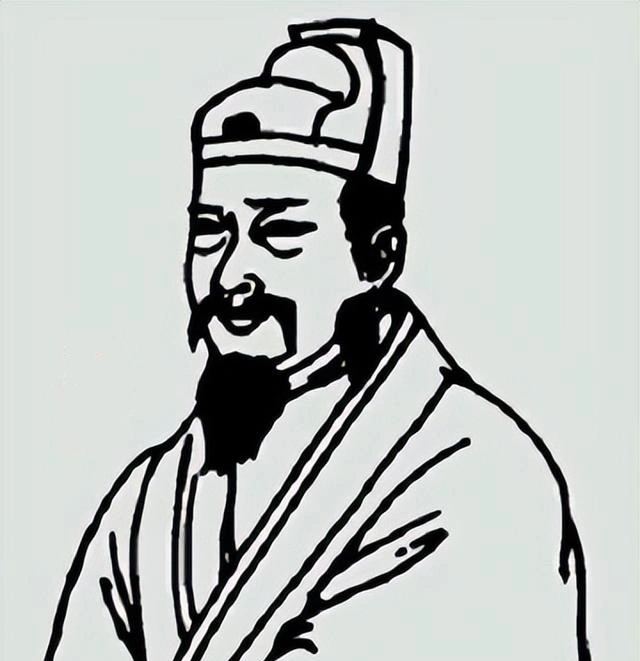
In the first month of 354 the office scribes at Guzang started counting years from a different point. The government of the Hexi corridor had dated its papers by a Western Jin reign that had ended in the north a generation and more before any of its garrison could remember. The new line read: first year of Peace. Its author was Zhang Jun's eldest son, the elder half-brother of Zhang Chonghua, and the paternal uncle of the child he had pushed aside. He had been in charge for a month. He is the only man of his house to have taken the imperial title, and the only one whose rule finished with his own city opened from the inside and his corpse lying in the street.
The Jinshu opens its notice with a compliment and does not withdraw it: he was widely learned, physically formidable, and competent in government. In the same chapter he is a man who polluted his father's household, killed his brother's son, and deserved the rope. The seam between the two portraits is this article's subject. He was not destroyed by incompetence. He was destroyed by the one act that made every capable official in the province his enemy, and that act was a decision about what the state was. The chapter stands among the family biographies, not the accounts of the northern states, because its compilers had decided the Zhangs were a loyal provincial house; its verdict is spoken in the same breath as its praise.
1. The Elder Son
Zhang Jun died in 346. Zhang Zuo was his eldest son, born to a concubine. Zhang Chonghua was the second, born to Lady Ma, who stood higher in the household than Zhang Zuo's mother; the principal wife, Lady Yan, was his formal mother. The notices do not record why Zhang Jun named Chonghua heir. They record only the designation.
Succession in this house rested on two understandings that had never been written down: a father's designation was binding, and the eldest grown son had the first claim. The two had coincided often enough to look like one rule. In 346 they did not coincide, and no institution could decide which came first. Zhang Zuo had the first claim and had never had the designation. He was close enough to the seat to reach it and too far from it to inherit it.
He had governed Yanxing commandery in his father's twenty-first year and held the marquisate of Changning. The Jinshu calls him learned, strong, and capable, and adds that he was ingratiating and knew how to manage people on both sides of the palace wall.
The following he built was made of favourites, not garrisons. Zhao Chang was Zhang Chonghua's right long secretary; Wei Ji was a palace intimate. Both took an oath of brotherhood with Zhang Zuo while Zhang Chonghua lived. A frontier magnate who wanted the seat would have brought troops. Zhang Zuo brought a chancery and a key to the inner rooms. He could reach the ruler. He could not reach the garrisons, and in the end the garrisons reached him.
Zhang Chonghua died in the eleventh month of 353, leaving a son of ten. The household had a child at its head, a frontier at war, and a grown man in the palace who had spent the reign befriending the people who wrote the orders. The arrangement lasted a month.
2. The Twelfth Month
The first instrument was a paper. Zhao Chang and Wei Ji produced a testament in the dead ruler's hand, and the chapter says plainly that they forged it. It made Zhang Zuo commissioner with the staff, supervisor of all armies, general of the pacifying army, and regent. The forgery did not need to be convincing. It needed to be the only copy.
The second was an argument. The heir was ten, the times were unsettled, and a grown man should be installed. The formula had been used in this family before, when a brother followed a brother in 320 and a nephew an uncle in 324, and it had worked because the men with troops agreed. What made the twelfth month a usurpation was the paperwork: a forged will, a child, and a signature.
The signature was Lady Ma's. She was Zhang Chonghua's mother, and the Jinshu sets one sentence immediately before her order: her stepson had taken his father's widow to bed. The order and the sentence are placed together for a reason. Which one bought the other is beyond recovery; what can be said is that the deed carried the authority of the only person in the household whom the child could not disobey, and that it spoke of necessity rather than of a new dynasty.
Zhang Yaoling came down to marquis of Liangning. Zhang Zuo went up to general-in-chief, governor of Liangzhou, duke of Liang. He did not take a royal or imperial style. For a season he was a Jin duke with a Jin province's offices, and that delay is part of the story: a man who had just seized a seat with a forged paper waited to see whether anyone would name the obvious.
The scene itself is not this article's business; the hall where the boy was set aside belongs to his life. What belongs here is the arrangement that came out of the hall. Zhao Chang held the chancery, Wei Ji the inner rooms, Lady Ma the seal, and Zhang Zuo the offices that made him the government. No garrison commander was consulted. That was the flaw in the machine, and it was not visible for a year.
3. The Year Name
The title came in 354. No commission came from Jiankang; he did not ask for one. The sources disagree about what to call it. The Jinshu, the fullest account, places the imperial accession in Yonghe 10, which is 354, and gives him a dynastic temple, an eight-row dance, a complete bureaucracy, and a new count: Jianxing 42 became Peace 1. The Comprehensive Mirror says that in the first month of 354 he styled himself king of Liang and changed the era with the title. The Weishu also says king. The Ming reconstruction of Cui Hong puts the ceremony in the twelfth month of 353, and the tables that descend from it date the reign from 353.
On the forms, the sources do not differ. A temple for the ancestors, sixty-four performers in eight files, a full staff of ministers, a principal empress, an heir apparent: these are the apparatus of a court that rules in its own right. A province can adopt one or two of them; it cannot adopt the whole set and remain a province. The Jinshu calls him emperor; the Weishu and the Comprehensive Mirror call him king. This article accepts the Jinshu's substance, since the Jinshu is where the accession edict survives, and treats the title as a question of vocabulary.
The edict is preserved. It opens with the disintegration of Jin authority, counts four generations of Zhang service and a commission from the Jin court, and says that the lords of the realm, with no master in the plains, urged him to act for all. It closes with a vow: once the two capitals were purified, he would escort the emperor home and ask forgiveness at the gate of heaven. That vow gives him away. To promise to hold a throne for another is to have occupied it. It also marks the limit of what he could say. A mandate of his own was unavailable; the house had never possessed one. The Jin commission was unavailable; he had just removed its heir. What remained was a delegation from lords of a realm whose center had collapsed. His claim was borrowed, and the lender was exhausted.
The calendar was the part no one could interpret away. The Zhangs had counted their years by Jianxing since 313, through the fall of Chang'an and four changes of regime in the plains. The practice cost nothing and did constant work: it let a governor's office, a caravan trade, and a frontier army believe they were keeping the west for a legitimate court. Zhang Zuo substituted his own count. One character changed at the head of every document, and every clerk who copied a date repeated the change. A distant emperor is a cheap loyalty because he asks for nothing; a private calendar asks every writer of a date to acknowledge a new state.
He also promoted five dead men: Zhang Gui became king Wu, Zhang Shi king Zhao, Zhang Mao king Cheng, his father king Wen, his brother Zhang Chonghua king Ming. A dynasty requires a row of royal ancestors. He had none, so he supplied them in one decree. The strangest entry is Chonghua, the father of the boy he had displaced, made a king by the man who had taken the boy's place.
Two men objected. Ma Ji, a minister, lost his office for speaking too plainly. Ding Qi, a palace secretary, made the argument that has never been bettered. The western population, he said, had obeyed this house for half a century because the house represented Jin; the men who travelled a thousand li to serve it came for the southern court; once the ruler himself became the object of that loyalty, they would have no cause to die for him, and a single province could not withstand the plains. Zhang Zuo executed him below the palace gate. The mechanism Ding Qi described was about to operate.
The reason was structural. A regency has no natural terminus when the regent has already removed the heir; it cannot return power at the boy's majority, and it cannot continue indefinitely over a boy it has injured. The imperial style was the one authority that came from neither the child, nor Jin, nor the men who had elevated him. It came from himself, which was also its defect. Men who would defend a trust would not become one man's servants. The new title made a temporary office permanent and turned every colleague into a subordinate.
4. A Government of Clients
The sexual charges require care. The Jinshu names one woman, Zhang Chonghua's widow Lady Pei, and then adds a summary sentence about the rest of the household, phrased through the wall-cress poem about a polluted house; it gives no name, date, or witness. The claim that he killed Chonghua's sons in the plural is not in the chapter. One son was killed; the other was alive and ennobled when the reign ended.
The reign's legislation survives as a short catalogue, and it is more coherent than the moral summary. Five commandants were appointed to inform on officials. Men below the fourth rank were forbidden silk; commoners were forbidden slaves and carriages. The sacrifices to local deities were stopped, and the ruler sacrificed to heaven and earth in person.
Taken together, these are the measures of a man without a hereditary nobility, trying to build two relationships at once: one directly to the population, one of surveillance over his staff. The dress rules were not the whims of a sensualist. They made hierarchy legible and struck at households capable of keeping armed retainers. The attack on local cults belongs to the same logic in the religious register: a single center of sacrifice, located at the palace. A ruler who cannot command the clans can still command time, dress, and the gods.
But the clans were the army. The informers turned every official into a suspect, the dress code into a daily humiliation, and the cult policy into an offence against shrines the oasis towns paid for themselves. His appointments were clients rather than clan nominees: Zhao Chang, Wei Ji, Suo Fu, Yi Chuai, Zhang Ling. Clients move fast and cannot mobilize. When the clans moved, the clients changed sides.
The frontier record is thin and bad throughout. He Hao was sent against the Lijian Rong in the southern mountains and came back defeated. In the tenth month of 354 Huan Wen of Jin entered the passes; Wang Zhuo, the governor of Qinzhou on the western road, warned Guzang that Huan Wen was unpredictable. Zhang Zuo's answer is the reign's most revealing military decision: he gathered troops and proclaimed an eastern campaign while preparing to retreat west to Dunhuang. Huan Wen withdrew, and the retreat was called off.
A court that has selected a refuge has already admitted that its capital can be abandoned. He next tried to assassinate Wang Zhuo and failed. Niu Ba and Zhang Fang then took three thousand men, defeated him, and drove him into Former Qin. The detachment was not the loss; the loss was the governor who knew the roads, and with him the easternmost commandery that still answered Guzang. In the fifth month of 355 frost destroyed the grain, and the annalist records it beside the political news.
Earlier he had ordered Xie Ai killed at Jiuquan. Xie Ai was the Dunhuang secretary who had beaten a Later Zhao army in 347, the only commander of his generation the province produced, and he was Zhang Chonghua's man, posted to a distant commandery by a court that feared him. A new ruler who spares such a man is a fool by local standards; one who kills him loses the only general who could hold the frontier. Zhang Zuo killed him. The choice was rational and fatal: each act that made the seat safer made the state weaker.
5. Fuhan
The rising began as a routine precaution. Zhang Guan, a distant clansman, commanded Fuhan on the Yellow River as governor of Hezhou, and his army was the largest force outside Guzang. Its size bothered Zhang Zuo. He named the governor of Zhangye, Suo Fu, to take Zhang Guan's place, and gave Yi Chuai and Zhang Ling thirteen thousand infantry and cavalry to see that the order was obeyed. He had used force on Wang Zhuo in the same spirit, and it had worked once.
A Zhangye man named Wang Luan, who claimed access to the spirits, advised against the march and recited three offences against the Way. Zhang Zuo had him executed for spreading portents. At the block Wang Luan said that the army would be destroyed in the field and the king would die at home, both within twenty days. Zhang Guan killed Suo Fu. Zhang Ling was attacked while his men were still crossing the river and his column collapsed. Yi Chuai reached Guzang alone.
Zhang Guan then issued a circular through the province. It declared Zhang Zuo removed, told him to return to his fief as a marquis, and announced the restoration of Zhang Yaoling. The programme of the rising was a child of ten. That was the indictment. After fifty years, the only rival legitimacy the province could offer was the boy the emperor had displaced.
Song Hun, a cavalry commander from Dunhuang, had a brother who had fallen out with Zhang Zuo. In the eighth month, afraid of the consequences, he left Guzang and rode west, collecting oasis Chinese and tribal levies until he had over ten thousand men. He stopped at the Wushi marsh, held a public lament for Zhang Yaoling, and then moved on the capital. The funeral was the manifesto: it converted a private feud into a public cause.
Zhang Zuo replied by seizing Zhang Guan's brother Zhang Ju and his son Zhang Song, who were in Guzang, and by ordering the boy killed. Zhang Yaoling died in the eighth month. How he died belongs to his own life; the date belongs here. The order followed the proclamation that had promised to restore him. A live claimant can be fought; a dead one becomes a standard. Killing the boy deprived the rising of its candidate and supplied it with a martyr. It repeated the error of the title: he chose the security of the form and destroyed the thing it was meant to protect.
6. The Tower
Song Hun arrived at Guzang in the intercalary ninth month. The city was not taken by his army. It was taken by a few hundred market men. Zhang Ju and Zhang Song, the prisoners, recruited them, killed four hundred of the gate guard, and opened the western gate. The garrison offered no resistance; Zhang Zuo had lost the city's confidence.
In the palace the man who had made him regent destroyed him. Zhao Chang opened the inner gate and cried victory. Zhang Zuo believed it. He left the Tower of the Divine Sparrow to thank the officer who had saved him; Zhao Chang met him with a spear and struck his forehead. He ran into the Pavilion of Ten Thousand Autumns, where a cook, Xu Li, finished him.
The Weishu and the Ming reconstruction of Cui Hong give this version, and later accounts have followed it. The Jinshu says only that his men refused to fight and that soldiers killed him. The Comprehensive Mirror adds that Zhao Chang, after going over, was seized and killed by Yi Chuai, the general who had lost the river. The sources cannot be reconciled on Zhao Chang's part. They agree on the central fact: the emperor died inside his own palace, at the hands of men he had appointed, before the rebel army had reached the palace.
The corpse was made an example. The head was cut off and displayed within and beyond the walls; the body was left in the road; Guzang cheered. He received a commoner's burial, and his two sons were executed.
Within weeks the province had another ruler: Zhang Xuanjing, Zhang Yaoling's younger brother, seven years old. Peace was annulled, documents went back to Jianxing 43, and the men who had avenged the boy were at each other's throats inside two years. The restoration vindicated Ding Qi. A province that had suffered a usurpation, a civil war, and the fall of its capital could not manufacture a new legitimacy. It returned to the only one it had: a child, a Jin date, and a regent.
The Jinshu ends its notice with a sentence that later writers copied. Zhang Zuo, it says, was a base-born man who secretly overthrew the rightful heir, brought the wall-cress scandal into the record, and set up an imperial residence in a frontier town; he executed his critics, and his head was hung up for the crowd, as was only natural. The same chapter had begun by describing him as learned, martial, and competent. The praise proves the crime was voluntary; the verdict, that it deserved its end. What the record leaves is a man of real ability destroyed by the one thing ability could not repair, which was the warrant of his government.
That warrant had been Jin. For half a century the Zhangs had held the corridor under a commission from a court beyond their reach. The arrangement let local clans serve a governor without serving a king, let merchant houses see the regime as a protector of trade rather than a claimant to the Mandate, and let garrison officers regard themselves as servants of a province rather than of a household. Zhang Zuo exchanged the commission for a throne. Every title now came from him, and every holder had to choose between the man and the fiction.
The answer was no. His killers were not enemies of the Zhangs; they were the Zhangs' own staff, and within weeks they had restored the fiction. He had understood that the house was a state in everything except name. He had not understood that the name was the part that held it together.
The disproportion is the last thing to notice. In twenty-one months he built a temple, a calendar, a bureaucracy, and a code of rank; he lost a frontier, a general, a clan, and his life. What he did well was what a founder does. What he did wrong was not an administrative failure but a change in the nature of the state, and it was enough to make every administrator his enemy. He was not killed for incompetence. He was killed for changing the flag, by men whose commissions were written on it.
The family took him back after 363. Zhang Tianxi reburied him at the Mausoleum of Sorrow and named him King Wei, the Martial King. The reburial was an act of repair, and like most such acts also an erasure: the emperor was given a royal grave, and the reign that had tried to make the province a state was folded into the family's list of kings. The era name was cancelled so completely that the province returned to counting the years of a dead emperor; the only place Peace survived was in the records of the men who condemned him.