Home / Emperors / Han Dynasty
Emperor Zhang of Han
汉章帝
Liu Da, 56 – 88 · third emperor of the Eastern Han
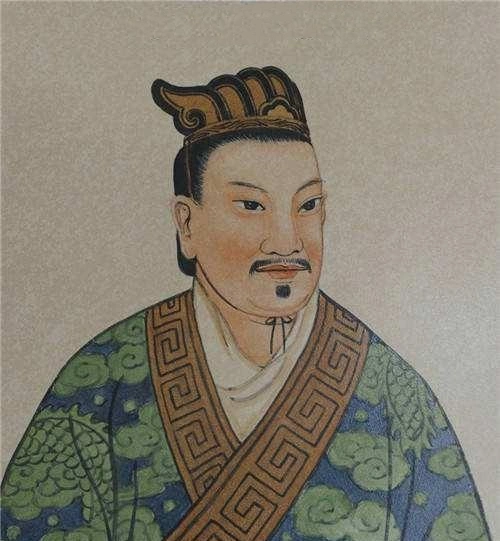
For thirteen years the Han dynasty was ruled by a man who had been trained from infancy to be an heir rather than a sovereign, and who repaid the training by governing in the idiom of the woman who raised him: restraint, ceremony, and an aversion to severity. His father had been a sharp and suspicious prince who filled the prisons and kept his officials in fear; the son was the opposite, a patient man whom his own age called an elder, the term meaning a senior whose manner is generosity rather than sharpness. Severe and lenient in turn, the two reigns produced the condition that later historians would name the peace of Ming and Zhang, the high point of the Eastern Han restoration, and the second of the two was in almost every department the fuller. The reading of the classics was codified at a great conference in the capital, the rites were recompiled from the old canons, the western territories were reopened by one officer and two small columns of men, and the northern enemy that had cost two reigns of warfare was destroyed not by a Han army but by its neighbours.
The same reign contains the contradiction that undid the dynasty after him. The emperor who was generous to the empire was indulgent to his own household. The family of his empress, ruined under his father and lifted by his marriage, was allowed to grow until it could dictate the succession: his first crown prince was deposed on a charge manufactured inside the harem, and the son of a concubine whose own family the empress destroyed was set in his place. When the emperor died at thirty-three, the heir was ten years old, his mother took the regency, and the consort family stood at the head of the state. This is the history of how the dynasty reached its best-governed years and, in the same motion, opened the door through which the next century of its history would walk out.
1. Two Mothers
He was born in 56, a year before the death of the founding emperor, the fifth son of the crown prince Liu Zhuang. His mother, the Honorable Lady Jia, was a kinswoman of the crown prince's consort Ma. The consort had no son of her own, and the child was given to her to rear, with an instruction that was remembered for the rest of her life: a man need not have borne a son himself, but he could not afford to fail in loving and bringing one up. She wore herself out over the boy more than childbirth would have demanded, and the bond between them held without a break for the twenty-three years that remained to her.
The record of his childhood is one sentence long. He was tolerant by nature, he was fond of the classical learning, and his father thought well of him. His father's reign was the harshest the dynasty had known since its restoration, and a prince remarked for the opposite quality was observed, and marked, and kept. In 60 the consort Ma was made empress, and in the same year the boy, then five years old, was named heir apparent. For the fifteen years between that appointment and his accession he is hardly mentioned in the annals, and the silence is its own kind of evidence: these were years crowded with the business of his father's government, and the best that can be said of the crown prince is that nothing happened.
In the eighth month of 75 his father died, and he took the throne in the same month, aged nineteen. He buried his father at the Xianjie tomb, and in the tenth month he issued a general amnesty and opened the granaries to the destitute of the provinces where the harvest had failed; the year itself had brought plague among the cattle, and the capital and three provinces had gone without rain. He kept his father's senior ministers in place. The old Zhao Xi was made grand tutor, and Mou Rong, who had served as minister of works for six years without slackening, was made grand commandant, both with authority over the masters of writing; in the eleventh month the governor of Shu, Diwu Lun, was made minister of works, and in the twelfth the court fixed the late emperor's temple name as Xianzong. It was a settlement of considerable tact: the dynasty's debt to its old servants was paid, and no one was put out of office for the sins of the reign that had ended.
Two facts about the new emperor shaped everything that followed. The first was the strength of his attachment to the woman who had raised him; he served her, for as long as she lived, with a devotion the historians put down to his nature rather than to policy. The second was his distaste for the methods of the reign he had inherited. He did not announce a change in words. What he did was slower and more lasting. Where his father had punished, he would pardon; where his father had suspected, he would trust; where his father had kept the classical schools on a short leash, he would gather the scholars and ask them what the canon meant. The verdict pronounced on the pair a generation later, and never improved upon, was that Ming had been sharp and Zhang an elder.
2. The Envoy Who Stayed
The first crisis of the reign came from the west, and it arrived with the news of the emperor's death. The protector-general of the Western Regions, Chen Mu, was killed at Yanqi in the winter of the year of the accession, by the states that had been waiting for the dynasty to show weakness. The colonel of the Wuji garrison, Geng Gong, was besieged first at Jinpu and then at a city also called Shule on the northern side of Jushi, a place that has nothing to do with the state of Shule on the western road; his fellow colonel at Liuzhong was cut off and killed. The court had to decide, at the very start of the reign, whether the far west was worth men's lives. The minister of works Diwu Lun argued that no relief should be sent. The minister over the masses, Bao Yu, answered that to abandon officers in extremity would let the barbarians grow wanton outside and wound the ministers who had died in the service, and that if the Xiongnu came over the frontier again the emperor would have no generals left to send; the two garrisons had each held a few dozen men against a siege of many weeks, which was the measure of what a small force could do. The emperor agreed with Bao Yu, and sent the general Geng Bing to hold Jiuquan and conduct its governor's affairs, and the governor of that commandery, Duan Peng, west with troops drawn from Zhangye and Dunhuang and a contingent from Shanshan, more than seven thousand men by the biography's count.
In the spring of 76 Duan Peng broke Jushi at Jiaohe and the northern raiders withdrew. The relief came too late for one garrison; the other commander was already dead. When the column came out, the men who had held the city were twenty-six, and by the time they reached the Jade Gate they were thirteen, in rags, and a general of the palace named Zheng Zhong washed and clothed them himself. Those are the record's figures and should be read as such, but the story they carry is exact: the dynasty had spent a winter and an army to recover thirteen men, and the emperor had approved the expense.
Then he drew back. In the same spring that Duan Peng won his victory the office of the Wuji colonel was abolished, and a year later, in the third month of 77, the garrison at Yiwu was withdrawn as well. The reasoning was plain, and it was not cowardice: the dynasty could not afford the west. The campaigns of the previous reign had cost more than the treasury could carry, the realm was still recovering, and the emperor's first duty as he saw it was to spare the population. The protector-general was not replaced. The Western Regions were left to themselves.
One man refused the logic. Ban Chao had been in the west since the campaigns of the previous reign, and he was at Shule when the recall arrived. The people of that state were told that the Han envoy was leaving, and their commandant cut his own throat in front of him rather than live to see it; at Yutian the king and his officials wept and held his horse by the bridle and would not let him pass. Ban Chao turned back to Shule, punished the two cities that had gone over to Qiuci and restored the state, and sent a memorial asking to remain. The emperor agreed.
What followed was the most economical piece of empire the dynasty ever bought. There was no army. In the intercalary month of 78 the acting colonel Ban Chao attacked the state of Guyi and broke it. Between 78 and 84 the court sent out one officer with a thousand convicts and volunteers, then another with eight hundred men; it gave Ban Chao the title of chief clerk in command of troops in the Western Regions, with the drums and pennons of a commander, and it made Wusun, the strongest of the western states, an ally by an exchange of embassies. In 83 a certain Li Yi was sent out with the embassy to Wusun, lost his nerve when he found Qiuci attacking Shule, and wrote to the capital that the western project could not succeed and that Ban Chao, with a foreign wife and a foreign son, had no intention of coming home. The emperor's answer is the best single judgment of his reign on the handling of men: he knew Ban Chao was loyal, rebuked Li Yi in plain terms, and ordered him to take his orders from the officer he had slandered.
By the Yuanhe years the southern road was held. Shule and Yutian were the anchors of it, and Shache, the northerners' agent on the road between them, was attacked by the armies of Shule and Yutian in 84. The complication came from inside. Shache bought the king of Shule with a great bribe, and he went over to it and held the city of Wuji against the officer who had made him; half a year of siege passed before the Yuezhi, newly married into the house of Kangju, persuaded the Kangju to arrest their man and carry him off, and Wuji surrendered. The same king came back with Kangju troops and sent word that he wished to surrender; Ban Chao saw through the device, invited him to a banquet, and cut him down. The annals of the reign enter the killing of the king of Shule and the defeat of Shache together in the first year of Zhanghe, 87; the road south was open. Thirteen years of trust in one officer had recovered what the great campaigns of the previous reign had failed to hold, and the empire had paid for it with a few thousand men and one title.
3. Salt and Iron
The new emperor's difficulty was money, and his own manners made it worse. He was generous by temperament and the treasury was not. The frontier had not been cheap: the campaigns of the previous reign against the northern Xiongnu and in the west had drained the reserve, the plague among the cattle and the thin harvests of the first years had emptied the countryside, and the emperor's own liberality to his officials and his kinsmen, which ran past every standard, emptied the storehouses faster than the revenue came in. The princes and his brothers were kept in the capital rather than sent to their fiefs, and the rewards he distributed were so large that in the Yuanhe years the secretary He Chang felt obliged to write to the grand commandant Song You that the winter largesse alone, from the gentlemen of the palace up to the ministers and the princes, had exhausted the treasury and was spending the people's substance; the emperor should give his gifts back, send the kings to their states, and open the parks to the poor. Song You could do nothing with the advice, and the custom continued. The emperor had tried something of the sort himself: in the seventh month of 76 the fields of the Shanglin park were given over to the destitute.
The frontier account forced the question of the state monopolies. In the sixth year of Jianchu, 81, the emperor proposed to his ministers the restoration of the salt and iron offices. The grand minister of agriculture, Zheng Zhong, a scholar of the old school, objected that it should not be done. The emperor pressed him with rebuke after rebuke; he was impeached for obstinacy; he held his ground; and the emperor did not follow him. The monopoly was restored.
In the Yuanhe era the price of grain rose and the government's funds ran short, and the debate reopened in a different form. The secretary Zhang Lin proposed that coin be sealed away and cloth and silk taken as the land tax in its place, since it was the cheapness of coin that made grain dear; that salt, which no one can do without, be sold by the state itself, since people must buy it however dear; and that the profit be collected through the reporting officers of Jiaozhi and Yizhou, who travelled to the capital trading in rarities, which was what Emperor Wu had called the equal-transport. The secretaries were ordered to deliberate. One of them, Zhu Hui, answered in the language of the classics: the Son of Heaven does not speak of what he has or has not, the princes do not speak of much or little, and the families that live on salary do not compete with the people for profit; an equal-transport of this kind is indistinguishable from the trade of the merchants, if the profit of salt goes to the state the poor will resent it, and if cloth and silk become the tax the clerks will steal. The matter was dropped.
Then others took up Zhang Lin's proposal again, on the argument that it was genuinely convenient for the state, and the emperor approved it and issued an edict. Zhu Hui remonstrated once more, in the same terms. This time the emperor was angry and rebuked the secretaries as a body; Zhu Hui and his colleagues put themselves in prison for three days, and the messenger who ordered them out carried the emperor's word that the court took pleasure in hearing objections and that grey hairs were no fault; the anger passed, and the whole scheme was shelved. The episode is the clearest measure of the reign's economic policy: the court wanted the revenue, could not make up its mind how to get it, and in the end preferred to leave the merchants alone.
What the emperor did instead was to relieve the pressure on the land. In the second month of 84 those with no fields who wished to move to richer country were allowed to do so, and were given public land, hired ploughmen, seed and tools on credit, with no rent for five years and no poll tax for three, and freedom to come home afterwards. In the first month of 85 came the order for the nourishment of pregnancy: three hu of grain for every woman with child, and her husband relieved of a year's poll tax, made a standing rule. In the autumn of 86 the emperor went in person to look at the great salt lake at Anyi, the largest source of the state's salt revenue. The monopoly itself stayed in force. Whether it served the empire was a question the reign never settled in his lifetime, and the emperor's own answer came in his last instruction, which is given at the end of this account.
4. The White Tiger Hall
The classical learning of the dynasty had grown past the possibility of management. The founder had honoured the scholars and set doctors over the five classics; Emperor Xuan had added chairs for the two Xiahou readings of the Documents and for the Jing school of the Changes, and the founder himself had restored chairs for two further readings of the Springs and Autumns and for the elder and younger Dai readings of the Rites, all of it meant to support the lesser learning and widen the arts; and every generation of commentators had produced another reading, until the chapter-and-verse had become a forest and no two schools agreed. A rescript of the founding emperor's last year had already proposed cutting the commentaries down, and in 58 the colonel of the Changshui regiment had memorialized that the former emperor's great design should be carried out in its time, and nothing had come of it. The new emperor took it up himself. His edict of the eleventh month of 79 begins from the principle that teaching is the foundation of government, rehearses this history of the chairs, and ends by quoting Confucius twice: that to learn without discourse is the master's own anxiety, and that breadth of study with a steadfast aim and earnest questioning about what is at hand is where humanity is found.
The conference that followed was the largest the dynasty had held since the restoration. The ministers, the doctors of the canon, the counsellors, the gentlemen of the palace, the students and the scholars were assembled at the White Tiger Hall. The general of the palace gentlemen, Wei Ying, put the questions in the emperor's name; the palace attendant Chunyu Gong presented the answers; and the emperor himself decided every contested point, in the manner of the Shiqu conference of Emperor Xuan's reign two centuries before. The product of these proceedings was entered in the annals as the memorials of the White Tiger deliberations.
The historian Ban Gu was then ordered to write the deliberations up into a book. What he produced is known to later ages as the Baihu tongyi, the Comprehensive Meaning of the White Tiger Hall, also circulated under the titles Baihu tongde lun and Baihu tongyi. Its nature must be stated plainly, because it is often misread. It is not an original treatise, and it is not the record of a free debate; it is the court's record of what the conference decided, arranged as question and answer, in which the meaning of the canon is fixed on the authority of the throne and in which the Yin-Yang and Five-Phase cosmology and the prophetic texts are woven into the substance of the argument. It is the only complete synthesis of the five classics to survive from the Han, and for that reason it is the closest thing we have to the court's own statement of what the canon meant.
What it fixed was the orthodoxy of the state for the remainder of the dynasty. After 79 the readings settled at the White Tiger Hall were the readings of the government, and the prophetic literature had a recognized place in them, a fact that did as much to shape the intellectual atmosphere of the reign as any of the emperor's edicts. It is worth adding that the hall did not close the argument. Four years later the same court paid for the study of the rival traditions, and the pattern the emperor established, the throne convening the scholars and deciding the meaning of the texts, became the standing method of the dynasty for managing its own learned world.
5. Rites, Omens and the Old Texts
The reign was also a great age of ceremony. In the first month of 78 the emperor sacrificed to his ancestors in the Bright Hall, and when the rite was done he ascended the Spirit Terrace and observed the clouds. In 80 the seasonal music for the welcoming of the ethers was performed for the first time, on the proposal of Ma Fang; the instruments cost so much that only the tenth-month piece was ever played. In the autumn of 82 the di and xia sacrifices were reordered at the founder's temple, with the tablet of the late emperor added to the row, and in the winter of that year the emperor went west to Chang'an, sacrificed at the founder's high temple and at the eleven tombs, and was given a bronze vessel shaped like a wine jar from Mount Qi and a white deer, which he received with the remark that such things came for a sage on the throne and worthy elders in the provinces. Piece by piece the ceremonial body of the dynasty was being rebuilt, and the emperor took a personal part in it. He was, among other things, a calligrapher of some repute, and a cursive hand of the period was later named for him, though the derivation belongs to the tradition of the script rather than to the record of his reign.
In the twelfth month of 83 the court moved in the opposite direction as well. The canon had been split and glossed until the meaning of the old masters was in danger of being lost, the edict said, and it was no way to honour antiquity and seek the truth of the Way; the scholars were therefore to select students of high talent to study the Zuo, the Guliang, the old-text Book of Documents and the Mao Odes, in order to support the lesser learning and widen the divergent readings. The same court that had fixed the readings at the White Tiger Hall was now paying for the traditions the hall had passed over, and the breadth of the sponsorship is characteristic of the man.
The year 85 was the fullest of the reign. In the second month the Quarter-Remainder calendar, computed by Bian Xin and Li Fan, replaced the Grand Inception calendar, which had been running for more than a century and had drifted out of truth; in the same month the emperor ordered the sacrifices to the spirits of mountains and rivers to be reviewed and completed, to pray for a good harvest. In the same month the emperor went east. He sent an officer to sacrifice to the emperor Yao at the Spirit Terrace of Chengyang; he burnt the sacrifice at Mount Tai and reported to the paramount peak, thirty yellow swans crossing the altar from the southwest as he did so; he sacrificed to the five emperors in the Bright Hall at Wenshang that Emperor Wu had built; he reported to the two founding ancestors and the four temple-bearing emperors before the assembled officials of the capital and the provinces; he ploughed at Dingtao; he sacrificed at the tomb of the prince of Donghai; and in the third month he sacrificed to Confucius at Queli, with the seventy-two disciples, and gave silk to the marquis of Baocheng and to the men and women of the Kong family. He was the first emperor of the dynasty to ascend Mount Tai since its founder, and the tour was managed as a demonstration that the restoration was complete.
The other face of the same years was the flood of portents. In the first month of 84 the barbarians beyond the southern frontier offered white pheasants and living rhinoceros horn; in 85 phoenixes, yellow dragons and luan birds gathered in seven commanderies, some commanderies seeing them twice, and white crows, spirit sparrows and sweet dew came in addition; a phoenix alighted in a locust tree at Feicheng and a yellow dragon was seen in an office district of Luoyang, and the emperor remitted two years' rent and fodder in the districts where they appeared; the counties of Lingling offered stalks of the miraculous fungus, and eight yellow dragons were seen in the waters of Quanling. When the era was changed in the seventh month of 87, the edict that announced it listed them: phoenixes still gathering, unicorns coming together, sweet dew falling in the night, auspicious grain sprouting, and the fungus and its kind without a break through the years. Fan Ye's summary of the reign is that in thirteen years the commanderies presented several hundred and a thousand omens that answered to the diagrams and the writings. The court rewarded them in its own coin: in the fifth month of 85 the commanderies were ordered to present students of the classics in proportion to population, five for every hundred thousand mouths and three from a commandery below that figure, and a student of the university named Cui Yin offered the throne verses on the imperial progresses.
The last great project of the reign was the writing of the Han rites, and it belongs to the same climate of omens and prophecies. Cao Bao, whose father had helped fix the rites for the founding emperor's ascent of Mount Tai, memorialized in 87 that the signs were now too many to ignore and that the dynasty should compose its own ritual code and display the virtue of its ancestors. The minister of rites, Chao Kan, objected that a work for all ages was not one man's to compose. The emperor pressed the matter with a second edict, listing the phoenixes, the unicorns, the sweet dew and the auspicious grain that had been entered in the records, and inviting anyone who understood the subject to do his best. He consulted Ban Gu, then an officer of the palace guard, who advised gathering the scholars of the capital to deliberate on the draft. The emperor refused: when a house is built beside the road, three years pass and it is not finished, and a meeting of ritual experts is a brawl of arguments in which the brush cannot move; when Yao composed the Great Order, one Kui was enough. Cao Bao was summoned to the Jiade gate, given the twelve chapters of the Han Ceremonial compiled by Shusun Tong at the dynasty's founding, with instructions to correct them according to the rites and work on them at the Southern Palace and the Eastern Lodge. He took the old canons as his standard and mixed in the texts of the prophetic writings, and composed a code of a hundred and fifty chapters, from the capping of the Son of Heaven to the burial of a commoner, written on slips two foot four inches long. He submitted it in the twelfth month of 87. The emperor accepted it and filed it. Because opinion was divided, no office was ordered to review it or put it into force, and it was never enacted.
Two facts of the reign's intellectual life sit side by side. A court that codified the canon and filled its annals with prodigies was also the court under which Wang Chong, a man who held no office, was putting together the skeptical essays of the Lunheng, which took the whole habit of reading signs as political instruction apart. The emperor's own part in the age was not credulity alone; it was the conviction that a restored dynasty owed itself a visible apparatus of rite and learning, and that the apparatus had to be agreed upon by the learned and sealed by the throne.
6. A Government of Leniency
The first edicts of the reign set out what the change of atmosphere was to mean. In the first month of 76 the provinces were told to press the spring ploughing, to pity the poor in the distribution of relief, to examine the elections with care, to promote the gentle and remove the greedy, to right the unjust judgments, and to bring no capital case to proof before the autumn, for the teaching of the five relations is in leniency and the lord who is kind and courteous is what the Greater Odes praise. Two months later the earthquake in Shanyang and Dongping brought the first of the reign's self-accusations. The emperor's edict reviewed his own conduct and found it wanting: his person was without virtue, his way grew daily narrower, the elections had departed from reality, the minor officials injured the people, the offices were in confusion and the punishments were not just. In 80 he added to it a charge against the courts: officers gave way to their tempers in office, examined men who had done nothing, and drove the innocent to kill themselves, a year of such cases outnumbering the year's regular judgments.
The amnesties followed the same logic. The minister over the masses, Bao Yu, argued that the great case of the king of Chu under the previous reign had taken men by the hundred and the thousand, that half of those held for complicity had been innocent, and that their exile and separation from their families had unhinged the balance of yin and yang and brought the drought; release them, he said, and the weather would right itself. A secretary named Chen Chong put the same argument in the image that was remembered: government is like the strings of a lute, and when the great string is drawn too tight the small strings snap, as the law pressed too hard turns the people sullen. The emperor acted on both. There was a general amnesty; the drilling and boring instruments of examination were abolished as a class; and more than fifty articles of the code, under which a man who had done nothing could be brought within the law by the construction of the text, were struck out, an act for which Fan Ye gave him his first word of praise. In the fourth month of 77 the four hundred-odd families who had been removed in the affairs of Chu and Huaiyang were sent home to their commanderies.
The selection of officials was reformed in the same spirit. The edict of the third month of 76 noted that the commanderies presented men without examining them, that the men of talent and the filial and incorrupt came in by the hundred every year, and that since they had shown no ability they were handed the government of the people, which was meaningless; the ancients, the emperor said, heard a man's words and then tested him by his work, and found in him both pattern and substance. In the fifth month of that year the principle was put into force: for the first time, the filial and incorrupt and the gentlemen of the palace of wide learning and resource, capable of governing a city, were appointed to the posts of county magistrate and chancellor of a princedom. Office was to be given on the trial of administration and not on the length of a man's waiting. In 80 the emperor issued a further edict, quoting the founding emperor's instruction that Yao tested his ministers by their work and not by their speech and their handwriting, and ordered that the vacant posts outside the capital be filled from among the men who had answered his call for straight speakers. The grand herald Wei Biao argued at the same period that selection should put conduct and ability before pedigree, and that the whole matter turned on the choice of the governors and the inspectors, since what they recommended was what the court got; the emperor accepted his advice.
The penal leniency continued through the Yuanhe years. In the seventh month of 84 the use of torture in examination, the borers and their like, was forbidden as cruel beyond endurance, and the hearing of cases was confined to the autumn and winter. In the twelfth month of that year the disqualifications of the forbidden-speech cases were undone: one man's crime had barred three degrees of his kin from office, and men of ability had grown old without serving; all who had been barred for the old offences were released, with the single exception of the palace guard. In the first month of 85 no case but a capital one was to be opened before the autumn, and in the seventh month of that year it was ruled that no prisoner was to be reported for judgment in the eleventh and twelfth months of the year, on the ground that the Springs and Autumns wrote of the king in every month of spring because it valued the three beginnings and was careful of the three subtle influences, and that the Monthly Ordinance has words for fostering life after the winter solstice and none for trying prisoners.
The same cosmology could cut the other way. In 85 the sky withheld its rain, and the colonel of the Changshui regiment Jia Yong argued in open court that the cause was the new rule itself: cases were no longer heard through the three winter months, the dark force was too weak and the bright force was escaping, and that was why the heavens were dry. Chen Chong answered at length, and his answer is the clearest statement of the reign's view of its own omens: the Shang and the Zhou had not judged cases in the three subtle months and their lands were peaceful and free of disaster, while before the Yuanhe era the law had kept to the three winter months and flood and drought had come all the same; the signs answered to something else. The emperor accepted it, and the rule was not changed. In 86 Guo Gong, of a family long eminent in the law, was made commandant of the court; he listed forty-one statutes under which the heavy articles could be read lightly, and they were all put into force.
The leniency had its price, and the price was paid by the treasury and by the authority of the throne. The same generosity that emptied the storehouses also made it difficult to punish: the historian Yuan Song, writing centuries later, put the charge in one sentence, that the emperor was ample where he should have been decisive, that the slander of the harem and the favour of the consort family were his undoing, and that had he and his father divided their qualities between them both would have been fine rulers. And there is a further point that the annals themselves supply. Much of this leniency was not policy in the modern sense but a response to signs. The earthquake of 76, the droughts, the prodigies of every kind, were read in the cosmology of the court as Heaven's judgment on the penal code, and the amnesties were acts of political astronomy as much as of mercy.
7. The House of Ma
The empress dowager Ma was the strongest single influence on the reign, and her instrument was her own example. She had written the record of the late emperor's daily life, the first work of its kind, and she deleted from it the passage recording that her brother Ma Fang had attended the imperial medicine, morning and evening, for nearly a year. The emperor objected that his uncle had served almost a year without any mark of honour, and that now even his labour went unrecorded. Her answer was final: she did not want later ages to hear that the late emperor had been intimate with the families of his harem.
In 76 the emperor wished to enfeoff his three uncles as marquises, and she refused. In the summer of 77 the drought came, and the officials said plainly that the drought was because the empress's family had not been enfeoffed, and the offices took it up and asked that the old practice be followed. Her answer was the finest document of her life. Every one of the men who raised the question wanted to flatter her for advantage, she said; when the five brothers of the Wang house were enfeoffed on a single day, yellow fog had filled the four quarters and no one had heard of a timely rain in answer; Tian Fen and Dou Ying, the favourites, had been arrogant and violent and their ruin was on every tongue; the late emperor had therefore been careful of his wife's kin and kept them out of the key posts, and had cut his own sons' fiefs to half the size of the kingdoms of Chu and Huaiyang, saying that his sons should not rank with the founder's sons. She wore coarse silk herself, she said, and gave her women plain cloth and no perfumes, in order to set an example; she had gone by the Dragon Gate and seen the carriages of her kinsmen come to inquire after her health flowing like water and their horses moving like a dragon, their grooms in green with white collars and sleeves, and looking at her own driver she had seen how far behind he was; she had not reproved them, but had cut off their annual allowance in the hope that they would feel the shame of it, and they had only grown idle. She knew her own kin: no one understands a subject so well as his prince, still less a relative.
The emperor read the edict and was moved, and asked again. Since the beginning of the dynasty, he said, the brothers of empresses had been enfeoffed as the sons of emperors were made kings; the commandant of the guards was old, his two brothers were gravely ill, and if the worst happened he would carry the regret for life; the gifts should be made while they lived. Her answer was equally deliberate. She had weighed it and wished both sides well; she did not want a reputation for modesty bought at the price of her son appearing to grudge his family their due. The first principle of the house was that no one was made a marquis without military merit; the Ma had no merit in the state and could not be compared with the Yin and the Guo, the families of the restoration empresses; she had observed that in houses where rank and salary pile up, the tree that fruits twice damages its roots; the rites of the ancestors were already supplied from the tribute of the four quarters and their food and clothing from the reserves of the imperial household, and what more did a single county matter? The deepest filial service was to keep one's parents at ease, and the realm was now visited with repeated signs and grain at several times its price, and to busy herself first with her family's titles would be to cross a mother's whole intent. She was by nature quick and vehement and had a temper that had to be obeyed: when the yin and the yang were in harmony and the borders were quiet, then her son could do as he wished; for herself she would suck sugar and play with her grandson and have nothing more to do with the government. She did not yield.
She held herself to the standard she preached. When a fire set by a servant of the princess of Xinping spread to the northern chambers, she counted it as her own failure and would not go to the Yuanling tomb. The emperor managed his kin by edict instead. In the third month of 77 he charged the great families, beginning with the three excellencies, to correct the illegal: the near kin of the throne lived in luxury beyond their station, their weddings and their funerals were the worst of it, and the offices had abandoned the rules and would not examine it. The command against the Qiang gave the Ma brothers their last term of office. In the sixth month of 77 the Shaodang Qiang rebelled, the governor of Jincheng was defeated, and the emperor sent Ma Fang as acting general of chariots and cavalry; in the fourth month of 78 Ma Fang broke them at Lintao, and in the twelfth month of that year he was confirmed in the office. In the fifth month of 79 he was dismissed from it.
In that same year the harvest was good and the borders were quiet, and the emperor at last enfeoffed his three uncles as full marquises. They declined and asked for the lesser rank of marquis within the passes, a title without a fief. The empress dowager was grieved rather than pleased. She had tried to keep her brothers to one purpose, she said, so that she might close her eyes without regret; she had not expected that in old age they would not hold to it, and it seemed she must leave a thousand years of resentment behind her. They accepted the rank and withdrew from their offices to their houses. In the sixth month of 79 she died. She was buried with the late emperor at the Xianjie tomb under the posthumous name Mingde, the enlightened and virtuous.
For thirteen years the house of Ma had held the most dangerous office in the state, the family of an empress, and had declined every prize it was offered. It was the most successful exercise of the principle that the founder had tried and failed to enforce by law, and its cost was paid later: when the empress dowager died, the one person in the empire who could have restrained the new empress was gone, and the new empress's mother was not a woman who practiced restraint.
8. The House of Dou
The house of Dou of Pingling carried more baggage than any family at court. Its head, Dou Rong, had commanded the northwest corridor in the last years of the usurper's reign and brought five commanderies intact to the founder, and the rewards of the restoration had placed him at the head of the empire; in his day the house counted one excellency, two marquises, three princesses and four commanders, and from grandfather to grandson its offices and mansions faced each other across the capital. He died in 62, in the fifth year of the reigning emperor, who had more than once warned him in writing against the exemplars Dou Ying and Tian Fen, the favourites whose ruin was on every tongue. The middle of the family did not long survive him. Dou Rong's son Dou Mu, and with him his son Dou Xuan, died together in the prison of Pingling on a charge of bribing a clerk, and another of Mu's sons, Dou Xun, died in the prison at Luoyang. Dou Xun had married the princess of Biyang, a daughter of Liu Qiang, prince Gong of Donghai, the crown prince whom the founding emperor had displaced in favour of the present line; in 71 the reigning emperor enfeoffed Dou Xun's younger brother Dou Jia as marquis of Anfeng to continue Dou Rong's line. A great name half ruined, two men dead in the dungeons of the reigning house, and a mother whose own father had lost a crown: that was the inheritance of the Dou brothers.
In 77 the two daughters of Dou Xun entered the palace by selection, were seen and approved by the empress dowager Ma, and were taken into the harem; the emperor had heard of the elder's talent and beauty, and had asked the women of the palace and their governesses about her before she came. In the third month of 78 she was made empress, her sister being made an honourable lady at the same time. The posthumous name she was given, Zhangde, was taken from the hall in the northern palace in which she had first been received. Her brother Dou Xian was taken into office and rose to a place in the emperor's own palace; her younger brother Dou Du was made a gentleman of the Yellow Gates. From this time the brothers had the emperor's trust and a share in the inner business of the state. She was quick-witted and worked hard to please, and her standing rose daily; in 82, the year the succession was decided, her dead father was posthumously enfeoffed as marquis of Ancheng.
The empress had no son. The Honorable Lady Song had borne the emperor's third son, Liu Qing, in 78, and the Honorable Lady Liang had borne the fourth, Liu Zhao, in 79. The emperor made Liu Qing his heir in the fourth month of 79, and the empress took Liu Zhao and reared him as her own. After the empress dowager Ma's death in the sixth month of that year the empress and her mother began to move against the Song family. The trap, when it came, was of a piece with the age. The Honorable Lady Song fell ill and wrote home for a live hare to make her medicine; the letter was intercepted, and the request was read as a device of sorcery against the palace. Day and night the empress spoke against the mother and her son, until the emperor's affection turned to distaste and the crown prince was moved out of the palace to the Chenglu lodge.
In the sixth month of 82 the edict came. The heir apparent had an unstable and deluded nature, it said, and could not be entrusted with the ancestral temples; in a matter of great righteousness a father destroys his own kin, how much more easily sets one aside; Liu Qing was reduced to be prince of Qinghe, and Liu Zhao, reared by the empress and taught at her knee, was made heir in his place. The two Song sisters were then removed to a side lodge and examined by a eunuch of the palace; both took poison. Their father, a counsellor, was dismissed and sent back to his commandery.
The house of Liang went next. In 83 an anonymous letter accused the new heir's grandfather, the scholar Liang Song, of plotting rebellion; the governor of Hanyang was sent to examine him, and he died in prison, and his dependants were removed to Jiuzhen at the far southern edge of the empire, and the case reached as far as the princess of Wuyin, who was moved to Xincheng under guard. The two Honorable Ladies Liang died of grief in the palace. The empress had the women of the harem sworn to silence, and for the rest of the reign almost no one in the palace knew that the crown prince was not the empress's own son.
The deposed prince lived quietly at Qinghe for twenty-four years more and died there in 106; his own son was placed on the throne in the same year, and the story of the Song family was quietly rewritten. That belongs to a later chapter. What belongs to this one is the emperor's part. He had been told by the record of his own upbringing what a consort family could do, and he had watched the house of Ma refuse every prize the state could offer; and he allowed the house of Dou to take the succession itself, and did nothing when the two women who had borne his sons were destroyed. The charge that his leniency had no principle, made gently by his own contemporaries and plainly by later historians, has its heaviest weight here.
9. The North, and the End of the Reign
The northern frontier resolved itself without him. In the first month of 85 the leaders of the northern Xiongnu, Cheli and Zhuobing among them, came through the passes and surrendered, seventy-three parties of them, and the annals give the reason in one of the most compact sentences in the history of the frontier: the northern power was wasting away, its followers were leaving it, the southern Xiongnu attacked it in front, the Dingling harried it behind, the Xianbei struck its left, the Western Regions pressed its right; it could no longer stand by itself and was moving away into the distance. The new chanyu of the south, Xuan, sent a thousand horse to hunt near the Zhuoxie mountains, where they happened on the northerners' king of Wenyudu, fought, and brought his head home.
The winter of that year produced the reign's best piece of statecraft. The governor of Wuwei, Meng Yun, memorialized that the northerners had long since made peace and sent gifts, and yet the southerners kept raiding them, so that the northern chanyu believed the Han had deceived him and was preparing to raid the border; the captives the south had taken should be returned to reassure him. The emperor put the question to the officials. They were against it: the barbarians are cunning and their appetites are bottomless; give them the captives and they will boast. The grand coachman Yuan An argued the other way, alone at first. The northern chanyu had sent envoys with tribute and asked for peace, and whenever the border took one of his people he had returned him; this showed a man who stood in awe of Han might and had not been the first to break the agreement; a minister who held the frontier should not break faith with the barbarians, and returning the captives would show the generosity of the Middle Kingdom and let the border population live in peace. The minister over the masses, Huan Yu, changed his vote to Yuan An's. The grand commandant Zheng Hong and the minister of works Diwu Lun were furious; Zheng Hong said loudly that anyone who wished to return the captives was disloyal, and Huan Yu rebuked him in open court, and the colonel-director of the capital reported the whole scene, and Yuan An and his party offered their seals in apology.
The emperor's reply is the most characteristic document of his reign. The debate had dragged on, he said, and each of them had his own mind; affairs were settled by following advice and plans by the decision of the many; to speak with deference and good humour was the bearing of the rites, and to sit in silence swallowing one's thoughts was not the good fortune of the court; what fault had they that they should apologize so deeply? Let them put their caps back on. He followed Yuan An's advice. The general of the Liao crossing and the colonel Pang Fen were ordered to repay the southern Xiongnu at double value for every captive they had taken and to return them to the north, while the south's own head-money and captives were still to be counted and rewarded as usual. It was a decision that gave away nothing and cost nothing, and it was made in the way the emperor liked to make decisions: by hearing everyone out and then deciding himself. In the fifth month of 86 Yuan An, who had argued alone, was made minister of works.
In the autumn of 87 the Xianbei broke into the left territory, defeated the northern Xiongnu and killed their chanyu, Youliu. In the winter the northern divisions came in to surrender at Yunzhong, Wuyuan, Shuofang and Beidi: fifty-eight of them, by the record's count two hundred thousand people and eight thousand fighting men. The enemy that had split the Xiongnu when the dynasty was refounded, and had faced two reigns of campaigns, was finished, and no Han army had struck the final blow.
The last year was short. In the seventh month of 87 the era was changed to Zhanghe, and the edict that announced it counted the omens of the reign; the autumn amnesties and the winter relief were issued as usual; and in the second month of 88, on the day Renchen, the emperor died in the Zhangde hall, aged thirty-three. His last instructions were two. He was not to have a tomb temple built for him, and everything was to follow the precedent of his father's burial. And the salt and iron monopolies were to be ended: the late emperor, said the edict read at the accession, had restored them to guard against the unexpected and keep the border quiet, but the officials had mismanaged them and broken their purpose, and he had regretted it, so his standing instruction to the commanderies was to lift the prohibition, let the people boil salt and cast iron, and pay the tax to the authorities as of old. He was buried at the Jingling, to the southeast of Luoyang.
The crown prince was ten years old. His mother, the empress dowager Dou, took the regency, and her brothers stood at the head of the palace; the reign that followed belongs to him and not to this account.
The verdict of the age was given in eight words. The Wei emperor Cao Pi, quoted by Fan Ye from the history of Hua Biao, said that Ming had been sharp and Zhang an elder. Fan Ye's own judgment filled the sentence out. The emperor knew that men were tired of his father's severity and governed with leniency; moved by the argument of Chen Chong he abolished the cruel articles of the code; deep in his love for the people he issued the order for the nourishment of pregnancy; he served the empress dowager De to the limit of filial duty; he carved famous commanderies into kingdoms in order to honour his own kin; he equalized the levies and lightened the taxes and the people depended on his bounty; he bodied his government forth in loyalty and reciprocity and adorned it with rite and music; so the princes were harmonious and the lords yielded to one another in virtue, and to call him an elder was no more than right. The counterweight was entered too. Xue Ying praised him for clearing away the harsh statutes and the disqualifications and for a humane excellence that made the people content. Yuan Song thought him ample but not decisive. Qian Shi, centuries later, put it shortest: the sickness of the man they called an elder was that he was never firm.
The peace of Ming and Zhang is a later name for what his father's severity and his own leniency produced between them: thirteen years in which the frontier was held with a minimum of force, the code was loosened, the canon was codified, the rites were recompiled, and the treasury, though strained by his own generosity, never broke. He gave the dynasty its best-governed years and left it with a child on the throne, a regent from the house of Dou, and a precedent that every crisis of the next century would repeat: the succession decided in the harem, and the government handed to the empress's brothers. The elder who could not bring himself to restrain his own kin left that as his largest bequest.