Home / Emperors / Han Dynasty
Emperor Yuan of Han
汉元帝
Liu Shi, 74 – 33 BC · Eleventh emperor of the Han dynasty
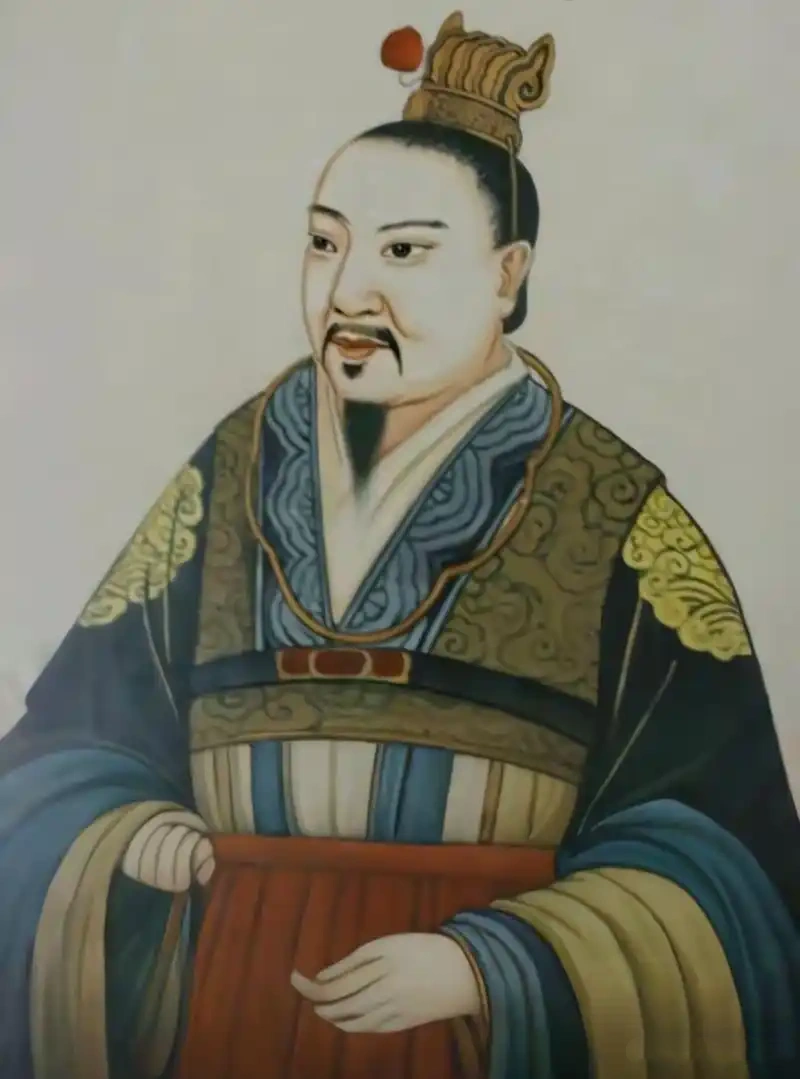
When he took the throne in the last month of 49 BC, the empire he received was the one his father had rebuilt. The granaries were full, the northern frontier had been quiet for some years, and a chanyu of the Xiongnu had come south to the capital to be received as a guest. Emperor Xuan governed by a method he explained to his son, in an argument that has lasted two thousand years: that the Han house had its own system, that it did not run on virtue alone. The heir disagreed. That disagreement is where this reign begins, and it is the only argument in it that the sources let us hear in both voices.
What follows is not the portrait of a tyrant. The man the histories call Emperor Yuan wanted to be good, said so, and meant it. He cut his own household, gave up a commandery to relieve a famine, brought the ancestral temples into line with what the classics said the ancient kings had done, and spent sixteen years listening to scholars explain how those kings had governed. In the course of that listening he allowed a eunuch to take the machinery of government into his hands, destroyed the ablest of the officials his father had left him, and raised the family of his own empress to a height from which, two generations later, one of its members took the throne. The question the reign raises is not whether the emperor was cruel — he was not — but what happens when a good intention is given the wrong instrument, and the man holding it cannot bring himself to believe ill of anyone he likes.
1. The Heir His Father Doubted
He was born in 74 BC, the son of a man of the imperial line who was, at that moment, nobody in particular, and of a woman named Xu Pingjun whom his father had married in the lanes of the capital. His mother was poisoned in the first month of 71 BC, in the manoeuvring that put the daughter of the general-in-chief Huo Guang on the throne; the child was three. He was raised first in the household of the empress who had taken his mother's place, and then, after that family was destroyed in 66 BC, back inside the palace under a childless empress and two teachers.
The teachers were the making of him. Emperor Xuan appointed as his grand tutor a scholar named Xiao Wangzhi, the leading Confucian of the day, and as his junior tutor a teacher of the Book of Documents named Zhou Kan, and for eight years they read the classics with the crown prince and taught him the rites of antiquity. The emperor knew what he was doing: he had spent part of his own youth outside the court and knew that a boy who would govern could not be raised on nothing but the penal code. What he did not intend was that the boy would believe what he was taught.
He believed it. He grew up, the History of Han says, soft and humane and fond of the Confucians, and what he saw of his father's government did nothing to change his mind. The court of Emperor Xuan ran through clerks trained in the law and measured its officials by the statutes. Two ministers of the reign, Yang Yun and Gai Kuanrao, were put to death for things they had written. Neither man was a rebel; both had said too much in a memorial. The prince watched this and concluded that the punishments were too heavy, and at the feasts of the court he told his father so, and asked that scholars be given the government.
His father's answer is recorded in his own annals, and it belongs there; what matters here is the turn it put in the son's life. The emperor turned on him, and the answer ended with a sentence about his own heir. From that day he was no longer intimate with this son. He had other sons, and he began to prefer one of them — Liu Qin, the king of Huaiyang, whose mother he favoured and whose mind he found more like his own. He thought, for years, about putting that son in the place of the crown prince, and the court understood that he was thinking it. That he never did so is part of his own story and is recorded with his own reasoning: he had risen with the Xu family from nothing, and he could not in the end go back on it. What the crown prince understood, growing up inside that hesitation, was something simpler — that his position rested on his dead mother's family, and not on his father's opinion of him.
On the death of Emperor Xuan, at the end of 49 BC, he took the throne. The old emperor had set three men around the new one, and the balance of them shows what he thought the government would need. The first was Shi Gao, a consort-kin nobleman of the family that had taken his father in when he was an orphan; the second was Xiao Wangzhi, the crown prince's old tutor; the third was Zhou Kan, the other tutor. All three were given the government in their hands, which is to say the right to receive memorials before the throne did. Two of the three were Confucians, and the emperor had brought them out because the new sovereign would trust them. But the office that decided which memorials reached the throne at all was not one of theirs, and it was already held by a eunuch. Early in the reign, in the third month of 48 BC, the emperor made a woman of the palace named Wang Zhengjun his empress; she had borne him his only son. That marriage is where the reign will end, and it is worth noting at its beginning.
2. The Scholars in Office
The first year of the reign is a list of good works, and it reads as though the emperor had been waiting for the chance. He gave gold to the kings and lords and money and cloth to the officials; he declared a general amnesty; he ordered state land and imperial parks lent out to the poor and seed and food lent to households worth less than a thousand coins. He sent twelve officers out through the empire to visit the old, the widowed, the orphaned and the destitute and to report on the customs of the provinces. In the ninth month eleven commanderies and kingdoms in the east flooded, and there was cannibalism, and he moved money and grain in from the neighbouring regions and cancelled the tax of the worst-hit districts. In the next year there were more decrees of the same kind; in the fifth year of it he abolished the three weaving offices of Qi, which kept several thousand workmen each, the palace parks he never visited, and the horse-breeding farms of the north.
The mind behind much of this was a scholar named Gong Yu, whom the emperor summoned to the capital in his first year. Gong Yu came out of the Confucian tradition and argued always from the person of the ruler. The ancient kings, he said, took a tenth of the harvest and nothing else, and the people prospered; the emperors of the early Han kept a dozen women in the palace and a hundred horses in the stables; and from the reign of Emperor Wu the court had gone the other way, until the palace held thousands of women and the stables ten thousand horses and a dead emperor was buried with a hundred and ninety kinds of precious thing. He asked the emperor to cut his carriages, his clothes and his vessels by two-thirds, to send home the women of the palace who were not needed, to free the women kept to tend the tombs who had borne no children, and to keep a few dozen horses and return the rest of the parks to farming. The emperor did a part of it: he reduced the musicians of the Music Bureau, cut the horses, cut the meat-eating animals of the imperial parks, and gave away the hunting parks. He did not do most of it.
Set out like this, the programme has a shape, and the shape is the point. Every one of these measures is either a cut in the sovereign's own consumption or a gift from his own property to the poor. Not one of them touches the machinery that decides who owns the land or who holds the offices. The Confucian doctrine the emperor had absorbed as a boy taught that the order of the realm depends on the virtue of the ruler and that a good king is the government; and so the way to reform a state was to reform the emperor. The men around him took the doctrine seriously, and their proposals are all proposals about the emperor's person. It is a doctrine with no mechanism, and the emperor, who was willing to be told what to do with his own dinner table, was never told what to do with the men who were already running his offices.
The four scholars whose names the historians group together — Gong Yu, Xue Guangde, Wei Xuancheng and Kuang Heng — were made censors and chancellors in turn, and Ban Gu, summing up the reign a century later, compressed its personnel into a phrase: Gong, Xue, Wei and Kuang were chancellors one after another. Wei Xuancheng was the son of a famous chancellor and a Confucian by training; Kuang Heng rose from the study of the Book of Songs through ten years in the capital to the chancellorship without ever having governed a province. It was, in its own terms, the triumph of the doctrine: the men who knew the classics were at last at the top of the state.
Two decisions of these years show what the Confucian case looked like when it touched the map. In 46 BC the commandery the Han had planted on the island off the southern coast rebelled. A waiting attendant named Jia Juanzhi argued that the island's pearls and rhinoceros horns were not worth the garrisons it cost, and that the court should abandon it and spend the money on the hungry instead. The emperor abolished the commandery. It was a rare thing in the annals of the dynasty: a territory given up on purpose, to relieve the people who were taxed to hold it. And in 44 BC he abolished the salt and iron offices and the state granaries on the argument that the state should not compete for profit with its own subjects — the pure Confucian position — and then, three years later, restored them, because the treasury could not pay its bills without them. The ideal ran into the accounts and came back.
What the reign could not do, and did not see, was what was happening underneath it. The great families were swallowing the small holdings and the peasants were leaving the land for the roads, and the amnesties and the loans did not touch the cause. In 42 BC the Qiang tribes on the western plateau rose, and the court sent a general against them, and the war was over the next year. Meanwhile the instruments the early Han had used to hold the great houses in check were allowed to fall into disuse, and the men who understood what that meant were the men who were buying the land.
3. The Man Who Held the Seal
The office that mattered most in this reign was not a chancellorship. It was the palace secretariat, and the reason it mattered is architectural. Memorials to the throne went up through a secretariat that sat inside the palace, and whoever ran that secretariat decided what the emperor read. Emperor Wu had staffed it with eunuchs, and the practice had been kept, because an office inside the palace, held by men who could not pass it on to a son, is an office the throne believes it can control. By the time Emperor Yuan came to the throne it had been run for years by two such men, Hong Gong and Shi Xian, who had been castrated in their youth and had, as the old commentary puts it, no close kin and no marriage alliance outside the palace. Hong Gong was the director and Shi Xian his deputy. Hong Gong died a few years into the new reign, and Shi Xian took his place.
The emperor's reason for trusting him is recorded and is worth setting down exactly, because it is the hinge of the whole reign. The emperor was often ill and gave himself to music; he could not sit over the daily business himself. Shi Xian had managed that business for years, and — this is the phrase — being a eunuch he had no outside party, and so he was dependable and could be given everything. It is the reasoning of a man who mistakes the absence of a family for the absence of an interest. The result is stated in one line of the History of Han: affairs great and small were settled by what Shi Xian reported, and the court, from the highest ministers down, bowed to him.
The Confucians around the throne saw it clearly, and their leader was the emperor's old tutor. Xiao Wangzhi, now a senior general, sent up the argument that the secretariat was the pivot of the state and should be held by men of integrity and public spirit; that Emperor Wu's use of eunuchs had been a departure from the old rule; and that, as the rites said, a mutilated man should not stand beside the ruler. The emperor did not adopt it. What he did instead, in the second year of the reign, was to agree, in a moment of inattention that cost him his teacher, to a request from Hong Gong and Shi Xian that Xiao Wangzhi be "summoned before the law officers." He did not know what the phrase meant. When he learned that to be summoned before the law officers was to be imprisoned, and that his old tutor, rather than go to prison, had taken his own life, he pushed away the meal in front of him and wept, and the court heard him. He summoned Shi Xian and the others and reproached them; they took off their caps and begged pardon; and then he left them where they were.
That sequence is the reign in miniature. The emperor was not without feeling and not without judgment; he was without the hardness that would have been needed to act on either. The men who wanted the eunuch gone were now destroyed as a party. Zhou Kan was dismissed and barred from office and then, after a season, restored and starved of any real power, because by then every memorial to the throne passed through the man he had tried to unseat. A teacher of the Book of Changes named Jing Fang, who had lectured the emperor on how to tell a loyal minister from a flatterer, was executed in 37 BC. Jia Juanzhi, the man who had advised giving up the island commandery, was executed. An officer named Zhang Meng took his own life; a censor named Chen Xian was condemned to shave his head and labour on the walls. The pattern of the accusations varied; the outcome did not.
Shi Xian's methods were the methods of a man who had to hold a position, and they are recorded with a precision that makes them almost admirable. When he had to go out on the emperor's business, he would ask in advance for permission to have the palace gate opened after the curfew if he should be late; then he would come back deliberately at night and have the gate opened on the emperor's authority; and then, when someone duly reported that he had used the imperial order to open a closed gate, the emperor laughed and showed him the report. Shi Xian wept and said that everyone wanted to destroy him and that he would be glad to be given the meanest work, so long as the emperor would keep him alive — and the emperor, convinced and moved, gave him more. The gifts and the presents he took came, by History's own count, to a hundred million coins. A rhyme went round the capital about him and his allies: Lao, and Shi, and the guest of Wulu — how the seals pile up, how the ribbons hang. And the ablest thing he did was not an attack. Knowing the scholars blamed him for the death of Xiao Wangzhi, he sought out the most respected of them, the same Gong Yu, and recommended him to the emperor for the highest offices, so that the world would see a eunuch who raised up a great Confucian instead of a eunuch who destroyed one.
The judgment the historians left is harsher than any single act. Ban Gu, writing the reign's obituary a century later, said that the emperor was held back by the letter of the texts and could not make up his mind, and that his father's work decayed under him. It is a later verdict, but the facts it judges are in the record and are not in dispute: a man who was told the truth about his own minister, repeatedly, by people with nothing to gain, and who heard it, and was sorry, and changed nothing, because he could not believe that a person he liked meant him harm. For the whole of the reign the secretariat stayed in Shi Xian's hands. When the emperor died it took only a few months for the machinery to turn over: the new court stripped the eunuch of his office, chased him out to his home province, and he died on the road. He had never been stronger than the emperor's trust, and he had never been weaker than the palace he ran.
4. The Head at the Barbarian Lodge
There was one field in which the reign acted decisively, and it was not a field the scholars cared about. A generation earlier the Xiongnu confederation on the northern steppe had broken in two, and the half that mattered had come into the Han's orbit: in 51 BC the chanyu Huhanye had travelled south to the capital and been received as a guest above the princes of the imperial blood. His elder brother had refused to submit. He had gone far to the west, into the kingdom of Kangju beyond the desert, and there he had taken the title of chanyu for himself and made himself a nuisance the Han could not ignore. He had killed a Han envoy named Gu Ji, and had insulted and mocked the envoys sent afterwards to ask for the body. He had built himself a city on the Talas river, with double walls and a wooden stockade, and had driven the people of Kangju to the work five hundred men a day until the walls were up. He had killed Kangju's own princess and hundreds of its nobles, and thrown the bodies into the river.
Two officers of the far west decided to end him. The senior was Gan Yanshou, the Protector of the Western Regions, the office the Han had set up in the oases a generation earlier; the junior was a deputy colonel named Chen Tang, a man the History describes as deep and bold, full of stratagems, and hungry for a great deed. In 36 BC, on their way out to their posts, Chen Tang put the case to his superior. The man was fierce and far away; he had no strong city and no crossbows; if the Han raised the farm soldiery of the western garrisons and the cavalry of the oasis states and marched on him directly, he could neither hold nor hide, and what would be won was the work of a thousand years in a single morning. Gan Yanshou agreed, and said they should ask the court first. Chen Tang said the court would refuse. Gan Yanshou fell ill; and while he lay sick, Chen Tang, on his own authority, forged an imperial order and mustered the troops. Gan Yanshou got up to stop him, and Chen Tang put his hand on his sword and told him the army was already gathered, and asked whether he meant to spoil it. Gan Yanshou let it stand.
They went out with some forty thousand men, Han and subject peoples together, in six columns on two roads: three over the Pamirs by way of Dayuan, three north through the territory of the Wusun into Kangju. They sent back a memorial admitting that they had acted without orders. They reached the Talas and camped three li from the city. Zhizhi, told they were coming, rode out and rode back in again, and said it was better to hold — an army from so far away could not sit outside his walls for long. He was wrong. The siege lasted into a second day. He came onto the wall with his wives, and the wives shot arrows, and the arrows killed several of them and struck him in the nose. In the morning the Han set fire to the wooden wall and the fight went through it into the inner city, and Zhizhi was killed, and an officer named Du Xun cut off his head. In the prison inside they recovered two envoys' tallies and Gu Ji's letters. In the palace they found the letters Gu Ji had been carrying.
The count of what was taken, by History's own numbers, was one thousand five hundred and eighteen killed, including the chanyu's consorts, his heir and the lesser kings; a hundred and forty-five taken alive; and more than a thousand given up. And then the two officers sent the emperor a memorial, and it is the most famous document of the reign: that they had raised the army of righteousness and carried out the punishment of heaven; and that the heads should be hung up in the Gaogai quarter of the capital, among the lodges where the envoys of the outer peoples were housed, to be seen ten thousand li away; that those who offend against the mighty Han, though distant, would certainly be put to death. The head was brought to the capital and hung at the lodge as they had asked. In the first month of 35 BC the emperor reported the killing at the suburban altars, declared an amnesty, and held a banquet; the maps and papers taken from the city were shown to the women of the inner palace.
The reward, when it came, took three years and came for the wrong reason. Shi Xian had wanted Gan Yanshou to marry his own elder sister and had been refused, and he and the chancellor Kuang Heng argued that a forged imperial order was a capital crime and that the victory only cancelled it, and that to reward it would teach every envoy to go out and start a war. The emperor thought they had a case and could not overrule them, and the matter sat. It was the imperial clan officer, Liu Xiang, who broke the deadlock, memorialising that the two men had crossed a hundred deaths into a land no one reached, taken a city, cut off the head of a chanyu who had mocked the Han, and that such a deed came once in a thousand years. In 33 BC, three years after the city fell, the emperor made Gan Yanshou a marquis and gave Chen Tang a marquis's rank, three hundred households and a hundred catties of gold. The thing that had worked in this reign was done by a man who broke the law to do it, and the government's thanks arrived late and grudging.
It is worth marking the boundary of what is known here. The accounts of the siege note that the defenders fought in a formation the Han called the fish-scale array and had built a double wooden wall, and an Oxford scholar of the twentieth century, Homer Dubs, proposed that these were the marks of a lost Roman legion — survivors of the army that had been destroyed in Parthia a generation earlier — and the idea has been repeated ever since, in books and on film. It remains a hypothesis without proof; the specialist objection is that a Roman remnant reaching the Talas is far-fetched, and that the city's forts and formations are as easily explained by the local Greek-descended soldiery of Central Asia. The campaign itself needs no such ornament. A Han army marched out from the frontier, besieged a man who had killed imperial envoys, and came home with his head.
5. The Woman Who Went North
In the first month of 33 BC, the chanyu Huhanye came to the capital for the third time. He had come first in 51 BC, and again in 49, and this time the gifts were doubled. And he asked a thing no Xiongnu ruler had asked in this form: to become, in his own words, a son-in-law of the Han, to bind himself to the imperial house by marriage. The emperor gave him a woman of the palace. The History of Han records the whole of it in a line: a commoner of good family from the rear palace, named Wang Qiang, whose courtesy name was Zhaojun, was given to the chanyu; she was titled the yanzhi who pacifies the Hu; the year's name was changed to Jingning, "ended peace," to mark the frontier made quiet; and the chanyu, pleased, offered to guard the border from Shanggu to Dunhuang for ever and asked that the frontier garrisons be disbanded entirely.
That is the entire historical record of one of the most famous women in Chinese history, and the smallness of it is the first thing to say. There is no painter in it. There is no bribe, and no portrait, and no description of her face. There is no farewell scene, no regret, and no request. The women of the palace are not asked whether they wish to go. A guest of the court asked for a wife, and the court, as a matter of administration, gave him one.
Everything else is later, and the way it accumulated is a case study in how a story forms. A collection of anecdotes about the former Han added the element that made it permanent: that the emperor, having too many women to see them all, had them drawn by painters and chose from the pictures; that the women bribed the painters and Zhaojun did not; that her portrait was made ugly; and that when the chanyu asked for a beauty, the emperor chose her from the drawing and discovered his mistake only as she left, and had the painters executed. The anecdote even gives the leading painter a name, Mao Yanshou. And the standard history of the later Han, written in the fifth century, supplied the rest: that she had spent years in the palace without ever being seen by the emperor, had grown bitter, and had asked the officer of the rear palace to be sent; and that at the leave-taking, dressed and adorned, she was the most beautiful woman in the palace, and the emperor saw her and wanted to keep her and could not. Every part of that is invention, and the scholars have said so for centuries: a Song critic wrote that the tale of the executed painter was wholly untrustworthy, and Gu Yanwu in the seventeenth century pointed out that even the anecdote's own text does not tie the painter to Zhaojun. But the poets took it up, and a line of Wang Anshi's — that it was the spirit no brush can paint, and the painters died for nothing — fixed the version that everyone knows.
What can be said about her is thinner and less comfortable. She was from Nanjun in the south, of an ordinary household, taken into the palace as a girl of good family; of the thousands of women there, almost none ever saw the emperor, and she was one of them. She went north in 33 BC. She bore Huhanye a son. Huhanye died in 31 BC, and by the custom of the steppe, the later history says, she married the heir who succeeded him, a marriage that the government of the Han, when she wrote back to ask to be allowed home, told her to accept. The frontier, for a generation, was quiet: the History of Han says the frontier towns shut their gates at evening and cattle and horses filled the fields, and that for three reigns there was no alarm of barking dogs and no man called out to arms. How much of that was hers no source can say. The chanyu's offer to guard the wall and send the Han garrisons home was refused, on the advice of an officer named Hou Ying who set out the reasons in a memorial; the Han kept its soldiers on the frontier, and took the marriage as a courtesy. In the year that the palace gave away this woman, the court called the peace "ended," and the emperor, who had wanted more than anything to be a good ruler, gave away the smallest thing he had to keep the largest, and then, in the fifth month of that same year, died.
6. What He Left
The largest single enterprise of the reign was neither a war nor a tax. It was a reform of the ancestral temples, and it came out of the same Confucian conscience that had produced the gifts to the poor. The problem was scale. The Han had built temples to its emperors not only in the capital but in the commanderies and kingdoms of the empire, and by History of Han's own count these stood in sixty-eight regions, a hundred and sixty-seven of them, with a hundred and seventy-six more in and around the capital; the annual offerings came to twenty-four thousand four hundred and fifty-five, the guards to forty-five thousand one hundred and twenty-nine men, and the priests and musicians to twelve thousand one hundred and forty-seven. Gong Yu, before his death, had argued that the ancient kings kept seven temples and that the ones whose mourning had run out should be taken down, and that the temples out in the provinces did not agree with the old rule and ought to be brought into line. In 40 BC the emperor put the question to the court, and the court abolished the temples in the commanderies and kingdoms. The next year it went further and fixed the rule for the capital: the founder, Emperor Gaozu, would have a temple that was never removed, and Emperor Wen a place as the great ancestor, while the rest would be destroyed when the mourning for them ran out. The temples of the retired emperor and of Emperor Hui were taken down, their tablets moved, and the sacrifices concentrated in one place in the capital.
Then it came apart, and the way it came apart is the reign's real signature. In the later years of the reign the emperor fell ill, and the History says he dreamed of his ancestors reproaching him for the destruction of their temples; he began restoring what he had abolished, and his chancellor, Kuang Heng, wrote a formal apology to the dead, explaining to the ancestors why the temples had been removed. In 34 BC the temple parks came back. In the month of the emperor's death, in 33 BC, they were abolished again. The reform had been built out of the ancient texts, and it could not survive a bad dream and a sick man, which is to say it rested on nothing except the emperor's own conviction. The one part of it that stuck was the least religious: in the same years he decreed that his own tomb would have no county founded at it, and left the families of the east where they were.
The rest of what he left was a household, and a household is how the dynasty ended. The empress he had made in 48 BC, Wang Zhengjun, had given him a son, Liu Ao, and the son was made crown prince the year after. But the emperor's affection went elsewhere. He loved a consort of the Fu family, and she bore him a son, Liu Kang, made king of Dingtao, and the boy was clever and the emperor was proud of him. The History's biography of the official Shi Dan preserves the setting of the last years: the emperor, in his illness, kept music close and would stand at the railing of a hall throwing bronze pellets at a small drum to beat out the rhythm of the solemn march, and of everyone in the palace only the king of Dingtao could do it too, and the emperor praised his talent. He thought, more than once, of putting the boy in the place of the heir. And there is a scene, recorded with the same care, in which the emperor watched a fight of animals in the park and a bear broke from its pen and came at the imperial stand: the consorts scattered, and one of them, Feng, the mother of another of the emperor's sons, walked forward and stood in front of the bear until the guards killed it. The woman who saved the emperor was not the woman whose son he favoured. That is the whole of the politics of the inner palace, and it decided who would reign.
The heir survived it. He was protected by Shi Dan, son of the consort-kin nobleman who had been set beside the throne at the accession, who on the emperor's sickbed reproached him for turning away from his own son, and knelt on the green rush mat beside the imperial couch — the place at which only a minister of the highest rank was allowed to kneel — and moved the emperor to tears. The History's explanation of why the succession stood is one clause long: because the empress had always been careful, and because the late emperor had had his eye on this boy. As with the father before him, a man of the Han could look at his own marriage and find that he could not go back on it.
He died in the fifth month of 33 BC, in the Weiyang Palace, forty-two years old by the count of the Han, in the sixteenth year of his reign, and was buried at the tomb called Weiling. In the sixth month his son's mother became empress dowager, and her brother, Wang Feng, was made grand marshal and general-in-chief with the government in his hands. The History of Han sums up the family's rise in four words — the power of the Wang began with Feng — and in the years after that five of the brothers would be made marquises on a single day, and among the nephews was a boy named Wang Mang, whose father had died before the honours came. The full account of that family belongs to the reigns that followed. What belongs here is that it was raised by this emperor, in the ordinary way of a man who marries and has a son and rewards his wife's relatives, and that no one in the reign could see in a family of affable in-laws the thing that would take the throne.
The verdict the historian left stands opposite all of it, and both halves are true. Ban Gu wrote that the emperor had many arts — he wrote a fine hand, played the zither and the flute, and composed his own music; that he had loved the scholars from boyhood and, once enthroned, gave them the government, so that Gong and Xue and Wei and Kuang were chancellors one after another; and that, held back by the letter of the texts and unable to decide, he let his father's work decay. And in the same breath: he was generous to those beneath him, temperate in his own habits, and his decrees were mild and refined and carried something of the ancients. A thousand years later, Sima Guang took the same facts and drew the other conclusion — a ruler easy to deceive and hard to enlighten. What he left was not a ruin. The granaries were still full, the frontier was still quiet, the machine still ran. What he had done was put the machine into the hands of the one man he could be sure had no family to serve him, and put his own family at the head of the state, and then die, leaving the first of those arrangements to be carried off by the second. His father had said, in an argument about government, that this son would ruin his house; the historians wrote the sentence down as a prophecy, which is what they do with a sentence that turns out to be right. But the sentence says less than the record does. Liu Shi did not set out to ruin anything. He set out to be good, and he was good, and the goodness had no machinery inside it; and the machinery went to the men who did.