Home / Emperors / Sixteen Kingdoms
Emperor You of Former Yan
前燕幽帝
Murong Wei, 350 – 385 · last emperor of Former Yan
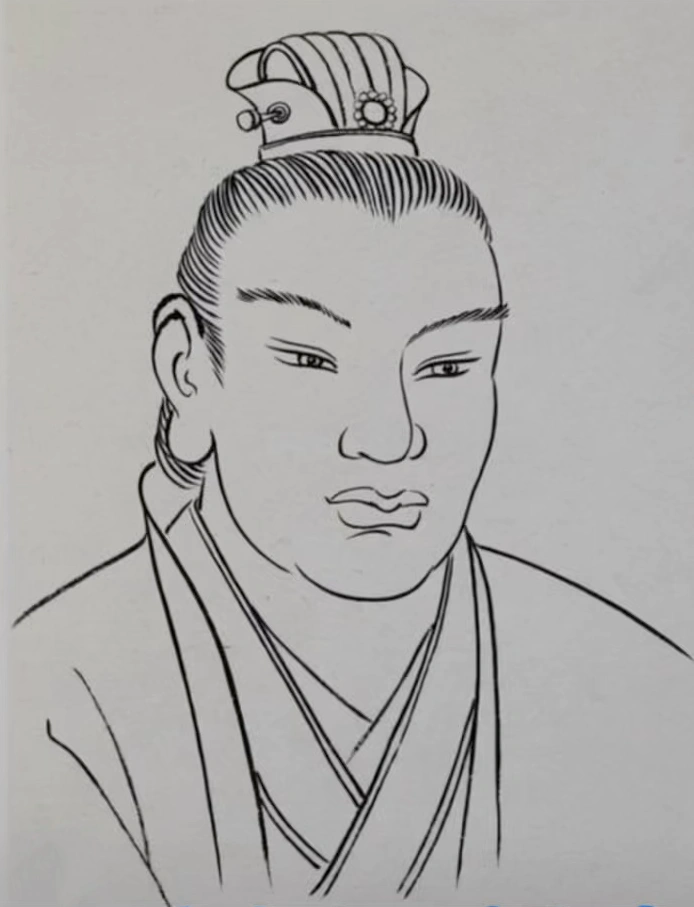
In the third month of 366 the two men who governed Former Yan knelt in the hall at Ye and offered to hand their seals back to the emperor. Murong Ke was the grand steward, the regent the late emperor had chosen; Murong Ping was the grand tutor, his great-uncle, who had governed beside the regent. Their memorial asked permission to hand back the government and retire. It spoke of drought and flood, of the two enemies still unfinished, of the seven years they had held office, and of the absurdity of men of their ability sitting in the seats of the Duke of Zhou. The emperor refused. They asked again. He refused again, in an edict that the memoir preserves, and then he had the petition closed, and they stayed. He was six years into a reign he had never directed. He had not chosen his regents, his empress, his ministers or his wars. By 366 he had been asked to choose one thing only, whether to take the government into his own hands, and he had declined it in the language of filial duty. The court was relieved. Four years later the Qin army entered Ye, and he rode out of the city with a few dozen men, lost his horse in the fields, and was taken by a soldier with a rope.
The ten years are usually read as the reign of a foolish boy. This essay argues something narrower and worse: that he never reigned at all. The decisions that ruined Former Yan were made by a regency, by a dowager's household and by a senior prince; the emperor's part was to consent, and consent was the one thing the court required of him. A state can survive a wicked king. It cannot survive a throne that no one is willing to fill. The state is called Former Yan in the books that had to tell it apart from the Yan raised later at Zhongshan; its own court used the single word. What survives of him is chiefly the life in the Book of Jin, assembled at Tang command in 648 from papers the Yan chancery had kept, and the annalistic Mirror completed in 1084; both books were written by men who needed the last of the house to account for the end of their state.
1. The Third Son
The house into which he was born had been in motion for three generations. His grandfather Murong Huang had taken the royal title at Jicheng in 337. His father Murong Jun had taken the imperial title in 352 and carried the court from the Liaoxi frontier into the plain. By the middle of the century the family was no longer a border chiefdom with a Chinese chancery attached; it was a conquest state with two capitals, a Xianbei cavalry and a secretariat of refugee scholars. Wei was born into the third generation of that transformation, and he inherited its most fragile product: a throne built faster than the institutions around it.
The memoir gives no year of birth. It gives two ages. The Mirror says he was eleven when he took the throne in 360; the memoir says he was thirty-five when he was killed. The first implies 350, the second 351. A single year is the ordinary margin of a record that counted nominal years and did not always count them twice in the same way, and no source settles the question. This essay uses 350 and notes that the arithmetic does not quite close.
He was the third son. When his father took the imperial title in 352, the heir was not Wei but his elder brother Murong Ye, the empress's first son. Ye died in 356 and received the posthumous name Xianhuai. In the second month of 357 the emperor made Wei heir, pardoned the domain and changed the era to Guangshou. The investiture is sometimes dated to 352, as if title and succession happened together; the record's order does not allow it. Wei became heir because the elder brother had died, and he became emperor because his father died three years later.
His father died in the first month of 360. The dying emperor had offered the state to his brother Ke, and Ke had refused; now a party at court made the same offer and received the same answer. The record has Ke say that the state had an heir and that kingship was not his office. Wei took the throne at eleven, declared an amnesty and began the era Jianxi. The settlement around him was a cabinet of kinsmen: Ke grand steward and recording secretary, acting as the Duke of Zhou; Ping grand tutor; Yang Wu grand guardian; Muyu Gen grand preceptor; Murong Chui commander of Henan, posted away to Liang.
The memoir's first characterization of Wei comes before his first act. "Wei being mediocre and weak, the affairs of state were all given to Ke." The sentence is a verdict placed at the door of the life, and everything after it is arranged to confirm the verdict. It is worth noticing what the verdict does not say. It does not say that he was cruel, or extravagant, or mad. It says that he was soft material in a hard place, and that the government passed to a man who could hold it. The rest of the life is the working out of that sentence.
His first recorded judgment was a good one. Muyu Gen, an old commander who had served three reigns, decided that the regency was vulnerable. He went to Ke and argued that a boy on the throne and a mother in the palace were an invitation to disaster, that brother should succeed brother, and that Ke should take the throne after the funeral. Ke refused with contempt. Gen then went to the dowager and to the emperor and accused Ke and Ping of planning a revolt, asking for the guards to kill them. The dowager was inclined to believe him.
The boy did not. The record has him say that the two lords were the close kin and worthy men of the state, that the late emperor had entrusted his orphan to them, that they would not do such a thing, and that the grand preceptor might be the one who was planning revolt. Ke had Gen and his household killed inside the palace. The court was frightened and then quiet.
It was the right answer, and it was also the answer that kept him a child. He had defended the men who governed for him against a man who wanted to govern instead. A sovereign who makes that choice at eleven can be praised for it, and the praise is the end of his political education. From that day the court knew what to expect of him: he would back the regency, and the regency would do the work. The arrangement suited everyone except the state.
2. The Regent
Murong Ke governed for seven years, and they were the best years the state had. His method was patience, in war and in the hall. He did not parade severity; he governed by trust and reward, promoted men by capacity, kept his opinions to himself and read until late. He had won the great battles of his brother's reign, and he had done it by refusing to spend lives for speed. He was the one public figure in the Murong house whom no one seems to have suspected of wanting the throne, which is why the dying emperor could offer it to him and be believed.
The Jin court had thought that the death of Jun opened the north. Huan Wen disagreed. The record has him say that Murong Ke was still alive and that the worry was only now becoming great. The sentence did more for the security of Yan than any frontier wall. For six years the southern armies did not attempt the plain. When they came, in 369, Ke had been dead for two.
His wars can be told in a sentence. He besieged Lü Hu at Yewang for half a year and took the city when its supplies failed; he paraded cavalry to the Huai; he took Xingyang, Xuchang and Runan and moved more than ten thousand households north; in 365 he took Luoyang and Jinyong, killed the Jin officer who held the wall, and carried the frontier west to the mountains, where the Qin ruler brought an army to watch him. The frontier moved while the emperor was a boy in a hall, and it moved at the word of a man who never asked the boy's permission in a way that could be refused.
In the third month of 366 Ke and Ping put the government back on the table. The memorial they submitted is one of the longest documents in the memoir, and it is a strange one. It begins with the weather. Drought and flood had damaged the country, and the two ministers took the blame: they had occupied the highest offices without the virtue to harmonize heaven and earth, they had held the seals for seven years without finishing the enemies, and they asked to return the four seals of grand steward, grand marshal, grand tutor and minister of education. The language is the language of humility, and the politics is the politics of pressure. A regent who offers to retire is asking the court to tell him that it still needs him.
The emperor told him that it did. His edict answers it in the same register. Heaven had taken his father early, he said; the two lords were the only trust his father had left him, his kin and his teachers; the west and the south were unfinished; they must not abandon him for the private virtue of retirement. He refused the seals. They insisted; he refused again, and then closed the petition.
The scene is the constitution of the reign. The regent offered to make him a sovereign; the sovereign refused; the regent stayed; and the arrangement that had governed the country since 360 was renewed in the emperor's own voice. No one at court pressed the boy to take over, and the boy least of all. He had been trained to consent, and consent was what he gave, in a document that made his dependence look like filial piety.
The flaw in the regency was the regent. Ke consulted Ping on every matter, and the habit outlived him. He left the princes their households, the great families their hidden clients, the frontier its garrisons and the chancery its clerks. What he did not leave was an office that could govern without him. The arrangement worked because one man stood at its centre and was trusted by the army, the court and the throne. A government of one man is the strongest in the world while the man is alive. It is also the shortest.
3. The Regent's Death
Ke fell ill in the fourth month of 367, and his thoughts turned to the succession to his own office. He called the Prince of Le'an, Murong Zang, the emperor's elder brother, and told him that the grand marshal commanded the six armies and that the post could not go to the wrong man. By kinship it belonged to Zang or to the emperor's younger brother Chong, but both were young and untested. The Prince of Wu, Murong Chui, was the ablest man of the age, and the post should go to him. He told Ping the same thing.
A month later he was dying, and the emperor came to the bed. The record gives two versions of the last conversation. In the private one Ke tells Zang that if kinship prevents the appointment of Chui, the post should go to Chong. In the public one, placed at the deathbed, he tells the emperor that Chui is both civil and martial, next to Guan Zhong and Xiao He, and that if the emperor gives him the government the state will be a little safe, and if he does not, Qin and Jin will plan against Yan. Then he died, without speaking of his family.
Ping did not do it. In the second month of 368 he made Murong Chong grand marshal and gave Chui the titles of palace attendant, general of chariots and cavalry, and minister with authority equal to the three excellencies. The honours were real and the command was not. Chui had been governor of Jing province with an army at Liang; he was now at court, near the throne, with a rank that had no troops. The post went to the emperor's younger brother, a boy. The message was precise: the army would be commanded by the family, and the family would be commanded by Ping.
Five months earlier, in the twelfth month of 367, Yang Wu had died. He had been one of the ministers named in the testament, an old man of frugal habits who had served three reigns and left no property. With him went the last check on Ping inside the cabinet. The dowager held the palace, Ping held the chancery, Chong held the army's title, and Chui held an honour. The emperor held nothing that had not been given to him.
The court then tried to tax itself. The households registered to the state were fewer than the households held by the great families, the granaries were empty, and the soldiers' pay was in arrears. The left director of the secretariat, Yue Wan, proposed that all military fiefs and hidden clients be abolished and returned to the counties. The emperor agreed and gave him sole charge. Yue Wan audited the registers, and the count recovered more than two hundred thousand households. The court was furious. The memoir says that Ping had him murdered; the Mirror says he fell ill at the registers and died in the eleventh month.
Before the registers were counted, a chance had come and been refused. Qin was divided by the revolt of the imperial kinsmen, and one of its commanders offered the fortress of Shan to Yan. Murong De, the prince of Fanyang, proposed an advance into the passes: the troops of Bing and Ji to Puban, Chui's troops from Xu and Luo to relieve Shan, and Ping with the capital army as the second wave. The emperor was pleased with the memorial and would have followed it. Ping refused. His reasoning is preserved: Qin was a great state, and its troubles did not make it easy to plan against; the present court was not the court of the late emperor; the best that could be done was to close the passes and keep the frontier. The pacification of Qin, he said, was not their business.
It was a defensible judgement and a fatal one. A weaker neighbour in civil war is the one moment when a stronger neighbour can act without paying the full price, and the court let it pass. The refusal also reveals the doctrine that had replaced Ke's: not aggression, not defence, but the avoidance of decisions. In the two years after the regent's death the court lost its reformer, its chance and its general, and it had not yet lost a battle.
4. The Year of the Fugitive General
In the fourth month of 369 the emperor married. The bride was a Kezuhun, the daughter of the dowager's cousin, the director of the secretariat. The marriage was arranged in the palace and it sealed the alliance that had governed since 367. A sovereign's marriage is usually a statement about the frontiers; this one was a statement about the inner rooms.
In the same month Huan Wen came north with fifty thousand men. The Yan frontier had been built to stop raids, not an army. Murong Zhong was taken at Hulu; Murong Li was routed at Huangxu and came back alone; Fu Yan was beaten at Linzhu; Murong Zang, who had been given the southern command, could not hold. By the seventh month the Jin army was at Fangtou, less than two hundred li from Ye.
The court's response was to leave. The emperor and Ping were greatly afraid and planned to flee to Helong, the old capital in Liaoxi. The plan was not simple cowardice. The house had begun in that country, had kept a branch government there, and had never stopped thinking of it as a place to which it could return. But a court that plans to abandon its capital has already told its generals what the capital is worth, and the news travelled faster than the plan.
Murong Chui stopped it. The record has him say that they should let him strike the enemy first, and that if he did not win it would not be too late to go. The emperor gave him the southern command and fifty thousand men, replacing Zang, with Murong De as general of the south. It was the first time in the reign that a decision had been forced on the court by events, and the decision was to use the one commander the court did not trust.
The same month the court sent an envoy to Fu Jian asking for help, and offered the land west of Hulao as payment. It was a promise made in panic by men who did not own the land in question and did not intend to give it. The invitation was accepted, and a Qin column came east and camped in the south, officially as relief and actually as a witness. The court had now invited into the war the only power in the north that could destroy it.
The Jin army went home. The record of the war belongs to the southern side; what belongs here is the court's arithmetic. It had planned to run, it had been saved by a general it feared, and it had bought its safety with a promise it meant to break. None of the three was his alone. All three were made in his name, and all three were sealed by him.
The reckoning came quickly. Chui asked that Sun Gai and the officers who had broken the enemy line be promoted; Ping shelved the request. Chui raised it again and quarrelled with him. The dowager, who had long hated Chui, disparaged the victory and joined Ping in a plan to kill him. The record says simply that Chui feared and fled to Fu Jian. In the eleventh month he asked leave to hunt, left Ye in plain clothes and tried for Longcheng. At Handan his son Lin turned back and informed on him. Ping told the emperor and sent cavalry after him; Chui's heir covered the retreat, and Chui turned west.
The court had driven out the man who had just saved it, and it did so in the season when it needed him most. Two officers, Liang Chen and Huangfu Zhen, had warned that the exile would become Qin's guide. The record has Ping answer that Qin was small and weak, relied on Yan, and would not listen to a rebel.
The bill came due before the year ended. After the Jin army withdrew, the emperor regretted the cession and sent an envoy to say that the talk of land had been the misstatement of an envoy, and that neighbours ought to share calamity without being paid. Fu Jian was angry. Qin attacked Jinyong; Murong Zang marched to relieve it, was beaten at Shimen with more than ten thousand dead, and the governor surrendered. The western gate of the plain was opened by a sentence.
Three permissions made the winter: to plan the flight, to call in the Qin army, to destroy the best general. The emperor gave each, and each was urged on him by the men who had made the policy. This is what rule without government looks like: a chain of decisions that no one owns, ratified by the same silent signature.
5. The Last Winter
In 370 the Qin army came through the passes. The garrisons at Huguan and Jinyang, the two doors into the Yan heartland, were lost. The court put Murong Ping in the field with the picked troops of the capital and the provinces; the memoir gives him more than four hundred thousand men, the Mirror three hundred thousand. Neither figure describes what stood at Luchuan. Murong Huan held Shating behind him with more than ten thousand.
Before the battle the emperor asked a question. An envoy had come from the front, and the record has the emperor ask him how the Qin troops were, and whether Wang Meng and the others could fight, now that the great army had gone out. The courtier gave the answer courts give: Qin was small, its soldiers were weak, Wang Meng was an ordinary man and no match for the grand tutor. Two officers, Liang Chen and Yue Song, said the opposite. A book of war, they said, counts an enemy who is willing to fight; Qin had marched a thousand li because it wanted battle, and the question was not whether it could fight but whether Yan could. The emperor was displeased.
He asked the right question and was displeased by the right answer. A sovereign who wants reassurance will be governed by the man who supplies it, and that man will be the one who wants the war to look easy. The flattery was not the cause of the defeat. It was the sound of a court that had decided not to know.
Ping's plan was to wait. The enemy had come far and wanted a quick decision; Yan had depth, walls and numbers. The plan was sound in the abstract and ruinous in practice, because an army of that size cannot wait unless it is fed, paid and united. His baggage was burned in the hills, and the fires were visible from Ye. Ping then closed the mountain springs and sold water and firewood to his own soldiers, and the money and silk piled up like hills. The three armies lost the will to fight.
The emperor sent the palace attendant Lan Yi to rebuke him. The speech the record gives Wei is the only one in which he sounds like a ruler. He reminded Ping that he was a son of the founding house, that he should be thinking of the ancestral temple, and that it was not the time to make gathering wealth his whole concern. Then the image: if the enemy comes in, where will the money be put? When the skin is gone, what will the hair hold to? The silk could be scattered to the army; victory was the thing to buy.
Ping was frightened and fought. His army broke at Luchuan. The memoir puts the Yan dead at more than fifty thousand, and Ping came back alone. There was no second army. The court had spent years of revenue on a camp run as a market.
The Qin army reached Ye. The city did not fall by storm. Xu Wei, a loose-mounted attendant, led more than five hundred hostages of Fuyu, Goguryeo and Shangdang through the gate at night and admitted the enemy. The hostages were the sons of frontier princes, held at the capital as guarantees. On the last night they became the price of the guarantee: the empire's own system of security opened its last door.
The emperor fled with Ping and a few dozen riders toward Changli. The escort dissolved as it went. Two guards, Meng Gao and Ai Lang, died covering the retreat. He lost his horse and went on foot. Guo Qing caught him at Gaoyang, and the Qin officer Ju Wu bound him. The record has him say that a low man should not bind the Son of Heaven. The record has Ju Wu answer that he was Ju Wu of Liangshan, ordered to bind a bandit, and ask what he meant by Son of Heaven.
The title he had held for ten years was denied by a soldier with a rope, and the denial was unanswerable because the title had never been backed by anything the soldier could see. He had been emperor in a hall. In a field, with his horse gone, he was a man whose rank was recognized only by his own officials.
Fu Jian asked him why he had run. The record has him say that a fox that dies keeps its head toward its hill, and that he had wanted to die at his ancestors' graves. It is the one sentence in which he speaks of himself and not of the state, and its subject is not his throne but his grave. Fu Jian pitied him, released him, sent him back to the palace and had him lead the civil and military officials out to surrender. He entered his own capital as a prisoner in order to walk out of it as a subject.
The memoir closes the reign with an arithmetic. From the accession of Murong Hui in 285 to the fall in 370 was eighty-five years; Wei himself had reigned ten years, eleven by the inclusive count of the record. What his grandfather had built in a frontier town, and his father had carried into the plain, ended in a winter with a gate opened at night and a boy walking in a field.
6. The Marquis of Xinxing
In the twelfth month of 370 the Qin court moved Wei, the princes and more than forty thousand Xianbei households to Chang'an. He was enfeoffed as Marquis of Xinxing and given an office in the secretariat. The title was a county marquis, not a prince; the office was a desk in the conqueror's chancery. His kinsmen were posted to distant commanderies, where their households could be watched; he was kept at the capital, where he could be seen.
The fourteen years that followed are the longest period of his life and the thinnest part of his record. The memoir gives them a title, an office, one campaign, one letter and one plot. That is the material fact of his captivity: nothing happened to him that the court thought worth writing down. He had been the centre of a government; he became a name on a list of surrendered princes, useful for ceremonies and for messages a conqueror sometimes wants a defeated king to sign.
In 383 he had ridden south with the Qin court and come back with it. The next year the north came apart. Murong Chui raised his standard in Hebei and attacked Ye; Murong Chong rose in the Guanzhong. The Qin ruler summoned Wei and demanded an explanation. The record has Wei bow his head and excuse himself, and the Qin ruler forgave him and ordered him to write to Chui, Chong and Hong, summoning them to lay down their arms. He wrote the letters. He also sent a secret message to Hong, and the message is the first act of his captivity that the record attributes to him. He told his brother that he was a man in a cage, that he would never come home, that he was already the chief criminal of the state, and that Hong should build the enterprise without him, with Chui as chancellor and Chong as grand marshal.
The letter is an abdication. The man who had refused the government in 366 now refused, in advance, the restoration his kinsmen might have made for him. It was not modesty. A sovereign in a cage cannot be a sovereign, and his presence would have made every commander a regent and every victory a dispute about precedence. He had spent his life being governed; he understood the mechanism better than the Qin court.
In the twelfth month of 384, or the first weeks of 385, he tried to act. With Murong Su, the son of the dead regent Ke, he planned to use the wedding of his own son as a pretext for inviting Fu Jian to a banquet and killing him with hidden soldiers. Fu Jian accepted the invitation. Rain prevented the visit. The plot leaked. Fu Jian summoned the two men. The record has Su say that the affair must be out, that going in meant dying, that the city was already sealed, and that they should kill the messenger and ride for the gate, where their people would gather. The record has Wei refuse. He went in.
Fu Jian asked how he had been treated, that such a thought should arise. Wei answered with evasions. The record has Su say that the affairs of house and state were weighty and that feeling had nothing to do with it. Fu Jian killed Su first, then Wei and his clan, and then the Xianbei of Chang'an, old and young, men and women. The Mirror places the episode in the twelfth month of 384, which falls in the opening weeks of 385; the memoir gives no year and says only that he was thirty-five. This essay uses 385.
The only decision he made without a regent, a dowager or a senior kinsman was to kill the man who had spared him. It failed because of rain, and it killed the community it was meant to save. The record does not say whether the plan was militarily sensible; by that winter Chong's army was already outside Chang'an, and a coup inside the city might have opened a gate. What it does say is that Wei went in when he could have run, and that going in was the last free act of his life.
The posthumous title came later and from outside. Murong De, who had made himself emperor in Shandong in 400, gave him the name Emperor You. The Tang historians call the grant false, because they did not recognize De's state. The word they use for the title is a judgment on the grantor, but the title itself is a judgment on the man. You means dark, closed, unenlightened. It is the name a court gives a ruler who could not see, and it was conferred fifteen years after he died by an uncle who needed an ancestor.
7. The Verdict of the Record
The memoir ends its account of him with a sentence that has the compression of an epitaph. "Jingmao was common timber; he did not attend to his business; he leaned on a worthy minister, and a rebel minister broke the plan." The first clause is about material, not morals: the wood was ordinary. The second is the charge: he did not attend. The third and fourth distribute the blame: he leaned on Ke, and Ping broke what Ke had built. In four phrases the whole political history of the reign is turned into a judgment of character.
The judgment is not generous, and it is not stupid. It notices that the regency was good and that the emperor's dependence on it was real. What it cannot do is describe a system. It can say that Ke was worthy, Ping greedy, Chui able, the dowager vengeful and the boy weak. It cannot say that the throne had been designed for a child, that the princes' households were armies, that the magnates' clients were outside the register, and that the court had no procedure for a minority except a regent who happened to be loyal.
The portrait of the boy as a sensualist comes from a memorial, not from a register. Late in the reign the assistant director of the left, Shen Shao, submitted a long indictment of the court. He said that the rear palace held more than four thousand women, that the servants and grooms were ten times as many, that the daily expense reached ten thousand in gold, that silk was levied anew every year, that the armouries were not maintained and luxury was the business of the day. The figures are a budget speech: round, enormous, deployed to shame a court that had let its soldiers go cold. They are also the numbers later ages used when they needed a last emperor to be extravagant.
The topos is older than Yan. A fallen dynasty is given a last ruler who spent the treasury on women and wine, and the gift explains the fall without requiring anyone to examine the taxes. Wei's four thousand are the fourth century's version of the last Shang king's lake of wine. The memoir does not vouch for them; it reports a critic who wanted the court to change course, and it notes that the emperor did not accept the memorial. Take the empty armouries seriously and the four thousand as rhetoric.
Why does the record need a boy? Because a reign is a unit of narrative, and a unit needs a subject. The men who assembled the memoir had a file of edicts, memorials, campaign reports and court ceremonies, and they arranged it around the only person who had been present from the first page to the last. Ke dies in the middle; Ping rises and falls; Chui leaves and returns as a conqueror; the dowager moves between the palace and the hall. Wei is the thread. A thread is not a cause.
The structural case can be put in five dates. In 360 a child of eleven was put on the throne because the alternative was a regent who refused it. In 366 the regent offered the government back and the child refused it. In 367 the regent died and the court gave the army to a boy and an honour to the general. In 368 the last chance to attack a divided Qin was declined and the last reformer died. In 369 the court planned to abandon its capital, invited a foreign army, and drove out the one man who could win. By 370 the fall was over-determined. None of the five required a wicked emperor; all required a court that could not decide and a throne that could not supply one.
The counter-case is thin, and it is worth stating. In 360 he could do nothing. In 366 he could have taken the government, and he refused it. In 367 he could have backed Chui, and he let Ping have his way. In 369 he could have refused the plan to flee, and he fled. In 370 he could have replaced Ping before Luchuan, and he left him in command. The list is not a defence. It shows that the moments when a decision was possible were few, and that at each of them he chose the course that required the least of him. The least was usually to let someone else decide.
This is what the historians call the crime of inaction, and the phrase is exact. It describes a reign made of permissions: a signature on a marriage, a signature on an appointment, a signature on a flight. The man who signs is not the author, but the signature is what turns another man's plan into the act of a state. Wei's signature was the most valuable thing he owned, and he gave it away for ten years.
The last irony was his title. He died a marquis of a county in the Qin heartland, killed with his clan and the Xianbei of Chang'an, and he was buried where the record does not say. The name on this essay was given by an uncle who had founded a state in Shandong, and that state lasted ten years. The only thing the house gave him after death was a word meaning dark. It was the verdict of a court that had needed a child to explain why a state with four hundred thousand soldiers, two capitals and eighty-five years of history had opened its last gate at night and let a stranger in.