Home / Emperors / Sixteen Kingdoms
Emperor Xuanzhao of Former Qin
前秦宣昭帝
Fu Jian (the Heavenly King), 338 – 385 · ruler of Former Qin
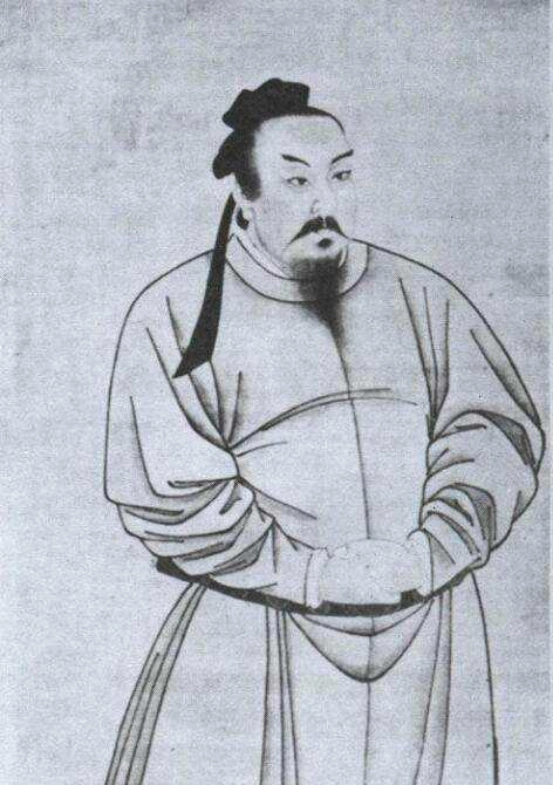
In the summer of 380 the ruler of Former Qin stood at Bashang, outside the eastern gate of his capital, and watched the Di take leave of one another. He was forty-two years old and had governed for twenty-three of them, and in those years he had done what no ruler of the north had done since the collapse of the Jin two generations before: he had beaten every rival the plain contained, absorbed their courts, moved their peoples, and raised roads, schools and granaries from Chang'an to the far provinces. Now he was sending a hundred and fifty thousand households of his own people away from the center, to garrisons in the east under his sons and nephews, on the model of the feudal princes of the old books. The chronicle records that the departing Di wept as they said farewell to their fathers and brothers, and that the sound of the wailing moved the strangers on the road. At the farewell banquet a court musician named Zhao Zheng took up his strings and sang that a bird with a long tail and short wings could not fly, that the ruler was sending his clansmen to the frontiers while keeping the Xianbei at his side, and that when trouble came there would be no one left to speak to. The record says the ruler smiled and did not accept the song. Two years later he led the largest army assembled in the fourth century against the one rival he had left, and three years after that the singer's verse stood written at the head of his obituary.
The last three years of his life, in which that verse came true, are the part everyone knows: the southern war lost, the Xianbei and the Qiang in arms, Chang'an besieged and starving, the Heavenly King taken in the hills and strangled in a Buddhist chapel at Xinxing. This essay is about the twenty-five years before them, and about the connection between the two halves. The man who ruled the north from 357 to 383 was not a tyrant, and his name needs no disguise here: Fu Jian the Heavenly King, nephew of the founder of Former Qin, was, by the evidence of everything he did, the most trusting ruler of his century: he gave armies to the men whose states he had destroyed, gave provinces to kinsmen whose loyalty the record itself doubted, gave the south the benefit of a debate his own chancellor had closed in advance, and gave the greatest gift of all, his confidence, to men who had every reason to repay it and no structure that obliged them to. He lost by structure and not by character. The state he built was a Di core wrapped around conquered Xianbei, Qiang, Xiongnu and Chinese, governed by law at the center and by personal ties everywhere else, held together by one man's ability to place, pardon and persuade. While he held, it held. When he failed in one afternoon, the adhesion went out of it, and every part he had so carefully not destroyed became a state again. Qin was the name of the ground before it was the name of the state: the valley where the first Qin had ruled, the passes that had held it, the word the Di of Lueyang carried down into it. His court wrote it on seals and in oaths, and his title was Heavenly King of Great Qin. The Former in front of it belongs to men who had lived long enough to see a second Qin, and who needed their readers to know which one was meant.
1. The Nephew
He was born into the third generation of a house that had crossed the mountains under another dynasty's flag. His grandfather Fu Hong, a Di chieftain of Lueyang who had served, been enfeoffed and finally betrayed by the Later Zhao, had brought his people as far as Fangtou, and was poisoned there on the eve of the march west; his uncle, the founder of the state, had carried the tribes into the passes and taken the title of Heavenly King there in 351. The founder's own death in 355 passed the throne to a son, and the boy's father Fu Xiong, the founder's ablest brother, died in 354, worn out by the campaign that had held the southern invasion of Huan Wen at the gates of the capital. The future ruler of the north was therefore the nephew of the first sovereign and the son of the second most powerful man of the second generation, born, on the reckoning of the memoir, around 338: the books give no birth year, but they record that he was forty-eight when he died in 385, and that age is the only dated fact of his beginning.
The memoir surrounds that beginning with what it always gives its founders' houses: signs. His mother Lady Gou, so the story runs, prayed at the shrine of Ximen Bao on the Zhang River and dreamed of a spirit, carried him twelve months, and bore a child with red writing rising on his back, arms past his knees, a purple light in his eyes; his grandfather looked, loved him, and named him Jiantou, little firm. The red writing on the back spells in riddle-form the change of surname from Pu to Fu that the house later made, which is the memoir's way of saying that the signs were read after the fact, by men who knew how the story ended. All of this belongs to the furniture of dynastic legend, and the essay records it only to note that the furniture was standard.
What this essay is built from needs one paragraph here, because this is the essay of its batch that carries the account. The principal source is the memoir of Fu Jian in the Book of Jin, the northern lives presented to the Tang throne in 648; their compilers rewrote a lost compilation by the historian Cui Hong, and Cui Hong drew on the national histories the northern courts had kept of themselves, so that the account of this reign, more than most in the north, rests on papers gathered by the state it describes and by the officials who served it, with the interest that implies: the portrait of the Heavenly King was shaped first by the men of his own court, who had reasons for the shape, and the Tang version preserves the shape rather than correcting it. Against it the essay sets the Book of Wei, written at Ye in the 550s by historians of a dynasty founded on the wreckage of the Qin's steppe settlement, whose verdicts on the Qin carry a creditor's interest; and the Comprehensive Mirror of 1084, which supplies the dates the memoir blurs and arranges its scenes with a Northern Song eye. Dialogue in these books is composition, and the essay tags it where it uses it; the numbers are the courts' own, and the essay qualifies them as they come. What is not standard in the memoir's portrait of his childhood is a sentence about schooling. At eight years old, the record says, he asked that a teacher be engaged to instruct him at home, and his grandfather Fu Hong laughed at him: your kind, he is said to have answered, a family of Rong and Di outsiders, has known nothing for generations but drinking; and now you want study. And then, the record says, the old man stroked the boy and laughed again. Whether the scene happened is beyond recovery; that it was included is not. It gave the greatest ruler the north produced in the fourth century a childhood tagged with literacy, and it marked, from the first page, the tension the whole life would turn on: a conquest family whose son reached for the learning of the conquered.
Two more facts of youth survive, and both are political. One is the memoir's remark that he was filial, widely learned, skilled in the arts, and gathered heroes about him with an eye to the ordering of the age, which is a summary, not an event. The other is an event. When his uncle led the tribes into the passes in 351, the memoir has the founder dream that a spirit in vermilion robes and a crimson cap ordered him to invest the boy with the generalship of Longxiang, and the next day an altar was built at Quwo and the title conferred before the army, with the founder in tears telling him that his grandfather had held the same command. Longxiang, the Dragon-rampant generalship, was thereby established in the family's own story as the title under which its fortunes rose. Nearly thirty years later, in the autumn of 383, the ruler gave that same title to Yao Chang, the Qiang whose father and brother had died in Qin service and whose family knew its obligations to him, with a speech the record preserves about how the title had made his house and was not lightly given. Courtiers warned him that the gift was unlucky. The scene at Quwo was the memoir's answer to the scene of 383, written with the whole of the story in view: the title that built the house, handed to the man who would end it. In 357, in the spring, the young general served in the army that destroyed Yao Chang's brother Yao Xiang at San'yuan, and Chang surrendered with the remnants of the Qiang following. The nephew of the founder was now the most conspicuous prince of the realm, and the most conspicuous enemy of the throne was on that throne.
2. The Coup of 357
Fu Sheng, his cousin, had reigned for two years, and the character of that reign is the subject of another essay. What belongs here is its last months. The memoir's catalogue of the young ruler's cruelties belongs to the other essay; the catalogue of their political meaning belongs to this one. Sheng had killed uncles and ministers until the men the house had ruled with for a generation understood that no service protected them, and the two princes closest to the danger, the brothers Fu Fa and Fu Jian, were the most eligible replacements in the realm: Fa the elder, Jian the one whose ability everyone had watched since the campaign against Yao Xiang. In the early summer of 357 the minister Quan Yi pressed on Jian the case for acting, and Jian, who had been preparing something of the kind for months, consulted the colonel of the capital Lü Polou, who recommended a man living in retirement at Huayin. The memoir describes the first meeting of the ruler and Wang Meng as the meeting of Liu Bei and Zhuge Liang, and the comparison is the memoir's, not history's; what is recoverable is that the two men talked through the crisis and liked what they found in each other, and that from that conversation came both the coup of 357 and the government of the next eighteen years.
The record's account of the coup itself is short and dressed in the conventions it uses for every usurpation. Sheng, it says, told a serving maid one night that the brothers could not be trusted and would be removed; the maid warned Fu Fa, and the memoir adds a dream in which a spirit told Fa that ruin would reach his house at dawn and that only the man who woke first could escape it. The dream is decoration. The report of the maid may be exact, and matters, because it made the coup a defense and not an ambition. Fu Fa, with the ministers Liang Pinglao and Qiang Wang and several hundred armed men, went into the palace through the Yunlong Gate; Fu Jian followed with Lü Polou's men and the noise of drums; the guards, the record says, offered no resistance, because no one in the palace wished the master well. Sheng was taken alive, put in a side chamber, and killed. The memoir, which elsewhere invents speeches for tyrants, gives him none here.
What followed was decided between the brothers. Fu Fa held the palace and the larger claim by age, and the assembled court expected him to take the throne; he refused, and the reason the record gives is a fact about the family: Jian's mother was Fu Xiong's principal wife, and Fa's mother was not, so that the proper line ran through Jian. Whether that was the whole reason cannot be recovered. What is certain is what Jian did with the victory, and the thing he did was the most unusual act of statecraft in the fourth century: he declined the imperial title. The house had used emperor-language since his uncle took it in 352; Jian put it aside and proclaimed himself Heavenly King of Great Qin, seated in the Taiji Hall, with an amnesty and the era name Yongxing. The essay must stop on this for a moment, because everything in his later career, including the way the books treat him, depends on it. The imperial title in that century was a claim about the world: it said that the bearer stood in the line of the Han and the Jin, that the mandate had come to him, and that the other courts of the age were pretenders. Jian, a Di prince of the far west who had taken power by murdering his cousin, declined to say any of that. The Heavenly King was the title of a Buddhist-flavored, Central Asian royalism that his century's steppe courts used when they wanted paramountcy without the pretense; it said he ruled, and left open what heaven thought about it. His own court, notably, was not so restrained: the memoir shows them honoring his dead father with an emperor's name, and the histories themselves call the family's reigns imperial. But the living ruler of the reunited north, at the height of his success, called himself a king, and the reticence has never quite stopped being strange. He would keep the title for twenty-eight years, through the conquest of four states and the mobilization of the largest army of the age, and it is the best single key to how he understood what he was building: not a dynasty whose heaven had spoken, but a coalition that had agreed to be ruled.
The first month of the reign saw the usual settling of accounts. Sheng's favorites, the men who had run his palace, were executed to a count of twenty-odd in the record. The princes of the blood were demoted from kings to dukes. The brothers and sons received the provinces and commands that a new reign always distributed, Fu Rong the dukedom of Yangping, Fu Pi, the eldest son, that of Changle, and the elder brother Fu Fa, the man who had taken the palace and refused it, was made Duke of Donghai, chancellor, and chief controller of all military affairs of the realm, the government of the state in his hands. Li Wei became left supervisor, Liang Pinglao right supervisor, Qiang Wang commander of the palace guard, Lü Polou colonel of the capital, and Wang Meng a secretarial court gentleman handling confidential papers with two colleagues. Nineteen years old, master of the north by a morning's work, the new Heavenly King gave the state, at least on paper, to the brother who had made him and the scholar who had found him.
3. The Elder Brother
Eleven months later Fu Fa was dead by order of the palace. The record gives the reason with unusual plainness. The dowager Lady Gou, Jian's mother, watched Fu Fa's residence in the capital fill with carriages and horses, the traffic of a man who had the government and the hearts of the court, and concluded that in the end he would be a danger to her son; and with Li Wei, the commandant of the guards, her own kinsman and the man whose patronage had twice saved Jian from Sheng, she arranged that Fa be given death. That is the whole of it. There is no accusation of treason in the sources, no trial, no list of crimes; the threat was what the traffic through his gates represented, and the judge was a mother. Jian's behavior, when the order went out, is the part the memoir keeps. He was, it says, by nature humane and brotherly, and toward Fa especially affectionate; he came to the Eastern Hall to take leave of him, and wept until he vomited blood. Fa was buried with the posthumous name of Duke Xian-ai, and his sons were given honors, and the court drew its own conclusions about what happened to the men who made kings and outlived the making.
The essay must pause on the case, because the task of verification produces an uncomfortable result: the tradition of a slander is an inference, not a record. Later retellings speak of whisperers; the memoir and the Mirror do not name a slanderer, and put the initiative with the dowager and Li Wei, whose motive the traffic through Fu Fa's gates made visible. Li Wei himself is a figure the essay returns to: he was the dowager's kinsman, close to her in ways the sources handle with discretion, treated by Jian as a father, and the patron who had discovered Wang Meng's worth and pressed him on the young ruler, comparing himself, in Jian's words to Meng, to the man who recognized Guan Zhong. The same circle that had found the chancellor had removed the chancellor's protector's rival, and the Heavenly King wept at the funeral of the man his own household had killed. His grief was real; the record would stake its portrait of him on it. But the structure underneath is what the essay is about: a government in which the state's second man could die, with no charge ever filed, because a dowager feared a crowd. Jian did not build that structure. He inherited it from the steppe household he came from, where the ruler's kin were the state's officers and the ruler's women were the kin's judges, and he would spend his reign trying to replace it with law, and never quite replace it at the top, where the law's author lived with his mother and her circle above him. Twenty-eight years later, on a summer evening in a Buddhist chapel at Xinxing, the record gives him a sentence about who was fit to rule and who was not. The men who wrote the victory of 357 knew, better than their readers, how thin the margin of that summer had been.
4. Wang Meng
The man who found him at Huayin in 357 became, in the judgment of nearly every later tradition, the ablest minister of the fourth century, and the essay must introduce him as a person, because the reign of Fu Jian cannot be told without him and the verdict on the reign depends on what he was. Wang Meng was born in 325 at Jing in Beihai, on the southern shore of the Bohai, into a family of the refugee gentry that had drifted east with the collapse; he grew up poor in the territory of Later Zhao, and the memoir's picture of his twenties is of a man selling winnowing baskets in the market, studying by himself, reading military books, refusing the one office that was offered him, and withdrawing to Mount Hua to wait. He was, in the terms of his class, nobody: no province, no line, no followers. The north he lived in offered three careers: service to the Zhao succession states then eating each other, flight south to the Jin, or the mountains. He took the third, and the taking was itself a judgment about the first two.
In the spring of 354 Huan Wen's army stood at Bashang, a day from Chang'an, and Wang Meng went to the southern commander's camp in a coarse hemp gown to see him. The interview the memoir preserves is one of the set pieces of the age: a man of thirty, delousing his clothes as he talked of the affairs of the day, answering the great lord of the south, when asked why the notables of the passes had not come to hail the restoration, with the question of why a general who had crossed a thousand li and stood within sight of the capital would not cross the Ba. Wen had no answer, offered him office and a place in his retinue, and was refused; the memoir adds a master's warning that the man of Jiangdong could not share the world with him. The refusal is the hinge of his life. Three years later the man he declined was a rival of his new sovereign's line, and the man who took him was the ruler of the north. It is the first instance of the pattern the essay is tracing: the most able men of the age kept choosing Jian, and the reasons were never only the reasons.
The reign's first test of what the choice meant was administrative. The Di warriors who had followed the house into the passes a decade before had been settled at Shiping, west of the capital, and the memoir's word for their conduct is daily robbery and violence. The new reign sent Wang Meng there as magistrate, with instructions that were a policy in miniature: declare the law, distinguish good and evil, restrain the strong. He executed his instructions with a severity that became a scandal: among others he had a local clerk whipped to death, and was denounced and sent under guard to the court, where the young ruler, with the reproach the memoir gives him about governing a people by kindness rather than by the thong, heard him answer that a well-ordered state is governed by ritual and a disordered state by law, and that the one clerk was the least of the tens of thousands that the disorder required. The memoir has Jian tell his court that Wang Jinglüe is truly a Guan Zhong or a Zichan, and pardon him. The sentence on the whip, as an instrument of policy, was never afterwards in doubt in that reign: the state's law, made by a Chinese commoner, applied first of all to the Di strongmen who had until then been above it, and the ruler backed the law against his own kind.
He had to do so publicly, and the memoir keeps the scene. Fan Shi, an old companion in arms of the founder, one of the great men of the conqueror clan, told the new favorite to his face that the men who had won the state watched a man of no merit run it, that he had ploughed the field and Meng had eaten the crop, and that his head would hang on a gate of Chang'an. Meng's reply, that he intended not only to eat the crop but to make the ploughman a butcher, was insolence of a kind that in that court was near suicide. Jian resolved it by a trap: he summoned Fan Shi and mentioned before him a marriage arrangement that touched the old man's family, let Meng accuse him to his face of contending with the sovereign over a bride, and had him killed when he began to curse. When the Di grandees then protested together, the ruler flogged the protesters. The essay notes the technique without admiring it: the point was not that Fan Shi deserved death, but that the law's minister must be seen to be untouchable, and that the demonstration had to be made on the conquerors themselves. Within a year the court had learned the lesson. As director of the metropolitan administration in 359, Wang Meng with the censor Deng Qiang executed the empress dowager's kinsman Qiang De and in a matter of weeks put to death, condemned or dismissed some twenty men of the greatest houses; the memoir's conclusion is that the age learned in one season that law existed, and that for years afterwards nothing was picked up on the roads of the capital. Five promotions came to him in 359 alone, and when senior officials grumbled, the grumblers were punished. The court of a conquest dynasty had been turned, in two years, into the most legalistic administration the north had seen since the Han, run by a man with no constituency except the sovereign, and the sovereign never flinched. His own remark, preserved from these years, that Li Wei knew Meng as Bao Shuya had known Guan Zhong, tells where the confidence sat.
The essay will return to Wang Meng at the eastern war and at his death. What must be recorded here is the shape of the partnership, because the shape is the argument of the essay. The ruler of Former Qin was not a Chinese emperor ruling by Chinese institutions, and he did not try to become one; the Heavenly King's court was a braid of Di princes, refugee literati, surrendered generals and tribal commanders, in which no institution bound any strand to any other. What bound them was allocation: the ruler's ability to give the right man the right work and to make the giving stick. Wang Meng was the extreme case of the method's success, a man with no army, no clan and no province, invested by nothing but a stranger's confidence, given the interior of the state to govern, and permitted to break the conqueror clan in doing it. Every element of that formula, the stranger, the confidence, the breaking, would be repeated in the reign with men far more dangerous than a scholar with a basket. The formula worked for Wang Meng. The essay's subject is what happened when it was tried on the Xianbei.
5. Governing the Passes
The domestic record of the reign before 370, as the sources give it, is a list of measures that read like a Chinese emperor's checklist and were, in that place and century, something else entirely. The memoir's summary of the early years has the ruler summoning overlooked talent, restoring offices that had lapsed, urging mulberry and grain, relieving the distressed, honoring the spirits, establishing schools, commending the loyal and the frugal; and the prose is standard, but the situation it describes was not. The Guanzhong of 357 was a frontier province that had changed hands six times in forty years, its plains half-emptied, its villages fortified, its administration a memory; the population the memoir counts there by the end of the reign included the Di core, Chinese cultivators, Xiongnu, Xiongnu-adjacent settlement, and, after 370, a Xianbei aristocracy of forty thousand households. To legislate for that mixture from a palace that spoke Di among itself was the experiment of the reign, and the memoir's later chapters on it are the experiment's report: schools in the commanderies and a sovereign who went monthly to the academy to examine students in person; the high roads from the capital to the provinces planted with elms and willows, a pavilion every twenty li, a post every forty, and travelers fed on the road; a street rhyme, quoted by the memoir itself, about the avenues of Chang'an with their trees and their carriages and the wise men gathered under them. The rhyme is court praise, and the essay quotes it as such. But the roads were real, or were meant to be, and the schools were the instrument by which a conquest court proposed to manufacture, within a generation, the Chinese-speaking elite its own Chinese minister needed. There is no other case in the century of a northern court building so deliberately for a day beyond its own wars.
Against that record stands a second record, which the sources keep in their annalistic voice and the essay must bring forward, because it is the shadow under everything: the house's own men did not accept the settlement. In 364, at court, a princely conspirator was exposed and executed, and the memoir notes that Wang Meng had already advised the removal of all five surviving brothers of the dead tyrant, and that the ruler refused. In 365, while the Heavenly King was away on tour to the north, a prince of the blood attacked Chang'an itself; the capital was held against him by Li Wei, the crown prince Fu Hong and Wang Meng, and the attacker was killed. In 367 four princes of the house, brothers and cousins of the ruler holding the four great commands of the periphery, Puban on the Yellow River, Shanggui in the west, Shancheng on the southern bend, Anding in the interior, rose together, and the war against them took a year and a half. One of the four offered his city to Former Yan to bring the eastern state into the war; the Yan court, in a decision its own essay analyzes, declined. Wang Meng and Deng Qiang reduced Puban; by the autumn of 368 all four were dead. The essay's point is not the fighting but the population of the revolts: not one was raised by a conquered people. Every armed challenge to the Heavenly King in his first twelve years came from his own clan, from the men whose privilege the law of Wang Meng was eating. And in every case the ruler's response was the same: to forgive the surviving kinsmen as far as the record would let him, to spare the five brothers in 364, to pardon the followers, and to go on trusting the clan. The memoir records the refusals of Wang Meng's advice without comment. The essay records them as the first data of the problem that would end him: the sovereign who would not destroy his own would not, in the end, destroy anyone, and the men he was sparing noticed.
The years between the eastern war and the western conquests contain one more event in this register, and it is the most famous act of clemency in the history of the century. In the winter of 369, at the end of the southern campaign of Huan Wen, the best general of Former Yan fled to Chang'an: Murong Chui, fifth son of the Yan founder, the man who had just saved his dynasty and been nearly destroyed for it. The court's counsel was general and immediate; Wang Meng's counsel was death. The ruler received the refugee on his own ground, took his hand, and, in the scene the record stages, told him that great things were to be done with men like him; and he refused the advice. The scene belongs to the Chui essay, and this essay keeps to a single sentence of it: the man whose clan the eastern war would move to the gates of the capital arrived in 369 as a guest, and the ruler's treatment of him, protected against his own minister, titled, banqueted, watched, was the public proclamation of the policy that a man's state was his past and his person was his future. Every refugee grandee in the north read the proclamation. So did the Xianbei of the Yan court, and eleven months later they were subjects of the man who had made it.
6. The Eastern War
The destruction of Former Yan in 370 was the pivot of the reign, and the Qin side of it begins, properly, with an argument about whether the state should be saved at all. In the autumn of 369 the Yan, with Huan Wen's army at Fangtou and the court planning flight, had sent to Chang'an for help and offered the land west of Hulao as the price. The Qin court's majority held that the Yan had never helped Qin, owed Qin nothing, and could be left to the southern army with profit. Wang Meng's argument, as the memoir reports it, was arithmetic: if Jin took the Yan, it gained the resources and the tactical ground of the whole east, and the state on the Yangtze would stand across the river plain from the passes; the Yan, exhausted by the southern war, could be helped now and taken soon. The ruler accepted, a column went east, Wen withdrew, and the promise of Hulao followed the pattern of promises made in panic: the Yan court reneged, explaining through envoys that its envoy had exceeded his instructions. The memoir gives the Heavenly King his anger and his decision together. In the twelfth month of 369 he sent Wang Meng east against Luoyang with thirty thousand men, a first strike to take the guardian fortress of the middle passage; the city fell in the first month by letter, without a siege; and the campaign of destruction was decided.
In the fourth month of 370 Wang Meng marched from Chang'an with sixty thousand, the number the sources consistently give, into the mountain approaches of the Yan. The deployment was two-pronged: Meng through the Hu Pass toward the upper Lu, the general Yang An against Jinyang on the Fen; both fortress systems fell in the seventh month, and the field army of the Yan under the imperial uncle Murong Ping came up to the river at Luchuan between them. The battle of Luchuan belongs to the Wei essay's side of the ledger; the Qin sources give only the outline, and the essay keeps to it: the Yan host, in the chronicle's own figures some six or seven times the Qin army, spent its strength in the quartermaster's tent, its commander selling his soldiers water and firewood from the hills of the field they stood in; the Qin burned the Yan baggage train in a night, the fire visible from the walls of Ye; and Deng Qiang, the fiercest of the Qin commanders, made the terms of his charge a public bargain with his own general and was indulged, and the Yan line broke, and the field was won. The figures for the Yan host are chronicle rhetoric and are recorded as such. What is not rhetoric is the aftermath, because the aftermath was Qin policy, and it was Wang Meng's: the army went east to Ye with discipline held, the memoir records that no plunder followed and that the commanderies between the field and the capital stayed open, and the Yan's own people watched a conqueror govern better than their court had. The ruler himself came east to the front with a picked force while the siege of the Yan capital stood, the memoir's way of saying that the final act must be his; in the eleventh month of 370 the city fell, the last emperor of Former Yan was taken on the road north, and the house that had ruled the northeast for thirty-three years ended.
What the victory made is the essay's real subject. The memoir's figures move the Yan imperial household, its princes and its officers, and more than forty thousand Xianbei households to Chang'an and the passes, into the hearth of the Di state, where they were fed, titled, housed and employed: the emperor of the Yan given a chamber at court, his princes commands and offices, the clansmen enrolled, the girls married into Qin families. It was the policy of 369 carried to its conclusion. The court of Former Qin, in the last third of the century, was a museum of the courts it had beaten, kept in being on purpose. The essay's judgment on the policy is reserved for the end. Here it records the other consequence: Wang Meng, made governor of Ji province and chief controller of the six eastern provinces, stayed two years at Ye to hand the conquest over to administration, governing the east with the methods of Shiping and the capital, recruiting the eastern gentry into office, and then returning to Chang'an as chancellor of the realm in 372, leaving Fu Rong, the ruler's youngest brother and best mind, to hold Ye. For the first time since the Han, a single authority ran from the western mountains to the Bohai. The north, said the summary the tradition would inherit, was one again. The summary was arithmetic, not truth: the north was one under a man, and the men it contained knew it.
7. The North Completed
The eight years between the eastern war and the southern one saw the map of the north completed, and the sources give the last acquisitions in a diminishing scale of attention that this essay follows. In the winter of 373 the armies of Qin crossed the passes south and took Liang province, the Han river corridor, and Yi province, the Sichuan basin, from the Jin; Chengdu fell, and the western marches of the south were added to the empire, with the conquest completed in 374 when a native rising in Shu was put down. The acquisitions gave the Qin what the old Qin of the Warring States had never had: the upper Yangtze, the launch ground for descent on the middle river. In 376 the last two independent states of the north ended. The Former Liang of the Zhang house, the Hexi corridor state that had outlived every neighbor by paying tribute and changing its flags, was broken by an eastern army in the eighth month, and its last lord surrendered and was brought to Chang'an; the history of the Zhangs belongs to the Liangzhou essays, and this essay's sentence is its whole share. The state of Dai of the Tuoba, the Xianbei confederacy of the northern steppe margin, was destroyed in the twelfth month of the same year, its last ruler taken; the realm was divided on the Yellow River, the east to Liu Kuren, the west to Liu Weichen, two chiefs of the steppe under Qin supervision, and the history of the division belongs to the Dai and the Wei essays. The order of the two conquests in one year was the order of the reign's whole logic: the corridor first, because it led west; the steppe second, because it led north; and in 382 the man who had suppressed the revolt of a Qin prince in the northeast two years before, Lü Guang, was given an army of the memoir's seventy-five thousand and sent out the corridor toward the western kingdoms, on the argument, when his own brother-in-arms Fu Rong objected to the cost of projecting force ten thousand li into country that could not be held, of the precedents of the two Han. The expedition's history belongs to the Liangzhou essays. The sentence of this essay is that it emptied the northwest garrisons in the year before the southern war, and that the best of the Qin's western armies was beyond the desert when the state that sent it came apart.
Wang Meng died in the summer of 375, and the essay must give the death its room, because the sources make it the hinge of the reign and the memoir builds its version of the ruler's whole later conduct around it. The chancellor was fifty-one, and had been the interior of the state for eighteen years; the record gives the ruler's fear for him in actions rather than words, prayers offered at the altars of the state and the mountains by the sovereign in person, condemned prisoners pardoned across the realm when a rumor of improvement came, and at the end a visit to the sickroom in which the memoir says the ruler asked for instructions for what would come after him. The memoir's version of the dying counsel is the passage the whole tradition has weighed, and the essay gives it with its source and its limits: the Book of Jin records him saying, in substance, that the Jin, though a far corner of the south, held the legitimate calendar, and to befriend the good and keep peace with neighbors is the treasure of a state; that after he was gone the ruler should not scheme against Jin; and that the Xianbei and the Qiang captives were the state's enemies and would be a calamity in the end, and should be removed by degrees. The words are the memoir's composition, set down a lifetime after the death by writers who knew how the story closed, and they are printed here as what they are; but their shape was known to the court of the day, for the same advice, in plainer words, is recorded of the chancellor alive, against the western expedition and against the southern one. The ruler's grief, when the death came, is the record's most human page: three visits to the coffin, the sentence the record gives him to the crown prince Fu Hong, that Heaven seemed unwilling he should unify all and had taken his Jinglüe too soon, and burial by the model of the great minister of the Han, with a posthumous name meaning the Martial. The essay records what the death changed and the record does not say: from 375 the court's one mind was gone, and the sovereign's confidence, which had had a counterweight for eighteen years, had none.
The years of these conquests were also the years in which the court of Chang'an became, by every testimony, the most cultivated court of the age, and the essay records the fact here because its protagonist's fall has made it easy to forget. The memoir's chapters on the middle reign give the schools filled, the examinations held monthly in the sovereign's presence, the Han classics lectured by the emperor himself to his officers; embassies from the states of the north-west and the steppe; a capital the rhymes described as full of learned men. They also give, in the same annalistic voice, the thing the essay has been collecting since the four gong: the coups attempted by princes of the house, the conspiracies exposed, the executions pardoned over, and the sovereign's standing refusals to treat his clan as Wang Meng's law treated everyone else. The essay's summary of the middle reign is that both records are true at once, and that the court believed they could remain true together: a state lawful in its offices and feudal in its blood, whose ruler thought the two would hold as long as he stood between them.
8. Xiangyang
In the spring of 378 the Heavenly King opened the southern war, five years before the campaign that history remembers, with the city that history has forgotten: Xiangyang, on the Han river, the gate between the north and the middle Yangtze. The command went to his eldest son Fu Pi, with Murong Chui and Yao Chang under him, and the sources give the investing army at figures above a hundred thousand, the usual chronicle arithmetic. The city held. Its governor was Zhu Xu, a northern officer in Jin service, and the defense of a year that followed belongs mostly to the Jin side of the story; the essay keeps to its one sentence: the siege lasted through 378, the city fell in the second month of 379, and Zhu Xu was taken alive. The ruler's anger at the delay is in the record, and so is the settlement: Pi was confirmed, the campaign closed, and the spoils counted. The spoils were two men, and the record's account of them is the nearest thing in his life to a confession of what the wars were for.
The first was Shi Dao'an, the most learned Buddhist monk of the age, the organizer of the sangha of the north, who had lived and taught at Xiangyang for fifteen years and was brought north with the captured scholars. The hagiography of the monk, written a century and a half later and quoted here as what it is, gives the Heavenly King a sentence that the tradition has never let die: that he took Xiangyang with a hundred thousand men and got one and a half men, Master An being the one and the scholar Xi Zuochi the half. The joke is courtly and the arithmetic is the reign's: the ruler of the north counted men as the only conquest that stayed. Dao'an was installed in the capital with honors the memoir struggles to describe and the hagiography invents freely; what is recoverable is the institution. The monk became the head of the state's registered clergy, the court's authority for the religion of the east, and the patronage was real: scholars assigned to his circle, translation begun, the doctrine of the Indian masters carried into Chinese under a conqueror's seal. The second man was the scholar Xi Zuochi, the ironist of the Jin, taken north in the same baggage. The essay notes the pattern and moves on: in the year of the capture of Xiangyang, the Heavenly King of the north held in his capital the leading monk of Buddhism and the leading wit of the southern court, and neither of them, in his arithmetic, was a prisoner. The crown prince Fu Hong and his brothers were ordered to treat the monk as a teacher. The court's Di grandees watched the ruler of the conquerors bow to the learning of the conquered, and the essay records their watchfulness as the fact that matters: the state's law had been given to a Chinese commoner, the state's religion to a Chinese monk, and the state's armies to its own blood, and no one had yet asked what the blood was for. The answer would be organized within four years.
9. The Princes of the East
In the seventh month of 380 the Heavenly King did the thing that the first section of this essay watched him do at Bashang. The memoir's account is administrative and exact. The Di clans had multiplied, it says; the ruler divided the Di of the old settlement zones of the capital region, Sanyuan and Jiuzong, Wudu, Qian and Yong, a hundred and fifty thousand households in the record's figures, and gave them to the princes of the blood to lead east and north, settled in the garrisons of the realm like the feudal lords of antiquity. The eldest son Fu Pi went to Ye, the former Yan capital, as controller of the east; other princes took the other eastern and northern commands with their blocks of households. The scene at the farewell, the wailing of the departing Di on the Bashang plain, and the song of Zhao Zheng are in the first section of this essay and need not be retold. What must be added is the context on either side of the decision, because the sources put it there deliberately. In the spring of the same year a prince of the blood in the northeast, the duke of Xingtang, had revolted at Helong and been put down by Lü Guang; the uprising was the fourth armed revolt by the clan in seventeen years. The seeding of 380 was, in the record's own logic, a response: the conquests were too large for one court to hold, the east was full of Xianbei who had followed their princes into Qin service, and the Di core, the only population whose loyalty needed no argument, was sent to be the gentry of the conquered territories, on the model the old books offered of kings seeding their sons.
The memoir closes the episode with the sentence the essay has already noted: by this time, the musician's words had come true. The sentence is written by men who knew the ending, and it arranges the whole affair as a warning declined. The essay's own reading is structural, and it is the pivot of the case this essay makes. The Di of the capital region were not numerous; they were the core people of a conquest state whose every neighbor, Chinese, Xianbei, Qiang or Xiongnu, outnumbered them where they lived. In 380 the ruler took the core people away from the center and distributed them as lords among the conquered, and left the center to the conquered: the Xianbei households of the Yan at the gates of Chang'an, the Qiang of the Yao settled in the river plain east of the capital, the court officials of every origin in the palaces. No document of the reign states the reasoning, and the essay does not invent it; the possibilities are those of the record, the need to hold the east with men who could not be replaced by any other men, the classical model, the confidence of a ruler who had spent twenty years proving that allocation and clemency could govern a mixed empire. The confidence was the point. Every other ruler in the century who faced the arithmetic of a small conquering people had answered with massacre or apartheid; the Heavenly King answered with trust, with the core people seeded as lords and the conquered kept close as courtiers and guards. The song told him what the structure would do. He smiled at it, and the structure held for three more years, because he was in it.
10. The Decision of 383
The court debate of 383 is one of the famous scenes of Chinese history, and the essay treats it as the scene the sources made it: the record of a decision, taken against the advice of the entire political nation, by a ruler whose method had never before failed. The war's object was the Jin; the war's premise, argued through the court since the middle reign, was that the one remaining rival stood between him and the end of the age of division. In the summer of 383 the ruler put the question to his ministers, and the memoir gives the answers in a roll that no other council scene in the sources matches. Quan Yi, the oldest of his counselors, opposed: the Jin was united enough, the moment was wrong. Shi Yue opposed on the record's terms of art: the Jin court had no fatal fault of governance, the river held, and the army that would march would carry within it the Xianbei and the Qiang, whose hearts were not in the ruler's wars. The crown prince opposed. The youngest son, a boy of his own household, opposed. The chancellor's voice was not in the council because the chancellor was eight years dead, but the memoir puts it there by implication: Fu Rong, the brother who held the eastern armies, pressed the case at length, and the record's version of his speech closes on the dying words of Wang Meng. The monk Dao'an, the guest of the court since 379, argued against from the texts, and the tradition of his biography keeps the exchange. Even the memoir's own aside allows that the women of the palace were against.
The ruler's answers are in the record, and the essay gives them as the record gives them, dressed in its rhetoric of foreknowledge. To the argument of the river, the record has him say the sentence every reader knows: that with the multitude he commanded, the whips of his army cast into the Jiang would stop the current. To the argument of the mixed host he returned the argument of his own life: that his empire was the mixture, that the Xianbei and Qiang followed him as the southerners followed their own, and that the age required one ruler, not two. The memoir adds the detail that has become the emblem of the decision: in the year of the council he ordered mansions built in Chang'an for the emperor of Jin and the great ministers of the south, against the day they arrived. The essay records the detail without irony, because the irony is the record's, and the essay's judgment is graver than irony. The council of 383 was the moment the method of the reign, decision by confidence, met its structural limit. For twenty-five years the Heavenly King's confidence had been a working instrument: men followed it, courts obeyed it, the state moved at its word, and the record of success kept the doubts quiet. In 383 the confidence was asked to carry what no allocation could carry, a war of choice against the one rival whose fall would unbalance the coalition that remained, opposed by every man whose judgment he had spent a reign collecting, and he answered them with the arithmetic of the host. The memoir's figures for the mobilization are the largest in the sources, six hundred thousand foot and two hundred and seventy thousand horse, one soldier levied from every ten adult males across the realm, the ranks swelled by the volunteer cavalry of the capital's rich young men, thirty thousand of the sons of the good families, raw and titled, riding as the guard of the sovereign's own person. The figures are chronicle rhetoric, and the essay prints them as such; the order of magnitude is not in doubt, and neither is the composition, a host gathered from every people of the empire for a campaign its every people except one had argued against. In the autumn of 383 the host moved south in columns the record spreads over a thousand li, and the essay stops with the columns. The battles of the river, the crossings, the night alarm, the collapse on the banks of the Fei, are the southern essay's ground and are not written here.
11. After the News
The news that reached Chang'an in the winter of 383 was not a defeat in the ordinary grammar of the sources, where defeats are counted in commanderies lost and officers taken. The army of the empire had ceased to exist as a fact in an afternoon, and the first men to know it were the men the army had been gathered from. The record's sequence for the sovereign himself is spare. His brother Fu Rong, who had commanded the van and argued against the war, died in the rout, the record's sentence is that his horse fell; the ruler himself, in the record's own phrase, was struck by a stray arrow, and came out of the south among the last, north across the Huai with a thousand or so riders, gathering the strays of a hundred dispersals as he went. By the time he stood at Luoyang the muster around him had grown again to a hundred thousand in the record's figures, the shell of the host reassembled around the court's own men, and the shell went home with him to Chang'an in the twelfth month. The essay's business is not the battle but the homecoming, and the sources give it one gesture that the essay will not improve on: the Heavenly King returned to the capital of an empire that had just dissolved in the south, and did not change a single man at court.
The restraint was the policy, and the sources show the policy working at full stretch. The Xianbei of the moved households were still in the capital's districts, in tens of thousands; the Qiang of the Yao were east of the city; the Murong princes held their offices; the guest-emperor of the Yan sat his chamber. The ruler's answer to the winter of 383 was to hold every one of them closer: to pardon the defeated south an embassy, to send Murong Chui north with the remnants to hold the Yan country against the disorders there, a sentence of the Chui essay's ground and this essay's last of him, and to keep the court of the conquered about him as before, on the reasoning, stated nowhere and visible everywhere, that the empire was the men in it and that to arrest them was to concede that his method had failed. The court's Di counselors asked him, in effect, to concede it; the memoir's pages for 384 record the warnings, the remonstrances of the old hands, the proposals to settle or to slaughter the Xianbei of the passes, and the sovereign's refusals. The essay's verdict on the refusals is the verdict the whole essay has been building, and it is not the tradition's verdict of folly. The man who refused in the winter of 383 to treat his empire's guests as prisoners was the same man who had refused in 364 to kill his brothers, refused in 369 to kill the best general of the Yan, refused in 382 to doubt the arithmetic of his own host. The refusals were one refusal, and the empire had been built on it.
12. The Unraveling
The record dates the end of the refusal to the first month of 384, and the essay's obligation to the sister essays allows one sentence each for the men who ended it. Murong Chui, released north in the winter, raised the east within weeks and was king of the Yan again within the year; his story is the Chui essay's. Murong Hong, a prince of the Yan imperial house living in the capital's orbit, rose in the spring among the moved Xianbei of the Guanzhong and came west on Chang'an, and his army became, after his murder within months, the army of his brother Murong Chong, who took the imperial title outside the city in 385; their story is the Western Yan essay's. Yao Chang, the Qiang whose family had served the Qin for a generation, who held the generalship of Longxiang and knew what that title meant in the house's memory, rose at Weibei in the spring of 384 and took the title of King of Wannian Qin, and the two years of the war between him and the Qin field armies that followed belong to the Chang essay. The essay's ground is the city the three armies converged on, and the sources give the defense of Chang'an in 384 and 385 as the ugliest and bravest pages of the reign.
The defense was commanded in person. The memoir's pages for the siege put the Heavenly King in armor on the walls, the record's phrase is that his body was covered in arrows and his blood flowed over it, directing the sallies of the garrison that remained to him, the household troops of a capital whose field armies were gone and whose relief, east or west, never came. The city starved by the winter of 385; the memoir's famine pages are the grimmest in the sources, and the essay keeps their one scene: at a court banquet in the starving capital the officers ate, and the record says that when they went home they brought up the meat of the banquet in their mouths to feed their wives and children. The siege lines of the Western Yan stood within sight of the walls, and the memoir, which loves a scene, keeps the exchanges that passed in the year of watching: voices in the night crying around the walls that the city should belong to its besiegers, and the ruler's answer to his own officers, which the record has him say, that he had not used the words of Wang Jinglüe and of Yangping, and that the white bandits, the Qin soldiers' name for the Xianbei, had grown to this. The lament is the memoir's composition, written with the end in view; the essay prints it as the memoir's composition. What is not composition is the fact underneath: the defense of Chang'an was the defense of the policy, fought by the man who had made it, with the Xianbei of the Yan at the walls and the Xianbei of the court inside them, and the Qiang closing the roads east, and no rebellion from the conquered peoples of the interior, who had lived twenty years under the roads and the schools and the law. The empire did not come apart at the edges. It came apart at the seams the seeding of 380 had opened and the southern war had torn, and it came apart around the one man who believed it could be held by his own hands.
The end of the defense was a sentence in a prophecy. The city had one field army left, the guard of the general Yang Ding, the ablest of the Di commanders, and in the spring of 385 Yang Ding was taken by the besiegers in a sally, and the record says the ruler's nerve broke. In the city, the memoir reports, was a book of the secret texts, the Gu Fu Zhuan Jia lu, which said that the emperor who came out of Five General Mountain would live long, and a ballad to the same purpose that the city sang; the ruler had banned the books of prophecy twenty years before, and had his own reasons in 385 for reading this one. He left the crown prince Fu Hong the city and the household troops with instructions the record preserves, to hold without seeking battle until he raised grain and men in the Longs and sent them down; and in the sixth month of 385 he went out of Chang'an west with a few hundred riders, Lady Zhang, the young son Shen and two daughters, declaring to the provinces that he would return in the tenth month and save the capital. The prince held the city for weeks and then abandoned it with his mother and his household and fled south to the Jin in the end; the court dispersed; the besiegers entered. The fall of the city is the Western Yan essay's ground and has been written there. This essay's ground is the road west, and the record's account of the road is that the Heavenly King of the north, twenty-eight years a sovereign, went looking for grain with a few hundred men, and found what the record says he found.
13. Xinxing
At Five General Mountain the party of the ruler was found by the horsemen of Yao Chang, and the memoir's scene of the finding is the most composed page in the sources about him. Wu Zhong, Chang's general, surrounded the camp; the few hundred followers scattered; the record gives the sovereign and his party, and the sovereign seated, unshaken, ordering the cook to bring him food while the enemy closed. The scene is the memoir's arrangement; the essay prints it as such. What followed was a captivity of weeks at Xinxing, in a side room of a Buddhist chapel of the district, and the sources give the captivity three conversations that the essay reports as what they are, the record's constructions, written by men of a later century from traditions a century old, and preserved because the traditions could not agree on the man's death without explaining it. The first conversation is the record's most famous. Chang demanded the imperial seal of the dynasties, the proof of the mandate, and the record has the prisoner say that the little Qiang dared lay hands on the Son of Heaven, that the books of the auguries gave the five hu no Qiang name among the orders of the age, and that the seal had gone to the Jin and could not be had. The scholars of the modern age have written whole studies on the sentence about the five hu, and the essay keeps to the record: the refusal, whatever its date and authorship, is the tradition's memory that the prisoner died disputing the rebels' right to be anything. The second conversation is on the same ground: Chang sent Yin Wei, an officer of education, to propose the abdication of Yao the sage to Yao the rebel, and the record has the prisoner answer that abdication is the business of sages and Chang a rebel, and then ask the envoy what office he had held in the old days; and the envoy, a clerk of the secretariat, and the prisoner's answer, that the envoy was a chancellor's talent, of Wang Jinglüe's kind, and that the prisoner had never known him, and that to perish for such blindness was fitting. The third conversation the sources do not stage, and the essay reports its fact with the plainness the record uses: the prisoner had two young daughters with him, and the memoir says that he killed them both with his own hand rather than let the Qiang have them, and that his word for the men he feared was slaves. The scene has no persuasion in it and the essay does not dress it. On the day the record dates, in the eighth month of 385, the year's eighth month by the southern count, the order of Yao Chang was carried out in the chapel, and the man who had ruled the north for twenty-eight years was strangled. He was forty-eight. The memoir gives Lady Zhang and the young son Shen deaths by their own hands, and the court at Xinxing grief that the record calls universal; the essay gives the record's grief as the record's.
The death had three posthumous histories, and the essay closes the life with them, because the three are the best evidence of what the life had meant to the men who watched it. Fu Pi, the eldest son, at Jinyang in the north, took the imperial title on the news and granted his father the emperor's posthumous name of Xuanzhao, the Luminous Proclamation, with the temple name of Shizu; the compilers of the Tang history print the grant with their word for grants by pretenders, and the essay prints it as the act of a son who needed a father's line to hold the remnants. Yao Chang, in the same season, had him styled by the Later Qin the Heavenly King Zhuanglie, the martial and ardent; the memoir's comment on the grant is that Chang wished to hide his own hand in the death, and the essay notes that the killer's posthumous honors are the sincerest verdicts, since they are paid to quiet the dead. And in the west, on the news crossing the corridor, the man whose western expedition was by then a state in the making, Lü Guang, styled him emperor by a name of his own, Wenzhao, the Luminous Culture. A strangled prisoner of the Qiang thus held three posthumous titles from three successor states within the year, one from his son, one from his killer, one from his general, each in the language of empire he had declined in 357, and the essay leaves the three where the record leaves them. The title of this essay is the son's. The Heavenly King himself never bore it.
14. What Failed
The verdict of the tradition on Fu Jian was fixed within a century of his death and has never moved: the proud ruler who would not listen, felled by his own confidence. The essay's verdict is different, and the difference is the essay's argument. The evidence of the sources, read for structure and not for character, is that the confidence was never unaccompanied by counsel, that the counsel was asked for and heard in every decision of the reign, and that in every case except the last the sovereign's confidence was itself the counsel: it was the instrument by which men who had no reason to cooperate were kept cooperating. A state of the fourth century's north could be held by law, as the Later Yan held its Yan; by massacre, as the houses of the Zhao held theirs; or by the placed and pardoned men of a mixed court, as Former Qin held the north, and of the three methods the third was the only one that left the conquered alive, the only one that built schools and roads on the strength of it, and the only one whose whole capital was one man's judgment. Wang Meng was not an institution. He was a man found in the mountains by a coup's need of a mind, and everything he governed was governed at the pleasure of the man who found him; and when he died in 375 the state lost not a minister but the one mind that had never overestimated the material of the empire it governed. The chancellor's dying counsel, that the Jin should be left alone and the Xianbei and the Qiang watched, is in the memoir with its last counsel's phrasing, and the essay has reported it as the memoir's phrasing; what the essay adds is that the counsel was structural, an instruction to keep the state's law aimed at the state's internal seams, and that the sovereign who received it had spent twenty years refusing exactly that instruction in every form it had been offered to him, from his own brothers to the best general of his enemy. He refused it once more, in the winter of 383, and the refusal held for one year.
The seeding of 380 shows the structure at the moment before the failure, and the essay has kept the detail to this paragraph because the detail is the case. The Di core, the only population the empire could not make more of, was distributed as lords over the conquered in the classical fashion, and the center was left to the conquered, on the sovereign's standing wager that loyalty was a personal property he could allocate. The wager paid for three years. When he went into the south and lost the army that was the empire's proof, the wager's terms came due in a season: the core people were scattered at the garrisons, the conquered were at the center, and the one man whose presence was the state's adhesion was outside the walls with a few hundred men looking for grain. No character in the sources could have held the structure he had built, because the structure was him; and the essay's last judgment is that this is what it means to lose by structure and not by character. A worse man would have been killed sooner by a smaller failure. A better man, in the sense the tradition uses, a man of suspicion, would have had a smaller empire to lose, built on the graves of the Xianbei and the Qiang he preferred to educate and employ. The Heavenly King of the Qin took the third road, the one the century's politics did not yet have the institutions to pave, and the men who wrote his obituaries, his son, his killer, his general, all reached for the language of empire he had been too honest to use in life. The record's last scene of him, seated before the chapel at Xinxing with the enemy closing, ordering his cook to serve the meal, is the memoir's composition, and the essay has said so; but the essay records what the composition was built to say, because the tradition that made it knew the man: to the end he allocated, and the allocation was dinner.