Home / Emperors / Han Dynasty
Emperor Xian of Han
汉献帝
Liu Xie, 181 – 234 · last emperor of the Eastern Han
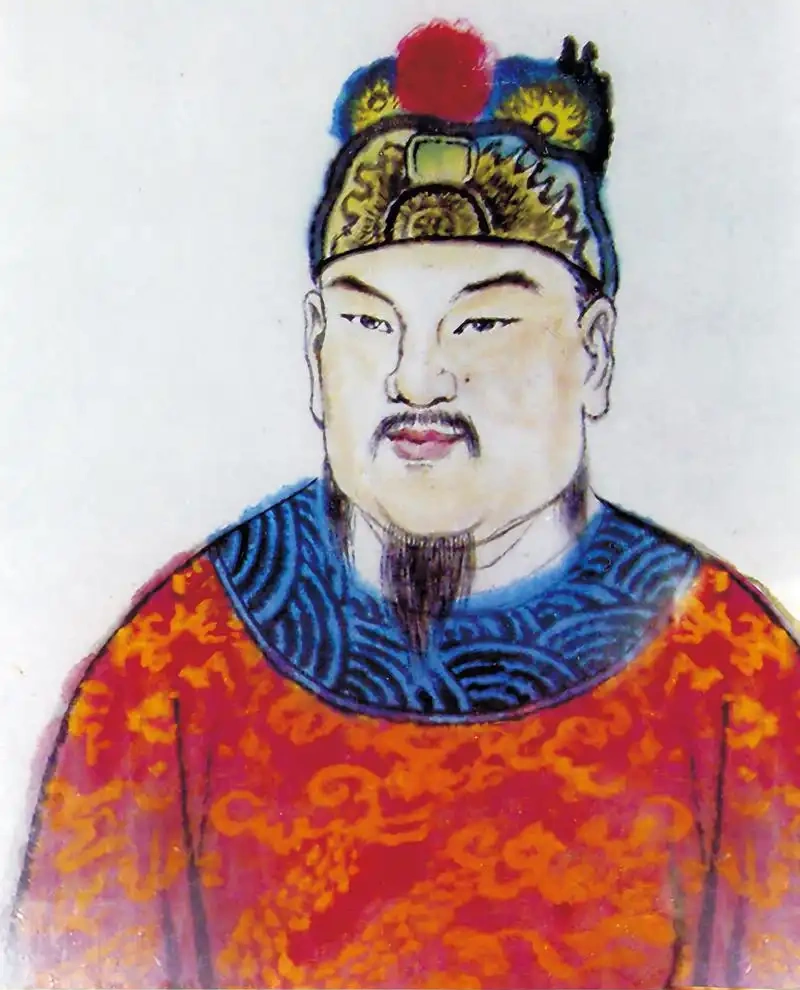
In the ninth month of 189 a general from the north-west took a nine-year-old boy out of the palace he had just seized and set him on the throne of the Han. The boy had been a prince for five months, first of Bohai and then of Chenliu, and the reason he was chosen was recorded by the historians without euphemism: his mother was dead, his protectors were dead, he was reputed to be clever, and the dowager under whose care he had been raised bore the same surname as the general himself. He reigned thirty-one years. For the first seven he was the prize of the armies that fought over the capital; for the twenty-four that followed he was the single most valuable possession of the house of Cao. No emperor of the dynasty held the throne so long, and none decided so little. The history of his reign is not the history of what he did. It is the history of what was done with him, and of the slow invention of an institution: the emperor as an asset, to be captured, garrisoned, administered, and finally converted into a new dynasty.
The conversion was called the abdication of 220, and it was carried out with such care that it became the pattern every later usurper in China copied. What is easily missed is what survived it. The man himself lived fourteen years after the ceremony as the duke of Shanyang, kept the Han calendar and the Han rites in his own small state, and died in 234; and the name he carried, which had bought him nothing, went on being worth something for two centuries after his death. It bought a throne in Chengdu in 221 and a state for the Xiongnu in 304, and by 420 it was worth so much that a founder of imperial Han blood preferred to invent a different dynastic name rather than reuse it. This account follows both halves of that story: how a dynasty was taken out of the hands of a man who still wore its crown, and what the crown was worth once it had been taken.
1. The Prince of Chenliu
He was born in 181, the second son of the emperor Ling, and his mother was a Lady Wang of the palace, a woman of no family. The History of the Later Han records her death in a single clause: she was poisoned by the empress He. The emperor, who had just been given the son he wanted, was angry enough to depose the empress, and the eunuchs talked him out of it, and the matter ended there. What the clause cost the boy is the whole of his early life. His mother died while he was still an infant; his father was a sovereign who could not protect one concubine against another; and he was handed over to his grandmother, the empress dowager Dong, the mother of the reigning emperor, who brought him up in her own apartments, away from the empress's quarter. Because of this he was known in the palace as the marquis of Dong, after the dowager rather than after his father, and the name followed him to the throne.
He grew up in a court that had spent fifteen years learning that the throne was a piece of property. The empress dowager Dong was one of the factional heads of the inner palace, the family of the empress He was another, and the eunuchs who had killed the empress's rival and saved her from deposition were a third. The emperor Ling died in the fourth month of 189, and the young Liu Bian was set on the throne with his mother's family behind him. The boy Liu Xie was made a prince of Bohai, and within weeks he was moved to Chenliu, a principality closer to the capital, which is the kind of detail that shows how little these arrangements had to do with the boys themselves. The empress dowager Dong died in the same year, and the prince of Chenliu was left with no protectors at all.
That was precisely his value. In the late summer of 189 the general Dong Zhuo came into Luoyang with the troops he had brought from the north-west, and in the ninth month he acted. With an edict extorted from the empress dowager he deposed the elder boy and set the prince of Chenliu in his place. The History of the Later Han keeps the reason in the life of Dong Zhuo: the general judged the younger boy to be the abler, and he had been brought up by the empress dowager Dong, and Dong Zhuo claimed kinship with her house, so that the choice would look like a family restoration. On the day jiaxu of the ninth month the prince of Chenliu took the throne at the age of nine. In the same days the empress dowager He was set aside and killed on Dong Zhuo's order; and the court that had made those changes in the spring was swept aside.
The first appointments of the new reign show what the arrangement was. A senior minister of good name, Liu Yu, was made grand marshal, the kind of office a usurper confers to borrow respectability; Dong Zhuo took the grand commandancy for himself, with the executioner's axe and the tiger champions as its insignia; and the offices the eunuchs had filled were rebuilt on a new basis, the numbers of palace attendants and supervising secretaries fixed at six each, and one man from each family of the officials made a gentleman-of-the-palace to serve at the palace gates in place of the eunuchs. Envoys were sent to mourn at the graves of the grand tutor Chen Fan and the general-in-chief Dou Wu, the victims of an earlier generation of eunuchs, a gesture toward the party of the officials. In the eleventh month Dong Zhuo made himself chancellor of state, an office above the chancellorship. The tenth month saw the burial of the late empress, and a raid by the White Bandits into Hedong that Dong Zhuo's general Niu Fu drove off, the same bandits who would be the emperor's escort six years later. The year closed with an edict that is one of the small jokes of the record: the court abolished the commandant of Fufeng and set up a protector-general for the peace of the Han, and then abolished the three era names of 189 and went back to calling the year the sixth of Zhongping, as though nothing had happened.
Everything that followed was prepared in those weeks. A general had deposed one emperor and made another, in the capital, without a battle, and the only part the court took was to sign. The child who was chosen for having no faction would spend the rest of his life being chosen for that same reason by men with more armies, and the name Han, which he carried, would be the one thing in the transaction that could not be replaced.
2. The General from Liangzhou
The answer came from the provinces. In the first month of 190 the commanderies east of the mountains rose against Dong Zhuo. The coalition that formed is usually remembered by its leaders: Yuan Shao of Bohai as chief of the alliance, Wang Kuang of Henei, Zhang Miao of Chenliu and his brother Zhang Chao of Guangling, Han Fu of Ji province, Liu Dai of Yan, Qiao Mao of Dongjun, Kong Zhou of Yu, and Cao Cao with a campaigning commission, encamped at Suanzao, a few days' march from the capital, with Yuan Shu coming up from the south under the title of general of the rear. Its battle record was thin. Cao Cao, urging that the armies move against Dong Zhuo instead of waiting at Suanzao, went west with a small force and was badly beaten by the general Xu Rong at the Bian river, and came back with an arrow in him. In the sixth month Dong Zhuo sent five officers of his court east to make peace with the coalition, the grand usher Han Rong, the privy treasurer Yin Xiu, the bearer of the gilded staff Hu Ban, the court architect Wu Xiu and the colonel of the Yue cavalry Wang Gui; Yuan Shu and Wang Kuang seized them and killed them, and only Han Rong got away. The coalition's real achievement was to frighten the general, and what the frightened general did to the dynasty was worse than anything an army could have done to him.
In the second month the old court was pruned: the grand commandant Huang Wan and the excellency over the masses Yang Biao were dismissed, and two officers who had opposed the general, Wu Qiong, commandant of the gates, and Zhou Bi, colonel of the supervising army, were executed. Then Dong Zhuo decided to move the court to Chang'an. The annals record the decision in one line and its consequences in the next: the whole population of Luoyang was driven west into the pass, the palaces and the dwellings were set on fire, and the general himself stayed behind to hold the Bijgui park with his army. On the day dinghai of the second month the ten-year-old emperor was sent on the road; a white rainbow crossed the sun, and the record puts the portent down among the promotions. He reached Chang'an in the third month and was installed in the Weiyang palace, and in the same month Dong Zhuo's men burned what was left of Luoyang, the temples of the dynasty and the houses of the people alike. The Yuan family of Runan, uncles of the coalition's leader, were arrested in the capital and exterminated with their clans. The general also destroyed the five-zhu coin and issued small coins in its place, which made goods dear and ruined the poor, and did not trouble the man who had a citadel of his own. The History of the Later Han counts the people driven west at several million: men and women on foot and in carts, pressed by the cavalry, trampling one another, starving and plundered, the dead filling the road. In the eleventh month three of the planets met in the lunar mansion of the Tail, and the record wrote that down too.
For that citadel was built in the same months: a fortress at Mei, west of the capital, with walls seven zhang high and as many thick, which he called the Eternal Citadel, with grain stored for thirty years. It is the clearest statement of what he intended. The dynasty was to be preserved in a jar, and the jar was his. For the boy, the year of the burning was a year of travel from one of the general's camps to another; the coalition, for its part, did not come. It quarreled and dissolved, its members went back to their provinces to fight each other, and in the last month of the year the court did something that no army could have done to it: the secretariat proposed, and the emperor approved, that the four emperors He, An, Shun and Huan had had no virtue and should no longer be called by their temple names, and that three women of the late reigns who had been honored after death as empresses had not been principal wives and should no longer be called empress. The dynasty, in the year of its rescue, was being quietly abolished by its own officers.
In the second month of 191 Dong Zhuo promoted himself to grand preceptor, the highest title of the dynasty, still issued in the name of the boy emperor and announced to the empire as the wish of the throne. That was the season of the one sharp defeat his armies suffered. Sun Jian, the administrator of Changsha who had killed two governors on the road north, broke the Liangzhou army at Yangren and beheaded its commander Hua Xiong; the annals of Emperor Xian place that battle in 191, the Zizhi Tongjian puts it in the closing weeks of 190, and either way it was the one defeat the Liangzhou army suffered in the field, fought by men claiming to rescue an emperor two hundred miles away who never learned their names. In the same months Dong Zhuo's men opened the tombs of the Eastern Han emperors at Luoyang for their contents; in the fourth month the general came into Chang'an himself, leaving his citadel at Mei behind him; in the ninth month the banner of Chiyou appeared in the lunar mansions of the Horn and the Neck, and the record wrote that down too; and in the tenth month he killed the former grand commandant Zhang Wen, who had once commanded the armies against the Qiang and had never made much of the young general who served under him.
3. The Death of Dong Zhuo
Dong Zhuo's end came from inside his own household. The plot was made by Wang Yun, the excellency over the masses, the most respected official of the old court, and by Lü Bu, the general's own guard commander and the best soldier in the army. The breach was personal; the Records of the Three Kingdoms says Lü Bu had been afraid of discovery in an affair with one of Dong Zhuo's serving women, and Wang Yun, who needed a soldier with access to the general's person, took the man he found. In the fourth month of 192, as Dong Zhuo was on his way to the morning audience, his carriage was stopped at the north gate of the palace by a band of men dressed as guards; Lü Bu's halberd did the work, and the body was left in the market place. It is recorded that Dong Zhuo had been a fat man, and that the warders who kept the corpse lit a lamp in his navel, and that the lamp burned till dawn.
For a few weeks it looked as though the dynasty had been restored. Wang Yun took over the government as the conductor of the affairs of the secretariat; the general's whole family was exterminated; amnesties were issued; and the old general Huangfu Song, who had broken the Yellow Turbans a generation earlier, was made general of chariots and cavalry, a figurehead for the restoration. His figurehead career lasted seven months: general of chariots and cavalry in the fifth month, grand commandant in the eighth, dismissed in the twelfth. The restoration also destroyed the man who was writing the history of the dynasty. Cai Yong, the most learned scholar at the court, begged only to be branded and crippled so that he could finish his history of the Han; Wang Yun refused, on the ground that the emperor Wu's failure to kill Sima Qian had left a slanderous book circulating into later ages, and Cai Yong died in prison. Then came the mistake that finished it. Wang Yun refused to pardon the Liangzhou armies that Dong Zhuo had commanded, and meant to disarm them, and for a few weeks he very nearly did. It was Jia Xu who argued them out of dispersal. The court in Chang'an, he told them, was debating whether to exterminate the men of Liangzhou; soldiers who threw away their armies and went home would be caught one by one, and the first district officer on the road could tie them up. Their only chance was to turn back and attack, in the name of avenging their dead minister.
They did. In the sixth month of 192 the armies of Li Jue, Guo Si, Fan Chou and Zhang Ji, the commanders Dong Zhuo had trained, came back to Chang'an, stormed the city, and killed the officials who tried to hold the gates; the record says more than ten thousand of the city's people died in the fighting, and among the dead were the chamberlain for ceremonies Zhong Fu, the grand coachman Lu Xu, the grand usher Zhou Huan, the commandant of the gates Cui Lie and the colonel of the Yue cavalry Wang Qi. Wang Yun was executed and his family exterminated. Lü Bu got out of the city with a small escort and was soon fighting his own war in the north, which belongs to another history. The emperor, who had been nine when Dong Zhuo chose him, was twelve when the general died, and the only change in his position was the number of his keepers. By the autumn the four generals had shared out the offices of state among themselves, each promoting the others by edicts the emperor signed: Li Jue took the generalship of chariots and cavalry, Guo Si that of the rear, Fan Chou that of the right, Zhang Ji that of the east. The court that had governed an empire for two centuries was now a prize held by four soldiers in a burned capital, and the emperor was the certificate of their rank.
4. The Prisoners of Chang'an
For the next two years the annals of the reign read like the record of a kidnapping. The emperor tried, twice, to get word out. He sent his palace attendant Liu He, the son of the grand marshal Liu Yu, secretly out of the city to ask his father's army to come and take him home; Yuan Shu, who wanted Liu Yu's army for himself, held the young man and sent his own envoys instead, and the rescue never came. The History of the Later Han records the failure without lament; it is one entry among the portents and the promotions. And the rescue was never going to come: in the same year Yuan Shu killed the inspector of Yang province and took Huainan for himself, Mount Hua split open in the summer, a bandit in Xiapi named himself emperor, and in the winter Gongsun Zan killed Liu Yu. The army of the north-east ceased to exist, and with it the last hope of the court.
What the emperor could do, he did, and the annals let him do it. In the autumn of 193 the court examined more than forty Confucian scholars: the best were made gentlemen-of-the-palace, the next attendants of the heir apparent, and the failures were sent back to their farms, and the edict that accompanied the examination quoted Confucius on the neglect of learning and said that the emperor pitied the old scholars who had left their homes in search of food and could never practice their profession. In the tenth month the university performed its rites, and the emperor drove to the Yongfu gate to watch them, and gave gifts to the doctors of learning and their subordinates. In 194 he was capped at fourteen, which is to say he was declared a man, and in the same year he gave his dead mother the title of empress Linghuai and had her reburied in the Wenzhao tomb, and he plowed the sacred field with his own hands. The annals of that year also record Han Sui and Ma Teng fighting Guo Si and Fan Chou at Changpingguan and being defeated, with Liu Fan, a gentleman of the palace of the left, and Zhong Shao, onetime inspector of Yi province, among the dead; and in the autumn the Qiang of Zuopingyi revolted and raided the commandery's counties, and the same two generals who were supposed to be the emperor's keepers took the field against them. None of these acts required anyone's permission, because none of them threatened anyone, and the court recorded them without comment, because they were what an emperor did.
Then the famine came, and the annals preserve the one episode of the reign in which the emperor's own hand can be seen. The three metropolitan commanderies had had no rain since the spring of 194. By the autumn a hu of grain cost five hundred thousand cash and a hu of beans or wheat two hundred thousand, people were eating one another, and the roads were white with unburied bones. The emperor sent the palace censor Hou Wen out with the grain of the imperial granaries to make porridge for the starving, and the number of dead did not go down. The emperor suspected the relief was being stolen, and he did an extraordinary thing: he had the porridge made in his presence and measured it himself, and the fraud was proved. The ministers above the masters of writing came to the secretariat to apologize, Hou Wen was taken for examination, and the edict that followed said that the emperor could not bear to put him to death and would have him beaten fifty strokes. After that, the record says, more of the starving were saved. The same year had its catalogue of wonders: the locusts, the eclipsed sun before which the emperor avoided the proper hall and stopped the business of government for five days, and the mulberry trees that bore fruit a second time in the autumn, so that the people had something to eat. The court went on with its paperwork: the four commanderies west of the river in Liang province were made into a new province of Yong, an administrative answer to a lost west, and at the year's end Anding and Fufeng were split off to make a new commandery of Xinping.
It is the whole of his power in one anecdote. He could detect a cheat and order fifty strokes, and no more; the granaries were his, the famine was his, and the remedy was a clerk's dishonesty. The same year his keepers began killing each other. In the second month of 195 Li Jue murdered Fan Chou, and the alliance of four became a war of three. Guo Si, suspecting Li Jue of designs on him, attacked him in the city; in the third month Li Jue forced the emperor into his own camp and burned the palace buildings to cover the move, his nephew Li Xian surrounding the palace with several thousand men and bringing three carriages for the transfer, and the grand commandant Yang Biao telling the nephew that no sovereign in history had ever been lodged in a subject's house and being answered that the plan was settled; the palace treasures, the carriages and the robes were sent to Li Jue's camp first, and then the palace buildings, the offices of government and the houses of the people went up in flame. Yang Biao and the excellency of works Zhang Xi were sent with more than ten others to make peace between the two, and Guo Si refused to receive them and kept the officials as hostages in his camp. Yang Biao told Guo Si to his face that one of them was holding the emperor and the other the officials, and asked whether that was a workable arrangement; Guo Si flew at him and would have cut him down with his own hand, and Yang Biao said that if Guo Si did not serve the state he himself had no wish to live, and the bystanders talked Guo Si out of it. In the fourth month Guo Si's men fought Li Jue's, and arrows fell at the emperor's seat, and that day the emperor was moved again, to the northern fortress; the note taken at the time says the crossbows fired together and the arrows came down like rain on the curtain of the high building where the emperor had stopped, that a stray arrow struck Li Jue in the left ear, and that when Li Jue's men came to move him to the northern fortress the emperor refused and had to be forced. In the same fourth month, in the middle of all this, the girl who had been his consort was made empress: a daughter of the house of Fu of Dongwu, a family of scholars since the Former Han, whose father was the bearer of the gilded staff and the husband of a princess of the late emperor Huan's line, so that the installation was a gesture of continuity with the dynasty that had been. In the fifth month Li Jue promoted himself to grand marshal; in the sixth Zhang Ji came from Shan to make peace between the two, and for a few weeks there was peace. The court still performed its rites. The emperor slept in three different palaces in two months, all of them chosen by other men.
5. The Road East
Before the column moved there had been one attempt at peace. The emperor sent his usher Huangfu Li to reason with the two generals; Guo Si agreed to make peace, and Li Jue refused, saying that Guo Si was nothing but a horse thief, that he meant to destroy him, and that Guo Si had besides seized the officials of the court as hostages. The mission failed. In the seventh month of 195 the emperor left Chang'an, and the annals record the departure on the day jiazi of the seventh month, without explanation, as though a decision had been taken by someone. The escort was composed of the generals who had agreed to share him: Yang Feng as general of righteousness, Dong Cheng as general of pacification, Yang Ding as general of the rear, with Zhang Ji, now general of agile cavalry, returning to camp at Shan. A month later the column was at Xinfeng, and there the war began again.
What followed is the low point of the dynasty, and the annals of Emperor Xian are the only place it is told in order. In the tenth month Guo Si's officer Wu Xi burned the schoolhouse where the emperor was staying, in an attempt to force him back; Yang Ding and Yang Feng broke that attack, and the emperor moved on to Huayin, where he slept in the open by the roadside, because there were no houses left. That night a red vapour crossed the Purple Palace, six or seven feet across by one account, and the record, which is a chronicle and not a commentary, simply puts it down. In the eleventh month Li Jue and Guo Si came after him together and caught the column at Dongjian, and the imperial army was defeated, and the dead on the emperor's side included the superintendent of the palace, the commandant of the guards, the commandant of justice, the empress's steward, the colonel of the foot soldiers, a palace attendant and a colonel of the archers, seven named officers of the court. The emperor was moved to Caoyang and slept in the fields. It was Yang Feng and Dong Cheng who saved him, and they did it by hiring bandits: the White Wave leaders Hu Cai, Li Le and Han Xian, and the Xiongnu left worthy-king Qubi, came with their men and fought Li Jue's army off. In the twelfth month the pursuers came again and the imperial army was destroyed a second time; the palace women were killed and carried off; the empress's brother led her by the arm with ten bolts of silk in his hand; the privy treasurer and the minister of agriculture died in the field; and the party got to Shan, crossed the river at night, and in the last days of the year reached Anyi in Hedong.
There, in a borrowed town in the north-west, the court spent the winter and performed the sacrifice to heaven in the first month of 196, and changed the era name to Jian'an, the Beginning of Peace, which was to last twenty-five years and to become the name by which the whole period is known. In the summer the emperor moved to Wenxi, and in the seventh month the column reached Luoyang. What it found is recorded in a passage that has no parallel in the histories of the dynasty. The palaces were burned to the ground. The court sacrificed to heaven on the outskirts and visited the ancestral temple, and in the eighth month the emperor took up residence in the Yang'an hall of the Southern Palace, one of the few buildings left standing; otherwise he was housed in the residence of Zhao Zhong, a eunuch of the inner palace dead some years before. The officials made their shelters among thorns and broken walls. The provinces held their armies and sent no supplies. The gentlemen of the secretariat and their subordinates went out to gather wild grass seeds for food, and some of them starved to death against a wall, and some were killed by the soldiers who were supposed to be guarding them.
The city was held by the generals of the escort, and they were quarreling: Zhang Yang as grand marshal, Han Xian as general-in-chief, Yang Feng as general of chariots and cavalry, each with his own camp, each unwilling to yield the emperor to the others. In the second month of the year, while the court was still on the road, Han Xian attacked Dong Cheng, one of the men who had saved the emperor; and in the eighth month, when the court was among the ruins of his capital, Cao Cao arrived from the east, holding the title of general who pacifies the east. He had sent the general Cao Hong west earlier in the year to meet the emperor, and the generals of the escort had blocked the road and turned him back; the second attempt was made in person. He took the office of colonel director of the retainers and the conduct of the affairs of the secretariat, executed the palace attendant Tai Chong and the master of writing Feng Shuo, confirmed the officers of the escort in their ranks, enfeoffed Fu Wan and twelve others as marquises, and had the dead colonel of the archers of Dongjian posthumously made administrator of Hongnong, which was the only kind of reward left to the throne to give. A few days later the emperor paid a visit to his camp, the first of many such visits. In the autumn the grand commandant Yang Biao and the excellency of works Zhang Xi, the last of the old three excellencies, were dismissed, and the secretariat was refilled. In the last month of the year, when the court had been moved to Xu, Cao Cao took the office of excellency of works with the conduct of the generalship of chariots and cavalry, and the phrase the annals use is that all the officials conducted affairs for him to hear. The emperor was sixteen. He had been sixteen months on the road from Chang'an, and the road had ended inside another man's establishment.
6. The Court at Xu
The move to Xu was decided by Dong Zhao, one of Cao Cao's advisers, and its logic was simple: Xu was Cao Cao's own base, and an emperor kept inside a general's base is an emperor the general does not have to fight for. Dong Zhao's counsel was that Luoyang was a ruin held by quarreling armies, and that an emperor who stayed there would remain the prize of whoever was strongest in the street; Xu had walls, grain, and no rival claimants inside it. The arrangements of 196 built the institution that later ages would sum up in a four-character phrase, holding the Son of Heaven in order to command the princes. That phrase is a later summary and not the language of the time. The men who proposed and defended the arrangement used a different vocabulary. Xun Yu, who had argued for bringing the emperor to Xu and was now made master of writing, with the business of the secretariat running through him, put it as serving the sovereign and following the expectation of the people; Mao Jie, in the same years, put it as honoring the Son of Heaven so that men would look to him, and putting the land under cultivation so that the army would have its supplies. The difference is not hypocrisy. It is the difference between a claim made in the idiom of loyalty and a description made after the fact by people watching what the claim had become.
What the institution actually consisted of can be listed. The emperor was housed in Xu, a walled town in Yingchuan, with a restored secretariat and a court of the old form. Cao Cao held the conduct of the secretariat and then the excellency of works, which put every memorial and every appointment through his hands; the phrase used of him is that the officials of all ranks conducted the business of the state for his decision. The army was fed by the colony farms opened at Xu in the same year, on the proposal of Zao Zhi and Han Hao, soldiers and settlers farming the land around the capital in exchange for their rations, credited in the Records with a million hu of grain in the first year, the first piece of economic legislation in thirty years that worked, and it worked because the emperor's name made the land and the soldiers legally part of the same establishment. The emperor's own functions continued, and their smallness is the measure of the change: he received the envoys, he issued the amnesties, he changed the era name, he worshipped at the ancestral temple, he enfeoffed his sons, and on the day of an eclipse in 200 he ordered the three excellencies and the nine ministers to recommend men of filial conduct and to speak their minds without reserve, which is exactly what a Han emperor was supposed to do and exactly what a Han emperor had always been able to make matter. Some of it still mattered: the recommendation of the worthy, the pardon, the patent of nobility, the commission, all of it now bore Cao Cao's choice before it bore the emperor's seal. In 203 the three excellencies and the nine ministers for the first time welcomed the winter at the northern altar, the eight-row dance was restored in the music office, and the office of rectifier was created to supervise the capital officials; it was the rites of a dynasty that still had a calendar to keep. The town itself kept its old name through his lifetime; the new dynasty renamed it Xuchang, the Xu that flourishes, in 221.
And the name, which the institution traded on, was already being debased by everyone. In the spring of 197 the annals record in a single line that Yuan Shu named himself emperor at Shouchun and gave his house the title Zhongjia, the Second Succession; in the third month of the same year they record in another line that Yuan Shao took the title of general-in-chief for himself; and in the same year they record, in the same flat tone, that Yuan Shu killed the king of Chen, a prince of the imperial house. None of the self-made emperors had asked the court at Xu, and none needed to. In the same season Sun Ce sent envoys with tribute from the south-east, and the annals record that too, as though receiving tribute and being ignored by self-made emperors were the same kind of event; the same year they record the locusts, the Han river in flood, and a famine in which the people of the Huai and the Yangzi ate one another. Yuan Shu died in 199, a broken man in Huainan, and his empire of Shouchun left no trace. In 198 the court sent an usher with the general Duan Wei to destroy Li Jue, the last of the four generals of 192, and his three families; the last of the men who had held the emperor in Chang'an was cut off by an edict from the court he had held. In the same year Zhang Yang, the last of the generals of the escort to hold a great title, was murdered by his own officer, and in the last month of that year the annals record in one line that Cao Cao attacked Lü Bu in Xu province and beheaded him. In 206 the annals record the abolition of the kingdoms of Qi, Beihai, Fuling, Xiapi, Changshan, Ganling, Jibei and Pingyuan, eight of the Han kingdoms, and the reduction of the imperial clan. A name that could be assumed by any commander, spent on any assassin, and bought by any envoy was a name whose price was falling, and the only buyer with the capital to corner the market was the man who kept the bearer of it. The dynasty was being quietly wound up around the emperor while he signed the papers.
7. The Edict in the Belt
In the first month of 200 the plot was discovered. The annals of the reign say it plainly, in the style of a court gazette: the general of chariots and cavalry Dong Cheng, with Wang Fu and Zhong Ji, had received a secret edict and meant to kill Cao Cao; the business leaked; and Cao Cao killed Dong Cheng and the rest and exterminated their three families. Dong Cheng was a relation of the imperial house and the man whose daughter had been made a consort of the emperor, and his own career is the arithmetic of the arrangement: general of the guards in 196, general of the restoration in the same year, general of chariots and cavalry in 199, the highest military office of the empire, and in the first month of 200 the man holding it was executed with his family. The Records of the Three Kingdoms, in the life of Liu Bei, preserves the form the edict took and the names of those it bound together. What the later romance made of it belongs to the novel. What is not invention is the fact that the conspirators held an edict of the emperor, and that the annals of his own reign do not hide it.
The punishment went past the plotters. Dong Cheng's daughter was a consort of the emperor and pregnant, and the emperor begged for her life more than once, and could not get it; she was executed. It is the second time in his life that the court had killed a woman of the inner palace in front of him and he had been unable to prevent it; the first had been his mother. His empress Fu, who had watched the case, wrote to her father Fu Wan about the general's violence and asked him to plan something, and Fu Wan did not dare, and the letter stayed in a box for fourteen years. Among the officers named in the accused was Liu Bei, who had left the capital weeks earlier on a commission of Cao Cao's own and was raising his own army in Xu province when the business broke; his part of the story belongs to another history, and only the consequence matters here, which is that the emperor's attempt to find a rescuer in the provinces produced, that same year, one more armed claimant to the Han's inheritance. In the seventh month of the same year the emperor's son Feng was made king of Nanyang, and he died within the month. The annals of the reign, in the same flat year, record the death of Sun Ce in the south-east and the succession of his brother.
In the autumn of 200 the two armies that decided the north met at Guandu, a plain a few days' march from Xu. The annals of the reign record the outcome in a single line: Cao Cao fought Yuan Shao at Guandu, and Yuan Shao was defeated and fled. The year before, Yuan Shao had taken Gongsun Zan at Yijing, and the last of the great provincial commands of the north was gone; two men were left. Yuan Shao had been urged by his advisers, years earlier, to fetch the emperor to his own camp before anyone else did, and had hesitated; by 200 the hesitation had been resolved for him. For the months of the campaign the emperor was at Xu, inside Cao Cao's lines; the city was the thing Yuan Shao wanted, and the emperor was the thing inside it. For the emperor, the meaning of Guandu is not tactical. It was the removal of the only power in the empire that could have taken him out of Cao Cao's hands, and it turned the custody of 196 into a permanent arrangement. Yuan Shao died in 202, his sons were destroyed one after another, Yuan Tan in 205 and the Wuhuan at Liucheng in 207, and the conquest of the north was conducted, battle by battle, in the name of the emperor who watched it from Xu. From that autumn the emperor's person and the winning side were the same thing, and every later claimant to the Han inheritance, Liu Bei in the west and Sun Quan in the south-east, would have to conduct his politics on the understanding that the emperor's name had only one keeper.
8. The Chancellor and the Empire
The next stage was formal. In the sixth month of 208 the offices of the three excellencies were abolished and the chancellorship was restored above them, and in the same month Cao Cao made himself chancellor. It is worth pausing on the date. The three excellencies had been the highest offices of the Han for two centuries; they were not reformed or reduced, they were abolished, and an office that outranked them was created for one man, who appointed himself to it in the reign of the emperor whose authority he was using. In the seventh month he marched south against Jing province; in the eighth the governor Liu Biao died, and his younger son Liu Cong surrendered the province, and the restored office of imperial counselor went in the same month to Xi Lü, an officer who would be sent for the empress's seal six years later. That autumn the scholar Kong Rong, the most celebrated writer attached to the court and a descendant of Confucius twenty generations removed, was executed with his family for opposing him. The court's voice was being removed at the same time as its constitution.
Then came the war that fixed the shape of the empire. In the tenth month Cao Cao took his fleet against Sun Quan in the south-east, and Sun Quan's general Zhou Yu defeated him at Wulin and Red Cliff. The annals of the emperor give the battle a single line, which is the correct weight for a reign in which the emperor was a spectator. What mattered to the court was not the tactics of the river but the settlement that followed it: the province was divided between the allies who had won it, the north was secured behind Cao Cao's lines, and for the first time in twenty years there were three powers in the empire, none of which could destroy the others. The emperor at Xu was now the name all three had to deal with, and only one of them held him. In the years after Red Cliff the annals grow thin. An eclipse, an earthquake in Jing, a famine elsewhere; and in the ninth month of 211, in one line, Cao Cao fought Han Sui and Ma Chao at Weinan and defeated them, and the west was pacified. The coalition they led had been ten armies raised in the north-west, and its defeat closed the last region where troops could be gathered against him; Ma Chao, driven out, took Liang province in 212 and killed its inspector, and the west burned for another year. The court at Xu did not move, and did not need to. The wars were being fought in its name, and it was being carried along inside the victor's baggage.
9. The Duke and the Empress
In 212 the court granted Cao Cao the three privileges that the dynasty had once granted to Xiao He: to be announced at audience without his name, not to hasten his step, and to enter the presence wearing his sword and his shoes. In the fifth month the general Ma Teng, who had been brought into a palace office in the capital and so separated from his son, was executed with his family; his son Ma Chao, already in revolt, killed the inspector of Liang province. In the autumn the emperor's four sons were made kings, Xi of Jiyin, Yi of Shanyang, Miao of Jibei and Dun of Donghai, the last grants of the kind the dynasty would make, and one of them took the title of Shanyang, which was the title the emperor himself would bear when he abdicated. In the same year Xun Yu died at Shouchun. Xun Yu was the man who had proposed bringing the emperor to Xu in 196, the architect of the arrangement; he had opposed the next promotion, and he died in the autumn, and the records differ over how. The annals of the Cao house say he died of grief. A later note, the Wei's Spring and Autumn, says Cao Cao sent him a box, that he opened it and found it empty, and that he took poison. Both versions were preserved because both were believed, and between them they mark the end of the pretense that the court at Xu was a partner in the government. The news of his death reached Yi province, where Liu Bei said that while the old brigand lived the calamity would not end. From 212 the partnership was a service.
The service was formalized in the fifth month of 213, when the emperor sent his acting imperial counselor Xi Lü with the seal and the patents and made Cao Cao duke of Wei, with the nine distinctions: the chariot and the horses, the robes, the music and the dancers, the red door, the graded steps, the tiger champions, the axe of state, the bow and arrows, and the black-millet wine for the sacrifices. It came with a state of ten commanderies of Ji province, a capital at Ye, and chancellors and ministers of his own. A state within the state, with its own officials and its own heir's establishment, seated in the north-east; and the emperor signed the patents. In the first month of that year the court had restored the nine provinces of the Tribute of Yu, the geography of the classics, as though the empire were being mapped afresh, and the king of Zhao had been moved to Boling to make room for the new order. In the same year Cao Cao's three daughters, Cao Xian, Cao Jie and Cao Hua, entered the palace as ladies of the court, the youngest waiting until she was of age, and in 214 they were made his consorts. The emperor's own household was being filled with the daughters of the man who held him, which is the oldest device in this kind of transaction, and it worked.
It did not work on the empress. The Fu family had been cautious; Fu Wan, who had not dared to act on his daughter's letter, died in 209, and his son Fu Dian inherited his title, and the letter was not found until five years after that. In the eleventh month of 214 it was found. Cao Cao was enraged, and what followed was staged with the care of a legal procedure, which is what makes it horrible to read. He had the edict of deposition written in the emperor's name, charging the empress with hiding malice in her heart and unfitness to receive the mandate of heaven, reminding her that she had occupied the rear palace for twenty-four years without the virtue of the mothers of Wen and Wu, and congratulating itself that she had escaped examination; the imperial counselor Xi Lü was sent with the tally to take back her seal; the master of writing Hua Xin was sent as his second with troops into the palace to arrest her. She shut the door and hid in the wall of her chamber, and Hua Xin broke the door and dragged her out. She was taken past the outer hall with her hair loose and her feet bare, and the emperor was sitting there with Xi Lü, and she took his hand and asked whether he could not save her life, and he answered that he did not know when his own life would end, and turning to Xi Lü he asked whether this was the way of the world. The record keeps her weeping and his.
The end came on the day dingmao of that month, which by the Julian calendar falls in the first week of 215: Cao Cao killed the empress Fu, exterminated her clan and her two young sons, who were given poison; more than a hundred of the Fu family died, and her mother and eighteen others were sent into exile at Zhuo. One note says she was killed on the spot; the History of the Later Han says she was shut up and died. In the first month of 215 the emperor took a new empress: Cao Jie, the chancellor's daughter, and the edicts of that month gave every man in the empire a rank of nobility and gave grain to the kings, marquises and officials, which is what a Han emperor's first year of marriage was supposed to look like. In the tenth month of 214 the annals record that Cao Cao sent the general Xiahou Yuan to destroy Song Jian at Fuhan, and the west was finished. In the fifth month of 214, in the same year as the discovery of the letter, the annals had recorded, in the flat tone they use for the whole western enterprise, that Liu Bei broke Liu Zhang and held Yi province; and in Yi province, where Liu Bei was building his own claim on the same name, a public mourning was ordered for the dead empress, the first time her death was used as an argument in the west. In the autumn of 215 the annals record that Cao Cao broke Zhang Lu at Hanzhong, and the master of the five-pecks-of-rice church came under the chancellor's control.
10. The King of Wei
In the fourth month of 216 Cao Cao was made king of Wei. The emperor granted him the banners and the pennants of a Son of Heaven and the clearing of the road before him, the guard of honour that belonged to an emperor; and in the tenth month he granted him the crown with twelve strings of beads, the golden-rooted chariot drawn by six horses with the five seasonal carriages attending, and the appointment of Cao Pi, the leader of the gentlemen of the palace, as heir apparent of Wei. In the fifth month the court had founded a school at Ye, the rites of learning restored around the new king. Everything but the title now existed in duplicate: two chariots, two crowns, two sets of ancestral rites, and two heirs, one of them the son of a king and the other the son of an emperor. The emperor's own sons were still princes of Han. The pruning of the imperial clan went on quietly in the same years: the king of Langya, a descendant of the Guangwu line, was put to death on Cao Cao's order in 216 and his kingdom abolished, and the annals give no reason. In the seventh month the southern chanyu Huchuquan came to court, was kept at Ye, and his followers were divided into five divisions with Chinese officers set over them; the frontier policy of the dynasty was now the policy of one man.
Inside the walls there was one more attempt. In the first month of 218 the privy treasurer Geng Ji and Wei Huang, an officer of the chancellory, raised troops at Xu, fired the gates at night, and meant to kill Cao Cao; the rising was put down before morning, and their three families were exterminated. It was the last rising of the court. Outside the walls, the great powers now conducted their business through the emperor's seal, which was the only currency left. In 217 the annals record a great pestilence in the empire, and in the summer of that year Hua Xin, the officer who had dragged the empress from her hiding place, was made imperial counselor with the rank of military adviser to the chancellory. In 219 the annals record three lines that tell the whole story of the year: in the fifth month Liu Bei took Hanzhong; in the seventh month he named himself king of Hanzhong, a title the court at Xu did not confer and did not recognize; and in the eleventh month Sun Quan took Jing province. Sun Quan then did what the institution was for. He sent envoys to Cao Cao offering his submission and the tribute of the south, and Cao Cao recommended him to the throne for the offices that confirmed what he had taken, and the envoys presented the southern tribute at the court. The dynasty's remaining product was recognition. In the spring of 217 Sun Quan had already sent an officer to ask for terms, and the two powers had made a peace and talked of a marriage, which is what a border between two claimants looks like when neither can afford to destroy the other.
In the first month of 220 Cao Cao died at Luoyang, and his son Cao Pi succeeded him as chancellor and king of Wei. In the third month the era name was changed to Yankang, the Peace of Extension. The machinery was now complete, and it only remained to work.
11. The Altar at Fanyang
The abdication of 220 was staged as a constitutional act, and the record of it is the most elaborate surviving account of any transfer of the throne in Chinese history. In the tenth month, on the day yimao, the emperor went to the temple of the Han founder and announced that he was yielding the throne; the acting imperial counselor Zhang Yin was sent with the seal and the patents. The text of the patent was written in the language of the classics, and it is worth quoting because the emperor signed it: the command of heaven, it said, does not rest forever in one house, it goes only to the virtuous; the way of Han had long been in decline, order had been lost, and the disorder had come down to his own person; his house had been preserved by the martial merit of the late king, and now the virtue of his son was manifest, and he would follow the example of Yao and yield to him.
What followed was a negotiation in public. Cao Cao's officers and Cao Cao's officials, from the officer Li Fu who first produced the prophecy to the forty-six officers whose memorial was carved in stone at Fanyang and the hundred and twenty who sent memorials of their own after them, pressed the king to accept; the chancellory produced the prophetic texts, the matching portents and the calculations of the astronomers, in which the transfer to a house named Cao had been foretold, and it was the standard apparatus of an accession, produced in volume. The Records preserves the whole file, a score of memorials and refusals between them. The emperor issued his abdication four times. Cao Pi refused it three times. On the twenty-ninth day of the month a terrace of three tiers was built at Fanyang, a posting station in Yingchuan, and on it Cao Pi received the seal and ascended the imperial throne, and sacrificed to heaven and earth and the mountains and the rivers by burning, and changed the era to Huangchu, the Yellow Beginning, and proclaimed a general amnesty. The colour was chosen for a reason the chancellory published: the Han had belonged to the phase of fire, fire engenders earth, and the colour of earth is yellow. The terrace is described in the notes: the officers of the court, the marquises, the generals, the chanyu of the Xiongnu and the envoys of the four barbarians, several tens of thousands of men standing in attendance. When the ceremony was over Cao Pi turned to his ministers and said that he now understood the business of Shun and Yu. It is a remark that has been quoted ever since, and it is hard to say which is more depressing, that he said it or that he was right.
There were three versions of the dates in the histories, and the stele set up at Fanyang disagrees with both annals; the epigraphers of the Song, working from the order of the memorials and the calendar, concluded that the stele was right and both the histories wrong, and that the king had ascended the terrace on the twenty-ninth day of the tenth month. The dispute itself is part of the story. A transfer that had been negotiated to the last day produced a record so complicated that later scholars had to reconstruct it from a stone. The Qing historian Zhao Yi, reading the whole file of memorials and refusals, judged it all fraudulent, and added that it still preserved some trace of the old rite of yielding. Both judgments are true, and the ceremony's real achievement was to make the second one possible. What was invented at Fanyang outlived the dynasty that used it. Every later transfer of a throne in China worked the same machinery: the prophetic texts, the memorials of the officials, the refusals, the patent, the terrace, the fire. The Jin took Wei in this way in 265, and the Song took the Jin in 420, and the houses after them.
The terms were generous in the way that a creditor is generous to a debtor who can no longer pay. The emperor was made duke of Shanyang, with the revenue of ten thousand households, a seat above the kings of the empire, the right to report without calling himself a subject, the right to receive an edict without bowing, the use of the imperial chariot and robes in sacrificing to heaven and earth, and the rites of his ancestral temples and the seasonal offerings exactly as under the Han; his capital was the city of Zhuolu in Shanyang. He was to keep the Han calendar. His sons, who had been kings of Han, were reduced to marquises. In the eleventh month the new emperor ordered that the duke of Shanyang should conduct the calendar, the dress and the rites of his state according to the Han institutions, and said that he would serve the duke as Shun had served the heir of Yao.
There is a last scene, and it belongs to a different part of the record. When the envoys of Wei came for the imperial seal, the empress Cao Jie, the emperor's wife and the new emperor's sister, refused them again and again, and finally called them in and threw the seal on the ground and wept, and said that heaven did not give its blessing to them. The History of the Later Han keeps this in the lives of the empresses, while the annals of the Wei keep the version in which the seal came with the patents; both were written, both were believed, and between them they contain the whole truth of the transaction, that the form was impeccable and the substance was taken by force. In the same months the new emperor had his dead father given the imperial posthumous title and the temple name of Taizu, and his grandfather the posthumous title of emperor Tai. In the following year Liu Bei took the throne in Chengdu in the name of the Han, and Sun Quan was enfeoffed king of Wu by Cao Pi, and the empire was divided in three. The dynasty that had begun with a man refusing the throne four times ended with a man who was not asked.
12. The Guest of Shanyang
He was forty when he abdicated and fifty-four when he died, and the fourteen years between are almost blank in the standard histories, which is itself the verdict on the arrangement. He lived at Zhuolu in Shanyang, in what is now Xiuwu in Henan, inside the state he had been granted; he kept the Han calendar and the Han robes, sacrificed to heaven and to his ancestors with the rites of an emperor, and did not call himself a subject or bow to receive a decree. The new dynasty's language for him was the language of the classics. Cao Pi's order said the court would serve the duke of Shanyang as Shun had served the heir of Yao, and the state was to run on Han time; and when he died, the Wei emperor's edict of mourning spoke of his abdication as the deed of the sage Yao and his keeping of the Han rites in the little state as the conduct of Shun's heirs. The dynasty that had received the throne was still, fourteen years later, explaining why the throne had been received. There is no record of what he did with the days. Local tradition in the hills around Zhuolu later made him a physician who walked the villages treating the poor for nothing, and a patron of a rebuilt school; the tradition is late and detailed and unfalsifiable, and it is worth mentioning only because it shows what the people of that one small state chose to remember about a man the histories had nothing to say about. The novel that fixed his image for most readers, eleven centuries after his death, made him a weeping bystander to his own reign, which was unfair to the man and accurate about the position.
He died on the day gengyin of the third month of 234, in the second year of Qinglong of the Wei, at the age of fifty-four, fourteen years after the abdication. The Wei court mourned him with the full apparatus of a dynastic relationship. The emperor Cao Rui put off his embroidered robes and put on plain white, changed his dress and wept with his ministers, sent He Qia with the tally to offer the mourning sacrifice and Cui Lin to oversee the funeral, and in the fourth month ordered that the temple of his father be notified with the great sacrifice and that the duke of Shanyang be given back the posthumous title of the Filial Xian, emperor of the Han, and buried with the rites of Han. In the eighth month he was buried at Chanling, with the establishment of a park and a magistrate, in the ground north-west of Zhuolu; the tomb was two zhang high and two hundred paces around, the last of the imperial tombs of the dynasty. The dynasty that had taken his throne gave him back his name and buried him as its predecessor. It was the last installment of the contract of 220, and it was paid in full.
The state outlived the dynasty that had created it. His heir had died before him; the title passed to his grandson Liu Kang, who held the title for fifty-one years and died in 285, under the Jin; his son Liu Jin held it four years and died in 289; his son Liu Qiu held it twenty years and was killed in the disorders of the Yongjia era, and the state was abolished. The duchy of Shanyang, this last fragment of the Han, survived the Wei that had received the abdication by more than four decades.
And the name, which had bought its holder nothing, went on being bought. Liu Bei in Chengdu declared himself the continuation of the Han in 221, and the name was carried for another forty-two years, forty-one of them under his son, and every state paper issued in Chengdu in those years was issued in the name of the Han. In 304 the Xiongnu chief Liu Yuan raised a state under the name of Han, adopted the Han ancestors for his temples, and gave the Shu sovereign the posthumous title by which he is known; he took the imperial title in 308, and his state kept the Han name and the Han temples for fourteen years, and the middle north was ruled in that name. The name was still, eighty-four years after the abdication, worth an army. In 420 the founder of the Song, a man of the Liu blood, took a throne won by the sword and chose a dynastic name that was not Han, because the name had grown too large to be used twice. Two centuries after the abdication the name was still the most valuable thing in Chinese politics, and its last holder had spent his life as its custodian rather than its owner.
The historian Fan Ye, writing his life two centuries later, judged him in four lines. Xian was born in an unlucky time, he wrote, his person tossed with the calamity of the state; he closed our four hundred years, and remains forever a guest. And in his prose verdict: heaven had long been weary of the virtue of the Han; what blame attaches to the duke of Shanyang. He had begun from the tripod, the vessel that is small but heavy, the treasure of the spirits, not to be taken away; and now, he said, it is carried off by a runner, which is what the end of an era looks like. The blame is not his. The reign produced no monuments and no laws, because it was not a reign in the ordinary sense; it was the period in which the throne was successfully separated from power and preserved as a thing of value, and the man who carried it was consumed by the separation. What he was given at the end was the form of the thing he had carried: the calendar, the robes, the rites, the tomb, and the title of emperor returned to him by the house that had taken it. What he was not given, in thirty-one years, was a decision.