Home / Emperors / Sixteen Kingdoms
Emperor Wu of Cheng-Han
成汉武帝
Li Xiong, 274 – 334 · ruler of Cheng-Han
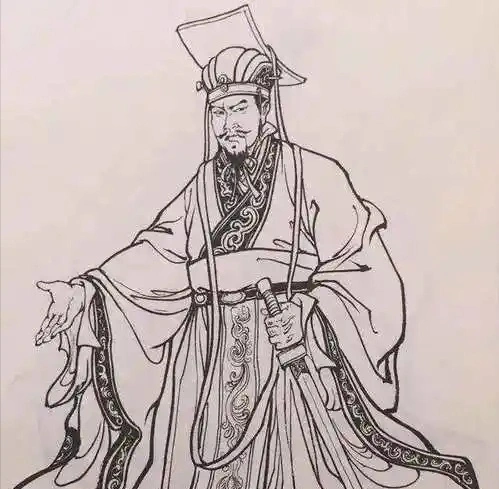
In the winter of 304 the army that had taken Chengdu was starving. The governor of Yi, Luo Shang, had left the city at night and gone down the river to Jiangyang; the officer he left in charge opened the gate to the besiegers. The victors entered a capital whose granaries were empty and whose people had fled east and south. They marched out to Qi, dug wild taro, and ate it. The man who had led them there, Li Xiong, was the son of a refugee leader and the nephew of the commander he had just succeeded. He had been at war for three years.
The sources begin his life before his birth, with his mother's dream of two rainbows, one of which broke; she is said to have told her household that if one of her two sons died, the other would be great. The elder, Li Dang, died in 303; the younger became king the next year. The story is an omen made after the event, but it states the family's arithmetic: the survivor inherited, and the inheritance was made of a death. It also states the problem of the state he founded. Cheng-Han was the only state of the fourth century founded in Sichuan, and the only one whose founding constituency was a movement of refugees. Its legitimacy did not come from a royal genealogy or from the conquest of an empire. It came from a narrower promise: that the people who had been driven off their land would be allowed to stay on someone else's, and would keep enough of the harvest to eat. The two books that preserve him, a regional history composed by one of his own officials and an official history written by the dynasty that replaced him, agree on the outline of the story and differ on what it was for. What follows is the story of how the promise was made, what it cost, and why it could not be inherited.
1. The Road Out of the Northwest
The drought began in the 290s and did not end. The official account of the famine is a list of prices and movements: grain sold at figures that no household could pay, people sold one another, and the roads filled with families who had left their fields before the fields were lost. The six commanderies of the northwest, Lüeyang, Tianshui, Fufeng, Shiping, Wudu and Yinping, were dry, poor and full of garrisons. Their farms were small, their harvests uncertain, and their taxes were assessed in grain and cloth, and the assessment did not fall when the harvest did. When the harvest failed, the choice was to stay and starve or to go south where the granaries were full. The first large columns crossed in 298. Several tens of thousands of households chose the south; one official estimate puts the movement above a hundred thousand persons. Both figures are round, and neither is a census.
The road went first into the Han River valley, then over the mountains and through the pass at Jiange into the plain of Shu. It was not a long road in miles and it was a long road in time. Families travelled with carts, donkeys and whatever grain they had not eaten; they arrived in a country of irrigated fields, mulberry trees and landlords who did not want them. The plain could feed them. That was the whole attraction. It was also the whole problem, because a plain that can feed a refugee can feed an army, and the men who governed the plain understood the difference.
The Li family came from the same road, only earlier. Their ancestors were Cong people of Dangqu in Ba, a group the sources describe as fierce and fond of the old cults. In the late second century, when Zhang Lu held Hanzhong and taught the people there a religion of healing and confession, the Cong listened to him. When Cao Cao took Hanzhong in 215, Li Xiong's great-grandfather Li Hu and several other leaders were moved north to Lüeyang, and the northerners called them Ba people. Li Xiong's grandfather Li Mu held a minor military title among the Eastern Qiang. The label "Ba Di" that the histories attach to the family joins a place to a category; it describes a following as much as a tribe. The religion stayed with them.
Li Te, Li Xiong's father, was the second of five brothers. The sources say that all five were sharp and strong and that men gathered to them. That is the language of personal following rather than of office. The Li were not a family of scholars with a pedigree in the capital; they were local leaders who could raise men, settle quarrels and speak for a crowd. When the refugees reached the Han River valley, they found the Li already there, with a name that the refugees knew. A leader of that kind does not need a genealogy. He needs a reputation, a store of grain and the ability to make a decision that a thousand households will accept.
In 300 the governor of Yi, Zhao Xin, decided that the collapse of the north gave him an opportunity. He enrolled the refugee leaders in his own service, then grew afraid of them and killed one of Li Te's brothers. Li Te took his people out of the city, raised them, and attacked. Zhao Xin's troops were defeated; Zhao Xin fled by boat and was killed by one of his own officers. The episode taught the refugees two things: that the provincial government was weaker than it looked, and that a leader who hesitated could be killed by the man he had invited in.
The court sent a new governor, Luo Shang, in 301. He arrived with an order that the refugees should return to their home commanderies. The order was not unreasonable on paper; a province cannot absorb a hundred thousand people without land, and the court wanted its taxpayers back. In practice it meant sending hungry families back to a famine. Luo Shang ordered them to set out in the seventh month. The administrator of Guanghan, Xin Ran, wanting their property, began killing the leaders of the columns and taking what they carried. Li Te petitioned for a delay and bribed Luo Shang for one. The bribe was accepted, but the pressure on the refugees did not stop. The refugees turned to Li Te, who divided them into two camps and prepared for war. The first battle was fought at Mianzhu. The rebellion began as a petition about a deadline.
This was not a rising of great families. The men in the camps were peasants, carters, small clerks, Cong and Di and Qiang herders, and traders who had lost their shops. Some of them had been registered households in the northwest; all of them were now unregistered in the south. Their first demand was not a throne but permission to stay where the food was. Li Te supplied the leadership, but the substance of the movement was a crowd of households that had been told to go home and had nowhere to go. That is why the state that eventually emerged was organized around households, grain and land rather than around offices, pedigrees and the examination of character. It had no aristocracy to reward and no bureaucracy to pay. It had people who needed fields.
The geography made the stakes simple. Shu is a basin ringed by mountains, with a few passes and a great deal of water. A power that holds Chengdu holds the surplus of the plain; a power that holds the passes can starve it. The refugees had come through the passes and had no way back. For three years the war was fought over the question of whether they would be sent home. After 304 it was fought over the question of who would rule the place where they had decided to stay.
2. Three Deaths
Li Te won battles. He took Guanghan, pressed on Chengdu, and beat back the first expeditions sent against him. He was also careless. In the second month of 303, Luo Shang's men caught his camp at Xinfan and killed him, together with one of his brothers and one of his officers. The head of the movement was gone in a morning. The refugees had a following, a name and a war, and no obvious successor.
The obvious successor was Li Dang, Li Te's eldest son. The sources describe him as a student of letters with a fine bearing, which in this family meant a man who could both read and fight. He took command of the retreat, then pursued the withdrawing Jin troops too far and was killed by a spear. He died in the third month, a month after his father. The family had now lost the man who, by the rules of the house, should have inherited the war. It had also acquired a debt. Every later claim inside the family would have to reckon with the fact that Li Dang had died in front of the others.
The command passed to Li Liu, Li Te's younger brother. Li Liu was cautious, and the summer of 303 gave him reasons to be. The court sent a relief army from Jingzhou under the governor Zong Dai, with Sun Fu as its forward commander; the Jingzhou troops broke the Li line at Deyang and pressed toward the plain. Li Liu lost his nerve and proposed to surrender. Li Xiong refused. While his uncle was negotiating, he took a small force, attacked Sun Fu's camp, and broke it. Zong Dai fell ill and died; the Jingzhou army withdrew. Li Liu, who had been ready to give up, handed the command to his nephew. The succession had passed sideways, to the eldest surviving brother, because the eldest son was dead.
Li Liu died in the ninth month of 304. Li Xiong took the title of grand commander, grand general and governor of Yi, and camped at Pi, a day's march west of Chengdu. Luo Shang attacked him and was beaten back. Li Xiong's youngest uncle, Li Xiang, took Qianwei and cut the road by which grain reached the city. Luo Shang's army went hungry, and the attacks on Pi became more desperate. Luo Shang left an officer named Luo Te to hold the city and slipped away at night toward Jiangyang. Luo Te opened the gate. Li Xiong entered Chengdu.
He had won a capital and inherited a famine. The city had been stripped; the countryside had been emptied by three years of requisition; the population had gone east down the river to Jiangyang and south into the seven commanderies. The army went to Qi to eat wild taro. The sources record the detail without embarrassment, which is one reason to trust it. A state founded in a rich province began with its soldiers digging roots.
At this point Li Xiong did something that is hard to explain in the language of ordinary politics. He wanted to make Fan Changsheng, a recluse who lived in a cave in the western hills, the ruler of the province, and to serve him as a minister. Fan refused. Li Xiong then declined to take any royal title at all. For a time the government was run by his kinsmen Li Guo and Li Li, and Li Xiong took no royal title and left the decisions to them. A man who had just taken a province would not call himself its ruler. The reason was not modesty. The only legitimacy available to him was the blessing of a holy man, and the holy man would not give it in the form of a throne.
The officers would not wait. In the tenth month of 304 they pressed him to take a title, and he took the one that was in front of him. It was not the imperial title. It was the title of a Jin prince.
3. The King of Chengdu
The title was King of Chengdu. It was a title from the system he was leaving: a commandery kingdom, the kind of rank the Jin court gave to a male relative or a favoured general, named after a city and carrying the revenues of its fields. Li Xiong did not invent a new vocabulary. He used the vocabulary of the order he had fought, and he used it at the level of a prince rather than an emperor. A man who takes a province can call himself a king; a man who takes an empire calls himself an emperor. In 304 Li Xiong had a province and a starving army.
What he took in 304 was the title King of Chengdu. The word Cheng belonged to a walled city in the Min River basin; it had never belonged to a people or a dynasty. The title came first and the state came second. In 306, when he took the imperial title and needed a name for the state, he cut the title down to its first word, and the fragment became the name. No one in 304 was founding a realm; they were trying to hold a province. The name was a remnant of that attempt, and it kept the memory of the city in it.
The acts of 304 were the acts of a government that expected to last. He proclaimed a general amnesty inside his territory, took the era name Jianxing, abolished the Jin code and replaced it with a code of seven articles. He appointed a court: his uncle Li Xiang as grand tutor, his kinsman Li Li as grand commandant, Li Yun as minister over the masses, Li Huang as minister of works, Li Guo as grand steward, Yan Shi as director of the secretariat. The offices were the old offices, with the names rearranged at the top. A court is a list of offices, and this list was copied from the enemy.
He also honoured his dead. His great-grandfather became a duke of Ba, his grandfather a king of Longxi, his father a king of Chengdu; his mother became queen dowager. His uncles and brothers were given princely titles, and his elder brother Li Dang was made a duke of Guanghan. The titles were posthumous ranks in a hierarchy that did not yet exist. They did the work that genealogies do in older states: they made the family look like a house with a past, at a moment when its future was a camp outside a ruined city.
In the third month of 306 Fan Changsheng came down from the western hills. He came in a plain carriage, without an escort, and Li Xiong met him at the gate, holding the tablet of a subordinate, and gave him the seat of honour. He made him chancellor and called him Fan the Worthy. Fan then urged him to take the imperial title. Li Xiong did so in the sixth month, proclaimed an amnesty, took the era name Yanping, and called the state Cheng. He posthumously made his father emperor, with the temple name Founding Ancestor, and his mother empress dowager. Fan was made Master of Heaven and Earth and marquis of Xishan.
The order of those acts is the important thing. The holy man arrived before the emperor was made. The blessing came first and the throne second. In the official history the sequence is compressed into a few lines, but the local record preserves the interval: the refusal, the delay, the arrival, the seat, the title. A throne that is taken after a blessing is a different object from a throne that is taken after a victory. It is a throne that has been licensed.
The two-year gap between the royal title and the imperial one is usually passed over as a detail of protocol. It was more than that. In 304 Li Xiong had the city and the army; in 306 he had the grain of the plain, the submission of the local magnates and the blessing of the man whom the people of Shu regarded as a saint. The imperial title was the last piece of the ensemble, not the first. He did not become emperor because he had conquered; he became emperor because he had assembled the things that made an emperor credible.
After 311 the era name did not change again for twenty-three years. After 311, when his uncle took Fu and brought Qiao Deng back a prisoner, he proclaimed the era Yuheng and kept it until his death. A reign that changes its era once in a generation is advertising stability. The stability was real, in the limited sense that the plain was never again fought over during his lifetime. It was also the stability of a small state that had stopped expanding and had begun to administer.
In the local history written by a man who had served it, the name is a single word.
4. The Master of Heaven and Earth
Fan Changsheng lived in the hills west of Chengdu, in the range the sources call Qingcheng, near the springs and the caves where the Daoist communities of Shu had their shrines. He is described as a man who lived in a cave, practised the disciplines, and refused office. He had several names: Yanjiu, Jiuchong, Zhi, and the style Yuan. A man with that many names is not a simple recluse but a religious figure with a cult, a following and a reputation that travels.
The ground had been prepared for him. The Cong of Ba, the people from whom the Li family came, were known for their old cults; when Zhang Lu held Hanzhong, his teaching of healing, confession and communal meals spread among them. The tradition later called the Way of the Heavenly Master had its parishes, its officers and its households in the same border country as the refugee columns. Fan Changsheng was the head of one of its communities in Shu. He was not a monk in a cell; he was the head of an estate with dependants, granaries and clients.
When the refugee army was starving outside Chengdu in 304, Li Liu asked him for grain. The estates around Qingcheng had it. The grain fed the army through the last months of the war. The local record does not present this as a miracle or as charity. It presents it as an arrangement: the holy man had stores, the army had swords, and both had an interest in a government that would leave the other alone.
The arrangement became a bargain when Li Xiong offered him the province. The offer was not a joke. In a country where the Daoist network reached households that the government could not, a warlord with a refugee army could reasonably conclude that the man who commanded the network should be the nominal ruler and that he himself should be the general. Fan refused. A throne would have made him one claimant among many and exposed his followers to the revenge of the Jin; the refusal kept him the master of a network rather than the prisoner of a title. Instead he urged Li Xiong to take the title, and he accepted the position of chancellor.
What Fan received was not a ministry. He was made chancellor, which was the highest civil title in the old system, and Master of Heaven and Earth, which was not a civil title at all. The second was a religious rank, the kind of name a Daoist community gave to a teacher or a patron. He was also made marquis of Xishan, with a fief in the hills. The titles were a way of placing him above the court without putting him into it.
The material terms were more important. The sources say that his dependants were exempted from military service and that their tax went to his household. In a state whose entire purpose was to register households, one estate was outside the register. That is the clearest evidence of what the bargain was: the state gave up jurisdiction over a block of families in exchange for the blessing and the grain of their master. Fan got autonomy, honour and a title that protected his estates from tax. Li Xiong got a sacred centre, a supply of grain in a bad year, and the allegiance of the Daoist households of the plain.
It would be a mistake to call this a theocracy. Fan did not govern. The Master of Heaven and Earth had no bureaucracy, no courts and no army; the chancellor's office was filled, but the daily work of government was done by the Li kinsmen and the refugee commanders. The Daoist network did not become a state church, and the state did not adopt a doctrine. What happened was narrower and more durable: a small state bought the neutrality and the prestige of a large religious network by exempting it from the two things a state does, taxing and conscripting.
Fan Changsheng died in 318, at nearly a hundred years old by the account of the local history. The court gave his son Fan Ben the position of chancellor. The arrangement outlived the man because it was not built on his person; it was built on the estates and the households, and those remained. For the rest of the state's life the Daoist communities of the western hills were a privileged enclave inside it, and the memory of the founder's blessing was part of the dynasty's legitimacy. A state that had been licensed by a saint could not easily be unmade by a merely political enemy.
5. The Light Hand
The seven-article code was the legal form of the founding bargain. The Jin code was a large inheritance of statutes, commentaries and precedents, administered by clerks and enforced by courts and prisons; the new code was short enough to be carried in a head. The seven articles are not preserved, and their contents cannot be recovered. What can be said is that a code of that length cannot cover the vast middle of ordinary life, and that was the point. A short code tells the household that the state will not reach into the village unless something serious happens.
The tax rates are the other half of the constitution. An adult man paid three bushels of grain a year; an adult woman paid half; the sick paid half again, according to the local record. A household paid a few lengths of silk cloth and a few ounces of floss. Corvée calls were few. The rates are low by the standards of any government in the period, and the sources present them as the reason the plain filled up again. A tax of three bushels is not a fiscal system. It is a rent, and a rent is what a landlord charges when he wants tenants to stay.
He built schools and a history office. The official history says that in the intervals of business he read books and never put them down; the local history says that he promoted letters and established schools. Both are probably courtly commonplaces, but the fact that the state had a history office is not a commonplace. It is the reason we have a record at all: the archive that Chang Qu used was the archive of the state. A regime with no ceremonial and no salaries still paid someone to write down what it did.
His clemency was famous and probably calculated. Two Di officers, Fu Cheng and Wei Wen, surrendered, rebelled, and in the course of their rebellion wounded his mother. When they surrendered again, he pardoned them, treated them well and made them generals. The official history uses the story to explain why "the Yi and the Xia were at peace" and why men came to him from far away. The calculation is not hidden: every pardon brought a following, and every following was a block of households that could be taxed and conscripted.
The best portrait of his method is a small story about a horse. Yang Bao, his chancellor, once came up behind him at a gallop with a spear and passed him. Li Xiong asked what he meant by it. Yang Bao said that holding the empire was like riding a bad horse with a spear: if you press too hard you may injure yourself, if you let go you may lose the horse, and so you ride fast without controlling it. Li Xiong understood and turned back. The story is a courtier's parable, but it fits the reign. He governed by balance, by pardons, by low taxes and by leaving the men who had followings in charge of their followings.
The cost of that method is recorded in the same breath as its success. The state had no ceremonial, no salaries for officials, no order of precedence, no distinction of dress between gentlemen and commoners; bribery was open, and reward and punishment did not follow merit. In the army there were no signals and no companies; in victory the commanders competed rather than yielded, in defeat they did not rescue one another, and in storming a town they thought first of loot. These are not the complaints of an enemy. They are the local historian's summary of why the state never became a proper dynasty.
The lack of salaries explains much of the rest. An official without a salary lives on gifts, fees and the produce of his office; a court without revenue sells rank. The official history says that Li Xiong wanted to attract men from far away, that the treasury was short, and that generals who brought gold and treasure were often given office. Yang Bao protested that a Son of Heaven should not sell offices for gold. Li Xiong thanked him and did not stop. The light hand was paid for by the sale of honours, and the sale of honours is a tax on the ambitious.
The verdict of the sources is double, and both halves are true. The local historian writes that "he was generous in government and light in exactions; distant men came and near men were at peace; the harvests were good and the people were rich; the gates were not shut at night and nothing dropped on the road was picked up; the prisons had no backlog and punishments were not applied at random." That is a real achievement. The same historian also lists the defects: no ceremonial, no salaries, no order of ranks, no discipline in the army. The official chapter takes up his list and adds the verdict: this is why it lost. The two halves are not enemies. They are the same facts seen from the household and from the office.
A state can be good at the household and bad at the office. Cheng was good at the household. It kept the peace, kept the taxes low, kept the granaries full and kept the roads safe. It was bad at the office because it had never built one. Its officials were the warlords who had won the war, paid in loot and rank; its army was a coalition of followings, not a hierarchy; its court was a camp with a title. The lightness was not a policy that could be reversed. It was the shape of the thing.
6. The Northern Frontier
The first expansion was north, into the Han River valley. Li Xiong sent Li Guo and Li Yun with twenty thousand men against Hanzhong. The Jin governor of Liang, Zhang Yin, fled to Chang'an; the army took Nanzheng and moved the population of Hanzhong into Shu. The removal is the tell. He did not want the ground for its own sake; he wanted the households. A basin state can hold a mountain valley only by garrisoning it, and garrisons are expensive. It can hold the people of the valley by moving them to the plain, where they pay taxes and grow grain. The campaign was a harvest of people.
The frontier was never quiet. In 309 Li Li's own officers, Luo Yang and Hong Qi, killed him and Yan Shi at Zitong and handed the city to Luo Shang. In 310 a subordinate named Wen Shuo killed Li Guo and gave Baxi to the Jin. Li Xiong sent Zhang Bao, a man with a reputation for violence, to retake Zitong. Zhang Bao pretended to defect, was taken in, waited until the officers had gone out to meet a Jin envoy, closed the gates behind them, and took the city. In 311 Li Xiang took Fu and captured the Jin commander Qiao Deng; another column killed Wen Shuo in Baxi. The same year Li Xiong proclaimed the era Yuheng.
The pattern is clear. The frontier commanders were local men with local followings. When the Jin seemed strong, he changed sides; when the Jin seemed weak, he changed back. The state could win a siege but could not make a frontier official loyal, because it had no system of rotation, no salary and no garrison of its own. It had the same relation to its commanders that it had to Fan Changsheng: a bargain between the centre and a man with households.
The northern war that mattered most was with the Di kings of Wudu. Yang Nandi and his brother Yang Jiantou were defeated by Liu Yao of the Han Zhao state and fled to Jiameng, where they sent a son to Chengdu as a hostage. Li Zhi, Li Xiong's nephew, treated them generously and, when the Han Zhao army withdrew, let them go back to Wudu. They promptly used the mountains to do as they liked. Li Zhi asked for permission to punish them. Li Xiong ignored the warnings of his ministers and sent an army.
The plan was for two columns. Li Han, Li Zhi's elder brother, with the generals Yue Ci, Fei Tuo and Li Qian, went by the White Water bridge toward Xiabian; Li Shou, with Li Zhi's younger brother Li Wu, went by Yinping. Yang Nandi held Li Shou in the hills while the other column marched on. Li Han and Li Zhi marched on to Wujie. Yang Nandi cut the road behind them and attacked from all sides. The two brothers were captured, and several thousand men were killed. Li Han and Li Zhi were both sons of Li Dang, Li Xiong's elder brother, the man who had died in 303.
Li Xiong did not eat for several days. He wept whenever he spoke of it and blamed himself. The official history records the grief without irony, and it is one of the few passages in which the emperor is shown as a man rather than a title. It is also the passage that decides the succession. Li Han was a son of Li Dang. With him dead, the claim of Li Dang's line passed to another of his sons, Li Ban, the fourth.
The north was never conquered. In 331 Li Shou took Yinping and Wudu and Yang Nandi submitted, but the submission of a mountain chief is a season, not a province. The state's northern border settled along the line of the Di chiefdoms, with Hanzhong as a march and Wudu as a client. Cheng never reached the Wei valley. It took the gates and the people, not the country beyond them.
7. The Road to Ningzhou
The south was a different country. Ningzhou was the plateau beyond the Lu River, a land of river valleys, copper and silver mines, salt springs and local lords who had held their valleys since the Han dynasty. The great families of the south, the Cuan, the Huo and the Dong, had their own retainers and their own agreements with the court at Chengdu. The road ran from Yuexi, on the edge of the Shu plain, down through the mountains to Zhuti and Jianning. An army could march it in a season and could not live on it for a year.
The first war was with Li Yi, the Jin officer in command of the southern barbarians. Li Xiong could not take his city by assault, so he persuaded the Yi of Jianning to attack it. Li Yi held out until he fell ill and died; the city then surrendered. The official history says that three thousand of its fighting men were killed and a thousand women were sent to Chengdu. The figures are the kind that ancient historians give for a sack, and they should be treated with caution. The important fact is the method: the state used one local people against another and rewarded the winners with the women and goods of the losers.
The next governor, Wang Xun, was harder. In 319 Li Xiang campaigned in Yuexi; its administrator, Li Zhao, surrendered the next year. He then advanced by Xiaohui against Wang Xun, who sent his general Yao Yue with all his troops. Li Xiang's army was defeated; the rains came; the retreat turned into a race for the Lu River, and many men drowned. Li Zhao came to Chengdu and was treated with great honour; the court's ceremonies and mourning rules were put in his hands, because the refugee state had no ritual experts of its own.
The southern campaign that succeeded was fought by Li Shou in 332 and 333. He marched on Zhuti with Fei Hei as his marshal and Ren Diao as a diversion against the Muluo. The commander of Zhuti, Dong Bing, held the city; the governor of Ningzhou, Yin Feng, sent the Jianning governor Huo Biao and the local magnate Cuan Chen to relieve it. Fei Hei advised Li Shou to let the relief column into the city, so that its men would eat the city's grain, and then to wait. Li Shou did not wait at first; the siege failed; he handed the command to Fei Hei and went back. The next year he returned. Dong Bing and Huo Biao surrendered at the gate of the camp; Yin Feng surrendered; the state set up three commanderies and put Li Ban in charge of pacifying the Yi.
The south gave Cheng what the north could not: revenue. Copper, silver, salt and horses came up the road, and Yi soldiers came with them. It also gave the state a general with an army of his own. Li Shou, the son of Li Xiong's youngest uncle, had commanded in the south for years, had a staff of his own and had the loyalty of the men he had led. In a state that was held together by personal followings, that was a political fact of the first importance. The man who had won the south was the cousin who would eventually take the throne.
The rule of the south was the rule of the plain in a different key. The state did not replace the local lords; it made them officials and left their retainers alone. Cuan Chen, Huo Biao and Dong Bing kept their households and their influence. The centre took tribute, soldiers and the title of sovereignty; the lords kept the land. It was the bargain of Qingcheng writ large, and it had the same weakness: a state that governs by granting autonomy to the men who own the households has very little to fall back on when one of those men decides to become the state.
8. Two Records of One Reign
The fullest account of Li Xiong was written by a man who had served him. Chang Qu was a native of Jiangyuan in Shu commandery, from a family of local scholars. He entered the service of the Cheng-Han state, became its historian and rose to senior attendant. In 347, when the state surrendered, he was one of the officials who urged the last ruler to submit. He was taken to Jiankang, given a post in the imperial library, and there, between about 348 and 354, he wrote the Records of Huayang, a history and geography of the southwest in twelve chapters.
The book is not a dynastic history. Its first four chapters describe the commanderies, their mountains, rivers, products and peoples; the next five are annals of the states that held the southwest, from Gongsun Shu to the Li house; the last chapters are biographies of local worthies and a postface. The ninth chapter, on Li Te, Li Xiong, Li Qi, Li Shou and Li Shi, is the annals of the state. It uses the state's reign titles, treats its rulers as rulers, and records its taxes, schools, granaries, estates and local cults as the business of a government. Its subject is the southwest, not the empire, and its loyalty is to the place.
The other book is the Book of Jin. Its Li chapters are in the records section, at the end of the history, among the accounts of the northern states. They were produced by a Tang commission in the 640s, from earlier state histories and from Cui Hong's history of the divided north. Their frame is the frame of the dynasty that had inherited the world: Li Xiong "usurps", his state is "pseudo", his officials are "pseudo" officials, and his reign is a temporary occupation of a province that properly belonged to the empire. The chapter opens with his mother's dream, gives him a heroic body and a hot temper, and closes its account of him with the sentence that explains the fall: no ceremonial, no salaries, no army.
The two books are not two independent witnesses. Chang Qu also wrote a ten-chapter history of the Li house, which is lost. Cui Hong used it; Cui Hong's work is lost, and survives only in a Ming reconstruction; the Tang compilers used Cui Hong's text before it was lost. The official chapter is therefore a later redaction of the same archive that produced the local chapter. Its facts are often Chang Qu's facts. What changed was the desk the facts were laid on.
That is why the differences between the two books are so instructive. They disagree about the year of Li Xiong's death: the local record says 334, the official chapter says 333, and the Comprehensive Mirror follows 334. They disagree about his birth order: the local record makes him the youngest son, the official chapter the third. They disagree about the era names: the local record gives Taiwu for the kingship and Yanping for the accession, the official chapter gives Jianxing for the kingship and Taiwu for the accession. They disagree about Li Ban's age: twenty-six when he was made heir in the local record, forty-seven when he was killed in the official one. They cannot all be right, and none of the disagreements is about a matter of interpretation. They are the ordinary noise of a text that has been copied, shortened and rearranged.
The disagreements about meaning are quieter and more interesting. The local record gives the tax rates with the clause that the sick paid half again; the official chapter omits the clause. The local record preserves Fan Changsheng's string of religious names; the official chapter gives him his titles and moves on. The local record says that Li Xiong wanted to abdicate to Fan and was refused; the official chapter says the same in a single sentence and passes on. The local record is interested in the man who governed; the official chapter is interested in the fact that he was not supposed to govern.
The sharpest case is the criticism. Both books say that the state had no ceremonial, no salaries and no discipline. In the local record the sentence is a Shu man's complaint about a Shu government that never learned to be dignified. In the official chapter the list is followed by the verdict: a usurper's state could not last because it was not a state. The words are almost identical; the sigh behind them is not.
Chang Qu's summary of Li Xiong is the best evidence of his attitude. He calls him "a menial from Dangqu, a commoner from Lüeyang, risen from the refugee register", and then says that his ability to rule the people of a province had its reasons. That is not a claim that Li Xiong had a right to rule. It is a claim that he was good at it. The distinction is the whole difference between the two books. One asks whether the fields were taxed lightly; the other asks whether the dynasty was legitimate. Li Xiong's answer to the first question was yes. The second question was not his to answer.
9. The Heir
Li Xiong had more than ten sons. In 324 he made his nephew Li Ban his heir. Li Ban was the fourth son of Li Dang, the elder brother who had died in 303, and he had been raised in Li Xiong's household since he was a child. The official history describes him as modest, open to advice, fond of scholars, strict with himself and generous with others; while the other young men of the Li family competed in luxury, he warned them against it. He studied with He Dian and Li Zhao, kept Wang Gu, Dong Rong and Wen Kui as friends, and was consulted on every great matter of state. He was, by the account of both books, the most cultivated man in the family.
He was also the one who understood the founding problem. In a memorandum that the official history preserves, he argued that the ancient kings had divided the fields equally so that rich and poor both had their place, and that the present order had reversed it: the great families were enclosing waste land, the poor had nowhere to plant, and the rich were selling the surplus that should have fed the poor. He asked whether this was the "great equality" of a true king. Li Xiong accepted the argument. The passage is short and easy to miss, but it is the clearest statement in the reign of what the state was supposed to be doing. The refugee state had been built on land; the heir proposed to keep it that way.
Li Xiong's public reason for choosing him was a debt. He said that when the rising began he had raised his hand to protect his head and had never expected a throne; that the foundation was his father's work; that his elder brother Li Dang was the rightful heir, a man of great ability whose work was almost complete when he died in battle; and that Li Ban, in character and learning, would be a fitting vessel for that inheritance. The argument is not that Li Ban was the best man available. It is that his father had the better claim, and that the family owed the dead a debt it could pay only by giving the son the throne.
The private reasons are visible in the record without being stated. Li Han, a son of Li Dang, was dead in Wudu. Li Ban had been raised in his uncle's house and had nursed him through his last illness. Li Xiong's own sons were numerous and capable: Li Qi was clever, wrote well, gave away money and had gathered more than a thousand clients, far more than any other young man of the family; Li Yue commanded troops at Jiangyang and disliked his father's illness so much that he stayed away from the sickbed. A father who had watched one son build a following and another recoil from his sores might reasonably conclude that the nephew who stayed was the safer heir. The record does not say that he feared his sons. It shows him dying while they stayed away and the nephew stayed.
The ministers objected. Li Xiang, the youngest of the founding brothers, and the minister Wang Da cited the classics: a ruler who passes over his son for a brother invites the assassin's knife. They gave two examples from the histories, and both ended in a murder. "A nephew is not a son," they said. Li Xiong refused to listen. Li Xiang went out and wept, saying that the trouble would begin here. The objection was not that Li Ban was unworthy. It was that the rule of succession is a fence, and the old man had opened a gate in it.
Li Xiong died in the sixth month of 334. He had a sore on his head that had gone bad; his sons would not come near him; Li Ban nursed him day and night, sucked the pus from the wound, tasted his medicine and wept, and did not take off his clothes. The official history gives his age at death as sixty-one and his reign as thirty years; the local record gives the same age but dates the death to 334, and the Comprehensive Mirror follows the later date. The year 274 is not stated in any source; it is the arithmetic of sixty-one years and the death year 334, and it should be read as a reconstruction rather than a record. He was buried at Andu, with the posthumous name Wu and the temple name Taizong. The government was left in the hands of his cousin Li Shou.
Li Ban held the throne for four months; in the tenth month, at the mourning tent, Li Yue and Li Qi killed him and his brother Li Du, and Li Qi took the throne.
The murder was not an accident of character. Li Ban had no army of his own. Li Yue had the garrison of Jiangyang; Li Qi had a thousand clients and the ear of the palace; Li Shou had the southern army. The new heir had scholars, a memorandum on land and the affection of a dying man. In a state held together by personal followings, that was not enough to hold the centre. Li Xiong had chosen the man with the best claim in theory and the weakest following in fact.
The murder had a justification, and it was Li Xiong's own argument turned inside out. Li Ban, it was said, was not Li Xiong's son. The argument that had made Li Ban legitimate, that Li Dang's line was the true line, was answered by the argument that Li Xiong's line was the true line. A house that had founded a state on a debt to the dead discovered that the dead could be claimed by either side.
Li Qi held the throne for four years. Li Shou, his father's cousin, overthrew him in 338 and gave the state the name Han. Li Shi, the last of the line, held the title until 347.
10. What the Refugees Wanted
A state founded by people who had been ordered to go home and starve has to answer a simple question: why should anyone obey it? The usual answers were not available. The Li family had no deep pedigree; its ancestors were Cong headmen who had moved twice in a century. It had no mandate; the omens were the ordinary omens that every founder collects. It had no conquest of the empire; it held one province, a march in the north and a client country in the south. What it had was a settlement.
The settlement was material before it was ritual. The refugees wanted to stay; the state let them stay. It gave them fields, kept the tax at three bushels for a man and half that for a woman, replaced the Jin code with seven articles, and did not call them back to a famine. The local record's picture of the result is idyllic and probably exaggerated, but the direction is right: the gates were not shut at night, a purse left in the road stayed there, the prisons were empty, and men came from other provinces to live under the light hand. A state that attracts immigrants is a state that has solved the first problem of a refugee society.
The sacred form of the settlement was the bargain with Fan Changsheng. The state gave a religious estate autonomy over its households and received in return grain, a blessing and the allegiance of the Daoist network. The military form was the bargain with the commanders: they kept their followings, their loot and their local power, and the centre received soldiers and taxes. The legal form was the seven articles. The fiscal form was the low rate. Each of these was a contract between the centre and a group that owned households, and each of them limited the centre's power in the act of securing it.
That is why the state was both mild and weak. It was mild because it could not afford to be harsh: every household it drove away was a household lost to a rival, and every commander it offended was a commander with a following. It was weak because it had no offices of its own, no salaries, no disciplined army and no ceremonial distance between the ruler and the men who had made him. The same bargain that made it legitimate made it fragile. A state of households can be just; it cannot easily become a state of offices.
The weakness showed first in the army. The sources say that the army had no companies and no signals, that commanders did not yield to one another in victory or rescue one another in defeat, and that they thought of plunder before discipline. This is not because the men were cowards. It is because they were not one army. They were the followings of a dozen leaders who had agreed to fight under one name. The centre could point them at a city; it could not break them into regiments.
The weakness showed last in the succession. Li Xiong could hold the coalition together because he was the man who had led it, because he was generous, because he pardoned his enemies and because he had the saint's blessing. None of that could be inherited. His son had a following; his nephew had a claim; his cousin had an army. The throne became a prize in the same system of personal followings that had made the state. The murder of Li Ban was not a failure of the succession rule. It was the succession rule of a state that had never built anything else.
He had done the one thing a refugee state must do: he had turned a column of hungry families into taxpayers with fields. The rest, the title, the throne, the temple, the dream of two rainbows, was ceremony. The ceremony was not nothing; it gave the fields a name and the name a history. But the fields came first, and when the man who had given them out was gone, the ceremony was all that was left to fight over.