Home / Emperors / Sixteen Kingdoms
Emperor Wenming of Former Yan
前燕文明帝
Murong Huang, 297 – 348 · ruler of the Murong from 333, king of Yan
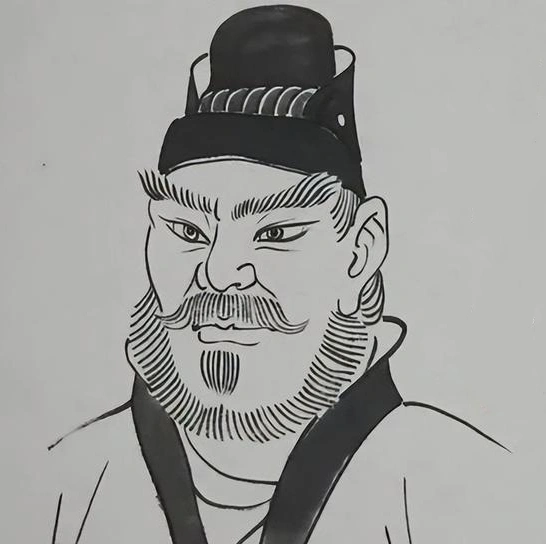
In 337, in a walled town called Jicheng, on the western edge of the Liaoxi plain, Murong Huang took the title King of Yan. He had a hall built for the occasion, the Wenchang Hall. He rode in a gilded carriage drawn by six horses, and men cleared his path with the long warning cry that announced an emperor. He made his wife queen and his son heir, appointed a prime minister and a full court, and pardoned everyone in his territory. Every part of the ceremony was Chinese. The man performing it was the third son of a Xianbei chief, and no emperor had given him leave to perform it. The state he founded is known as Former Yan. The name is a later convenience. He and his successors called their state Yan, and the prefix was added by historians who needed to tell it apart from the four other states that later took the same name. In the documents of the time there is only Yan, and its ruler is the King of Yan. This essay uses the conventional English set, Former Yan, Later Yan, Southern Yan, Northern Yan and Western Yan, because a reader needs the labels; it does not pretend that the labels were worn by the people who lived under them.
The usual account of his reign is a list of wars. He destroyed the Duan, held Jicheng against the army of Later Zhao, burned the capital of Goguryeo, broke the Yuwen, and carried his frontier deep into the north. The wars are real, and they matter. But they were the least original thing he did. What outlasted him was administrative. He registered the refugees who had been drifting into Liaodong for a generation, gave them cattle and land at a lower rent, dissolved the refugee commanderies his father had created and re-formed their people into counties, built a capital with an ancestral temple, and founded a school where the sons of his officers learned the Classics. The title was the wrapper. The register was the state. The narrative rests mainly on the Book of Jin, compiled by a Tang commission in 648. Its record of Murong Huang preserves long edicts and memorials kept by the Yan court itself, which makes it unusually good material for a history of government and unusually treacherous material for a history of motives. The nature of that record is discussed near the end of this essay.
1. The Third Son
The country into which he was born was a corridor. It ran from the dry hills of western Liaoxi, where the Great Wall comes down to the sea, northeast along the valley of the Daling River towards the grasslands, and east towards the broad plain of the Liao. It was good country for horses and cattle, thin country for wheat, and a highway for every people that wanted to pass from the steppe into the Chinese plain or from the plain into the steppe. The Chinese called the people who lived there the Eastern Xianbei. The Xianbei called themselves by their lineages. In the fourth century it was a place where the tax registers of the empire stopped and the pastures began.
The Book of Jin gives the Murong a genealogy that reaches back to the Eastern Hu, the people whom the Xiongnu had broken in the third century before Christ. The broken confederacy took refuge at a mountain called Xianbei and gave its name to the mountain, or took the mountain's name for itself; the record is not sure which. In the early Wei period a chief named Mohuba led his people into Liaoxi, served the Wei general Sima Yi against the Gongsun family of Liaodong, and was made King of Shuaiji. He settled north of Jicheng.
The surname has two explanations, and the record gives both. The first is a legend. In the country of Yan and Dai, men wore a headdress called the buyao, a cap with ornaments that trembled as the wearer walked. Mohuba saw one, liked it, bound up his hair and put it on. The other tribes began to call him and his people the Buyao, and the word, passing through several dialects, became Murong. The second explanation is a phrase: to admire the virtue of the two principles and continue the appearance of the three lights. The first is a story about a hat. The second is a story about a cosmology. The record offers them side by side, which is a polite way of saying that the real origin was already lost when the record was made. A people that has been on the frontier for centuries does not remember where its name came from, and a court that is beginning to think of itself as a dynasty likes a name with a meaning.
Murong Hui, Huang's father, was the first of the line to rule something that could be called a government. In 294 he moved his seat to Greater Jicheng, on a site the record identifies as the old capital of the sage-king Zhuanxu, and began to teach his people agriculture and sericulture. He made his law like the law of the Central Plains. When the two capitals fell, the refugees came east, and Hui did what a Chinese provincial governor would have done: he registered them by their places of origin and gave each group a commandery of its own. Men of Ji province were settled in Jiyang, men of Yu in Chengzhou, men of Qing in Yingqiu, men of Bing in Tangguo. He appointed the Pingyuan scholar Liu Zan as libationer of the East Hall, and sent his heir Huang to study under him with the sons of the state, carrying the bundle of dried meat that sealed a pupil's submission.
This is the inheritance that matters. By 333 the Murong were not a tribe with a chief. They were a coalition of Xianbei lineages, refugee households, Chinese clerks and client scholars, held together by a Jin title and a walled town. Hui had the title Duke of Liaodong, with the offices of governor of Pingzhou, Grand Chanyu, and commander of the eastern Yi. He had a cavalry army, a chancery, a school and a treasury of sorts. What he did not have was a state in the strict sense: a defined territory, a single register, a capital that belonged to the ruler rather than the clan, and a title that could be inherited without asking Jiankang.
Huang was the third son. The record describes him in the formulaic language of a founder: a dragon's brow, teeth like a board, a height of seven feet eight inches, resolute, given to strategy, fond of the Classics, knowledgeable in astronomy. The description is a genre piece, and the reader should treat it as one. What can be said with more confidence is that he had been prepared for the succession. His father made him heir, gave him a command, and sent him against the Yuwen and the Duan. In 317 the Jin court gave him the title General of the Champion, Worthy King of the Left and Marquis of Wangping. In 325 it made him General Who Pacifies the North and Duke of Chaoxian. He had spent his adult life in his father's service.
Hui died in 333, at sixty-five, in his forty-ninth year of rule. The funeral was barely over before the family divided. A confederation can have many chiefs. A state can have one. The first three years of Huang's reign were spent deciding which of the two propositions was true.
2. The Brothers
Huang had three brothers who mattered. Murong Han, the eldest son by a concubine, was brave, strong, a fine archer and a better commander than any of the legitimate sons. Murong Ren and Murong Zhao, Huang's full brothers, had been favored by their father, and the record says Huang resented them for it. The record also says that he governed with severe law and that men were uneasy under him. Fear ran in both directions. Han judged that he could not live safely under his younger brother and fled to the Duan, the Xianbei power that held the country around Lingzhi, west of the Liao. Ren and Zhao stayed, and Ren began to urge Zhao to raise troops and depose Huang.
The plot leaked. Huang killed Zhao. He then sent an envoy to inspect Ren's intentions, and the envoy met Ren at Xiandu. Ren understood that the game was up, killed the envoy, and went east to Pingguo, the fortress that controlled the southern road into Liaodong. There he called himself General of Chariots and Cavalry, governor of Pingzhou, Duke of Liaodong. The titles were a precise insult: they were the titles his father had held, and they claimed the whole inheritance.
Huang sent his brother Murong You and his marshal Tong Shou against him. Ren met them with his entire force and destroyed them. The magistrate of Xiangping, Wang Bing, and the general Sun Ji went over to Ren with the commandery of Liaodong. The eastern Yi commander Feng Chou, the army protector Yi Yi, the chancellor of Liaodong Han Jiao and the governor of Xuantu Gao Xu abandoned their cities and fled back to Jicheng. Within a few months Ren held everything east of the Liao, and the Yuwen, the Duan and several smaller Xianbei groups had sent him help. For a moment there were two Murong courts, and the older one held the richer half.
The Jin court did what courts do in such moments. In 334 it sent the envoys Xu Meng and Luqiu Xing to invest Huang as General Who Guards the Army, governor of Pingzhou, Grand Chanyu and Duke of Liaodong, with the same powers his father had held. The patent confirmed the title of the man who held Jicheng and ignored the war. It was the first lesson of the reign in the value of a Chinese title: it cost the court nothing and made every officer in his service a lawful officer of a lawful duke.
He spent the next two years recovering the peninsula. In 335 he took Xiangping himself, executed the officials Ren had appointed, and did two things that would recur throughout his reign. He moved the great families of Liaodong to Jicheng, and he created the counties of Heyang, Wuci and Xiyue. The first act took the local nobility out of its own country and put it under his eye. The second turned conquered ground into administered ground. He did not annex Liaodong; he rearranged it.
The end came in 336, and it came by ice. Huang wanted to attack Pingguo from the sea. His officers objected that the sea route was dangerous and that a fleet could be caught by the weather. The record has him answer that the sea had not frozen in the old days, but that since Ren's revolt it had frozen for three winters, and that Heaven perhaps meant him to cross. He marched the army from Changli over the frozen shallows. Ren did not expect him. The watchmen reported the army seven li from Pingguo, and Ren came out in confusion, was taken, and was killed.
The war cost three years and one destroyed expedition. It ended with Liaodong unified and the clan reduced to a single chief. It also set the pattern of his state-building: he moved the families that had supported Ren and made new counties where Ren had held commanderies. The first act of the future kingdom was not a coronation but a consolidation. Before a man can be king of a country, he has to be sure that his brothers are not kings of parts of it.
3. The Name of Yan
In 337 the officer Feng Yi and his colleagues put a proposition to Huang. His responsibility was heavy, they said, but his rank was light. He should be called King of Yan. The phrase is the argument of the reign: his power was already royal and only his title was not, and the remedy was to make them match. Huang accepted. He took the royal title, pardoned his territory, and dated the act to the third year of Xiankang. He was still using the Jin calendar, even as he took a title the Jin had not granted.
The court he built that year was a Chinese court in miniature. Feng Yi became prime minister. Han Shou became marshal. Pei Kai, Yang Wu, Wang Yu, Huangfu Zhen and a dozen others became ministers and generals. He built the Wenchang Hall, rode in a gilded carriage with six horses, made Lady Duan queen and his son Jun heir, and did it all, the record says, after the precedent of Cao Cao and Sima Zhao. The model was a regent, not an emperor.
Why Yan? No source records his reasoning, and the absence is worth noticing. The name was old and large. A royal kinsman of the Zhou had been enfeoffed at Yan, in the country north of the plain, and the kingdom had once stretched from the mountains down to the sea and east into Liaodong. The Murong had lived for a century inside that old kingdom, or inside the commanderies that replaced it. The name also had the advantage of being a Jin title: a King of Yan was a prince of a country that had existed before him, and a king was a rank the Jin could confer. A state of Yan was a country that existed because he said so. The step from the first to the second is the step this essay is about.
Five states would eventually bear the name. The first is the one he founded. Former Yan ran from 337, when he took the royal title, to 370, when Former Qin destroyed it. The second is Later Yan, founded in 384 by Murong Chui, one of Huang's sons, who raised the name at Zhongshan after the collapse of Former Qin. It lasted until 407, when its last emperor was killed. The third is Southern Yan, founded in 398 by Murong De, Huang's youngest son, who took the title at Huatai, moved to Guanggu in Shandong, and made himself emperor in 400; Liu Yu destroyed it in 410. The fourth is Northern Yan, set up in 407 by Gao Yun, the adopted son of Murong Bao, and taken over in 409 by Feng Ba; it lasted until the Northern Wei destroyed it in 436. The fifth is Western Yan, raised in the Guanzhong in 384 by Murong Hong and Murong Chong, sons of Murong Jun, and held together after 386 by Murong Yong at Changzi until Murong Chui destroyed it in 394.
The prefixes are file labels, not titles. Former and Later are chronological: the first Yan and the Yan that came after it. Southern and Northern are geographical: Southern Yan lay south of the Yellow River, in Shandong; Northern Yan lay in the north, around Longcheng and the Liaoxi country. Western is geographical too: Western Yan lay west of the others: in the Wei valley at first, and from 386 at Changzi in the Shangdang uplands. No ruler in any of these states called himself the Southern Yan emperor or the Western Yan king. They called themselves the king or the emperor of Yan, and when they fought one another they fought over the same name. The prefixes were added by historians who needed a shorthand, and they stuck because the historians wrote the surviving books.
The name was a form of property. Huang's sons and grandsons fought over it for two generations. Murong Chui restored it in 384; Murong De carried a branch of it to Shandong; Murong Hong and Murong Chong raised it in the Guanzhong; even the Feng family of Northern Yan kept it after 409, because the founder of their state had been adopted into the Murong line. A name claimed by five states had become a legitimacy of its own. In 337 none of this existed. There was a hall in Jicheng, a man in a royal cap, and a country that had not yet been mapped.
4. The Weight of a Title
The ceremony was a statement about what kind of ruler he intended to be. The gilded carriage, the six horses, the warning cry, the queen, the heir, the prime minister: these were the marks of a Chinese court, not of a Xianbei chief. A chief is followed because he can lead men in battle and distribute plunder. A king is obeyed because he sits in a hall and his officers hold seals. Huang wanted the second kind of obedience, and he knew it had to be staged. Cao Cao and Sima Zhao had held royal titles while remaining ministers of a failing dynasty, and both had made the throne a family possession. Huang placed himself in that sequence: kingdom, regency, abdication, empire. He completed the first step and never took the second.
There was no Jin emperor in the north to abdicate, and no mandate available except the one Jiankang could grant. A king was the highest title he could take without it. He spent the rest of the reign making the choice look like strength rather than caution.
The same year he did something that seems to contradict the title. He sent an envoy to Shi Hu, the ruler of Later Zhao, called himself Zhao's vassal, and asked for an army against the Duan. A title is a claim; a vassalage is a transaction. He needed Zhao's cavalry to destroy the Duan, and was willing to call himself a vassal for a season to get it. The Duan were destroyed. Shi Hu then turned on him, angry that Huang had not joined the campaign in person, and brought an army the record calls several hundred thousand against Jicheng.
The siege of 338 was the great test of the reign. Thirty-six of Huang's border settlements changed sides. His officers advised surrender. The record has him say, "I am just now taking the world; how could I surrender to anyone?" The sentence is theatre; the decision was real. He stayed in the city and waited for the besiegers to tire. The counter-attack was led by his son Murong Ke, whose campaigns belong to another chapter; what belongs here is that Huang did not leave. The siege broke, the Zhao army withdrew, and the pursuit cost it heavily. The record puts the killed and captured at thirty thousand, a round figure that measures the scale of the disaster rather than the number of bodies.
The victory changed his standing. In 339 the Jin court advanced him to General Who Conquers the North and governor of Youzhou. Jiankang was rewarding him for a victory it had not helped to win, and the reward was a way of keeping a dangerous client inside the fold. In 340 he raided Zhao with twenty thousand cavalry, went through the Wengweng pass, reached Ji, crossed the Wusui ford, entered Gaoyang, burned the stores, and moved thirty thousand households of You and Ji back into his own territory. He did not try to hold Ji. He took its people. It was a raid for population, not a war for cities.
The patent came in 341. Huang had taken the royal title in 337 without asking. For four years the Jin court pretended not to notice. Then he sent Liu Xiang to Jiankang with tribute, a report of his victories, and a request for the royal seal. The court raised two rules: a grand general is not posted on the frontier, and a man of another surname is not made king. Liu Xiang stayed a year and argued. Huang sent a memorial attacking the Yu brothers, the empress's kin, for monopolizing office, and comparing them to the consort clans who had ruined earlier dynasties. Yu Bing read it and was afraid. A frontier general who could write such a memorial, and who had just destroyed a Zhao army, was not a man to insult with a rule. He had the court grant the request. In the seventh month of 341 the envoy Guo Xi invested Huang as Palace Attendant, Grand Commander of Hebei military affairs, Grand General and King of Yan. A hundred or more of his officers were ennobled.
The patent was the same title he had taken four years earlier, now with a seal. Jiankang got a vassal who would not obey; Huang got a patent that made his officers' commissions regular and his succession legal in the eyes of the one court whose legality still mattered. Both sides knew the exchange was nominal. It was still worth making. A title that has been taken is a claim; a title that has been granted is a fact.
There was one more step, and it was quieter than the title. Huang never created an era name. From 337 to 344 his documents continued to use the Jin reign titles, Xiankang and then Jianyuan. In 345 he stopped using Jin years and began to count his own, calling that year the twelfth. The count ran from 334, the first full year after his father's death: 334 was year one, 345 was year twelve, and 348, the year of his death, was year fifteen. This is why the record says he died in his fifteenth year while the conventional reign dates are 333 to 348. The title was public; the calendar was the quiet part. A state that dates its documents by its own years has already left the empire, whatever it calls its king.
The court had debated the question before. In 332, when Huang's father was still alive, the officers proposed asking the Jin court for the title of King of Yan, and the scholar Han Heng argued against it. What a man of achievement should worry about, he said, is that his trustworthiness is not manifest, not that his rank is low; the title would come when the work was done. Hui was displeased and sent him out of the capital. In 337 Feng Yi put the opposite case, and Huang took his advice. The question was whether a frontier power should wait for the Chinese court to recognize it or force the court to recognize it. Huang chose to force the issue, and then spent four years making the forced title legal. He later restored Han Heng and made him governor of Yingqiu, where the record says his administration was well conducted. One man supplied the argument for taking the title; the other supplied the argument for governing without it.
5. The City Between the Mountains
In 341 Huang ordered Yang Yu and Tang Zhu to build a new city north of Liucheng and west of Longshan. Liucheng was renamed Longcheng county. Palaces and an ancestral temple were laid out. In the tenth month of 342 the court moved there. The Book of Jin places the move in 341; the Mirror places it in 342, and this essay follows the Mirror for the move and the Book of Jin for the building. The difference is a reminder that even a date as public as the removal of a capital can drift between two books compiled five centuries apart.
The site was chosen with care. Longcheng stood in the valley of the Daling River, on the road that ran from the Liaoxi plain northeast to the grasslands and east to the Liao. It was not the richest country in the northeast, but it was where the three roads met. A capital placed there could watch the steppe, the peninsula and the Chinese plain at the same time. Jicheng, his father's town, was a frontier market that had grown into a garrison; it was full of refugees, old clients, and the families of the men who had served Hui. Longcheng was a new wall on a new site. A new capital is a way of dismissing the geography of the old confederacy. The old families could follow the court, but they could not bring their streets with them.
The ancestral temple was the constitutional act. A genealogy is a list of ancestors; a temple is a line of kings. By building the temple and placing his father in it, Huang turned the Murong dead into a dynasty and his own succession into a rite. The act also settled a question that the family war had left open. Ren and Zhao were dead, Han was in exile, and the temple said that the line ran through Huang. A man who controls the sacrifices controls the past, and a man who controls the past can claim the future.
The palace came later, in 345, and it came with an omen. The record says that a black dragon and a white dragon were seen on Longshan. Huang went out with his officials, sacrificed with the great sacrifice, and watched the two creatures twine their heads, sport in the air, and fly away without their horns. He was pleased. He pardoned the province, named the new palace Helong, the Palace of Harmony with the Dragon, and built a Buddhist temple on the mountain, the Longxiang Temple. The omen is the kind of story a court tells about itself, and the temple is the kind of building a state needs: a sign that heaven approves, and an institution that can teach the sign's meaning.
The city had five parts. There was a wall, which made the difference between inside and outside. There was a hall, where the king sat and the officers stood. There was a temple, where the dead were consulted. There was a school, in the old palace, where the sons of the great families learned to read and to shoot. And there was a park outside the wall, which was also a farm. A state needs exactly these five things, and Huang built all five in the same decade. The wall and the hall are the obvious ones. The temple, the school and the park are the ones that made the state last longer than the man.
6. The Register
The hardest problem of the reign was not the Duan or the Zhao. It was the refugees. For thirty years the wars of the north had pushed families east, and Hui had solved the problem by giving each group its own commandery. Jiyang was for men of Ji, Chengzhou for men of Yu, Yingqiu for men of Qing, Tangguo for men of Bing. The arrangement was generous and weak. It gave the refugees a government that spoke their dialect and kept their customs, and it gave the Murong a population that was loyal to a homeland it had lost rather than to the state that fed it. A state made of four refugee homelands is not a state. It is a camp with four flags.
The second problem was the land. The Murong royal house held large parks, the enclosed pastures and hunting grounds that every northern court kept. The parks were also farmland, and the state had begun to settle poor households on them. The terms were harsh. A household that took the state's cattle and worked the park land gave eight parts of the crop to the state and kept two. A household that owned its own cattle but had no land worked the park land at seven to three. The rates were not a tax in the ordinary sense. They were a sharecropping contract imposed by a landlord who also owned the courts that enforced it.
In 345 the aide Feng Yu memorialised against the system, and his memorial is the longest document in Huang's record. It is a budget debate rather than a panegyric. The Wei and Jin precedent, Feng Yu wrote, was six to four for land worked with official cattle, and half and half for land worked with private cattle. The present rates were heavier than the worst precedents of a decadent age. The refugees were ten times the old population; the land was crowded; many households had no fields at all. The parks should be abolished and given to the refugees. "If the people are your people," he asked, "how can the cattle be lost?" The cattle belong to the state whether they stand in a park or in a peasant's yard.
He had other arguments, and they were less about money. The captives taken from Goguryeo, Baekje, the Yuwen and the Duan had been moved by force, not drawn by good government; they thought of home, and a capital crowded with them was a risk. They should be dispersed to the western frontier, where they could be watched. The bureaucracy was too large; the surplus officials should be sent back to the land. And the officials Wang Xian and Liu Ming had been punished for speaking plainly; they should be restored, because a court that punished remonstrance and then asked for advice was asking for flattery.
Huang's answer was an edict, and the edict is a model of how a ruler accepts a budget cut. He abolished the parks and gave them to the landless. He gave one head of cattle to every destitute household. He adopted the Wei and Jin rates for those who took official cattle or official land: six to four and five to five. He ordered the irrigation channels repaired. He restored Wang Xian and Liu Ming to office. He gave Feng Yu fifty thousand cash and told the court that anyone, noble or common, might report his faults without taboo.
The arithmetic is exact. On park land worked with official cattle, the state's share fell from eight tenths to six, and the household's share rose from two tenths to four. The household's share doubled. On land worked with private cattle, the state's share fell from seven tenths to five, and the household's share rose from three to five. The state lost a quarter of its revenue on the first kind of land and rather more on the second. It gained something harder to measure: households that had been hiding from the register, or drifting between patrons, now had a reason to enter it.
The administrative reform went further than the rates. Huang abolished the refugee commanderies of Chengzhou, Jiyang, Yingqiu and the rest. He regrouped their people into counties named for the places they had left: Xingji for the men of Bohai, Ningji for the men of Hejian, Xingping for the men of Guangping and Wei, Yuli for the men of Donglai and Beihai, Wu for the men of Wu. All of the new counties were attached to the state of Yan. The names remembered the road; the jurisdiction fixed the household in one place. A refugee was no longer a guest of his native place. He was a subject of the Yan state, registered in a county that could tax him.
This is the heart of the reign. The title of 337 gave him a court. The patent of 341 gave him a seal. The register of 345 gave him a people. The honors were the surface. The register was the substance. A king without a register is a war leader with a title. A king with a register is a government.
The rest of the economic policy followed the same logic. He ploughed the ritual field east of the Chaoyang gate, the gesture by which a Chinese ruler announced that agriculture was the foundation of the state. He toured the commanderies to encourage farming. In a drought he remitted the land tax. The transfers of conquered households, which belong to the wars, were also population policy. Every campaign ended with a census.
Feng Yu's memorial claims that the households had increased by a hundred thousand. The figure is a rhetorical tally, not a census, and the record gives no total. It measures the scale of the claim, not the size of the population. But even a generous discount leaves the same picture: a frontier coalition of perhaps a few hundred thousand people had become a state with a land register, a cattle stock, a tax rate and a plan for the refugees. That was the work of a decade, and it was done in the intervals between wars.
7. The East Hall
The school was older than the kingdom. Hui had founded the East Hall and put Liu Zan in charge of it, and Huang had studied there as heir with the sons of the state. When he became king, he did not found a new school. He moved the old one into the old palace, gave it a new setting and a new purpose, and made the sons of his ministers into its students. The record calls them the high-gate students, the sons of the great gates. The title was a status, not a grade: it marked the young men training for office and bound them to the throne that trained them.
The curriculum was the Chinese curriculum: the Classics, the rites, archery, and the village archery and drinking ceremonies that turned a gathering of young men into a hierarchy of elders and juniors. The king visited the hall every month and examined the students himself. The best were promoted to service near the throne. The record says that he was fond of books and diligent in lecturing, and that the students were numerous, more than a thousand. He wrote a primer, the Taishang Chapter, to replace the Jiji, the old elementary text, and he wrote fifteen Admonitions for the sons of the royal house.
The school did three things at once. It taught the literacy that the chancery needed. A government that keeps registers, writes edicts, audits granaries and negotiates with Jiankang needs clerks, and they could not be imported fast enough from a ruined north. It gave the sons of the Murong and the sons of the Chinese ministers a common formation. They read the same books, performed the same rites and competed in the same examinations. A state that is held together by two peoples needs a place where the sons of the two peoples become one cohort. And it gave the king a way to choose men by examination rather than by birth. In a confederation, office follows lineage. In a state, office can follow ability. The school was the machine that made the second possible.
The limits were built in. A thousand students is a large school for a frontier kingdom and a small ruling class for an empire. The school trained officials, not citizens. It taught the Classics in Chinese to young men whose first language was probably Xianbei, and it measured them by a standard that came from the society their fathers had conquered. The record does not say how many of the high-gate students were Murong and how many were Chinese. It does say that the best were taken into the palace, which suggests that the school was as much a selection mechanism for the court as a system of public education.
Liu Zan, the old teacher, was still the libationer. The record does not say what he thought of the change. He had taught a prince; he was now teaching a king's students in a king's palace, with a king looking on. The room was the same. The chair was different.
In the same year, 345, Huang built a Buddhist temple on Longshan. A Confucian school and a Buddhist temple, founded by the same man in the same year, are not a contradiction. Both were instruments of order. Both came from outside the steppe. The school taught the living how to behave; the temple taught them what to hope for. A frontier state that wanted to be a Chinese state needed both, and Huang, who had been raised on the Classics and who had just seen two dragons over the mountain, was not the man to see a conflict between them.
8. The Men Around Him
The first minister of the kingdom was a Chinese. Feng Yi came from a great family of Bohai that had supplied officials to three dynasties, and he had served Hui before he served Huang. In 337 he was the one who proposed the royal title. In 338, when the Zhao army was at the wall and the officers were advising surrender, he argued that Shi Hu had come too far and stayed too long, that a siege is harder on the besieger than on the besieged, and that the right policy was to hold and wait. It was the advice of a man who had read the histories of the Warring States.
Han Heng was a different kind of Chinese. He had fled to Liaodong after the fall of the north, settled in Changli, and entered Hui's service as a staff officer. In 332 he had argued against asking the Jin court for the royal title, on the ground that a man of achievement should worry about his trustworthiness rather than his rank. Hui was displeased and sent him out as magistrate of Xinchang. Under Huang he was restored to the staff, made governor of Yingqiu, and later, under Huang's son, became the Palace Secretarial Director. The advice he gave in 332 was the advice Huang ignored in 337, and he served the man who ignored it. A court needs both kinds of men: the one who proposes the title and the one who asks whether the title is worth having. Huang kept both.
Yang Wu and Huangfu Zhen were the other two names that recur. Yang Wu was a minister of 337 and later a senior minister under Huang's son; the record praises his integrity. Huangfu Zhen was in the same list, a man the record describes as frugal, retiring and fond of letters. They were the officials a state needs in its second generation: men who can hold an office, keep a register, and not steal. A founder's court is usually remembered for its soldiers. The soldiers die, and the clerks inherit.
The structure of the court was simple and it was never resolved. The army was commanded by the Murong. The chancery was staffed by the Chinese. The list of ministers of 337 is almost entirely Chinese. The campaigns of 338 to 344 are almost entirely led by kinsmen. Huang did not choose between the two halves. He used the Chinese for registers, law, ritual and writing, and the Murong for cavalry, command and marriage alliances. The arrangement worked because he stood above both. It was not a constitution. It was a balance maintained by one man.
He set up a wooden post outside the palace for petitions, the "wood of remonstrance" that Chinese political theory traced to the sage kings. The practice was mixed. Feng Yu's memorial was heard and rewarded. But the record also says that Wang Xian and Liu Ming were punished for plain speech before they were restored, and that after the 338 siege Huang punished the settlements that had gone over to Zhao with great severity. The record adds that Liu Xiang spoke for the condemned and many were spared. The same court could kill a brother and spare a rebel. The rule was not law. It was the king's judgment, and it was not always merciful.
The most revealing case is Murong Han. He had fled in 333, returned after years of exile, and then won the two greatest campaigns of the reign. In 342 he broke the Goguryeo guard at Mudi and opened the road to Hwando. In 344 he killed the Yuwen champion and broke the last steppe rival in the north. He was wounded in that campaign and stayed at home to recover. When he began to exercise his horse in his own yard, someone told the king that the general was feigning illness and training for a revolt. Huang, the record says, had always feared him. He sent him poison. Han drank it and said that he had fled once, returned, and lived too long; that he had wanted to clear the realm for the house, and that the wish would not be granted. The record preserves the speech because it is a good speech. It does not tell us whether the accusation was true, and it does not need to. A state that is held together by one man's judgment will sometimes kill the man who saved it.
9. The Four Frontiers
Huang's wars were fought on four frontiers, and each frontier had a different logic. To the west lay the Duan, a Xianbei power with a long feud against the Murong. To the north lay the Yuwen, the largest confederacy in the Liaoxi steppe. To the east lay Goguryeo, a kingdom in the mountains of the Yalu. To the south and west lay Later Zhao, the Chinese-style empire of the Shi family. The Jin court was a fifth power, but it was a power of titles rather than armies.
The Duan were destroyed first, and they were destroyed by a trick. In 337, the year of the royal title, Huang called himself Zhao's vassal and asked Shi Hu for an army against the Duan. Shi Hu came the following year, and the Duan state collapsed. Its chief, Duan Liao, fled to the mountains, then came over to Huang, was received as a guest, and was later killed when he plotted. The Duan disappeared; their people were divided between Yan and Zhao. He preferred to use another power's army to remove a rival, and paid for the use in the currency of submission.
The Zhao army did not come again in force for a decade after Jicheng. In 340 Huang took the war into Zhao's territory, not to conquer it but to empty its border. Twenty thousand cavalry went through the Wengweng pass, reached Ji, crossed the Wusui ford, entered Gaoyang, burned the stores and brought back thirty thousand households. It weakened Zhao's tax base, strengthened his own, and reminded Jiankang that the man it had made a king could march where he liked.
The eastern war was the most spectacular. In 342 Huang took forty thousand picked troops by the southern road into Goguryeo, with Murong Han as his vanguard, and sent Wang Yu with fifteen thousand by the northern road as a decoy. The Goguryeo king put fifty thousand picked troops on the northern road and kept his weak troops on the southern. Han broke the southern guard at Mudi, and the Yan army went into Hwando. The king fled alone. Huang dug up the tomb of the king's father, took the corpse, the king's mother, his wives and the treasure, took fifty thousand captives, burned the palace and destroyed the city. The northern column was destroyed in the mountains. In 343 the king submitted, and Huang returned his father's corpse. It was a punitive raid on a capital, not an occupation of a country. He did not want Goguryeo's mountains; he wanted its people and its fear.
The northern war came last. In 344 he took twenty thousand cavalry against the Yuwen in three columns. The Yuwen champion, She Yigan, was killed by Han, and the Yuwen king, Yidougui, fled north of the desert and died there. The Yuwen confederacy broke up. Huang moved its people to Changli, pushed his frontier a thousand li to the north, and renamed the champion's city Weide, the city of martial virtue. The record gives the number of moved households as fifty thousand; the Mirror gives five thousand. The difference cannot be resolved from the texts; either figure measures the same fact: the last steppe rival in the north had become a population of the Yan state.
Every campaign ended with a transfer of people. The army was a moving census: the Duan were divided, the Goguryeo captives brought back, the Yuwen moved to Changli, the Zhao border emptied into Liaoxi. A state that wanted to be a Chinese state needed farmers, soldiers and taxpayers, and the fastest way to get them was to take them from the neighbors. The wars and the register were two halves of one policy. The register counted the people the wars brought in.
The cost was paid by the frontier. The Yuwen war cost the life of the general who won it, not in battle but by the king's order. The reign was not a peaceful administration interrupted by war; it was a war of consolidation, and the administration was what the war was for.
10. What the Sources Can Bear
The Book of Jin was compiled in 648 by a Tang commission. Its chapters on the northern states are called records, not annals, and the distinction is constitutional: the Tang historians placed the northern rulers below the Jin emperors. The record of Murong Huang is the ninth of the sectional records.
Its voice is often the voice of the Yan court. The Tang compilers drew on the state history the Yan court had kept, and they preserved long documents from it: edicts, memorials, the full text of Feng Yu's budget speech. That is why the economic history of the reign can be written at all. It is also why the record's judgments are so often the judgments of the Yan chancery. The frame is Tang; the material is Yan. A reader who wants to know what Huang did can use the record; a reader who wants to know what he was like should remember who wrote it.
The verdict on the whole Murong house is not at the end of Huang's own record. It is at the end of the fourth Murong record, where the Tang historians summed up four reigns. They call him steady, self-possessed, full of uncommon plans. They praise his campaigns: when he marched south, the Wuhuan folded their armour; when he turned east, the Yuwen broke. Then they turn. He relied on his natural defences, they say, grew arrogant with victory, sat with his hands folded and called himself king without waiting for the court's command. They end with a phrase about a ravine that is never filled. The judgment is political, not racial. It does not say he was a barbarian. It says he was a talented man who usurped a title.
The Book of Wei, compiled under the Northern Qi in the 550s, is harsher. It was written for a dynasty that had fought the Later Yan and destroyed the Northern Yan, and it treats the Yan house as usurpers. Its notices on the Murong are short and hostile. It is useful for checking names and for seeing how the other side told the story.
The Comprehensive Mirror, completed in 1084, is the clearest chronology and a secondary compilation. Sima Guang and his assistants had the older books, but they were writing for a Song court with its own ideas about legitimacy. The Mirror dates the move to Longcheng in 342, where the Book of Jin has 341. It gives five thousand households for the Yuwen transfer, where the Book of Jin has fifty thousand. This essay follows the Mirror for the order of 341 and 342 and the Book of Jin for the content of the documents, and flags the differences rather than hiding them.
The Spring and Autumn of the Sixteen States is the book a reader is most likely to meet and least likely to be able to use. Cui Hong compiled it in the Northern Wei, and it was lost by the Song. The hundred-chapter edition in circulation is a Ming reconstruction by Tu Qiaosun and Xiang Linzhi, who pieced it together from the Book of Jin, the Book of Wei, the Mirror and the Imperial Reader. It cannot be cited as an independent witness, because almost everything in it comes from the books already named.
The numbers need the same caution. An army of several hundred thousand is a mobilization figure, not a field army. Thirty thousand killed and captured is a round tally of a disaster. Fifty thousand captives may count households, persons or taxpayers. The Yuwen transfer is five thousand in one book and fifty thousand in another, which is a good reminder that a copying error can change a population by a factor of ten. Feng Yu's hundred thousand added households is a claim in a memorial, not a census. The figures are evidence of what the court believed, not statistics.
The birth year is an inference. The record says Huang died in 348 at fifty-two. Counting back by nominal age gives 297, the figure on the title page. The record does not give a birth year, and the calculation is only as good as the age. The surname legend needs the same caution. The record gives two explanations for the name Murong, one about a trembling headdress and one about a cosmological phrase, and chooses neither. The story of the hat is a story, not a fact.
11. The Last Hunt
In the ninth month of 348 Huang went hunting on the western border. The record says that when he was about to cross a river, an old man in red clothes on a white horse appeared and raised his hand. "This is not the place for hunting," he said. "Let the king turn back." Huang kept the warning to himself and crossed. The hunt was excellent for several days. Then he saw a white hare, galloped after it, and shot. His horse fell, and he was thrown and injured. He was carried back to the palace in a cart, and only then did he tell his attendants what he had seen at the river. He summoned his heir, handed over the succession, and died. He was fifty-two.
The scene is the kind of ending a court history likes: a warning ignored, a hunt, a fall, a white hare. He had spent his life on horseback, and he died in the field, not in bed. The founder of a Chinese-style kingdom died like a Xianbei chief, chasing an animal. The record does not draw the moral. It is enough to notice that the last image of him is not the hall, the register or the school. It is a man on a falling horse.
He was given the posthumous title Civil and Bright King. The name means the king who was civil and bright, the ruler who read books and gave light. It was conferred by his son. In 352 Murong Jun took the imperial title, and Huang was raised to Emperor Wenming, with the temple name Taizu. He had been buried at Longping four years earlier. The imperial title by which this essay calls him is therefore retrospective. He died a king and became an emperor four years later, by an act of his son's government.
Murong Jun succeeded him and took the title King of Yan. The campaigns of his son's reign belong to his record. The machine his father had built worked for one more generation. In 370 the armies of Former Qin took the last ruler, Murong Wei, to Chang'an, and the first Yan state ended. It had lasted thirty-three years from the royal title, twenty-two of them after Huang's death.
The Tang verdict is worth putting beside the later one. The later formula is gentler: a man of the frontier who governed by the methods of the Central Plains. The formula is generous and condescending at once. It praises the methods and doubts the man. It assumes that the schools, the registers and the rites were Chinese, and that the ruler who used them was a foreigner borrowing a tool. The record does not support that simplicity. The Murong had lived inside the Jin order for generations. Hui had held Jin titles and copied Jin law. Huang had studied the Classics with a Jin scholar and had been made a Jin duke before he was made a Yan king. The instruments were not borrowed at the last minute. They were the inheritance he had been raised in.
The formula also hides the price. The same man who built the school killed two brothers, ordered a third to take poison, dug up a foreign king's father, burned a capital, and moved fifty thousand captives. The Chinese methods did not make him gentle. They made him effective. A state that registers its people can tax them; a state that schools its officers can rule them; a state that builds a temple can claim the past. None of these acts requires mercy, and Huang was not merciful. The "civil" in his posthumous name is a judgment about the tools he used, not about the hand that held them.
He did not call himself emperor. That was left to his son, who did it four years later, and to the historians, who called him Wenming. The state he built lasted twenty-two years after him, and the name he took lasted longer than the state: five kingdoms bore it, and the last of them fell in 436. The name was the least substantial thing he left. The register, the school and the city were the things that worked. A man who spent his reign making the Chinese order real in a country that had never had it might ask to be judged by those three things rather than by the title. The historians judged him by the title, and found him wanting. The register is a better monument.