Home / Emperors / Sixteen Kingdoms
Emperor Wenhuan of Later Qin
后秦文桓帝
Yao Xing, ? – 416 · ruler of Later Qin
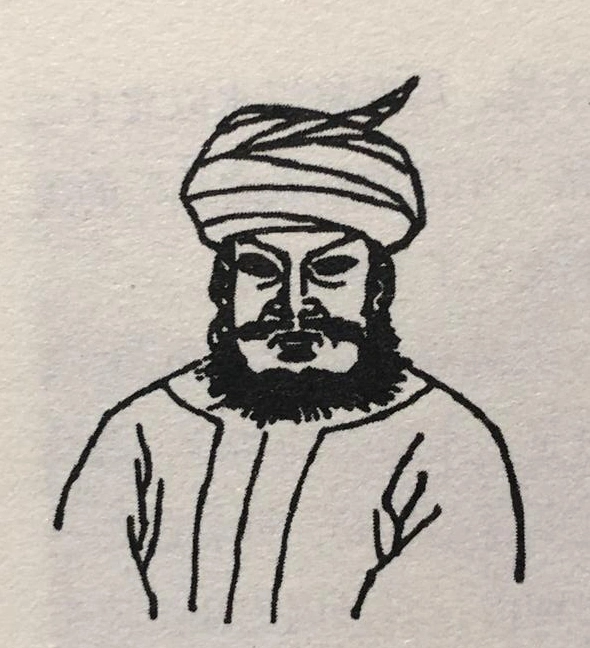
Yao Xing took over a state that his father had built out of a rebellion, a killing and ten years of hard war, and within a generation he had made it the largest power between the rivers: the holder of Chang'an and Luoyang, the overlord of the Liangzhou courts, the employer of more scholars than any ruler of the age. He then placed two men, and with them two destinies, into hands that were not his own. One was a captive monk from the far west, taken in war from a wavering vassal, whom he set up in a garden pavilion and funded for a decade of translation that would outlive every dynasty of the fourth century. The other was a young hostage of the northern steppe, the orphaned son of a destroyed chieftain, whom he advanced over the written protest of his own brother and stationed with twenty thousand camps of tribal dependents on the ridgeline above the capital. The monk gave his dynasty its longest afterlife. The hostage destroyed it while its founder's son was still warm. Both appointments came from the same habit of mind, and the habit is the key to the reign: Yao Xing collected men. He preferred gathering to breaking, patents to punishment, offices to sieges, and for twenty years the method worked, until the day it did not.
His was the second state of the age to call itself Qin, ruling from Chang'an; the histories call it Later Qin. The reign falls into two arcs that meet in the middle. In the first, the young ruler finished his father's war, opened the eastern passes, took Luoyang, and then, at the height of his success, did something no other sovereign of the period did: he read the eclipses, gave up the imperial title, demoted every official of the empire one grade, and founded schools. In the second, the great campaign of his maturity was broken on the banks of the Fen by the rising northern state, the creature he had promoted in the north tore the ridge-country away from him year by year, and his own household split over the succession while he watched, pardoning, until the pardon had to be revoked with the palace burning. Most of what is known of the reign comes from the annals the Later Qin court kept on itself, carried into the chapters of the Jin Shu that hold the dynasties Jin never recognized, and the reader is reading a ledger the house wrote about its own gains and its own defeats; it kept the defeats with unusual care.
1. The Inheritance
The founder died in the last weeks of 393, and the record says his son kept the death quiet. There was an enemy in the field who had been waiting years for exactly this news. Fu Deng, the last emperor of the old Qin line, had marched for seven years behind the spirit-tablet of the murdered Fu Jian and had beaten the founder often enough that men at a distance were weighing their allegiances; his article carries the battles of those years and carries too the end that came in 394, when he attacked on the rumor of the founder's death and was met, broken and killed. Here it is enough to say that the war-name and the tablet left the field together that year, and that with them went the last armed argument of the house of Fu. Yao Xing took the imperial title in 394, the annals placing the ceremony at Huaili, west of the capital, and began a new era, Huangchu. His reign counted from his father's death in 393 or his own enthronement in 394, and the books, which have done this arithmetic for every dynasty of the period, print the longer figure.
What he inherited in the same season was less tidy than the victory. The founder's court had been, by its own account, a camp that had learned to call itself an empire: a Qiang tribal army bound to the house by the memory of the grandfather, a capital recovered from a siege and ringed by rivals, schools newly founded and shallow, a legitimacy problem inherited with the throne itself. The founder had spent his last years explaining the killing at Xinping to his own army and losing the argument in the field. The son's first act of state was to end the war that the explanation had failed to end, and his second was to stop explaining. Nothing in his reign would look like the founder's again: no night marches for the capital, no oracles, no public bargaining with the dead. The annals of the new reign open on administration, and the change of subject is itself the document. A dynasty built on a killing wrote everything down, and the son's volume of the record is full of the kind of writing a settled court produces: edicts, quotas, case lists, school rolls, grain figures. It is also, as will be seen, unsparing about what went wrong.
The western and northern flanks first. In He Dong, the commandery east of the river that the collapse of the Western Yan had left loose, the holdouts resisted until the uncle Yao Xu crossed the Yellow River at Longmen and entered Puban; the annals say the ruler thereafter treated this uncle, long the governor of the river country, with the ceremony of a family elder rather than a subject. Settlers from Xinping and Anding, the annals count six thousand households of them, were moved to hold the crossing. In 397 the Xianbei chieftain Xue Bo raised the tribes of the upper frontier and besieged a Qin column at Jincheng; the relieving army starved on a broken supply line until the old chancellor Yin Wei, the founder's strategist in his last years of service, had the two tribal magnates responsible for the transport executed by open warrant, after which the grain came in, the annals counting deliveries above half a million measures. Xing marched in person with twenty thousand and Xue Bo ran, and the man who caught him and sent him back in bonds was the Gaoping lord, Mei Yigan, a frontier magnate of the Ordos marches whose household would soon matter more than his loyalty. The year also brought a private grief that became a public argument: the ruler's mother died, and the court split over the rites. A junior official, Li Song, memorialized that the Son of Heaven, mourning, should wear plain cloth at court and lead the empire in grief before resuming government; the chancellor answered with the Han and Wei precedents for resuming full dress at burial. The record has the ruler side with the junior man, telling the chancellor that here was a loyal minister and a filial son and that he would not have him prosecuted for the proposal. It is the first of many scenes in which this ruler chose the more ceremonial, more textually correct course against the practical men around him, and it was noticed because he overruled the founder's own men to do it.
2. The Reach East and South
The expansion of the middle years ran along the roads out of the pass. In 399, in person, Xing took Hucheng on the Yellow River bend; the Jin governors of Hongnong and Huashan surrendered, and he moved on through Shancheng to take Shangluo in the mountains south of the river. The prize was Luoyang. He sent his uncle, the duke of Qi, and the general Yang Fusong against it in the summer of that year, and the Jin governor Xin Gongjing held the city for more than a hundred days behind its walls, waiting on a relief force that the northern state of the Wei ruler Tuoba Gui sent too late. The annals of Jin record the outcome in one line, that in the winter tenth month Yao Xing took Luoyang and seized the governor; the Jin side of the story, including what became of the captured man in Chang'an, is the southern volume's to tell, and it is enough here that the refusal of the captured governor was remembered on both sides of the frontier. With the city gone, the annals say, the towns from the Huai and the Han northward sent hostages and submissions, and for the first time since the fall of the old Qin the eastern plain acknowledged Chang'an. A later drive against the citadel of Jinyong, where a Jin governor still held out, failed; the annals record that the column took the outworks, deported two thousand households of captives, and came home. A ruler of a different temper would have finished the citadel; this one did not press.
The southern window opened wider in 403, when the Jin court's own crisis in the south, the usurpation season of Huan Xuan's house, drew garrisons away from the border commanderies; Qin took twelve of them in the middle Yangzi approaches, the annals naming Nanxiang, Shunyang and Xinye among the rest, without a battle of record. The Chouchi chieftain Yang Sheng, whose mountain state sat across the western approaches and is not counted among the Sixteen Kingdoms, sent a hostage and accepted a patent from Chang'an. By that year the writ of the Later Qin ran, in one form or another, from the upper Han to the Wei and down both banks of the Yellow River, and the Liangzhou courts of the far west were taking its offices and its calendar. The expansion had a character worth naming, because it was the character of the whole reign: it preferred submissions to sieges. Cities were taken, but more often they were received; commanders were beaten, but more often they were enrolled. The founder had ruled by canter and raid. The son ruled by reception, and the method filled the map faster than any army of the period could have.
3. The Year He Made Himself Smaller
In the ninth month of 399, with Luoyang his and the embassies coming in, Yao Xing demoted himself. The annals give the reason in the idiom of the time: eclipses of the sun and moon, calamities repeatedly appearing. He gave up the imperial title, and went further: every man of the state from the dukes and ministers down through the governors and commandants was ordered to drop one grade of rank, so that the humility of the throne should be matched by the humility of the bureaucracy. Fifty-three grandees, led by the Grand Commandant Yao Min, signed a memorial the record keeps at length, arguing that the ruler's achievements outranked the founders of the ancient dynasties and that he was about to violate the trust of Heaven by declining its summit. The record has him answer with the argument of the ancient kings: Tang of Yin and Yu of Xia, he said, were the crowns of all the ages, yet they kept guard over humility and did not dwell at the top; how much less should one small and benighted presume to stand there. He announced the change before the altars of soil and grain and the ancestral temple, declared a general amnesty, and changed the era to Hongshi, the era name that would carry the dynasty to its end.
What the new title actually was is a small textbook of the period's source problems. The Jin annals say he called himself king. The Wei annals, written by the enemy, say he lowered himself to Heavenly King. The court's own documents, the prefaces written by the monks of its translation bureau, call him through the following fifteen years the Heavenly King of Great Qin, and these colophons are the nearest thing to contemporary paper the reign has left. The likeliest reading is that the emperor of 394 became a king in the Chinese political sequence and a Heavenly King in the ritual one, and that the annalists sorted the same act by their own conventions. What is certain is the act itself: a sovereign at the peak of his power choosing a smaller name, and taking his whole state down a rung with him.
The same edict sequence carried the domestic program that gives the demotion its meaning. Grain and silk went to the orphaned, the widowed and the destitute; the aged of seventy and above received clothing and staves by command. Two commandery officials were executed for selling offices, and the annals conclude, in their flat way, that the commanderies stood in awe. The Comprehensive Mirror, drawing the same season together, lists the ruler promoting the worthy, simplifying the statutes, scrutinizing the lawsuits, rewarding governors with a record and killing the grasping. A court that had just conquered Luoyang was devoting its edicts to the conduct of its own clerks. There was a theology of this, in the loose sense: the eclipses were read as Heaven's audit, and the audit was answered not with campaigns but with corrections. But there was also, beneath the ritual idiom, a working political intelligence. A state assembled in twenty years out of surrendered commands and enrolled magnates was held together by names, ranks and patents; a ruler who spent rank as currency could buy cohesion that no amount of force would have held. The demotion was thrift, not only piety.
4. Laws, Fields, and Refugees
The interior administration of the Hongshi years is the best documented thing about the reign, and it deserves the itemized reading the annals give it, because the items are the state. The most institutionally original was legal. The annals record that Xing established law studies at Chang'an, summoning the unassigned clerks of the commanderies and counties and schooling them in the codes; those who came out with a working command of the statutes were sent back to their districts to judge criminal cases, and the cases their districts could not decide went up to the Court of Justice in the capital, the tingwei, which had existed as a title in every empire of the age but had rarely been the last word in a frontier kingdom's judicial chain. The ruler himself, the annals say, came regularly to the Ziyi Hall to hear contested cases, and the age said of the courts under him that there were no wrongful detentions to complain of. In an era when the northern states governed largely by military warrant and the memories of chieftains, a Qin clerk in a Wei valley county now judged under written statutes with an appeal route to the capital and a ruler who read cases in the intervals of state business. Nothing else in the period quite matches the design.
The personnel pipeline beside it was equally deliberate. Each commandery and kingdom was ordered to present one candidate a year of pure conduct and filial-and-incorrupt standing, the old Han quota system in miniature, which meant that the yearly grain of recommendation flowed to Chang'an instead of to whatever local lord had the arms. Clean officials were commended by name in edicts, the annals preserving a list of five, with added fiefs and ranks; grasping ones were killed, and the two examples stood long enough in memory that the annals keep their names. Men of letters were pulled into the confidential work of the state: the annals name three, promoted into the secretariat for the elegance and correctness of their writing, and preserve one story from the circle that shows how seriously the court took the enforcement of its own standards. A capital worthy had imitated the famous free spirit of an earlier age, drinking and playing the lute through his mourning for his mother; a senior official of the court heard of it, wept, and set off with a drawn sword to kill him in the name of public morals. The offender hid for the rest of his life. The annals keep the story with evident approval, and it is a fair index of the court's temperature: the state that had written statutes was also writing manners, and the manners were enforced with the sword left over from the founding.
The population side of the program was resettlement. An edict of the Luoyang season freed every person who had sold himself or his family into slavery in the famine years, restoring them to commoner status, which in one line returned the state's most desperate debts to the tax rolls. Local officials were ordered to bury the war dead where they had fallen and to set up heirs from their near kin, so that the widows and orphan households of two decades of campaigning should not simply vanish. The refugees came in by the ten thousand and were met by officers with escorts: the annals record a mission to the Hanzhong mountains that brought out the households of two chieftains of the refugee camps, the figure given at more than ten thousand households; a separate influx from Xiangyang, ten thousand households of border people who crossed rather than live under the southern court's war taxes, was received in the East Hall by the ruler in person. One of the refugees, a man of the capital gentry named Wei Hua, was asked what the southern dynasty's governance was actually like, and the record has him say that its sovereign held the honors of facing south without the reality of command, that power had drained from the public house into many gates, that the penal net was harsh and the manners extravagant. Xing, delighted, made him head of the secretariat. The conversation is preserved because the court wanted it preserved; it is the empire of Chang'an taking its own measure against the empire of the south through the mouth of a man who had lived under both, and the answer flattered the audience. Wei Hua stayed, rose to high office, and six years later, in the worst hour of the northern war, would be the man who talked the ruler out of running.
Two counterweights keep the picture honest. The first is fiscal: the annals record that Xing raised the transit taxes, laying dues on salt, bamboo, mountain timber and other goods, over the remonstrance of his ministers, because the wars of consolidation were eating the treasury; the schools and the embassies were paid for out of tolls, and the annals do not let the reader forget it. The second is military: the army codes, a senior officer memorialized, had grown vexatious and overgrown, and Xing approved a recension of the whole book on the classical model, which is the sound of an army still administered as a personal coalition being bent toward the shape of a regular institution. The bending never finished. That failure is the second half of this reign, and it is foreshadowed nowhere better than here, in the fact that the army needed its laws rewritten and its magnates executed for withheld grain.
5. The Schools of Chang'an
The most quoted passage of the reign in the traditional literature is the school passage, and it is worth quoting slowly because the claims made for it are large. The annals name three aged scholars: Jiang Kan of Tianshui, Chunyu Qi of Dongping, Guo Gao of Fengyi, men of ripened virtue whose learning was clear and whose conduct was cultivated, each with several hundred disciples, teaching at Chang'an; and students who came to them from afar the annals count at ten thousand and some thousands. The number is the chronicle's and should be held at arm's length, but even discounted it describes something no other court of the age had: a capital where the lecture halls drew more hearers than the garrisons drew men. The ruler attended in the intervals of government, the annals say, leading the old masters into the East Hall and discoursing on the Way and the arts, weaving through names and principles; a ruler who took the chair in metaphysical seminars between sessions of the law docket was a figure with no contemporary parallel anywhere in the Chinese world, north or south.
The system had feeders. A scholar of Liangzhou had moved east to Luoyang at the end of the old Qin and taught there with over a thousand disciples, and students of Guanzhong crossed the passes to sit with him; Xing's answer to the traffic was an edict to the wardens of the pass, the annals preserving its text: scholars traveling to consult on the Way and the arts, for the mending of their own conduct, were to come and go without being held to the usual limits. An open border for students, in a century when borders were mostly filters for captives and grain, is perhaps the single most characteristic act of the reign. The annals conclude the passage with the verdict they wanted posterity to keep, that learning was urged on and the scholarly air flourished, and the verdict is not mere decoration. The court was assembling, out of the western gentry, the refugee scholars of the south and the surviving academies of the old Qin, the largest body of lettered men between the two empires; its law bureau drew on the same pool, its secretariat did, its translation bureau would shortly do.
Was Chang'an therefore the largest scholarly center of the late age, as the later literature says? The record supports the claim better than most claims of the kind. No other court of the period left school rolls in the ten thousands, an open-pass edict for traveling students, and a state translation office under a master from India; the southern court had prestige and libraries but the north had the paying jobs, and the refugee traffic ran westward. The sober statement is that Chang'an in the Hongshi years was the principal seat of learning in the Chinese north, and that its combination of Confucian academies, legal bureau and Buddhist translation house had no competitor at the time. The combination matters more than the ranking. The same court and, often, the same men staffed all three, and the fusion of classical, legal and Buddhist learning under one patron is the reason the reign's cultural afterlife outlasted its dynasty by a thousand years.
6. The Monk from Liangzhou
In the twelfth month of 401, on the twentieth day, a monk arrived in Chang'an. He was Kumarajiva, a Kuchean of Indian descent, master of the Madhyamaka learning of the great Nagarjuna's line, and he was fifty-eight by his biography's count, though his birth year has two traditions and the account of his ages is the least firm part of his story. He had been carried west of the mountains as a spoil of war seventeen years earlier, taken in Fu Jian's great western expedition by the general Lü Guang, and when Lü Guang made himself king of Liangzhou the monk became the asset that the new house would neither use nor release. Yao Chang had asked for him and been refused; Yao Xing had sent envoys and been refused again; the Lü court understood perfectly that the monk was worth an army. The refusal decided the method. In 401 Xing sent his uncle Yao Shuode west against Later Liang with a field army; Shuode crossed the Yellow River at Jincheng, broke the Lü army in the open field, and had Guzang under his hand by the autumn, at which point Lü Long submitted, sent hostages, and released the monk down the long road to the pass. Two years later the Lü house gave up the Liangzhou capital altogether, and the far west passed from its hands; the fate of that court is another article's business, and it is enough here that the campaign of 401 was fought, on the record's own showing, largely to acquire one man.
The reception was the point. The annals say Xing treated him with the rites of a state preceptor, lodged him at the Ximing Pavilion within the palace precincts, and moved him thence to the Xiaoyao Garden, the royal park that became the name of the whole enterprise. The ruler came to hear him expound the scriptures, and the annals carry a detail that the biographies of the monks preserve and the dynastic historians kept: Xing took the old Chinese translations and collated the new renderings against them himself, a working editor on the throne. There was precedent, and the record of the age knew it. A generation earlier, Fu Jian had marched on Xiangyang and carried off the monk Dao'an as the prize of the campaign, and Dao'an's school had organized translation at Chang'an until his death, and it was Dao'an who had urged the old emperor to send for this very monk in the far west; the two captures were the bookends of the two Qin houses, and both courts counted them prizes of war. But Dao'an had been a Chinese organizer waiting on foreign texts that never came; the man who arrived in 401 was the master the texts had been waiting for, and the difference in kind was understood at once.
It is worth being exact about what the court had acquired, because the traditional lives are crowded with marvels and the marvels are not the point. What arrived at Chang'an was a complete professional: a scholar formed in the scriptoria of Kucha and Kashmir, master of both the learned languages of the trade, and, decisively, after seventeen years in Liangzhou, fluent in Chinese. He had used the exile well, learning the language of the country that held him and studying the weaknesses of the translations already in circulation; he arrived knowing exactly what was wrong with Chinese Buddhism's inherited texts, and the court that received him arrived, by an accident of policy, at the same conclusion from the other end. The court also acquired, this must be said plainly, a symbol of a kind the dynasty's founders had never managed. The Later Qin had been a camp that became an empire; its legitimacy was a repaired argument. A sovereign who seated a monk of pan-Buddhist fame at his right hand and funded his work from the treasury was purchasing with one subsidy the allegiance of the foreign clergy, the admiration of the lettered class and a claim on the blessing of Heaven that no oracle of the founder's reign had ever quite delivered. The piety was real; so was the accounting.
7. The Translation Bureau
What followed was the first state translation enterprise in Chinese history, in the full sense of state: salaried, housed, staffed by decree, and supervised by the throne. The biographies of the monks record the roster of the great undertaking, the rendering of the vast Perfection of Wisdom commentary in 402 and 403: selected monks of the capital, the names that would become the canon of Chinese Buddhist letters among them, Sengrui, Sengzhao, Daosheng, Daorong, eight hundred men by the biographies' count, working under the master's direction. The method was institutional, not solitary: the master held or recited the foreign text and rendered its sense aloud; the panel argued the Chinese phrasing; scribes took the result down; and the ruler's own old translations stood on the desk for comparison. The catalogues, the honest measure of the output, count the works at between thirty-five titles in some three hundred scrolls and seventy-four titles in three hundred and eighty-four, depending on what is credited to the master's workshop and what to his pupils; the range is the truth of any large atelier. The titles are the canon: the Lotus Sutra, the Vimalakirti, the Diamond Sutra, the Madhyamaka treatises of Nagarjuna, the great Wisdom commentary, the treatise of truth of the Satyasiddhi school, the monastery code of the Sarvastivada, the meditative manuals. A reader who has ever recited the Heart Sutra's formula of form and emptiness in Chinese is, whether or not any reader knows it, quoting the workmanship of this room and its payroll.
The bureau changed the language it worked in. Earlier Chinese translation had been a venture of individual monks rendering foreign texts into whatever philosophical vocabulary the audience already possessed, with the result, as the scholars of the time said, that the Buddha spoke in the idiom of the Daoist schools; Kumarajiva's workshop, with its argued phrasing and its panel review, produced a Chinese Buddhist prose that could carry Indian argument precisely, and the difference was recognized within a generation as a new era of the translation art. The court's stake in the quality was direct. The annals record that the ruler, having entrusted his mind to the Buddha's teaching, saw the dukes and ministers follow, that monks gathered from afar in numbers the annals count above five thousand, that a pagoda rose in the capital's Yonggui ward and a Wisdom Terrace within the palace precincts, that monks at meditation were constantly a thousand strong, and that in the provinces and commanderies, following the court's example, nine households in ten served the Buddha. The last figure is the annalists' astonished round number and should be read as their summing of a social fact: under this court, in this generation, the Wei valley became the demographic center of Chinese Buddhism, and it never again lost the position entirely.
Administration followed scale. The monk-biographies record that the ruler appointed a rector of the monks over the capital's clergy, the first office of its kind in the Chinese record, a state official for the supervision of a religious population that now numbered its thousands; the sangha had become, like the schools and the courts of law, a department. The same mechanism produced the reign's most quietly notorious decision, preserved in the monk-biographies and to be taken as hagiography with an interest: the record says the ruler, reckoning that so wise a man should not leave the world without heirs, forced ten women of the palace entertainers on the master and moved him out of the monastery, and that monks then imitated the master's household to their own scandal. One sentence of it is enough; the point it documents is institutional, that the throne claimed authority even over the body of the man it honored, and that the clergy's own chroniclers kept the claim on file because it was true. The master worked on for a decade after his arrival, the exact length of the stay disputed in the sources, his death placed by one tradition in 409 and by his school's funeral eulogy in 413; the disagreement has been argued for centuries and this article does not settle it. What is not disputed is the yield: the scriptorium he ran under this dynasty fixed the vocabulary of East Asian Buddhism, and every later rival translation office, including the great Tang enterprise two centuries on, defined itself against it.
One cost needs its line here, because the reign's ledger is otherwise kept honestly. The court that built schools, freed slaves and codified laws also spent its prestige on temples, its officials' hours on scripture, and, in the provinces, its administrative example on an enthusiasm that the annalists themselves found excessive; nine households in ten is a festival of numbers, but the same annals that record it record the ruler of a warring frontier state whose sons were plotting in their residences while the palace heard lectures. The translation bureau and the ridge-country losses were paid for by the same treasury and the same attention. The reign's two great gifts to the future, the monk and the canon, and its two great losses to the present, the north and the discipline of its own house, came out of one budget and one temperament, and the temperament was the ruler's.
8. Chai Bi
The northern neighbor grew while Chang'an learned. The Wei of the Tuoba house, rebuilt in the years of the Qin founding out of the wreck of the old Dai state, had broken the Yan kingdoms east of the Taihang and organized the steppe frontier under its own banners; its history belongs to the volume that carries the Southern and Northern Dynasties, and this account touches it only where the armies met. They met because the two states shared the Ordos and the lands east of the Yellow River bend, and because neither believed in the other's frontier. There had been exchanges of embassies and one marriage negotiation: the Wei ruler Tuoba Gui had asked for a Qin princess with a thousand horses of dowry, Xing had agreed, and had then learned that the Wei ruler had already installed an empress, whereupon the Qin court kept the envoy and kept its princess. In the first months of 402 Wei struck the client tribes on Qin's northern marches, carried off the herds and the stored grain of the Gaoping district, and raided He Dong from the east, and the effect inside Guanzhong was out of all proportion to the losses: the annals say the towns of the Wei valley shut their gates even in daylight. Xing reviewed his troops west of the capital and resolved on the war.
The Qin plan was his brother's operation. In the fifth month of 402 the prince Yao Ping, with the staff officer Di Bozhi, crossed into Shan with forty thousand men by the annals' count, the ruler following with forty-seven thousand as the second line, the heir Yao Hong left at Chang'an under a senior minister's assistance. Ping moved fast, took the Wei granary depot at Qianbi after sixty days of pressure, and then, at the moment when a raid should have turned home, stood to receive the counterstroke. It came in force. The Wei ruler came south himself with the field army, his vanguard six thousand strong caught and killed or captured Ping's two hundred scouts to a man, and herded the Qin vanguard back onto the stockade at Chaibi, on the east bank of the Fen, where it was encircled. Xing came up toward the river to break the ring, aiming at the crossing of Tiandu to feed his brother across the water; the Wei, advised by a general who understood the ground, threw a pontoon bridge over the Fen and built counter-works on the west bank, and deliberately left open the Mengkeng corridor east of the river, three hundred li of country without a usable cross-track, so that any relief column taking the direct road would arrive strung out and spent. The design worked. Xing, arrived at Puban, hesitated before the Wei strength and was slow to move; when he moved, he was beaten south of the Mengkeng with the loss of a thousand men and driven back forty li; he sent timber rafts down the Fen to break the bridge, and the Wei hooked them out and burned them for firewood.
The end, in the tenth month, was recorded by the Qin court itself, which is what makes it history rather than slander. Ping, grain and arrows gone, broke out at night toward the river where his brother stood; Xing on the far bank answered the sortie with drums and beacons and did not press the Wei lines. Ping's breakout failed, and the record says he took his own men into the river; the Wei had swimmers in the water with hooks, and the dying were hauled out with the dead. Di Bozhi and more than forty officers were taken, and with them, the annals say, twenty thousand men of the army surrendered where they stood. Across the river the Qin relief force could do nothing, and the army wailed; the sound, the annals say, shook the valleys. Xing sued for peace again and again and was refused; the Wei tried Puban itself and was held off by the uncle Yao Xu's refusal to fight a battle, and the season ended when the steppe war recalled the Wei ruler north. It was the hinge of the reign's military history, and the Qin court kept every humiliation of it in its own annals: the hesitations, the firewood, the wailing, the brother in the water. Two years later the Wei returned a captured officer as a courtesy and Xing ransomed Di Bozhi with a thousand horses, and the peace that followed held for a season. It was bought at the price the enemy had set: the Later Qin would not contest the east again. The northern state, whose own dynasty chronicle is the record of the next century and a half of Chinese history, had been measured against the best army the west could field, and the measurement stood.
9. The Ridge-North
The wound of Chai Bi was survivable; the wound of 407 was not, and the second wound was self-inflicted. Its story begins years earlier, with an orphan. The chieftain's son Liu Weichen, lord of the Xiongnu tribes of mixed descent of the Ordos, had been destroyed by the Wei in 391, and his young son had passed through captivity and rescue to the household of the Gaoping lord Mei Yigan, who married a daughter to him. The annals of the age say Xing saw the young man, found him extraordinary, treated him with marked favor beyond the old meritorious officers, and let him join the great deliberations of state. The ruler's own younger brother Yao Yong warned him, and the warning is preserved in the record twice: the young man's nature was untrustworthy, he said, his treatment of the ruler casual, his use of men cruel, his attachments nothing, his comings and goings light; to favor him beyond measure was to breed a border calamity. The record has Xing answer with his lifelong maxim: the man had the talent to order an age, and he was collecting the talent's craft for use; what harm could come of it? Xing first moderated the appointment, giving the young man a command under the Gaoping lord at Gaoping with the surrendered tribes of his father's people attached; then, within the same years, over the brother's repeated protest, he gave him acting authority, a general's banner, and the lordship of Wuyuan, with the five tribes of the north-eastern marches, twenty thousand camps by the annals' count, to hold Shuofang, the great pastoral zone on the northern rim. The court had been warned on file, in writing, by a prince of the blood, and made the appointment anyway; the record keeps the warning because the court needed it kept.
In 407 the breach came, and its trigger on the record is a treaty: the peace with Wei, sealed by the ransom of Di Bozhi, which the young commander took as the betrayal of his father's blood. He seized the eight thousand horses of the western tribute on their way to Chang'an, destroyed the Gaoping lord and absorbed his people, and proclaimed the Heavenly King of the Great Xia on the northern rim; his motives and his state-building are his own article's business, and this one follows only what the Qin court did and failed to do. What it did, first, was nothing effective. The new state had no cities worth the name and no intention of holding any; its method was the mounted raid, timed to the seasons of Qin's mobilization, and against a mobile raider the ridge-country's garrison system, built over twenty years for the defense of fixed points, reacted exactly as slowly as the young king had predicted, if his recorded speeches are to be believed at any weight. He raided the towns north of Sancheng and killed their commanders; he swept the ridge-north; and the annals of the age fix the situation in one sentence that no later editor needed to improve: he raided the ridge-north, and the cities of the ridge-north did not open their gates by day. The record has Xing say of it: I did not take Huang'er's words, and this is what it has come to; the annotation preserves for the reader that Huang'er was his brother Yao Yong's childhood name. A dynasty does not archive a sentence like that unless the sentence was already public, and the public knowledge of a ruler's regret is itself the record of a failure acknowledged while it was still happening.
The responses, year by year, are the anatomy of the failure. In 408 Xing sent Qi Nan with twenty thousand horse against the raider, and the campaign was a lesson in every paragraph: the enemy retired beyond reach, the Qin column scattered to forage, the raider annihilated the foragers and then the column's retreat, and Qi Nan was taken with thirteen thousand men and ten thousand horses, after which, the annals say, the tribes of the ridge-north went over to the enemy by the tens of thousands and received his appointed magistrates. In the same season Xing insisted on a second, simultaneous column against the Tufa court in the west, over the open objection of his own council, one officer remonstrating against the two-front campaign and another proposing the cheaper strategy of setting the Liangzhou states on the Tufa instead; the second column was beaten outside Guzang and came home by apology. In 409 a royal commander and the ransomed Di Bozhi went out with forty thousand horse, and the commander plotted on the march and killed Di Bozhi, who had survived capture, ransom and a decade of service to die on the road at a kinsman's hand; Xing gave the commander death. He then marched in person, the annals recording the sequel with their usual economy: the detachments had not yet gathered when the raider struck the center, and the ruler, the record says, was frightened and meant to run for the nearest garrison, and was talked out of it by Wei Hua, the southern refugee who had come north six years before, now right-hand minister. The line held that day; a prince was captured; the ruler left a guard detachment and went back to the capital.
Thereafter the ledger runs down by entries. Forts lost by name, commanders killed or taken, a whole garrison moved inland under escort; the best frontier officer of the season dying with his household rather than surrender a waterless fort; and, the entry the dynasty felt most, a staff officer of the ruler's own headquarters going over to the enemy and becoming the strategist of the Xia court, the man who drafted its alliances and its timing. Even the captive king of Western Qin, kept for years at Chang'an as a dependent officer after the fall of his state, slipped the capital in 409 and rebuilt his kingdom in the Tao valley; the method of collecting men was losing its collection. The strategic sum is simple and the court drew it: the ridge-north, the great shield of the Wei valley, bled out over a decade of raid and counter-raid, and by the last years of the reign the annals record the raider standing on the shield's inner edge with the whole outer country gone over. The schools had ten thousand students; the ridge had gates shut by day. Both were the same reign, and neither can be explained without the other.
10. The Sons and the Sum
The succession was the third self-inflicted wound, and the annals keep it in the detail of a household that understood it was recording the dynasty's cause of death. The heir Yao Hong, eldest son, had been installed early and had commanded nothing; the record's portrait is of a gentle and learned man, a reader in a family of riders, whose gentleness was real and whose softness was real too. The favorite was another son, the prince of Guangping, Yao Bi, whom the record credits with civil and military talent together and whom Xing loved for it. Bi bought his way into the central administration in the last years, took the presidency of the secretariat, packed the confidential offices with his own men, and had the loyal officer Yao Wenzong framed on invented words of complaint, in an audience arranged so that the ruler's anger would do the killing; it did. After that, the annals say, the ministers looked at the ground in Bi's presence. Grandees memorialized anyway: one filed a memorial whose thesis the record condenses, that the realm's disorder would be born of the ruler's fondness; two officeholders went further and urged the change of heir in secret, and Xing, the annals note with the household's own flatness, neither punished them nor heeded them.
The crisis then ran on the rhythm of the ruler's illnesses. Whenever the medicine turned grave, Bi pleaded sickness and gathered arms in his residence; whenever the ruler rallied, the machinery of pardon ran. The first round took the state to the edge: the ruler seized and killed Bi's associates, moved to arrest the prince, and was stopped by the heir himself, who wept and begged, the record has him say, offering his own life or abdication as the price of his brother's; Xing pardoned Bi, and the annals add the detail that decides the whole chapter's judgment, that Hong thereafter treated Bi exactly as before, without a trace of resentment. The princes would not stand down so fast: when the ruler lay at death's door, the prince Yao Hui armed his garrison at Puban, another rose at Luoyang, a third at Yong, and the empire of the schools stood one report away from civil war between its own princes. The ruler recovered, punished nothing, stripped Bi of the secretariat and kept him at home, over the standing protest of the men who had done the arithmetic: cut his authority, they said, send him to his fief, and the father-son feeling survives. Then, the record continues, the ruler restored his trust and gave Bi thirty thousand men and the command of Qinzhou, over the same protest renewed, that strong arms in the hands of a discontented prince were a wound the house was cutting for itself. The next illness brought the next gathering of arms, the next arrest, the next pardon through the heir's tears, and, in between, a frontier commander arrested on Bi's slanders in the middle of a crisis left a garrison to fall to the raider on the ridge. Each entry in this ledger is a small decision, each small decision defensible as mercy, and the sum is that the state spent its last years holding its breath.
The end came in 416, and the record keeps its chronology to the day. The ruler went to Huayin in the first month and named the heir regent; the illness turned; back in Chang'an he ordered the heir to record the affairs of state, gave the palace arms to trusted hands, and had the weapons collected out of Bi's residence into the armory. A palace attendant of Bi's faction plotted to kill the heir as he rode out to meet his father's carriages, and was defeated by the heir's advisers, who kept the prince inside the walls: the state is safest, they said, when the heir stays in. Then, with the ruler's own party inside and the conspirators misled, the youngest son ran from the sickroom to tell his brother that the sovereign was dead, and the brother and the attendant stormed the Duan Gate with armed men and fired it. The record's last scene of the reign has the ruler haul himself from his sickbed to the front hall and give Bi death with his own word, the guards shouting at the sight of him alive, the attackers breaking and scattering; and it has him die the next day. The heir kept the death secret for the space it took to arrest and kill the plotters, among them the ex-king of Later Liang, who had lived fifteen years on Qin's bounty and died in his hosts' last quarrel; then published the mourning and took the title. The posthumous name the son conferred, Wenhuan, the cultivated and the martial at once, is the court's own epitaph on its second sovereign, and it is a fair one; the balance it names was the balance the reign never found.
The sum of the twenty-three years is the hardest kind of historical balance, because both pans are real. Against the losses set the achievements: the largest and most literate state of the early fifth-century north, its law bureau, its ten thousand students, its open passes for scholars, its rescued and resettled populations, its court of appeal and its case-hearing ruler, and the translation house whose work the whole of East Asian Buddhism would use for good. Against the achievements set the losses: an army broken at Chai Bi by the first organized state it ever met; a frontier given away by a favorite appointment the court had warned against in writing; ten years of ridge-country decay that no edict could call back; a succession consumed by the ruler's own fondness; and a dynasty that outlived its maker by a year. The connection between the two pans is not accidental, and the record's own materials show it. The ruler's method was collection: he collected the talents of the age into Chang'an, the scholars, the monks, the refugees, the enemy's son, on the faith that what was gathered would serve, and for twenty years the faith paid. But collection is not discipline; it gathers without sorting; and the two men the method served worst were the raider on the ridgeline, whose craft was collected and whose nature was never doubted, and the son in the palace, whose gentleness was collected and never tested. The enemy's own chronicle, in a speech the Qin court let stand in its annals, gives the verdict from outside: the ruler of Qin, it says, was a hero of his hour, and Guanzhong could not be attempted while he lived. He reigned twenty-three full years, and the institutions he built were the most civilized things between the two empires that would inherit the north; the arms he never rebuilt were the only thing those institutions finally needed. The state that was strong in everything but the sword lost the sword's argument in the end, and the son's year of it belongs to his own article.