Home / Emperors / Sixteen Kingdoms
Emperor Wencheng of Northern Yan
北燕文成帝
Feng Ba, ? – 430 · ruler of Northern Yan
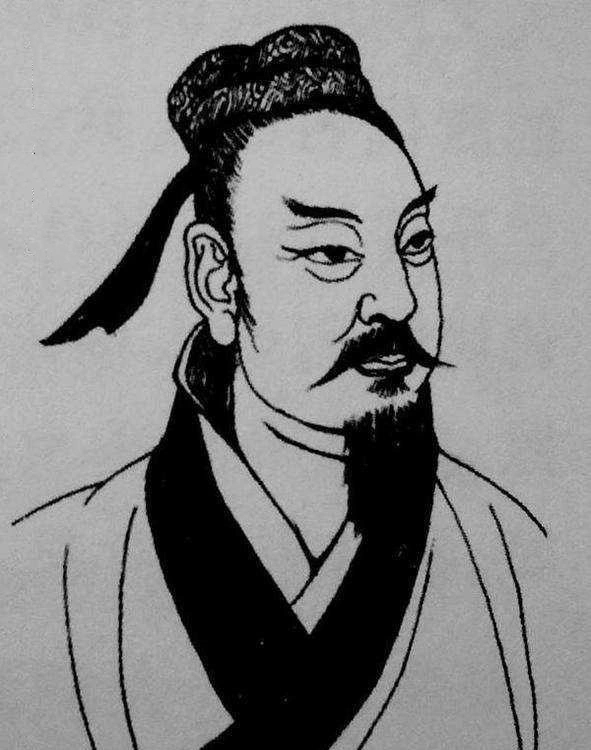
The reign of Feng Ba is the longest in the short history of Northern Yan and the least eventful reign in the surviving record of the northern states. He held power for twenty-one years, from 409 to 430, and in that time his armies fought no foreign campaign that any chronicle thought worth describing. One raid came from the west and he shut the gates until it went away. One rebellion rose inside his own family and his brother ended it in a night. The rest of what the record preserves is domestic and small: an edict against the harsh statutes of the previous court, a quota of mulberry trees, a school with three teachers, a tour of inspection, a marriage negotiated with the steppe, a foreign envoy left in a house in the capital until his clothes rotted. A reader who comes to the chapter expecting a conquest state will find an account of administration, and a thin one. That thinness is the subject. Northern Yan was the last of the Yan states to fall. For almost all of its short life it was ruled by a Han Chinese family, which made it unusual among the courts of the period, and it managed that without winning a war that mattered.
Feng Ba was a Han Chinese of Xindu in Changle commandery, in the flat farmland south of the Yan mountains, the part of Hebei that had fed northern courts for centuries. His grandfather Feng He had moved west to Shangdang during the troubles that followed 311. His father Feng An had commanded troops for Murong Yong of the Western Yan, and when that state was destroyed in 394 the family went east with the refugees to Longcheng and settled at Changgu, a valley a short ride from the wall. Feng Ba grew up there. The Book of Wei says that the family, once established in Changli, "became the same as the barbarians in custom", and its notice begins by calling him a sea barbarian, which is what a rival's history is for. His own chapter remembers a quiet, heavy boy, generous and slow to speak, who could drink a shi of wine without losing his composure while his younger brothers ran with the young toughs and neglected the family property. His childhood name was Qizhifa, which is not a Chinese name. By the time he entered public life he was a frontier man of the second generation, Chinese in descent and Xianbei in habit, and the double footing explains much of what he later did. In its own documents the state was simply Yan; the Northern is a later filing device, added by compilers who needed to keep it apart from the Yan states that had come before. The account that follows rests mainly on the Tang court's life of him, finished in 648, a work that absorbed the court diaries of the northern kingdoms along with their preferences; the Book of Wei, written for the Northern Wei dynasty that destroyed his, preserves a colder and at times fuller version; the Mirror of 1084 supplies most of the months and days. He ruled as Heavenly King, not as emperor. The imperial title belongs to the posthumous tradition, and the men who awarded it wrote long after his death.
1. The Valley at Changgu
Longcheng stood where the Daling River comes down out of the hills, a walled city with a palace, a shrine, and a garrison, and behind it a corridor of farmland running south to the sea. The mountains to the west and the steppe to the north were the borders that mattered. The state that Feng Ba inherited claimed ten or so commanderies, a roster that looked impressive on paper and thinned out quickly on the ground. Its population can only be guessed. The Wei shu says that in 432 the invaders took thirty thousand households out of six commanderies, the largest number attached to the state anywhere in the sources, and that is a figure for what could be lost, not for what was held. This was not a kingdom in the ordinary sense. It was a city with a hinterland, and its wealth was not land but people, because land in the corridor was cheap and labour was not.
The family had arrived at the end of a long displacement. Feng He had taken his household west to Shangdang when the Jin order broke, and the family had lived there for two generations among the hills of southeastern Shanxi. Feng An served the Western Yan, a late Murong splinter state, and his service ended with it. The move east in 394 was not a homecoming. It was a resettlement among strangers, in a capital that had been the Murong seat since the 340s, had been burned more than once, and was full of families that had also arrived from somewhere else. Families like the Fengs were the raw material of the frontier courts: literate enough to keep registers, mobile enough to leave, and unattached to any local landholding that would have made them a power in their own right.
That is the first reason a Han Chinese family could rise in a Xianbei capital. The Murong house needed clerks and officers who owed nothing to the old nobility. A family from Hebei with a general's commission and no ancestral county in Liaoxi was useful precisely because it had no base. The second reason is that the frontier had been mixing for two generations. Feng Ba's brothers are described as spendthrift swordsmen, his childhood name is Xianbei, and the Wei shu insists that the household had gone native. The distinction between a Han family and a Xianbei court was real, and it was also porous. Feng Ba could stand in both rooms.
His early career is thin in the record. Under Murong Bao he held the title of General of the Central Guard, which was a palace command rather than a field command. Under Murong Xi he was given a post in the palace administration and then, at some point, fell foul of the court. The chapter does not say what prohibition he broke. It says only that he offended against Xi's rules, that he feared execution, and that he and his brothers went into the hills. The omission is worth noticing. A rebellion that begins with an unspecified offence is a rebellion whose real cause lies in the general condition of the court, and the chapter supplies that condition in a single clause: the taxes and labour services of the time were heavy, and people could not bear them.
The chapter also supplies the omens. While he lived at Changgu, clouds in the shape of towers were said to gather over his house, and once he was said to have seen the gate of Heaven open and a light fill the courtyard. These stories are not evidence about the weather. They are the standard equipment of a founder's biography, inserted to explain retrospectively why a man who was not born to rule came to rule. The same chapter that records them will later report, without embarrassment, that the old histories criticized him for credulity about prodigies. The two statements sit in the same document, and the contradiction is the document's, not his.
What can be said with more confidence is that the family was numerous, armed, and used to the frontier. Feng Ba had at least three full brothers, of whom Feng Sufu was the ablest and Feng Hong the most dangerous; he had cousins who commanded troops; and he had a household staff that would follow him into a palace. In a city of perhaps a few thousand households, that was a faction. The coup of 407 was not a mass movement. It was a household with a plan.
2. The Cart at the North Gate
Murong Xi had held the Later Yan throne since 401, and by 407 the court was exhausted by his building, his funerals, and his suspicions. The details belong to his own life. What matters here is the shape of the opportunity. In the summer of 407 the empress Fu Xunying died, and the emperor went out of the city to attend the funeral with most of the court. The wall was full of soldiers and empty of decision.
Feng Ba and his brothers had been hiding in the hills. The chapter has them take counsel in the ordinary language of men who have run out of options: the emperor is violent and suspects us; there is no road back to obedience; we cannot sit still and be killed; we should rise now and carve out a lordship, and if it fails, death will only be a little late. That speech may be the historian's composition, but the decision it describes is not. With twenty-two men, twenty-three by the other count, including his elder cousin Feng Wanni, he came down to the city. A cart driven by a woman carried the brothers through the gate. The party hid in the house of Sun Hu, the marshal of the northern commandery, who was one of their own.
The strike was timed to the funeral. Feng Ba's men came out of the house and seized the gates while the court was still outside the wall. Murong Xi hurried back, attacked the north gate, failed to break in, fled into the park, and was taken and killed. The fighting lasted less than a day. The chapter records no siege worth the name, which tells us how little the Later Yan had left besides the person of the emperor. A regime that can be ended by twenty-two men and a closed gate is a regime that has already lost the obedience of the men who guard it.
They did not take the throne themselves. They put forward Gao Yun, a member of the Murong household by adoption and a man of Goguryeo descent, who had a claim that the soldiers would accept and no following of his own. Feng Ba became Palace Attendant, commander of all military affairs, General Who Conquers the North, with the honours of a Three Excellency, controller of the Department of State Affairs, and Duke of Wuyi. The offices were the highest in the state. The formula the chapter uses is exact: the affairs of the state were all decided by Feng Ba and his brothers. Gao Yun reigned, and the Fengs governed.
This arrangement is common in the history of the period, and it usually ends badly for the figurehead. It ended badly for Gao Yun. But the two years in between were not wasted for Feng Ba. He learned how the secretariat worked, who could be trusted with a gate, and how much a title was worth when the man who held it had no troops. He also learned that the court would accept a ruler who did not disturb it. That lesson became the whole of his policy.
3. The Second Time
Gao Yun had spent two years and three months buying protection from the men who guarded him, and in the tenth month of 409 two of his favourites, Li Ban and Tao Ren, came into the eastern hall with swords hidden in their clothes and killed him. He was the ruler the Feng brothers had made, and he died in the room where he received petitions.
Feng Ba was at the Hongguang gate when the news came. He climbed the gate to watch the disorder below, which is either the behaviour of a man who wanted to see how the guard would move or the behaviour of a man who had arranged the guard to move a certain way. The chapter does not say which. His household officers Zhang Tai and Li Sang asked permission to kill the two favourites, went down with drawn swords, and did it: Li Sang took Li Ban at the west gate, Zhang Tai killed Tao Ren in the courtyard.
Then the officials pressed him to take power. He refused, and offered the throne to Feng Sufu. The record has Sufu answer with a sentence built out of the classics: he had heard of a father or an elder brother handing the realm to a son or a younger brother, but never of a younger brother taking his elder's work and putting himself first. The refusal is too well phrased to be a transcript, and it does its job. It establishes that the elder brother did not seize what was offered, and that the younger brother knew the order of precedence. The officials pressed again. Feng Ba consented.
He took the title Heavenly King at Changli, proclaimed a general amnesty, and changed the era to Taiping, Great Peace. He did not take the imperial title. That is a small fact with large consequences. A Heavenly King ruled a state; an emperor ruled a world. By stopping at the lower title he made no claim on the other Yan territories, no claim on the Jin legacy, and no claim to be the equal of the Wei emperor in the north or the Jin emperor in the south. The title was a limit, and he stayed inside it for twenty-one years.
He kept the state name Yan, and he justified it with a precedent from the Warring States: the Chen family had taken over Qi without changing the name of the state. The argument is conservative in the exact sense. He was not founding a new order; he was holding an old one together. The same instinct appears in the appointments. Feng Sufu became controller of the Department of State Affairs, Feng Hong took the right side of the secretariat, the cousins Feng Wanni and Feng Ruchen were given the frontier commands of You and Ping, and Bing and Qing, and the old officials of Gao Yun's court, Sun Hu and Zhang Xing, were given the chief posts of the secretariat. It was a coalition of the households that had made the coup, dressed in the forms of a Chinese court.
He also buried Gao Yun well. In the next year he had the body and the widow buried with the rites of a ruler, built a shrine at Jiuting, attached twenty households to it for upkeep, and ordered offerings four times a year. The record has him explain the expense with another classical precedent: the founder of the Han had mourned the nominal emperor of Chu and the world had credited him with humanity. The calculation is transparent and not discreditable. A usurper who treats his predecessor's body with respect is telling every official in the city that the forms will be observed. The twenty households were cheap. The message was not.
4. The Edict
In 411 the new court issued a statement of policy that is the closest thing to a programme that the reign produced. The chapter gives it in the ruler's voice. Taxes and labour services, it says, have been heavy for years, one hardship following another, and the people are exhausted. They are to be treated with leniency, and the government is to be simplified. Every harsh measure of the former court is abolished. Governors and magistrates are to show benevolence and are not to injure the people. The Lan Terrace and the Capital Office are to inspect and report.
There are four parts to this, and it is worth separating them. The first is a diagnosis: the burden is fiscal and it falls on the households. The second is a rule of administration: prefer the simple procedure to the elaborate one. The third is a repeal: the special severity of the Murong regime is ended. The fourth is an enforcement clause: the inspectors are told to watch the governors, not the taxpayers. That is a coherent programme, and it is also a programme without a rate. The edict does not say what the tax was, what it would become, or when. It says that the direction of government has changed.
The chapter then adds the detail that makes the edict a policy rather than a gesture: the minister Ji Da was ordered to draw up the rules. Those rules are not preserved. What survives is the instruction and the fact that a schedule was commissioned, not the schedule itself. A historian who supplies a figure here would be inventing it. What can be said is that the language of the edict matches the language the Mirror uses in its summary of the reign, which speaks of lightened labour service and thin taxation, and that the concrete instruments that survive, the mulberry quota and the inspection tours, are consistent with it.
The case that follows the edict shows how the new justice worked. An artisan named Li Xun had stolen a fortune in treasure when Murong Xi fell and had used part of it to bribe Ma Fuqin, the minister of personnel, who gave him an appointment. Someone wrote the story on the stele below the palace gate. Feng Sufu raised it with his brother and asked that Ma be dismissed and punished. Feng Ba's answer, as the record gives it, is a small masterpiece of political economy. A minister without integrity, he said, has taken bribes in open court, and that is partly my own failure to see clearly. Ma deserves to be executed in the market to restore the law. But the regime is new, the order of things is not yet settled, and Ma came up from poverty without the habits of a gentleman. He is pardoned. Li Xun is a nobody who has insulted the court; he is to be beaten to death in the eastern market.
The chapter draws the conclusion it wants: from then on the officials were orderly and the road for bribes was closed. A reader may draw a second conclusion. The minister kept his life and the artisan lost his. Clemency ran upward and severity ran downward, which is the normal direction of clemency in a court, and the case is evidence of how the regime understood the word. It also shows that Feng Ba was willing to kill publicly when the killing would be seen. The abolition of harsh statutes did not mean an abolition of exemplary punishment.
This is the place to be exact about the reign's reputation for leniency. The chapter does not give a penal code, a reduction of penalties, or an amnesty schedule. It gives the phrase "leniency and simplicity", the repeal of the former court's harsh measures, and a handful of cases. In those cases the ruler spares the great and kills the small, executes three brothers for seditious talk, and poisons a chancellor. The leniency was real in the sense that the ordinary exactions of the Murong court were ended. It was not a doctrine of mercy, and it did not extend to rivals.
5. One Hundred Mulberry Trees
The most concrete economic measure of the reign is a quota of trees. The edict begins with a complaint that the realm is at peace and the people are at their work, yet the fields are foul with weeds, and the officials do not inspect them. It ends with an order: every person is to plant one hundred mulberry trees and twenty of the silkworm thorn. The reasoning is stated in the text. Mulberry feeds silkworms and the silkworm thorn yields a crop and a hard wood, and both are the root of a settled livelihood. The country had little mulberry, and the people had not seen its profit.
The figure should not be read as a statistic. A household of five would have been asked for six hundred trees, which is more than most farms could plant in a season, and no record says the target was met. It is a direction of effort expressed as a number, and the number is there to be aimed at rather than audited. What matters is the choice of crop. Mulberry is not a subsistence grain; it is a cash crop tied to silk, and silk is a tax payment and a trade good. The state was asking households to convert land and labour into the one product that could be sold to the south, the steppe, and the Wei. The silkworm thorn added a second string: its leaves fed a second silkworm, and its wood made bows.
The same edict carries a clause that is easy to pass over and hard to reconcile with the reign's reputation. Those who neglect farming are to be killed; those who work at it are to be praised. The asymmetry is the point. Praise costs nothing; the death penalty costs a labourer. A state that kills a farmer for idleness is not a gentle state. It is a state that has counted its households and knows that every idle pair of hands is a soldier it cannot feed. The clause belongs to the same logic as the mulberry quota: in a country whose only capital is people, the misuse of a pair of hands is treated as a capital offence.
The inspectors were sent out with a different message. They were to tour the commanderies, give grain and cloth to the old, the orphaned, and the chronically ill who could not support themselves, and mark out the households that were known for filial conduct, for hard farming, or for harmony within the family. Five men of worth were brought up from the provinces and given office: Hao Yue of Changli, Zhang Maicheng of Yingqiu, Zhou Diao, Wen Jiande, and He Zuan. The list is worth giving in full. These are not the great surnames of the Murong court. They are local men from the commanderies, and their promotion is a small piece of social engineering: the court was recruiting a provincial elite that owed its position to the throne rather than to the old nobility.
The largest single addition to the population came by sea. A man from Hejian named Chu Kuang proposed to bring the Feng clan's kinsmen east from Changle. Feng Ba objected that the distance was thousands of li and the roads were cut. Chu Kuang answered that the coast of Zhangwu commandery was open water, and that a ship could come out at Linyu in Liaoxi without difficulty. Feng Ba agreed, gave him a general's title and a post in the secretariat, and sent him off with money. Chu Kuang returned with Feng Ba's elder cousin Feng Mai and his younger cousin Feng Du and more than five thousand households. Feng Mai was made commandant of the guard and given a minor noble title; Feng Shu was made master of ceremonies. Five thousand households was a large addition to a state of that size. It was also a vote of confidence by the people who knew the family best.
Against that, there is one small coercion in the chapter. A commissioner was sent to move five hundred households of the northern districts to Changgu to serve the ancestral estate of Feng Ba's grandfather. The number is small and the purpose is pious, and it is still a forced move ordered for the benefit of the ruling house. It is the only mass relocation the chapter attributes to him inside his own territory, and its scale is the measure of the difference between his government and the governments of the great states. In the Later Zhao, relocations ran to tens of thousands of households at a time. Here the founder's own family shrine took five hundred.
The last of the domestic edicts concerns burial. It argues that the rites have a limit, that thick coffins and rich shrouds are of no use to the dead, that the soul goes up and the body goes down and by evening the body is changed, and that silks and fine cloth cannot be felt by a corpse. It orders that the ancestral temples remain where they are and that no tomb be rebuilt or improved, and it applies the rule to the whole territory. The reasoning is partly religious in its account of the body, partly fiscal in its effects, and wholly opposed to the practice of the previous reign. The previous court had made a spectacle of its dead. Feng Ba ordered that the dead be buried without display. The saving fell to the households that would otherwise have spent a year's grain on a grave.
Taken together, the measures form a single account. More households, more grain, more silk, fewer graves, fewer public works. There is no record of a new palace, a new capital, a new canal, or a new coinage. The one large building project the chapter mentions is a school. A state that does not build is a state that does not tax for building, and in the arithmetic of a small court that is a policy.
6. The Eastern Hall
The administrative centre of the reign was a room. Before a governor or a magistrate left for his post, Feng Ba received him in the eastern hall, asked what he thought was the most important thing in government, told him to speak without holding back, and judged him by the answer. The Mirror summarizes the practice in one line and adds that the people of Yan were pleased by it. The chapter adds that the court and the countryside competed in diligence. The procedure is not a civil service examination. It is a face-to-face test of character, and it works only when the ruler can see every official in person. In a state of that size, he could.
The inspection system was the other half. The Lan Terrace and the Capital Office were told to watch the governors, and the tours of the commanderies were staffed from the capital. The combination is a reasonable substitute for a bureaucracy: appoint a man after an interview, send an inspector to see how he governed, and punish him if the interview turned out to be a performance. It depends entirely on the ruler's attention, which is why the reign is a personal achievement rather than an institutional one. There is no record of a fixed examination, a ranked civil service, or a law code. There is a ruler who interviews, and a staff who check.
The court drew its officials from two pools, the families that had come east from Hebei with the Murong and the frontier officers who had served Gao Yun, and it was trying to add a third, the local families of the commanderies. The Fengs belonged to the first pool and never let go of it. The second pool supplied the men who knew the garrisons. The third was reached through the recommendation of men of worth, and the school was meant to give the sons of official families a common training that was not tied to any one frontier household.
The school was the one place where the reign tried to build something that would outlast a ruler's attention. The edict begins with a sentence that could have been written by any Chinese official in any century: war settles disorder, but letters carry the business of government, and a state cannot be maintained by force alone. It goes on to describe a cultural emergency. In the villages the sound of recitation has stopped; the young have no school; the old complaint about neglected youth has come back. The remedy is a Grand Academy, with three erudite gentlemen appointed to teach in it: Liu Xuan of Changle, Zhang Chi of Yingqiu, and Zhai Chong of Chengzhou. The pupils were to be the sons of officials of the two-thousand-bushel rank and below, from fifteen years of age upward. One quotation of the same edict gives thirteen instead of fifteen, which is the kind of detail that survives in two versions because two editors read the same manuscript differently.
The social reach of the school was narrow. It took the sons of officials, not the sons of farmers, and it prepared them for office. That is not a criticism; it is a description. In a state with no examination system, the school was a way of reproducing a literate service class from the families that already supplied one, and of binding those families to the court. The three teachers are named with their home commanderies, a reminder that the court was still drawing its literate men from the older Chinese settlements as well as from the frontier. The school is the clearest sign that Feng Ba meant his state to be a Chinese state and not merely a Xianbei court with Chinese clerks.
The other institutional innovation was the grand chanyu. In 411 the heir Feng Yong was given the title, with four assistants. The office was the familiar dual arrangement by which a steppe court governed a population of farmers: a Chinese secretariat for the registers and the land, a chanyu's terrace for the tribes. In a state the size of Northern Yan the terrace had less to do than its title suggested, but the title was not empty. It told the Khitan, the Kumo Xi, and the Rouran that the court at Longcheng spoke to them in their own idiom, and it gave the heir a job that was not merely ceremonial. When Feng Yong died in 426, no successor to the office is recorded, and the succession lost its only bridge between the two halves of the state.
The roster of offices was larger than the territory. Feng Wanni was governor of You and Ping, Feng Ruchen of Bing and Qing. You and Ping were the northeast, and the court held parts of them. Bing and Qing were in Shanxi and Shandong, and the court held none of them. The same is true of Liaodong, Lelang, Daifang, and Xuantu, which had passed under Goguryeo control and survived at Longcheng as titles, as claims, and as the names of households that had come west. This is not a scribal error. It is how a small court advertises a large map. A title costs a seal and a robe, and it keeps a claim alive for a generation that may never see the place.
The material life of that court is known from a grave. In 1965 a tomb was excavated at Xiguanyingzi near Beipiao, on the eastern slope of Mount Jiangjun, in the Changgu cemetery of the Feng family. It was the two-chamber tomb of Feng Sufu, Feng Ba's eldest younger brother, who died in 415, and his wife. The man's coffin was lacquered and painted with winged immortals, cloud scrolls, and buildings. Four seals were found: a gold seal reading Duke of Fanyang, and three gilt bronze seals for the offices of Grand Marshal, General of Chariots and Cavalry, and Duke of Liaoxi. The grave also held a gold crown of the step-and-sway type, with stamped Buddha figures on the front plates, a pair of gilt bronze stirrups with wooden cores and a date in the seventh year of Taiping, which is 415, and five vessels of soda-lime glass, including a duck-shaped ewer that was not made in China. The wife's chamber held the remains of a dog, which is a Xianbei custom.
The grave is a summary of the state. The seals are Chinese, the crown is Xianbei, the glass came from the far west along the steppe road, and the coffin was painted in the Chinese manner. A court that could buy Mediterranean glass and bury a dog with its dead was not a provincial backwater. It was a small, connected, mixed society at the eastern end of a trade route, and its ruler's policy was to keep it that way. The stirrups are the most ordinary object in the tomb and the most revealing. A dated pair of stirrups from 415 is a piece of military equipment, not a luxury, and it tells us that the cavalry of the frontier was equipped to a standard that the great states would have recognized.
7. The Price of Each Neighbour
Feng Ba could not fight a campaign against any of his neighbours. What he had was a daughter, a title, a market, a sea lane, and a wall. He spent them separately, and the separation is the diplomacy. The rule was simple: pay each neighbour in the currency that neighbour valued, and never pay the same coin twice if a cheaper one would do.
The Rouran came first. Their khan Hulü sent an envoy asking for Feng Ba's daughter, the Princess of Lelang, and brought three thousand horses. Feng Ba put the question to his officials. Feng Sufu and the others answered that the old practice was to give a daughter of the imperial clan to the six barbarian peoples, but that a concubine's daughter would do, and that a princess should not be sent down to a people of another kind. Feng Ba overruled them. The record has him say that a daughter follows her husband and that a thousand li is not far, and that he was trying to be trusted by peoples of different custom and would not cheat them. He sent the princess north with two thousand cavalry as escort.
The objections were not foolish. A princess was a diplomatic asset, and the Rouran were the largest military power on the steppe. But the marriage bought the northern flank for a generation, and it cost one woman and a escort. The horses alone were worth the gesture: three thousand head is a remount for a small army. The episode also shows the limits of Feng Ba's control over his own household. He had to overrule his brother and his ministers to keep his word, and he did it in the name of good faith with a foreign people, which is a rare argument in the court rhetoric of the period.
The sequel is less comfortable. Hulü was driven out by his brother Dadan and fled to Longcheng with his household. Feng Ba lodged him in Liaodong with the honours of a guest and took his daughter into his household as a consort of high rank. Then Hulü asked to be sent back to the steppe. Feng Ba refused at first, on the reasonable ground that a raid across a thousand li with no friends inside the country could not be supported. Hulü insisted that three hundred riders would be enough, that the people of the steppe would come out to meet him. Feng Ba gave him the three hundred, under an officer named Wan Ling. Wan Ling, fearing the distance, killed Hulü at Black Mountain and came back. The chapter records the murder without comment. Feng Ba had housed the man, taken his daughter, and then let his own officer kill him on the road, which is the kind of deniable outcome that small courts specialize in. He kept the daughter and the goodwill of the new khan.
The eastern tribes were cheaper. The Kumo Xi sent a chief named Yu Chukuzhen with more than three thousand camps asking for a market, and brought a thousand horses. Feng Ba agreed and settled them at Yingqiu. When the Khitan and the Kumo Xi submitted, their chiefs were given the title King Who Returns to Goodness. A market and a title cost nothing and bought a quiet frontier. The arrangement also gave the court a source of horses and a buffer against the steppe, and it gave the tribes a place to trade that was not inside the walls of Longcheng. This is the least dramatic of the arrangements and the most successful.
Goguryeo was the quiet frontier. The record has no marriage with Goguryeo, and this is worth saying plainly, because the strategic logic of the reign is often described as if there had been one. What the record does have is a brother. Feng Pi had fled to Goguryeo during the troubles, and Feng Ba brought him back, made him left vice-director of the secretariat, and gave him the title Duke of Changshan. That is the whole of the recorded relationship: a returned exile, an office, and a border that did not fight. Goguryeo was the eastern reserve, the road out, and the place where a defeated family could go.
The southern connection was a sea lane. The Jin governor of Qing, Shen Yong, sent an envoy across the water to Longcheng, and Feng Ba replied with an envoy of his own, Li Fu, a secretary of the palace secretariat. The exchange was courteous and produced no treaty. No southern titles were conferred on Feng Ba, and he did not ask for any. The title came later and to another man: in 435 the Song court, looking for a way to threaten the Wei from the east, conferred the title King of Yan on Feng Hong, five years after Feng Ba was dead. In the south the state was known as Yellow Dragon, after the old name of the capital. The southern connection was worth having, because a sea lane is a way around a blockade, but it was never a source of troops.
The west was the one direction he did not pay. Soon after he took the throne, the Wei court sent an envoy, Yu Shimen, to require his submission. The ceremony was the message. Yu Shimen refused to enter the city until Feng Ba came out to receive the Wei edict, and when he was brought in by force he refused to bow, and when his head was pushed down he argued that a host and a guest owe each other courtesy, not prostration. Feng Ba had him detained. The Wei shu, which makes him a martyr and compares him to Su Wu, says that he turned his back on the ruler in front of the assembled officials and lifted his robe in insult, and that his clothes rotted off him in detention and he refused the replacements that Feng Ba sent. The Jin shu calls him Geng Er and says only that he was kept. He stayed twenty-four years, until Feng Hong submitted to Wei and sent him home.
That detention was the one expensive gesture of the reign. It was also a decision about rank. To receive a Wei edict outside the city, on foot, was to be a vassal, and Feng Ba had just taken a throne on the argument that he was continuing a state, not accepting a grant. He could give a daughter to the Rouran, a market to the Kumo Xi, and a courtesy to the south, because none of those touched his title. The Wei demand did, and he refused it. The refusal was popular in the city: the Wei shu admits that the people of Helong admired the envoy's stubbornness, which means they were watching the ceremony and understood what it meant.
The bill came in 418. The court astronomer Zhang Mu read a red vapour over the city as a war omen and advised returning the envoy and restoring relations, on the ground that neighbouring states had never prospered with their envoys cut off. Feng Ba said he would think about it. In the fifth month the Wei cavalry came, twenty thousand under Zhangsun Daosheng and Xi Guan. The Jin shu says the city was prepared and the Wei army withdrew, with the general Huangfu Gui killed by a stray arrow. The Wei shu says the raiders reached Longcheng and carried off more than ten thousand households. Both accounts can be true. A raid that does not take a walled city can still take the farms around it, and a court that holds the wall can still lose ten thousand households. The chapter's version protects the court; the enemy's version records the damage.
Even this raid was not an attempt to annex the state. The Wei army came for households, not for territory, because the Wei main effort was elsewhere. That is the structural fact of the reign. Every neighbour had a more important front, and none of them wanted the corridor badly enough to spend a season on it. Northern Yan was never the main problem for any of them, and a state that is never the main problem can survive a great deal.
The reign invites a formula: a small state survived by serving the great. The payments above suggest something quieter. What preserved him was not service but insignificance. A state that threatens no one is a state that can be postponed, and postponement is what he needed.
8. The Cousins
The first crisis of the reign came from the family that had made it. Feng Wanni and Feng Ruchen had been given the frontier commands, and they thought they should have been given the central offices. The chapter says they believed their kinship and their service entitled them to the Three Excellencies, and that they resented being kept in the provinces. Feng Ba's answer was that the frontier commands were the heavy ones and that he needed kinsmen to hold them. The answer was reasonable and it was also a sentence of exclusion.
Ruchen, who was crude and brave, sent word to his uncle that he had a plan and wanted him to join it. Wanni went to Bailang and raised troops. Feng Ba sent Feng Hong and the general Zhang Xing with twenty thousand horse and foot. Hong wrote to his cousins offering terms: the brothers had risen together, the offices were meant to be shared, and there was no reason to fight inside the family. Wanni wavered. Ruchen put his hand on his sword and answered that a great man's life and death are fated, that the decision would be made that day, and that there was no question of surrender. The record gives him the line, and it is the best line he has.
Zhang Xing predicted that the rebels would attack the camp that night, since they had sworn to fight the next day. Hong had his men gather bundles of grass and hold fire, and set an ambush. Ruchen came with a thousand men, the fires were lit, and the ambush took them. The two rebels surrendered and were executed. The revolt had lasted a season. Its cause was an office, not a programme, and its suppression was a family matter conducted with a family's thoroughness.
The second crisis came from the man who had hidden him. Sun Hu had kept the house in 407 where the conspirators waited. By 415 Sun Boren and Sun Hu's brothers Chizhi and Yiba were soldiers of reputation who expected to be given offices with their own staffs. Feng Ba refused. At court banquets they drank and struck their swords against the pillars, saying that they had helped to found the state and were stuck with empty commands, and asking whether this was the justice of the Han founder's oath. Feng Ba had them killed. He then promoted Sun Hu to a senior honorary office and the recordership, to console him. Sun Hu remained sullen. Feng Ba poisoned him.
The third was Wu Yinti, the governor of Liaodong, who believed his service ranked above Sun Hu's and Zhang Xing's, complained at being sent to a border command, and was found to be planning to defect. He was killed. The three cases are usually told as a single story about ingratitude, and there is a more useful way to read them. In a state with one city, there is no distant province to which an ambitious man can be sent and forgotten. Every office is within reach of the palace, every grievance is within earshot, and every rival is a neighbour. The only way to remove a man from the court is to kill him. The same smallness that made the state cheap to govern made it dangerous to share.
The death that mattered most was not a killing. Feng Sufu died in 415, in the seventh year of the era. He was the ablest of the brothers, the one who had refused the throne, the one who had run the government and handled the Li Xun case, and the one whose moderation had made the court work. The chapter says Feng Ba wept, and that before the burial he went seven times to the coffin. Seven visits is the form of the rite, and the chapter means it as grief. With Sufu gone, there was no one left in the family who could say no to Feng Ba, and there was no one left who could hold the household together after him.
9. The Ninth Month
The succession had been arranged twice. Feng Yong, the eldest son, was made heir in 409 and grand chanyu in 411. He died in the eighth month of 426, and his brother Feng Yi was put in his place. The change removed the one man who had held the tribal office, and it left the court with an heir who had never commanded anything. That is the background to the events of 430.
In 430 Feng Ba fell ill. The Wei shu dates the illness a year earlier, in 429, and the discrepancy is not resolved by the sources; 430 is the year the Mirror and the Song shu give, and it is the year used here. He summoned the director of the palace secretariat, Shen Xiu, and the palace attendant Yang Zhe to the inner hall and gave them charge of the succession. In the ninth month, when he was too weak to walk, he had himself carried to the audience hall, ordered Feng Yi to supervise the government, and put the troops on alert, a formality the palace guard did not treat as an order.
The succession did not hold. The consort Song, who had a young son of her own, sealed the palace with a forged order and sent her eunuch Hu Fu to Feng Hong. Hong came in with several dozen men, the guards did not fight, and Feng Ba died in his bed while the palace was being taken. Shen Xiu and Yang Zhe had no troops and did nothing; the ministers were bought with a promise of two grades. The scene belongs to his brother's chapter; what belongs here is that a reign built on avoiding scenes like this one ended in the middle of one.
Feng Hong took the throne. Feng Yi brought the troops of the eastern palace out, was defeated, and was ordered to kill himself. More than a hundred of Feng Ba's sons were killed. The consort Song disappears from the record. The new reign lasted six years and ended with the fall of Longcheng in 436 and the flight to Goguryeo; it is another life. What belongs here is the shape of the failure. Feng Ba had spent twenty-one years making the state cheap to run, and he had never made it possible to hand over. He had a chanyu's office for an heir and no law of succession, a household full of sons and no procedure among them, and a court small enough that every claimant could reach the palace in an afternoon. The founder's personal rule was the constitution, and when the founder was dying the constitution was a sick man in a sealed room.
10. The Verdict of the Record
The Tang historian who wrote the summary at the end of the chapter was not impressed. Feng Ba came from the central plain, he says, and was unlike the others of his kind; he profited from the Murong's misrule and made a name for himself in a corner by the sea. He was not a hero. He was pushed forward by the crowd because of his generosity, and although he began with discipline he rarely finished with virtue. The old history, the historian continues, said that he was credulous about prodigies, that he dismissed officials who remonstrated, and that he had no gift for ruling and no counsellors of the first rank; and that is true. And then the sentence that matters: yet he nourished the people, guarded his borders, and issued orders for more than twenty years. Was that Heaven? It was not. It was human effort.
The verdict is double, and both halves are earned. The criticism is specific: the omens, the dismissed advisers, the absence of any gift for rule. The praise is specific too: the people were fed, the borders held, the orders were obeyed. The historian will not call him great, and he will not call the reign an accident. The closing verse of the chapter is even cooler: Wenqi was an ordinary talent who took advantage of the times. That is the judgement of a man who wrote for an empire and had no patience with small founders. It is also, in its way, a compliment. Ordinary talents do not usually keep a state alive for twenty-one years.
The formula that later readers made out of the reign is that a small state survives by serving the great. The record does not support the verb. He paid the Rouran with a daughter and got horses and a quiet flank. He paid the Kumo Xi with a market and got a buffer. He paid the south with an embassy and got a sea lane. He paid Goguryeo with nothing at all and got a road out. He refused the Wei, and the refusal cost him ten thousand households in a single raid. If the formula means that he avoided provoking his neighbours, it is right. If it means that he submitted, it is wrong. The distinction matters because it explains why the state lasted as long as it did and why it ended when it did.
The structural reading is simpler. Northern Yan was one city, a river valley, and ten commandery names, some of which it did not hold. It had no ability to threaten the Wei, the Rouran, Goguryeo, or the Song, and therefore no reason to be attacked by any of them while a more important front was open. The Wei were looking west at the steppe and the Xia and south at the Song. Goguryeo was looking at its own southern border. The Rouran were looking at the Wei. In that configuration a small state does not need a clever foreign policy; it needs to be uninteresting, and to stay uninteresting for as long as the configuration lasts. Feng Ba understood this better than any of his neighbours. His restraint was not a virtue. It was arithmetic, and the arithmetic held for two decades.
It held until the arithmetic changed, when the Wei turned east with a free season. The state that had been designed not to be worth conquering was conquered as soon as it became worth the trouble. That is the limit of the policy. A strategy of insignificance depends on the continued distraction of the strong, and no ruler can bequeath a neighbour's distraction to his heir.
What he could bequeath was smaller and more durable. The fields he had ordered planted, the households he had brought back across the sea, the school he had founded, the inspectors he had sent out, the graves that were not built, the taxes that were kept light. None of it made a dynasty. All of it made a state that lasted a generation longer than its army deserved. In the museum in Shenyang there is a gold seal from his brother's tomb, a crown with Buddhas on it, a pair of stirrups dated to 415, and a duck-shaped glass vessel from the other end of the world. The state that produced them is gone, and the names of its commanderies are lines on a map that no longer exists. The objects are what is left of a court that chose to be small, and for twenty-one years that choice was enough.