Home / Emperors / Han Dynasty
Emperor Ling of Han
汉灵帝
Liu Hong, 156 – 189 · twelfth emperor of the Eastern Han
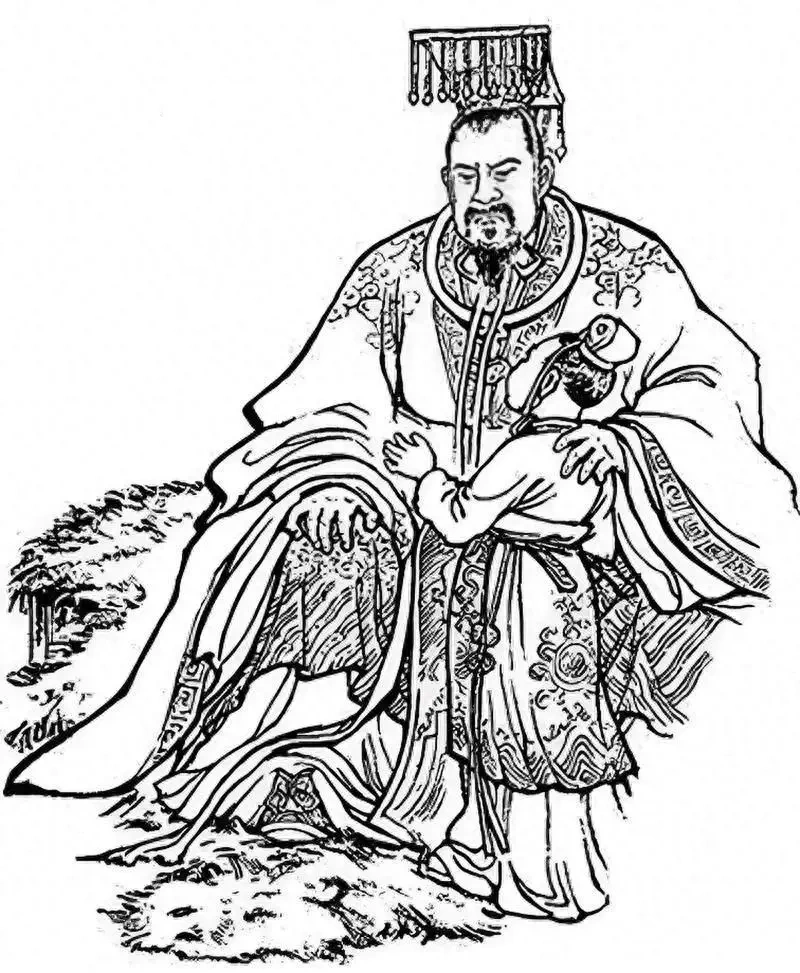
In the ninth month of 168 the government of the Han dynasty was decided inside the palace at Luoyang without the emperor, who was twelve years old. The General-in-Chief Dou Wu and the Grand Tutor Chen Fan had governed in his name for eight months, and they meant to kill the eunuchs; the eunuchs killed them first, using the boy's name on the edict that did it. The Grand Tutor was cut down at the gate of the secretariat with the students who had run in after him. The General-in-Chief, surrounded in the northern barracks by an army that had been tricked into believing he was the rebel, took his own life. The empress dowager who had chosen the boy was carried off to the Southern Palace, and the men who had deceived the army were made marquises before the month was out. None of this was done against the throne. It was done through it, and for twenty-one years afterwards it would be done through it again.
He reigned twenty-one years, and what the dynasty spent in them was the distance between a court that could be argued with and an empire that could only be taxed. Under him the quarrel between the eunuchs and the officials became a permanent institution: the first proscription took men out of office, the second killed them, and for fifteen years the ablest men in the empire were forbidden to serve. Under him a religious rising in the east put yellow cloths on the heads of hundreds of thousands and burned the commanderies of eight provinces, and the generals who put it down learned that their armies were theirs. Under him the war in Liangzhou began in the year of the Yellow Turbans and never stopped while he lived; the governorships were invented to contain it, and the governors kept them. Under him the ranks of the state were priced and sold in open market, the treasuries of the empire were moved into his private hall in the Western Garden, and the offices of the state were handed to the men who could pay. He died at thirty-four in the Jiade hall, leaving two young sons, a eunuch holding a dying man's commission, and a dynasty in which every province had learned that power was there for the taking. This is the story of how a court became a market, and a market a battlefield.
1. A Marquis of Jiedu
Liu Hong was born in 156, in a line that had been noble for four generations and obscure for longer. The descent was real and it was thin: he was a great-great-grandson of the emperor Zhang, through Zhang's son Liu Kai, who had been made king of Hejian, and through Kai's son Liu Shu and grandson Liu Chang, each of whom held the same small inheritance, the marquisate of Jiedu, a village title in the northern commandery of Hejian. A village marquisate was the lowest grade of Han nobility, a well with a name on it. The family had produced no official of the third rank and no general; what it had was a surname and a place in the ancestral registers, and in the second century that was exactly the qualification the throne kept for emergencies. His mother was a woman of the Dong family, the wife of the marquis and nothing more.
He was brought to the throne in the first month of 168, at twelve, in the circumstances the previous reign had arranged for him: a childless emperor dead, an empress dowager choosing, and a court that had decided a harmless boy was the safest candidate. The choice was sound in the short term and ruinous in the long. He was the only emperor of the dynasty since the founder who had grown up outside the palace, in a marquis's household that was, by the record's own account, poor; he had seen the world as a subject and he never entirely stopped being one. The first acts of the reign were performed around him. His grandmother's line was manufactured into emperors: in the intercalary month his grandfather Liu Shu was named emperor Xiaoyuan and his father Liu Chang emperor Xiaoren, their wives given the rank of empresses, so that the boy on the throne could be the son of an emperor as the rules required. His mother was summoned from Hejian the following spring and installed as empress in the Yongle palace, her brother Dong Chong given the guard of the capital and her nephew Dong Zhong a colonelcy among the palace gentlemen.
The government, meanwhile, belonged to the empress dowager Dou and to two men. Dou Wu, her father, was made General-in-Chief in the first month of the new reign; Chen Fan, the late emperor's former Grand Commandant, was brought back as Grand Tutor; with the Excellency over the Masses Hu Guang they held the Secretariat together and were said to govern in the boy's name. What they did first was to undo the late reign's central act. The men the late emperor had dismissed were recalled and given office: Li Ying, formerly colonel director of the capital; Liu Meng, the former director of the imperial clan; Du Mi, the former privy treasurer; Zhu Yu, the former governor of Lujiang. Yin Xun was made director of the secretariat, Liu Yu a palace attendant, Feng Shu a colonel of the stationed cavalry, and the capital, which had spent two years being told these men were traitors, watched them come back as ministers. The hopes of that spring were the highest of the century, and they lasted eight months.
At the edges of the empire the old business continued. The general Duan Jiong, who had broken the Qiang for the late emperor, was sent against the Xianlian tribes in the second month of 168 and beat them at Fengyi mountain, and again in the summer at Jingyang; the frontier commanderies had a year of quiet they had not had in a decade. It was the last quiet year of the reign. The court at Luoyang was not thinking about the frontier. It was thinking about the palace, where the eunuchs who had survived the late emperor's purges still held the doors, the women's quarters, and the ear of the empress dowager.
2. The Ninth Month of Jianning
The plan, when it came, was made in the way such plans were made at the Han court: by memorial, by alliance with the empress dowager, and by degrees. Dou Wu and Chen Fan wanted the eunuchs gone, and they wanted them gone by law, with the empress dowager's authority behind the arrests. They began with the easiest cases. Two eunuchs, Guan Ba and Su Kang, were accused of crimes and executed, and the dowager agreed to it. Then Dou Wu asked for the heads of the men who mattered, Cao Jie and Wang Fu and the rest of the regular attendants, and the dowager refused. Her reasoning was the reasoning of the establishment: eunuchs had been part of the Han court from the beginning, and the remedy for a guilty one was execution, not abolition. She hesitated, and the matter dragged on for months. In the fifth month, when a solar eclipse obliged the court to examine itself, the two men pressed her again; in the eighth month came the omen they decided they could not wait for.
The astronomers read Venus crossing from the room of the generals into the enclosure of the imperial stars as plain: a traitor sat beside the throne and the General-in-Chief was in danger. Dou Wu drew up a memorial naming the eunuchs and set the machinery of the Secretariat in motion to have it presented. It was his habit to work through the proper offices, and it was his ruin. On his rest day, riding home from the palace, he left the draft where the eunuchs' people could reach it. The keeper of the secretariat's papers, Zhu Yu, an officer of the Changle palace, read it first and shouted that Dou Wu and Chen Fan had asked the empress dowager to depose the emperor, which was high treason; and that night he and sixteen others, led by Cao Jie, swore an oath in blood to kill them, with the emperor's wet nurse Zhao Rao to vouch for them, and they went to the boy.
What happened next took place in the one room where no one was watching. The emperor was twelve. The edict that went out in his name was not his: it declared the General-in-Chief and the Grand Tutor traitors to the altars of soil and grain, and it ordered the palace guard, the tallies, and the armies of the capital to move against them. The eunuchs' officers killed the men in the palace who were loyal to the dowager, seized the seals and the credentials of the Secretariat, and forced the masters of writing to affix the false document. Then they turned on the empress dowager herself and took her authority from her under guard, and she was moved to the Southern Palace, where she stayed for nearly four years and died.
Chen Fan heard of it and did what a man of his kind would do. He gathered his officers and more than eighty students of the Imperial Academy, a hundred brushes and blades against the guard of a palace, and forced the Chengming gate. They reached the gate of the Secretariat and could not pass it. He was taken the same day and killed; he was in his seventies, and the record says the students died with him. Dou Wu was more fortunate in that he had an army. He rode to the northern camps, the five regiments of the capital, shot the messenger who came to arrest him, and called on several thousand men to stand by the General-in-Chief at the metropolitan pavilion. They might have. What the camps got instead was a forged edict in the emperor's name naming Dou Wu the rebel, and the man who brought it was a hero.
Zhang Huan had just come back from the frontier, where he had held the northern line for the late emperor against the Xianbi and the southern Xiongnu, and he had earned the right to be believed. He believed the edict. With the privy treasurer Zhou Jing he brought the five camps round, and Wang Fu came up from the palace with a thousand of the tiger troopers and the halberdiers of the forest of feathers, and the two forces closed on the General-in-Chief. Dou Wu's men, told that the man they were defending was a traitor and the man attacking him was the emperor's general, broke. Dou Wu and his nephew Dou Shao fled, were surrounded, and killed themselves; their heads were exposed at the metropolitan pavilion in Luoyang. His clan, his clients, his relatives by marriage, were exterminated; Yin Xun the director of the secretariat, Liu Yu the palace attendant, and Feng Shu the colonel of the stationed cavalry died with them, and their families were moved to the far south. From the excellencies down, every man who had been recommended by Chen Fan or Dou Wu, and every pupil and former officer of theirs, was dismissed and forbidden office. The men who had been recalled to office in the spring, Li Ying and the rest, were dismissed again and forbidden to hold office for life. It had taken one day.
The rewards were immediate and they were large. Cao Jie was made marquis of Yuyang with three thousand added households and given the guardianship of the Changle palace; Wang Fu, who had led the troops out of the yellow gate, was made a regular attendant; Zhu Yu was made a marquis of a township with fifteen hundred households, and the rest of the oath-takers were enfeoffed according to their rank. Zhang Huan, the man they had used, was offered the great treasurership for his part in the "pacification", and he refused it, which was the bravest act of the year and cost him everything: he sent up a memorial asking that Dou Wu and Chen Fan be reburied with honour and that the empress dowager be brought back from the Southern Palace, and the eunuchs had him imprisoned, fined three months' salary, dismissed, and forbidden office for life. A gentleman of the palace named Xie Bi sent up a memorial in the same sense, was sent out of the capital as an aide to the governor of Guangling, and was later tortured to death in prison by Cao Jie's nephew Cao Shao, the governor of Dong commandery.
What the coup had done was not merely to kill two men. It had demonstrated, to everyone who had doubted it, that the guard of the palace could issue any order it liked in the emperor's name and the armies of the capital would obey it. The emperor was twelve. He had signed nothing. The history preserves no word of his own from that month, and that silence is the most important fact of the reign: for twenty-one years the throne would be the instrument of whoever held the palace, and the men who held the palace would always be able to say they acted for him.
3. The Hooked Faction
The second proscription began where the first had left off, with a list. The list had been compiled by the victims themselves in 167, when the men released from prison began to rank one another for the public's entertainment: three lords, eight talents, eight guides, eight men of reach, eight men of the kitchen, thirty-five names in all, known from one end of the empire to the other within months. The eunuchs had never forgiven the invention. In the tenth month of 169 they used it.
The occasion was small. Hou Lan, one of the late emperor's most hated attendants and now the most powerful man in the palace after Cao Jie, was building a great tomb for his mother at home; the record says he had taken three hundred and eighty-one houses and a hundred and eighteen acres of other men's land by one method or another. Zhang Jian, a circuit officer of the same commandery, memorialised against him, and when the memorial was intercepted he broke into the half-built tomb and confiscated the stores. Hou Lan's answer was to have a man of his own accuse Zhang Jian and twenty-four other gentlemen of the region of rating one another with fancy titles and forming a faction to endanger the altars. The charge was absurd and it was fatal. The emperor was fourteen; what a "partisan" was, he is said to have asked, and Cao Jie explained that these were men who meant to rebel. The order went out to arrest them, and then, at Cao Jie's instance, it went further: the excellencies were made to name as hooked every man of fame in the empire.
The names the memorial gave were the leadership of the movement. Yu Fang the former excellency of works; Du Mi, Li Ying's old companion in the "Li and Du" of the capital; Li Ying himself, who as colonel director of the capital had broken the wall of the eunuch Zhang Rang's house to drag out his brother and execute him; Zhu Yu, Ba Su, Xun Yu, Wei Lang, Zhai Chao, the leaders of the ratings, with more than a hundred others. They were taken to the prison inside the palace that the eunuchs controlled, and examined under torture, and they died there, by the record's count more than a hundred of them; their wives and children were moved to the frontier, and everyone connected with them to the fifth degree of kinship was forbidden office. Then the commanderies were ordered to do the same, and the hunt became what the record calls a great arrest of the hooked: gentlemen of reputation, scholars, the sons of good families, everything the eunuchs' clients had ever envied was caught in it, and by the same count six or seven hundred more were killed, exiled, dismissed, or forbidden.
The individual deaths are the part the history chose to keep. Li Ying, sixty years old, refused to run and walked into the prison himself, saying that a subject does not avoid difficulty or flee punishment, and he was beaten to death in the examination room. Du Mi took poison. Fan Pang, thirty-three, who had made the officials of his province fear him, went to his mother first and she told him that to die alongside Li Ying and Du Mi was enough; he gave himself up and died. Zhang Jian escaped and ran, and the road taught the empire a new phrase: he knocked at whatever door he reached, "looking at the gate and stopping where he must", and the households that took him in were exterminated with their clans, dozens of them, because they had hidden a good man. Guo Tai, the scholar whom the students of the academy followed, had died in the spring, and a thousand people came to his burial; he was lucky in his month.
The proscription was widened twice and narrowed once. In 172, on the eunuchs' prompting, the colonel director of the capital arrested more than a thousand of the students of the academy itself, and in the same winter the king of Bohai, the late emperor's brother, was accused of plotting and killed himself with his wife and children. In 176 a governor of the far south named Cao Luan sent up a memorial asking that the prohibition be lifted; he was executed in the market, and the court extended the ban to the pupils, the former staff, the fathers, brothers and sons of the named men and to five degrees of their kin. Only in 179 was the net drawn back a little: a local magistrate named Hai He pointed out that the kinship limits had been drawn too wide, and the court decreed that kinsmen beyond the closest degrees were released. The proscription as a whole was not lifted until the third month of 184, when the capital was full of armed rebels and the regular attendant Lü Qiang told the emperor that the proscribed had been nursing their grievance for years and would join the Yellow Turbans if they were not pardoned. On the day of the amnesty the empire got back the men it had spent fifteen years forbidding to serve, and the amnesty came one month too late to prevent the rising and just in time to give the loyalists an army.
That is the meaning of the second proscription, and it is worth stating plainly because the numbers are easy to lose. The quarrels of 166 and 167 had been about individual officials and individual eunuchs. The proscription of 169 was about a social order: it removed from public life, permanently and by administrative act, the men whom the provinces admired, and it put in their places the relatives and clients of the men who had killed them. For fifteen years the empire was governed by the buyers of the offices of the dead. The loyalists of the next reign, and the warlords of the one after that, were the children of that emptiness.
4. The Way of Great Peace
The man who would burn eight provinces was a healer from Julu, in the north of Ji province. Zhang Jiao served the Yellow Emperor and Laozi, called his teaching the Way of Great Peace, and made his living the way such men did: he carried a staff with nine rings, he gave the sick water that he had charmed and told them to kneel and confess their faults, and when some of them recovered the news went round. He sent eight of his disciples out through the provinces to do the same, and in something over ten years he had a following the record puts at several hundred thousand, drawn from Qing, Xu, You, Ji, Jing, Yang, Yan and Yu, the eight provinces of the east and south. They came in bands along the roads, selling their houses to follow him, and the record says that those who died on the way before they reached him were numbered by the tens of thousands. The commanderies reported that he was a good man teaching the people virtue, and the court accepted the report.
The first official to see what was happening was Yang Ci, one of the three excellencies, and he wrote about it more than once. His memorandum survives in substance: Zhang Jiao was deceiving the people, he had been amnestied and had not repented, and his following was growing; if the court sent troops against him now it would simply hasten the disaster; the right course was to order the governors and the inspectors to sort out the displaced people and send each back to his own commandery, so that his party would be left without a body, and then to strike its leaders alone, which would cost nothing. The memorial was filed. Yang Ci left office soon afterwards and the matter went no further. Liu Tao, an officer of his secretariat, took up the same case in a second memorial, adding that the reports from the provinces had Zhang Jiao's people entering the capital itself to watch the court, and asking for a public reward for his capture. The emperor's answer was to tell Liu Tao to get on with his compilation of the Spring and Autumn Annals.
What the court would not read, the rebels organized. Zhang Jiao divided his following into thirty-six directions, each under a commander of its own, the great directions more than ten thousand strong and the small ones six or seven thousand, and set the date: the fifth day of the third month of 184, the year whose sign was jiazi. The slogan the directions carried was four lines of four characters, and it is the most famous sentence of the dynasty's last half-century: the blue heaven is dead, the yellow heaven is about to stand; the year is jiazi and the realm is fortunate. His agents wrote the character for jiazi in white chalk on the gates of the temples and the offices of the capital and the provinces, and the capital did not notice, or noticed and did nothing. Ma Yuanyi, the commander of one of the great directions, gathered tens of thousands from Jing and Yang and brought them towards the muster at Ye, and in the capital itself he recruited two regular attendants, Feng Xu and Xu Feng, to open the palace gates on the day.
In the spring of 184 a disciple of Zhang Jiao's from Jinan, a man named Tang Zhou, went to the authorities and told them everything. Ma Yuanyi was torn apart by chariots in the market of Luoyang. The order went out to the three excellencies and the director of the capital to examine the palace guard and every household in the city that had any dealing with the Way of Great Peace, and more than a thousand people were killed in the investigation; the commanderies were ordered to hunt Zhang Jiao down. He knew the plan was blown. He sent riders out through the night to every direction at once, and in the second month of the year they rose together, binding their heads with yellow cloth, and the empire called them the Yellow Turbans. Zhang Jiao called himself the Lord of Heaven; his younger brother Zhang Bao was the Lord of Earth and Zhang Liang the Lord of Man. They burned the offices of the commanderies, took the towns, killed the officials, and within the month the whole east was in motion. The people of Anping and Ganling seized their own kings and carried them over to the rebels. The capital, which had been warned by two honest men, one of whose memorials it had filed and the other it had set to compiling annals, woke up to find the dynasty's last century beginning.
5. The Year of Jiazi
The court's answer in the spring of 184 was the answer of a government that had been caught with nothing ready. In the third month He Jin, the brother of the empress and the governor of Henan, was made General-in-Chief with the title of marquis, and the two wings of the capital guard, the forest of feathers and the rapid as tigers, with the five camps, were posted to the parade ground outside the city to repair weapons and hold the capital; commandants were appointed to the eight passes, Hangu, Taigu, Guangcheng, Yique, Huanyuan, Xuanmen, Mengjin and Xiaoping, so that no armed band could come at Luoyang from any direction. On the same month the amnesty for the proscribed was proclaimed, with one exception written into it that says everything about the court's sense of proportion: every partisan in the empire was released and recalled, except Zhang Jiao. The excellencies were ordered to give up their horses and crossbows, and the descendants of generals and any commoner with a working knowledge of war were summoned to the capital by public cart.
Three armies went out. Lu Zhi, the scholar who had spent a lifetime on the classics and had the respect of the academy, was made northern general of the gentlemen of the household and sent against Zhang Jiao himself in the Julu country; Huangfu Song and Zhu Jun were made left and right generals of the same corps, and the two of them were sent against the Yellow Turbans of Yingchuan, the largest concentration in the west. Zhu Jun was new to war and it showed. In the fourth month Bo Cai, the commander of the Yingchuan direction, met him in the field and broke him, and the rebels of Runan beat the governor Zhao Qian at Shaoling, and the rebels of Guangyang killed the inspector of You and the governor of Guangyang with him. The east was lost faster than the armies could march.
The recovery began at Changshe, and it began with fire. Huangfu Song, outnumbered and shut in the town, had his men bind torches to the walls and slip out of the encircling camp to set the dry grass the rebels had built their huts with alight; the town shouted and beat drums behind them and the flames did the rest, and Bo Cai's host broke in the night. A cavalry commandant of Pei named Cao Cao came up with his troop in the same days and joined the pursuit, and by the fifth month the two colonels had destroyed the Yingchuan direction and cut off, by the record's count, tens of thousands of heads. In the sixth month they turned on the Runan direction under Peng Tuo and broke it at Xihua, and then divided: Huangfu Song went east against the Yellow Turbans of Dong commandery, Zhu Jun south against the Nanyang rebels, who had the largest city of the south in their hands.
Nanyang had been in rebellion since the third month, when Zhang Mancheng killed the governor Chu Gong and took Wan. The governor who replaced him, Qin Jie, killed Zhang Mancheng in the sixth month, and the rebels made Zhao Hong their commander, and when Zhao Hong fell they made Han Zhong, and Han Zhong held the inner city and would not surrender until Zhu Jun tricked him out of it, and the men who followed him made Sun Xia their commander, and it took until the eleventh month of the year, the fall of Wan and the death of Sun Xia, to finish it. Zhu Jun's siege was the longest operation of the war and the most expensive in officers.
In the north the war was simpler and more revealing. Lu Zhi surrounded Zhang Jiao at Guangzong and was on the point of taking him when a eunuch of the inner yellow gate named Zuo Feng, arriving late and being refused a bribe, reported to the emperor that the general had failed; Lu Zhi was carted back to the capital in a cage with his death sentence reduced by one degree, and the army he had built was given to Dong Zhuo, who could not break the town either. It was Huangfu Song who finished it, in the eighth month, with the eastern rebels at Cangting and their captains taken, and then north to Guangzong in the tenth month. Zhang Jiao was already dead by then; the record says his brother Zhang Liang was taken in the fighting and the corpse of the master himself was dug up and cut to pieces, and in the eleventh month Zhang Bao was killed at Xiaquyang, and the three Lords of Heaven, Earth and Man were gone. Huangfu Song was made general of chariots and cavalry on the left for it.
The men who came out of that year are the real yield of it. Huangfu Song and Zhu Jun had commanded imperial armies and won. Cao Cao, a cavalry commandant at Changshe, had been in the first field action of a career that would outlast the dynasty. Sun Jian of Fuchun in Wu, who came to Zhu Jun's army in 184 and made his name in the siege of Wan, went home with a commission. And the armed men who survived the defeats, whose numbers the record puts in the hundreds of thousands, went back to the hills and the marshes of eight provinces, where they were still armed. The victory of 184 was complete and it settled nothing. The empire had been told for fifteen years that the loyalists were traitors; in the third month of the year it pardoned them and asked them to save it, and they did, and the men who pardoned them went back to selling offices.
6. The War in Liangzhou
The second war began before the first was over, and unlike the first it never ended. In the eleventh month of 184, as the Yellow Turban war was ending, the Qiang rose again in the west: Beigong Boyu of the Hu dependents of Huangzhong and the Xianlian tribes took the field together, they made two men of Jincheng their generals, Bian Zhang and Han Sui, and they killed the protector of the Qiang Ling Zheng and the governor of Jincheng Chen Yi. The leadership of the rising was half Chinese, half tribal, and it stayed that way for the rest of the reign; it was not a rising of barbarians against the Han but of the men of the frontier against a court that had been fighting them for a generation, and it had the discipline and the siege craft of a real army.
The court treated it as an afterthought, and the afterthought went badly. In 185 the Southern Palace burned, and the fire took half a month to put out, and the eunuchs who managed the palace used the rebuilding to lay a tax of ten cash on every acre of land in the empire; in the same year Huangfu Song, now general of chariots and cavalry on the left, was sent against the rebels of Liangzhou, could not beat them, and was dismissed in the seventh month, reportedly because he refused to pay the eunuch Zhang Rang the fifty million cash Zhang Rang had asked him for. In the eighth month the court put the problem in the hands of Zhang Wen, who was given the seal of general of chariots and cavalry and a composite army, and in the eleventh month he beat Beigong Boyu at Meiyang in the metropolitan commandery. Then it fell apart again. The general Zhou Shen pursued the broken rebels and surrounded them at Yuzhong, and had to lift the siege for want of supplies; Dong Zhuo, sent against the Xianlian, was stopped at the frontier and came back with nothing. Sun Jian, serving as a staff officer on Zhang Wen's command, urged his general to have Dong Zhuo executed for it; Zhang Wen, who needed Dong Zhuo's men, would not.
The war and the court's treatment of it can be read in two deaths. In the tenth month of 185 the former excellency Chen Dan and the remonstrating officer Liu Tao were charged with speaking too directly and died in prison. Liu Tao was the man who less than two years earlier had warned the emperor in writing that Zhang Jiao's men had secretly entered the capital to watch the court, and had asked for a public reward for his capture; the emperor's answer had been to set him to arranging the rules of the Spring and Autumn Annals. The other death was Fu Xie's, the governor of Hanyang, who in 187 held his city when Han Sui came against it and died with it; Han Sui had reached him only after breaking the army of the inspector of Liangzhou, Geng Bi, in the same campaign. In that same year the frontier produced its own emperor: in the sixth month Zhang Chun and Zhang Ju of Yuyang rose in the north-east, killed the governor of Youbeiping, the governor of Liaodong and the protector of the Wuhuan, and Zhang Ju declared himself Son of Heaven and marched on You and Ji. The dynasty now had a rebel dynasty in the north-east and a rebel army in the north-west, and between them a court that could not pay for either.
The armies that were sent, and the men who led them, changed shape in the fighting. By 188 the Liangzhou rebels had taken the name and the command of Wang Guo, and in the eleventh month of that year Wang Guo surrounded Chencang, the gate of the metropolitan commandery, and the court gave Huangfu Song his command back and made Dong Zhuo a general under him, with forty thousand men between them. Huangfu Song, who had learned the country, refused to relieve the city. Wang Guo attacked Chencang for more than eighty days and could not take it, and when he broke off in the winter Huangfu Song went after him and destroyed him; by the record's count ten thousand heads were taken, and Dong Zhuo, who had been left to hold the rear, was so ashamed of the part he had been given that from that day he counted Huangfu Song his enemy. Han Sui and the others deposed Wang Guo and gave the command to a civilian official, Yan Zhong, the former magistrate of Xindu, who died, and then turned on one another, and the war in Liangzhou burned on at a lower heat for another twenty years, until other men pacified the frontier. What it left behind moved into the provinces: the generals who had fought it kept their armies.
Those armies were the point. The court had paid for its wars by letting its commanders recruit, and recruitment meant personal loyalty: Huangfu Song's veterans, Dong Zhuo's men from the west, Sun Jian's following from the Huai and the Si. In 188 the cavalry commandant Gongsun Zan broke Zhang Chun at Shimen in the north-east and pursued too far, and was surrounded in Guanzi city in Liaoxi for more than two hundred days, and came out with five or six men in ten of his command dead; the next spring the new governor of You, Liu Yu, sent an envoy to the Xianbi and offered a reward for the rebel emperor's head, and Zhang Chun was killed by one of his own officers and his head was delivered to the province; Zhang Ju got away beyond the frontier. The empire's frontier had been defended, and it had been defended by proprietors.
7. Governors with Armies
In the third month of 188, with the Yellow Turbans a memory and the Liangzhou war a habit, the throne changed the constitution of the provinces, and the change was made by a man who wanted out. Liu Yan of Jiangxia, of the blood of the Lu kings, held the office of grand master of ceremonies and watched the court from inside it, and his conclusion was that the reason the empire was full of armed bands was that the inspectors of the provinces were too light: they could not restrain the bandits and they could not be trusted with the choice of men, and the remedy was to replace the inspector, who was a censor with no army, with a governor, a great man with a province. He asked, in the first instance, for Jiaozhi, the far south, where a man could be safe; then a gentleman of the court named Dong Fu told him privately that the capital was about to be shaken and that the province of Yi had the breath of an emperor in its stars, and Liu Yan changed his request to Yi.
The timing made the reform inevitable. In the sixth month of the same year the Yellow Turbans rose again in Yi, this time from the inside: Ma Xiang and Zhao Zhi came out of Mianzhu, killed the inspector Xi Jian, took three commanderies in a few weeks, and Ma Xiang declared himself Son of Heaven; it was a provincial officer, Jia Long, who raised the people, broke them, and cleared the province, and Jia Long was the man who then went to meet the new governor. The appointments followed the reform. Liu Yan was made governor of Yi and moved his seat to Mianzhu, from which he governed the province as his own; Huang Wan was made governor of Yu; and the director of the imperial clan, Liu Yu, was made governor of You and sent to the north-east to finish what Gongsun Zan had begun. The inspectors, who had been the eyes of the court in the provinces for two hundred years, ceased to exist, and the Comprehensive Mirror records the consequence in one sentence: the weight of a province's commission dated from this. The court had not given away the empire. It had priced it, and the price was the suppression of the rebels, and the governors had read the contract correctly.
What a governor could do was now clear, and the court's own history showed it. In those years the rebels of the Black Mountains, Zhang Niu Jiao and a dozen other leaders, who had risen in 185, were raiding the passes of Ji; the remnant Yellow Turbans under Guo Tai came out of the Baibo valley in Xihe and took Taiyuan and Hedong; the Yellow Turbans of Gepei in Runan overran the commanderies; and in the tenth month the Yellow Turbans of Qing and Xu rose again; in the eleventh the emperor sent his colonel Bao Hong against the Yellow Turbans of Gepei, and Bao Hong failed and was imprisoned and died. The court could no longer even name the rebellions, let alone count them; the provinces could only hold their own.
The emperor's answer was to build an army of his own. In the eighth month of 188 he founded the eight colonels of the Western Garden and filled the offices with men who were not the General-in-Chief's: Jian Shuo, a eunuch of the inner yellow gate, as colonel of the upper army; Yuan Shao, the colonel of the rapid-as-tigers guard, as colonel of the middle army; Bao Hong as colonel of the lower army; Cao Cao, a gentleman-consultant, as colonel of the regulating army; Zhao Rong and Feng Fang as assistant colonels of the left and the right armies, and Xia Mou and Chunyu Qiong as colonels of the left and the right. All eight were placed under Jian Shuo, and the history says plainly that even the General-in-Chief was counted his subordinate. The emperor had taken the lessons of 184 and 168 to heart: the consort relative had destroyed himself with the army of the capital, and the eunuchs had destroyed the consort relative with the palace, and the only force that had never failed him was the one he paid himself.
In the tenth month he reviewed it. The prognosticators had told the court that blood would flow in the capital and both palaces would mourn, and to turn the omen aside the emperor summoned the levies of the four quarters to the Pingle terrace west of the city, built a great altar with a canopy of twelve storeys ten fathoms high and, to the north-east of it, a lesser altar with a canopy of nine storeys nine fathoms high, and drew up foot and horse to the number of tens of thousands in camps and ranks below. On the day of the review he put on armour himself, mounted, stood under the great canopy and called himself the Supreme General; the General-in-Chief stood under the lesser one. He circled the field three times and handed the army to He Jin. Then he asked the colonel Gai Xun what he thought of it. Gai Xun, who had a name for plain speech, answered that the old kings had displayed their virtue and not their troops, that the rebels were far away and this display was near, and that it was not resolution but the misuse of arms. The emperor said it was well spoken and wished he had heard it sooner. Gai Xun said to Yuan Shao as they came down that the emperor was by nature intelligent and was only walled in by the men around him. Jian Shuo had him transferred to the intendancy of the capital.
Two things about that review are worth holding onto. The first is that the army existed, was paid, and answered to a eunuch. The second is what happened in the same year to the one man who tried to use it. Wang Fen, the inspector of Ji, and the son of the dead Grand Tutor plotted with the prophet Xiang Kai to intercept the emperor on a planned journey to his old marquisate in Hejian, kill the eunuchs, depose him, and set up the marquis of Hefei in his place; they told a court gentleman named Cao Cao, who answered that a change of reigning house was the most unlucky of enterprises and that these men had seen how easy it looked under Dou Wu and not how hard it would be now; and the plot dissolved when the astronomers reported a red vapour in the north and the court took it as a warning against the journey. Wang Fen was recalled, took fright, and killed himself. The last attempt to remove the dynasty's government by conspiracy had failed as the others had, and it had failed against a twelve-storey canopy.
8. The Price of Everything
The sale of office had begun under his predecessor, in the last years of the Yanxi era, when the treasury was emptied by the wars against the Qiang and the court put a price on marquisates within the passes and on places in the guard; what belonged to this reign was the institution. In the first year of Guanghe, 178, the throne opened the Western Residence as a market: a marquisate within the passes, a place among the tiger troopers, a place in the forest of feathers, each with its price in cash, and the History of the Later Han adds the line that shows how far it went: the emperor's attendants sold the three excellencies privately at ten million each and the nine ministers at five million. The law had always forbidden the purchase of office; the throne now published the rates.
The rest of the reign added to the tariff. After the Southern Palace burned in 185, the rebuilding was paid for by a tax of ten cash on every acre of cultivated land in the empire, and then by a charge on the men who were appointed: governors, inspectors, and the graduates of the academy who were recommended for office were made to contribute to the army and the palace fund, the great commanderies to the tune of twenty or thirty million cash, and the sums were assessed at the Western Garden before a man could take up his post. The record preserves one man's answer to the assessment. Sima Zhi, a man of clean reputation, was appointed governor of Julu and had his contribution reduced to three million for that reason; he received the edict, said that a man who was the father and mother of the people could not strip the people to satisfy what the court wanted, was refused leave to resign, and on the road at Mengjin sent up a memorial on the rise and fall of states and took poison. The emperor suspended the palace tax, briefly, and then resumed it. In the same year the court built the Hall of Ten Thousand Cash in the Western Garden and filled it with the coin and the silk of the great treasurer, and bought estates and houses in Hejian, the emperor's home country; the account of this in the eunuchs' biography says the emperor had been a marquis and knew poverty, that he had often sighed that the late emperor had been unable to found a family estate, and that he therefore hoarded the wealth of the empire as private property, keeping several tens of millions in the hands of his attendants as well. The one eunuch who told him that the wealth of the realm was already his and that there was no need to divide public from private was Lü Qiang, and he was not listened to.
In 187 the sale acquired a hereditary grade: the rank of marquis within the passes, with its gold seal and purple cord, made inheritable, at five million cash. And in the eleventh month of that year the office that had been the summit of the bureaucracy for two hundred years was handed to a man who had paid for it in the coin of the market the throne had opened: Cao Song, the adopted son of the eunuch Cao Teng, bought the great treasurership and then the excellency by, as the record puts it, bribing the eunuchs and paying a hundred million cash into the Western Garden. He was the father of Cao Cao. His appointment is the whole argument of this reign in one transaction: the highest office of the state was worth a hundred million cash to the man who had them, and the man who had them was the father of the man who would take the empire from the dynasty the office belonged to.
9. The Palace, the Classics, and the Calligraphers
The inner palace of the last twenty years was run by one woman and destroyed by another. The empress Song, enfeoffed in 171, was accused of sorcery in 178 and deposed; her father, the guard commander Song Feng, died in prison and she died of grief in the workrooms, and the case was the eunuchs' first open killing of an empress. Her successor was the lady He of Nanyang, a girl of a butcher's family, made empress in the twelfth month of 180; her brother He Jin was the governor of Henan who had been made General-in-Chief in the spring of 184, and the He family's rise, from a slaughter bench to the guard of the capital in four years, was the measure of what the Yellow Turbans had done to the court's calculations. In 181 the lady Wang, a beauty of the palace, bore the emperor a son, Liu Xie, and the empress He had her poisoned. The emperor was furious and meant to depose the empress for it, and the eunuchs, who understood which way the palace ran, begged him off, and the murder was allowed.
The emperor had lost sons before, several of them, and the two who survived were kept away from him. Liu Bian, the empress He's son, was kept out of the palace and given to a family outside to raise; Liu Xie, the lady Wang's son, was taken by his grandmother, the empress dowager Dong, and was known as the Dong marquis. When the officials asked for an heir, the emperor refused to decide. The record gives his reason in six characters: the elder was flighty and had no dignity, and the younger, he thought, was like himself. He meant Liu Xie. He died without saying so, and the question he would not answer was answered in the streets of Luoyang within four months of his death by men with swords.
Against this the record sets the two things he chose to spend money on that were not the palace, and they are worth setting beside each other because they show the whole man. In 175 he ordered the scholars of the academy to fix the text of the Five Classics, and Cai Yong of Chenliu, the first scholar of the reign, wrote the corrected text out on stone in three scripts, the ancient, the seal and the clerical, and had it cut and set up outside the academy gate; when the stones went up the carts that came to look at them and copy them stood a thousand a day and blocked the streets, and for the rest of the dynasty the correct text of the canon was a public monument that no eunuch could alter. In 178, in the same breath almost, he founded the Hongdu Gate school, for the study of what he actually liked: he had written fifty chapters of his own on Fuxi, and he summoned to the palace the men who could write letters and draw, and the men who could do bird script, and the gentlemen of the Hongdu gate, who were clever with a brush and useless with a government, were promoted out of all order, some of them to be governors and ministers, and a few were made marquises. Cai Yong, who had cut the canon in stone, sent up a memorial against it: letters and paintings were small talents and could not order a state; these men should be given their salaries and no authority. The emperor sighed over the memorial, as he sighed over most true things, and did nothing.
What he did with his own time was played out in the Western Garden. In 181, the record says, he laid out rows of shops in the rear palace and made his serving women keep them, buying and selling and stealing from one another, and he dressed himself as a pedlar and drank with them; he put a dog on a leash in the garden and dressed it in the bonnet of a scholar with its cord of office; and he drove a team of four donkeys himself, holding the reins, round and round the park, and the capital copied him. He was a emperor who had been a poor marquis, and he had the tastes of a man who had watched rich people's houses from outside: he wanted the goods, the clothes, the animals, the ranks, all of them visible, all of them purchasable, and all of them his.
10. The Jiade Hall
The last year opened with the only good news the reign produced. In the second month of 189 Huangfu Song broke Wang Guo at Chencang, after eighty days of waiting and three days of fighting, and the north-west was, for the moment, a frontier again rather than a war; in the third month the governor of You bought the head of the rebel emperor Zhang Chun, and Bao Hong died in prison for his failure at Gepei. In the fourth month an eclipse opened the month, the excellency Ma Ridi was dismissed, and the governor of You, Liu Yu, was called in to be excellency over the masses; and on the bingchen day of that month, the emperor died in the Jiade hall of the Southern Palace, at thirty-four.
He left the succession in the condition he had kept it in for eight years. On his deathbed he had entrusted the younger son, Liu Xie, to Jian Shuo, the eunuch who commanded the eight colonels of the Western Garden, and Jian Shuo meant to use the trust. What followed — the quarrel over the two boys, the death of the eunuch, the summoning of the frontier general, the deposition of one heir and the enthronement of the other — belongs to the two reigns that came after his in the same year. What matters here is the shape he left: the mother of the heir was a butcher's daughter who had killed a rival to secure him, and the court had been told for eight years that the other boy was the better one.
He was buried in the sixth month, at Wenling, twenty li north-west of the city, the mound twelve fathoms high and three hundred paces round, with the rites of an emperor and the posthumous name of the filial and clever, Xiaoling. The tomb was dug and the name was given, and within four months the palace that had governed for twenty-one years through his name had destroyed itself, and a general from Liangzhou was in the capital with an army, and the dynasty had three years of being ruled from the provinces.
The historians who wrote three centuries later were not kind, and their unkindness has a shape. Fan Ye, compiling the annals, ended them with the story of the eunuch Zhao Gao, who had fooled the Second Emperor of Qin into calling a stag a horse, and observed that Zhao Zhong and Zhang Rang had kept the late emperor from climbing to a high terrace lest he see their houses from it, and concluded that the ruin of Qin and the ruin of Han had the same cause; and then he made the pun that has stuck to the reign ever since: as for Emperor Ling being Ling, he said, he was Ling indeed. The word means, among other things, clever; the sentence means that the emperor had been exactly as clever as his posthumous name required. The summary in the same annals is four words: he carried misfortune on his back and gave his body to the eunuch's brood.
The popular version came later and made the story simpler. The Romance of the Three Kingdoms, written a thousand years after his death, fixed the eunuchs of the reign as the Ten Regular Attendants and gave them a membership: Zhang Rang, Zhao Zhong, Feng Xu, Duan Gui, Cao Jie, Hou Lan, Jian Shuo, Cheng Kuang, Xia Yun and Guo Sheng. Of those ten, Cao Jie and Hou Lan belonged to the previous reign and were dead before this emperor was twenty; Jian Shuo was never a regular attendant at all; Feng Xu was executed in 184 for conspiring with Zhang Jiao. The actual record names twelve men who held the office together at the height of the reign, Zhang Rang and Zhao Zhong at their head with Xia Yun, Guo Sheng, Sun Zhang, Bi Lan, Li Song, Duan Gui, Gao Wang, Zhang Gong, Han Kui and Song Dian, and it says of them that they were enfeoffed and favoured, that their fathers and brothers and sons were spread through the commanderies, and that where they were the people were preyed on. Twelve or ten does not matter very much. What matters is that the list was invented twice, once by the court and once by a novelist, and that the court's version had provinces in it.
That is what the twenty-one years cost, and it is not the usual account. The dynasty did not fall in 189; it had fallen already, in the only way that matters to a state, which is that the men who could have saved it had been forbidden to serve, and the men who served had bought their places, and the provinces had been handed to proprietors with armies. The Yellow Turbans were beaten in a year and rose again in five. The Liangzhou war was still burning when the emperor died and was still burning when the dynasty ended. The governors he had created to hold the empire held it, each for himself, and the first of them, Liu Yan of Yi, cut the roads out of his province and was reported to be making imperial wagons in his own workshops. The emperor himself, the poor marquis's son who had wanted houses and estates and ranks all his life, ended as the last large transaction of the reign: he sold the seals of the Han, one after another, at published prices, to whoever could pay, and the men who paid were the men who took it apart. What the dynasty had spent in the quarrel of eunuchs and officials was its credibility; what it spent in the twenty-one years was everything it could be cashed for.