Home / Emperors / Sixteen Kingdoms
Emperor Jingzhao of Former Yan
前燕景昭帝
Murong Jun, 319 – 360 · second ruler of Former Yan
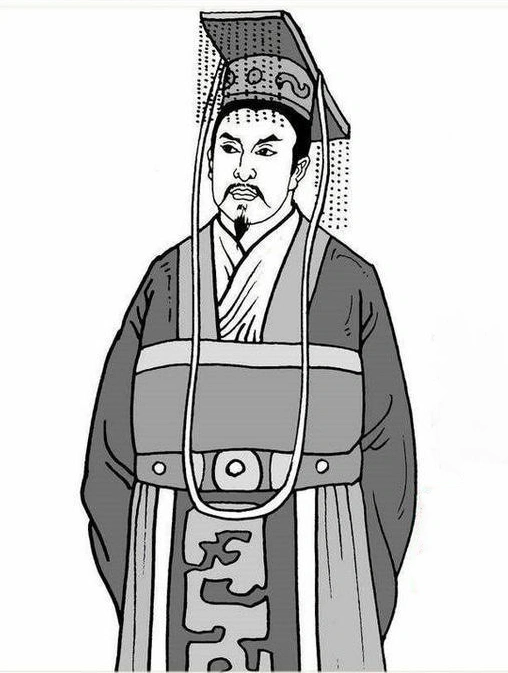
In the twelfth month of 357 the court of Yan entered the palace at Ye. The city had been the seat of the Cao house in the third century and of the Shi house in the fourth; its palaces had been burned, its granaries emptied and its streets fought over in the wars of the previous eight years. The new ruler ordered the Bronze Sparrow Terrace rebuilt. The order was characteristic. A Xianbei emperor was restoring a Chinese monument, and the cavalry that had taken the city was camped in the fields outside the wall.
His name was Murong Jun. He had been born at Jicheng, the Murong capital in Liaoxi, in 319, if the memoir's statement that he died at forty-two is arithmetic rather than convention; no other source gives a birth year. He was the second son of Murong Huang, who had taken the title Prince of Yan and won the Jin court's patent for it four years later and had built a state that was half steppe chiefdom and half Chinese prefecture. Jun inherited it in 348 and spent the rest of his life turning it into an empire. In 352 he took the imperial title. In 357 he moved to Ye. Between those dates he took the Zhao capital, destroyed the state that had replaced the Zhao, and killed the man who had founded it, and made the Yan court the strongest power in the eastern half of the north. He also exhausted the plain he had won, and died leaving a child on the throne and his ablest brother as regent. His reign is the hinge between the frontier kingdom his father built and the conquest state his son lost. The three capitals are the reign: Longcheng, where he was born; Ji, where he took the title; Ye, where his court ended. His father's state had no adjective: it was Yan, and the "former" that later histories attach to it belongs to compilers who had to tell the several Yan houses apart.
1. The Second Son
The future emperor was born into a house that had spent three generations making itself necessary. His grandfather Murong Hui had held the Liaoxi country against the Zhao and the rival Xianbei houses; his father had turned that holding into a state. Huang had taken the title Prince of Yan in 337, won the Jin court's patent for it four years later, built a Chinese-style chancery and a school, settled refugee households on the land and kept a Xianbei cavalry at the core of his army. The state had two languages and one army, and the arrangement had worked because the Zhao were the common enemy and the Jin were far away.
Its administration was double. One was the prince's household and its cavalry, organized by tribe and commanded by Murong kinsmen. The other was the Chinese prefecture, with its registers, its granaries and its clerks, staffed by the refugee families who had come east from the plain during the Zhao wars. The first supplied the army; the second supplied the words in which the army's conquests were announced. Neither could replace the other, and the house had learned to live with the division.
Jun was the second son. The memoir gives him a tall frame, a grave face and a taste for books; it says that he read widely in history and liked to argue points of meaning with his attendants. In 337, when his father took the royal title, he was made heir. In 341 the Jin court invested him as bearer of the staff of authority, general of the north, colonel of the eastern barbarians, left worthy prince and heir apparent. The titles were the ordinary equipment of a frontier prince, and they described a future that no one in Jiankang expected him to change. In 343 he led a column against the Dai and found the enemy gone; the campaign ended without a battle. It was one of his few independent commands before he became king, and the memoir remembers it for the march rather than the result.
His father died in the ninth month of 348. Jun took the Yan title in the eleventh month, and in the first month of 349 he counted a first year of his own, after the fashion of the feudal states of the Spring and Autumn, proclaimed an amnesty and did not adopt an era name. The choice was a compromise between a province and a dynasty: a state with its own years but not yet its own era. The Jin calendar was the calendar of a suzerain; a Yan era would have been a declaration of independence. He took the year count without the name, and the omission was a statement in itself. The annalists who wrote his life dated it by the Jin calendar, because that was the calendar of the courts they served; his own court counted from the year he took the title. Two calendars ran at once, and the ambiguity was the constitution of the house.
In the same year the Jin court sent Chen Shen to invest him with the titles his father had worn: commissioner with extraordinary powers, palace attendant, grand commander of the north, governor of four provinces, grand general, chanyu and Prince of Yan, with the right to appoint his own officers as his father and grandfather had done. The paper made him a vassal in the year he began to act as a sovereign, and it told him that he was a son, not a founder. He accepted it, because it cost nothing and because it kept the southern court from supporting a rival. Three years later he would show what the acceptance had been worth.
The Zhao crisis gave him his opportunity. Shi Hu died in 349, in the fourth month, and within a year the Zhao court at Ye had killed its way through three emperors while Ran Min made himself master of the capital. Jun did not move at once. In the fifth month of 349 he appointed Murong Ke general who supports the state, Murong Ping general who assists the ruler and Yang Wu general who aids righteousness, the three officers the memoir calls the three aids; he made Murong Chui, then still called Ba, forward commander; and he selected more than two hundred thousand men. The figure is the memoir's and describes a levy rather than a standing army. What matters is the decision to levy at all. A frontier kingdom that could levy two hundred thousand men had stopped being a frontier kingdom.
The memoir's portrait is of a man who wanted to be taken for a Chinese sovereign. He kept a severe public bearing, never received the court in casual dress, and preferred the company of clerks and scholars to that of huntsmen. He had been raised in a court that read the classics and rode with the herds, and the two habits were not yet a contradiction. His reign is the record of their becoming one. The portrait is not warm. It gives him dignity rather than charm, and it never suggests that he was loved.
2. The Year the North Broke
For a year the Zhao generals fought each other in the plain, and the Yan court watched from the passes. Shi Hu's sons and adopted grandson destroyed one another at Ye and Xiangguo; the Qiang chief Yao Yizhong held Shetou with his people; the Jin court had already sent an expedition north and lost it. By the summer of 350 the north had no single master, and the Yan state had the only intact army on its northern edge. Jun's court did not intervene in the Zhao succession. It waited for the winner to emerge, and then attacked the winner.
In the third month of 350 Jun marched from Longcheng by the Lulong pass and Wuzhong. Wang Wu, the Zhao governor of You, abandoned Ji and left Wang Ta to hold the city. The Yan army took it, killed Wang Ta and made Ji the capital. Jun then moved the people of Guangning and Shanggu east to Xuwu and the people of Dai commandery to Fancheng before returning north. The move was a steppe gesture: a frontier is secured by moving the households that might feed an enemy. It was also the first sign that the Yan state intended to stay on the plain rather than raid it.
The three columns went out with three objectives. Ke cleared the ground around Zhongshan and killed the Zhao officer Bai Tong. Ping attacked Wang Wu at Lukou and killed his officer Zheng Sheng. Chui reduced Duan Qin at Yimu. The targets were the commandery seats and the remnant garrisons of the northern plain, not the great cities of the south. This was an occupation conducted at the speed of a raid. The Yan court was taking the rim of the plain first, where its cavalry could work and its supply lines were short, and leaving the centre for later.
The plain was a country of walled villages. The great families had built their compounds during the Zhao wars, enrolled their tenants as retainers and negotiated with whichever army held the road. The memoir records the submission of strongmen by the hundred; the Yan court confirmed the ranks they already held, appointed them to commanderies and left their retainers alone. This was how a cavalry army governed a settled country without a census: it bought the men who already had the villages.
In the same year Ran Min sent an envoy, Chang Wei, to the Yan court. Jun had him questioned outside the palace gate by his secretary Feng Yu: by what omen had a foster grandson of the Shi house taken the imperial title? The record has the envoy answer that each house had its own omen, and that the Wei had as good a right to one as the Yan. The exchange is a set piece of court rhetoric, and its point is political rather than religious. Jun would not treat the Wei court as a peer, and the interview was staged to say so before the armies said it.
It is also the first statement of the Yan claim to be the legitimate heir of the north. Not the Wei, which had killed its way out of the Zhao house; not the Zhao, which had collapsed; but the house that had kept the Jin title and the Chinese forms while the plain changed masters.
In the spring of 351 Shi Zhi, the last Zhao prince at Xiangguo, asked Yan for help against Ran Min. Jun sent a column, but not the army. The relief was broken, and Ran Min went on to destroy Xiangguo and the last of the Shi house. The policy was to let the two enemies exhaust each other. By the winter the plain had two masters, Ran Min in Ye and Jun in Ji, and one exhausted countryside between them. The relief had been a small force. Jun was not yet ready to fight for the plain, and he was buying time with other men's blood. The memoir does not apologise for it, and the strategy did not need an apology.
Behind the marching columns he was building a frontier government. He left a governor at Ji, kept the road to Longcheng open, and moved the households of the border commanderies to the passes where they could be fed and watched. The measures were small and they were the ones that lasted. When the army went south in 352, it had a capital behind it and a road home.
Yan's advantage in that winter was not numbers but position. Jun held the passes and the road north; he could feed an army from Liaoxi and could go home if he lost. Ran Min held a city whose hinterland had stopped sending grain and an army that had no horse to replace the squadrons it had killed. The Yan court could wait, and waiting was the one thing the Wei court could not afford.
Through the winter of 351 and the first months of 352 the two courts prepared. Ran Min had won his last victory at Xiangguo and had no more to win; he had also lost the horse that had made him dangerous, and his infantry was raised in the city. Jun had the cavalry, the harvest of Liaoxi and the road north. The war had become a question of ground: who would choose it, and who would have to fight on the other's terms.
In the fourth month of 352 the two armies met on the open plain at Liantai, and the waiting ended.
3. Liantai
Ke commanded the Yan horse. His problem was the one that had faced every cavalry commander since the steppe met the plow: how to break a mass of infantry that will not run, on ground where the horse has room but no cover. He divided his squadrons into three, made the centre slow and heavy so that it would bend and not break, and kept the wings out of the first collision. The memoir gives the plan in his words to his officers. The centre was to hold, the wings were to wait, and the enemy was to be allowed to commit himself. The plan assumed a commander on the other side who would attack the centre because it looked weak, and Ran Min was exactly that commander. Ke was not only fighting the army in front of him; he was fighting the reputation of the man who led it.
The plan was not a trick. It accepted that the first line would be beaten and prepared for the second. The centre was not meant to win; it was meant to remain. When the infantry had spent itself against a line that would not open, the wings came in on the flanks, and the plain did the rest. The memoir puts the slain at seven thousand. The figure is the court's and describes the enemy's dead rather than the battle; it is best read as a sign that the pursuit was long. The pursuit was the decisive part. An infantry army that breaks in the open can be reassembled behind a wall; an infantry army that is chased across a plain cannot.
Ran Min was taken in the open. He was brought before Jun and sent north, and at Longcheng, the old capital, he was beheaded. The Yan court had killed the best soldier in the north and had done it with the instrument that soldier had spent two years destroying: cavalry. The record's account of what passed between the two men belongs to the story of the prisoner, not to this one. What belongs here is the decision to send him to the old capital rather than keep him at Ye. The execution was staged in the old capital, where the Yan state had begun.
Ye was not taken by the battle. Ping brought a flying column of ten thousand horse to the city and sat down before it while the main army cleared the country. The Wei general Jiang Gan held the walls with the last of the garrison and sent to the Jin court for help. The Jin officer Dai Shi entered the city with a hundred men, more as a diplomat than a relief, and left with the seal. The city opened in the eighth month, when the food was gone and the court had no answer, and the Wei court came out: the empress Dong, the crown prince Ran Zhi, the grand commandant Shen Zhong and the minister of works Tiao Mei. Jun announced that the empress had brought him the transmission seal, gave her the title Lady Who Presented the Seal and enfeoffed the boy as Marquis of Haibin. The announcement was false; the seal was on its way to Jiankang. The falsehood was useful, and the court kept it.
Liantai decided more than a battle. It removed the only man who could hold the Zhao military households together under a Chinese title. The Jie and the six contingents had been broken in 350; their surviving officers now had to choose between a Jin court they could not reach, a Qiang chief at Shetou and the Yan army that held the roads. Most chose Yan. The memoir records their commissions; it does not record their numbers. The great families of the plain did the same, and for the same reason. Yan could appoint them, tax them and leave them their retainers.
The choice was not a conversion. The families that came over kept their retainers, their granaries and their local offices; they gave the Yan court a tax base and a set of roads, and the Yan court gave them a title and a garrison. The bargain was the same one the Zhao had made with them, and it survived the change of dynasty because it was made with the land rather than with the house.
The Jin court had hoped to profit from the collapse without fighting for it. It got the seal, a client in Shandong and a frontier that ran through the ruins of the Zhao state. It did not get the plain. The men who had governed the plain for the Zhao offered their counties to the court that could reach them, and the court that could reach them was at Ji.
The victory gave Jun the plain and did not give him a government. The counties were held by garrisons and by the submission of strongmen; the court still moved with the army; the registers were the Zhao registers, where they existed at all. The next eight years were spent turning a conquest into a state, and most of the work was done with titles, roads and walls rather than with battles.
The work was not glamorous and the memoir does not dwell on it. It records the appointments, the submissions and the moves of households, and it leaves the impression of a court that was always arranging rather than governing. That impression is probably just. A conquest state is a set of arrangements, and the arrangements hold until a stronger army arrives.
4. The Emperor at Ji
In the eleventh month of 352, in the Zhengyang Hall at Ji, the officials pressed the imperial title on him. He took it, proclaimed a general amnesty and changed the era to Yuanxi, the First Seal. The hall stood in a frontier city that had been a Zhao garrison four years before. Using it to receive his own officials was a small, exact piece of theatre. The title was the title of the Qin and the Han, and the ceremony was conducted in the forms of a court that expected to last.
He had spent the autumn at Zhongshan, reviewing the two armies and showing the flag on the northern road; he returned to Ji in the tenth month. The memoir's variant that places the title at Zhongshan is probably a memory of that progress. The act itself was at Ji, and the city was the better stage: it was the gateway to the plain, and it was one of the first Zhao cities the Yan had taken.
He raised his grandfather and father to imperial posthumous titles, with his father as Emperor Wenming. He established the ancestral temple and the hundred offices, changed the name of the metropolitan province from Si to Zhong, and set up a branch administration at Longcheng. The branch administration is the tell. A court that keeps a second government in its old capital has not decided whether it is a conqueror or a settler, and Jun never decided.
The double centre had a practical logic. Longcheng held the tombs, the old households and the road to the steppe; Ji held the registers, the granaries and the Chinese officials. A house that kept both could retreat and could govern. A house that kept both also told its Chinese subjects that the retreat was still open, which is not the same as telling them that the conquest was final.
Feng Yi became grand commandant, Yang Wu director of the secretariat, and Huangfu Zhen and Zhang Xi the two heads of the secretariat. The chancery was Chinese. The armies were princely: Ke as Prince of Taiyuan, Chui as Prince of Wu, Ping, a little later, as Prince of Shangyong. That division was the constitution of the reign. The clerks wrote the edicts, the princes commanded the horse, and the emperor held the point where the two met.
The titles were a hierarchy of the house. The princes were princes of the blood first and commanders second; their armies were their households, and their loyalty was to the man who had given them the title. The clerks were officials first and subjects second; their loyalty was to the office and to the selection that had put them in it. Jun needed both kinds of loyalty, and they did not point in the same direction.
In the second month of 353 he made Kezuhun empress and his eldest son Ye crown prince. The empress's household, the palace staff and the eunuchs became a third interest, neither princely nor bureaucratic. The arrangement was stable because the three interests needed him. It was fragile for the same reason.
The empress was a Kezuhun, a house of the Liaoxi frontier rather than of the Chinese plain. Her marriage had been made when Jun was still a prince, and it brought him a clan rather than a dowry. The clan's interest was in the palace, not in the army, which made it a useful counterweight to the princes and a poor substitute for them.
The investiture of 349 had made him a Jin officer; the title of 352 made him a rival. The Jin court could not withdraw the investiture; it could only deny that it had ever meant what it said. It did so, and the denial was weaker than the paper. It called him a usurper, and his court dated its own years. Neither could reach the other's capital. The Jin had the river and the seal, the Yan had the plain and the tombs, and each denied the other's title in the only language that mattered, which was the language of ritual.
In the same year the Former Qin took the imperial title in the west, and the Jin court still held the south. The north now had two emperors and the south one, and the fiction of a single empire had ended. Jun's title had less pedigree than the Jin's and more ground than either. That combination was the whole of his legitimacy, and it was not nothing. Ground could be taxed, garrisoned and handed to a son; pedigree could not. He had made himself the equal of the two emperors by holding the ground between them.
The three courts knew one another's titles and refused them all. Each called the others usurpers, and each kept its own calendar. The exchange of insults was a form of recognition: only a court with a title worth denying could be insulted in that language.
5. The Seal
The seal of the First Emperor had passed through the Han, the Wei and the Jin. Han Zhao took it at Luoyang in 311, Later Zhao took it from Han Zhao, and it was in Ye when Ran Min killed the last of the Shi house. When the Yan army besieged Ye, Ran Min's general Jiang Gan held the city for the boy Ran Zhi and asked the Jin court for help. A Jin officer, Dai Shi, entered the city with a hundred men and carried the seal south to Jiankang. So in 352 the Jin court held the stone and the Yan court held the city that had held it.
By 352 the stone had been in the north for forty years and had changed hands four times. It had been a prize of the Xiongnu and the Jie, and the Murong had claimed it without holding it. The first two had learned that possession of the seal did not by itself produce a government; the third was betting that the claim would do as well as the stone. What it produced was a claim that the southern court could not ignore, because the southern court had built its own legitimacy on the same stone.
Jun's answer was a story. The Wei empress, he said, had found the seal and brought it to him; he gave her the title Lady Who Presented the Seal and enfeoffed her son. The Book of Jin calls the claim false. The historian who recorded the reign marked its founding lie in a single word and then recorded the reign, which is what courts do with useful lies.
The era name did the same work more elegantly. Yuanxi means the first seal, the seal at the beginning; a reign that dates its years from a seal announces that the mandate is a thing that can be held. The name was chosen before the story was tested, and the story was never tested, because the only people who could test it were in Jiankang. A claim that cannot be checked is not a weak claim. It is the only kind that a rival cannot answer.
The crown prince Ye died, and the succession had to be remade. In the second month of 357 Jun made his third son Wei heir, proclaimed an amnesty and changed the era to Guangshou, Luminous Longevity. The change had nothing to do with a seal. It was the ordinary refreshment of a reign that had lost its heir and found another, and the new name was a prayer. The reign had three years left, and the prayer was not answered.
The new era had begun with the appointment of the heir, and the old one was closed without ceremony. A reign that changes its name after five years is a reign that wants the future to start again. The change also served the court: it dated the new heir's prospects from the new era, and it gave the officials a fresh round of promotions and amnesties at a moment when the treasury could not afford a war.
The court also argued the element of its succession. If Yan inherited the Jin, whose element was metal, Yan was water; if Yan began a cycle of its own, it was wood. The two answers entailed different colours, different sacrifices and different histories. The memoir preserves the argument in the life of Han Heng and does not record a clean decision. The argument itself was the point. A court that argues about water and wood has decided that it is a dynasty, because only a dynasty has a place in the sequence.
The water answer made Yan the Jin's heir; the wood answer made it the Jin's replacement. The first was the safer claim and the second was the prouder one, and the court's inability to choose between them was itself a sign of its position. A dynasty that has just taken a capital wants to be the heir; a dynasty that has just founded an empire wants to be the beginning.
The seal was one of three signs a new house needed. The second was the element, which placed it in the sequence of dynasties; the third was the temple, which placed it in the sequence of ancestors. Jun had the temple and the argument about the element. The seal was the only one he lacked, and it was the one the south held. That is why the story of the empress and the seal was worth telling, and why the court told it for the rest of the reign.
The rivalry with Jin was not a war of words only. The Jin court had the seal, the succession of the southern courts and the claim to the whole empire; the Yan court had the plain, the tombs and the temple. Each denied the other's title. The war of 356 to 358 was the military form of the argument, and it settled nothing, because the two courts could not reach each other's capitals. The seal was a stone. The argument was about who had the right to date a year.
The Jin court dated its years from the restoration of 317; the Yan court dated its own from 349, and later from 352 and 357. A merchant who crossed the river carried two dates in his head, and a governor who changed sides changed his calendar with his seal. The confusion was not a sign that the claims were empty. It was the ordinary weather of a divided country.
6. The War in the South
The first southern campaign was in Shandong. Duan Kan was a Duan, of the clan that had given the Murong their empresses and their frontier wars. He had held Guanggu since the Zhao collapse, taken the title Prince of Qi and accepted a Jin commission. His state was a client of Jiankang in name and a warlord's camp in fact, and the Yan court treated it as the last independent warlord in the east.
In the first month of 356 Ke crossed the Yellow River, beat him on the Zi and sat down before the city. The Jin relief under Xun Xian reached Langya and stopped.
Ke refused to storm. He told his officers that a strong enemy without relief should be kept and waited out, that ten to one was the ratio for a siege and five to one for an assault, and that a quick victory was not worth the deaths. He built walls and ditches, and the countryside, the memoir says, brought grain to the besiegers. The city fell in the eleventh month.
The length was the point. Ke had the supply and the patience; the city had the walls and nothing else. The relief never came, the local gentry had begun to send grain to the besiegers, and the city was starving. A general who can wait is a general who has already won, provided his own army does not dissolve while he waits.
In the next year Jun had Duan Kan killed and three thousand of his men buried. The annal gives the act in one line and no reason. It is the other face of the patient general: the court could wait, and when the waiting ended it could be thorough.
In that same year, 356, a Jin army retook Luoyang. Jun did not turn west. The choice defined the reign. Shandong was nearer, richer and held by a Jin client; Luoyang was a symbol in a theatre where the Yan horse could not live. The city stayed Jin until the next reign, and the Yan state never solved the problem that its refusal posed: a cavalry power cannot hold a river line without a fleet and a garrison system, and Yan had neither.
In the tenth month of 358 the Jin governor of Taishan, Zhuge You, attacked Dongjun and entered Wuyang. Jun sent Ke with the troops of Yang Wu and the Prince of Le'an. Zhuge You withdrew; Ke crossed the river, occupied ground in Henan and appointed governors. A second Jin force came by the Shimen with ships and twenty thousand men; Ping and Fu Yan met it at Dong'e with fifty thousand horse and foot and broke it.
In the west the Zhao officers Zhang Ping, Li Li and Gao Chang had been playing the same game as the rest of the plain, offering their counties to Yan, Jin and the Former Qin in turn. Jun sent Ping against Zhang Ping in Bing province, Yang Wu against Gao Chang and the Prince of Le'an against Li Li. The walled villages of Bing came over by the hundred, and the Yan court confirmed their headmen in their ranks. The campaign was less a conquest than a registration of men who had already decided to submit.
In the same autumn the Jin commander Xie Wan led an army to the Huai, quarrelled with his officers and withdrew without a battle; the retreat became a rout. Xuchang, Yingchuan, Qiao and Pei came over one after another. The victory was real and shallow. The towns were taken by the enemy's flight, not by a Yan administration, and the officials who took them over were the same local men who had held them for the Zhao and the Ran Wei.
The best small story of the war is at Shanchi. The Yan governor Jia Jian held the town with seven hundred men against ten times his number, fought in the streets, was taken and died in Jin hands in the rain. Yan retook the town. A Chinese officer of the frontier had held a town for a Xianbei court against a Jin army, and the plain's local elite was beginning to have its own reasons for the choice. The reasons were not ethnic. They were the ordinary reasons of a man with a family, a farm and a title to lose, who preferred the court that could reach him to the court that could not. The frontier elite had served the Zhao, the Ran Wei and now the Yan, and it would serve the Former Qin after 370. Its loyalty was to the town and the family, and the court that could guarantee both got the title deed.
Yan never took Luoyang in Jun's lifetime. Its army was cavalry with an infantry tail; it could break a Jin expedition in the open and could not hold the river line. The levy of 358 was an attempt to solve the problem by numbers, and it was abandoned before it marched. The southern war ended not with a frontier on the river but with a line of towns that changed hands with the seasons, which is what a war between two courts that cannot reach each other looks like.
The Former Qin would inherit the problem. A northern empire without a fleet can take the north bank and cannot take the south, and the war of 356 to 358 was a demonstration of that limit.
7. Ye
In the eleventh month of 357 he moved the court from Ji to Ye. In the twelfth month he entered the palace, proclaimed an amnesty and ordered the Bronze Sparrow Terrace rebuilt. Ji had been a frontier capital, close to the passes and the old homeland. Ye was the capital of the plain, on the roads that ran from the passes to the coast and from the river to the northern garrisons. The move completed the road from Longcheng.
Ye stood on the Zhang river, where the plain meets the foothills, and it was the natural capital of the north-eastern plain. Cao Cao had made it the seat of his power and built the terrace and the three towers; Shi Hu had rebuilt the palaces on a scale that the plain could not sustain. The city had been fought over for twenty years, and its walls were still the best in the north.
The terrace was the monument that a new master of the city repaired. Jun repaired it too, and the repair was a claim. The new house was the heir of the Chinese city, not its destroyer. The claim was easier to make in stone than in institutions, and stone was what the treasury could still afford.
The palace he entered had been Shi Hu's. The great halls were the ones the Zhao had built, the offices were the ones the Zhao had used, and the guards at the gates had served three masters. Jun did not tear them down. He repaired them and moved his court into the shell of the state he had destroyed.
The court moved with its bureaus, its guard and its archives. The ancestral temple followed the capital, as temples do. The branch administration stayed at Longcheng with the tombs and the frontier commands. The state now had two centres, one for the living and one for the dead, and the road between them was the spine of the reign.
Ji had been a royal seat; Ye was an imperial one. The difference was not in the walls but in the ceremonies. At Ji the court had been an army with a palace; at Ye it was a palace with an army, and the clerks who had followed the march now had offices with doors and registers on shelves. The change was the most Chinese thing Jun ever did.
The capital and the army were paid for by the counties. In the twelfth month of 358 he ordered the provinces to verify the able-bodied men, leave one in each household and take the rest, with a target of one and a half million infantry and a muster at Luoyang in the spring. Liu Gui of Wuyi memorialised that the households were exhausted and that the levy would break the state. Jun agreed, changed the order to a three-in-five levy and postponed the muster to the following winter at Ye.
The order was a census for war, not for tax. It counted men rather than land, and it took them by household rather than by wealth; a Chinese census would have counted the fields and the households together. The distinction is the reign in miniature. Jun could use the Chinese forms of government and could not use the Chinese fiscal base, because the base had been destroyed in the wars and the forms could be imported without it.
The memoir adds a detail that explains the concession. The envoys of the central offices had been filling the roads, each with a quota, and the counties could not tell one from another. Feng Yi asked that, apart from urgent military business, the provinces be left to meet their quotas without envoys. Jun agreed. A government that cannot control its own messengers has already lost the country it is taxing.
The two concessions, the smaller levy and the restraint on envoys, were made in the same season and for the same reason. The court had discovered that it could not extract what it had ordered. A government that learns this in time survives; one that does not, breaks. Jun learned it in time, and the state survived him by ten years.
The move to Ye was the reign's best idea and its heaviest cost. It gave the dynasty a Chinese capital, a Chinese temple and a Chinese bureaucracy; it also gave it a court that had to be fed, a palace that had to be rebuilt and a war that had to be paid for. The plain could support a capital or an army of the size he proposed, not both. The terrace stood, and the registers thinned.
8. The Brothers
The Yan court was a house of princes with a Chinese chancery. The princes commanded the armies, the clerks kept the registers, and the emperor held the point where the two met. Jun's reign is the record of how he kept the interests apart, and of what happened when one of them moved.
Murong Ke was the fourth son of Huang and Jun's half-brother. His method was patience. He preferred the wall and the ditch to the assault, and he explained the preference to his officers in the language of the military classics. The memoir gives him the house's one clean reputation. He was made Prince of Taiyuan and grand marshal, and in 360 he was the only man the dying emperor could name.
He had taken Zhongshan in 350 with a flying column, held the centre at Liantai in 352, reduced Guanggu in 356 by the slowest method available, and crossed the Yellow River in 358 to occupy ground he could not keep. The pattern is consistent: he chose the method that preserved his army, and he accepted a longer war as the price. The memoir's praise is for his restraint, not his brilliance.
Ke's power was personal, not institutional. He had no provincial base and no party at court; he had the army's respect and the emperor's trust. That made him the perfect regent and a poor candidate for usurpation, which is why the testament could offer him the throne and be believed. A man with an army and no faction is an asset to a dying sovereign and a danger to a living one, and Jun seems to have understood both halves of the fact.
Murong Ping was Jun's uncle, the youngest son of Murong Hui and the youngest brother of Huang. He had been a commander since the 330s. He killed Zheng Sheng at Lukou in 351, besieged Ye in 352 and was later made Prince of Shangyong. In 358 he broke Zhuge You at Dong'e and campaigned against Feng Yang in the hills. He was the senior prince, the court's manager and the natural counterweight to Ke.
His Henan command was a paper claim. The court gave him command of ten provinces and headquarters on the Luo in 354, when Yan held neither Luoyang nor the roads that led to it. The appointment was a statement of intent, and it told the Jin court that the Yan considered the river its frontier. It also gave Ping a theatre and a staff, which is what a senior prince needs if he is to be a counterweight.
Ping's power was institutional and social: seniority, his rank at court, the garrison of the capital. He was not a field commander of Ke's rank, but he was the man through whom the princes spoke. After 360 he was the second regent; after Ke's death in 367 he was the first. The corruption and the jealousy that later histories lay to his charge belong to that later period, not to this reign, and the distinction matters. In Jun's lifetime Ping was the stabilizer, not the danger.
Murong Chui was the fifth son of Huang. He was originally named Ba; Jun disliked him and changed his name, ostensibly after an ancient worthy, in fact to cut him down. The memoir says so, and the renaming is the first fact of Chui's life in this court. He was forward commander in 349, raided Duan Qin at Yimu in 350, and in 357 led eighty thousand horse and foot against the Chile beyond the frontier, with a reported hundred thousand killed or taken and a hundred and thirty thousand horses. The numbers are the court's. The command was real.
The Chile were the steppe people beyond the northern frontier, the same range of tribes the Chinese called the Dingling. A campaign against them was a campaign for horses and prestige, not for ground; the horses were the real object. Chui came back with the army intact and a reputation that the court could not use and could not ignore.
In 358 his wife, a Duan, was accused of sorcery by the empress's eunuch Nie Hao. She died in prison. Chui escaped the charge and was posted as governor of Ping province at Liaodong. The posting was an exile with a title. He had done nothing wrong that the record names, and he had become the man the palace could not afford to keep at court. The court that had used him against the Chile could use him against the Jin; it could not use him against the empress.
Empress Kezuhun was made empress in 353 and was the mother of the heir Wei. Her household and the palace eunuchs were a third interest, neither princely nor bureaucratic. The attack on Chui's wife is the one place where the memoir shows her power directly; the rest is inference from the appointments. After 360 she was the dowager, and after 367 she governed with Ping. The later alliance of the palace and the senior prince was not an accident. It had been forming since the day she was made empress.
The Kezuhun were a frontier clan, not a Chinese family. Their power was in the palace and in the marriage alliance, and it grew as the emperor's health declined. The case was a test of that power, and it succeeded: the wife died, the prince was posted away, and the emperor did nothing. A court that watches a prince's wife die in prison and does not ask why has already told the princes who governs the inner rooms.
The chancery was Chinese: Feng Yi, Yang Wu, Huangfu Zhen, Zhang Xi, Han Heng, Li Chan and his son Li Ji. They drafted the edicts, kept the registers, argued the element and the rites, and supplied the continuity between the Yan court and the gentry of the plain.
Their power was administrative. They could not command a squadron or arrest a prince; they could keep the precedents, the registers and the correspondence with the south, and they were the only people at court who knew how a Chinese government was supposed to work. Their power was the power of the pen in a court where the sword had the last word, and it was real only as long as the emperor wanted the pen. The court was a coalition, not a bureaucracy, and a coalition is held together by the man at the top or not at all.
Jun kept it together by being the only point at which its members met. He put Ke in the field, Ping at court, Chui on the frontier, the empress in the palace and the clerks in the chancery. The arrangement held while he lived and while Ke lived. Its first crack was the death of the crown prince Ye and the appointment of a child as heir; its second was the Duan case of 358. The first told the princes that the future was open. The second told them that the palace could reach them.
9. The Last Year
In 359 the court was still paying for the war and the capital. The levy was postponed, the envoys were restrained, and the southern front was quiet. Jun was ill, and the memoir does not describe the illness; it describes the testament, which is the part of a reign that a court writes for itself.
He had held the Yan title since 348 and the imperial title since 352, and the court had a child heir, a competent regent and a senior prince, and no procedure for a minority. The testament was an attempt to supply one.
The record has him say to Ke that the two enemies were not yet destroyed and the heir was young, and that he wished to follow Duke Xuan of Song and hand the state to his brother. Ke refused. If the emperor thought him fit to bear the empire, he said, he could surely serve the boy. Jun answered that if Ke would do the work of the Duke of Zhou he had no worry, and asked him to treat Li Ji well. The scene is a set piece of the abdication tradition, and it is also a political act. It gave Ke the regency in the emperor's own voice and made refusal the proof of loyalty.
The offer was also a test of Ke. A man who accepts a throne offered by a dying emperor becomes a usurper in the eyes of every prince who was not offered it; a man who refuses becomes the guardian of the child and the master of the state. The refusal made him the most powerful man in Yan without making him a rival of the boy. The record's admiration for him is the admiration of a court that had seen what the alternative looked like.
He died in 360 at the age of forty-two. The posthumous title was Emperor Jingzhao, the temple name Liezu, the tomb Longling. Murong Wei, a child, succeeded. Ke became grand steward and recording secretary, Ping grand tutor, and the empress dowager Kezuhun held the palace. The settlement was the last of Jun's compromises, and it was the best of them: it gave the state a regent whom the army trusted and a senior prince whom the court trusted, and it left the child as the point at which they had to meet.
The titles were the ordinary equipment of a dynasty, and they were the last things the court could give him. The state he left had a capital, a temple, a calendar, a chancery and an army. It did not have a grown heir, and that was the one thing the titles could not supply.
The memoir has no separate verdict at the end of this life. It closes with a character sketch. He loved books, argued points of meaning with his attendants to the end, wrote more than forty pieces and kept a severe bearing; he never received the court in casual dress. The praise is real, and it is also a limit. It describes a man who had made himself a Chinese sovereign in his habits, and it says nothing about whether he had made his state one.
The distinction is the whole of the later judgment. A sovereign can read the classics, keep the rites and build the halls, and still govern a confederation of households through a levy and a garrison. The forms are not nothing; they are the language in which the state explains itself. But they are not the institutions that collect the tax, settle the lawsuit and replace the dead emperor with a living one.
The account of the reign that survives is the memoir in the Book of Jin, compiled in 648 from the state histories of the northern courts, with the Comprehensive Mirror of 1084 for the order of events; both are court narratives, and the speeches they give him are composed for the occasion.
Later historians summed him up as a ruler who entered the Central Plains without being transformed by them. The phrase is a judgment on the court, not on the man. The titles, the palace, the temple and the books were Chinese; the levy that left one man in each household, the three thousand buried after Guanggu and the suspicion that drove Chui to Liaodong were not. He had learned the forms of a dynasty and had not built the institutions that make a dynasty survive its founder.
The counter-case is strong. He moved the capital into the plain, kept the chancery, employed the gentry, dated his own years, argued the element and left a regency that worked while its regent lived. That is more than a raid. But the test of a state is what happens when the founder dies, and his state passed to a child, a dowager and two princes, and lasted ten years.
Ten years is not a failure by the standards of the fourth century. The Later Zhao lasted thirty-three, the Ran Wei two, the Former Qin forty-four. What distinguishes the Yan is not the length of its life but the speed with which it stopped growing. It took the plain in two years and spent the next eight arranging it, and the arrangement was still unfinished when the founder died.
Ke held it until 367. Three years later the Former Qin took Ye, and the state that Jun had raised to imperial rank ended. The branch administration at Longcheng, which had waited since 352, outlasted the capital it had served. The road south had been the reign; the road back was the end.