Home / Emperors / Three Kingdoms
Emperor Jing of Eastern Wu
吴景帝
Sun Xiu, 235 – 264 · third emperor of Eastern Wu
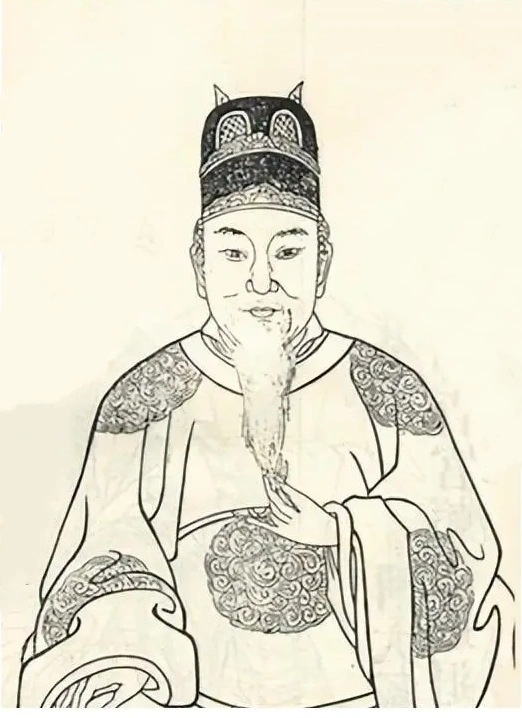
Of the four men who ruled Wu as emperor, the third is the one the histories remember least. The Records of the Three Kingdoms, written within a generation of his death, gives formal annals to the rulers of Wei and settles the rulers of Wu and Shu in biographies; the founder of Wu has a book of his own, and Sun Xiu shares a single one with the two rulers on either side of him, the Biographies of the Three Heirs. He reigned six years, from 258 to 264, and the two things he is remembered for are the killing of the most powerful subject his state ever produced, and the founding of its schools.
He was not raised to the throne and did not expect it. He spent the years before his accession as a prince in retirement, reading in the coastal commandery of Kuaiji, and he came to power because a regent who had just deposed an emperor needed a man who would not refuse him. What he did with the office was unusual for his house. He brought the classics into the government, opened an academy, appointed erudites, and sent inspectors into the provinces, and he kept two friends from those years in Kuaiji, through whom the government drifted back into the hands of favourites. He died in 264 at the age of thirty, and the judgement Chen Shou passed on him turns on the distance between good intentions and good government.
1. The Sixth Son
Sun Xiu was born in 235, the sixth son of Sun Quan. His mother was a lady of the Wang family from Nanyang, taken into the palace as one of the women of the selection. She is not the Lady Wang who bore Sun Quan's third son and deposed heir, Sun He; the two women shared a surname and nothing else, and it was the mother of Sun Xiu whom the court would later honour as an empress. When he was thirteen, in 247, he was set to study under two men of the palace secretariat, She Ci and Sheng Chong.
What survives of his youth is mostly about books and about marriage. In about 250 his father betrothed him to a daughter of the general Zhu Ju; the girl's mother was Sun Luyu, a daughter of Sun Quan by another lady, which made the bride Sun Xiu's own niece as well as his wife, a marriage of the kind the families of the period arranged without embarrassment. In the first month of 252 he was made prince of Langya and settled at Hulin, on the river above the capital. His father died in the fourth month, his young half-brother Sun Liang took the throne, and the regent Zhuge Ke, not wanting the princes of the house to sit on the strategic bank of the Yangzi, moved them inland. Sun Xiu was sent to Danyang commandery, where the governor, Li Heng, used the law against him until he asked to be moved, and the court sent him to Kuaiji.
He lived in Kuaiji for about six years, and it is there that he becomes visible. The history says he was fond of what was good and sought a name for it, and that he became close to two men: the governor of the commandery, Puyang Xing, and an officer of his guard, Zhang Bu. The Wu record adds a dream, that he rode a dragon up to heaven and, looking back, could not see its tail, and woke astonished at it. Some time in the middle of the decade his wife's mother, the Princess Sun Luyu, who was also his own sister, was destroyed by the regent Sun Jun on a charge the histories treat as false. Sun Xiu took fright for himself and sent his wife back to the capital, and the two of them took leave of each other holding hands and weeping; Sun Jun, finding nothing to charge her with, sent her back to him. The man who would one day sit on the throne spent those years reading and waiting, and being careful.
2. The Summons from Kuaiji
In the ninth month of 258 the government of Wu changed hands once more. The young emperor Sun Liang had tried to take the government back from the regent Sun Lin and had failed; Sun Lin deposed him and put him away as prince of Kuaiji. What that episode was, from the side of the boy who lost, belongs to the reign it ended. What it produced was the letter that came to Sun Xiu.
The day after the deposition, Sun Lin sent the imperial clan officer Sun Kai and a palace secretary, Dong Chao, to Kuaiji with a document that explained, in the voice of a loyal minister, why the throne could not be left empty. Sun Xiu did not set out at once. He kept the two men a day and two nights and made them set out the reasons before him; then he agreed. On the road, at a place called Qu'a, an old man is said to have stopped his carriage and told him that a thing long delayed changes, and that the whole empire was waiting on his speed; the story is in the record, and the man is not otherwise known. He went on.
At a pavilion called Yongchang near the capital, Sun En, the general of the Wu guard who was acting as chancellor, had built a hall and set a throne in it under a screen of tents, and had drawn up the officials with the imperial carriage. Sun Xiu halted at the sight of it and sent Sun Kai ahead to look; then he advanced by carriage, and the officials bowed to him as their lord. He would not take the throne, and stood instead in the east wing. The chancellor offered the seals, and he refused three times, and the officials asked three times, and then he said the words the history kept: that since the generals and ministers and marquises had all put him forward, how should he dare not to accept. He was enthroned in the tenth month, and changed the era name to Yong'an, Everlasting Peace.
Sun Lin met him outside the city at the head of a thousand soldiers and bowed to him at the roadside, and the new emperor got down from his carriage and bowed back. Then came the rewards. Sun Lin was made chancellor and governor of Jing province and given five more counties of fief; his brother Sun En was made a privy counsellor, general of the guard, and commander of the central army; two younger brothers were given generalships and fiefs. Zhang Bu, who had been the prince's guard commander in Kuaiji, was given a generalship invented for the occasion. In the same months Sun Xiu made a point of forgiving an old enemy. Li Heng, the governor of Danyang who had harried him under the last reign, came bound to the palace to answer for it, and Sun Xiu sent him back to his post untouched, citing the ancient precedents of the men who had shot at a duke's belt-hook and cut the sleeve of his robe, the servants who had stood by their own lord and whom the wiser lord then took into his service. He gave marquisates to the sons of his deposed brother Sun He, one of them the boy who would one day be Sun Hao. And when the officials asked him to name an empress and a crown prince, he declined, on the ground that he had been on the throne too short a time for such honours to be a matter of urgency.
3. The Banquet of the Twelfth Month
For two months Sun Lin was master of the state. Five members of his family held marquisates and commanded the palace guards, a concentration of power the history says Wu had never seen; when he made a request, the young emperor treated it with respect and did not dare to refuse it. He grew careless with his mouth. Offering the emperor the customary gift of wine and beef at an audience, and taking its refusal as a slight, he complained to Zhang Bu that when the young ruler had been deposed many men had urged him to take the throne himself; that the present emperor would not be emperor without him, and yet treated him like any ordinary minister; and that he would have to change his plans again. Zhang Bu carried the words to Sun Xiu.
The emperor did not move quickly. He loaded Sun Lin with gifts, granted his requests, and gave his brother a place in the palace that quietly divided the family's authority. When a man came forward to accuse Sun Lin of plotting rebellion, the emperor handed the accuser over to Sun Lin to deal with, which looked like fear and was in fact the opposite. It was the method his predecessor had lacked: Sun Xiu raised no private army, and waited for a veteran he could trust. Ding Feng was that veteran, a man the histories credit with more strategy than the other officers of his rank and with an ability to decide great matters. His advice was blunt: the chancellor's brothers and his party were strong, the hearts of men might not be of one mind, and the thing would not be done in a moment; but it could be done at the La festival, with the emperor's own guards.
In the twelfth month of 258, at the year-end La sacrifice, the court gave a banquet. On the eve of it the city filled with the rumour that something was to happen at the meeting, and a gale of wind and sand blew up that frightened Sun Lin; the emperor sent more than ten messengers to press him, and he came. He had arranged with his household to raise a fire, so that he could use it as a reason to leave; when the fire came and he asked leave, the emperor refused it. He rose to go anyway, and Ding Feng and Zhang Bu gave the sign, and the guards bound him. He begged first to be exiled to Jiaozhi and then to be made a slave. The emperor asked him why, then, he had not exiled and enslaved Teng Yin and Lü Ju instead of putting them to death, and had him beheaded there and then, and destroyed his clan. An order went out that only the principals were to suffer: five thousand of his soldiers laid down their arms. One brother who tried to reach Wei was caught and killed. Sun Jun, who had handed Sun Lin the government and was already in his grave, was dug up, his seal taken, and his coffin remade of thinner wood and buried again. The two of them were struck out of the clan register and referred to ever after only as the late Jun and the late Lin. The men they had destroyed, Zhuge Ke and Teng Yin and Lü Ju, were given new burials and sacrifices, and those who had been exiled on their account were recalled.
When it was over, the emperor had been on the throne less than two months, and the most powerful subject in the history of Wu was gone.
4. Schools and Fields
With the government in his own hands, Sun Xiu returned to what he had been doing all his life, which was reading, and did a thing no ruler of Wu had done, which was to make the state read with him. In the first year of Yong'an he issued the edict on learning. The ancients, it begins, placed instruction first in founding a state, because it was the way to guide the age and shape men's natures and to make instruments for the times; but since the Jianxing era affairs had been many, and the officers of the state high and low had taken to the profits of the moment, leaving the root and following the branch, and where what is honoured is not solid, customs are injured. The edict therefore orders that officers of learning and erudites of the Five Classics be established after the ancient model, that candidates be examined and chosen and given stipends, and that the sons of serving officials and of officers and soldiers who have the will be enrolled to study. After a year they are to be tested and ranked and given rank and reward, so that those who see it want the honour and those who hear of it envy the name. It is the document from which the academy at Jianye is dated. Its first head, the libationer of the erudites, was Wei Zhao, the historian whom the Records calls Wei Yao because a later taboo forbade the writing of his name.
The second edict was about the land, and it is the one in which the emperor sounds least like a scholar and most like a ruler. In the third month of 259 he began from the Guanzi: when the granaries are full men know the rites, and when food and clothing are enough men know honour and shame. He wrote that if one man did not plough, someone went hungry, and that if one woman did not weave, someone went cold, and that he had never heard of a people who went hungry and cold and yet did not break the law; that in recent years the officers and the people and the soldiers had all left the work of farming and taken to trading up and down the river in boats, so that good fields were going to waste and the harvest was shrinking every year; and that the cause of it might be that the taxes were too heavy and the farmers kept too little. He ordered the land tax to be graduated by the strength of the household and the burden equalised, so that the state and the people should each get their just share and every household should be able to feed itself. Then, he said, men would value their own lives and not break the law, and punishments could be little used and customs set in order; and the ministers were to bring him proposals that were workable, and to see that nothing was done at the wrong season of the year.
The year before, he had already lightened the burden on the small households of officials: a family of five in which three served the state both paid its grain and sent men to the wars, so that no one was left to run the household, and he ordered such a family to keep one man at home, free of the grain levy and the campaign. In 259 the nine ministers' offices were brought fully up to strength. In 261 he sent two grand masters of the palace, Zhou Yi and Shi Wei, to travel the commanderies and report on the conduct of officers, high and low, and on the hardships of the people, with authority to promote and to dismiss. He gave the great commands to men he judged fit: Lu Kai, one of the strongest voices of the old families, was made governor of Yu province with the staff of authority; Lu Kang, the son of Lu Xun, was made general of the garrison and commander at Xiling; Ding Feng, who had put down the regent, was made governor of Xu province. The record of the years between the banquet and the end of the reign is largely a list of such things, edicts and appointments and a few portents, and it is a quieter list than the record of the three reigns around it.
5. The Book-Lover
The record preserves more of what Sun Xiu was like than of what he did. He read greedily, and said so; the histories put it that he meant to finish the books of every school. When the season for shooting pheasants came, he went out at dawn and came back at night, and when the ministers remonstrated that so small a quarry was not worth such devotion, he answered, in a line a later collection of anecdotes kept, that it was a small creature but more upright than most men, and that this was why he liked it.
Two men who served the cause of learning, the libationer Wei Zhao and the erudite Sheng Chong, were known for being outspoken, and Zhang Bu, who now ran the palace, feared that if they were let into the inner rooms they would report his faults and end his freedom of action, so he set himself to keep them out. He chose the wrong emperor for that argument. Sun Xiu had read widely enough, he said; he knew the wise rulers and the foolish, the loyal ministers and the traitors, and the successes and failures of the past, and Wei Zhao and the rest were wanted only to talk over books with him, not to teach him from the beginning. The only thing Zhang Bu feared, he said, was that they would speak of the crookedness of ministers, a thing he was equipped to guard against himself. He added that a book is a thing to be loved, that loving it does no harm, and that government and learning are two matters, each with its own work, which do not get in each other's way. Zhang Bu apologised and shifted his ground. In the end the emperor gave way, stopped the discussions, and kept Sheng Chong and the others out of the palace, because, the record says, he understood what Zhang Bu was afraid of and did not like it, but feared what a frightened favourite might do.
He had one more use for writing. He grew tired of names that could not be spoken without offence, and when his four sons were born he coined new characters for them. The crown prince's name sounded like the word for a bend in a lake; the others like words for a drinking-horn, for thick grass, and for a wide sleeve. He issued a proclamation explaining that these were not characters in use, that he had made them by combining old forms, that the script had changed before and would change again, and that a name should be hard to violate and easy to avoid, and he ordered the whole empire to be told how the four names were pronounced. The edict, preserved in the Wu record, is the only writing of his own that has come down at length, and its subject is words.
Of his place in the arts of the day the evidence is thinner than the tradition. The Tang catalogue of calligraphy, the Shugu of Zhang Huaiguan, ranks two of the three Wu emperors in its third class, and they are his father and his nephew, not himself; for Sun Xiu the older sources say only that he wrote. It was the later handbooks that came to speak of the three of them, father and son and grandson, as the calligraphers of the house of Wu. The one story that shows him testing a claim is a marvel, and belongs to the Jin book of marvels, not the histories. He fell ill and called in a shaman; to test the man he killed a goose, buried it in the garden, built a little shrine over it and set out a woman's shoes and clothes, and asked him to describe the dead woman. The shaman said nothing all day; pressed, he said he could see no ghost, only a white goose standing on the grave, and that he had held his tongue because he suspected the ghost had taken the goose's shape.
6. The Fall of Shu
For most of the reign the foreign policy of Wu toward Shu was a matter of watching a sick ally, and one report survives of what Wu saw. About 260 the emperor sent an officer of the palace, Xue Xu, to Shu to buy horses, and when he came back asked what he had found. The answer is one of the few pieces of Wu diplomatic reporting that has come down. What he brought back was not the horses but a judgement: the ally on the upper river would not last. Sun Xiu heard it and was shaken. The chronicle that kept the exchange is a single source, and different books give the year as 260 and as 261; but the answer it preserves was accurate, and within three years it came true.
It came true in the tenth month of 263, when Shu sent word that Wei had invaded. Sun Xiu answered on three lines at once. Ding Feng was to take the main army toward Shouchun, on the northern frontier. Another general, Liu Ping, was to join Shi Ji in Nan commandery and decide from there where to move. Two more columns were to go toward Mianzhong. All of it was to relieve Shu, and all of it was shaped to draw the northern armies off by threatening Wei's own frontier. It did not have time to work. Before the columns were fairly engaged, word came that Shu had fallen, and the emperor called the campaign off. The same winter brought a second report from the south. In the fifth month a clerk in Jiaozhi commandery named Lü Xing had risen, killed the governor, and taken the province out of Wu; before the year was out he had sent to Wei to ask for a governor's title and troops, and the two commanderies beyond him had gone over with him. In a few months Wu had lost its ally in the west and its road into the far south, and a later commentary puts it plainly: the state was now enclosed by Wei on every side.
What Wu did next was to try to take something out of the wreck. It had long wanted the pass at Yong'an, on the upper Yangzi, which was the gateway from the river into the Shu plain, and when Shu was gone and Wei had not yet garrisoned the place, the emperor sent a force up the river under a general named Sheng Man, with orders that could be described as relief and were in fact a seizure. The man holding Yong'an was Luo Xian, an officer of the old Shu service with some two thousand men under him, and he saw what was coming. He refused to open the pass, and told the Wu envoys that Wu had been an ally, and that instead of attacking Wei it had come to fall upon a friend's border town. Then he took his troops out to the post-station outside the walls and mourned for Shu three days.
In the second month of 264 the emperor sent a larger force against the place: Lu Kang and Bu Xie and Liu Ping and Sheng Man, more than thirty thousand men against one town. Bu Xie attacked at once and was beaten off. Luo Xian sent a messenger north to ask help of the Wei commander Chen Qian and of the regent Sima Zhao, and offered up the seals of his civil and military officers. Sima Zhao did not send a column to Yong'an; he sent one at Wu's rear instead, and ordered the governor of Jing province, Hu Lie, with twenty thousand horse and foot, against Xiling. The siege lasted six months and the town did not fall. In the seventh month the Wu armies, with their own base on the river threatened and no prize in sight, gave it up, and the expedition that had begun as a rescue and turned into a land-grab ended with nothing taken. It ended in the same month as the emperor's life.
7. The Two Favourites
The emperor who had got rid of one favourite lived, in effect, with the two he kept. The friends of his years in Kuaiji ran the government. Puyang Xing rose to chancellor; Zhang Bu, the guard officer who had become his confidant, held the palace; one managed the offices of the palace and the other the armies and the affairs of state; the two acted in concert, and the officials, great and small, were disappointed.
The clearest instance of the cost is a piece of public work. In 260 a commandant in Danyang named Yan Mi proposed to build a dike at Puli that would hold back water to irrigate the fields and settle soldiers on the reclaimed land. It was a project of the kind the emperor's own edicts had called for, and the ministers, asked to consider it, were against it. Puyang Xing alone supported it, and the emperor took his single voice against the many. The work went forward. It cost, the histories say, a great deal of men's labour and a good many lives, and the people were left with a grievance against Puyang Xing which the record also keeps on the books against the emperor who let him have his way.
Against this the record shows where the emperor drew his line, and it was not at the two men: he gave the frontier and the fleet to officers of ability and kept the great commands out of the hands of his friends. But the later years brought troubles that no favourite could answer. In the fourth month of 264 a surrendered Wei officer turned raider, Wang Zhi, crossed the sea and plundered Gouzhang, carrying off more than two hundred of the district's officials and people; the general Sun Yue retook one ship and thirty people, and that was all. In the seventh month pirates broke into Haiyan and killed the officer in charge of the salt revenue. In Yuzhang a commoner named Zhang Jie raised a revolt of more than ten thousand men, and the court split off the northern part of the southern province as a new one, Guangzhou, and set about the long work of recovering Jiaozhi, which other men would finish.
The difficulty was not that the two friends were wicked. It was that an emperor who could argue so well about the difference between a minister's advice and his own judgement had come to trust his own less than theirs.
8. The Last Year and the Verdict
In the seventh month of 264 Sun Xiu fell ill and lost the power of speech. He could still write. He sent for the chancellor Puyang Xing by a note in his own hand, and when the man came he brought the crown prince out to bow to him, took him by the arm, and pointed to the boy. The gesture, kept in the Wu record, was the whole of his testament. He died on the day the histories give as the kuei-wei day of that month, at thirty by the count of the time. He was given the posthumous name of Jing, and the temple name of Taizong, the Grand Ancestor, and buried at Dingling, a place some of the later lists of the tombs of the house call Xuanling instead. What he left was a child on the throne and the government in the hands of the two men he had trusted.
The judgement Chen Shou wrote on the three heirs of Wu begins with Sun Liang and comes to Sun Xiu in a sentence that is now the standing verdict on him. Sun Xiu, he wrote, from old affection and past kindness, employed Xing and Bu; he could not promote worthy men or change his course; and though his will was good and he loved learning, what use was that in saving a disordered state. To this the historian added a second charge, that he had let the deposed Sun Liang die a death that was not his own, so that his feeling for his brother was thin. The two halves of the sentence pull in opposite directions and are about the same thing. The first says that he governed through his friends and left the state no better than he found it; the second says that he could be hard when it suited him. A man who was forbearing to an old enemy and unforgiving to a deposed brother was not weak; he was a ruler who chose where to spend his hardness and spent it, in the end, in the wrong place.
The other early judgements are kinder, and they are the judgements of men who had reason to defend the house. Lu Ji, the grandson of Lu Xun, writing after Wu had fallen, put Sun Xiu in a line with the good rulers of the past: when the great emperor was gone and a young lord held the court and the wicked ran riot, he wrote, the emperor Jing arose, reverently kept the old laws, and in his government there was no great fault, and he was a good ruler for keeping the inherited order. That is the verdict of a man of Wu writing for the court that had destroyed Wu, and it is exact. A thousand years later a scholar of the Southern Song, Wang Yinglin, put it in a form that has stuck: in pardoning Li Heng he had the magnanimity of the founder of the Han, and in putting down Sun Lin he had the decision of an ancient minister who saved his state, and he was a worthy ruler of Wu. A slightly older contemporary, Xiao Chang, drew the line where Chen Shou had drawn it: in sparing Li Heng and killing Sun Lin he showed that he understood, but in hunting the deposed prince of Kuaiji to his death there was no inhumanity greater.
The shape of the man is not in dispute, only its weight. He was the one ruler of Wu who tried to govern through learning, and to make the state a place where a man from a small household could rise by it; and he was the ruler who, having destroyed the great favourite of his age, put the government into the hands of two men he happened to like. He reigned six years and died at thirty. The honest summary is the one the sources give between them: he did the state no harm, and he did it no lasting good, and in the last generation before the whole structure came down that was already an unusual thing for a ruler to be able to say.