Home / Emperors / Sixteen Kingdoms
Emperor Chengwu of Later Yan
后燕成武帝
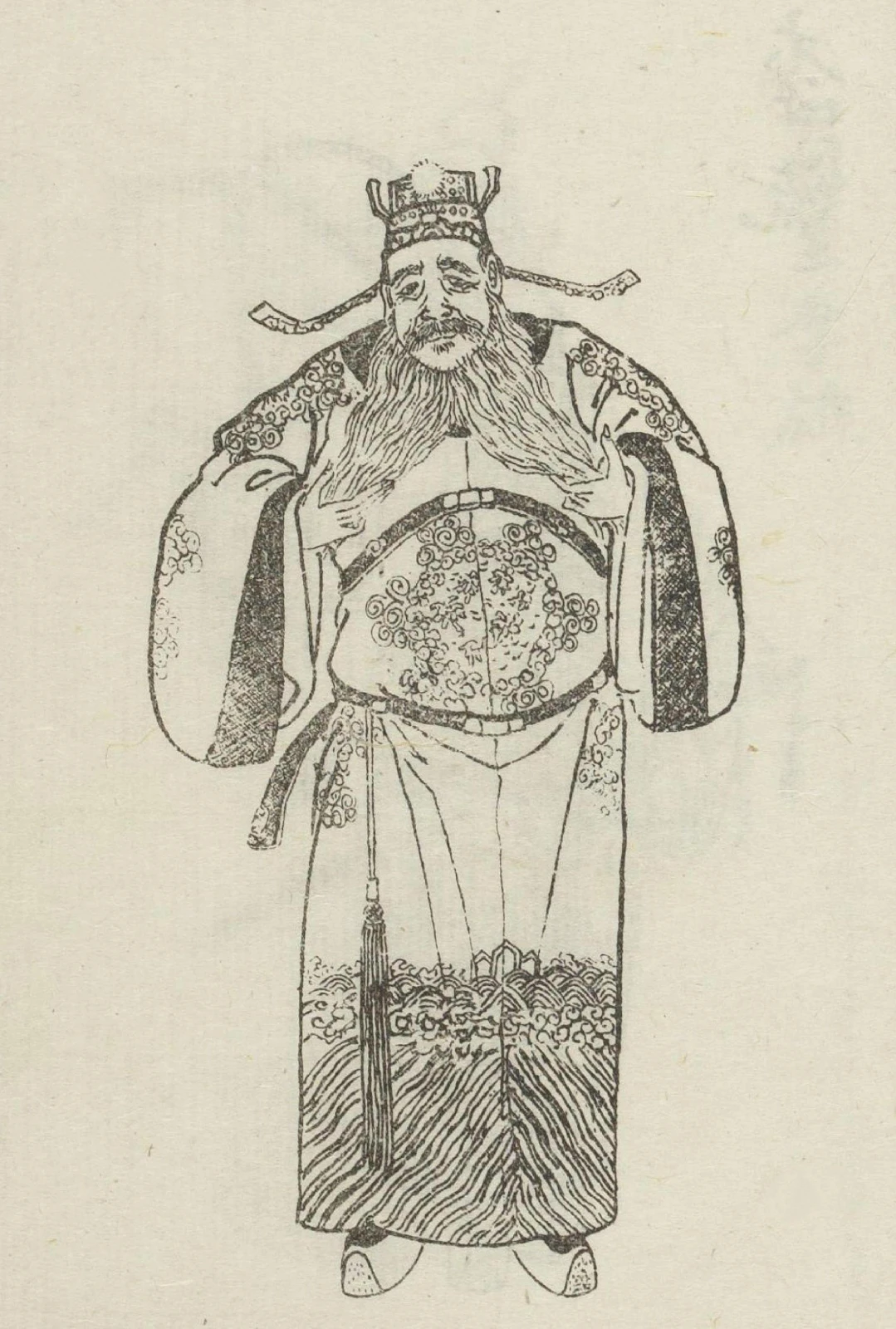
Among the objects that passed through the hands of Murong Chui, none is remembered like a knife. In 370 he gave it to Wang Meng, the chancellor of the Former Qin, who was leaving for the war that would finish the Former Yan, and he gave it as men of his world gave presents, as something to be looked at in absence. Wang Meng used it as a token. An agent came to Chui's heir in the field with a story that his father had fled east, and the knife was the proof. The son followed the knife back to the state his father had left and was killed there. The Book of Jin, written in 648, knows only a forged message and does not mention a knife at all. The knife is in the Comprehensive Mirror, put together four centuries later, and it is the version everyone remembers. Both agree on the shape of the thing: the most generous act of his life was converted into the instrument of his worst loss.
He was born in 326, the fifth son of Murong Huang, and he spent his first forty-three years inside the Former Yan. In 384, at fifty-eight, he took the title King of Yan at Xingyang, and two years later he was emperor at Zhongshan. He died in 396, in a carriage, on the road back from a campaign, and the state he left behind was younger than his grandson. His life is usually told as a revenge: the man his family drove out came back and took their state. It is better told as a repair, and a repair that failed. He rebuilt the Yan and spent the last twelve years of his life discovering that a rebuilt state is not a restored one. What follows rests on the record of him in the Book of Jin, compiled in 648 by scholars working from the archives of courts that no longer existed and under the eye of a dynasty that had its own reasons for judging them; where the record gives him words, this article says that the record has him say them.
1. The Number Sixteen
The name of the period is a library label, and it was made long after the period ended. It comes from Cui Hong, a subject of the Northern Wei, who around the year 500 compiled a history of the states that had divided the north between the fall of the Western Jin and the rise of his own dynasty. He called it the Spring and Autumn of the Sixteen States. The book was lost in the Northern Song, and the hundred-chapter version that circulates today is a Ming reconstruction pieced together from the Book of Jin, the Book of Wei and the Comprehensive Mirror; it is a convenience for readers and not a witness. Cui Hong's title did the work that titles do. It made a number out of a ruin.
Nobody in the fourth century used the phrase. The men in this article called their state Yan, or Qin, or Zhao, and when they said Zhao they meant one of two states that both claimed the name. The idea that they belonged to a set of sixteen, arranged like the dynasties in a calendar, is a sixth-century arrangement of fifth-century materials. Even the membership is unstable. Cheng Han in Sichuan is counted in some lists and left out of others, on the ground that it belonged to the west rather than to the Central Plain. Ran Wei held the plain for two years and is usually excluded. The Western Yan had an emperor, a capital and an army, and is excluded from most lists because the state that destroyed it wrote the record. Dai is sometimes counted, because it was the ancestor of the Northern Wei, and sometimes not. The Zhai Wei of the Dingling is almost always outside.
The number is therefore not a fact about the age. It is a fact about the library that inherited the age. This series uses the label as a shelf, not as an identity: it tells the reader where to look, and it says nothing about how the men on the shelf thought of themselves. Chui would not have recognized the phrase. He would have recognized the claim inside it, that there was one Yan and that it was his.
2. The Fifth Son
Jicheng stood where the Liaoxi corridor narrows between the mountains and the sea, a walled town of stamped earth with a market for horses and a road west to the passes. The Murong had arrived there two generations before Chui's birth, coming out of the eastern grasslands with their cavalry and their client clans, and had learned to do what frontier peoples did when they settled next to a richer empire: they took its titles, hired its clerks, married into its border families and fought its wars. Chui's grandfather had held Jin commissions. His father, Murong Huang, took the title King of Yan in 337, when Chui was eleven, and began to build a court with two languages in it, Chinese in the chancery and Xianbei in the camp.
A fifth son in such a house had one career. He could not inherit; he need not be married off to seal an alliance; he could be spent. Chui was spent early. The record says that at thirteen he was in the field with his father's army, and it says nothing about what he did there, which is the usual way of saying that a boy was present and not yet useful. He grew into the trade. The Murong fought the Duan, the Yuwen, the Goguryeo and the tribes beyond the frontier wall, and a prince who could ride, shoot and hold a wing of cavalry was worth more than a prince who could read. In the campaign that destroyed the Yuwen he earned a marquisate, and the record notes the fact without describing the fighting.
It also preserves a portrait and a sentence. The portrait is the conventional one for a hero of the period: seven chi seven cun tall, with hands that hung below the knees. The sentence is better. His father looked at the boy and told his other sons that this one was open-handed and curious about everything, and that he would either break a house or make one. The record adds that Huang favoured him beyond the heir, and that the heir, Murong Jun, could not be at peace with him. That is the whole tragedy in two lines. The favour of a father is a dangerous inheritance in a court where the heir is watching, and Chui had done nothing to earn it except be interesting.
He was twenty-six when his brother took the imperial title in 352, and thirty-one when the court moved to Ye in 357. By then the Former Yan was no longer a frontier kingdom. It held the old heartland of the north, its bureaucracy was staffed by Chinese families who had served the Jin and then the Zhao, and its army was still the Xianbei cavalry of the Liaoxi. Chui belonged to both halves. He could hunt for a week and then sit through a sacrifice without embarrassing the masters of ritual, and the record, which likes him, makes sure to say so.
What the record admires in him is a kind of completeness that was rare at that court. The Chinese clerks saw a prince who could sit through the suburban sacrifice and ask the right questions about the order of the rites. The Xianbei captains saw a man who could ride all day, sleep in the snow and divide a herd of captured horses without a quarrel. A court built out of two peoples needed men who could do both, and it never had many. The same completeness made him suspect. A prince who is at ease with the clerks is a prince who can govern, and a prince who can govern is a prince who can replace the man who does.
The name he carried was not the name he was born with. He was born Ba, and the record gives his courtesy name as Daoming in one line and Daoye in the next, without reconciling the two. In the year his brother took the royal title, he fell from a horse while hunting and broke his front teeth, and Jun changed his name to Que, a word that means broken or missing. The record says that the change was presented as homage to an ancient worthy who had also been maimed, and that it was in fact made out of dislike. Later, on the strength of a prophecy, one element was removed from the character and what remained was Chui, to hang down. He did not choose the name and he did not change it back. For the rest of his life he was called by what was left of a character his brother had made to humiliate him.
In 358 he took an army into the steppe. The enemy was the Dingling branch of the Chile, who grazed their herds north of the frontier and raided the Yan border when the grass was short. The record gives him eighty thousand foot and horse, more than a hundred thousand captured or killed, a hundred and thirty thousand horses and livestock beyond counting. The figures are the currency of a triumph, not a census; what they measure is the scale of the thing in the eyes of the court that paid for it. The campaign did what frontier campaigns do. It made him the man who could take an army out of the settled country and bring it back, which in a state built on cavalry was the highest qualification a prince could have.
In those same years his wife was killed. She was a daughter of the Duan, the old Xianbei house whose daughters the Murong had married for two generations, and the empress Kezuhun disliked her. The empress had her accused of witchcraft with a man named Gao Bi, and the case went to prison. The Book of Jin's record of Chui does not mention the affair. The Comprehensive Mirror does, and it has her refuse to confess on the ground that a false confession would disgrace her husband and her ancestors. She was tortured and died without implicating him. Chui said nothing that the histories preserve. A man who cannot protect his wife inside his own house has learned what his position is worth, and the lesson does not need to be spoken aloud.
Two years later Jun died and a boy succeeded him. The regency went to Murong Ke, the fourth brother, the one soldier in the family whom everyone trusted. Ke held the state together for seven years, took Luoyang, and kept the peace between the empress dowager, the grand tutor Murong Ping and the princes. In 367 he fell ill. On his deathbed he told the young emperor that the Prince of Wu's talent for war and government was ten times his own, that their father had used the brothers in order of age and not of ability, and that the court should now give Chui the government. The court did not. Ke died, and the state passed to Ping and to the empress dowager, who had hated Chui since the affair of the Duan wife and who now had the power to act on it.
Ke's seven years were the last good years of the Former Yan. He had taken Luoyang, held the frontier, kept the empress dowager out of the council and made the princes obey a boy. He did it without a purge, which in that family was an achievement. When he died the state lost the only man who could hold the two halves of the court in one hand, and the two who inherited the regency had neither his army nor his reputation. Chui was the next best soldier in the family, and he was also the one prince the new regency could not afford to leave alone.
The three years that followed were the years in which the Former Yan stopped being a state that could be governed. Ping sold offices and taxed the provinces twice; the empress dowager interfered in appointments; the princes kept their own armies and their own clients. Chui held the title Prince of Wu and the reputation of the best commander in the north, and he was kept at the edge of the council, useful enough to be sent for and dangerous enough to be watched. He was the most employable man in the state and the least employable, and in the spring of 369 an army from the south crossed the border and made the distinction plain.
3. After Fangtou
The campaign of 369 belongs to the history of the Eastern Jin, and this article will not fight it again. What matters here is what the court did before the fighting and what it did after. Before: it discussed abandoning Ye and retreating to the old capital at Longcheng, which is to say that the men who governed the richest province of the north had already priced the capital at nothing. After: it won, and the victory was Chui's.
He had asked for the command when nobody else wanted it, and he was given it because the alternative was flight. The army that followed him was the last field army of the Former Yan, and it came back intact. His name, in the phrase the record uses, shook the world. Three audiences now knew it. The soldiers knew what it was like to serve under a commander who did not lose. The court knew that it had a subject who could not be replaced. The enemy knew whom to ask for in the next negotiation.
A reputation of that kind is a form of property that cannot be taxed or divided. It also cannot be left alone. The regent could give Chui gold, rank, a province, a title; none of these equalled what Chui had just given the state, which was its continued existence. The only reward left was the throne, and the throne was occupied by a boy. When a state cannot pay a debt, it begins to think of the creditor as a danger. The record compresses the consequence into a sentence: Ping deeply hated and feared him, and plotted to kill him.
The plot was not irrational. In a house where brothers killed brothers and where the regent ruled in the name of a child, a prince of the blood with a victorious army and a name that shook the world was not a servant. He was an alternative. Ping and the empress dowager could not know whether Chui intended to take the throne; they knew that he could, and in that kind of politics the capacity is the intention. What they could not see was that the same logic made them unable to kill him cleanly. A public trial would have brought the army to his side. A quiet murder would have made a martyr of the man who had just saved them.
The record does not describe the plan, and the omission is informative. A court murder in a child's reign is arranged by a handful of men in a room, and the men who wrote the record had no access to the room. What the record makes clear is that Chui knew before the blow fell. A prince with thirty years of service had clients in the palace, kinsmen in the guard and officers whose careers he had made, and information of that kind travels faster than a warrant. He also knew that a trial would be a formality. The question was not whether the court would move against him but whether he would still be in the city when it did.
Chui had three choices. He could fight, and he would have had the soldiers and perhaps half the princes. He could submit, and he would have been dead within a year. He could leave. He chose the third. In the eleventh month of 369 he asked leave to hunt outside the city, took his heir Murong Ling, three younger sons, a nephew and a handful of riders, and rode west. He did not take a province, a treasury or a single wall. He took his name and his grievance.
The flight is the first act of his life that looks like a decision rather than a posting. Everything before it had been given to him by his father, his brother or his rank. The choice to leave rather than fight has been read as loyalty, as prudence and as the habit of a son who had been taught that the family and the state were the same thing. The record does not explain it. What can be said is that he left the Former Yan intact and took with him the only man who could have saved it. Twelve months later the state was gone.
The court's choice was not stupid, and that is what makes it a political lesson rather than a melodrama. A regency with a victorious general on its hands has three options: reward him until he is a partner, kill him before he is a rival, or let him go and hope that distance solves the problem. The first ends the regency, the second risks a civil war, the third loses the general. Ping chose the third by forcing the second, and the state paid within a year. A court that values its own survival above the state's will always find a general too expensive to keep and too dangerous to dismiss.
4. The Golden Knife
Fu Jian came out of Chang'an to meet him. The ruler of the Former Qin was thirty-two, had held the throne for thirteen years, and had built his power on a policy of receiving the able men of the states he conquered. The record has him take Chui's hand and say that Heaven had sent him a man with whom great things could be done. The scene was staged, and the staging was the point. A conqueror who welcomes a refugee is advertising to every officer in the north that surrender is safe.
Wang Meng, the chancellor, wanted him killed. His argument was the argument of every chief minister in every century: a man of that ability, with that name and that grievance, would not spend the rest of his life as a general in someone else's army. Fu Jian refused. He would refuse again, and the refusals cost him his empire. What Chui saw from his side of the table was a ruler who had been given an excuse to kill him and had not used it. That is a difficult thing to forget and a more difficult thing to repay.
The title he received was General Who Crowns the Army, with the marquisate of Bindu and five hundred households at Huayin. The rank was honourable and empty. A general's title without a frontier command is a courtier's title, and an estate at Huayin, in the Wei valley under the walls of the capital, is a reward that keeps the rewarded in sight. He was a prince of a fallen house, kept in comfort, paraded at court and given no province. For thirteen years that was his position, and he was careful.
In 370 Fu Jian sent Wang Meng to finish the Former Yan. The campaign was the last act of the northern war, and Chui's heir went with it. Wang Meng took Murong Ling into his staff, and before the army left he asked Chui for a keepsake at a farewell drinking, saying that he wanted something to look at when they were apart. Chui unclasped the knife he wore at his belt and gave it to him. The gesture was ordinary. Officers of that world exchanged weapons, horses and bolts of silk at parting, and a knife from a prince was a compliment to a chancellor.
At Luoyang, Wang Meng used a man named Jin Xi, who was close to Chui, to go to Ling with a story. The story was that Chui had gone back east, that the family was reassembling, and that the heir should follow at once. The proof was the knife. Ling believed it, deserted the Qin army and rode back to the state he had been born in. Wang Meng reported the desertion. Chui, in Chang'an, heard that his son had fled and that the chancellor had named him a traitor's father, and he did what a man in his position does when the ground moves: he ran. He got as far as Lantian before the cavalry caught him.
Fu Jian pardoned him. The record has the emperor say that the father and the son are not each other's responsibility, that a son who remembers his own country is not a criminal, and that Chui had panicked for nothing. The sentence is a piece of statecraft dressed as generosity. It told the court that the emperor was too large for revenge, and it told Chui that he owed his life twice to the same man. Mercy, repeated, becomes a debt that cannot be repaid and cannot be escaped.
The knife had done what an army could not. Chui's son reached the Former Yan, where Murong Ping, who had tried to kill the father, sent him to the frontier post of Shacheng. Ling plotted a rising there, was denounced by a brother, and was killed. The record notes the death in a line. The knife had been a present; it had become evidence; it had become a death sentence; and the man who gave it had no one to blame except the chancellor who used it and the brother who reported it.
The knife is a good story, and good stories are the first thing a historian learns to distrust. The record of 648 has the forged message and no knife; the compilation of 1084 has both. It is possible that the knife stood in a source the Tang editors did not use. It is also possible that a later writer supplied the object the story needed, because a message without a token is a rumour and a message with a knife is a scene. Either way the story is true to the politics. A token from Chui's own hand was the only thing that could have made his son leave a victorious army in the middle of a war.
In the same year the Former Yan fell. Wang Meng broke the Yan army on the Zhang River, entered Ye, and took the boy emperor to Chang'an. The court that had plotted Chui's death had lost the state within twelve months of driving him out, and the man who had received him was the man who destroyed it. Chui was in Chang'an when the news came. He did not march south to save his brother's state, and he did not pretend to mourn it in public. The record is silent on his grief, which is a kind of evidence.
The thirteen years that followed are the least documented of his life. He was at court; he was given titles; he was not given a province. His sons grew up in the capital as the sons of a privileged hostage. He married again into the Duan house, and the second wife would outlive him and die by the order of his heir. Wang Meng died in 375, and with him went the one man in the Former Qin who never stopped watching Chui. Fu Jian, who had spared him twice, came to trust him, or came to believe that a man so often forgiven must be grateful. Both beliefs were mistakes, and neither was unreasonable.
Chang'an in the 370s was a gallery of deposed houses. The Murong of the Yan, the Yao of the Qiang, the nobles of the Dai and a dozen smaller houses all had residences in the city, titles from the Qin court and sons in the guard. The court used them, promoted some, watched all, and married them into one another. For a man of Chui's temperament the gallery was a school. It taught him how a conqueror keeps the men he has beaten: by giving them rank, proximity and a stake in the new order, and by never giving them a province. He would remember the method when his own turn came to keep the conquered.
5. A General Without a State
Thirteen years is a long time in the life of a man of fifty, and the record gives them in a few lines. There were no campaigns that belong to him, no province that carried his name, no reform, no building, no book. He was a general in a state that did not need him to fight. The Former Qin had its own generals, its own cavalry and its own victories. Chui was kept as a symbol: the Yan prince who had come over, the proof that the north could be unified without extermination. Symbols are fed and displayed and not armed.
The thinness of the record is not an accident of transmission. Court diarists write down what the court does: audiences, appointments, sacrifices, campaigns. A man who spends thirteen years waiting is not doing anything that a diarist can enter in a register. We know the titles he held and the year his son died; we do not know what he read, whom he saw, or whether he thought the waiting would end. The silence is the condition of his life, and it is also why his later decisions look sudden. They were not sudden. They were the release of thirteen years of pressure.
He watched the Former Qin become the largest state since the Western Jin. He watched Fu Jian take the north, move the conquered peoples, build his roads and his granaries, and refuse, year after year, to listen to the men who told him that the conquered peoples were not yet his. He also watched the one thing that mattered to him: the Qin court was a coalition too, and its emperor was the only thing holding it together. A man who has spent his life in coalitions learns to recognize the moment when the binding fails.
He also learned the Qin's method of holding a conquest together. Fu Jian did not abolish the lords he defeated; he moved them, titled them, married them and kept them near. The Qin state was a federation of conquered elites with an emperor at the centre, and it worked as long as the centre held. Chui would build the same federation in 384, with Murong princes, Dingling chiefs and the heads of the walled villages in the places where Fu Jian had put the lords of the north. The difference was that Fu Jian had a treasury, a register and a road system, and Chui had a name.
It failed at the Fei River in 383. The battle is the Eastern Jin's to tell. What belongs here is a single fact and a single decision. The fact is that Chui's corps came out of the disaster intact. The Comprehensive Mirror gives it as thirty thousand men, and the record of his life says only that his army alone was whole. In an army that came apart, one corps kept its order and marched away. The sources do not say why. The most economical explanation is that his men were the only ones on the field who had a reason to stay together.
Fu Jian fled to him with a thousand or so riders. The emperor of the north, wounded, had lost his army and his brother in a day, and the man he came to was the man he had refused to kill twice. Chui's son Murong Bao saw the opportunity and said so. The family had lost a state, Heaven had turned against the Qin, and the mandate was lying in the road; he urged his father to take it. Murong De, Chui's younger brother, said the same. The record has him say, in answer, that Fu Jian had come to him in good faith and that he could not harm him; that if Heaven had abandoned the Qin there would be other chances; that he would let the emperor go north, wait for his mistakes, and take the empire by a righteous road rather than a murder.
The answer has been read as chivalry, and there is chivalry in it. It has also been read as calculation, and the calculation is visible. A man who killed a guest who had thrown himself on him would have inherited the reputation of a Ran Min, and the north would have united against him before he had a province. A man who spared the emperor could be trusted by the Qin generals he would need, and could present his later rebellion as the act of a servant who had been left no choice. Chui was not refusing power. He was choosing the road to it, and the road was longer and cleaner than the knife.
He then did what no rebel would do. He put his thirty thousand under Fu Jian's command and escorted him north. The gesture was real, and it was also the best investment of his life. It made him the one Qin general the north could trust, and it left him with no army of his own. A man who gives up his only army is either sincere or certain that he can raise another. Chui was both.
At Luoyang, Fu Jian granted his request to go north to Ye to visit the family tombs. Quan Yi warned against it. A falcon, he said, is tame while it is hungry and flies when it is fed; the leash should not be slipped. Fu Jian did not listen. He had forgiven Chui twice, had given him a title and an estate, and believed that a man who had refused a throne when it was offered would not take one when it was not. Chui rode north with a name, a permission and no soldiers. Within a year he had an army and a kingdom; within three, a throne. The permission was the whole foundation.
6. The King at Xingyang
Ye in the winter of 383 was a city of shuttered markets and guarded granaries, held by Fu Pi, the emperor's son, with the remnants of the Qin garrison. Chui arrived as a hero and was received as a suspect. Fu Pi gave him a house, a guard and no command, and watched him. The Murong had ruled the plain for thirty years and the plain had not forgotten them; every day that Chui stayed in Ye, men came to the house with news, presents and offers.
The break came from the Dingling. Zhai Bin, a chief of the Dingling who had settled on the Henan border, raised a revolt against the Qin in the opening weeks of 384. Fu Pi sent Chui to put it down, which was a way of sending two problems to fight each other. Chui took the Qin troops he was given, marched south, and joined Zhai Bin instead. The first army he commanded in the north was a Qin army, and he used it to make a Dingling alliance.
The rest of the restoration was not a march. It was a set of local risings that found each other. Murong Nong, Chui's son, escaped from Ye, rode to Lieren in the plain, and within weeks had gathered Xianbei families, Wuhuan horsemen and the men of the walled villages. Other kinsmen raised counties in other directions. The Murong name was still the only name in the Hebei plain that could bring men out of their walls, and the name was Chui's.
He still had a problem that no amount of local rising could solve. Ye was strong, the Qin held the passes, and the Jin court across the river had its own claim on the north. He needed a legitimacy that was neither Fu Pi's nor the Eastern Jin's. In the spring of 384 he crossed the Yellow River at Liyang and went south to Xingyang, and there he took the titles of general-in-chief, grand commander and King of Yan, with authority to appoint officials, a headquarters of four aides, and an era of his own, Yan Yuan. He did not take the imperial title. A king can be a restorer; an emperor has to be a founder, and founders are judged by the state they leave.
The formula he used, acting with imperial authority, was borrowed from the Jin and from every usurper since the Han. It allowed him to appoint governors, grant ranks and issue a calendar without claiming the throne. In law it was a fiction; in politics it was a ladder. A man who acts with imperial authority is already doing what an emperor does, and the only question left is when he will take the name. Chui waited two years, which was longer than most.
The headquarters of four aides is worth a sentence, because it became the shape of the state. The first government of the new Yan was a military staff: a chief of staff, a director of the secretariat, a master of records and a commander of the guard, with the king's household attached. It was the government a general needs, not the government a country needs. The state acquired the rest of the apparatus later, and it never entirely stopped being a headquarters with a palace attached.
The siege of Ye lasted more than a year. Chui could not storm it; Fu Pi could not relieve it; the plain around it was stripped of grain by both armies. In the end the Qin commander abandoned the city and went west with his cavalry, and Chui entered a ruin. The capital of the Former Yan, the city his brother had made the seat of a Chinese empire, was a shell of burnt wards and broken walls. He had won the city that had expelled him and found that it could not be used.
A siege is a test of legitimacy as much as of supply. Every week that Ye held was a week in which the Qin could claim to be the government and the Yan could be called a rebellion. The country around the city was stripped by both armies, and the war moved into the villages, where the choice was not between two courts but between two sets of foragers. Chui could not afford to sit in front of the walls forever. He had taken the title of King of Yan in order to be a government, and a king who cannot enter his own provincial capital is a king with a camp.
His first ally became his first enemy. Zhai Bin, who had brought the Dingling over, asked for a province and then for a share of the government, and when Chui refused he became insolent. Chui had him killed. The Dingling rose, and the war that would become the Zhai Wei began. The pattern would repeat for the rest of his life: the men who joined him earliest asked for the most, and the ones he had to kill first were the ones who had made him possible.
7. The Altars at Zhongshan
In 386 he moved the capital to Zhongshan, a walled city on the plain south of the Yan mountains, at the point where the road from the north comes down to the grain country. Ye was a ruin and a memory of the court that had exiled him. Zhongshan was intact, central, and close enough to the passes to be defended. A capital is a place where the grain arrives, and in the third year of the war the grain was at Zhongshan.
Zhongshan had been a capital before. It had been the seat of a kingdom in the Warring States and a province of the Later Zhao, and its walls had been repaired by every government that had held the plain. It sat at the foot of the Yan mountains, with the road north to the passes and the road south to the Yellow River, and its hinterland had been fought over less than the country around Ye. A capital is also a statement about where the future is expected to come from. The choice announced that the centre of gravity had moved north, towards the frontier that would decide the next war.
The accession was staged with the full ritual. His officials petitioned him; he declined; they petitioned again, and he consented. He sacrificed to Heaven in the suburban rite, built the ancestral temple and the altars of soil and grain, appointed the ministers, and named Murong Bao crown prince. The era was changed to Jianxing. He was sixty. The forms were complete, and the completeness was the message: a state that performs the rites is a state that expects to be treated as one.
The state he founded was called Yan, because that was the only name his followers would have marched under; the prefix that separates his Yan from his father's and his brother's was added by historians who needed separate labels for several states of the same name, and he never used it.
The era name he chose had already lived twice. Jianxing had been the style of the Western Jin in its last years at Chang'an, and for decades afterwards the rulers of the Former Liang in the far west had gone on counting its years, refusing to admit that the dynasty whose calendar they used had ended. To take it again was to wrap the new state in the oldest legitimacies of the north, the Jin that had ruled the Central Plain and the Liang that had kept its name alive at the end of the road. Chui's Jianxing was neither of theirs. The histories distinguish the three by the state and not by the name, which is what happens when a calendar is used as a claim.
A state founded in a civil war has three audiences, and each had to be answered in a different language. The Eastern Jin court called him a rebel, because it called every northern ruler a rebel. The remnants of the Former Qin called him a traitor, because he had eaten their salt. The people of the north, who had lived under four dynasties in thirty years, cared less about either judgement than about the sacrifices, the courts and the price of grain. The rites at Zhongshan were addressed to the third audience. They said that there was a government again, that it knew the forms, and that a man could bring a dispute to it and expect an answer.
The ceremony and the state behind it did not match. The temple had ancestors; the altars had grain; the court had ministers; the crown prince had a title. What the court did not have was a register of households, a standing army, a treasury or a province that paid it directly. It had the forms of a state and the substance of a coalition, and the gap between them was the real history of the next ten years.
His brother had taken the imperial title in 352 in a conquered Central Plain, with the war of the plain just ended. Chui took the same title in a half-ruined provincial city, with a rival Yan in Shanxi, a new Wei in the north and a Qin still holding the passes. The title was identical. Everything behind it was smaller.
Sixty was late to begin. He had spent most of his life as a prince of the Former Yan, thirteen years as a guest of the Qin and two as a king. The last ten years were the only ones in which he was his own master, and he spent most of them at war. A man who begins at sixty governs with the habits of a campaign: he trusts the men he has fought with, he rewards loyalty with land and command, and he postpones the dull work of registers and salaries because there is always a battle next year. There was always a battle next year.
8. What the State Was Made Of
The Later Yan was made of four parts, and none of them was a bureaucracy.
The first was the Murong house. Chui's sons and brothers commanded armies and held regions: Murong Nong and Murong Long in the north and east, Murong De with a command of his own, and Murong Lin at court with a following. Each prince had a household, a staff and a body of cavalry that was loyal to him before it was loyal to the throne. The court had no standing army of its own. When the state went to war, the army was the sum of the princes' armies, and when the princes disagreed, the army disagreed with itself.
The second was the walled villages of the plain. For three generations, since the collapse of the Jin in the north, the villages of Hebei had been building walls around themselves, sinking wells, storing grain and arming their clients. The head of such a wall was not a magistrate appointed from outside; he was the man who had kept the village alive, and his authority was local, personal and armed. A conqueror who wanted the plain could not govern it against the walls. He could only make terms with them one at a time. Chui made the terms: titles for the heads, and soldiers and grain in return. There was no cadastral survey and no household tax. The state taxed the walls, and the walls taxed the villages.
A wall was a small government. Its head settled disputes, kept the granary, commanded the men and represented the village to whatever army was passing. He was not a magistrate and did not want to be one; a magistrate can be transferred, and a wall cannot. The state dealt with him as a vassal, which meant that it recognized his authority in exchange for soldiers and grain, and that it had no way of reaching the peasants behind him. This is why the Later Yan's map was large and its revenue was small. The map showed provinces; the revenue came from a few hundred deals with a few hundred walls.
The third was the Dingling and the Wuhuan. The Dingling were the old enemy of the steppe campaign of 358 and the new ally of 384, and their cavalry was as good as any in the north. The Wuhuan had been settled inside the frontier for two centuries and supplied light horse in every northern army. Both were allies rather than subjects. They fought for a share of the loot and a place at court, and when the share was refused they revolted. The Zhai war was the proof. Chui had destroyed the Dingling state in 392, but he had not destroyed the Dingling, and the men who had been his allies in 384 were the men he had to watch in the 390s.
The fourth was the surviving official class of the Former Yan. The Chinese families who had staffed the old court supplied the chancery, the ritual, the law and the language of legitimacy. They were indispensable and they were weak. Their local base was the same walled villages, and their loyalty was to the idea of a Yan state rather than to the person of the king. They could draft a proclamation and they could not raise a regiment.
The army that came out of these parts was a coalition in arms. The cavalry was tribal and the infantry was levied from the walls; there was no pay scale, no drill for the whole, and no system of replacement. Men were rewarded with plunder, with rank and with land, and the reward was paid after the victory. A coalition army of that kind is formidable in a short war and fragile in a long one. Its predecessor had won at Fangtou on its own plain. This army broke at Canhebei because it had been away from home for months and its princes did not trust one another.
An army of that kind lives on the country. There was no pay scale and no commissariat; the soldier's reward was the loot of the next town and the grant of land after the campaign. A state that pays in loot must keep taking towns, and a state that pays in land must keep conquering land. The Later Yan was therefore a machine that needed a war every year, not because its rulers were warlike but because peace would have left the machine with nothing to distribute. Chui's campaigns in 392 and 394 were strategic, and they were also a way of paying the army.
The economy was the economy of a battlefield. Ye was a ruin; the canals that had made the plain rich were silted; the population had been moved, killed or walled. Agriculture came back slowly, and the state's revenue came from the tribute of the walls, the tolls of the roads and whatever the army could take. The Former Yan had moved whole commanderies of people to fill its capital and had counted its households. The Later Yan did neither. It had no way of knowing how many people it ruled, which is another way of saying that it did not really rule them.
The result was a state that could make war and could not make peace. It was a coalition with a palace. The palace had a ritual, a calendar, a crown prince and a temple; the coalition had the horses. As long as the old man in the palace was the best soldier in the north and the only man the princes feared, the two halves held. What the state had instead of institutions was prestige, and prestige cannot be inherited. The constitution was his body.
9. The Two Wars
After 386 the contest for the north-east had five sides: the Later Yan in the plain, the Western Yan in Shanxi, the Zhai Wei on the Henan crossing, the Later Qin in the Guanzhong, and the Northern Wei in the steppe. Chui was sixty when he took the throne and sixty-six when he began the campaigns that made the Later Yan the largest of them. He had spent his life waiting for the moment when the men who had wronged him were weak. In his sixties he got it.
The Zhai Wei was the smaller problem and the older grudge. Zhai Liao, a Dingling chief, had built a state on the south bank of the Yellow River around Huatai, controlling the crossing at Liyang and the roads into Henan. He had been Chui's ally in 384 and his enemy since the killing of Zhai Bin. He died in 391 and his son Zhai Zhao succeeded. In 392 Chui marched south, took the crossing towns and destroyed the state. Zhai Zhao fled west to the Western Yan, which gave him troops and a base. The war had removed a state and not a people, and it had pushed the surviving Dingling into the arms of the one rival Chui had left.
The Western Yan was the serious problem. It had been founded in 384 by Murong Hong and Murong Chong, two of the Murong princes who had been taken to the Guanzhong after 370, and it had begun as a rising of the Yan households in the Qin capital region. Its first emperors were young men with famous fathers and no territory; in two years it went through six rulers, most of them killed by the man who followed them, before Murong Yong, a distant kinsman with a talent for survival, made himself emperor at Zhangzi in Shanxi. He kept the Yan name, the Yan ritual and a claim to be the real Yan. To Chui this was not a foreign state. It was a rival claimant inside his own family, and a rival claimant is always more dangerous than an enemy. It was also a state of refugees: a court, a claim, no treasury, and the last intact Yan field force in the west.
His general Murong Zan took Jinyang first, the old northern gate of Shanxi, and then he brought the army south to Zhangzi. The siege was short. A defending general opened a gate; the Yan troops entered; Murong Yong rode out of the north gate and was taken. Chui had him brought before the army, enumerated his crimes, and killed him, with thirty or more of his ministers. The record does not give the list of crimes. The logic of the killing is clear enough: a rival Yan could not be left alive to be restored, and the ministers who had made him emperor could not be left to serve another.
Zhangzi was emptied of its court, and the Western Yan's soldiers were enrolled in the Yan army, where they fought in units of their own under officers who had surrendered with them. The arrangement was the cheapest way to absorb a defeated army and the least reliable. The men had lost a lord, a capital and a cause in a single year, and they were now asked to fight for the man who had killed him. Some of them did; some deserted at the first bad night; and the gentry of Shanxi, who had served the Western Yan, went back to their walls and waited to see who would win the next war.
The two wars made the Later Yan the largest state in the north. Its frontier ran from the Liaoxi coast to the Yellow River, and its armies stood in Shanxi, Henan and the Hebei plain. For a year the Murong name had one banner. Men who had been children when the Former Yan fell saw the Yan flag on the walls of Zhangzi, and the record, which is not sentimental, allows itself a sentence about the old possessions being recovered.
The cost was invisible in the year of victory. The army had been on campaign for three years; the princes had been given new provinces to govern and new troops to command; the conquered populations of Shanxi had lost a lord and had no reason to love the man who killed him. The new provinces were governed by generals who were also tax collectors, and the taxes stayed where the generals were. Most of all, the two wars consumed the years. Chui was sixty-eight when Zhangzi fell. He had perhaps three seasons left in which a man of his age could take the field, and the north beyond the frontier had already begun to move.
10. The Client in the North
The Tuoba had been the northern neighbours of the Murong for a century, a Xianbei people of the steppe margin who had built the state called Dai and had lost it to the Former Qin in 376. In 386, the year Chui took the imperial title, a young kinsman of the old Dai house, Tuoba Gui, reassembled the tribes and took the title of king. To the Later Yan court this was a client returning to his place. The Yan had been the great power of the north-east for two generations; the Wei was a collection of clans on the far side of the mountains, useful for horses and for guarding the frontier.
For five years the relationship ran as patron and client. The Yan court granted the Wei ruler a title; the Wei court sent envoys, horses and congratulations. The arrangement suited both sides while the Yan was busy in the south and the Wei was busy assembling the steppe. It stopped suiting them when the Wei began to keep the horses.
In 391 the Wei ruler's brother came to the Yan court as an envoy. The Yan court detained him and demanded horses for his release. It was the gesture of a patron who had stopped being afraid and had not yet noticed that he was no longer obeyed. The Wei court refused, broke off relations and began to raid the border. A patron who detains an envoy has stopped being a patron, and a client who refuses a demand has stopped being a client.
The demand for horses was not a whim. Cavalry was the currency of the northern courts: a horse was a soldier, and a thousand horses were a campaign. A patron who asks a client for horses is asking him to disarm, and a client who refuses is announcing that he has another patron or none. The Yan court read the refusal as insolence and did not read the larger fact behind it, which was that the Wei had found allies among the tribes the Yan had counted as its own. The frontier had changed sides before the war began.
Chui did not march north at once. He was sixty-five and the western war was not finished. He sent generals, and the generals won skirmishes that settled nothing. The Wei learned the ground, tested the Yan outposts, and made alliances with the tribes that the Yan had counted as its own. By 395 the client had become a power on the northern rim, and the Yan court had begun to speak of a campaign that would put it back in its place.
The campaign was given to the heir. Chui was sixty-nine and ill, and the court had decided that the crown prince needed a victory of his own. Bao marched north with the largest army the Later Yan ever put into the field, a coalition of the princes' contingents rather than a single force.
The campaign stalled. The Wei refused battle and fell back; when the Yan columns turned for home through country with poor grazing and few roads, the Wei caught them at Canhebei. Bao came back with a few thousand riders. The battle and its numbers belong to Bao's own chapter; what belongs here is the size of what the old man had lost.
The Book of Wei, which had its own reasons, says that most of the men taken in the valley were put to death. The figure it gives is in the tens of thousands and belongs to the victors. What is not in dispute is that the Later Yan lost the greater part of its field army in a single engagement, and that the men who died were the officers Chui had trained for thirty years. The state that had been the largest in the north in 394 had, by the end of 395, no army capable of fighting the Wei in the open.
The causes were structural and immediate. The command was divided among princes who did not trust one another. The heir was cautious in a campaign that required speed, and his caution was read by his generals as weakness. The Wei had better intelligence, shorter supply lines and a cavalry that could move faster. And the Yan court had spent two years conquering Shanxi, so that the army that went north was tired, newly mixed and far from its depots. A coalition army is at its worst in a winter campaign on the steppe.
The Wei army that fought at Canhebei was not the tribal host that had gathered in 386. It had learned to keep its contingents together, to move fast, to use scouts and to choose the ground. Its officers were men who had grown up in the wars of the steppe, where a defeat is the end of a people and not the end of a campaign. The Yan army had been built to fight the Qin and the Dingling in the plain, where the roads were known and the supplies were close. It was a good army in the wrong country.
Chui received the news at Zhongshan. The record does not give his words. He was seventy, ill, and had just been shown that the state he had built could not survive a single night without him. He began to prepare a campaign of his own.
11. The Bones at Canhebei
He left in the third month of 396 with the last army the Later Yan could raise. The court had advised against it; the physicians had advised against it; he went anyway. The reason was not revenge. A state that has lost its field army and stays behind its walls has told every neighbour that it is finished, and the north was full of neighbours who could read.
The campaign was short and successful. The army took the Wei stronghold of Pingcheng and killed Tuoba Qian, a Wei prince who had held the approaches. The Wei court withdrew to the north. It was the last victory of his life, and it was won against an enemy who had chosen not to be there. The Wei had learned at Canhebei that it did not need to fight the old man to destroy him.
The road home ran east from Pingcheng through the pass country towards Shanggu, and it was the road the army had taken north. The country had been stripped by two campaigns; the villages were empty or hostile; the grazing was gone. An army of that size moves at the speed of its slowest wagon, and the old man in the carriage was the slowest thing in it. He had won the campaign and could not outrun the season.
On the way back the army passed Canhebei. The bones of the previous year's dead were still lying in the valley where they had fallen, unburied, because the Wei had not buried them and the Yan had not been able to come back. Chui ordered a sacrifice. The families of the dead were with the army, as families were, and when the rite began they wept. The record says the whole army wept with them.
The record also says that Chui was ashamed and angry. He had sent those men north and had not gone with them. He had built a state that could raise such an army and could not bring it home. The shame was not the shame of a commander who had made a mistake; it was the shame of a founder whose work had been weighed and found light. He was seventy, and the men in the valley had been his proof that the Yan could still be feared.
The record adds one physical detail and no speech: he coughed blood. The shame is the part that matters. Grief for the dead was a public duty, and the sacrifice had discharged it; shame was private, and it was what an old man could not discharge in front of his army. He had built the state on the claim that he could do what other men could not. The valley was the evidence that the claim had a limit, and the limit was a winter night he had spent at Zhongshan while his son lost the army.
He travelled in a carriage. Thirty li out of Pingcheng, on the road back, he grew worse and had a temporary town built to shelter the army while he turned south. He reached Juyang in Shanggu, on the road to the capital, and died there in the fourth month of 396. The record gives his age as seventy-one, counting the year of his birth, and his time on the throne as thirteen years, counting from the royal title at Xingyang.
His last order was about his funeral. The mourning was to be simple, the burial to take place the same day, the mourning clothes to be put off after three days and the government to resume; the death was to be kept secret until the cortege reached the capital, because the enemy was watching the border. The order was the work of a man who knew exactly what his death would release. He had spent his life making other men wait, and he asked his heirs to do the same for a few weeks.
The order was also a confession. A state that hides its founder's death is a state that expects to be attacked before the mourning is over, and a founder who orders a three-day funeral knows what his court will do with a longer one. He had spent his life managing the expectations of armies and princes, and his last act was to manage them from inside a coffin. It did not work for long. The princes were already counting their claims before the cortege reached Zhongshan.
They gave him the posthumous name Chengwu, the temple name Shizu, and a tomb called Xuanping. The tomb is not the point. The point is the valley he had left behind him, and the army that had wept in it, and the state that had twelve years of his life in it and nothing else.
12. Two Foundings
He founded two states, and he founded neither of them from nothing.
The first was the Former Yan. It had been built by his father and his brother over thirty years: the march out of the Liaoxi corridor, the conquest of the Liaodong commanderies, the war with the Yuwen and the Duan, the move into the Central Plain, the taking of Ye, the taking of the imperial title in 352. Chui was its sword. He was eleven when his father took the royal title and twenty-six when his brother took the higher title, and by the time he was forty he was the best general in a state that had a Chinese bureaucracy, a Xianbei army, a register of households and a capital full of moved populations. He had been made by that state, and he had been broken by it.
The second was the Later Yan. It was built in twelve years out of a ruin: a river crossing, an alliance with the Dingling, a set of local risings, a siege that failed, a city that could not be used, and a move to a provincial capital. It had the ritual, the calendar, the temple, the crown prince and the name. It did not have the register, the standing army, the treasury or the provinces that paid the court directly. The first state had made him. The second he made, and it was smaller in everything but the name.
The two foundings rested on different claims. The Former Yan had taken the imperial title at the end of a conquest, and its court could claim that the mandate had passed to it in the ordinary way. The Later Yan could say only that it had restored what had been lost. A restoration is a weaker claim than a conquest because it looks backwards: it promises to bring back a world the audience remembers, and it is judged by how much of that world it can reproduce. Every failure of the new state was measured against the old one, and the old one had been richer, larger and more legitimate.
The comparison is not a criticism of his ability. It is a statement about time. A founder needs two things: a war that ends and a peace in which to build. Chui had the war and never had the peace. From 384 to 392 he fought the Qin, the Dingling and the remnants of his own family. From 392 to 394 he fought the Zhai Wei and the Western Yan. From 394 to 395 he prepared for the north. In twelve years there was not one season in which the court could have surveyed the households, fixed a tax, enrolled a standing army or trained a succession. The state was always on a war footing, and a state on a war footing is governed by the general, not by the chancellor.
The succession was the bill that came due. Murong Bao was forty-two by the record's count in 396, a man with a literary reputation, no independent command and no victory of his own. His brothers and cousins had both. Murong Nong had raised the plain in 384; Murong Long had held the north; Murong Lin had a following at court. The crown prince had the title and the princes had the armies, and Chui had built the army out of the princes. He had built an army of princes and a throne for one man.
He was warned. The empress, a daughter of the Duan house, told him that the heir was not the strongest of his sons and that the state would be safer with a soldier on the throne. He refused to change the succession. The refusal was consistent with his life. He had been the victim of a court that ignored the rules of inheritance, that favoured a younger son and then feared him; he would not do to his heir what his brother had done to him. A man who has suffered from irregular succession becomes, in old age, a defender of the rule. The rule was all he had to give.
He left a house of uncles and nephews, each with a claim and a following. His youngest son, Murong Xi, was eleven when he died: a boy who was the uncle of Murong Sheng, a man twelve years his senior, because his father had children over thirty years and the generations of the family had stopped marching in step. The confusion of those generations would fill the last years of the state, but that is another history. What matters here is that the house Chui left was a ladder of claims, and that the man at the top of it had spent his life proving that a claim without an army is nothing.
Rebuilding is not restoration. He restored the name, the ritual, the calendar, the capital and the title. He did not restore the register, the offices, the treasury, the frontier command or the habit of obedience that had made the Former Yan a state rather than a camp. He restored the Yan that men could see and not the Yan that could survive him. He may have known it. The funeral order, with its three days of mourning and its secret cortege, is the order of a man who expected the wolves to come as soon as the door was open.
13. The Verdict of the Histories
The judgement on him is not at the end of his own record. The Tang editors treated the Later Yan as one dynastic unit and put their assessment at the end of the chapters of his successors, which is itself a judgement: the founder is part of a house, and the house is judged as a whole. The assessment begins with his own court. He was, it says, a natural hero whose prestige overawed the dynasty he served; he was suspected for his commanding ability, and he sheltered himself under a lenient rule; the ruler of the Qin received him with courtesy, and he served that ruler with all his strength.
The first thing the historian says about him is that his own people were afraid of him. That is not a conventional opening for a founder's eulogy, and it sets the terms of the whole verdict. The praise is for the general, and the blame is for the man who could not be a subject. The same quality that saved the state made him unfit to live inside it. A court that has a man like that must either obey him or kill him, and the Former Yan tried to kill him and lost the state instead.
The verdict then turns. A falcon's nature is hard to tether, it says, and a wolf's heart is wild by birth. The metaphors are the historians' way of saying that they admire the bird and do not trust it. They are the voice of a dynasty that had learned to distrust northern generals. The same passage grants him the achievement: he recovered the old lands beyond the Liao and founded the new altars at Zhongshan, and his rites and sacrifices were complete. It compares him to Duke Wen of Jin, who came home with five ministers, and to Goujian of Yue, who destroyed Wu with five thousand men, and asks how a man with a handful of followers could pull down mountains. The comparison is extravagant and it is meant to be. The Tang historians were not generous to the northern states, and they were generous to him.
The encomium at the end is shorter and harder. It calls him blazing, says that he whipped the heroes into line, and sums up his reign in four verbs: he swept the Yan, he levelled the Wei, he slaughtered Zhao and he extinguished Yong. The Yan here is the Western Yan, the Wei is the Zhai Wei, Zhao is Zhai Zhao and Yong is Murong Yong. His epitaph, in the official verse of the Tang history, is a list of the states he destroyed. It is not a bad epitaph for a soldier. It says nothing about the state he built.
The form of the record carries its own verdict. He is in a record, not in the imperial annals; his posthumous name is called false; his accession is called a usurpation. The Tang state ruled from Chang'an and claimed the mandate, and it could describe a northern conqueror without enthroning him in the imperial sequence. The record is a shelf for states that were real and not legitimate. He is remembered as a great man of a bad time, which is the most a defeated house can expect from the dynasty that replaced it.
The modern phrase is warmer. He is often called a first-rate figure of the Sixteen Kingdoms, and the phrase is a commonplace of the last century rather than a line from an old text. The grounds for it are real. He is the only man in the period who saw his family's state destroyed and built another in its name. He never lost a battle in the field. He refused a throne when it was offered in the road, and took a kingdom a year later by a route he could call legitimate. He died on campaign in his seventy-first year, having ridden further than men thirty years younger.
The limits are equally real. He never won a battle that decided the future of the north; the battle that decided it was lost by his son. He built no institution that outlived him. His state began to break within a year of his death, and the men who broke it first were his own son and his own princes. His greatest quality, patience, is also the reason he began at fifty-eight: he had spent the years in which a founder builds waiting for the man who had spared him to make a mistake. And the phrase itself is a judgement of style rather than of result. It praises the way he did things, not what he left behind. A first-rate figure can found a state that does not last.
The record's sharpest image is the falcon. It is a good image for him, and it is not quite right. A falcon flies because it is hungry, and Chui flew because he had been tethered for thirteen years. The leash was the only thing that had ever held his part of the north together, first the leash of the Former Yan, then the leash of the Former Qin, and at the end the leash of his own name. He slipped it in 384 and found that his part of the north had no other way of holding itself. The bones at Canhebei were the answer to the question he had asked at Xingyang: whether a state can be rebuilt by the same man who had watched the first one die. It can be rebuilt. It cannot be made to live.