Home / Emperors / Jin Dynasty
Emperor Cheng of Jin
晋成帝
Sima Yan, 321 – 342 · third emperor of the Eastern Jin
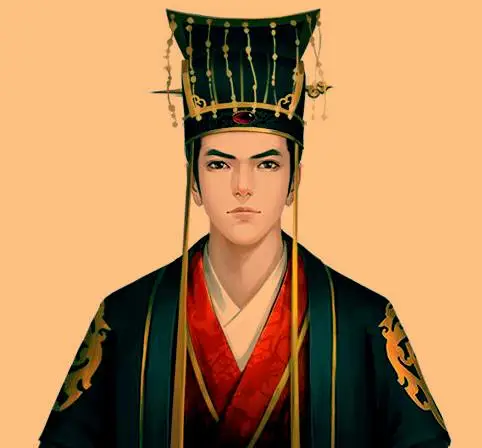
In the summer of 325 the second emperor of the Eastern Jin lay dying in Jiankang at the age of twenty-seven. He had held the throne for three years, and most of that time had gone into recovering from the revolt of Wang Dun, which is another story. What concerned him in his last weeks was the succession. His eldest son was four years old by Western reckoning. The child was brought to the bedside, and the dying man dictated a list of ministers to hold the state together until he came of age: Wang Dao, the old chancellor of his father's court; Bian Kun, the upright director of the department of state affairs; Yu Liang, the brother of the empress; Wen Jiao, Xi Jian, Lu Ye. Then he died, and the boy was carried into the audience hall and put on the throne.
His name was Sima Yan, which was also the name of the founder of the dynasty, the conqueror of Wu, the man who had united China in 280 and lost it again within a generation. Nobody in the hall remarked on the coincidence. The following year was given the name Xian He, complete harmony, a wish rather than a description, and the government was placed in the hands of the empress dowager, who sat behind a screen, and of her brother Yu Liang, who stood in front of it.
Seventeen years later, in the sixth month of 342, the same man died in the same palace, aged twenty-two, and the histories that record those seventeen years give him, in his own person, four sentences. He asked where the white-haired prince had gone. He asked for two murdered attendants to be given back to him. He refused a pardon. He told his uncle that the family had ruined the realm. Everything else attributed to him is ceremony, decree, or the voice of his ministers. This is the reign of a man who was present at the worst disaster of his dynasty as a child of seven, who was carried out of it on a boat belonging to one of his generals, and who then presided, in near silence, over the longest stretch of internal peace the Eastern Jin ever knew. The silence is not an accident of the record. It is the shape of the reign, and the reason it worked.
1. The Testament
The Eastern Jin in 325 was a state that had learned to expect the worst. It held the lower Yangzi and the lands south of it, a narrow strip of the north bank, and a claim to everything else. The north was ruled by Shi Le, a former slave who had made himself master of the central plain and would take the imperial title five years later. The refugees who had crossed the river in the previous decade were still being settled in shadow commanderies named after the territories they had lost, administered by the men who had led them across. The court was a government of exiles in a city that had been a provincial garrison two generations earlier.
Ming, the dying emperor, had been a competent man in an impossible position. He had come to the throne in 323, at twenty-five, inheriting a court that had just survived a general's revolt and a treasury that had not. By the spring of 325 he was coughing blood, and he knew he was dying. He spent his last weeks on the arrangements, and the arrangements are the first thing about this reign that deserves attention, because they did not work, and the way they failed shaped everything that followed.
The list of ministers was a compromise, and everyone on it knew it. Wang Dao was the most respected man in the south. He had served three emperors and was, by 325, the living symbol of the alliance between the throne and the great families who had crossed with it. His method was patience, accommodation, and an almost studied vagueness about details. Yu Liang was a generation younger, the brother of the empress dowager, and the opposite of everything Wang Dao represented. He was severe, exact, and convinced that the state had been allowed to drift because the men around the throne had confused good manners with good government. He wanted a strong centre, a disciplined army, and a court that obeyed the law before it obeyed the families.
The two men had coexisted under Ming because Ming had needed both. Under a five-year-old they could not coexist, and the testament made no provision for which of them would decide. It named seven ministers and no chairman. It gave the empress dowager the final word, and the empress dowager was Yu Liang's sister. Within a year of the funeral, the government of the Eastern Jin was in the hands of a man who had never held a provincial command, had never led an army in the field, and believed that the disorder of the last decade had been caused by the court's failure to act decisively. His sister sat behind the screen, and the other five men on the list were, in practice, his advisers.
The child was raised as heirs were raised in Jiankang: in a palace of painted beams and thin walls, with tutors, ritual, and very little privacy. His mother the empress dowager was about thirty. His father was dead. His uncles on the maternal side were the most powerful men in the state, and he saw them every day.
The first crack came in the tenth month of 326. Sima Zong, the prince of Nandun, was an imperial clansman of his grandfather's generation, a son of Sima Liang. He was old, white-haired, proud, and he kept troops. He had also sheltered a fugitive official named Bian Chan, who had fled to him rather than face a prosecution at court. Yu Liang demanded the man. Sima Zong refused. Yu Liang sent troops under Zhao Yin, and the prince was killed, with his son, in his own house. Another prince, Sima Yang of Xiyang, was implicated and demoted.
The killing was legal in form and arbitrary in substance, and the court understood it as a warning. What is remarkable is that the child understood it too. Some years later, when he was old enough to ask questions, he asked Yu Liang where the white-haired prince had gone. Yu Liang said that Sima Zong had plotted rebellion and had been executed. The emperor said: "You say a man is a rebel, and you kill him. If someone says my uncle is a rebel, what then?" The history records that Yu Liang changed colour and was afraid.
He was perhaps eight or nine when he said it. The sentence is the first thing in the record that belongs to him rather than to his office, and it is worth pausing on, because it does three things at once. It shows that he knew what had happened to Sima Zong, though no one had told him. It shows that he had grasped the logic of the court's politics, which was that a charge of rebellion was a weapon and that weapons could be turned. And it shows that he had already learned the one skill that would keep him alive for the next decade, which was to say the dangerous thing calmly, once, and then stop.
Yu Liang did not stop. The killing of Sima Zong was followed by other measures: the princes were stripped of their escort troops, the offices of the imperial clan were reduced, and the court began to prepare for the possibility that the great families upstream would resist. The most dangerous of them was not a prince. He was a refugee commander on the north bank, and his name was Su Jun.
2. The Order to Come to Court
Su Jun was from Changguang, on the Shandong peninsula, a man of no great family who had raised several thousand households during the collapse of the north and had brought them south under his own banner. He held a stretch of the north bank at Liyang, with his brother Su Yi, and the sources give him about ten thousand men. He was brave, vain, and touchy about his dignity. He had been given a title and a command, and he understood both as personal property.
Zu Yue, who held Shouchun, was the same kind of figure. He was the younger brother of Zu Ti, the general who had held the north bank against Shi Le for a decade and had died in 321, disappointed and unused. Zu Yue had inherited his brother's soldiers and something of his brother's grievance. The two men, Su Jun and Zu Yue, were the strongest military forces in the eastern theatre that did not belong to the court, and they knew it.
Yu Liang's reasoning about them was not stupid. A state that has just survived a general's revolt will look at two semi-independent commanders on its northern border and see the next revolt. He proposed to bring Su Jun to the capital, give him an honorary office, and take his soldiers into the imperial army. The office was that of grand minister of agriculture, a post of high rank and no troops. The intention was visible to everyone, including Su Jun.
The court debated the plan. Wang Dao opposed it, on the grounds that a man of Su Jun's temperament would not come quietly and that the risk of forcing him was greater than the risk of leaving him. Bian Kun opposed it in stronger terms. He argued that Su Jun held a strategic command, that his soldiers were devoted to him, and that the court should watch him and wait rather than provoke him. Wen Jiao, who was governing Jiang province from Xunyang with the best troops in the eastern half of the state, wrote to say the same thing, and offered to take his own army down the river and settle the matter before it became a crisis.
Yu Liang refused. His reply to Wen Jiao is one of the most quoted sentences of the period. "My worry is the western border, more than Liyang. Do not cross Leichi one step." Leichi was the lake and marsh country on the road between Xunyang and the capital; to cross it was to bring an army into the court's own theatre. Yu Liang was telling his best general to stay where he was, because the real danger, in his view, was not Su Jun but the men upstream, and above all Tao Kan, the old commander in Jing province, who had an army, a province, and no particular loyalty to the Yu family. The sentence became a proverb in Chinese, used ever afterwards for the line that must not be crossed. At the time it was a strategic judgement that left the capital to face Su Jun alone.
The order went out. Su Jun refused it. In the eleventh month of 327 he raised his banner, and Zu Yue joined him. Their proclamation said that they were marching to clear the ruler's side, which meant the removal of Yu Liang. The court had heard the formula before, five years earlier, and had survived it.
The military position was bad. The best troops were at Xunyang and Jiangling, too far to reach the capital in time. Xi Jian, at Guangling, had a small force and a long frontier to watch. The capital had the palace guards and the garrison of Stone City, and it had Yu Liang, who had never commanded an army in the field and now proposed to command one from the palace.
Su Jun crossed the river in the last weeks of 327 and defeated the government troops in the open country east of the capital. The news reached Jiankang in the first month of 328, and the court did what courts do in such moments: it argued. Yu Liang, who had spent two years insisting that the court must act, now insisted that the court must hold the capital. It could not. The outer defence at Stone City was not held, and the rebels entered the city in the first month of 328.
What followed was one of the great scenes of the dynasty's history, and it belongs to Bian Kun rather than to the emperor. Bian Kun was the director of the department of state affairs, a man of severe and somewhat abrasive integrity, the kind of official whom everyone respects and no one likes. When the palace was attacked, he led his guards and his two sons, Bian Zhen and Bian Xu, into the streets to fight. All three were killed. His wife, the lady Pei, came out, threw herself on the bodies, and said: "The father was a loyal minister, the sons were filial sons. What is there to regret?" The soldiers killed her where she lay.
The palace burned. The emperor, seven years old, was in it. Wang Dao was with him. Yu Liang had fled the city by boat, pursued by the rebels, and had reached Xunyang with his life and not much else. The man who had argued for two years that the court must act decisively had lost the capital in a single month, and the man who had argued for patience was now the only adult standing between the child and the men who had taken the city. Wang Dao's biography says that he preserved the emperor by yielding. His critics, then and later, said something simpler, which was that he had made his peace with the rebels. Both descriptions fit the same set of acts: he stayed, he spoke courteously to Su Jun, he kept the court in being, and he kept the boy alive.
3. The Warehouse Palace
The empress dowager died in the third month of 328, two months before the emperor was moved to Stone City. This is worth stating plainly because it is sometimes said that she died after the move. She died in the palace during the occupation, at about thirty, of grief and shock. She was buried in the tomb of her husband, the emperor Ming. Whatever else the boy lost in that year, he lost his mother first, while the rebels were still in the city and the palace was still smoking.
In the fifth month of the year he was moved. Stone City stands on a rocky hill west of Jiankang, where the ridge comes down to the river. It had been a fort since the Three Kingdoms, a place of granaries and walls and soldiers, and it was the strongest point in the capital's defences. The rebels held it, and they took the emperor with them. He was lodged in a storehouse, a warehouse of the garrison, and he lived there for the next nine months.
The sources for what happened inside that building are thin and late, and they have been embroidered in the retelling. What they agree on is this. The emperor had a small household of officials who had refused to flee, above all Liu Chao, the general of the right guard, and Zhong Ya, the palace attendant. Liu Chao taught him to read. The books were the Classic of Filial Piety and the Analects, the two texts with which every educated child in the period began, and the lessons were held in the intervals between Su Jun's visits. The boy sat on a coarse mat. He ate plain food. He was told to keep his face still.
Su Jun came to the warehouse and spoke to him with contempt. The annal says that whenever he entered he used ugly words. He was a man of the camp with no reason to be careful with a child, and he seems to have enjoyed the performance of mastery. The emperor, according to the same source, showed nothing. He was seven. He had already learned, in the two years since the white-haired prince, that the powerful could do what they wished and that the weak survived by not being interesting.
This is the centre of the story, and it is also the point at which the historian has to be honest about the evidence. The scene of the child on the mat with the Analects is preserved in the biography of Liu Chao, written by men who were not there, three hundred years later, from sources that no longer exist. It may be true in every detail. It may be true in substance and decorated in the telling. What cannot be doubted is the shape of the experience: a boy of seven, a prisoner in a warehouse, with two attendants who had stayed when his generals ran, being taught the classic of obedience by a man who was about to die for him.
Outside the city, the loyalist coalition came together slowly. Tao Kan, upstream in Jing province, had to be persuaded. He was seventy years old, the most successful commander of his generation, and he had no love for Yu Liang, who had spent two years treating him as a potential enemy. Wen Jiao wrote to him, and so did others, arguing that a rebel who held the emperor could not be allowed to consolidate, and that the man who restored the dynasty would be the first man in it. Tao Kan came down the river in the spring, with the Jing province army, and was made leader of the alliance. Xi Jian came south from Guangling with the northern levies and took up a position at Baishi, on the north bank opposite the capital, where a fort was built. Wang Dao, who had stayed in the city as long as he could, left it in the ninth month and joined them there.
The campaign that followed was slow and quarrelsome. Tao Kan and Wen Jiao quarrelled over the timing, and the rebels still held the emperor, so every plan had to consider that the boy might be killed the moment the assault began. The fort at Baishi was the loyalist answer: a base on the north bank from which they could threaten the rebel supply lines without storming the city.
Su Jun's death, when it came, was an accident. In the ninth month of 328 he led his men out of Stone City against the loyalist forces attacking his outer positions. In the fighting he was struck by a thrown spear and fell from his horse. His head was taken, and his followers burned his body and fled back into the fort. The rebellion did not end with him. His brother Su Yi took command, and the remnant held Stone City, and the emperor was still inside it.
4. The Return
The end came in the second month of 329. The loyalist armies closed on Stone City from two sides, and Su Yi, knowing that the fort could not be held, did one last thing before the assault. He sent men to kill the two officials who had stayed with the emperor.
The scene is preserved in the biography of Liu Chao. The soldiers came into the warehouse, and the emperor understood what they had come for. He held on to Liu Chao and wept. The soldiers pulled the old man away, and Liu Chao said that he could not bear to leave His Majesty. The emperor said: "You are leaving me. Where am I to go?" They took Liu Chao and Zhong Ya outside and killed them.
He was eight years old. In the space of twelve months he had lost his mother, his palace, his freedom, and now the two men who had made the warehouse bearable. What he had left was a name that the rebels needed alive, and a court outside the walls that needed him alive for a different reason. He was, in the strict sense, alone.
The assault came days later. The loyalist troops broke into the fort, and two officers, Teng Han and Cao Ju, found the emperor and brought him out. He was put on Wen Jiao's boat. The officers came to pay their respects. The boy, sitting on the deck of a general's boat with the smoke of the fort behind him, said: "Give me back my palace attendant and my right guard."
The histories record the sentence without comment, which is the way they record the things they cannot explain. It is the first order the emperor ever gave. It was not about the rebellion, or the capital, or the men who had lost the war. It was about two dead officials, one of whom had taught him to read. The men who heard it must have understood that the child had not been passive in that warehouse, and that what he had been doing, in the only way available to him, was holding on to the people who stayed.
There was one more act of the same kind before the year was out. Ren Rang, a rebel officer, had been one of the men who killed Liu Chao and Zhong Ya. He was taken alive in the fighting, and there was a move to spare him. Tao Kan and Xi Jian both asked for leniency on the grounds of his past service. The emperor refused. "Ren Rang is the man who killed my palace attendant," he said. "He cannot be pardoned." The officers argued. The emperor did not move, and Ren Rang was executed.
That is the third of the four sentences, and it tells more than the one before it. A child of eight had just watched his protectors murdered. He was surrounded by generals who had their own reasons for mercy, and one of those reasons was that the killer had once been useful to them. He overruled them. It was a judicial act, not a political one: he did not ask for Ren Rang's family to be punished, or for the officers who had served Su Jun to be proscribed. He asked for one man's life, on the ground that the man had killed his servant. The court, which had spent two years watching its own generals bargain with rebels, watched a boy insist on a point of law.
The war ended with a government that had to decide what to do with itself. The capital was in ruins, the palace had burned, the archives were scattered, and the men who had saved the dynasty were the same men who had spent the previous two years refusing to obey it. Some in the court proposed moving the capital east to Kuaiji or west to Yuzhang. Wang Dao argued that Jiankang was where the dynasty had been founded, where its tombs were, and where the families who made up the state had their estates, and that a government which moved would admit it had no roots. The court stayed, and the palace was rebuilt on a smaller scale than the one it replaced.
The rewards and the exiles were settled in the same months. Tao Kan was made grand commandant, Xi Jian minister of works, Wen Jiao a general with an autonomous staff and the province of Jiang. Yu Liang, who had lost the capital and then spent the war in the loyalist camp, was made general of the west and governor of Yu province and sent out of Jiankang to Wuhu. The court refused his offer to resign and accepted his exile, which was the elegant solution: a man too dangerous to keep at court and too well connected to punish was given a command far enough away to be harmless and close enough to be watched.
Wen Jiao died in the fourth month of 329, aged forty-two, a few weeks after the restoration. He had been the most effective of the loyalists, the one who had persuaded Tao Kan to come down the river and had held the coalition together. His death removed the only man who could mediate between Yu Liang and Tao Kan, and left the court with two commanders who did not trust each other and a chancellor who trusted neither.
The emperor was eight. His household consisted of an empress mother in her tomb, two attendants in theirs, and a chancellor who had saved him by staying in a city he could not defend. In the ordinary course of things a boy in that position grows up owing everything to the man who kept him alive. The next ten years of the reign are the record of that debt, and of what it cost the state to pay it.
5. Three Centres
By 330 the Eastern Jin had a shape that would last, with variations, for the rest of its history. There was the court at Jiankang, where Wang Dao presided and the emperor presided over Wang Dao. There was the upstream command at Jing province, where Tao Kan held eight provinces and the best army in the state. There was the crossing at Jingkou, where Xi Jian commanded the northern levies and the refugees from the Huai country, a garrison that was loyal to the dynasty because it had nowhere else to go. And there was Yu Liang at Wuhu, then at Wuchang, a fourth centre not yet strong enough to count and being built into one.
The four men were not a constitution. They were a stalemate, and the stalemate was the government. Tao Kan could not march on the capital without Xi Jian at his back and Yu Liang on his flank. Yu Liang could not move against Wang Dao without Tao Kan's approval. Wang Dao could not remove any of them without an army, and he had no army. Xi Jian, the weakest in troops, was the strongest in position, because Jingkou controlled the road from the north and the river approach to the capital. The emperor was the point at which the four balances met. He was also, for most of the decade, a child, which meant that the balance was maintained by men who had reasons of their own to maintain it.
Wang Dao's method of governing has been criticised for centuries, and no one has improved on it as a description of how a weak court survives. He governed by not governing. He kept the registers loose, so that the great families were not pressed for taxes or soldiers; he appointed the sons of great houses to offices they could not perform; he let disputes be settled by the parties rather than the law; and he cultivated an air of benevolent vagueness that made him impossible to hate. He governed by a phrase from the first reign: a net so wide that the big fish swim through. It was a policy: the state would survive if the families that composed it were not frightened.
The emperor's relation to him was not the ordinary relation of a sovereign to a minister. He bowed to Wang Dao in his own house. He bowed to Wang Dao's wife, the lady Cao. The record notes the fact without comment, and a later official, Kong Tan, protested that a son of heaven should not bow to a subject. The protest was ignored. The boy had been in the palace when it burned and in the warehouse when the rebels came; Wang Dao had been the one fixed point in both. The bow was gratitude, and it was also a public statement about where authority lay, and the court read it correctly.
Tao Kan was a different matter. He was born in 259, in the last decades of Wu, and had come up through the clerkships of the conquered south, which meant that he had spent his life proving that a man from a defeated province could be more useful than the sons of the conquerors. He was famous for the bricks. In Guangzhou, where he had been posted in a quiet year, he had carried a hundred bricks out of his study in the morning and back in the evening, so that his body would not forget what his career required of it. The story is usually told as an anecdote about diligence. It is also a story about a man who did not trust peace.
In 330 the court tested the balance. Liu Yin, the governor of Jiang province, was killed by his subordinate Guo Mo, who seized the province and its troops. Wang Dao's instinct was to recognise the fact: Guo Mo held the province, a campaign would cost money and lives, and a title would make him a colleague. Tao Kan overrode him. He marched east, took the province, and killed Guo Mo. The chancellor proposed, the general disposed, and the court ratified. Tao Kan now held Jing and Jiang, the whole middle Yangzi, and the men around him began to say that he should march on the capital and clear it of Wang Dao. The sources say that his officers urged it. Tao Kan refused, and the refusal is the reason the Eastern Jin did not have a second civil war in the 330s. He was old, his sons were not capable of inheriting his position, and a march on the capital would have made him the next general to try it, a role with a known ending. He also understood that the court was not the danger. The danger was the north, and the north was waiting.
In the sixth month of 334 Tao Kan died, at seventy-six, in his command. His death is the hinge of the reign. The upstream army passed to Yu Liang, who had been waiting at Wuhu for exactly this, and who was made area commander of six provinces and governor of Jing. Yu Liang was forty-six, able, ambitious, and convinced that the failure of 328 had been a failure of preparation rather than of judgement. Now he had the province from which the north could be attacked, and the court had no one left who could restrain him.
The emperor was fourteen. In the same year the last of the great regents was gone, and the balance of four had become a balance of three: Wang Dao at court, Xi Jian at Jingkou, Yu Liang upstream. The boy who had asked for his attendants was now old enough to be crowned, and the ceremony was set for the following spring.
6. The Years of Xiankang
In the first month of 335 the emperor assumed the cap. He was fifteen. The ceremony was the formal end of the regency, though the empress dowager had been dead for seven years and the government had been Wang Dao's for longer than that. The era was changed to Xian Kang, complete prosperity, and the years that followed were, by the standards of the dynasty, exactly that.
The first thing the young emperor did in his own name was marry. In 336 the bride was Du Lingyang, the daughter of Du Yi of Jingzhao Duling, a family of the old western aristocracy that had come south with the court. She was sixteen. The marriage was arranged, as such marriages were, and the sources say the couple were on good terms. She was made empress in the same year. She had no children, and the absence would matter at the end.
The court in those years was busy with the kind of legislation that a state makes when it has stopped fighting for its life and started arguing about property. In 336 an imperial decree, issued on a ren-chen day, addressed the enclosure of hills and marshes. The great families had been taking possession of lakes, hills, and wasteland, walling them off and peopling them with tenants. The decree declared that anyone who enclosed hills and marshes would be judged under the law of banditry, and that a seizure of one zhang of silk or more would be punished with execution in the market. The penalties were ferocious and the enforcement was partial. But the decree marks something new: a court that had spent a decade trying to survive was now trying to define what it owned.
The fiscal background to that effort was the land survey of 330. In the fifth year of Xian He the court had measured the fields of the common people and set a tax of a tenth of the produce, assessed at three sheng of grain per mu. It was the first serious attempt since the crossing to find out how much land the state actually governed, and it was administered, like everything else in the period, through the local magnates whose cooperation the court could not do without. The registers of the Eastern Jin were not a description of the country. They were a negotiation with the men who owned it.
In 337 the court established the Imperial Academy. The gesture was largely symbolic, since the north held the libraries and the scholarly lineages, but it was a claim that the dynasty intended to be more than a garrison, and the emperor, who had been taught the Analects in a warehouse by a man killed for it, was its natural patron.
In the eighth month of 338 Wang Dao was made chancellor. It was the highest civil office in the state and had not been held for decades. He was sixty-three. The appointment acknowledged, in name as well as in fact, that the man who had held the dynasty together through the rebellion was the head of its government, and it was the last honour he received. He died the following year.
Beyond the river, the north was changing in ways the court could watch but not influence. Shi Le had taken the imperial title in 330 and made himself master of the central plain. He died in 333, and his empire passed to a nephew, Shi Hu, who moved the capital to Ye in 335 and governed it with a ferocity that sent a steady trickle of refugees south. The Eastern Jin could not attack. It could receive. Every boat that came down the Huai added to the population the court would one day try to register, and reminded it that the north was not empty of people who still called themselves subjects of Jin.
The emperor's own life in these years is almost invisible. The annals record the rituals, the audiences, the reception of envoys, and note that he was sparing of speech, dressed plainly, and disliked the elaborate ceremonies his office required. The Tang historians, summing him up, say that he was able to be frugal in his own person, and that this was the quality that roused the realm against its corrupt habits. It is not much of a portrait, but it fits the man who had grown up in a storehouse: a sovereign who did not confuse display with power.
7. The Northern Failure
The peace of Xian Kang was broken not by an invasion but by an ambition. In 339 Yu Liang, from his command at Wuchang, proposed to attack the north. His plan had three parts. He would move his headquarters forward to Xiangyang and Shicheng, on the Han river, and threaten the central plain from the west. Xi Jian would march north from Guangling and pin the enemy on the eastern flank. The court would supply and legitimise the effort. The objective was the recovery of the lands the dynasty had lost thirty years earlier, and the argument was that the north was weak: Shi Hu had murdered his way to power, the refugees were restless, and a serious advance would be met by local risings.
Xi Jian refused to cooperate. He was seventy, he had spent his life on the northern frontier, and he did not believe that a southern army could hold ground north of the Huai. He refused to move his own troops. Cai Mo, one of the senior ministers, made the argument at greater length in a memorandum that has survived. The south, he wrote, could defend the river and could not conquer the plain. Its armies were made for boats and sieges, its cavalry was negligible, and the northern population, after a generation of foreign rule, would not rise for a dynasty that had never protected them. A forward move would not recover the north; it would expose the south.
The court did not accept the plan, and did not reject it. It approved a limited version, which is the way weak governments avoid decisions. Yu Liang was allowed to advance his outposts but not to launch the general campaign. He sent Mao Bao and Fan Jun with ten thousand men across the river to occupy Zhu city, a strongpoint on the north bank opposite Wuchang, and he began to build it into a base.
Zhu city was a salient. It stood on the far side of the river, connected to the south by water, overlooked by higher ground, and dependent on reinforcement that could only come by boat. Tao Kan had warned against it years earlier, when he held Wuchang, on exactly those grounds: the place was on the wrong side of the river, without depth, without a land route, and without the manpower to hold it against a serious attack.
The attack came in the first month of 340. Shi Hu sent his general Kui An south with fifty thousand infantry and twenty thousand cavalry. The cavalry came first and cut the roads. The infantry invested the city. Mao Bao and Fan Jun, with ten thousand men and no hope of relief, tried to break out toward the river. The breakout failed. The men were driven into the water, and Mao Bao and Fan Jun were drowned with most of their command. The annals give six thousand dead. Kui An's cavalry went on to raid the commanderies north of the river and carried off several thousand households before withdrawing.
The news reached Jiankang in a matter of days. It was the worst military defeat of the reign, and it was worse than a defeat, because it was self-inflicted. The court had not been surprised by an invasion. It had been surprised by the failure of its own forward policy, conducted by a man who had spent ten years insisting that the court could act and had now discovered the price. Yu Liang offered his resignation and a demotion. The court refused both, which was the conventional response and also the only one available: a man of his connections could not be dismissed, and a man of his failures could not be promoted. He stayed at Wuchang through the summer, sick with shame, and in the twelfth month of 340 he died of an abscess of the back. He was fifty-two.
Two other deaths preceded his, and they matter more than his. Wang Dao died in 339, aged sixty-four, before the campaign he had opposed was launched. The emperor mourned at the court hall for three days and gave him the posthumous name Wenxian. Xi Jian died in the eighth month of the same year, at seventy-one, at Jingkou. The garrison he had built passed into the hands of the great families of the river mouth, where it remained for the rest of the dynasty.
Within twenty months the three men who had governed the Eastern Jin since the rebellion were dead. The emperor was twenty. For the first time in his life there was no regent, no chancellor of the old generation, no general upstream who outranked him. The first thing he did with that authority was to stop. There was no second campaign, no attempt to redeem Zhu city. The court accepted the loss of the north bank and withdrew to the river line, and the river line held for the rest of the reign. The peace that followed was not the peace of 335, which had been the peace of a state with ambitions. It was the peace of a state that had decided to be small.
8. The Registration
In the third month of 341 the empress died. Du Lingyang was twenty-one. She had been married for five years and had no children, and the annals record the emperor's grief. The burial was ordered with a frugality that became a small legend: the tomb was to be swept clean and nothing more, with no painted carriages and no straw figures such as a great tomb required.
In the fourth month the court issued a decree about the population. The wording in the annals is short enough to quote in full: "Verify the registered households. From the princes and dukes down, all shall be corrected by the land-based registration and the white register."
That sentence is the most important thing the reign produced.
Since the fall of the north, the Eastern Jin had governed two populations. The older one, the families settled south of the river before the crossing, was registered on the yellow rolls and taxed and conscripted in the ordinary way. The newer one, the refugees who had come south since the 310s, was registered on white rolls, in shadow commanderies named after the places they had left. A man from a commandery in the north was enrolled in a commandery of the same name that existed only on paper, somewhere in the south, and administered by the men who had led his group across. The arrangement gave the refugees a legal identity, kept their leaders loyal, and allowed the court to claim that the north had not been abandoned, only moved. It also meant that a large part of the population paid little or nothing, and that the great families could attach refugees to their own estates as clients, outside the reach of the tax collector.
The land-based registration, which the histories call cutting by the land, was the remedy. It took the paper commanderies and the white rolls and attached them to real places: a household was to be registered where it actually lived, not where its ancestors had lived. The decree of 341 did this for everyone from the princes down, which meant that even the greatest families were included. It was the first general measure of the kind since the dynasty was founded.
What it did not do is equally important. It did not abolish the white register or convert white registrations into yellow ones. That step came later: a second and harder land-based registration in 364, and a third in 413, each of which moved a larger share of the refugee population onto the regular rolls. The measure of 341 was a verification and a localisation. It established where the white-register households were and made their exemptions bounded and visible. In practice it gave the court a list, and a list is what a weak government needs before it can tax anyone.
The timing was not accidental. The three great men who had dominated the court since 329 were dead. The northern adventure had failed and discredited the party of action. The empress's death had given the court a moment of austerity and moral clarity, and the emperor, at twenty-one, was in sole charge of a government that had no other programme. The register was the one policy a weak court could carry out without an army. It required clerks, not soldiers, and could be presented as an act of order rather than an act of war.
The enforcement was partial. The annals record the decree and not its results. There is no account of resistance, which may mean that the measure was carried out administratively and unevenly, and no account of a purge. The great houses kept their clients. The registers were corrected where the local officials were strong and left alone where they were not. What the decree did was to establish a principle, and the principle outlived the enforcement: the state had the right to know where its people were.
That principle is the reason the reign can be called the most stable of the Eastern Jin and the reason the stability was limited. The seventeen years produced no great conquest, no great building, no great book. They produced a government that had learned to count its subjects, and a court that had learned to live with the men who held the armies. The register was the instrument by which the dynasty would, over the next century, slowly convert itself from a government of refugees into a government of taxpayers. It began in the fourth month of 341, in a palace rebuilt on a smaller scale than the one it replaced.
9. The Last Summer
In the first month of 342 the emperor's uncle tried to poison a provincial governor. Yu Yi (governor of Yu province, not the Yu Yi who held Jing) was a brother of Yu Liang and the man the emperor called his younger uncle. The governor of Jiang province, Wang Yunzhi, was a young kinsman of Wang Dao and one of the few officials the court trusted with an army on the river. The poisoned wine arrived as a gift. Wang Yunzhi suspected it, gave a cup to a dog, and watched the dog die. He reported the matter to the emperor in a private memorial.
The emperor's response is the fourth and last sentence the histories give him. "My eldest uncle brought the realm to ruin," he said. "Does my younger uncle mean to do the same?" Yu Yi was told that the emperor knew. He took poison and died in the second month.
The sentence is short and it carries sixteen years. The eldest uncle was Yu Liang, who had killed the white-haired prince, lost the capital, and destroyed an army at Zhu city. The younger uncle was Yu Yi, who had tried to remove a governor by poison because the governor was loyal to the court rather than to the family. The emperor had been raised by the Yu family and had spent his reign watching it treat the state as an extension of its own household. He did not order a purge or a prosecution of the clan. He said one thing, and a man died. It was the same instrument he had used at eight, when he refused to pardon Ren Rang: the flat statement of a fact that the powerful could not answer.
In the sixth month he fell ill. The annals do not name the disease. He was twenty-two by the count of his court, twenty-one by the calendar, and he had been emperor for seventeen years. His empress was dead. His sons were infants: Sima Pi, born the previous year, and Sima Yi, born in this one, both to a consort of the Zhou family. The succession should have passed to Sima Pi, and the regency should have gone to the child's mother's family, which was not the Yu family.
Yu Bing, the youngest of the three Yu brothers, was now the most powerful man in the inner court, and he had no intention of letting that happen. He proposed the emperor's brother, Sima Yue, the prince of Langya, and the dying emperor, who had been overruled by his uncles all his life, agreed.
He died on the gui-si day of the sixth month of 342 and was buried at Xingpingling, beside the empress whose tomb had been swept clean. Sima Yue took the throne as Emperor Kang, reigned two years, and died in 344. The throne returned to the line of Cheng only in 361, when Sima Pi, the son who had been passed over, was made emperor. Yu Bing's manoeuvre delayed the succession by a generation. It did not change it.
The Tang historians who compiled the Book of Jin three hundred years later wrote the verdict that has attached to the reign ever since. Cheng, they said, held the land between the Yangzi and the Huai with the resources of a weakened state, the government came from his mother's brothers, and his campaigns did not succeed. They noted that he gathered his robe and bowed at Wang Dao's gate. And then they added the sentence that redeems the account: he was able to be frugal in his own person, and so he could rouse the realm against its corrupt habits. Their encomium ends with the image the reign never escaped. Fire reached the ruler's house. Soldiers tangled the emperor's curtain. The carriage at Stone City. They asked why his span had been so short.
The verdict is fairer than it sounds. A reign that began with a child on a throne, lost its capital, produced a forward policy that destroyed an army, and ended with a disputed succession should not have been the most stable stretch of the dynasty's history. It was, and the reasons are structural. The four centres balanced. The north was quiet because the south stopped attacking it. The register of 341 gave the court a hold on its population that no amount of ceremony could have given it. And the emperor, who had learned in a warehouse that survival depended on saying little, provided what a divided court needed: a centre that did not move.
Four sentences is a thin monument. But the reign is not really recorded in what he said. It is recorded in the rolls that his clerks began to correct in the fourth month of 341, in the fields measured in 330, in the tomb that was swept and nothing more, and in the fact that a boy who had been a prisoner in a storehouse died in his own palace, at twenty-two, with the throne still in his family's hands. The Eastern Jin survived the fourth century by learning to be smaller than its claims. The learning began here.