Home / Emperors / Han Dynasty
Emperor Cheng of Han
汉成帝
Liu Ao, 51 – 7 BC · Twelfth emperor of the Han dynasty
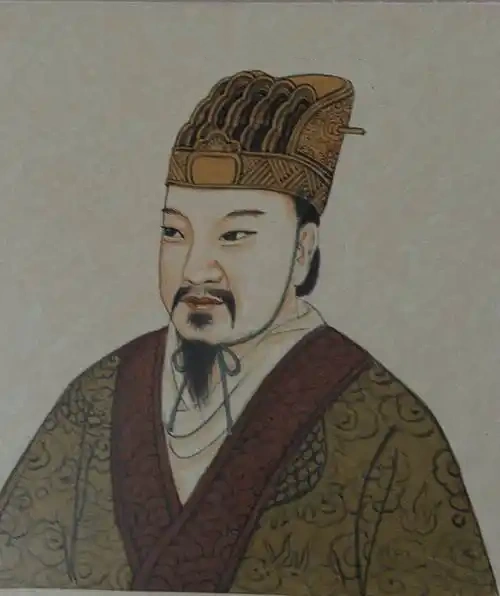
In the sixth month of 33 BC, a few weeks after his father's death, a young man of twenty took the throne of the Han. He inherited an empire in good order. The granaries were full, the northern frontier had been quiet since a Xiongnu chanyu had come south to be received as a guest a generation before, and the machinery ran. What his father left him that mattered most, though, was not any of this. It was a family. On the day the new reign began, the court announced that the empress dowager's eldest brother, Wang Feng, would be grand marshal and general-in-chief, with the memorials of the empire passing through his hands before they reached the throne.
Twenty-six years later, in the third month of 7 BC, the emperor — now forty-five by the count of the Han, and without a son — died suddenly in the Weiyang Palace. The office that had been given to Wang Feng on the day he took power was held by another member of the family: a nephew named Wang Mang, who had grown up in the shadow of these uncles, had learned to dress as a scholar and to defer to his elders, and had reached the grand marshalship the year before at the age of thirty-eight. Between those two appointments lies one unbroken arrangement. Five men of one family held the highest office of state during the reign of Liu Ao, and nine were made marquises. This essay is about how that arrangement came to seem normal, and how little anyone — the emperor least of all — did to disturb it.
1. The Son Who Inherited a Household
Liu Ao came to the throne with the reputation of a careful young man. As crown prince he had been summoned in haste by his father one day and had refused to cross the imperial roadway on the way, going round it instead; when the emperor asked why he was late and heard the answer, he was pleased, and gave the boy standing permission to cross it in future. He had also been doubted. His father had thought more than once of putting a younger son in his place, and the succession had been saved by the boy's mother's family and by an attendant the old emperor trusted — a sequence that belongs to the previous reign and is described there. What the new emperor inherited, along with the throne, was the debt.
The first act of the reign was to put the government into Wang Feng's hands, and the wording of the appointment is exact: the emperor made his senior maternal uncle, the palace attendant and commandant of the guards, marquis of Yangping, grand marshal and general-in-chief, with the conduct of the secretariat. The last three words were the ones that mattered. To hold the affairs of the secretariat was to sit where the paper came in. And in the same season the court moved against the man who had sat there under the previous emperor.
Shi Xian was a eunuch who had run the palace secretariat for years and had been, in Emperor Yuan's reign, the most powerful man in the state. He was not attacked. He was promoted out of power — made grand groom of the Longxin Palace, an office that took him away from the inner rooms where the memorials were read — and then the chancellor Kuang Heng and the censor-in-chief Zhang Tan laid out his offences, and he was stripped of office and sent back to his home commandery, where he died on the road. The men who had risen through him were removed, and a rhyme went round the capital naming the distant posts they were sent to, and ending that their going cost nothing.
Four years later, in the spring of 29 BC, the emperor did away with the office that had made Shi Xian possible. The palace secretariat was reorganised: the eunuch appointment was abolished, and five secretaries were appointed in its place, staffed from among the officials — a change the Confucians had asked for since Emperor Yuan's day, and refused then. It is the clearest evidence that the new emperor had a plan. He meant to take the machinery of government away from a man whose loyalty could not be relied on.
What he did with it was hand it to his mother's brothers. Wang Chong, another uncle, was made marquis of Ancheng; five more — Wang Tan, Wang Shang, Wang Li, Wang Gen and Wang Fengshi — were given the rank of marquis of the interior. In the last month of the same first year of the reign he ordered the old suburban altars at Ganquan and Fenyin abolished and new ones built outside Chang'an in accordance with the texts, and the pattern of the reign was set in one gesture: the rites were being brought into line with the classics, and the government was being brought into line with the Wang family.
The men who lost ground were the rival consort-kin. Wang Feng cleared the field early. He drove out the ablest of them, Feng Yewang, a brother of the consort Feng and a governor of repute who was being spoken of for high office. And he removed the father of the empress, Xu Jia, who had been grand marshal and general of chariots under Emperor Yuan and was, by the ordinary precedence of the dynasty, the senior consort-kin of all. Xu Jia was given two hundred catties of gold and the rank of a marquis without office and told to retire; he died a year or so later. His daughter kept the title of empress for another thirteen years, and it did not protect her.
2. The Uncle Who Read Everything First
The superintendent of the secretariat sounds like a clerk and was the lever of the state. Memorials from the provinces and the offices came up through the secretariat; whoever held it decided what the emperor read, in what order, and what never reached him at all. Wang Feng held it, and the sources are unanimous that he used it. The officials below him took their lead from his face, and the History of Han records that the great men of the court, when they saw him, looked at him sideways and did not speak.
A small episode from the memoir of the empress dowager shows how it worked. The emperor wanted to make a young scholar he admired, Liu Xin, son of the librarian Liu Xiang, an attendant of the palace. The officials objected that the general-in-chief had not been informed. The emperor asked what business of the general-in-chief's such a trifle could be; they insisted; he told Wang Feng; Wang Feng said no; and the appointment was dropped. The History of Han preserves the emperor's own words, and records that they were not enough.
The one man at court who could stand up to Wang Feng was also called Wang Shang, and the two have to be kept apart. The Wang Shang of the story just told is the marquis of Chengdu, one of the empress dowager's five brothers. The other was the marquis of Lechang, a son of the emperor Xuan's uncle, and so of a different branch of the imperial kin. He had been one of the men who protected Liu Ao as crown prince, and in 29 BC he was made chancellor. He would not bend for Wang Feng: when a relative of the general-in-chief named Yang Rong was governor of Langye and the commandery fell into disorder, Wang Shang had him removed and refused Wang Feng's request that the matter be let alone.
Wang Feng had Wang Shang watched, and a man was found to accuse him of irregularities in his household. The emperor thought the charge too slight to be visited on a great minister, and said so; Wang Feng pressed it harder. In the fourth month of 25 BC a solar eclipse was read as a warning to the state, and the censure was renewed in its name. Wang Shang was stripped of the chancellorship. Three days later he died, and the account says he brought up blood; his sons and his relatives were driven out of the capital. After that no one near the throne could make the general-in-chief answer for anything.
What was left was the family, and in the sixth month of 27 BC the emperor gave it its full form. Five of the empress dowager's brothers were made marquises on a single day — Wang Tan marquis of Ping'a, Wang Shang marquis of Chengdu, Wang Li marquis of Hongyang, Wang Gen marquis of Quyang, Wang Fengshi marquis of Gaoping — and the world called them, from then on, the Five Marquises. Wang Feng himself was not among them: he had inherited his title from his father fifteen years before, and he stood above the five.
The Five Marquises competed in extravagance. The marquis of Chengdu, unwell and bothered by the heat, borrowed a palace of the emperor's to spend the summer in, and cut a channel through the wall of Chang'an to bring the Feng river into a pond in his own garden, where he kept a boat with feathered canopies and had the oarsmen sing the songs of Yue. The marquis of Quyang built a hill and a terrace in his grounds that the History of Han says resembled the White Tiger Hall of the palace itself. A song of the capital named him: when the five marquises first rose, Quyang was the angriest of them; he broke down the quarter of Gao Du and joined it to Wai Du, and his hill and his terrace are like the White Tiger.
It took the emperor four years to say anything. In 18 BC he visited the marquis of Chengdu's house and saw the channel cut through the city wall, and was angry, and said nothing. Later, on one of his disguised outings, he passed the house of the marquis of Quyang and saw the hill and the terrace. Then he turned on them. He reproached the general of chariots, Wang Yin, who had succeeded to Wang Feng's office by then; the two marquises offered to mutilate themselves before the empress dowager as an apology; and the emperor, angrier still, had the secretariat produce the old case of the emperor Wen and General Bo Zhao, who had been made to take his own life. The family answered by coming to the palace bearing the axe and the executioner's block on their backs, and Wang Yin tied himself to a withered tree in token of submission. The emperor could not bring himself to punish them, and the matter ended. The scene is the whole reign in one action: he sees it clearly, is angry, and lets it stand.
Wang Feng had held the government eleven years when he died, in the eighth month of 22 BC, recommending his cousin Wang Yin to take his place. Wang Yin is the one man of the family the historian praises: he remonstrated and corrected, and kept some sense of what the office was for. He held it seven years and died in 15 BC.
3. The Sisters from the Yang'a Household
The women who are remembered from this reign were not from the families of the great. The future empress Zhao Feiyan was, by the History of Han's own account, a servant of the palace at Chang'an, exposed as an infant by parents who did not want her and left three days before they took her back; when she was grown she was attached to the household of the princess of Yang'a, where she learned to sing and dance and took the name Flying Swallow.
The emperor found her on an outing. He had taken to going out of the palace in disguise, as the servant of a friend — the marquis of Fuping, Zhang Fang — whose household he claimed to belong to. Zhang Fang was the son of a princess of the imperial house and the emperor's closest companion, a favourite with whom, the memoir says without embarrassment, he shared a bed. It was on one such outing, in 18 BC, at a party given by the princess of Yang'a, that the emperor saw the dancer and wanted her. She was brought into the palace, and not long after her younger sister Zhao Hede was brought in too, and the two were made consorts, and their favour overshadowed the whole of the inner palace.
The Zhang Fang arrangement did not survive the family's objections: the empress dowager and the uncles found the favourite's influence intolerable and had him sent out of the capital, and the emperor, who could not refuse them, sent him away weeping and wrote to him constantly. He could not keep a friend against his mother's wishes any more than he could keep a minister.
In the fourth month of 16 BC the emperor made the elder Zhao sister's father, Zhao Lin, a marquis — the empress dowager had objected that the girl was too low-born to be empress, and the answer was to give her a marquis's family — and in the sixth month of that year he made her empress. Her sister was made a consort of the first rank, and given the Zhaoyang Hall to live in alone. The description of that hall in the History of Han is one of the most detailed pieces of interior decoration to survive from the dynasty: the courtyard painted vermilion and the beams lacquered, every threshold sheathed in bronze and gilded, steps of white jade, and the bands along the walls finished with gold rings set with jade from Lantian, pearls and kingfisher feathers — a thing, the memoir says, that no imperial consort had had before. An official who objected that a maidservant could not be made the mother of the people was thrown into the palace prison and only saved from death by the protest of four senior officers.
The two sisters had the emperor's favour for more than a decade and neither bore him a child — the fact, and not the luxury, that decided the reign, since it sent the succession out of his own line and into the hands of the family that would end the dynasty.
Two things told about the sisters have to be separated from the record, because they have been repeated as if the History of Han said them and it does not. The first is the song about the swallow that pecks at the emperor's grandsons. The History of Han, in its treatise on the five phases, does record a children's rhyme of the reign — the swallow with its trailing tail, Master Zhang, the bronze ring on the palace gate, the swallow that comes and pecks the imperial grandsons, and the grandsons die and the swallow pecks at their droppings — and the treatise explains it as a prophecy that was fulfilled when the Zhao sisters came to the palace and destroyed the emperor's sons. But the treatise on the five phases is a work of omen-theory, arranged so that each portent is followed by the event it foretold; the rhyme is part of an argument, not a piece of independent testimony. The second is the story that the empress was so light she could dance on a man's palm. That comes from a later romance about her, the Outer Tradition of Flying Swallow, a book attributed to a Han writer but composed long afterwards, which gives her the boat on the lake, the sudden wind, and the musician who seized her skirts and held them so that she should not be blown overboard. The History of Han has none of it.
What the History of Han does preserve, in the empress's biography, is a charge laid by an official in the next reign: that the younger sister, the consort Zhao Hede, had caused the deaths of two children the emperor fathered by other women, and that he had been powerless before her anger. The charge is in the record, and it is a prosecutor's document, made under a new court with reason to ruin the Zhao family. What can be said without the charge is narrower and enough. The emperor had no sons by the two women he loved, and by the time he understood that this was the end of his line, it was too late to matter.
4. The Empress Deposed and the Woman in the Eastern Palace
The empress he set aside was named Xu, the daughter of the same Xu Jia who had been retired to make room for Wang Feng. The marriage had been arranged in memory of the first Empress Xu, the commoner's daughter poisoned in the intrigues of the Huo family; the court chose a cousin's daughter to console the dead woman's name. She was made empress in the second month of 31 BC and bore a son and a daughter, both of whom died in infancy.
Her fall was prepared by argument before it was accomplished by accusation. A run of disasters in these years was laid by the remonstrating officials at the door of the inner palace: the empress, they said, was too favoured and her household too grand, and the heavens were answering it. Liu Xiang and Gu Yong both wrote to this effect. Her allowance was cut, and the emperor stopped visiting her. The accusation came in 18 BC. Her elder sister, Xu Ye, was found to have worked sorcery against women of the palace who were pregnant, and against Wang Feng himself; and the dancer who had just come into the palace laid information that the empress and one of her women, the consort Ban, had practised the same arts to bind the emperor to themselves. The elder sister was executed. The empress was deposed and sent to the Zhaotai Palace, and her relatives were returned to their home commandery.
The consort Ban is the other woman of that year, and she is the one who left something behind. Ban Jieyu was the daughter of a northern family, the great-aunt of the historian Ban Gu, and she had been a favourite of the emperor before the sisters came. She had borne a son who died within months. She was also the one person in the palace who behaved as if the classics applied to her. When the emperor offered to take her in his own carriage, she refused, saying that the pictures of the ancients showed wise rulers with ministers at their side and only the last rulers of a dynasty with favourites, and asked whether he wished to resemble the latter; the empress dowager heard of it and said that there was a Fan Ji in the palace again.
When the sorcery case reached her, she declined to answer it on the ground that it was beneath a subject. What she said is preserved: she had heard that life and death are fated and wealth and honour are heaven's; that if the spirits knew, they would not listen to a subject's curse, and if they did not, a curse was useless. She had therefore not done it. The emperor approved of the answer, pitied her, and gave her a hundred catties of gold. She asked, then, not for a return of favour but for permission to leave the inner palace and serve the empress dowager in the Longxin Palace, and he allowed her to go.
She wrote a poem there, a rhapsody that the History of Han preserves in full, and it is the one piece of writing by a woman of this reign that survives as a whole. It begins with the favour she had had and turns, in the second half, to the long light there is no longer any use for: she tends the offerings in the eastern palace, lodged in the last stream of the Longxin, and sweeps the curtains, and sets death as her term. The spirit is far off in its secret, quiet place; if the lord does not come, for whom is the glory? She outlived the emperor, and was given the duty, when he died, of serving at his tomb; she died there, and was buried in its grounds. The deposed empress was less fortunate. She was moved to a second palace, and she did not die of her fall. In 8 BC, in the same case that ended the career of the next great favourite, a court official was sent to her with a decree and a dose of poison.
5. The Tomb That Was Given Up
The largest single item in the reign's accounts was not a war or a tax. It was a tomb. In 31 BC the emperor had chosen the site for his burial and begun to dig at Yanling, near Weicheng on the north bank of the Wei, and for eleven years the work went forward modestly. Then, in 20 BC, he listened to two men — the master builder Xie Wannian and the officer Chen Tang — who proposed something grander: to abandon the quiet site and build a new city of the dead at Changling, east of the capital, with a town beside it into which the rich families of the empire would be moved. In 19 BC five thousand of the wealthiest households were moved there, and the ground around it was marked out for the tombs of the great.
The project was a failure of engineering before it was a failure of conscience. The site was low, and the builders had to raise the ground and pile up a hill; the soil they brought in from the eastern hills was loose and would not hold, and the History of Han records that it cost as much as grain; the labourers worked by lamplight at night, and the gang numbered in the tens of thousands; and the three years the master builder had promised stretched to five without the central chamber being begun. The country that paid for it was exhausted. It is one of the few places in the record of this reign where the pressure on the ordinary population is described directly, and the description comes not from an official but from the emperor himself, in the decree by which he stopped the work.
Two documents survive from the affair, and they are the two voices of the reign. The first is the memorial of Liu Xiang, the librarian, in 16 BC. He argued from the burial customs of the ancients: that the wise and the great were buried lightly, and that the example to follow was the emperor Wen, who had chosen to lie in a hill with no mound raised over him. He set beside it the counter-example of the first emperor of Qin, buried under a hill sealed against the springs of the earth, with rivers of mercury and geese of gold in the chamber, whose grave had been plundered by the soldiers of Xiang Yu and finally set on fire by a shepherd whose sheep had strayed into the passage. The greater the dead, he wrote, the thinner the burial; those with no virtue and little wit are buried the thickest. And of the work at Changling itself his words are the ones the reign is remembered by: the graves of the people were opened and their number was counted by the ten thousand, and the cost ran past a hundred million; the dead are bitter below and the living are anxious above, and the wasted and the homeless are counted by the hundred thousand. The emperor was moved by the memorial and did not act on it when it was written.
The second voice is the emperor's own, in the decree of the seventh month of 16 BC, and it is unusually frank. He had been weak, he said, and had not consulted widely; he had listened to the master builder when he said the work would take three years, and instead it had taken five with the central chamber unbegun. The empire was drained, the people were worn out, and the imported soil was so poor that the tomb could never be finished. He had decided: the work was ended, the old site at Yanling would be used, the families would not be moved again, and no one should be disturbed. The phrase he borrowed from the ancients to close the decree — to have a fault and not to correct it, that is the fault indeed — is the sentence that the History of Han seems to have thought best captured him.
The reckoning fell on the men who had proposed the tomb. In the following year Xie Wannian was sent to Dunhuang, on the far northwestern frontier. Chen Tang went with him. This was the same Chen Tang who, in the previous reign, had marched to the Talas river without orders and brought back the head of a Xiongnu chanyu — the officer who had given the dynasty the words about offenders against the mighty Han being put to death however far away they were. In this reign his part in the tomb was remembered against him; a careless remark that the moving of families might be ordered again was turned into a charge of deceiving the people, and he was reduced to commoner and exiled to the frontier. A man could carry the greatest victory of the age and still be undone by a hill of bad earth.
6. The Book of Women and the Book of Omens
The reign's most durable work was done by a librarian. In 26 BC, finding the books in the imperial collection scattered and incomplete, the emperor sent an officer through the empire to search out lost texts and set a group of scholars to collate what came in. The chief of them was Liu Xiang, a member of the imperial clan and one of the most learned men of the age; under him others took the military books, the works of divination and the medical texts, while he took the classics, the philosophers and the poetry. Each book, when collated, was given a précis, a note on its author, and a corrected text — the beginning of Chinese bibliography, and for centuries the map of what had been written.
Liu Xiang was not only a librarian, and his books were not only books. In the same period he wrote, and sent up to the throne, two kinds of work, and it is worth putting them side by side, because together they say what the Confucian critique of this reign came to. The first was a treatise on the five phases, written out of the Hongfan chapter of the Documents. It gathered all the recorded wonders and disasters from high antiquity down to his own day and matched each one to the human act it had answered, drawing out of the omens a continuous warning: that a state's length is measured by its virtue, and that heaven warns a bad ruler before it destroys him. It was, the History of Han says, written because the Wang family's position had grown too strong, and everyone understood the warnings in it were aimed at Wang Feng and his brothers. The emperor knew it, and knew Liu Xiang was loyal; and the memoir adds the sentence that closes the matter: he was never able to take the Wang power away.
The second work was about the women of the palace. The compilers of the History of Han explain its occasion in a single line: the vulgar customs of the age were extravagant, and the likes of the Zhaos and the Wei — the empress and her sister, and the consort who had been given the Wei surname — had risen from low birth and were exceeding the restraints of rank. Liu Xiang held that the teaching of the king begins at home and works outward, from those nearest him first. So he gathered from the Odes and the Documents the stories of worthy consorts and chaste wives who had raised up their houses, and set beside them the stories of the favourites whose beauty had ruined states, and arranged them into the Biographies of Exemplary Women — eight sections, the last of them given to the women of ancient dynasties whose favour had brought their husbands down. He added two more collections of stories drawn from the histories, the Shuoyuan and the Xinxu, fifty sections in all, and sent them up.
The two works point the same way. One addresses the empress dowager's family, the other the emperor's favourites, and both were written for the emperor's private life, because that was where the doctrine said a ruler's government began. It was a critique that could not become a policy: it named no office to be taken from anyone, no land to be reclaimed, no law to be changed. And it had a cost for the man who wrote it. Liu Xiang kept sending up memorials; the emperor admired them and did not act; and though he thought more than once of promoting Liu Xiang to the highest offices, the Wang family blocked it, and Liu Xiang remained a palace scholar of middle rank for thirty years until his death.
7. The Nephew
The boy who would end the dynasty grew up inside the machine Liu Xiang was writing against. His name was Wang Mang; his father, Wang Man, a younger brother of the empress dowager, had died before the honours were distributed and had never been made a marquis. Wang Mang had none of the favours his cousins had, and the memoir of the empress dowager is explicit about the difference it made: while the sons of the general and the five marquises rode and gambled, Wang Mang bent himself to a different role.
The memoir describes the role in a series of what look like virtues and are meant to be read as a performance. He was poor and made himself poorer; he dressed like a scholar and studied hard; he served his widowed mother and raised his orphaned nephew; he made friends among the talented men of the capital and was the soul of deference toward his uncles. It is a portrait of a young man who had calculated precisely what he lacked — a father with a title — and had decided to supply it with a reputation. The History of Han records that his good name came to weigh more with the world than his uncles' power.
The single act that launched him was his service to Wang Feng in his last illness. Wang Feng fell sick in 22 BC, and Wang Mang nursed him, tasting his medicine first and going for months without taking off his clothes or washing his hair. It moved the dying man, and it was repaid: Wang Feng commended the nephew to the empress dowager and the emperor, and Wang Mang was made a palace attendant and then a colonel of the archers. In time the great men of the court were speaking for him; one of his uncles offered part of his own fief to fund a title for the young man; and in the fifth month of 16 BC the emperor made Wang Mang marquis of Xindu.
The annalistic history shows how the court read him even then. It notes that he scattered his carriages and furs among his guests and kept nothing in the house, that he gathered and supported men of reputation, and that ministers and nobles grew close to him. Then it records a small incident: he had bought a maidservant privately, and when his cousins heard of it he explained that he had bought her for a general who had no son, since the girl seemed likely to bear children, and gave her to the man that same day. The annalist draws the conclusion in four characters: so deep did he hide his feelings to win a name.
The office he wanted was meanwhile being handed round the family. From Wang Yin, who died in 15 BC, it had passed to the marquis of Chengdu, who held it four years and died in 12 BC, and then to the marquis of Quyang, Wang Gen. By the end of the reign the History of Han could record it as a settled fact: in the reign of Emperor Cheng, nine members of the Wang family were marquises and five were grand marshals.
Wang Mang's chance came in 8 BC, when Wang Gen fell ill and began to ask to be relieved. The man next in line was not a Wang of the main line but Chunyu Zhang, a son of the empress dowager's sister, who had risen to be one of the nine ministers: it was he who had smoothed over the empress dowager's objections and brought about the marriage of the dancer Zhao Feiyan. He was vain and careless and corrupt, and he had two weaknesses that Wang Mang knew. He had taken as a concubine the elder sister of the deposed Empress Xu, and he had taken money from the deposed empress herself — more than a thousand myriads of cash — on a promise to get her restored, a promise he had never meant to keep and had mocked her for believing. Wang Mang collected the facts and carried them to his uncle on his sickbed. Wang Gen was furious, and told the empress dowager, and the empress dowager told the emperor.
The emperor, for his mother's sake, did not at first punish Chunyu Zhang beyond stripping him of office and sending him back to his fief; and it was Chunyu Zhang's own attempt to have the sentence reversed, through the son of another marquis, that turned the enquiry into a prosecution. He was arrested and died in prison at Luoyang; his family was sent to the far south; and the deposed Empress Xu was visited by an officer of the court with a decree and a cup of poison. The emperor called Wang Mang's part in it loyalty, and Wang Gen recommended him to succeed to the office; and in the eleventh month of 8 BC, thirty-eight years old, Wang Mang became grand marshal.
He held the office for eight months. When the emperor died in the spring of the next year, the new court, dominated by the family of the new emperor's grandmother, pushed him out within a season; he gave up the seals and retired to his own house in the capital. He would be back; the return, the regency and the abolition of the dynasty belong to the reigns that follow. What belongs to this one is narrower and worse: that a family had made itself the state so thoroughly that the road to the highest office lay through a sickroom, and that the man who took it had learned patience there.
8. An Heir from Dingtao
By the last years of the reign it was clear that the emperor would have no son of his own. The empress had borne two children who died; the consort Ban had borne one who died; the two sisters he kept had borne none, and the charges laid against them afterwards were that they had seen to it that no one else's children lived. The dynasty faced the question every Han reign had faced and answered badly: who comes next.
By the law of the house there were two candidates: the emperor's only surviving brother, the king of Zhongshan, Liu Xing, under the ancient rule of a brother succeeding a brother; and his nephew, Liu Xin, son of the half-brother who had once been favoured over him, the king of Dingtao, under the rule that a younger brother's son could be made an elder brother's son and so carry the line forward. The emperor put the question to his ministers in the first month of 8 BC. The chancellor, the grand marshal Wang Gen, and most of the senior officers came out for Liu Xin of Dingtao; the censor-in-chief, Kong Guang, came out for the brother, citing the practice of the Shang. The emperor decided against Kong Guang: the king of Zhongshan was not able enough, he said, and brothers did not enter the same ancestral temple. In the second month of 8 BC he made Liu Xin of Dingtao crown prince, and added thirty thousand households to the kingdom of Zhongshan by way of consolation.
In the same year, with the succession settled, the emperor rearranged the highest offices of the state. On the proposal of He Wu he gave the grand marshal a gold seal and purple cord and an establishment of his own, renamed the censor-in-chief as grand minister of works, and gave that office the same gold seal, so that the chancellor, the grand marshal and the grand minister of works stood at one level. He changed the provincial inspectors into governors, in the belief that higher rank would make them braver before the great families. The reform had a certain logic and no effect on the thing that needed reforming, which was that the office of grand marshal had been held by one family for a quarter of a century. It was the oldest mistake of the reign, made once more at the end of it: arranging the pieces on the board when the game had already been won.
The end came a year later, with a superstition. In the second month of 7 BC the court astronomers reported that the planet Mars — the star assigned to the Han house — had lost its brightness, and the omen was read as a warning aimed at the throne. A diviner offered a remedy the age thought reasonable: the harm could be transferred to a great minister, who would bear it in the emperor's place. The emperor sent his chancellor, Zhai Fangjin, a decree of reproach, telling him his government had been wanting and the disasters had followed from it, and leaving the conclusion to him; and the chancellor, understanding what was asked, took his own life. The emperor visited the body, gave it a public funeral, and believed the omen answered.
In the third month of 7 BC he died. He had been strong and had not been ill. He had spent the night in the Weiyang Palace, and in the morning, dressing for an audience with two kings who were leaving the capital, he put on his trousers and stockings and could not get the rest of his clothes over his head; his body stiffened, he could not speak, and he was carried to his bed, where he died within hours. It was a stroke, and it was sudden, and it happened in the quarters of the consort Zhao Hede. The empress dowager, who by then believed what she had heard about the sisters, had the circumstances of the emperor's last day investigated; and the consort, offered no mercy, took her own life. He was forty-five by the count of the Han, and he was buried at Yanling, the modest site he had chosen in his first year and to which he had returned after the failure at Changling. The crown prince of Dingtao succeeded him as Emperor Ai and made the dancer he had once loved empress dowager; she held the position for six years, until the death of the young emperor she had helped to the throne, and she was stripped of her titles; not long after, she took her own life.
The verdict of the historians is short, and it stands. The History of Han, in the memoir of the reign, records the emperor's bearing — how he stood in his carriage without turning his head, spoke slowly, and never pointed with his finger — and grants him a real learning and a real willingness to be told the truth: he read widely, he let the officials speak, and the memorials of the reign are worth reading. And then it says the necessary thing: that he was sunk in wine and women, that the Zhao women made disorder inside the palace, and that the consort families ran the court; and that from the beginning of the reign the Wang family held the government, so that under the short reigns that came next the seizure of the throne by Wang Mang was no accident but the ripening of a thing long planted. He was not a tyrant. He was affable, and he let his mother's family govern because it was easier than not, and he was never once capable of saying no to it. The arrangement the previous emperor had allowed to grow, this one fixed in place; and it produced, in the house where he had been raised, a patient young man who served his uncles and dressed as a scholar and waited.