Home / Emperors / Jin Dynasty
Emperor Ai of Jin
晋哀帝
Sima Pi, 341 – 365 · sixth emperor of the Eastern Jin
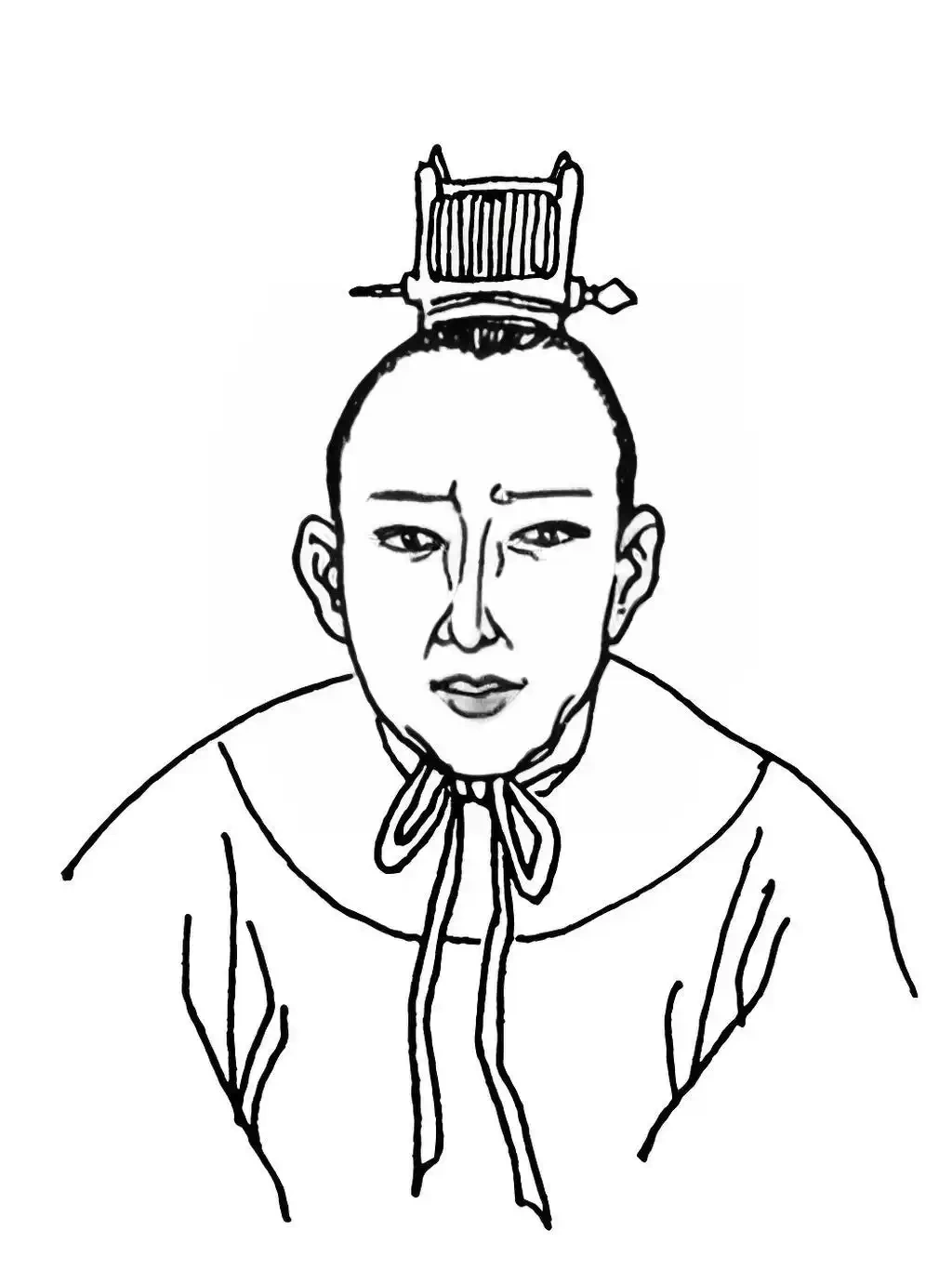
On the day ren-shen of the third month of 365 the emperor was buried at Anping. Four days later Luoyang fell. The Book of Jin records the burial at the end of one set of annals and the fall near the beginning of the next, and does not suggest that the two events have anything to do with each other. They do. The city had been left in the previous autumn to five hundred men by the general who was supposed to defend it, and the emperor had been dying since the previous spring of a medicine he had taken so that he would not die at all.
Sima Pi was twenty when he came to the throne, in the summer of 361, and twenty-four when he died. He was the eldest son of Emperor Cheng, and he had spent his childhood and youth as the prince of Langye, the title his great-grandfather had held before he founded the dynasty in the south. In 342 the court had passed him over in favour of an adult; in 361 it came back to him because the son of the adult chosen in his place had died at eighteen, without an heir. His four years produced one measure that outlasted him, the land-based registration of 364, and it was enforced by the general to whom his court had already given its army. The rest of the reign is a record of things not done: a capital not moved, a frontier not held, a body not saved.
1. The Son Who Was Passed Over
Pi was born in 341. His father, Sima Yan, was twenty. His mother was a consort of the Zhou family, a guiren, one of the ranked ladies of the inner palace, not an empress. The distinction would follow her for the rest of her life: when her son became emperor, the court had to find a title for her because the ritual books had no place for a reigning emperor's mother who had never been an empress.
His father died in the sixth month of 342, at twenty-one by the calendar, after seventeen years on the throne. Pi was an infant, two by the count of his court. The court had two choices, and the choice was made by a minister rather than by the dying man. Pi had been passed over in 342, when Yu Bing put his uncle on the throne instead, on the argument that a state with enemies needed an adult. The argument was accepted. The emperor's full younger brother, Sima Yue, prince of Langye, took the throne as Emperor Kang. Pi, the eldest son, was made prince of Langye in his place.
The title was the one his great-uncle had just vacated. It was also the title Sima Rui had borne before 317, and the title the court kept for a prince it might one day need. Pi would hold it for nineteen years.
The sources do not describe his childhood. There is no tutor, no illness, no childhood remark, no account of where he lived or who raised him. He was raised in the palace of a court that had decided he was not old enough to rule, and the court did not revisit the decision until the alternative had run out. At fifteen he was made general of the centre army; at eighteen, general of the agile cavalry. The titles were the ordinary honours of a prince of the blood. They came without a staff, a bureau, or a single soldier.
In the fifth month of 361 Emperor Mu died at eighteen by the calendar. He had no son. The succession fell to the empress dowager Chu, who had been regent for thirteen years during her son's minority and had retired to the Chongde palace when he came of age. She was the one institution the dynasty had that had not changed.
Her edict is a careful document. It calls Pi the legitimate line of the restoration, bright in virtue and close in kin. It then says something that the annals of 342 do not say: that in the Kang era Pi had already been the heir by position, and that because his years were young and he could not bear the state's troubles, Xianzong had humbly yielded. Xianzong was the temple name of Emperor Cheng, Pi's father. The edict is a document of 361 describing 342. It converts a decision taken by a minister for his family's advantage into a voluntary abdication by a dying father. The annals of 342 record no designation of Pi as heir. What they record is Yu Bing's argument that the state needed an adult. The edict's version is the official memory, and it is the version that made the accession lawful.
Three days after Mu's death, on the day geng-shen, Pi took the throne. He was twenty by the calendar and twenty-one by the count of his court. Two days later he made his brother Yi prince of Langye. Yi had been prince of Donghai; the title he received was the one Pi had vacated. The arrangement of 342 was reversed in a single sentence: the elder son was emperor, and the younger son was the spare.
In the eleventh month he went further. A decree declared that he would be the heir of Xianzong, Emperor Cheng, his father, to repair the original line. The phrase mattered. He had succeeded Mu, his cousin. To be Mu's heir in the ancestral temple would have made his cousin his father and his uncle his grandfather. The court accepted the decree, and the ritual line of the dynasty ran from Cheng to Ai, with Kang and Mu as an interlude.
The sources give him no character. There is no anecdote of his youth, no remark preserved from his reign, no description of his appearance or his habits except the one that killed him. The Tang historians, summing up, say that he was lenient and kind and could have been a ruler. The phrase is a formula, but it is the only one the record offers.
His first year ended with a sign. In the eighth month, at night, the sky split, several zhang wide, with a sound like thunder. The annal records it between the appointment of a general and the installation of an empress, and offers no interpretation. He was twenty. He had been the answer to a question the court had asked in 342 and postponed for nineteen years, and now that it had its answer it did not know what to do with him.
2. The Empty Court
The court Pi inherited had been governed for fifteen years by men who were not the emperor. Sima Yu, prince of Kuaiji, his great-uncle, had held the supervision of the department of state affairs since 345. Huan Wen, inspector of Jing province and commander of six provinces, governed the middle Yangzi from Jiangling. Wang Shu, inspector of Yang province, held the capital province. The empress dowager lived in the Chongde palace and did not attend court.
These were not three parties. They were three offices, and each office had become a power. Huan Wen was forty-nine in 361, twenty-nine years older than Pi. He had taken Cheng Han in 347 and had recovered Luoyang in 356; both belong to the previous reign. What mattered in 361 was that he had an army, a province, and a reputation, and that the court had neither an army nor a province of its own. The emperor's household was a fourth centre with no troops. Pi did not hand the state to Huan Wen. It had been handed over before he arrived, and his reign made the arrangement formal.
The first act of the new era was a tax cut. In the first month of 362 the court changed the era to Longhe and proclaimed an amnesty; two days later it reduced the land tax from three sheng of grain per mu to two. The rate of three had been fixed in 330, after the first land survey of the dynasty. A third was taken off.
A court that lowers the rate is usually a court that expects to collect from more land. The old rate had been assessed on a register that had been shrinking for thirty years, as households moved onto the estates of the great families or into the shadow commanderies of the refugees. The cut was an invitation: come back onto the rolls, and pay less. It was also, in the narrow sense, all the government could do. A tax rate is a decree; a register is an administration.
In the second month the court redeployed the northern frontier. Yu Xi, a son of Yu Bing, was made general of the north, inspector of Xu and Yan, and posted to Xiapi. Yuan Zhen was made inspector of Yu and posted to Runan. Both were given staffs of authority, which meant they could act without waiting for the capital. Xiapi was north of the Huai, the advance base for the road into Shandong. Runan was the screen in front of Xuchang and Luoyang.
In the same month the emperor's mother was made grand imperial consort. The title was new to the dynasty. Huan Wen proposed that she be called furen; the deputy director of the secretariat, Jiang Bin, proposed taifuren; the emperor chose the highest of the three and had her proclaimed huangtaifei, with dress and equipage comparable to the empress dowager. A second argument followed over whether courtiers should bow to her. Jiang You, the chamberlain for ceremonies, ruled that her rank was not supreme and that full reverence was not owed. The court was arguing about whether a woman could be honoured as an empress dowager without being one. It was the kind of question the reign could answer.
The summer brought Luoyang. The Yan inspector of Yu province, Sun Xing, told his court that Chen You, the Jin commander in the city, had only about a thousand worn soldiers and that the place could be taken. Lü Hu was posted to Heyin and attacked. The administrator of Henan, Dai Shi, fled to Wan; Chen You asked for help. Huan Wen sent Yu Xi and the administrator of Jingling, Deng Xia, with three thousand boat troops, and Yuan Zhen sent fifty thousand hu of grain up the road. Lü Hu withdrew to Xiaopingjin and died of a stray arrow in the seventh month. The city held. The relief had cost a fleet, a grain convoy, and a season.
Then Huan Wen proposed to move the capital. He asked that the court transfer itself to Luoyang and that all who had crossed the river since 311 move north to fill Henan. The proposal was not absurd on its face. The north was not empty, the dynasty still claimed it, and a capital on the Luo would have answered the Yan in the language of legitimacy. But the families had been in the south for fifty years. They had estates, graves, clients, and offices; the refugees had become the population that worked the estates. A move would have cost every great house in the state a large part of what it owned.
The court was afraid. The ministers knew that the proposal was ruinous and knew that the man who made it had an army. Only one man spoke. Sun Chuo, an attendant cavalier and the leading literary figure of the day, memorialised against the move: to abandon a country of peace for a country accustomed to disorder, to leave a ground of safety for the danger of a stack of eggs. He did not deny the recovery of the north. He said that it had to come first, that the roads and the granaries of Henan had to be restored before the court could follow them, and that the migration of the capital was the last step of a reconquest, not the first.
Huan Wen was not pleased. The court was still afraid. Then Wang Shu, the inspector of Yang province, gave it the sentence it needed. Huan Wen, he said, wished to overawe the court with an empty threat; it was not a real plan; consent to it, and nothing would come of it. The court took the advice. It issued an edict agreeing in principle and asking Huan Wen to make the first preparations. He did not. It was the perfect technique of a weak government: consent without compliance. It could not refuse him, so it told him to go ahead.
The story is preserved in Wang Shu's biography in the Book of Jin and repeated in the Comprehensive Mirror, a Northern Song compilation. It is anecdote as much as record, and the sentence may be sharper than the occasion. But it fits the pattern of the year. By the twelfth month the forward line had moved back: Yu Xi withdrew from Xiapi to Shanyang, Yuan Zhen from Runan to Shouyang. In the same year that the court debated moving the capital north, its army moved south.
Pi's mother died in the third month of 363 at the Langye residence. He went to mourn. A decree gave Sima Yu the supervision of all affairs inside and outside the court. The transfer of government was accomplished by a funeral notice and a decree. No one objected, because there was nothing to object to: the emperor was doing what a son should do.
In the fifth month the court gave Huan Wen the titles of palace attendant, grand marshal, commander-in-chief of all military affairs at home and abroad, and bearer of the yellow axe. He then submitted a memorial in seven points. The second point was a diagnosis: the registered households were so few that they did not equal one commandery of the Han. He proposed merging offices, reducing staffs, and keeping officials in place long enough to be useful. The diagnosis was fiscal, and it pointed at the registration of the next year.
In the ninth month he led troops north again. On the next day a son was born to the emperor and the court proclaimed an amnesty. The campaign went no further than Hefei. The child did not live to be named heir.
By the end of 363 the emperor had been on the throne for two and a half years. He had changed the era twice, cut a tax, honoured his mother, and attached himself to his father's line. He had not initiated a provincial appointment, moved a soldier, or decided a war. The government was in the hands of his great-uncle and his general, and neither of them needed him.
3. The Gengxu Registration
The Eastern Jin governed a population it could not count. After the fall of the north, the court had registered the refugees in shadow commanderies and counties, named after the places they had left and administered in the south by the men who had led them across. A household from Pengcheng was enrolled in a Pengcheng that existed only on paper; the commandery's officials were the men who had brought the group over the river. The arrangement gave the refugees a status, their leaders a place in the order of ranks, and the dynasty a way of saying that the north still existed.
These households were entered on the white register. The older households, settled south of the river before 317, were on the yellow register. The difference was not a colour but a tax status. The white register carried exemptions, and the exemptions were the reason the register had been invented.
The great families added a second layer. A household that could not pay could attach itself to an estate, where it worked land that belonged to a magnate and paid him instead of the state. The estate sheltered it; the state did not see it. The client was not on the white register or the yellow register. He was on no register at all. By the 360s a large part of the population lived in the gap between the rolls, and the men who owned the land preferred it that way.
The court had tried before. The verification of 341 had located the refugee households without counting them. Huan Wen had already said what the register amounted to: fewer households than a single commandery of the Han.
The remedy was old and simple. It was to register people where they lived.
In the second month of 364 the emperor ploughed the sacred field. It was a ritual of agricultural order, performed at the start of the sowing season, and it was one of the few ceremonies in which the sovereign appeared as the first farmer of the realm. The same month the Yan took Xuchang.
On the first day of the third month, a day named geng-xu, the court issued the decree. The annal's summary is a phrase: a great review of households and persons, with the law strictly enforced. It was known as the Gengxu regulation. The word for review is the word used for the inspection of troops. The measure was a muster of the population in the language of a muster of soldiers.
What the decree required can be reconstructed from its summary and from its cases. Households were to be enrolled where they lived, not where their ancestors had lived. The paper commanderies were to be brought down to the ground. No one was to shelter a household outside the register.
The cases show what it meant. Sima Xuan, prince of Pengcheng, a kinsman of the imperial house, concealed five households. Huan Wen memorialised that he had broken the prohibition, and the prince was handed to the tribunal of justice. The sentence is not recorded. The annals note his death in 367, so he was not destroyed. The point was not the five households. It was that a prince could be handed to a tribunal for five. A law that reaches a prince has a different value from a law that reaches a village.
The second case is a number. Wang Biaozhi, the interior minister of Kuaiji, governed one of the richest commanderies of the south. The history says that more than thirty thousand mouths of fugitive households returned to the register there. The figure is the only one the Book of Jin gives for the results of the measure, and it is the kind of figure a government reports when it wants a measure to look successful. It is also large enough to be worth reporting: perhaps five or six thousand households, on any ordinary count, in one commandery, recovered from the estates and the shadows. If it is anywhere near true, the registration had found a population that the state had lost.
The fiscal logic joins the two years. In 362 the court cut the rate; in 364 it widened the base. A lower rate on a wider base can yield more than a higher rate on a narrow one, and it is easier to defend to the men who pay. In the same spring the court abolished several military offices, including the five colonels and three generals, and merged their staffs; in the summer it made Huan Wen governor of Yang province. Retrenchment and registration were one policy. The state was trying to do more with less, and to see what it had.
The results were not only fiscal. A registered household is a taxable household and a household that can be conscripted. The armies of the later fourth century were built on registers as much as on generals, and the mobilization of 383 was paid for in part by rolls that began to be corrected in 364.
The best evidence comes from a later government. In 413 Liu Yu, then regent, ordered the last land-based registration of the dynasty and cited the Gengxu regulations by name. His memorial said that in Huan Wen's time the treasury had been full and the state rich, and that it was owing to this. The testimony is half a century after the fact and comes from a government with its own reasons to praise a strong register. It is still the best evidence that the measure worked.
The limits were equally real. The registration did not abolish the white register. It did not end the great estates or the practice of sheltering clients. It depended on the official who enforced it, and it was enforced unevenly. The 413 measure had to repeat the work.
The emperor signed it. Huan Wen enforced it. The one policy of the reign was the policy of the man who was taking the state, and it was issued three weeks before the emperor fell ill.
4. The Frontier
Luoyang had been recovered in 356, in the last great year of the previous reign. It was not a conquest. It was a salient. The city sat on the Luo where the road from the Central Plains crossed the road to the south. North of it was the crossing at Mengjin; east were Chenggao and the commanderies of Xingyang, Chenliu, Yingchuan, and Runan; behind them was the Huai. The chain was only as strong as its middle.
In the first month of 362 the Yan began to test it. Sun Xing's estimate of the garrison was low; Chen You had about two thousand men. But the attack was real. Dai Shi fled from Henan, Chen You asked for help, and Huan Wen answered with a fleet. The relief worked. Lü Hu died of an arrow, and the city held through the summer. It was the pattern of the next three years: the south could save Luoyang in one season and could not keep it across the next.
In 363 the line moved back and forth. The Yan took Xingyang and Mi and pressed Chenliu; the Jin retook Xuchang in the twelfth month. The commanderies in between paid for every shift.
In the second month of 364 the screen went. Murong Ping took Xuchang; the administrator of Yingchuan, Li Fu, died in the fighting; the administrator of Runan, Zhu Bin, fled to Shouyang. Chen commandery was besieged and held, and Huan Wen sent Liu Hu, who drove the Yan back. In the fourth month Li Hong defeated the Jin at Xuanhu. Zhu Bin fled to Huainan; Zhu Fu retreated to Pengcheng; Murong Chen reoccupied Xuchang. The road to Luoyang was open.
In the fifth month Huan Wen was at Hefei with the fleet. The court summoned him to the capital. He refused. It summoned him again, and in the eighth month he reached Zheqi, on the south bank upstream from Jiankang, where he built a fortified town and settled in it. He had argued that a commander of all affairs should not be far from the court; he had been offered the government and declined it, and he had come as far as the river. The front was left to its commanders.
Murong Ke spent the summer preparing. He posted Yue Xi at Mengjin and Sun Xing at Chenggao, the two posts that controlled the approaches to the city, and sent agents into the villages and fortified settlements; the villages came over. Chen You had two thousand men. Shen Jin raised a thousand more and went to the city. The grain was gone. In the ninth month Chen You announced that he would go to relieve Xuchang, left Shen Jin five hundred men, and went east. Xuchang had already fallen. He fled to Xincheng.
Shen Jin was the son of Shen Chong, who had joined Wang Dun's rebellion forty years earlier and had been killed by one of his own officers. The family was a penal household; its sons were barred from office. Shen Jin was over thirty before he could serve at all. He volunteered for Luoyang, raised his thousand, and fought well enough to be noticed. When Chen You left, he asked to stay. He had long wished to give his life, the history says, and he was glad to have found the place where he could.
The end came in the second month of 365. Murong Ke and Murong Chui attacked in force. The city fell in the third month. Shen Jin was taken. Murong Ke wanted to spare him; his general Muyu Qian said that a man of Shen Jin's calibre would never be used by Yan and that sparing him would leave a danger behind. Shen Jin was killed. Murong Ke said afterwards that he had taken Guanggu without saving the man he had meant to save, and had pacified Luoyang by killing Shen Jin, and that he was ashamed before the four seas. The words are a victor's, recorded by a Tang history nearly three centuries later, and they may be literary. They are the only epitaph Shen Jin received.
The court's answer was a council of war that ended in nothing. Sima Yu, the minister over the masses, heard that Chen You had abandoned Luoyang and met Huan Wen at Liezhou to concert a punitive expedition. The emperor died before it could march, and the matter was dropped. The Comprehensive Mirror records the intention and the interruption in one sentence. It is the exact description of the court in these years: the plan required Huan Wen, and the emperor's death ended the plan.
Huan Wen held the military authority of the whole state. He was at Gushu, with the best army in the south, and he did not move. The court had no army of its own and no commander who could act without him. The salient was probably indefensible; a city beyond the Huai, at the end of a long supply line, could not be held against a stronger northern state that could bring its whole army to the siege. It is not necessary to decide whether he could have saved it. It is enough that no one else could have, and that he had spent the previous autumn building a town at Zheqi.
5. The Pills and the Last Spring
The emperor had fallen ill on the twenty-second day of the third month of 364, three weeks after the registration decree. The annal gives the cause in one sentence, and it is the only clinical note on the emperor in the reign. The emperor had always loved Huang-Lao, it says; he cut off grain and swallowed drugs of long life; he took too much and was poisoned, so that he did not recognise the myriad affairs.
The sentence is a historian's diagnosis, not a physician's. The drugs of the period were often mineral: cinnabar, lead, and other substances that the body does not easily expel. The point is not the pharmacology. The point is that the court believed he had poisoned himself, and wrote it down.
Cutting off grain was a practice with a long history in Daoist regimens. It was thought to deprive the body of the grosser forms of nourishment so that the finer could remain, and it was combined with drugs, breathing, and sexual regimen in the search for long life. It was not eccentric in the fourth-century elite; several of the most cultivated men of the century experimented with drugs and diets. What was unusual was the dose, or the body.
One man spoke against it. Gao Song, a palace attendant, remonstrated: this was not what was proper for the lord of ten thousand chariots; what the emperor was doing was truly an eclipse of the sun or moon. The image was exact for a court that read the sky. An eclipse was a flaw in the ruler that the whole world could see, a sign that heaven was displeased. Gao Song was telling him that his private regimen had become a public portent. The emperor did not listen. Gao Song was later removed on a public charge and died at home in 366.
The empress dowager took the court. She had done it before, from 344 to 357, and the forms were still in place. The machine did not stop. The registration was enforced, the war continued, Huan Wen was summoned and refused and built his town. All of it was done in the name of an emperor who could not recognise the myriad affairs. His absence was not a crisis. That is the most damning fact about his presence.
In the fifth month of 364 the court made Wang Shu director of the department of state affairs and gave Huan Wen the government of Yang province. By the eighth month he was at Zheqi. The capital province was now held by a man who would not come to the capital.
In the first month of 365 the empress died. Wang Muzhi had been empress for three years and four months. Her biography says she had no son. It also gives the year of her death as 364; the annals say 365. The discrepancy is small and cannot be resolved, and it is the kind of thing that reminds us that the record was assembled from several hands. She was the daughter of a Taiyuan family and had married him when he was prince of Langye. The record does not describe his grief. It does not describe hers.
On the day bing-shen of the second month he died in the West Hall. He was twenty-four by the calendar; the annal, counting the year of his birth, says twenty-five. He had no heir. A son had been born in the ninth month of 363 and the court had proclaimed an amnesty; no son stood in the palace when he died.
The empress dowager issued the edict for his brother on the next day. Sima Yi, prince of Langye, took the throne the same day. The title had come back to the family, as it always did.
He was buried at Anping in the third month, on the day ren-shen. There is no record of the funeral's scale, no tomb inscription, no temple name. Four days later, on the day bing-zi, Murong Ke took Luoyang. The annals of the new reign record the burial, then the death of a prince, then the fall. The order is the epitaph of the reign.
6. The Name Ai
The court gave him the posthumous name Ai and no temple name. A temple name is the name by which an emperor is addressed in the ancestral temple; a posthumous name is a verdict on his life. The dynasty gave temple names to some of its emperors and withheld them from others, and the reasons were political as much as moral. Kang, Pi's uncle, had also been denied one.
The classical glossary of posthumous names, transmitted in the Yizhoushu, explains Ai in two formulas. The first is early orphaned and cut short. The second is reverent and humane but cut short, and its gloss is that his achievement was never displayed. Pi's father died in his second year. He died at twenty-four. The name was a description of his biography, not of his government.
The Book of Jin does not explain the name. Its verdict is different. Emperor Ai was generous and kind, it says, and could have been a ruler; but his great sacrifices and prayers to heaven stained his virtue. The phrase for the sacrifices is a technical one: lavish offerings and rites of aversion, the religious practice by which a ruler hoped to turn aside misfortune. The Tang historians, writing nearly three centuries later, chose to blame his rites rather than his medicine. The annal had said that he poisoned himself; the judgment says that he polluted his virtue with sacrifices. The two are not the same charge. One is a medical fact; the other is a moral one.
The reign was emptied from two directions at once. The emperor withdrew into his body, and the court withdrew into Huan Wen. Neither movement was caused by the other, and together they left the throne with nothing to do.
The four years can be summarised in a sentence each. In 361 he inherited a throne that had been kept for him by an edict that rewrote the past. In 362 he cut a tax and watched the court refuse a general's demand by agreeing to it. In 363 his mother died, and the government passed to his great-uncle while he was at the funeral. In 364 he signed the registration and fell ill. In 365 he died, and the last city in Henan fell four days after his burial. That is not a reign. It is a sequence of absences.
The registration was the one act of government that did not depend on him. It was decreed in his name, enforced by Huan Wen, and administered by men like Wang Biaozhi. It survived because it did not need the emperor. The Gengxu regulations were still the benchmark in 413, when Liu Yu ordered the final land-based registration of the dynasty, forty-eight years after Pi's death. The army that met Fu Jian at the Fei in 383 was paid for in part by the registers that began to be corrected in 364.
He had wanted to live forever, and he left a list of households. The list itself is gone; the principle that the state may count its people where they live outlived the dynasty that made it. The register was the one thing in the reign that did not need him.