Home / Emperors / Han Dynasty
Emperor Ai of Han
汉哀帝
Liu Xin, 25 – 1 BC · Thirteenth emperor of the Han dynasty
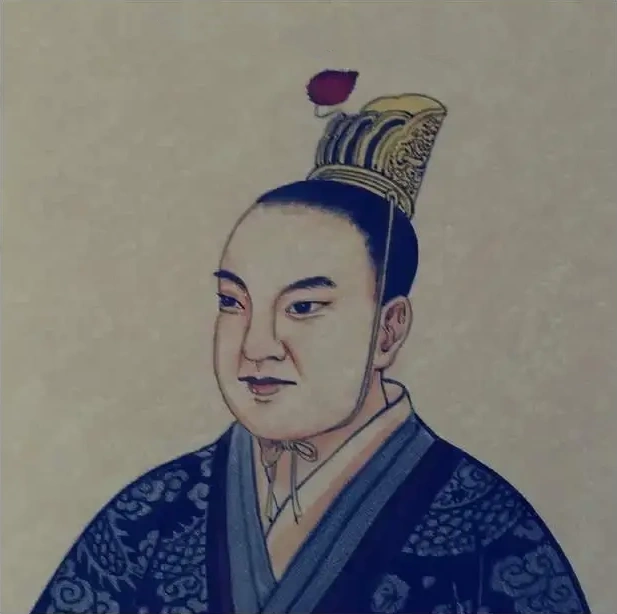
The most specific reforming decree of the last century of the Western Han was issued in the sixth month of 7 BC, two months after a young man of nineteen had come from Dingtao to take the throne. It told the ministers to draft limits, and the limits they drafted were these: that no king, marquis, princess or official of the rank of two thousand shi, and no wealthy commoner, might hold in his own name more than thirty qing of land, something over three hundred acres; that the slaves a household might keep were to be capped at two hundred for a king, a hundred for a marquis or a princess, and thirty for everyone below that; that merchants were to be barred from holding land or office; that three years would be allowed for the new scale to take effect; and that anything above it was to be confiscated by the state. The men who would have been cut down by it were the family of the emperor's grandmother, the family of his mother, and the favourite he had lately brought into the palace. The History of Han records how it ended in a phrase: the decree was ordered to wait, and was afterward shelved and not carried out.
Almost none of this survives in the general memory of the reign. What survives is a sentence in the History of Han's chapter on favourites. The emperor and his companion had been sleeping in the daytime, and the companion had come to rest across the emperor's sleeve. The emperor wanted to rise, saw that the other man had not woken, and, unwilling to disturb him, cut the sleeve through and got up. The idiom that later readers made out of that sentence — the cut sleeve — names a private affection and nothing else. Liu Xin is remembered for it, and for the fact that he died at twenty-five with no son to follow him.
The reign is worth more than that, though not because it succeeded. It was the last reign of the Western Han in which an emperor still tried. Three times, on three different levers, Liu Xin attempted to move the state: in 7 BC with a statute against the holding of land and slaves; in 5 BC by changing the calendar, the era name and his own title, in the belief that the mandate of heaven could be renewed; and in between by clearing the family that had run the government for a quarter of a century out of every office it held. The first of these was withdrawn within months, the second within two, and the third succeeded entirely, and made the rest impossible. This essay follows the attempts, the two dowagers whose war made them necessary, the favourite who finished them, and the three days at the end of the reign, when the man who would end the dynasty was handed back the government of the empire.
1. The Heir Who Was Not a Son
Liu Xin was born in 25 BC at Dingtao, in the flat country southwest of the modern Heze, in Shandong. His father, Liu Kang, was a younger brother of the reigning Emperor Cheng and a son of the previous Emperor Yuan. His mother was a woman of the Ding family who had entered the Dingtao household as a concubine, the king's principal wife being a woman of the Zhang. He was three years old when his father died in 23 BC and he inherited the princedom; and he was raised not by his mother but by his grandmother, the consort Fu, who had been Emperor Yuan's favourite when that emperor was still a crown prince, and who is the source of most of what followed.
Her son Liu Kang had been his father's best-loved child, and during that reign the position of Liu Xin's uncle, the future Emperor Cheng, had not been thought safe; that story belongs to the preceding reign. The consequence belongs here: when Cheng reached his forties without a son, the two men left in the imperial house were his only surviving brother, the king of Zhongshan, and his nephew Liu Xin of Dingtao — and the second of them had a grandmother who had been preparing for exactly this question for years.
In 9 BC both princes came to the capital. Liu Xin brought his grand tutor, the chancellor of his kingdom and his commandant of the guard, and when the emperor asked why, he answered that the regulations on a prince's visit to court entitled him to bring the two-thousand-shi officers of his kingdom, and that these three were two-thousand-shi officers. The king of Zhongshan had brought only his tutor, and could not say by what law. The emperor had Liu Xin recite from the Odes, and he knew the text and could explain its sense; he had the king of Zhongshan recite from the Documents, and the man stumbled. At the meal that followed, the one prince finished long after the others and rose with his garter undone. The History of Han sets the two side by side and records the judgement the emperor drew, that on this evidence the king of Zhongshan was a man of no ability and the king of Dingtao one of real talent.
The grandmother did not rely on recitation. The same chapter records that she sent treasure to the emperor's favourite consort and to his uncle, the general Wang Gen, asking the two of them to speak for her grandson; and that both of them, seeing that the emperor had no son and calculating where their own futures would lie, did speak for him. The emperor gave Liu Xin his coming-of-age ceremony and sent him home at seventeen; the following year, in 8 BC, he sent a commissioner with the imperial credential to fetch him back and make him crown prince. The choice of a nephew over a brother, and the argument that carried it, are set out in the memoir of the previous reign.
Liu Xin answered the summons with a refusal. He had been fortunate enough to succeed his father and hold the frontier as a king, he wrote, and his abilities were not sufficient to fill the palace of a crown prince; the emperor, whose virtue was such as to deserve a thousand generations of descendants, should keep him at the residence of his kingdom to inquire after his rest morning and evening, and when a son was born to the throne he would go back to guard his frontier. The emperor's answer was the two words by which such memorials were acknowledged. A month later, a grandson of the king of Chu was made king of Dingtao, to carry on the sacrifices owed to Liu Kang. The purpose was not obscure: the man who was to be the emperor's heir could no longer be the heir of the Dingtao house.
The same logic governed the next question, which was whether the new crown prince might thank his grandmother and his mother in person. His junior tutor argued that the Spring and Autumn did not permit a father's order to set aside a grandfather's, and that the rites of a man made the heir of another line did not allow him to turn back toward his own private kin, so that no thanks were owed; his grand tutor held that they were; and the prince followed the grand tutor. When the court heard of it, the grand tutor was censured and demoted, and the office was given to an official named Shi Dan. An order went out that the dowager Fu and the prince's mother were to remain in the Dingtao residence at the capital, and when the officers were asked whether the crown prince might see them, they reported that he might not. A little later the empress dowager Wang observed that the prince had been small when the dowager Fu took him, and that a visit would be no more than the payment of a nurse's debt; and so the dowager Fu was permitted to visit him at his own house, and his mother, who had not nursed him, was not.
That was the structure in which Liu Xin had been placed, and it did not come apart when the throne did. He was the ritual son of a dead emperor and the living son of a living mother; the family he had been born into had been formally severed from him and its sacrifices handed to a stranger; and the ceremonial law held that a man in his position had no private kin to attend to. Within two years of taking the throne he had reversed every part of it, and the reversal was presented, in his own edicts, as an act of filial piety.
2. The Grandmother's War
The first months of the reign went on titles. The empress dowager Wang was raised to grand empress dowager; the emperor's wife, a daughter of the Fu family, was made empress; and an edict invoked the Spring and Autumn — the mother is honoured through her son — to honour the dowager Fu with the establishment and revenues of a dowager empress, and his mother with the rank below it. Then a marquis named Dong Hong memorialized that the emperor's mother ought to be given the title of empress dowager outright, and supported it by the precedent of a woman in the ruined house of Qin. The two men closest to the throne, the general Shi Dan and the grand marshal Wang Mang, joined in impeaching him for taking a fallen dynasty as a model, and the emperor, deferential in his first months, dropped the proposal and reduced Dong Hong to commoner. The dowager Fu was furious, and demanded a title of her own.
The scene that decided the year came in the autumn. A banquet was held in the Weiyang Palace, and the attendants had set a curtained place for the dowager Fu beside the grand empress dowager. Wang Mang, walking the hall, rounded on the palace officer in charge: the dowager of Dingtao was a concubine of a princedom — by what right did she sit beside the grand empress dowager? The seat was taken away and set elsewhere. The dowager Fu, when she heard of it, refused to attend and took a lasting hatred of him; and Wang Mang, who understood what he had done, asked leave to retire on the ground of illness. The emperor gave him five hundred catties of gold, a carriage with four horses, and his discharge from office — and then, because the senior officials spoke well of him, added the rank of special advancement and the right to attend court on the first and fifteenth of each month with the ceremonial of one of the three excellencies.
The removal of the Wang family was completed a few months later by a memorial rather than a decree. The colonel of the capital region, Xie Guang, laid out the offences of the marquis of Quyang, Wang Gen: that a family which had held power for three generations had used it to build itself hills and terraces and markets, and that while the late emperor's tomb was still unfinished Wang Gen had taken women of the disbanded palace orchestra, given banquets, and had them sing. His nephew, the marquis of Chengdu, had done the same on a smaller scale. Wang Gen was sent to his fief, his nephew reduced to a commoner, and every official whom the two of them had recommended for office was dismissed.
What the throne did with the ground it had cleared is the story of the reign in miniature. It handed the ground to two other families. The dowager's kin produced, within a few years, six marquises and two grand marshals, six officers at the nine-minister level, and more than a dozen attendants and secretaries; the Ding produced a grand marshal. In 5 BC the honours were completed: an edict struck the word Dingtao out of the dead king's title, ordered a temple built for him in the capital, and raised the dowager Fu and his mother to the two ranks of empress dowager, the senior going to the dowager Fu — the titles the officers had refused two years earlier. The justification given was that the Han house honoured those to whom it was close, and in doing so displayed whom it honoured.
There was an edge to the business that the court understood. In the old emperor's palace the dowager Fu had had a rival in the consort Feng, the woman who had once stepped in front of a bear to shield Emperor Yuan; that story belongs to the earlier reign. By 6 BC the consort Feng was dowager of Zhongshan and had a grandson. When the boy fell ill and his grandmother prayed for him, a palace messenger sent to attend the case ran home to Chang'an, panicked at the prospect of having to answer for it, and accused her of cursing the emperor and the dowager Fu by sacrifice. The dowager Fu gave the interrogation to a man named Shi Li, who knew what was wanted; dozens of the household died under examination; and the charge settled into a claim that the dowager of Zhongshan meant to pray the emperor to death and set the boy on the throne. She took poison, and seventeen of her kin were killed or killed themselves. The informer was made a marquis of the interior, and the interrogator was promoted.
The officers who stood in the way were removed one after another. Shi Dan, who had first proposed the limit on land, was driven out for opposing the titles. Kong Guang, the chancellor, was stripped of office and reduced to commoner. Fu Xi, the one man of the Fu family who thought the titles a mistake, was dismissed and then, at the dowager's insistence, stripped of his marquisate as well, though the emperor refused that last step. In 5 BC the new chancellor, Zhu Bo, went further and memorialized that Wang Mang had opposed the honours due the emperor's kin and ought to be reduced to commoner; the emperor answered that Wang Mang was a relation of the grand empress dowager, spared his rank and sent him to his fief at Xindu. Within months of that, Zhu Bo was dead by his own hand, when it came out that he had moved against the marquis Fu Xi on the dowager's private instruction rather than on any evidence.
Wang Mang spent three years in his fief, and the record of those three years is the beginning of his reputation. The History of Han notes in passing that his second son killed a slave, and that Wang Mang reproached him so severely that the young man took his own life. In the same passage it notes that during the three years the officials and commoners who sent up petitions on his behalf numbered in the hundreds. Then, in the first month of 2 BC, a solar eclipse opened the year, and the court's response to it was a decree inviting plain criticism and summoning men recommended for their willingness to speak. The criticism that came was that Wang Mang had been wronged. The emperor recalled him and the marquis Wang Ren to the capital to attend on the grand empress dowager, and gave them nothing to do.
In the same month the dowager Fu died, and was buried beside Emperor Yuan with the title of his empress — the position she had fought two years for and held for three. Nearly three years earlier the emperor's mother had died and been carried back to Dingtao, with fifty thousand men called out from the neighbouring commanderies to raise her tomb beside her husband's. By the middle of 2 BC the board was clear. The Wangs were out of office, the Fus were checked, the Ding were diminished, both dowagers were dead, and the emperor — twenty-four years old, ill, and without a son — was as free of his relatives as any Han emperor of his century had been. He had held that freedom for less than a year when he used it to make the man he loved grand marshal.
3. The Limits and the Withdrawal
The limits were issued in the sixth month of 7 BC — a month after the first titles had been granted to his grandmother and mother, and before the fight over those titles had properly begun. The order of events matters, because it decided the outcome. The argument was made by Shi Dan, and it was the argument a Confucian minister had been making since the days of Emperor Wu: the sage kings had set up the well-field system, and only then could the state be governed; the emperor Wen had come to the throne after the ruin of the Zhou and the wars of Qin, over an empty country, and had had no need of limits; but the realm had now been at peace for generations, and rich households counted their property in the tens of thousands of myriads while the poor grew poorer. The emperor referred the argument to the ministers, and the chancellor Kong Guang and the grand minister of works He Wu drafted the numbers: thirty qing, two hundred slaves, a hundred, thirty, three years, confiscation of the excess.
The same two ministers, in the same month, brought in the other half of the programme. The emperor had announced that the music of Zheng and Wei was licentious and confused the rites, and had abolished the Bureau of Music. Kong Guang and He Wu reported on the establishment: of its eight hundred and twenty-nine performers, four hundred and forty-one were to be discharged as either unfit for the classical canon or else performers of the music of Zheng and Wei, and three hundred and eighty-eight were to be kept and transferred to the grand music office. The edict of the same month did a good deal more. It ended the three clothing offices of Qi and the weaving of figured silks, work that was ruinous and took women from their looms. It abolished the law against slander, and the regulation under which an official of two thousand shi could nominate his own son to office. It provided that women of the palace under thirty should be released and married out, and that state slaves over fifty should be freed. It forbade the commanderies and kingdoms to present rare animals. It raised the salaries of officials below the rank of three hundred shi, ordered the prompt dismissal of officials found to be cruel, and allowed the disciples of the imperial college three years of mourning for a parent.
The History of Han records what happened next in a single line. The price of land, houses and slaves fell. And then: the Fu and Ding families were in power, Dong Xian was rising, and none of them found the measure convenient; the decree was told to wait for a later date; and it was shelved and never carried out.
The clearest account of how it died is not in the treatise on the economy but in the memoir of a chancellor. In 2 BC the emperor abolished the imperial hunting park and gave the land to Dong Xian. Wang Jia, who was chancellor at the time, sent up a sealed memorial saying that the decree had dismissed the park and given Dong Xian more than two thousand qing of it, and that from this the system of equal fields had begun to fall apart. The arithmetic was the whole argument. Wang Jia was arrested on the charge of deceiving the state, refused the poison that would have ended it quietly, and died in prison after twenty days of refusing food.
The cheap parts of the programme were carried out and stayed carried out. The law against slander did not come back; the nomination of sons to office did not come back; the palace women went out and the slaves over fifty were freed. The expensive part — the part that would have taken land from named people — went the way of every reform of the period. In the same reforming spirit he moved other things around. In 5 BC he chose the site of his own tomb on the plain northwest of Chang'an and forbade the moving of households to the neighbourhood, so that the people might be left where they were. It was the opposite of the decision his predecessor had made at Changling, where five thousand of the richest households in the empire had been dragged to a tomb abandoned before it was finished. And in 4 BC he reversed the previous reign's arrangement of the altars, restoring the old shrines at Ganquan and Fenyin and abolishing the suburban altars outside the capital. The rites had been rearranged by an emperor; they were now rearranged back, on the authority of the same throne.
The second attempt was stranger, and it came out of his illness. The History of Han says of him, in its closing verdict, that he came to the throne already afflicted with a wasting numbness in his limbs, and that it grew worse toward the end. In 5 BC a man named Xia Heliang, who held the rank of expectant attendant at the Yellow Gate, was presented to the emperor by two officials, one named Xie Guang and a commandant of cavalry named Li Xun, and had repeated audiences. He carried a text his teacher, a man of Qi named Gan Zhongke, was supposed to have received from a spirit; its doctrine was that the Han house had come to the end of a great cycle in heaven and earth and must receive the mandate over again. The counsel Xia Heliang gave was precise. The dynasty's calendar had decayed; the emperor had been ill a long time and disasters were frequent, which was heaven warning him; if he would change the era name and change his own title the result would be long life, a son, and the end of the calamities; if he understood this and did not act, there would be floods, fires, and ruin. The emperor, who had been ill for years, took it. A general amnesty was proclaimed; the second year of Jianping became the first year of Taichu Yuanjiang; the emperor styled himself the Peaceful Emperor of the Chen-sage Liu; and the water clock was altered from a hundred degrees to a hundred and twenty. The decree was issued in the sixth month of 5 BC, in the same month in which the empress dowager Ding died.
A month later the emperor's illness was no better. Xia Heliang asked for more: that the government be changed, and that the chancellor and the censor-in-chief be dismissed and replaced by the men who had introduced him. The ministers would not have it. In the eighth month the emperor issued a second decree, and its language is worth having, because it is the most direct thing in the reign. He had, he said, listened too readily to Xia Heliang, hoping to win blessings for the empire, and no good omen had followed. The measure had gone against the classics and the old ways and did not fit the times; everything done under the decree of the sixth month, except the amnesty, was annulled. Xia Heliang and his associates were taken up as preachers of false doctrine who had misled the people, and executed; Li Xun and Xie Guang were given the reduced sentence of exile to Dunhuang.
The two attempts stood two years apart, and neither lasted out a season. They had also been aimed at different things. The first was a statute, of the ordinary sort a bureaucracy produces, and it failed because the men whose land it would have taken were the men whose consent the throne needed. The second was a claim about the calendar, and it failed because it did not work. What is common to them is the shape of the emperor's conviction, which the historian of the dynasty posed in a sentence of his summation: that he had seen how in the previous reign office and its rewards had drifted away from the imperial house, and that he meant to make the throne's authority strong again, taking Emperors Wu and Xuan as his models. Neither Wu nor Xuan had to ask a grandmother's family for leave to govern. Two years after the annulment, in the spring of 3 BC, a great drought fell on the empire, and the people of the eastern commanderies began passing a token from hand to hand and walking west with it, through one commandery after another, until they came to the capital; where they gathered to sacrifice to the Queen Mother of the West, and some of them climbed onto the roofs at night carrying torches, beating drums and shouting to frighten one another. The court recorded it, and had nothing to say.
4. Dong Xian
The emperor had seen him before without noticing him. Dong Xian was the son of a censor named Dong Gong, had been made a secretary in the crown prince's household on his father's recommendation, and became an attendant of the palace when the prince became emperor. In 5 BC he was on duty below the hall, announcing the hours; the emperor looked at him, liked what he saw, and asked whether this was the Dong Xian who had been his secretary. The History of Han says that he was brought forward to speak, was made a palace attendant, and from that day was favoured; that his father was called to the capital the same day and made a magistrate and then a grandee of the palace; and that within the month the gifts had reached a size that made the court talk.
What followed is catalogued in the chapter on favourites with the dryness of an inventory. Dong Xian was made commandant of the mounted guards and a palace attendant, riding in the imperial carriage on the way out and standing at the emperor's side within doors. He was given leave to stay in the palace on his rest days, and when the emperor decided that he went home too seldom, he issued a decree allowing Dong Xian's wife to come and go in the palace with a pass and to lodge in Dong Xian's quarters, as the wife of a senior official might live in his official residence. His sister was brought into the palace as a consort of the highest rank below the empress, and the hall she lived in was renamed Pepper Wind, to match the Pepper Chamber of the empress. His father became privy treasurer, then commandant of the palace guards; his wife's father was made master builder; his brother was made commandant of the capital. Every one of his kin who could hold an attendant's post held one, and the record adds the sentence that their favour stood higher than that of the Ding and the Fu.
The sentence everybody knows comes next, and it is a sentence in the record and not a story told about the record. The History of Han, in the memoir of Dong Xian, says that the two were often together day and night; and then: he was sleeping by day and came to lie across the emperor's sleeve; the emperor wanted to get up, the favourite had not woken, and, unwilling to move him, the emperor broke the sleeve across and rose. The passage closes on three words of the historian's own — so far did the affection go — and that is all it says. The idiom made from the sentence, the cut sleeve, was coined by later readers; its use to name a kind of love is later still. The History of Han itself offers the detail without a verdict on it, and neither the detail nor the verdict the historian does give is about whom the emperor loved.
The verdict he gives is about office. At the end of the chapter on favourites, Ban Gu writes that Dong Xian's favour was the extreme case among a long line of such men, that father and son were both made ministers, and that no subject had ever been more highly placed; and then the judgements that matter: he did not advance by the proper road; his position exceeded his charge; and no man of that kind can come to a good end. The line is the historian's closing word on a career, and its subject is the filling of an office, not the sleeping of an emperor.
The office had to be filled by some means, and in 3 BC the emperor found one. He wanted to make Dong Xian a marquis, and a marquisate required a merit. In that spring, two expectant officials named Sun Chong and Xifu Gong accused the queen of the king of Dongping of having sacrificed and prayed against the throne; the case was handed to the law officers, and everyone concerned confessed. The emperor then instructed Sun Chong and Xifu Gong to bring the accusation a second time through Dong Xian, so that Dong Xian might be recorded as the man who had exposed the plot; and on that merit Dong Xian was made marquis of Gao'an with a thousand households, and the two informers marquises as well. The chancellor Wang Jia suspected that the case against the king of Dongping had been a fabrication, said so repeatedly, and told the emperor that Dong Xian was wrecking the institutions of the state. His memorial on the hunting park, and his death in prison, belong to the account of the land limits; what belongs here is that the emperor had by then destroyed the only minister willing to tell him no.
The appointments went up and up. In the ninth month of 2 BC he dismissed his own uncle, the grand marshal Ding Ming, whose offence was that he had shown pity for the dead chancellor; three months later he put Dong Xian in the vacant office. Dong Xian was twenty-two. The patent of appointment described him as the support of the Han and gave him the four characters that a ruler used when charging a regent with the keeping of the mean. A courtier named Xiao Xian, a former provincial governor, was approached to marry his daughter into the family, and refused in terror, saying privately that Dong Xian's patent used the language by which Yao had yielded the throne to Shun, and that the elders who had seen it were all frightened. He was right about the language. The emperor also gave Dong Xian, in advance, a set of the burial furnishings reserved to the throne, including the jacket of pearls and the jade sheath that a Han emperor wore into his grave, and had him build a tomb beside the imperial one at Yi Ling. In the fifth month of 1 BC he rearranged the three highest offices of state so that Dong Xian stood at their head: Dong Xian was grand marshal, the chancellor Kong Guang was made grand minister of education, and a censor named Peng Xuan was made grand minister of works. Kong Guang, who had been Dong Xian's father's superior in the same office years before, was by then so practiced in the discipline of the age that when Dong Xian came to visit him he put on his cap and gown, waited outside his own gate, retired indoors when he saw the carriage, and came out again to bow and escort his guest in, not daring to receive him as an equal. The emperor heard of it and was pleased, and promoted two of Kong Guang's nephews.
The last scene in the record, and the one that most clearly shows what had happened, took place in the Qilin Hall. The emperor was drinking with Dong Xian and his family, and Wang Hong — a member of the Wang family who had been brought back into favour for old friendship's sake — was among the attendants. The emperor, the worse for wine, turned to look at Dong Xian, smiled, and said that he would like to imitate Yao and yield to Shun. Wang Hong stepped forward and said that the empire was the empire of the founder, not the emperor's own; that the emperor held the ancestral temple and must hand it to his descendants without end; and that the succession was too weighty a thing for a jest. The emperor said nothing, and the court was frightened; Wang Hong was sent out of the hall and never invited to another banquet. Nothing further was ever said about it in public.
5. The Death and the Return
In the first month of 1 BC the chanyu of the Xiongnu came to court, and the History of Han records one exchange from the audience. The chanyu, seeing a boy in the front rank of the ministers, asked his interpreter who he was; and the emperor told the interpreter to answer that the grand marshal was young because of his great worthiness. The chanyu rose and bowed, and offered his congratulations that the Han had found so worthy a minister.
The emperor had been ill for years, and the historian's summing up says it worsened at the end. In the sixth month of 1 BC he died in the Weiyang Palace. His wife, the empress Fu, had borne him no children, and he had none by anyone else. He was twenty-five years old, and was buried at Yi Ling, on the plain where he had chosen his site five years before. It was the second reign in succession to end with the throne empty.
What happened in the next three days is the rest of the story. The grand empress dowager Wang summoned the grand marshal to her and asked him how the funeral was to be conducted; Dong Xian, who had held the office for six months and had been made a minister of state at twenty-two, could not answer. He took off his cap and apologized. The grand empress dowager said that the marquis of Xindu, Wang Mang, had once managed the funeral of a previous emperor as grand marshal and knew the forms, and that she would have him assist. Dong Xian bowed his head in gratitude. She sent for Wang Mang. He came, and his first act was to have the secretariat impeach Dong Xian for not having attended the emperor's illness or tasted his medicine; the guards at the palace gates were told not to let him pass; and Dong Xian came to the gate, took off his cap and walked barefoot to make his apology. Then Wang Mang sent an officer to read out to him, at the gate, in the grand empress dowager's name, the decree that stripped him of the marshal's seal and sent him home. That day Dong Xian and his wife both killed themselves. Wang Mang, who did not believe that Dong Xian was dead, had the coffin opened and the body examined. The family's property was sold for something over four billion cash. His father, his brother and their households were sent to Hepu, in the far south. A minor official of Dong Xian's household named Zhu Xu resigned his post, bought a coffin and grave clothes and buried the body himself; Wang Mang, on hearing of it, had him killed on another charge.
The two families of the man who had taken the throne against the Wang family were dismantled in the same weeks. The officials were set to impeach the crimes of the Ding and the Fu; the Ding were stripped of office and sent back to their home commandery; and Wang Mang memorialized the reduction of the dead dowager Fu's title from Empress of Xiaoyuan to the mother of the king of Dingtao. The empress Fu, who had borne him no son and had no one left to protect her, was moved out of the palace. What became of her, and what became of the two tombs, belongs to the reign that was just beginning.
That reign began at once, and it began with a boy. The emperor having left no heir, the grand empress dowager and Wang Mang brought to the throne the son of the king of Zhongshan, a child of nine, who was made emperor; the name Liu Kan was given him two years later. He was the grandson of the consort Feng — the dowager of Zhongshan accused of cursing the emperor and the dowager Fu, who had taken poison and whose kin had died with her. He was placed on the throne by the family that had been driven out of the government to make room for the Fus. He was nine years old, the empress dowager took the court, and the government was put into the hands of Wang Mang. The regency, and everything the regency did, belongs to the reigns that follow this one.
What belongs here is an emperor who took the throne with a diagnosis and a programme. The diagnosis is in the record: the rewards of office had drifted away from the imperial house in the previous reign. The programme was to make the throne's authority strong again on the model of the two emperors he named, and to take the land out of the hands of the families that were swallowing it. He was nineteen when he started and twenty-five when he died, and the men he needed to carry it out were the men he had made or married into or kept in the palace; and five years later the throne that had set the ceiling gave two thousand qing of the imperial park to a favourite, and the chancellor who said what the arithmetic meant died in prison of hunger. The land limits, the calendar reform, the offices reshuffled twice, the altars moved and moved back, the tomb chosen with an order that no household should be moved to it — the reign is a list of things begun, and each of them has at its end a date, within a few years, on which it was stopped, or reversed, or allowed to lapse. What was finally said about him by the historian was that he had the talent, that he had read the situation correctly, that he had wanted what emperors Wu and Xuan had, and that he came to the throne already ill and did not hold it long. And what was remembered was a nap and a cut sleeve — which is also in the record, and is not the whole of it.