Home / Emperors / Sixteen Kingdoms
Duck Huan of Former Liang
前凉桓公
Zhang Chonghua, ? – 353 · ruler of Former Liang
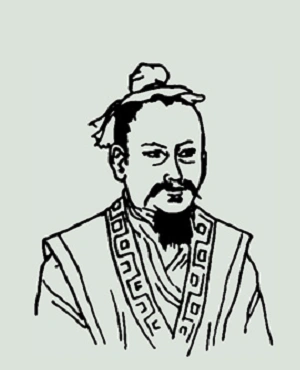
Late in the autumn of 346 two owls came to rest inside the standard-enclosure of a Liang army on the eastern frontier and cried in the night. The men read it as a bad sign, the way soldiers read anything that arrives without being sent. The officer in command was a secretary of the provincial government who had never led troops in his life. He said that the owl was the winning piece in the game of sixes, that the bird and the piece shared a name, and that a cry inside his own headquarters was an omen of victory. He attacked at once and, the record says, killed five thousand men.
The secretary was Xie Ai of Dunhuang. The man who had given him the army was sixteen years old and had been running the province for a few months. Zhang Chonghua held it until 353, and in those years it fought the only war in its history in which it beat a northern empire in the field. That was 347. In the same year the province lost the south bank of the Yellow River, the general who had saved it was pushed out of the capital, and the court in the south refused him the one title he wanted. The victory and the beginning of the end are not two stories. They are one story, and it is about who could be used and who could not. He died in the eleventh month of 353, leaving a boy of ten, an elder half-brother with a talent for other people's business, and a written order that the men it was written against never let anyone read.
1. A Province at War
Zhang Jun died in the fifth month of 346, and the officials of Liang did what officials do when a strong man goes: they gave the son everything the father had held, and a little more. The son was sixteen; the biography states the age outright, which is rare enough in this material to be worth saying. The bundle was commissioner with plenary powers, grand commander, grand commandant, colonel protecting the Qiang, governor of Liangzhou, duke of Xiping, and acting king of Liang. The last of those had taken his father twenty-two years and a great deal of careful ambiguity. The son had it in his first week, from his own staff, without asking anyone.
The one thing nobody proposed to change was the calendar. The documents of the new reign went on being dated by the thirty-fourth year of Jianxing, an era of the Western Jin that had run its five years and expired twenty-nine years earlier. His father had kept that count for two decades, and it had become the house style. Its documents carried two names that did not answer to each other: a reign year belonging to a dead emperor in Chang'an, and a province belonging to the map. Neither was the name of a state.
His life is in the Jinshu among the biographies rather than among the accounts of the northern states, a placement that records the judgement of the men who assembled the book: a loyal provincial house, not a dynasty of the age.
The household was as carefully arranged as the titles, and he gave it two courts. Lady Yan, his father's principal wife, was grand dowager in the Palace of Eternal Instruction; Lady Ma, who had borne him, was dowager in the Palace of Eternal Longevity. Zhang Zuo, the eldest son, had been born to a concubine and held the marquisate of Changning. Neither of the two men was the principal wife's son. The difference between them was that their father had named one of them and not the other, and a naming is a decision, not an institution.
In the same season he sent a memorial to Shi Hu at Ye, the gesture a small court makes to a large one. It bought nothing, and the frontier came apart anyway. Wang Zhuo raided Wujie, took the colonels Cao Quan and Hu Xuan prisoner, and moved seven thousand households east into Zhao territory. The governor of Jincheng, Zhang Chong, opened his city to Ma Qiu. Within a few months the province had lost a garrison, a governor and a slice of its population, and the road into the corridor was open. It had not fought a general action in a generation.
Zhang Chonghua put the whole province under arms and gave the army to Pei Heng, who marched to Guangwu and fortified. His plan was to sit still. An invading army a long way from home would eat its transport and go away; a Liang army that fought and lost would not be replaced. The reasoning was sound and it left the initiative with the enemy, and the court knew that too.
It was the marshal of the governor's staff, Zhang Dan, who broke the deadlock, and the way he argued is the most revealing document of the reign. The trouble, he said, was not the enemy but the appointment. Whenever a commander was wanted, the council proposed an old name: a man with a frontier command, a man whose father had held one. Han Xin had not been an old name when Liu Bang made him commander; Rangju had not been an old general; Lü Meng had not been an old retainer. Ability was not hereditary. There was a secretary in the government, Xie Ai, who had letters and a grasp of war together, and if he were given the axe and the independent command he would break the invasion.
The speech is a set piece, and it is a precise description of how the province worked. Its army was raised from the oasis towns and stiffened by the frontier garrisons, and its senior officers were the sons of the families that had held those garrisons since Zhang Gui's time. A commander was a political appointment before he was a military one. To give an army to a man with no clan behind him was to insult every clan that had one, and that, rather than any doubt about his courage, is what Xie Ai was up against.
Zhang Chonghua summoned him and asked for a plan. Xie Ai asked for seven thousand men and said he would swallow Wang Zhuo and Ma Qiu with them. He was given five thousand foot and horse and the rank of general of the solid centre. He marched out from Zhenwu, and the night of the owls is the part everyone remembers; the result was five thousand dead, a broken Zhao column, and an earldom for the secretary.
The province did not have long to enjoy it. Ma Qiu turned on Daxia, and the officer holding the city, Liang Shi, handed it over. Song Ju, the commandant of Wan, was summoned in writing to follow him. The biography gives him a short speech about a servant's duty and a short sentence about the sword: he killed his wife and children, and then himself. He is a better guide to the war than the casualty figures. The fighting was for towns of a few hundred households, held by officers who had nowhere to go.
2. The Clerk
Xie Ai is the second person in this story and the record is thin about him in exactly the places one wants it thick. He was from Dunhuang, the westernmost of the corridor's commanderies, a town of merchants, garrison officers and copyists. He was a secretary of the provincial government, which is to say a man who wrote the governor's correspondence and knew where every document in the province was filed. The biography says he had civil and military capacity together and understood the shape of a campaign. Later catalogues list a collection of his writings in eight fascicles; by the standards of Guzang he was a literary man.
He had nothing to do with the Xie family of Chen commandery, whose members were beginning to matter at Jiankang in those same years; the surname is the only thing they share. When Ma Qiu saw him coming at Linhe he is reported to have said that a young scholar in that get-up was insulting him, and the remark is worth keeping, because it is the enemy's summary of the problem the Liang court had with him too.
The problem was not that the province lacked soldiers. It was that the province's soldiers belonged to families, and the families had a queue. Zhang Dan's list of men who had risen without a name is a list of exceptions, and the fact that he had to make it is the rule. What he was asking for was not merely a promotion. He was asking the ruler to take an army out of the hands of the provincial aristocracy and give it to a man whose only claim was that he might win.
They did not refuse to serve. They waited. After the victories, the record says, the favoured magnates hated his ability and slandered him together, and the governor posted him away to Jiuquan. The word is not "generals" but "favourites" — the men around the ruler, the ones who had his ear in the palace rather than his trust in the field. Xie Ai was not destroyed by a rival commander. He was destroyed by the court's ordinary traffic, which is slower and more reliable than a conspiracy.
There is a problem with the order of events. The biography puts the slander and the posting to Jiuquan immediately after the first victory at Zhenwu, but Xie Ai commands the army at Linhe and again at Changzui, both in 347, after that point. The comprehensive mirror puts the posting after the whole war, which is the only order the narrative can bear. One of the two is a compression, and the compression is in the biography. The episode is real; its position is not.
The posting itself tells us more than its date. Jiuquan was a good commandery, a rich oasis at the neck of the corridor, and its governorship was not an insult. It was a promotion out of the way. Courts deal with men they cannot answer by giving them somewhere honourable to be, and the man who is sent there keeps his rank and his reputation and loses the only thing that made him dangerous, which is proximity.
The province had found a general in its own chancery, which was full of men who could read, and a state that lives by paperwork produces people who understand that a campaign is a kind of paperwork: forage, distances, days, the order in which things must arrive. What it could not do was keep him at the centre, because the centre was a market in families and he had nothing to sell.
3. The Siege at Fuhan
In the fourth month of 347 Ma Qiu came back with a larger army and attacked Fuhan. The town sits where the Yellow River comes down out of the mountains into the Hezhou country, and it was the gate to the whole southern approach: a force that held Fuhan could come up the river into the corridor, and a force that lost it could not. The record gives the besiegers eighty thousand men, which is a round number and probably a statement about the seriousness of the effort rather than a count.
Inside the wall there were three officers of equal standing: Zhang Qu, colonel of Ningrong, and two commandery governors who had been driven into the town, Lang Tan and Zhang Quan. Three commanders in one city is what a frontier looks like after it has been pushed in on itself; each had a district once, and now they held a corner of somebody else's.
The council inside the wall split at once. Lang Tan wanted to abandon the outer wall and pull the defence back to the inner city, on the ground that the perimeter was too long for the garrison. Zhang Quan said that abandoning the outer wall would tell the people the town was lost, and that the people were the defence. Zhang Qu took the second view and held the main city. It was the right decision and it was also a rebuke, and the record is careful to let you see that Lang Tan never forgave it.
The siege is the one action of the war that the record describes from the inside and in technical terms. The ditch was dug in several rings. Cloud ladders came against the wall and covered wagons with them. Tunnels were driven in a hundred places, and the defenders drove counter-tunnels and fought underground. The garrison killed a great many of the enemy, in the record's phrase tens of thousands, and the figure is a defender's figure: what it records is that the wall held for weeks.
Then Lang Tan, who had been overruled, arranged for a soldier named Li Jia to go over to the enemy and bring a thousand men up the north-west corner. It was the kind of treason that only works once and only works from inside, and it nearly worked. Zhang Qu sent four officers to the corner, they fought hand to hand and killed two hundred men, and the penetration was sealed. Li Jia was executed in front of the army; the siege engines were set alight; and Ma Qiu, with a great army, a full ditch line and no city, pulled back to Daxia.
The defence of Fuhan was not won by a strategist. It was won by a colonel who refused to give up an outer wall, by four officers who held a corner, and by the fact that the man who betrayed the gate was a soldier and not a governor. In a country of oases and walls, the decisive weapon is not cavalry but the willingness of a town to stay shut.
While the siege was going on, the court at Guzang had already sent for Xie Ai. He was given the title of commissioner, the rank of army adviser general, and thirty thousand foot and horse, and he was told to go to the river.
4. The River
Ma Qiu came out of Daxia with thirty thousand men and took position on the river at Linhe. The two armies were the same size, which is the one thing about the battle that can be relied on, because both sides had an interest in the number and both agreed. What followed is the most theatrical scene in the Liang record, and it is worth telling carefully, because the theatre was the plan.
Xie Ai came on slowly, standing in an open carriage with a white cap on his head, while the drums beat, as though he were visiting a garrison. Ma Qiu saw him and, the record has him say, was angry: a young scholar in that dress, in front of an army, was telling him he was not worth armour. He sent three thousand cavalry of the black-lance corps at him.
The men around Xie Ai panicked. Li Wei, the commander of the left, told him to get on a horse. He refused. He got down from the carriage instead and sat on a folding stool, and went on giving orders from it.
That is the moment the battle turned, and it turned on a calculation about what a man does when he is about to die. A commander of thirty thousand who dismounts in front of charging cavalry is either a fool or a trap. Ma Qiu's officers had spent a career in a world where fools did not survive long enough to command thirty thousand men, so they chose trap. The charge checked. In the interval, a subordinate commander named Zhang Mao — no kin to the ruler of that name — took his men round by the left along the river and came in behind them.
The Zhao line came apart at the back first, which is how lines come apart. What began as a withdrawal became a pursuit, and the pursuit went on long enough to kill two of Ma Qiu's generals, Du Xun and Ji Yu, and to take thirteen thousand prisoners and heads. Ma Qiu got back to Daxia on a single horse.
Xie Ai was made senior aide of the grand treasury, earl of Fulu county, with five thousand households and eight thousand bolts of silk. The rewards are the measure of what the court thought it had bought: a county earldom was a landed title, the kind given to a man whose descendants are meant to be in the room. For a few months the secretary was inside the system.
The battle is remembered for the folding stool, and that is fair, because the stool is the battle. But the stool only worked because of the flanking column. What Xie Ai did was put himself where the enemy had to look, and put Zhang Mao where the enemy could not see, and let the enemy's own caution do the rest.
5. Changzui
The victory at the river did not end the war. In the fifth month Ma Qiu and Shi Ning came again with a claimed hundred and twenty thousand men and camped on the south bank, and their forward columns under Liu Ning and Wang Zhuo raided Jinxing, Guangwu and Wujie and came as far as Quliu. Guzang shook. Quliu is not far from the capital, and for the first time in the war the court could hear the thing it had been reading about in dispatches.
Zhang Chonghua proposed to take the field himself. It was the gesture a young ruler makes when the capital is frightened, and it was also the worst thing he could have done, because a state is not an army and a ruler who rides out has left the thing he is defending. Xie Ai argued against it. Suo Xia, his senior aide, put the case in the language the court understood: the ruler is the anchor of the state, the anchor does not move, and the man to send is the senior aide, who has both letters and war. Zhang Chonghua stayed. He gave Xie Ai the commissioner's staff, the command of the expeditionary armies and the acting rank of guard general, made Suo Xia general of military discipline, and sent them out with twenty thousand.
There is a small scene at the departure that the record preserves and that a modern reader may find hard to take seriously. Xie Ai raised the great standard and sacrificed to the army, and a north-west wind turned the pennant to the south-east, which was the direction of the enemy. Suo Xia said that the wind was a command and that the flag was pointing where heaven wanted it pointed. The army believed him. The record's willingness to report two such omens in one war suggests that its authors knew what morale is made of.
Xie Ai camped at Shenwu. Wang Zhuo came against his vanguard, was beaten, and fell back across the river. In the seventh month Sun Fudu and Liu Hun brought twenty thousand more men, crossed the Yellow River, and began building a fortified camp at Changzui. The pattern of the campaign had become a chain of posts rather than a single decisive battle, each post a little further into the corridor. A city at Changzui would have been a door held open.
In the eighth month Xie Ai attacked. The record gives the result in the usual form: a great rout, Ma Qiu back in Jincheng, and the camp at Changzui abandoned. On the way home Xie Ai turned aside and reduced a rebel group the record calls the Siguzhen, more than ten thousand tents, with a thousand heads, two thousand eight hundred captives and a hundred thousand head of cattle and sheep. It was the kind of haul that pays for a campaign, and it was also the kind that a court remembers when it is deciding whether a general is expensive.
The biography gives Ma Qiu a speech after the failure at Fuhan in which he counts his disasters: the raid on Chouchi, the army broken and its general killed; the city built at Changzui, not one horse coming back; the siege of Fuhan, the soldiers hurt and the edge gone. The speech is placed before the fight at Changzui that it names. It is a small stitching error, and it is a useful one: it shows that the chapter was assembled from more than one file, and that the file the speech came from was written after the war.
The war ended in the autumn with a frontier further east than the one the province had started with. Within the month Ma Qiu turned on the officer Zhang Mao and beat him, taking three thousand heads. At Fuhan the colonel Li Kui opened the gate and took his garrison over to the enemy, and the tribes south of the river followed him. Liang had held the corridor and lost the south bank, and the loss was permanent: no Zhao army ever came west again, and no Liang army ever went east to stay.
This is the year the article has been circling. In 347 the province beat a northern empire in three engagements, killed or captured, by its own count, some twenty thousand of its soldiers, and broke the career of one of its best commanders. In the same year it lost the Hezhou country, saw its best general sent to a distant commandery, and was told by the court it served that it was not entitled to the title it wanted. The military high point and the political turn are one fact seen from two sides: the province could produce a man who could win, and it had no way of holding him at the centre once he had.
6. Four Measures
The first acts of the reign were domestic, and they are preserved as a list of four. He lightened the taxes. He abolished the tolls on roads and markets. He reduced the parks and enclosed hunting grounds. He gave relief to the poor. Four verbs, no figures, and a modern reader should be suspicious of all four, because a reign that begins with a tax cut is a reign that has just inherited a treasury and wants to be liked.
Taken one at a time they are more interesting. The tolls were the revenue of the roads, and the roads were the province's one export route; abolishing them was a subsidy to the caravans that connected the oases and paid for the garrisons. The parks were the ruler's own land, and reducing them returned acreage to cultivation at the ruler's expense. The relief was a claim on the granaries, and the granaries were the thing his father had refused to turn into a lender in a famine year. Together they are a programme for a state that expects to be besieged: cheaper movement, more fields, and a reserve that can be opened without a scandal.
He did not build, and that is the difference between his reign and his father's. Zhang Jun had spent twenty-two years building a court: the academy, the history, the three provinces, the palace whose halls changed colour with the season. His son inherited the machine and spent it.
The best-preserved scene from the domestic government is an argument about a ritual. In the autumn of the first year the officials proposed that the officer of arms, Zhao Chang, perform the rite of welcoming autumn at the western suburb. Xie Ai objected: the state was in mourning, the Spring and Autumn required that the hunt and the review be set aside in the year of a ruler's death, and the rite should wait. Suo Xia answered that the rite could not wait: the mourning rules suspended the five sacrifices only until the coffin was placed; the autumn rite was the beginning of the killing season, when armies are sworn and drums are blooded, and a state with an enemy at its gate could not cancel the ceremony that made war lawful.
Zhang Chonghua followed Suo Xia. The argument is technical and, after Zhang Dan's speech, the clearest statement of what the court thought it was: a set of rites performed on time. A government that stops performing them has stopped being a government and become a garrison.
The two remonstrances that survive from the middle of the reign are a pair. The first is about money. The ruler liked to play games with small men and gave away coin and silk to those around him. Suo Xia reminded him that his father had not slept peacefully while the realm was unfinished, that the treasury was empty after the war, and that memorials now sat for months while the complaints of the poor did not reach the top. The second is about access. He had stopped receiving guests, and the business of the state was being decided between games of chess and the conversation of attendants. Suo Xia told him that the old officials and the worthy men of the court were waiting outside, and that a ruler who would not see them had stopped hearing.
He praised both men, thanked them in writing, and changed nothing. The record's portrait of him begins with a formula — mild and grave, steady and sparing of speech — and ends with a young man who played games with his attendants and let the paperwork pile up. Both are probably true.
7. The Patent
The relationship with the southern court was the one piece of his inheritance he could not leave alone. His father had held it in a fine balance: titles from Jiankang, a calendar from a dead emperor, and no obligation that could be enforced. The son tested it almost at once.
After the fighting, a patent arrived from the south confirming him as governor of Liangzhou, with the rank of general-in-chief and the supervision of the armies of Longyou and Guanzhong, and the dukedom of Xiping. The censor Yu Gui carried it. By the standards of the previous twenty years it was a generous settlement. It was less than he had decided he wanted, and he would not accept it.
He wanted to be king of Liang. The argument he made through an agent, Shen Meng, was that his house had served Jin for four generations and had been given less than the Xianbei, who had been made king of Yan. Yu Gui's answer is an official of the Jin court explaining, to a Chinese governor, why Chinese kingship is not available. The rule, he said, is that no one of a different surname may be king, and within the nine provinces no rank may exceed duke. As for the tribes, the rule does not apply: the kings of Wu and Chu were tolerated because the states treated them as barbarians, and if Qi or Lu had taken the title their neighbours would have marched. The court had made the duke a duke because he was loyal and able. And there was a further point, which was really a threat: if a duke were made king now, what would be left to give him when he had recovered the two capitals?
Zhang Chonghua dropped the demand. The answer is the exact price of loyalty. A house that had held the corridor for fifty years, that had kept the Jin calendar when the Jin court could not reach it, was told that the title of king was for barbarians. It was not an insult intended as one. It was the constitution of the southern court, stated plainly.
Two years later the bill came due in a different form. In 349, after the death of Shi Hu, the officials of Liang offered him the offices of chancellor, king of Liang, and governor of the three provinces of Yong, Qin and Liang. The record does not say he refused. Two years, two titles: one withheld by Jiankang on the ground that kingship was for the tribes, one offered by his own staff without anyone's permission. That is the political history of the reign in two sentences.
His last year was given to the east. In 352 the Former Qin chancellor Fu Xiong defeated Wang Zhuo in Longxi, and Wang Zhuo came into Liangzhou and was given the title of general, the governorship of Qinzhou and a staff commission. He was a useful man with a long record of changing sides, and Zhang Chonghua gave him an army. In the second month of 353 Zhang Hong and Song Xiu took fifteen thousand horse and joined him in an attack on Qin. Fu Xiong and Fu Jing destroyed them at Longli. The record gives twelve thousand heads, and it says that Zhang Hong and Song Xiu were taken; Wang Zhuo came back to Guzang.
The court mourning that followed is one of the few passages in the chapter that shows the reign from the ground. Zhang Chonghua put on plain clothes, held a public lament for the officers and men who had died, wept, and sent condolences to their families. Then he gave Wang Zhuo another twenty thousand men. This time the commanderies of Qin answered him, the Qin governor Fu Yuan was beaten and fled to Chang'an, and the province had its one success in the east.
He followed it with a memorial to the south, and the memorial is the last public statement of the reign. The Zhao house had destroyed itself, he wrote; the remnants were wandering; the moment to strike had come. He had seventy thousand men under Pei Heng on the Long frontier, waiting for the court's command. Chang'an was rich and should be taken quickly. He was a governor on a distant frontier, and when the six armies were sworn he could not hear the end of the orders; he looked at the clouds and the sun, and his grief had nowhere to go.
The words are his chancery's, and they are the idiom of the age; but the situation they describe is real. A provincial army had beaten a great power on its own frontier and could not follow up, because the only road east ran through states it did not control and the only authority that could authorise a campaign was a court that had never seen the corridor. The answer came back: the empress dowager's regency advanced him to governor of Liangzhou. It was the title his father had held, and it was the last thing Jiankang ever sent him. He died before he could receive it.
8. The Order in the Drawer
In the tenth month of 353 he fell ill. He made his son Zhang Yaoling, who was ten, his heir, and pardoned the province. The commandant Chang Ju came to him with a proposal that was not subtle: Zhang Zuo was dangerous, he had friends in the palace, and he should be sent out of the capital. The record has Zhang Chonghua answer that he meant to use Zhang Zuo as the Duke of Zhou, to support the child.
The Duke of Zhou is the one regent in the canon who did not take the throne. The comparison was meant to be reassuring, and it is the most damning sentence in the reign. A dying man who compares his brother to the Duke of Zhou has already understood that the brother is the problem; he is asking the comparison to do the work that an institution should do. There was no institution. There was a designation, a boy, and a man with a title and a following.
Xie Ai, in Jiuquan, saw it coming. He sent a memorial saying that the favourites had the government and the ruling house was in danger, and asking to be brought back to court; he added that Zhang Zuo and Zhao Chang would make trouble and should be driven out. The memorial is the last act of the clerk from Dunhuang, and it is the act of a man who had learned, in seven years, exactly how the court worked and exactly how little his opinion of it was worth.
On the tenth day of the eleventh month, with the end obvious, Zhang Chonghua wrote out an order by hand. It made Xie Ai guard general, supervisor of the armies of the court and the provinces, and regent. Zhang Zuo and Zhao Chang took the order and did not proclaim it. Eight days later, on the eighteenth, the ruler died.
A written order is not a testament. A testament names an heir and a guardian; an order names an office and expects an administration to obey it. The administration was the problem. The men who had to publish the order were the men it was written against, and they had eight days in which to decide that the paper had never existed. On the day he died the boy succeeded, with the titles of grand marshal, governor of Liangzhou and duke of Xiping, and Zhao Chang produced a testament of his own making which made Zhang Zuo regent. Xie Ai was killed before the year turned.
The names he was given after death are a small comedy of jurisdictions. He was privately named Duke Zhao, and the name was later changed to Duke Huan, which is the one place where his own household's view of him survives. The Jin court, which had refused him a kingdom in life, gave him the posthumous name Jinglie and attached it to the dukedom of Xiping. His brother Zhang Zuo, in the first year of his own rule, raised the whole line retroactively: the great-grandfather to king Wu, the grandfather to king Zhao, the father to king Wen, and Chonghua to king Ming. The later handbooks give king Huan instead, which agrees with the private name but not with the title the Jinshu says was granted; the difference has never been resolved, and the title in the subtitle is the handbooks'. The names pile up, and no two authorities agree about what he had been.
The same notice gives his age at death as twenty-seven and his time in charge as eleven years. The reign is dated 346 to 353, which is eight. The three figures have never been made to agree, and the article keeps the sixteen at accession because it is the one the record states and the one the story needs.
What he left was not a testament. It was a clan in which the boy on the seat was the weakest claim in the room: a half-brother who had been passed over and had spent the reign making friends in the palace, a mother who could be persuaded, a favourite who could forge a document, and a general in a distant commandery with a hand-written order nobody would read. The wars had proved that a scholar could save the province. The years after him would prove that the family could not keep it.
The four halls his father built were still standing in Guzang, each furnished in the colour of its season. The son inherited the calendar, the halls, the academy, the history and the three provinces, and spent them. What he could not inherit was the thing that held them together, which was a man alive in the middle of the machine. In the eleventh month of 353 the machine was still running. There was nobody in it.