Home / Emperors / Han Dynasty
Emperor Zhao of Han
汉昭帝
Liu Fuling, 94 – 74 BC · Eighth emperor of the Han dynasty
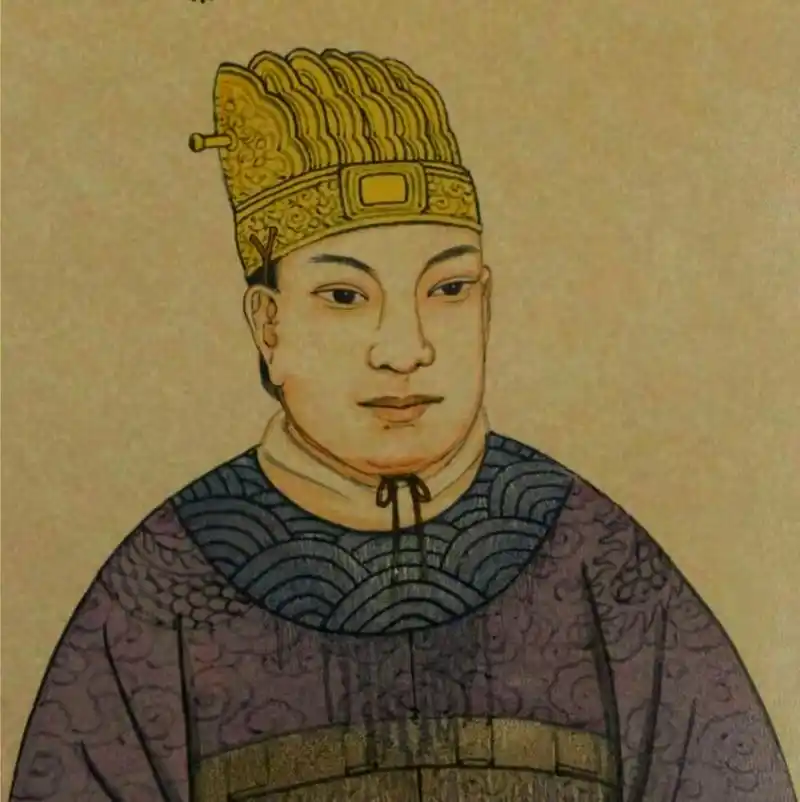
The reign of Emperor Zhao is the hardest in the Western Han to see clearly, because the man whose name it bears is almost absent from it. He came to the throne at eight and died at twenty-one. Across the thirteen years in between, the History of Han gives him a single scene in which he speaks, and outside that scene only decrees issued in his name but decided by somebody else.
That somebody was Huo Guang. The regent whom a dying emperor appointed to carry an eight-year-old on his back, in the figure the court used for it, governed the Han for the whole of the reign and for the two that followed. The things that happened in these years — the abolition of the state wine monopoly after a great debate on the salt and iron revenues, the destruction of a conspiracy of princes and ministers, the recovery of an envoy who had spent nineteen years among the Xiongnu, the killing of a king in the far west — are in the surviving record the work of Huo Guang or of men Huo Guang sent. What the reign shows more cleanly than any other is what imperial power looked like when there was no emperor to exercise it: a machine that ran on the instructions of a dead sovereign, the seal of a child, and the will of a single minister. The question the sources leave open is how much of the boy's own mind was ever in it — and the one place where they claim to see that mind is the place a modern reader has most reason to doubt.
1. The Arrangement of 87 BC
The arrangement was made in two days at the end of the emperor's life, and the History of Han's chapter on Huo Guang preserves it almost as a scene. Emperor Wu, ill at the Wuzuo Palace, was asked by Huo Guang who was to succeed him. He answered with a painting he had given Huo Guang years earlier, of the Duke of Zhou carrying the young King Cheng on his back to receive the assembled lords. "Have you not understood the meaning of the painting?" he said. "Make my youngest son heir; you shall do the Duke of Zhou's work." Huo Guang bowed and said he was not the equal of Jin Midi. Jin Midi said that he was a foreigner and not the equal of Huo Guang. Then the four of them were appointed at the sickbed; the next day the emperor died, and the day after that the boy who had been named crown prince took the throne.
The four were not a cabinet. They were the men the old emperor judged capable of holding the thing down, and three of them were chosen because they were strong and one because he was trusted. Huo Guang was the half-brother of the dead cavalry general Huo Qubing, who had brought him west to the capital as a boy; he had spent more than twenty years going in and out of the palace gates, the History of Han says, careful and cautious, and had never once made a mistake. He was a fair-skinned man of barely more than seven chi, with sparse eyebrows and a fine beard, and he walked through the palace doors on exactly the same line every day; the ushers secretly marked the spot on the ground, and he never varied from it by an inch. Jin Midi was a Xiongnu prince, the son of a king who had been killed and whose people had gone over to the Han, and he had entered the palace as a captive servant and risen by loyalty and silence; the history's encomium calls him a foreigner whose state was destroyed, a captive in the Han court, who by reverence roused his lord. He was the only one of the four who had risen from nothing, and the only one who never asked for anything. Shangguan Jie was a man of Longxi who had begun among the palace guards and made his fortune by an accident of feeling: when the old emperor fell ill and recovered and found the imperial horses thin, he flew into a rage, and Jie answered that in his day-and-night anxiety over the emperor's health he had had no mind for the horses, and before he finished speaking the tears were running down his face. The emperor took him for a loyal man and kept him near. Sang Hongyang was a merchant's son from Luoyang who had been placed at court as an accountant at thirteen and had designed the whole fiscal architecture of the previous reign — the salt and iron monopolies, the equable transport, the price stabilisation, the asset taxes. He was the only one of the four who had ever run something large.
The offices tell you where the power actually was. Huo Guang was grand marshal and general-in-chief, the highest military title in the state, and he was also the head of the imperial secretariat — the office through which every memorial to the throne had to pass. That second appointment is the regency. The History of Han records the mechanic of it in one clause: when Huo Guang went out of the palace on his statutory rest days, Shangguan Jie would go in and decide business in his place. So a man who wanted to put something before the emperor waited for the regent to be away. What the emperor read was what the regent had not stopped.
Two other arrangements were made in the same months, and both shaped the boy's life. His elder sister, the Princess of Eyi — the histories also call her the Princess Gai, after her husband's family — was given a larger fief and moved into the palace to bring him up. And his mother was already dead. His father had ordered her put to death, an act that belongs to the account of the previous reign and is recorded there; what matters here is only what it left. The court gave her a posthumous title as empress dowager, built her a tomb at Yunling with twenty thousand labourers and a fief of three thousand households, and gave her dead father a marquisate. Then the honours stopped. No living member of the Zhao family held office; only the dead grandfather was ennobled. Of the four men who governed for the boy, three had brought great houses with them into the capital and the fourth had brought nothing but his own record, and the boy had brought no maternal family at all. He had a mother in memory and no uncles in the government.
The first thing that happened was the removal of one of the four. In the ninth month of 86 BC, the year after the accession, Jin Midi died. He was the one man in the regency Huo Guang could not have resented and did not have to watch, and with him gone the arrangement became a negotiation between Guang and the two men who had brought families of their own. The History of Han notes one episode from these years that is worth keeping, because it shows the shape of the limit even a regent lived under. During a night alarm in the palace, Huo Guang summoned the officer who kept the imperial tallies and seals and demanded the seal. The officer refused to give it up. Huo Guang tried to take it, and the officer put his hand on his sword and said: you may have my head, but you may not have the seal. Huo Guang admired him for it, and next day had him promoted two ranks. The regent could decide everything the emperor did not see, and he could not take the seal off a clerk's table.
2. The Regent's Household
The split in the regency came out of a marriage, and the marriage was between the regent's own family and the family of his colleague. Huo Guang's eldest daughter was married to Shangguan Jie's son Shangguan An. In 83 BC the daughter born of that marriage was brought into the palace as a consort, and within a few months she was empress. She was six years old. The emperor was twelve.
Huo Guang had opposed it. The match went through because the family of the bride's other grandfather went around him. The emperor's elder sister, the Princess of Eyi, who had raised the boy and lived in the palace with him, was attached to a favourite of no rank named Ding Wairen — the name means "Ding the outsider," and it was not a courtesy name but a description of where he stood. Shangguan Jie and his son cultivated the princess's household instead of the regent, and the girl was made empress, and her father was made a general, and the next year marquis of Sangle. A girl of six became the highest-ranking woman in the empire because two men who wanted something could reach the woman who had the emperor's childhood.
The price of the marriage was the quarrel, and the quarrel was about honours for the princess's favourite. Under Han law a princess could lawfully marry only a marquis, and Ding Wairen was nobody. The Shangguan family and the princess asked Huo Guang to make him a marquis; the answer was that merit came before title. They asked for the lesser dignity that would let him be received at court; the answer was no again. Huo Guang had already blocked offices for other relatives of the Shangguan family, and he now refused Sang Hongyang's requests for posts for his own sons and brothers. The History of Han weighs the resentment of each of them in a sentence: the princess greatly resented Guang for the refusals; Sang Hongyang, who had built the wine and salt and iron monopolies and took pride in what they had done for the state, hated him for it; and the King of Yan, Liu Dan, the emperor's elder half-brother, had thought the throne should have been his and had long harboured his grievance against the child who sat on it.
There was one more arrangement in the palace, and it is the darkest thing in the reign. Huo Guang wanted his granddaughter, the child empress, to bear the emperor a son, because a son of that marriage was the only future in which everything his family had was safe. The chapter on the empresses says he spoke of the need to close the inner quarters and that none of the palace women was allowed in to the emperor — "only the empress slept with him," the treatise on the five phases puts it — and that the emperor was unwell, and that the attendants and the physicians flattered the regent's wishes. And to make sure nothing happened outside the arrangement, "even the palace women and the attendants were made to wear the close-sewn trousers, with many laces." The Tang scholar Yan Shigu, glossing the garment a few centuries later, understood it as a pair of trousers with a front and a back, so that intercourse could not take place. Whether the boy knew what had been done to his household is not recorded. What is recorded is that the marriage lasted nine years and produced no child.
None of this was cheap for the emperor's authority, and there is one event in these years that shows how unstable the ground still was under it. In 82 BC a man of Xiayang named Zhang Yannian came to the palace gate and announced that he was the crown prince Liu Ju — the emperor's half-brother, nine years dead in the witchcraft disaster that had emptied the imperial family. The court was thrown into confusion, and it fell to the metropolitan governor, Jun Buyi, to deal with it; he invoked a precedent from the Spring and Autumn and had the man arrested and put to death by waist-slicing. The incident is small and it is one line in the annals, but it belongs to the picture: the empire had not stopped expecting its dead prince to come back, and the man who sat in his father's chair was a child that most people had never seen.
3. The Debate on Salt and Iron
In the second month of 81 BC the emperor issued a decree ordering the officials to put questions to the worthy men and the scholars recommended by the commanderies and the kingdoms about what the people were suffering, and to consider abolishing the salt and iron monopoly and the wine monopoly. Some sixty of them came to the capital. They argued against the chancellor Tian Qianqiu and against the imperial secretary Sang Hongyang, for months, and the debate they held has come down under the name of the salt and iron conference.
The subject was the whole fiscal programme of the previous reign, which had paid for the Xiongnu war by taking the salt, the iron, the brewing of wine and the movement of goods into the state's hands. Sang Hongyang's position was that the money could not be spared. From the surviving text of the debate, his side argues that the Xiongnu raid the frontier and that without the salt, the wine and the transport systems there is nothing to support the army that keeps them out; that when the state manages the great commodities it prevents the rich merchants from cornering them and steadies the price of what ordinary people must buy; and that a government is judged by what it can do, not by what it refrains from. His line of defence has outlived the argument: a good governor of affairs patches what is broken and dams what is breached.
The scholars' answer was that the state had gone into trade, and that a state in trade corrupts the thing it governs. Their case began with the harm to the people — the iron tools from the state workshops were, they said, mostly hard and poor and unsuited to the farmer's hand, so that in some places men were back to wooden ploughs and weeding by hand — and it widened into a claim about the moral order: a court that measures wealth by profit teaches the whole empire to measure it the same way. Their phrase for the monopolies was that the state contends for profit with its own people.
What the conference produced is worth stating precisely, because the name it goes by suggests more than it did. The wine monopoly was abolished, its officials dismissed, and private brewing allowed under a declaration to the state at a fixed price. The iron offices inside the passes were cut back. The salt and iron monopoly itself, and the transport systems, were kept. Neither side had won. The men who had come to abolish the programme watched it survive in its largest parts; the man who had defended it watched the piece of it closest to daily life disappear.
What we know of the debate is not a transcript but a book. A generation later, under Emperor Xuan, a scholar named Huan Kuan compiled the Discourses on Salt and Iron: sixty chapters in dialogue form, drawn from the records of the conference and from the memory of one of the scholars who had been there, and shaped throughout by its compiler's own convictions. Huan Kuan was a man of Runan trained in the Gongyang tradition, and he took the scholars' side, and his book is arranged so that the officials state their case well and lose it anyway. It is the earliest sustained argument we have about political economy in China, and it is also a brief. The record of the debate belongs to the side that lost it.
And the conference was not only an argument about money. Sang Hongyang commanded the fiscal machine, and the fiscal machine was the one large part of the government that Huo Guang did not control, and the scholars who spent the summer attacking Sang Hongyang's programme had been summoned by the regent's authority. The History of Han does not draw the conclusion, and it does not have to. What it does say is what the emperor contributed to the great debate of his reign. He is in the record twice, and both times as a decree: the document that opened the discussion and the document that closed it.
4. The Return of Su Wu
In the same year, 81 BC, the reign received the one thing in it that later generations have kept closest, and it was not a policy. In 100 BC Emperor Wu had sent an attendant of his household, Su Wu, west to the Xiongnu with about a hundred officers and men, carrying gifts to the paramount chief and escorting his envoys home. Somewhere inside the steppe the mission was caught up in a plot at the chief's own court, and Su Wu, rather than be taken and questioned, tried to kill himself. He lived. The chief wanted his submission, ordered him put in a covered pit without food or water, and Su Wu ate snow and chewed his felt cloak for a few days until the Xiongnu decided he was something other than a man. Then they sent him out to the Northern Sea, and told him he might go home when the rams gave birth.
He stayed nineteen years. He kept the jie — the tall staff with a tassel of yak hair that was the mark of an envoy's commission — and the History of Han makes the length of the exile visible in a single sentence about the return: he went out in the prime of life and came back with hair and beard entirely white. The way he got out was a ruse, and it has fixed itself in the language. The Han envoys asked for him and the chief said he was dead. One of his own officers, Chang Hui, got word to a Han envoy and told him to accuse the chief of lying: the Han emperor, he said, had shot a wild goose in his hunting park, and there had been a silk letter tied to its leg saying Su Wu was alive in a marsh. The chief, startled by a story that carried the authority of heaven, gave him up. A letter by wild goose is still the Chinese idiom for mail.
Su Wu came back to the capital in 81 BC. Nine of the men who had gone out with him came back with him; the rest were dead or had submitted. He was given the office that oversaw the affairs of the subject peoples and a million coins, and the annals record the return in the middle of a list of decrees, between the order to consider the monopolies and the order that abolished the wine duty. He is in this history not as the emperor's achievement but as the reign's one piece of luck.
Around the same years the new paramount chief, who had taken the steppe's throne with the help of a Han deserter, moved toward peace, and the two courts exchanged envoys and restored the marriage arrangement in principle. The History of Han, summing up the whole reign, puts it in a line: in those years the Xiongnu were at peace by marriage and the people were well-off. What the sources do not give is a date, a dowry, or a princess; the marriage was a diplomacy, not an event.
The frontier itself, meanwhile, was still being run as a series of police actions, and the regent ran them. In the winter of 78 BC the Wuhuan of Liaodong were attacked by the Xiongnu, and Huo Guang wanted to intervene. He put the question to the veteran commander Zhao Chongguo, who advised against it: the nomads attacking each other is a gift to the Han, and going out after them would only invite raids and make trouble. Huo Guang put the question instead to a palace attendant named Fan Mingyou, who said it could be done, and made him general of a new title invented for the occasion, the General Who Crosses the Liao, because the campaign would take him over the Liao River. Fan rode out of Liaodong with twenty thousand cavalry, and the Xiongnu, hearing that a Han army was coming, withdrew. The instruction Huo Guang had given him was this: let not the army come out empty-handed; if you are too late for the Xiongnu, then strike the Wuhuan. So he turned on the Wuhuan, who had just been mauled by the Xiongnu, and by the History of Han's count killed some six thousand of them and took the heads of three of their chiefs, and was made a marquis the next year. Fan Mingyou was Huo Guang's son-in-law.
In the far west the same years produced a smaller and colder story, and it shows what the Han had learned to do with an unreliable neighbour. The king of Loulan had played both sides for years and had killed Han envoys, and in 77 BC a Han envoy named Fu Jiezi went out with gifts and an escort and an invitation to a banquet. He drew the king aside on the pretence of a private message from the emperor, and two strong men stabbed him from behind inside the tent. The head was hung at the northern gate-tower of the capital; a new king was installed, the capital was moved, and the state was renamed Shanshan. No army went out. The cheapest kind of frontier policy, as it turned out, was not conquest, and the reign that could not decide its own taxes could decide who ruled a kingdom on the far side of the desert.
5. The Forged Letter
By 81 BC the men who resented Huo Guang had found each other. The King of Yan had been sending embassies to the capital with gold and silk to buy them; the princess wanted her favourite ennobled and could not get it; the Shangguan father and son had been refused over and over, and had begun to be frightened of the man who refused them; and Sang Hongyang, who had spent the summer being dismantled in public by sixty scholars whom the regent had summoned, had lost the one thing he had.
The instrument they chose was a forged memorial in the King of Yan's name, and the History of Han preserves its charges, which is how we know how good it was. It alleged that Huo Guang had held a review of the palace guards with the road cleared as for the emperor himself and provisions sent out ahead of him; that he had recalled Su Wu from the Xiongnu and given him his office in order to borrow the steppe's troops; that he had made his own long-serving secretary a search-grain commandant for no merit at all; and that he had moved officers of his own military staff without authority. "Guang rules arbitrarily," it concluded. "I suspect something improper. Let me surrender my tally and come to guard the palace." Every clause is designed to look like sedition and to sound like loyalty, and none of them is quite a lie, which is why it was dangerous.
There was one problem with it as a weapon and the conspirators solved it. Memorials went to the throne through the secretariat, and the secretariat was Huo Guang's, and the regent read everything first. So Shangguan Jie waited for Huo Guang's rest day, when he would be out of the palace and his deputy would be handling business, and put the document into the emperor's own hands. It was the only way the thing could be done, and it depended entirely on the emperor's believing it.
What the emperor did is the reason this reign has a biography at all. He did not pass the memorial down to the officials. The next morning Huo Guang heard what had come in, and stopped in the room where the picture of the Duke of Zhou and the young King Cheng hung — the painting his emperor's father had given him as the sign of what he was supposed to be — and would not come into the court. The emperor asked where the general was, and Shangguan Jie answered that on account of the King of Yan's accusation he did not dare come. The emperor summoned him. Huo Guang came in, took off his cap, and bowed his head to the floor. "Put your cap on," the emperor said. "I know the letter is a forgery. You have no guilt." Huo Guang asked how he knew. He was fourteen years old, and he gave three reasons: your going to Guangming was to review the guards, and Guangming is close by; it is not yet ten days since you moved those officers, so how should the King of Yan, hundreds of miles away, know of it; and if you meant to do something improper, you would not need a colonel.
The secretaries who heard it were astonished, the History of Han says, and the man who had carried the letter had already vanished, and was hunted. Shangguan Jie and the others tried to have the whole thing dismissed as a trifle; the emperor refused. When the slander was repeated, he lost his temper, and the sentence he used is the one the historians have quoted ever since: the general-in-chief is a loyal minister, entrusted by the late emperor to support me, and whoever defames him shall be punished. After that nobody said anything against Huo Guang in the open, and the men who had tried it moved from accusation to murder.
The plan was simple: the princess would invite Huo Guang to a banquet, hidden soldiers would kill him there, and the emperor would be deposed and the King of Yan put on the throne. It was given away by an officer of the princess's own household, a man named Yan Cang who managed her rice fields. He took it first to the grand agriculture minister, Yang Chang, who was too cautious to report it and took to his bed pretending illness, and then to a remonstrating grandee named Du Yannian, who reported it. In the ninth month of 80 BC Huo Guang moved first. Shangguan Jie, his son, Sang Hongyang and the princess's favourite Ding Wairen were arrested and their clans destroyed. The princess and the King of Yan killed themselves.
The King of Yan's death is the one scene in the affair that the histories slow down to record. He asked his chancellor whether he should raise troops, and the chancellor told him that Shangguan Jie was dead and everybody knew it, so there was nothing to raise them for. He held a banquet in his Wanzai Palace for his guests and ministers and consorts, and sang: returning to an empty city, the dogs do not bark and the cocks do not crow; the great avenues, how wide they are; I knew there was no one left in the state. His favourite, Lady Huarong, danced and answered him with a song about hair strewn in the ditches and bones lying with nowhere to rest, mothers looking for their dead sons and wives for their dead husbands, and where, between the two canals, a gentleman might settle. Everyone in the hall wept. Then the emperor's letter arrived, which told him that he was his own flesh and had joined with outsiders to endanger the altars of the state, that he had held close those he should have kept distant and kept distant those he should have held close, and asked him with what face, if the dead could know, he would bring the sacrificial wine into the temple of the founder. The King of Yan handed his seals to his physician, apologised to his officials, and hanged himself with his sash. More than twenty of his women followed him, and the court gave him a posthumous name that means the perverse.
The child empress survived the purge because of whose granddaughter she was: she had taken no part in her grandfathers' quarrel, and she was Huo Guang's granddaughter, and she was not deprived of her position. She kept it for another thirty-seven years, and outlived the regent's whole family. The regent himself, the History of Han says, "overawed the empire." The offices filled up with his people: his son and a grand-nephew were palace generals, another grand-nephew was a mounted attendant at the emperor's side, and his two sons-in-law were the commanders of the guards of the eastern and western palaces. His brothers, sons-in-law and grandsons all held court appointments, and the history describes his party and kin as joined together and rooted in the court.
One caution belongs here, because the account we have is the account the winning side kept. The History of Han is the only narrative of the affair, and it is the regency's; Sang Hongyang, in particular, had no friend among the historians. Some modern scholars have argued that the charge of rebellion against him was at least partly a prosecution rather than a discovery — that the conference of the previous year and the arrest of this year were the same campaign against the last man in the government with an independent base in the finances. The sources do not settle it. What they permit is the observation that the men destroyed in 80 BC were precisely the men who had stood against the regent, and that one of the four ministers the dying emperor appointed had now outlived or executed all three of the others.
6. Twenty-One
In the first month of 77 BC the emperor was capped and appeared in the temple of the founder — the ceremony that made him a man and, under the system, should have handed him the government. The Comprehensive Mirror notes the position flatly: at this time all affairs were decided by the grand general. Nothing changed. He went on issuing decrees: that year he remitted the poll tax for two years and the arrears of labour commutation for three, and ordered a general pardon; two years later he sent labour gangs to build a walled town at Xuantu in Liaodong; in the spring of 74 BC the officials proposed a cut of three-tenths in the poll tax and he approved it. He reigned, and the government did not pass to him, and the arrangement that had been set up at a sickbed thirteen years earlier simply continued.
His marriage, meanwhile, had been running since he was twelve and his bride was six, with the other women of the palace shut out of the way by the regent's order, and it had produced nothing.
In the fourth month of 74 BC, on the day guiwei, he died in the Weiyang Palace. He was twenty-one. In the sixth month he was buried at Pingling. The annals of the reign give no cause at all: the emperor died, and that is all it says, without illness, without an accident, without a word.
What can be added from the same book is small. Its biography of the official Du Yannian says that in the last years of the reign the emperor lay ill, that physicians were summoned from all over the empire, and that Du Yannian was put in charge of the medicines. The chapter on the empresses says that while the emperor was unwell the attendants and the physicians flattered the regent's wishes. That is the whole of it. There is nothing else in any text of the period.
Against that there is the situation rather than the evidence. The emperor died in the year after his capping, at the exact moment when the ceremony should have moved the government out of the regent's hands and did not. He was twenty-one, and the man who gained most from his death was the man who had the most to lose from his majority. The suspicion that Huo Guang had a hand in it belongs to a much later age, and has never been supported by a single line of text. The argument against it is not sentimental. Huo Guang had spent years keeping every other woman away from this emperor so that his own granddaughter could bear him a son; the one future that preserved everything he had was a child of that marriage; and he had the emperor he wanted, young and without a party of his own, and had no reason to exchange him for the unknown. If he killed him he exchanged his own grandchild's claim for a stranger's. That is not proof of innocence. It is the reason the honest account reports a death without a cause, says that the sources point to illness, and says that the other reading is a suspicion which the silence has kept alive rather than a finding.
He left no son, and the succession had to be solved by the man who had governed him. Of Emperor Wu's six sons only one survived, the King of Guangling, and the ministers were for him; but the History of Han records the ground on which he was passed over — that he had long behaved lawlessly and the late emperor had not wanted him — and it records that Huo Guang was uneasy about it. Instead the regent brought in Liu He, king of Changyi, the emperor's nephew, and twenty-seven days later deposed him; and then he brought in Liu Bingyi, Emperor Wu's great-grandson, who had survived the witchcraft disaster as an infant in a prison and grown up among ordinary people, and who took the throne as Emperor Xuan. The reign that ended in the spring of 74 BC did not hand the empire to an heir. It handed the empire to its regent, and the regent chose twice.
The verdict the historians gave it is contained in the encomium the History of Han attaches to the annals, and it is the comparison to the Duke of Zhou and King Cheng: King Cheng did not doubt the Duke of Zhou, and Emperor Zhao entrusted everything to Huo Guang, and each of them became great by meeting his time as it was. The reign had begun with the shadow of the first empress dowager in Han history, the one whose family had nearly taken the throne, and with a boy whose mother had been killed to keep her family from doing it; and what the court got instead was a different family, grown over thirteen years until it held the palace gates and the secretariat and the doctors. The praise the historians found for the emperor is the praise of a child who knew whom to trust, and it is a strange thing to write on a tomb, because it is praise of someone else. He left no son, no building, no measure, no book, and one sentence about a forged letter. Whether the thirteen good years of his reign belonged to him or to the man who governed in his name is a question the sources cannot answer, which is why the answer they gave was a story about a good minister, told by the historians to fill the place where an emperor should have been.