Home / Emperors / Han Dynasty
Emperor Xuan of Han
汉宣帝
Liu Xun, 91 – 49 BC · Tenth emperor of the Han dynasty
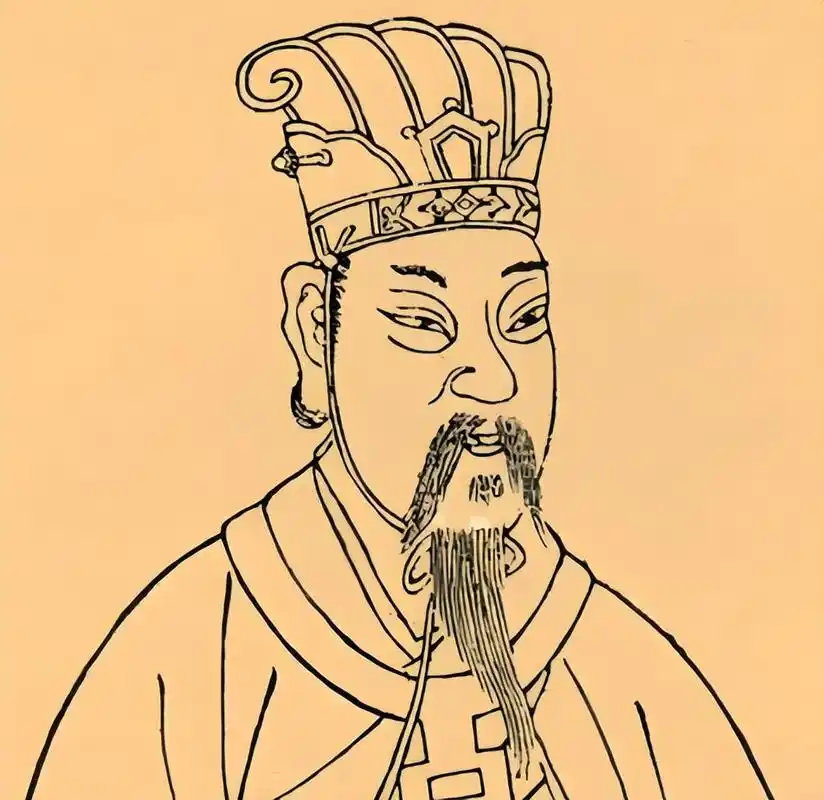
No other emperor in Chinese history came to the throne out of a prison register. This one did. He was a few months old in 91 BC when the household of the crown prince was destroyed, and because he belonged to that household his name was entered on the roll of a gaol attached to the commandery hostel at the capital, where people awaiting judgement were held together with their families. He was carried in as an infant, and the first four years of his life were spent inside it, in the care of two women serving out light sentences and of an officer of the court of justice who told nobody what he was doing.
Seventeen years separate that gaol from the throne. Between them lie a childhood in the Side Courts of the palace, a household in the lanes of Chang'an, a wife he married while he was nobody in particular, and an education no prince receives — in the price of grain, the habits of clerks, the small tyrannies and small mercies of a county. When the court brought him to the throne in 74 BC, the man who brought him held every gate and every army in the capital. His first answer to that was to wait, and he waited six years. The nineteen that followed are what the History of Han calls a restoration: inspected governors, raised pay for the lowest clerks, a frontier that ended with a Xiongnu ruler travelling south to be received as a guest, and a wall in the palace painted with eleven portraits. What he did about his own family is the part that keeps the word from being simple.
1. The Commandery Gaol
The prison was not a place for condemned men. It belonged to the hostel where envoys from the commanderies lodged when they came to the capital, and it held people whose cases had not yet been decided — which after 91 BC meant a great many people, because the cases arising out of the destruction of the crown prince and his household were not settled for years. The History says of the officer who ran it that he pitied the child for a guiltlessness everyone could see, and chose two women from among the prisoners doing light labour, Zhao Zhengqing of Huaiyang and Hu Zu of Weicheng, to nurse him in turns, paying for his clothes and food out of his own pocket and keeping him in a dry, quiet corner away from the other prisoners.
The officer's surname is written two ways in the History: the annals call him Bing Ji, his own biography calls him by the same sound in a different character. He was an assistant to the imperial court of justice, sent to the capital's gaols to close out the witchcraft cases that had not closed. He closed none of them; he reported that the evidence would not bear out a judgement, and the prisoners stayed where they were, which for one of them was the difference between living and not. The History adds that the child fell ill several times, near death more than once, and that Bing Ji each time sent word to the nurses to call for a doctor. It is the only reason anybody has heard of him.
In 87 BC an order went out from the palace that every prisoner in the imperial gaols, whatever the charge and whatever the evidence, was to be put to death, on a report that the air above the gaols of Chang'an held the vapour of a future emperor. The officer who carried the order, a palace attendant named Guo Rang, came to the commandery gaol at night. Bing Ji shut the gate and refused him entry, and said through it: "The imperial great-grandson is here. Other men who are innocent may not be killed; how much less the emperor's own great-grandson." The two men stayed on opposite sides of that gate until dawn. Guo Rang went back and reported both the refusal and the officer who had made it. The emperor, by the account the History gives, reconsidered and said: "Heaven sent him." A general amnesty followed, and the child, then four years old by the count of the years or five, walked out with the other prisoners.
Bing Ji put him in a carriage and took him to the family of his grandmother, one of the crown prince's consorts, whose mother raised him. What happened next is a decree rather than an event: an edict sent him to be brought up in the Side Courts of the palace and had him entered on the clan register kept by the imperial clan officer. That entry matters because of what it rules out. From a very early age this boy was officially the emperor's great-grandson, and the palace household knew whose child he was; when, years later, a family of high officials refused to marry a daughter to him, the reason they gave was not that his origins were obscure but that they were dangerously well known. The story that he grew up not knowing he belonged to the imperial house is a later and gentler version, and it is not in the sources.
What he did not know for more than twenty years was the name of the man who had kept him alive. "Bing Ji," the History says, "was a deep man who did not boast of his good deeds; from the time of the great-grandson's trouble he sealed his mouth and never spoke of what he had done, and so no one at court could make out what the merit had been." Thirteen years later, when the government was looking for someone to put on the throne, the recommendation would come from this same man, and would mention the candidate's character and his learning and not one word about a debt.
2. The Side Courts and the Lanes
The man who raised him inside the palace was the prefect of the Side Courts, Zhang He, who had served the destroyed crown prince. The History gives his motive plainly: he remembered an old kindness and wanted to repay it, and, unable to repay it to the man, he paid it to the man's grandson. He fed and clothed the boy carefully and paid out of his own salary for his education. What he got for his money was a pupil who studied the Book of Songs under a scholar named Fu Zhongweng of Donghai — bright and fond of learning, the annals say, and something else besides: he liked the company of the knights-errant, and cockfighting, and racing horses.
He came to know from the inside "the wickedness of the lanes and the successes and failures of officials." He went up and down the imperial tombs on the ridges south of the capital and covered the whole of the metropolitan region; he was stuck once in the salt flats of Lianshao, where the ground is white and there is nothing to drink. His favourite country was the stretch between the counties of Du and Hu, his base was the village of Xiadu, and when he had to attend the court's audiences he lodged in Chang'an, in Shangguan Lane. This is the curriculum of a man who later said that what keeps ordinary people on their land, free of the wish to curse, is nothing more than fair government and cases decided properly — and who said it as though he had seen the alternative.
The marriage came out of the same milieu and nearly did not happen. Zhang He wanted to give him his own granddaughter, and his younger brother stopped him. The brother was Zhang Anshi, marquis of Fuping and a general of the right, one of the three or four most powerful men in the government. His objection was not to the boy: "The great-grandson is the heir of the Wei crown prince. He is lucky to be fed and clothed by the state as a commoner. Say no more about giving him a wife." He was doing the arithmetic any practised courtier would do — a man whose grandfather had died in a civil war was a bad person to be visibly connected to. Zhang He went elsewhere. He gave a banquet for a keeper of the palace drying house named Xu Guanghan and proposed the man's daughter, Xu Pingjun, then fourteen or fifteen, and paid for the wedding out of his own purse.
Xu Guanghan's own history recurs later in this story. He had put the saddle from another officer's horse onto his own by mistake on an imperial progress, been charged with theft from the train and sentenced to death, and had the sentence commuted to castration under the standing provision that let a condemned man exchange the penalty for service in the palace workshops; he ended up in charge of the drying house. The marriage of his daughter to the great-grandson of Emperor Wu took place in the household of the Side Courts, with the prefect's money, and a year later the couple had a son, Liu Shi. They were not important, and nobody in the government was thinking about them at all.
The life that produced this emperor is measured by one surviving document better than by any description. Among his subjects was a man named Chen Sui, afterwards governor of Taiyuan, whose grandson became famous in his own right. Chen Sui had known the future emperor when the future emperor was nobody: they gambled together, and the future emperor lost, more than once, and owed him money. Years later, when Chen Sui had been given a province to govern, a sealed letter arrived from the throne: "The office is honourable and the salary is good. You can be repaid what I lost to you at dice. Your wife Junning was standing there and can confirm it." Somewhere underneath that is the whole difference between this emperor and the eight or nine other men of the Han house who wore the same title. He had been poor in a way that left him with an outstanding gambling debt and a witness to it, and he remembered the debt.
3. The Man the Regent Chose
In the fourth month of 74 BC the young emperor died without an heir. His regent, the general-in-chief Huo Guang, put a king from the eastern plain on the throne and took him off it twenty-seven days later, and then needed a second man, quickly, and one who could not be anybody's faction. That much belongs to other chapters; what belongs here is the recommendation.
It came from Bing Ji. By then a senior official, he wrote to Huo Guang about a young man "of the great-grandson of Emperor Wu, named Bingyi, who was brought up in the Side Courts and in the house of his mother's family — I saw him when he was a small child, when I was stationed at the commandery gaol; he is now eighteen or nineteen, versed in the classics, of good ability, calm in conduct and moderate in temper," and asked that he be brought into the palace to be seen and the decision made afterwards in the open. He set out the candidate's qualifications at length, and never mentioned that he had kept the candidate alive.
The case went to the empress dowager, widow of the emperor before last, in a memorial from Huo Guang and the chancellor and the rest of the court. Its argument was procedural, and the procedure is the whole point. By the rules of the family, where the senior line has no heir, one chooses from the cadet branches the most worthy. Bingyi, the memorial said, had been raised by the palace under edict, was now eighteen, had studied the classics, and was fit to be the heir of Emperor Zhao. The empress dowager approved it.
What followed was done in one day and in two steps. An officer of the imperial clan was sent to Shangguan Lane to have the young man bathed, dressed in clothes from the imperial wardrobe and brought into the Weiyang Palace. There he was received by the empress dowager and created marquis of Yangwu; and then the assembled ministers handed him the seals and ribbons, and he became emperor and went to the temple of his ancestors. He was eighteen. The order of those two steps is not a formality: he could not inherit from a man who was not his father, the law required the fiction of an adoption, and the fiction was manufactured on the spot, by making him a marquis and then a son.
The new emperor was then conducted to the temple again, this time with the general-in-chief riding in the same carriage as his outrider. The History describes what he felt: "The emperor was inwardly in awe of him, as though there were thorns at his back." The same passage notes that when a less alarming man took that place in the carriage the emperor relaxed and sat easily, and it ends with a proverb then in circulation: "One who overawes his lord is not kept; the trouble of the Huo sprouted from a carriage-ride." That sentence is worth flagging for what it is. It is not a record of what anyone thought in 74 BC; it is a summary made after 66 BC by people who knew how the story ended. What the earlier moment actually contains is an eighteen-year-old, one day into an office he had no preparation for, alone in a carriage with the man who had made and unmade the last two emperors.
The general-in-chief offered to hand the government back, and the History records the offer and the refusal in the same breath: "He handed over the government, and the emperor declined it with great modesty, and every matter continued to be reported to Huo Guang first and brought to the emperor afterwards. Whenever Huo Guang came to court the emperor made himself small, composed his face, and deferred to him beyond what was required." It would be easy to read this as timidity, and the sources do not encourage that reading. Weeks earlier the regent had demonstrated to the whole court that an emperor of the Han could be taken off his throne in under a month, and no faction the young man could have assembled would have survived the attempt. The way to keep his head was to be, beyond argument, the regent's own creation.
The Huo family held the empire at that point in a way that no list conveys, and the History supplies one anyway. Huo Guang's son and a grand-nephew were both lieutenant-generals of the palace guard; another grand-nephew commanded the tribal cavalry; two sons-in-law commanded the guards of the great palaces at either end of the city; brothers, sons-in-law and grandsons through daughters filled the secretariats and staff appointments. The summary is a phrase: relatives linked like one body, rooted in the court.
The emperor's first acts of consequence were small, and they were about his own blood. In the summer of 73 BC he ordered the court to consider what posthumous name and what tomb park should be given to the former crown prince, who had died at Huxian without either. The name the court settled on was Li, a word that means something like the man who did not repent his fault — a name that carried the blame. That is what the emperor accepted for his own grandfather, because a rebellion had to remain, in the record of the state, a rebellion; the alternative was to make his own accession a reward for it, and he could not afford that yet. A year later he had the court raise the temple of Emperor Wu to the rank of a shrine served by the emperors in perpetuity — on the surface an act of filial piety toward a great-grandfather fifteen years dead, underneath it the strongest available statement that the man on the throne was Emperor Wu's great-grandson. Years later he built a shrine for his own father. He did these things in that order because that was the order in which they could be done.
4. The Old Sword
The empress's place came free in effect before the new reign was a year old, and everyone in the government knew what was supposed to happen to it. Huo Guang had a young daughter; the empress dowager was her relative; the ministers, the History says, all inclined toward the general's daughter in their hearts, and none of them said so, because saying it would have been an act of alignment and not saying it cost them nothing. Then the emperor issued an order for a search to be made for an old sword he had owned when he was poor. The ministers understood what was meant, and memorialised that the palace lady Xu be made empress.
It was, as politics, close to perfect, and it is why the phrase has survived for two thousand years. He did not name a candidate; he did not reject the general's daughter or rebuke the men who had been about to propose her. He asked for a sword. Everyone understood he was talking about the woman he had married when he was nobody, and because he had said nothing, nobody was in the position of having to oppose him. The words for that sword became the standing expression for a wife taken before one's rise.
Huo Guang did not overturn the result; he did something narrower and more instructive. He blocked the imperial father-in-law on the ground that Xu Guanghan had been castrated and a mutilated man was not fit to be given a domain — the same castration the state had inflicted on him after a saddle went onto the wrong horse, now doing duty as a disqualification from the honours the marriage had earned. He held out for more than a year, and what Xu Guanghan got at the end of it was the rank of a lord, not of a marquis. The emperor took it. He had already learned how long a thing could be waited for.
Three years later the empress died. She was pregnant, near her time, and ill, and a woman physician named Chunyu Yan who was a favourite of the Huo household was attending her. Huo Guang's wife, whose personal name was Xian and who is remembered as Huo Xian, had decided that the empress's death would put her own daughter in the inner palace, and put the proposal to the physician in a private room. "I have often had the chance to do you a service," she said. "May I look to you for one in return? A woman in childbirth is a matter of great peril; nine out of ten die. Now the empress is near her time. You could take her off with a poisoned medicine, and then Chengjun becomes empress." The physician thought for a long time and said: "I will do what I can." She pounded aconite root, took it into the empress's palace, and when the birth was over mixed it into a pill of the imperial physicians' preparation and gave it to the empress to drink. After a moment the empress said that her head was heavy, and asked whether there could be poison in the medicine. The physician said no. The empress grew agitated and short of breath, and died.
That was the first month of 71 BC. She was given the posthumous name Gong'ai, respectful and lamented, and was buried south of the capital on ground that in later centuries took the name of her tomb, Shaoling, the lesser tomb, to distinguish it from the great mound of her husband.
The murder should have been the end of Huo Xian. It was not, and the reason is the most damaging fact in Huo Guang's career. When the death produced a petition accusing the physicians who had attended the empress of malpractice, the men were arrested and charged with a capital offence; Huo Guang's wife, frightened, told her husband what she had done. The History gives his reaction in two sentences: he was startled and stunned and said nothing; and afterwards, when the case came up to him for judgement, he signed the order that left the physician unprosecuted. He had put the boy from the gaol on the throne, and for the whole of that boy's reign the entire authority of the government had passed through his hands. He was the last court of appeal in the empire, and he let it go.
Huo Guang's daughter became empress the following spring. The History puts the two women side by side, and the contrast is the point of both. The first had come up from nothing and been on the throne too brief a time to acquire any habits: her household was economical, and she went every five days to the Changle Palace to serve the empress dowager her food with her own hands. The second observed the outward forms of the same duty, but her processions were enormous and the gifts she made to her own household ran into the tens of millions. The emperor was fond of her too. He was, at that point, four years into an office in which he had never once made a decision that mattered.
There was one thing he had already decided, and the family knew it. The son Xu Pingjun had borne him was made crown prince, and Huo Xian refused to eat and spat blood. "This is a child of the common days," she said. "How can he be established? When my daughter has a son, is he to be a mere king?" She began instructing the empress to poison the boy. Until the Huo family fell, the crown prince of the Han ate only what had been tasted by a nurse first, and the poison could not get to him. That is the arrangement under which the succession of the dynasty was preserved. It was not preserved by guards or by law.
5. The Huo Family
In the third month of 68 BC Huo Guang died, and the emperor and the empress dowager attended the funeral in person. He was buried with the honours of an emperor — a jade suit, a catalpa coffin and a chamber of yellow-heart cypress, the last a structure reserved by regulation to the house of the reigning emperor, and a funeral carriage with the yellow canopy and yak-tail banner of the imperial type; soldiers of the metropolitan and northern commands were drawn up along the road to Maoling, and three hundred households were settled at his tomb to keep the shrine.
The edict that accompanied the honours is worth reading as an official estimate rather than a eulogy, since it is the emperor's own summary of the man who had run the empire since he was an infant: he had guarded Emperor Wu for more than thirty years and assisted Emperor Zhao for more than ten, had stood firm at a great crisis and led the court in settling the succession, and his merit was that of Xiao He, the chancellor who built the Han state. Set beside the record of the last few years — the death of the empress, the unprosecuted physician — it reads as a very careful document, and it is also accurate. Both things were true of the same man.
In the fifth month of the same year he began to govern. The annals put three measures in one sentence: he ordered that officials be permitted to submit sealed memorials so that he might learn what was happening below; he heard cases and reports himself; and each office thereafter came forward with its business and its numbers and was checked against its performance. The first of those measures was aimed at a specific piece of architecture. Any man sending a memorial had to send two copies, one marked as a duplicate, and the secretariat — the office with Huo Guang's people in it — opened the duplicate first and quietly discarded anything it did not like. Abolishing the duplicate envelope put the emperor back in direct contact with the empire, and everything else about the next two years follows from it.
The government was not dismantled in a day, and not by violence. It was dismantled post by post, and every post was a military one. The man commanding the northern frontier army and the guards of the Weiyang Palace, a son-in-law of Huo Guang, was made superintendent of the palace, which sounded like a promotion and came with no soldiers. A second son-in-law, who ran the young guards of the palace park, was made governor of Anding on the northwestern frontier; a brother-in-law was sent to govern Shu, a grandson-in-law to Wuwei. Not one of these men was arrested; not one was accused. By the end the Huo family still held the highest nominal offices in the state and commanded nothing at all, and had no event to point to as the moment it had been done to them.
The man who supplied the argument was the censor-in-chief Wei Xiang, whose case was that since the last years of Emperor Wu the wealth of the throne had gone to the officers of state and the government had issued from the general-in-chief's office; that Huo Guang was dead but his son was a general, his grand-nephew held the pivot of administration, and his relatives and sons-in-law occupied every command; and that these powers should be reduced. He also asked for the abolition of the duplicate envelope, and it was through that channel, once it was opened, that the report about the death of the empress finally reached the emperor, after years in which it had been circulating among officials with no way of getting to him.
Nothing now stood between the emperor and the question of the succession. In the fourth month of 67 BC he made his son Liu Shi crown prince, and in the same month he gave the boy's grandfather, the castrated keeper of the drying house, the marquisate that the regent had blocked. The two things were one act. The old man who had sold his body to escape a death sentence for a saddle lived to see himself a marquis of the empire.
By then the Huo household had begun to understand what was happening to it. Its ablest men had lost their commands, the rumour that the empress had been murdered was going about the capital, and they began to talk, in the way of men who have held armies and no longer hold them, about what they might do. Huo Xian, when her son and nephews pressed her, told them the truth about the physician. In the seventh month of 66 BC the emperor published the case: the edict names the general Huo Yu, his mother the lady Xian, two cousins who were marquises, a group of sons-in-law holding frontier and palace commands, and one commoner of Chang'an, as having conspired to commit a great treason, and concludes that they had all acknowledged their guilt.
Two cousins and one son-in-law killed themselves. Huo Xian, her son and the rest were taken: the son was cut in two at the waist in the market, the penalty for rebellion by a person of rank, and Huo Xian and all the daughters and brothers of the house were executed there with him. The empress, the second one, was not touched; her title was taken away and she was sent to a palace at Zhaotai, and twelve years later she was moved to another lodge and killed herself. How much of the capital went down with the Huo the sources answer differently: the History of Han speaks of several thousand households destroyed with them, the Comprehensive Mirror of several tens, and the number is not recoverable. What is not in doubt is that far more than one family was destroyed. Huo Guang himself was not touched — his grave at Maoling was not moved and the honours already granted him were not withdrawn.
One more name belongs beside the Huo. The men who helped expose the plot and were made marquises for it included Yang Yun, son of the chancellor and grandson, on his mother's side, of Sima Qian. It was through Yang Yun that the Records of the Grand Historian came into general circulation and so into the hands of the world.
6. The Prefects
What the emperor did with the government after 68 BC is described in the History of Han in the preface to its collective biography of good officials, and the description begins with his biography rather than with policy. He rose to the throne, it says, from narrow and low circumstances and had grown up in the lanes, and he knew the hardship of the common people's business; from the death of Huo Guang he took the government into his own hands and worked at it strenuously, hearing cases every five days, with everyone from the chancellor down coming forward to present his duties.
The method is then set out in three sentences, and they describe a personnel system rather than a personality. When he appointed a man to a province or a commandery he received him in person and questioned him — where he came from, what he intended to do — and remembered the answers; later he checked what the man had actually done against what he had said, and where the two did not match he wanted to know why. He kept governors in place a long time, on the argument that a man changed too often never lets the people below settle, whereas a man who knows his governor is not about to be moved begins to accept his instruction. And what a governor got for doing well was not a quiet promotion but a public one — a letter from the throne praising him, an increase in rank, gifts of gold, sometimes a marquisate — and when a place fell vacant in the central government, the man singled out in those letters was the man chosen.
The sentence that contains the reign's whole theory of government is quoted as the emperor's own. "What keeps the common people on their land and free from the wish to sigh and hate," he used to say, "is nothing but fair government and cases decided properly. The ones who share this with me are the good two-thousand-bushel men" — the governors of the commanderies. He said it often enough for the historians to record it as a habit of his.
The visible result was a generation of administrators. The History of Han names six of them — Wang Cheng, Huang Ba, Zhu Yi, Gong Sui, Zheng Hong, Zhao Xinchen — and says that where they governed the people grew rich and where they left they were missed. It names five others in the same breath and with a different ending: Zhao Guanghan, Han Yanshou, Yin Wengui, Yan Yannian, Zhang Chang. These fitted their positions, it says, but governed by punishment, and some of them met the penalty they had been inflicting. It does not draw the moral; the two columns are the moral, and the same regime produced both and knew it.
Gong Sui's posting to Bohai, on the eastern coast, is the exemplar. The commandery was in the hands of bandits and he was asked, in the emperor's presence, what he proposed to do. "Governing a disordered people is like untangling a knotted rope," he said. "It cannot be done in a hurry. One loosens it, and then it can be dealt with." In the commandery he ordered all the counties to dismiss the officers whose only job was catching bandits, and to treat every man carrying a hoe, a hook or a farm tool as a good subject whom nobody was to question, and only a man carrying a weapon as a bandit. The bandits, who had been carrying weapons because they were bandits, went home and took up farm tools; and he urged the people to "sell their swords and buy oxen, sell their knives and buy calves."
Underneath the governors there were changes in the law, and these show the same hand. In the fifth month of 66 BC he issued a decree that reversed a founding principle of the Qin legal order: "The affection of father and son, and the way of husband and wife, are nature. Even when there is trouble, they will go to death to preserve one another. From now on, if a son hides his father or mother, a wife her husband, a grandson his grandparents, none of them is to be prosecuted." The Qin and the early Han had built their criminal procedure on the extraction of evidence from exactly those relationships, and he gave them up. In the ninth month of the same year he required every commandery and kingdom to report annually the names of prisoners who had died in custody under beating or from illness — a return of the dead, submitted once a year to the throne. Two years later he said of the courts: "Prisons are the life of the ten thousand people. A clerk who can leave the living without resentment and the dead without hatred may be called a clerk of the law."
The most practical sentence of the reign is a pay rise. In the eighth month of 59 BC he decreed: "If officials are not honest and fair, the way of government decays. Now the lesser clerks all work hard, and their salaries are thin, and to expect them not to filch from the people is difficult. Let the salaries of those below a hundred bushels be increased by one part in fifteen." A hundred bushels was the bottom of the hierarchy — the rank of the men who actually met the public.
The economic instruments are of a piece. In 54 BC the grand master of agriculture's assistant Geng Shouchang proposed a system of state granaries on the northern frontier: buy grain when the harvest was good and the price low, keeping the price from collapsing on the farmer, and sell it when the harvest failed and the price rose. The granaries were called Ever-Normal, and the History says the people found them convenient. The censor-in-chief, Xiao Wangzhi, opposed the scheme for the cash it tied up and argued that it would bring on drought; the emperor did not accept the argument.
And there is one decree unlike anything else in the annals of the dynasty. In the fifth month of 64 BC the emperor changed his own name. "I have heard," it says, "that in antiquity the names of the sons of heaven were hard to know and easy to avoid. Now many of the common people, in sending up memorials, have offended against the taboo and been made criminals, and I pity them greatly. Let my name henceforth be Xun. Those who have offended against the old taboo before this order are pardoned." The name he had carried was Bingyi, which means, roughly, the illness is past — the kind of name a family gives a child it does not expect to raise, and common enough in the language that people wrote it by accident. He could have compelled the empire to avoid two common characters under penalty. He took a rarer one instead, and wiped the record.
7. The Protectorate of the Western Regions
The man who created the office that governed the far west for the rest of the Han was not a nobleman and not a scholar. Zheng Ji was from Kuaiji on the southeastern coast, had come up out of the ranks of the army, had served several tours in the western regions and been made a gentleman attendant, and is described in the History in a phrase: a man of hard stubbornness who knew foreign affairs.
By the time he is heard of, the Han had already been living in the western oases for a generation. Since Zhang Qian's missions and the campaigns of Li Guangli, the court had been posting a colonel with a body of troops at Quli, north of the desert, to farm, because an army in that country cannot be fed from home and the only way to keep a force there is to have it grow its own food. Zheng Ji was sent out to command that farm colony. He raised grain, and with the grain he raised troops from the oasis states, and with those troops he broke the kingdom of Jushi, which had been the Xiongnu's client and the obstacle on the northern road. That earned him a commandant's rank and a defined responsibility: the protection of the states along the southern road west of Shanshan. The word in the title was the word for protecting. He was already a protector; it was a route, not an office.
Then the Xiongnu came apart, and one of the pieces fell into his hands. In 60 BC the Rizhu king, a Xiongnu prince named Xianxianchan, decided to surrender to the Han and sent word to Zheng Ji, who raised fifty thousand men from Quli and Kucha, went out to receive him, and brought him in. The king's following numbered twelve thousand people, with twelve petty kings; some ran off on the way and Zheng Ji chased them down and killed them, and then delivered the whole body to the capital, where the king was made marquis of Guide. Twelve thousand people moving south out of the steppe and into the Han order, met at the frontier by a former private soldier.
With Jushi broken and the Rizhu king surrendered, Zheng Ji had commands on both roads, the southern and the northern, and the court gave the combined charge a title. The History says it flatly: he protected Jushi and the northern road as well as the southern, and therefore was called Protector; the establishment of the Protectorate began with him. The emperor's edict conferring a marquisate on him lists what he had done — he had soothed the outer barbarians and made the imperial authority known, he had received the following of the Rizhu king, elder cousin of the Xiongnu chanyu, and he had broken the town of Douzi in Jushi — and gave him a thousand households. He established his headquarters in the middle of the western regions, at the town of Wulei, and from there quieted the states, punishing and conciliating them as each required. The History closes the account with the whole history of the policy in two halves: the orders of the Han were published throughout the western regions, a thing that began with Zhang Qian and was completed by Zheng Ji.
What was created was not a province. The oasis kings kept their thrones and their armies; no Han prefect was appointed over them and no census was taken. What was placed in their midst was one officer, his staff and a garrison, and what changed was that an order written in Chang'an arrived in Kucha or Shanshan and was obeyed. The office was called the Protector because it protected: Zheng Ji had the oasis states to hold with what he could raise and what the frontier could send him, and no capacity to occupy any of them.
In the same two years, at the other end of the frontier, the Han was dealing with a war of a different shape. The Qiang tribes on the high plateau west of the capital rose in 61 BC, and the court sent the veteran general Zhao Chongguo against them. Zhao Chongguo's proposal was not a campaign. It was to put soldiers on the land along the frontier and let them farm it — to sit on the Qiang's pasture and water until the tribes broke up on their own, rather than chase a mobile enemy across a plateau the size of a province. The emperor did not decide the argument himself. Each of Zhao Chongguo's memorials was sent down to the assembled ministers for a vote, and the History records three tallies: at first three in ten agreed with him, then five, and at the end eight. An order then went out asking those who had said the plan would fail to explain themselves, and they bowed their heads and conceded. In the fifth month of 60 BC the Qiang submitted, and a dependent-state administration was established at Jincheng to settle those who had come in.
8. The Guest from the Steppe
In 72 BC the Han mounted the largest expedition north since the reign of Emperor Wu and did something no Han government had done before: it arranged for an attack on the Xiongnu from two sides at once. Five generals took the field, while an envoy of the court escorted the cavalry of the Wusun confederation in from the far west against the Xiongnu's western flank.
The Han columns did not do the decisive damage. The Wusun did. Their king led fifty thousand horse down on the Xiongnu's western court and came back with the chanyu's relatives and a following the History counts at thirty-nine thousand of the nobles and horse-officers and below, with more than fifty thousand horses, cattle, donkeys, mules and camels and six hundred thousand sheep. The envoy who had arranged it was made marquis of Changluo. Before that year the Xiongnu had met Han armies as a single confederation; after it, a descendant of the chanyu who had once dictated the terms of the peace marriage was fighting his own relatives for the title, and the Han was one of the prizes the contenders were bidding for.
The collapse took a decade to run its course. In 58 BC a prince named Jihoushan had himself proclaimed chanyu under the title Huhanye; within a few years there were five men claiming the dignity at once. When the dust settled there were two, Huhanye in the east and his own elder brother, who had set himself up as Zhizhi, in the west. Both sent a son to Chang'an in 53 BC to serve at the court as a hostage, which is what a man does when he is buying insurance against his brother. The following winter Huhanye came in person to the Wuyuan pass on the northern frontier and asked permission to come to the capital with tribute.
The court debated how to receive him. The majority held that a chanyu coming to submit should be treated as a subordinate king — calling himself a subject, seated below the kings of the imperial house. Xiao Wangzhi put the opposite case: the chanyu had never been within the Han calendar and the Han authority, he said; he was the ruler of a rival state, and should be received not as a subject but as a guest, seated above the kings. The emperor's answer has survived: "Now the chanyu of the Xiongnu calls himself a northern vassal and comes to court in the first month of the year. My reach is insufficient and my virtue cannot cover him. Let him be received with the ceremonies of a guest, and seated above the kings." It is a sentence that gives away precedence in order to keep a form, and the man who wrote it had spent his childhood in a register.
Huhanye came to the Ganquan Palace in the first month of 51 BC. He was given honour beyond anything previously granted to a foreign ruler: seated above the kings of the imperial house, saluting as a subject but not addressed by his name, with seals and ribbons, robes, a carriage and gold. The emperor went up onto the long terrace at Changping and sent word that the chanyu need not prostrate himself; Huhanye's officers were drawn up where the assembled chiefs of the outer peoples and the marquises and kings who had come to meet him, some tens of thousands of them, could see him. The emperor crossed the Wei bridge into the capital and the crowds shouted the jubilee acclamation; then the chanyu was given a banquet in the Jianzhang Palace, where he was shown the imperial treasures.
He went home in the second month. The Han sent a cavalry escort of sixteen thousand out with him through the Jilu pass, and forwarded grain and dried rice from the frontier stores, thirty-four thousand bushels in all, to feed his people; he settled south of the Gobi, at Guanglu Fort, and the court ordered the northern commanderies to supply his people with food. His brother Zhizhi, seeing how it stood, went far away to the west, and the Xiongnu was settled. Huhanye came again in the first month of 49 BC, in the last year of the reign.
The longer consequences belong to other reigns; in 36 BC a Han officer would march to the far west and kill Zhizhi where he had taken refuge, and in 33 BC a woman of the palace would be sent north to Huhanye as his consort. What belongs here is the immediate result: for the first time since the founding of the dynasty, the ruler of the steppe came south to the Han capital in person, on his own initiative, and was received as a guest above the princes of the imperial blood. After 51 BC, for three reigns, the frontier passes were quiet.
9. The Eleven
In the same year as the chanyu's visit, the emperor commissioned a wall. The History gives the occasion in a line: the chanyu had come to court, and the emperor thought about the excellence of the men who had been his limbs and supports, and had their portraits painted in the Qilin Pavilion of the imperial palace, copying their appearance and writing beneath each one his official rank, his noble title and his name.
The list is eleven men: Huo Guang; Zhang Anshi; Han Zeng; Zhao Chongguo; Wei Xiang; Bing Ji; Du Yannian; Liu De; Liangqiu He; Xiao Wangzhi; Su Wu. Read against the reign, it is a set of decisions. First is the man whose family the emperor had destroyed fifteen years before. Second is the man who had stopped his brother from marrying a granddaughter to the convict's boy and had let it be known that the boy's name should not be spoken in government circles, and who had been right. Further down are the general who had argued two years for a farm colony and won only on the third vote, the chancellor who had opened the duplicate envelopes, and the officer of the court of justice who shut a gate on a palace attendant in 87 and did not speak of it for twenty-four years.
The first name has no name on it. "Only Huo Guang is not named," the History says, "but is described as the Grand Marshal, General-in-Chief, Marquis of Bolu, of the surname Huo." That is the whole of the emperor's position on the man, compressed into a caption. He had not withdrawn Huo Guang's posthumous name or removed the men who had served under him; he had killed the man's wife, son, nephews and sons-in-law, and he would not write down the man's personal name beneath his portrait. Not out of sentiment, and not because the family had been innocent — Huo Guang had held the empire together across two successions and had put this emperor on the throne, and that was a fact about the dynasty, not about the family. The portrait stays in the first place; the name comes off.
The sixth name carries the one story in the reign with an ending no one could have improved. In 63 BC a woman who had worked in the Side Courts sent in a petition claiming she had nursed the emperor in infancy and was owed something for it. The petition went to the Side Courts office, and it named Bing Ji — by then censor-in-chief, one of the four or five most senior men in the state — as a witness to her service. Bing Ji was brought to identify her. He did; he also said that she had been punished in those years for looking after the imperial great-grandson carelessly, and that the two who had earned the credit were Hu Zu of Weicheng and Zhao Zhengqing of Huaiyang, and he set out in detail what those two had done. Both were dead by then, and their descendants were rewarded. The emperor, the History says, questioned Bing Ji in person and learned only then what had been done for him, and saw that the man had never once mentioned it; he made him marquis of Boyang with thirteen hundred households. He had been on the throne eleven years. He had found out that his wife had been murdered through a change in the way memorials were filed, and that he had been saved from a night-time massacre through a stranger's petition about a job.
Eleventh on the list, after the chancellors and generals and the censor-in-chief, is Su Wu. He had spent nineteen years among the Xiongnu, most of it in the far north with a flock of rams, and had come home in 81 BC to an office rather smaller than the one he had left. His title at the end of his life was Director of the Dependent States — the office that administered the frontier peoples who had submitted to the Han, which by 51 BC meant, among others, the Xiongnu who were coming south. He had been dead nine years when the portraits were commissioned and had never held a chancellorship or a command. The History ends his biography by applying to him the Confucian saying about the man who is sent to the four quarters of the world and does not disgrace his prince's commission. He is on the wall for that, and for what his office had become.
Below the list the History names the excluded, in order to make a point: the chancellor Huang Ba, the chief justice Yu Dingguo, the agriculture minister Zhu Yi, the governor of the capital region Zhang Chang, the governor of the right metropolitan commandery Yin Wengui, and the scholar Xiahou Sheng — all men who had died in honour and been famous in this reign, and none of them on the wall. There is a comment of six characters: this is how we know it was a selection. Huang Ba is the man the History itself holds up as the model governor of the era, and he did not make it. The wall was a composition, not a table of merit, and what it was composed to show is stated in the same passage: these are the men who assisted the restoration, and they are to be ranked with the ministers of King Xuan of Zhou. In the same year, in another part of the palace, he summoned the scholars of the empire to argue out the differences among the five classics and decided the disputed points himself; several texts the state had not previously taught were given chairs. He had told his son, in a much-quoted exchange, that the Han did not govern by the kingly way alone. In the year he hung the portraits he also settled which books the empire would teach, and the two acts are the same act.
10. The Two Ways
The sentence for which the reign is remembered is not in the emperor's own annals. It is in his son's, written by a man who had watched the son's government fail. The crown prince, it says, grew up soft and humane and fond of the Confucians; he saw that his father employed legal clerks and measured officials by the penal code, and that the court destroyed great ministers over things they had said — Yang Yun and Gai Kuanrao both died for the words in their memorials; and one evening, at a quiet drinking party, he told his father that he applied the law too heavily and should employ the scholars of the classics.
The answer is the statement of Han statecraft. "The Han house has its own system," the emperor said, and the phrase is the one that has lasted: it uses the Way of the Hegemon combined with that of the King. Why should it employ virtue alone and govern as the Zhou did? And then, on the scholars: common Confucians do not understand the needs of the time, they love antiquity and condemn the present, they leave men dazzled as to names and realities and not knowing what to hold to, and they are not fit to be entrusted with anything. He finished with a sentence about his own son: "The one who will ruin my house is this heir."
The terms need unpacking, because they are a technical vocabulary and not rhetoric. In the age before the empire, the rulers called hegemons were those who held the leagues of states together by force, by law, by the credible application of reward and punishment; the kings were those whose authority rested on ritual and the example of virtue. The Confucian tradition settled on the kingly way as the standard and treated the hegemons as an inferior kind of order. What the emperor is saying is that the Han had never chosen between them and had no intention of choosing: that the government of an empire runs on statute and the penal code and the registers, and that the classical learning he did so much to promote was to be taught by scholars who did not decide cases, because the men who decided cases were the ones who could be held to a standard of result. He was not dismissing the classics. That same year he had been settling their texts by imperial decree. He was telling his heir what the machinery was for.
Why he did not then replace the heir is where the reign stops being about government. He had another son he preferred: Liu Qin, king of Huaiyang, whose mother he favoured, and whom he described as clear-sighted and fond of law and therefore suited to be his son. He never acted. The History gives the reason in one clause: because in his youth he had depended on the Xu family and had come up with them from nothing, he could not in the end go back on it. The crown prince was the son of the woman he had married in a lane in Chang'an when he had nothing, whose father had been ruined by a saddle, who had been poisoned while he was still waiting for the general to die. On this one thing he could not move.
The sentence came true in the form in which he had said it. His son reigned sixteen years, gave the daily conduct of government to a eunuch who ran the palace secretariat, and raised the family of his consorts to the highest offices of the state; by the time he died, that family was in a position from which, two generations later, it took the throne. The History of Han records the father's words as a prophecy, which is what historians do with a sentence that turns out to be right.
He died in the twelfth month of 49 BC, in the twenty-fifth year of his reign, and by the way the Han counted such things he was forty-three. He was buried at Duling, south of the capital, on ground he had chosen sixteen years earlier. His son succeeded him without incident. He was given no temple name: the dynasty's rule was that only an emperor whose merit was exceptional should have one, and the court that buried him did not propose one. He had given one away himself, raising the shrine of Emperor Wu to the rank of a temple served by the emperors in perpetuity and giving that emperor the name Shizong, the lineage ancestor. His own name in the ancestral temple, Zhongzong, the middle ancestor, was conferred ninety years later by the man who refounded the dynasty after the Wang family had taken it, and who needed a precedent from the middle of the Han.
The two judgements the sources leave standing cannot be reconciled and were never meant to be. Ban Gu praises the reign in terms of administration: rewards and punishments were applied as promised; names and realities were checked against each other; the officials of government, of letters and of law all became expert in their work; the northern frontier was made firm and the chanyu came to call himself a vassal; and this can be called a restoration, and set beside the kings of Shang and of Zhou. Liu Xiang, who had served in the government, went further and rated him above Emperor Wen, the dynasty's standing model of good rule — giving as the reason, first, the frontier and the submission of the chanyu, and only then the prosperity. Sima Guang, a thousand years later, gave him everything except the quality of his mercy: the family he destroyed had a share in its own destruction, he wrote, and the emperor had had a share in brewing it. "It was also Emperor Xuan brewing it until it came out. He left that family without a living mouth. Emperor Xuan was indeed a little short of kindness."
There is one thing in the reign that neither the praise nor the indictment quite covers, and it is the reason the story is worth telling at all. He had been entered on a prison register before he could speak, and had been carried out of it at four or five years old by an amnesty he had done nothing to earn and a gate a minor official had refused to open. Everything he did afterwards was a correction of a record: a posthumous name for a grandfather he could not clear, a temple name for a great-grandfather whose descent he needed, a shrine for a father he had never known, a new character for his own name so that men would stop being prosecuted for writing it, an entry on a wall for a gaoler who had never asked to be remembered. He governed by deciding what to keep on the register and what to leave off it, and by knowing how long each of those decisions would take. The frontier was quiet when he died, the granaries were full, and the register had his son's name on it. That last entry was the one thing in his life he never managed to decide.