Home / Emperors / Han Dynasty
Emperor Shun of Han
汉顺帝
Liu Bao, 115 – 144 · eighth emperor of the Eastern Han
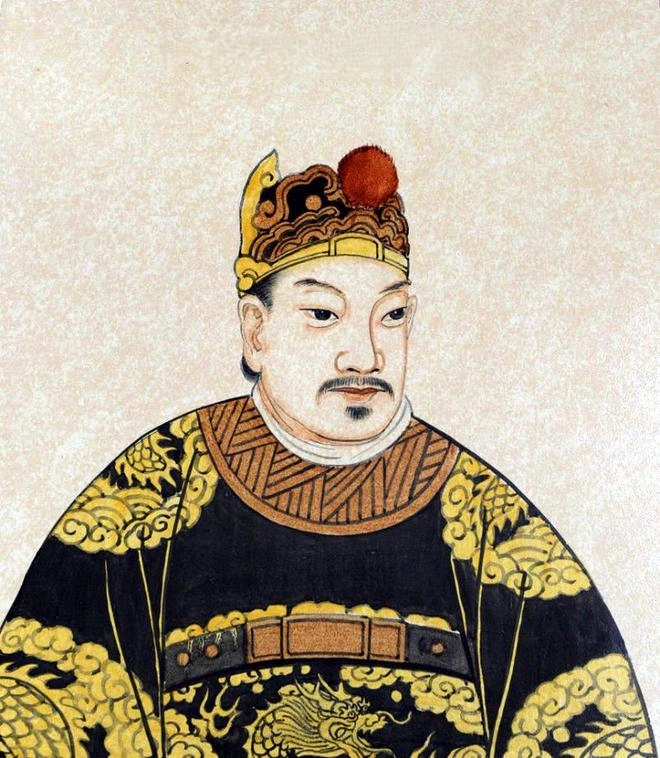
In the eleventh month of 125, nineteen men of the palace service killed three officials in one night and carried an eleven year old prince from under the West Bell of the Hall of Established Virtue to the throne. He had been that same palace's discarded crown prince, removed a year earlier at the insistence of an empress who had no son of her own. His reign lasted nineteen years, and it began, as it almost ended, with the question of who in the inner palace was entitled to choose the heir.
He is remembered as a mild and credulous ruler who let the eunuchs take titles and the consort clan take the government, and there is truth in the charge. Yet the record of his nineteen years is not a blank. He revoked his own deposition, restored his mother's name, sent men of plain ability to examine the provinces, built instruments to record the shaking of the earth, and buried a general-in-chief of the Liang house with honors while that house quietly prepared to succeed him. The dynasty did not fall under Liu Bao. It was handed over, in good order, to a family that would spend it.
1. The Son of a Palace Woman
Liu Bao was born in 115, the first son of the emperor An, and his mother was a palace woman of the Li family, not the empress. The empress Yan had borne no child and was, in the judgment of a later historian, a woman of beauty and talent who guarded the emperor's favor with jealousy. The record does not say when the Lady Li died. It says only that she was done away with at the empress's instigation, and that the boy was left without a mother in a palace that had already shown what it did with inconvenient women.
He was raised by a wet nurse named Song E, a woman of serving origin whom the dowager Deng had chosen for him. It is worth pausing on the arrangement, because it repeats a pattern that would run through the whole of the second century. A prince without a mother was given a substitute mother from the service quarters, and that substitute mother, once the prince was grown, acquired a standing of her own. Song E would be known in time as the emperor's nurse mother, and she would be granted a fief.
In 120 the dowager Deng had the boy, then five or six, established as crown prince. The record dates the appointment to the fourth month of the Yongning era. This was the high point of the boy's fortunes, and it lasted a little over four years.
What destroyed it was the same machinery that had destroyed his mother. Around the emperor An stood a circle of nurses and eunuchs, of whom the most dangerous were his own nurse Wang Sheng, the eunuch Jiang Jing, and the eunuch Fan Feng. In the third year of the Yanguang era, 124, the crown prince was deposed and made king of Jiyin, at the instance of the empress Yan and the eunuchs who stood closest to his father's throne. What he learned from it was the lesson he carried into his own reign: that the name of heir could be taken back.
The court was asked to consider removing him. It did not approve quietly. The chamberlain for ceremonies Huan Yan, the imperial coachman Lai Li, and the commandant of justice Zhang Hao all argued against deposition. Lai Li was the most stubborn, and he paid for it with his office. He then gathered eleven officials and led commoners and clerks to memorialize the throne in the boy's defense. The emperor would not be moved.
In the ninth month of 124 the crown prince was demoted to Prince of Jiyin. He was a child, not yet ten, and the lesson of his childhood was now complete. He had learned that the title of heir, which everyone at court had treated as the one thing that could not be touched, was in fact a piece of paper that three or four people in the inner palace could withdraw. He had also learned that when it was withdrawn, officials of the outer court would protest, and their protests would be overruled. Both lessons would shape his reign.
2. The Night at the West Bell
In the third month of 125 the emperor An died. The empress Yan and her brother the general of chariots and cavalry Yan Xian, together with the eunuch Jiang Jing, set up a cousin of the dead emperor, the Marquis of Beixiang, and did not announce the death. The young emperor Liu Yi ruled for a little over two hundred days and then died himself. Yan Xian and Jiang Jing again kept the death secret, closed the palace gates, stationed troops, and began looking among the sons of kings for a replacement. The deposed prince, being deposed, was not summoned even to weep over his father's coffin. He was held in the palace and, by the record's account, wailed and refused food, and the officials who saw him were moved.
On the night of the eleventh month, the nineteen men of the inner yellow gate led by Sun Cheng fell on Jiang Jing, Liu An, and Chen Da and killed them. Then they went to the West Bell beneath the Hall of Established Virtue and brought out Liu Bao. He was eleven years old, by the record's count. The household officials followed the carriage to the southern palace, the throne was climbed, and the hundred officials were summoned to audience. That night there was an earthquake in the capital and sixteen commanderies.
The details of the counterstroke belong to the empress's party, and the record preserves them because they mattered. Yan Xian's younger brother Yan Jing, the commandant of the guards, was cut down in the street by a young secretary named Guo Zhen, who had been carried out on a sickbed to lead the palace guards at the southern gate of the halt; Yan Jing struck at him and missed, and Guo Zhen ran him through where he fell from his carriage. The remaining brothers were seized, the empress was made to yield the imperial seal, and on the following days the gates were opened and the troops dismissed. An edict to the colonel director of the retainers limited the punishment to Yan Xian and Jiang Jing and their close kin, and directed that everyone else be pardoned. The emperor then visited the shrine of Gaozu and the shrine of Guangwu.
The new government was put together in the first weeks. The Grand Tutor Feng Shi, the Grand Commandant Liu Xi, and the Excellency over the Masses Li He were all dismissed, the first two for having attached themselves to the powerful house, the third because the epidemic was blamed on his administration. In the second month the chamberlain for ceremonies Huan Yan, the man who had argued against the deposition of 124, was made Grand Tutor; the grand herald Zhu Chong was made Grand Commandant and associated in the conduct of the secretariat; and the prefect of the palace of perpetual joy Zhu Chang was made Excellency over the Masses. In the seventh month the imperial coachman Lai Li, the other defender of the deposed heir, was made General of Chariots and Cavalry. In the tenth month the commandant of justice Zhang Hao, the third of them, was made Excellency of Works. The three officials who had been overruled in 124 were now the three highest men in the empire, and the emperor had chosen them himself.
In the ninth month of the same year the court ordered that the three excellencies and the secretariat should enter and present business together, a small change in procedure with a large meaning, since it brought the heads of the departments back into the room where decisions were announced. In the tenth month the troops of the camp at Liyang were sent to garrison the northern border of Zhongshan, and five colonels of crossbowmen from the commanderies were ordered to train five men each in shooting from the saddle, and the year's land tax was reduced by half. The court was doing the work of a dynasty that expected to be attacked from the north and could not afford it.
The settlement that followed is the part of this night that has consequences. The deposed title was revoked: on a guimao day of the twelfth month the secretariat memorialized to recover and annul the edict of the ninth month of Yanguang three, the edict that had made the heir a Prince of Jiyin, and the young emperor approved. On paper, the deposition had never happened. The late Marquis of Beixiang, who had reigned for two hundred days, was buried with the rites of a king rather than an emperor, which meant that the throne had not passed through him at all. And nineteen palace attendants were made marquises on a single day.
Sun Cheng received the marquisate of Fuyang with a household register of ten thousand, the largest grant among them, and the scale of the others ran down to a thousand households for the least. These figures are the record's, and they are best read as the size of the claim rather than a surveyed number. What mattered was the principle. From this day, the men who served inside the palace could be raised to the nobility for political service, in the same month and by the same act. The precedent would be cited, and extended, for the rest of the dynasty.
The empress Yan was moved out of the main palace to a separate establishment. A gentleman consultant named Chen Chan proposed that she be transferred to another lodging and cut off from audiences altogether, and the officials generally approved. The assistant to the excellency over the masses, Zhou Ju, thought this was a mistake. He reminded his superior Li He of Shun, who was raised in the house of the blind man Gusou and did not turn on his family, of Duke Zhuang of Zheng, who tunneled to meet his mother, and of the man of Ying who had been pressed by the First Emperor to carry his mother into the city and had made the king a laughingstock for refusing. The emperor accepted the argument, and in the first month of 126 he paid a visit to the empress dowager at the eastern palace. She died that month. She was buried in the second month with the title of empress Ansi, in the tomb mound of Gongling beside the emperor An.
His own mother was dealt with in the sixth month of 127. The Lady Li, who had been killed at the empress Yan's instigation, was posthumously named empress Gongmin and buried at Gongbeiling, the mound north of the emperor An's tomb. The act cost the treasury nothing and the court nothing, and it settled the one account of his childhood that could still be settled.
One further act of the first weeks is easy to pass over. In the twelfth month of 125 there was a great epidemic in the capital, and the new emperor ordered the excellencies, the commandery governors, and the heads of principalities to recommend one man each who was worthy and upright and able to speak frankly to the point of offense. In the first month of 126 he issued a general amnesty whose text looked back on the death of his father in the prime of life and on the villains who had crept in between, and declared a new beginning. The purge, in other words, was bounded, and the court was invited to tell him uncomfortable things. He would receive a great many uncomfortable things over nineteen years, and he would agree with most of them.
3. Marquises of the Inner Palace
The first serious test of the new order came from a direction no one at court had quite planned for: the emperor's own nurse mother. In 127 Song E was enfeoffed as Lady of Shanyang, with a revenue of five thousand households, and she began to take part in appointments. The director of the secretariat Zuo Xiong memorialized twice against her, on the ground that the women of the inner palace should have no revenue base of their own and no part in choosing officials. The fief stood.
The nineteen marquises began to behave as the nobility, and the first test of them was not a case of ambition but a case of justice. In 126 the colonel director of the retainers Yu Xu was pursuing the regular attendant Zhang Fang for taking bribes, and his memorials were held back from the throne; Yu Xu had himself bound and marched to the commandant of justice, and Zhang Fang wept his own defense before the emperor, and Yu Xu was sent to labor at the Left Colleger. Sun Cheng, Zhang Xian, Meng Shu, and Ma Guo went up to the hall with their memorials inside their robes and shouted at Zhang Fang to come down from it, and told the emperor to arrest him before he could beg the nurse mother for help. The emperor asked the secretariat, and a secretary who was friendly with Zhang Fang made Yu Xu's charge stick. The emperor wavered and told the marquises to step out while he thought. What settled it was not the throne but the street: a hundred or so students of the Imperial Academy marched with banners to the palace attendant Gao Fan and knocked their heads on the floor until they bled, and Gao Fan took their case to the emperor, and the emperor came to his senses. Zhang Fang was sent to the frontier, six of his party were killed or dismissed, Yu Xu was released the same day and made a councilor and then promoted to assistant director of the secretariat. The emperor had done the right thing under pressure from two directions at once.
Then he turned on the men who had forced him. The marquises had gone up to the hall shouting, and an official accused them of creating disorder and of being Sun Cheng's faction, and the emperor stripped Sun Cheng of his office and sent all nineteen of them out to their fiefs, moving Sun Cheng's own marquisate from Fuyang to Yicheng. Sun Cheng sealed up his seals and credentials, sent them back, and fled into the hills near the capital. An edict went after him, restored his title and his lands, gave him carriages and clothing, and sent him back to Yicheng. Zhou Ju, the man who had argued for the empress Yan's right to an audience, pressed his superior Zhu Chang, who was now Excellency over the Masses and over eighty, to memorialize for the marquises on the ground that a sovereign who forgets the men who gave him his throne will be laughed at for killing his benefactors. Zhu Chang did so, and the transfer to Yicheng was the result. In 128 the emperor recalled the whole group, made Sun Cheng, Wang Dao, and Li Yuan cavalry commandants, and gave the rest the right to attend court. In 132, on his sickbed, Sun Cheng was made master of the carriage for the palace with the rank of special advance, and when he died the court sent a gentleman of the palace to confer on him posthumously the seal of general of chariots and cavalry and the posthumous title of Gang. His brother Sun Mei inherited Yicheng, and his adopted son Sun Shou was made Marquis of Fuyang on half the original revenue.
The sequence reads like a man learning to hold a leash and then growing tired of holding it.
The deeper change was legal. In the second month of 135, for the first time, the court allowed eunuchs to adopt sons as their heirs and to pass their noble titles down to them in perpetuity. The measure was not aimed at anyone in particular. It made the marquisates of the inner palace hereditary, which meant that the families created in one night of 125 could no longer be dissolved by the death of the man who had earned them. A eunuch could now found a house.
The other thread ran the same way. In 137 the eunuch Li Gang and eight others, together with the Lady of Shanyang, were found to have been trading bribes for high office and additional fiefs, and to have falsely accused the palace attendants Cao Teng and Meng Ben. All of them were sent out to their fiefs with their revenues cut by a quarter, and Song E was stripped of her title and returned to her village. In 133, before any of this, the examination answer of a young official named Li Gu had asked the throne to stop granting territory to his nurse mother, to send the colonel of the infantry Liang Ji and the other attendants back to the yellow gates, to dismiss the eunuchs from their positions of power and to cut the regular attendants to two and the junior yellow gates to five, and to choose the secretariat with care. The emperor was reported to have approved much of it. He sent Song E back to her own house, and the regular attendants knocked their heads on the floor and begged forgiveness, and for a moment the court was said to be in order.
That moment did not last, and the record is candid about why. A nurse mother and a group of eunuchs fabricated a secret memorial accusing Li Gu of crimes, and the case was handled inside the palace without going through the secretariat at all. The director of agriculture Huang Shang appealed to Liang Shang, and the assistant director Huang Qiong helped clear the matter, but Li Gu was kept waiting a long while before he was appointed councilor. He then went out as magistrate of Luo in Guanghan, and on reaching the Baishui pass he took off his seal of office, returned to Hanzhong, and shut his door to all company. Within the year Liang Shang asked him to serve as a senior retainer in his own household.
So the first act of eunuch politics under Liu Bao closes with the verdict: he was not a ruler who failed to act. He acted, he approved the right memorials, he removed the right nurse mother, and then the machinery closed again, because the memorials that frightened the palace were routed around the institution that could have enforced them. The marquisates remained. The hereditary titles were about to be written into law. The bill for all of it would be presented, with interest, to a family named Liang.
There is a detail here that shows how the money worked. The nurse of an emperor had become, under An, a channel through which offices were sold, and the woman who held that position under Shun was doing the same; Zuo Xiong's objection was not to a woman but to a standing. The emperor kept the fief. When Song E was finally disgraced in 137 she was sent out with a quarter of her revenue cut off and then stripped of the title altogether, which is the record's way of saying that a title granted in good humor could be taken back in bad. The precedent mattered more than the woman. The inner palace had been given a revenue base, and the precedent would be repeated until the end of the dynasty.
4. An Age of Portents
No reign of the Later Han is fuller of signs from heaven and earth than this one, and none shows more plainly what a dynasty did with them. In the twelfth month of 125 the capital suffered an epidemic. In the first month of 128 the capital shook and the ground in Hanyang split open, and relief was issued. In the fourth month of 133 the capital shook again, and in the fifth month the throne issued an edict ordering the excellencies and the ministers to speak their minds fully on the cause of the trouble, with nothing held back. The occasion was a fissure at the Xuande pavilion that ran, by the record's measure, eighty-five zhang. In the sixth month of the same year the ground under Luoyang itself sank. In the tenth month of 136 the Chengfu hall caught fire and the emperor removed himself to the Cloud Terrace. In the second month of 138 the capital and the commanderies of Jincheng and Longxi shook, and mountain banks collapsed into the ground, and relief loans were ordered.
The theory behind all this was old and serious: the sovereign moved heaven, and heaven answered with signs, and the signs were a summons to examine his conduct and his appointments. The emperor answered the summons, and the shape of his answer is the most interesting fact about him. He answered with examinations, with ritual, and with instruments.
The examination system reform of the eleventh month of 132, known to later historians as the new regulations of Yangjia, was the work of Zuo Xiong. It set an age floor of forty for the candidates the commanderies and principalities recommended as the filial and incorrupt, required the classical students to have mastered the commentaries and the clerks to be able to draft a competent memorial, and added a further gate at the Gate of the Upright, where those who passed the written test were re-examined in the capital. The genuinely exceptional were not bound by the age rule, and the edict said so by name, invoking Yan Hui and Zi Qi. A further provision in the intercalary month allowed those who had entered the secretariat by special appointment at forty or over to be tested on the filial and incorrupt curriculum, one man per year, and so to compete for office on equal terms. And in the same month the selection of provincial inspectors and of officials of two thousand shi salary was assigned to the three excellencies, to be ranked in order and examined for quality.
The measure was opposed by the assistant directors Hu Guang, Guo Qian, and Shi Chang, and the emperor did not accept their objections. Hu Guang's counterargument was the one that would be made against every entrance examination: a fixed age excluded men of early talent, and a written test measured the hand and not the man. The emperor preferred the test.
The same year, 132, saw the completion of the new Imperial Academy, the re-testing of candidates who had failed the classics examinations as students, an increase of ten places in each of the two grades, and the appointment of ninety elderly Confucians of the commanderies and principalities as gentlemen of the palace. In the tenth month of 133 the court performed the rites at the Circular Moat, struck the note of the Yingzhong mode, and for the first time restored the Yellow Bell, rebuilding the instruments to follow the monthly pitch sequence; the music had been out of tune since the Yuanhe era, and this was a claim about more than music. In 129, the year he came of age at fifteen and capped his hairpins in the first month, he ordered the people to be allowed to quarry stone in the hills and let out what the earth was holding, and closed the practice in the manner of the Jianwu and Yongping reigns, which is to say by reference to a remote and half-legendary standard of good government. He also restored the commanderies of Anding, Beidi, and Shang to their old territory in the ninth month of that year, eighteen years after the court had moved them inward, and split Kuaiji in two to make the commandery of Wu. In 131 he reopened the military colony at Yiwu and restored the single post of commandant there, and repaired the Imperial Academy.
And in the seventh month of 132, in the middle of this, the astronomer made his instrument.
Zhang Heng had been made Grand Astronomer again at the beginning of the reign, and in the seventh month of 132 he had a bronze device cast with a dragon's head and a toad's mouth, the wind-selecting seismograph. The mechanism was such that in the event of a quake a dragon would drop its ball into the mouth of a toad, and the direction of the fall indicated the direction of the shock. On one occasion the mechanism triggered while nothing was felt in the city, and the officials of the capital took it for a failure, and days later a courier arrived with news of an earthquake in Longxi, and thereafter the record of the direction of shocks was kept by the grand historian's office. He died in 139, at sixty-two by the record's count, having spent his last years in a court that did not know what to do with him.
Zhang Heng's own view of the reign was darker than the court's. His memorial on the conduct of government argued that the workings of power were slipping downward, that the danger was not in the provinces but in the capital, and that the instrument in the hall was the least of it. The emperor read him and did not act on him.
This is the shape of the whole reign. A ground fissure of eighty-five zhang produced a demand for frank speech and an examination reform. A burned hall produced an evacuation. A broken musical scale produced a return to the correct pitch. Nowhere did a sign produce a change in who held power. The court answered the sky with the things it knew how to do.
The ritual responses followed the same logic. When the Mao tomb of Emperor Wu burned in the seventh month of 128, the emperor put on undyed mourning and avoided the main hall, which is what a son does for a parent and what a dynasty does when the ancestral grounds are touched. When the epidemic came in 125 he asked for men who could speak frankly. When the earth split in Hanyang in 128 he ordered relief. When the capital shook in 133 he ordered the excellencies to name the fault without reserve. Each response was correct in itself and none of them touched the source of the trouble, which was that the men who were named in the memorials were the men who controlled access to the throne.
It is worth noticing what the emperor did not do with his signs. He did not dismiss a single excellency over a comet. The dismissals of the reign, Feng Shi and Liu Xi in the first month of 126, Li He in the same month, Wang Gong in the ninth month of 140, Huan Yan and Liu Shou in the tenth month of 142, all followed political logic rather than cosmological logic. A dynasty that took its own cosmology seriously would have used the signs as a machine for changing ministers. This one used them as a machine for producing documents.
5. The House of Liang
The consort clan that would replace the eunuchs entered the palace through a marriage.
Liang Shang came of a family that had been ennobled for generations, and in 126 he succeeded to his father's marquisate of Chengshi. In the third year of Yongjian, 128, his daughter and his younger sister entered the emperor's women's quarters together. In the first month of 132 the daughter, Liang Na, was made empress. In 133 the emperor offered Liang Shang's son Liang Ji the marquisate of Xiangyi, and Liang Shang firmly declined it on his behalf, and the emperor did not press the point, which was taken at the time as a mark of modesty and is recorded as the first of the small refusals that built his reputation. In the fourth month of 135 he was made General-in-Chief, an appointment the emperor had attempted the year before and which Liang Shang had evaded by pleading illness until the emperor sent the chamberlain for ceremonies Huan Yan to his house with the patent of office. Only then did he come to court to accept.
He was, on the evidence of the time, a genuinely careful man. He called in men of a different temper from his own. He summoned Li Gu, the official who had already annoyed the palace once, and Zhou Ju, who had defended the empress Yan's right to an audience, and made them senior retainers in his household, and he is said to have treated their advice with real respect. The capital called him a worthy support of the altars of soil and grain. A contemporary sketch in the Dongguan record describes him as quick and perceptive by nature, plain in his ways, careless of display, grave in court and formidable without being harsh, and at home in his own residence mild and courteous; it adds that he cared nothing for goods and built no hoard. This is the portrait of a man doing the hardest thing available to a consort relative under this dynasty, which is to be conspicuously unthreatening.
He also understood the frontier. When the Qiang war began in 140 it was Liang Shang who asked that the aged commander Ma Xian be replaced, and who was overruled, and it was Liang Shang's restraint that kept his own family from filling the posts it could have taken.
In 133, while Li Gu was serving in his household, he wrote Liang Shang a memorandum on the conduct of his position. It asked him to begin by correcting the manners of the court, to retire from fullness and give up what was more than enough, and it cited the Spring and Autumn Annals, which honors the man who comes forward with a title and disgraces the man who comes without one. It noted that an eclipse had been total at the side of the Gate of the Upright, and it asked whether a man in his position could be counted in the same day as the ordinary run of consort relatives who covet honor and place. Liang Shang could not bring himself to act on it. The memorandum is the best evidence for both sides of his reputation at once: he was the kind of man who kept a retainer capable of writing it, and he was the kind of man who did not do what it said.
The counter-example came quickly. In the first month of 139 the palace attendants Zhang Kui, Qu Zheng, and Yang Ding, unable to move against the emperor's favor for Cao Teng and Meng Ben, accused Liang Shang of plotting with those two eunuchs to depose the emperor. The emperor did not believe it. The conspirators then forged an edict ordering the arrest of Cao Teng and Meng Ben, and the emperor, enraged, had them seized and executed; the case dragged in the grand warden of Hongnong Zhang Feng and the chancellor of Anping Yang Hao, who both died in prison. The accusation is worth noticing less for what it says about Liang Shang than for what it says about the court: the only way to get at the General-in-Chief was to route a forged document through the palace, and the fact that the emperor disbelieved the charge did not stop the executions that followed it.
Liang Shang died in the eighth month of 141, on a bingchen day, in the sixth year of the Yonghe era. His last instructions asked for a plain burial: he had no merit to speak of, he said, and had enjoyed many blessings, and he would not have the state spend its treasure on a corpse. The sons wished to follow him, and the court would not allow it. The emperor granted the secret vessels of the eastern garden, the silver chasing, the yellow entrails, and the jade casket, with the accompanying objects, twenty-eight pieces in all, two million cash and three thousand bolts of cloth, and the empress added five million cash and ten thousand bolts from her own funds. The emperor escorted the cortege to the Xuanyang pavilion and stood watching it go, and the court granted him the posthumous title of loyalty.
His son Liang Ji succeeded him as General-in-Chief within the month, and Liang Ji's brother Liang Buyi was made Governor of the Capital at Henan. Liang Ji had been a colonel of the infantry in 133 when Li Gu's examination answer had asked for him to be sent back to the yellow gates, and he had been named in the eighth month of 142, by the commissioner Zhang Gang, in an impeachment of fifteen counts. He was now the most powerful man in the empire, at an age when his father had still been pleading illness to avoid the office.
It is customary to say that Liang Shang was a good man and his son was a disaster, and that the father prepared the way for the son. The later historian Fan Ye put it more sharply than that. He granted that in the reign of Shun, Liang Shang was called a worthy support, and asked whether this was not simply because his position was full to overflowing and he had the sense to be cautious to the end. He then went on: Liang Shang hated the good and the weak, and Liang Ji followed him into greed and disorder. The judgment is severe, and it is worth holding both readings at once, because the dynasty would.
What is not in dispute is the structure. An emperor who distrusted consort power, who had watched a family called Yan put a child on the throne and be destroyed for it in a single week, had nonetheless allowed one consort house to hold the office of General-in-Chief for six years, to place its daughters in the palace, to be defended by him against a forged impeachment, and to hand the office down from father to son as though it were an inheritance. The Yan had tried to take the throne and had been killed. The Liang were handed it.
6. The Qiang and the Frontier
The frontier record of the reign begins mildly. In the second month of 126 the Zhong Qiang of Longxi revolted and were broken by the protector general Ma Xian. In the seventh month of 134 they raided Longxi and Hanyang, and in the tenth month Ma Xu broke them again. In the fourth month of 139 Ma Xian broke the Shendang Qiang in a great engagement. Then the pattern changes.
In the tenth month of 138 the Shendang Qiang raided Jincheng, and Ma Xian defeated them, but the record adds the sentence that matters: the Qiang began to summon one another and to revolt. In the summer of 140 the Qiedong and Funan groups of Qiang rose, attacked Jincheng, joined with the mixed Qiang and Hu of the western marches and the Huangzhong, and raided the three capital commanderies, killing their magistrates and their chiefs. Ma Xian was appointed General Who Conquers the West and put in command of the imperial guard of the left and right, the five colonels' troops, and the levies of the provinces, a hundred thousand men by the record's reckoning, and stationed them at Hanyang. The court ordered three hundred fortified towers built along the road from Fufeng through Hanyang to Long. The Qiedong sent their people to raid Wudu, burned the Long Pass, and carried off the imperial horses.
Ma Xian was old. Liang Shang asked to replace him with Song Han, and was refused. The Grand Administrator of Wudu, Ma Rong, and the Anding man Huangfu Gui both memorialized that Ma Xian would be defeated, and were refused. In the ninth month the Qiang raided Wudu and burned the Long Pass again, and the towers were ordered. In the tenth month the court gave up on the frontier altogether and moved three commanderies inside: Xihe was relocated to Lishi, Shang to Xiayang, and Shuofang to Wuyuan. These were places the dynasty had spent a century trying to hold.
In the first month of 141, on a bingzi day, Ma Xian met the Qiang at Mount Shegu and his army was destroyed. He and two of his sons died in the field. The Grand Administrator of Anding, Guo Huang, was impeached and died in prison. In the second month a comet stood in the house of Ying. In the intercalary month the Gongtang Qiang raided Longxi and reached the three capital commanderies, and the eastern and western Qiang joined into one mass. The Grand Administrator of Wudu Zhao Chong broke them in the third month; Zhang Dan broke the Wuhuan and Qiang and Hu at Mount Tian in the fifth month; and in the seventh month the court issued an order borrowing a thousand cash from every well-to-do household, which is what a dynasty does when it has run out of money and does not wish to say so.
In the ninth month the various Qiang groups raided Wuwei. In the tenth month Anding was relocated to Fufeng and Beidi to Fengyi, and in the eleventh month the commandant of the guards Zhang Qiao took acting charge of the general of chariots and cavalry and garrisoned troops in the three capital commanderies. The history of the Western Qiang closes its account of the Yonghe war with a single figure: from the revolt of Yonghe to that year, in a little over ten years, the cost was more than eight billion cash. The figure is the record's reckoning and not an audit, but the direction of the sentence is unmistakable. The frontier was eating the dynasty.
The Xiongnu frontier ran on the same rails. In the fourth month of 140 the senior chiefs Wusi and Cheniu of the left wing of the southern court revolted and besieged Meiji. Ma Xu defeated them in the fifth month, and the commissioner for the Xiongnu, Chen Gui, drove the southern shanyu to his death, an act the record reports in two characters and does not defend. Wusi then drew the Wuhuan in from the east and gathered the Qiang and Hu from the west and set Cheniu up as shanyu; in the eleventh month Zhang Dan broke them and Cheniu submitted. In the eighth month of 142 Wusi rose again with the Yujian leader Taiqi. The northern frontier was never at peace for a whole year of this reign: the Xianbei raided Dai in the eighth month of 126 and killed the governor Li Chao, raided Liaodong and Xuantu in the second month of 127 and were broken by the protector general Geng Ye with the southern shanyu's men, raided Yuyang in the ninth month of 128, raided Liaodong again in the ninth month of 132, and were broken in the third month of 133 by Wang Chou. In the sixth month of 127 the chief clerk of the Western Regions Ban Yong and the governor of Dunhuang Zhang Lang broke Karashahr, Yuli, and Weixu, which was the last serious Han forward move in the Western Regions in this reign. In 131 the colony at Yiwu was reopened.
What the frontier war produced, in the end, was a generation of men who knew how to fight it. Huangfu Gui, whose memorial on Ma Xian was ignored in 140, was still alive and would be heard from. The war also produced the great relocation: the abandonment of the line of commanderies along the bend of the Yellow River, the pulling back of whole populations whose numbers the record does not give, and a permanent shift of the dynasty's military weight to the northwest, where the men who would later be called the three luminaries of Liangzhou learned their trade. The cost of that shift was paid, in the first instance, by the treasury of Yonghe.
The relocations deserve a word on their own. The commandery of Xihe had been moved to Lishi in the tenth month of 140, and Anding and Beidi followed in the tenth month of 141, and in each case the record gives only the fact and the destination. No number of people moved is given, and none should be invented. What can be said is what the geography says: the dynasty gave up the line of the Yellow River's great bend, the buffer that had stood between the Ordos and the Wei valley for two hundred years, and pulled its administration back to the south of the river and to the east of it. The fortified towers, three hundred of them between Fufeng, Hanyang, and Long, tell the same story from the other side. A state that has decided to hold a line builds towers; a state that has decided to abandon a region moves its county seats. The Yonghe war would not be finished in this reign or the next; it would be finished by men who learned their trade on this frontier, and by a treasury that was already empty.
7. The Commissioners and the Censor
The interior was not quiet either. In the second month of 132 the pirate Zeng Jing raided Kuaiji, killed the chiefs of three counties, and attacked the eastern commandant. In the third month of the same year the bandit Zhang He and his confederates ravaged six commanderies of Yang province and struck forty-nine counties, killing local officials. In the third month of 134 bandits in Yi province seized magistrates and commandery chiefs by force and killed a marquis. In the fourth month of 138 Cai Boliu raided the borders of Jiujiang and Guangling and killed the chief of Jiangdu, and in the intercalary month he brought his band and surrendered to the inspector of Xu, Ying Zhi. In the fifth month of the same year the assistant of Wu, Yang Zhen, revolted, and the governor Wang Heng broke him and cut off his head. In the sixth month of 138 the southern periphery was finally settled, when the governor of Jiuzhen Zhu Liang and the inspector of Jiaozhi Zhang Qiao soothed and lured the rebel Man of Rinan into surrender; the strategy behind that settlement was Li Gu's, and it was to abandon Rinan, move the officials and people to Jiaozhi, and set the Man tribes to attack one another.
The court's answer to this interior disorder was, at first, the old one: send an official and let him be severe or be kind. The interesting answer came from a man named Li Gu.
As inspector of Jing, Li Gu was faced with more than six hundred armed men at Xiami who came in and bound their own hands and asked to give themselves up. He pardoned them all. As Grand Administrator of Taishan, a province that had been full of bandits for years, he dismissed the commandery troops and kept a little over a hundred men as guards, on the ground that the presence of a large armed force was itself part of the problem. Within less than a year the bandits had dispersed. In the eighth month of 142, when eight commissioners were sent out to the provinces, it was Li Gu whom Du Qiao reported to be governed better than any other official in the empire.
The eight commissioners were sent out on a dingmao day of the eighth month of 142: the palace attendant Du Qiao, the gentleman consultant Zhou Ju, and the acting gentleman consultants Guo Zun, Feng Xian, Luan Ba, Zhang Gang, Zhou Xu, and Liu Ban. They were to tour the commanderies and principalities, publish the transforming influence of the court, and report the actual conduct of the officials, good and bad. Du Qiao, who toured Yan, reported Li Gu first of all, and impeached the Grand Administrator of Chenliang Liang Rang, who was Liang Ji's uncle, the Grand Administrator of Jiyin Fan Gong, and the chancellor of Jibei Cui Yuan for illicit gains of more than ten million cash.
One of the eight was Zhou Ju, the man who sixteen years earlier had persuaded his superior to argue for the empress Yan's right to an audience. The circle is worth noticing. The officials who now went out to examine the provinces were the same men who, in the first months of the reign, had argued for a limited settlement and against revenge. They had been right about that, and they were right again, and the court's answer to them was the same in both cases: agreement, followed by inaction.
Zhang Gang did something else. He was the son of the late Excellency Zhang Hao, a man of Wuyang in Qianwei commandery, and he was in the middle of his forties that year. At the Du ting in the capital he had his carriage wheel buried in the ground, and said that when jackals and wolves held the road there was no use asking after foxes. Then he memorialized. He impeached the General-in-Chief Liang Ji and the Governor of the Capital Liang Buyi on fifteen counts. He impeached the Grand Commandant Huan Yan and the Excellency over the Masses Liu Shou. He had the colonel director of the retainers Zhao Jun and the governor of Runan Liang Gan sent to the commandant of justice in cage carts. The chancellor of Lu, Kou Yi, killed himself rather than face the case. The capital was shaken.
The emperor knew the memorial was true and could not bear to act on it, because Liang Ji was at the height of his power. Zhang Gang was sent out to be governor of Guangling, which was both a punishment and, as it turned out, the most useful thing that happened to him.
The case of Guangling was the largest internal problem left in the empire. Zhang Ying and his band, several myriad strong, had been raiding between Yang and Xu for more than ten years, killing inspectors and officials of two thousand shi. Zhang Gang asked for a single carriage, went out with a dozen or so soldiers, and drove straight into Zhang Ying's stockade. He had Zhang Ying seated in the place of honor and asked him what his grievances were, and explained the situation to him plainly, that the governors who had come before him had been cruel and grasping, and that the sovereign now on the throne was humane and wished to win the rebels over by civil virtue rather than by arms. Zhang Ying was moved. The next day he came with more than ten thousand of his people, and their wives and children, their faces bound for execution, and surrendered. Zhang Gang drove his single carriage into the stockade, dismissed the crowd, and the south was at peace. The emperor wanted to promote him, and Zhang Ying and the others memorialized to keep him, and the emperor allowed it.
Zhang Gang died in the next year, 143, at the age of forty-six. The old and young of Guangling came to the yamen to mourn him, and Zhang Ying and more than five hundred of his followers came in mourning dress and carried earth on their backs to raise his mound. The emperor's edict said that Zhang Gang had brought in ten thousand of the worst bandits, ended the business of arms, and relieved the distress of the people, and had not lived to receive high rank. His son Zhang Xu was made a gentleman of the palace and given a million cash.
Li Gu, promoted to Chamberlain for the Palace Buildings on Du Qiao's recommendation, used the moment. He recommended Huang Qiong, Zhou Ju, Yang Lun, Yin Cun, Wang Yun, He Lin, and Fang Zhi of Qinghe, and the edict went out that same day summoning them, and Li Gu was made Chamberlain for the National Treasury. With the commandant of justice Wu Xiong he memorialized that the officials impeached by the eight commissioners should be punished promptly, and that appointments should go back through the proper offices; a previous edict had directed that the relatives of eunuchs not be examined, and that selections for the three offices and the tests for gentlemen of the palace be made by special appointment without further examination. The emperor was moved by this. He dismissed the inspectors and officials of two thousand shi whom the commissioners had impeached, special appointments became rare again, and the three excellencies were told in hard terms to examine candidates properly. With the superintendent of the palace guard Liu Xuan he memorialized that the appointments of governors and inspectors were largely going to the wrong men, and that the emperor should stop his wandering excursions and give his mind to the work of government. The emperor accepted this too, and ordered the provinces to impeach their own officials.
For a few years, then, the empire was held together by a small number of men who were willing to write things down: Li Gu in Taishan and then in the capital, Du Qiao on his circuit, Zhang Gang with his buried wheel, Zhou Ju in the south. That is not a system. It is a run of luck.
8. The Handover
The emperor had no son. The record names no son but one, and that son was two years old by the record's count.
The Lady Yu had come into the palace as a woman of good family. In the third year of Yonghe, 138, her daughter Liu Sheng was made Princess of Wuyang. In the sixth year of Yonghe, 141, a second daughter, Liu Guang, was made Elder Princess of Ruyang, and her mother is not named. She bore the emperor a son, and he never gave her a title. The history of the empresses records this plainly and explains it by the sequence that followed: the emperor died before he could ennoble her, the young emperor died within the year, Liang Ji held the government and was wary of the families of other consorts, and so the mother of an emperor was known to her household simply as the elder lady. It was not until the fourth year of Xiping, in 175, under the emperor Ling, that she was posthumously made noble lady of the Xianling tomb. The point is worth a paragraph because it is the reign in miniature: a woman who had done the one thing the dynasty asked of a consort was left with nothing, because the machinery of titles was controlled by someone else.
On a xinsi day of the fourth month of 144 the boy was made heir, the era name was changed to Jiankang, and a general amnesty was issued. He was two years old. The emperor had four months to live.
In the third month of that year the frontier had sent its last news of the reign. Ma Xuan, an attendant for the protection of the Qiang, was lured out beyond the marches; the acting protector general Wei Yao pursued and cut off more than eight hundred heads and took more than two hundred thousand head of cattle, horses, and sheep. Zhao Chong pursued the rebel Qiang to the Zhiyin river, the six hundred surrendered Hu under his command turned against him, and he rode after them with a few hundred men and died in an ambush. The history grants him that though he died, he had cut off many in the course of the war, and the Qiang were exhausted by it.
On a gengwu day of the eighth month of 144, Liu Bao died in the front hall of the Jade Hall. He was thirty. In the ninth month, on a bingwu day, he was buried at Xianling, northwest of Luoyang, and his temple was named Jingzong. That temple name was withdrawn in the first year of Chuping, 190, when the officials memorialized that the temple names of four emperors, his among them, should be done away with, and the emperor Xian approved. He is known by his posthumous title, the Filial and Compliant Emperor, and by the shorthand of his era name: Emperor Shun.
He had reigned nineteen years under five era names, Yongjian, Yangjia, Yonghe, Han'an, and Jiankang, and it is a fair measure of the reign that the two names later historians use most often are Yonghe, the year the frontier gave way, and Yangjia, the year of the examinations. He left behind an entrance examination that would shape the recruitment of officials for the rest of the dynasty, a court in which the office of General-in-Chief was the inheritance of one family, a nobility of palace attendants that could now pass its titles to adopted sons, a frontier drawn back to the south of the great bend of the Yellow River, a treasury that had borrowed a thousand cash from every rich household it could find, and an heir of two.
The heir Liu Bing was two years old. He was set on the throne in the eighth month. The empress Liang was made empress dowager and held the court; Liang Ji, as General-in-Chief, held the government. That is where this account stops, because what follows belongs to another reign.
One sentence on what came next, since it is the same machinery. In the eleventh month of 144, after the emperor's death, bandits in Jiujiang named Xu Feng and Ma Mian set themselves up as the Supreme General and as emperor and attacked and burned towns. A later edict of the year 150, recalling the last years of Yonghe, said that in those years the warp of government had slackened and the court had lost the regard of the people, that within four or five years the treasuries were empty and the households scattered and the people's hearts had turned away, that men like Ma Mian had risen on that weakness, and that between Jing and Yang it had nearly become a great calamity; and it credited the rescue to the empress dowager's quiet government and to the united effort of those inside and outside the court. The edict was written to praise a Liang. It is accurate about the Yonghe years.
There is one more thread to lay down. In the first year of Jianhe, 147, three years after Liu Bao's death, the emperor Huan, who as Marquis of Liwu had studied under Zhou Fu of Ganling, raised Zhou Fu to be a master of writing. A man of the same commandery, Fang Zhi, Governor of the Capital at Henan, was famous at court, and the people of their district made a song of the two: Fang Bo Wu sets the square for all under heaven, and Zhou Zhong Jin got his seal through his teacher. The clients of the two houses began to sneer at each other, each gathered a party, and a breach opened between the northern and southern factions of Ganling. The history of the partisan prohibitions begins here: from this, it says, the discussion of factions began.
Fang Zhi of Qinghe was one of the seven men Li Gu had recommended in 142, in the memorial that the emperor approved the same day. That is the connection worth keeping. The word party was not yet a prohibition, a proscription, or a death sentence; it was a quarrel between two clienteles in a small commandery in the first year of a new reign. But the men who would be proscribed forty years later were the men who were being examined, impeached, and praised in the reign of Liu Bao.
The historian Fan Ye, writing three centuries later, put the verdict on the whole reign in two sentences. He observed that the rulers of antiquity who had been banished and then restored to their thrones had all examined their predecessors' faults and recognized the truth of the situation, and had never forgotten the danger they had faced outside, and had therefore been able to renew the dynasty. Looking at the government of the Shun reign, he wrote, it was not like that; how far its errors strayed. His encomium is harsher still: at the beginning of the reign the men of fashion had gathered in numbers, but the emperor neither ground nor reformed, and ended by being submerged in the ways of the favorites; his nurse took territory, the consort houses succeeded one another to the end; the heir died a child, and the next was murdered for his cleverness. It is a fair summary of nineteen years.
A fairer one might add what the record will not say in so many words. Liu Bao was eleven when he was made emperor by nineteen palace attendants, and he spent nineteen years being lied to by the people around him, and he rewarded them. He was also capable of seeing through it. He disbelieved the charge that Liang Shang was plotting to depose him. He recognized that Zhang Gang's impeachment was true. He accepted, over and over, the advice of Li Gu. What he could not do was build anything that would survive his own good temper. The marquisates were hereditary. The office of General-in-Chief was inherited. The examinations were excellent and had no power behind them. The instruments recorded the earthquakes and the earthquakes went on.