Home / Emperors / Han Dynasty
Emperor He of Han
汉和帝
Liu Zhao, 79 – 106 · fourth emperor of the Eastern Han
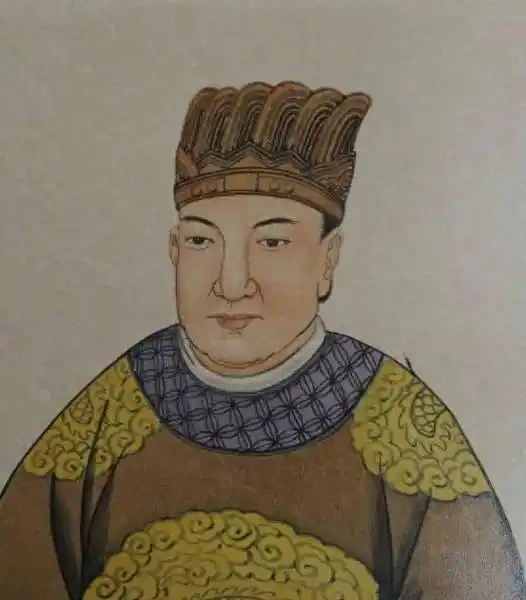
He was born to a consort who was hounded to death while he was still a small child, adopted by the empress who had destroyed her, and made crown prince at the age of four in place of an elder half-brother. He came to the throne at ten under that same empress's regency, and for four years the government of the empire belonged to her family. At fourteen he took it back, with the help of a eunuch, in a single afternoon of closed gates and arrested generals. What followed was thirteen years of personal rule that later ages would call the high point of the whole Eastern Han: the northern frontier emptied of the Xiongnu who had vexed it for a century, the Western Regions brought back under a protector-general who had gone out with thirty-six men, a court busy with relief edicts and the review of doubtful sentences, and a memorial that put a new writing material into the emperor's hands. He died at twenty-seven, in the winter of 105, and left the throne to a baby a hundred days old and the baby's guardian, who was not the boy's mother at all.
That succession is the point of his reign as much as its prosperity is. Everything that later defined the dynasty in its last century can be found in these seventeen years in miniature: a war of decision fought by an imperial affine, which won the frontier and made the affine too great to keep; a coup that destroyed one house of affines by means of the palace eunuchs, and so admitted them to power for the first time; a government that worked, quietly and well, under a young man who had been raised to be a puppet; and a death that handed the state to a dowager and an infant, opening the long sequence of child emperors and reigning empresses that the historian Fan Ye, looking back, would call the ruin of the house of Han. This is the account of how one boy got his state back, what he did with it, and what his doing of it cost those who came after.
1. The Adopted Heir
Liu Zhao was born in 79, the fourth son of Emperor Zhang, and his mother was the Liang consort, a woman of no great house whose elevation had been her misfortune. The empress of the day, of the Dou family, had borne no son. In a palace where the heir was everything, another woman's son could be made into her own if the other woman could be removed, and the Liang consort was removed: slandered until, in the words of the record, she died of grief. The empress took the boy, then a small child, and raised him as hers. The history states it plainly and without indignation, as a fact of the institution: his mother was destroyed by the empress, and the empress raised him as her own child.
The boy who had been heir before him was Liu Qing, son of the Song consort and a year older, born in 78 and made crown prince in the year after his birth; and the Dou empress destroyed his mother too, and with her his position. In 82, the seventh year of Jianchu, Emperor Zhang deposed the crown prince Liu Qing and made Liu Zhao, not yet five, the heir in his place. The details of that transaction, the witchcraft accusations and the two forced suicides, belong to the reign of his father; what matters here is what it left behind. Liu Qing was demoted to be prince of Qinghe, and the new crown prince, who had lost a mother and gained a foster one in the same movement, was drawn to the displaced boy with a constancy the record notices. They shared a room when they were indoors and a carriage when they went out, and the emperor their father, pitying the son he had set aside, ordered the empress to give him clothes equal to the heir's and had him fed at the same table. When Liu Zhao succeeded, he treated Liu Qing with a favor no other prince approached, and took him into his private counsels. It was a friendship that would one day decide the fate of the dynasty, though neither boy could have known it in the nursery.
He had been reared, in the interval, as the empress's own. The arrangement was complete to the point of fiction: the woman who had engineered the death of his mother supervised his food, his tutors and his ceremonies, and the court understood that the heir was hers. What kind of boy he was under that discipline the annals do not say, and the silence is itself informative. The histories of this reign are spare about personality; what they preserve is a temperament, caution, diligence, an unwillingness to be seen. He would need every part of that description.
In the second month of 88, after thirteen years on the throne, Emperor Zhang died at thirty-one, and the ten-year-old Liu Zhao was enthroned. The government passed at once into the hands of his adoptive mother, now empress dowager, and through her to her brothers; the empress's own mother had her income raised by three thousand households, and the machinery of a regency, the issuance of edicts in the sovereign's name, the appointment of officers, the hearing of cases, all of it moved behind the curtains of the palace. The record's term for her position is that she attended the government from the curtain and issued the decisions; the emperor's name was on everything and his hand was on nothing. In the fourth month he was carried through the ceremonies a sovereign must perform, the visitation of the founding temples, and the history preserves nothing of what he understood of them. The new emperor's family, in the year of his accession, consisted of a foster mother whose relatives he had every reason to fear, a dead birth mother whose rehabilitation he could not yet attempt, and an elder half-brother with a claim better than his own who had been kind to him since childhood. The dynasty had been at peace for a generation under two competent sovereigns, and the boy's inheritance was, on paper, the strongest state in the world. In practice he was a piece of furniture in his own palace.
2. The House of Dou
The Dou brothers did not seize the regency; it was handed to them. The dying Emperor Zhang's edict named Dou Du as colonel of the imperial guard, and Dou Jing and Dou Gui as regular palace attendants, so that at the moment of succession all four brothers already stood in the innermost offices. Dou Xian, the eldest, entered the palace as a master of writing with charge of the secrets of state and came out of it to promulgate edicts; the phrase in the record is that he managed the confidential business within and issued the commands without. Around them gathered a staff of pliant officials: the aged Deng Biao, a former defender-in-chief of the old court, was pushed forward as grand tutor with charge of the secretariat, so that the officials of the court were told to take their orders from him and lend the regency the appearance of settled government; and Huan Yu, whose family had taught the emperors for three generations, was installed to lecture the boy sovereign on the classics. Nothing, in such an arrangement, could be done against the Dou; everything could be done by them.
What they did was the ordinary violence of an unaccountable house. They built four rival mansions and exhausted the artisans of the capital on them. Their retainers robbed in the marketplace, redeemed condemned men from the law, and took women off the streets, until the merchants of Luoyang shut their doors as though a bandit army had come to town, and the responsible officials held their breath rather than report it. The minister over the masses, Yuan An, seeing the sovereign a child and the affines in power, wept when the affairs of state were discussed. Two directors of the imperial secretariat, Zhi Shou and Yue Hui, who had crossed Dou Xian, killed themselves. And the family's immunity was total, because the single person with the authority to check it was the empress dowager herself, who was the family's sister. The danger was put to them in writing more than once. Cui Yin, a man of letters in the general-in-chief's entourage, sent him a long memorandum on the way the houses that rise too fast destroy themselves; Dou Xian could not deny the truth of it and could not bear the man who had written it, and Cui Yin was sent away to a distant post and finished his career in obscurity.
There was one earlier warning, from the reign of Emperor Zhang, worth recording because it shows what the court already knew. Dou Xian had bought the garden of a princess at a fraction of its worth, and when the emperor drove past it and asked whose ground it was, Dou Xian lied. The emperor's fury was magnificent: the state would cast Dou Xian off, he said, like a fledgling or a rat carcass. The garden was returned, the family was frightened, and the lesson was absorbed by everyone: the emperor's displeasure could be survived, provided one had a sister on the throne. By 88 the sister was the regent, and the engine of the family's rise was already running.
It ran into its first real danger in the same year, over a man named Liu Chang, a marquis who had come to mourn Emperor Zhang and found favor with the empress dowager. Dou Xian, fearing a rival within the palace, had him assassinated by hired killers inside the imperial precincts, and tried to shift the blame onto the dead man's brother, sending investigators out to the provinces to work on him. The director of the secretariat Han Leng said that the murder had been done in the capital and not in the provinces; and the case was cleared up in the end by He Chang, who established the truth and laid it before the empress dowager. The truth came out. The empress dowager was enraged beyond precedent: her brother was confined inside the palace, and the assumption of everyone was that he was finished. It was at this point that Dou Xian did the one thing that could save him. He asked to be sent against the northern Xiongnu, to buy his life with a campaign. The Southern Xiongnu, whose shanyu was petitioning the court for a joint expedition, gave him the pretext. A condemned man was made general of chariots and cavalry, and the dynasty got, out of a palace murder case, the greatest war of the reign.
The war was the making of the house, and the house spent its credit accordingly. In the summer of 90, with the north nominally settled, Dou Xian went out to take station at Liangzhou on the western frontier with Die as his deputy, and the armies of the frontier became in effect his own command. He built his machine out of the men the campaign had enriched: Geng Kui and Ren Shang as his claws and teeth, Dou Die and Guo Huang as his intimates, Ban Gu and Fu Yi on the staff of his field headquarters as the men who wrote for him. Provincial inspectors and prefects came out of his gate. The offices that a regency was supposed to fill with servants of the state filled instead with servants of the Dou, and the one office that would later be the eunuchs' road to power, the regular palace attendantship, was held in these years by the emperor's own uncles. By 92 the structure was complete: a general-in-chief above the Three Excellencies, a sister in the palace, clients in the provinces, and a boy emperor who was briefed, when he was briefed at all, by men the Dou had chosen.
3. The Desert Emptied
In the summer of 89 the armies went out. Dou Xian commanded, with Geng Bing as his second; the columns that came together on the steppe were made of the Northern Army's five regiments, the cavalry of twelve frontier commanderies, the horse of the Southern Xiongnu, and auxiliaries from the Wuhuan and the Qiang. Against them stood the Northern Xiongnu, the half of the old empire that had broken from the southern Xiongnu four decades earlier and had raided and negotiated and extorted ever since. The decision came at the Jiluo mountains, where the Han-led host broke the shanyu's main force and pursued the wreck of it north to a lake beyond the desert. That pursuit ended at the Yanran range, where Dou Xian and Geng Bing climbed to a ridge more than three thousand li from the frontier and had the victory cut into the stone. The inscription was composed by Ban Gu, who had gone out with the staff; its text names the general-in-chief as the emperor's own maternal uncle and puts the credit for the war into the family's hands, and the emperor was ten years old when it was cut. It mattered more than the battle: no Han army had cut its triumph into the steppe since the age of Emperor Wu, and the language of the thing, the might and virtue of the empire inscribed on the mountain where the Xiongnu had been masters, was a deliberate revival of the oldest imperial style. The stone itself was lost for nearly two thousand years. A cliff inscription announced by a joint Mongolian and Chinese expedition in 2017 as the text Ban Gu wrote is the closest the modern world has come to seeing it. The edict issued in the autumn of that year keeps the court's own language for what had happened: the wilderness was cleared for ten thousand li, it says, and this was not the doing of the sovereign's small person. It is the formula of a dynasty that had been paying the Xiongnu, in one currency or another, since the founding wars of the Former Han.
The year between the two campaigns showed what the victory had made possible. In the autumn of 90 the northern shanyu, reduced, sent envoys to offer submission and an audience at court; the court sent the acting palace gentleman Ban Gu to carry its answer to the southern shanyu, and at the same time the southern Xiongnu's left-wise king Shizi went out through the Jilu pass and broke the northern host north of the Heyun river. The court accepted the outcome. It is a small episode and a characteristic one: northern policy in these years was settled wherever the general-in-chief and his clients happened to be standing. The southern Xiongnu, who had done most of the fighting, came out of the war at the greatest extent of their power in a century, and the kings of the anterior and posterior Jushi both sent their sons into the palace service. In the next year, 91, the end came. A column under Geng Kui went out from the Juyan corridor and broke the shanyu again at the Jinwei mountains, and this time there was no rally: the ruler fled, and the record can say only that he was never heard of again, and that his state perished with him. The Xiongnu question, which had set the terms of the northern frontier since the first century of the dynasty, was closed; the line of the shanyu, which the record traces back to Modu, ends here as a political fact. The commanderies along the frontier could farm and garrison without the old arithmetic of tribute and raid, and the desert north of the loop of the Yellow River was, in the historian's summary, emptied. The old arithmetic had been the whole difficulty of the frontier for a century: the subsidy that bought a season of peace, and the campaign that failed to keep it. Both accounts were now closed at once.
The rewards for closing it were immediate and enormous. Dou Xian was made general-in-chief, a post set above the Three Excellencies, and enfeoffed as marquis of Wuyang with an income of twenty thousand households, which he refused. The next year the emperor offered the style of marquis of Guanjun with the same income, and again Dou Xian refused, while his brothers took their marquisates at six thousand households each. The refusals were correct in form and ruinous in substance: a general-in-chief above the Three Excellencies, with the credit for a decisive war and a family already entrenched in the guard and the palace, was a power the court could no longer direct. The emperor was fourteen. The officials who understood this said so in the only form available to them, argument about the bill. When Dou Xian proposed to install a client shanyu of his own among the surrendered northerners, the shanyu's brother Yuchujian, who had come in with his followers of eight divisions to the Pulei lake, the whole body of officials was consulted. Yuan An, then minister over the masses, and Ren Wei with him held that Guangwu had settled the southern Xiongnu inside the frontier as a measure of the hour and not for all time; the desert was now empty, and the right course was to send the southern shanyu back to the northern court to absorb the surrendered, not to set up a second client and add to the expense of the frontier for no gain. On the other side stood the general-in-chief's men, the defender-in-chief Song You among them, ten officials in all. The emperor took Dou Xian's advice. Geng Kui, who was the general-in-chief's own colonel of the left, was sent out with the seal and ribbon to invest the new shanyu, and Ren Shang went with troops to camp at Yiwu and guard him, on the model of the southern establishment. The course Yuan An had urged was not taken; the client shanyu was destroyed with his patron's fall three years later, and the southern Xiongnu remained inside the frontier for the rest of the dynasty's history. The debate is the measure of the regency: the dynasty could still win wars, and could no longer choose whether to fight them.
Nor did the victory, in the end, produce a settlement. The client shanyu Dou Xian had installed did not last; when he heard of his patron's fall he took his people north again, and Han officers hunted him down. And in 94 the surrendered Xiongnu, fifteen groups of them by the records' count, some two hundred thousand people, revolted and set up a shanyu of their own choosing, and had to be broken in the field by Xianbei troops under the Xianbei chief Su Bawei, whom the court had taken into its service and made grand protector. The emperor confirmed that chief as a king in 95 and governed the steppe through him. It is the clearest measure of what the war had and had not achieved: the old northern power was gone, and the Han was already managing its successor, on the successor's ground, with the successor's soldiers.
The costs of the war, in other words, were not only the expenditure of three campaigns. Three expeditions went out in three years, paid for by the levies of twelve frontier commanderies, the horse of the southern Xiongnu, and the auxiliaries of the Wuhuan and the Qiang; the record does not total the cost, but the court's counting can be heard in the language of the shanyu debate, which was an argument about expense. One was immediate and material: the steppe that the Xiongnu had emptied did not stay empty. Within the year the Xianbei moved into it, took over the grazing grounds and the abandoned allegiance of the northern tribes, and absorbed something over a hundred thousand households of Xiongnu remnants who thereafter called themselves Xianbei. The Han had destroyed one northern power and, without intending it, installed its successor; within a single generation the new masters of the desert were the frontier's problem instead of its solution. The other cost was domestic and slower: the war made the Dou, and the Dou had to be destroyed, and destroying them required an instrument the court had never before had to use.
4. The Book of Precedents
The instrument was a eunuch named Zheng Zhong, and the story of how he was chosen is the most revealing episode of the reign. Zheng Zhong had come up through the palace under two emperors, a careful and watchful man whose record notes that he kept his mind on the house of Liu and would not attach himself to the great families; his biographer's summary of him is that he was careful, quick, and had a mind for the crux of a matter. By the fourth year of Yongyuan, 92, the emperor had learned that Dou Xian's party was moving against him: Guo Ju, the general-in-chief's son-in-law and a favorite of the empress dowager, and the old lady Deng, mother of Dou Die, were said to be planning his death. He was thirteen, going on fourteen, and every avenue of open action was closed to him, because the palace and the guard belonged to the Dou. So he worked through the one person he could trust who was outside the machine and inside the walls: his half-brother Liu Qing, who lived in the palace establishment and moved freely. The emperor wanted a book, the chapter on imperial affines in the Book of Han, the gallery of precedents in which the houses that had married into the reigning family, the Lü, the Huo, the Shangguan and at the last the Wang, had destroyed their patrons or taken the throne from them; he was afraid to send a servant for it. Liu Qing fetched it for him privately from another prince, and brought it in at night. And he carried the emperor's word to Zheng Zhong, asking the eunuch to search out the old cases, the way such things had been done before.
The timing was decided by the sky. In the sixth month of 92, on the first day of the month, there was an eclipse of the sun, and the minister over the masses Ding Hong took the occasion to memorialize in the classical manner: the water that splits a cliff begins as a drop, he wrote, and the tree that hides the sky begins as a sprout; what is checked while it is small is easy, he wrote, and what is rescued at the end is hard. The emperor read the signal and acted. Dou Xian and his clients were returning to the capital from the frontier; the emperor sent the herald's office out to greet them with full ceremony and distributed rewards to the soldiers, to settle their minds. Then, on the day the record marks with care, he went in person to the Northern Palace. The gates were closed. The commandant of the capital and the five colonels of the Northern Army were ordered to encamp and hold both palaces. The lady Deng, Dou Die, Dou Lei, Guo Ju and Guo Huang were seized and executed in prison. An usher was sent to take away the seal and ribbon of the general-in-chief. Dou Xian was made marquis of Guanjun, the title he had twice refused, and ordered to his fief; his brothers were ordered to theirs.
The delicacy of the sequel is entirely in character. The emperor did not have Dou Xian executed in the capital, out of regard for the empress dowager; instead he appointed stern and capable inspectors to watch the journey, and Dou Xian, Dou Du and Dou Jing were each made to take their own lives on arrival at their fiefs. The kinsmen and clients who had held office through the Dou were dismissed and sent home. Ban Gu, the historian who had composed the Yanran inscription, died in prison in the same month, caught in the purge through his old service and a private quarrel with the magistrate of Luoyang. The purge reached further than the family: the defender-in-chief Song You, who had sided with Dou Xian on the shanyu question, killed himself in the seventh month, and the marquis Ma Guang, already dismissed for his attachment to the house, was falsely accused by one of Dou Xian's own retainers and killed himself two years later. And Zheng Zhong, who had planned it, was raised to be the chief of the empress's household, an office called the Grand Prolonger of Autumn; when the rewards were assessed he took less than he was offered, and from that time the emperor took him into his councils on the business of the state. Nine years later, in 102, he was enfeoffed as marquis of Chaoxiang with an income of fifteen hundred households, the first eunuch of the dynasty to hold a fief. Fan Ye's summary has been quoted ever since: the use of power by palace eunuchs began with Zheng Zhong.
Liu Qing, for his part, was given three hundred servants and a house full of gifts, carriages, bolts of silk, curtains, jewels and curiosities, and lived the rest of his life in a caution his biographer records without comment: he dressed for the imperial tombs at midnight and waited for daylight, and would not let his officers race the carriages of the other princes. He knew what it was to have been the heir. The emperor, for his part, never again shared the government with anyone: the coup had been made by two brothers and a eunuch in a corridor, and the lesson he took from it was that power kept in one pair of hands is the only power that stays.
5. The Yongyuan Years
The emperor was fourteen, and for the remaining thirteen years of his life he governed. The record's own account of the change is one sentence: after the death of Dou Xian, he took all the business of state into his own hands. What that meant in practice can be read in the small decisions. When the provinces reported prodigies, eighty-one of them over the years, he suppressed the reports and said his virtue was too thin to deserve them. When there was an earthquake or an eclipse he summoned the ministers and asked them, without diplomacy, what he had done wrong. When the magistrate of Linwu, a man named Tang Qiang whose county bordered the southern sea, memorialized that the lychees and longans sent up from the far south for the ancestral temple were killing couriers and horses along the posting stations, the emperor abolished the tribute on the spot. The edict he issued is in the record: the rare foods of a distant country are meant to be offered to the ancestral temples; if they bring harm to men, they are no part of loving the people. Around these stand the general dispositions of the reign that the annals record in bulk. There were amnesties and remissions of rent in the bad years; there were orders to settle displaced households, to open land, to review doubtful sentences, to care for widows and orphans and the childless elderly; there were standing instructions to the commanderies to recommend men of substance, and repeated summonses for officials who would speak plainly; and he issued a sharp edict on the corruption of the recommendation system, in which the governors who had not tested the men they put forward were to answer for it, and the first to be punished were the officials whose business it was to investigate and who had failed to do so. When drought and locusts took more than four parts in ten of a district's crop, the land tax and the fodder levy were remitted in proportion to the loss; in 93 he sent out commissioners to the poor, opened the granaries and relieved more than thirty commanderies, cut the stables and the horse parks of Liangzhou, and gave the imperial gardens and orchards about the capital to the poor to gather from without tax. None of it is dramatic. All of it is the work of a government that had decided to be ordinary and careful, and the effect the historian credits to the era is exactly that: the registered households grew year by year, the opened land generation by generation.
The frontier was not left to itself either. In the first month of 93 he performed the sacrifice to the five emperors in the Hall of Light and ascended the Spirit Terrace to observe the clouds, with a general amnesty: the routine of a dynasty that considered itself at peace. In the west the protector against the Qiang, Guan You, struck the Dangxiang chief Mitang in the greater and lesser Yugu valleys, burned his camps and carried off the standing grain, tens of thousands of bushels by the record's count; it was the kind of half-settlement that keeps a border quiet without ending anything, and the west was quiet for the rest of the reign.
The private man behind this is visible twice, both times in 97, the year his adoptive mother died. The empress dowager Dou had ruled for a decade and lost everything; when she died, before her burial, the Three Excellencies petitioned that she be stripped of her title and refused burial with her husband, on the precedent of the emperor Guangwu demoting Empress Lü. The emperor refused. The Dou had overstepped, he said, but the empress had always held herself in check; he had served her for ten years, and ritual provided no rule by which a subject degrades the mother of his sovereign; against the precedent they had cited he set the case of the Shangguan empress dowager, whose father had been put to death for plotting with a king and who had not been degraded in her youth. He stopped the discussion and had her buried with Emperor Zhang. Liu Qing, whose mother the Dou had destroyed, asked to be allowed to mourn at her grave; the emperor gave permission and ordered the imperial kitchen to supply the offerings through the seasons. Then he turned to his own mother. The Liang consort's elder sister, now the senior lady of the harem, had at last submitted a memorial setting out the wrong done twenty years before, and the emperor, who had been four years old when it happened, acted on it at once: his mother was re-interred in a palace of the capital, given the posthumous title of the reverent and cherished empress, mourned for in the full regalia of a court, and buried with honor in the western mausoleum. The two acts belong together. He would not dishonor the woman who raised him, and he would not leave his mother in the grave her rival had put her in. A sovereign who had spent his childhood as another woman's son was settling both accounts in the same year.
He governed, in these years, with the men the coup and the old court had left him. Ding Hong, whose eclipse memorial had started the business, was raised to be defender-in-chief, and the offices of state went in these years to men of the old bureaucratic type who had made no reputation as anyone's creature: Yin Mu and after him Zhang Pu in the defender-in-chief's chair, Liu Fang and Zhang Fen at the secretariat and the works, and in the last year of the reign Zhang Yu as defender-in-chief with Xu Fang as minister over the masses and a minister of works named Pang. The aged Zhang Yu, who had served three sovereigns, was made grand tutor to steady the succession. The emperor kept the habit of examining men himself: in the first month of 105 he summoned the candidates of the three cadet corps into the palace and personally selected seventy-five of them for office, months before his death. When the court proposed, in the third month of that year, to posthumously honor the father of the empress Deng, the minister of works objected that there was no precedent, and the defender-in-chief and the minister over the masses held that there was, and the matter was settled in favor of the honor; the emperor sent a commissioner to the dead man's tomb with the patent, and the empress attended in person with the whole court in assembly. The dead man was Deng Xun, who had governed the Qiang frontier with such patience that his death, thirteen years before, had been mourned by the tribes themselves.
That mourning is worth a sentence, because it was the making of his daughter's character in the record. Deng Xun had taken over the Qiang command in 88, after a predecessor had treacherously massacred a surrendered tribe and the whole west was boiling. Where others had played the Qiang and the Hu against each other, he opened the gates of his city and brought the families of the Hu inside his walls, treated the sick who were expected to kill themselves, and won such devotion that when he died in office in 92, at fifty-three, the Qiang and Hu came to his coffin in their thousands, howling and cutting themselves with knives and slaughtering their own animals, saying that if the protector was dead they would die too, and each household set up a shrine to him. His daughter had been selected for the palace in that same year and spent the mourning for him without salt.
The era's end came quietly. In 104 the shanyu of the revived northerners sent envoys with tribute and a request for a marriage alliance, and the emperor refused on the grounds that the old forms were incomplete; the court would have no more Xiongnu establishments on the steppe, whatever the price in diplomacy. It was the last of the Xiongnu question as a diplomatic fact; the steppe was dealt with henceforth through the Xianbei kings the court had made. On the eastern approach, the king of Koguryo came again into the Liaodong command in the spring of 105 and raided six counties, and in the ninth month the general Geng Kui, then commandant of Liaodong, the same man who had ended the Xiongnu at the Jinwei mountains, pursued the raiders and broke them and cut down their chief. In the summer of 105 the emperor changed the era name to Yuanxing, the originating prosperity, and with it came an amnesty and the restoration of the imperial surname to all clansmen who had been cut out of the register for crimes. It reads like the beginning of a settled old age. He was twenty-six.
6. The Protector-General in the West
While the desert was being emptied in the north, a slower and in the end more durable work was being done in the west, and it was done almost entirely by one man who had nothing to recommend him but patience. Ban Chao had gone out in 73, in the reign of Emperor Ming, a man in his early forties, with thirty-six followers and a commission to bring the states of the Western Regions back into the Han orbit after sixty-five years of severed relations. He was still there when Emperor He came to the throne, and under this reign his enterprise reached its height. In 91, the same year as the Jinwei campaign, the protectorate was restored: Ban Chao was made protector-general of the Western Regions and established at Qiuzi. The office was an old one, invented by the Former Han and allowed to lapse when the court gave up the west; the Former Han protector had sat far to the east, on the threshold of the desert, and Ban Chao's authority stood deep in the northern route, at the heart of the states he had spent eighteen years bringing over. Three years later he gathered the troops of Yutian and the western states, surprised Yanqi, the last power holding out, killed its king Guang and sent the head to the capital, after which, in the record's reckoning, more than fifty states of the west were under Han direction.
The early years of that commission were made of episodes the history keeps in detail, and they show the method in embryo. At Shanshan, where the king had received him with full courtesy and then grown cold because envoys of the Xiongnu had arrived from the north, Ban Chao called his officers together: a man who will not enter the tiger's den, he said, will not catch the tiger's cub; and in the night, with a fair wind behind him, he burned the Xiongnu quarters and killed their envoys and their escort, some thirty of them, upon which the king sent a hostage and the state was secured. At Yutian, where the king had leaned toward the Xiongnu and the court wizard, who wanted a sacrifice, asked for the Han envoy's horse, Ban Chao invited the wizard to come for it in person and cut off his head, and sent it to the king; the king, who had heard what had happened at Shanshan, killed the Xiongnu envoy in his turn and submitted. At Shule he unseated the king that Qiuzi had imposed and restored the line the court recognized. Not one of these was a battle. Each was the removal of one man, and each left the state more willing to be in the Han interest than out of it. When the northern states came down years later to relieve Shache with a host twice the size of his own, he dismissed his officers by day, sent the Yutian troops east and himself west at the sound of the night drums, let a captive carry the false news of the dispersal to the enemy, and fell on the undefended camp at cockcrow; it was the same method, played with armies.
His method deserves a word, because it explains the result. He did not garrison the west with Han armies; he could not. He fought with the troops of the states themselves, married into their politics, moved their kings, and used their resources, so that a handful of Han officials at Qiuzi held a subcontinent in the Han interest at almost no cost to the central treasury. It was the reverse of the northern war in every respect, and it was the more successful for being unglamorous. In 95 the emperor enfeoffed him as marquis of Dingyuan, the settler of the far lands, with an income of a thousand households, the reward a fortune-teller had once promised the poor copyist who threw down his brush and said he would do in the west what Zhang Qian and Fu Jiezi had done. The edict of investiture put the achievement in the court's own terms: he had gone beyond the mountains, twenty-two years in and out, and all were obedient; he had not moved the central provinces, not troubled the soldiers, and had won the hearts of men of a different custom. In 97 he sent his officer Gan Ying west to Daqin, the empire the Han knew as Rome, and Gan Ying reached the Western Sea, which later scholars identify with the Persian Gulf, before the Parthian sailors on that coast told him the crossing took months with a fair wind and killed men regardless, and he turned back. No Han envoy is recorded to have gone further; what Gan Ying brought back of Daqin, its walled cities and its many kings, is the fullest account the Han ever had of the far west. The historian's phrase for the reach of the protectorate is that interpreters were understood forty thousand li away.
Ban Chao was in his late sixties and wanted home. In 100 he memorialized that he did not presume to hope for the district of Jiuquan; all he asked was to enter the Jade Gate alive, and he sent his son Yong in through the Pass with the tribute, that the boy might see the central land while his father still lived. His sister Ban Zhao, the historian, who had finished the Book of Han at court after her brother Ban Gu's death, wrote in support of him, and the emperor was moved; her memorial is one of the few pieces of formal prose by a woman that the history preserves at length. In the eighth month of 102 he came back to Luoyang, was made a colonel of the archers, and died within the month, aged seventy-one, after twenty-nine years in the west. The protectorate he had built outlived him by very little. Within a few years of his departure the western holdings began to break down; the states that had sent hostages to the capital sent them no more, and the court, under his successors, let the protectorate lapse again.
7. The Empress and the Paper
The other great appointment of the reign was made in 102, and it was made by the emperor himself, against the grain of everything the Dou years had taught the court about imperial marriages. Deng Sui was the granddaughter of Deng Yu, the first of the generals of the restoration, and the daughter of Deng Xun, the protector of the Qiang whose death the tribes had mourned as they mourned no other. She was born in 81, and her childhood is recorded in the manner of the women whose lives the histories thought worth keeping; her mother was of the Yin house, a kinswoman of the empress who had married Guangwu. At five, when the old grand duchess cut her hair and the failing eye of the old lady cut her forehead with the shears, she bore the pain in silence rather than let the old woman know she had hurt her. At six she could read the histories, at twelve the odes and the analects, and she asked the kind of questions at her brothers' lessons that made them uneasy; her mother scolded her for reading instead of sewing, and she sewed by day and read by night, until the household called her the student. She dreamed once of touching the sky, and the dream-readers said it was the dream of Yao and of Tang; and the physiognomist who saw her said she had the bone of Cheng Tang. Her uncle said the family would be rewarded for her father's work of saving lives, and the grand duke Deng Yu, who had once said that he had never killed a man in all his command of a million, had predicted that his line would rise again.
She was selected for the palace in 92, and her father died as the appointment was being made; she spent the three years of mourning for him without salt, wasting so that her relatives did not recognize her. In 95 she was selected again, and in the winter of 96 she entered the harem as an honored lady at the age of sixteen. What she did there is the reason the emperor chose her. The reigning empress, of the Yin family, was jealous and easily wounded, and Deng Sui's whole conduct was a discipline of self-diminution: she wore plain dress when the others wore jewels, changed her clothes if they happened to match the empress's color, stood apart when the others sat forward, and answered the emperor's questions only after the empress had spoken. When the emperor was seriously ill and the Yin empress was heard to say that once she had her way, not one of the Deng family would be left alive, Deng Sui prepared to poison herself to spare her kin, and was stopped by a palace woman who lied that the emperor had recovered. He did recover, and she survived the court.
In the summer of 102 the witchcraft case against the Yin empress and her grandmother's family broke. A regular palace attendant and a secretary were sent to interrogate in the harem prison; the grandmother's two sons and the empress's brother died under the examination, the empress herself was deprived of her seals by a dignitary sent with the emperor's authority, and moved to the Tong palace, the residence of deposed empresses, where she died of grief not long afterwards. Her father, a general with the rank of specially advanced, killed himself; her brothers and their kindred and the grandmother's household were exiled to the far southern commanderies. She had been empress for seven years; she was buried at Linping, and the later record puts her death in the year after her deposition. The emperor named Deng Sui empress in the winter of that year, after she had refused the dignity three times.
Her eight years as empress are a counterpoint to everything the dynasty expected of an empress's family. She ended the competition among the provinces to present the court with marvels and rarities, and asked instead that her household be sent paper and ink; when the emperor wished to ennoble and employ her relatives she begged him off, and her brother Deng Zhi, the future regent, rose no higher in her husband's lifetime than a colonel of the palace guard. She studied with Ban Zhao, who had come to court to finish the Book of Han. And she presided, whether she knew it or not, over the production of the object for which this reign is most widely remembered.
The object was paper, and the man was a eunuch named Cai Lun, a native of Guiyang in the deep south, who had entered the palace service in the last years of Emperor Ming's reign, risen through the yellow gates to be a regular palace attendant in attendance on the sovereign's private counsels, and now held the office of director of the imperial manufactory, the workshop that made the dynasty's swords, arms and fine objects. His character is sketched in a sentence by his biographer: he had learning and ability, was conscientious and careful, and did not hesitate to offend the sovereign's face in order to correct his errors; on his rest days he shut his door to visitors and lay out naked in the fields. His earlier achievement in the workshop, in 97, was a set of secret swords and weapons so finely made that the record says later generations took them as a standard. In 105, the last year of the reign, he memorialized the emperor with his other work. Bamboo slips were heavy and silk was expensive, the memorial observed, and neither was convenient; using tree bark, hemp stalks, old rags and discarded fishing nets, Cai Lun had made a sheet that served the purpose, and the emperor approved of his ability, and from that time the thing was used everywhere, and the world came to call it the paper of the marquis Cai, a title he did not yet hold and would not receive for another decade.
The last clause is the point on which the record must be read carefully, because the claim usually made for this moment, that Cai Lun invented paper, is not what the history says and not what the ground says. The Book of the Later Han itself concedes that thin silk used for writing was already called paper; Cai Lun's contribution was to work out a new material and a method, and to organize the state workshop to produce it at scale, which is why it spread. The official history of the dynasty, compiled in his own lifetime, is more modest still: it records only that Cai Lun directed the imperial workshop in the making of paper, the thing called the paper of the marquis Cai. The two texts read together are a small lesson in how an improvement happens in a state workshop: one keeps the method, the other keeps only the fact that the workshop made the thing. Archaeology has settled the question of priority beyond argument. Sheets of hemp paper have been excavated from Western Han tombs and frontier posts across the north-west: the fragment of a drawn map from a tomb at Fangmatan in Gansu, dated to the early second century BC, the sheets from Baqiao, from the Jianshuijinguan post, from the villages and beacon towers of Dunhuang, some of them with writing on them. Paper existed, coarse and little used, more than two centuries before Cai Lun was born. What did not exist was a good, cheap sheet in general use, and that is what the imperial manufactory under his direction supplied. Within the reign the material was in use for the court's own purposes, and the empress's request for paper and ink in place of rarities, made in these same years, reads in retrospect like the dynasty's own preference for the useful over the rare. He was an improver and an organizer, which is a smaller claim than inventor and a larger achievement than either: the dynasty got a writing material it could afford, and the empress got the stationery she asked for as her only tribute.
8. What the Histories Made of Him
The end of the reign is a story of empty nurseries. Emperor He's sons died in infancy one after another, a dozen or more of them, and the later ones were hidden and brought up among common people, so that the court could not be certain who lived. When he fell ill in the twelfth month of 105 there was one healthy infant of his line in the palace: Liu Long, a boy born that same year and raised by the empress Deng, and his elder brother Liu Sheng, who was grown but chronically ill. On the day the emperor died, the twenty-second of the twelfth month of Yuanxing, corresponding to February of 106, the court named the baby crown prince; that night, at something over a hundred days old, he was enthroned as Emperor Shang. The emperor was twenty-seven years old. What followed reads like the arrangement of a household rather than the settlement of a succession: the baby was enthroned in the care of the empress who had raised him, and the sickly Liu Sheng was made prince of Pingyuan, so that the two surviving sons of the dead emperor were placed, one on the throne and one out of danger.
The empress Deng became empress dowager and took over the government in the name of the infant, deciding in the inner palace with her brother at her elbow. She held it until her death in 121, a decade and a half of rule that belongs to other accounts; what belongs to this one is that the handover was complete. The infant died within the year, and the throne passed to Liu Qing's son, a boy of thirteen, with the same empress still holding the government; the machinery installed in 106 ran on, in one form or another, to the end of the dynasty. The state that Liu Zhao had governed personally for thirteen years passed, at his death, into the hands of a woman and a baby, exactly as it had passed at his accession into the hands of a woman and her brothers. He had spent his reign undoing that arrangement once, at the cost of admitting the eunuchs, and his own death reinstated it. He was buried in the third month of 106 in the Shen mausoleum, in the cemetery of the Eastern Han south-east of the capital, with the posthumous title of the filial and harmonious emperor, and a temple name, Muzong, the ancestral sovereign. The name did not last. In 190, when the court of the last emperor of the dynasty reformed the ancestral temples on Cai Yong's advice, the temple names of He and three of his successors were abolished as unearned by merit, and the posthumous title of his mother, granted with such ceremony in 97, was questioned in the same review.
The historians have been kind to him and precise about the cost. Fan Ye, writing two centuries later, judged the reign from the restoration to the Yongyuan era in one sentence: there had been tightenings and loosenings, but on the whole the people were not disturbed, so the registered population rose year by year and the opened territory grew generation by generation; a detachment sent beyond the frontier emptied the northern desert, and the protector-general pointing west had interpreters understood forty thousand li away. Whether this surpassed the ancient kings, Fan Ye added, was not the question; submission and revolt come in their own seasons. It is the verdict of a sober man on a sober reign, and later ages gave it a name, the prosperity of Yongyuan, which is a label and not an event; the empire in those years was wider than it had been since the age of Emperor Wu, and the label has stuck to the point that the sixteen years are usually spoken of as a single golden interval, which they were, and as the last such interval the dynasty had, which they also were.
The other verdict is harsher and comes from the same book. Fan Ye's preface to the eunuch biographies argues that the young emperor, shut in by the Dou brothers from every officer of the court, had no one about him but the castrated men of the palace, which is how Zheng Zhong came to plan in the inner chambers and destroy the great evil, and rose to a fief and a high office, and from that time the eunuchs began to flourish. Even the Qing historian Zhao Yi, who collected the respectable eunuchs of the Han as a rebuke to the age's prejudice, put Zheng Zhong at the head of them and conceded that he began the eunuchs' use of power. And Fan Ye's preface to the empresses traces the whole shape of what follows: the Eastern Han's line of sovereigns was repeatedly cut off, power passed to its women, four emperors were installed from outside and six empresses ruled from within, every one of them deciding in the curtained room and entrusting the work to their fathers and brothers, keeping children on the throne to prolong their own power and holding down the able to keep it absolute. It ended, Fan Ye says, in the ruin of the dynasty. The first of those six reigning women was the Dou empress who raised Liu Zhao; the machinery he broke in 92 was rebuilt by his own death in 106.
The machinery outlasted him completely. From his death to the end of the dynasty, a hundred and fourteen years later, no emperor of the Han came to the throne grown; every one of them was a child or a boy, enthroned under a dowager or a regent, and the ones who survived to manhood took their states back with eunuchs, as he had. So the reign that restored the dynasty also fixed the terms of its destruction. The Xiongnu were gone from the north and the Xianbei inherited the desert they left. The west was governed, for a generation, by one old man's patience, and was abandoned again after him. The court was honest, economical and quiet, and it was staffed increasingly by men whose only road to the sovereign ran through the bedchamber. And the emperor, who had been trained from infancy by a woman who destroyed his mother to be her instrument, ended by leaving his own infant son in the hands of another such woman. The boy who took back his state in an afternoon got thirteen good years out of it. The price of those years was paid, in full, by the century that inherited them.